
All Topics  
Starch


   Email Print
   Bookmark   Link


Starch


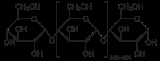
Starch or amylum (CAS
CAS registry number

CAS registry numbers are unique numerical identifiers for chemical elements, chemical compound, polymers, biological sequences, mixtures and alloys....
 9005-25-8, chemical formula
Chemical formula

A chemical formula is a way of expressing information about the atoms that constitute a particular chemical compound, and how the relationship between those atoms changes in chemical reactions....
 (C6H10O5)n) is a polysaccharide
Polysaccharide

Polysaccharides are relatively complex carbohydrates. They are polymers made up of many monosaccharides joined together by glycosidic bonds. They are therefore very large, often branched, macromolecules....
 carbohydrate
Carbohydrate

Carbohydrates or saccharides are the most abundant of the four major classes of biomolecules. They fill numerous roles in living things, such as the storage and transport of energy and structural components ....
 consisting of a large number of glucose
Glucose

Glucose , a monosaccharide also known as grape sugar, blood sugar, or corn sugar, is a very important carbohydrate in biology....
 units joined together by glycosidic bond
Glycosidic bond

In chemistry, a glycosidic bond is a certain type of functional group that joins a carbohydrate molecule to another, which may be another carbohydrate....
s. Starch is produced by all green plant
Plant

Plants are Life organisms belonging to the Kingdom Plantae. They include familiar organisms such as trees, herbs, bushes, grasses, vines, ferns, mosses, and green algae....
s as an energy store and is a major food source for humans.

Pure starch is a white, tasteless and odorless powder that is insoluble in cold water or alcohol. It consists of two types of molecules: the linear and helical
Helix

A helix is a special kind of space curve, i.e. a Differentiable manifold curve in three-space. As a mental image of a helix one may take the spring ....
 amylose
Amylose

Amylose is a linear polymer of glucose linked mainly by a bonds. It can be made of several thousand glucose units. It is one of the two components of starch, the other being amylopectin....
 and the branched amylopectin
Amylopectin

Amylopectin is a highly branched polymer of glucose found in plants. It is one of the two components of starch, the other being amylose. It is soluble in water....
. Depending on the plant, starch generally contains 20 to 25 percent amylose and 75 to 80 percent amylopectin.


Discussion
Ask a question about 'Starch'
Start a new discussion about 'Starch'
Answer questions from other users
Full Discussion Forum


Recent Posts


Encyclopedia


Starch or amylum (CAS
CAS registry number

CAS registry numbers are unique numerical identifiers for chemical elements, chemical compound, polymers, biological sequences, mixtures and alloys....
 9005-25-8, chemical formula
Chemical formula

A chemical formula is a way of expressing information about the atoms that constitute a particular chemical compound, and how the relationship between those atoms changes in chemical reactions....
 (C6H10O5)n) is a polysaccharide
Polysaccharide

Polysaccharides are relatively complex carbohydrates. They are polymers made up of many monosaccharides joined together by glycosidic bonds. They are therefore very large, often branched, macromolecules....
 carbohydrate
Carbohydrate

Carbohydrates or saccharides are the most abundant of the four major classes of biomolecules. They fill numerous roles in living things, such as the storage and transport of energy and structural components ....
 consisting of a large number of glucose
Glucose

Glucose , a monosaccharide also known as grape sugar, blood sugar, or corn sugar, is a very important carbohydrate in biology....
 units joined together by glycosidic bond
Glycosidic bond

In chemistry, a glycosidic bond is a certain type of functional group that joins a carbohydrate molecule to another, which may be another carbohydrate....
s. Starch is produced by all green plant
Plant

Plants are Life organisms belonging to the Kingdom Plantae. They include familiar organisms such as trees, herbs, bushes, grasses, vines, ferns, mosses, and green algae....
s as an energy store and is a major food source for humans.

Pure starch is a white, tasteless and odorless powder that is insoluble in cold water or alcohol. It consists of two types of molecules: the linear and helical
Helix

A helix is a special kind of space curve, i.e. a Differentiable manifold curve in three-space. As a mental image of a helix one may take the spring ....
 amylose
Amylose

Amylose is a linear polymer of glucose linked mainly by a bonds. It can be made of several thousand glucose units. It is one of the two components of starch, the other being amylopectin....
 and the branched amylopectin
Amylopectin

Amylopectin is a highly branched polymer of glucose found in plants. It is one of the two components of starch, the other being amylose. It is soluble in water....
. Depending on the plant, starch generally contains 20 to 25 percent amylose and 75 to 80 percent amylopectin. Glycogen
Glycogen

Glycogen is a polysaccharide of glucose which functions as the secondary short term energy storage in animal cells. It is made primarily by the liver and the muscles, but can also be made by the brain and stomach....
, the glucose store of animals, is a more branched version of amylopectin.

The word "starch" is derived
Etymology

Etymology is the study of the roots and history of words; and how their form and meaning have changed over time.In languages with a long detailed history, etymology makes use of philology, the study of how words change from culture to culture over time....
 from Middle English
Middle English

Middle English is the name given by historical linguistics to the diverse forms of the English language spoken between the Norman conquest of England of 1066 and about 1470, when the #Chancery Standard, a form of London-based English, began to become widespread, a process aided by the introduction of the printing press into England by William...
 sterchen, meaning to stiffen, which is appropriate since starch can be used as a thickening or glueing agent when dissolved in water and heated, giving wheatpaste
Wheatpaste

Wheatpaste is a liquid adhesive used since ancient times for various arts and crafts such as book binding, decoupage, collage, and papier-m?ch?....
.

Energy store of plants

In photosynthesis
Photosynthesis

File:Seawifs global biosphere.jpgPhotosynthesis is a metabolic pathway that converts carbon dioxide into organic compounds, especially sugars, using the energy from sunlight....
 plants use light energy to produce glucose from carbon dioxide
Carbon dioxide

Carbon dioxide is a chemical compound composed of two oxygen atoms covalent bond to a single carbon atom. It is a gas at standard temperature and pressure and exists in Earth's atmosphere in this state....
. The glucose is stored mainly in the form of starch granules, in plastid
Plastid

Plastids are major organelles found in plants and algae. Plastids are the site of manufacture and storage of important chemical compounds used by the cell....
s such as chloroplast
Chloroplast

Chloroplasts are organelles found in plant cells and other eukaryote organisms that conduct photosynthesis. Chloroplasts capture light energy to conserve Thermodynamic free energy in the form of Adenosine triphosphate and reduce NADP to NADPH through a complex set of processes called photosynthesis....
s and especially amyloplast
Amyloplast

Amyloplasts are non-pigment organelles found in some plant cells. They are responsible for the synthesis and storage of starch granules, through the polymer of glucose....
s. Toward the end of the growing season starch accumulates in twigs of trees near the buds. Fruit
Fruit

The term fruit has different meanings dependent on context, and the term is not synonymous in food preparation and biology. In botany, which is the scientific study of plants, fruits are the ripened Ovary of flowering plants....
, seed
Seed

A seed is a small Plant embryogenesis plant enclosed in a covering called the seed coat, usually with some Food storage. It is the product of the ripened ovule of gymnosperm and angiosperm plants which occurs after fertilization and some growth within the mother plant....
s, rhizome
Rhizome

In botany, a rhizome is a characteristically horizontal plant stem of a plant that is usually found underground, often sending out roots and shoots from its nodes....
s, and tuber
Tuber

Tubers are various types of modified plant structures that are enlarged to store nutrients. They are used by plants to overwinter and regrow the next year and as a means of asexual reproduction....
s store starch to prepare for the next growing season.

Glucose is soluble in water, hydrophilic, binds much water and takes up much space; glucose in the form of starch on the other hand is not soluble and can be stored much more compactly.

Biosynthesis

Plants produce starch by first converting glucose 1-phosphate to ADP
Adenosine diphosphate

Adenosine diphosphate, abbreviated ADP, is a nucleotide. It is an ester of pyrophosphoric acid with the nucleoside adenosine. ADP consists of the pyrophosphate Functional group, the pentose sugar ribose, and the nucleobase adenine....
-glucose using the enzyme glucose-1-phosphate adenylyltransferase
Glucose-1-phosphate adenylyltransferase

In enzymology, a glucose-1-phosphate adenylyltransferase is an enzyme that catalysis the chemical reactionThus, the two substrate of this enzyme are adenosine triphosphate and alpha-D-glucose 1-phosphate, whereas its two product are diphosphate and ADP-glucose....
. This step requires energy in the form of ATP
ATP

ATP may refer to:...
. The enzyme starch synthase
Starch synthase

In enzymology, a starch synthase is an enzyme that catalysis the chemical reactionThus, the two substrate of this enzyme are ADP-glucose and a chain of D-glucose residues joined by 1,4-alpha-glycosidic bonds, whereas its two product are adenosine diphosphate and an elongated chain of glucose residues....
 then adds the ADP-glucose via a 1,4-alpha glycosidic bond
Glycosidic bond

In chemistry, a glycosidic bond is a certain type of functional group that joins a carbohydrate molecule to another, which may be another carbohydrate....
 to a growing chain of glucose residues, liberating ADP
ADP

ADP is a three-letter acronym that may refer to:...
 and creating amylose. Starch branching enzyme introduces 1,6-alpha glycosidic bonds between these chains, creating the branched amylopectin. The starch debranching enzyme isoamylase removes some of these branches. Several isoforms of these enzymes exist, leading to a highly complex synthesis process.

While amylose was traditionally thought to be completely unbranched, it is now known that some of its molecules contain a few branch points.

Glycogen and amylopectin have the same structure, but the former has about one branch point per ten 1,4-alpha bonds, compared to about one branch point per thirty 1,4-alpha bonds in amylopectin. Another difference is that glycogen is synthesised from UDP-glucose
Uridine diphosphate glucose

Uridine diphosphate glucose is a nucleotide sugar. It is involved in glycosyltransferase reactions in metabolism....
 while starch is synthesised from ADP-glucose.

Starch as food

Starch is the most important carbohydrate
Carbohydrate

Carbohydrates or saccharides are the most abundant of the four major classes of biomolecules. They fill numerous roles in living things, such as the storage and transport of energy and structural components ....
 in the human diet. The major sources of starch intake worldwide are rice
Rice

Rice is a staple food for a large part of the world's human population, especially in tropical Latin America, and East Asia, South Asia and Southeast Asia, making it the second-most consumed cereal grain, after maize....
, wheat
Wheat

Wheat , is a worldwide cultivated Poaceae from the Levant region of the Middle East. Globally, after maize, wheat is the second most-produced food among the cereal just above rice....
, maize
Maize

Maize , known as corn in some countries, is a cereal domesticated in Mesoamerica and subsequently spread throughout the American continents....
, potato
Potato

The potato is a starchy, tuberous crop from the perennial plant Solanum tuberosum of the Solanaceae family. The word potato may refer to the plant itself as well....
es and cassava
Cassava

The cassava, cassadaIn page 25, Darwin says "Mandioca or cassada is likewise cultivated in great quantity."See it also in ,yuca, 'manioc, 'mogo...
. Widely used prepared foods containing starch are bread
Bread

Bread is a staple food prepared by baking a dough of flour and water. It may be leavened or unleavened. Edible salt, fat and a leavening agent such as yeast are common ingredients, though bread may contain a range of other ingredients: milk, Egg , sugar, spice, fruit , vegetables , Nut or seeds ....
, pancakes, cereals, noodles, pasta
Pasta

Pasta is a generic term for Italian cuisine variants of noodles, food made from a dough of flour, water and/or Egg , that is Boiling. The word can also denote dishes in which pasta products are the primary ingredient, served with sauce or seasonings....
 and tortilla
Tortilla

This aticle contains information about corn tortilla.For fluor tortilla, see: Flour tortilla For spanish tortilla, see: Tortilla_de_patatas...
.

Depending on the local climate other starch sources are used, such as arrowroot
Arrowroot

Arrowroot, or obedience plant , is a large perennial plant herb of genus Maranta found in rainforest habitats. Arrowroot is also the name of the edible starch from the rhizomes of West Indian arrowroot....
, arracacha
Arracacha

The arracacha is a garden root vegetable originally from the Andes, somewhat intermediate between the carrot and celery. Its starchy taproot is a popular food item in South America, especially in Brazil where it is a major commercial crop....
, buckwheat
Buckwheat

Buckwheat refers to plants in two genera of the dicot family Polygonaceae: the Eurasian genus Fagopyrum, and the North American genus Eriogonum....
, banana
Banana

File:Banana and cross section.jpgBanana is the common name for a fruit and also the herbaceous plants of the genus Musa which produce this commonly eaten fruit....
, barley
Barley

Barley is an annual plant cereal grain derived from the grass Hordeum vulgare. It serves as a major animal feed crop, with smaller amounts used for malting and in health food, as well as the making of alcoholic beverages beer and whisky....
, kudzu
Kudzu

, Pueraria lobata , is one of about 20 species in the genus Pueraria in the pea family Fabaceae, subfamily Faboideae. It is native to southern Japan and southeast China in eastern Asia....
, oca
Oca

The oca or oka is a perennial plant grown in the central and southern Andes for its starchy edible tuber, used as a root vegetable. Its leaves and young shoots can be eaten as a green vegetable as well....
, sago
Sago

Sago is a starch extracted from the pith of sago palm stems, Metroxylon sagu. It is a major staple food for the lowland peoples of Papua New Guinea and the Moluccas, where it is called saksak and sagu....
, sorghum
Sorghum

Sorghum is a genus of numerous species of Poaceae, some of which are raised for grain and many of which are used as fodder plants either cultivated or as part of pasture....
, sweet potato
Sweet potato

The 'sweet potato' is a dicotyledonous plant which belongs to the family Convolvulaceae. Amongst the approximately 50 genera and more than 1000 species of this family, only I....
, taro
Taro

Taro , more rarely kalo , gabi in The Philippines and dalo in Fiji is a tropical plant grown primarily as a root vegetable for its edible corm, and secondarily as a leaf vegetable....
 and yams
Yam (vegetable)

Yam is the common name for some species in the genus Dioscorea .These are perennial plant herbaceous vines cultivated for the consumption of their starchy tubers in Africa, Asia, Latin America and Oceania....
. Chesnuts and edible beans, such as favas
Vicia faba

Vicia faba, the Broad Bean, Fava Bean, Faba Bean, Field Bean, Bell Bean or Tic Bean is a species of legume native to north Africa and southwest Asia, and extensively cultivated elsewhere....
, lentils and peas
PEAS

P.E.A.S. is an acronym in artificial intelligence that stands for Performance, Environment, Actuators, Sensors....
, are also rich in starch.

The starch industry extracts and refines starches from seeds, roots and tubers, by wet grinding, sieving and drying. Today, the main commercial refined starches are cornstarch
Cornstarch

Cornstarch, or cornflour, is the starch of the corn grain. It is also grown from the endosperm, or white heart, of the corn seed. It has a distinctive appearance and feel when mixed raw with water or milk, giving easily to gentle pressure but resisting sudden pressure ....
, tapioca
Tapioca

Tapioca is a flavorless, colorless, odorless starch extracted from the root of the plant species Manihot esculenta. This species, native to South America, is now cultivated worldwide and has many names, including cassava, bitter-cassava, manioc, "mandioca", "aipim", "macaxeira", "manioca", "boba", "yuca" , "Sabudana" and "kappa"....
, wheat
Wheat

Wheat , is a worldwide cultivated Poaceae from the Levant region of the Middle East. Globally, after maize, wheat is the second most-produced food among the cereal just above rice....
 and potato starch
Potato

The potato is a starchy, tuberous crop from the perennial plant Solanum tuberosum of the Solanaceae family. The word potato may refer to the plant itself as well....
. To a lesser extent also other source are used as rice
Rice

Rice is a staple food for a large part of the world's human population, especially in tropical Latin America, and East Asia, South Asia and Southeast Asia, making it the second-most consumed cereal grain, after maize....
, sago
Sago

Sago is a starch extracted from the pith of sago palm stems, Metroxylon sagu. It is a major staple food for the lowland peoples of Papua New Guinea and the Moluccas, where it is called saksak and sagu....
 and peas
PEAS

P.E.A.S. is an acronym in artificial intelligence that stands for Performance, Environment, Actuators, Sensors....
. Historically Florida arrowroot
Florida arrowroot

Florida arrowroot was the commercial name of an edible starch extracted from Zamia integrifolia , a small cycad native to North America....
 was also commercialized. Still starch is extracted from more than 50 types of plants.

Alpha-amylase
Amylase

Amylase is an enzyme that breaks starch down into sugar. Amylase is present in human saliva, where it begins the chemical process of digestion....
s are the enzymes that break down starch into the constituent sugars. They are found in plants and in animals. Human saliva
Saliva

Saliva is the watery and usually frothy substance produced in the mouths of humans and most other animals. Saliva is produced in and secreted from the salivary glands....
 is rich in amylase, and the pancreas
Pancreas

The pancreas is a gland Organ in the digestive system and endocrine system of vertebrates. It is both an endocrine gland , as well as an exocrine gland, secreting pancreatic juice containing Digestion enzymes that pass to the small intestine....
 also excretes the enzyme. Individuals from populations with a high starch diet tend to have more amylase genes than those with low starch diets; chimpanzee
Chimpanzee

Chimpanzee, sometimes colloquially known as a chimp, is the common name for the two Extant taxon species of ape in the genus Pan where the Congo River forms the boundary between the native habitat of the two species:...
s have very few amylase genes. It is possible that turning to a high starch diet was a significant event in human evolution.

Resistant starch
Resistant starch

Resistant starch is starch that escapes digestion in the small intestine of healthy individuals. Resistant starch is considered the third type of dietary fiber, as it can deliver some of the benefits of insoluble fiber and some of the benefits of soluble fiber....
 is starch that escapes digestion in the small intestine
Small intestine

In vertebrates, including mammals, reptiles, birds, and bony fish, the small intestine is the part of the gastrointestinal tract following the stomach, and is where the vast majority of digestion takes place....
 of healthy individuals.

Modified starch

A modified food starch
Modified starch

Modified starch is a food additive which is prepared by treating starch or starch granules, causing the starch to be partially degraded. Modified starch is used as a thickening agent, Food additive#Categories, or an emulsifier....
 undergoes one or more chemical modifications, which allow the starch for example to function properly such as under high heat, and/or shear frequently encountered during processing and conditions during storage such as cooling.

When a starch is pre-cooked, it can then be used to thicken instantly in cold water. This is referred to as a pregelatinized starch
Starch gelatinization

Starch gelatinization is a process that breaks down the intermolecular bonds of starch molecules in the presence of water and heat, allowing the hydrogen bonding sites to engage more water....
. Otherwise starch requires heat to thicken, or "gelatinize". The actual temperature depends on the type of starch.

The modified starches are coded according to the International Numbering System
Codex Alimentarius

The Codex Alimentarius is a collection of internationally recognized standards, codes of practice, guidelines and other recommendations relating to foods, food production and food safety....
 for Food Additives (INS) :
  • 1401 Acid-treated starch
  • 1402 Alkaline-treated starch
  • 1403 Bleached starch
  • 1404 Oxidized starch
  • 1405 Starches, enzyme-treated
  • 1410 Monostarch phosphate
    Phosphate

    A phosphate, an inorganic chemical, is a Salt of phosphoric acid. Inorganic phosphates are mining to obtain phosphorus for use in agriculture and industry....
  • 1411 Distarch glycerol
    Glycerol

    Glycerol is a chemical compound also commonly called glycerin or glycerine. It is a colorless, odorless, Viscosity liquid that is widely used in pharmaceutical formulations....
  • 1412 Distarch phosphate ester
    Ester

    An ester is an often Aroma compound organic chemistry or partially organic compound formed by the reaction between an acid and an alcohol or aromatic alcohol with the elimination of water....
    ified with sodium trimetaphosphate
    Sodium trimetaphosphate

    Sodium trimetaphosphate , with formula Na3P3O9, is a metaphosphate of sodium. It has the empirical formula NaPO3. It is the sodium salt of trimetaphosphoric acid....
  • 1413 Phosphated distarch phosphate
  • 1414 Acetylated distarch phosphate
  • 1420 Starch acetate esterified with acetic anhydride
  • 1421 Starch acetate esterified with vinyl acetate
  • 1422 Acetylated distarch adipate
  • 1423 Acetylated distarch glycerol
  • 1440 Hydroxypropyl starch
  • 1442 Hydroxypropyl distarch phosphate
    Hydroxypropyl distarch phosphate

    Hydroxypropy distarch phosphate is a modified resistant starch. . It is currently used as a food additive .For more info see ...
  • 1443 Hydroxypropyl distarch glycerol
  • 1450 Starch sodium octenyl succinate


Some other types of modified starches commercially available are dextrins, cationic starches, carboxymethylated starches.

Use as food additive

As an additive
Additive

Additive may refer to:* Additive function, a function which preserves addition* Additive inverse, an arithmetic concept* Additive category, a Preadditive_category with finite Biproduct...
 for food processing
Food processing

Food processing is the set of methods and techniques used to transform raw ingredients into food or to transform food into other forms for ingestion by humans or animals either in the home or by the food industry....
, food starches are typically used as thickeners and stabilizers in foods such as puddings, custards, soups, sauces, gravies, pie fillings, and salad dressings, and to make noodles and pastas.

But by far the most common starch based food ingredient are starch sugars (see below) used as sweetener in many drinks and foods.

Use as a mold. Gummed sweets such as jelly beans
Jelly Beans

Jelly Beans is the fourth album by the Japan J-ska band Yum!Yum!ORANGE, released in 2006....
 and wine gums are not manufactured using a mold in the conventional sense. A tray is filled with native starch and leveled. A positive mold is then pressed into the starch leaving an impression of 1000 or so jelly beans. The mix is then poured into the impressions and then put into a stove to set. This method greatly reduces the number of molds that must be manufactured.

Starch is used as an excipient
Excipient

An excipient is an inactive substance used as a carrier for the active ingredients of a medication. In many cases, an "active" substance may not be easily administered and absorbed by the human body; in such cases the substance in question may be dissolved into or mixed with an excipient....
, a binder in medications to aid the formation of tablets.

Starch sugars

Starch can be hydrolyzed into simpler carbohydrates by acid
Acid

An acid is traditionally considered any chemical compound that, when dissolved in water, gives a solution with a hydrogen ion Activity greater than in pure water, i.e....
s, various enzyme
Enzyme

Enzymes are biomolecules that catalysis chemical reactions. Almost all enzymes are proteins. In enzymatic reactions, the molecules at the beginning of the process are called Substrate , and the enzyme converts them into different molecules, the products....
s, or a combination of the two. The extent of conversion is typically quantified by dextrose equivalency (DE), which is roughly the fraction of the glycosidic bond
Glycosidic bond

In chemistry, a glycosidic bond is a certain type of functional group that joins a carbohydrate molecule to another, which may be another carbohydrate....
s in starch that have been broken. Food products made in this way include:
  • Maltodextrin, a lightly hydrolyzed (DE 10–20) starch product used as a bland-tasting filler and thickener.
  • Various glucose syrup / corn syrup
    Corn syrup

    Corn syrup is a syrup, made using cornstarch as a feedstock, and composed mainly of glucose. A series of two enzyme reactions are used to convert the cornstarch to corn syrup....
    s (DE 30–70), viscous solutions used as sweeteners and thickeners in many kinds of processed foods.
  • Dextrose (DE 100), commercial glucose
    Glucose

    Glucose , a monosaccharide also known as grape sugar, blood sugar, or corn sugar, is a very important carbohydrate in biology....
    , prepared by the complete hydrolysis of starch.
  • High fructose syrup, made by treating dextrose solutions with the enzyme glucose isomerase
    Glucose isomerase

    Glucose-6-phosphate isomerase, or phosphoglucose isomerase, is an enzyme that catalyzes the conversion of glucose-6-phosphate into fructose 6-phosphate in the second step of glycolysis....
    , until a substantial fraction of the glucose has been converted to fructose. In the United States
    United States

    The United States of America is a Federal government constitutional republic comprising U.S. state and a federal district. The country is situated mostly in central North America, where its Contiguous United States and Washington, D.C., the Capital districts and territories, lie between the Pacific Ocean and Atlantic Oceans, Borders of the U...
    , high fructose corn syrup
    High fructose corn syrup

    High-fructose corn syrup ? called isoglucose in Europe and glucose-fructose in Canada ? comprises any of a group of corn syrups that has undergone enzymatic processing to increase its fructose content, and then been mixed with pure corn syrup ....
     is the principal sweetener used in sweetened beverages because fructose has better handling characteristics, such as microbiological stability, and more consistent sweetness/flavor. High fructose corn syrup has the same sweetness as sugar.


Industrial applications

Papermaking
Papermaking

Papermaking is the process of making paper, a substance which is used ubiquitously today for writing and packaging.In papermaking a dilute suspension of fibers in water is drained through a screen, so that a mat of randomly interwoven fibers is laid down....
 is the largest non-food application for starches globally, consuming millions of metric tons annually. In a typical sheet of copy paper for instance, the starch content may be as high as 8%. Both chemically modified and unmodified starches are used in papermaking. In the wet part of the papermaking process, generally called the “wet-end”, the starches used are cationic and have a positive charge bound to the starch polymer. These starch derivatives associate with the anionic or negatively charged paper fibers / cellulose
Cellulose

File:Cellulose Sessel.svgCellulose is an organic compound with the chemical formula , a polysaccharide consisting of a linear chain of several hundred to over ten thousand ? linked D-glucose units....
 and inorganic fillers. Cationic starches together with other retention and internal sizing agent help to give the necessary strength properties to the paper web to be formed in the papermaking process (wet strength), and to provide strength to the final paper sheet (dry strength).

In the dry end of the papermaking process the paper web is rewetted with a starch based solution. The process is called surface sizing
Sizing

Sizing or size is a substance that is applied to materials as a protecting glaze, filler, or lubricant. It is used to change surface properties in papermaking, gilding, and the manufacture of textiles and fiberglass....
. Starches used have been chemically, or enzymatically depolymerized at the paper mill or by the starch industry (oxidized starch). The size - starch solutions are applied to the paper web by means of various mechanical presses (size press). Together with surface sizing agent the surface starches impart additional strength to the paper web and additionally provide water hold out or “size” for superior printing properties. Starch is also used in paper coating as one of the binders for the coating formulation a mixure of pigments, binders and thickeners. Coated paper
Coated paper

Coated paper is paper which has been coating by a compound to impart certain qualities to the paper, including weight and surface gloss, smoothness or ink absorbency....
 has improved smoothness, hardness, whitness and gloss and thus improves printing characteristics.

Corrugated board adhesives are the next largest application of non-food starches globally. Starch glue
Glue

This is a list of various types of adhesive. Historically, the term "glue" only referred to protein colloids prepared from animal flesh. The meaning has been extended to refer to any fluid adhesive....
s are mostly based on unmodified native starches plus some additive as borax
Borax

Borax, also known as sodium borate, sodium tetraborate, or disodium tetraborate, is an important boron compound, a mineral, and a salt of boric acid....
 and caustic soda. Part of the starch is gelatinized to carrier slurry of uncooked starches and prevent sedimentation. This opaque glue is called a SteinHall adhesives. The glue is applied on tips of the fluting. The fluted paper is pressed to paper called liner. This is then dried under high heat, which causes the rest of the uncooked starch in glue to swell/gelatinize. This gelatinizing makes the glue a fast and strong for corrugated board production.

Another large non-food starch application is in the construction industry where starch is used in the gypsum wall board manufacturing process. Chemically modified or unmodified starches are added to the stucco containing primarily gypsum
Gypsum

Gypsum is a very soft mineral composed of calcium sulfate dihydrate, with the chemical formula calciumsulfuroxygen4?2water....
. Top and bottom heavyweight sheets of paper are applied to the formulation and the process is allowed to heat and cure to form the eventual rigid wall board. The starches act as a glue for the cured gypsum rock with the paper covering and also provide rigidity to the board.

Adhesives - Starch is used in the manufacture of various glues for book-binding, wallpaper
Wallpaper

Wallpaper is a kind of material used to cover and decorate the interior walls of homes, offices, and other buildings; it is one aspect of interior decoration....
 adhesives, paper sack production, tube winding, gummed paper, envelop adhesives, school glues, bottle labeling.

Starch derivatives as yellow dextrins can be modified by addition of some chemical forms to be a hard glue for paper work, some of those forms are Borax, Soda Ash, which mixed with the starch solution at 50-70 °C to gain a very good adhesive, Sodium Silicate can be added to reinforce this formula.

Clothing starch or laundry starch is a liquid that is prepared by mixing a vegetable starch in water (earlier preparations also had to be boiled), and is used in the laundering
Laundry

Laundry is the act of washing clothing and linens....
 of clothes
Clothing

A feature of all human societies, except perhaps the most primitive, is the wearing of clothing or clothes, especially in public. The primary purpose of clothing is functional, as a protection from the weather....
. Starch was widely used in Europe
Europe

Europe is, conventionally, one of the world's seven continents. Comprising the westernmost peninsula of Eurasia, Europe is generally divided from Asia to its east by the water divide of the Ural Mountains, the Ural , the Caspian Sea, and by the Caucasus Mountains to the southeast....
 in the 16th and 17th centuries to stiffen the wide collars and ruffs
Ruff (clothing)

A ruff is an item of clothing worn in Western Europe from the mid-sixteenth century to the mid-seventeenth century.The ruff which was worn by both men and women, evolved from the small fabric ruffle at the drawstring neck of the chemise....
 of fine linen which surrounded the necks of the well-to-do. During the 19th century and early 20th century, it was stylish to stiffen the collars and sleeves of men's shirt
Shirt

A shirt is a cloth garment for the upper body. Originally an item of Undergarment worn exclusively by men, it has become in American English a catch-all term for almost any upper-body garment other than outerwear such as sweaters or Coat , or undergarments such as brassiere ....
s and the ruffles of girls' petticoat
Petticoat

A petticoat or underskirt is an article of clothing for women; specifically an undergarment to be worn under a skirt or a dress. The petticoat is a separate garment hanging from the waist ....
s by applying starch to them as the clean clothes were being ironed
Ironing

File:Bundesarchiv B 145 Bild-F001163-0012, K?ln, Textilfabrik Bierbaum-Proenen.jpgIroning or smoothing is the work of using a heated tool, or tools, to remove wrinkles from fabric....
. Aside from the smooth, crisp edges it gave to clothing, it served practical purposes as well. Dirt
Dust

Dust is a general name for minute solid particles with diameters less than 20 Thou . Particles in the Earth's atmosphere arise from various sources such as soil dust lifted up by wind, volcanic eruptions, and pollution....
 and sweat
SWEAT

SWEAT is an OLN/The Sports Network television program hosted by Julie Zwillich that aired in 2003-2004.Each of the 13 half-hour episodes of SWEAT features a different outdoor sport: kayaking, mountain biking, ice hockey, beach volleyball, soccer, windsurfing, Sport rowing, Ultimate , triathlon, wakeboarding, snowboarding, telemark skiin...
 from a person's neck and wrists would stick to the starch rather than to the fibers of the clothing, and would easily wash away along with the starch. After each laundering, the starch would be reapplied. Today the product is sold in aerosol cans
Aerosol spray

Aerosol spray is a type of dispensing system which creates an Particulate mist of liquid particles. This is used with a spray can or bottle that contains a liquid under pressure....
 for home use.

Starch is also used to make some packing peanuts, and some dropped ceiling
Dropped ceiling

File:3000K LED T-Bar Ceiling Light.JPGA dropped ceiling is a secondary ceiling, hung below the main ceiling. They may also be referred to as a drop ceiling, false ceiling, or suspended ceiling, and are a staple of modern construction and architecture....
 tiles.

Textile chemicals - To reduce breaking of yarns during weaving, the warp yarns are sized
Sizing

Sizing or size is a substance that is applied to materials as a protecting glaze, filler, or lubricant. It is used to change surface properties in papermaking, gilding, and the manufacture of textiles and fiberglass....
. Starch is one of the main agents used for cotton
Cotton

Cotton is a soft, staple fiber that grows in a form known as a boll around the seeds of the cotton plant a shrub native to tropical and subtropical regions around the world, including the Americas, India and Africa....
 sizing. Starch is also used as printing thickener.

Printing industry - in the printing
Printing

Printing is a process for reproducing text and image, typically with ink on paper using a printing press. It is often carried out as a large-scale industrial process, and is an essential part of publishing and transaction printing....
 industry food grade starch is used in the manufacture of anti-set-off spray powder
Anti-set-off spray powder

In printing, anti-set-off spray powder is used to make an air gap between printed sheets of paper. This enables the ink to dry naturally and therefore avoid the unwanted transfer of ink from one printed sheet to another....
 used to separate printed sheets of paper to avoid wet ink being set off
Set-off (printing)

In printing, set-off is the American term given to the unwanted transfer of ink from one printed sheet to another. The problem can occur with most types of printing, and is avoided by the use of anti-set-off spray powder....
.

Bioplastics - starch is used to produce various bioplastic
Bioplastic

Bioplastics are a form of plastics derived from renewable biomass sources, such as vegetable oil, corn starch, pea starch or microbiota , rather than fossil fuel plastics which are derived from petroleum....
s, synthetic polymers that are biodegradable.

Body powder - Powdered corn starch is used as a substitute for talcum powder in many health and beauty products.

Oil exploration - starch is used to adjust the viscosity of drilling fluid
Drilling fluid

Drilling a very deep hole is a very costly business. The hole size is kept very small as the drilled depth increases because it is to cased and cemented after wards....
 which is used to lubricate the drill head in (mineral) oil extraction.

Bio-ethanol - Glucose from starch can be further fermented to ethanol
Ethanol

Ethanol, also called ethyl alcohol, pure alcohol, grain alcohol, or drinking alcohol, is a volatility , flammable, colorless liquid....
.

Hydrogen production - Starch can be used to produce hydrogen
Hydrogen

Hydrogen is the chemical element with atomic number 1. It is represented by the chemical symbol H. At standard temperature and pressure, hydrogen is a colorless, odorless, nonmetallic, tasteless, highly combustion and explosive Diatomic molecule gas with the molecular formula H2....
, using enzymes.

Tests

Iodine
Iodine

Iodine , is a chemical element that has the symbol I and atomic number 53. Naturally-occurring iodine is a single isotope with 74 neutrons....
 solution is used to test for starch; a blue color indicates the presence of starch. The details of this reaction are not yet fully known, but it is thought that the iodine (I3- and I5- ions) fits inside the coils of amylose, the charge transfers between the iodine and the starch, and the energy level spacings in the resulting complex correspond to the absorption spectrum in the visible light region. The strength of the resulting blue color depends on the amount of amylose present.

Starch indicator
Starch indicator

Starch is often used in chemistry as an Redox indicator for redox titrations where iodine is present. Starch forms a very dark blue-black complex with iodine....
 solution consisting of water, starch and iodine is often used in redox
Redox

Redox describes all chemical reactions in which atoms have their oxidation number changed.This can be either a simple redox process such as the oxidation of carbon to yield carbon dioxide or the reduction of carbon by hydrogen to yield methane , or it can be a complex process such as the oxidation of sugar in the human body through a ser...
 titrations: in the presence of an oxidizing agent
Oxidizing agent

An oxidizing agent can be defined as either:#a chemical compound that readily transfers oxygen atoms, or#a substance that gains electrons in a redox chemical reaction...
 the solution turns blue, in the presence of reducing agent
Reducing agent

A reducing agent is the element or compound in a redox reaction that reduces another Chemical species. In doing so, it becomes oxidized, and is therefore the electron donor in the redox....
 the blue color disappears because triiodide
Triiodide

In chemistry, triiodide can have several meanings. Triiodide primarily refers to the triiodide ion, I3-, a polyatomic ion anion composed of three iodine atoms....
 (I3-) ions break up into three iodide ions, disassembling the starch-iodine complex. A 0.3% w/w solution is the standard concentration for a starch indicator. It is made by adding 4 grams of soluble starch to 1 litre of heated water; the solution is cooled before use (starch-iodine complex becomes unstable at temperatures above 35 °C).

Microscopy of starch granules - Each species of plant has a unique shape of starch granules in granular size, shape and crystallisation pattern. Under the microscope
Microscope

A microscope is an Laboratory equipment for viewing objects that are too small to be seen by the naked or unaided eye. The science of investigating small objects using such an instrument is called microscopy....
, starch grains stained with iodine illuminated from behind with polarized light show a distinctive Maltese cross
Maltese cross

The Maltese cross or Amalfi cross is identified as the symbol of an order of Christian warriors known as the Knights Hospitaller or Knights of Malta....
 effect (also known as extinction cross
Extinction cross

The extinction cross is an optical phenomenon that is seen when trying to extinguish a laser beam or non-planar white light using crossed polarizers....
 and birefringence).

See also

  • Yeast extract
    Yeast extract

    Yeast extract is the common name for various forms of processed yeast products that are used as food additives or flavourings. They are often used in the same way that monosodium glutamate is used, and, like MSG, often contain free glutamic acids....
  • Starch gelatinization
    Starch gelatinization

    Starch gelatinization is a process that breaks down the intermolecular bonds of starch molecules in the presence of water and heat, allowing the hydrogen bonding sites to engage more water....
  • Flour
    Flour

    Flour is a powder made of cereal grains. It is the main ingredient of bread, which is a staple food for many civilizations, making the availability of adequate supplies of flour a major economic and political issue at various times throughout history....


External links

  • , by Martin Chaplin
  • , scientific journal on starch