

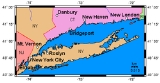
Long Island

Encyclopedia
Long Island is an island located in the southeast part of the U.S. state of New York
, just east of Manhattan
. Stretching northeast into the Atlantic Ocean, Long Island contains four counties, two of which are borough
s of New York City
(Queens
and Brooklyn
), and two of which are mainly suburb
an (Nassau
and Suffolk
). The term "Long Island" often refers only to Nassau and Suffolk counties in order to differentiate them from New York City, though all four counties on the island are part of the New York metropolitan area
.
As of the 2010 census
, Long Island had a population of 7,568,304,
making it the most populated island in any U.S. state or territory. It is also the 17th most populous island in the world, ahead of Ireland
, Jamaica
and the Japanese island of Hokkaidō
. Its population density is 5402 PD/sqmi.
If it were a state, Long Island would rank 13th in population (after Virginia) and first in population density.
Both the longest
and the largest island in the contiguous United States
, Long Island extends 118 miles (189.9 km) eastward from New York Harbor
to Montauk Point, and has a maximum north-to-south expanse of 23 miles (37 km) between the northern Long Island Sound
coast and the southern Atlantic
coast.
With a land area of 1,401 square miles (3,629 km2), Long Island is the 11th largest island in the United States and the 148th largest island in the world — larger than the 1214 square miles (3,144.2 km²) of the smallest state, Rhode Island
.
Two of New York City
's major airports, LaGuardia Airport
and JFK International Airport
, are located on Long Island, in Queens. Nine bridges and 13 tunnels (including railway tunnels) connect Brooklyn and Queens (and thus Long Island) to the three other boroughs of New York City. Ferries connect Suffolk County northward across Long Island Sound
to the state of Connecticut
.
of Brooklyn
(Kings County) and Queens
(Queens County). The central and eastern portions contain the suburb
an Nassau
and Suffolk
counties. However, colloquial usage of the term "Long Island" refers only to Nassau and Suffolk counties.
The more dense and urban
Brooklyn and Queens are not usually referred to as "Long Island", since they are a part of New York City, though before those counties amalgamated into the city, they were often so identified.
Nassau County is more developed than Suffolk County, with pockets of rural affluence within the Gold Coast of the North Shore
and the Five Towns
area on the South Shore
. South Shore
communities are built along protected wetlands of the main land mass as well as white sand beaches of Outer Barrier Islands fronting on the Atlantic Ocean. Old money
from the time of the American Revolutionary War
populated the island and still does to this day, amongst many others including recent immigrants. Wealthy Americans and Europeans in the gilded age
built lavish country homes on the North Shore of Nassau County. Today, although many of the massive estates have been demolished, many exist in their original state, while others have become parks, arboretums, universities and museums.
Owing to economic growth and the suburbanization of the metropolitan region after World War II, Nassau was the fastest growing county in the United States from the 1950s to the 1970s. Suffolk County remains less congested despite substantial growth in high technology and light manufacturing sectors since 1990, although traffic has been increasing in recent years. In its far east sections, Suffolk remains small-town rural out east, as in Greenport
on the North Fork
and some of the outward areas of The Hamptons, although summer tourism swells the population in those areas. Western Suffolk, such as the towns of Huntington and Babylon, are becoming increasingly more populated and are beginning to resemble towns in Nassau.
Long Island is geographically part of the Mid-Atlantic
, however many towns and hamlets along the island's north shore, in western Nassau County and in eastern Suffolk County, such as Oyster Bay, Port Jefferson
and Sag Harbor seem to resemble New England
towns, while many of the towns and hamlets along the south shore
, such as Long Beach, Valley Stream, and Babylon seem to resemble Mid-Atlantic coastal communities, especially those on the shore between New Jersey
and Virginia
. Many of the towns in Long Island's central region resemble typical suburban towns, with strip malls, traffic-clogged avenues and fast-food restaurants.
According to the US Census Bureau's 2008 American Community Survey, Nassau and Suffolk Counties have the 10th and 25th highest median household incomes in the nation, respectively.
Additionally, Nassau County is the third-richest county per capita in New York State
, and the 30th richest in the nation. Long Island's Nassau County has the second-highest property taxes in the United States.
Suffolk County has redeveloped North Fork potato fields into a burgeoning wine region. The South Fork is known for beach towns, including the world-renowned Hamptons, and for Montauk Point, home of Montauk Point Lighthouse at the eastern tip of the island.
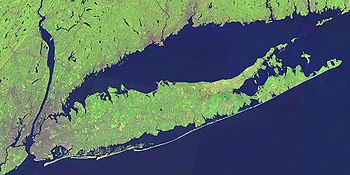 Long Island, as part of the Outer Lands
region, is formed largely of two spines of glacial moraine, with a large, sandy outwash plain beyond. These moraines consist of gravel and loose rock left behind during the two most recent pulses of Wisconsin glaciation
during the Ice Ages some 21,000 years ago (19,000 BC). The northern moraine, which directly abuts the North Shore of Long Island
at points, is known as the Harbor Hill
moraine. The more southerly moraine, known as the Ronkonkoma
moraine, forms the "backbone" of Long Island; it runs primarily through the very center of Long Island, roughly coinciding with the length of the Long Island Expressway.
The land to the south of this moraine to the South Shore is the outwash
plain of the last glacier. One part of the outwash plain was known as the Hempstead Plains
, and this land contained one of the few natural prairies to exist east of the Appalachian Mountains.
The glacier
s melted and receded to the north, resulting in the difference between the North Shore beaches and the South Shore beaches. The North Shore beaches are rocky from the remaining glacial debris, while the South Shore's are crisp, clear, outwash sand. Jayne's Hill
, at 401 feet (122.2 m), is the highest hill along either moraine; another well-known summit is Bald Hill
in Brookhaven Town, not far from its geographical center at Middle Island
. The glaciers also formed Lake Ronkonkoma
in Suffolk County and Lake Success in Nassau County, each a deep kettle lake.
; it has warm, humid summers and cool wet winters. Long Island is classified as humid subtropical by some definitions. The Atlantic Ocean helps bring afternoon sea breezes that temper the heat in the warmer months and limit the frequency and severity of thunderstorms. Long Island has a moderately sunny climate, averaging between 2,400 and 2,800 hours of sunshine
annually.
Average yearly snowfall totals range from approximately 20 to 35 in (50.8 to 88.9 cm), with the north shore and western parts averaging more than the south shore and the east end. In any given winter, however, some parts of the island could see up to 75 inches (190.5 cm) or more. There are also some very quiet winters, in which most parts of the island could see less than 10 inches (25.4 cm).
Long Island is somewhat vulnerable to hurricanes.
Its northern location and relatively cool waters tend to weaken storms to below hurricane strength by the time they reach Long Island, although despite this, some storms have made landfall at Category 1 or greater strength, including two unnamed Category 3 storms: the 1938 New England Hurricane (also known as the Long Island Express) and another in 1944. Named hurricanes that crossed Long Island include Hurricane Donna
in 1960, Hurricane Belle in 1976, Hurricane Gloria
in 1985, Hurricane Bob
in 1991 (brushed the eastern tip) and Hurricane Floyd
in 1999. (There is debate among climatologists as to whether Hurricane Floyd
made landfall as a Category 1 or as a very strong "almost hurricane strength" tropical storm. The official records note it as the latter.) In August 2011, portions of Long Island were evacuated in preparation for Hurricane Irene
, a Category 1 hurricane.
The combined population of Nassau and Suffolk counties was 2,832,882 people; Suffolk County's share at 1,493,350 and Nassau County's at 1,339,532. Nassau County had a larger population for decades, but Suffolk County surpassed it in the 1990 census as growth and development continued to spread eastward.
As Suffolk County has over twice the land area of Nassau County, the latter still has a much higher population density. Combining all four counties, Long Island's population is greater than 38 of the 50 United States. If it were an independent nation, Long Island would rank as the 96th most populated nation, falling between Switzerland
and Israel
.
Population figures from the U.S. Census Bureau Census 2010
show that whites are the largest racial group in all four counties, and are in the majority in Nassau and Suffolk counties. In 2002, the New York Times cited a study by the non-profit group ERASE Racism, which determined that Nassau and Suffolk counties are the most racially segregated suburbs in the United States.
Catholics are the largest religious group on Long Island, with non-affiliated in second place. Catholics make up 52% of the population of Nassau and Suffolk, versus 22% for the country as a whole, with Jews at 16% and 7% respectively versus 1.7% nationwide. Even more surprising is the small percentage of Protestants, 7% and 8% respectively, for Nassau and Suffolk Counties, versus 23% for the entire country on the same survey, and 50% on self-identification surveys.
Long Island has a substantial Italian-American population. About 26% of Long Island residents claim Italian ancestry. 28% of Suffolk County
residents claim Italian ancestry.
A 2010 New York Times article stated that the expansion of the immigrant workforce on Long Island has not displaced any jobs from other Long Island residents, and that, in fact, half the immigrants on Long Island hold white-collar positions.
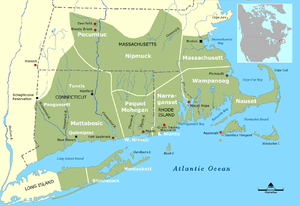 At the time of European contact
, the Lenape
people (named the Delaware by Europeans) inhabited the western end of the Island, and spoke the Munsee dialect of the Algonquian language family
. Giovanni da Verrazzano was the first European to record an encounter with these people when he entered what is now New York Bay
in 1524. The eastern portion of the island was inhabited by speakers of the Mohegan-Montauk-Narragansett language
group of the same language family, indicative of their ties to the aboriginal peoples inhabiting what is now Connecticut
and Rhode Island
. In 1609, the English
navigator Henry Hudson
explored the harbor and may have landed at Coney Island. The western portion of Long Island was later settled by the Dutch
, while the eastern region was settled by English Puritans from New Haven, Connecticut
, settling in Southold
on October 21, 1640.
From the first half of the 17th century the Conklin family and other related families, like the Ketchums, Smiths, and Gardiners, owned the entire area of Long Island, Gardiners Island
, and Manhattan.
The entirety of Long Island came under English dominion
in 1664, when the Dutch colony of New Amsterdam
was taken over by the English and renamed New York
. In 1683, the English established the three original counties on Long Island: Kings, Queens, and Suffolk. After the English took the land the Conklins were left with 3500 square miles (9,065 km²) of New York land.
During the American Revolutionary War
, the island was captured from General George Washington
early by the British in the Battle of Long Island
, the largest battle of the entire war. The island remained a British stronghold until the end of the war, and was the center of much of General Washington's espionage
activities due to the proximity to the British North American military headquarters in New York City.
After the British victory on Long Island many Patriots
fled, leaving mostly Loyalists
behind.
In the 19th century, Long Island was still mainly rural
and agricultural. The predecessor to the Long Island Rail Road
began service in 1836 from the South Ferry, Brooklyn
, through Brooklyn to Jamaica in Queens
, and completed the line to the east end of Long Island in 1844. From 1830 until 1930, population roughly doubled every twenty years, and several cities were incorporated, such as the City of Brooklyn in Kings County, and Long Island City in Queens.
 Until the 1883 completion of the Brooklyn Bridge
, the only connection between Long Island and the rest of the United States was by boat. Other bridges and tunnels followed, and a suburban character spread as population increased. On January 1, 1898, Kings County and portions of Queens were consolidated into The City of Greater New York
, abolishing all cities and towns within them. The easternmost 280 square miles (725.2 km²) of Queens County, which were not part of the consolidation plan,
separated from Queens in 1899 to form Nassau County
.
In the 1920s and 1930s, Long Island began the transformation from backwoods and farms to the paradigm of the American suburb
. Railroads made possible commuting suburbs before construction of the Long Island Expressway and other major roadways. Robert Moses
created various parkway projects to span the island, along with state parks for the enjoyment of many. Gradually, development started to follow the parkways, with various communities springing up along the more traveled routes.
After World War II, Long Island's population skyrocketed, mostly in Nassau County
and western Suffolk County
. People who worked and lived in New York City moved out to Long Island in new developments built during the post-war boom. The most famous post-war development was the town of Levittown
: the area became the first place to massively reproduce houses on a grand scale- providing opportunities for GIs returning home to start a family. The immigration waves of southern and eastern Europe, followed by more recent ones from Latin America, have been pivotal in creating the diversity on Long Island that many other American regions lack. These immigrations are reflected in the large Italian American
, Irish American
and Jewish American populations.
 The counties of Nassau
and Suffolk
have been long renowned for their affluence.
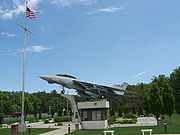
From about 1930 to about 1990, Long Island was considered one of the aviation centers of the United States, with companies such as Grumman Aircraft, Republic, Fairchild, and Curtiss
having their headquarters and factories on Long Island.
Long Island has played a prominent role in scientific research and in engineering. It is the home of the Brookhaven National Laboratory
in nuclear physics
and Department of Energy
research.
In recent decades companies such as Sperry Rand, Computer Associates (headquartered in Islandia
), Motorola
Enterprise Mobility (now occupying the former headquarters of Symbol Technologies
and a former Grumman plant in Holtsville
), have made Long Island a center for the computer industry. Stony Brook University of the State University of New York
conducts far-ranging medical and technology research.
Long Island is also home to the Cold Spring Harbor Laboratory
, which was directed for 35 years by James D. Watson
(who, along with Francis Crick
, discovered the double helix structure of DNA
).
Long Island is home to the East Coast
's largest industrial park, the Hauppauge Industrial Park. The park has over 1,300 companies employing more than 55,000 Long Islanders. Companies in the park and abroad are represented by the Hauppauge Industrial Association
.
As many as 20 percent of Long Islanders commute to New York City jobs.
The eastern end of the island is still partly agricultural. In the last 25 years, development of vineyard
s on the North Fork became a major new industry, replacing potato fields. Pumpkin farms have been added to traditional truck farming. Farms allow fresh fruit picking by Long Islanders for much of the year. Fishing
continues to be an important industry, especially at Huntington
, Northport
, Montauk
, and other coastal communities of the East End and South Shore.
and Suffolk County
each have their own governments, with a County Executive
leading each. Each has a county legislature and countywide-elected officials, such as district attorney, county clerk and county comptroller.
The towns in both counties have their own governments as well, with town supervisors and a town council.
Within Nassau, there are two small incorporated cities (Glen Cove
and Long Beach
) with a combined population of about 65,000.
Brooklyn
and Queens
, on the other hand, do not have independent county governments. As borough
s of New York City, both have Borough President
s, which have been largely ceremonial offices since the shutdown of the New York City Board of Estimate
.
Long Island is home to two Native American Indian reservation
s, Poospatuck Reservation
and Shinnecock Reservation
. Both Reservations are in Suffolk County
. Numerous island place names (Towns) are Native American in origin.
; Nassau and Suffolk counties respectively have the Nassau County Police Department and Suffolk County Police Department. New York State Police
patrol state parks and parkways; several dozen villages and the two cities in Nassau have their own police departments.
Both Nassau and Suffolk have a sheriff's office that handles civil process, evictions, warrant service and enforcement, prisoner transport and detention, and operation of the county jail.
The Nassau County Sheriff's Department employs about 1,000 correction officers and 100 deputy sheriffs and performs the above duties although deputy sheriffs have full police officer powers and can make arrests for any crime they come across.
The Suffolk County Sheriff's Office
has approximately 900 correction officers and 260 deputy sheriffs and operates the two jail facilities in Suffolk County.
The deputy sheriffs in Suffolk County have a full service patrol unit, including K9, Aviation, SWAT, and Marine divisions as well as a Criminal Investigation Division and various other special details and assignments.
N.Y.S Court Officers
secure court houses for Long Island courts. Additionally, the Suffolk County Sheriff's Department now maintains patrols along the Long Island Expressway as well as Sunrise Highway. State parkways are still patrolled by the New York State Police.
On March 28, 2008 Suffolk County, New York Comptroller Joseph Sawicki proposed a plan that would make Long Island (specifically, Nassau and Suffolk counties) the 51st state
of the United States of America.
Sawicki says that all the Long Island taxpayers' money would stay on Long Island, rather than the funds being dispersed all over the entire state of New York. The state of Long Island would include over 2.7 million people. So far Nassau County executives have not expressed interest in joining in the secession proposal, which would need to be approved by the NY State Legislature.

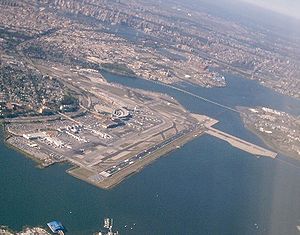
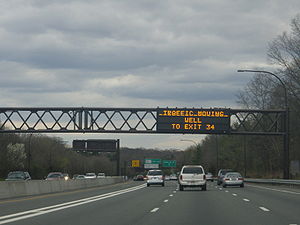

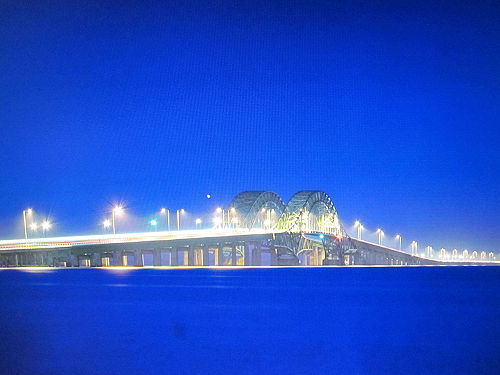
Every major form of transportation serves Long Island, including John F. Kennedy International Airport
, LaGuardia Airport
, and Long Island MacArthur Airport
, multiple smaller airports, railroads, subways, and several major highways.
There are historic and modern bridges, recreational and commuter trails, and ferries serving various parts of all of Long island.
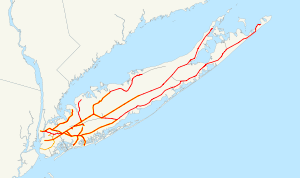
The Long Island Expressway, Northern State Parkway
, and Southern State Parkway
, all products of the automobile-centered planning of Robert Moses
, make east-west travel on the island straightforward, if not always quick.
There are currently ten road crossings out of Long Island, all within New York City limits at the extreme western end of the island. Plans for a Long Island Crossing at various locations in Nassau and Suffolk Counties (a proposed bridge or tunnel that would link Long Island to the south with New York or Connecticut to the north across Long Island Sound) have been discussed for decades, but there are currently no firm plans to construct such a crossing.
The MTA
implements mass transportation for the New York metropolitan area, including all five boroughs of New York City
, the suburban counties of Dutchess, Nassau, Orange, Putnam, Rockland, Suffolk and Westchester, all of which together are the "Metropolitan Commuter Transportation District (MCTD)".
The MTA
is the largest public transportation provider in the Western Hemisphere
. Its agencies serve 14.6 million people spread over 5,000 square miles (13,000 km²) from New York City through southeastern New York State (including Long Island and the lower Hudson Valley), and Connecticut. Combined the MTA agencies now move more than 2.6 billion rail and bus customers a year while employing some 70,000 workers.
Suffolk County Transit, an agent of the Suffolk County government, provides bus services in Suffolk County.
, the largest school district in the United States. Long Island is also home to a number of private and parochial schools.
Public:
Private:
For colleges in Brooklyn and Queens, see List of colleges and universities in New York City.
Small family-owned pizzerias are ubiquitous. It is not uncommon for a town on Long Island to have several different pizzerias, each with its own distinct flavor. The Long Island Pizza Festival & Bake-Off
is an annual competition in which "mom and pop" pizzerias compete to be named best on Long Island.
Bagel
stores and delis are common. Some bagel stores are Jewish-owned and approved as kosher. Long Island bagels are considered some of the best in the world. Often more than one deli can be found in a town.
Diners also abound on Long Island; many are Greek- and German-owned, and many, depending on the business of the town, are open all night, for late-night patrons.
Almost all major fast food and casual dining chains have a presence on Long Island.
rs Jim Brown
, Julius Erving
, John Mackey
, Nick Drahos
, and Carl Yastrzemski
. Others include Gold Medalists Sarah Hughes
and Derrick Adkins
, D'Brickashaw Ferguson
, Billy Donovan
, Larry Brown
, Rick Pitino
, John McEnroe
, Jumbo Elliott, Mick Foley
, Zack Ryder
, Matt Serra
, Boomer Esiason
, Vinny Testaverde
, Craig Biggio
, Frank Catalanotto
, Greg Sacks
, Rob Burnett
, Steve Park
, Frank Viola
, Chris Weidman
, Marques Colston
and Speedy Claxton
. Several current NHL Players such as Vancouver Canuck Christopher Higgins
and Matt Gilroy
as well as Toronto Maple Leaf Mike Komisarek
and Los Angeles King Rob Scuderi
were all raised on Long Island. Both Komisarek and Higgins played on the same Suffolk County Hockey League team at an early age, and later played on the Montreal Canadiens
together. Nick Drahos was an All Scholastic and All Long Island honoree at Lawrence High School, Nassau Co. in 1936 and 1937, and a 2-time Unanimous National College All-American in the years of 1939 and 1940 at Cornell University.
Ebbets Field
, which stood in Brooklyn from 1913 to 1957, was the home of the Brooklyn Dodgers baseball team, who decamped to California
after the 1957 season to become the Los Angeles Dodgers
. The Dodgers won several National League
pennants in the 1940s and 1950s, losing several times in the World Series
—often called Subway Series
—to their Bronx
rivals, the New York Yankees
. The Dodgers won their lone championship in Brooklyn in the 1955 World Series
versus the Yankees. The Barclays Center is a proposed sports arena, business and residential complex to be built partly on a platform over the Atlantic Yards
at Atlantic Avenue
, and is intended to serve as a new home for the New Jersey Nets
.
The New York Mets
baseball team now plays at the new Citi Field in Flushing
, Queens. Their former stadium, Shea Stadium
was also home for The New York Jets
football team from 1964 until 1983. The new stadium is designed with an exterior facade and main entry rotunda inspired by Ebbets Field. The Brooklyn Cyclones
are a minor league baseball
team, affiliated with the New York Mets. The Cyclones play at KeySpan Park
just off the boardwalk on Coney Island
in Brooklyn.
Nassau County is home to the New York Islanders
of the National Hockey League
and the New York Dragons
of the Arena Football League, who both play at the Nassau Coliseum in Uniondale
. Long Island has been a hot spot for outdoor lacrosse at the youth and college level, which made way for a Major League Lacrosse
team in 2001, the Long Island Lizards
. The Lizards play at Mitchel Athletic Complex
in Uniondale
. The longest dirt Thoroughbred racecourse in the world is located in the Nassau County community of Elmont
at Belmont Park
. Long Island has also been at the forefront of Semi-Professional football. The Empire State Demon Knights of the Five Star Football League have called Long Island their home since they relinquished the name Kings County Wolfpack and moved to Suffolk County.
Long Island is also home to the Long Island Ducks
minor league baseball
team of the Atlantic League
. Their stadium, Citibank Park
, is located in Central Islip
. The American Basketball Association's
Strong Island Sound
play home games at Suffolk County Community College
. The two main rugby teams are the Long Island RFC in East Meadow
and the Suffolk Bull Moose in Stony Brook
. It also has a professional soccer club, the Long Island Rough Riders
, who play at Mitchel Athletic Complex
in Uniondale. The Rough Riders have won two national championships, in 1995 and 2002.
Another category of sporting events popular in this region are Firematic Racing
events, involving many local Volunteer fire department
s.
Long Island also hosts one of the four tennis
grand slams, the US Open. Every August (September, in Olympic years) the best tennis players in the world travel to Long Island to play the championships, which is held in the USTA National Tennis Center
, in Corona Park, near the La Guardia Airport. The complex also contains the biggest tennis stadium in the world, the Arthur Ashe Stadium
.
 Music on Long Island (Nassau and Suffolk) is strongly influenced by the proximity to New York City and by the youth culture of the suburb
s.
Psychedelic rock
was widely popular in the 1960s as flocks of disaffected youth travelled to NYC to participate in protest and the culture of the time. R & B also has a history on Long Island, especially in areas close to New York City. In the late 1970s through the 1980s, the influence of radio station WLIR-FM made Long Island one of the first places in the U.S. to hear and embrace European New Wave
bands such as Depeche Mode
, the Pet Shop Boys
, and Culture Club
. In the 1990s Hip-hop became very popular with rap pioneers Rakim
and Public Enemy growing up on Long Island.
Famous rock bands that originated on Long Island include Dream Theater
, Blue Oyster Cult
, Twisted Sister
and guitar virtuoso Steve Vai
and Joe Satriani
The Nassau Coliseum and Nikon at Jones Beach Theater
are venues used by national touring acts as performance spaces for concernts. Nikon at Jones Beach Theater
is an outdoor amphitheatre
, located at Jones Beach State Park
. It is a popular place to view summer concerts, with new as well as classic artists performing there during the summer months. It hosts a large Fourth of July fireworks show every year, and the stands are filled. People park cars along the highway leading to the show, and others watch from the nearby beaches.
Long Island is also known for its schools' music programs. Stony Brook University is well known for its outstanding trumpet studio. Many schools in Suffolk County have distinguished music programs, with high numbers of students who are accepted into the state-wide All-State music groups, or even the National All-Eastern Coast music groups. Both the Suffolk County and Nassau County Music Educator's Associations are recognized by The National Association of Music Education (MENC
),
and host numerous events, competitions, and other music-related activities.
New York
New York is a state in the Northeastern region of the United States. It is the nation's third most populous state. New York is bordered by New Jersey and Pennsylvania to the south, and by Connecticut, Massachusetts and Vermont to the east...
, just east of Manhattan
Manhattan
Manhattan is the oldest and the most densely populated of the five boroughs of New York City. Located primarily on the island of Manhattan at the mouth of the Hudson River, the boundaries of the borough are identical to those of New York County, an original county of the state of New York...
. Stretching northeast into the Atlantic Ocean, Long Island contains four counties, two of which are borough
Borough (New York City)
New York City, one of the largest cities in the world, is composed of five boroughs. Each borough now has the same boundaries as the county it is in. County governments were dissolved when the city consolidated in 1898, along with all city, town, and village governments within each county...
s of New York City
New York City
New York is the most populous city in the United States and the center of the New York Metropolitan Area, one of the most populous metropolitan areas in the world. New York exerts a significant impact upon global commerce, finance, media, art, fashion, research, technology, education, and...
(Queens
Queens
Queens is the easternmost of the five boroughs of New York City. The largest borough in area and the second-largest in population, it is coextensive with Queens County, an administrative division of New York state, in the United States....
and Brooklyn
Brooklyn
Brooklyn is the most populous of New York City's five boroughs, with nearly 2.6 million residents, and the second-largest in area. Since 1896, Brooklyn has had the same boundaries as Kings County, which is now the most populous county in New York State and the second-most densely populated...
), and two of which are mainly suburb
Suburb
The word suburb mostly refers to a residential area, either existing as part of a city or as a separate residential community within commuting distance of a city . Some suburbs have a degree of administrative autonomy, and most have lower population density than inner city neighborhoods...
an (Nassau
Nassau County, New York
Nassau County is a suburban county on Long Island, east of New York City in the U.S. state of New York, within the New York Metropolitan Area. As of the 2010 census, the population was 1,339,532...
and Suffolk
Suffolk County, New York
Suffolk County is a county located in the U.S. state of New York on the eastern portion of Long Island. As of the 2010 census, the population was 1,493,350. It was named for the county of Suffolk in England, from which its earliest settlers came...
). The term "Long Island" often refers only to Nassau and Suffolk counties in order to differentiate them from New York City, though all four counties on the island are part of the New York metropolitan area
New York metropolitan area
The New York metropolitan area, also known as Greater New York, or the Tri-State area, is the region that composes of New York City and the surrounding region...
.
As of the 2010 census
United States Census, 2010
The Twenty-third United States Census, known as Census 2010 or the 2010 Census, is the current national census of the United States. National Census Day was April 1, 2010 and is the reference date used in enumerating individuals...
, Long Island had a population of 7,568,304,
making it the most populated island in any U.S. state or territory. It is also the 17th most populous island in the world, ahead of Ireland
Ireland
Ireland is an island to the northwest of continental Europe. It is the third-largest island in Europe and the twentieth-largest island on Earth...
, Jamaica
Jamaica
Jamaica is an island nation of the Greater Antilles, in length, up to in width and 10,990 square kilometres in area. It is situated in the Caribbean Sea, about south of Cuba, and west of Hispaniola, the island harbouring the nation-states Haiti and the Dominican Republic...
and the Japanese island of Hokkaidō
Hokkaido
, formerly known as Ezo, Yezo, Yeso, or Yesso, is Japan's second largest island; it is also the largest and northernmost of Japan's 47 prefectural-level subdivisions. The Tsugaru Strait separates Hokkaido from Honshu, although the two islands are connected by the underwater railway Seikan Tunnel...
. Its population density is 5402 PD/sqmi.
If it were a state, Long Island would rank 13th in population (after Virginia) and first in population density.
Both the longest
and the largest island in the contiguous United States
Contiguous United States
The contiguous United States are the 48 U.S. states on the continent of North America that are south of Canada and north of Mexico, plus the District of Columbia....
, Long Island extends 118 miles (189.9 km) eastward from New York Harbor
New York Harbor
New York Harbor refers to the waterways of the estuary near the mouth of the Hudson River that empty into New York Bay. It is one of the largest natural harbors in the world. Although the U.S. Board of Geographic Names does not use the term, New York Harbor has important historical, governmental,...
to Montauk Point, and has a maximum north-to-south expanse of 23 miles (37 km) between the northern Long Island Sound
Long Island Sound
Long Island Sound is an estuary of the Atlantic Ocean, located in the United States between Connecticut to the north and Long Island, New York to the south. The mouth of the Connecticut River at Old Saybrook, Connecticut, empties into the sound. On its western end the sound is bounded by the Bronx...
coast and the southern Atlantic
Atlantic Ocean
The Atlantic Ocean is the second-largest of the world's oceanic divisions. With a total area of about , it covers approximately 20% of the Earth's surface and about 26% of its water surface area...
coast.
With a land area of 1,401 square miles (3,629 km2), Long Island is the 11th largest island in the United States and the 148th largest island in the world — larger than the 1214 square miles (3,144.2 km²) of the smallest state, Rhode Island
Rhode Island
The state of Rhode Island and Providence Plantations, more commonly referred to as Rhode Island , is a state in the New England region of the United States. It is the smallest U.S. state by area...
.
Two of New York City
New York City
New York is the most populous city in the United States and the center of the New York Metropolitan Area, one of the most populous metropolitan areas in the world. New York exerts a significant impact upon global commerce, finance, media, art, fashion, research, technology, education, and...
's major airports, LaGuardia Airport
LaGuardia Airport
LaGuardia Airport is an airport located in the northern part of Queens County on Long Island in the City of New York. The airport is located on the waterfront of Flushing Bay and Bowery Bay, and borders the neighborhoods of Astoria, Jackson Heights and East Elmhurst. The airport was originally...
and JFK International Airport
John F. Kennedy International Airport
John F. Kennedy International Airport is an international airport located in the borough of Queens in New York City, about southeast of Lower Manhattan. It is the busiest international air passenger gateway to the United States, handling more international traffic than any other airport in North...
, are located on Long Island, in Queens. Nine bridges and 13 tunnels (including railway tunnels) connect Brooklyn and Queens (and thus Long Island) to the three other boroughs of New York City. Ferries connect Suffolk County northward across Long Island Sound
Long Island Sound
Long Island Sound is an estuary of the Atlantic Ocean, located in the United States between Connecticut to the north and Long Island, New York to the south. The mouth of the Connecticut River at Old Saybrook, Connecticut, empties into the sound. On its western end the sound is bounded by the Bronx...
to the state of Connecticut
Connecticut
Connecticut is a state in the New England region of the northeastern United States. It is bordered by Rhode Island to the east, Massachusetts to the north, and the state of New York to the west and the south .Connecticut is named for the Connecticut River, the major U.S. river that approximately...
.
Overview
The westernmost end of Long Island contains the New York City boroughsBorough (New York City)
New York City, one of the largest cities in the world, is composed of five boroughs. Each borough now has the same boundaries as the county it is in. County governments were dissolved when the city consolidated in 1898, along with all city, town, and village governments within each county...
of Brooklyn
Brooklyn
Brooklyn is the most populous of New York City's five boroughs, with nearly 2.6 million residents, and the second-largest in area. Since 1896, Brooklyn has had the same boundaries as Kings County, which is now the most populous county in New York State and the second-most densely populated...
(Kings County) and Queens
Queens
Queens is the easternmost of the five boroughs of New York City. The largest borough in area and the second-largest in population, it is coextensive with Queens County, an administrative division of New York state, in the United States....
(Queens County). The central and eastern portions contain the suburb
Suburb
The word suburb mostly refers to a residential area, either existing as part of a city or as a separate residential community within commuting distance of a city . Some suburbs have a degree of administrative autonomy, and most have lower population density than inner city neighborhoods...
an Nassau
Nassau County, New York
Nassau County is a suburban county on Long Island, east of New York City in the U.S. state of New York, within the New York Metropolitan Area. As of the 2010 census, the population was 1,339,532...
and Suffolk
Suffolk County, New York
Suffolk County is a county located in the U.S. state of New York on the eastern portion of Long Island. As of the 2010 census, the population was 1,493,350. It was named for the county of Suffolk in England, from which its earliest settlers came...
counties. However, colloquial usage of the term "Long Island" refers only to Nassau and Suffolk counties.
The more dense and urban
Urban area
An urban area is characterized by higher population density and vast human features in comparison to areas surrounding it. Urban areas may be cities, towns or conurbations, but the term is not commonly extended to rural settlements such as villages and hamlets.Urban areas are created and further...
Brooklyn and Queens are not usually referred to as "Long Island", since they are a part of New York City, though before those counties amalgamated into the city, they were often so identified.
Nassau County is more developed than Suffolk County, with pockets of rural affluence within the Gold Coast of the North Shore
North Shore (Long Island)
The North Shore of Long Island is the area along Long Island's northern coast, bordering Long Island Sound. The region has long been the most affluent on Long Island, as well as the most affluent in the New York metropolitan area, which has earned it the nickname "the Gold Coast." Though some...
and the Five Towns
Five Towns
The Five Towns is an informal grouping of villages and hamlets in Nassau County, New York, United States on the South Shore of western Long Island adjoining the border with Queens County in New York City. Despite the name, none of the communities is a town...
area on the South Shore
South Shore (Long Island)
The South Shore of Long Island, in the U.S. state of New York, is the area along Long Island's Atlantic Ocean shoreline. Though some consider the South Shore to include parts of Queens, particularly the beach communities in the Rockaways such as Belle Harbor, the term is generally used to refer to...
. South Shore
South Shore (Long Island)
The South Shore of Long Island, in the U.S. state of New York, is the area along Long Island's Atlantic Ocean shoreline. Though some consider the South Shore to include parts of Queens, particularly the beach communities in the Rockaways such as Belle Harbor, the term is generally used to refer to...
communities are built along protected wetlands of the main land mass as well as white sand beaches of Outer Barrier Islands fronting on the Atlantic Ocean. Old money
Old Money
Old money is "the inherited wealth of established upper-class families " or "a person, family, or lineage possessing inherited wealth." The term typically describes a class of the super-rich, who have been able to maintain their wealth across multiple generations.- United States :American locations...
from the time of the American Revolutionary War
American Revolutionary War
The American Revolutionary War , the American War of Independence, or simply the Revolutionary War, began as a war between the Kingdom of Great Britain and thirteen British colonies in North America, and ended in a global war between several European great powers.The war was the result of the...
populated the island and still does to this day, amongst many others including recent immigrants. Wealthy Americans and Europeans in the gilded age
Gilded Age
In United States history, the Gilded Age refers to the era of rapid economic and population growth in the United States during the post–Civil War and post-Reconstruction eras of the late 19th century. The term "Gilded Age" was coined by Mark Twain and Charles Dudley Warner in their book The Gilded...
built lavish country homes on the North Shore of Nassau County. Today, although many of the massive estates have been demolished, many exist in their original state, while others have become parks, arboretums, universities and museums.
Owing to economic growth and the suburbanization of the metropolitan region after World War II, Nassau was the fastest growing county in the United States from the 1950s to the 1970s. Suffolk County remains less congested despite substantial growth in high technology and light manufacturing sectors since 1990, although traffic has been increasing in recent years. In its far east sections, Suffolk remains small-town rural out east, as in Greenport
Greenport, Suffolk County, New York
Greenport is a village in Suffolk County, New York, United States. It is located on the north fork of Long Island. The population was 2,048 at the 2000 census....
on the North Fork
North Fork, Suffolk County, New York
The North Fork is a 30-mile-long peninsula in the northeast part of Suffolk County, New York, roughly parallel with an even longer peninsula known as the South Fork...
and some of the outward areas of The Hamptons, although summer tourism swells the population in those areas. Western Suffolk, such as the towns of Huntington and Babylon, are becoming increasingly more populated and are beginning to resemble towns in Nassau.
Long Island is geographically part of the Mid-Atlantic
Mid-Atlantic States
The Mid-Atlantic states, also called middle Atlantic states or simply the mid Atlantic, form a region of the United States generally located between New England and the South...
, however many towns and hamlets along the island's north shore, in western Nassau County and in eastern Suffolk County, such as Oyster Bay, Port Jefferson
Port Jefferson, New York
The Incorporated Village of Port Jefferson is located in the town of Brookhaven in Suffolk County, New York on the North Shore of Long Island. As of the 2000 United States Census, the village population was 7,837...
and Sag Harbor seem to resemble New England
New England
New England is a region in the northeastern corner of the United States consisting of the six states of Maine, New Hampshire, Vermont, Massachusetts, Rhode Island, and Connecticut...
towns, while many of the towns and hamlets along the south shore
South Shore (Long Island)
The South Shore of Long Island, in the U.S. state of New York, is the area along Long Island's Atlantic Ocean shoreline. Though some consider the South Shore to include parts of Queens, particularly the beach communities in the Rockaways such as Belle Harbor, the term is generally used to refer to...
, such as Long Beach, Valley Stream, and Babylon seem to resemble Mid-Atlantic coastal communities, especially those on the shore between New Jersey
New Jersey
New Jersey is a state in the Northeastern and Middle Atlantic regions of the United States. , its population was 8,791,894. It is bordered on the north and east by the state of New York, on the southeast and south by the Atlantic Ocean, on the west by Pennsylvania and on the southwest by Delaware...
and Virginia
Virginia
The Commonwealth of Virginia , is a U.S. state on the Atlantic Coast of the Southern United States. Virginia is nicknamed the "Old Dominion" and sometimes the "Mother of Presidents" after the eight U.S. presidents born there...
. Many of the towns in Long Island's central region resemble typical suburban towns, with strip malls, traffic-clogged avenues and fast-food restaurants.
According to the US Census Bureau's 2008 American Community Survey, Nassau and Suffolk Counties have the 10th and 25th highest median household incomes in the nation, respectively.
Additionally, Nassau County is the third-richest county per capita in New York State
New York locations by per capita income
New York is the sixth richest state in the United States of America, with a per capita income of $40,272.29 . - New York counties ranked by per capita income :...
, and the 30th richest in the nation. Long Island's Nassau County has the second-highest property taxes in the United States.
Suffolk County has redeveloped North Fork potato fields into a burgeoning wine region. The South Fork is known for beach towns, including the world-renowned Hamptons, and for Montauk Point, home of Montauk Point Lighthouse at the eastern tip of the island.
Geology
Outer Lands
The Outer Lands is a term denoting the prominent terminal moraine archipelagic region off the southern coast of New England in the United States...
region, is formed largely of two spines of glacial moraine, with a large, sandy outwash plain beyond. These moraines consist of gravel and loose rock left behind during the two most recent pulses of Wisconsin glaciation
Wisconsin glaciation
The last glacial period was the most recent glacial period within the current ice age occurring during the last years of the Pleistocene, from approximately 110,000 to 10,000 years ago....
during the Ice Ages some 21,000 years ago (19,000 BC). The northern moraine, which directly abuts the North Shore of Long Island
North Shore (Long Island)
The North Shore of Long Island is the area along Long Island's northern coast, bordering Long Island Sound. The region has long been the most affluent on Long Island, as well as the most affluent in the New York metropolitan area, which has earned it the nickname "the Gold Coast." Though some...
at points, is known as the Harbor Hill
Harbor Hill
Harbor Hill was a spectacular Long Island mansion built from 1899-1902 in Roslyn, New York, commissioned by Clarence Hungerford Mackay. It was designed by McKim, Mead, and White, with Stanford White supervising the project...
moraine. The more southerly moraine, known as the Ronkonkoma
Ronkonkoma, New York
Ronkonkoma is a census-designated place on Long Island in the Town of Islip, Suffolk County, New York, United States. The population was 20,029 at the 2000 census...
moraine, forms the "backbone" of Long Island; it runs primarily through the very center of Long Island, roughly coinciding with the length of the Long Island Expressway.
The land to the south of this moraine to the South Shore is the outwash
Sandur
A sandur is a glacial outwash plain formed of sediments deposited by meltwater at the terminus of a glacier.- Formation :Sandar are found in glaciated areas, such as Svalbard, Kerguelen Islands, and Iceland...
plain of the last glacier. One part of the outwash plain was known as the Hempstead Plains
Hempstead Plains
The Hempstead Plains is a region of central Long Island in New York state in what is now Nassau County. It was once an open expanse of native grassland estimated to once extend to about . It was separated from the North Shore of Long Island by the Harbor Hill Moraine, later approximately the route...
, and this land contained one of the few natural prairies to exist east of the Appalachian Mountains.
The glacier
Glacier
A glacier is a large persistent body of ice that forms where the accumulation of snow exceeds its ablation over many years, often centuries. At least 0.1 km² in area and 50 m thick, but often much larger, a glacier slowly deforms and flows due to stresses induced by its weight...
s melted and receded to the north, resulting in the difference between the North Shore beaches and the South Shore beaches. The North Shore beaches are rocky from the remaining glacial debris, while the South Shore's are crisp, clear, outwash sand. Jayne's Hill
Jayne's Hill
Jayne's Hill is the highest point on New York's Long Island, with an elevation of between and above sea level...
, at 401 feet (122.2 m), is the highest hill along either moraine; another well-known summit is Bald Hill
Bald Hill (Farmingville, New York)
Bald Hill, located in the hamlet of Farmingville, New York, part of the Town of Brookhaven, is one of the highest areas of elevation on Long Island. The highest elevation in the Bald Hill area is . Though local residents often claim it to be the highest point on Long Island, that honor actually...
in Brookhaven Town, not far from its geographical center at Middle Island
Middle Island, New York
Middle Island is a hamlet in Suffolk County, New York, United States. The population was 9,702 at the 2000 census. It is situated between the towns of Coram and Ridge, to the west and east, respectively, and Rocky Point and Yaphank to the north and south...
. The glaciers also formed Lake Ronkonkoma
Ronkonkoma Lake
Lake Ronkonkoma, Long Island's largest freshwater lake, is in Suffolk County, New York, and has a circumference of about , and is across on average....
in Suffolk County and Lake Success in Nassau County, each a deep kettle lake.
Climate
Long Island has a climate similar to other coastal areas of the Northeastern United StatesNortheastern United States
The Northeastern United States is a region of the United States as defined by the United States Census Bureau.-Composition:The region comprises nine states: the New England states of Connecticut, Maine, Massachusetts, New Hampshire, Rhode Island and Vermont; and the Mid-Atlantic states of New...
; it has warm, humid summers and cool wet winters. Long Island is classified as humid subtropical by some definitions. The Atlantic Ocean helps bring afternoon sea breezes that temper the heat in the warmer months and limit the frequency and severity of thunderstorms. Long Island has a moderately sunny climate, averaging between 2,400 and 2,800 hours of sunshine
Sunshine
Sunshine is sunlight, the electromagnetic radiation emitted by the Sun, especially in the visible wavelengths.Sunshine may also refer to:-Film and television:*Sunshine , a historical film directed by István Szabó...
annually.
Average yearly snowfall totals range from approximately 20 to 35 in (50.8 to 88.9 cm), with the north shore and western parts averaging more than the south shore and the east end. In any given winter, however, some parts of the island could see up to 75 inches (190.5 cm) or more. There are also some very quiet winters, in which most parts of the island could see less than 10 inches (25.4 cm).
Long Island is somewhat vulnerable to hurricanes.
Its northern location and relatively cool waters tend to weaken storms to below hurricane strength by the time they reach Long Island, although despite this, some storms have made landfall at Category 1 or greater strength, including two unnamed Category 3 storms: the 1938 New England Hurricane (also known as the Long Island Express) and another in 1944. Named hurricanes that crossed Long Island include Hurricane Donna
Hurricane Donna
Hurricane Donna in the 1960 Atlantic hurricane season was a Cape Verde-type hurricane which moved across the Leeward Islands, Puerto Rico, Hispanola, Cuba, The Bahamas, and every state on the East Coast of the United States...
in 1960, Hurricane Belle in 1976, Hurricane Gloria
Hurricane Gloria
Hurricane Gloria was a powerful Cape Verde-type hurricane that formed during the 1985 Atlantic hurricane season and prowled the Atlantic Ocean from September 16 to September 28. Gloria reached Category 4 status on the Saffir-Simpson Hurricane Scale near the Bahamas, but weakened significantly...
in 1985, Hurricane Bob
Hurricane Bob
Hurricane Bob was one of the costliest hurricanes in New England history. The second named storm and first hurricane of the 1991 Atlantic hurricane season, Bob developed from an area of low pressure near The Bahamas on August 16. The depression steadily intensified, and became Tropical Storm Bob...
in 1991 (brushed the eastern tip) and Hurricane Floyd
Hurricane Floyd
Hurricane Floyd was the sixth named storm, fourth hurricane, and third major hurricane in the 1999 Atlantic hurricane season. Floyd triggered the third largest evacuation in US history when 2.6 million coastal residents of five states were ordered from their homes as it approached...
in 1999. (There is debate among climatologists as to whether Hurricane Floyd
Hurricane Floyd
Hurricane Floyd was the sixth named storm, fourth hurricane, and third major hurricane in the 1999 Atlantic hurricane season. Floyd triggered the third largest evacuation in US history when 2.6 million coastal residents of five states were ordered from their homes as it approached...
made landfall as a Category 1 or as a very strong "almost hurricane strength" tropical storm. The official records note it as the latter.) In August 2011, portions of Long Island were evacuated in preparation for Hurricane Irene
Hurricane Irene (2011)
Hurricane Irene was a large and powerful Atlantic hurricane that left extensive flood and wind damage along its path through the Caribbean, the United States East Coast and as far north as Atlantic Canada in 2011...
, a Category 1 hurricane.
Demographics
Long Island is one of the most densely populated regions in the United States. As of the United States 2010 Census, the total population of all four counties of Long Island was 7,568,304, which is 39 percent of the population of the State of New York. New York City's portion of the census was 4,735,538, with Brooklyn's population at 2,504,700 and Queens having 2,230,722 residents.The combined population of Nassau and Suffolk counties was 2,832,882 people; Suffolk County's share at 1,493,350 and Nassau County's at 1,339,532. Nassau County had a larger population for decades, but Suffolk County surpassed it in the 1990 census as growth and development continued to spread eastward.
As Suffolk County has over twice the land area of Nassau County, the latter still has a much higher population density. Combining all four counties, Long Island's population is greater than 38 of the 50 United States. If it were an independent nation, Long Island would rank as the 96th most populated nation, falling between Switzerland
Switzerland
Switzerland name of one of the Swiss cantons. ; ; ; or ), in its full name the Swiss Confederation , is a federal republic consisting of 26 cantons, with Bern as the seat of the federal authorities. The country is situated in Western Europe,Or Central Europe depending on the definition....
and Israel
Israel
The State of Israel is a parliamentary republic located in the Middle East, along the eastern shore of the Mediterranean Sea...
.
Population figures from the U.S. Census Bureau Census 2010
show that whites are the largest racial group in all four counties, and are in the majority in Nassau and Suffolk counties. In 2002, the New York Times cited a study by the non-profit group ERASE Racism, which determined that Nassau and Suffolk counties are the most racially segregated suburbs in the United States.
Catholics are the largest religious group on Long Island, with non-affiliated in second place. Catholics make up 52% of the population of Nassau and Suffolk, versus 22% for the country as a whole, with Jews at 16% and 7% respectively versus 1.7% nationwide. Even more surprising is the small percentage of Protestants, 7% and 8% respectively, for Nassau and Suffolk Counties, versus 23% for the entire country on the same survey, and 50% on self-identification surveys.
Long Island has a substantial Italian-American population. About 26% of Long Island residents claim Italian ancestry. 28% of Suffolk County
Suffolk County, New York
Suffolk County is a county located in the U.S. state of New York on the eastern portion of Long Island. As of the 2010 census, the population was 1,493,350. It was named for the county of Suffolk in England, from which its earliest settlers came...
residents claim Italian ancestry.
A 2010 New York Times article stated that the expansion of the immigrant workforce on Long Island has not displaced any jobs from other Long Island residents, and that, in fact, half the immigrants on Long Island hold white-collar positions.
| County |
Population 2010 census |
% white |
% black or African American |
% Asian |
% Other |
% mixed race |
% Hispanic/ Latino of any race |
% Catholic Roman Catholic Church The Catholic Church, also known as the Roman Catholic Church, is the world's largest Christian church, with over a billion members. Led by the Pope, it defines its mission as spreading the gospel of Jesus Christ, administering the sacraments and exercising charity... |
% not affiliated |
% Jewish |
% Protestant |
Estimate of % not reporting |
|
|---|---|---|---|---|---|---|---|---|---|---|---|---|---|
| Race | Ethnicity | Religious groups | |||||||||||
| Kings Brooklyn Brooklyn is the most populous of New York City's five boroughs, with nearly 2.6 million residents, and the second-largest in area. Since 1896, Brooklyn has had the same boundaries as Kings County, which is now the most populous county in New York State and the second-most densely populated... |
2,504,700 | 42.8 | 34.3 | 10.5 | 9.3 | 3.0 | 17.6 | 37 | 4 | 15 | 8 | 33 | |
| Queens Queens Queens is the easternmost of the five boroughs of New York City. The largest borough in area and the second-largest in population, it is coextensive with Queens County, an administrative division of New York state, in the United States.... |
2,230,722 | 39.7 | 19.1 | 22.9 | 13.7 | 4.5 | 27.5 | 29 | 37 | 11 | 5 | 15 | |
| Nassau Nassau County, New York Nassau County is a suburban county on Long Island, east of New York City in the U.S. state of New York, within the New York Metropolitan Area. As of the 2010 census, the population was 1,339,532... |
1,339,532 | 73.0 | 11.1 | 7.6 | 5.9 | 2.4 | 14.6 | 52 | 9 | 16 | 7 | 15 | |
| Suffolk Suffolk County, New York Suffolk County is a county located in the U.S. state of New York on the eastern portion of Long Island. As of the 2010 census, the population was 1,493,350. It was named for the county of Suffolk in England, from which its earliest settlers came... |
1,493,350 | 80.8 | 7.4 | 3.4 | 5.9 | 2.4 | 16.5 | 52 | 21 | 7 | 8 | 11 | |
| Long Island Total | 7,568,304 | 54.7 | 20.4 | 12.3 | 9.3 | 3.2 | 20.5 | 40 | 18 | 12 | 7 | 20 | |
| NY State | 19,378,102 | 65.7 | 15.9 | 7.3 | 8.0 | 3.0 | 17.6 | 42 | 20 | 9 | 10 | 16 | |
| USA | 308,745,538 | 72.4 | 12.6 | 4.8 | 7.3 | 2.9 | 16.3 | 22 | 37 | 2 | 23 | 12 | |
| Source for Race and Ethnicity: 2010 Census American Indian, Native Alaskan, Native Hawaiian, and Pacific Islander make up just 0.5% of the population of Long Island, and have been included with "Other". |
|||||||||||||
| Source for religious groups: ARDA2000 | |||||||||||||
History
European colonization of the Americas
The start of the European colonization of the Americas is typically dated to 1492. The first Europeans to reach the Americas were the Vikings during the 11th century, who established several colonies in Greenland and one short-lived settlement in present day Newfoundland...
, the Lenape
Lenape
The Lenape are an Algonquian group of Native Americans of the Northeastern Woodlands. They are also called Delaware Indians. As a result of the American Revolutionary War and later Indian removals from the eastern United States, today the main groups live in Canada, where they are enrolled in the...
people (named the Delaware by Europeans) inhabited the western end of the Island, and spoke the Munsee dialect of the Algonquian language family
Algonquian languages
The Algonquian languages also Algonkian) are a subfamily of Native American languages which includes most of the languages in the Algic language family. The name of the Algonquian language family is distinguished from the orthographically similar Algonquin dialect of the Ojibwe language, which is a...
. Giovanni da Verrazzano was the first European to record an encounter with these people when he entered what is now New York Bay
New York Bay
New York Bay is the collective term for the marine areas surrounding the entrance of the Hudson River into the Atlantic Ocean. Its two largest components are Upper New York Bay and Lower New York Bay, which are connected by The Narrows...
in 1524. The eastern portion of the island was inhabited by speakers of the Mohegan-Montauk-Narragansett language
Mohegan-Montauk-Narragansett language
Mohegan-Pequot is an extinct Algonquian language formerly spoken in parts of present-day New England and Long Island.As of 2010, the Shinnecock and Unkechaug nations of Long Island, New York, had begun work...
group of the same language family, indicative of their ties to the aboriginal peoples inhabiting what is now Connecticut
Connecticut
Connecticut is a state in the New England region of the northeastern United States. It is bordered by Rhode Island to the east, Massachusetts to the north, and the state of New York to the west and the south .Connecticut is named for the Connecticut River, the major U.S. river that approximately...
and Rhode Island
Rhode Island
The state of Rhode Island and Providence Plantations, more commonly referred to as Rhode Island , is a state in the New England region of the United States. It is the smallest U.S. state by area...
. In 1609, the English
Kingdom of England
The Kingdom of England was, from 927 to 1707, a sovereign state to the northwest of continental Europe. At its height, the Kingdom of England spanned the southern two-thirds of the island of Great Britain and several smaller outlying islands; what today comprises the legal jurisdiction of England...
navigator Henry Hudson
Henry Hudson
Henry Hudson was an English sea explorer and navigator in the early 17th century. Hudson made two attempts on behalf of English merchants to find a prospective Northeast Passage to Cathay via a route above the Arctic Circle...
explored the harbor and may have landed at Coney Island.
Dutch Republic
The Dutch Republic — officially known as the Republic of the Seven United Netherlands , the Republic of the United Netherlands, or the Republic of the Seven United Provinces — was a republic in Europe existing from 1581 to 1795, preceding the Batavian Republic and ultimately...
, while the eastern region was settled by English Puritans from New Haven, Connecticut
Connecticut
Connecticut is a state in the New England region of the northeastern United States. It is bordered by Rhode Island to the east, Massachusetts to the north, and the state of New York to the west and the south .Connecticut is named for the Connecticut River, the major U.S. river that approximately...
, settling in Southold
Southold, New York
Southold is one of ten towns in Suffolk County, New York, United States. It is located in the northeastern tip of the county, on the North Fork of Long Island. The population was 20,599 at the 2000 census...
on October 21, 1640.
From the first half of the 17th century the Conklin family and other related families, like the Ketchums, Smiths, and Gardiners, owned the entire area of Long Island, Gardiners Island
Gardiners Island
Gardiners Island is a small island in the town of East Hampton, New York, in eastern Suffolk County; it is located in Gardiners Bay between the two peninsulas at the eastern end of Long Island. It is long, wide and has of coastline...
, and Manhattan.
The entirety of Long Island came under English dominion
English colonial empire
The English colonial empire consisted of a variety of overseas territories colonized, conquered, or otherwise acquired by the former Kingdom of England between the late 16th and early 18th centuries....
in 1664, when the Dutch colony of New Amsterdam
New Amsterdam
New Amsterdam was a 17th-century Dutch colonial settlement that served as the capital of New Netherland. It later became New York City....
was taken over by the English and renamed New York
New York
New York is a state in the Northeastern region of the United States. It is the nation's third most populous state. New York is bordered by New Jersey and Pennsylvania to the south, and by Connecticut, Massachusetts and Vermont to the east...
. In 1683, the English established the three original counties on Long Island: Kings, Queens, and Suffolk. After the English took the land the Conklins were left with 3500 square miles (9,065 km²) of New York land.
During the American Revolutionary War
American Revolutionary War
The American Revolutionary War , the American War of Independence, or simply the Revolutionary War, began as a war between the Kingdom of Great Britain and thirteen British colonies in North America, and ended in a global war between several European great powers.The war was the result of the...
, the island was captured from General George Washington
George Washington
George Washington was the dominant military and political leader of the new United States of America from 1775 to 1799. He led the American victory over Great Britain in the American Revolutionary War as commander-in-chief of the Continental Army from 1775 to 1783, and presided over the writing of...
early by the British in the Battle of Long Island
Battle of Long Island
The Battle of Long Island, also known as the Battle of Brooklyn or the Battle of Brooklyn Heights, fought on August 27, 1776, was the first major battle in the American Revolutionary War following the United States Declaration of Independence, the largest battle of the entire conflict, and the...
, the largest battle of the entire war. The island remained a British stronghold until the end of the war, and was the center of much of General Washington's espionage
Intelligence in the American Revolutionary War
Intelligence in the American Revolutionary War was essentially monitored and sanctioned by the Continental Congress to provide military intelligence to the Continental Army to aid them in fighting the British during the American Revolutionary War...
activities due to the proximity to the British North American military headquarters in New York City.
After the British victory on Long Island many Patriots
Patriot (American Revolution)
Patriots is a name often used to describe the colonists of the British Thirteen United Colonies who rebelled against British control during the American Revolution. It was their leading figures who, in July 1776, declared the United States of America an independent nation...
fled, leaving mostly Loyalists
Loyalist (American Revolution)
Loyalists were American colonists who remained loyal to the Kingdom of Great Britain during the American Revolutionary War. At the time they were often called Tories, Royalists, or King's Men. They were opposed by the Patriots, those who supported the revolution...
behind.
In the 19th century, Long Island was still mainly rural
Rural
Rural areas or the country or countryside are areas that are not urbanized, though when large areas are described, country towns and smaller cities will be included. They have a low population density, and typically much of the land is devoted to agriculture...
and agricultural. The predecessor to the Long Island Rail Road
Long Island Rail Road
The Long Island Rail Road or LIRR is a commuter rail system serving the length of Long Island, New York. It is the busiest commuter railroad in North America, serving about 81.5 million passengers each year. Established in 1834 and having operated continuously since then, it is the oldest US...
began service in 1836 from the South Ferry, Brooklyn
South Ferry, Brooklyn
South Ferry was a ferry landing on the Brooklyn side of the East River, at the foot of Atlantic Avenue at the border of the neighborhoods of Cobble Hill and Brooklyn Heights. The ferry known as South Ferry traveled to South Ferry, Manhattan...
, through Brooklyn to Jamaica in Queens
Queens
Queens is the easternmost of the five boroughs of New York City. The largest borough in area and the second-largest in population, it is coextensive with Queens County, an administrative division of New York state, in the United States....
, and completed the line to the east end of Long Island in 1844. From 1830 until 1930, population roughly doubled every twenty years, and several cities were incorporated, such as the City of Brooklyn in Kings County, and Long Island City in Queens.
Brooklyn Bridge
The Brooklyn Bridge is one of the oldest suspension bridges in the United States. Completed in 1883, it connects the New York City boroughs of Manhattan and Brooklyn by spanning the East River...
, the only connection between Long Island and the rest of the United States was by boat. Other bridges and tunnels followed, and a suburban character spread as population increased. On January 1, 1898, Kings County and portions of Queens were consolidated into The City of Greater New York
City of Greater New York
The City of Greater New York was a term commonly used originally to refer to the expanded city created on January 1, 1898 by the incorporation into the city of Richmond County, Kings County, Queens County, and the eastern part of what is now called The Bronx...
, abolishing all cities and towns within them. The easternmost 280 square miles (725.2 km²) of Queens County, which were not part of the consolidation plan,
separated from Queens in 1899 to form Nassau County
Nassau County, New York
Nassau County is a suburban county on Long Island, east of New York City in the U.S. state of New York, within the New York Metropolitan Area. As of the 2010 census, the population was 1,339,532...
.
In the 1920s and 1930s, Long Island began the transformation from backwoods and farms to the paradigm of the American suburb
Suburb
The word suburb mostly refers to a residential area, either existing as part of a city or as a separate residential community within commuting distance of a city . Some suburbs have a degree of administrative autonomy, and most have lower population density than inner city neighborhoods...
. Railroads made possible commuting suburbs before construction of the Long Island Expressway and other major roadways. Robert Moses
Robert Moses
Robert Moses was the "master builder" of mid-20th century New York City, Long Island, Rockland County, and Westchester County, New York. As the shaper of a modern city, he is sometimes compared to Baron Haussmann of Second Empire Paris, and is one of the most polarizing figures in the history of...
created various parkway projects to span the island, along with state parks for the enjoyment of many. Gradually, development started to follow the parkways, with various communities springing up along the more traveled routes.
After World War II, Long Island's population skyrocketed, mostly in Nassau County
Nassau County, New York
Nassau County is a suburban county on Long Island, east of New York City in the U.S. state of New York, within the New York Metropolitan Area. As of the 2010 census, the population was 1,339,532...
and western Suffolk County
Suffolk County, New York
Suffolk County is a county located in the U.S. state of New York on the eastern portion of Long Island. As of the 2010 census, the population was 1,493,350. It was named for the county of Suffolk in England, from which its earliest settlers came...
. People who worked and lived in New York City moved out to Long Island in new developments built during the post-war boom. The most famous post-war development was the town of Levittown
Levittown, New York
Levittown is a hamlet in the Town of Hempstead located on Long Island in Nassau County, New York. Levittown is midway between the villages of Hempstead and Farmingdale. As of the 2010 census, the CDP had a total population of 51,881....
: the area became the first place to massively reproduce houses on a grand scale- providing opportunities for GIs returning home to start a family. The immigration waves of southern and eastern Europe, followed by more recent ones from Latin America, have been pivotal in creating the diversity on Long Island that many other American regions lack. These immigrations are reflected in the large Italian American
Italian American
An Italian American , is an American of Italian ancestry. The designation may also refer to someone possessing Italian and American dual citizenship...
, Irish American
Irish American
Irish Americans are citizens of the United States who can trace their ancestry to Ireland. A total of 36,278,332 Americans—estimated at 11.9% of the total population—reported Irish ancestry in the 2008 American Community Survey conducted by the U.S. Census Bureau...
and Jewish American populations.
Economy
Nassau County, New York
Nassau County is a suburban county on Long Island, east of New York City in the U.S. state of New York, within the New York Metropolitan Area. As of the 2010 census, the population was 1,339,532...
and Suffolk
Suffolk County, New York
Suffolk County is a county located in the U.S. state of New York on the eastern portion of Long Island. As of the 2010 census, the population was 1,493,350. It was named for the county of Suffolk in England, from which its earliest settlers came...
have been long renowned for their affluence.
From about 1930 to about 1990, Long Island was considered one of the aviation centers of the United States, with companies such as Grumman Aircraft, Republic, Fairchild, and Curtiss
Curtiss Aeroplane and Motor Company
Curtiss Aeroplane and Motor Company was an American aircraft manufacturer that went public in 1916 with Glenn Hammond Curtiss as president. Throughout the 1920s and 1930s, the company was the largest aircraft manufacturer in the United States...
having their headquarters and factories on Long Island.
Long Island has played a prominent role in scientific research and in engineering. It is the home of the Brookhaven National Laboratory
Brookhaven National Laboratory
Brookhaven National Laboratory , is a United States national laboratory located in Upton, New York on Long Island, and was formally established in 1947 at the site of Camp Upton, a former U.S. Army base...
in nuclear physics
Nuclear physics
Nuclear physics is the field of physics that studies the building blocks and interactions of atomic nuclei. The most commonly known applications of nuclear physics are nuclear power generation and nuclear weapons technology, but the research has provided application in many fields, including those...
and Department of Energy
United States Department of Energy
The United States Department of Energy is a Cabinet-level department of the United States government concerned with the United States' policies regarding energy and safety in handling nuclear material...
research.
In recent decades companies such as Sperry Rand, Computer Associates (headquartered in Islandia
Islandia, New York
Islandia is a village in Suffolk County, New York, United States. The population was 3,057 at the 2000 census.The Village of Islandia is in the northern part of the Town of Islip.-Overview:...
), Motorola
Motorola
Motorola, Inc. was an American multinational telecommunications company based in Schaumburg, Illinois, which was eventually divided into two independent public companies, Motorola Mobility and Motorola Solutions on January 4, 2011, after losing $4.3 billion from 2007 to 2009...
Enterprise Mobility (now occupying the former headquarters of Symbol Technologies
Symbol Technologies
Symbol Technologies is a manufacturer and worldwide supplier of mobile data capture and delivery equipment. The company specializes in barcode scanners, mobile computers, RFID systems and Wireless LAN infrastructure. Symbol Technologies is a wholly owned subsidiary of Motorola, and headquartered in...
and a former Grumman plant in Holtsville
Holtsville, New York
Holtsville is a hamlet in Suffolk County, New York, United States. The population was 17,006 at the 2000 census....
), have made Long Island a center for the computer industry. Stony Brook University of the State University of New York
State University of New York
The State University of New York, abbreviated SUNY , is a system of public institutions of higher education in New York, United States. It is the largest comprehensive system of universities, colleges, and community colleges in the United States, with a total enrollment of 465,000 students, plus...
conducts far-ranging medical and technology research.
Long Island is also home to the Cold Spring Harbor Laboratory
Cold Spring Harbor Laboratory
The Cold Spring Harbor Laboratory is a private, non-profit institution with research programs focusing on cancer, neurobiology, plant genetics, genomics and bioinformatics. The Laboratory has a broad educational mission, including the recently established Watson School of Biological Sciences. It...
, which was directed for 35 years by James D. Watson
James D. Watson
James Dewey Watson is an American molecular biologist, geneticist, and zoologist, best known as one of the co-discoverers of the structure of DNA in 1953 with Francis Crick...
(who, along with Francis Crick
Francis Crick
Francis Harry Compton Crick OM FRS was an English molecular biologist, biophysicist, and neuroscientist, and most noted for being one of two co-discoverers of the structure of the DNA molecule in 1953, together with James D. Watson...
, discovered the double helix structure of DNA
DNA
Deoxyribonucleic acid is a nucleic acid that contains the genetic instructions used in the development and functioning of all known living organisms . The DNA segments that carry this genetic information are called genes, but other DNA sequences have structural purposes, or are involved in...
).
Long Island is home to the East Coast
East Coast of the United States
The East Coast of the United States, also known as the Eastern Seaboard, refers to the easternmost coastal states in the United States, which touch the Atlantic Ocean and stretch up to Canada. The term includes the U.S...
's largest industrial park, the Hauppauge Industrial Park. The park has over 1,300 companies employing more than 55,000 Long Islanders. Companies in the park and abroad are represented by the Hauppauge Industrial Association
Hauppauge Industrial Association
The Hauppauge Industrial Association, which has a membership of approximately 1,000 companies throughout Long Island, is a grass-roots, pro-active 27- year old business organization that focuses on the economic health and well-being of its member companies and that of the entire Long Island...
.
As many as 20 percent of Long Islanders commute to New York City jobs.
The eastern end of the island is still partly agricultural. In the last 25 years, development of vineyard
Vineyard
A vineyard is a plantation of grape-bearing vines, grown mainly for winemaking, but also raisins, table grapes and non-alcoholic grape juice...
s on the North Fork became a major new industry, replacing potato fields. Pumpkin farms have been added to traditional truck farming. Farms allow fresh fruit picking by Long Islanders for much of the year. Fishing
Fishing
Fishing is the activity of trying to catch wild fish. Fish are normally caught in the wild. Techniques for catching fish include hand gathering, spearing, netting, angling and trapping....
continues to be an important industry, especially at Huntington
Huntington, New York
The Town of Huntington is one of ten towns in Suffolk County, New York, USA. Founded in 1653, it is located on the north shore of Long Island in northwestern Suffolk County, with Long Island Sound to its north and Nassau County adjacent to the west. Huntington is part of the New York metropolitan...
, Northport
Northport, New York
Northport is a village in Suffolk County, New York on the North Shore of Long Island. As of the United States 2000 Census, the village population was 7,606. Students attend the Northport-East Northport Union Free School District....
, Montauk
Montauk, New York
Montauk [ˈmɒntɒk] is a census-designated place that roughly corresponds to the hamlet with the same name located in the town of East Hampton in Suffolk County, New York, United States on the South Shore of Long Island. As of the United States 2000 Census, the CDP population was 3,851 as of 2000...
, and other coastal communities of the East End and South Shore.
Government and politics
Nassau CountyNassau County, New York
Nassau County is a suburban county on Long Island, east of New York City in the U.S. state of New York, within the New York Metropolitan Area. As of the 2010 census, the population was 1,339,532...
and Suffolk County
Suffolk County, New York
Suffolk County is a county located in the U.S. state of New York on the eastern portion of Long Island. As of the 2010 census, the population was 1,493,350. It was named for the county of Suffolk in England, from which its earliest settlers came...
each have their own governments, with a County Executive
County executive
A county executive is the head of the executive branch of government in a county. This position is common in the United States.The executive may be an elected or an appointed position...
leading each. Each has a county legislature and countywide-elected officials, such as district attorney, county clerk and county comptroller.
The towns in both counties have their own governments as well, with town supervisors and a town council.
Within Nassau, there are two small incorporated cities (Glen Cove
Glen Cove, New York
Glen Cove is a city in Nassau County, New York on the North Shore of Long Island. As of the United States 2010 Census, the city population was 26,964....
and Long Beach
Long Beach, New York
Long Beach is a city in Nassau County, New York. Just south of Long Island, it is located on Long Beach Barrier Island, which is the westernmost of the outer barrier islands off Long Island's South Shore. As of the United States 2010 Census, the city population was 33,275...
) with a combined population of about 65,000.
Brooklyn
Brooklyn
Brooklyn is the most populous of New York City's five boroughs, with nearly 2.6 million residents, and the second-largest in area. Since 1896, Brooklyn has had the same boundaries as Kings County, which is now the most populous county in New York State and the second-most densely populated...
and Queens
Queens
Queens is the easternmost of the five boroughs of New York City. The largest borough in area and the second-largest in population, it is coextensive with Queens County, an administrative division of New York state, in the United States....
, on the other hand, do not have independent county governments. As borough
Borough (New York City)
New York City, one of the largest cities in the world, is composed of five boroughs. Each borough now has the same boundaries as the county it is in. County governments were dissolved when the city consolidated in 1898, along with all city, town, and village governments within each county...
s of New York City, both have Borough President
Borough president
Borough President is an elective office in each of the five boroughs of New York City.-Reasons for establishment:...
s, which have been largely ceremonial offices since the shutdown of the New York City Board of Estimate
New York City Board of Estimate
The New York City Board of Estimate was a governmental body in New York City, responsible for budget and land-use decisions. Under the charter of the newly amalgamated City of Greater New York the Board of Estimate and Apportionment was composed of eight ex officio members: the Mayor of New York...
.
Long Island is home to two Native American Indian reservation
Indian reservation
An American Indian reservation is an area of land managed by a Native American tribe under the United States Department of the Interior's Bureau of Indian Affairs...
s, Poospatuck Reservation
Poospatuck Reservation, New York
The Poospatuck Reservation is an Indian reservation in the community of Mastic, Suffolk County, New York, United States. The population was 271 at the 2000 census....
and Shinnecock Reservation
Shinnecock Reservation, New York
Shinnecock Reservation is an Indian reservation for members of the Shinnecock Indian Nation in the town of Southampton in Suffolk County, New York, United States. It lies on the east side of Shinnecock Bay on southeastern Long Island, near Tuckahoe, Shinnecock Hills, and the village of Southampton...
. Both Reservations are in Suffolk County
Suffolk County, New York
Suffolk County is a county located in the U.S. state of New York on the eastern portion of Long Island. As of the 2010 census, the population was 1,493,350. It was named for the county of Suffolk in England, from which its earliest settlers came...
. Numerous island place names (Towns) are Native American in origin.
Law enforcement
Queens and Brooklyn are patrolled by the New York City Police DepartmentNew York City Police Department
The New York City Police Department , established in 1845, is currently the largest municipal police force in the United States, with primary responsibilities in law enforcement and investigation within the five boroughs of New York City...
; Nassau and Suffolk counties respectively have the Nassau County Police Department and Suffolk County Police Department. New York State Police
New York State Police
The New York State Police is the state police force of over 4,600 sworn Troopers for the state of New York. It was established on April 11, 1917 by the New York Legislature, in response to the 1913 murder of a construction foreman named Sam Howell in Westchester County, which at that time did not...
patrol state parks and parkways; several dozen villages and the two cities in Nassau have their own police departments.
Both Nassau and Suffolk have a sheriff's office that handles civil process, evictions, warrant service and enforcement, prisoner transport and detention, and operation of the county jail.
The Nassau County Sheriff's Department employs about 1,000 correction officers and 100 deputy sheriffs and performs the above duties although deputy sheriffs have full police officer powers and can make arrests for any crime they come across.
The Suffolk County Sheriff's Office
Suffolk County, New York Sheriff's Office
The Suffolk County Sheriff's Office is the oldest law enforcement agency in Suffolk County, New York. The sheriff's office currently employs approximately 1200 people, including 841 correction officers, 247 deputy sheriffs, and 130 civilian personnel...
has approximately 900 correction officers and 260 deputy sheriffs and operates the two jail facilities in Suffolk County.
The deputy sheriffs in Suffolk County have a full service patrol unit, including K9, Aviation, SWAT, and Marine divisions as well as a Criminal Investigation Division and various other special details and assignments.
N.Y.S Court Officers
New York State Court Officers
New York State Court Officers are law enforcement officers who provide police services to the New York State Unified Court System, and enforce state and city laws at all facilities operated by the New York State Unified Court System.- Training :...
secure court houses for Long Island courts. Additionally, the Suffolk County Sheriff's Department now maintains patrols along the Long Island Expressway as well as Sunrise Highway. State parkways are still patrolled by the New York State Police.
Secession proposals
The secession of Long Island from New York was proposed as early as 1896, but talk was revived towards the latter part of the twentieth century.On March 28, 2008 Suffolk County, New York Comptroller Joseph Sawicki proposed a plan that would make Long Island (specifically, Nassau and Suffolk counties) the 51st state
51st state
The 51st state, in United States political discourse, is a phrase that refers to areas either seriously or derisively considered candidates for addition to the 50 states already part of the United States. Before 1959, when Alaska and Hawaii joined the U.S., the term "the 49th state" was used...
of the United States of America.
Sawicki says that all the Long Island taxpayers' money would stay on Long Island, rather than the funds being dispersed all over the entire state of New York. The state of Long Island would include over 2.7 million people. So far Nassau County executives have not expressed interest in joining in the secession proposal, which would need to be approved by the NY State Legislature.
Transportation
Every major form of transportation serves Long Island, including John F. Kennedy International Airport
John F. Kennedy International Airport
John F. Kennedy International Airport is an international airport located in the borough of Queens in New York City, about southeast of Lower Manhattan. It is the busiest international air passenger gateway to the United States, handling more international traffic than any other airport in North...
, LaGuardia Airport
LaGuardia Airport
LaGuardia Airport is an airport located in the northern part of Queens County on Long Island in the City of New York. The airport is located on the waterfront of Flushing Bay and Bowery Bay, and borders the neighborhoods of Astoria, Jackson Heights and East Elmhurst. The airport was originally...
, and Long Island MacArthur Airport
Long Island MacArthur Airport
Long Island MacArthur Airport, formerly known as Islip Airport is a public airport located on Long Island, in Ronkonkoma, Town of Islip, Suffolk County, New York, United States. It is seven miles northeast of the central business district of Islip hamlet...
, multiple smaller airports, railroads, subways, and several major highways.
There are historic and modern bridges, recreational and commuter trails, and ferries serving various parts of all of Long island.
The Long Island Expressway, Northern State Parkway
Northern State Parkway
The Northern State Parkway is a long limited-access state parkway on Long Island in the U.S. state of New York. The western terminus is at the Queens-Nassau County line, where the parkway continues westward into New York City as the Grand Central Parkway...
, and Southern State Parkway
Southern State Parkway
The Southern State Parkway is a long limited-access highway on Long Island, in the U.S. state of New York...
, all products of the automobile-centered planning of Robert Moses
Robert Moses
Robert Moses was the "master builder" of mid-20th century New York City, Long Island, Rockland County, and Westchester County, New York. As the shaper of a modern city, he is sometimes compared to Baron Haussmann of Second Empire Paris, and is one of the most polarizing figures in the history of...
, make east-west travel on the island straightforward, if not always quick.
There are currently ten road crossings out of Long Island, all within New York City limits at the extreme western end of the island. Plans for a Long Island Crossing at various locations in Nassau and Suffolk Counties (a proposed bridge or tunnel that would link Long Island to the south with New York or Connecticut to the north across Long Island Sound) have been discussed for decades, but there are currently no firm plans to construct such a crossing.
The MTA
Metropolitan Transportation Authority (New York)
The Metropolitan Transportation Authority of the State of New York is a public benefit corporation responsible for public transportation in the U.S...
implements mass transportation for the New York metropolitan area, including all five boroughs of New York City
New York City
New York is the most populous city in the United States and the center of the New York Metropolitan Area, one of the most populous metropolitan areas in the world. New York exerts a significant impact upon global commerce, finance, media, art, fashion, research, technology, education, and...
, the suburban counties of Dutchess, Nassau, Orange, Putnam, Rockland, Suffolk and Westchester, all of which together are the "Metropolitan Commuter Transportation District (MCTD)".
The MTA
Metropolitan Transportation Authority (New York)
The Metropolitan Transportation Authority of the State of New York is a public benefit corporation responsible for public transportation in the U.S...
is the largest public transportation provider in the Western Hemisphere
Western Hemisphere
The Western Hemisphere or western hemisphere is mainly used as a geographical term for the half of the Earth that lies west of the Prime Meridian and east of the Antimeridian , the other half being called the Eastern Hemisphere.In this sense, the western hemisphere consists of the western portions...
. Its agencies serve 14.6 million people spread over 5,000 square miles (13,000 km²) from New York City through southeastern New York State (including Long Island and the lower Hudson Valley), and Connecticut. Combined the MTA agencies now move more than 2.6 billion rail and bus customers a year while employing some 70,000 workers.
Suffolk County Transit, an agent of the Suffolk County government, provides bus services in Suffolk County.
| Major roads of Long Island | |
West-East Roads Montauk Highway Montauk HighwayMontauk Highway Montauk Highway is one of the original through highways of Long Island, New York, extending from Jamaica, in the New York City borough of Queens to Montauk Point in Suffolk County, a distance of approximately 100 miles ....  Sunrise Highway Sunrise HighwayNew York State Route 27 New York State Route 27 is an east–west long state highway extending from Interstate 278 in the New York City borough of Brooklyn to Montauk Point State Park on Long Island, New York, United States... *  Belt Parkway Belt ParkwayBelt Parkway The Belt System is a series of connected limited-access highways that form a belt-like circle around the New York City boroughs of Brooklyn and Queens. The system comprises four officially separate parkways; however, three of the four are signed as the Belt Parkway... /  Southern State Parkway Southern State ParkwaySouthern State Parkway The Southern State Parkway is a long limited-access highway on Long Island, in the U.S. state of New York...  Hempstead Turnpike Hempstead TurnpikeNew York State Route 24 New York State Route 24 is an east–west state highway on Long Island in New York in the United States. The route is split into two segments, with the longest and westernmost of the two extending from Interstate 295 and NY 25 in the Queens Village section of the New York City... Grand Central Parkway Grand Central Parkway The Grand Central Parkway is a parkway that stretches from the RFK-Triborough Bridge in New York City to Nassau County on Long Island. At the Queens-Nassau border, it becomes the Northern State Parkway, which runs across the northern part of Long Island through Nassau County and into Suffolk... /  Northern State Parkway Northern State ParkwayNorthern State Parkway The Northern State Parkway is a long limited-access state parkway on Long Island in the U.S. state of New York. The western terminus is at the Queens-Nassau County line, where the parkway continues westward into New York City as the Grand Central Parkway...  Long Island Expressway Long Island ExpresswayInterstate 495 (New York) Interstate 495 is an auxiliary Interstate Highway on Long Island in New York in the United States. The route extends for from the western portal of the Queens-Midtown Tunnel in the New York City borough of Manhattan to County Route 58 in Riverhead, Suffolk County...  Jericho Turnpike/Middle Country Road Jericho Turnpike/Middle Country RoadNew York State Route 25 New York State Route 25 is an east–west state highway in downstate New York in the United States. The route extends for just over from east midtown Manhattan in New York City to the Cross Sound Ferry terminal at Orient Point on the end of Long Island's North Fork...  Northern Boulevard Northern BoulevardNew York State Route 25A New York State Route 25A is a state highway on Long Island in New York in the United States. It serves as the main east–west route for most of the North Shore of Long Island, running from the Queens Midtown Tunnel in the New York City borough of Queens at its western terminus to... |
South-North Roads Brooklyn-Queens Expressway Brooklyn-Queens Expressway Van Wyck Expressway Van Wyck ExpresswayInterstate 678 Interstate 678 is a north–south auxiliary Interstate Highway that extends for through two boroughs of New York City. The route begins at John F. Kennedy International Airport on Jamaica Bay and travels north through Queens and across the East River to the Bronx, where it ends at...  Clearview Expressway Clearview ExpresswayInterstate 295 (New York) Interstate 295 is a connector route within New York City. Measuring 9.10 miles in length, I-295 travels from the Bruckner Interchange, a junction with I-95/I-278/I-678 in The Bronx, across the toll Throgs Neck Bridge to the Grand Central Parkway in Queens...  Cross Island Parkway Cross Island ParkwayCross Island Parkway Cross Island Parkway, also known as the 100th Infantry Division Parkway, is a parkway within New York State. The parkway is a part of the Belt Parkway system that runs along the perimeter of the borough of Queens in New York City...  Meadowbrook State Parkway Meadowbrook State ParkwayMeadowbrook State Parkway The Meadowbrook State Parkway is a long parkway in Nassau County, New York. The southern terminus is at the Bay Parkway in Jones Beach State Park, where the parkway becomes the Ocean Parkway. The northern terminus is at the Northern State Parkway in Carle Place...  Wantagh State Parkway Wantagh State ParkwayWantagh State Parkway The Wantagh State Parkway is a state parkway on Long Island in New York, in the United States. It links the Ocean Parkway at Jones Beach State Park with the Northern State Parkway in Westbury. The parkway is located approximately east of Manhattan and east of the Nassau–Queens border...  Newbridge Road Newbridge RoadNew York State Route 106 New York State Route 106 is a state highway in New York, running from NY 105 in North Bellmore to Oyster Bay. It runs through the Towns of Hempstead and Oyster Bay, including the hamlets of East Meadow, Levittown, Hicksville, Jericho, and East Norwich and the Villages of Brookville and...  Cedar Swamp Road/Broadway/Hicksville Road Cedar Swamp Road/Broadway/Hicksville RoadNew York State Route 107 New York State Route 107 is a state highway located entirely within Nassau County, New York, in the United States. It runs from Merrick Road in Massapequa to Mill Street and Brewster Avenue in the city of Glen Cove near City Hall...  Seaford-Oyster Bay Expressway Seaford-Oyster Bay ExpresswayNew York State Route 135 New York State Route 135 is a state highway in eastern Nassau County, New York, United States. The route is a limited-access highway that connects Seaford with Syosset. The highway runs from Merrick Road in Seaford to NY 25 in Syosset...  Broad Hollow Road Broad Hollow RoadNew York State Route 110 New York State Route 110 is a major north–south state highway along the western border of Suffolk County, New York. It runs between the Village of Amityville in the Town of Babylon and Halesite in the Town of Huntington...  Deer Park Avenue Deer Park AvenueNew York State Route 231 New York State Route 231 is a north–south state highway located in Suffolk County, New York, in the United States. The route extends for from a partial interchange with NY 27A in Babylon to an interchange with the Northern State Parkway in Dix Hills...  Robert Moses Causeway Robert Moses CausewayRobert Moses Causeway The Robert Moses Causeway is an long parkway in Suffolk County, New York. The parkway, originally known as the Captree Causeway, connects West Islip on Long Island to the barrier beach islands, such as Captree Island, Jones Beach Island, and the western tip of Fire Island, to the south. It is...  Sagtikos State Parkway Sagtikos State ParkwaySagtikos State Parkway The Sagtikos State Parkway is a long north–south limited-access parkway in Suffolk County on Long Island in New York. The southern terminus of the route is at the Heckscher State Parkway and the Southern State Parkway in West Islip...  Sunken Meadow State Parkway Sunken Meadow State ParkwaySunken Meadow State Parkway The Sunken Meadow State Parkway is a long north–south parkway on Long Island in New York. All six miles of the parkway are located in the Suffolk County town of Smithtown. The southern terminus of the route is at the Northern State Parkway, where it continues southward as the Sagtikos...  Islip Avenue Islip AvenueNew York State Route 111 New York State Route 111 is a state highway located in Suffolk County, New York, in the United States. It runs north and south through the towns of Islip and Smithtown between NY 27A in the town seat of Islip and the east end of the NY 25 and NY 25A concurrency in Smithtown's...  Nicolls Road Nicolls RoadCounty Route 97 (Suffolk County, New York) Suffolk County Road 97, also known as Nicolls Road , is a major county road in Suffolk County, New York...  William Floyd Parkway William Floyd ParkwayCounty Route 46 (Suffolk County, New York) Suffolk County Road 46 is a major county road in eastern Suffolk County, New York. It runs north and south from County Route 75 in Smith Point County Park to New York State Route 25A near the border of Shoreham and Wading River... |
Roads in boldface are limited access roads. *Sunrise Highway is only limited-access from western Suffolk county eastwards. |
|
Rail
The Long Island Rail Road (LIRR) is the busiest commuter railroad system in North America, carrying an average of 282,400 passengers each weekday on 728 daily trains. Chartered on April 24, 1834, it is also the oldest railroad still operating under its original name.Primary and secondary education
Long Island's Nassau and Suffolk counties are home to 125 public school districts containing a total of 656 public schools. In contrast, all of Brooklyn and Queens are served by the New York City Department of EducationNew York City Department of Education
The New York City Department of Education is the branch of municipal government in New York City that manages the city's public school system. It is the largest school system in the United States, with over 1.1 million students taught in more than 1,700 separate schools...
, the largest school district in the United States. Long Island is also home to a number of private and parochial schools.
Colleges and universities
Nassau and Suffolk counties are home to numerous colleges and universities, including:Public:
- institutions of the State University of New YorkState University of New YorkThe State University of New York, abbreviated SUNY , is a system of public institutions of higher education in New York, United States. It is the largest comprehensive system of universities, colleges, and community colleges in the United States, with a total enrollment of 465,000 students, plus...
- Stony Brook UniversityState University of New York at Stony BrookThe State University of New York at Stony Brook, also known as Stony Brook University, is a public research university located in Stony Brook, New York, on the North Shore of Long Island, about east of Manhattan....
, including the main Stony BrookStony Brook, New YorkStony Brook is a hamlet located in the Town of Brookhaven in Suffolk County, New York, which is on the North Shore of Long Island...
campus and the Stony Brook Southampton campus - SUNY College at Old WestburyState University of New York at Old WestburyThe State University of New York College at Old Westbury is a university college that is part of the State University of New York system. The college is in Old Westbury, New York, with portions in the neighboring town of Jericho, New York...
- Farmingdale State CollegeState University of New York at FarmingdaleFarmingdale State College, formerly the State University of New York at Farmingdale or SUNY Farmingdale, is a college of the State University of New York that is located on Long Island in East Farmingdale, New York, with a small section in Old Bethpage.The college dates from 1912 as a school of...
(FarmingdaleFarmingdale, New YorkThe Village of Farmingdale is an incorporated village on Long Island within the Town of Oyster Bay in Nassau County, New York in the United States...
) - Nassau Community CollegeNassau Community CollegeNassau Community College is a two-year college. It is located in East Garden City, New York, USA. The school is in Nassau County on Long Island. NCC maintains a nationwide reputation for academic excellence and ease of transferability to four-year institutions.- History :Created as part of the...
(East Garden CityEast Garden City, New YorkEast Garden City is a census-designated place in the northeast part of the Town of Hempstead, in the central part of Nassau County, New York, along the Hempstead/North Hempstead town line. The population was 6,028 at the 2010 census...
) - Suffolk County Community CollegeSuffolk County Community CollegeSuffolk County Community College is a two-year public college on Long Island, NY sponsored by SUNY and Suffolk County, New York in the USA....
– three main campuses: in SeldenSelden, New YorkSelden is a hamlet in the town of Brookhaven in Suffolk County, New York, United States. The population was 21,861 at the 2000 census.-Early Settlement:...
, BrentwoodBrentwood, New YorkBrentwood is a hamlet of the Town of Islip in Suffolk County, New York. According to the 2000 Census, the population of Brentwood is 53,917.The colony was established on March 21, 1851, on 750 acres of land on Long Island, New York, by Josiah Warren and Stephen Pearl Andrews...
, and RiverheadU.S. Post Office (Riverhead, New York)Riverhead Post Office is a United States post office located at 1210 West Main Street in Riverhead, New York. It serves the ZIP code 11901, covering all of Riverhead, along with Roanoke, Reeves Park, Centerville, northern Jamesport, and northwestern Laurel....
; plus two "satellite" centers in Sayville and downtown RiverheadRiverhead (CDP), New YorkRiverhead is a census-designated place roughly corresponding to the hamlet by the same name located in the town of Riverhead in Suffolk County, New York on Long Island...
- Stony Brook University
- Federal Service Academies
- United States Merchant Marine AcademyUnited States Merchant Marine AcademyThe United States Merchant Marine Academy is one of the five United States Service academies...
(Kings PointKings Point, New YorkKings Point is a village and a part of Great Neck in Nassau County, New York on the North Shore of Long Island. As of the United States 2010 Census, the village population was 5,005.The Village of Kings Point is in the Town of North Hempstead...
)
- United States Merchant Marine Academy
Private:
- Adelphi UniversityAdelphi UniversityAdelphi University is a private, nonsectarian university located in Garden City, in Nassau County, New York, United States. It is the oldest institution of higher education on Long Island. For the sixth year, Adelphi University has been named a “Best Buy” in higher education by the Fiske Guide to...
in Nassau County (main campus in Garden CityGarden City, New YorkGarden City is a village in the town of Hempstead in central Nassau County, New York, in the United States. It was founded by multi-millionaire Alexander Turney Stewart in 1869, and is located on Long Island, to the east of New York City, from mid-town Manhattan, and just south of the town of...
) and Suffolk County (an Education and Conference Center in HauppaugeHauppauge, New YorkHauppauge is a hamlet and CDP in the Town of Islip and the Town of Smithtown in Suffolk County, New York, United States. The population of the CDP was 20,100 at the time of the 2000 census....
) - Briarcliffe CollegeBriarcliffe CollegeBriarcliffe College consists of three for-profit career colleges in Long Island City, New York, Bethpage and Patchogue on Long Island, New York. They offer Associate's or Bachelor's degree programs in a variety of areas including Graphic Design, Criminal Justice, Business, Photography and...
– in Queens at Long Island City; Nassau at BethpageBethpage, New YorkBethpage is a hamlet located on Long Island within the Town of Oyster Bay in Nassau County, New York, United States, as well as a census-designated place with borders slightly different from those of the hamlet...
; and Suffolk at PatchoguePatchogue, New York-Notable citizens:* Franc D'Ambrosio, Broadway Actor, best known for being the longest running Phantom in Phantom of the Opera. Graduated Pat-Med HS 1981* Michael Fagan, professional bowler... - Dowling CollegeDowling CollegeDowling College is a private co-educational liberal arts college with three campuses spread across Long Island, New York. The college's main campus in Oakdale, NY sits on the site of William K. Vanderbilt's former Idle Hour estate, which is now known as Fortunoff Hall. The Brookhaven Campus in...
– three campuses in Suffolk County (OakdaleOakdale, New YorkOakdale is a hamlet in Suffolk County, New York, United States. The population was 8,075 at the 2000 census. Oakdale is in the Town of Islip.- History :...
, ShirleyShirley, New YorkShirley is a hamlet in Suffolk County, New York, United States. As of the 2000 census, Shirley population was 26,395....
, and MelvilleMelville, New YorkMelville is a hamlet and census-designated place in the town of Huntington in Suffolk County on Long Island, New York, in the United States. As of the 2000 census, 14,533 people resided there.-Location:...
) - Five Towns CollegeFive Towns CollegeFive Towns College is a for-profit institution of higher learning located in Dix Hills, Long Island, New York . Founded as a business school in 1972 by Stanley G. Cohen, Ed.D...
in Suffolk County (Dix Hills) - Hofstra UniversityHofstra UniversityHofstra University is a private, nonsectarian institution of higher learning located in the Village of Hempstead, New York, United States, about east of New York City: less than an hour away by train or car...
in Nassau County (HempsteadHempstead (village), New YorkHempstead is a village located in the town of Hempstead, Nassau County, New York, United States. The population was 53,891 at the 2010 census.Hofstra University is located on the border between Hempstead and Uniondale.-Foundation:...
and UniondaleUniondale, New YorkUniondale is a hamlet as well as a suburb of New York City in Nassau County, New York, United States, on Long Island, in the Town of Hempstead. The population was 24,759 at the 2010 United States Census.-Geography:...
) - Long Island UniversityLong Island UniversityLong Island University is a private, coeducational, nonsectarian institution of higher education in the U.S. state of New York.-History:...
: C.W. Post CampusLong Island University C.W. Post CampusThe C.W. Post Campus of Long Island University is a private institution of higher education located in Brookville in Nassau County, New York, United States...
in BrookvilleBrookville, New YorkThe Village of Brookville is a village located within the town of Oyster Bay in Nassau County, New York. As of the 2010 United States Census, the village population was 3,465....
in Nassau CountyNassau County, New YorkNassau County is a suburban county on Long Island, east of New York City in the U.S. state of New York, within the New York Metropolitan Area. As of the 2010 census, the population was 1,339,532...
, and two branch campuses in Suffolk CountySuffolk County, New YorkSuffolk County is a county located in the U.S. state of New York on the eastern portion of Long Island. As of the 2010 census, the population was 1,493,350. It was named for the county of Suffolk in England, from which its earliest settlers came...
at BrentwoodBrentwood, New YorkBrentwood is a hamlet of the Town of Islip in Suffolk County, New York. According to the 2000 Census, the population of Brentwood is 53,917.The colony was established on March 21, 1851, on 750 acres of land on Long Island, New York, by Josiah Warren and Stephen Pearl Andrews...
and RiverheadRiverhead (town), New YorkThe town of Riverhead is in Suffolk County, New York, on the north shore of Long Island. The population was 33,506 at the 2010 census. The name signifies that the mouth of the Peconic River is in this town...
, as well as a Brooklyn campus - Molloy CollegeMolloy CollegeMolloy College is located in Rockville Centre, New York, a Nassau County community on Long Island, in the United States. with a brand new, state-of-the art residential facility. It also has a new 550 seat performing arts facility-- The Madison Theatre...
– in Nassau County (Rockville Centre) - New York Institute of TechnologyNew York Institute of TechnologyNew York Institute of Technology is a private, non-sectarian, co-educational research university in New York City. NYIT has five schools and two colleges, all with a strong emphasis on technology and applied scientific research...
– main campus in Nassau (Old Westbury), campus also in Suffolk (Central Islip) and Manhattan - Polytechnic Institute of New York University (formerly Polytechnic University, now part of NYU) – has a "Long Island Graduate Center" in Suffolk, at Melville, as well as the main campus in Brooklyn
- Saint John's UniversitySt. John's University (New York City)St. John's University is a private, Roman Catholic, coeducational university located in New York City, United States. Founded by the Congregation of the Mission in 1870, the school was originally located in the borough of Brooklyn in the neighborhood of Bedford–Stuyvesant...
– Main campus in Queens, with a graduate center in Suffolk (OakdaleOakdale, New YorkOakdale is a hamlet in Suffolk County, New York, United States. The population was 8,075 at the 2000 census. Oakdale is in the Town of Islip.- History :...
) - Saint Joseph's CollegeSaint Joseph's College, New YorkSt. Joseph's College is a liberal arts college in New York State, with campuses located in the Clinton Hill area of Brooklyn and in Patchogue, Long Island...
– campuses in Brooklyn and Suffolk (Patchogue) - SBI-MelvilleGibbs CollegeKatharine Gibbs College was a private for-profit institution of higher learning based in the United States of America, founded by Katharine Gibbs....
– Sanford-Brown Institute campus in Suffolk County at MelvilleMelville, New YorkMelville is a hamlet and census-designated place in the town of Huntington in Suffolk County on Long Island, New York, in the United States. As of the 2000 census, 14,533 people resided there.-Location:... - Touro Law Center in Suffolk County (Central Islip)
- Watson School of Biological SciencesWatson School of Biological SciencesThe Watson School of Biological Sciences is a biological sciences graduate school at Cold Spring Harbor Laboratory. The school was opened in 1999 and resides on the Laboratory campus in Cold Spring Harbor, New York on Long Island....
in Nassau County (Laurel Hollow) - Webb InstituteWebb InstituteThe Webb Institute is a specialized private college in Glen Cove, New York that has only one program, which is undergraduate. Each graduate of Webb Institute earns a Bachelor of Science degree in naval architecture and marine engineering.- History :...
in Nassau County (Glen Cove)
For colleges in Brooklyn and Queens, see List of colleges and universities in New York City.
Food
Both Nassau and Suffolk County are home to thousands of restaurants. As New York is known as a melting pot, every kind of restaurant from Mexican to Hungarian to Indian can be found. These specialty restaurants are often family owned.Small family-owned pizzerias are ubiquitous. It is not uncommon for a town on Long Island to have several different pizzerias, each with its own distinct flavor. The Long Island Pizza Festival & Bake-Off
Long Island Pizza Festival & Bake-Off
The Long Island Pizza Festival & Bake-Off is an annual charity event that takes place on Long Island, New York. The event is coordinated and hosted by LongIsland.com a free online news and information resource for Long Island....
is an annual competition in which "mom and pop" pizzerias compete to be named best on Long Island.
Bagel
Bagel
A bagel is a bread product, traditionally shaped by hand into the form of a ring from yeasted wheat dough, roughly hand-sized, which is first boiled for a short time in water and then baked. The result is a dense, chewy, doughy interior with a browned and sometimes crisp exterior...
stores and delis are common. Some bagel stores are Jewish-owned and approved as kosher. Long Island bagels are considered some of the best in the world. Often more than one deli can be found in a town.
Diners also abound on Long Island; many are Greek- and German-owned, and many, depending on the business of the town, are open all night, for late-night patrons.
Almost all major fast food and casual dining chains have a presence on Long Island.
Athletics
Long Island is home to numerous famous athletes, including Hall of FameHall of Fame
A hall of fame, wall of fame, walk of fame, walk of stars or avenue of stars is a type of attraction established for any field of endeavor to honor individuals of noteworthy achievement in that field...
rs Jim Brown
Jim Brown
James Nathaniel "Jim" Brown is an American former professional football player who has also made his mark as an actor. He is best known for his exceptional and record-setting nine-year career as a running back for the NFL Cleveland Browns from 1957 to 1965. In 2002, he was named by Sporting News...
, Julius Erving
Julius Erving
Julius Winfield Erving II , commonly known by the nickname Dr. J, is a retired American basketball player who helped launch a modern style of play that emphasizes leaping and play above the rim....
, John Mackey
John Mackey (American football)
John Mackey was an American Football tight end who grew up in Roosevelt, Long Island and played for the Baltimore Colts and the San Diego Chargers . He played college football at Syracuse University...
, Nick Drahos
Nick Drahos
Nick Drahos is a former American football end. He played college football at Cornell University and was a member of the Sphinx Head Society. He was elected to the College Football Hall of Fame in 1981.-References:**...
, and Carl Yastrzemski
Carl Yastrzemski
Carl Michael Yastrzemski is a former American Major League Baseball left fielder and first baseman. He was elected to the Baseball Hall of Fame in 1989. Yastrzemski played his entire 23-year baseball career with the Boston Red Sox . He was primarily a left fielder, with part of his later career...
. Others include Gold Medalists Sarah Hughes
Sarah Hughes
Sarah Elizabeth Hughes is an American figure skater. She is the 2002 Olympic gold medalist and 2001 World bronze medalist in ladies singles.-Personal life:...
and Derrick Adkins
Derrick Adkins
Derrick R. Adkins is a former American athlete, winner of 400 m hurdles at the 1996 Summer Olympics.Born in Brooklyn, New York, attended Malverne High School, Derrick Adkins rose into the international athletics scene in 1991, when he finished third at the US National Championships and qualified...
, D'Brickashaw Ferguson
D'Brickashaw Ferguson
-New York Jets:Ferguson finally reached the NFL when the New York Jets drafted him with the 4th pick overall after Vince Young was chosen by the Titans. On July 26, 2006, Ferguson signed a five-year deal with the Jets that was similar to the $35 million deal that 2005’s No. 4 pick, Cedric Benson,...
, Billy Donovan
Billy Donovan
William John "Billy" Donovan, Jr. is an American college basketball coach and a former college and professional basketball player. Donovan is the current head coach of the Florida Gators men's basketball team of the University of Florida...
, Larry Brown
Larry Brown
-Athletes:* Larry Brown , former NHL ice hockey player* Larry Brown , , NCAA, ABA and NBA player and coach-American football:* Larry Brown , NFL cornerback and Super Bowl MVP...
, Rick Pitino
Rick Pitino
Rick Pitino is an American basketball coach. Since 2001, he has been the head coach at the University of Louisville. He has also served as head coach at Boston University, Providence College and the University of Kentucky, leading that program to the NCAA championship in 1996...
, John McEnroe
John McEnroe
John Patrick McEnroe, Jr. is a former world no. 1 professional tennis player from the United States. During his career, he won seven Grand Slam singles titles , nine Grand Slam men's doubles titles, and one Grand Slam mixed doubles title...
, Jumbo Elliott, Mick Foley
Mick Foley
Michael Francis "Mick" Foley, Sr. is an American semi-retired professional wrestler, author, comedian, actor, voice actor and former color commentator. He has worked for many wrestling promotions, including WWE, WCW, ECW and TNA. He is often referred to as "The Hardcore Legend", a nickname he...
, Zack Ryder
Zack Ryder
Matthew Joseph Cardona, Jr. better known by his ring name Zack Ryder, is an American professional wrestler. He is currently signed to WWE and works on the Raw brand as a wrestler and the SmackDown brand as an assistant to SmackDown General Manager Theodore Long.Cardona wrestled mostly with his tag...
, Matt Serra
Matt Serra
Matthew John Serra is an American mixed martial artist and Brazilian Jiu-Jitsu black belt. He is a former UFC Welterweight Champion and an ADCC Submission Wrestling World Championship silver medalist. He began practicing martial arts at an early age, first studying kung fu...
, Boomer Esiason
Boomer Esiason
Norman Julius "Boomer" Esiason is a former American football quarterback and current network color commentator. He played for the National Football League's Cincinnati Bengals, New York Jets, and Arizona Cardinals before working as an analyst for ABC and HBO...
, Vinny Testaverde
Vinny Testaverde
Vincent Frank Testaverde is a former NFL quarterback. Testaverde last played for the Carolina Panthers and had previously played for the Tampa Bay Buccaneers, Cleveland Browns, Baltimore Ravens, New York Jets, Dallas Cowboys and New England Patriots. Testaverde holds the NFL record for having...
, Craig Biggio
Craig Biggio
Craig Alan Biggio is a former Major League Baseball second baseman, catcher, and outfielder. He played his entire 20-year baseball career with the Houston Astros . He ranks 21st all-time with 3,060 career hits, and is the ninth player in the 3000 hit club to get all his hits with the same team. He...
, Frank Catalanotto
Frank Catalanotto
Frank John Catalanotto is a former Italian American baseball outfielder. Nicknamed "Little Cat", the Long Island native bats left-handed and throws right-handed...
, Greg Sacks
Greg Sacks
Greg Sacks is a NASCAR driver. He is married to his wife Vicky and lives in Ormond Beach, Florida. Together they had three children: Paul, Brian, and Rachel. He and his sons are partners in Grand Touring Vodka.Sacks has spent most of his career as a Research & Development driver for many NASCAR...
, Rob Burnett
Rob Burnett
Robert Barry Burnett is a former defensive end who played in the NFL for 14 seasons.-High school and college:Burnett attended Newfield High School located in Long Island, New York...
, Steve Park
Steve Park (NASCAR)
Stephen Park is a professional race car driver. Park is currently racing in the #35 Waste Management Recycle America Monte Carlo in the NASCAR K&N Pro Series East....
, Frank Viola
Frank Viola
Frank John Viola, Jr. is a former starting pitcher in Major League Baseball who played for the Minnesota Twins , New York Mets , Boston Red Sox , Cincinnati Reds and Toronto Blue Jays . A three-time All-Star, he was named World Series MVP with the Twins in 1987 and won the AL Cy Young Award in 1988...
, Chris Weidman
Chris Weidman
Chris Weidman is an American mixed martial artist and former collegiate wrestler. He is currently signed as a Middleweight with the UFC. Weidman attended Baldwin high school on Long Island where he was a Nassau County and New York State wrestling Champion...
, Marques Colston
Marques Colston
Marques Colston is an American football wide receiver for the New Orleans Saints of the NFL. He was selected in the seventh round of the 2006 NFL Draft as a supplemental compensatory pick. Following the trade of receiver Donté Stallworth, Colston was inserted into the starting lineup for week 1 of...
and Speedy Claxton
Speedy Claxton
Craig "Speedy" Claxton is an American former professional basketball player. He is now a college scout with the Golden State Warriors.-College:...
. Several current NHL Players such as Vancouver Canuck Christopher Higgins
Christopher Higgins
Christopher Higgins is an American professional ice hockey winger with the Vancouver Canucks of the National Hockey League . While playing college hockey, he was selected 14th overall by the Montreal Canadiens in the first round of the 2002 NHL Entry Draft...
and Matt Gilroy
Matt Gilroy
Matthew Gilroy is an American professional ice hockey defenseman playing for the Tampa Bay Lightning of the National Hockey League .Gilroy completed a four-year tenure with the Boston University Terriers of Hockey East...
as well as Toronto Maple Leaf Mike Komisarek
Mike Komisarek
Michael Komisarek is an American professional ice hockey defenseman and an alternate captain of the Toronto Maple Leafs of the National Hockey League .- Amateur years :...
and Los Angeles King Rob Scuderi
Rob Scuderi
Robert John Scuderi is an American professional ice hockey defenceman who currently plays for the Los Angeles Kings of the National Hockey League.-Amateur:...
were all raised on Long Island. Both Komisarek and Higgins played on the same Suffolk County Hockey League team at an early age, and later played on the Montreal Canadiens
Montreal Canadiens
The Montreal Canadiens are a professional ice hockey team based in Montreal, Quebec, Canada. They are members of the Northeast Division of the Eastern Conference of the National Hockey League . The club is officially known as ...
together. Nick Drahos was an All Scholastic and All Long Island honoree at Lawrence High School, Nassau Co. in 1936 and 1937, and a 2-time Unanimous National College All-American in the years of 1939 and 1940 at Cornell University.
New York Islanders The New York Islanders are a professional ice hockey team based in Uniondale, New York. They are members of the Atlantic Division of the Eastern Conference of the National Hockey League... | Ice hockey Ice hockey, often referred to as hockey, is a team sport played on ice, in which skaters use wooden or composite sticks to shoot a hard rubber puck into their opponent's net. The game is played between two teams of six players each. Five members of each team skate up and down the ice trying to take... | National Hockey League The National Hockey League is an unincorporated not-for-profit association which operates a major professional ice hockey league of 30 franchised member clubs, of which 7 are currently located in Canada and 23 in the United States... | ||
Long Island Rough Riders Long Island Rough Riders is an American soccer team based in South Huntington, New York, United States. Founded in 1994, the team plays in the USL Premier Development League , the fourth tier of the American Soccer Pyramid, in the Mid Atlantic Division of the Eastern Conference.The team plays its... | United Soccer Leagues The United Soccer Leagues is the organizer of several soccer leagues with teams in the United States, Canada and the Caribbean. It includes men's and women's leagues, both professional and amateur. Leagues currently organized are the USL Pro, the USL Premier Development League, the W-League, and... | Mitchel Athletic Complex The Mitchel Athletic Complex is part of the Mitchel Field complex, located in Uniondale, New York, in the United States. Mitchel Athletic Complex was built in 1984 and renovated in 1997; it hosted track and field events during the 1998 Goodwill Games.... | ||
Long Island Lizards The Long Island Lizards are a Major League Lacrosse professional men's field lacrosse team based in Hempstead, New York, USA, located on Long Island. They are original members of the MLL and lost in the league's inaugural game on June 7, 2001 to the Baltimore Bayhawks , 16-13... | Lacrosse Lacrosse is a team sport of Native American origin played using a small rubber ball and a long-handled stick called a crosse or lacrosse stick, mainly played in the United States and Canada. It is a contact sport which requires padding. The head of the lacrosse stick is strung with loose mesh... | Major League Lacrosse Major League Lacrosse, or MLL, is a professional men's field lacrosse league that is made up of five teams in the United States and one team in Canada.- History :... | Mitchel Athletic Complex The Mitchel Athletic Complex is part of the Mitchel Field complex, located in Uniondale, New York, in the United States. Mitchel Athletic Complex was built in 1984 and renovated in 1997; it hosted track and field events during the 1998 Goodwill Games.... | |
Long Island Ducks The Long Island Ducks is an American professional baseball team based in Central Islip, New York. They are a member of the Liberty Division of the Atlantic League of Professional Baseball, which is not affiliated with Major League Baseball... | Baseball Baseball is a bat-and-ball sport played between two teams of nine players each. The aim is to score runs by hitting a thrown ball with a bat and touching a series of four bases arranged at the corners of a ninety-foot diamond... | Atlantic League of Professional Baseball The Atlantic League of Professional Baseball is a professional, independent baseball organization located primarily in the Mid-Atlantic and Northeastern United States, especially the greater metropolitan areas of the Northeast megalopolis. It operates in cities not served by Major or Minor League... | Citibank Park Bethpage Ballpark is a 6,002-seat baseball park in Central Islip, New York that serves as the home of the Long Island Ducks, an independent minor league baseball team that is a member of the Atlantic League of Professional Baseball. Its first regular season game took place on May 14, 2000, when... | |
Strong Island Sound The Strong Island Sound were an American Basketball Association team, that played their home games at Suffolk County Community College in Long Island, New York's Suffolk County... | Basketball Basketball is a team sport in which two teams of five players try to score points by throwing or "shooting" a ball through the top of a basketball hoop while following a set of rules... | American Basketball Association (21st century) The American Basketball Association, often abbreviated as ABA, is a semi-professional men's basketball league that was founded in 1999. The current ABA has no affiliation with the original American Basketball Association that merged with the National Basketball Association in 1976... | Suffolk County Community College Suffolk County Community College is a two-year public college on Long Island, NY sponsored by SUNY and Suffolk County, New York in the USA.... | |
New York Mets The New York Mets are a professional baseball team based in the borough of Queens in New York City, New York. They belong to Major League Baseball's National League East Division. One of baseball's first expansion teams, the Mets were founded in 1962 to replace New York's departed National League... | Baseball Baseball is a bat-and-ball sport played between two teams of nine players each. The aim is to score runs by hitting a thrown ball with a bat and touching a series of four bases arranged at the corners of a ninety-foot diamond... | Major League Baseball Major League Baseball is the highest level of professional baseball in the United States and Canada, consisting of teams that play in the National League and the American League... | ||
Brooklyn Cyclones The Brooklyn Cyclones is a minor league baseball team in the Short-Season A classification New York - Penn League, affiliated with the New York Mets. The Cyclones play at MCU Park just off the Coney Island boardwalk in the New York City borough of Brooklyn.... | Baseball Baseball is a bat-and-ball sport played between two teams of nine players each. The aim is to score runs by hitting a thrown ball with a bat and touching a series of four bases arranged at the corners of a ninety-foot diamond... | |||
American football American football is a sport played between two teams of eleven with the objective of scoring points by advancing the ball into the opposing team's end zone. Known in the United States simply as football, it may also be referred to informally as gridiron football. The ball can be advanced by... | Aviator Sports and Recreation Aviator Sports and Events Center is a concession for the National Park Service operating in New York City’s historic first municipal airport, Floyd Bennett Field, which opened its hangars in 1931 and was decommissioned in 1972. Floyd Bennett Field in Southeast Brooklyn is now part of the 4th most... |
Ebbets Field
Ebbets Field
Ebbets Field was a Major League Baseball park located in the Flatbush section of Brooklyn, New York, USA, on a city block which is now considered to be part of the Crown Heights neighborhood. It was the home of the Brooklyn Dodgers of the National League. It was also a venue for professional football...
, which stood in Brooklyn from 1913 to 1957, was the home of the Brooklyn Dodgers baseball team, who decamped to California
California
California is a state located on the West Coast of the United States. It is by far the most populous U.S. state, and the third-largest by land area...
after the 1957 season to become the Los Angeles Dodgers
Los Angeles Dodgers
The Los Angeles Dodgers are a professional baseball team based in Los Angeles, California. The Dodgers are members of Major League Baseball's National League West Division. Established in 1883, the team originated in Brooklyn, New York, where it was known by a number of nicknames before becoming...
. The Dodgers won several National League
National League
The National League of Professional Baseball Clubs, known simply as the National League , is the older of two leagues constituting Major League Baseball, and the world's oldest extant professional team sports league. Founded on February 2, 1876, to replace the National Association of Professional...
pennants in the 1940s and 1950s, losing several times in the World Series
World Series
The World Series is the annual championship series of Major League Baseball, played between the American League and National League champions since 1903. The winner of the World Series championship is determined through a best-of-seven playoff and awarded the Commissioner's Trophy...
—often called Subway Series
Subway Series
The Subway Series is a series of Major League Baseball games played between teams based in New York City. The term's historic usage has been in reference to World Series games played between New York teams...
—to their Bronx
The Bronx
The Bronx is the northernmost of the five boroughs of New York City. It is also known as Bronx County, the last of the 62 counties of New York State to be incorporated...
rivals, the New York Yankees
New York Yankees
The New York Yankees are a professional baseball team based in the The Bronx, New York. They compete in Major League Baseball in the American League's East Division...
. The Dodgers won their lone championship in Brooklyn in the 1955 World Series
1955 World Series
The 1955 World Series matched the Brooklyn Dodgers against the New York Yankees, with the Dodgers winning the Series in seven games to capture their first championship in franchise history. It would be the only Series the Dodgers won in Brooklyn . The last time the Brooklyn franchise won a World...
versus the Yankees. The Barclays Center is a proposed sports arena, business and residential complex to be built partly on a platform over the Atlantic Yards
Atlantic Yards
The Atlantic Yards is a mixed-use commercial and residential development project of 16 high-rise buildings, under construction in Prospect Heights, adjacent to Downtown Brooklyn and Fort Greene in Brooklyn, New York City...
at Atlantic Avenue
Atlantic Avenue (New York City)
Atlantic Avenue is an important street in the New York City boroughs of Brooklyn and Queens. It stretches from the Brooklyn waterfront on the East River all the way to Jamaica, Queens...
, and is intended to serve as a new home for the New Jersey Nets
New Jersey Nets
The New Jersey Nets are a professional basketball team based in Newark, New Jersey. They are members of the Atlantic Division of the Eastern Conference in the National Basketball Association...
.
The New York Mets
New York Mets
The New York Mets are a professional baseball team based in the borough of Queens in New York City, New York. They belong to Major League Baseball's National League East Division. One of baseball's first expansion teams, the Mets were founded in 1962 to replace New York's departed National League...
baseball team now plays at the new Citi Field in Flushing
Flushing, Queens
Flushing, founded in 1645, is a neighborhood in the north central part of the City of New York borough of Queens, east of Manhattan.Flushing was one of the first Dutch settlements on Long Island. Today, it is one of the largest and most diverse neighborhoods in New York City...
, Queens. Their former stadium, Shea Stadium
Shea Stadium
William A. Shea Municipal Stadium, usually shortened to Shea Stadium or just Shea , was a stadium in the New York City borough of Queens, in Flushing Meadows–Corona Park. It was the home baseball park of Major League Baseball's New York Mets from 1964 to 2008...
was also home for The New York Jets
New York Jets
The New York Jets are a professional football team headquartered in Florham Park, New Jersey, representing the New York metropolitan area. The team is a member of the Eastern Division of the American Football Conference in the National Football League...
football team from 1964 until 1983. The new stadium is designed with an exterior facade and main entry rotunda inspired by Ebbets Field. The Brooklyn Cyclones
Brooklyn Cyclones
The Brooklyn Cyclones is a minor league baseball team in the Short-Season A classification New York - Penn League, affiliated with the New York Mets. The Cyclones play at MCU Park just off the Coney Island boardwalk in the New York City borough of Brooklyn....
are a minor league baseball
Minor league baseball
Minor league baseball is a hierarchy of professional baseball leagues in the Americas that compete at levels below Major League Baseball and provide opportunities for player development. All of the minor leagues are operated as independent businesses...
team, affiliated with the New York Mets. The Cyclones play at KeySpan Park
KeySpan Park
MCU Park is a minor league baseball stadium in the Coney Island section of Brooklyn, New York City, USA. The home team is the New York Mets-affiliated Brooklyn Cyclones of the New York - Penn League...
just off the boardwalk on Coney Island
Coney Island
Coney Island is a peninsula and beach on the Atlantic Ocean in southern Brooklyn, New York, United States. The site was formerly an outer barrier island, but became partially connected to the mainland by landfill....
in Brooklyn.
Nassau County is home to the New York Islanders
New York Islanders
The New York Islanders are a professional ice hockey team based in Uniondale, New York. They are members of the Atlantic Division of the Eastern Conference of the National Hockey League...
of the National Hockey League
National Hockey League
The National Hockey League is an unincorporated not-for-profit association which operates a major professional ice hockey league of 30 franchised member clubs, of which 7 are currently located in Canada and 23 in the United States...
and the New York Dragons
New York Dragons
The New York Dragons were an Arena Football League team based in the New York metropolitan area. The team was founded in as the original incarnation of the Iowa Barnstormers, and relocated to New York in . They played in New York until 2008, when the league folded...
of the Arena Football League, who both play at the Nassau Coliseum in Uniondale
Uniondale, New York
Uniondale is a hamlet as well as a suburb of New York City in Nassau County, New York, United States, on Long Island, in the Town of Hempstead. The population was 24,759 at the 2010 United States Census.-Geography:...
. Long Island has been a hot spot for outdoor lacrosse at the youth and college level, which made way for a Major League Lacrosse
Major League Lacrosse
Major League Lacrosse, or MLL, is a professional men's field lacrosse league that is made up of five teams in the United States and one team in Canada.- History :...
team in 2001, the Long Island Lizards
Long Island Lizards
The Long Island Lizards are a Major League Lacrosse professional men's field lacrosse team based in Hempstead, New York, USA, located on Long Island. They are original members of the MLL and lost in the league's inaugural game on June 7, 2001 to the Baltimore Bayhawks , 16-13...
. The Lizards play at Mitchel Athletic Complex
Mitchel Athletic Complex
The Mitchel Athletic Complex is part of the Mitchel Field complex, located in Uniondale, New York, in the United States. Mitchel Athletic Complex was built in 1984 and renovated in 1997; it hosted track and field events during the 1998 Goodwill Games....
in Uniondale
Uniondale, New York
Uniondale is a hamlet as well as a suburb of New York City in Nassau County, New York, United States, on Long Island, in the Town of Hempstead. The population was 24,759 at the 2010 United States Census.-Geography:...
. The longest dirt Thoroughbred racecourse in the world is located in the Nassau County community of Elmont
Elmont, New York
Elmont is an unincorporated census-designated place located in the northwest corner of the Town of Hempstead in Nassau County, New York, along its border with the borough of Queens in New York City...
at Belmont Park
Belmont Park
Belmont Park is a major thoroughbred horse-racing facility located in Elmont in the Town of Hempstead in Nassau County, New York, on Long Island adjoining New York City. It first opened on May 4, 1905...
. Long Island has also been at the forefront of Semi-Professional football. The Empire State Demon Knights of the Five Star Football League have called Long Island their home since they relinquished the name Kings County Wolfpack and moved to Suffolk County.
Long Island is also home to the Long Island Ducks
Long Island Ducks
The Long Island Ducks is an American professional baseball team based in Central Islip, New York. They are a member of the Liberty Division of the Atlantic League of Professional Baseball, which is not affiliated with Major League Baseball...
minor league baseball
Minor league baseball
Minor league baseball is a hierarchy of professional baseball leagues in the Americas that compete at levels below Major League Baseball and provide opportunities for player development. All of the minor leagues are operated as independent businesses...
team of the Atlantic League
Atlantic League of Professional Baseball
The Atlantic League of Professional Baseball is a professional, independent baseball organization located primarily in the Mid-Atlantic and Northeastern United States, especially the greater metropolitan areas of the Northeast megalopolis. It operates in cities not served by Major or Minor League...
. Their stadium, Citibank Park
Citibank Park
Bethpage Ballpark is a 6,002-seat baseball park in Central Islip, New York that serves as the home of the Long Island Ducks, an independent minor league baseball team that is a member of the Atlantic League of Professional Baseball. Its first regular season game took place on May 14, 2000, when...
, is located in Central Islip
Central Islip, New York
Central Islip is a hamlet and census-designated place in Suffolk County, New York, U.S.. The population was 31,950 at the 2000 census.-History and overview:...
. The American Basketball Association's
American Basketball Association (21st century)
The American Basketball Association, often abbreviated as ABA, is a semi-professional men's basketball league that was founded in 1999. The current ABA has no affiliation with the original American Basketball Association that merged with the National Basketball Association in 1976...
Strong Island Sound
Strong Island Sound
The Strong Island Sound were an American Basketball Association team, that played their home games at Suffolk County Community College in Long Island, New York's Suffolk County...
play home games at Suffolk County Community College
Suffolk County Community College
Suffolk County Community College is a two-year public college on Long Island, NY sponsored by SUNY and Suffolk County, New York in the USA....
. The two main rugby teams are the Long Island RFC in East Meadow
East Meadow, New York
East Meadow is a hamlet in Nassau County , New York, United States. East Meadow is an unincorporated area in the Town of Hempstead....
and the Suffolk Bull Moose in Stony Brook
Stony Brook, New York
Stony Brook is a hamlet located in the Town of Brookhaven in Suffolk County, New York, which is on the North Shore of Long Island...
. It also has a professional soccer club, the Long Island Rough Riders
Long Island Rough Riders
Long Island Rough Riders is an American soccer team based in South Huntington, New York, United States. Founded in 1994, the team plays in the USL Premier Development League , the fourth tier of the American Soccer Pyramid, in the Mid Atlantic Division of the Eastern Conference.The team plays its...
, who play at Mitchel Athletic Complex
Mitchel Athletic Complex
The Mitchel Athletic Complex is part of the Mitchel Field complex, located in Uniondale, New York, in the United States. Mitchel Athletic Complex was built in 1984 and renovated in 1997; it hosted track and field events during the 1998 Goodwill Games....
in Uniondale. The Rough Riders have won two national championships, in 1995 and 2002.
Another category of sporting events popular in this region are Firematic Racing
Firematic Racing
Firematic Racing carries on a tradition as old as firefighting itself. The sport is most popular in New York and Florida.Ever since the beginning of the fire service, when ladders, hoses - and even buckets - were invented as a way to extinguish fires, there was always a spirit of competition among...
events, involving many local Volunteer fire department
Volunteer fire department
See also the Firefighter article and its respective sections regarding VFDs in other countries.A volunteer fire department is a fire department composed of volunteers who perform fire suppression and other related emergency services for a local jurisdiction.The first organized force of...
s.
Long Island also hosts one of the four tennis
Tennis
Tennis is a sport usually played between two players or between two teams of two players each . Each player uses a racket that is strung to strike a hollow rubber ball covered with felt over a net into the opponent's court. Tennis is an Olympic sport and is played at all levels of society at all...
grand slams, the US Open. Every August (September, in Olympic years) the best tennis players in the world travel to Long Island to play the championships, which is held in the USTA National Tennis Center
USTA National Tennis Center
The USTA Billie Jean King National Tennis Center is located in Flushing Meadows Corona Park in the New York City borough of Queens and has been the home of the US Open Grand Slam tennis tournament played every year in August and September. Operated by the United States Tennis Association since...
, in Corona Park, near the La Guardia Airport. The complex also contains the biggest tennis stadium in the world, the Arthur Ashe Stadium
Arthur Ashe Stadium
Arthur Ashe Stadium, a part of the USTA Billie Jean King National Tennis Center located within Flushing Meadows-Corona Park in the New York City borough of Queens, is the main tennis stadium of the US Open, the last of each year's four Grand Slam tournaments, and also where the annual Arthur Ashe...
.
Music
Suburb
The word suburb mostly refers to a residential area, either existing as part of a city or as a separate residential community within commuting distance of a city . Some suburbs have a degree of administrative autonomy, and most have lower population density than inner city neighborhoods...
s.
Psychedelic rock
Psychedelic rock
Psychedelic rock is a style of rock music that is inspired or influenced by psychedelic culture and attempts to replicate and enhance the mind-altering experiences of psychedelic drugs. It emerged during the mid 1960s among folk rock and blues rock bands in United States and the United Kingdom...
was widely popular in the 1960s as flocks of disaffected youth travelled to NYC to participate in protest and the culture of the time. R & B also has a history on Long Island, especially in areas close to New York City. In the late 1970s through the 1980s, the influence of radio station WLIR-FM made Long Island one of the first places in the U.S. to hear and embrace European New Wave
New Wave music
New Wave is a subgenre of :rock music that emerged in the mid to late 1970s alongside punk rock. The term at first generally was synonymous with punk rock before being considered a genre in its own right that incorporated aspects of electronic and experimental music, mod subculture, disco and 1960s...
bands such as Depeche Mode
Depeche Mode
Depeche Mode are an English electronic music band formed in 1980 in Basildon, Essex. The group's original line-up consisted of Dave Gahan , Martin Gore , Andy Fletcher and Vince Clarke...
, the Pet Shop Boys
Pet Shop Boys
Pet Shop Boys are an English electronic dance music duo, consisting of Neil Tennant, who provides main vocals, keyboards and occasional guitar, and Chris Lowe on keyboards....
, and Culture Club
Culture Club
Culture Club are a British rock band who were part of the 1980s New Romantic movement. The original band consisted of Boy George , Mikey Craig , Roy Hay and Jon Moss...
. In the 1990s Hip-hop became very popular with rap pioneers Rakim
Rakim
William Michael Griffin Jr. , known by his stage names Rakim , Rakim Allah, R.A.K.I.M., and The Master, is an American rapper. He is widely regarded as one of the most influential and most skilled emcees of all time. Eric B...
and Public Enemy growing up on Long Island.
Famous rock bands that originated on Long Island include Dream Theater
Dream Theater
Dream Theater is an American progressive metal band formed in 1985 under the name Majesty by John Petrucci, John Myung, and Mike Portnoy while they attended Berklee College of Music in Massachusetts. They subsequently dropped out of their studies to further concentrate on the band that would...
, Blue Oyster Cult
Blue Öyster Cult
Blue Öyster Cult, often abbreviated BÖC, is an American rock band, most of whose members first came together in Long Island, NY in 1967 as the band Soft White Underbelly...
, Twisted Sister
Twisted Sister
Twisted Sister is an American heavy metal band from Long Island. Musically, the band implements elements of traditional heavy metal bands such as Iron Maiden and Judas Priest, along with a style that is similar to early glam metal bands...
and guitar virtuoso Steve Vai
Steve Vai
Steven Siro "Steve" Vai is a three time Grammy Award-winning American guitarist, songwriter and producer who has sold over 15 million albums. Steve Vai is widely known as a flamboyant guitar virtuoso....
and Joe Satriani
Joe Satriani
Joseph "Joe" Satriani is an American instrumental rock guitarist and multi-instrumentalist, with multiple Grammy Award nominations...
The Nassau Coliseum and Nikon at Jones Beach Theater
Nikon at Jones Beach Theater
Nikon at Jones Beach Theater is an outdoor amphitheatre, located at Jones Beach State Park in Wantagh, New York. It is one of two major outdoor arenas in the New York metropolitan area, along with PNC Bank Arts Center...
are venues used by national touring acts as performance spaces for concernts. Nikon at Jones Beach Theater
Nikon at Jones Beach Theater
Nikon at Jones Beach Theater is an outdoor amphitheatre, located at Jones Beach State Park in Wantagh, New York. It is one of two major outdoor arenas in the New York metropolitan area, along with PNC Bank Arts Center...
is an outdoor amphitheatre
Amphitheatre
An amphitheatre is an open-air venue used for entertainment and performances.There are two similar, but distinct, types of structure for which the word "amphitheatre" is used: Ancient Roman amphitheatres were large central performance spaces surrounded by ascending seating, and were commonly used...
, located at Jones Beach State Park
Jones Beach State Park
Jones Beach State Park is a state park of the U.S. state of New York. It is located in southern Nassau County, in the hamlet of Wantagh, on Jones Beach Island, a barrier island linked to Long Island by the Meadowbrook State Parkway, Wantagh State Parkway and Ocean Parkway .The park is renowned for...
. It is a popular place to view summer concerts, with new as well as classic artists performing there during the summer months. It hosts a large Fourth of July fireworks show every year, and the stands are filled. People park cars along the highway leading to the show, and others watch from the nearby beaches.
Long Island is also known for its schools' music programs. Stony Brook University is well known for its outstanding trumpet studio. Many schools in Suffolk County have distinguished music programs, with high numbers of students who are accepted into the state-wide All-State music groups, or even the National All-Eastern Coast music groups. Both the Suffolk County and Nassau County Music Educator's Associations are recognized by The National Association of Music Education (MENC
MENC: The National Association for Music Education
MENC: The National Association for Music Education is an organization of American music educators dedicated to advancing and preserving music education and as part of the core curriculum of schools in the United States...
),
and host numerous events, competitions, and other music-related activities.
See also
- Timeline of town creation in Downstate New YorkTimeline of town creation in Downstate New YorkThe towns and cities of Downstate New York were created by the US state of New York as municipalities in order to give residents more direct say over local government...
- Geography and environment of New York CityGeography and environment of New York CityThe geography of New York City is characterized by its coastal position at the meeting of the Hudson River and the Atlantic Ocean in a naturally sheltered harbor. The city's geography, with its scarce availability of land, is a contributing factor in making New York City the most densely populated...
- List of Long Islanders, famous residents of Nassau and Suffolk
- List of people from New York City, including famous residents of Brooklyn and Queens
- List of references to Long Island places in popular culture
- Long Island AssociationLong Island AssociationThe Long Island Association is the largest and oldest group within the business lobby of Long Island, New York. Four archived New York Times stories from the 1920s preserve the LIA’s rhapsodic early efforts to promote business relocation from New York City...
- Long Island MarathonLong Island MarathonThe Long Island Marathon is an annual marathon foot-race run on Long Island, New York, USA. The event was first run in 1970 as The Earth Day Marathon...
- Shoreham Nuclear Power PlantShoreham Nuclear Power PlantThe Shoreham Nuclear Power Plant was a completed General Electric nuclear boiling water reactor located adjacent to the Wading River in East Shoreham, New York...
- Long Island Villages
- Long Island Towns