


New Wave music

Encyclopedia
New Wave is a subgenre of :rock music that emerged in the mid to late 1970s alongside punk rock
. The term at first generally was synonymous with punk rock
before being considered a genre in its own right that incorporated aspects of electronic
and experimental music
, mod subculture, disco
and 1960s pop music. New Wave, as a term, has been used to describe all post-punk rock music, yet, it distances itself from other post-punk
movements as it displays characteristics common to pop music, rather than the more "arty" post-punk.
As a genre, it incorporates much of the original punk rock sound and ethos, such as an emphasis on short and punchy songs, yet, it is characterized by greater complexity in both music and lyrics. Common characteristics of New Wave music, aside its punk influences, include the usage of synthesizer
s and electronic productions, the importance of styling and the arts, as well as a great amount of diversity. As a term, New Wave is often used to describe music which was quirky and eccentric, yet also catchy and pop at heart, incorporating clear melodious hooks
. In such a way, its style varies greatly, ranging from 1950s and 60s rock revivalism, ska
and reggae
-styled music, to synthpop
-oriented dance
.
New Wave is seen as one of the definitive genres of the 1980s
; at the time, it enjoyed commercial success as several of the major arists and groups of the time were labelled New Wave. The genre became a fixture on MTV
, and the popularity of several New Wave artists has been partially attributed to the exposure that was given to them by the channel. Despite commercial success in the 1980s, it was criticised by some at the time for its particular style and music. The genre started to fade out by c. 1984, yet, it never truly died, and it enjoyed resurgences since the 1990s, after a "nostalgia" for New Wave swept across the music scene, causing several artists to be influenced by the genre. The revivals in the 1990s and early 2000s were small, but became popular by 2004; subsequently, the genre has influenced a variety of music genres.
s such as Sniffin' Glue
, and then by the professional music press. In a November 1976 article in Melody Maker, Caroline Coon
used Malcolm McLaren's
term "New Wave" to designate music by bands not exactly punk, but related to, and part of the same musical scene; the term was also used in that sense by music journalist Charles Shaar Murray
, while writing about The Boomtown Rats
. For a period of time in 1976 and 1977 the two terms were interchangeable. By the end of 1977, "New Wave" had replaced "Punk" as the definition for new underground music
in the UK.
In the United States, Sire Records
needed a term by which it could market its newly signed bands, who had frequently played the club CBGB
. Because radio consultants in the United States had advised their clients that punk rock was a fad, they settled on the term "New Wave". Like the filmmakers of the French New Wave
movement whom the genre was named after, its new artists, such as the Ramones
and Talking Heads
, were anti-corporate and experimental. At first most American writers exclusively used the term "New Wave" to describe British punk acts. Starting in December 1976, The New York Rocker, which was suspicious of the term "punk," became the first American journal to enthusiastically use the term starting with British acts, and later appropriating it to acts associated with the CBGB
scene.
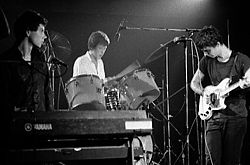 Music historian Vernon Joynson states that New Wave emerged in the UK in late 1976, when many bands began disassociating themselves from punk. Music that followed the anarchic garage band
ethos of the Sex Pistols was distinguished as "punk", while music that tended toward experimentation, lyrical complexity, or more polished production, came to be categorized as "New Wave". This came to include musicians who had come to prominence in the British pub rock
scene of the mid-1970s, such as Ian Dury
, Nick Lowe
, Eddie and the Hot Rods and Dr. Feelgood
; and according to Allmusic "angry, intelligent" singer-songwriters who "approached pop music with the sardonic attitude and tense, aggressive energy of punk" such as Elvis Costello
, Joe Jackson
, and Graham Parker
. In the U.S., the first New Wavers were the not-so-punk acts associated with the New York club CBGB
, such as Talking Heads
, Mink DeVille
and Blondie
. CBGB
owner Hilly Kristal, referring to the first show of the band Television
at his club in March 1974, said, "I think of that as the beginning of new wave." Furthermore, many artists who would have originally been classified as punk were also termed New Wave. A 1977 Phonogram Records
compilation album of the same name (New Wave) features US artists including the Dead Boys, Ramones
, Talking Heads
and The Runaways
.
The New Wave sound of this era represented a break from the smooth-oriented blues and rock & roll sounds of late 1960s to mid 1970s rock music. According to music journalist Simon Reynolds
, the music had a twitchy, agitated feel to it. New Wave musicians often played choppy rhythm guitars with fast tempos. Keyboards were common as were stop-and-start song structures and melodies. Reynolds noted that New Wave vocalists sounded high-pitched, geeky and suburban.
Power pop
, a genre that started before punk at the very beginning of the 1970s, became associated with New Wave at the end of the decade because their brief catchy songs fit into the mood of the era. The Romantics
, The Records
, The Motors
, Cheap Trick
, and 20/20
were groups that had success playing this style. Helped by the success of power pop groups such as The Knack
, skinny ties became fashionable among New Wave musicians.
A revival of ska music led by The Specials
, Madness
and the The Beat/English Beat added humor and a strong dance beat to New Wave.
Later still, "New Wave" came to imply a less noisy, often synthesizer-based, pop sound. The term post-punk
was coined to describe groups such as Gang of Four
, Joy Division
, The Cure
, and Siouxsie and the Banshees that were initially considered part of the New Wave but were more ambitious, serious and challenging, darker, and less pop oriented. Some of these groups would later adopt synths. Although distinct, punk, New Wave, and post-punk all shared common ground: an energetic reaction to what they perceived as the overproduced, uninspired popular music of the 1970s.
Allmusic explained that New Wave's stylistic diversity occurred because New Wave "retained the fresh vigor and irreverence of punk music, as well as a fascination with electronics, style, and art". This diversity extended to the numerous one hit wonders that came out of the genre.
The term fell out of favour in the United Kingdom during the early 1980s because its usage had become too general. Conventional wisdom holds that the genre "died" in the middle of the 1980s. Theo Cateforis, Assistant Professor of Music History and Cultures at Syracuse University
, contends New Wave "receded" during this period when advances in synthesizer technology caused New Wave groups and mainstream pop and rock groups to sound more alike.
MTV
brought a "image is everything" mantra to New Wave during the 1980s. New Wave men put eyeliners on and New Wave women wore pants. Pants were tucked inside boots. Lingerie was worn on the outside, and sequined gloves were popular. Hair was dyed red, gold and green.
were the seminal act of this phenomenon. During the late 1970s and early 1980s in Amsterdam a movement that mixed the post punk and New Wave early 1980s emerged called Ultra
which was an abbreviation for ultra modern. More garage oriented New Wave became popular in Holland during the late 1980s. Clan of Xymox and Minny Pops
became successful abroad and contributed to the maturation of Dutch Alternative Pop.
The New Romantic scene had developed in the London nightclubs Billy's and The Blitz and was associated with bands including Duran Duran
, Japan
, Ultravox
, Visage
, Adam and the Ants
, Bow Wow Wow
, Soft Cell
, Spandau Ballet
, ABC
and Culture Club
. They adopted their visual and musical style from David Bowie
and Roxy Music
.
magazines wrote favorable lead stories on the "punk/new wave" movement. Acts associated with the movement received little or no radio airplay or music industry support. Small scenes developed in major cities. Continuing into the next year, public support remained limited to select elements of the artistic, bohemian and intellectual population, as arena rock
and disco
dominated the charts.
_one.jpg) Starting in late 1978 and continuing into 1979, acts associated with punk and acts that mixed punk with other genres began to make chart appearances and receive airplay on rock stations. Blondie
Starting in late 1978 and continuing into 1979, acts associated with punk and acts that mixed punk with other genres began to make chart appearances and receive airplay on rock stations. Blondie
, Talking Heads
, The Police
and The Cars
would chart during this period. "My Sharona
", a single from The Knack
, was Billboard magazine's number one single of 1979. The success of "My Sharona" prompted record companies to rush out and sign New Wave groups. New Wave music scenes developed in Ohio
and Athens, Georgia
. 1980 saw brief forays into New Wave-styled music by non-New Wave artists Billy Joel
and Linda Ronstadt
. The release during this period of Gary Numan
's album The Pleasure Principle
would be the pop chart breakthrough for gender-bending synthpop
acts with a cool, detached stage presence.
Early in 1980 highly influential radio consultant Lee Abrams
wrote a memo saying with a few exceptions "we're not going to be seeing many of the New Wave circuit acts happening very big over here (in America). As a movement, we don't expect it to have much influence." Lee Ferguson, a consultant to KWST
interviewed at the time, said Los Angeles radio stations were banning disc jockeys from using the term and noted that "Most of the people who call music New Wave are the ones looking for a way not to play it." Second albums by artists who had successful debut albums, along with the newly signed artists, both failed to sell and radio pulled most New Wave programming.
The arrival of MTV in 1981 would usher in New Wave's most successful era. British artists, unlike many of their American counterparts, had learned how to use the music video early on. Several British acts signed to independent labels were able to outmarket and outsell American artists that were signed with major labels. Journalists labeled this phenomenon a "Second British Invasion
". MTV continued its heavy rotation of videos by New Wave-oriented acts until 1987, when it changed to a heavy metal
and rock dominated format.
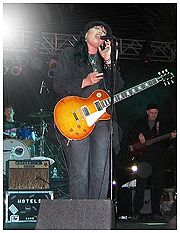 In a December 1982 Gallup poll, 14% of teenagers rated New Wave music as their favorite type of music, making it the third most popular. New Wave had its greatest popularity on the West Coast. Unlike other genres, race was not a factor in the popularity of New Wave music according to the poll.
Urban Contemporary
radio stations were the first to play dance-oriented New Wave artists such as the B-52's
, Culture Club
, Duran Duran
and ABC
. By this period the definition of New Wave music in the United States (and the Philippines ) had changed from the less rebellious, more commercial version of punk that it had been described as a few years earlier. For most of the remainder of the 1980s the term "New Wave" was used in America to describe nearly every new pop or pop rock artist that largely used synthesizers. New Wave is still used today to describe these acts, as well as late 1970s and 1980s post-punk and alternative acts.
Fans, music journalists, and artists would rebel against this catch-all definition by inventing dozens of genre names. Synthpop
or "Technopop" as it was described by the U.S. press which filled a void left by disco
, was a broad subgenre that included groups such as The Human League
, Depeche Mode
, Soft Cell
, a-ha
, New Order
, Orchestral Manoeuvres In The Dark
, Yazoo
, Ultravox
, Kajagoogoo
, and the Thompson Twins
.
New Wave soundtracks were used in mainstream "Brat Pack" films such as Valley Girl
, Sixteen Candles
, Pretty In Pink
, and The Breakfast Club
. John Hughes, a director of several of these films, was enthralled with British New Wave Music and put music from acts such as The Psychedelic Furs, Simple Minds
, and Echo and The Bunnymen into his films, helping put New Wave into the mainstream. Several of these songs remain standards of the era. Critics would describe the MTV acts as shallow or vapid, but the danceable quality of the music and quirky fashion sense associated with New Wave artists appealed to audiences. The use of synthesizers by New Wave acts influenced the development of house music
in Chicago and techno
in Detroit. New Wave’s indie spirit would be crucial to the development of college rock
and grunge
/alternative rock
in the latter half of the 1980s and beyond. New Wave is considered part of alternative rock today.
and Saint Etienne
mixed New Wave and kitschy 1960s pop. In the aftermath of grunge, the British music press launched a campaign to promote the New Wave of New Wave
. This campaign involved overtly punk and New Wave influenced acts such as Elastica
and Smash
but was eclipsed by Britpop
. Other acts of note during the 1990s included No Doubt
, Six Finger Satellite
, and Brainiac
. During that decade the synthesizer heavy dance sounds British and European New Wave acts influenced various incarnations of Eurodisco and trance
. Chris Martin
was inspired to start Coldplay
by a-ha
.
During the 2000s a number of acts emerged that mined from a diversity of New Wave and post-punk influences. Among these were The Strokes
, Interpol
, Yeah Yeah Yeahs
, Franz Ferdinand
, The Epoxies
, She Wants Revenge
, Bloc Party
, Foals
, Kaiser Chiefs
, and The Killers. These acts were sometimes labeled "New New Wave". By 2004 these acts were described as "hot". New Wave became revived during the mid 2000s with acts such as The Sounds
, The Ting Tings
, The Birthday Massacre
, Hot Chip
, Cut Copy
, MGMT
, Passion Pit
, The Presets
, La Roux
, Ladytron
, Shiny Toy Guns
, Santigold, Hockey
, Gwen Stefani
, Ladyhawke and Marina and the Diamonds. While some journalists and fans regarded this as a revival, others argue that the phenomenon is a continuation of the original movements.
The Drums
are an example of the current trend in the United States indie pop
scene that mines both the sounds and attitudes of the British New Wave Era. British group La Roux
who had a number 8 single on the Billboard's Hot 100 is an example on the influence New Wave is having on indie dance. In addition, in the late 2000s a New Wave influenced genre called Chillwave
developed, and notable artists are Neon Indian
, Twin Shadow
and Washed Out
..
Disney Channel
stars such as Jonas Brothers
and Hannah Montana
embraced new wave sounds. Hip-hop artists commonly sample 1980s synthpop and R&B artists such as Rhianna
have also embraced that subgenre.
Many have claimed that daring, spunky and over-the-top fashions of today's stars such as Katy Perry
and Lady Gaga
channel 1980s New Wave fashion.
Punk rock
Punk rock is a rock music genre that developed between 1974 and 1976 in the United States, the United Kingdom, and Australia. Rooted in garage rock and other forms of what is now known as protopunk music, punk rock bands eschewed perceived excesses of mainstream 1970s rock...
. The term at first generally was synonymous with punk rock
Punk rock
Punk rock is a rock music genre that developed between 1974 and 1976 in the United States, the United Kingdom, and Australia. Rooted in garage rock and other forms of what is now known as protopunk music, punk rock bands eschewed perceived excesses of mainstream 1970s rock...
before being considered a genre in its own right that incorporated aspects of electronic
Electronic music
Electronic music is music that employs electronic musical instruments and electronic music technology in its production. In general a distinction can be made between sound produced using electromechanical means and that produced using electronic technology. Examples of electromechanical sound...
and experimental music
Experimental music
Experimental music refers, in the English-language literature, to a compositional tradition which arose in the mid-20th century, applied particularly in North America to music composed in such a way that its outcome is unforeseeable. Its most famous and influential exponent was John Cage...
, mod subculture, disco
Disco
Disco is a genre of dance music. Disco acts charted high during the mid-1970s, and the genre's popularity peaked during the late 1970s. It had its roots in clubs that catered to African American, gay, psychedelic, and other communities in New York City and Philadelphia during the late 1960s and...
and 1960s pop music. New Wave, as a term, has been used to describe all post-punk rock music, yet, it distances itself from other post-punk
Post-punk
Post-punk is a rock music movement with its roots in the late 1970s, following on the heels of the initial punk rock explosion of the mid-1970s. The genre retains its roots in the punk movement but is more introverted, complex and experimental...
movements as it displays characteristics common to pop music, rather than the more "arty" post-punk.
As a genre, it incorporates much of the original punk rock sound and ethos, such as an emphasis on short and punchy songs, yet, it is characterized by greater complexity in both music and lyrics. Common characteristics of New Wave music, aside its punk influences, include the usage of synthesizer
Synthesizer
A synthesizer is an electronic instrument capable of producing sounds by generating electrical signals of different frequencies. These electrical signals are played through a loudspeaker or set of headphones...
s and electronic productions, the importance of styling and the arts, as well as a great amount of diversity. As a term, New Wave is often used to describe music which was quirky and eccentric, yet also catchy and pop at heart, incorporating clear melodious hooks
Hook (music)
A hook is a musical idea, often a short riff, passage, or phrase, that is used in popular music to make a song appealing and to "catch the ear of the listener". The term generally applies to popular music, especially rock music, hip hop, dance music, and pop. In these genres, the hook is often...
. In such a way, its style varies greatly, ranging from 1950s and 60s rock revivalism, ska
Ska
Ska |Jamaican]] ) is a music genre that originated in Jamaica in the late 1950s, and was the precursor to rocksteady and reggae. Ska combined elements of Caribbean mento and calypso with American jazz and rhythm and blues...
and reggae
Reggae
Reggae is a music genre first developed in Jamaica in the late 1960s. While sometimes used in a broader sense to refer to most types of Jamaican music, the term reggae more properly denotes a particular music style that originated following on the development of ska and rocksteady.Reggae is based...
-styled music, to synthpop
Synthpop
Synthpop is a genre of popular music that first became prominent in the 1980s, in which the synthesizer is the dominant musical instrument. It was prefigured in the 1960s and early 1970s by the use of synthesizers in progressive rock, electronic art rock, disco and particularly the "Kraut rock" of...
-oriented dance
Dance music
Dance music is music composed specifically to facilitate or accompany dancing. It can be either a whole musical piece or part of a larger musical arrangement...
.
New Wave is seen as one of the definitive genres of the 1980s
1980s
File:1980s decade montage.png|thumb|400px|From left, clockwise: The first Space Shuttle, Columbia, lifted off in 1981; American President Ronald Reagan and Soviet leader Mikhail Gorbachev eased tensions between the two superpowers, leading to the end of the Cold War; The Fall of the Berlin Wall in...
; at the time, it enjoyed commercial success as several of the major arists and groups of the time were labelled New Wave. The genre became a fixture on MTV
MTV
MTV, formerly an initialism of Music Television, is an American network based in New York City that launched on August 1, 1981. The original purpose of the channel was to play music videos guided by on-air hosts known as VJs....
, and the popularity of several New Wave artists has been partially attributed to the exposure that was given to them by the channel. Despite commercial success in the 1980s, it was criticised by some at the time for its particular style and music. The genre started to fade out by c. 1984, yet, it never truly died, and it enjoyed resurgences since the 1990s, after a "nostalgia" for New Wave swept across the music scene, causing several artists to be influenced by the genre. The revivals in the 1990s and early 2000s were small, but became popular by 2004; subsequently, the genre has influenced a variety of music genres.
Overview
The term "New Wave" itself has been a source of much confusion and controversy. It was used in 1976 in the UK by punk fanzineFanzine
A fanzine is a nonprofessional and nonofficial publication produced by fans of a particular cultural phenomenon for the pleasure of others who share their interest...
s such as Sniffin' Glue
Sniffin' Glue
Sniffin' Glue is the name of a monthly punk zine started by Mark Perry in July 1976 and released for about a year. The name is derived from a Ramones song "Now I Wanna Sniff Some Glue." Others that wrote for the magazine that later became well known journalists include Danny Baker.Although initial...
, and then by the professional music press. In a November 1976 article in Melody Maker, Caroline Coon
Caroline Coon
Caroline Coon is an English artist, journalist and political activist. Her artwork, which often explores sexual themes from a feminist standpoint , has been exhibited at many major London galleries, including the Saatchi Gallery and the Tate.Coon was born to a family of Kent landowners and had...
used Malcolm McLaren's
Malcolm McLaren
Malcolm Robert Andrew McLaren was an English performer, impresario, self-publicist and manager of the Sex Pistols and the New York Dolls...
term "New Wave" to designate music by bands not exactly punk, but related to, and part of the same musical scene; the term was also used in that sense by music journalist Charles Shaar Murray
Charles Shaar Murray
Charles Shaar Murray is an English music journalist. His first experience in journalism came 1970 when he was asked to contribute to the satirical magazine Oz...
, while writing about The Boomtown Rats
The Boomtown Rats
The Boomtown Rats were an Irish punk rock band that had a series of Irish and UK hits between 1977 and 1985. They were led by vocalist Bob Geldof.-Biography:All six members were originally from Dún Laoghaire, Ireland...
. For a period of time in 1976 and 1977 the two terms were interchangeable. By the end of 1977, "New Wave" had replaced "Punk" as the definition for new underground music
Underground music
Underground music comprises a range of different musical genres that operate outside of mainstream culture. Such music can typically share common values, such as the valuing of sincerity and intimacy; an emphasis on freedom of creative expression; an appreciation of artistic creativity...
in the UK.
In the United States, Sire Records
Sire Records
Sire Records is an American record label, owned by Warner Music Group and distributed through Warner Bros. Records.-Beginnings:The label was founded in 1966 as Sire Productions by Seymour Stein and Richard Gottehrer, each investing ten thousand dollars into the new company. Its early releases as a...
needed a term by which it could market its newly signed bands, who had frequently played the club CBGB
CBGB
CBGB was a music club at 315 Bowery at Bleecker Street in the borough of Manhattan in New York City.Founded by Hilly Kristal in 1973, it was originally intended to feature its namesake musical styles, but became a forum for American punk and New Wave bands like Ramones, Misfits, Television, the...
. Because radio consultants in the United States had advised their clients that punk rock was a fad, they settled on the term "New Wave". Like the filmmakers of the French New Wave
French New Wave
The New Wave was a blanket term coined by critics for a group of French filmmakers of the late 1950s and 1960s, influenced by Italian Neorealism and classical Hollywood cinema. Although never a formally organized movement, the New Wave filmmakers were linked by their self-conscious rejection of...
movement whom the genre was named after, its new artists, such as the Ramones
Ramones
The Ramones were an American rock band that formed in the New York City neighborhood of Forest Hills, Queens, in 1974. They are often cited as the first punk rock group...
and Talking Heads
Talking Heads
Talking Heads were an American New Wave and avant-garde band formed in 1975 in New York City and active until 1991. The band comprised David Byrne, Chris Frantz, Tina Weymouth and Jerry Harrison...
, were anti-corporate and experimental. At first most American writers exclusively used the term "New Wave" to describe British punk acts. Starting in December 1976, The New York Rocker, which was suspicious of the term "punk," became the first American journal to enthusiastically use the term starting with British acts, and later appropriating it to acts associated with the CBGB
CBGB
CBGB was a music club at 315 Bowery at Bleecker Street in the borough of Manhattan in New York City.Founded by Hilly Kristal in 1973, it was originally intended to feature its namesake musical styles, but became a forum for American punk and New Wave bands like Ramones, Misfits, Television, the...
scene.
Garage band
The term garage band can refer to:* A band that performs garage rock* GarageBand, audio production software published by Apple Inc.* GarageBand.com, a website that helps publicize emerging bands...
ethos of the Sex Pistols was distinguished as "punk", while music that tended toward experimentation, lyrical complexity, or more polished production, came to be categorized as "New Wave". This came to include musicians who had come to prominence in the British pub rock
Pub rock (UK)
Pub rock was a rock music genre that developed in the mid 1970s in the United Kingdom. A back-to-basics movement, pub rock was a reaction against progressive and glam rock. Although short-lived, pub rock was notable for rejecting stadium venues and for returning live rock to the small pubs and...
scene of the mid-1970s, such as Ian Dury
Ian Dury
Ian Robins Dury was an English rock and roll singer, lyricist, bandleader and actor who initially rose to fame during the late 1970s, during the punk and New Wave era of rock music...
, Nick Lowe
Nick Lowe
Nicholas Drain "Nick" Lowe , is an English singer-songwriter, musician and producer.A pivotal figure in UK pub rock, punk rock and new wave, Lowe has recorded a string of well-reviewed solo albums. Along with vocals, Lowe plays guitar, bass guitar, piano and harmonica...
, Eddie and the Hot Rods and Dr. Feelgood
Dr. Feelgood
Dr. Feelgood may refer to:In music:*Dr. Feelgood , an album by American band Mötley Crüe**"Dr. Feelgood" , a single and the title track from that album*"Dr. Feel Good", a song by Travie McCoy on the album Lazarus...
; and according to Allmusic "angry, intelligent" singer-songwriters who "approached pop music with the sardonic attitude and tense, aggressive energy of punk" such as Elvis Costello
Elvis Costello
Elvis Costello , born Declan Patrick MacManus, is an English singer-songwriter. He came to prominence as an early participant in London's pub rock scene in the mid-1970s and later became associated with the punk/New Wave genre. Steeped in word play, the vocabulary of Costello's lyrics is broader...
, Joe Jackson
Joe Jackson (musician)
Joe Jackson is an English musician and singer-songwriter now living in Berlin, whose five Grammy Award nominations span from 1979 to 2001...
, and Graham Parker
Graham Parker
Graham Parker is a British rock singer and songwriter, who is best known as the lead singer of the popular British band Graham Parker & the Rumour.-Early career :...
. In the U.S., the first New Wavers were the not-so-punk acts associated with the New York club CBGB
CBGB
CBGB was a music club at 315 Bowery at Bleecker Street in the borough of Manhattan in New York City.Founded by Hilly Kristal in 1973, it was originally intended to feature its namesake musical styles, but became a forum for American punk and New Wave bands like Ramones, Misfits, Television, the...
, such as Talking Heads
Talking Heads
Talking Heads were an American New Wave and avant-garde band formed in 1975 in New York City and active until 1991. The band comprised David Byrne, Chris Frantz, Tina Weymouth and Jerry Harrison...
, Mink DeVille
Mink DeVille
Mink DeVille was a rock band known for its association with early punk rock bands at New York’s CBGB nightclub and for being a showcase for the music of Willy DeVille. The band recorded six albums in the years 1977 to 1985. Except for frontman Willy DeVille, the original members of the band played...
and Blondie
Blondie (band)
Blondie is an American rock band, founded by singer Deborah Harry and guitarist Chris Stein. The band was a pioneer in the early American New Wave and punk scenes of the mid-1970s...
. CBGB
CBGB
CBGB was a music club at 315 Bowery at Bleecker Street in the borough of Manhattan in New York City.Founded by Hilly Kristal in 1973, it was originally intended to feature its namesake musical styles, but became a forum for American punk and New Wave bands like Ramones, Misfits, Television, the...
owner Hilly Kristal, referring to the first show of the band Television
Television (band)
Television was an American rock band, formed in New York City in 1973. They are best known for the album Marquee Moon and widely regarded as one of the founders of "punk" and New Wave music. Television was part of the early 1970s New York underground rock scene, along with bands like the Patti...
at his club in March 1974, said, "I think of that as the beginning of new wave." Furthermore, many artists who would have originally been classified as punk were also termed New Wave. A 1977 Phonogram Records
Phonogram Records
Phonogram Records was started in 1962 as a joint venture between Philips Records and Deutsche Grammophon. In 1972, Phonogram was merged with Polydor Records into PolyGram....
compilation album of the same name (New Wave) features US artists including the Dead Boys, Ramones
Ramones
The Ramones were an American rock band that formed in the New York City neighborhood of Forest Hills, Queens, in 1974. They are often cited as the first punk rock group...
, Talking Heads
Talking Heads
Talking Heads were an American New Wave and avant-garde band formed in 1975 in New York City and active until 1991. The band comprised David Byrne, Chris Frantz, Tina Weymouth and Jerry Harrison...
and The Runaways
The Runaways
The Runaways were an American all-girl rock band that recorded and performed in the second half of the 1970s. The band released four studio albums and one live set during its run. Among its best known songs: "Cherry Bomb", "Queens of Noise", "Neon Angels On the Road to Ruin", "California Paradise"...
.
The New Wave sound of this era represented a break from the smooth-oriented blues and rock & roll sounds of late 1960s to mid 1970s rock music. According to music journalist Simon Reynolds
Simon Reynolds
Simon Reynolds is an English music critic who is well-known for his writings on electronic dance music and for coining the term "post-rock". Besides electronic dance music, Reynolds has written about a wide range of artists and musical genres, and has written books on post-punk and rock...
, the music had a twitchy, agitated feel to it. New Wave musicians often played choppy rhythm guitars with fast tempos. Keyboards were common as were stop-and-start song structures and melodies. Reynolds noted that New Wave vocalists sounded high-pitched, geeky and suburban.
Power pop
Power pop
Power pop is a popular musical genre that draws its inspiration from 1960s British and American pop and rock music. It typically incorporates a combination of musical devices such as strong melodies, crisp vocal harmonies, economical arrangements, and prominent guitar riffs. Instrumental solos are...
, a genre that started before punk at the very beginning of the 1970s, became associated with New Wave at the end of the decade because their brief catchy songs fit into the mood of the era. The Romantics
The Romantics
The Romantics is an American New Wave band from Detroit, Michigan, formed in 1977. The band adopted the name "The Romantics" because they formed on Valentine's Day, 1977. The Romantics achieved popularity in the United Kingdom, The U.S...
, The Records
The Records
The Records were an English power pop band in the late 1970s. Allmusic notes that they are often referred to as the "British Big Star". They are best remembered for the hit single and cult favourite "Starry Eyes".-History:...
, The Motors
The Motors
The Motors were a British pub rock/punk band, formed in London in 1977 by former Ducks Deluxe members Nick Garvey and Andy McMaster together with guitarist Rob Hendry and drummer Ricky Slaughter...
, Cheap Trick
Cheap Trick
Cheap Trick is an American rock band from Rockford, Illinois, formed in 1973. The band consists of members Robin Zander , Rick Nielsen , Tom Petersson , and Bun E...
, and 20/20
20/20 (band)
20/20 was an American power pop band based in Hollywood, California. They were active from 1977 to 1983 and reunited during the mid 1990s to the late 1990s. Steve Allen and Ron Flynt had played together in Tulsa in 1976, and Steve decided to move to Los Angeles in 1977 after fellow Tulsa natives...
were groups that had success playing this style. Helped by the success of power pop groups such as The Knack
The Knack
The Knack was an American New Wave rock quartet based in Los Angeles that rose to fame with their first single, "My Sharona", an international number one hit in 1979.-Founding :...
, skinny ties became fashionable among New Wave musicians.
A revival of ska music led by The Specials
The Specials
The Specials are an English 2 Tone ska revival band formed in 1977 in Coventry, England. Their music combines a "danceable ska and rocksteady beat with punk's energy and attitude", and had a "more focused and informed political and social stance" than other ska groups...
, Madness
Madness (band)
In 1979, the band recorded the Lee Thompson composition "The Prince". The song, like the band's name, paid homage to their idol, Prince Buster. The song was released through 2 Tone Records, the label of The Specials founder Jerry Dammers. The song was a surprise hit, peaking in the UK music charts...
and the The Beat/English Beat added humor and a strong dance beat to New Wave.
Later still, "New Wave" came to imply a less noisy, often synthesizer-based, pop sound. The term post-punk
Post-punk
Post-punk is a rock music movement with its roots in the late 1970s, following on the heels of the initial punk rock explosion of the mid-1970s. The genre retains its roots in the punk movement but is more introverted, complex and experimental...
was coined to describe groups such as Gang of Four
Gang of Four (band)
Gang of Four are an English post-punk group from Leeds. Original personnel were singer Jon King, guitarist Andy Gill, bass guitarist Dave Allen and drummer Hugo Burnham. They were fully active from 1977 to 1984, and then re-emerged twice in the 1990s with King and Gill...
, Joy Division
Joy Division
Joy Division were an English rock band formed in 1976 in Salford, Greater Manchester. Originally named Warsaw, the band primarily consisted of Ian Curtis , Bernard Sumner , Peter Hook and Stephen Morris .Joy Division rapidly evolved from their initial punk rock influences...
, The Cure
The Cure
The Cure are an English rock band formed in Crawley, West Sussex in 1976. The band has experienced several line-up changes, with frontman, vocalist, guitarist and principal songwriter Robert Smith being the only constant member...
, and Siouxsie and the Banshees that were initially considered part of the New Wave but were more ambitious, serious and challenging, darker, and less pop oriented. Some of these groups would later adopt synths. Although distinct, punk, New Wave, and post-punk all shared common ground: an energetic reaction to what they perceived as the overproduced, uninspired popular music of the 1970s.
Allmusic explained that New Wave's stylistic diversity occurred because New Wave "retained the fresh vigor and irreverence of punk music, as well as a fascination with electronics, style, and art". This diversity extended to the numerous one hit wonders that came out of the genre.
The term fell out of favour in the United Kingdom during the early 1980s because its usage had become too general. Conventional wisdom holds that the genre "died" in the middle of the 1980s. Theo Cateforis, Assistant Professor of Music History and Cultures at Syracuse University
Syracuse University
Syracuse University is a private research university located in Syracuse, New York, United States. Its roots can be traced back to Genesee Wesleyan Seminary, founded by the Methodist Episcopal Church in 1832, which also later founded Genesee College...
, contends New Wave "receded" during this period when advances in synthesizer technology caused New Wave groups and mainstream pop and rock groups to sound more alike.
MTV
MTV
MTV, formerly an initialism of Music Television, is an American network based in New York City that launched on August 1, 1981. The original purpose of the channel was to play music videos guided by on-air hosts known as VJs....
brought a "image is everything" mantra to New Wave during the 1980s. New Wave men put eyeliners on and New Wave women wore pants. Pants were tucked inside boots. Lingerie was worn on the outside, and sequined gloves were popular. Hair was dyed red, gold and green.
Related movements in Europe
In Finland in the wake of Punk and New Wave the Suomi-Rock phenomenon occurred. Eppu NormaaliEppu Normaali
Eppu Normaali is one of the most popular rock bands in Finland. The band formed in 1976 in Ylöjärvi, a small town near Tampere. The band is the best-selling music artist in Finland, with certified sales surpassing 1.5 million records...
were the seminal act of this phenomenon. During the late 1970s and early 1980s in Amsterdam a movement that mixed the post punk and New Wave early 1980s emerged called Ultra
Ultra (music)
Ultra was a Dutch post-punk movement of the early 1980s.In contrast to other countries' post-punk movements, the Dutch version experimented with, among other things, toy instruments, chainsaws and de-tuned guitars...
which was an abbreviation for ultra modern. More garage oriented New Wave became popular in Holland during the late 1980s. Clan of Xymox and Minny Pops
Minny Pops
Minny Pops were an Amsterdam-based new wave/electronic/art punk band, associated with the Ultra post-punk movement in the Netherlands and the Factory Records label in the UK....
became successful abroad and contributed to the maturation of Dutch Alternative Pop.
The New Romantic scene had developed in the London nightclubs Billy's and The Blitz and was associated with bands including Duran Duran
Duran Duran
Duran Duran are an English band, formed in Birmingham in 1978. They were one of the most successful bands of the 1980s and a leading band in the MTV-driven "Second British Invasion" of the United States...
, Japan
Japan (band)
Japan were a British New Wave group, formed in 1974 in Catford, South London. The band achieved success in the late 1970s and early 1980s, when they were often associated with the burgeoning New Romantic fashion movement .- History :The band began as a group of friends...
, Ultravox
Ultravox
Ultravox is a British New Wave rock band. They were one of the primary exponents of the British electronic pop music movement of the late 1970s/early 1980s. The band was particularly associated with the New Romantic and New Wave movements....
, Visage
Visage
Visage are a British New Wave rock band. Formed in 1978, the band became closely linked to the burgeoning New Romantic fashion movement of the early 1980s, and are best known for their 1980 hit "Fade to Grey".-New Wave years :...
, Adam and the Ants
Adam and the Ants
Adam and the Ants were a British rock band active during the late 1970s and early 1980s. The original group, which existed from 1977 to 1980, became notable as a cult band marking the transition from the late-1970s punk rock era to the post-punk and New Wave era...
, Bow Wow Wow
Bow Wow Wow
Bow Wow Wow were an English 1980s New Wave band created by Malcolm McLaren to promote his and business partner Vivienne Westwood's New Romantic fashion lines.The group's music is described as having an "African-derived drum sound".-History:...
, Soft Cell
Soft Cell
Soft Cell are an English synthpop duo who came to prominence in the early 1980s. They consist of vocalist Marc Almond and instrumentalist David Ball. The duo is most widely known for their 1981 worldwide hit version of "Tainted Love" and platinum debut Non-Stop Erotic Cabaret...
, Spandau Ballet
Spandau Ballet
Spandau Ballet are a British band formed in London in the late 1970s. Initially inspired by, and an integral part of, the New Romantic fashion, their music has featured a mixture of funk, jazz, soul and synthpop. They were one of the most successful bands of the 1980s, achieving ten Top Ten singles...
, ABC
ABC (band)
ABC are an English band, that charted ten UK and five US Top 40 singles between 1981 and 1990. The band continues to tour and released a new album, Traffic, in 2008.-Formation:...
and Culture Club
Culture Club
Culture Club are a British rock band who were part of the 1980s New Romantic movement. The original band consisted of Boy George , Mikey Craig , Roy Hay and Jon Moss...
. They adopted their visual and musical style from David Bowie
David Bowie
David Bowie is an English musician, actor, record producer and arranger. A major figure for over four decades in the world of popular music, Bowie is widely regarded as an innovator, particularly for his work in the 1970s...
and Roxy Music
Roxy Music
Roxy Music was a British art rock band formed in 1971 by Bryan Ferry, who became the group's lead vocalist and chief songwriter, and bassist Graham Simpson. The other members are Phil Manzanera , Andy Mackay and Paul Thompson . Former members include Brian Eno , and Eddie Jobson...
.
Reception in the United States
In the summer of 1977 both TIME and NewsweekNewsweek
Newsweek is an American weekly news magazine published in New York City. It is distributed throughout the United States and internationally. It is the second-largest news weekly magazine in the U.S., having trailed Time in circulation and advertising revenue for most of its existence...
magazines wrote favorable lead stories on the "punk/new wave" movement. Acts associated with the movement received little or no radio airplay or music industry support. Small scenes developed in major cities. Continuing into the next year, public support remained limited to select elements of the artistic, bohemian and intellectual population, as arena rock
Arena rock
Arena rock is a term used to describe rock music that utilised large arena venues, particularly sports venues, for concerts or series of concerts linked in tours...
and disco
Disco
Disco is a genre of dance music. Disco acts charted high during the mid-1970s, and the genre's popularity peaked during the late 1970s. It had its roots in clubs that catered to African American, gay, psychedelic, and other communities in New York City and Philadelphia during the late 1960s and...
dominated the charts.
Blondie (band)
Blondie is an American rock band, founded by singer Deborah Harry and guitarist Chris Stein. The band was a pioneer in the early American New Wave and punk scenes of the mid-1970s...
, Talking Heads
Talking Heads
Talking Heads were an American New Wave and avant-garde band formed in 1975 in New York City and active until 1991. The band comprised David Byrne, Chris Frantz, Tina Weymouth and Jerry Harrison...
, The Police
The Police
The Police were an English rock band formed in London in 1977. For the vast majority of their history, the band consisted of Sting , Andy Summers and Stewart Copeland...
and The Cars
The Cars
The Cars are an American rock band that emerged from the early New Wave music scene in the late 1970s. The band consisted of lead singer and rhythm guitarist Ric Ocasek, lead singer and bassist Benjamin Orr, guitarist Elliot Easton, keyboardist Greg Hawkes and drummer David Robinson...
would chart during this period. "My Sharona
My Sharona
"My Sharona" is the debut single by The Knack, released in 1979 from their album Get the Knack. It reached #1 on the Billboard Hot 100 singles chart where it remained for six weeks and was #1 on Billboards Top Pop Singles of 1979 year-end chart. It was certified gold by the Recording Industry...
", a single from The Knack
The Knack
The Knack was an American New Wave rock quartet based in Los Angeles that rose to fame with their first single, "My Sharona", an international number one hit in 1979.-Founding :...
, was Billboard magazine's number one single of 1979. The success of "My Sharona" prompted record companies to rush out and sign New Wave groups. New Wave music scenes developed in Ohio
Ohio
Ohio is a Midwestern state in the United States. The 34th largest state by area in the U.S.,it is the 7th‑most populous with over 11.5 million residents, containing several major American cities and seven metropolitan areas with populations of 500,000 or more.The state's capital is Columbus...
and Athens, Georgia
Athens, Georgia
Athens-Clarke County is a consolidated city–county in U.S. state of Georgia, in the northeastern part of the state, comprising the former City of Athens proper and Clarke County. The University of Georgia is located in this college town and is responsible for the initial growth of the city...
. 1980 saw brief forays into New Wave-styled music by non-New Wave artists Billy Joel
Billy Joel
William Martin "Billy" Joel is an American musician and pianist, singer-songwriter, and classical composer. Since releasing his first hit song, "Piano Man", in 1973, Joel has become the sixth best-selling recording artist and the third best-selling solo artist in the United States, according to...
and Linda Ronstadt
Linda Ronstadt
Linda Ronstadt is an American popular music recording artist. She has earned eleven Grammy Awards, two Academy of Country Music awards, an Emmy Award, an ALMA Award, numerous United States and internationally certified gold, platinum and multiplatinum albums, in addition to Tony Award and Golden...
. The release during this period of Gary Numan
Gary Numan
Gary Numan is an English singer, composer, and musician, most widely known for his chart-topping 1979 hits "Are 'Friends' Electric?" and "Cars". His signature sound consisted of heavy synthesizer hooks fed through guitar effects pedals.Numan is considered a pioneer of commercial electronic music...
's album The Pleasure Principle
The Pleasure Principle (Gary Numan album)
The Pleasure Principle is the third studio album, and debut album under his own name, by electronic music pioneer Gary Numan, released in 1979...
would be the pop chart breakthrough for gender-bending synthpop
Synthpop
Synthpop is a genre of popular music that first became prominent in the 1980s, in which the synthesizer is the dominant musical instrument. It was prefigured in the 1960s and early 1970s by the use of synthesizers in progressive rock, electronic art rock, disco and particularly the "Kraut rock" of...
acts with a cool, detached stage presence.
Early in 1980 highly influential radio consultant Lee Abrams
Lee Abrams
Lee Abrams is an American media executive who has held a number of posts for large and influential companies, and is generally credited with developing the "Album Oriented Rock" format employed by hundreds of radio stations across the country.-Career:...
wrote a memo saying with a few exceptions "we're not going to be seeing many of the New Wave circuit acts happening very big over here (in America). As a movement, we don't expect it to have much influence." Lee Ferguson, a consultant to KWST
KPWR
KPWR is a commercial radio station located in Los Angeles, California, broadcasting to the Greater Los Angeles area on an analog signal and in HD Radio...
interviewed at the time, said Los Angeles radio stations were banning disc jockeys from using the term and noted that "Most of the people who call music New Wave are the ones looking for a way not to play it." Second albums by artists who had successful debut albums, along with the newly signed artists, both failed to sell and radio pulled most New Wave programming.
The arrival of MTV in 1981 would usher in New Wave's most successful era. British artists, unlike many of their American counterparts, had learned how to use the music video early on. Several British acts signed to independent labels were able to outmarket and outsell American artists that were signed with major labels. Journalists labeled this phenomenon a "Second British Invasion
Second British Invasion
The term Second British Invasion refers to British music acts that became popular in the United States during the 1980s primarily due to the cable music channel MTV...
". MTV continued its heavy rotation of videos by New Wave-oriented acts until 1987, when it changed to a heavy metal
Heavy metal music
Heavy metal is a genre of rock music that developed in the late 1960s and early 1970s, largely in the Midlands of the United Kingdom and the United States...
and rock dominated format.
Urban Contemporary
Urban contemporary
Urban contemporary is a music radio format. The term was coined by the late New York DJ Frankie Crocker in the mid 1970s. Urban contemporary radio stations feature a playlist made up entirely of hip hop/rap, contemporary R&B, pop, electronica such as dubstep and drum and bass and Caribbean music...
radio stations were the first to play dance-oriented New Wave artists such as the B-52's
The B-52's
The B-52's are an American rock band, formed in Athens, Georgia in 1976. The original line-up consisted of Fred Schneider , Kate Pierson , Cindy Wilson , Ricky Wilson , and Keith Strickland . Following Ricky Wilson's death in 1985 Strickland switched to guitar...
, Culture Club
Culture Club
Culture Club are a British rock band who were part of the 1980s New Romantic movement. The original band consisted of Boy George , Mikey Craig , Roy Hay and Jon Moss...
, Duran Duran
Duran Duran
Duran Duran are an English band, formed in Birmingham in 1978. They were one of the most successful bands of the 1980s and a leading band in the MTV-driven "Second British Invasion" of the United States...
and ABC
ABC (band)
ABC are an English band, that charted ten UK and five US Top 40 singles between 1981 and 1990. The band continues to tour and released a new album, Traffic, in 2008.-Formation:...
. By this period the definition of New Wave music in the United States (and the Philippines ) had changed from the less rebellious, more commercial version of punk that it had been described as a few years earlier. For most of the remainder of the 1980s the term "New Wave" was used in America to describe nearly every new pop or pop rock artist that largely used synthesizers. New Wave is still used today to describe these acts, as well as late 1970s and 1980s post-punk and alternative acts.
Fans, music journalists, and artists would rebel against this catch-all definition by inventing dozens of genre names. Synthpop
Synthpop
Synthpop is a genre of popular music that first became prominent in the 1980s, in which the synthesizer is the dominant musical instrument. It was prefigured in the 1960s and early 1970s by the use of synthesizers in progressive rock, electronic art rock, disco and particularly the "Kraut rock" of...
or "Technopop" as it was described by the U.S. press which filled a void left by disco
Disco
Disco is a genre of dance music. Disco acts charted high during the mid-1970s, and the genre's popularity peaked during the late 1970s. It had its roots in clubs that catered to African American, gay, psychedelic, and other communities in New York City and Philadelphia during the late 1960s and...
, was a broad subgenre that included groups such as The Human League
The Human League
The Human League are an English electronic New Wave band formed in Sheffield in 1977. They achieved popularity after a key change in line-up in the early 1980s and have continued recording and performing with moderate commercial success throughout the 1980s up to the present day.The only constant...
, Depeche Mode
Depeche Mode
Depeche Mode are an English electronic music band formed in 1980 in Basildon, Essex. The group's original line-up consisted of Dave Gahan , Martin Gore , Andy Fletcher and Vince Clarke...
, Soft Cell
Soft Cell
Soft Cell are an English synthpop duo who came to prominence in the early 1980s. They consist of vocalist Marc Almond and instrumentalist David Ball. The duo is most widely known for their 1981 worldwide hit version of "Tainted Love" and platinum debut Non-Stop Erotic Cabaret...
, a-ha
A-ha
A-ha were a Norwegian pop band formed in Oslo in 1982. The band was founded by Morten Harket , Magne Furuholmen , and Pål Waaktaar...
, New Order
New Order
New Order are an English rock band formed in 1980 by Bernard Sumner , Peter Hook and Stephen Morris...
, Orchestral Manoeuvres In The Dark
Orchestral Manoeuvres in the Dark
Orchestral Manoeuvres in the Dark are a synthpop group whose founding members are originally from the Wirral Peninsula, England...
, Yazoo
Yazoo (band)
Yazoo are a British synthpop duo from Basildon, Essex. They had a number of Top 10 hits in the UK charts in the early 1980s...
, Ultravox
Ultravox
Ultravox is a British New Wave rock band. They were one of the primary exponents of the British electronic pop music movement of the late 1970s/early 1980s. The band was particularly associated with the New Romantic and New Wave movements....
, Kajagoogoo
Kajagoogoo
Kajagoogoo are a British pop band, best known for their hit single, "Too Shy", which reached No. 1 in the UK Singles Chart and No. 5 on the U.S...
, and the Thompson Twins
Thompson Twins
The Thompson Twins were a British pop group that were formed in April 1977 and disbanded in May 1993. They achieved considerable popularity in the mid 1980s, scoring a string of hits in the United Kingdom, the United States and around the globe. The band was named after the two bumbling detectives...
.
New Wave soundtracks were used in mainstream "Brat Pack" films such as Valley Girl
Valley Girl (film)
Valley Girl is a 1983 romantic comedy film, starring Nicolas Cage, Deborah Foreman, Elizabeth Daily, Cameron Dye, and Joyce Heiser. The film was the directorial debut of Martha Coolidge, and was the first film in which Nicolas Coppola was billed as Nicolas Cage.The American release of Valley Girl...
, Sixteen Candles
Sixteen Candles
Sixteen Candles is a 1984 American film starring Molly Ringwald, Michael Schoeffling and Anthony Michael Hall. It was written and directed by John Hughes.- Plot :...
, Pretty In Pink
Pretty in Pink
Pretty in Pink is a 1986 American teen romantic comedy-drama film about teenage love and social cliques in 1980s American high schools. It is one of a group of John Hughes films starring Molly Ringwald, and is commonly identified as a "Brat Pack" film...
, and The Breakfast Club
The Breakfast Club
The Breakfast Club is a 1985 American teen drama film written and directed by John Hughes. The storyline follows five teenagers as they spend a Saturday in detention together and come to realize that they are all deeper than their respective stereotypes.-Plot:The plot follows five students at...
. John Hughes, a director of several of these films, was enthralled with British New Wave Music and put music from acts such as The Psychedelic Furs, Simple Minds
Simple Minds
Simple Minds are a Scottish rock band who achieved worldwide popularity from the mid-1980s to the early 1990s. The band produced a handful of critically acclaimed albums in the early 1980s and best known for their #1 US, Canada and Netherlands hit single "Don't You ", from the soundtrack of the...
, and Echo and The Bunnymen into his films, helping put New Wave into the mainstream. Several of these songs remain standards of the era. Critics would describe the MTV acts as shallow or vapid, but the danceable quality of the music and quirky fashion sense associated with New Wave artists appealed to audiences. The use of synthesizers by New Wave acts influenced the development of house music
House music
House music is a genre of electronic dance music that originated in Chicago, Illinois, United States in the early 1980s. It was initially popularized in mid-1980s discothèques catering to the African-American, Latino American, and gay communities; first in Chicago circa 1984, then in other...
in Chicago and techno
Techno
Techno is a form of electronic dance music that emerged in Detroit, Michigan in the United States during the mid to late 1980s. The first recorded use of the word techno, in reference to a genre of music, was in 1988...
in Detroit. New Wave’s indie spirit would be crucial to the development of college rock
College rock
College rock is a term that was used in the United States to describe 1980s alternative rock before the term "alternative" came into common usage. The term's use of the word "college" refers to campus radio stations located at institutions of higher education in Canada and the United States, where...
and grunge
Grunge
Grunge is a subgenre of alternative rock that emerged during the mid-1980s in the American state of Washington, particularly in the Seattle area. Inspired by hardcore punk, heavy metal, and indie rock, grunge is generally characterized by heavily distorted electric guitars, contrasting song...
/alternative rock
Alternative rock
Alternative rock is a genre of rock music and a term used to describe a diverse musical movement that emerged from the independent music underground of the 1980s and became widely popular by the 1990s...
in the latter half of the 1980s and beyond. New Wave is considered part of alternative rock today.
Post-1980s revivals and influence
In 1991 retro futurist acts such as StereolabStereolab
Stereolab are an alternative music band formed in 1990 in London, England. The band originally comprised songwriting team Tim Gane and Lætitia Sadier , both of whom remained at the helm across many lineup changes...
and Saint Etienne
Saint Etienne (band)
Saint Etienne are an English Pop group comprising Sarah Cracknell, Bob Stanley and Pete Wiggs. They are named after the French football team AS Saint-Étienne.-History:Bob Stanley and Pete Wiggs were childhood friends and former music journalists...
mixed New Wave and kitschy 1960s pop. In the aftermath of grunge, the British music press launched a campaign to promote the New Wave of New Wave
New wave of new wave
The New Wave of New Wave was a term coined by music journalists to describe a sub-genre of the British alternative rock scene in the early 90s, in which bands displayed punk, post-punk and New Wave influences, particlularly from bands such as The Clash, Blondie, Wire, and The Stranglers. The band...
. This campaign involved overtly punk and New Wave influenced acts such as Elastica
Elastica
Elastica were an English alternative rock band that played punk rock-influenced music. They were best known for their 1995 album Elastica, which produced singles that charted in the US and the UK.-History:...
and Smash
Smash
Smash may refer to:*Smash! , a British comic of the 1960s* Smash Variety show starring Olivier Guimond and Denis Drouin, co-starring "the Smashettes" Patsy Gallant, Christine Charbonneau, Renée Claude, France Castel, Christyne Chartrand, ,Ranee Lee and Diane Dufresne.*Smash , the name given on an...
but was eclipsed by Britpop
Britpop
Britpop is a subgenre of alternative rock that originated in the United Kingdom. Britpop emerged from the British independent music scene of the early 1990s and was characterised by bands influenced by British guitar pop music of the 1960s and 1970s...
. Other acts of note during the 1990s included No Doubt
No Doubt
No Doubt is an American rock band from Anaheim, California that formed in 1986. The ska-pop sound of their first album No Doubt , failed to make an impact...
, Six Finger Satellite
Six Finger Satellite
Six Finger Satellite are an American synthesizer-based post-hardcore band, based in Providence, Rhode Island.- History :The band formed in 1990 around a line-up of J. Ryan , John MacLean , Peter Phillips , Chris Dixon , and Rick Pelletier...
, and Brainiac
Brainiac (band)
Brainiac was an American synthpunk band formed in 1992, and disbanded after the sudden death of lead singer Tim Taylor in 1997.-Biography:...
. During that decade the synthesizer heavy dance sounds British and European New Wave acts influenced various incarnations of Eurodisco and trance
Trance music
Trance is a genre of electronic dance music that developed in the 1990s.:251 It is generally characterized by a tempo of between 125 and 150 bpm,:252 repeating melodic synthesizer phrases, and a musical form that builds up and breaks down throughout a track...
. Chris Martin
Chris Martin
Christopher Anthony John "Chris" Martin is an English song-writer, who is the lead vocalist, pianist and rhythm guitarist of the band Coldplay. He is married to actress Gwyneth Paltrow.-Early life:...
was inspired to start Coldplay
Coldplay
Coldplay are a British alternative rock band formed in 1996 by lead vocalist Chris Martin and lead guitarist Jonny Buckland at University College London. After they formed Pectoralz, Guy Berryman joined the group as a bassist and they changed their name to Starfish. Will Champion joined as a...
by a-ha
A-ha
A-ha were a Norwegian pop band formed in Oslo in 1982. The band was founded by Morten Harket , Magne Furuholmen , and Pål Waaktaar...
.
During the 2000s a number of acts emerged that mined from a diversity of New Wave and post-punk influences. Among these were The Strokes
The Strokes
The Strokes are an American indie rock band formed in 1999 in New York City. Consisting of Julian Casablancas , Nick Valensi , Albert Hammond, Jr. , Nikolai Fraiture and Fabrizio Moretti ....
, Interpol
Interpol (band)
Interpol is an American indie rock and post-punk revival band from New York City. Formed in 1997, the band's original line-up consisted of Paul Banks , Daniel Kessler , Carlos Dengler and Greg Drudy . Drudy left the band in 2000 and was replaced by Sam Fogarino...
, Yeah Yeah Yeahs
Yeah Yeah Yeahs
Yeah Yeah Yeahs are an American indie rock band formed in New York City in 2000. The group is composed of vocalist and pianist Karen O, guitarist and keyboardist Nick Zinner, and drummer Brian Chase. They are complemented in live performances by second guitarist David Pajo, who joined as a touring...
, Franz Ferdinand
Franz Ferdinand (band)
Franz Ferdinand are a Scottish post-punk revival band formed in Glasgow in 2002. The band is composed of Alex Kapranos , Bob Hardy , Nick McCarthy , and Paul Thomson .The band first experienced chart success when their second single, "Take Me Out", reached #3 in...
, The Epoxies
The Epoxies
The Epoxies were an American New Wave band from Portland, Oregon formed in 2000. Heavily influenced by punk rock and New Wave the band jokingly described themselves as robot garage rock. Members included FM Static on synthesizers, guitarist Viz Spectrum, leading lady Roxy Epoxy, bassist Shock...
, She Wants Revenge
She Wants Revenge
She Wants Revenge is an American musical duo, based in San Fernando Valley, California. The group's debut album She Wants Revenge was released in early 2006, with three singles to follow...
, Bloc Party
Bloc Party
Bloc Party are a British Indie rock band, composed of Kele Okereke , Russell Lissack , Gordon Moakes , and Matt Tong...
, Foals
Foals (band)
Foals are an English indie rock band from Oxford. They are currently signed to Transgressive Records in the UK and Sub Pop in the US. They released their debut album Antidotes on 24 March 2008 in the UK, and 8 April 2008 in the US...
, Kaiser Chiefs
Kaiser Chiefs
Kaiser Chiefs are an English indie rock band from Leeds who formed in 1996. They were named after the South African football club Kaizer Chiefs....
, and The Killers. These acts were sometimes labeled "New New Wave". By 2004 these acts were described as "hot". New Wave became revived during the mid 2000s with acts such as The Sounds
The Sounds
The Sounds are a Swedish Indie Rock band. Formed in Helsingborg in 1999, the group's musical style has been compared to New Wave acts such as Blondie, The Cars, the Epoxies and Missing Persons....
, The Ting Tings
The Ting Tings
The Ting Tings are an English music duo comprising Jules de Martino and Katie White . They formed in December 2007 while based at Islington Mill Studios in Salford...
, The Birthday Massacre
The Birthday Massacre
The Birthday Massacre is a synthrock band, based in Toronto, Canada. The band formed in 1999, known then as Imagica...
, Hot Chip
Hot Chip
Hot Chip are an English electronic indie band. They have released four studio albums—Coming on Strong, The Warning, Made in the Dark and One Life Stand.-Formation:...
, Cut Copy
Cut Copy
Cut Copy are an Australian electronic band formed in 2001 by Dan Whitford on vocals, keyboard and guitar. Other members are Tim Hoey on guitar and sampler, Ben Browning on bass guitar and Mitchell Scott on drums. Their second album, In Ghost Colours peaked at number-one on the ARIA Albums Chart in...
, MGMT
MGMT
MGMT is an American alternative rock band founded by Benjamin Goldwasser and Andrew VanWyngarden. After the release of their first album, the members of their live band, Matthew Asti, James Richardson and Will Berman, joined the core band in the studio...
, Passion Pit
Passion Pit
Passion Pit is an American electropop band from Cambridge, Massachusetts. The group, which formed in 2007, consists of Michael Angelakos , Ian Hultquist , Ayad Al Adhamy , Jeff Apruzzese and Nate Donmoyer...
, The Presets
The Presets
The Presets are an Australian electronic duo formed in 2003, consisting of Julian Hamilton on vocals and keyboards, and Kim Moyes on drums and keyboards. They released their debut album Beams in 2005 to positive critical response. Their 2008 release Apocalypso debuted at number-one on the ARIA...
, La Roux
La Roux
La Roux are an English electropop duo made up of singer, keyboardist, co-writer and co-producer Eleanor Kate Jackson, and co-writer and co-producer Ben Langmaid. Jackson describes their relationship as "very much a half and half sharing situation... not like a singer producer outfit", but also...
, Ladytron
Ladytron
Ladytron are an English electronic band formed in 1999 in Liverpool, Merseyside. The group consists of Helen Marnie , Mira Aroyo , Daniel Hunt and Reuben Wu .Their sound blends electropop with New Wave and shoegazing elements. Ladytron described their sound as "electronic pop"...
, Shiny Toy Guns
Shiny Toy Guns
Shiny Toy Guns is an American indie rock band that formed in 2002 in Los Angeles, California. They released their first studio album We Are Pilots in 2006, after recording it two previous times. It featured three singles that peaked inside the top 30 in the Alternative Songs Chart. We Are Pilots...
, Santigold, Hockey
Hockey (band)
Hockey is an American indie rock band from Portland, Oregon.-Members:Until October 2010, the band consisted of singer Benjamin Grubin, guitarist Brian Stuart White, bassist Jeremy Reynolds, drummer Anthony Stassi and touring keyboardist Ryan Dolliver, and have been compared in their sound to bands...
, Gwen Stefani
Gwen Stefani
Gwen Renée Stefani is an American singer-songwriter and fashion designer. Stefani is the lead vocalist for the rock and ska band No Doubt. Stefani recorded her first solo album Love. Angel. Music. Baby. in 2004. The album was inspired by music of the 1980s, and was a success with sales of over...
, Ladyhawke and Marina and the Diamonds. While some journalists and fans regarded this as a revival, others argue that the phenomenon is a continuation of the original movements.
The Drums
The Drums
The Drums are an American indie pop band from Brooklyn, NY with members stemming from the shortlived band Elkland . The band is currently on the Moshi Moshi/Island , Universal and Frenchkiss labels.-Formation:...
are an example of the current trend in the United States indie pop
Indie pop
Indie pop is a genre of alternative rock music that originated in the United Kingdom in the mid 1980s, with its roots in the Scottish post-punk bands on the Postcard Records label in the early '80s, such as Orange Juice, Josef K and Aztec Camera, and the dominant UK independent band of the mid...
scene that mines both the sounds and attitudes of the British New Wave Era. British group La Roux
La Roux
La Roux are an English electropop duo made up of singer, keyboardist, co-writer and co-producer Eleanor Kate Jackson, and co-writer and co-producer Ben Langmaid. Jackson describes their relationship as "very much a half and half sharing situation... not like a singer producer outfit", but also...
who had a number 8 single on the Billboard's Hot 100 is an example on the influence New Wave is having on indie dance. In addition, in the late 2000s a New Wave influenced genre called Chillwave
Chillwave
Chillwave, sometimes also referred to as glo-fi, is a genre of music whose artists are often characterized by their heavy use of effects processing, synthesizers, looping, sampling, and heavily filtered vocals with simple melodic lines....
developed, and notable artists are Neon Indian
Neon Indian
Neon Indian is an indie electronic band from Denton, Texas. The music is composed by Mexican-born Alan Palomo , also known for his work with the band Ghosthustler and as the artist VEGA. The band's debut, Psychic Chasms, has received many favorable reviews, including the designation of Best New...
, Twin Shadow
Twin Shadow
Twin Shadow is the stage name of American musician George Lewis Jr. Lewis who was born in the Dominican Republic and raised in Florida. Around 2000 Lewis moved to Boston where he started the band Mad Man Films alongside Joseph Ciampini of Hooray For Earth, and Zak Longo of Before Lazers. Mad Man...
and Washed Out
Washed Out
Washed Out is the stage name of the American chillwave musician Ernest Greene .-Career:In June 2009, Greene graduated with a Master of Library and Information Science degree from the University of South Carolina and was unable to find a job as a librarian...
..
Disney Channel
Disney Channel
Disney Channel is an American basic cable and satellite television network, owned by the Disney-ABC Television Group division of The Walt Disney Company. It is under the direction of Disney-ABC Television Group President Anne Sweeney. The channel's headquarters is located on West Alameda Ave. in...
stars such as Jonas Brothers
Jonas Brothers
The Jonas Brothers are an American boy band. The band gained its popularity from the Disney Channel children's television network. From the shore region of New Jersey, the band consists of three brothers: Paul Kevin Jonas II , Joseph Adam Jonas , and Nicholas Jerry Jonas...
and Hannah Montana
Hannah Montana
Hannah Montana is an American television series, which debuted on March 24, 2006 on the Disney Channel. The series focuses on a girl who lives a double life as an average teenage school girl named Miley Stewart by day and a famous pop singer named Hannah Montana by night, concealing her real...
embraced new wave sounds. Hip-hop artists commonly sample 1980s synthpop and R&B artists such as Rhianna
Rhianna
Robyn Hannah Louise Kenny professionally known as Rhianna, is an English R&B singer.-Early life:...
have also embraced that subgenre.
Many have claimed that daring, spunky and over-the-top fashions of today's stars such as Katy Perry
Katy Perry
Katy Perry is an American singer, songwriter and actress. Born in Santa Barbara, California, and raised by Christian pastor parents, Perry grew up listening to only gospel music and sang in her local church as a child. After earning a GED during her first year of high school, she began to pursue a...
and Lady Gaga
Lady GaGa
Stefani Joanne Angelina Germanotta , better known by her stage name Lady Gaga, is an American singer and songwriter. Born and raised in New York City, she primarily studied at the Convent of the Sacred Heart and briefly attended New York University's Tisch School of the Arts before withdrawing to...
channel 1980s New Wave fashion.
Parallel movements
- Coldwave
- Dark Wave
- Neue Deutsche WelleNeue Deutsche WelleNeue Deutsche Welle is a genre of German music originally derived from punk rock and New Wave music...
- No WaveNo WaveNo Wave was a short-lived but influential underground music, film, performance art, video, and contemporary art scene that had its beginnings during the mid-1970s in New York City. The term No Wave is in part satirical word play rejecting the commercial elements of the then-popular New Wave genre...
- Yugoslav New Wave
- Movida españolaLa Movida MadrileñaLa Movida Madrileña was a countercultural movement that took place mainly in Madrid during the Spanish transition after Francisco Franco's death in 1975...
External links
- About.com Profile of the New Wave Genre
- Encyclopedia Britannica Definition
- St. James Encyclopedia of Pop Culture Article
- Punk 2 New Wave Top 100 list and short reviews
- Rolling Stone Magazine's Rock and Roll Daily blog Favorite 1980s New Wave Lists Reporters, Readers
- A Real New Wave Rolls Out of Ohio Robert ChristgauRobert ChristgauRobert Christgau is an American essayist, music journalist, and self-proclaimed "Dean of American Rock Critics".One of the earliest professional rock critics, Christgau is known for his terse capsule reviews, published since 1969 in his Consumer Guide columns...
for The Village Voice 17 April 1978 - 1997 Interview with Brat Pack Film Director John Hughes Published MTV 7 August 2009
- Walking on the Moon: The Untold Story of the Police and the Rise of New Wave book by Chris Campion previewed by Google Books
- Rock Against the Bloc A look back at the Punk/New Wave movement in Poland by the Krakow PostKrakow PostThe Krakow Post is an English-language monthly newspaper based in Krakow, Poland and owned by Lifeboat Ltd. It covers local and national news, politics, human interest stories, culture, business, and sports and uses only original content. It came under new ownership in April 2008, beginning with...
1 February 2010 - Drowning In My Nostalgia Philippine Inquirer 7 September 2002 A critic looks back at her teenage fan days in The Philippines and Los Angeles
Further Reading
- Cateforis, Theodore. Are We Not New Wave?: Modern Pop at the Turn of the 1980s . University of Michigan PressUniversity of Michigan PressThe University of Michigan Press is part of the University of Michigan Library and serves as a primary publishing unit of the University of Michigan, with special responsibility for the creation and promotion of scholarly, educational, and regional books and other materials in digital and print...
, June 7, 2011. ISBN 9780472034703.