
|
|
|
|
Queens
|
| |
|
| |
Queens is the largest in area, the second-largest in population, and the easternmost of the Five Boroughs which form the City of New York. The Borough of Queens' boundaries are identical to those of the County of Queens (Queens County), a subdivision of the State of New York in the Northeastern United States.
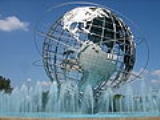
Located on the western portion of Long Island, Queens is home to two of the three major New York City area airports, John F. Kennedy and LaGuardia; it is also the location of the New York Mets baseball team; the US Open tennis tournament; Flushing Meadows Park and Silvercup Studios.
American Community Survey, immigrants comprise 47.6% of Queens residents making Queens the city's most diverse borough.

Discussion
Ask a question about 'Queens'
Start a new discussion about 'Queens'
Answer questions from other users
|
Recent Posts

Encyclopedia
Queens is the largest in area, the second-largest in population, and the easternmost of the Five Boroughs which form the City of New York. The Borough of Queens' boundaries are identical to those of the County of Queens (Queens County), a subdivision of the State of New York in the Northeastern United States.
Located on the western portion of Long Island, Queens is home to two of the three major New York City area airports, John F. Kennedy and LaGuardia; it is also the location of the New York Mets baseball team; the US Open tennis tournament; Flushing Meadows Park and Silvercup Studios.
American Community Survey, immigrants comprise 47.6% of Queens residents making Queens the city's most diverse borough. With a population of 2.2 million it is the second most populous borough in New York City (behind Brooklyn) and the tenth most populous county in the United States. It is also the nation's fourth-most-densely populated county (after the counties covering Manhattan, Brooklyn and the Bronx). The 2.2 million figure is the highest historical population for the borough. Were each borough an independent city, Queens would be the fifth largest city in the United States.
| Jurisdiction | Population | Land Area | Borough of | County of | estimate for 1 July 2007 | square miles | square km | | Manhattan | New York | 1,620,867 | 23 | 59 | | the Bronx | Bronx | 1,373,659 | 42 | 109 | | Brooklyn | Kings | 2,528,050 | 71 | 183 | Queens | Queens | 2,270,338 | 109 | 283 | | Staten Island | Richmond | 481,613 | 58 | 151 | | 8,274,527 | 303 | 786 | | 19,297,729 | 47,214 | 122,284 | | Source: United States Census Bureau | |
Queens was established in 1683 as one of the original 12 counties of New York and was supposedly named for the Queen consort, Catherine of Braganza (1638-1705), the Portuguese princess who married King Charles II of England in 1662.
The borough is often considered one of the more suburban boroughs (in comparison to Manhattan standards) of New York City. Neighborhoods in central Queens (except those situated along Queens Boulevard and the neighborhoods of Flushing and Jamaica), southern Queens, and eastern Queens have a look and feel similar to the bordering suburbs of western Nassau County. In its northwestern section, however, Queens is home to many urban neighborhoods and several central business districts. Long Island City, on the Queens' waterfront across from Manhattan, is the site of the Citicorp Building, the tallest skyscraper in New York City outside of Manhattan.
History
European colonization brought both Dutch and English settlers, as a part of the New Netherlands colony. First settlements occurred in 1635, with colonization at Maspeth in 1642, and Vlissingen (now Flushing) in 1643. Other early settlements included Newtown (now Elmhurst) and Jamaica. However, these towns were mostly inhabited by English settlers from New England via eastern Long Island (Suffolk County) subject to Dutch law. After the capture of the colony by the English and its renaming as New York in 1664, the area (and all of Long Island) became known as Yorkshire.
Originally, Queens County included the adjacent area now comprising Nassau County. It was an original county of New York State, one of twelve created on November 1, 1683.
On October 7, 1691, all counties in the Colony of New York were redefined. Queens gained North Brother Island, South Brother Island, and Huletts Island (today known as Rikers Island).
On December 3, 1768, Queens gained other islands in Long Island Sound that were not already assigned to a county but that did not abut on Westchester County (today’s Bronx County).
Queens played a minor role in the American Revolution, as compared to Brooklyn where the Battle of Long Island was largely fought. Queens, like the rest of Long Island, fell under British occupation after the Battle of Long Island in 1776 and remained occupied throughout most of the rest of the war. Under the Quartering Act, British soldiers used, as barracks, the public inns and uninhabited buildings belonging to Queens residents, against the will of many of the local people. The quartering of soldiers in private homes, except in times of war, was banned by the Third Amendment to the United States Constitution. Nathan Hale was captured by the British on the shore of Flushing Bay in Queens before being executed in Manhattan.
From 1683 until 1784, Queens County consisted of five towns: Flushing, Hempstead, Jamaica, Newtown, and Oyster Bay. On April 6, 1784, a sixth town, the Town of North Hempstead, was formed through secession by the northern portions of the Town of Hempstead.
The seat of the county government was located first in Jamaica,
but was moved about 1788 to an area near Mineola (now in Nassau County) known then as Clowesville.
In 1870, Long Island City was incorporated as a city, consisting of what had been the Village of Astoria and some unincorporated areas in the Town of Newtown. Around 1874, the seat of county government was moved to Long Island City from Mineola.
On March 1, 1860, the eastern border between Queens County (later Nassau County) and Suffolk County was redefined with no discernible change.
On June 8, 1881, North Brother Island was transferred to New York County.
On May 8, 1884, Rikers Island was transferred to New York County.
On April 16, 1964, South Brother Island was transferred to Bronx County.
Borough of Queens The New York City Borough of Queens was authorized on May 4, 1897, by a vote of the New York State Legislature after an 1894 referendum on consolidation. The eastern 280 square miles of Queens that became Nassau County was partitioned on January 1, 1899.
Queens Borough was established on 1898-01-01.
Long Island City, the towns of Newtown, Flushing, and Jamaica, and the Rockaway Peninsula portion of the Town of Hempstead were merged to form the new borough, dissolving all former municipal governments (Long Island City, the county government, all towns, and all villages) within the new borough. The areas of Queens County that were not part of the consolidation plan,
consisting of the towns of North Hempstead and Oyster Bay, and the major remaining portion of the Town of Hempstead, remained part of Queens County until they seceded to form the new Nassau County on January 1, 1899, whereupon the boundaries of Queens County and the Borough of Queens became coterminous. Lloyd Neck, which was part of the Town of Oyster Bay, seceded from Queens and became part of Suffolk County.
With consolidation, Jamaica once again became the county seat, though county offices now extend to nearby Kew Gardens also.
From 1905 to 1908 the Long Island Rail Road in Queens was electrified. Transportation to and from Manhattan, previously by ferry or via bridges in Brooklyn, opened up when the Queensboro Bridge was finished in 1909, and with railway tunnels under the East River in 1910. From 1915 onward, much of Queens was connected to the New York City subway system.
With the construction of the Steinway Tunnel carrying the IRT Flushing Line between Queens and Manhattan, and the emergent expansion of the use of the automobile, the
population of Queens more than doubled in the 1920s, from 469,042 in 1920 to 1,079,129 in 1930. This was followed by the IND Queens Boulevard Line via the 53rd Street Tunnel which included a special loop station for the 1939 World's Fair.
Geography
Queens County is in the western part of Long Island and includes a few smaller islands, most of which are in Jamaica Bay and form part of Gateway National Recreation Area, which is in turn one of the National Parks of New York Harbor. The Rockaway Peninsula sits between Jamaica Bay and the Atlantic Ocean. The western and northern edge of the borough is defined a watery continuum made up of Newtown Creek which flows
into the tidal estuary known as the East River, which includes the associated Flushing Bay and Flushing River. The East River opens into Long Island Sound. The mid-section of Queens is crossed by the Long Island straddling terminal moraine created by the Wisconsin Glacier. This feature evolved into a land use pun due to the siting of many cemeteries.
The tallest tree in the New York metropolitan area, called the Queens Giant, is also the oldest living thing in the New York metro area. It is located in northeastern Queens, and is 450 years old and tall as of 2005.
According to the United States Census Bureau, the county has a total area of ; of this is land and 38.7% is water.
Adjacent Counties
Neighborhoods
|
| |
|
|