
All Topics  
Henry Hudson

 
Henry Hudson

   Email Print
   Bookmark   Link


Henry Hudson


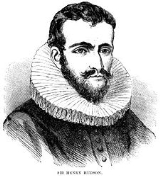
Henry Hudson (1570 – 1611) was an English
England

native_name =|conventional_long_name = England|common_name = England|image_flag = Flag of England.svg|image_coat = England COA.svg|symbol_type = Royal Coat of Arms...
 sea explorer and navigator
Navigator

A navigator is the person onboard a ship or aircraft responsible for its navigation. The navigator's primary responsibility is to be aware of ship or aircraft position at all times....
 in the early 17th century. After several voyages on behalf of English merchants to explore a prospective Northeast Passage to China, Hudson explored the region around modern New York City
New York City

The City of New York is the List of United States cities by population in the United States, while the New York metropolitan area ranks among the List of urban areas by population....
 while looking for a western route to the Orient under the auspices of the Dutch East India Company
Dutch East India Company

The Dutch East India Company was a trading company, which was established in 1602, when the States-General of the Netherlands granted it a 21-year monopoly to carry out colonial activities in Asia....
. He discovered the Hudson River
Hudson River

The Hudson River, called Muh-he-kun-ne-tuk , the Great Mohegan by the Iroquois, or as the Lenape Native Americans called it in Unami, Muhheakantuck, is a river that flows from north to south through eastern New York....
 and laid the foundation for Dutch colonization
New Netherland

File:Seal of new netherland.jpgNew Netherland, or Nieuw-Nederland in Dutch, was the seventeenth-century colonial province of the Republic of the Seven United Netherlands on the Eastern Seaboard of North America....
 of the region.

Hudson's next expedition ranged further north in search of the Northwest Passage
Northwest Passage

The Northwest Passage is a sea route through the Arctic Ocean, along the northern coast of North America via waterways amidst the Canadian Arctic Archipelago, connecting the Atlantic Ocean and Pacific Oceans....
, again under English auspices, leading to his discovery of the Hudson Strait
Hudson Strait

Hudson Strait links the Atlantic Ocean to Hudson Bay in Canada. It lies between Baffin Island and the northern coast of Quebec, its eastern entrance marked by Cape Chidley and Resolution Island ....
 and Hudson Bay
Hudson Bay

Hudson Bay is a large , relatively shallow body of water in northeastern Canada. It is approximately 850 miles long and 650 miles wide. It drains a very large area that includes parts of Ontario, Quebec, Saskatchewan, Alberta, most of Manitoba, parts of North Dakota, South Dakota, Minnesota, and Montana, and the southeastern area of Nunavut...
.


Discussion
Ask a question about 'Henry Hudson'
Start a new discussion about 'Henry Hudson'
Answer questions from other users
Full Discussion Forum


Recent Posts


Encyclopedia


Henry Hudson (1570 – 1611) was an English
England

native_name =|conventional_long_name = England|common_name = England|image_flag = Flag of England.svg|image_coat = England COA.svg|symbol_type = Royal Coat of Arms...
 sea explorer and navigator
Navigator

A navigator is the person onboard a ship or aircraft responsible for its navigation. The navigator's primary responsibility is to be aware of ship or aircraft position at all times....
 in the early 17th century. After several voyages on behalf of English merchants to explore a prospective Northeast Passage to China, Hudson explored the region around modern New York City
New York City

The City of New York is the List of United States cities by population in the United States, while the New York metropolitan area ranks among the List of urban areas by population....
 while looking for a western route to the Orient under the auspices of the Dutch East India Company
Dutch East India Company

The Dutch East India Company was a trading company, which was established in 1602, when the States-General of the Netherlands granted it a 21-year monopoly to carry out colonial activities in Asia....
. He discovered the Hudson River
Hudson River

The Hudson River, called Muh-he-kun-ne-tuk , the Great Mohegan by the Iroquois, or as the Lenape Native Americans called it in Unami, Muhheakantuck, is a river that flows from north to south through eastern New York....
 and laid the foundation for Dutch colonization
New Netherland

File:Seal of new netherland.jpgNew Netherland, or Nieuw-Nederland in Dutch, was the seventeenth-century colonial province of the Republic of the Seven United Netherlands on the Eastern Seaboard of North America....
 of the region.

Hudson's next expedition ranged further north in search of the Northwest Passage
Northwest Passage

The Northwest Passage is a sea route through the Arctic Ocean, along the northern coast of North America via waterways amidst the Canadian Arctic Archipelago, connecting the Atlantic Ocean and Pacific Oceans....
, again under English auspices, leading to his discovery of the Hudson Strait
Hudson Strait

Hudson Strait links the Atlantic Ocean to Hudson Bay in Canada. It lies between Baffin Island and the northern coast of Quebec, its eastern entrance marked by Cape Chidley and Resolution Island ....
 and Hudson Bay
Hudson Bay

Hudson Bay is a large , relatively shallow body of water in northeastern Canada. It is approximately 850 miles long and 650 miles wide. It drains a very large area that includes parts of Ontario, Quebec, Saskatchewan, Alberta, most of Manitoba, parts of North Dakota, South Dakota, Minnesota, and Montana, and the southeastern area of Nunavut...
. After wintering in the Canadian Arctic, Hudson tried to press on with his voyage in the spring of 1611, but his crew mutinied
Mutiny

Mutiny is a conspiracy among members of a group of similarly-situated individuals to openly oppose, change or overthrow an existing authority....
 and cast him adrift. His specific fate is unknown.

Biography


Hudson was born in London, England. Little is known of his early life. He is thought to have spent many years at sea, beginning as a cabin boy
Cabin Boy

Cabin Boy is a fantasy film released in 1994 in film by Touchstone Pictures and produced by Tim Burton which starred comedian Chris Elliott....
 at 16 and gradually working his way up to ship's captain
Captain (nautical)

The captain or master of a merchant vessel is a licensed mariner in ultimate command of the vessel. A ship's captain is responsible for its safe and efficient operation, including cargo operations and navigation, and ensuring that the vessel complies with local and international laws, as well as company policies....
. Hudson was sent once to find the Northwest passage, so that he could go find a route from Europe to Asia. He failed the three times he went there. The last time he went there, his crew turned on against him, making a mutiny, and then Hudson had to go on a small boat with seven other crew members who had physical and mental disabilities and sicknesses.

1607

In 1607, the Muscovy Company
Muscovy Company

The Muscovy Company , was a trading company chartered in 1555. It was the first major Chartered companies, the precursor of the type of business that would soon flourish in England, and became closely associated with such famous names as Henry Hudson and William Baffin....
 of England hired Hudson to find the Northeast Passage to China
China

China is a Culture of China, an ancient civilization, and, depending on perspective, a national or multinational entity extending over a large area in East Asia....
. It was thought at the time that, because the sun shone for three months in the northern latitudes, the ice would melt and a ship could travel across the top of the world to the Spice Islands. The English were battling the Dutch for Northeast Passage routes.

Hudson sailed from Gravesend
Gravesend

Gravesend may refer to:Places in the United Kingdom:*Gravesend, Kent*Gravesend, HertfordshirePlaces in the rest of the world:*Gravesend, Brooklyn...
 on the first of May with a crew of ten men and a boy on the 80-ton Hopewell. They reached the east coast of Greenland
Greenland

Greenland is a member country of the Kingdom of Denmark located between the Arctic Ocean and Atlantic Oceans, east of the Canadian Arctic Archipelago....
 on June 13, coasting it until the 22nd. Here they named a headland Young's Cape, a "very high mount, like a round castle" near it Mount of God's Mercy, and land at 73° N Hold-with-Hope. On the 27th they sighted "Newland" (i.e Spitsbergen
Spitsbergen

Spitsbergen is a Norway island, the largest island of the Svalbard archipelago in the Arctic Ocean. The island of Spitsbergen covers approximately 39,044 km? ....
), near the mouth of the great bay Hudson later simply named the Great Indraught (Isfjorden
Isfjord (Svalbard)

Isfjord is the List of Norwegian Fjords fjord in the Norway archipelago of Svalbard. It lies on the west side of Spitsbergen, an island in the Arctic Ocean about midway between Norway and the North Pole, and the largest in the archipelago....
). On July 13 Hudson and his crew thought they had sailed as far north as 80° 23' N, but more likely only reached 79° 23' N. The following day they entered what Hudson later in the voyage would name Whales Bay (Krossfjorden
Krossfjorden

Krossfjorden is a 30km long fjord on the west coast of Spitsbergen. To the north it branches into Lilleh??kfjorden, M?llerfjorden and Kollerfjorden....
 and Kongsfjorden
Kongsfjorden

Kongsfjorden is an inlet on the west coast of Spitsbergen, an island which is part of the Svalbard archipelago in the Arctic ocean. The inlet is 26 km long and ranges in width from 6 to 14 km ....
), naming its northwestern point Collins Cape (Kapp Mitra) after his boatswain, William Collins. They sailed north the following two days. On the 16th they reached as far north as Hakluyt's Headland (which Thomas Edge
Thomas Edge

Thomas Edge was an England merchant, whaler, and sealer who worked for the Muscovy Company in the first quarter of the 17th century. Edge was born in the parish of Blackburn, Lancashire in 1587/88....
 claims Hudson named on this voyage) at 79° 49' N, thinking they saw the land continue to 82° N (Svalbard
Svalbard

Svalbard is an archipelago in the Arctic Ocean north of mainland Europe, about midway between mainland Norway and the North Pole. It consists of a group of islands ranging from 74th parallel north to 81st parallel north, and 10th meridian east to 35th meridian east....
's northernmost point is 80° 49' N) when really it treaded to the east. Ice being packed along the north coast they were forced to turn back south. Hudson wanted to make his return "by the north of Greenland to Davis his Streights, and so for England," but ice conditions would have made this impossible. The expedition returned to Tilberry Hope on the Thames on September 15.

According to Thomas Edge, who was often inaccurate, "William Hudson" in 1608 discovered an island at 71° N and named it Hudson's Touches (or Tutches). However, he only could have come across it in 1607 (if he had made an illogical detour) and made no mention of it in his journal. There is also no cartographical proof of this supposed discovery. Also, Jonas Poole
Jonas Poole

Jonas Poole was an early 17th century England explorer, sealer, and whaler. Although Henry Hudson is ignorantly stated to be the "father of English whaling" by many authors, Poole is the true father of English whaling....
 and Robert Fotherby
Robert Fotherby

Robert Fotherby was an early 17th century England explorer and whaler. From 1613 to 1615 he worked for the Muscovy Company, and later for the Honourable East India Company....
 both had possession of Hudson's journal while searching for his elusive Hold-with-Hope (on the east coast of Greenland) in 1611 and 1615, respectively, but neither had any knowledge of his (later) alleged discovery of Jan Mayen, sheding further doubt on him having discovered the island. The latter actually found Jan Mayen, thinking it a new discovery and naming it Sir Thomas Smith's Island.

It has also been claimed by many authors that it was the discovery of large numbers of whales in Spitsbergen waters by Hudson during this voyage that led to several nations sending whaling expeditions to the islands. While he did indeed report seeing many whales, it wasn't his reports that led to the trade, but that by Jonas Poole in 1610 which led to the establishment of English whaling and the successful voyage of Nicholas Woodcock
Nicholas Woodcock

Nicholas Woodcock was an early 17th century English mariner who served aboard ships sailing north to Spitsbergen....
 in 1612 that led to the establishment of Dutch, French, and Spanish whaling.

1608 to 1609

In 1608, Hudson made a second attempt, trying to go across the top of Russia. He made it to Novaya Zemlya
Novaya Zemlya

Novaya Zemlya Novaya Zemlya consists of two major islands, separated by the narrow Matochkin Strait, and a number of smaller ones. The two main islands are Severny Island and Yuzhny Island ....
 but was forced to turn back.

In 1609, Hudson was chosen by the Dutch East India Company
Dutch East India Company

The Dutch East India Company was a trading company, which was established in 1602, when the States-General of the Netherlands granted it a 21-year monopoly to carry out colonial activities in Asia....
 to find an easterly passage to Asia. He was told to sail around the Arctic Ocean
Arctic Ocean

The Arctic Ocean, located in the Northern Hemisphere and mostly in the Arctic North Pole region, is the smallest and shallowest of the world's five major oceanic divisions....
 north of Russia, into the Pacific and so to the Far East
Far East

The Far East is a term current in English language to refer to the countries of East Asia. The term is often expanded to also include Southeast Asia and South Asia, for economic and cultural reasons, for example because Buddhism is common to East Asia, Southeast Asia and South Asia....
. Hudson could not complete his intended route due to the ice that had plagued his previous voyages, and those of many others before him.

Having heard rumors by way of Jamestown and John Smith, he and his crew decided to try to seek out a Southwest Passage through North America
North America

North America is the northern continent of the Americas, situated in the Earth's northern hemisphere and almost totally in the western hemisphere....
. After crossing the Atlantic Ocean
Atlantic Ocean

The Atlantic Ocean is the second-largest of the world's oceanic divisions; with a total area of about 106.4 million square kilometres . It covers approximately one-fifth of the Earth's surface....
, his vessel, the Halve Maen
Halve Maen

The Halve Maen was the name of a Dutch East India Company ship which sailed in what is now New York harbor in September, 1609. It was commissioned by the Dutch Republic to covertly find an eastern passage to China....
 (Half Moon), sailed around briefly in the Chesapeake Bay
Chesapeake Bay

The Chesapeake Bay is the largest estuary in the United States. It lies off the Atlantic Ocean, surrounded by Maryland and Virginia. The Chesapeake Bay's drainage basin covers in the District of Columbia and parts of six states: New York, Pennsylvania, Delaware, Maryland, Virginia, and West Virginia....
 and entered Delaware Bay
Delaware Bay

Delaware Bay is a large estuary outlet of the Delaware River on the Northeast seaboard of the United States whose fresh water mixes for many miles with the waters of the Atlantic Ocean....
 on August 28. Hudson concluded that these waterways did not lead to the Pacific. He then moved into New York Harbor
New York Harbor

New York Harbor, a geographic term, refers collectively to the rivers, bays, and tidal estuaries near the mouth of the Hudson River in the vicinity of New York City....
 and proceeded up what is today the Hudson River
Hudson River

The Hudson River, called Muh-he-kun-ne-tuk , the Great Mohegan by the Iroquois, or as the Lenape Native Americans called it in Unami, Muhheakantuck, is a river that flows from north to south through eastern New York....
. He made it as far as Albany, New York
Albany, New York

Albany is the Capital of the state of New York and the county seat of Albany County, New York. Albany is roughly 136 miles north of the city of New York City, and slightly south of the confluence of the Mohawk River and Hudson Rivers....
, where the river narrows, before he was forced to turn around, realizing that this was not the Northwest Passage. In fact, no Northwest Passage to the Pacific existed north of the Strait of Magellan until one was created by the construction of the Panama Canal
Panama Canal

The Panama Canal is a man-made canal which joins the Pacific Ocean and Atlantic Ocean oceans. One of the largest and most difficult engineering projects ever undertaken, it had an enormous impact on shipping between the two oceans, replacing the long and treacherous route via the Drake Passage and Cape Horn at the southernmost tip of South Am...
 between 1903 and 1914. The Native Americans, who relayed the information to John Smith, were likely referring to what are known today as the Great Lakes.

Along the way, Hudson traded with several native tribes, obtaining shells, beads and furs. His voyage established Dutch claims to the region and the fur trade
Fur trade

The fur trade is a worldwide industry dealing in the acquisition and sale of animal fur....
 that prospered there. New Amsterdam
New Amsterdam

New Amsterdam was a 17th-century Dutch colonization of the Americas settlement that later became New York City.The town developed outside of Fort Amsterdam on Manhattan Island in the New Netherland Territory which was situated between 38 and 42 degrees latitude as a provincial extension of the Dutch Republic as of 1624....
 in Manhattan
Manhattan

Manhattan is one of the five borough of New York City, located primarily on Manhattan Island at the mouth of the Hudson River.With a United States Census of 1,620,867 living in a land area of 22.96 square miles , Manhattan, coextensive with New York County, is the most population density county in the United States, w...
 became the capital of New Netherland
New Netherland

File:Seal of new netherland.jpgNew Netherland, or Nieuw-Nederland in Dutch, was the seventeenth-century colonial province of the Republic of the Seven United Netherlands on the Eastern Seaboard of North America....
 in 1625. On his return trip to Amsterdam, he stopped in Dartmouth, England and was detained by authorities there, who wanted access to his log. He managed to pass the log to the Dutch ambassador to England who sent it, along with his report, to Amsterdam
Amsterdam

Amsterdam is the Capital of the Netherlands and List of cities in the Netherlands with over 100,000 people of the Netherlands, located in the Provinces of the Netherlands of North Holland in the west of the country....
 .

1610-1611


In 1610, Hudson managed to get backing for yet another voyage, this time under the English flag. The funding came from the Virginia Company
Virginia Company

The Virginia Company refers collectively to a pair of England joint stock company chartered by James I of England in 1606 with the purposes of establishing settlements on the coast of North America....
 and the British East India Company
British East India Company

The East India Company was an early England joint-stock company that was formed initially for pursuing trade with the Indies, but that ended up trading with the Indian subcontinent and China....
. At the helm of his new ship, the Discovery
Discovery (1602 ship)

Discovery was a 20-tonnage "fly-boat" of the British East India Company, launched before 1602. She took part in six expeditions in search of the Northwest Passage....
, he stayed to the north (some claim he deliberately stayed too far south on his Dutch-funded voyage), reaching Iceland
Iceland

Iceland, officially the Republic of Iceland , is an island country located in the North Atlantic Ocean between mainland Europe and Greenland....
 on May 11, the south of Greenland on June 4, and then rounding the southern tip of Greenland.

Excitement was very high due to the expectation that the ship had finally found the Northwest Passage
Northwest Passage

The Northwest Passage is a sea route through the Arctic Ocean, along the northern coast of North America via waterways amidst the Canadian Arctic Archipelago, connecting the Atlantic Ocean and Pacific Oceans....
 through the continent. On June 25, the explorers reached the Hudson Strait
Hudson Strait

Hudson Strait links the Atlantic Ocean to Hudson Bay in Canada. It lies between Baffin Island and the northern coast of Quebec, its eastern entrance marked by Cape Chidley and Resolution Island ....
 at the northern tip of Labrador
Labrador

Labrador is a region of Atlantic Canada. Together with the island of Newfoundland from which it is separated by the Strait of Belle Isle, it constitutes the province of Newfoundland and Labrador....
. Following the southern coast of the strait on August 2, the ship entered Hudson Bay
Hudson Bay

Hudson Bay is a large , relatively shallow body of water in northeastern Canada. It is approximately 850 miles long and 650 miles wide. It drains a very large area that includes parts of Ontario, Quebec, Saskatchewan, Alberta, most of Manitoba, parts of North Dakota, South Dakota, Minnesota, and Montana, and the southeastern area of Nunavut...
. Hudson spent the following months mapping and exploring its eastern shores. In November however, the ship became trapped in the ice in James Bay
James Bay

James Bay is a large body of water on the southern end of Hudson Bay in Canada. Both bodies of water extend from the Arctic Ocean. James Bay borders the provinces of Quebec and Ontario; islands within the bay are part of Nunavut....
, and the crew moved ashore for the winter.
Last Voyage of Henry Hudson
When the ice cleared in the spring of 1611, Hudson planned to continue exploring but his crew wanted to return home. Matters came to a head and the crew mutinied
Mutiny

Mutiny is a conspiracy among members of a group of similarly-situated individuals to openly oppose, change or overthrow an existing authority....
 in June 1611. They set Hudson, his teenage son John, and eight crewmen - either sick and infirm, or loyal to Hudson - adrift in a small open boat. According to Abacuck Prickett's journal, the castaways were provided with powder and shot, some pikes, an iron pot, some meal, and other miscellaneous items, as well as clothing. However Prickett's journal is disingenous, favoring the point of view of the mutineers, who knew they would be tried in England. Some argue that the abandoned men were provided with nothing and expected to die. The small boat kept pace with the Discovery for some time as the abandoned men rowed towards her but eventually Discovery's sails were let loose. Hudson was never seen again.

Only eight of the thirteen mutinous crewmen survived to return to Europe, and although arrested, none was ever punished for the mutiny and Hudson's death. One theory holds that they were considered valuable as sources of information, having travelled to the New World.

Legacy

The Hudson River
Hudson River

The Hudson River, called Muh-he-kun-ne-tuk , the Great Mohegan by the Iroquois, or as the Lenape Native Americans called it in Unami, Muhheakantuck, is a river that flows from north to south through eastern New York....
 in New York and New Jersey, discovered by Hudson, is named for him, as are Hudson County, New Jersey
Hudson County, New Jersey

Hudson County is in New Jersey, United States. Its county seat is Jersey City, New Jersey....
, and Hudson, New York
Hudson, New York

The City of Hudson, is located along the west border of Columbia County and the east bank of the Hudson River in Columbia County, New York, United States....
. In the Canadian Arctic, Hudson Bay
Hudson Bay

Hudson Bay is a large , relatively shallow body of water in northeastern Canada. It is approximately 850 miles long and 650 miles wide. It drains a very large area that includes parts of Ontario, Quebec, Saskatchewan, Alberta, most of Manitoba, parts of North Dakota, South Dakota, Minnesota, and Montana, and the southeastern area of Nunavut...
 and Hudson Strait
Hudson Strait

Hudson Strait links the Atlantic Ocean to Hudson Bay in Canada. It lies between Baffin Island and the northern coast of Quebec, its eastern entrance marked by Cape Chidley and Resolution Island ....
, also discovered by Hudson, are named for him.

See also

  • Age of Discovery
    Age of Discovery

    The Age of Discovery, also known as the Age of Exploration, was a period in human history starting in the 15th Century and continuing into the 17th Century, during which Europeans explored the world by ocean searching for trading partners and particular trade goods....
  • Explorers
  • Hudson Bay
    Hudson Bay

    Hudson Bay is a large , relatively shallow body of water in northeastern Canada. It is approximately 850 miles long and 650 miles wide. It drains a very large area that includes parts of Ontario, Quebec, Saskatchewan, Alberta, most of Manitoba, parts of North Dakota, South Dakota, Minnesota, and Montana, and the southeastern area of Nunavut...
  • Hudson River
    Hudson River

    The Hudson River, called Muh-he-kun-ne-tuk , the Great Mohegan by the Iroquois, or as the Lenape Native Americans called it in Unami, Muhheakantuck, is a river that flows from north to south through eastern New York....
  • History of Canada
    History of Canada

    Inhabited for millennia by First Nations , Canada has evolved from a group of European colony into a bilingual, multicultural federation, having peacefully obtained sovereignty from its last colonial possessor, the United Kingdom....
  • Hudson Strait
    Hudson Strait

    Hudson Strait links the Atlantic Ocean to Hudson Bay in Canada. It lies between Baffin Island and the northern coast of Quebec, its eastern entrance marked by Cape Chidley and Resolution Island ....
  • Lockheed Hudson
    Lockheed Hudson

    The Lockheed Hudson was an United States-built light bomber and coastal reconnaissance aircraft built initially for the Royal Air Force shortly before the outbreak of the Second World War and primarily operated by the RAF thereafter....


Sources

  • Hacquebord, Lawrens. (2004). The Jan Mayen Whaling Industry. Its Exploitation of the Greenland Right Whale and its Impact on the Marine Ecosystem. In: S. Skreslet (ed.), Jan Mayen in Scientific Focus. Amsterdam, Kluwer Academic Publishers. 229-238.
  • Purchas, S. 1625. Hakluytus Posthumus or Purchas His Pilgrimes: Contayning a History of the World in Sea Voyages and Lande Travells by Englishmen and others. Volumes XIII and XIV (Reprint 1906 J. Maclehose and sons).
  • Wordie, J.M. (1922) "Jan Mayen Island", The Geographical Journal Vol 59 (3).


External links

  • by Thomas Allibone Janvier
    Thomas Allibone Janvier

    Thomas Allibone Janvier was an United States story-writer and historian, born in Philadelphia, Pennsylvania of Proven?al language descent. His father was Philadelphia businessman and poet Francis De Haes Janvier....
    , at Project Gutenberg
    Project Gutenberg

    Project Gutenberg, abbreviated as PG, is a volunteer effort to digitize, archive and distribute cultural works, as founder Michael Hart said "To encourage the creation and distribution of eBooks."....
  • * of Hudson's 1609 voyage of discovery.
  • of a Henry Hudson historical impersonator.
  • Poorly researched web-biography of Henry Hudson.