


Index Librorum Prohibitorum

Encyclopedia
The Index Librorum Prohibitorum (List of Prohibited Books) was a list of publications prohibited
by the Catholic Church. A first version (the Pauline Index) was promulgated by Pope Paul IV
in 1559, and a revised and somewhat relaxed form (the Tridentine Index) was authorized at the Council of Trent
. The promulgation of the Index marked the "turning-point in the freedom of enquiry" in the Catholic world. The final (20th) edition appeared in 1948, and it was formally abolished on 14 June 1966 by Pope Paul VI
.
The avowed aim of the list was to protect the faith and morals of the faithful by preventing the reading of immoral
books or works containing theological
errors. Books thought to contain such errors included some scientific works by leading astronomers such as Johannes Kepler
's Epitome astronomiae Copernicianae, which was on the Index from 1621 to 1835. The various edition
s of the Index also contained the rules of the Church relating to the reading, selling and pre-emptive censorship of books, including translations of the Bible into the "common tongues".
Canon law still recommends that works concerning sacred Scripture, theology, canon law, church history, and any writings which specially concern religion or good morals, be submitted to the judgment of the local Ordinary
. The local Ordinary consults someone whom he considers competent to give a judgment and, if that person gives the nihil obstat
("nothing forbids") the local Ordinary grants the imprimatur
("let it be printed"). Members of religious institute
s require the imprimi potest
(it can be printed) of their major superior to publish books on matters of religion or morals.
Some of the scientific works that were on early editions of the Index (e.g. on heliocentrism
) have long been routinely taught at Catholic universities worldwide. Giordano Bruno
, whose entire works were placed on the Index on 8 February 1600 was burned alive at the stake. In 2002, a retired Roman Catholic bishop gave his personal approval to the writings of Maria Valtorta
, which had been on the Index (though never in a printed edition) and which have still not been given official Church approval. Mary Faustina Kowalska
, whose writings were likewise forbidden, was canonized
in 2000, and Antonio Rosmini-Serbati
, one of whose works was on the Index, was beatified
in 2007. The developments since the abolition of the Index signify "the loss of relevance of the Index in the 21st century."
 The historical context in which the Index appeared involved the early restrictions on printing in Europe. The refinement of moveable type and the printing press
by Johannes Gutenberg around 1440 changed the nature of book publishing, and the mechanism by which information could be disseminated to the public. Books, once rare and kept carefully in a small number of libraries, could be mass-produced and widely disseminated.
In the 16th century, in most European countries both the church and governments attempted to regulate and control printing, which allowed for rapid and widespread circulation of ideas and information. While governments and church encouraged printing in many ways, which allowed the dissemination of Bible
s and government information, works of dissent and criticism could also circulate rapidly. As a consequence, governments established controls over printers across Europe, requiring them to have official licenses to trade and produce books.
The early versions of the Index began to appear from 1529 to 1571. In the same time frame, in 1557 the English Crown aimed to stem the flow of dissent by chartering the Stationers' Company. The right to print was restricted to two universities and to the 21 existing printers in the city of London
, which had between them 53 printing presses.
The French crown also repressed printing, and printer Etienne Dolet
was burned at the stake in 1546. The 1551 Edict of Châteaubriant
comprehensively summarized censorship positions to date, and included provisions for unpacking and inspecting all books brought into France. The 1557 Edict of Compiègne
applied the death penalty to heretics and resulted in the burning of a noblewoman at the stake. Printers were viewed as radical and rebellious, with 800 authors, printers and book dealers being incarcerated in the Bastille
before it was stormed in 1789. At times, the prohibitions of church and state followed each other, e.g. René Descartes
was placed on the Index in the 1660s and the French government prohibited the teaching of Cartesianism
in schools in the 1670s.
The 1710 introduction of Statute of Anne
in England (and later copyright laws in France) eased this situation. However, historian Eckhard Höffner claims that copyright laws and their restrictions acted as a barrier to progress in those countries for over a century, since British publishers could print valuable knowledge in limited quantities for the sake of profit; while the German economy prospered in the same time frame since there were no restrictions.
, but in Catholic Netherlands
(1529), Venice
(1543) and Paris
(1551, under the terms of the Edict of Châteaubriant
) followed this example. By mid-century, in the tense atmosphere of wars of religion in Germany and France, both Protestant and Catholic authorities reasoned that only control of the press, including a catalog of prohibited works, coordinated by ecclesial and governmental authorities could prevent the spread of heresy.
The first Roman Index was printed in 1557 under the direction of Pope Paul IV
(1555–1559), but then withdrawn for unclear reasons. In 1559, a new index was finally published, banning the entire works of some 550 authors in addition to the individual proscribed titles: "The Pauline Index felt that the religious convictions of an author contaminated all his writing." The work of the censors was considered too severe and met with much opposition even in Catholic intellectual circles; after the Council of Trent
had authorised a revised list prepared under Pope Pius IV
, the so-called Tridentine Index was promulgated in 1564; it remained the basis of all later lists until Pope Leo XIII
, in 1897, published his Index Leonianus.
The blacklisting of some Protestant scholars even when writing on subjects a modern reader would consider outside the realm of dogma
meant that, unless they obtained a dispensation
, obedient Catholic thinkers were denied access to the botanist Conrad Gesner's Historiae animalium
or the botanical works of Otto Brunfels
, those of the medical scholar Janus Cornarius
, to Christoph Hegendorff
or Johann Oldendorp
on the theory of law, Protestant geographers and cosmographers like Jacob Ziegler
or Sebastian Münster
, as well as anything by Protestant theologians like Martin Luther
, John Calvin
or Philipp Melancthon. Among the more counter-intuitive inclusions was the Libri Carolini
, a theological work from the 9th century court of Charlemagne
, which had only survived in a manuscript in the Vatican Library
, before being printed in the 16th century.
was created, the Sacred Congregation of the Index, which had the specific task to investigate those writings that were denounced in Rome
as being not exempt of errors, to update the list of Pope Pius IV regularly and also to make lists of required corrections in case a writing was not to be condemned absolutely but only in need of correction; it was then listed with a mitigating clause (e.g., donec corrigatur (forbidden until corrected) or donec expurgetur (forbidden until purged)).
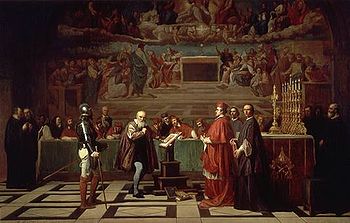 This sometimes resulted in very long lists of corrections, published in the Index Expurgatorius. Prohibitions made by other congregations (mostly the Holy Office) were simply passed on to the Congregation of the Index, where the final decree
s were drafted and made public, after approval of the Pope
(who always had the possibility to condemn an author personally—only a few examples, such as Lamennais and Hermes).
An update to the Index was made by Pope Leo XIII, in the 1897 apostolic constitution Officiorum ac Munerum
, known as the "Index Leonianus".
The Sacred Congregation of the Inquisition of the Roman Catholic Church later became the Holy Office, and since 1965 has been called the Congregation for the Doctrine of the Faith
. The Congregation of the Index was merged with the Holy Office in 1917, by the Motu Proprio "Alloquentes Proxime" of Pope Benedict XV; the rules on the reading of books were again reelaborated in the new Codex Iuris Canonici. From 1917 on, the Holy Office (again) took care of the Index.
, moral deficiency, sexual
explicitness, and so on. That some atheist
s, such as Schopenhauer and Nietzsche, were not included was due to the general (Tridentine
) rule that heretical
works (i.e., works that contradict Catholic dogma) are ipso facto
forbidden. Some important works are absent simply because nobody bothered to denounce them. Many actions of the congregations were of a definite political content.
" that re-constituted the Holy Office as the "Sacred Congregation for the Doctrine of the Faith." The Index was not listed as being a part of the newly constituted Congregation's competence, leading to questioning whether it still was. This question was put to Cardinal Ottaviani—Pro-Prefect of the Congregation—who responded in the negative. The Cardinal also indicated in his response that there was going to be a change in the Index soon.
A notification of 14 June 1966 from the Congregation, which was published on the 15 June 1966 issue of the Vatican's newspaper, L'Osservatore Romano, announced that, while the Index maintained its moral force, in that it taught Christians to beware, as required by the natural law itself, of those writings that could endanger faith and morality, it no longer had the force of ecclesiastical positive law
with the associated penalties.
s had the opportunity to defend their writings and could prepare a new edition with the necessary corrections or deletions, either to avoid or to limit a ban
. Pre-publication censorship was encouraged.
The effects of the Index were at times felt throughout much of the Roman Catholic world. From Quebec
to Poland
it was, for many years, very difficult to find copies of banned works, especially outside of major cities
. The Index, however, had little effect outside Italy, Spain, Portugal, Poland or Bohemia, as it lacked an effective means of enforcement. The inability of the Church in Rome to enforce the banning of works by authors such as Kepler resulted in their availability in northern Europe, allowing Kepler's work to be used as the foundation for Isaac Newton
's theory of universal gravitation, which significantly influenced the formation of modern physics.
The congregation thus placed on the conscience of the individual Christian the responsibility to avoid all writings dangerous to faith and morals, while at the same time abolishing the previously existing ecclesiastical law and the relative censures, without thereby declaring that the books that had once been listed in the various editions of the Index of Prohibited Books had suddenly become free of error and danger.
In a letter of 31 January 1985 to Cardinal Giuseppe Siri, regarding the book Poem of the Man God
, Cardinal Joseph Ratzinger (then Prefect of the Congregation, who later became Pope Benedict XVI
), referred to the 1966 notification of the Congregation as follows: "After the dissolution of the Index, when some people thought the printing and distribution of the work was permitted, people were reminded again in L'Osservatore Romano (15 June 1966) that, as was published in the Acta Apostolicae Sedis (1966), the Index retains its moral force despite its dissolution. A decision against distributing and recommending a work, which has not been condemned lightly, may be reversed, but only after profound changes that neutralize the harm which such a publication could bring forth among the ordinary faithful."
 In the course of centuries, editions of the Index Librorum Prohibitorum saw deletions as well as additions of content. An example is the removal in the 1758 edition of the general prohibition of works advocating heliocentrism
as a fact rather than a hypothesis. Accordingly, many of the books that were once on the Index have for centuries been in widespread use within Catholic institutions. And as the quest for formerly forbidden knowledge and use of it has continued, and with the changing standards by which items are judged as immoral, the maintenance of any kind of Index would have proven almost impossible, in any case.
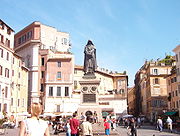
Thus, material from some of the books that were once on the Index (e.g. basics of astronomy) are routinely taught at most universities (including Catholic universities) in the world. Although in 1600 Giordano Bruno
was burned alive at the stake in Campo de' Fiori
in Rome
, the ideas which formed part of the charges of heresy (along with many other purely religious ones) against Bruno now form some of the foundations of modern cosmology
, and of theories such as that of parallel universes
.
Works too of a theological character that were on the Index have since received approbation. The Poem of the Man God
by Maria Valtorta
was forbidden by the Holy Office under Pope John XXIII
in 1959, a condemnation upheld in Cardinal Ratzinger's above-mentioned 1985 letter, almost two decades after the abolition of the Index; but in 2001 Catholic Bishop Roman Danylak
, by then a canon of Basilica di Santa Maria Maggiore
in Rome and no longer in charge of an eparchy
, granted, in his own words, "a letter of commendation, a Nihil Obstat, Imprimatur and a testimonial to this website of a Catholic monk on the writings of Maria Valtorta" (the website in question being one with the title "— A Contemporary Mystic — acclaimed one of the greatest: Maria Valtorta and her masterwork: The Poem of the Man-God" and in another letter stated that The Poem of the Man-God is, with the other writings of Valtorta, "in perfect consonance with the canonical Gospels, with the traditions and magisterium of the Catholic Church".
The legion wielded significant influence over Hollywood studios and in 2001 was incorporated into the United States Conference of Catholic Bishops
. It continues to issue ratings to date.
 The Index included a number of authors and intellectuals whose works are widely read today in most leading universities and are now considered as the foundations of science, e.g. Kepler's New Astronomy, his Epitome of Copernican Astronomy, and his World Harmony were quickly placed on the Index after their publication. Other noteworthy intellectuals and religious figures on the Index include Aldus Manutius
, Jean Paul Sartre, Simone de Beauvoir
, Voltaire
, Denis Diderot
, Victor Hugo
, Jean-Jacques Rousseau
, André Gide
, Immanuel Kant
, David Hume
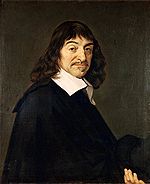
, René Descartes
, Francis Bacon
, John Milton
, John Locke
, Galileo Galilei
, Blaise Pascal
, Hugo Grotius
, and Saint Faustina Kowalska. Charles Darwin
's works were notably never included, although a number of works that reconciled evolutionary theory and Catholic theology
in ways unacceptable to the Church were included. These have recently been described as works ".. considered as the foundations of science and literature."
In many cases, an author's "opera omnia" (all his works) were forbidden. Most of these were inserted in the Index at a time when the Index itself stated that the prohibition of someone's "opera omnia" (all his works) did not cover works whose contents did not concern religion and were not forbidden by the general rules of the Index, but this explanation was omitted in the 1929 edition, an omission that was officially interpreted in 1940 as meaning that thenceforth "opera omnia" covered all the author's works without exception.
In one case, a book was added to the Index by the Holy Office during the reign of one Pope after it had reportedly received verbal papal approval from the previous Pope. The book Poem of the Man God
received praise from Pope Pius XII
's confessor (Augustin Bea
), and was presented to Pius XII during a special audience in 1948 in which he reportedly approved it, and the Servite priests present signed an affidavit to that effect. Ten years later, however, the book was added to the Index.
Adolf Hitler
's Mein Kampf
was never put on the Index, even though Hitler was the target of the Papal Bull
Mit Brennender Sorge
while the works of other less famous authors, including at least one saint (St. Faustina Kowalska), were. Cardinal Ottaviani remarked in an April 1966 interview with L'Osservatore della Domenica that there was too much contemporary literature and the Sacred Congregation for the Doctrine of the Faith could not keep up with it.
Censorship
thumb|[[Book burning]] following the [[1973 Chilean coup d'état|1973 coup]] that installed the [[Military government of Chile |Pinochet regime]] in Chile...
by the Catholic Church. A first version (the Pauline Index) was promulgated by Pope Paul IV
Pope Paul IV
Pope Paul IV, C.R. , né Giovanni Pietro Carafa, was Pope from 23 May 1555 until his death.-Early life:Giovanni Pietro Carafa was born in Capriglia Irpina, near Avellino, into a prominent noble family of Naples...
in 1559, and a revised and somewhat relaxed form (the Tridentine Index) was authorized at the Council of Trent
Council of Trent
The Council of Trent was the 16th-century Ecumenical Council of the Roman Catholic Church. It is considered to be one of the Church's most important councils. It convened in Trent between December 13, 1545, and December 4, 1563 in twenty-five sessions for three periods...
. The promulgation of the Index marked the "turning-point in the freedom of enquiry" in the Catholic world. The final (20th) edition appeared in 1948, and it was formally abolished on 14 June 1966 by Pope Paul VI
Pope Paul VI
Paul VI , born Giovanni Battista Enrico Antonio Maria Montini , reigned as Pope of the Catholic Church from 21 June 1963 until his death on 6 August 1978. Succeeding Pope John XXIII, who had convened the Second Vatican Council, he decided to continue it...
.
The avowed aim of the list was to protect the faith and morals of the faithful by preventing the reading of immoral
Morality
Morality is the differentiation among intentions, decisions, and actions between those that are good and bad . A moral code is a system of morality and a moral is any one practice or teaching within a moral code...
books or works containing theological
Theology
Theology is the systematic and rational study of religion and its influences and of the nature of religious truths, or the learned profession acquired by completing specialized training in religious studies, usually at a university or school of divinity or seminary.-Definition:Augustine of Hippo...
errors. Books thought to contain such errors included some scientific works by leading astronomers such as Johannes Kepler
Johannes Kepler
Johannes Kepler was a German mathematician, astronomer and astrologer. A key figure in the 17th century scientific revolution, he is best known for his eponymous laws of planetary motion, codified by later astronomers, based on his works Astronomia nova, Harmonices Mundi, and Epitome of Copernican...
's Epitome astronomiae Copernicianae, which was on the Index from 1621 to 1835. The various edition
Edition
In printmaking, an edition is a number of prints struck from one plate, usually at the same time. This is the meaning covered by this article...
s of the Index also contained the rules of the Church relating to the reading, selling and pre-emptive censorship of books, including translations of the Bible into the "common tongues".
Canon law still recommends that works concerning sacred Scripture, theology, canon law, church history, and any writings which specially concern religion or good morals, be submitted to the judgment of the local Ordinary
Ordinary
In those hierarchically organised churches of Western Christianity which have an ecclesiastical law system, an ordinary is an officer of the church who by reason of office has ordinary power to execute the church's laws...
. The local Ordinary consults someone whom he considers competent to give a judgment and, if that person gives the nihil obstat
Nihil obstat
Nihil obstat is a declaration of no objection to an initiative or an appointment....
("nothing forbids") the local Ordinary grants the imprimatur
Imprimatur
An imprimatur is, in the proper sense, a declaration authorizing publication of a book. The term is also applied loosely to any mark of approval or endorsement.-Catholic Church:...
("let it be printed"). Members of religious institute
Religious institute
In the Roman Catholic Church, a religious institute is "a society in which members, according to proper law, pronounce public vows, either perpetual or temporary which are to be renewed, however, when the period of time has elapsed, and lead a life of brothers or sisters in common".-Distinctions...
s require the imprimi potest
Imprimi potest
Imprimi potest is a declaration by a major superior of a Roman Catholic religious institute that a book on questions of religion or morals written by a member of the institute may be printed. Superiors make such declarations only after censors charged with examining the books have granted the...
(it can be printed) of their major superior to publish books on matters of religion or morals.
Some of the scientific works that were on early editions of the Index (e.g. on heliocentrism
Heliocentrism
Heliocentrism, or heliocentricism, is the astronomical model in which the Earth and planets revolve around a stationary Sun at the center of the universe. The word comes from the Greek . Historically, heliocentrism was opposed to geocentrism, which placed the Earth at the center...
) have long been routinely taught at Catholic universities worldwide. Giordano Bruno
Giordano Bruno
Giordano Bruno , born Filippo Bruno, was an Italian Dominican friar, philosopher, mathematician and astronomer. His cosmological theories went beyond the Copernican model in proposing that the Sun was essentially a star, and moreover, that the universe contained an infinite number of inhabited...
, whose entire works were placed on the Index on 8 February 1600 was burned alive at the stake. In 2002, a retired Roman Catholic bishop gave his personal approval to the writings of Maria Valtorta
Maria Valtorta
Maria Valtorta was a Roman Catholic Italian writer and poet, considered by many to be a mystic. Her work centers on Catholic Christian themes...
, which had been on the Index (though never in a printed edition) and which have still not been given official Church approval. Mary Faustina Kowalska
Mary Faustina Kowalska
Maria Faustina Kowalska, commonly known as Saint Faustina, born Helenka Kowalska was a Polish nun, mystic and visionary...
, whose writings were likewise forbidden, was canonized
Canonization
Canonization is the act by which a Christian church declares a deceased person to be a saint, upon which declaration the person is included in the canon, or list, of recognized saints. Originally, individuals were recognized as saints without any formal process...
in 2000, and Antonio Rosmini-Serbati
Antonio Rosmini-Serbati
Blessed Antonio Rosmini-Serbati was an Italian Roman Catholic priest and philosopher. He founded the Rosminians, officially the Institute of Charity or Societas a charitate nuncupata.-Biography:...
, one of whose works was on the Index, was beatified
Beatification
Beatification is a recognition accorded by the Catholic Church of a dead person's entrance into Heaven and capacity to intercede on behalf of individuals who pray in his or her name . Beatification is the third of the four steps in the canonization process...
in 2007. The developments since the abolition of the Index signify "the loss of relevance of the Index in the 21st century."
European restrictions on the right to print
Printing press
A printing press is a device for applying pressure to an inked surface resting upon a print medium , thereby transferring the ink...
by Johannes Gutenberg around 1440 changed the nature of book publishing, and the mechanism by which information could be disseminated to the public. Books, once rare and kept carefully in a small number of libraries, could be mass-produced and widely disseminated.
In the 16th century, in most European countries both the church and governments attempted to regulate and control printing, which allowed for rapid and widespread circulation of ideas and information. While governments and church encouraged printing in many ways, which allowed the dissemination of Bible
Bible
The Bible refers to any one of the collections of the primary religious texts of Judaism and Christianity. There is no common version of the Bible, as the individual books , their contents and their order vary among denominations...
s and government information, works of dissent and criticism could also circulate rapidly. As a consequence, governments established controls over printers across Europe, requiring them to have official licenses to trade and produce books.
The early versions of the Index began to appear from 1529 to 1571. In the same time frame, in 1557 the English Crown aimed to stem the flow of dissent by chartering the Stationers' Company. The right to print was restricted to two universities and to the 21 existing printers in the city of London
City of London
The City of London is a small area within Greater London, England. It is the historic core of London around which the modern conurbation grew and has held city status since time immemorial. The City’s boundaries have remained almost unchanged since the Middle Ages, and it is now only a tiny part of...
, which had between them 53 printing presses.
The French crown also repressed printing, and printer Etienne Dolet
Étienne Dolet
Étienne Dolet was a French scholar, translator and printer.-Early life:He was born in Orléans. A doubtful tradition makes him the illegitimate son of Francis I; but it is evident that he was at least connected with some family of rank and wealth.From Orléans he was taken to Paris about 1521, and...
was burned at the stake in 1546. The 1551 Edict of Châteaubriant
Edict of Châteaubriant
The Edict of Châteaubriant, issued from the seat of Anne, duc de Montmorency in Brittany, was promulgated by Henri II of France, 27 June 1551. The Edict was one of an increasingly severe series of measures taken by Henry II against Protestants, whom he regarded as heretics...
comprehensively summarized censorship positions to date, and included provisions for unpacking and inspecting all books brought into France. The 1557 Edict of Compiègne
Edict of Compiègne
The Edict of Compiègne , issued from his Château de Compiègne by Henri II of France, 24 July 1557, applied the death penalty for all convictions of relapsed and obstinate "sacramentarians", for those who went to Geneva or published books there, for iconoclast blasphemers against images, and even...
applied the death penalty to heretics and resulted in the burning of a noblewoman at the stake. Printers were viewed as radical and rebellious, with 800 authors, printers and book dealers being incarcerated in the Bastille
Bastille
The Bastille was a fortress in Paris, known formally as the Bastille Saint-Antoine. It played an important role in the internal conflicts of France and for most of its history was used as a state prison by the kings of France. The Bastille was built in response to the English threat to the city of...
before it was stormed in 1789. At times, the prohibitions of church and state followed each other, e.g. René Descartes
René Descartes
René Descartes ; was a French philosopher and writer who spent most of his adult life in the Dutch Republic. He has been dubbed the 'Father of Modern Philosophy', and much subsequent Western philosophy is a response to his writings, which are studied closely to this day...
was placed on the Index in the 1660s and the French government prohibited the teaching of Cartesianism
Cartesianism
Cartesian means of or relating to the French philosopher and mathematician René Descartes—from his name—Rene Des-Cartes. It may refer to:*Cartesian anxiety*Cartesian circle*Cartesian dualism...
in schools in the 1670s.
The 1710 introduction of Statute of Anne
Statute of Anne
The Statute of Anne was the first copyright law in the Kingdom of Great Britain , enacted in 1709 and entering into force on 10 April 1710...
in England (and later copyright laws in France) eased this situation. However, historian Eckhard Höffner claims that copyright laws and their restrictions acted as a barrier to progress in those countries for over a century, since British publishers could print valuable knowledge in limited quantities for the sake of profit; while the German economy prospered in the same time frame since there were no restrictions.
Early indices (1529–1571)
The first list of the kind was not published in RomeRome
Rome is the capital of Italy and the country's largest and most populated city and comune, with over 2.7 million residents in . The city is located in the central-western portion of the Italian Peninsula, on the Tiber River within the Lazio region of Italy.Rome's history spans two and a half...
, but in Catholic Netherlands
Netherlands
The Netherlands is a constituent country of the Kingdom of the Netherlands, located mainly in North-West Europe and with several islands in the Caribbean. Mainland Netherlands borders the North Sea to the north and west, Belgium to the south, and Germany to the east, and shares maritime borders...
(1529), Venice
Venice
Venice is a city in northern Italy which is renowned for the beauty of its setting, its architecture and its artworks. It is the capital of the Veneto region...
(1543) and Paris
Paris
Paris is the capital and largest city in France, situated on the river Seine, in northern France, at the heart of the Île-de-France region...
(1551, under the terms of the Edict of Châteaubriant
Edict of Châteaubriant
The Edict of Châteaubriant, issued from the seat of Anne, duc de Montmorency in Brittany, was promulgated by Henri II of France, 27 June 1551. The Edict was one of an increasingly severe series of measures taken by Henry II against Protestants, whom he regarded as heretics...
) followed this example. By mid-century, in the tense atmosphere of wars of religion in Germany and France, both Protestant and Catholic authorities reasoned that only control of the press, including a catalog of prohibited works, coordinated by ecclesial and governmental authorities could prevent the spread of heresy.
The first Roman Index was printed in 1557 under the direction of Pope Paul IV
Pope Paul IV
Pope Paul IV, C.R. , né Giovanni Pietro Carafa, was Pope from 23 May 1555 until his death.-Early life:Giovanni Pietro Carafa was born in Capriglia Irpina, near Avellino, into a prominent noble family of Naples...
(1555–1559), but then withdrawn for unclear reasons. In 1559, a new index was finally published, banning the entire works of some 550 authors in addition to the individual proscribed titles: "The Pauline Index felt that the religious convictions of an author contaminated all his writing." The work of the censors was considered too severe and met with much opposition even in Catholic intellectual circles; after the Council of Trent
Council of Trent
The Council of Trent was the 16th-century Ecumenical Council of the Roman Catholic Church. It is considered to be one of the Church's most important councils. It convened in Trent between December 13, 1545, and December 4, 1563 in twenty-five sessions for three periods...
had authorised a revised list prepared under Pope Pius IV
Pope Pius IV
Pope Pius IV , born Giovanni Angelo Medici, was Pope from 1559 to 1565. He is notable for presiding over the culmination of the Council of Trent.-Biography:...
, the so-called Tridentine Index was promulgated in 1564; it remained the basis of all later lists until Pope Leo XIII
Pope Leo XIII
Pope Leo XIII , born Vincenzo Gioacchino Raffaele Luigi Pecci to an Italian comital family, was the 256th Pope of the Roman Catholic Church, reigning from 1878 to 1903...
, in 1897, published his Index Leonianus.
The blacklisting of some Protestant scholars even when writing on subjects a modern reader would consider outside the realm of dogma
Dogma
Dogma is the established belief or doctrine held by a religion, or a particular group or organization. It is authoritative and not to be disputed, doubted, or diverged from, by the practitioners or believers...
meant that, unless they obtained a dispensation
Dispensation (Catholic Church)
In the canon law of the Roman Catholic Church, a dispensation is the suspension by competent authority of general rules of law in particular cases...
, obedient Catholic thinkers were denied access to the botanist Conrad Gesner's Historiae animalium
Historiae animalium (Gesner)
Historiae animalium published at Zurich in 1551-58 and 1587, is an encyclopedic work of "an inventory of renaissance zoology" by Conrad Gesner, a doctor and professor at the Carolinum, the precursor of the University of Zurich...
or the botanical works of Otto Brunfels
Otto Brunfels
Otto Brunfels was a German theologian and botanist...
, those of the medical scholar Janus Cornarius
Janus Cornarius
Janus Cornarius was a Saxon humanist and friend of Erasmus. A gifted philologist, Cornarius specialized in editing and translating Greek and Latin medical writers with "prodigious industry," taking a particular interest in botanical pharmacology and the effects of environment on illness and the body...
, to Christoph Hegendorff
Christoph Hegendorff
Christoph Hegendorff , of Leipzig, was a Protestant theological scholar and expert of law, an educator and a great, public admirer of Erasmus, whom he called optimarum literarum princeps and theologorum nostri temporis columen .Hegendorf matriculated at the University of...
or Johann Oldendorp
Johann Oldendorp
Johann Oldendorp was a German jurist and reformer.Oldendorp was born in Hamburg. He was the son of a merchant and the nephew of the historian Albert Krantz, from whom he probably received his early education. In 1504, he attended the University of Rostock and later graduated from the university...
on the theory of law, Protestant geographers and cosmographers like Jacob Ziegler
Jacob Ziegler
The humanist and theologian Jacob Ziegler of Landau, was an itinerant scholar of geography and cartographer, who lived a wandering life in Europe...
or Sebastian Münster
Sebastian Münster
Sebastian Münster , was a German cartographer, cosmographer, and a Hebrew scholar.- Life :Münster was born at Ingelheim near Mainz, the son of Andreas Munster. He completed his studies at the Eberhard-Karls-Universität Tübingen in 1518. His graduate adviser was Johannes Stöffler.He was appointed to...
, as well as anything by Protestant theologians like Martin Luther
Martin Luther
Martin Luther was a German priest, professor of theology and iconic figure of the Protestant Reformation. He strongly disputed the claim that freedom from God's punishment for sin could be purchased with money. He confronted indulgence salesman Johann Tetzel with his Ninety-Five Theses in 1517...
, John Calvin
John Calvin
John Calvin was an influential French theologian and pastor during the Protestant Reformation. He was a principal figure in the development of the system of Christian theology later called Calvinism. Originally trained as a humanist lawyer, he broke from the Roman Catholic Church around 1530...
or Philipp Melancthon. Among the more counter-intuitive inclusions was the Libri Carolini
Libri Carolini
The Libri Carolini , Opus Caroli regis contra synodum , also called Charlemagne's Books or simply the Carolines, are the work in four books composed on the command of Charlemagne, around 790, to refute the supposed conclusions of the Byzantine Second Council of Nicaea , particularly as...
, a theological work from the 9th century court of Charlemagne
Charlemagne
Charlemagne was King of the Franks from 768 and Emperor of the Romans from 800 to his death in 814. He expanded the Frankish kingdom into an empire that incorporated much of Western and Central Europe. During his reign, he conquered Italy and was crowned by Pope Leo III on 25 December 800...
, which had only survived in a manuscript in the Vatican Library
Vatican Library
The Vatican Library is the library of the Holy See, currently located in Vatican City. It is one of the oldest libraries in the world and contains one of the most significant collections of historical texts. Formally established in 1475, though in fact much older, it has 75,000 codices from...
, before being printed in the 16th century.
Sacred Congregation of the Index (1571–1917)
In 1571 a special congregationCongregation (Roman Curia)
A congregation is a type of dicastery of the Roman Curia, the central administrative organism of the Catholic Church....
was created, the Sacred Congregation of the Index, which had the specific task to investigate those writings that were denounced in Rome
Rome
Rome is the capital of Italy and the country's largest and most populated city and comune, with over 2.7 million residents in . The city is located in the central-western portion of the Italian Peninsula, on the Tiber River within the Lazio region of Italy.Rome's history spans two and a half...
as being not exempt of errors, to update the list of Pope Pius IV regularly and also to make lists of required corrections in case a writing was not to be condemned absolutely but only in need of correction; it was then listed with a mitigating clause (e.g., donec corrigatur (forbidden until corrected) or donec expurgetur (forbidden until purged)).
Decree
A decree is a rule of law issued by a head of state , according to certain procedures . It has the force of law...
s were drafted and made public, after approval of the Pope
Pope
The Pope is the Bishop of Rome, a position that makes him the leader of the worldwide Catholic Church . In the Catholic Church, the Pope is regarded as the successor of Saint Peter, the Apostle...
(who always had the possibility to condemn an author personally—only a few examples, such as Lamennais and Hermes).
An update to the Index was made by Pope Leo XIII, in the 1897 apostolic constitution Officiorum ac Munerum
Officiorum ac Munerum
Officiorum ac Munerum was an Apostolic Constitution issued by Pope Leo XIII on 25 January 1897.The constitution terminated the rules regarding the punishment by excommunication for reading or possession of forbidden or heretical works, and replaced them by new general decrees....
, known as the "Index Leonianus".
The Sacred Congregation of the Inquisition of the Roman Catholic Church later became the Holy Office, and since 1965 has been called the Congregation for the Doctrine of the Faith
Congregation for the Doctrine of the Faith
The Congregation for the Doctrine of the Faith , previously known as the Supreme Sacred Congregation of the Roman and Universal Inquisition , and after 1904 called the Supreme...
. The Congregation of the Index was merged with the Holy Office in 1917, by the Motu Proprio "Alloquentes Proxime" of Pope Benedict XV; the rules on the reading of books were again reelaborated in the new Codex Iuris Canonici. From 1917 on, the Holy Office (again) took care of the Index.
Holy Office (1917–1966)
The Index was regularly updated until the 1948 edition. This 20th edition contained 4,000 titles censored for various reasons: heresyHeresy
Heresy is a controversial or novel change to a system of beliefs, especially a religion, that conflicts with established dogma. It is distinct from apostasy, which is the formal denunciation of one's religion, principles or cause, and blasphemy, which is irreverence toward religion...
, moral deficiency, sexual
Human sexuality
Human sexuality is the awareness of gender differences, and the capacity to have erotic experiences and responses. Human sexuality can also be described as the way someone is sexually attracted to another person whether it is to opposite sexes , to the same sex , to either sexes , or not being...
explicitness, and so on. That some atheist
Atheism
Atheism is, in a broad sense, the rejection of belief in the existence of deities. In a narrower sense, atheism is specifically the position that there are no deities...
s, such as Schopenhauer and Nietzsche, were not included was due to the general (Tridentine
Council of Trent
The Council of Trent was the 16th-century Ecumenical Council of the Roman Catholic Church. It is considered to be one of the Church's most important councils. It convened in Trent between December 13, 1545, and December 4, 1563 in twenty-five sessions for three periods...
) rule that heretical
Heresy
Heresy is a controversial or novel change to a system of beliefs, especially a religion, that conflicts with established dogma. It is distinct from apostasy, which is the formal denunciation of one's religion, principles or cause, and blasphemy, which is irreverence toward religion...
works (i.e., works that contradict Catholic dogma) are ipso facto
Ipso facto
Ipso facto is a Latin phrase, directly translated as "by the fact itself," which means that a certain phenomenon is a direct consequence, a resultant effect, of the action in question, instead of being brought about by a subsequent action such as the verdict of a tribunal. It is a term of art used...
forbidden. Some important works are absent simply because nobody bothered to denounce them. Many actions of the congregations were of a definite political content.
Abolition (1966)
On 7 December 1965, Pope Paul VI issued the Motu Proprio "Integrae servandaeIntegrae servandae
Integrae servandae is an apostolic exhortation in the form of a motu proprio promulgated by Pope Paul VI on December 7 1965. With this letter, a reform of the Holy Office was carried out, and the organization is now known as the Congregation for the Doctrine of the Faith.-External links:*...
" that re-constituted the Holy Office as the "Sacred Congregation for the Doctrine of the Faith." The Index was not listed as being a part of the newly constituted Congregation's competence, leading to questioning whether it still was. This question was put to Cardinal Ottaviani—Pro-Prefect of the Congregation—who responded in the negative. The Cardinal also indicated in his response that there was going to be a change in the Index soon.
A notification of 14 June 1966 from the Congregation, which was published on the 15 June 1966 issue of the Vatican's newspaper, L'Osservatore Romano, announced that, while the Index maintained its moral force, in that it taught Christians to beware, as required by the natural law itself, of those writings that could endanger faith and morality, it no longer had the force of ecclesiastical positive law
Ecclesiastical positive law
Ecclesiastical Positive Law is the law that emanates from the legislative power of the Catholic Church in order to govern its members in accordance with the Gospel of Jesus Christ....
with the associated penalties.
Censorship and enforcement
The Index was not simply a reactive work. Roman Catholic authorAuthor
An author is broadly defined as "the person who originates or gives existence to anything" and that authorship determines responsibility for what is created. Narrowly defined, an author is the originator of any written work.-Legal significance:...
s had the opportunity to defend their writings and could prepare a new edition with the necessary corrections or deletions, either to avoid or to limit a ban
Ban (law)
A ban is, generally, any decree that prohibits something.Bans are formed for the prohibition of activities within a certain political territory. Some see this as a negative act and others see it as maintaining the "status quo"...
. Pre-publication censorship was encouraged.
The effects of the Index were at times felt throughout much of the Roman Catholic world. From Quebec
Quebec
Quebec or is a province in east-central Canada. It is the only Canadian province with a predominantly French-speaking population and the only one whose sole official language is French at the provincial level....
to Poland
Poland
Poland , officially the Republic of Poland , is a country in Central Europe bordered by Germany to the west; the Czech Republic and Slovakia to the south; Ukraine, Belarus and Lithuania to the east; and the Baltic Sea and Kaliningrad Oblast, a Russian exclave, to the north...
it was, for many years, very difficult to find copies of banned works, especially outside of major cities
City
A city is a relatively large and permanent settlement. Although there is no agreement on how a city is distinguished from a town within general English language meanings, many cities have a particular administrative, legal, or historical status based on local law.For example, in the U.S...
. The Index, however, had little effect outside Italy, Spain, Portugal, Poland or Bohemia, as it lacked an effective means of enforcement. The inability of the Church in Rome to enforce the banning of works by authors such as Kepler resulted in their availability in northern Europe, allowing Kepler's work to be used as the foundation for Isaac Newton
Isaac Newton
Sir Isaac Newton PRS was an English physicist, mathematician, astronomer, natural philosopher, alchemist, and theologian, who has been "considered by many to be the greatest and most influential scientist who ever lived."...
's theory of universal gravitation, which significantly influenced the formation of modern physics.
Continued moral obligation
On 14 June 1966, the Congregation for the Doctrine of the Faith responded to inquiries it had received regarding the continued moral obligation concerning books that had been listed in the Index. The response spoke of the books as examples of books dangerous to faith and morals, all of which, not just those once included in the Index, should be avoided regardless of the absence of any written law against them. The Index, it said, retains its moral force "inasmuch as" (quatenus) it teaches the conscience of Christians to beware, as required by the natural law itself, of writings that can endanger faith and morals, but it (the Index of Forbidden Books) no longer has the force of ecclesiastical law with the associated censures.The congregation thus placed on the conscience of the individual Christian the responsibility to avoid all writings dangerous to faith and morals, while at the same time abolishing the previously existing ecclesiastical law and the relative censures, without thereby declaring that the books that had once been listed in the various editions of the Index of Prohibited Books had suddenly become free of error and danger.
In a letter of 31 January 1985 to Cardinal Giuseppe Siri, regarding the book Poem of the Man God
Poem of the Man God
The Poem of the Man God is a multi volume book of about four thousand pages on the life of Jesus Christ written by the Italian mystic Maria Valtorta...
, Cardinal Joseph Ratzinger (then Prefect of the Congregation, who later became Pope Benedict XVI
Pope Benedict XVI
Benedict XVI is the 265th and current Pope, by virtue of his office of Bishop of Rome, the Sovereign of the Vatican City State and the leader of the Catholic Church as well as the other 22 sui iuris Eastern Catholic Churches in full communion with the Holy See...
), referred to the 1966 notification of the Congregation as follows: "After the dissolution of the Index, when some people thought the printing and distribution of the work was permitted, people were reminded again in L'Osservatore Romano (15 June 1966) that, as was published in the Acta Apostolicae Sedis (1966), the Index retains its moral force despite its dissolution. A decision against distributing and recommending a work, which has not been condemned lightly, may be reversed, but only after profound changes that neutralize the harm which such a publication could bring forth among the ordinary faithful."
Modern day use issues
Heliocentrism
Heliocentrism, or heliocentricism, is the astronomical model in which the Earth and planets revolve around a stationary Sun at the center of the universe. The word comes from the Greek . Historically, heliocentrism was opposed to geocentrism, which placed the Earth at the center...
as a fact rather than a hypothesis. Accordingly, many of the books that were once on the Index have for centuries been in widespread use within Catholic institutions. And as the quest for formerly forbidden knowledge and use of it has continued, and with the changing standards by which items are judged as immoral, the maintenance of any kind of Index would have proven almost impossible, in any case.
Thus, material from some of the books that were once on the Index (e.g. basics of astronomy) are routinely taught at most universities (including Catholic universities) in the world. Although in 1600 Giordano Bruno
Giordano Bruno
Giordano Bruno , born Filippo Bruno, was an Italian Dominican friar, philosopher, mathematician and astronomer. His cosmological theories went beyond the Copernican model in proposing that the Sun was essentially a star, and moreover, that the universe contained an infinite number of inhabited...
was burned alive at the stake in Campo de' Fiori
Campo de' Fiori
Campo de' Fiori is a rectangular square near Piazza Navona in Rome, Italy, on the border of rione Parione and rione Regola. Campo de' Fiori, translated literally from Italian, means "field of flowers"...
in Rome
Rome
Rome is the capital of Italy and the country's largest and most populated city and comune, with over 2.7 million residents in . The city is located in the central-western portion of the Italian Peninsula, on the Tiber River within the Lazio region of Italy.Rome's history spans two and a half...
, the ideas which formed part of the charges of heresy (along with many other purely religious ones) against Bruno now form some of the foundations of modern cosmology
Cosmology
Cosmology is the discipline that deals with the nature of the Universe as a whole. Cosmologists seek to understand the origin, evolution, structure, and ultimate fate of the Universe at large, as well as the natural laws that keep it in order...
, and of theories such as that of parallel universes
Multiverse
The multiverse is the hypothetical set of multiple possible universes that together comprise all of reality.Multiverse may also refer to:-In fiction:* Multiverse , the fictional multiverse used by DC Comics...
.
Works too of a theological character that were on the Index have since received approbation. The Poem of the Man God
Poem of the Man God
The Poem of the Man God is a multi volume book of about four thousand pages on the life of Jesus Christ written by the Italian mystic Maria Valtorta...
by Maria Valtorta
Maria Valtorta
Maria Valtorta was a Roman Catholic Italian writer and poet, considered by many to be a mystic. Her work centers on Catholic Christian themes...
was forbidden by the Holy Office under Pope John XXIII
Pope John XXIII
-Papal election:Following the death of Pope Pius XII in 1958, Roncalli was elected Pope, to his great surprise. He had even arrived in the Vatican with a return train ticket to Venice. Many had considered Giovanni Battista Montini, Archbishop of Milan, a possible candidate, but, although archbishop...
in 1959, a condemnation upheld in Cardinal Ratzinger's above-mentioned 1985 letter, almost two decades after the abolition of the Index; but in 2001 Catholic Bishop Roman Danylak
Roman Danylak
Roman Danylak, S.T.L., J.U.D. is a Canadian Ukrainian Catholic bishop. He was ordained to the Catholic priesthood in 1957 and ministered to Ukrainian Catholics in Canada. He received a licentiate of sacred theology from the Pontifical Urbaniana University and a doctorate of canon and civil law...
, by then a canon of Basilica di Santa Maria Maggiore
Basilica di Santa Maria Maggiore
The Papal Basilica of Saint Mary Major , known also by other names, is the largest Roman Catholic Marian church in Rome, Italy.There are other churches in Rome dedicated to Mary, such as Santa Maria in Trastevere, Santa Maria in Aracoeli, Santa Maria sopra Minerva, but the greater size of the...
in Rome and no longer in charge of an eparchy
Eparchy
Eparchy is an anglicized Greek word , authentically Latinized as eparchia and loosely translating as 'rule over something,' like province, prefecture, or territory, to have the jurisdiction over, it has specific meanings both in politics, history and in the hierarchy of the Eastern Christian...
, granted, in his own words, "a letter of commendation, a Nihil Obstat, Imprimatur and a testimonial to this website of a Catholic monk on the writings of Maria Valtorta" (the website in question being one with the title "— A Contemporary Mystic — acclaimed one of the greatest: Maria Valtorta and her masterwork: The Poem of the Man-God" and in another letter stated that The Poem of the Man-God is, with the other writings of Valtorta, "in perfect consonance with the canonical Gospels, with the traditions and magisterium of the Catholic Church".
Multimedia issues
As its title implies, the Index only dealt with the censorship of printed matter and did not deal with objectionable material in media such as film. As the motion picture industry started to gather momentum in the United States in the 1930s, the Catholic Legion of Decency was formed by American bishops. Its aim was to both warn Catholics about objectionable movies and to impose a form of self-censorship on the movie industry.The legion wielded significant influence over Hollywood studios and in 2001 was incorporated into the United States Conference of Catholic Bishops
United States Conference of Catholic Bishops
The United States Conference of Catholic Bishops is the episcopal conference of the Catholic Church in the United States. Founded in 1966 as the joint National Conference of Catholic Bishops and United States Catholic Conference, it is composed of all active and retired members of the Catholic...
. It continues to issue ratings to date.
Listed works and authors
Aldus Manutius
Aldus Pius Manutius , the Latinised name of Aldo Manuzio —sometimes called Aldus Manutius, the Elder to distinguish him from his grandson, Aldus Manutius, the Younger—was an Italian humanist who became a printer and publisher when he founded the Aldine Press at Venice.His publishing legacy includes...
, Jean Paul Sartre, Simone de Beauvoir
Simone de Beauvoir
Simone-Ernestine-Lucie-Marie Bertrand de Beauvoir, often shortened to Simone de Beauvoir , was a French existentialist philosopher, public intellectual, and social theorist. She wrote novels, essays, biographies, an autobiography in several volumes, and monographs on philosophy, politics, and...
, Voltaire
Voltaire
François-Marie Arouet , better known by the pen name Voltaire , was a French Enlightenment writer, historian and philosopher famous for his wit and for his advocacy of civil liberties, including freedom of religion, free trade and separation of church and state...
, Denis Diderot
Denis Diderot
Denis Diderot was a French philosopher, art critic, and writer. He was a prominent person during the Enlightenment and is best known for serving as co-founder and chief editor of and contributor to the Encyclopédie....
, Victor Hugo
Victor Hugo
Victor-Marie Hugo was a Frenchpoet, playwright, novelist, essayist, visual artist, statesman, human rights activist and exponent of the Romantic movement in France....
, Jean-Jacques Rousseau
Jean-Jacques Rousseau
Jean-Jacques Rousseau was a Genevan philosopher, writer, and composer of 18th-century Romanticism. His political philosophy influenced the French Revolution as well as the overall development of modern political, sociological and educational thought.His novel Émile: or, On Education is a treatise...
, André Gide
André Gide
André Paul Guillaume Gide was a French author and winner of the Nobel Prize in literature in 1947. Gide's career ranged from its beginnings in the symbolist movement, to the advent of anticolonialism between the two World Wars.Known for his fiction as well as his autobiographical works, Gide...
, Immanuel Kant
Immanuel Kant
Immanuel Kant was a German philosopher from Königsberg , researching, lecturing and writing on philosophy and anthropology at the end of the 18th Century Enlightenment....
, David Hume
David Hume
David Hume was a Scottish philosopher, historian, economist, and essayist, known especially for his philosophical empiricism and skepticism. He was one of the most important figures in the history of Western philosophy and the Scottish Enlightenment...
, René Descartes
René Descartes
René Descartes ; was a French philosopher and writer who spent most of his adult life in the Dutch Republic. He has been dubbed the 'Father of Modern Philosophy', and much subsequent Western philosophy is a response to his writings, which are studied closely to this day...
, Francis Bacon
Francis Bacon
Francis Bacon, 1st Viscount St Albans, KC was an English philosopher, statesman, scientist, lawyer, jurist, author and pioneer of the scientific method. He served both as Attorney General and Lord Chancellor of England...
, John Milton
John Milton
John Milton was an English poet, polemicist, a scholarly man of letters, and a civil servant for the Commonwealth of England under Oliver Cromwell...
, John Locke
John Locke
John Locke FRS , widely known as the Father of Liberalism, was an English philosopher and physician regarded as one of the most influential of Enlightenment thinkers. Considered one of the first of the British empiricists, following the tradition of Francis Bacon, he is equally important to social...
, Galileo Galilei
Galileo Galilei
Galileo Galilei , was an Italian physicist, mathematician, astronomer, and philosopher who played a major role in the Scientific Revolution. His achievements include improvements to the telescope and consequent astronomical observations and support for Copernicanism...
, Blaise Pascal
Blaise Pascal
Blaise Pascal , was a French mathematician, physicist, inventor, writer and Catholic philosopher. He was a child prodigy who was educated by his father, a tax collector in Rouen...
, Hugo Grotius
Hugo Grotius
Hugo Grotius , also known as Huig de Groot, Hugo Grocio or Hugo de Groot, was a jurist in the Dutch Republic. With Francisco de Vitoria and Alberico Gentili he laid the foundations for international law, based on natural law...
, and Saint Faustina Kowalska. Charles Darwin
Charles Darwin
Charles Robert Darwin FRS was an English naturalist. He established that all species of life have descended over time from common ancestry, and proposed the scientific theory that this branching pattern of evolution resulted from a process that he called natural selection.He published his theory...
's works were notably never included, although a number of works that reconciled evolutionary theory and Catholic theology
Evolution and the Roman Catholic Church
Since the publication of Charles Darwin's On the Origin of Species in 1859, the attitude of the Catholic Church on the theory of evolution has slowly been refined. For about 100 years, there was no authoritative pronouncement on the subject. By 1950, Pope Pius XII agreed to the academic freedom to...
in ways unacceptable to the Church were included. These have recently been described as works ".. considered as the foundations of science and literature."
In many cases, an author's "opera omnia" (all his works) were forbidden. Most of these were inserted in the Index at a time when the Index itself stated that the prohibition of someone's "opera omnia" (all his works) did not cover works whose contents did not concern religion and were not forbidden by the general rules of the Index, but this explanation was omitted in the 1929 edition, an omission that was officially interpreted in 1940 as meaning that thenceforth "opera omnia" covered all the author's works without exception.
In one case, a book was added to the Index by the Holy Office during the reign of one Pope after it had reportedly received verbal papal approval from the previous Pope. The book Poem of the Man God
Poem of the Man God
The Poem of the Man God is a multi volume book of about four thousand pages on the life of Jesus Christ written by the Italian mystic Maria Valtorta...
received praise from Pope Pius XII
Pope Pius XII
The Venerable Pope Pius XII , born Eugenio Maria Giuseppe Giovanni Pacelli , reigned as Pope, head of the Catholic Church and sovereign of Vatican City State, from 2 March 1939 until his death in 1958....
's confessor (Augustin Bea
Augustin Bea
Augustin Bea, SJ was a German scholar at the Gregorian University specializing in biblical studies and biblical archeology. He was confessor of Pope Pius XII. In 1959, Pope John XXIII made him cardinal of the Roman Catholic Church. He served as the first President of the Secretariat for Promoting...
), and was presented to Pius XII during a special audience in 1948 in which he reportedly approved it, and the Servite priests present signed an affidavit to that effect. Ten years later, however, the book was added to the Index.
Adolf Hitler
Adolf Hitler
Adolf Hitler was an Austrian-born German politician and the leader of the National Socialist German Workers Party , commonly referred to as the Nazi Party). He was Chancellor of Germany from 1933 to 1945, and head of state from 1934 to 1945...
's Mein Kampf
Mein Kampf
Mein Kampf is a book written by Nazi leader Adolf Hitler. It combines elements of autobiography with an exposition of Hitler's political ideology. Volume 1 of Mein Kampf was published in 1925 and Volume 2 in 1926...
was never put on the Index, even though Hitler was the target of the Papal Bull
Papal bull
A Papal bull is a particular type of letters patent or charter issued by a Pope of the Catholic Church. It is named after the bulla that was appended to the end in order to authenticate it....
Mit Brennender Sorge
Mit Brennender Sorge
Mit brennender Sorge is a Catholic Church encyclical of Pope Pius XI, published on 10 March 1937 . Written in German, not the usual Latin, it was read from the pulpits of all German Catholic churches on one of the Church's busiest Sundays,...
while the works of other less famous authors, including at least one saint (St. Faustina Kowalska), were. Cardinal Ottaviani remarked in an April 1966 interview with L'Osservatore della Domenica that there was too much contemporary literature and the Sacred Congregation for the Doctrine of the Faith could not keep up with it.
See also
- Archive of the Congregation for the Doctrine of the FaithArchive of the Congregation for the Doctrine of the FaithThe Archive of the Congregation for the Doctrine of the Faith in the Vatican , commonly referred to as the Archive of the Inquisition , contains the Catholic Church's documents dealing with doctrinal and theological issues related to church...
- Banned books
- CensorshipCensorshipthumb|[[Book burning]] following the [[1973 Chilean coup d'état|1973 coup]] that installed the [[Military government of Chile |Pinochet regime]] in Chile...
External links
- Facsimile of the 1559 index
- The complete list of banned books in 1948
- List of famous authors in the index
- "Index of Prohibited Books", The Catholic Encyclopedia (Volume VII, 1910): "The first Roman Index of Prohibited Books (Index librorum prohibitorum), published in 1559 under Paul IVPope Paul IVPope Paul IV, C.R. , né Giovanni Pietro Carafa, was Pope from 23 May 1555 until his death.-Early life:Giovanni Pietro Carafa was born in Capriglia Irpina, near Avellino, into a prominent noble family of Naples...
, was very severe, and was therefore mitigated under that pontiff by decree of the Holy Office of 14 June of the same year. It was only in 1909 that this Moderatio Indicis librorum prohibitorum (Mitigation of the Index of Prohibited Books) was rediscovered in Codex Vaticanus lat. 3958, fol. 74, and was published for the first time." - The ten "tridentine" rules on the censorship of books (English)
- The papal constitution Sollicita ac provida regulating the work of the Congregations of the Holy Office and of the Index (Latin)
- Vatican opens up secrets of Index of Forbidden Books, Dec 22, 2005
- Secrets Behind The Forbidden Books - America (magazine)America (magazine)America is a national weekly magazine published by the American Jesuits that contains news and opinion about Catholicism and how it relates to American politics and cultural life....
, February 7, 2005 - El Index de la Iglesia - The Roman Church Index: México, 1948.
- An index of prohibited books, by command of the present pope, Gregory XVI in 1835; being the latest specimen of the literary policy of the Church of Rome, Joseph MendhamJoseph Mendham-Life:He was the eldest son of Robert Mendham, a merchant in Walbrook, London, who died at Highgate, Middlesex, 7 April 1810, aged 77, leaving a widow, who died there on 11 October 1812, at the age of 78. He matriculated at St Edmund Hall, Oxford, on 27 January 1789, and graduated B.A. 1792, M.A....
, London: Duncan and Malcolm, 1840. Also at the archive.org.