
Home      Discussion      Topics      Dictionary      Almanac
Signup       Login
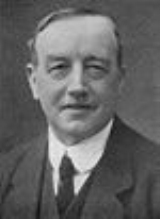
Arthur Henderson

Arthur Henderson

Overview
Arthur Henderson (13 September 1863 – 20 October 1935) was a British union leader, politician, disarmament
Disarmament
Disarmament is the act of reducing, limiting, or abolishing weapons. Disarmament generally refers to a country's military or specific type of weaponry. The most common form of disarmament is abolishment of weapons of mass destruction, such as nuclear arms...

 advocate, and the 1934 Nobel Peace Prize
Nobel Peace Prize
The Nobel Peace Prize is one of the five Nobel Prizes bequeathed by the Swedish industrialist and inventor Alfred Nobel.-Background:...

 Laureate. He served three short terms as the leader of the Labour Party
Labour Party (UK)
The Labour Party is a centre-left political party in the United Kingdom. Founded at the start of the 20th century, it has been seen since 1920 as the principal party of the Left in England, Scotland and Wales, but not Northern Ireland, where it has only recently begun to organise again...

 from 1908-10, 1914-17 and 1931-32.

Arthur Henderson was born in Glasgow
Glasgow
Glasgow is the largest city in Scotland and third most populous in the United Kingdom. The city is situated on the River Clyde in the country's west central lowlands...

, Scotland
Scotland
Scotland is a country that is part of the United Kingdom. Occupying the northern third of the island of Great Britain, it shares a border with England to the south and is bounded by the North Sea to the east, the Atlantic Ocean to the north and west, and the North Channel and Irish Sea to the...

 in 1863, the son of a textile worker who died when Arthur was only 10 years old. After his father's death, the Hendersons moved to Newcastle upon Tyne
Newcastle upon Tyne
Newcastle upon Tyne is a city and metropolitan borough of Tyne and Wear, in North East England...

 in the North East of England
England
England is a country that is part of the United Kingdom. It shares land borders with Scotland to the north and Wales to the west; the Irish Sea is to the north west, the Celtic Sea to the south west and the North Sea to the east, with the English Channel to the south separating it from continental...

.

Henderson worked in a locomotive factory from the age of 12.
Discussion
Ask a question about 'Arthur Henderson'
Start a new discussion about 'Arthur Henderson'
Answer questions from other users
Full Discussion Forum
 
Encyclopedia
Arthur Henderson (13 September 1863 – 20 October 1935) was a British union leader, politician, disarmament
Disarmament
Disarmament is the act of reducing, limiting, or abolishing weapons. Disarmament generally refers to a country's military or specific type of weaponry. The most common form of disarmament is abolishment of weapons of mass destruction, such as nuclear arms...

 advocate, and the 1934 Nobel Peace Prize
Nobel Peace Prize
The Nobel Peace Prize is one of the five Nobel Prizes bequeathed by the Swedish industrialist and inventor Alfred Nobel.-Background:...

 Laureate. He served three short terms as the leader of the Labour Party
Labour Party (UK)
The Labour Party is a centre-left political party in the United Kingdom. Founded at the start of the 20th century, it has been seen since 1920 as the principal party of the Left in England, Scotland and Wales, but not Northern Ireland, where it has only recently begun to organise again...

 from 1908-10, 1914-17 and 1931-32.

Early life


Arthur Henderson was born in Glasgow
Glasgow
Glasgow is the largest city in Scotland and third most populous in the United Kingdom. The city is situated on the River Clyde in the country's west central lowlands...

, Scotland
Scotland
Scotland is a country that is part of the United Kingdom. Occupying the northern third of the island of Great Britain, it shares a border with England to the south and is bounded by the North Sea to the east, the Atlantic Ocean to the north and west, and the North Channel and Irish Sea to the...

 in 1863, the son of a textile worker who died when Arthur was only 10 years old. After his father's death, the Hendersons moved to Newcastle upon Tyne
Newcastle upon Tyne
Newcastle upon Tyne is a city and metropolitan borough of Tyne and Wear, in North East England...

 in the North East of England
England
England is a country that is part of the United Kingdom. It shares land borders with Scotland to the north and Wales to the west; the Irish Sea is to the north west, the Celtic Sea to the south west and the North Sea to the east, with the English Channel to the south separating it from continental...

.

Henderson worked in a locomotive factory from the age of 12. After finishing his apprenticeship at seventeen, Arthur Henderson moved to Southampton
Southampton
Southampton is the largest city in the ceremonial county of Hampshire, on the south coast of England, and is situated south-west of London and north-west of Portsmouth. Southampton is a major port and the closest city to the New Forest...

 for a year and then returned to work as an iron moulder (a type of foundryman) in Newcastle-upon-Tyne. He converted to Methodism
Methodism
Methodism is a movement of Protestant Christianity represented by a number of organizations, claiming a total of approximately seventy million adherents worldwide. The movement traces its roots to Reverend John Wesley's evangelistic revival movement in the Anglican Church. His younger brother...

 (having previously been a Congregationalist
Congregational church
Congregational churches are Protestant Christian churches practicing congregationalist church governance, in which each congregation independently and autonomously runs its own affairs....

) in 1879. This had a major impact on Henderson and he became a Lay preacher. In 1884, Henderson lost his job, and concentrated on his education, and preaching commitments.

Union leader


However by 1892, Henderson had entered the complex world of Trade Union
Trade union
A trade union is an organization of workers who have banded together to achieve common goals in key areas, such as working conditions. The trade union, through its leadership, bargains with the employer on behalf of union members and negotiates labor contracts with employers...

 politics, when he was elected as a paid organiser for the Iron Founders Union, and was also a representative on the North East Conciliation Board.

Henderson believed that strikes caused more harm than they were worth, and tried to avoid them whenever he could. For this reason he opposed the formation of the General Federation of Trade Unions, as he was convinced it would lead to more strikes.

The Labour Party


In 1900, Henderson was one of the 129 trade union and socialist delegates, who passed Keir Hardie
Keir Hardie
James Keir Hardie, Sr. , best known as "Keir," was a Scottish socialist and labour leader, and was the first Independent Labour Member of Parliament elected to the Parliament of Great Britain. Hardie is regarded as one of the primary founders of the Independent Labour Party as well as the Labour...

's motion to create the Labour Representation Committee
Labour Representation Committee
Labour Representation Committee may refer to:* Labour Representation Committee, the original name of the British Labour Party* Labour Representation Committee , a 21st century pressure group within the British Labour Party...

 (LRC), and in 1903, Henderson was elected treasurer of the LRC, and was also elected Member of Parliament
Member of Parliament
A Member of Parliament is a representative of the voters to a parliament. In many countries the term applies specifically to members of the lower house, as upper houses often have a unique title, such as senate, and thus also have unique titles for its members, such as senators. Members of...

 (MP) for Barnard Castle
Barnard Castle
Barnard Castle is a town in Teesdale, County Durham, England named after the castle around which it grew up. It sits on the north side of the River Tees, opposite Startforth, south southwest of Newcastle-Upon-Tyne, west of Middlesbrough and southwest of the county town of Durham. Other than the...

 following a by-election.

In 1906, the LRC changed its name to the Labour Party
Labour Party (UK)
The Labour Party is a centre-left political party in the United Kingdom. Founded at the start of the 20th century, it has been seen since 1920 as the principal party of the Left in England, Scotland and Wales, but not Northern Ireland, where it has only recently begun to organise again...

 and won 29 seats in the general election of that year (which was a landslide victory
Landslide victory
In politics, a landslide victory is the victory of a candidate or political party by an overwhelming margin in an election.-Australia:...

 for the Liberal Party
Liberal Party (UK)
The Liberal Party was one of the two major British political parties from the mid 19th century until the rise of the Labour Party in the 1920s, and a third party of varying strength and importance up to 1988, when it merged with the Social Democratic Party to form a new party which would become...

).

In 1908, when Hardie resigned as Leader of the Labour Party, Henderson was elected to replace him, and was leader for two fairly quiet (from Labour's perspective) years, before resigning in 1910.

Cabinet Minister


In 1914, the First World War
World War I
World War I , also known as the First World War, the Great War, and the War to End All Wars, was a global military conflict which involved most of the world's great powers, assembled in two opposing alliances: the Triple Entente and the Triple Alliance...

 broke out, and the then-Labour leader, Ramsay MacDonald
Ramsay MacDonald
James Ramsay MacDonald was a British politician and twice Prime Minister of the United Kingdom. He rose from humble origins to become the first Labour Prime Minister in 1924....

, resigned in protest. Henderson was elected to replace him, and in 1915, following Prime Minister Asquith's decision to create a coalition government, became the first member of the Labour Party to become a member of the Cabinet, as President of the Board of Education.

In 1916, David Lloyd George
David Lloyd George
David Lloyd George, 1st Earl Lloyd-George of Dwyfor OM, PC was a British statesman and the only Welsh Prime Minister of the United Kingdom; he is also the only one to have spoken English as a second language, Welsh having been his first.During a long tenure of office, mainly as Chancellor of the...

 forced Asquith to resign and became Prime Minister. Henderson became a member of the small War Cabinet
War Cabinet
A War Cabinet is a committee formed by a government in a time of war. It is usually a subset of the full executive cabinet of ministers. It is also quite common for a War Cabinet to have senior military officers and opposition politicians as members....

 with the job of Minister without Portfolio
Minister without Portfolio
A Minister without Portfolio is either a government minister with no specific responsibilities or a minister that does not head a particular ministry...

. Other labour and union representatives to join Henderson in Lloyd George's coalition government were; John Hodge and George Barnes. John Hodge became Minister of Labour whilst Barnes became Minister of Pensions. Henderson resigned in August 1917 when his idea for an international conference on the war was voted down by the rest of the cabinet; shortly afterwards he resigned as Labour leader.

The coupon election and the 1920s


Henderson lost his seat in the "coupon election" of December 14, 1918, an election announced within twenty four hours of the end of hostilities in World War I
World War I
World War I , also known as the First World War, the Great War, and the War to End All Wars, was a global military conflict which involved most of the world's great powers, assembled in two opposing alliances: the Triple Entente and the Triple Alliance...

 that resulted in a landslide victory for a coalition formed by presiding Prime Minister Lloyd George
David Lloyd George
David Lloyd George, 1st Earl Lloyd-George of Dwyfor OM, PC was a British statesman and the only Welsh Prime Minister of the United Kingdom; he is also the only one to have spoken English as a second language, Welsh having been his first.During a long tenure of office, mainly as Chancellor of the...


Henderson returned to Parliament in 1919 after winning a by-election in Widnes
Widnes (UK Parliament constituency)
Widnes was a county constituency in England, based on the town of Widnes, in Lancashire. It returned one Member of Parliament to the House of Commons of the Parliament of the United Kingdom, elected by the first past the post voting system.-History:...

. After his election, he became Labour's chief whip
Whip (politics)
The whip is a role in party politics whose primary purpose is to ensure control of the formal decision-making process in a parliamentary legislature. Whips are party 'enforcers', who typically offer both inducements and punishments to party members...

, only to lose his seat in the 1922 general election.

Again, he returned to Parliament via a by-election, this time representing Newcastle East, however he lost this seat in the 1923 general election, but returned to Parliament two months later after winning a by-election in Burnley
Burnley (UK Parliament constituency)
Burnley is a constituency represented in the House of Commons of the Parliament of the United Kingdom. It elects one Member of Parliament by the first past the post system of election.-History:...

. He was appointed Home Secretary in the first ever Labour government (led by MacDonald). This government was defeated in 1924, and lost the following election partially because of the Zinoviev letter
Zinoviev Letter
The "Zinoviev Letter" refers to a controversial document published by the British press in 1924, allegedly sent from the Communist International in Moscow to the Communist Party of Great Britain...

 printed in the right-wing broadsheet the Daily Mail
Daily Mail
The Daily Mail is a British daily tabloid newspaper. First published in 1896 by Lord Northcliffe, it is the United Kingdom's second biggest-selling daily newspaper after The Sun. Its sister paper, The Mail on Sunday was launched in 1982. Scottish and Irish editions of the paper were launched in...

.

Unusually, Henderson was re-elected in 1924, and he refused to challenge MacDonald for the party leadership, despite being apparently begged by other MPs to do just that. Worried about factionalism in the Labour Party, he published a pamphlet called Labour and the Nation, in which he attempted to clarify the Labour Party's goals.

One interesting note is that the Communist Party and its leaders in the USSR, specifically Lenin himself, considered Henderson a dupe and held him and his positions in very low regard. In a 10 February 1922, letter to the Soviet Foreign Affairs Commissar Georgy Chicherin in relation to the Genoa Conference, Lenin wrote pejoratively:

"Henderson is as stupid as Kerensky, and for this reason he is helping us. ...


Furthermore. This is ultrasecret. It suits us that Genoa be wrecked... but not by us, of course. Think this over with Litvinov and Ioffe and drop me a line. Of course, this must not be mentioned even in secret documents. return this to me, and I will burn it. We will get a loan better without Genoa, if we are not the ones that wreck Genoa. We must work out cleverer maneuvers so that we are not the ones that wreck Genoa. For example, the fool Henderson and Co. will help us a lot if we cleverly prod them. ...


Everything is flying apart for "them". It is total bankruptcy (India and so on). We have to push a falling one unexpectedly, not with our hands."


(Emphasis added.) There is no information as to whether Lenin's disparaging comments about Arthur Henderson have some relation to the coining of the phrase "useful idiot
Useful idiot
In political jargon, the term useful idiot was used to describe Soviet sympathizers in western countries and the attitude of the Soviet government towards them...

".

Foreign Secretary


In 1929, Labour formed another minority government, and MacDonald appointed Henderson as Foreign Secretary, a position Henderson used to try to reduce the tensions that had been building up in Europe since the end of the War. Diplomatic relations were re-established with the USSR
Soviet Union
The Union of Soviet Socialist Republics was a constitutionally socialist state that existed in Eurasia from 1922 to 1991. The name is a translation of the , tr. Soyuz Sovetskikh Sotsialisticheskikh Respublik, abbreviated СССР, SSSR. The common short name is Soviet Union, from , Sovetskiy Soyuz...

 and the League of Nations
League of Nations
The League of Nations was an inter-governmental organization founded as a result of the Treaty of Versailles in 1919–1920. At its greatest extent from 28 September 1934 to 23 February 1935, it had 58 members...

 was given Britain's full support. The government was able to function properly, even without a parliamentary majority. However this did not last. The Great Depression
Great Depression
The Great Depression was a severe worldwide economic depression in the decade preceding World War II. The timing of the Great Depression varied across nations, but in most countries it started in about 1929 and lasted until the late 1930s or early 1940s...

 plunged the government into a terminal crisis.

The MacDonald "betrayal"


The crisis began in 1931 when a key committee discovered that the budget was facing a serious deficit. This generated a crisis of confidence in the British financial system which threatened the Pound's position on the Gold Standard
Gold standard
The gold standard is a monetary system in which a region's common medium of exchange are paper notes that are normally freely convertible into pre-set, fixed quantities of gold...

. The Labour Cabinet agreed that it was essential to maintain the Gold Standard and that the Budget needed to be balanced, but divided seriously over some of the measures proposed. Henderson found himself at the head of a minority of nearly half the Cabinet who could not accept a cut in unemployment benefit
Unemployment benefit
Unemployment benefits are payments made by the state or other authorized bodies to unemployed people. It may be based on a compulsory para-governmental insurance system...

. With the Cabinet so clearly divided it decided to resign office. On 24 August 1931 it was announced the MacDonald was forming an emergency National Government with members of all parties in order to tackle the crisis. However the Labour Party repudiated this government, and the National Executive expelled from the party MacDonald and all other Labour members who supported him (Henderson cast the only vote against this). Henderson now became leader of the party as it became ever more hostile to the Government. With the economic and political situation still uncertain, the National Government decided to call a general election
United Kingdom general election, 1931
The UK general election on Tuesday 27 October 1931 was the last in the United Kingdom not held on a Thursday. It was also the last election, and the only one under universal suffrage, where one party received an absolute majority of the votes cast.The 1931 general election was held in the middle...

, and in the largest landslide in British political history, it won an overwhelming majority. Labour was reduced to just 46 MPs, and yet again Henderson lost his seat. The following year he relinquished the party leadership.

Later career


Henderson returned to Parliament after winning a by-election (Clay Cross
Clay Cross (UK Parliament constituency)
Clay Cross was a county constituency centred on the village of Clay Cross in north-east Derbyshire. It returned one Member of Parliament to the House of Commons of the Parliament of the United Kingdom, elected by the first past the post system....

), and spent the rest of his life trying to halt the gathering storm of war. He chaired the Geneva Disarmament Conference and was awarded the Nobel Peace Prize
Nobel Peace Prize
The Nobel Peace Prize is one of the five Nobel Prizes bequeathed by the Swedish industrialist and inventor Alfred Nobel.-Background:...

 in 1934.

Arthur Henderson died aged 72 in 1935. Two of his sons also became Labour politicians. His second son William
William Henderson, 1st Baron Henderson
William Watson Henderson, 1st Baron Henderson PC , was a British Labour politician.Henderson was the second son of Arthur Henderson and the elder brother of Arthur Henderson, Baron Rowley...

 was created Baron Henderson
Baron Henderson
Baron Henderson, of Westgate in the City and County of Newcastle-upon-Tyne, was a title in the Peerage of the United Kingdom. It was created on 19 October 1945 for the Labour politician William Henderson. He had earlier represented Enfield in the House of Commons and was Joint Parliamentary...

 in 1945 while his third son Arthur
Arthur Henderson, Baron Rowley
Arthur Henderson, Baron Rowley, PC was a British Labour Party politician.Arthur Henderson was the son of Arthur Henderson, who was Leader of the Labour Party between 1908-1910, 1914-17 and 1931-1932.-Parliament:...

 was made Baron Rowley in 1966.

External links