

Indigo dye

Encyclopedia
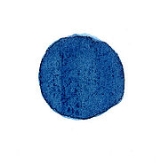
Indigo dye is an organic compound
with a distinctive blue color (see indigo
). Historically, indigo was a natural dye
extracted from plants, and this process was important economically because blue dyes were once rare. Nearly all indigo dye
produced today — several thousand tons each year — is synthetic
. It is the blue of blue jeans
.
 The primary use for indigo is as a dye for cotton yarn, which is mainly for the production of denim
cloth for blue jeans
. On average, a pair of blue jean trousers requires 3 – 12 g of indigo. Small amounts are used for dyeing wool and silk.
Indigo carmine
, or indigotine, is an indigo derivative which is also used as a colorant. Approximately 20M kilograms are produced annually, again mainly for blue jeans. It is also used as a food colorant, and is listed in the USA
as FD&C Blue No. 2, and in the European Union
as E Number
E132.
, which are native to the tropics
. The primary commercial indigo species in Asia
was true indigo (Indigofera tinctoria
, also known as Indigofera sumatrana). A common alternative used in the relatively colder subtropical locations such as Japan's Ryukyu Islands and Taiwan is Strobilanthes cusia (Japanese: リュウキュウアイ. Chinese: 馬藍/山藍). In Central
and South America
the two species Indigofera suffruticosa (Añil) and Indigofera arrecta (Natal indigo) were the most important. In temperate climates indigo can also be obtained from woad
(Isatis tinctoria) and dyer's knotweed
(Polygonum tinctorum), although the Indigofera species yield more dye.
, a colorless, water-soluble derivative of the amino acid tryptophan. Indican readily hydrolyzes
to release β-D-glucose
and indoxyl
. Oxidation by exposure to air converts indoxyl to indigo. Indican was obtained from the processing of the plant's leaves, which contain as much as 0.2 – 0.8 % of this compound. The leaves were soaked in water and fermented
in order to convert the glycoside
indican present in the plant to the blue dye indigotin. The precipitate from the fermented leaf solution was mixed with a strong base such as lye, pressed into cakes, dried, and powdered. The powder was then mixed with various other substances to produce different shades of blue and purple.
. By comparison, the country of Luxembourg
consists of 2,586 square kilometers.
In literature, the play Nildarpan by Dinabandhu Mitra
is based on the indigo slavery and forceful cultivation of indigo in India. It played an essential part in the Bengal
i indigo revolt of 1858 called Nilbidraha.
, which was also the earliest major center for its production and processing. The Indigofera tinctoria variety of Indigo was domesticated in India. Indigo, used as a dye, made its way to the Greeks
and the Romans
, where it was valued as a luxury product.
Indigo is among the oldest dyes to be used for textile dyeing and printing. Many Asian countries, such as India, China
, Japan
and South East Asian nations have used indigo as a dye (particularly silk
dye) for centuries. The dye was also known to ancient civilizations in Mesopotamia
, Egypt
, Greece
, Rome
, Britain
, Mesoamerica
, Peru
, Iran
, and Africa
.
India is believed to be the oldest center of indigo dyeing in the Old World. It was a primary supplier of indigo to Europe as early as the Greco-Roman era. The association of India with indigo is reflected in the Greek word for the dye, indikón (ινδικόν, Indian). The Romans latin
ized the term to indicum, which passed into Italian dialect
and eventually into English as the word indigo.
In Mesopotamia, a Neo-Babylonian cuneiform
tablet of the 7th century BC gives a recipe for the dyeing of wool, where lapis
-colored wool (uqnatu) is produced by repeated immersion and airing of the cloth. Indigo was most probably imported from India. The Romans used indigo as a pigment for painting and for medicinal and cosmetic purposes. It was a luxury item imported to the Mediterranean from India by Arab merchants.
Indigo remained a rare commodity in Europe throughout the Middle Ages. Woad
, a chemically identical dye derived from the plant Isatis
tinctoria (Brassicaceae
), was used instead. In the late 15th century, the Portuguese
explorer Vasco da Gama
discovered a sea route to India. This led to the establishment of direct trade with India, the Spice Islands
, China, and Japan. Importers could now avoid the heavy duties imposed by Persia
n, Levant
ine, and Greek middlemen and the lengthy and dangerous land routes which had previously been used. Consequently, the importation and use of indigo in Europe rose significantly. Much European indigo from Asia arrived through ports in Portugal, the Netherlands
, and England. Spain
imported the dye from its colonies in South America. Many indigo plantations were established by European powers in tropical climates; it was a major crop in Jamaica
and South Carolina
, with much or all of the labor performed by enslaved Africans and African-Americans. Indigo plantations also thrived in the Virgin Islands
. However, France
and Germany
outlawed imported indigo in the 16th century to protect the local woad
dye industry.
 Indigo was the foundation of centuries-old textile traditions throughout West Africa
. From the Tuareg nomads of the Sahara
to Cameroon
, clothes dyed with indigo signified wealth. Women dyed the cloth in most areas, with the Yoruba
of Nigeria
and the Manding of Mali
particularly well known for their expertise. Among the Hausa
male dyers, working at communal dye pits was the basis of the wealth of the ancient city of Kano
, and they can still be seen plying their trade today at the same pits.
In Japan, indigo became especially important in the Edo period
when it was forbidden to use silk, so the Japanese began to import and plant cotton. It was difficult to dye the cotton fiber except with indigo. Even today indigo is very much appreciated as a color for the summer Kimono
Yukata, as this traditional clothing recalls Nature and the blue sea. In colonial North America there were three commercially important species: the native Indigofera caroliniana, and the introduced Indigofera tinctoria and Indigofera suffruticosa.
Newton
used "indigo" to describe one of the two new primary color
s he added to the five he had originally named, in his revised account of the rainbow in Lectiones Opticae of 1675.
Because of its high value as a trading commodity, indigo was often referred to as Blue Gold.
 In 1897, 19,000 tons of indigo were produced from plant sources. Largely due to advances in organic chemistry
, production by natural sources dropped to 1000 tons by 1914 and continued to contract. These advances can be traced to 1865 when the German
chemist Adolf von Baeyer
began working on the synthesis of indigo. He described his first synthesis of indigo in 1878 (from isatin) and a second synthesis in 1880 (from 2-nitrobenzaldehyde
). The synthesis of indigo remained impractical, so the search for alternative starting materials at BASF
and Hoechst continued. The synthesis of N-(2-carboxyphenyl)glycine from the easy to obtain aniline
provided a new and economically attractive route. BASF developed a commercially feasible manufacturing process that was in use by 1897. In 2002, 17,000 tons of synthetic indigo were produced worldwide.
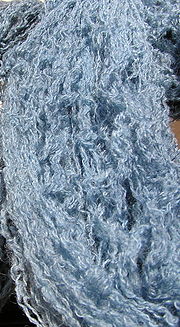
. To be dissolved, it must undergo a chemical change (reduction
). Reduction converts indigo into "white indigo" (leuco-indigo). When a submerged fabric is removed from the dyebath, the white indigo quickly combines with oxygen
in the air and reverts to the insoluble, intensely colored indigo. When it first became widely available in Europe in the 16th century, European dyers and printers struggled with indigo because of this distinctive property. It also required several chemical manipulations, some involving toxic materials, and had many opportunities to injure workers. In the 19th century, English poet William Wordsworth referred to the plight of indigo dye workers of his hometown of Cockermouth in his autobiographical poem "The Prelude". Speaking of their dire working conditions and the empathy that he feels for them, he wrote,
Doubtless, I should have then made common cause
With some who perished; haply perished too
A poor mistaken and bewildered offering
Unknown to those bare souls of miller blue
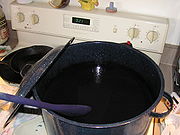
A preindustrial process for production of indigo white, used in Europe, was to dissolve the indigo in stale urine. A more convenient reductive agent is zinc. Another preindustrial method, used in Japan
, was to dissolve the indigo in a heated vat in which a culture of thermophilic
, anaerobic
bacteria was maintained. Some species of such bacteria generate hydrogen
as a metabolic product, which convert insoluble indigo into soluble indigo white. Cloth dyed in such a vat was decorated with the techniques of shibori
(tie-dye), kasuri
, katazome
, and tsutsugaki
. Examples of clothing and banners dyed with these techniques can be seen in the works of Hokusai
and other artists.
and a thickener were added to the indigo vat. The arsenic compound delayed the oxidation of the indigo long enough to paint the dye onto fabrics.
 The second method was known as china blue due to its resemblance to Chinese blue-and-white porcelain. Instead of using an indigo solution directly, the process involved printing the insoluble form of indigo onto the fabric. The indigo was then reduced in a sequence of baths of iron(II) sulfate
, with air-oxidation between each immersion. The china blue process could make sharp designs, but it could not produce the dark hues possible with the pencil blue method.
Around 1880 the glucose process was developed. It finally enabled the direct printing of indigo onto fabric and could produce inexpensive dark indigo prints unattainable with the china blue method.
Since 2004 freeze-dried
indigo, or instant indigo, has become available. In this method the indigo has already been reduced, and then freeze-dried into a crystal. The crystals are added to warm water to create the dye pot. As in a standard indigo dye pot, care has to be taken to avoid mixing in oxygen. Freeze-dried indigo is simple to use, and the crystals can be stored indefinitely as long as they are not exposed to moisture.
, or ether
but soluble in DMSO
, chloroform
, nitrobenzene
, and concentrated sulfuric acid
. The chemical formula
of indigo is C
16H
10N
2O
2.
The molecule absorbs light in the orange part of the spectrum (λmax = 613 nm). The compound owes its deep colour to the conjugation of the double bond
s, i.e. the double bonds within the molecule are adjacent and the molecule is planar. In indigo white, the conjugation is interrupted because the molecule is nonplanar.
dates back to 1882 but was impractical. The first practical route is credited to Pfleger in 1901. In this process, N-phenylglycine is treated with a molten mixture of sodium hydroxide, potassium hydroxide
, and sodamide. This highly sensitive melt produces indoxyl
, which is subsequently oxidized in air to form indigo. Variations of this method are still in use today. An alternative and also viable route to indigo is credited to Heumann
in 1897. It involves heating N-(2-carboxyphenyl)glycine to 200 °C in an inert atmosphere with sodium hydroxide. The process is easier than the Pfleger method but the precursors are more expensive. Indoxyl-2-carboxylic acid is generated. This material readily decarboxylates to give indoxyl, which oxidizes in air to form indigo. The preparation of indigo dye is practiced in college laboratory classes.

, where the two NH groups are replaced by S atoms, is deep red. Tyrian purple
is a dull purple dye that is secreted by a common Mediterranean Sea
snail. It was highly prized in antiquity. In 1909 its structure was shown to be 6,6'-dibromoindigo. It has never been produced on a commercial basis. The related Ciba blue (5,7,5′,7′-tetrabromoindigo) is, however, of commercial value.
Treatment with sulfuric acid converts indigo into a blue-green derivative called indigo carmine
(sulfonated indigo). It became available in the mid-18th century. It is used as a colorant for food, pharmaceuticals, and cosmetics.
.
Organic compound
An organic compound is any member of a large class of gaseous, liquid, or solid chemical compounds whose molecules contain carbon. For historical reasons discussed below, a few types of carbon-containing compounds such as carbides, carbonates, simple oxides of carbon, and cyanides, as well as the...
with a distinctive blue color (see indigo
Indigo
Indigo is a color named after the purple dye derived from the plant Indigofera tinctoria and related species. The color is placed on the electromagnetic spectrum between about 420 and 450 nm in wavelength, placing it between blue and violet...
). Historically, indigo was a natural dye
Natural dye
Natural dyes are dyes or colorants derived from plants, invertebrates, or minerals. The majority of natural dyes are vegetable dyes from plant sources – roots, berries, bark, leaves, and wood — and other organic sources such as fungi and lichens....
extracted from plants, and this process was important economically because blue dyes were once rare. Nearly all indigo dye
Dye
A dye is a colored substance that has an affinity to the substrate to which it is being applied. The dye is generally applied in an aqueous solution, and requires a mordant to improve the fastness of the dye on the fiber....
produced today — several thousand tons each year — is synthetic
Chemical synthesis
In chemistry, chemical synthesis is purposeful execution of chemical reactions to get a product, or several products. This happens by physical and chemical manipulations usually involving one or more reactions...
. It is the blue of blue jeans
Blue Jeans
"Blue Jeans" is a sentimental popular song written by Harry D. Kerr and Lou Traveller in 1920. In the song, the singer is reminiscing about a long-ago young love that happened somewhere in the "hills of the old Cumberland." The chorus echoes the singer's longing:* The Parlor Songs Collection.* by...
.
Uses
Denim
Denim is a rugged cotton twill textile, in which the weft passes under two or more warp threads. This produces the familiar diagonal ribbing identifiable on the reverse of the fabric, which distinguishes denim from cotton duck. Denim has been in American usage since the late 18th century...
cloth for blue jeans
Jeans
Jeans are trousers made from denim. Some of the earliest American blue jeans were made by Jacob Davis, Calvin Rogers, and Levi Strauss in 1873. Starting in the 1950s, jeans, originally designed for cowboys, became popular among teenagers. Historic brands include Levi's, Lee, and Wrangler...
. On average, a pair of blue jean trousers requires 3 – 12 g of indigo. Small amounts are used for dyeing wool and silk.
Indigo carmine
Indigo carmine
Indigo carmine, or 5,5'-indigodisulfonic acid sodium salt, also known as indigotine or FD&C Blue #2 is a pH indicator with the chemical formula C16H8N2Na2O8S2. It is approved for use as a food colorant in the USA and the EU and has the E number E132.-Uses:The primary use of Indigo carmine is as a...
, or indigotine, is an indigo derivative which is also used as a colorant. Approximately 20M kilograms are produced annually, again mainly for blue jeans. It is also used as a food colorant, and is listed in the USA
United States
The United States of America is a federal constitutional republic comprising fifty states and a federal district...
as FD&C Blue No. 2, and in the European Union
European Union
The European Union is an economic and political union of 27 independent member states which are located primarily in Europe. The EU traces its origins from the European Coal and Steel Community and the European Economic Community , formed by six countries in 1958...
as E Number
E number
E numbers are number codes for food additives that have been assessed for use within the European Union . They are commonly found on food labels throughout the European Union. Safety assessment and approval are the responsibility of the European Food Safety Authority...
E132.
Plant sources
A variety of plants have provided indigo throughout history, but most natural indigo was obtained from those in the genus IndigoferaIndigofera
Indigofera is a large genus of about 700 species of flowering plants belonging to the family Fabaceae.The species are mostly shrubs, though some are herbaceous, and a few can become small trees up to tall. Most are dry-season or winter deciduous. The leaves are pinnate with 5–31 leaflets and the...
, which are native to the tropics
Tropics
The tropics is a region of the Earth surrounding the Equator. It is limited in latitude by the Tropic of Cancer in the northern hemisphere at approximately N and the Tropic of Capricorn in the southern hemisphere at S; these latitudes correspond to the axial tilt of the Earth...
. The primary commercial indigo species in Asia
Asia
Asia is the world's largest and most populous continent, located primarily in the eastern and northern hemispheres. It covers 8.7% of the Earth's total surface area and with approximately 3.879 billion people, it hosts 60% of the world's current human population...
was true indigo (Indigofera tinctoria
Indigofera tinctoria
Indigofera tinctoria bears the common name True indigo. The plant was one of the original sources of indigo dye. It has been naturalized to tropical and temperate Asia, as well as parts of Africa, but its native habitat is unknown since it has been in cultivation worldwide for many centuries. Today...
, also known as Indigofera sumatrana). A common alternative used in the relatively colder subtropical locations such as Japan's Ryukyu Islands and Taiwan is Strobilanthes cusia (Japanese: リュウキュウアイ. Chinese: 馬藍/山藍). In Central
Central America
Central America is the central geographic region of the Americas. It is the southernmost, isthmian portion of the North American continent, which connects with South America on the southeast. When considered part of the unified continental model, it is considered a subcontinent...
and South America
South America
South America is a continent situated in the Western Hemisphere, mostly in the Southern Hemisphere, with a relatively small portion in the Northern Hemisphere. The continent is also considered a subcontinent of the Americas. It is bordered on the west by the Pacific Ocean and on the north and east...
the two species Indigofera suffruticosa (Añil) and Indigofera arrecta (Natal indigo) were the most important. In temperate climates indigo can also be obtained from woad
Woad
Isatis tinctoria, with Woad as the common name, is a flowering plant in the family Brassicaceae. It is commonly called dyer's woad, and sometimes incorrectly listed as Isatis indigotica . It is occasionally known as Asp of Jerusalem...
(Isatis tinctoria) and dyer's knotweed
Polygonum tinctorum
Persicaria tinctoria H.Gross is Chinese indigo, a plant of the Buckwheat family that is found from Eastern Europe to East Asia, and whose...
(Polygonum tinctorum), although the Indigofera species yield more dye.
Extraction
The precursor to indigo is indicanIndican
Indican is a colourless organic compound, soluble in water, naturally occurring in Indigofera plants. It is a precursor of indigo dye.-Chemical reactions:Common and significant reactions involving indican are as follows:...
, a colorless, water-soluble derivative of the amino acid tryptophan. Indican readily hydrolyzes
Hydrolysis
Hydrolysis is a chemical reaction during which molecules of water are split into hydrogen cations and hydroxide anions in the process of a chemical mechanism. It is the type of reaction that is used to break down certain polymers, especially those made by condensation polymerization...
to release β-D-glucose
Glucose
Glucose is a simple sugar and an important carbohydrate in biology. Cells use it as the primary source of energy and a metabolic intermediate...
and indoxyl
Indoxyl
In chemistry, indoxyl is a nitrogenous substance with the chemical formula: C8H7NO. Indoxyl is isomeric with oxindol and is obtained as an oily liquid....
. Oxidation by exposure to air converts indoxyl to indigo. Indican was obtained from the processing of the plant's leaves, which contain as much as 0.2 – 0.8 % of this compound. The leaves were soaked in water and fermented
Fermentation (biochemistry)
Fermentation is the process of extracting energy from the oxidation of organic compounds, such as carbohydrates, using an endogenous electron acceptor, which is usually an organic compound. In contrast, respiration is where electrons are donated to an exogenous electron acceptor, such as oxygen,...
in order to convert the glycoside
Glycoside
In chemistry, a glycoside is a molecule in which a sugar is bound to a non-carbohydrate moiety, usually a small organic molecule. Glycosides play numerous important roles in living organisms. Many plants store chemicals in the form of inactive glycosides. These can be activated by enzyme...
indican present in the plant to the blue dye indigotin. The precipitate from the fermented leaf solution was mixed with a strong base such as lye, pressed into cakes, dried, and powdered. The powder was then mixed with various other substances to produce different shades of blue and purple.
Cultivation
The demand for indigo in the 19th century is indicated by the fact that in 1897, 7000 square kilometers were dedicated to the cultivation of indican-producing plants, mainly in IndiaIndia
India , officially the Republic of India , is a country in South Asia. It is the seventh-largest country by geographical area, the second-most populous country with over 1.2 billion people, and the most populous democracy in the world...
. By comparison, the country of Luxembourg
Luxembourg
Luxembourg , officially the Grand Duchy of Luxembourg , is a landlocked country in western Europe, bordered by Belgium, France, and Germany. It has two principal regions: the Oesling in the North as part of the Ardennes massif, and the Gutland in the south...
consists of 2,586 square kilometers.
In literature, the play Nildarpan by Dinabandhu Mitra
Dinabandhu Mitra
Dinabandhu Mitra the Bengali dramatist, was born in 1830 at village Chouberia in Gopalnagar P.S., 24 Parganas and was the son of Kalachand Mitra. His given name was Gandharva Narayan, but he changed it to Dinabandhu Mitra.-Early life:Dinabandhu Mitra's education started at a village pathshala...
is based on the indigo slavery and forceful cultivation of indigo in India. It played an essential part in the Bengal
Bengal
Bengal is a historical and geographical region in the northeast region of the Indian Subcontinent at the apex of the Bay of Bengal. Today, it is mainly divided between the sovereign land of People's Republic of Bangladesh and the Indian state of West Bengal, although some regions of the previous...
i indigo revolt of 1858 called Nilbidraha.
History of natural indigo
Indigo was used in IndiaIndia
India , officially the Republic of India , is a country in South Asia. It is the seventh-largest country by geographical area, the second-most populous country with over 1.2 billion people, and the most populous democracy in the world...
, which was also the earliest major center for its production and processing. The Indigofera tinctoria variety of Indigo was domesticated in India. Indigo, used as a dye, made its way to the Greeks
Ancient Greece
Ancient Greece is a civilization belonging to a period of Greek history that lasted from the Archaic period of the 8th to 6th centuries BC to the end of antiquity. Immediately following this period was the beginning of the Early Middle Ages and the Byzantine era. Included in Ancient Greece is the...
and the Romans
Ancient Rome
Ancient Rome was a thriving civilization that grew on the Italian Peninsula as early as the 8th century BC. Located along the Mediterranean Sea and centered on the city of Rome, it expanded to one of the largest empires in the ancient world....
, where it was valued as a luxury product.
Indigo is among the oldest dyes to be used for textile dyeing and printing. Many Asian countries, such as India, China
China
Chinese civilization may refer to:* China for more general discussion of the country.* Chinese culture* Greater China, the transnational community of ethnic Chinese.* History of China* Sinosphere, the area historically affected by Chinese culture...
, Japan
Japan
Japan is an island nation in East Asia. Located in the Pacific Ocean, it lies to the east of the Sea of Japan, China, North Korea, South Korea and Russia, stretching from the Sea of Okhotsk in the north to the East China Sea and Taiwan in the south...
and South East Asian nations have used indigo as a dye (particularly silk
Silk
Silk is a natural protein fiber, some forms of which can be woven into textiles. The best-known type of silk is obtained from the cocoons of the larvae of the mulberry silkworm Bombyx mori reared in captivity...
dye) for centuries. The dye was also known to ancient civilizations in Mesopotamia
Mesopotamia
Mesopotamia is a toponym for the area of the Tigris–Euphrates river system, largely corresponding to modern-day Iraq, northeastern Syria, southeastern Turkey and southwestern Iran.Widely considered to be the cradle of civilization, Bronze Age Mesopotamia included Sumer and the...
, Egypt
Ancient Egypt
Ancient Egypt was an ancient civilization of Northeastern Africa, concentrated along the lower reaches of the Nile River in what is now the modern country of Egypt. Egyptian civilization coalesced around 3150 BC with the political unification of Upper and Lower Egypt under the first pharaoh...
, Greece
Ancient Greece
Ancient Greece is a civilization belonging to a period of Greek history that lasted from the Archaic period of the 8th to 6th centuries BC to the end of antiquity. Immediately following this period was the beginning of the Early Middle Ages and the Byzantine era. Included in Ancient Greece is the...
, Rome
Ancient Rome
Ancient Rome was a thriving civilization that grew on the Italian Peninsula as early as the 8th century BC. Located along the Mediterranean Sea and centered on the city of Rome, it expanded to one of the largest empires in the ancient world....
, Britain
Prehistoric Britain
For the purposes of this article, Prehistoric Britain is that period of time between the first arrival of humans on the land mass now known as Great Britain and the start of recorded British history...
, Mesoamerica
Mesoamerica
Mesoamerica is a region and culture area in the Americas, extending approximately from central Mexico to Belize, Guatemala, El Salvador, Honduras, Nicaragua, and Costa Rica, within which a number of pre-Columbian societies flourished before the Spanish colonization of the Americas in the 15th and...
, Peru
Peru
Peru , officially the Republic of Peru , is a country in western South America. It is bordered on the north by Ecuador and Colombia, on the east by Brazil, on the southeast by Bolivia, on the south by Chile, and on the west by the Pacific Ocean....
, Iran
Iran
Iran , officially the Islamic Republic of Iran , is a country in Southern and Western Asia. The name "Iran" has been in use natively since the Sassanian era and came into use internationally in 1935, before which the country was known to the Western world as Persia...
, and Africa
Africa
Africa is the world's second largest and second most populous continent, after Asia. At about 30.2 million km² including adjacent islands, it covers 6% of the Earth's total surface area and 20.4% of the total land area...
.
India is believed to be the oldest center of indigo dyeing in the Old World. It was a primary supplier of indigo to Europe as early as the Greco-Roman era. The association of India with indigo is reflected in the Greek word for the dye, indikón (ινδικόν, Indian). The Romans latin
Latin
Latin is an Italic language originally spoken in Latium and Ancient Rome. It, along with most European languages, is a descendant of the ancient Proto-Indo-European language. Although it is considered a dead language, a number of scholars and members of the Christian clergy speak it fluently, and...
ized the term to indicum, which passed into Italian dialect
Venetian language
Venetian or Venetan is a Romance language spoken as a native language by over two million people, mostly in the Veneto region of Italy, where of five million inhabitants almost all can understand it. It is sometimes spoken and often well understood outside Veneto, in Trentino, Friuli, Venezia...
and eventually into English as the word indigo.
In Mesopotamia, a Neo-Babylonian cuneiform
Cuneiform script
Cuneiform script )) is one of the earliest known forms of written expression. Emerging in Sumer around the 30th century BC, with predecessors reaching into the late 4th millennium , cuneiform writing began as a system of pictographs...
tablet of the 7th century BC gives a recipe for the dyeing of wool, where lapis
Lapis lazuli
Lapis lazuli is a relatively rare semi-precious stone that has been prized since antiquity for its intense blue color....
-colored wool (uqnatu) is produced by repeated immersion and airing of the cloth. Indigo was most probably imported from India. The Romans used indigo as a pigment for painting and for medicinal and cosmetic purposes. It was a luxury item imported to the Mediterranean from India by Arab merchants.
Indigo remained a rare commodity in Europe throughout the Middle Ages. Woad
Woad
Isatis tinctoria, with Woad as the common name, is a flowering plant in the family Brassicaceae. It is commonly called dyer's woad, and sometimes incorrectly listed as Isatis indigotica . It is occasionally known as Asp of Jerusalem...
, a chemically identical dye derived from the plant Isatis
Isatis
Isatis is a genus of about 30 species of flowering plants in the family Brassicaceae, native to the Mediterranean region east to central Asia. The genus includes woad ....
tinctoria (Brassicaceae
Brassicaceae
Brassicaceae, a medium sized and economically important family of flowering plants , are informally known as the mustards, mustard flowers, the crucifers or the cabbage family....
), was used instead. In the late 15th century, the Portuguese
Portugal
Portugal , officially the Portuguese Republic is a country situated in southwestern Europe on the Iberian Peninsula. Portugal is the westernmost country of Europe, and is bordered by the Atlantic Ocean to the West and South and by Spain to the North and East. The Atlantic archipelagos of the...
explorer Vasco da Gama
Vasco da Gama
Vasco da Gama, 1st Count of Vidigueira was a Portuguese explorer, one of the most successful in the Age of Discovery and the commander of the first ships to sail directly from Europe to India...
discovered a sea route to India. This led to the establishment of direct trade with India, the Spice Islands
Maluku Islands
The Maluku Islands are an archipelago that is part of Indonesia, and part of the larger Maritime Southeast Asia region. Tectonically they are located on the Halmahera Plate within the Molucca Sea Collision Zone...
, China, and Japan. Importers could now avoid the heavy duties imposed by Persia
Iran
Iran , officially the Islamic Republic of Iran , is a country in Southern and Western Asia. The name "Iran" has been in use natively since the Sassanian era and came into use internationally in 1935, before which the country was known to the Western world as Persia...
n, Levant
Levant
The Levant or ) is the geographic region and culture zone of the "eastern Mediterranean littoral between Anatolia and Egypt" . The Levant includes most of modern Lebanon, Syria, Jordan, Israel, the Palestinian territories, and sometimes parts of Turkey and Iraq, and corresponds roughly to the...
ine, and Greek middlemen and the lengthy and dangerous land routes which had previously been used. Consequently, the importation and use of indigo in Europe rose significantly. Much European indigo from Asia arrived through ports in Portugal, the Netherlands
Netherlands
The Netherlands is a constituent country of the Kingdom of the Netherlands, located mainly in North-West Europe and with several islands in the Caribbean. Mainland Netherlands borders the North Sea to the north and west, Belgium to the south, and Germany to the east, and shares maritime borders...
, and England. Spain
Spain
Spain , officially the Kingdom of Spain languages]] under the European Charter for Regional or Minority Languages. In each of these, Spain's official name is as follows:;;;;;;), is a country and member state of the European Union located in southwestern Europe on the Iberian Peninsula...
imported the dye from its colonies in South America. Many indigo plantations were established by European powers in tropical climates; it was a major crop in Jamaica
Jamaica
Jamaica is an island nation of the Greater Antilles, in length, up to in width and 10,990 square kilometres in area. It is situated in the Caribbean Sea, about south of Cuba, and west of Hispaniola, the island harbouring the nation-states Haiti and the Dominican Republic...
and South Carolina
South Carolina
South Carolina is a state in the Deep South of the United States that borders Georgia to the south, North Carolina to the north, and the Atlantic Ocean to the east. Originally part of the Province of Carolina, the Province of South Carolina was one of the 13 colonies that declared independence...
, with much or all of the labor performed by enslaved Africans and African-Americans. Indigo plantations also thrived in the Virgin Islands
Virgin Islands
The Virgin Islands are the western island group of the Leeward Islands, which are the northern part of the Lesser Antilles, which form the border between the Caribbean Sea and the Atlantic Ocean...
. However, France
France
The French Republic , The French Republic , The French Republic , (commonly known as France , is a unitary semi-presidential republic in Western Europe with several overseas territories and islands located on other continents and in the Indian, Pacific, and Atlantic oceans. Metropolitan France...
and Germany
Germany
Germany , officially the Federal Republic of Germany , is a federal parliamentary republic in Europe. The country consists of 16 states while the capital and largest city is Berlin. Germany covers an area of 357,021 km2 and has a largely temperate seasonal climate...
outlawed imported indigo in the 16th century to protect the local woad
Woad
Isatis tinctoria, with Woad as the common name, is a flowering plant in the family Brassicaceae. It is commonly called dyer's woad, and sometimes incorrectly listed as Isatis indigotica . It is occasionally known as Asp of Jerusalem...
dye industry.
West Africa
West Africa or Western Africa is the westernmost region of the African continent. Geopolitically, the UN definition of Western Africa includes the following 16 countries and an area of approximately 5 million square km:-Flags of West Africa:...
. From the Tuareg nomads of the Sahara
Sahara
The Sahara is the world's second largest desert, after Antarctica. At over , it covers most of Northern Africa, making it almost as large as Europe or the United States. The Sahara stretches from the Red Sea, including parts of the Mediterranean coasts, to the outskirts of the Atlantic Ocean...
to Cameroon
Cameroon
Cameroon, officially the Republic of Cameroon , is a country in west Central Africa. It is bordered by Nigeria to the west; Chad to the northeast; the Central African Republic to the east; and Equatorial Guinea, Gabon, and the Republic of the Congo to the south. Cameroon's coastline lies on the...
, clothes dyed with indigo signified wealth. Women dyed the cloth in most areas, with the Yoruba
Yoruba people
The Yoruba people are one of the largest ethnic groups in West Africa. The majority of the Yoruba speak the Yoruba language...
of Nigeria
Nigeria
Nigeria , officially the Federal Republic of Nigeria, is a federal constitutional republic comprising 36 states and its Federal Capital Territory, Abuja. The country is located in West Africa and shares land borders with the Republic of Benin in the west, Chad and Cameroon in the east, and Niger in...
and the Manding of Mali
Mali
Mali , officially the Republic of Mali , is a landlocked country in Western Africa. Mali borders Algeria on the north, Niger on the east, Burkina Faso and the Côte d'Ivoire on the south, Guinea on the south-west, and Senegal and Mauritania on the west. Its size is just over 1,240,000 km² with...
particularly well known for their expertise. Among the Hausa
Hausa people
The Hausa are one of the largest ethnic groups in West Africa. They are a Sahelian people chiefly located in northern Nigeria and southeastern Niger, but having significant numbers living in regions of Cameroon, Ghana, Cote d'Ivoire, Chad and Sudan...
male dyers, working at communal dye pits was the basis of the wealth of the ancient city of Kano
Kano
Kano is a city in Nigeria and the capital of Kano State in Northern Nigeria. Its metropolitan population is the second largest in Nigeria after Lagos. The Kano Urban area covers 137 sq.km and comprises six Local Government Area - Kano Municipal, Fagge, Dala, Gwale, Tarauni and Nassarawa - with a...
, and they can still be seen plying their trade today at the same pits.
In Japan, indigo became especially important in the Edo period
Edo period
The , or , is a division of Japanese history which was ruled by the shoguns of the Tokugawa family, running from 1603 to 1868. The political entity of this period was the Tokugawa shogunate....
when it was forbidden to use silk, so the Japanese began to import and plant cotton. It was difficult to dye the cotton fiber except with indigo. Even today indigo is very much appreciated as a color for the summer Kimono
Kimono
The is a Japanese traditional garment worn by men, women and children. The word "kimono", which literally means a "thing to wear" , has come to denote these full-length robes...
Yukata, as this traditional clothing recalls Nature and the blue sea. In colonial North America there were three commercially important species: the native Indigofera caroliniana, and the introduced Indigofera tinctoria and Indigofera suffruticosa.
Newton
Isaac Newton
Sir Isaac Newton PRS was an English physicist, mathematician, astronomer, natural philosopher, alchemist, and theologian, who has been "considered by many to be the greatest and most influential scientist who ever lived."...
used "indigo" to describe one of the two new primary color
Primary color
Primary colors are sets of colors that can be combined to make a useful range of colors. For human applications, three primary colors are usually used, since human color vision is trichromatic....
s he added to the five he had originally named, in his revised account of the rainbow in Lectiones Opticae of 1675.
Because of its high value as a trading commodity, indigo was often referred to as Blue Gold.
Era of synthetic indigo
Organic chemistry
Organic chemistry is a subdiscipline within chemistry involving the scientific study of the structure, properties, composition, reactions, and preparation of carbon-based compounds, hydrocarbons, and their derivatives...
, production by natural sources dropped to 1000 tons by 1914 and continued to contract. These advances can be traced to 1865 when the German
Germany
Germany , officially the Federal Republic of Germany , is a federal parliamentary republic in Europe. The country consists of 16 states while the capital and largest city is Berlin. Germany covers an area of 357,021 km2 and has a largely temperate seasonal climate...
chemist Adolf von Baeyer
Adolf von Baeyer
Johann Friedrich Wilhelm Adolf von Baeyer was a German chemist who synthesized indigo, and was the 1905 recipient of the Nobel Prize in Chemistry. Born in Berlin, he initially studied mathematics and physics at Berlin University before moving to Heidelberg to study chemistry with Robert Bunsen...
began working on the synthesis of indigo. He described his first synthesis of indigo in 1878 (from isatin) and a second synthesis in 1880 (from 2-nitrobenzaldehyde
2-Nitrobenzaldehyde
2-Nitrobenzaldehyde is an organic aromatic compound containing a nitro group ortho to formyl. 2-Nitrobenzaldehyde once was produced as an intermediate in the synthesis of the popular dye Indigo.-Synthesis:...
). The synthesis of indigo remained impractical, so the search for alternative starting materials at BASF
BASF
BASF SE is the largest chemical company in the world and is headquartered in Germany. BASF originally stood for Badische Anilin- und Soda-Fabrik . Today, the four letters are a registered trademark and the company is listed on the Frankfurt Stock Exchange, London Stock Exchange, and Zurich Stock...
and Hoechst continued. The synthesis of N-(2-carboxyphenyl)glycine from the easy to obtain aniline
Aniline
Aniline, phenylamine or aminobenzene is an organic compound with the formula C6H5NH2. Consisting of a phenyl group attached to an amino group, aniline is the prototypical aromatic amine. Being a precursor to many industrial chemicals, its main use is in the manufacture of precursors to polyurethane...
provided a new and economically attractive route. BASF developed a commercially feasible manufacturing process that was in use by 1897. In 2002, 17,000 tons of synthetic indigo were produced worldwide.
Developments in dyeing technology
Indigo white
Indigo is a challenging dye because it is not soluble in waterWater
Water is a chemical substance with the chemical formula H2O. A water molecule contains one oxygen and two hydrogen atoms connected by covalent bonds. Water is a liquid at ambient conditions, but it often co-exists on Earth with its solid state, ice, and gaseous state . Water also exists in a...
. To be dissolved, it must undergo a chemical change (reduction
Redox
Redox reactions describe all chemical reactions in which atoms have their oxidation state changed....
). Reduction converts indigo into "white indigo" (leuco-indigo). When a submerged fabric is removed from the dyebath, the white indigo quickly combines with oxygen
Oxygen
Oxygen is the element with atomic number 8 and represented by the symbol O. Its name derives from the Greek roots ὀξύς and -γενής , because at the time of naming, it was mistakenly thought that all acids required oxygen in their composition...
in the air and reverts to the insoluble, intensely colored indigo. When it first became widely available in Europe in the 16th century, European dyers and printers struggled with indigo because of this distinctive property. It also required several chemical manipulations, some involving toxic materials, and had many opportunities to injure workers. In the 19th century, English poet William Wordsworth referred to the plight of indigo dye workers of his hometown of Cockermouth in his autobiographical poem "The Prelude". Speaking of their dire working conditions and the empathy that he feels for them, he wrote,
A preindustrial process for production of indigo white, used in Europe, was to dissolve the indigo in stale urine. A more convenient reductive agent is zinc. Another preindustrial method, used in Japan
Japan
Japan is an island nation in East Asia. Located in the Pacific Ocean, it lies to the east of the Sea of Japan, China, North Korea, South Korea and Russia, stretching from the Sea of Okhotsk in the north to the East China Sea and Taiwan in the south...
, was to dissolve the indigo in a heated vat in which a culture of thermophilic
Thermophile
A thermophile is an organism — a type of extremophile — that thrives at relatively high temperatures, between 45 and 122 °C . Many thermophiles are archaea...
, anaerobic
Anaerobic digestion
Anaerobic digestion is a series of processes in which microorganisms break down biodegradable material in the absence of oxygen. It is used for industrial or domestic purposes to manage waste and/or to release energy....
bacteria was maintained. Some species of such bacteria generate hydrogen
Hydrogen
Hydrogen is the chemical element with atomic number 1. It is represented by the symbol H. With an average atomic weight of , hydrogen is the lightest and most abundant chemical element, constituting roughly 75% of the Universe's chemical elemental mass. Stars in the main sequence are mainly...
as a metabolic product, which convert insoluble indigo into soluble indigo white. Cloth dyed in such a vat was decorated with the techniques of shibori
Shibori
is a Japanese term for several methods of dyeing cloth with a pattern by binding, stitching, folding, twisting, compressing it, or capping. Some of these methods are known in the West as tie-dye.-Techniques:...
(tie-dye), kasuri
Kasuri
Kasuri is a Japanese word for fabric that has been woven with fibers dyed specifically to create patterns and images in the fabric. It is an ikat technique. Kasuri is weft ikat; the warp threads can be a solid color or resist dyed as well, and the weft thread is resist-tied in a specific pattern...
, katazome
Katazome
Katazome is a Japanese method of dyeing fabrics using a resist paste applied through a stencil. With this kind of resist dyeing, a rice flour mixture is applied using a brush or a tool such as a palette knife. Pigment is added by hand-painting, immersion or both...
, and tsutsugaki
Tsutsugaki
Tsutsugaki The rice paste is typically made from sweet rice, which has a high starch content and is therefore rather sticky. The paste is applied through a tube similar to the tubes which are used by bakers to decorate cakes...
. Examples of clothing and banners dyed with these techniques can be seen in the works of Hokusai
Hokusai
was a Japanese artist, ukiyo-e painter and printmaker of the Edo period. He was influenced by such painters as Sesshu, and other styles of Chinese painting...
and other artists.
Direct printing
Two different methods for the direct application of indigo were developed in England in the 18th century and remained in use well into the 19th century. The first method, known as pencil blue because it was most often applied by pencil or brush, could be used to achieve dark hues. Arsenic trisulfideArsenic trisulfide
Arsenic trisulfide is the inorganic compound with the formula As2S3. This bright yellow solid is a well known mineral orpiment , has been used as a pigment, and has played a role in the analysis of arsenic compounds. This chalcogenide material is a group V/VI, intrinsic p-type semiconductor and...
and a thickener were added to the indigo vat. The arsenic compound delayed the oxidation of the indigo long enough to paint the dye onto fabrics.
Iron(II) sulfate
Iron sulfate or ferrous sulfate is the chemical compound with the formula FeSO4. Known since ancient times as copperas and as green vitriol, the blue-green heptahydrate is the most common form of this material...
, with air-oxidation between each immersion. The china blue process could make sharp designs, but it could not produce the dark hues possible with the pencil blue method.
Around 1880 the glucose process was developed. It finally enabled the direct printing of indigo onto fabric and could produce inexpensive dark indigo prints unattainable with the china blue method.
Since 2004 freeze-dried
Freeze drying
Freeze-drying is a dehydration process typically used to preserve a perishable material or make the material more convenient for transport...
indigo, or instant indigo, has become available. In this method the indigo has already been reduced, and then freeze-dried into a crystal. The crystals are added to warm water to create the dye pot. As in a standard indigo dye pot, care has to be taken to avoid mixing in oxygen. Freeze-dried indigo is simple to use, and the crystals can be stored indefinitely as long as they are not exposed to moisture.
Chemical properties
Indigo is a dark blue crystalline powder that sublimes at 390–392 °C. It is insoluble in water, alcoholEthanol
Ethanol, also called ethyl alcohol, pure alcohol, grain alcohol, or drinking alcohol, is a volatile, flammable, colorless liquid. It is a psychoactive drug and one of the oldest recreational drugs. Best known as the type of alcohol found in alcoholic beverages, it is also used in thermometers, as a...
, or ether
Diethyl ether
Diethyl ether, also known as ethyl ether, simply ether, or ethoxyethane, is an organic compound in the ether class with the formula . It is a colorless, highly volatile flammable liquid with a characteristic odor...
but soluble in DMSO
Dimethyl sulfoxide
Dimethyl sulfoxide is an organosulfur compound with the formula 2SO. This colorless liquid is an important polar aprotic solvent that dissolves both polar and nonpolar compounds and is miscible in a wide range of organic solvents as well as water...
, chloroform
Chloroform
Chloroform is an organic compound with formula CHCl3. It is one of the four chloromethanes. The colorless, sweet-smelling, dense liquid is a trihalomethane, and is considered somewhat hazardous...
, nitrobenzene
Nitrobenzene
Nitrobenzene is an organic compound with the chemical formula C6H5NO2. It is a water-insoluble pale yellow oil with an almond-like odor. It freezes to give greenish-yellow crystals. It is produced on a large scale as a precursor to aniline. Although occasionally used as a flavoring or perfume...
, and concentrated sulfuric acid
Sulfuric acid
Sulfuric acid is a strong mineral acid with the molecular formula . Its historical name is oil of vitriol. Pure sulfuric acid is a highly corrosive, colorless, viscous liquid. The salts of sulfuric acid are called sulfates...
. The chemical formula
Chemical formula
A chemical formula or molecular formula is a way of expressing information about the atoms that constitute a particular chemical compound....
of indigo is C
Carbon
Carbon is the chemical element with symbol C and atomic number 6. As a member of group 14 on the periodic table, it is nonmetallic and tetravalent—making four electrons available to form covalent chemical bonds...
16H
Hydrogen
Hydrogen is the chemical element with atomic number 1. It is represented by the symbol H. With an average atomic weight of , hydrogen is the lightest and most abundant chemical element, constituting roughly 75% of the Universe's chemical elemental mass. Stars in the main sequence are mainly...
10N
Nitrogen
Nitrogen is a chemical element that has the symbol N, atomic number of 7 and atomic mass 14.00674 u. Elemental nitrogen is a colorless, odorless, tasteless, and mostly inert diatomic gas at standard conditions, constituting 78.08% by volume of Earth's atmosphere...
2O
Oxygen
Oxygen is the element with atomic number 8 and represented by the symbol O. Its name derives from the Greek roots ὀξύς and -γενής , because at the time of naming, it was mistakenly thought that all acids required oxygen in their composition...
2.
The molecule absorbs light in the orange part of the spectrum (λmax = 613 nm). The compound owes its deep colour to the conjugation of the double bond
Double bond
A double bond in chemistry is a chemical bond between two chemical elements involving four bonding electrons instead of the usual two. The most common double bond, that between two carbon atoms, can be found in alkenes. Many types of double bonds between two different elements exist, for example in...
s, i.e. the double bonds within the molecule are adjacent and the molecule is planar. In indigo white, the conjugation is interrupted because the molecule is nonplanar.
Chemical synthesis
Given its economic importance, indigo has been prepared by many methods. The Baeyer-Drewson indigo synthesisBaeyer-Drewson indigo synthesis
The Baeyer–Drewson indigo synthesis is an organic reaction in which indigo is prepared from 2-nitrobenzaldehyde and acetone The reaction is classified as a Aldol condensation...
dates back to 1882 but was impractical. The first practical route is credited to Pfleger in 1901. In this process, N-phenylglycine is treated with a molten mixture of sodium hydroxide, potassium hydroxide
Potassium hydroxide
Potassium hydroxide is an inorganic compound with the formula KOH, commonly called caustic potash.Along with sodium hydroxide , this colorless solid is a prototypical strong base. It has many industrial and niche applications. Most applications exploit its reactivity toward acids and its corrosive...
, and sodamide. This highly sensitive melt produces indoxyl
Indoxyl
In chemistry, indoxyl is a nitrogenous substance with the chemical formula: C8H7NO. Indoxyl is isomeric with oxindol and is obtained as an oily liquid....
, which is subsequently oxidized in air to form indigo. Variations of this method are still in use today. An alternative and also viable route to indigo is credited to Heumann
Heumann
Heumann is a surname, and may refer to:* Josef Heumann* Judith Heumann* Milton Heumann...
in 1897. It involves heating N-(2-carboxyphenyl)glycine to 200 °C in an inert atmosphere with sodium hydroxide. The process is easier than the Pfleger method but the precursors are more expensive. Indoxyl-2-carboxylic acid is generated. This material readily decarboxylates to give indoxyl, which oxidizes in air to form indigo. The preparation of indigo dye is practiced in college laboratory classes.
Indigo derivatives
The benzene rings in indigo can be modified to give a variety of related dyestuffs. ThioindigoThioindigo
Thioindigo is an organosulfur compound that is used for dying polyester fabrics. It is related to the more common dye indigo by replacement of two NH groups with sulfur atoms....
, where the two NH groups are replaced by S atoms, is deep red. Tyrian purple
Tyrian purple
Tyrian purple , also known as royal purple, imperial purple or imperial dye, is a purple-red natural dye, which is extracted from sea snails, and which was possibly first produced by the ancient Phoenicians...
is a dull purple dye that is secreted by a common Mediterranean Sea
Mediterranean Sea
The Mediterranean Sea is a sea connected to the Atlantic Ocean surrounded by the Mediterranean region and almost completely enclosed by land: on the north by Anatolia and Europe, on the south by North Africa, and on the east by the Levant...
snail. It was highly prized in antiquity. In 1909 its structure was shown to be 6,6'-dibromoindigo. It has never been produced on a commercial basis. The related Ciba blue (5,7,5′,7′-tetrabromoindigo) is, however, of commercial value.
Treatment with sulfuric acid converts indigo into a blue-green derivative called indigo carmine
Indigo carmine
Indigo carmine, or 5,5'-indigodisulfonic acid sodium salt, also known as indigotine or FD&C Blue #2 is a pH indicator with the chemical formula C16H8N2Na2O8S2. It is approved for use as a food colorant in the USA and the EU and has the E number E132.-Uses:The primary use of Indigo carmine is as a...
(sulfonated indigo). It became available in the mid-18th century. It is used as a colorant for food, pharmaceuticals, and cosmetics.
Safety and the environment
Indigo has a low oral toxicity, with an of 5000 mg/kg in mammals. In 2009, large spills of blue dyes had been reported downstream of a blue jeans manufacturer in LesothoLesotho
Lesotho , officially the Kingdom of Lesotho, is a landlocked country and enclave, surrounded by the Republic of South Africa. It is just over in size with a population of approximately 2,067,000. Its capital and largest city is Maseru. Lesotho is a member of the Commonwealth of Nations. The name...
.