


Peruvian cuisine

Encyclopedia
Peruvian cuisine reflects local cooking practices and ingredients—and, through immigration, influences from Spain
, China
, Italy
, West Africa, and Japan
. Due to a lack of ingredients from their home countries, immigrants to Peru modified their traditional cuisines by using ingredients available in Peru. The three traditional staples of Peruvian cuisine are corn
, potatoes, and beans. These ingredients have been combined with a number of staples brought by the Spanish, such as rice
, wheat
and meat (such as beef, pork and chicken). Many traditional foods—such as quinoa
, kiwicha, chili pepper
s, and several roots and tuber
s have increased in popularity in recent decades, reflecting a revival of interest in native Peruvian foods and culinary techniques.
is considered an important center for the genetic diversity
of the world's crops:
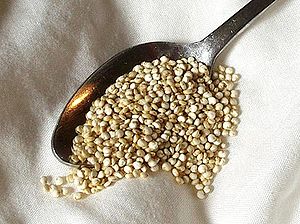
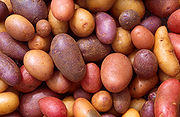
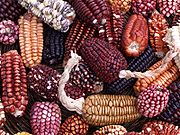
Note, however, that only a small number of these varieties are commercially available. Only two varieties of maize are commonly available. The most common type has very large kernels and is not sweet. The second common variety is a type of fibrous purple corn that is not eaten but is used to make chicha morada
and mazamorra morada. The third variety is a type of sweet corn popular in the United States that is mainly purchased by foreigners due to its high price. Occasionally one finds dried kernels of four varieties of multi-colored corn, which are used in stews or soups. Only two varieties of red tomatoes are commercially available, one is called Italian, while the other is known as American.
The Sweet potato
is native to Central America
and was domesticated there at least 5,000 years ago. The much lower molecular diversity found in Peru and Ecuador suggests that the sweet potato was introduced there from Central America. Only two varieties of sweet potato are commonly available for sale in Peru. One has dry orange flesh and light tan skin and tastes sweet. The other has purple skin, is white and brown inside, and is only moderately sweet. Occasionally another variety, characterized by small tubers and dark skin, is available. Potatoes are available in more variety. The two most common potatoes are a white flesh type and a more expensive yellow flesh type. The only commercially available native fruits (native to the Andes region in general—Ecuador, Chile, Bolivia) are lucuma
, camu camu
, prickly pear
, cape gooseberry, cocona, pacay
(technically a legume but used as a fruit), guanabana, dragon fruit, pepino, papaya
, ciruela, mammee apple
, banana passionfruit
, cherimoya
, granadilla
, moriche palm
fruit, and tamarillo
. Yacon
, although an underground tuber, is also used as a fruit. None of the other native fruits are commercially available.
From Peru, the Spanish
brought back to Europe
a few foods that would become staples
for many peoples around the world.
The varieties of chili peppers, potatoes and maize
that the Spanish brought back to Europe, however, were not native to Peru:
Many foods from Spain are now considered Peruvian staples, including rice, wheat, barley, oats, rice, lentils, chickpeas, broad beans, garlic, cabbage, broccoli, cauliflower, artichokes, onions, cucumbers, carrots, celery, lettuce, eggplant, wine, vinegar, olives, beef, pork, chicken, numerous spices (including coriander, cumin, parsley, cilantro, laurel, mint, thyme, marjoram, turmeric, cloves, cinnamon, nutmeg, anise, black pepper and oregano), bananas, quince, apples, oranges, limes, apricots, peaches, plums, cherries, melons, figs, pomegranates, honey, white sugar, almonds, walnuts, cheese, hen eggs, cow's milk, etc. etc. Many food plants popular in Spain, however, were not imported to Peru or failed to grow due to climatic conditions. These include lemons, turnips, kale
, and chestnuts.
 During the colonial period, and continuing up until the time of the Second World War, Peruvian cuisine focused on Spanish models and virtually ignored anything that could be regarded as native or Indian. Traditional food plants, which the indigenous people continued to eat, were regarded as "peasant food" to be avoided. These colonial attitudes took a long time to fade. Since the 1970s, there has been an effort to bring these native food plants out of obscurity.
Some plants cultivated by ancient societies of Peru have been rediscovered by modern Peruvians, and are carefully studied by scientists. Due to the characteristics of its land and climate and the nutritional quality of its products, some Peruvian plants may play a vital role in future nutrition. Examples include quinoa
(an excellent source of essential amino acids) and kañiwa
, which look and cook like cereals but are pseudocereal
s. Nutritionists are also studying root vegetable
s, such as maca
and, cereals like kiwicha.
For many of Peru's inhabitants, these food stocks allow for adequate nutrition, even though living standards are poor. Abandoning many of these staples during the Spanish domination and republican eras lowered nutritional levels. Since 1985, NASA
has uses some of these foods—quinoa, kiwicha and maca—for astronaut
meals.
Peruvian cuisine is often made spicy with ají pepper, a basic ingredient. Some Peruvian chili peppers are not spicy but serve to give taste and color to dishes. Rice
often accompanies dishes in Peruvian cuisine, and the regional sources of foods and traditions give rise to countless varieties of preparation and dishes.
The following dishes are generally popular with Peruvians. Some of tese originated in other parts of Peru, but most are well known and can be found in Lima
.
, the Viceroyalty
and the Republic
, but also a climatic variety of 28 individual climates. The mixing of cultures and the variety of climates differ from city to city so geography, climate, culture and ethnic mix determine the variety of local cuisine.
cuisine have also been incorporated along with and the original local cuisine of the native
people of Peru.
The Pacific Ocean
is the principal source of aquatic resources for Peru. Peru is one of the world's top two producers and export
ers of unusually high-protein fishmeal for use in livestock/aquaculture feed. Its richness in fish and other aquatic life is enormous, and many oceanic plant and animal species can only be found in Peru. As important as the Pacific is to Peru's biodiversity, freshwater biomes such as the Amazon River
and Lake Titicaca
also play a large role in the ecological make-up of the country.
Every coastal region, being distinct in flora and fauna populations, adapts its cuisine in accordance to the resources available in its waters.
Ceviche
, with many variations (pure, combination, or mixed with fish and shellfish) provides a good example of regional adaptation. Ceviche is found in almost all Peruvian restaurants, typically served with camote, or sweet potato. Tiradito
is a related dish that shows the influence of Japanese
immigrants and sashimi
techniques. Ceviche is a South American dish of marinated raw fish or seafood, typically garnished with herbs and served as an appetizer.
The chupe de camarones (shrimp cioppino) is one of the most popular dishes of Peruvian coastal cuisine. It is made from a thick freshwater shrimp (crayfish) stock soup, potatoes, milk
and chili pepper
. Regarded as typical from Arequipa, Chupe de Camarones is regularly found in Peruvian restaurants specialized in Arequipan cuisine.
 A center of immigration and centers of the Spanish Viceroyalty, Lima
and Trujillo
have incorporated unique dishes brought from the arrival of the Spanish Conquistadors and the receiving of many waves of immigrants: African, European, Chinese, and Japanese. Besides international immigration—a large portion of which happened in Lima—there has been, since the second half of the 20th century, a strong internal flow from rural areas to cities, in particular to Lima. This has strongly influenced Lima's cuisine with the incorporation of the immigrant's ingredients and techniques (for example, the Chinese extensive use of rice or the Japanese approach to preparing raw fish).
Creole
cuisine is the most widespread in this cosmopolitan city. The only major international cuisines with a large presence are Chinese (known locally as chifa) and Italian. These, however, have been heavily modified due to a shortage or lack of authentic ingredients.
The city's bakeries are quite popular with Peruvians. One may find Peruvians standing in line in almost every bakery waiting for freshly baked white bread from 6 to 9 am and from 4 to 6 pm. The majority of Peruvians tend to eat bread for breakfast along with coffee or tea. Almost all bread in Peru, with the exception of baguettes, is fortified with added fats, such as lard. Whole wheat bread is extremely hard to find. Many bakeries sell white bread sprinkled with bran
for health conscious customers as whole wheat flour is extremely hard to find. However, even this bread is often heavily fortified with lard, shortening or butter. Authentic whole wheat bread is imported from Europe and sold at upscale grocery stores. A few coastal cities bakeries produce "bollos," which are loaves of bread baked in stone and wood-ovens from the Andes.
Anticuchos
are brochettes made from a beef heart marinated in a various Peruvian spices and grilled, often sided with boiled potatoes and corn. They are commonly sold by street vendors and served shish kabob-style, but one may find them in creole food restaurants.
Also frequently sold by street vendors are tamales: boiled corn with meat or cheese and wrapped in a banana leaf. They are similar to humitas, which consist of corn mixed with spices, sugar, onions, filled with pork and olives and finally wrapped in the leaves of corn husks. Tamales are a common breakfast food, often served with lima and/or "Salsa Criolla."
Another favorite food found in many restaurants is Papas a la huancaína (Huancayo-style potatoes), a dish consisting of sliced boiled potatoes, served on a bed of lettuce with a slightly spicy cheese sauce with olives. Even if the name says that it is from Huancayo
, it is actually from Chosica, in Lima, made by a "Huancaina" (a person from huancayo)
Ceviche
, often spelled "cebiche" in Peru, is the flagship dish of coastal cuisine, and one of the most popular dish among Peruvians. It consists of Andean chili peppers, onions and acidic aromatic lime, a variety brought by the Spaniards. A spicy dish, it consists generally of bite-size pieces of white fish (such as corvina or white sea bass), marinated raw in lime juice mixed with chilis. Ceviche is served with raw onions, boiled sweet potatoes (camote), toasted corn (cancha), and sometimes a local green seaweed yuyo.
Leche de tigre (tiger's milk), is the Peruvian colloquial name for the juice produced from the ingredients of ceviche. It has a light spicy flavor. Many Peruvians believe that ceviche is a hangover cure and an aphrodisiac. Unlike ceviche from Mexico and Ecuador, it does not have tomatoes, and unlike that of Tahiti it does not use coconut milk, though both are abundant in Peru. A variation available in Callao replaces mango for fish.
Tacu-tacu: Mixture of beans and rice, fried, and topped with breaded and pan-fried steak and an onion salsa.
Papa rellena
(stuffed potato): mashed potatoes stuffed with ground (minced) meat, eggs, olives and various spices and then deep fried.
Arroz tapado
(covered rice): uses the same stuffing of papa rellena, but rather than used as a stuffing, it is accompanied by rice.
Pollo a la Brasa
(grilled chicken or roaster chicken): is one of the most consumed foods in this country. It's basically a gutted chicken marinated in a marinade that includes various Peruvian ingredients, baked in hot ashes. The origins of the recipe for this dish have origin in Lima the capital of Peru during the 1950s, it is a certainty that two Swiss citizens residents in Peru, Roger Shuler and Franz Ulrich, invented and registered the patent (1950) for the machine to cook the chicken on the grill, a mechanical system of planetary rotation in that the chickens rotating on its axis and over a central axis, simultaneously. The dish comes with French fried potatoes, salad and various creams (Peruvian mayonnaise, ketchup, olive sauce, chimichurri and aji (chili) sauces of all kinds)
Sancochado is a hearty beef and vegetable broth that includes yuca (cassava
) and potatoes.
A local staple found in many cheaper, as well as more up-market, restaurants is lomo saltado, sliced beef (if made from the tenderloin it is "lomo fino") stir fried with onion, tomato, soy sauce, vinegar, chili (aji) and served or mixed with French fried potatoes (aka "chips"), and accompanied with rice.
Lima has an abundance of Peruvian-style Chinese restaurants or "chifas" as they are known locally; indeed, arroz chaufa
or Chinese style rice is one of the frequently sampled dishes that has found its way into Peruvian cuisine.
Arroz con pollo, or rice with chicken, is enjoyed for its rich-flavored rice combined with chicken.
Chupe de pescado or fish cioppino is popular in Lima and along the coast.
Lima butter bean (pallares) salad is a salad made with Lima butter beans (called pallares in Perú), cooked (but still whole) and mixed (when cooled) with a mixture of onions, slices of tomatoes, and green ají (chili), marinated in green Peruvian lime juice, oil, salt, and vinegar. Lima butter beans (pallares) have been part of the Peruvian cuisine for at least 6,000 years.
Butifarras also known as Jamon del Pais is a sandwich with "Peruvian ham", sliced onions, sliced chili peppers, lime, salt, pepper, oil, in a type of white bread roll .
Causa, in its basic form, is a mashed yellow potato dumpling mixed with key lime, onion, chili and oil. Varieties can have avocado, chicken, tuna (typically canned) or even shellfish added to the mixture. Also, causa is popular in Lima, where it is distinguished by the name Causa Limeña. Causa is usually served cold with hard boiled eggs and olives.
Carapulca is an appetizing stewed dish of pork and chicken, dried potatoes, red chilis, peanuts and cumin. The version from the Afro-Peruvian Ica region uses fresh potatoes.
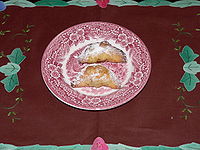
Empanadas (meat turnovers) were introduced by the Spanish during the colonial period, and later modified, possibly due to lack of Spanish ingredients (olive oil, codfish, smoked paprika, etc.). In Peru, they are filled either with chicken, beef, or cheese. Olives, and sometimes hard boiled eggs and raisins gives them a unique taste.
Ají de gallina (chili chicken) consists of thin strips of chicken served with a creamy yellow and spicy sauce, made with ají amarillo (yellow chilis), cheese, milk, bread. Occasionally walnuts are added on special occasions or at upscale restaurants due to its prohibitive cost in Peru. Traditionally the meat is from non-laying hens, but today almost exclusively made from more tender chickens.
Escabeche criollo (pickled fish): "Escabeche" when the word is used alone normally refers to fish escabeche. Other varieties can use duck or chicken. The escabeche dishes rely in the cooking on the heavy use of vinegar and onions together with other spices and chili.
Cau cau is a meal consisting of mondongo or tripe
stew and accompanied by rice. There are a number of versions of Cau-Cau. In general cau-cau is a style of cooking being there seafood cau-cau, shellfish cau-cau, etc. Two noteworthy styles are the creole style simply called Tripe Cau-Cau, and the Italo-Peruvian style. The creole is made with strips of previously cooked tripe, seasoned by a mixture of sauteed onions, garlic, yellow aji, a pinch of turmeric, salt and pepper and chunks of boiled potatoes. The mixed is allowed to cook together to blend the tastes and acquire consistency. It is then sprinkled with spearmint or mint. The other common version is the "Italian" style. It consists of strips of precooked tripe sauteed with a mixture of red onions, peeled tomatoes, tomato paste and dried mushrooms (Porcini). After the flavors blend it is seasoned with parsley and mixed with fried potato strips just prior to serving. Some chefs add a few tablespoons of wine or pisco following the sautee step. These recipes may have African and Chinese influence as well as Italian.
Chicharrones is salted pork deep-fried in its own fat. There are at least two kinds of chicharrones: pork skins, and country style ribs that are first boiled, then rendered in their own fat until they brown into chicharrones. Other types of chicharrones including deep fried squid, and other seafoods. They can be served at breakfast, or any time of day.
The widely different climates between Tumbes, Piura, Lambayeque, La Libertad, Cajamarca and San Martin contributes to the variety of dishes in these areas.
Northern Style Dishes:
Shambar
is a soup made with wheat, pork rinds, "Jamon Serrano" (smoked ham), assorted beans, and green onions. It is served with toasted corn (cancha) and is made only on Mondays.
Seco de Cabrito (goat stew, but goat is often substituted by lamb, chicken, or beef) is made in a pot after marinating with chicha
de jora or beer and other spices including fresh coriander leaves (cilantro) and garlic. This is most popular in the northern coast especially in Cajamarca
and Lambayeque
.
Seco de Chavelo (typically from Catacaos
- Piura
is a type of seco that is made of cecina stewed and dried meat that has been clotted and dried along with bananas, yuca, aji panca and the addition of Clarito (from Chicha de Jora the Piurano style).
Cebiche de Conchas Negras (ceviche with black shells) is a dish of Piura
and Tumbes is also popular along the southern coast of Ecuador
due to Peruvian influence. In this version of ceviche, the seafood used in the dish should be black clams
accompanied by toasted corn.
, the locals' diet is still based on corn (maíz), potatoes, and an assortment of tubers as it has been for hundreds of years. Meat comes from indigenous animals like alpaca
s and guinea pig
s, but also from imported livestock like sheep and swine.
As with many rural
cultures, most of the more elaborate dishes were reserved for festivities, while daily meals were simple affairs. Nowadays, festive dishes are consumed every day, though they tend to be on the heavy side and demand a large appetite.
The pachamanca
is a very special banquet in and of itself. Cooked all over the Andean region of Peru, is made from a variety of meats (including pork and beef), herbs and a variety of vegetables that are slowly cooked underground on a bed of heated stones. It demands skillful cooks to create and a large number of guests to consume. Because of its tedious preparation it is normally only done for celebrations or festivals in the Andes, though recent years have seen the appearance of many "campestre" restaurants outside Lima where urban families can escape to spend an afternoon in the fresh air eating pachamanca. Such as in Cieneguilla.
Andean cooking's main freshwater fish is the trout
, raised in fisheries in the region.
Currently, ostrich
meat is being raised from farms in Arequipa
, although its consumption is not widespread and limited to urban areas.
Cuy chactado: A dish more popular in the highlands is this meal of fried guinea pig
. Often the indigenous women of the Peruvian Andes will raise the guinea pigs in their huts where they run around loose on the floors of the dwellings. Prior to consumption they can reach a surprisingly large size. Besides the use of guinea pigs as separate meals, they are often cooked in a Pachamanca
with other meats and vegetables.
Olluquito con charqui is another traditional Andean dish. Olluco is a yellowish tuber (Ullucus tuberosus) domesticated by pre-Inca populations, and is visually similar to colorful small Andean potatoes, but with a distinct crunchy texture when cooked. Charqui is the technique employed in the Andean highlands to cure meat by salting, then dehydration. Incidentally the word "jerky" in English is derived from this Andean (Qechuan) word. The dish is a stew of finely diced ollucos with charqui pieces (traditionally alpaca, or less frequently llama meat, though today it is also very commonly made from sheep), served with white rice.
Rocoto relleno: Arequipa
dish made from stuffed rocoto
chilis. Rocotos are one of the very hot (spicy) chilis of Peru. In this dish they are stuffed with spiced beef or pork, onions, olives, egg white and then cooked in the oven with potatoes covered with cheese and milk.
Tocosh
or Togosh is a traditional Quechua food prepared from fermented potato pulp.
Puka Pikanti: Ayacucho
dish made from white potatoes, beets, yellow chili pepper, mint, and peanuts.
(one of the world's largest freshwater fish), prepared in variety of dishes; many other types of fish like gamitana, sabalo
, tucunare, boquichico, palometa
, bagre
, and many others including the piranha
, that are prepared in variety of dishes such as "timbuche" (soup) or "patarashca" (grilled in vegetables); many types of turtle
s like the motelo (land turtle), and the charapa
and taricaya
(river turtles). Hunting turtles is prohibited in Peru, therefore turtle-based dishes are scarce and expensive and not sold à la carte in restaurants. Other animals include the majas, the sajino, the agouti and jungle mammals, which are called collectively "carne de monte". The Black Caiman is also considered a delicacy; but its hunt is forbidden under Peruvian law.
Among the fruits of Peru's jungle is the camu camu
, which contains 40 times more vitamin C
than the kiwifruit
. Non-native fruits such as mango
and pineapple
and star apple are also in abundance, as well as other jungle fruits like, mammee apple
, cherimoya
, guanabana, taperiva
, copoazu, dry fruits like the aguaje and the hungurahui
.
Juane is rice seasoned with turmeric, and chicken wrapped in banana leaves.
. It is also eaten in Bolivia, and was presumbably eaten by the Indians in Southern Peru and Bolivia before the arrival of the Spanish. Today lamb is often substituted for alpaca meat. It is used as an ingredient in a variety of dishes of the Puno
region, Cusco
, and Arequipa
. It is prepared using recently-cured lamb, in which furrows are made with a knife so the salt can penetrate. Salt penetration is important, because it determines how long the cured meat lasts. The meat is left to dry in the sun and cold nights for almost one month.
Chairo: A traditional soup of the Puno
and Arequipa
regions. It origins have been traced to the Collan Indians who live in the Andes of Bolivia and southern Peru. The soup consists of black chuño
, aji panca (red chili pepper), sweet potatoes, meat and chalona.
Ocopa: A dish with some similarities to Papas a la Huancaina. It consists of boiled and sliced yellow potatoes covered with a sauce of made of aji (chili pepper), the Peruvian herb tagetes minuta
, (called huatacay in Lima; the herb gives it a vivid green color), and fresh or white cheese, sided with lettuce, boiled eggs and olives. At expensive restaurants walnuts are often added, but this is seldom done in Peruvian homes due to the prohibitive cost of walnuts in Peru.
Copús is one of the best known dishes of Piura
. Its ingredients are ripe fried bananas, camotes (sweet potatoes), and seasoned hen, turkey, goat, and mutton. The meat is cooked in a furnace under the ground; this method is different from using a pachamanca
since the furnace is covered with blankets and clay.
Yuca chupe or cassava soup is one of the variations in which the Peruvians enjoy cassava
.
Crema de tarwi (tarwi soup): Tarwi is a vegetable native to the mountains of Bolivia
, Ecuador
, and Peru
. In addition to its use in soup, tarwi is used in much of Peruvian cuisine, including sancochado. Fresh tarwi can be used in stews, purees, sauces, desserts and in a variation of cebiche. In some areas, locals call it chocho. Its cultivation has recently expanded to all the countries of the Andean region. In Peru, it is principally grown in the areas of Cajamarca
, Ancash, the Mantaro Valley
, Ayacucho
, Cusco
, and Puno
.
Tarwi can also be found in beverages (such as papaya juice with tarwi flour). Tarwi has been shown to have a higher vegetable protein content than soy
. In pre-Incan and Incan times, it was an important part of the mostly vegetarian diet of the region. It was consumed with small quantities of meat and dried fish, providing an abundant source of protein for the population. Tarwi seeds have been found in Nazca
tombs and in representations of Tiahuanaco ceramics.
In downtown Lima
, on Capón Street, is the barrio chino (Chinatown
). This is the main area in Peru where one can find a limited selection of authentic Chinese ingredients imported from China. Even in this area, however, it is very difficult to find a restaurant that serves authentic Chinese dishes such as Mapo doufu
.
Some creole dishes such as lomo saltado
and arroz chaufa
were influenced by the Chinese and are commonly served at Chifa restaurants.

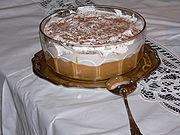 Alfajor
es: a dessert found in virtually all of Spain's former colonies. It is derived from the versions popular in Spain during the colonial period. The original Spanish recipes, however, have been modified because the original ingredients are expensive in Peru (almonds, honey) or even unobtainable (hazlenuts, lemon rind, coriander seed, etc.). The basic recipe uses a base mix of flour, key lime rind, margarine, and powdered sugar, which is oven-baked. Alfajores consist of two or more layers of this baked pastry, and is usually filled with either manjar blanco
(a caramel-colored, sweet, creamy filling made with milk and sugar) or molasses.
Turrones (or nougat
) is another originally Spanish dessert. The original Spanish recipe, which contained ingredients that were rare or expensive in Peru (such as almonds, rose water, orange blossom water, honey) were modified in a variety of ways. One common variety found in Lima is Turrón de Doña Pepa, an anise and honey nougat that is traditionally prepared for the Señor de los Milagros (or Lord of Miracles
) religious procession, during October.
Almost exclusive to the Andes region is the fruit known as lúcuma
. Lúcuma juice, ice cream, and corresponding lúcuma shakes are very popular throughout Peru. Lúcuma ice cream can normally only be found in large US cities (typically in Peruvian restaurants). One popular brand of ice cream in Peru is D'Onofrio
, which is owned by Nestlé
.
Arroz con leche (rice-pudding): Another dessert originally from Spain that can be found in various varieties throughout Latin America. Arroz con leche is one of the more common desserts found in homes and restaurants of modern-day Peru. It consists primarily of cooked rice, cinnamon/nutmeg, raisins, and milk. Because lemons are not available in Peru, rice pudding never has lemon rind as is traditional in the Spanish version.
Helados (ice cream): The most common ice cream flavors found in Peru are lucuma, chocolate, vanilla and strawberry. Some more exotic flavors such as camu camu
, guaraná and Prickly Pear can occasisonally be found. For other commonly available flavors, however, one needs to purchase imported ice-cream as many of the ingredients are not available in Peru. Peru is one of few countries in the world where the third most popular ice-cream (after vanilla and chocolate) is not strawberry, it is in fact the "nutty" flavored, orange colored lúcuma
, which is an exotic fruit grown in quantity only in Peru, and only in recent years being exported in very limited quantities as an exotic flavor (for ice cream and savory sauces) to the USA, and available in Europe essentially in food shows.
Mazamorra
morada is a jelly-like clove
-flavored dessert. It takes on the color of one of its main ingredients: purple maize. A variety of purple corn (maíz morado) that only grows in Peru adds color to the water it's boiled in, along with cinnamon
cloves. When the water cools, chopped fruit, key lime and sugar are added. The mixture is served as a beverage called "chicha morada.".
Picarones
: a sweet, ring-shaped fritter with a pumpkin base; often served with a molasses syrup. Picarones were created during the colonial period to replace the Spanish dessert Buñuelos
as buñuelos were too expensive to make (They had an egg custard filling) and some ingredients were unavailable (lemon rinds). Peruvian Picarones are made of squash or pumpkin dough and sweetened with chancaca, raw cane sugar melted into a syrup.
Tejas
: another modified Spanish dessert. The original Spanish version contained ingredients that were prohibatively expensive in Peru, such as almonds. The Peruvian version of this candy is filled with manjar blanco
and coated with a fondant
-like shell. Some are also made with a chocolate shell (chocoteja).
Suspiro a la Limeña is another Spanish-influenced dessert that uses Dulce de leche
, which derives from the Spanish Blancmange
. The bottom layer is made of dulce de leche enriched with egg yolks. The top layer consists of meringue made with port wine. This classic criollo dessert is said to have been named by the famous Peruvian poet and author José Gálvez whose wife doña Amparo Ayarez was famous for her cooking. When asked what inspired the name, he reportedly replied, "Because it is soft and sweet, like the sigh of a woman." In this case, it would be a woman from Lima, a Limeña.


Less common are:
, a kind of brandy
, is the national drink of Peru. It originated during the colonial period as a cheaper substitute for the Spanish liquor known as Orujo
, which is made in virtually the same manner. This distilled beverage
made from grape
s is produced in various regions of the country. Pisco Sour
is a cocktail made from pisco combined with key lime juice, the white of an egg and sugar.
Wine
s come from many different regions of the country, most notably from the Ica Region
.
Beer
, as in many countries, is popular at all levels of society. Local brands include Pilsen and Cristal. A couple of regional beers are Arequipeña and Cuzqueña (Cusqueña), from Arequipa
and Cuzco
, respectively; though Cuzqueña is popular nationwide and is exported worldwide. A common beer drinking ritual among many Peruvian men involves a group sharing one glass. The party holding the bottle waits for the prior person to drink from the glass before receiving that glass, filling it and passing the bottle on to the next in line. While this custom is more common among men of lower echelons of society, people of higher social status, particularly youth and occasionally women, take part in this custom.
Chicha
or Chicha de Jora is another well-known drink, based on different varieties of fermented maíz and different aromatic herb
s, depending on the region of the country. Its consumption is mostly limited to the Andes area.
Spanish cuisine
Spanish cuisine consists of a variety of dishes, which stem from differences in geography, culture and climate. It is heavily influenced by seafood available from the waters that surround the country, and reflects the country's deep maritime roots...
, China
Chinese cuisine
Chinese cuisine is any of several styles originating in the regions of China, some of which have become highly popular in other parts of the world – from Asia to the Americas, Australia, Western Europe and Southern Africa...
, Italy
Italian cuisine
Italian cuisine has developed through centuries of social and political changes, with roots as far back as the 4th century BCE. Italian cuisine in itself takes heavy influences, including Etruscan, ancient Greek, ancient Roman, Byzantine, Jewish and Arab cuisines...
, West Africa, and Japan
Japanese cuisine
Japanese cuisine has developed over the centuries as a result of many political and social changes throughout Japan. The cuisine eventually changed with the advent of the Medieval age which ushered in a shedding of elitism with the age of shogun rule...
. Due to a lack of ingredients from their home countries, immigrants to Peru modified their traditional cuisines by using ingredients available in Peru. The three traditional staples of Peruvian cuisine are corn
Maize
Maize known in many English-speaking countries as corn or mielie/mealie, is a grain domesticated by indigenous peoples in Mesoamerica in prehistoric times. The leafy stalk produces ears which contain seeds called kernels. Though technically a grain, maize kernels are used in cooking as a vegetable...
, potatoes, and beans. These ingredients have been combined with a number of staples brought by the Spanish, such as rice
Rice
Rice is the seed of the monocot plants Oryza sativa or Oryza glaberrima . As a cereal grain, it is the most important staple food for a large part of the world's human population, especially in East Asia, Southeast Asia, South Asia, the Middle East, and the West Indies...
, wheat
Wheat
Wheat is a cereal grain, originally from the Levant region of the Near East, but now cultivated worldwide. In 2007 world production of wheat was 607 million tons, making it the third most-produced cereal after maize and rice...
and meat (such as beef, pork and chicken). Many traditional foods—such as quinoa
Quinoa
Quinoa , a species of goosefoot , is a grain-like crop grown primarily for its edible seeds. It is a pseudocereal rather than a true cereal, or grain, as it is not a member of the grass family...
, kiwicha, chili pepper
Chili pepper
Chili pepper is the fruit of plants from the genus Capsicum, members of the nightshade family, Solanaceae. The term in British English and in Australia, New Zealand, India, Malaysia and other Asian countries is just chilli without pepper.Chili peppers originated in the Americas...
s, and several roots and tuber
Tuber
Tubers are various types of modified plant structures that are enlarged to store nutrients. They are used by plants to survive the winter or dry months and provide energy and nutrients for regrowth during the next growing season and they are a means of asexual reproduction...
s have increased in popularity in recent decades, reflecting a revival of interest in native Peruvian foods and culinary techniques.
Diverse crops
PeruPeru
Peru , officially the Republic of Peru , is a country in western South America. It is bordered on the north by Ecuador and Colombia, on the east by Brazil, on the southeast by Bolivia, on the south by Chile, and on the west by the Pacific Ocean....
is considered an important center for the genetic diversity
Genetic diversity
Genetic diversity, the level of biodiversity, refers to the total number of genetic characteristics in the genetic makeup of a species. It is distinguished from genetic variability, which describes the tendency of genetic characteristics to vary....
of the world's crops:
- MaizeMaizeMaize known in many English-speaking countries as corn or mielie/mealie, is a grain domesticated by indigenous peoples in Mesoamerica in prehistoric times. The leafy stalk produces ears which contain seeds called kernels. Though technically a grain, maize kernels are used in cooking as a vegetable...
(corn), 35 varieties - TomatoTomatoThe word "tomato" may refer to the plant or the edible, typically red, fruit which it bears. Originating in South America, the tomato was spread around the world following the Spanish colonization of the Americas, and its many varieties are now widely grown, often in greenhouses in cooler...
es, 15 species - PotatoPotatoThe potato is a starchy, tuberous crop from the perennial Solanum tuberosum of the Solanaceae family . The word potato may refer to the plant itself as well as the edible tuber. In the region of the Andes, there are some other closely related cultivated potato species...
es, 8000 species of potato are native to the AndesAndesThe Andes is the world's longest continental mountain range. It is a continual range of highlands along the western coast of South America. This range is about long, about to wide , and of an average height of about .Along its length, the Andes is split into several ranges, which are separated...
region. Over 99% of all cultivated potatoes worldwide are descendants of a subspecies, namely Solanum tuberosum. This subspecies has developed into thousands of varieties that vary by size, shape, color, and other sensory characteristics. - PeanutPeanutThe peanut, or groundnut , is a species in the legume or "bean" family , so it is not a nut. The peanut was probably first cultivated in the valleys of Peru. It is an annual herbaceous plant growing tall...
s — These are native to Peru, and were taken by Spanish and Portuguese merchants to Africa. - Fruits — Peru has about 20 native fruits that are used in cooking.
Note, however, that only a small number of these varieties are commercially available. Only two varieties of maize are commonly available. The most common type has very large kernels and is not sweet. The second common variety is a type of fibrous purple corn that is not eaten but is used to make chicha morada
Chicha morada
Chicha morada is a non-alcoholic beverage originally from Peru. The drink is made from purple corn, a variant of Zea mays native to the Peruvian Andes. Its use and consumption dates back to the pre-colonial era of Peru, even prior to the creation of the Inca empire...
and mazamorra morada. The third variety is a type of sweet corn popular in the United States that is mainly purchased by foreigners due to its high price. Occasionally one finds dried kernels of four varieties of multi-colored corn, which are used in stews or soups. Only two varieties of red tomatoes are commercially available, one is called Italian, while the other is known as American.
The Sweet potato
Sweet potato
The sweet potato is a dicotyledonous plant that belongs to the family Convolvulaceae. Its large, starchy, sweet-tasting, tuberous roots are an important root vegetable. The young leaves and shoots are sometimes eaten as greens. Of the approximately 50 genera and more than 1,000 species of...
is native to Central America
Central America
Central America is the central geographic region of the Americas. It is the southernmost, isthmian portion of the North American continent, which connects with South America on the southeast. When considered part of the unified continental model, it is considered a subcontinent...
and was domesticated there at least 5,000 years ago. The much lower molecular diversity found in Peru and Ecuador suggests that the sweet potato was introduced there from Central America. Only two varieties of sweet potato are commonly available for sale in Peru. One has dry orange flesh and light tan skin and tastes sweet. The other has purple skin, is white and brown inside, and is only moderately sweet. Occasionally another variety, characterized by small tubers and dark skin, is available. Potatoes are available in more variety. The two most common potatoes are a white flesh type and a more expensive yellow flesh type. The only commercially available native fruits (native to the Andes region in general—Ecuador, Chile, Bolivia) are lucuma
Lúcuma
The lúcuma is a subtropical fruit native to the Peru's Andean region. Lucuma has been found on ceramics at burial sites of the indigenous people of coastal Peru...
, camu camu
Camu Camu
Myrciaria dubia, commonly known as Camu camu, Camucamu, Cacari, and Camocamo, is a small bushy riverside tree from the Amazon rainforest vegetation in Peru and Brazil, which bears a red/purple cherry-like fruit. Its small flowers have waxy white petals and a sweet-smelling aroma. It has bushy...
, prickly pear
Opuntia
Opuntia, also known as nopales or paddle cactus , is a genus in the cactus family, Cactaceae.Currently, only prickly pears are included in this genus of about 200 species distributed throughout most of the Americas. Chollas are now separated into the genus Cylindropuntia, which some still consider...
, cape gooseberry, cocona, pacay
Pacay
Inga feuilleei , commonly known as pacay or ice-cream bean, is a perennial tree that contains a podded fruit cultivated often for its edible white pulp surrounding large seeds. It is a legume tree native to Central and South America. All legumes have their seed encased in pods, a few of which are...
(technically a legume but used as a fruit), guanabana, dragon fruit, pepino, papaya
Papaya
The papaya , papaw, or pawpaw is the fruit of the plant Carica papaya, the sole species in the genus Carica of the plant family Caricaceae...
, ciruela, mammee apple
Mammee apple
Mammea americana, commonly known as mammee, mammee apple, mamey, mamey apple, Santo Domingo apricot or South American apricot, is an evergreen tree of the family Calophyllaceae, whose fruit is edible...
, banana passionfruit
Banana passionfruit
Banana passionfruit is the fruit of several plants in the genus Passiflora, and are therefore related to the passion fruit. They look somewhat like a straight, small banana with rounded ends. It was given this name in New Zealand, where passionfruit are also prevalent. In Hawaii, it is called...
, cherimoya
Cherimoya
The Cherimoya is the fruit of the species Annona cherimola, which is native to the Andes. Today they are grown throughout South and Central America.-Description:...
, granadilla
Passiflora edulis
Passiflora edulis is a vine species of passion flower that is native to Paraguay, Brazil and northern Argentina . Its common names include passion fruit and passionfruit...
, moriche palm
Moriche Palm
The Moriche Palm, Mauritia flexuosa, also known as the Ité Palm, Ita, Buriti, or aguaje , is a palm tree. It grows in and near swamps and other wet areas in tropical South America....
fruit, and tamarillo
Tamarillo
Solanum betaceum is a small tree or shrub in the flowering plant family Solanaceae. It is best known as the species that bears the tamarillo, an egg-shaped edible fruit...
. Yacon
Yacón
The Yacón is a perennial plant traditionally grown in the Northern and Central Andes from Ecuador to Argentina for its crisp, sweet-tasting tuberous roots. The texture and flavour are very similar to jicama mainly differing in that yacon has some slightly sweet resinous and floral undertones to...
, although an underground tuber, is also used as a fruit. None of the other native fruits are commercially available.
From Peru, the Spanish
Spanish people
The Spanish are citizens of the Kingdom of Spain. Within Spain, there are also a number of vigorous nationalisms and regionalisms, reflecting the country's complex history....
brought back to Europe
Europe
Europe is, by convention, one of the world's seven continents. Comprising the westernmost peninsula of Eurasia, Europe is generally 'divided' from Asia to its east by the watershed divides of the Ural and Caucasus Mountains, the Ural River, the Caspian and Black Seas, and the waterways connecting...
a few foods that would become staples
Staple food
A staple food is one that is eaten regularly and in such quantities that it constitutes a dominant portion of a diet, and that supplies a high proportion of energy and nutrient needs. Most people live on a diet based on one or more staples...
for many peoples around the world.
- Tomatoes: Tomatoes were introduced to Europe from Latin America.
- Beans: Several varieties of the Common beanCommon beanPhaseolus vulgaris, the common bean, is an herbaceous annual plant domesticated independently in ancient Mesoamerica and the Andes, and now grown worldwide for its edible bean, popular both dry and as a green bean. The leaf is occasionally used as a leaf vegetable, and the straw is used for fodder...
are native to America. - Peanuts: The PeanutPeanutThe peanut, or groundnut , is a species in the legume or "bean" family , so it is not a nut. The peanut was probably first cultivated in the valleys of Peru. It is an annual herbaceous plant growing tall...
is native to South America.
The varieties of chili peppers, potatoes and maize
Maize
Maize known in many English-speaking countries as corn or mielie/mealie, is a grain domesticated by indigenous peoples in Mesoamerica in prehistoric times. The leafy stalk produces ears which contain seeds called kernels. Though technically a grain, maize kernels are used in cooking as a vegetable...
that the Spanish brought back to Europe, however, were not native to Peru:
- Peppers: Chili peppers are native to America. The varieties most commonly used around the world, however, derive from Mexico and Central America. Sweet Peppers are native to Mexico and Central America. Peruvian Ají pepperAjí pepperCapsicum baccatum is a species of chili pepper that includes the following cultivar and varieties:*Aji amarillo, or amarillo chili*Peppadew*Lemon drop*Bishop's Crown*Brazilian Starfish*Wild Baccatum-Origins and distribution:The C...
s are virtually unknown outside of the Andean region of South America. - Potatoes: Potatoes were considered livestockLivestockLivestock refers to one or more domesticated animals raised in an agricultural setting to produce commodities such as food, fiber and labor. The term "livestock" as used in this article does not include poultry or farmed fish; however the inclusion of these, especially poultry, within the meaning...
feedFodderFodder or animal feed is any agricultural foodstuff used specifically to feed domesticated livestock such as cattle, goats, sheep, horses, chickens and pigs. Most animal feed is from plants but some is of animal origin...
in Europe until FrenchFranceThe French Republic , The French Republic , The French Republic , (commonly known as France , is a unitary semi-presidential republic in Western Europe with several overseas territories and islands located on other continents and in the Indian, Pacific, and Atlantic oceans. Metropolitan France...
chemistChemistA chemist is a scientist trained in the study of chemistry. Chemists study the composition of matter and its properties such as density and acidity. Chemists carefully describe the properties they study in terms of quantities, with detail on the level of molecules and their component atoms...
Antoine-Augustin ParmentierAntoine-Augustin ParmentierAntoine-Augustin Parmentier is remembered as a vocal promoter of the potato as a food source in France and throughout Europe...
began serving dishes made from the tubers at his lavish banquetBanquetA banquet is a large meal or feast, complete with main courses and desserts. It usually serves a purpose such as a charitable gathering, a ceremony, or a celebration, and is often preceded or followed by speeches in honour of someone....
s. His guests were immediately convinced that potatoes were fit for human consumption. Parmentier's introduction of the potato is still discussed in Europe today. The varieties used in Europe and most of the world, however, derive from a subspecies indigenous to south-central Chile, namely Solanum tuberosum. - Maize: MaizeMaizeMaize known in many English-speaking countries as corn or mielie/mealie, is a grain domesticated by indigenous peoples in Mesoamerica in prehistoric times. The leafy stalk produces ears which contain seeds called kernels. Though technically a grain, maize kernels are used in cooking as a vegetable...
is native to all of CentralCentral AmericaCentral America is the central geographic region of the Americas. It is the southernmost, isthmian portion of the North American continent, which connects with South America on the southeast. When considered part of the unified continental model, it is considered a subcontinent...
and South AmericaSouth AmericaSouth America is a continent situated in the Western Hemisphere, mostly in the Southern Hemisphere, with a relatively small portion in the Northern Hemisphere. The continent is also considered a subcontinent of the Americas. It is bordered on the west by the Pacific Ocean and on the north and east...
. The varieties used in Europe and most of the world, however, are from Central America. The corn native to Peru is not sweet and has very large grains and is not popular outside of Latin America. (For an example of this Peruvian corn, please examine the photo entitled Pachamanca serving below).
Many foods from Spain are now considered Peruvian staples, including rice, wheat, barley, oats, rice, lentils, chickpeas, broad beans, garlic, cabbage, broccoli, cauliflower, artichokes, onions, cucumbers, carrots, celery, lettuce, eggplant, wine, vinegar, olives, beef, pork, chicken, numerous spices (including coriander, cumin, parsley, cilantro, laurel, mint, thyme, marjoram, turmeric, cloves, cinnamon, nutmeg, anise, black pepper and oregano), bananas, quince, apples, oranges, limes, apricots, peaches, plums, cherries, melons, figs, pomegranates, honey, white sugar, almonds, walnuts, cheese, hen eggs, cow's milk, etc. etc. Many food plants popular in Spain, however, were not imported to Peru or failed to grow due to climatic conditions. These include lemons, turnips, kale
Kale
Kale is very high in beta carotene, vitamin K, vitamin C, lutein, zeaxanthin, and reasonably rich in calcium. Kale, as with broccoli and other brassicas, contains sulforaphane , a chemical with potent anti-cancer properties. Boiling decreases the level of sulforaphane; however, steaming,...
, and chestnuts.
Cultivation of ancient plants
Some plants cultivated by ancient societies of Peru have been rediscovered by modern Peruvians, and are carefully studied by scientists. Due to the characteristics of its land and climate and the nutritional quality of its products, some Peruvian plants may play a vital role in future nutrition. Examples include quinoa
Quinoa
Quinoa , a species of goosefoot , is a grain-like crop grown primarily for its edible seeds. It is a pseudocereal rather than a true cereal, or grain, as it is not a member of the grass family...
(an excellent source of essential amino acids) and kañiwa
Kañiwa
Chenopodium pallidicaule, sometimes known as Cañihua, Canihua, Kañiwa, is a species of goosefoot, similar in character and uses to the closely related quinoa....
, which look and cook like cereals but are pseudocereal
Pseudocereal
Pseudocereals are broadleaf plants that are used in much the same way as cereals . Their seed can be ground into flour and otherwise used as cereals. Examples of pseudocereals are amaranth, Love-lies-bleeding, red amaranth, Prince-of-Wales-feather, quinoa, and buckwheat.- Pseudocereals :...
s. Nutritionists are also studying root vegetable
Root vegetable
Root vegetables are plant roots used as vegetables. Here "root" means any underground part of a plant.Root vegetables are generally storage organs, enlarged to store energy in the form of carbohydrates. They differ in the concentration and the balance between sugars, starches, and other types of...
s, such as maca
MACA
MACA or maca can mean:* Maca * Mongol-American Cultural Association* Multiple Access with Collision Avoidance* Military Aid to the Civil Authorities* Member Australian Counselling Association...
and, cereals like kiwicha.
For many of Peru's inhabitants, these food stocks allow for adequate nutrition, even though living standards are poor. Abandoning many of these staples during the Spanish domination and republican eras lowered nutritional levels. Since 1985, NASA
NASA
The National Aeronautics and Space Administration is the agency of the United States government that is responsible for the nation's civilian space program and for aeronautics and aerospace research...
has uses some of these foods—quinoa, kiwicha and maca—for astronaut
Astronaut
An astronaut or cosmonaut is a person trained by a human spaceflight program to command, pilot, or serve as a crew member of a spacecraft....
meals.
Peruvian cuisine is often made spicy with ají pepper, a basic ingredient. Some Peruvian chili peppers are not spicy but serve to give taste and color to dishes. Rice
Rice
Rice is the seed of the monocot plants Oryza sativa or Oryza glaberrima . As a cereal grain, it is the most important staple food for a large part of the world's human population, especially in East Asia, Southeast Asia, South Asia, the Middle East, and the West Indies...
often accompanies dishes in Peruvian cuisine, and the regional sources of foods and traditions give rise to countless varieties of preparation and dishes.
The following dishes are generally popular with Peruvians. Some of tese originated in other parts of Peru, but most are well known and can be found in Lima
Lima
Lima is the capital and the largest city of Peru. It is located in the valleys of the Chillón, Rímac and Lurín rivers, in the central part of the country, on a desert coast overlooking the Pacific Ocean. Together with the seaport of Callao, it forms a contiguous urban area known as the Lima...
.
Regional differences
Peru is a country that holds not just a variety of ethnic mixes since times ranging from the Inca EmpireInca Empire
The Inca Empire, or Inka Empire , was the largest empire in pre-Columbian America. The administrative, political and military center of the empire was located in Cusco in modern-day Peru. The Inca civilization arose from the highlands of Peru sometime in the early 13th century...
, the Viceroyalty
Viceroyalty of Peru
Created in 1542, the Viceroyalty of Peru was a Spanish colonial administrative district that originally contained most of Spanish-ruled South America, governed from the capital of Lima...
and the Republic
Republic
A republic is a form of government in which the people, or some significant portion of them, have supreme control over the government and where offices of state are elected or chosen by elected people. In modern times, a common simplified definition of a republic is a government where the head of...
, but also a climatic variety of 28 individual climates. The mixing of cultures and the variety of climates differ from city to city so geography, climate, culture and ethnic mix determine the variety of local cuisine.
Coast
The cuisine of the coast can be said to have five influences. The strongest influence is that of Colonial Spain. Elements of Japanese, African, and the ChineseHan Chinese
Han Chinese are an ethnic group native to China and are the largest single ethnic group in the world.Han Chinese constitute about 92% of the population of the People's Republic of China , 98% of the population of the Republic of China , 78% of the population of Singapore, and about 20% of the...
cuisine have also been incorporated along with and the original local cuisine of the native
Indigenous peoples
Indigenous peoples are ethnic groups that are defined as indigenous according to one of the various definitions of the term, there is no universally accepted definition but most of which carry connotations of being the "original inhabitants" of a territory....
people of Peru.
The Pacific Ocean
Pacific Ocean
The Pacific Ocean is the largest of the Earth's oceanic divisions. It extends from the Arctic in the north to the Southern Ocean in the south, bounded by Asia and Australia in the west, and the Americas in the east.At 165.2 million square kilometres in area, this largest division of the World...
is the principal source of aquatic resources for Peru. Peru is one of the world's top two producers and export
Export
The term export is derived from the conceptual meaning as to ship the goods and services out of the port of a country. The seller of such goods and services is referred to as an "exporter" who is based in the country of export whereas the overseas based buyer is referred to as an "importer"...
ers of unusually high-protein fishmeal for use in livestock/aquaculture feed. Its richness in fish and other aquatic life is enormous, and many oceanic plant and animal species can only be found in Peru. As important as the Pacific is to Peru's biodiversity, freshwater biomes such as the Amazon River
Amazon River
The Amazon of South America is the second longest river in the world and by far the largest by waterflow with an average discharge greater than the next seven largest rivers combined...
and Lake Titicaca
Lake Titicaca
Lake Titicaca is a lake located on the border of Peru and Bolivia. It sits 3,811 m above sea level, making it the highest commercially navigable lake in the world...
also play a large role in the ecological make-up of the country.
Every coastal region, being distinct in flora and fauna populations, adapts its cuisine in accordance to the resources available in its waters.
Ceviche
Ceviche
Ceviche is a seafood dish popular in the coastal regions of the Americas, especially Central and South America. The dish is typically made from fresh raw fish marinated in citrus juices such as lemon or lime and spiced with chilli peppers. Additional seasonings such as onion, salt,...
, with many variations (pure, combination, or mixed with fish and shellfish) provides a good example of regional adaptation. Ceviche is found in almost all Peruvian restaurants, typically served with camote, or sweet potato. Tiradito
Tiradito
Tiradito is a Peruvian dish of raw fish, similar to sashimi and carpaccio, in a spicy sauce. It reflects the influence of Japanese immigrants on Peruvian cookery, and differs from ceviche in the way in which the fish is cut, and in the lack of onions....
is a related dish that shows the influence of Japanese
Japanese people
The are an ethnic group originating in the Japanese archipelago and are the predominant ethnic group of Japan. Worldwide, approximately 130 million people are of Japanese descent; of these, approximately 127 million are residents of Japan. People of Japanese ancestry who live in other countries...
immigrants and sashimi
Sashimi
Sashimi is a Japanese delicacy. It consists of very fresh raw meat, most commonly fish, sliced into thin pieces.-Origin:The word sashimi means "pierced body", i.e...
techniques. Ceviche is a South American dish of marinated raw fish or seafood, typically garnished with herbs and served as an appetizer.
The chupe de camarones (shrimp cioppino) is one of the most popular dishes of Peruvian coastal cuisine. It is made from a thick freshwater shrimp (crayfish) stock soup, potatoes, milk
Milk
Milk is a white liquid produced by the mammary glands of mammals. It is the primary source of nutrition for young mammals before they are able to digest other types of food. Early-lactation milk contains colostrum, which carries the mother's antibodies to the baby and can reduce the risk of many...
and chili pepper
Chili pepper
Chili pepper is the fruit of plants from the genus Capsicum, members of the nightshade family, Solanaceae. The term in British English and in Australia, New Zealand, India, Malaysia and other Asian countries is just chilli without pepper.Chili peppers originated in the Americas...
. Regarded as typical from Arequipa, Chupe de Camarones is regularly found in Peruvian restaurants specialized in Arequipan cuisine.
Lima and the central coast
Lima
Lima is the capital and the largest city of Peru. It is located in the valleys of the Chillón, Rímac and Lurín rivers, in the central part of the country, on a desert coast overlooking the Pacific Ocean. Together with the seaport of Callao, it forms a contiguous urban area known as the Lima...
and Trujillo
Trujillo, Peru
Trujillo, in northwestern Peru, is the capital of the La Libertad Region, and the third largest city in Peru. The urban area has 811,979 inhabitants and is an economic hub in northern Peru...
have incorporated unique dishes brought from the arrival of the Spanish Conquistadors and the receiving of many waves of immigrants: African, European, Chinese, and Japanese. Besides international immigration—a large portion of which happened in Lima—there has been, since the second half of the 20th century, a strong internal flow from rural areas to cities, in particular to Lima. This has strongly influenced Lima's cuisine with the incorporation of the immigrant's ingredients and techniques (for example, the Chinese extensive use of rice or the Japanese approach to preparing raw fish).
Creole
Creole peoples
The term Creole and its cognates in other languages — such as crioulo, criollo, créole, kriolu, criol, kreyol, kreol, kriulo, kriol, krio, etc. — have been applied to people in different countries and epochs, with rather different meanings...
cuisine is the most widespread in this cosmopolitan city. The only major international cuisines with a large presence are Chinese (known locally as chifa) and Italian. These, however, have been heavily modified due to a shortage or lack of authentic ingredients.
The city's bakeries are quite popular with Peruvians. One may find Peruvians standing in line in almost every bakery waiting for freshly baked white bread from 6 to 9 am and from 4 to 6 pm. The majority of Peruvians tend to eat bread for breakfast along with coffee or tea. Almost all bread in Peru, with the exception of baguettes, is fortified with added fats, such as lard. Whole wheat bread is extremely hard to find. Many bakeries sell white bread sprinkled with bran
Bran
Bran is the hard outer layer of grain and consists of combined aleurone and pericarp. Along with germ, it is an integral part of whole grains, and is often produced as a by-product of milling in the production of refined grains. When bran is removed from grains, the grains lose a portion of their...
for health conscious customers as whole wheat flour is extremely hard to find. However, even this bread is often heavily fortified with lard, shortening or butter. Authentic whole wheat bread is imported from Europe and sold at upscale grocery stores. A few coastal cities bakeries produce "bollos," which are loaves of bread baked in stone and wood-ovens from the Andes.
Anticuchos
Anticuchos
Anticuchos are popular and inexpensive dishes that originated in Peru, and popular also in other Andean states consisting of small pieces of grilled skewered meat....
are brochettes made from a beef heart marinated in a various Peruvian spices and grilled, often sided with boiled potatoes and corn. They are commonly sold by street vendors and served shish kabob-style, but one may find them in creole food restaurants.
Also frequently sold by street vendors are tamales: boiled corn with meat or cheese and wrapped in a banana leaf. They are similar to humitas, which consist of corn mixed with spices, sugar, onions, filled with pork and olives and finally wrapped in the leaves of corn husks. Tamales are a common breakfast food, often served with lima and/or "Salsa Criolla."
Another favorite food found in many restaurants is Papas a la huancaína (Huancayo-style potatoes), a dish consisting of sliced boiled potatoes, served on a bed of lettuce with a slightly spicy cheese sauce with olives. Even if the name says that it is from Huancayo
Huancayo
Huancayo with a rock') is the capital of the Junín Region, in the central highlands of Peru. It is located in Junín Province, of which it is also capital. Situated near the Mantaro Valley at an altitude of 3,271 meters, it has a population of 377,000 and is the fifth most populous city of the...
, it is actually from Chosica, in Lima, made by a "Huancaina" (a person from huancayo)
Ceviche
Ceviche
Ceviche is a seafood dish popular in the coastal regions of the Americas, especially Central and South America. The dish is typically made from fresh raw fish marinated in citrus juices such as lemon or lime and spiced with chilli peppers. Additional seasonings such as onion, salt,...
, often spelled "cebiche" in Peru, is the flagship dish of coastal cuisine, and one of the most popular dish among Peruvians. It consists of Andean chili peppers, onions and acidic aromatic lime, a variety brought by the Spaniards. A spicy dish, it consists generally of bite-size pieces of white fish (such as corvina or white sea bass), marinated raw in lime juice mixed with chilis. Ceviche is served with raw onions, boiled sweet potatoes (camote), toasted corn (cancha), and sometimes a local green seaweed yuyo.
Leche de tigre (tiger's milk), is the Peruvian colloquial name for the juice produced from the ingredients of ceviche. It has a light spicy flavor. Many Peruvians believe that ceviche is a hangover cure and an aphrodisiac. Unlike ceviche from Mexico and Ecuador, it does not have tomatoes, and unlike that of Tahiti it does not use coconut milk, though both are abundant in Peru. A variation available in Callao replaces mango for fish.
Tacu-tacu: Mixture of beans and rice, fried, and topped with breaded and pan-fried steak and an onion salsa.
Papa rellena
Papa rellena
Papas rellenas is a traditional dish in Peruvian cuisines. The earliest appearances in cookbooks are from the late 19th century. It has now spread to other parts of Latin America...
(stuffed potato): mashed potatoes stuffed with ground (minced) meat, eggs, olives and various spices and then deep fried.
Arroz tapado
Arroz tapado
Arroz Tapado is a popular dish found within the Peruvian Cuisine.Arroz Tapado is very similar to Papa rellena, another Peruvian dish....
(covered rice): uses the same stuffing of papa rellena, but rather than used as a stuffing, it is accompanied by rice.
Pollo a la Brasa
Pollo a la Brasa
Pollo a la Brasa, also known as Peruvian chicken in the United States and Charcoal Chicken in Australia, is a common dish of Peruvian cuisine and one of the most consumed in Peru, along with ceviche, and Chifa. The dish originated in the city of Lima in the 1950s.The origins of the recipe are...
(grilled chicken or roaster chicken): is one of the most consumed foods in this country. It's basically a gutted chicken marinated in a marinade that includes various Peruvian ingredients, baked in hot ashes. The origins of the recipe for this dish have origin in Lima the capital of Peru during the 1950s, it is a certainty that two Swiss citizens residents in Peru, Roger Shuler and Franz Ulrich, invented and registered the patent (1950) for the machine to cook the chicken on the grill, a mechanical system of planetary rotation in that the chickens rotating on its axis and over a central axis, simultaneously. The dish comes with French fried potatoes, salad and various creams (Peruvian mayonnaise, ketchup, olive sauce, chimichurri and aji (chili) sauces of all kinds)
Sancochado is a hearty beef and vegetable broth that includes yuca (cassava
Cassava
Cassava , also called yuca or manioc, a woody shrub of the Euphorbiaceae native to South America, is extensively cultivated as an annual crop in tropical and subtropical regions for its edible starchy tuberous root, a major source of carbohydrates...
) and potatoes.
A local staple found in many cheaper, as well as more up-market, restaurants is lomo saltado, sliced beef (if made from the tenderloin it is "lomo fino") stir fried with onion, tomato, soy sauce, vinegar, chili (aji) and served or mixed with French fried potatoes (aka "chips"), and accompanied with rice.
Lima has an abundance of Peruvian-style Chinese restaurants or "chifas" as they are known locally; indeed, arroz chaufa
Arroz chaufa
Arroz chaufa is a common Peruvian, typical of chifa cooking and Peruvian cooking in general. It consists of a mix of fried rice with vegetables, usually including Chinese onions, eggs, and meat, quickly cooked at a high flame, often in a wok with soy sauce and oil...
or Chinese style rice is one of the frequently sampled dishes that has found its way into Peruvian cuisine.
Arroz con pollo, or rice with chicken, is enjoyed for its rich-flavored rice combined with chicken.
Chupe de pescado or fish cioppino is popular in Lima and along the coast.
Lima butter bean (pallares) salad is a salad made with Lima butter beans (called pallares in Perú), cooked (but still whole) and mixed (when cooled) with a mixture of onions, slices of tomatoes, and green ají (chili), marinated in green Peruvian lime juice, oil, salt, and vinegar. Lima butter beans (pallares) have been part of the Peruvian cuisine for at least 6,000 years.
Butifarras also known as Jamon del Pais is a sandwich with "Peruvian ham", sliced onions, sliced chili peppers, lime, salt, pepper, oil, in a type of white bread roll .
Causa, in its basic form, is a mashed yellow potato dumpling mixed with key lime, onion, chili and oil. Varieties can have avocado, chicken, tuna (typically canned) or even shellfish added to the mixture. Also, causa is popular in Lima, where it is distinguished by the name Causa Limeña. Causa is usually served cold with hard boiled eggs and olives.
Carapulca is an appetizing stewed dish of pork and chicken, dried potatoes, red chilis, peanuts and cumin. The version from the Afro-Peruvian Ica region uses fresh potatoes.
Empanadas (meat turnovers) were introduced by the Spanish during the colonial period, and later modified, possibly due to lack of Spanish ingredients (olive oil, codfish, smoked paprika, etc.). In Peru, they are filled either with chicken, beef, or cheese. Olives, and sometimes hard boiled eggs and raisins gives them a unique taste.
Ají de gallina (chili chicken) consists of thin strips of chicken served with a creamy yellow and spicy sauce, made with ají amarillo (yellow chilis), cheese, milk, bread. Occasionally walnuts are added on special occasions or at upscale restaurants due to its prohibitive cost in Peru. Traditionally the meat is from non-laying hens, but today almost exclusively made from more tender chickens.
Escabeche criollo (pickled fish): "Escabeche" when the word is used alone normally refers to fish escabeche. Other varieties can use duck or chicken. The escabeche dishes rely in the cooking on the heavy use of vinegar and onions together with other spices and chili.
Cau cau is a meal consisting of mondongo or tripe
Tripe
Tripe is a type of edible offal from the stomachs of various farm animals.-Beef tripe:...
stew and accompanied by rice. There are a number of versions of Cau-Cau. In general cau-cau is a style of cooking being there seafood cau-cau, shellfish cau-cau, etc. Two noteworthy styles are the creole style simply called Tripe Cau-Cau, and the Italo-Peruvian style. The creole is made with strips of previously cooked tripe, seasoned by a mixture of sauteed onions, garlic, yellow aji, a pinch of turmeric, salt and pepper and chunks of boiled potatoes. The mixed is allowed to cook together to blend the tastes and acquire consistency. It is then sprinkled with spearmint or mint. The other common version is the "Italian" style. It consists of strips of precooked tripe sauteed with a mixture of red onions, peeled tomatoes, tomato paste and dried mushrooms (Porcini). After the flavors blend it is seasoned with parsley and mixed with fried potato strips just prior to serving. Some chefs add a few tablespoons of wine or pisco following the sautee step. These recipes may have African and Chinese influence as well as Italian.
Chicharrones is salted pork deep-fried in its own fat. There are at least two kinds of chicharrones: pork skins, and country style ribs that are first boiled, then rendered in their own fat until they brown into chicharrones. Other types of chicharrones including deep fried squid, and other seafoods. They can be served at breakfast, or any time of day.
Northern coast
The cuisine of the northern coast offers a difference in style from the central and southern varieties. This is not only due to the coastal native Indian influence (less Andean), the Spanish influence, the African; but also to the warmer coastal seas, hotter climate and immense geographical latitude variety.The widely different climates between Tumbes, Piura, Lambayeque, La Libertad, Cajamarca and San Martin contributes to the variety of dishes in these areas.
Northern Style Dishes:
Shambar
Shambar
Shambar is a soup that blends many ingredients, tastes, and seasonings from Spanish, Criollo and Andean cultures, considered the most traditional meal in Trujillo's gastronomy in Perú . It is made of wheat grains, fava beans, green peas, chickpeas and dry beans. It must have three kinds of meat,...
is a soup made with wheat, pork rinds, "Jamon Serrano" (smoked ham), assorted beans, and green onions. It is served with toasted corn (cancha) and is made only on Mondays.
Seco de Cabrito (goat stew, but goat is often substituted by lamb, chicken, or beef) is made in a pot after marinating with chicha
Chicha
For the musical genre, see Peruvian cumbiaChicha is a term used in some regions of Latin America for several varieties of fermented and non-fermented beverages, rather often to those derived from maize and similar non-alcoholic beverages...
de jora or beer and other spices including fresh coriander leaves (cilantro) and garlic. This is most popular in the northern coast especially in Cajamarca
Cajamarca
Cajamarca may refer to:Colombia*Cajamarca, Tolima a town and municipality in Tolima DepartmentPeru* Cajamarca, city in Peru.* Cajamarca District, district in the Cajamarca province.* Cajamarca Province, province in the Cajamarca region....
and Lambayeque
Lambayeque, Peru
Lambayeque is a city in the Lambayeque region of northern Peru. It is notable for its exceptional museums featuring artefacts from local archaeological sites. The Bruning Museum, established in the early 1900s, contains hundreds of gold and silver pieces, as well as textiles and ceramics, from the...
.
Seco de Chavelo (typically from Catacaos
Catacaos
Catacaos is a town in the Piura Province, Piura Region, Peru. It is located at around ....
- Piura
Piura
Piura is a city in northwestern Peru. It is the capital of the Piura Region and the Piura Province. The population is 377,496.It was here that Spanish Conqueror Francisco Pizarro founded the third Spanish city in South America and first in Peru, San Miguel de Piura, in July 1532...
is a type of seco that is made of cecina stewed and dried meat that has been clotted and dried along with bananas, yuca, aji panca and the addition of Clarito (from Chicha de Jora the Piurano style).
Cebiche de Conchas Negras (ceviche with black shells) is a dish of Piura
Piura
Piura is a city in northwestern Peru. It is the capital of the Piura Region and the Piura Province. The population is 377,496.It was here that Spanish Conqueror Francisco Pizarro founded the third Spanish city in South America and first in Peru, San Miguel de Piura, in July 1532...
and Tumbes is also popular along the southern coast of Ecuador
Ecuador
Ecuador , officially the Republic of Ecuador is a representative democratic republic in South America, bordered by Colombia on the north, Peru on the east and south, and by the Pacific Ocean to the west. It is one of only two countries in South America, along with Chile, that do not have a border...
due to Peruvian influence. In this version of ceviche, the seafood used in the dish should be black clams
CLaMS
CLaMS is a modular chemistry transport model system developed at Forschungszentrum Jülich, Germany. CLaMS was first described by McKenna et al. and was expanded into three dimensions by Konopka et al....
accompanied by toasted corn.
The Andes
In the valleys and plains of the AndesAndes
The Andes is the world's longest continental mountain range. It is a continual range of highlands along the western coast of South America. This range is about long, about to wide , and of an average height of about .Along its length, the Andes is split into several ranges, which are separated...
, the locals' diet is still based on corn (maíz), potatoes, and an assortment of tubers as it has been for hundreds of years. Meat comes from indigenous animals like alpaca
Alpaca
An alpaca is a domesticated species of South American camelid. It resembles a small llama in appearance.Alpacas are kept in herds that graze on the level heights of the Andes of southern Peru, northern Bolivia, Ecuador, and northern Chile at an altitude of to above sea level, throughout the year...
s and guinea pig
Guinea pig
The guinea pig , also called the cavy, is a species of rodent belonging to the family Caviidae and the genus Cavia. Despite their common name, these animals are not in the pig family, nor are they from Guinea...
s, but also from imported livestock like sheep and swine.
As with many rural
Rural
Rural areas or the country or countryside are areas that are not urbanized, though when large areas are described, country towns and smaller cities will be included. They have a low population density, and typically much of the land is devoted to agriculture...
cultures, most of the more elaborate dishes were reserved for festivities, while daily meals were simple affairs. Nowadays, festive dishes are consumed every day, though they tend to be on the heavy side and demand a large appetite.
The pachamanca
Pachamanca
Pachamanca is a traditional Peruvian dish based on the baking, with the aid of hot stones , of lamb, mutton, pork, chicken or guinea pig, marinated in spices...
is a very special banquet in and of itself. Cooked all over the Andean region of Peru, is made from a variety of meats (including pork and beef), herbs and a variety of vegetables that are slowly cooked underground on a bed of heated stones. It demands skillful cooks to create and a large number of guests to consume. Because of its tedious preparation it is normally only done for celebrations or festivals in the Andes, though recent years have seen the appearance of many "campestre" restaurants outside Lima where urban families can escape to spend an afternoon in the fresh air eating pachamanca. Such as in Cieneguilla.
Andean cooking's main freshwater fish is the trout
Trout
Trout is the name for a number of species of freshwater and saltwater fish belonging to the Salmoninae subfamily of the family Salmonidae. Salmon belong to the same family as trout. Most salmon species spend almost all their lives in salt water...
, raised in fisheries in the region.
Currently, ostrich
Ostrich
The Ostrich is one or two species of large flightless birds native to Africa, the only living member of the genus Struthio. Some analyses indicate that the Somali Ostrich may be better considered a full species apart from the Common Ostrich, but most taxonomists consider it to be a...
meat is being raised from farms in Arequipa
Arequipa
Arequipa is the capital city of the Arequipa Region in southern Peru. With a population of 836,859 it is the second most populous city of the country...
, although its consumption is not widespread and limited to urban areas.
Cuy chactado: A dish more popular in the highlands is this meal of fried guinea pig
Guinea pig
The guinea pig , also called the cavy, is a species of rodent belonging to the family Caviidae and the genus Cavia. Despite their common name, these animals are not in the pig family, nor are they from Guinea...
. Often the indigenous women of the Peruvian Andes will raise the guinea pigs in their huts where they run around loose on the floors of the dwellings. Prior to consumption they can reach a surprisingly large size. Besides the use of guinea pigs as separate meals, they are often cooked in a Pachamanca
Pachamanca
Pachamanca is a traditional Peruvian dish based on the baking, with the aid of hot stones , of lamb, mutton, pork, chicken or guinea pig, marinated in spices...
with other meats and vegetables.
Olluquito con charqui is another traditional Andean dish. Olluco is a yellowish tuber (Ullucus tuberosus) domesticated by pre-Inca populations, and is visually similar to colorful small Andean potatoes, but with a distinct crunchy texture when cooked. Charqui is the technique employed in the Andean highlands to cure meat by salting, then dehydration. Incidentally the word "jerky" in English is derived from this Andean (Qechuan) word. The dish is a stew of finely diced ollucos with charqui pieces (traditionally alpaca, or less frequently llama meat, though today it is also very commonly made from sheep), served with white rice.
Rocoto relleno: Arequipa
Arequipa
Arequipa is the capital city of the Arequipa Region in southern Peru. With a population of 836,859 it is the second most populous city of the country...
dish made from stuffed rocoto
Rocoto
Capsicum pubescens is a species of the genus Capsicum , which is found primarily in Central and South America. The name component pubescens means hairy, which refers to the hairy leaves of this pepper. The plants, but especially the fruits, are often referred to as rocoto and locoto...
chilis. Rocotos are one of the very hot (spicy) chilis of Peru. In this dish they are stuffed with spiced beef or pork, onions, olives, egg white and then cooked in the oven with potatoes covered with cheese and milk.
Tocosh
Tocosh
Tocosh is a traditional Quechua food prepared from fermented potato pulp . It is often prepared for celebration events and has a strong odor and flavor. Tocosh can be used as a natural antibiotic because penicillin is produced during the fermentation process...
or Togosh is a traditional Quechua food prepared from fermented potato pulp.
Puka Pikanti: Ayacucho
Ayacucho
Ayacucho is the capital city of Huamanga Province, Ayacucho Region, Peru.Ayacucho is famous for its 33 churches, which represent one for each year of Jesus's life. Ayacucho has large religious celebrations, especially during the Holy Week of Easter...
dish made from white potatoes, beets, yellow chili pepper, mint, and peanuts.
The Jungle
Naturally, jungle cuisine is made using the products local to the area. Although many animal species are hunted for food in the biologically diverse jungle, standouts are the paicheArapaima
The arapaima, pirarucu, or paiche is a South American tropical freshwater fish. It is a living fossil and one of the largest freshwater fishes in the world.-Anatomy and morphology:...
(one of the world's largest freshwater fish), prepared in variety of dishes; many other types of fish like gamitana, sabalo
Sábalo
Sábalo or sabalo are Spanish common names of many fish species, most of them from South America, some from the rest of the Americas and others, such as:* Alosa alosa * Arius heudelotii...
, tucunare, boquichico, palometa
Palometa
Palometa is commonly used in naming fish. These names include:*Maracaibo leatherjacket, Oligoplites palometa*Pygocentrus palometa, species of Piranha*Trachinotus goodei, a Caribbean gamefish...
, bagre
Bagre
Bagre is a Brazilian municipality located in the state of Pará. Its population as of 2008 is estimated to be 19,780 people. The area of the municipality is 4,397.290 km². The city belongs to the mesoregion Marajó and to the microregion of Portel....
, and many others including the piranha
Piranha
A piranha or piraña is a member of family Characidae in order Characiformes, an omnivorous freshwater fish that inhabits South American rivers. In Venezuela, they are called caribes...
, that are prepared in variety of dishes such as "timbuche" (soup) or "patarashca" (grilled in vegetables); many types of turtle
Turtle
Turtles are reptiles of the order Testudines , characterised by a special bony or cartilaginous shell developed from their ribs that acts as a shield...
s like the motelo (land turtle), and the charapa
Podocnemis
Podocnemis is a genus of aquatic turtles commonly known as South American River Turtles. The genus consists of six species occurring throughout South America.-Species:* Podocnemis erythrocephala - Red-headed Amazon River turtle...
and taricaya
Podocnemis
Podocnemis is a genus of aquatic turtles commonly known as South American River Turtles. The genus consists of six species occurring throughout South America.-Species:* Podocnemis erythrocephala - Red-headed Amazon River turtle...
(river turtles). Hunting turtles is prohibited in Peru, therefore turtle-based dishes are scarce and expensive and not sold à la carte in restaurants. Other animals include the majas, the sajino, the agouti and jungle mammals, which are called collectively "carne de monte". The Black Caiman is also considered a delicacy; but its hunt is forbidden under Peruvian law.
Among the fruits of Peru's jungle is the camu camu
Camu Camu
Myrciaria dubia, commonly known as Camu camu, Camucamu, Cacari, and Camocamo, is a small bushy riverside tree from the Amazon rainforest vegetation in Peru and Brazil, which bears a red/purple cherry-like fruit. Its small flowers have waxy white petals and a sweet-smelling aroma. It has bushy...
, which contains 40 times more vitamin C
Vitamin C
Vitamin C or L-ascorbic acid or L-ascorbate is an essential nutrient for humans and certain other animal species. In living organisms ascorbate acts as an antioxidant by protecting the body against oxidative stress...
than the kiwifruit
Kiwifruit
The kiwifruit, often shortened to kiwi in many parts of the world, is the edible berry of a cultivar group of the woody vine Actinidia deliciosa and hybrids between this and other species in the genus Actinidia....
. Non-native fruits such as mango
Mango
The mango is a fleshy stone fruit belonging to the genus Mangifera, consisting of numerous tropical fruiting trees in the flowering plant family Anacardiaceae. The mango is native to India from where it spread all over the world. It is also the most cultivated fruit of the tropical world. While...
and pineapple
Pineapple
Pineapple is the common name for a tropical plant and its edible fruit, which is actually a multiple fruit consisting of coalesced berries. It was given the name pineapple due to its resemblance to a pine cone. The pineapple is by far the most economically important plant in the Bromeliaceae...
and star apple are also in abundance, as well as other jungle fruits like, mammee apple
Mammee apple
Mammea americana, commonly known as mammee, mammee apple, mamey, mamey apple, Santo Domingo apricot or South American apricot, is an evergreen tree of the family Calophyllaceae, whose fruit is edible...
, cherimoya
Cherimoya
The Cherimoya is the fruit of the species Annona cherimola, which is native to the Andes. Today they are grown throughout South and Central America.-Description:...
, guanabana, taperiva
Senna obtusifolia
Senna obtusifolia is a legume in the genus Senna, sometimes separated in the monotypic genus Diallobus. It grows wild in North, Central, and South America, Asia, Africa, and Oceania, and is considered a particularly serious weed in many places...
, copoazu, dry fruits like the aguaje and the hungurahui
Oenocarpus bataua
The patawa, sehe, hungurahua or mingucha is a palm tree native to the Amazonia, that produce eatable fruits rich in high quality oil.- Distribution and habitat:...
.
Juane is rice seasoned with turmeric, and chicken wrapped in banana leaves.
Other regional dishes
Chalona is a cured dried meat originally obtained from alpacaAlpaca
An alpaca is a domesticated species of South American camelid. It resembles a small llama in appearance.Alpacas are kept in herds that graze on the level heights of the Andes of southern Peru, northern Bolivia, Ecuador, and northern Chile at an altitude of to above sea level, throughout the year...
. It is also eaten in Bolivia, and was presumbably eaten by the Indians in Southern Peru and Bolivia before the arrival of the Spanish. Today lamb is often substituted for alpaca meat. It is used as an ingredient in a variety of dishes of the Puno
Puno
Puno is a city in southeastern Peru, located on the shore of Lake Titicaca. It is the capital city of the Puno Region and the Puno Province with a population of approximately 100,000. The city was established in 1668 by viceroy Pedro Antonio Fernández de Castro as capital of the province of...
region, Cusco
Cusco
Cusco , often spelled Cuzco , is a city in southeastern Peru, near the Urubamba Valley of the Andes mountain range. It is the capital of the Cusco Region as well as the Cuzco Province. In 2007, the city had a population of 358,935 which was triple the figure of 20 years ago...
, and Arequipa
Arequipa
Arequipa is the capital city of the Arequipa Region in southern Peru. With a population of 836,859 it is the second most populous city of the country...
. It is prepared using recently-cured lamb, in which furrows are made with a knife so the salt can penetrate. Salt penetration is important, because it determines how long the cured meat lasts. The meat is left to dry in the sun and cold nights for almost one month.
Chairo: A traditional soup of the Puno
Puno
Puno is a city in southeastern Peru, located on the shore of Lake Titicaca. It is the capital city of the Puno Region and the Puno Province with a population of approximately 100,000. The city was established in 1668 by viceroy Pedro Antonio Fernández de Castro as capital of the province of...
and Arequipa
Arequipa
Arequipa is the capital city of the Arequipa Region in southern Peru. With a population of 836,859 it is the second most populous city of the country...
regions. It origins have been traced to the Collan Indians who live in the Andes of Bolivia and southern Peru. The soup consists of black chuño
Chuño
Chuño is a freeze-dried potato product traditionally made by Quechua and Aymara communities of Bolivia and Peru, and is known in various countries of South America, including Argentina, Bolivia, Chile and Peru...
, aji panca (red chili pepper), sweet potatoes, meat and chalona.
Ocopa: A dish with some similarities to Papas a la Huancaina. It consists of boiled and sliced yellow potatoes covered with a sauce of made of aji (chili pepper), the Peruvian herb tagetes minuta
Tagetes minuta
Tagetes minuta, also known as Stinking Roger or black mint, a tall upright marigold plant from the genus Tagetes with small flowers, and is native to the southern half of South America...
, (called huatacay in Lima; the herb gives it a vivid green color), and fresh or white cheese, sided with lettuce, boiled eggs and olives. At expensive restaurants walnuts are often added, but this is seldom done in Peruvian homes due to the prohibitive cost of walnuts in Peru.
Copús is one of the best known dishes of Piura
Piura
Piura is a city in northwestern Peru. It is the capital of the Piura Region and the Piura Province. The population is 377,496.It was here that Spanish Conqueror Francisco Pizarro founded the third Spanish city in South America and first in Peru, San Miguel de Piura, in July 1532...
. Its ingredients are ripe fried bananas, camotes (sweet potatoes), and seasoned hen, turkey, goat, and mutton. The meat is cooked in a furnace under the ground; this method is different from using a pachamanca
Pachamanca
Pachamanca is a traditional Peruvian dish based on the baking, with the aid of hot stones , of lamb, mutton, pork, chicken or guinea pig, marinated in spices...
since the furnace is covered with blankets and clay.
Yuca chupe or cassava soup is one of the variations in which the Peruvians enjoy cassava
Cassava
Cassava , also called yuca or manioc, a woody shrub of the Euphorbiaceae native to South America, is extensively cultivated as an annual crop in tropical and subtropical regions for its edible starchy tuberous root, a major source of carbohydrates...
.
Crema de tarwi (tarwi soup): Tarwi is a vegetable native to the mountains of Bolivia
Bolivia
Bolivia officially known as Plurinational State of Bolivia , is a landlocked country in central South America. It is the poorest country in South America...
, Ecuador
Ecuador
Ecuador , officially the Republic of Ecuador is a representative democratic republic in South America, bordered by Colombia on the north, Peru on the east and south, and by the Pacific Ocean to the west. It is one of only two countries in South America, along with Chile, that do not have a border...
, and Peru
Peru
Peru , officially the Republic of Peru , is a country in western South America. It is bordered on the north by Ecuador and Colombia, on the east by Brazil, on the southeast by Bolivia, on the south by Chile, and on the west by the Pacific Ocean....
. In addition to its use in soup, tarwi is used in much of Peruvian cuisine, including sancochado. Fresh tarwi can be used in stews, purees, sauces, desserts and in a variation of cebiche. In some areas, locals call it chocho. Its cultivation has recently expanded to all the countries of the Andean region. In Peru, it is principally grown in the areas of Cajamarca
Cajamarca
Cajamarca may refer to:Colombia*Cajamarca, Tolima a town and municipality in Tolima DepartmentPeru* Cajamarca, city in Peru.* Cajamarca District, district in the Cajamarca province.* Cajamarca Province, province in the Cajamarca region....
, Ancash, the Mantaro Valley
Mantaro Valley
The Mantaro Valley, with its main city of Huancayo, lies east of the capital of Peru, Lima. It is a fertile valley containing fields of corn, artichokes, carrots and potatoes, alongside which flows the Mantaro River. The Mantaro Valley is also renowned as an area containing many sites of...
, Ayacucho
Ayacucho
Ayacucho is the capital city of Huamanga Province, Ayacucho Region, Peru.Ayacucho is famous for its 33 churches, which represent one for each year of Jesus's life. Ayacucho has large religious celebrations, especially during the Holy Week of Easter...
, Cusco
Cusco
Cusco , often spelled Cuzco , is a city in southeastern Peru, near the Urubamba Valley of the Andes mountain range. It is the capital of the Cusco Region as well as the Cuzco Province. In 2007, the city had a population of 358,935 which was triple the figure of 20 years ago...
, and Puno
Puno
Puno is a city in southeastern Peru, located on the shore of Lake Titicaca. It is the capital city of the Puno Region and the Puno Province with a population of approximately 100,000. The city was established in 1668 by viceroy Pedro Antonio Fernández de Castro as capital of the province of...
.
Tarwi can also be found in beverages (such as papaya juice with tarwi flour). Tarwi has been shown to have a higher vegetable protein content than soy
Soybean
The soybean or soya bean is a species of legume native to East Asia, widely grown for its edible bean which has numerous uses...
. In pre-Incan and Incan times, it was an important part of the mostly vegetarian diet of the region. It was consumed with small quantities of meat and dried fish, providing an abundant source of protein for the population. Tarwi seeds have been found in Nazca
Nazca culture
The Nazca culture was the archaeological culture that flourished from 100 to 800 CE beside the dry southern coast of Peru in the river valleys of the Rio Grande de Nazca drainage and the Ica Valley...
tombs and in representations of Tiahuanaco ceramics.
Chifa
Chifa (from the Mandarin words 吃飯 "chi1 fan4", meaning "to eat rice") is the Peruvian term for Chinese food (or for a Chinese restaurant). Because many Chinese ingredients are hard to find in Peru, the Chinese modified their cuisine and incorporated many Peruvian elements (mainly Spanish, native and African) into their cuisine. Even today, it is difficult to find authentic Chinese cuisine in Peru. This is mainly due to popularity of the hybridization of Chinese food, which is commonly called "Chifa," and a lack of many Chinese ingredients.In downtown Lima
Lima
Lima is the capital and the largest city of Peru. It is located in the valleys of the Chillón, Rímac and Lurín rivers, in the central part of the country, on a desert coast overlooking the Pacific Ocean. Together with the seaport of Callao, it forms a contiguous urban area known as the Lima...
, on Capón Street, is the barrio chino (Chinatown
Chinatown
A Chinatown is an ethnic enclave of overseas Chinese people, although it is often generalized to include various Southeast Asian people. Chinatowns exist throughout the world, including East Asia, Southeast Asia, the Americas, Australasia, and Europe. Binondo's Chinatown located in Manila,...
). This is the main area in Peru where one can find a limited selection of authentic Chinese ingredients imported from China. Even in this area, however, it is very difficult to find a restaurant that serves authentic Chinese dishes such as Mapo doufu
Mapo doufu
Mapo doufu, or mapo tofu, is a popular Chinese dish from the Sichuan province. It is a combination of tofu set in a spicy chili- and bean-based sauce, typically a thin, oily, and bright red suspension, and often cooked with minced meat, usually pork or beef...
.
Some creole dishes such as lomo saltado
Lomo saltado
Lomo saltado is a Peruvian dish that has Asian influences consisting of strips of sirloin marinated in vinegar, soy sauce and spices, then stir fried with red onions, parsley and tomatoes. It is traditionally served over white rice with homemade french fries that look more like potato wedges. Its...
and arroz chaufa
Arroz chaufa
Arroz chaufa is a common Peruvian, typical of chifa cooking and Peruvian cooking in general. It consists of a mix of fried rice with vegetables, usually including Chinese onions, eggs, and meat, quickly cooked at a high flame, often in a wok with soy sauce and oil...
were influenced by the Chinese and are commonly served at Chifa restaurants.
Sweet dishes and desserts
Alfajor
An alfajor or alajú is a traditional Arabic confection found in some regions of Spain and then made with variations in countries of Latin America including Argentina, Chile, Uruguay, Peru, and Mexico, after being taken there by the colonists. The archetypal alfajor entered Iberia during the period...
es: a dessert found in virtually all of Spain's former colonies. It is derived from the versions popular in Spain during the colonial period. The original Spanish recipes, however, have been modified because the original ingredients are expensive in Peru (almonds, honey) or even unobtainable (hazlenuts, lemon rind, coriander seed, etc.). The basic recipe uses a base mix of flour, key lime rind, margarine, and powdered sugar, which is oven-baked. Alfajores consist of two or more layers of this baked pastry, and is usually filled with either manjar blanco
Manjar Blanco
Manjar blanco is a term used to refer to a variety of delicacies in the Spanish-speaking world. In Spain the term refers to blancmange, a European delicacy found in various parts of the continent as well as the United Kingdom. In the Americas it refers to a sweet, white spread or pastry filling...
(a caramel-colored, sweet, creamy filling made with milk and sugar) or molasses.
Turrones (or nougat
Nougat
Nougat is a variety of similar traditional confectioneries made with sugar and/or honey, roasted nuts , and sometimes chopped candied fruit. The consistency of nougat can range from soft and chewy to hard and crunchy depending on its composition, and it is used in a variety of candy bars and...
) is another originally Spanish dessert. The original Spanish recipe, which contained ingredients that were rare or expensive in Peru (such as almonds, rose water, orange blossom water, honey) were modified in a variety of ways. One common variety found in Lima is Turrón de Doña Pepa, an anise and honey nougat that is traditionally prepared for the Señor de los Milagros (or Lord of Miracles
Lord of Miracles
Lord of Miracles is a mural painted of Jesus Christ that is venerated in Lima, Peru. It is the main Catholic festivity in Peru and one of the biggest processions around the world....
) religious procession, during October.
Almost exclusive to the Andes region is the fruit known as lúcuma
Lúcuma
The lúcuma is a subtropical fruit native to the Peru's Andean region. Lucuma has been found on ceramics at burial sites of the indigenous people of coastal Peru...
. Lúcuma juice, ice cream, and corresponding lúcuma shakes are very popular throughout Peru. Lúcuma ice cream can normally only be found in large US cities (typically in Peruvian restaurants). One popular brand of ice cream in Peru is D'Onofrio
D'Onofrio
D'Onofrio is a South American brand and business dedicated primarily to the sale of ice cream. Founded in Peru, the company and its brand currently belongs to Nestlé Perú...
, which is owned by Nestlé
Nestlé
Nestlé S.A. is the world's largest food and nutrition company. Founded and headquartered in Vevey, Switzerland, Nestlé originated in a 1905 merger of the Anglo-Swiss Milk Company, established in 1867 by brothers George Page and Charles Page, and Farine Lactée Henri Nestlé, founded in 1866 by Henri...
.
Arroz con leche (rice-pudding): Another dessert originally from Spain that can be found in various varieties throughout Latin America. Arroz con leche is one of the more common desserts found in homes and restaurants of modern-day Peru. It consists primarily of cooked rice, cinnamon/nutmeg, raisins, and milk. Because lemons are not available in Peru, rice pudding never has lemon rind as is traditional in the Spanish version.
Helados (ice cream): The most common ice cream flavors found in Peru are lucuma, chocolate, vanilla and strawberry. Some more exotic flavors such as camu camu
Camu Camu
Myrciaria dubia, commonly known as Camu camu, Camucamu, Cacari, and Camocamo, is a small bushy riverside tree from the Amazon rainforest vegetation in Peru and Brazil, which bears a red/purple cherry-like fruit. Its small flowers have waxy white petals and a sweet-smelling aroma. It has bushy...
, guaraná and Prickly Pear can occasisonally be found. For other commonly available flavors, however, one needs to purchase imported ice-cream as many of the ingredients are not available in Peru. Peru is one of few countries in the world where the third most popular ice-cream (after vanilla and chocolate) is not strawberry, it is in fact the "nutty" flavored, orange colored lúcuma
Lúcuma
The lúcuma is a subtropical fruit native to the Peru's Andean region. Lucuma has been found on ceramics at burial sites of the indigenous people of coastal Peru...
, which is an exotic fruit grown in quantity only in Peru, and only in recent years being exported in very limited quantities as an exotic flavor (for ice cream and savory sauces) to the USA, and available in Europe essentially in food shows.
Mazamorra
Mazamorra
Mazamorra is a traditional maize-based Latin American food.-In Colombia:Mazamorra in Colombia is also known as Peto...
morada is a jelly-like clove
Clove
Cloves are the aromatic dried flower buds of a tree in the family Myrtaceae. Cloves are native to the Maluku islands in Indonesia and used as a spice in cuisines all over the world...
-flavored dessert. It takes on the color of one of its main ingredients: purple maize. A variety of purple corn (maíz morado) that only grows in Peru adds color to the water it's boiled in, along with cinnamon
Cinnamon
Cinnamon is a spice obtained from the inner bark of several trees from the genus Cinnamomum that is used in both sweet and savoury foods...
cloves. When the water cools, chopped fruit, key lime and sugar are added. The mixture is served as a beverage called "chicha morada.".
Picarones
Picarones
Picarones is a peruvian dessert originated in the colonial period. Its principal ingredients are squash and sweet potato. It is served in a doughnut form and covered with syrup, made from chancaca...
: a sweet, ring-shaped fritter with a pumpkin base; often served with a molasses syrup. Picarones were created during the colonial period to replace the Spanish dessert Buñuelos
Buñuelos
A Buñuelo alternatively called bimuelo, birmuelo, bermuelo, burmuelo, bonuelo; ) is a fried dough ball. It is a popular snack in Argentina, Colombia, Cuba, Mexico, Spain, Peru, the Philippines, Turkey, Greece, Morocco, and is a tradition at Christmas, Ramadan and among Sephardic Jews at...
as buñuelos were too expensive to make (They had an egg custard filling) and some ingredients were unavailable (lemon rinds). Peruvian Picarones are made of squash or pumpkin dough and sweetened with chancaca, raw cane sugar melted into a syrup.
Tejas
Teja (confectionery)
A teja is a popular dumpling-shaped confection from the Ica Region of Peru. It contains manjar blanco filling and either dry fruits or nuts...
: another modified Spanish dessert. The original Spanish version contained ingredients that were prohibatively expensive in Peru, such as almonds. The Peruvian version of this candy is filled with manjar blanco
Manjar Blanco
Manjar blanco is a term used to refer to a variety of delicacies in the Spanish-speaking world. In Spain the term refers to blancmange, a European delicacy found in various parts of the continent as well as the United Kingdom. In the Americas it refers to a sweet, white spread or pastry filling...
and coated with a fondant
Fondant
Fondant is one of several kinds of icing-like substance used to decorate or sculpt pastries. The word, in French, means "melting", coming from the same root as "foundry" in English....
-like shell. Some are also made with a chocolate shell (chocoteja).
Suspiro a la Limeña is another Spanish-influenced dessert that uses Dulce de leche
Dulce de leche
Dulce de leche is a thick,creamy, caramel-like milk-based sauce or spread.Literally translated, dulce de leche means "sweet from milk". It is prepared by slowly heating sweetened milk to create a product that derives its taste from caramelised sugar. It is a popular sweet in Latin America, where...
, which derives from the Spanish Blancmange
Blancmange
Blancmange is a sweet dessert commonly made with milk or cream and sugar thickened with gelatin, cornstarch or Irish moss, and often flavored with almonds. It is usually set in a mould and served cold. Although traditionally white, blancmanges are frequently given a pink color as well...
. The bottom layer is made of dulce de leche enriched with egg yolks. The top layer consists of meringue made with port wine. This classic criollo dessert is said to have been named by the famous Peruvian poet and author José Gálvez whose wife doña Amparo Ayarez was famous for her cooking. When asked what inspired the name, he reportedly replied, "Because it is soft and sweet, like the sigh of a woman." In this case, it would be a woman from Lima, a Limeña.
Beverages
Soft drinks
The most commonly encountered soft drinks in Peru are:- Chicha Morada: a clove flavored beverage prepared from a base of boiled purple maize (which merely acts as a coloring agent) and a generous amount of powdered cloves, to which sugarSugarSugar is a class of edible crystalline carbohydrates, mainly sucrose, lactose, and fructose, characterized by a sweet flavor.Sucrose in its refined form primarily comes from sugar cane and sugar beet...
, cinnamonCinnamonCinnamon is a spice obtained from the inner bark of several trees from the genus Cinnamomum that is used in both sweet and savoury foods...
and iceIceIce is water frozen into the solid state. Usually ice is the phase known as ice Ih, which is the most abundant of the varying solid phases on the Earth's surface. It can appear transparent or opaque bluish-white color, depending on the presence of impurities or air inclusions...
are added as it cools. Occasionally chunks of pineapple are added. The taste is reminiscent of old fashioned clove flavored candy. Not to be confused with the fermented beverage chichaChichaFor the musical genre, see Peruvian cumbiaChicha is a term used in some regions of Latin America for several varieties of fermented and non-fermented beverages, rather often to those derived from maize and similar non-alcoholic beverages...
(chicha de jora) - Inca KolaInca KolaInca Kola is a soft drink created in Peru in 1935 by British immigrant José Robinson Lindleyhttp://www.urosario.edu.co/urosario_files/12/12e72337-b358-45ac-9228-bb9ba34ffa2c.pdf...
: a lemon verbenaLemon verbenaAloysia citrodora is a species of flowering plant in the verbena family, Verbenaceae, that is native to Argentina, Paraguay, Brazil, Uruguay, Chile, Bolivia, and Peru. Common names include Lemon Verbena and Lemon Beebrush. It was brought to Europe by the Spanish in the 17th...
flavored soda (gaseosa), which is a cultural icon, served literally on the most humble to the most exclusive tables nationwide, alone or with any type of food. Yellow in color, it is very sweet (with a candy like taste). Inca Kola is the only national beverage in the world that beat worldwide Coca-Cola in sales, mainly due to nationalism prevalent among Peruvians, and an advertising campaign that capitalized on the fact that Inca Kola is a Peruvian product. In 1997, however, Coca-Cola acquired 49 percent of the Inca KolaInca KolaInca Kola is a soft drink created in Peru in 1935 by British immigrant José Robinson Lindleyhttp://www.urosario.edu.co/urosario_files/12/12e72337-b358-45ac-9228-bb9ba34ffa2c.pdf...
company. Although exported to various countries, Inca Kola has not enjoyed major success elsewhere. - Kola InglesaKola InglesaKola Inglesa is a Peruvian soft drink. It is red in color and cherry-like in flavor and is also known as "the red cola." Introduced in 1912 , Kola Inglesa currently comes in several sizes including a 3 liter bottle and a 500ml bottle. The drink is popular across South America as well as...
: a cherryCherryThe cherry is the fruit of many plants of the genus Prunus, and is a fleshy stone fruit. The cherry fruits of commerce are usually obtained from a limited number of species, including especially cultivars of the wild cherry, Prunus avium....
flavored red soda introduced in 1912, named after its English creator, Erin Stone.
Less common are:
- Refresco de camu camuCamu CamuMyrciaria dubia, commonly known as Camu camu, Camucamu, Cacari, and Camocamo, is a small bushy riverside tree from the Amazon rainforest vegetation in Peru and Brazil, which bears a red/purple cherry-like fruit. Its small flowers have waxy white petals and a sweet-smelling aroma. It has bushy...
: Refrescos are juices of various flavours mixed with water and sugar and often served with the set menu of the day at smaller restaurants. Besides camu camu, there are more common flavours such as orange. Pure juices, such as orange juice or grape juice are seldom encountered in Peru due to their expense. - Té de uña de gato: a tea made from a plant from the Amazon, cat's claw (Uncaria tomentosa), which is consumed for its supposed healing or medicinal properties.
Alcoholic Drinks
PiscoPisco
Pisco is a colorless or yellowish-to-amber colored grape brandy produced in winemaking regions of Chile and Peru. Pisco was developed by Spanish settlers in the 16th century as an alternative to orujo, a pomace brandy that was being imported from Spain...
, a kind of brandy
Brandy
Brandy is a spirit produced by distilling wine. Brandy generally contains 35%–60% alcohol by volume and is typically taken as an after-dinner drink...
, is the national drink of Peru. It originated during the colonial period as a cheaper substitute for the Spanish liquor known as Orujo
Orujo
Orujo is the name in north-west Spain for pomace brandy . It is a transparent spirit with an alcohol content over 50%...
, which is made in virtually the same manner. This distilled beverage
Distilled beverage
A distilled beverage, liquor, or spirit is an alcoholic beverage containing ethanol that is produced by distilling ethanol produced by means of fermenting grain, fruit, or vegetables...
made from grape
Grape
A grape is a non-climacteric fruit, specifically a berry, that grows on the perennial and deciduous woody vines of the genus Vitis. Grapes can be eaten raw or they can be used for making jam, juice, jelly, vinegar, wine, grape seed extracts, raisins, molasses and grape seed oil. Grapes are also...
s is produced in various regions of the country. Pisco Sour
Pisco Sour
A Pisco Sour is a cocktail containing pisco, lemon or lime juice, egg whites, simple syrup, and bitters- Culture :The national origin of the pisco sour is debated. Both Chile and Peru lay claim to the drink. In both countries, the variety of lime used is what North Americans would call Persian lime...
is a cocktail made from pisco combined with key lime juice, the white of an egg and sugar.
Wine
Wine
Wine is an alcoholic beverage, made of fermented fruit juice, usually from grapes. The natural chemical balance of grapes lets them ferment without the addition of sugars, acids, enzymes, or other nutrients. Grape wine is produced by fermenting crushed grapes using various types of yeast. Yeast...
s come from many different regions of the country, most notably from the Ica Region
Ica Region
Ica is a region in Peru. It borders the Pacific Ocean on the west; the Lima Region on the north; the Huancavelica and Ayacucho regions on the east; and the Arequipa Region on the south. Its capital is the city of Ica.- Geography :...
.
Beer
Beer
Beer is the world's most widely consumed andprobably oldest alcoholic beverage; it is the third most popular drink overall, after water and tea. It is produced by the brewing and fermentation of sugars, mainly derived from malted cereal grains, most commonly malted barley and malted wheat...
, as in many countries, is popular at all levels of society. Local brands include Pilsen and Cristal. A couple of regional beers are Arequipeña and Cuzqueña (Cusqueña), from Arequipa
Arequipa
Arequipa is the capital city of the Arequipa Region in southern Peru. With a population of 836,859 it is the second most populous city of the country...
and Cuzco
Cusco
Cusco , often spelled Cuzco , is a city in southeastern Peru, near the Urubamba Valley of the Andes mountain range. It is the capital of the Cusco Region as well as the Cuzco Province. In 2007, the city had a population of 358,935 which was triple the figure of 20 years ago...
, respectively; though Cuzqueña is popular nationwide and is exported worldwide. A common beer drinking ritual among many Peruvian men involves a group sharing one glass. The party holding the bottle waits for the prior person to drink from the glass before receiving that glass, filling it and passing the bottle on to the next in line. While this custom is more common among men of lower echelons of society, people of higher social status, particularly youth and occasionally women, take part in this custom.
Chicha
Chicha
For the musical genre, see Peruvian cumbiaChicha is a term used in some regions of Latin America for several varieties of fermented and non-fermented beverages, rather often to those derived from maize and similar non-alcoholic beverages...
or Chicha de Jora is another well-known drink, based on different varieties of fermented maíz and different aromatic herb
Herb
Except in botanical usage, an herb is "any plant with leaves, seeds, or flowers used for flavoring, food, medicine, or perfume" or "a part of such a plant as used in cooking"...
s, depending on the region of the country. Its consumption is mostly limited to the Andes area.
See also
- List of Peruvian dishes
- Andean cuisineAndean cuisineAndean cuisine is the cuisine that originated in ancient cultures in the Andes and is now widespread in the Andean states . Accounts of pre-Hispanic cuisine in the Andes dates back to the first horticulturists from the valley of Lauricocha; archaeologists have suggested that they domesticated...
- Iperu, tourist information and assistanceIperu, tourist information and assistanceIperú, Tourist Information and Assistance, or simply iperú is the free tourism office provided by the Peruvian government through the Commission for the Promotion of Export and Tourism Peru and the National Institute for Defense Competition and Protection of...
- Tourism in PeruTourism in PeruTourism in Peru make up the nation's third largest industry, behind fishing and mining. Tourism is directed towards archeological monuments, ecotourism in the Peruvian Amazon, cultural tourism in colonial cities, gastronomic tourism, adventure tourism, and beach tourism. According to a Peruvian...
External links
- Everything Peru- Directory of Peruvian Restaurants in Peru and around the world- Reviews and Ratings
- Peruvian Government website on Peruvian Gastronomy
- Peruvian Cuisine
- The Art of Peruvian Cuisine Selection of recipes and photographs*
- Food of the Andes by the Golden Gate. The New York Times. 23.8.2009
- Peruvian Recipes Wiki
- http://www.facebook.com/peruviancuisine
- http://www.youtube.com/pdrdas72 A rich visual review of the most famous dishes of the Peruvian cuisine, and the products that make it possible. Produced by PromPerú, the official Peruvian Commission for the Promotion of Peru. Summary of radio interview: KGO-ABC 810AM "Dining Around with Gene Burns", the most popular foodie radio program of San Francisco, telling us about Peruvian gastronomy and the historical relation of Peruvian Pisco brandy with the City by the Bay.