

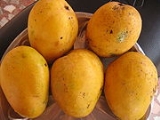
Mango

Encyclopedia
Drupe
In botany, a drupe is a fruit in which an outer fleshy part surrounds a shell of hardened endocarp with a seed inside. These fruits develop from a single carpel, and mostly from flowers with superior ovaries...
belonging to the genus Mangifera
Mangifera
Mangifera is a genus of flowering plants in the cashew family, Anacardiaceae. It contains approximately 69 species, with the most well-known being the Common Mango . The center of diversity is in subtropical and tropical southeast Asia, while the highest number of species occur in the Malay...
, consisting of numerous tropical fruiting tree
Tree
A tree is a perennial woody plant. It is most often defined as a woody plant that has many secondary branches supported clear of the ground on a single main stem or trunk with clear apical dominance. A minimum height specification at maturity is cited by some authors, varying from 3 m to...
s in the flowering plant
Flowering plant
The flowering plants , also known as Angiospermae or Magnoliophyta, are the most diverse group of land plants. Angiosperms are seed-producing plants like the gymnosperms and can be distinguished from the gymnosperms by a series of synapomorphies...
family Anacardiaceae
Anacardiaceae
Anacardiaceae are a family of flowering plants bearing fruits that are drupes and in some cases producing urushiol, an irritant. Anacardiaceae include numerous genera with several of economic importance. Notable plants in this family include cashew , mango, poison ivy, sumac, smoke tree, and marula...
. The mango is native
Native
The term "native" can have many different social and political connotations in different contexts. In some cases it is a neutral, descriptive term, for example, when stating that one is a native of a particular city or that a certain language is one's native language...
to India
India
India , officially the Republic of India , is a country in South Asia. It is the seventh-largest country by geographical area, the second-most populous country with over 1.2 billion people, and the most populous democracy in the world...
from where it spread all over the world
World
World is a common name for the whole of human civilization, specifically human experience, history, or the human condition in general, worldwide, i.e. anywhere on Earth....
. It is also the most cultivated fruit
Fruit
In broad terms, a fruit is a structure of a plant that contains its seeds.The term has different meanings dependent on context. In non-technical usage, such as food preparation, fruit normally means the fleshy seed-associated structures of certain plants that are sweet and edible in the raw state,...
of the tropical world. While other Mangifera species (e.g. horse mango, M. foetida) are also grown on a more localized basis, Mangifera indica
Mangifera indica
Mangifera indica is a species of mango in the Anacardiaceae family. It is found in the wild in India and cultivated varieties have been introduced to other warm regions of the world...
– the common mango or Indian mango – is the only mango tree commonly cultivated in many tropical and subtropical regions, and its fruit is distributed essentially worldwide.
In several cultures, its fruit and leaves are ritually used as floral decorations at wedding
Wedding
A wedding is the ceremony in which two people are united in marriage or a similar institution. Wedding traditions and customs vary greatly between cultures, ethnic groups, religions, countries, and social classes...
s, public celebrations and religious ceremonies .
Etymology
The English word "mango" originated from the TamilTamil language
Tamil is a Dravidian language spoken predominantly by Tamil people of the Indian subcontinent. It has official status in the Indian state of Tamil Nadu and in the Indian union territory of Pondicherry. Tamil is also an official language of Sri Lanka and Singapore...
word "māṅgai/mankay" or Malayalam "māṅṅa" , via Portuguese
Portuguese language
Portuguese is a Romance language that arose in the medieval Kingdom of Galicia, nowadays Galicia and Northern Portugal. The southern part of the Kingdom of Galicia became independent as the County of Portugal in 1095...
(also manga). The word's first recorded attestation in a European language was a text by Ludovico di Varthema
Ludovico di Varthema
Ludovico di Varthema, also known as Barthema and Vertomannus was an Italian traveller and diarist, known for being the first non-Muslim European to enter Mecca as a pilgrim...
in Italian in 1510, as manga; the first recorded occurrences in languages such as French and post-classical Latin appear to be translations from this Italian text. The origin of the "-o" ending in English is unclear.
When mangoes were first imported to the American colonies
Thirteen Colonies
The Thirteen Colonies were English and later British colonies established on the Atlantic coast of North America between 1607 and 1733. They declared their independence in the American Revolution and formed the United States of America...
in the 17th century, they had to be pickled
Pickling
Pickling, also known as brining or corning is the process of preserving food by anaerobic fermentation in brine to produce lactic acid, or marinating and storing it in an acid solution, usually vinegar . The resulting food is called a pickle. This procedure gives the food a salty or sour taste...
due to lack of refrigeration
Refrigeration
Refrigeration is a process in which work is done to move heat from one location to another. This work is traditionally done by mechanical work, but can also be done by magnetism, laser or other means...
. Other fruits were also pickled and came to be called "mangoes" (especially bell pepper
Bell pepper
Bell pepper, also known as sweet pepper or a pepper and capsicum , is a cultivar group of the species Capsicum annuum . Cultivars of the plant produce fruits in different colors, including red, yellow, orange and green. Bell peppers are sometimes grouped with less pungent pepper varieties as...
s), and by the 18th century, the word "mango" became a verb meaning "to pickle".
Description
Mango trees (Mangifera indica L.) grow up to 35 – tall, with a crown radius of 10 m (32.8 ft). The mango tree is long-lived, as some specimens still fruit after 300 years. In deep soil, the taprootTaproot
A taproot is an enlarged, somewhat straight to tapering plant root that grows vertically downward. It forms a center from which other roots sprout laterally.Plants with taproots are difficult to transplant...
descends to a depth of 6 m (19.7 ft) with profuse, wide-spreading feeder roots; the tree also sends down many anchor roots, which penetrate several feet of soil. The leaves
Leaf
A leaf is an organ of a vascular plant, as defined in botanical terms, and in particular in plant morphology. Foliage is a mass noun that refers to leaves as a feature of plants....
are evergreen
Evergreen
In botany, an evergreen plant is a plant that has leaves in all seasons. This contrasts with deciduous plants, which completely lose their foliage during the winter or dry season.There are many different kinds of evergreen plants, both trees and shrubs...
, alternate, simple, 15 – long and 6 – broad; when the leaves are young they are orange-pink, rapidly changing to a dark glossy red, then dark green as they mature. The flower
Flower
A flower, sometimes known as a bloom or blossom, is the reproductive structure found in flowering plants . The biological function of a flower is to effect reproduction, usually by providing a mechanism for the union of sperm with eggs...
s are produced in terminal panicle
Panicle
A panicle is a compound raceme, a loose, much-branched indeterminate inflorescence with pedicellate flowers attached along the secondary branches; in other words, a branched cluster of flowers in which the branches are racemes....
s 10 – long; each flower is small and white with five petals 5 – long, with a mild sweet odor suggestive of lily of the valley
Lily of the Valley
Convallaria majalis , commonly known as the lily-of-the-valley, is a poisonous woodland flowering plant native throughout the cool temperate Northern Hemisphere in Asia and Europe....
. The fruit takes three to six months to ripen.
Cultivar
A cultivar'Cultivar has two meanings as explained under Formal definition. When used in reference to a taxon, the word does not apply to an individual plant but to all those plants sharing the unique characteristics that define the cultivar. is a plant or group of plants selected for desirable...
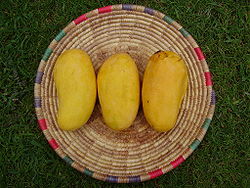
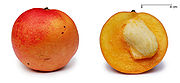
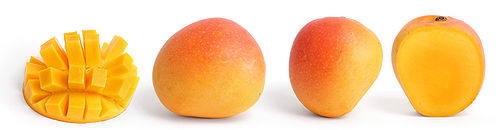
s are variously yellow, orange, red or green, and carry a single flat, oblong pit that can be fibrous or hairy on the surface, and which does not separate easily from the pulp. Ripe, unpeeled fruit gives off a distinctive resin
Resin
Resin in the most specific use of the term is a hydrocarbon secretion of many plants, particularly coniferous trees. Resins are valued for their chemical properties and associated uses, such as the production of varnishes, adhesives, and food glazing agents; as an important source of raw materials...
ous, sweet smell. Inside the pit 1 – thick is a thin lining covering a single seed
Seed
A seed is a small embryonic plant enclosed in a covering called the seed coat, usually with some stored food. It is the product of the ripened ovule of gymnosperm and angiosperm plants which occurs after fertilization and some growth within the mother plant...
, 4 – long. The seed contains the plant embryo.
Cultivation
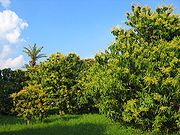
Mangoes have been cultivated in South Asia for thousands of years and reached East Asia
East Asia
East Asia or Eastern Asia is a subregion of Asia that can be defined in either geographical or cultural terms...
between the 5th and 4th centuries BC. By the 10th century AD, cultivation had begun in East Africa
East Africa
East Africa or Eastern Africa is the easterly region of the African continent, variably defined by geography or geopolitics. In the UN scheme of geographic regions, 19 territories constitute Eastern Africa:...
. The 14th century Moroccan
Morocco
Morocco , officially the Kingdom of Morocco , is a country located in North Africa. It has a population of more than 32 million and an area of 710,850 km², and also primarily administers the disputed region of the Western Sahara...
traveler, Ibn Battuta
Ibn Battuta
Abu Abdullah Muhammad Ibn Battuta , or simply Ibn Battuta, also known as Shams ad–Din , was a Muslim Moroccan Berber explorer, known for his extensive travels published in the Rihla...
, reported it at Mogadishu
Mogadishu
Mogadishu , popularly known as Xamar, is the largest city in Somalia and the nation's capital. Located in the coastal Benadir region on the Indian Ocean, the city has served as an important port for centuries....
. Cultivation came later to Brazil
Brazil
Brazil , officially the Federative Republic of Brazil , is the largest country in South America. It is the world's fifth largest country, both by geographical area and by population with over 192 million people...
, the West Indies and Mexico
Mexico
The United Mexican States , commonly known as Mexico , is a federal constitutional republic in North America. It is bordered on the north by the United States; on the south and west by the Pacific Ocean; on the southeast by Guatemala, Belize, and the Caribbean Sea; and on the east by the Gulf of...
, where an appropriate climate allows its growth.
Mango is now cultivated in most frost
Frost
Frost is the solid deposition of water vapor from saturated air. It is formed when solid surfaces are cooled to below the dew point of the adjacent air as well as below the freezing point of water. Frost crystals' size differ depending on time and water vapour available. Frost is also usually...
-free tropical and warmer subtropical climates; More than a third of the world's mangoes are cultivated in India alone second being China
China
Chinese civilization may refer to:* China for more general discussion of the country.* Chinese culture* Greater China, the transnational community of ethnic Chinese.* History of China* Sinosphere, the area historically affected by Chinese culture...
.
Mango is also being grown in Andalusia, Spain (mainly in Málaga province), which is one of the few places in mainland Europe that allows growth of tropical plants and fruit trees.
Many of the 1,000+ mango cultivars are easily cultivated
Agriculture
Agriculture is the cultivation of animals, plants, fungi and other life forms for food, fiber, and other products used to sustain life. Agriculture was the key implement in the rise of sedentary human civilization, whereby farming of domesticated species created food surpluses that nurtured the...
using grafted saplings, ranging from the "turpentine mango" (named for its strong taste of turpentine
Turpentine
Turpentine is a fluid obtained by the distillation of resin obtained from trees, mainly pine trees. It is composed of terpenes, mainly the monoterpenes alpha-pinene and beta-pinene...
) to the huevos de toro.
Other cultivators include North, South and Central America
Central America
Central America is the central geographic region of the Americas. It is the southernmost, isthmian portion of the North American continent, which connects with South America on the southeast. When considered part of the unified continental model, it is considered a subcontinent...
, the Caribbean
Caribbean
The Caribbean is a crescent-shaped group of islands more than 2,000 miles long separating the Gulf of Mexico and the Caribbean Sea, to the west and south, from the Atlantic Ocean, to the east and north...
, south, west and central Africa, Australia, China, Pakistan
Pakistan
Pakistan , officially the Islamic Republic of Pakistan is a sovereign state in South Asia. It has a coastline along the Arabian Sea and the Gulf of Oman in the south and is bordered by Afghanistan and Iran in the west, India in the east and China in the far northeast. In the north, Tajikistan...
, Bangladesh
Bangladesh
Bangladesh , officially the People's Republic of Bangladesh is a sovereign state located in South Asia. It is bordered by India on all sides except for a small border with Burma to the far southeast and by the Bay of Bengal to the south...
, and Southeast Asia
Southeast Asia
Southeast Asia, South-East Asia, South East Asia or Southeastern Asia is a subregion of Asia, consisting of the countries that are geographically south of China, east of India, west of New Guinea and north of Australia. The region lies on the intersection of geological plates, with heavy seismic...
.
Though India is the largest producer of mangoes it accounts for less than one percent of the international mango trade, consuming most of its own output.
Dwarf or semi-dwarf varieties serve as ornamental plant
Ornamental plant
Ornamental plants are plants that are grown for decorative purposes in gardens and landscape design projects, as house plants, for cut flowers and specimen display...
s and can be grown in containers.
A wide variety of diseases can afflict mangoes; see List of mango diseases.
Potential for contact dermatitis
Mango peel and sap contains urushiolUrushiol
Urushiol is an oily organic allergen found in plants of the family Anacardiaceae, especially Toxicodendron spp. . It causes an allergic skin rash on contact, known as urushiol-induced contact dermatitis...
, the chemical in poison ivy
Poison ivy
Toxicodendron radicans, better known as poison ivy , is a poisonous North American plant that is well known for its production of urushiol, a clear liquid compound found within the sap of the plant that causes an itching rash in most people who touch it...
and poison sumac
Poison Sumac
Poison sumac is a woody shrub or small tree growing to 7 m tall. All parts of the plant contain a resin called urushiol that causes skin and mucous membrane irritation to humans...
that can cause urushiol-induced contact dermatitis
Urushiol-induced contact dermatitis
Urushiol-induced contact dermatitis is the medical name given to allergic rashes produced by the oil urushiol, which is contained in various plants, including the plants of the genus Toxicodendron , other plants in the family Anacardiaceae Urushiol-induced contact dermatitis (also called...
in susceptible people. Cross-reactions between mango contact allergens and urushiol have been observed. Those with a history of poison ivy
Poison ivy
Toxicodendron radicans, better known as poison ivy , is a poisonous North American plant that is well known for its production of urushiol, a clear liquid compound found within the sap of the plant that causes an itching rash in most people who touch it...
or poison oak
Poison oak
Poison oak may refer to* Toxicodendron diversilobum, grows on West Coast of North America* Toxicodendron pubescens, grows in the Eastern United Statesdamnnnnn tissss is terribleee...
contact dermatitis may be most at risk for such an allergic reaction. Urushiol is also present in mango leaves and stems. During mango's primary ripening season, it is the most common source of plant dermatitis in Hawaii.
Food
The mango is generally sweet, although the taste and texture of the flesh varies across cultivars, some having a soft, pulpy texture similar to an overripe plumPlum
A plum or gage is a stone fruit tree in the genus Prunus, subgenus Prunus. The subgenus is distinguished from other subgenera in the shoots having a terminal bud and solitary side buds , the flowers in groups of one to five together on short stems, and the fruit having a groove running down one...
, while the flesh of others is firmer, like a cantaloupe
Cantaloupe
"Rockmelon" redirects here, for the band see Rockmelons. See also Cantaloupe .Cantaloupe refers to a variety of Cucumis melo, a species in the family Cucurbitaceae which includes nearly all melons and squashes. Cantaloupes range in size from...
or avocado
Avocado
The avocado is a tree native to Central Mexico, classified in the flowering plant family Lauraceae along with cinnamon, camphor and bay laurel...
, or may have a fibrous texture. For consumption of unripe, pickled or cooked fruit, the mango skin may be consumed comfortably, but has potential to cause contact dermatitis of the lips, gingiva
Gingiva
The gingiva , or gums, consists of the mucosal tissue that lies over the mandible and maxilla inside the mouth.-General description:...
or tongue in susceptible people (see above). Under-ripe mangos can be ripened by placing them in brown paper bags. They will then keep in a plastic bag in the refrigerator for about four or five days. In ripe fruits which are commonly eaten fresh, the skin may be thicker and bitter tasting, so is typically not eaten.
Cuisine
Mangoes are widely used in cuisine. Sour, unripe mangoes are used in chutneyChutney
Chutney is a a condiment used in South Asian cuisine that usually contains a spice and vegetable mix.Chutneys are wet or dry, having a coarse to fine texture. The Anglo-Indian loan word refers to fresh and pickled preparations indiscriminately, with preserves often sweetened. At least several...
s, athanu, pickle
Mango pickle
Mango pickle refers to variety of pickles prepared using mango. This is a very popular pickle in South Asia and India. These spicy pickles are also available commercially.-Tender mango pickle:This is a special pickle prepared using processed tender mango...
s, or side dishes, or may be eaten raw with salt
Salt
In chemistry, salts are ionic compounds that result from the neutralization reaction of an acid and a base. They are composed of cations and anions so that the product is electrically neutral...
, chili
Chili pepper
Chili pepper is the fruit of plants from the genus Capsicum, members of the nightshade family, Solanaceae. The term in British English and in Australia, New Zealand, India, Malaysia and other Asian countries is just chilli without pepper.Chili peppers originated in the Americas...
, or soy sauce. A cooling summer drink called panna or panha comes from mangoes.
Ripe mangoes are typically eaten fresh; however, they can have many other culinary uses. Mango Lassi, a popular drink made throughout South Asia, is created by mixing ripe mangoes or mango pulp with buttermilk and sugar. Ripe mangoes are also used to make curries. Aamras
Aamras
Aamras or Amras is the pulp of the tropical fruit Mango eaten in India. The pulp of a ripe fruit is extracted usually by hand and consumed along with Chapati. At times ghee and milk are added to the pulp to enhance its flavour...
is a popular pulp/thick juice made of mangoes with sugar or milk, and is consumed with bread, rice or pooris. The pulp from ripe mangoes is also used to make jam called 'mangada'.
Mangoes are used in preserves like moramba, amchur (dried and powdered unripe mango) and pickles, including a spicy mustard-oil pickle. Ripe mangoes are often cut into thin layers, desiccated, folded, and then cut. These bars are similar to dried guava
Guava
Guavas are plants in the myrtle family genus Psidium , which contains about 100 species of tropical shrubs and small trees. They are native to Mexico, Central America, and northern South America...
fruit bars available in some countries. The fruit is also added to cereal products like muesli
Muesli
Muesli is a popular breakfast cereal based on uncooked rolled oats, fruit and nuts. It was developed around 1900 by Swiss physician Maximilian Bircher-Benner for patients in his hospital...
and oat granola
Granola
Granola is a breakfast food and snack food, popular in North America, consisting of rolled oats, nuts, honey, and sometimes rice, that is usually baked until crisp. During the baking process the mixture is stirred to maintain a loose, breakfast cereal-type consistency...
.
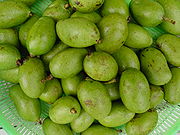
Bagoong
Bagoong is a Philippine condiment made of partially or completely fermented fish or shrimps and salt. The fermentation process also results in fish sauce .The preparation of bagoong can vary regionally in the Philippines....
(especially in the Philippines
Philippines
The Philippines , officially known as the Republic of the Philippines , is a country in Southeast Asia in the western Pacific Ocean. To its north across the Luzon Strait lies Taiwan. West across the South China Sea sits Vietnam...
), fish sauce or with dash of salt. Dried strips of sweet, ripe mango (sometimes combined with seedless tamarind
Tamarind
Tamarind is a tree in the family Fabaceae. The genus Tamarindus is monotypic .-Origin:...
to form mangorind) are also popular. Mangoes may be used to make juices, mango nectar, and as a flavoring and major ingredient in ice cream and sorbetes
Sorbetes
Sorbetes is a Philippine version of ice cream usually peddled from street carts in the Philippines. It is distinct from the similarly named sorbet. It is usually served with small wafer or sugar cones and recently, bread buns...
.
Mango is used to make juices, smoothie
Smoothie
A smoothie is a blended and sometimes sweetened beverage made from fresh fruit and in special cases can contain chocolate or peanut butter. In addition to fruit, many smoothies include crushed ice, frozen fruit, honey or contain syrup and ice ingredients...
s, ice cream
Ice cream
Ice cream is a frozen dessert usually made from dairy products, such as milk and cream, and often combined with fruits or other ingredients and flavours. Most varieties contain sugar, although some are made with other sweeteners...
, fruit bars, raspados, aguas frescas
Aguas frescas
Ades, punches, fruit drinks and other non-alcoholic flavored coolers, known as aguas frescas in some parts of Latin America, are a combination of either fruits, cereals, or seeds with sugar and water, blended to make a beverage. Aguas frescas are popular in Mexico, Central America, the Caribbean,...
, pie
Pie
A pie is a baked dish which is usually made of a pastry dough casing that covers or completely contains a filling of various sweet or savoury ingredients....
s and sweet chili sauce
Chili sauce
Chili sauce is a condiment, similar to ketchup but with onion, garlic, and spice. Despite its name, it does not contain chili peppers and thus is not hot....
, or mixed with chamoy
Chamoy
Chamoy refers to a variety of savory sauces and condiments in Mexican cuisine made from pickled fruit. Chamoy may range from a liquid to a paste consistency, and typically its flavor is salty, sweet, sour and spiced with powdered chiles all at the same time....
, a sweet and spicy chili paste. It is popular on a stick dipped in hot chili powder and salt or also as a main ingredient in fresh fruit combinations. In Central America
Central America
Central America is the central geographic region of the Americas. It is the southernmost, isthmian portion of the North American continent, which connects with South America on the southeast. When considered part of the unified continental model, it is considered a subcontinent...
, mango is either eaten green mixed with salt, vinegar, black pepper and hot sauce, or ripe in various forms. Toasted and ground pumpkin
Pumpkin
A pumpkin is a gourd-like squash of the genus Cucurbita and the family Cucurbitaceae . It commonly refers to cultivars of any one of the species Cucurbita pepo, Cucurbita mixta, Cucurbita maxima, and Cucurbita moschata, and is native to North America...
seed (called pepita) with lime and salt are the norm when eating green mangoes. Some people also add soy sauce or chili sauce.
Pieces of mango can be mashed and used as a topping on ice cream
Ice cream
Ice cream is a frozen dessert usually made from dairy products, such as milk and cream, and often combined with fruits or other ingredients and flavours. Most varieties contain sugar, although some are made with other sweeteners...
or blended with milk and ice as milkshakes. Sweet glutinous rice is flavored with coconut, then served with sliced mango as a dessert. In other parts of Southeast Asia
Southeast Asia
Southeast Asia, South-East Asia, South East Asia or Southeastern Asia is a subregion of Asia, consisting of the countries that are geographically south of China, east of India, west of New Guinea and north of Australia. The region lies on the intersection of geological plates, with heavy seismic...
, mangoes are pickled with fish sauce
Fish sauce
Fish sauce is a condiment that is derived from fish that have been allowed to ferment. It is an essential ingredient in many curries and sauces. Fish sauce is a staple ingredient in numerous cultures in Southeast Asia and the coastal regions of East Asia, and features heavily in Thai and Vietnamese...
and rice vinegar
Rice vinegar
Rice vinegar is a vinegar made from fermented rice or rice wine in China, Japan, Korea, and Vietnam.-Chinese:Chinese rice vinegars are stronger than Japanese ones, and range in colour from clear to various shades of red and brown...
. Green mangoes can be used in mango salad with fish sauce and dried shrimp
Dried shrimp
Dried shrimp are shrimp that have been sun dried and shrunk to a thumbnail size. They are used in many Asian cuisines, imparting a unique umami taste. A handful of shrimp is generally used for dishes...
. Mango with condensed milk
Condensed milk
Condensed milk, also known as sweetened condensed milk, is cow's milk from which water has been removed and to which sugar has been added, yielding a very thick, sweet product which when canned can last for years without refrigeration if unopened. The two terms, condensed milk and sweetened...
may be used as a topping for shaved ice.
Nutrients and phytochemicals
Nutritional value per 100 g (3.5 oz) is 250 kJ (60 kcal) and that of the apple mango is slightly higher (79 kcal per 100g).Mango contains a variety of phytochemical
Phytochemical
Phytochemicals are biologically active chemical compounds that occur naturally in plants . Phytochemicals are the molecules responsible for the color and organoleptic properties . For example, the deep purple color of blueberries and the smell of garlic...
s and nutrient
Nutrient
A nutrient is a chemical that an organism needs to live and grow or a substance used in an organism's metabolism which must be taken in from its environment. They are used to build and repair tissues, regulate body processes and are converted to and used as energy...
s. The fruit pulp is high in prebiotic dietary fiber
Dietary fiber
Dietary fiber, dietary fibre, or sometimes roughage is the indigestible portion of plant foods having two main components:* soluble fiber that is readily fermented in the colon into gases and physiologically active byproducts, and* insoluble fiber that is metabolically inert, absorbing water as it...
, vitamin C
Vitamin C
Vitamin C or L-ascorbic acid or L-ascorbate is an essential nutrient for humans and certain other animal species. In living organisms ascorbate acts as an antioxidant by protecting the body against oxidative stress...
, diverse polyphenols and provitamin A carotenoid
Carotenoid
Carotenoids are tetraterpenoid organic pigments that are naturally occurring in the chloroplasts and chromoplasts of plants and some other photosynthetic organisms like algae, some bacteria, and some types of fungus. Carotenoids can be synthesized fats and other basic organic metabolic building...
s.
In mango fruit pulp, the antioxidant
Antioxidant
An antioxidant is a molecule capable of inhibiting the oxidation of other molecules. Oxidation is a chemical reaction that transfers electrons or hydrogen from a substance to an oxidizing agent. Oxidation reactions can produce free radicals. In turn, these radicals can start chain reactions. When...
vitamins A
Vitamin A
Vitamin A is a vitamin that is needed by the retina of the eye in the form of a specific metabolite, the light-absorbing molecule retinal, that is necessary for both low-light and color vision...
and C
Vitamin C
Vitamin C or L-ascorbic acid or L-ascorbate is an essential nutrient for humans and certain other animal species. In living organisms ascorbate acts as an antioxidant by protecting the body against oxidative stress...
, Vitamin B6
Vitamin B6
Vitamin B6 is a water-soluble vitamin and is part of the vitamin B complex group. Several forms of the vitamin are known, but pyridoxal phosphate is the active form and is a cofactor in many reactions of amino acid metabolism, including transamination, deamination, and decarboxylation...
(pyridoxine), folate, other B vitamins
B vitamins
B vitamins are a group of water-soluble vitamins that play important roles in cell metabolism. The B vitamins were once thought to be a single vitamin, referred to as vitamin B . Later research showed that they are chemically distinct vitamins that often coexist in the same foods...
and essential nutrients, such as potassium
Potassium
Potassium is the chemical element with the symbol K and atomic number 19. Elemental potassium is a soft silvery-white alkali metal that oxidizes rapidly in air and is very reactive with water, generating sufficient heat to ignite the hydrogen emitted in the reaction.Potassium and sodium are...
, copper
Copper
Copper is a chemical element with the symbol Cu and atomic number 29. It is a ductile metal with very high thermal and electrical conductivity. Pure copper is soft and malleable; an exposed surface has a reddish-orange tarnish...
and amino acid
Amino acid
Amino acids are molecules containing an amine group, a carboxylic acid group and a side-chain that varies between different amino acids. The key elements of an amino acid are carbon, hydrogen, oxygen, and nitrogen...
s are present. Mango peel
Peel (fruit)
Peel, also known as rind or skin, is the outer protective layer of a fruit or vegetable which could be peeled off. The rind is usually the botanical exocarp, but the term exocarp does also include the hard cases of nuts, which are not named peels since they are not peeled off by hand or peeler, but...
and pulp contain other phytonutrients, such as the pigment
Pigment
A pigment is a material that changes the color of reflected or transmitted light as the result of wavelength-selective absorption. This physical process differs from fluorescence, phosphorescence, and other forms of luminescence, in which a material emits light.Many materials selectively absorb...
antioxidant
Antioxidant
An antioxidant is a molecule capable of inhibiting the oxidation of other molecules. Oxidation is a chemical reaction that transfers electrons or hydrogen from a substance to an oxidizing agent. Oxidation reactions can produce free radicals. In turn, these radicals can start chain reactions. When...
s – carotenoids and polyphenols – and omega-3 and -6 polyunsaturated fatty acid
Polyunsaturated fatty acid
Polyunsaturated fatty acids are fatty acids that contain more than one double bond in their backbone. This class includes many important compounds, such as essential fatty acids and those that give drying oils their characteristic property....
s.
Mango peel contains pigments that may have antioxidant properties, including carotenoids, such as the provitamin A compound, beta-carotene
Beta-carotene
β-Carotene is a strongly-coloured red-orange pigment abundant in plants and fruits. It is an organic compound and chemically is classified as a hydrocarbon and specifically as a terpenoid , reflecting its derivation from isoprene units...
, lutein
Lutein
Lutein is a xanthophyll and one of 600 known naturally occurring carotenoids. Lutein is synthesized only by plants and like other xanthophylls is found in high quantities in green leafy vegetables such as spinach and kale...
and alpha-carotene
Alpha-carotene
α-Carotene is a form of carotene with a β-ring at one end and an ε-ring at the other. It is the second most common form of carotene.-Human physiology:...
, polyphenols such as quercetin
Quercetin
Quercetin , a flavonol, is a plant-derived flavonoid found in fruits, vegetables, leaves and grains. It also may be used as an ingredient in supplements, beverages or foods.-Occurrence:...
, kaempferol
Kaempferol
Kaempferol is a natural flavonol, a type of flavonoid, that has been isolated from tea, broccoli, Delphinium, Witch-hazel, grapefruit,cabbage, kale, beans, endive, leek, tomato, strawberries, grapes, brussels sprouts, apples and other plant sources. Kaempferol is a yellow crystalline solid with a...
, gallic acid
Gallic acid
Gallic acid is a trihydroxybenzoic acid, a type of phenolic acid, a type of organic acid, also known as 3,4,5-trihydroxybenzoic acid, found in gallnuts, sumac, witch hazel, tea leaves, oak bark, and other plants. The chemical formula is C6H23COOH. Gallic acid is found both free and as part of...
, caffeic acid
Caffeic acid
Caffeic acid is a hydroxycinnamic acid, a naturally occurring organic compound. This yellow solid consists of both phenolic and acrylic functional groups...
, catechin
Flavan-3-ol
Flavan-3-ols are a class of flavonoids that use the 2-phenyl-3,4-dihydro-2H-chromen-3-ol skeleton. These compounds include the catechins and the catechin gallates....
s, tannin
Tannin
A tannin is an astringent, bitter plant polyphenolic compound that binds to and precipitates proteins and various other organic compounds including amino acids and alkaloids.The term tannin refers to the use of...
s, and the unique mango xanthonoid
Xanthonoid
A xanthonoid is a chemical natural phenolic compound formed from the xanthone backbone. Many members of the Clusiaceae contain xanthonoids.Xanthonoid biosynthesis in cell cultures of Hypericum androsaemum involves the presence of a benzophenone synthase condensing a molecule of benzoyl-CoA with...
, mangiferin
Mangiferin
Mangiferin is a xanthonoid, a chemical compound found in mangoes and in Anemarrhena asphodeloides rhizomes.This molecule is a natural phenol and shows antimicrobial and antioxidant activities. It shows inhibitory effects on type II 5α-reductase in vitro It shows gastroprotective and antidiabetic...
, any of which may counteract free radicals in various disease processes as revealed in preliminary research. Phytochemical and nutrient content appears to vary across mango species. Up to 25 different carotenoids have been isolated from mango pulp, the densest of which was beta-carotene, which accounts for the yellow-orange pigmentation of most mango species. Peel and leaves also have significant polyphenol content, including xanthonoid
Xanthonoid
A xanthonoid is a chemical natural phenolic compound formed from the xanthone backbone. Many members of the Clusiaceae contain xanthonoids.Xanthonoid biosynthesis in cell cultures of Hypericum androsaemum involves the presence of a benzophenone synthase condensing a molecule of benzoyl-CoA with...
s, mangiferin and gallic acid.
The mango triterpene
Triterpene
Triterpenes are terpenes consisting of six isoprene units and have the molecular formula C30H48.The pentacyclic triterpenes can be classified into lupane, oleanane or ursane groups.Animal- and plant-derived triterpenes exist, such as:*squalene...
, lupeol
Lupeol
Lupeol is a pharmacologically active triterpenoid found in a variety of plants, including mango and acacia visco. It has several medicinal properties, one being anti-inflammatory...
, is an effective inhibitor in laboratory models of prostate
Prostate
The prostate is a compound tubuloalveolar exocrine gland of the male reproductive system in most mammals....
and skin cancer
Skin cancer
Skin neoplasms are skin growths with differing causes and varying degrees of malignancy. The three most common malignant skin cancers are basal cell cancer, squamous cell cancer, and melanoma, each of which is named after the type of skin cell from which it arises...
s. An extract of mango branch bark called Vimang, isolated by Cuba
Cuba
The Republic of Cuba is an island nation in the Caribbean. The nation of Cuba consists of the main island of Cuba, the Isla de la Juventud, and several archipelagos. Havana is the largest city in Cuba and the country's capital. Santiago de Cuba is the second largest city...
n scientists, contains numerous polyphenols with antioxidant properties in vitro
In vitro
In vitro refers to studies in experimental biology that are conducted using components of an organism that have been isolated from their usual biological context in order to permit a more detailed or more convenient analysis than can be done with whole organisms. Colloquially, these experiments...
and on blood
Blood
Blood is a specialized bodily fluid in animals that delivers necessary substances such as nutrients and oxygen to the cells and transports metabolic waste products away from those same cells....
parameters of elderly humans.
The pigment euxanthin, known as Indian yellow
Indian Yellow
Indian yellow, also called euxanthin or euxanthine, is a xanthonoid. It is transparent yellow pigment used in oil paint. Chemically it is a magnesium euxanthate, the magnesium salt of euxanthic acid. It is a clear, deep and luminescent yellow pigment...
, is often thought to be produced from the urine
Urine
Urine is a typically sterile liquid by-product of the body that is secreted by the kidneys through a process called urination and excreted through the urethra. Cellular metabolism generates numerous by-products, many rich in nitrogen, that require elimination from the bloodstream...
of cattle fed mango leaves; the practice is described as having been outlawed in 1908 due to malnutrition of the cows and possible urushiol
Urushiol
Urushiol is an oily organic allergen found in plants of the family Anacardiaceae, especially Toxicodendron spp. . It causes an allergic skin rash on contact, known as urushiol-induced contact dermatitis...
poisoning. This supposed origin of euxanthin appears to rely on a single, anecdotal source, and Indian legal records do not outlaw such a practice.
Cultural significance
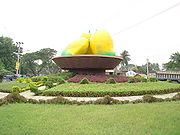
Pakistan
Pakistan , officially the Islamic Republic of Pakistan is a sovereign state in South Asia. It has a coastline along the Arabian Sea and the Gulf of Oman in the south and is bordered by Afghanistan and Iran in the west, India in the east and China in the far northeast. In the north, Tajikistan...
, and the Philippines
Philippines
The Philippines , officially known as the Republic of the Philippines , is a country in Southeast Asia in the western Pacific Ocean. To its north across the Luzon Strait lies Taiwan. West across the South China Sea sits Vietnam...
. The mango tree is the national tree of Bangladesh.
In Hinduism, the perfectly ripe mango is often held by Lord Ganesha
Ganesha
Ganesha , also spelled Ganesa or Ganesh, also known as Ganapati , Vinayaka , and Pillaiyar , is one of the deities best-known and most widely worshipped in the Hindu pantheon. His image is found throughout India and Nepal. Hindu sects worship him regardless of affiliations...
as a symbol of attainment, regarding the devotees potential perfection. Mango blossoms are also used in the worship of the goddess Saraswati
Saraswati
In Hinduism Saraswati , is the goddess of knowledge, music, arts, science and technology. She is the consort of Brahma, also revered as His Shakti....
.
Mango leaves are used to decorate archways and doors in Indian houses and during weddings and celebrations like Ganesh Chaturthi
Ganesh Chaturthi
Ganesh Chaturthi , also known as Vinayaka Chaturthi is the Hindu festival of Ganesha also called Vinayagar in Tamil Nadu, the son of Shiva and Parvati, who is believed to bestow his presence on earth for all his devotees in the duration of this festival...
. Mango motifs
Motif (textile arts)
In the textile arts, a motif is a smaller element in a much larger work. In knitting and crochet, motifs are made one at a time and joined together to create larger works such as afghan blankets or shawls. A good example of a motif is the granny square.Motifs can be any size, but usually all...
and paisleys
Paisley (design)
Paisley or Paisley pattern is a droplet-shaped vegetable motif of Indian, Pakistani and Persian origin. The pattern is sometimes called "Persian pickles" by American traditionalists, especially quiltmakers,The Persian Pickle Club, Sandra Dallas. St. Martin's Press,...
are widely used in different Indian embroidery styles, and are found in Kashmir
Kashmir
Kashmir is the northwestern region of the Indian subcontinent. Until the mid-19th century, the term Kashmir geographically denoted only the valley between the Great Himalayas and the Pir Panjal mountain range...
i shawls, Kanchipuram
Kanchipuram
Kanchipuram, or Kanchi, is a temple city and a municipality in Kanchipuram district in the Indian state of Tamil Nadu. It is a temple town and the headquarters of Kanchipuram district...
silk
Silk
Silk is a natural protein fiber, some forms of which can be woven into textiles. The best-known type of silk is obtained from the cocoons of the larvae of the mulberry silkworm Bombyx mori reared in captivity...
sarees, etc. Paisleys are also common to Iranian art, because of its pre-Islamic Zoroastrian past.
In Tamil Nadu, the mango is considered, along with banana and jackfruit, as one of the three royal fruits (Mukkani)
Famous Urdu poet Mirza Asadullah Khan Ghalib was very fond of mangoes. There are many anecdotes concerning his love for mangoes.
In Australia
Australia
Australia , officially the Commonwealth of Australia, is a country in the Southern Hemisphere comprising the mainland of the Australian continent, the island of Tasmania, and numerous smaller islands in the Indian and Pacific Oceans. It is the world's sixth-largest country by total area...
, where mangoes are considered to be a symbol of summer, the first tray of mangoes of the season is traditionally sold at an auction for charity.
Production and consumption
Mangoes account for approximately half of all tropical fruits produced worldwide. The Food and Agriculture OrganizationFood and Agriculture Organization
The Food and Agriculture Organization of the United Nations is a specialised agency of the United Nations that leads international efforts to defeat hunger. Serving both developed and developing countries, FAO acts as a neutral forum where all nations meet as equals to negotiate agreements and...
of the United Nations
United Nations
The United Nations is an international organization whose stated aims are facilitating cooperation in international law, international security, economic development, social progress, human rights, and achievement of world peace...
estimates worldwide production at nearly 35000000 tonnes (38,580,895.9 ST) in 2009 (table below). The aggregate production of the top 10 countries is responsible for roughly 80% of worldwide production.
Alphonso
Alphonso (mango)
Alphonso is a mango cultivar that is considered by many to be one of the best in terms of sweetness, richness and flavor. It has considerable shelf life of a week after it is ripe making it exportable. It is also one of the most expensive kinds of mango and is grown mainly in Kokan region of...
, Benishaan or Benisha (Banginapalli in Telugu
Telugu language
Telugu is a Central Dravidian language primarily spoken in the state of Andhra Pradesh, India, where it is an official language. It is also spoken in the neighbouring states of Chattisgarh, Karnataka, Maharashtra, Orissa and Tamil Nadu...
and other south Indian languages) and Kesar mango varieties are considered among the best mangoes in India's southern states, while Chausa, Dasheri
Dasheri
Dasheri is a variety of mango grown in different parts of the North India and Pakistan.In 18th century, the Dasheri mango first appeared in the gardens of Nawab of Lucknow...
and Langra varieties are most popular in the northern states.
Generally, ripe mangoes have an orange-yellow or reddish peel and are juicy for eating, while exported fruit are often picked while underripe with green peels. Although producing ethylene
Ethylene
Ethylene is a gaseous organic compound with the formula . It is the simplest alkene . Because it contains a carbon-carbon double bond, ethylene is classified as an unsaturated hydrocarbon. Ethylene is widely used in industry and is also a plant hormone...
while ripening, unripened exported mangoes do not have the same juiciness or flavor as fresh fruit.
Like other drupaceous fruits
Drupe
In botany, a drupe is a fruit in which an outer fleshy part surrounds a shell of hardened endocarp with a seed inside. These fruits develop from a single carpel, and mostly from flowers with superior ovaries...
, mangoes come in both freestone
Drupe
In botany, a drupe is a fruit in which an outer fleshy part surrounds a shell of hardened endocarp with a seed inside. These fruits develop from a single carpel, and mostly from flowers with superior ovaries...
and clingstone
Drupe
In botany, a drupe is a fruit in which an outer fleshy part surrounds a shell of hardened endocarp with a seed inside. These fruits develop from a single carpel, and mostly from flowers with superior ovaries...
varieties.
| Country | Production in millions of tons | |||
|---|---|---|---|---|
| World total | ||||
Key ~ 2008 data Source Food And Agricultural Organization of United Nations: Economic And Social Department: The Statistical Division |
||||
Cultivars
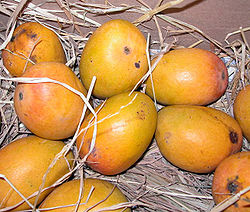
Cultivar
A cultivar'Cultivar has two meanings as explained under Formal definition. When used in reference to a taxon, the word does not apply to an individual plant but to all those plants sharing the unique characteristics that define the cultivar. is a plant or group of plants selected for desirable...
s exist. In mango orchard
Orchard
An orchard is an intentional planting of trees or shrubs that is maintained for food production. Orchards comprise fruit or nut-producing trees which are grown for commercial production. Orchards are also sometimes a feature of large gardens, where they serve an aesthetic as well as a productive...
s, several cultivars are often crossed to improve pollination. Many desired cultivars are monoembryonic
Monoembryony
Monoembryony is when one and only one seedling emerges from a seed. A seed giving two or more seedlings is polyembryonic. Some of the nuclear cells surrounding the embryo sac start and dividing protrude into the embryo sac and develop into embryos....
and must be propagated by grafting
Grafting
Grafting is a horticultural technique whereby tissues from one plant are inserted into those of another so that the two sets of vascular tissues may join together. This vascular joining is called inosculation...
or they do not breed true. A common mono-embryonic cultivar is Alphonso
Alphonso (mango)
Alphonso is a mango cultivar that is considered by many to be one of the best in terms of sweetness, richness and flavor. It has considerable shelf life of a week after it is ripe making it exportable. It is also one of the most expensive kinds of mango and is grown mainly in Kokan region of...
, an important export product.
Cultivars that excel in one climate may fail elsewhere. For example, Indian cultivars such as Julie, a prolific cultivar in Jamaica
Jamaica
Jamaica is an island nation of the Greater Antilles, in length, up to in width and 10,990 square kilometres in area. It is situated in the Caribbean Sea, about south of Cuba, and west of Hispaniola, the island harbouring the nation-states Haiti and the Dominican Republic...
, require annual fungicide
Fungicide
Fungicides are chemical compounds or biological organisms used to kill or inhibit fungi or fungal spores. Fungi can cause serious damage in agriculture, resulting in critical losses of yield, quality and profit. Fungicides are used both in agriculture and to fight fungal infections in animals...
treatment to escape a lethal fungal disease known as anthracnose in Florida
Florida
Florida is a state in the southeastern United States, located on the nation's Atlantic and Gulf coasts. It is bordered to the west by the Gulf of Mexico, to the north by Alabama and Georgia and to the east by the Atlantic Ocean. With a population of 18,801,310 as measured by the 2010 census, it...
. Asian mangoes are resistant to anthracnose.
The current world market is dominated by the cultivar Tommy Atkins
Tommy Atkins (mango)
Tommy Atkins is the most important mango cultivar in global trade. Although generally not considered to be the best in terms of sweetness and flavor, it is valued for its very long shelf life and tolerance of handling and transportation with little or no bruising or degradation.This means it is the...
, a seedling of Haden
Haden (mango)
The Haden' mango is a named mango cultivar that became one of the most widely cultivated in the world after it was introduced in the early 20th century through south Florida. It would ultimately become the parent of many other mango cultivars later developed in Florida.- History :In 1902, Captain...
that first fruited in 1940 in southern Florida, U.S. It was initially rejected commercially by Florida researchers. For example, 80% of mangoes in UK supermarket
Supermarket
A supermarket, a form of grocery store, is a self-service store offering a wide variety of food and household merchandise, organized into departments...
s are Tommy Atkins. Despite its fibrous flesh and only fair taste, growers worldwide have embraced the cultivar for its exceptional productivity and disease resistance, shelf-life, transportability and size and appealing color. Tommy Atkins is predominant in the U.S. as well, although other cultivars, such Kent
Kent (mango)
The Kent' mango is a named mango cultivar that originated in south Florida.-History:The original tree, a seedling of the Brooks cultivar started in September of 1932, was planted on January 1st, 1933 on the property of Leith D. Kent in Coconut Grove, Florida. 'Kent' was reportedly a cross between...
, Keitt
Keitt (mango)
The Keitt' mango is a late-season mango cultivar which originated in south Florida.- History :'Keitt' was reportedly a seedling of the Mulgoba cultivar that was planted on the property of Mrs. J.N. Keitt in Homestead, Floridain 1939...
, the Haiti
Haiti
Haiti , officially the Republic of Haiti , is a Caribbean country. It occupies the western, smaller portion of the island of Hispaniola, in the Greater Antillean archipelago, which it shares with the Dominican Republic. Ayiti was the indigenous Taíno or Amerindian name for the island...
an-grown Madame Francis and the Mexican grown Champagne
Ataulfo (mango)
The Ataulfo, also called Champagne, young, baby, yellow, honey, manilla, Adaulfo, or Adolfo is a mango cultivar from Mexico, and, prior to that, Manila, Philippines....
are widely available.
In urban areas of southern Florida, small gardens have fueled the desire for dwarf
Dwarfing
Dwarfing is a characteristic in plants and animals whereby one or more members of a breed or cultivar are significantly smaller than standard members of their species...
mango trees. The Fairchild Tropical Botanic Garden
Fairchild Tropical Botanic Garden
Fairchild Tropical Botanic Garden is a botanic garden, with extensive collections of rare tropical plants including palms, cycads, flowering trees and vines. It is located in metropolitan Miami, just south of Coral Gables, Florida, United States, surrounded at the south and west by Matheson...
has promoted "condo mangoes," such as Fairchild
Fairchild (mango)
-History:Little is known about the history of the variety,other than that it originated in the Panama Canal Zone during the early 1900s. The fruit was named after the family of David Fairchild, who had taken a liking to the variety. It was first brought to the United States through Hawaii in 1926,...
, which produces at a height below 2 –.
Condo mango is a term that became popular some years ago in Florida, U.S., and the word "condo" is derived from the word condominium because a condo mango tree, being dwarfed and small in size, was suitable for container growing in condominiums. Essentially, "condo" means a smaller variety of tree that is dwarf or semidwarf in nature, e.g. Ice Cream
Ice Cream (mango)
The "Ice Cream" mango is a semi-dwarf mango cultivar that originated in Trinidad and Tobago and was later introduced to Florida.- History :The 'Ice Cream' cultivar was discovered in Trinidad and Tobago, and was later brought to the United States by Maurice Kong of the Rare Fruit Council...
, or grafted to achieve a dwarfing characteristic, that can be maintained to a certain size with careful foliage pruning and root pruning if necessary. While condo has been generally associated with mango trees, it can be applied to any fruit tree that is a natural dwarf or has been dwarfed similar to the bonsai
Bonsai
is a Japanese art form using miniature trees grown in containers. Similar practices exist in other cultures, including the Chinese tradition of penjing from which the art originated, and the miniature living landscapes of Vietnamese hòn non bộ...
technique. As such, the words "condo" and "dwarf" are interchangeable.
There is an Australian variety of mango known as R2E2, a name based on the original plant's orchard row location. This variety produces large (up to 1 kg or 2 lb) yellow-red fruit that attracts a premium price in the Australian market.
Further reading
Books- Litz, Richard E. (editor, 2009). The Mango: Botany, Production and Uses. 2nd edition. CABI. ISBN 9781845934897
- Susser, Allen (2001). The Great Mango Book: A Guide with Recipes. Ten Speed Press. ISBN 9781580082044
External links
- Common Mango
- Mango
- Mango Nutrition Information from USDA SR 22 database
- Mango-related dermatitis
- Sorting Mangifera species
- Tropical fruits: Mango