

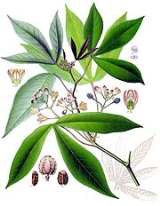
Cassava

Encyclopedia
Cassava also called yuca or manioc, a woody shrub
of the Euphorbiaceae
(spurge family) native to South America
, is extensively cultivated as an annual crop
in tropical and subtropical regions for its edible starch
y tuberous root, a major source of carbohydrate
s. It differs from the similarly-spelled yucca
, an unrelated fruit-bearing plant.
Cassava is the third largest source of food carbohydrates in the tropics. Cassava is a major staple food in the developing world, providing a basic diet for around 500 million people.
Nigeria
is the world's largest producer of cassava. It is classified as sweet or bitter, depending on the level of toxic cyanogenic glucosides. (However, bitter taste is not always a reliable measure.) Improper preparation of cassava can leave enough residual cyanide to cause acute cyanide intoxication and goiters, and has been linked to ataxia or partial paralysis. Nevertheless, farmers often prefer the bitter varieties because they deter pests, animals, and thieves. In some locations the more toxic varieties serve as a fall-back resource (a "food security crop") in times of famine.
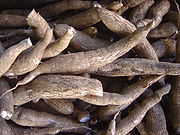 The cassava root is long and tapered, with a firm, homogeneous flesh encased in a detachable rind, about 1mm thick, rough and brown on the outside. Commercial varieties can be 5 to 10 cm in diameter
at the top, and around 15 cm to 30 cm long. A woody cordon runs along the root's axis. The flesh can be chalk-white or yellowish. Cassava roots are very rich in starch
, and contain significant amounts of calcium (50 mg/100g), phosphorus (40 mg/100g) and vitamin C (25 mg/100g). However, they are poor in protein
and other nutrient
s. In contrast, cassava leaves are a good source of protein, but lack the amino acid
lysine
, methionine
and possibly tryptophan
.
. By 6,600 BC, manioc pollen appears in the Gulf of Mexico
lowlands, at the San Andrés
archaeological site. The oldest direct evidence of cassava cultivation comes from a 1,400 year old Maya
site, Joya de Cerén
, in El Salvador
. Although the species Manihot esculenta likely originated further south in Brazil
and Paraguay
. With its high food potential, it had become a staple food
of the native populations of northern South America, southern Mesoamerica, and the Caribbean by the time of the Spanish conquest, and its cultivation was continued by the colonial Portuguese and Spanish. Forms of the modern domesticated species can be found growing in the wild in the south of Brazil
. While there are several wild Manihot species, all varieties of M. esculenta are cultigen
s.
Cassava was a staple food
for pre-Columbian
peoples in the Americas, and is often portrayed in indigenous art. The Moche
people often depicted yuca in their ceramics.
Since being introduced by Portuguese traders from Brazil in the 16th century, maize
and cassava have replaced traditional Africa
n crops as the continent’s most important staple food crops. Cassava is sometimes described as the ‘bread of the tropics'.
s in 2002, rising to 230 million tonnes in 2008. (FAO). The majority of production in 2002 was in Africa
where 99.1 million tonnes were grown, 51.5 million tonnes were grown in Asia
and 33.2 million tonnes in Latin America
and the Caribbean
. Nigeria
is the world's largest producer of cassava. However, based on the statistics from the FAO of the United Nations
, Thailand
is the largest exporting country of dried cassava, with a total of 77% of world export in 2005. The second-largest exporting country is Vietnam
, with 13.6%, followed by Indonesia
(5.8%) and Costa Rica
(2.1%). Worldwide cassava production increased by 12.5% between 1988 and 1990.
Cassava, together with yam
s (Dioscorea
spp.) and sweet potato
es (Ipomea batatas) are important sources of food in the tropics. The cassava plant gives the highest yield of carbohydrates per cultivated area among crop plants, except for sugarcane
and sugar beet
. Cassava plays a particularly important role in agriculture in developing countries—especially in sub-Saharan Africa—because it does well on poor soils and with low rainfall, and because it is a perennial that can be harvested as required. Its wide harvesting window allows it to act as a famine reserve and is invaluable in managing labor schedules. It also offers flexibility to resource-poor farmers because it serves as either a subsistence or a cash crop.
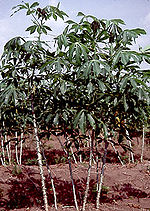 While underground storage of cassava is advantageous for managing work schedules, it may also lead to reduced quality of the roots, sometimes leaving them unsuitable for many types of processing. In some areas, farmers have come to increasingly rely on dried cassava chips. A 1992 study (Nweke et al.) revealed about 42% of harvested cassava roots in West and East Africa are processed into dried chips and flour.
No continent depends as much on root and tuber crops in feeding its population as does Africa. In the humid and subhumid areas of tropical Africa, it is either a primary staple food
or a secondary costaple. In Ghana
, for example, cassava and yams occupy an important position the agricultural economy, and contribute about 46% of the agricultural gross domestic product (GDP). Cassava accounts for a daily caloric intake of 30% in Ghana
, and is grown by nearly every farming family. The importance of cassava to many Africans is epitomised in the Ewe
(a language spoken in Ghana, Togo
and Benin
) name for the plant, agbeli, meaning "there is life." The price of cassava has risen significantly in the last half decade and lower-income people have turned to other carbohydrate-rich foods such as rice.
In Tamil Nadu
, one of the 28 states of India
, the National Highway 68 between Thalaivasal
and Attur
has many cassava-processing factories alongside it—indicating an abundance of it locally. Cassava is widely cultivated and eaten as a staple food in Andhra Pradesh
and in Kerala
.
In the subtropical region of southern China
, cassava is the fifth largest crop in term of production, after rice
, sweet potato
, sugar cane and maize
. China is also the largest export market for cassava produced in Vietnam and Thailand. Over 60% of cassava production in China is concentrated in a single province, Guangxi
, averaging over seven million tons annually.
are widely consumed wherever the plant is cultivated; some have regional, national, or ethnic importance. Cassava must be cooked properly to detoxify it before it is eaten.
Cassava can be cooked in various ways. The soft-boiled root has a delicate flavor and can replace boiled potatoes in many uses: as an accompaniment for meat dishes, or made into purée
s, dumpling
s, soup
s, stews, gravies, etc. Deep fried (after boiling or steaming), it can replace fried potatoes, with a distinctive flavor. Fufu
is made from the starchy cassava-root flour. Tapioca
(or fecula), essentially a flavourless starchy ingredient produced from treated and dried cassava (manioc) root, is used in cooking. It is similar to sago
and is commonly used to make a milky pudding similar to rice pudding. Boba
tapioca pearls are made from cassava root. It is also used in cereals for which several tribes in South America have used it extensively. It is also used in making cassava cake, a popular pastry.
Cassava is used in making eba, a popular food in Nigeria. Gari soakings is a delicacy in Ghana that cost less than US$1. One can simply soak gari in cold water, add a bit of sugar and roasted groundnut (peanut) to taste, and add whatever quantity of evaporated milk one desires. Gari soakings prepared with coconut water may taste better.
The juice of the bitter cassava, boiled to the consistency of thick syrup and flavored with spices, is called cassareep
. It is used as a basis for various sauces and as a culinary flavoring, principally in tropical countries. It is exported chiefly from Guyana
.
The leaves can be pounded to a fine chaff and cooked as a palaver sauce
(as is done in Liberia
and Sierra Leone
), usually with palm oil, but other vegetable oils can also be used. Palaver sauces contain meat and fish as well. It is necessary to wash the leaf chaff several times to remove the bitterness.
In Indonesia
, cassava is an important food material. It can be cooked by frying or boiling or processed by fermentation to make tapai
and getuk
cake, while the starch is made into krupuk crackers. In time of famine or food shortage, cassava is used to replace rice
. In 2011, mocaf (modified cassava flour) is become common and some instant noodle producers have used it silently especially for low-end instant noodles as a part substitute of pricy flour.
In DR Congo, the leaves are used in a stew called pondu in Lingala, sombe in Swahili
or sakasaka in Kikongo. The cassava root flour is also used to make a cassava bread by boiling flour until it is a thick, rubbery ball (bukari in Swahili or luku in Kikongo. This cassava bread is often affectionately known as la boule nationale (the national ball) in French. The flour is also made into a paste and fermented before boiling after wrapping in banana or other forest leaves. This fermented state is called chikwangue in French
or kwanga or nkwanga in Lingala and Kikongo. This last form has a long shelf life and is a preferred food to take on long trips where refrigeration is not possible.
Cassava was also used to make alcoholic beverage
s. The English explorer and naturalist Charles Waterton
reported in Wanderings in South America (1836) that the natives of Guyana
used cassava to make liquor, which they abandoned when rum
became available. Hamilton Rice, in 1913, also remarked on liquor being made from cassava in the Brazil
ian rainforest.
The Indian tribes in northern Brazil and Surinam – Tiriós and Erwarhoyanas – make a beverage called sakurá with the sweet manioc variety of cassava, yuca. The same beverage is made by the Jivaro in Ecuador and Peru (the Shuara, Achuara, Aguaruna and Mayna people); they call it nijimanche. As Michael Harner
describes it:
Cassava root is a poor source of protein. Despite the very low quantity, the quality of cassava root protein is fairly good in terms of essential amino acids. Methionine, cysteine and cystine are however limiting amino acids in cassava root.
Cassava is attractive as nutrition source in certain ecosystems because cassava is one of the most drought tolerant crops, can be successfully grown on marginal soils, giving reasonable yields where many other crops do not grow well. Cassava is well adapted within latitudes 30° north and south of the equator, at elevations between sea level and two thousand meters above sea level, in equatorial temperatures, with rainfalls of fifty millimeters to five meters annually, and to poor soils with a pH ranging from acidic to alkaline. These conditions are common in certain parts of Africa and South America.
Cassava is a highly productive crop in terms of food calories produced per unit land area per unit of time. Cassava productivity is significantly higher than other staple crops. Cassava can produce food calories at rates exceeding 250,000 cal/hectare/day compared with 176,000 for rice, 110,000 for wheat, and 200,000 for maize (corn).
Cassava, like other foods, also has anti-nutritional and toxic factors. Of particular concern are the cyanogenic glucosides of cassava (Linamarin and Lotaustralin). These, on hydrolysis, release hydrocyanic acid (HCN). The presence of cyanide in cassava is of concern for human and for animal consumption. The concentration of these anti-nutritional and unsafe glycosides varies considerably between varieties and also with climatic and cultural conditions. It is therefore important that cassava species grown be carefully selected. Once harvested, cassava must be treated and prepared properly prior to human consumption, or animal consumption.
The table shows that cassava is a good energy source, but like potato, cassava's protein and essential nutrients density is lower than other staple foods.
! Synopsis ~ composition: !! Cassava !! Wheat
!! Rice
!! Sweetcorn
!! Potato
|-
! Component (per 100g portion, raw grain) !! Amount !! Amount !! Amount !! Amount !! Amount
|-
| water (g) > 60
11
12
76
82
>-
| energy (kJ)
667
1506
1527
360
| protein (g) 1.4
23
7
3
| fat (g) 0.3
10
1
1
| carbohydrates (g) 38
52
79
19
| fiber (g) 1.8
13
1
3
| sugars (g) 1.7
<0.1
>0.1
3
| iron (mg) 0.27
6.3
0.8
0.5
| manganese (mg) 0.4
13.3
1.1
0.2
| calcium (mg) 16
39
28
2
| magnesium (mg) 21
239
25
37
| phosphorus (mg) 27
842
115
89
| potassium (mg) 271
892
115
270
| zinc (mg) 0.3
12.3
1.1
0.5
| pantothenic acid (mg) 0.1
2.3
1.0
0.7
| vitB6 (mg) 0.1
1.3
0.2
0.1
| folate (µg) 27
281
8
42
| thiamin (mg) 0.1
1.9
0.1
0.2
| riboflavin (mg) <0.1
0.5
>0.1
0.1
0.1
>-
| niacin (mg)
0.9
6.8
1.6
1.8
biofuel
feedstock. Under the Development Plan for Renewable Energy in the Eleventh Five-Year Plan in the People's Republic of China
, the target is to increase the application of ethanol fuel by nongrain feedstock to 2 million tonnes, and that of biodiesel to 200 thousand tonnes by 2010. This will be equivalent to a substitute of 10 million tonnes of petroleum. As a result, cassava (tapioca) chips have gradually become a major source for ethanol production. On December 22, 2007, the largest cassava ethanol fuel
production facility was completed in Beihai
, with annual output of two hundred thousand tons, which would need an average of 1.5 million tons of cassava. In November 2008, China-based Hainan Yedao Group reportedly invested $51.5m (£31.8m) in a new biofuel facility that is expected to produce 33 million USgals (124,918.6 m³) a year of bio-ethanol from cassava plants.
s (1.5-4% CP). It is used as a good roughage source for dairy or beef cattle, buffalo, goats, and sheep by either direct feeding or as a protein source in the concentrate mixtures.
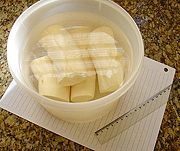 Cassava roots and leaves should not be consumed raw because they contain two cyanogenic glucosides, linamarin
and lotaustralin
. These are decomposed by linamarase
, a naturally-occurring enzyme
in cassava, liberating hydrogen cyanide (HCN). Cassava varieties are often categorized as either sweet or bitter, respectively signifying the absence or presence of toxic levels of cyanogenic glucosides. The so-called sweet (actually not bitter) cultivars can produce as little as 20 milligrams of cyanide
(CN) per kilogram of fresh roots, whereas bitter ones may produce more than 50 times as much (1 g/kg). Cassavas grown during drought
are especially high in these toxins. A dose of 40 mg of pure cassava cyanogenic glucoside is sufficient to kill a cow. Excess cyanide residue from improper preparation is known to cause acute cyanide intoxication, and goiters, and has been linked to ataxia (a neurological disorder affecting ability to walk). It has also been linked to tropical calcific pancreatitis in humans, leading to chronic pancreatitis.
Societies that traditionally eat cassava generally understand some processing (soaking, cooking, fermentation, etc.) is necessary to avoid getting sick.
Symptoms of acute cyanide intoxication appear four or more hours after ingesting raw or poorly processed cassava: vertigo; vomiting; collapse. In some cases death may result within one or two hours. It can be treated easily with a shot of thiosulphate (which makes sulfur available for the patient's body to detoxify by converting the poisonous cyanide into thiocyanate).
"Chronic, low-level cyanide exposure is associated with the development of goiter and with tropical ataxic neuropathy, a nerve-damaging disorder that renders a person unsteady and uncoordinated. Severe cyanide poisoning, particularly during famines, is associated with outbreaks of a debilitating, irreversible paralytic disorder called konzo
and, in some cases, death. The incidence of konzo and tropical ataxic neuropathy can be as high as 3 percent in some areas."
Brief soaking (4 hours) of cassava is not sufficient, but soaking for 18–24 hours can remove up to half the level of cyanide. Drying may not be sufficient, either.
For some smaller-rooted sweet varieties, cooking is sufficient to eliminate all toxicity. The cyanide is carried away in the processing water and the amounts produced in domestic consumption are too small to have environmental impact. The larger-rooted, bitter varieties used for production of flour or starch must be processed to remove the cyanogenic glucosides. and then ground into flour, which is then soaked in water, squeezed dry several times, and toasted. The starch grains that float to the surface during the soaking process are also used in cooking. The flour is used throughout South America
and the Caribbean
. Industrial production of cassava flour, even at the cottage level, may generate enough cyanide and cyanogenic glycosides in the effluents to have a severe environmental impact.
A safe processing method used by the pre-Columbian indigenous people of the Americas is to mix the cassava flour with water into a thick paste and then let it stand in the shade for five hours in a thin layer spread over a basket. In that time, about 5/6 of the cyanogenic glycosides are broken down by the linamarase; the resulting hydrogen cyanide escapes to the atmosphere, making the flour safe for consumption the same evening.
The traditional method used in West Africa is to peel the roots and put them into water for three days to ferment. The roots then are dried or cooked. In Nigeria and several other west African countries, including Ghana, Benin, Togo, Ivory Coast, and Burkina Faso, they are usually grated and lightly fried in palm oil to preserve them. The result is a foodstuff called gari. Fermentation is also used in other places such as Indonesia (see Tapai
). The fermentation process also reduces the level of antinutrient
s, making the cassava a more nutritious food.
The reliance on cassava as a food source and the resulting exposure to the goitrogen
ic effects of thiocyanate
has been responsible for the endemic goiters seen in the Akoko
area of southwestern Nigeria.
People dependent on cassava risk cyanide poisoning and malnutrition
diseases such as kwashiorkor
and endemic goiter.
A project called "BioCassava Plus" is developing a cassava with lower cyanogen glucosides and fortified with Vitamin A
, iron
and protein to help the nutrition of people in sub-saharan Africa. In 2011 the director of the program said he hoped to obtain regulatory approvals by 2017.
s, initiates about 15 minutes after damage, and fails to switch off in harvested tubers. It continues until the entire tuber is oxidized and blackened within two to three days after harvest, rendering it unpalatable and useless.
PPD is one of the main obstacles currently preventing farmers from exporting cassavas abroad and generating income. Cassava can be preserved in various ways such as coating in wax or freezing.
The major cause of losses during cassava chip storage is infestation by insects. A wide range of species that feed directly on the dried chips have been reported as the cause of weight loss in the stored produce. Some loss assessment studies and estimations on dried cassava chips have been carried out in different countries. Hiranandan and Advani (1955) measured 12 - 14% post-harvest weight losses in India for chips stored for about five months. Killick (1966) estimated for Ghana that 19% of the harvest cassava roots are lost annually, and Nicol (1991) estimated a 15 - 20% loss of dried chips stored for eight months. Pattinson (1968) estimated for Tanzania a 12% weight loss of cassava chips stored for five months, and Hodges et al. (1985) assessed during a field survey postharvest losses of up to 19% after 3 months and up to 63% after four to five months due to the infestation of Prostephanus truncatus (Horn). In Togo, Stabrawa (1991) assessed postharvest weight losses of 5% after one month of storage and 15% after three months of storage due to insect infestation, and Compton (1991) assessed weight losses of about 9% for each store in the survey area in Togo. Wright et al. (1993) assessed postharvest losses of chips of about 14% after four months of storage, about 20% after seven month of storage and up to 30% when P. truncatus attacked the dried chips. In addition, Wright et al. (1993) estimated about 4% of the total national cassava production in Togo is lost during the chip storage. This was about equivalent to 0.05% of the GNP in 1989.
Plant breeding has resulted in cassava that is tolerant to PPD. Sánchez et al. identified four different sources of tolerance to PPD. One comes from Walker's Manihot (M. walkerae
) of southern Texas in the United States and Tamaulipas in Mexico. A second source was induced by mutagenic levels of gamma rays, which putatively silenced one of the genes involved in PPD genesis. A third source was a group of high-carotene clones. The antioxidant properties of carotenoids are postulated to protect the roots from PPD (basically an oxidative process). Finally, tolerance was also observed in a waxy-starch (amylose-free) mutant. This tolerance to PPD was thought to be cosegregated with the starch mutation, and is not a pleiotropic effect of the latter.
, the cassava mealybug (Phenacoccus manihoti) and cassava green mite (Mononychellus tanajoa) can cause up to 80% crop loss, which is extremely detrimental to the production of subsistence farmers. These pests were rampant in the 1970s and 1980s, but were brought under control following the establishment of the Biological Control Center for Africa of the IITA
under the leadership of Dr. Hans Rudolf Herren. The Centre investigated biological control for cassava pests; two South America
n natural enemies Apoanagyrus lopezi
(a parasitoid
wasp) and Typhlodromalus aripo (a predatory mite) were found to effectively control the cassava mealybug and the cassava green mite, respectively.
The cassava mosaic virus
causes the leaves of the cassava plant to wither, limiting the growth of the root. The virus caused a major African famine in the 1920s. The virus is spread by the whitefly
and by the transplanting of diseased plants into new fields. Sometime in the late 1980s, a mutation occurred in Uganda that made the virus even more harmful, causing the complete loss of leaves. This mutated virus has been spreading at a rate of 50 miles per year, and as of 2005 may be found throughout Uganda
, Rwanda
, Burundi
, the Democratic Republic of the Congo
and the Republic of the Congo
.
Recently, brown streak disease has been identified as a major threat to cassava cultivation worldwide.
A wide range of plant parasitic nematodes have been reported associated with cassava worldwide. These include Pratylenchus brachyurus
., Rotylenchulus reniformis
, Helicotylenchus
.spp, Scutellonema spp. and Meloidogyne
spp., of which Meloidogyne incognita
and Meloidogyne javanica
are the most widely reported and economically important. Meloidogyne
spp. feeding produces physically damaging galls with eggs inside them. Galls later merge as the females grow and enlarge, they interfere with water and nutrient supply. Cassava roots become tough with age and restrict the movement of the juveniles and the egg release. It is therefore possible that extensive galling can be observed even at low densities following infection. Other pest and diseases can gain entry through the physical damage caused by gall formation leading to rots.They have not been shown to cause direct damage to the enlarged storage roots, but plants can have reduced height if there was loss of enlarged root weight.
Research on nematode pests of cassava is still in the early stages, results on the response of cassava is therefore not consistent, ranging from negligible to seriously damaging. Since nematodes have such a seemingly erratic distribution in cassava agricultural fields, it is not easy to clearly define the level of direct damage attributed to nematodes and thereafter quantify the success of a chosen management method.
It has been found that the use of nematicides results in a lower number of galls per feeder root compared to a control, coupled with a lower number of rots in the storage roots. The nematicide (Femaniphos) when used did not affect crop growth and yield parameter variables measured at harvest. Nematicide use in cassava is neither practical nor sustainable, currently the use of tolerant and resistant varieties is the most practical and sustainable management method.
Shrub
A shrub or bush is distinguished from a tree by its multiple stems and shorter height, usually under 5–6 m tall. A large number of plants may become either shrubs or trees, depending on the growing conditions they experience...
of the Euphorbiaceae
Euphorbiaceae
Euphorbiaceae, the Spurge family are a large family of flowering plants with 300 genera and around 7,500 species. Most are herbs, but some, especially in the tropics, are also shrubs or trees. Some are succulent and resemble cacti....
(spurge family) native to South America
South America
South America is a continent situated in the Western Hemisphere, mostly in the Southern Hemisphere, with a relatively small portion in the Northern Hemisphere. The continent is also considered a subcontinent of the Americas. It is bordered on the west by the Pacific Ocean and on the north and east...
, is extensively cultivated as an annual crop
Agriculture
Agriculture is the cultivation of animals, plants, fungi and other life forms for food, fiber, and other products used to sustain life. Agriculture was the key implement in the rise of sedentary human civilization, whereby farming of domesticated species created food surpluses that nurtured the...
in tropical and subtropical regions for its edible starch
Starch
Starch or amylum is a carbohydrate consisting of a large number of glucose units joined together by glycosidic bonds. This polysaccharide is produced by all green plants as an energy store...
y tuberous root, a major source of carbohydrate
Carbohydrate
A carbohydrate is an organic compound with the empirical formula ; that is, consists only of carbon, hydrogen, and oxygen, with a hydrogen:oxygen atom ratio of 2:1 . However, there are exceptions to this. One common example would be deoxyribose, a component of DNA, which has the empirical...
s. It differs from the similarly-spelled yucca
Yucca
Yucca is a genus of perennial shrubs and trees in the family Asparagaceae, subfamily Agavoideae. Its 40-50 species are notable for their rosettes of evergreen, tough, sword-shaped leaves and large terminal panicles of white or whitish flowers. They are native to the hot and dry parts of North...
, an unrelated fruit-bearing plant.
Cassava is the third largest source of food carbohydrates in the tropics. Cassava is a major staple food in the developing world, providing a basic diet for around 500 million people.
Nigeria
Nigeria
Nigeria , officially the Federal Republic of Nigeria, is a federal constitutional republic comprising 36 states and its Federal Capital Territory, Abuja. The country is located in West Africa and shares land borders with the Republic of Benin in the west, Chad and Cameroon in the east, and Niger in...
is the world's largest producer of cassava. It is classified as sweet or bitter, depending on the level of toxic cyanogenic glucosides. (However, bitter taste is not always a reliable measure.) Improper preparation of cassava can leave enough residual cyanide to cause acute cyanide intoxication and goiters, and has been linked to ataxia or partial paralysis. Nevertheless, farmers often prefer the bitter varieties because they deter pests, animals, and thieves. In some locations the more toxic varieties serve as a fall-back resource (a "food security crop") in times of famine.
Description
Diameter
In geometry, a diameter of a circle is any straight line segment that passes through the center of the circle and whose endpoints are on the circle. The diameters are the longest chords of the circle...
at the top, and around 15 cm to 30 cm long. A woody cordon runs along the root's axis. The flesh can be chalk-white or yellowish. Cassava roots are very rich in starch
Starch
Starch or amylum is a carbohydrate consisting of a large number of glucose units joined together by glycosidic bonds. This polysaccharide is produced by all green plants as an energy store...
, and contain significant amounts of calcium (50 mg/100g), phosphorus (40 mg/100g) and vitamin C (25 mg/100g). However, they are poor in protein
Protein
Proteins are biochemical compounds consisting of one or more polypeptides typically folded into a globular or fibrous form, facilitating a biological function. A polypeptide is a single linear polymer chain of amino acids bonded together by peptide bonds between the carboxyl and amino groups of...
and other nutrient
Nutrient
A nutrient is a chemical that an organism needs to live and grow or a substance used in an organism's metabolism which must be taken in from its environment. They are used to build and repair tissues, regulate body processes and are converted to and used as energy...
s. In contrast, cassava leaves are a good source of protein, but lack the amino acid
Amino acid
Amino acids are molecules containing an amine group, a carboxylic acid group and a side-chain that varies between different amino acids. The key elements of an amino acid are carbon, hydrogen, oxygen, and nitrogen...
lysine
Lysine
Lysine is an α-amino acid with the chemical formula HO2CCH4NH2. It is an essential amino acid, which means that the human body cannot synthesize it. Its codons are AAA and AAG....
, methionine
Methionine
Methionine is an α-amino acid with the chemical formula HO2CCHCH2CH2SCH3. This essential amino acid is classified as nonpolar. This amino-acid is coded by the codon AUG, also known as the initiation codon, since it indicates mRNA's coding region where translation into protein...
and possibly tryptophan
Tryptophan
Tryptophan is one of the 20 standard amino acids, as well as an essential amino acid in the human diet. It is encoded in the standard genetic code as the codon UGG...
.
History
Wild populations of M. esculenta subspecies flabellifolia, shown to be the progenitor of domesticated cassava, are centered in west-central Brazil, where it was likely first domesticated no more than 10,000 years BPBefore Present
Before Present years is a time scale used in archaeology, geology, and other scientific disciplines to specify when events in the past occurred. Because the "present" time changes, standard practice is to use AD 1950 as the origin of the age scale, reflecting the fact that radiocarbon...
. By 6,600 BC, manioc pollen appears in the Gulf of Mexico
Gulf of Mexico
The Gulf of Mexico is a partially landlocked ocean basin largely surrounded by the North American continent and the island of Cuba. It is bounded on the northeast, north and northwest by the Gulf Coast of the United States, on the southwest and south by Mexico, and on the southeast by Cuba. In...
lowlands, at the San Andrés
San Andrés (Mesoamerican site)
San Andrés is an Olmec archaeological site in the present-day Mexican state of Tabasco. Located 5 km northeast of the Olmec ceremonial center of La Venta, San Andrés is considered one of its elite satellite communities, with evidence of elite residences and other elite activities...
archaeological site. The oldest direct evidence of cassava cultivation comes from a 1,400 year old Maya
Maya civilization
The Maya is a Mesoamerican civilization, noted for the only known fully developed written language of the pre-Columbian Americas, as well as for its art, architecture, and mathematical and astronomical systems. Initially established during the Pre-Classic period The Maya is a Mesoamerican...
site, Joya de Cerén
Joya de Cerén
Joya de Cerén is an archaeological site in La Libertad Department, El Salvador featuring a pre-Columbian Maya farming village preserved remarkably intact under layers of volcanic ash...
, in El Salvador
El Salvador
El Salvador or simply Salvador is the smallest and the most densely populated country in Central America. The country's capital city and largest city is San Salvador; Santa Ana and San Miguel are also important cultural and commercial centers in the country and in all of Central America...
. Although the species Manihot esculenta likely originated further south in Brazil
Brazil
Brazil , officially the Federative Republic of Brazil , is the largest country in South America. It is the world's fifth largest country, both by geographical area and by population with over 192 million people...
and Paraguay
Paraguay
Paraguay , officially the Republic of Paraguay , is a landlocked country in South America. It is bordered by Argentina to the south and southwest, Brazil to the east and northeast, and Bolivia to the northwest. Paraguay lies on both banks of the Paraguay River, which runs through the center of the...
. With its high food potential, it had become a staple food
Staple food
A staple food is one that is eaten regularly and in such quantities that it constitutes a dominant portion of a diet, and that supplies a high proportion of energy and nutrient needs. Most people live on a diet based on one or more staples...
of the native populations of northern South America, southern Mesoamerica, and the Caribbean by the time of the Spanish conquest, and its cultivation was continued by the colonial Portuguese and Spanish. Forms of the modern domesticated species can be found growing in the wild in the south of Brazil
Brazil
Brazil , officially the Federative Republic of Brazil , is the largest country in South America. It is the world's fifth largest country, both by geographical area and by population with over 192 million people...
. While there are several wild Manihot species, all varieties of M. esculenta are cultigen
Cultigen
A cultigen is a plant that has been deliberately altered or selected by humans; it is the result of artificial selection. These "man-made" or anthropogenic plants are, for the most part, plants of commerce that are used in horticulture, agriculture and forestry...
s.
Cassava was a staple food
Staple food
A staple food is one that is eaten regularly and in such quantities that it constitutes a dominant portion of a diet, and that supplies a high proportion of energy and nutrient needs. Most people live on a diet based on one or more staples...
for pre-Columbian
Pre-Columbian
The pre-Columbian era incorporates all period subdivisions in the history and prehistory of the Americas before the appearance of significant European influences on the American continents, spanning the time of the original settlement in the Upper Paleolithic period to European colonization during...
peoples in the Americas, and is often portrayed in indigenous art. The Moche
Moche
'The Moche civilization flourished in northern Peru from about 100 AD to 800 AD, during the Regional Development Epoch. While this issue is the subject of some debate, many scholars contend that the Moche were not politically organized as a monolithic empire or state...
people often depicted yuca in their ceramics.
Since being introduced by Portuguese traders from Brazil in the 16th century, maize
Maize
Maize known in many English-speaking countries as corn or mielie/mealie, is a grain domesticated by indigenous peoples in Mesoamerica in prehistoric times. The leafy stalk produces ears which contain seeds called kernels. Though technically a grain, maize kernels are used in cooking as a vegetable...
and cassava have replaced traditional Africa
Africa
Africa is the world's second largest and second most populous continent, after Asia. At about 30.2 million km² including adjacent islands, it covers 6% of the Earth's total surface area and 20.4% of the total land area...
n crops as the continent’s most important staple food crops. Cassava is sometimes described as the ‘bread of the tropics'.
Economic impact
World production of cassava root was estimated to be 184 million tonneTonne
The tonne, known as the metric ton in the US , often put pleonastically as "metric tonne" to avoid confusion with ton, is a metric system unit of mass equal to 1000 kilograms. The tonne is not an International System of Units unit, but is accepted for use with the SI...
s in 2002, rising to 230 million tonnes in 2008. (FAO). The majority of production in 2002 was in Africa
Africa
Africa is the world's second largest and second most populous continent, after Asia. At about 30.2 million km² including adjacent islands, it covers 6% of the Earth's total surface area and 20.4% of the total land area...
where 99.1 million tonnes were grown, 51.5 million tonnes were grown in Asia
Asia
Asia is the world's largest and most populous continent, located primarily in the eastern and northern hemispheres. It covers 8.7% of the Earth's total surface area and with approximately 3.879 billion people, it hosts 60% of the world's current human population...
and 33.2 million tonnes in Latin America
Latin America
Latin America is a region of the Americas where Romance languages – particularly Spanish and Portuguese, and variably French – are primarily spoken. Latin America has an area of approximately 21,069,500 km² , almost 3.9% of the Earth's surface or 14.1% of its land surface area...
and the Caribbean
Caribbean
The Caribbean is a crescent-shaped group of islands more than 2,000 miles long separating the Gulf of Mexico and the Caribbean Sea, to the west and south, from the Atlantic Ocean, to the east and north...
. Nigeria
Nigeria
Nigeria , officially the Federal Republic of Nigeria, is a federal constitutional republic comprising 36 states and its Federal Capital Territory, Abuja. The country is located in West Africa and shares land borders with the Republic of Benin in the west, Chad and Cameroon in the east, and Niger in...
is the world's largest producer of cassava. However, based on the statistics from the FAO of the United Nations
United Nations
The United Nations is an international organization whose stated aims are facilitating cooperation in international law, international security, economic development, social progress, human rights, and achievement of world peace...
, Thailand
Thailand
Thailand , officially the Kingdom of Thailand , formerly known as Siam , is a country located at the centre of the Indochina peninsula and Southeast Asia. It is bordered to the north by Burma and Laos, to the east by Laos and Cambodia, to the south by the Gulf of Thailand and Malaysia, and to the...
is the largest exporting country of dried cassava, with a total of 77% of world export in 2005. The second-largest exporting country is Vietnam
Vietnam
Vietnam – sometimes spelled Viet Nam , officially the Socialist Republic of Vietnam – is the easternmost country on the Indochina Peninsula in Southeast Asia. It is bordered by China to the north, Laos to the northwest, Cambodia to the southwest, and the South China Sea –...
, with 13.6%, followed by Indonesia
Indonesia
Indonesia , officially the Republic of Indonesia , is a country in Southeast Asia and Oceania. Indonesia is an archipelago comprising approximately 13,000 islands. It has 33 provinces with over 238 million people, and is the world's fourth most populous country. Indonesia is a republic, with an...
(5.8%) and Costa Rica
Costa Rica
Costa Rica , officially the Republic of Costa Rica is a multilingual, multiethnic and multicultural country in Central America, bordered by Nicaragua to the north, Panama to the southeast, the Pacific Ocean to the west and the Caribbean Sea to the east....
(2.1%). Worldwide cassava production increased by 12.5% between 1988 and 1990.
Cassava, together with yam
Yam (vegetable)
Yam is the common name for some species in the genus Dioscorea . These are perennial herbaceous vines cultivated for the consumption of their starchy tubers in Africa, Asia, Latin America and Oceania...
s (Dioscorea
Dioscorea
Dioscorea is a genus of over 600 species of flowering plants in the family Dioscoreaceae, native throughout the tropical and warm temperate regions of the world. The vast majority of the species are tropical, with only a few species extending into temperate climates...
spp.) and sweet potato
Sweet potato
The sweet potato is a dicotyledonous plant that belongs to the family Convolvulaceae. Its large, starchy, sweet-tasting, tuberous roots are an important root vegetable. The young leaves and shoots are sometimes eaten as greens. Of the approximately 50 genera and more than 1,000 species of...
es (Ipomea batatas) are important sources of food in the tropics. The cassava plant gives the highest yield of carbohydrates per cultivated area among crop plants, except for sugarcane
Sugarcane
Sugarcane refers to any of six to 37 species of tall perennial grasses of the genus Saccharum . Native to the warm temperate to tropical regions of South Asia, they have stout, jointed, fibrous stalks that are rich in sugar, and measure two to six metres tall...
and sugar beet
Sugar beet
Sugar beet, a cultivated plant of Beta vulgaris, is a plant whose tuber contains a high concentration of sucrose. It is grown commercially for sugar production. Sugar beets and other B...
. Cassava plays a particularly important role in agriculture in developing countries—especially in sub-Saharan Africa—because it does well on poor soils and with low rainfall, and because it is a perennial that can be harvested as required. Its wide harvesting window allows it to act as a famine reserve and is invaluable in managing labor schedules. It also offers flexibility to resource-poor farmers because it serves as either a subsistence or a cash crop.
No continent depends as much on root and tuber crops in feeding its population as does Africa. In the humid and subhumid areas of tropical Africa, it is either a primary staple food
Staple food
A staple food is one that is eaten regularly and in such quantities that it constitutes a dominant portion of a diet, and that supplies a high proportion of energy and nutrient needs. Most people live on a diet based on one or more staples...
or a secondary costaple. In Ghana
Ghana
Ghana , officially the Republic of Ghana, is a country located in West Africa. It is bordered by Côte d'Ivoire to the west, Burkina Faso to the north, Togo to the east, and the Gulf of Guinea to the south...
, for example, cassava and yams occupy an important position the agricultural economy, and contribute about 46% of the agricultural gross domestic product (GDP). Cassava accounts for a daily caloric intake of 30% in Ghana
Ghana
Ghana , officially the Republic of Ghana, is a country located in West Africa. It is bordered by Côte d'Ivoire to the west, Burkina Faso to the north, Togo to the east, and the Gulf of Guinea to the south...
, and is grown by nearly every farming family. The importance of cassava to many Africans is epitomised in the Ewe
Ewe language
Ewe is a Niger–Congo language spoken in Ghana, Togo and Benin by approximately six million people. Ewe is part of a cluster of related languages commonly called Gbe, spoken in southeastern Ghana, Togo, and parts of Benin. Other Gbe languages include Fon, Gen, Phla Phera, and Aja...
(a language spoken in Ghana, Togo
Togo
Togo, officially the Togolese Republic , is a country in West Africa bordered by Ghana to the west, Benin to the east and Burkina Faso to the north. It extends south to the Gulf of Guinea, on which the capital Lomé is located. Togo covers an area of approximately with a population of approximately...
and Benin
Benin
Benin , officially the Republic of Benin, is a country in West Africa. It borders Togo to the west, Nigeria to the east and Burkina Faso and Niger to the north. Its small southern coastline on the Bight of Benin is where a majority of the population is located...
) name for the plant, agbeli, meaning "there is life." The price of cassava has risen significantly in the last half decade and lower-income people have turned to other carbohydrate-rich foods such as rice.
In Tamil Nadu
Tamil Nadu
Tamil Nadu is one of the 28 states of India. Its capital and largest city is Chennai. Tamil Nadu lies in the southernmost part of the Indian Peninsula and is bordered by the union territory of Pondicherry, and the states of Kerala, Karnataka, and Andhra Pradesh...
, one of the 28 states of India
India
India , officially the Republic of India , is a country in South Asia. It is the seventh-largest country by geographical area, the second-most populous country with over 1.2 billion people, and the most populous democracy in the world...
, the National Highway 68 between Thalaivasal
Thalaivasal
Thalaivasal is a village, block headquarter and State Assembly Seat in Salem district, Tamil Nadu - India.-Etymology:In Tamil the word Thalai means Head and Vasal means entrance...
and Attur
Attur
Attur is a town, municipality and capital of Attur Taluk in the Salem district in the state of Tamil Nadu, India.-Etymology:The name of the town derives from the word "Aaru", meaning "River" and "Oor", meaning "Town/City/village" - Vasishta Nadi...
has many cassava-processing factories alongside it—indicating an abundance of it locally. Cassava is widely cultivated and eaten as a staple food in Andhra Pradesh
Andhra Pradesh
Andhra Pradesh , is one of the 28 states of India, situated on the southeastern coast of India. It is India's fourth largest state by area and fifth largest by population. Its capital and largest city by population is Hyderabad.The total GDP of Andhra Pradesh is $100 billion and is ranked third...
and in Kerala
Kerala
or Keralam is an Indian state located on the Malabar coast of south-west India. It was created on 1 November 1956 by the States Reorganisation Act by combining various Malayalam speaking regions....
.
In the subtropical region of southern China
China
Chinese civilization may refer to:* China for more general discussion of the country.* Chinese culture* Greater China, the transnational community of ethnic Chinese.* History of China* Sinosphere, the area historically affected by Chinese culture...
, cassava is the fifth largest crop in term of production, after rice
Rice
Rice is the seed of the monocot plants Oryza sativa or Oryza glaberrima . As a cereal grain, it is the most important staple food for a large part of the world's human population, especially in East Asia, Southeast Asia, South Asia, the Middle East, and the West Indies...
, sweet potato
Sweet potato
The sweet potato is a dicotyledonous plant that belongs to the family Convolvulaceae. Its large, starchy, sweet-tasting, tuberous roots are an important root vegetable. The young leaves and shoots are sometimes eaten as greens. Of the approximately 50 genera and more than 1,000 species of...
, sugar cane and maize
Maize
Maize known in many English-speaking countries as corn or mielie/mealie, is a grain domesticated by indigenous peoples in Mesoamerica in prehistoric times. The leafy stalk produces ears which contain seeds called kernels. Though technically a grain, maize kernels are used in cooking as a vegetable...
. China is also the largest export market for cassava produced in Vietnam and Thailand. Over 60% of cassava production in China is concentrated in a single province, Guangxi
Guangxi
Guangxi, formerly romanized Kwangsi, is a province of southern China along its border with Vietnam. In 1958, it became the Guangxi Zhuang Autonomous Region of the People's Republic of China, a region with special privileges created specifically for the Zhuang people.Guangxi's location, in...
, averaging over seven million tons annually.
Culinary
Cassava-based dishesCassava-based dishes
A great variety of cassava-based dishes are consumed in the regions where cassava is cultivated, and they include many national or ethnic specialities....
are widely consumed wherever the plant is cultivated; some have regional, national, or ethnic importance. Cassava must be cooked properly to detoxify it before it is eaten.
Cassava can be cooked in various ways. The soft-boiled root has a delicate flavor and can replace boiled potatoes in many uses: as an accompaniment for meat dishes, or made into purée
Purée
Purée and mash are general terms for cooked food, usually vegetables or legumes, that have been ground, pressed, blended, and/or sieved to the consistency of a soft creamy paste or thick liquid. Purées of specific foods are often known by specific names, e.g., mashed potatoes or apple sauce...
s, dumpling
Dumpling
Dumplings are cooked balls of dough. They are based on flour, potatoes or bread, and may include meat, fish, vegetables, or sweets. They may be cooked by boiling, steaming, simmering, frying, or baking. They may have a filling, or there may be other ingredients mixed into the dough. Dumplings may...
s, soup
Soup
Soup is a generally warm food that is made by combining ingredients such as meat and vegetables with stock, juice, water, or another liquid. Hot soups are additionally characterized by boiling solid ingredients in liquids in a pot until the flavors are extracted, forming a broth.Traditionally,...
s, stews, gravies, etc. Deep fried (after boiling or steaming), it can replace fried potatoes, with a distinctive flavor. Fufu
Fufu
Fufu, , is a staple snack of West and Central Africa. It is a thick paste usually made by boiling starchy root vegetables in water and pounding with a mortar and pestle until the desired consistency is reached...
is made from the starchy cassava-root flour. Tapioca
Tapioca
Tapioca is a starch extracted Manihot esculenta. This species, native to the Amazon, Brazil, Colombia, Venezuela, Cuba, Puerto Rico, Haiti, the Dominican Republic, Honduras, and most of the West Indies, is now cultivated worldwide and has many names, including cassava, manioc, aipim,...
(or fecula), essentially a flavourless starchy ingredient produced from treated and dried cassava (manioc) root, is used in cooking. It is similar to sago
Sago
Sago is a starch extracted in the spongy center or pith, of various tropical palm stems, Metroxylon sagu. It is a major staple food for the lowland peoples of New Guinea and the Moluccas, where it is called saksak and sagu. A type of flour, called sago flour, is made from sago. The largest supply...
and is commonly used to make a milky pudding similar to rice pudding. Boba
Bubble tea
Bubble tea is the name for pearl milk tea and other similar tea and juice beverages that originated in tea shops in Taichung, Taiwan during the 1980s. Drink recipes may vary, but most bubble teas contain a tea base mixed with fruit and/or milk...
tapioca pearls are made from cassava root. It is also used in cereals for which several tribes in South America have used it extensively. It is also used in making cassava cake, a popular pastry.
Cassava is used in making eba, a popular food in Nigeria. Gari soakings is a delicacy in Ghana that cost less than US$1. One can simply soak gari in cold water, add a bit of sugar and roasted groundnut (peanut) to taste, and add whatever quantity of evaporated milk one desires. Gari soakings prepared with coconut water may taste better.
The juice of the bitter cassava, boiled to the consistency of thick syrup and flavored with spices, is called cassareep
Cassareep
Cassareep is a thick black liquid made from cassava root, often with additional spices, which is used as a base for many sauces and especially in Guyanese pepperpot. Besides use as a flavoring and browning agent, it also acts as a preservative...
. It is used as a basis for various sauces and as a culinary flavoring, principally in tropical countries. It is exported chiefly from Guyana
Guyana
Guyana , officially the Co-operative Republic of Guyana, previously the colony of British Guiana, is a sovereign state on the northern coast of South America that is culturally part of the Anglophone Caribbean. Guyana was a former colony of the Dutch and of the British...
.
The leaves can be pounded to a fine chaff and cooked as a palaver sauce
Palaver sauce
Palaver sauce or Palava sauce is a type of stew widely eaten in West Africa, including Ghana, Liberia, Sierra Leone and Nigeria. The word palaver comes from the Portuguese language and means a talk, lengthy debate or quarrel. It is unclear how this led to the name of the stew...
(as is done in Liberia
Liberia
Liberia , officially the Republic of Liberia, is a country in West Africa. It is bordered by Sierra Leone on the west, Guinea on the north and Côte d'Ivoire on the east. Liberia's coastline is composed of mostly mangrove forests while the more sparsely populated inland consists of forests that open...
and Sierra Leone
Sierra Leone
Sierra Leone , officially the Republic of Sierra Leone, is a country in West Africa. It is bordered by Guinea to the north and east, Liberia to the southeast, and the Atlantic Ocean to the west and southwest. Sierra Leone covers a total area of and has an estimated population between 5.4 and 6.4...
), usually with palm oil, but other vegetable oils can also be used. Palaver sauces contain meat and fish as well. It is necessary to wash the leaf chaff several times to remove the bitterness.
In Indonesia
Indonesia
Indonesia , officially the Republic of Indonesia , is a country in Southeast Asia and Oceania. Indonesia is an archipelago comprising approximately 13,000 islands. It has 33 provinces with over 238 million people, and is the world's fourth most populous country. Indonesia is a republic, with an...
, cassava is an important food material. It can be cooked by frying or boiling or processed by fermentation to make tapai
Tapai
Tapai or tape , sometimes referred to as peuyeum , is a traditional fermented food found throughout much of East- and Southeast Asia. It is a sweet or sour alcoholic paste...
and getuk
Getuk
thumb|right|Getuk from [[Magelang]]Getuk is a simple Javanese dish made from cassava. The cassava is peeled, boiled and mashed. Then it is mixed with grated coconut, sugar and small amounts of salt. Sugar can also be substituted with palm sugar to give it brownish color and more distinctive...
cake, while the starch is made into krupuk crackers. In time of famine or food shortage, cassava is used to replace rice
Rice
Rice is the seed of the monocot plants Oryza sativa or Oryza glaberrima . As a cereal grain, it is the most important staple food for a large part of the world's human population, especially in East Asia, Southeast Asia, South Asia, the Middle East, and the West Indies...
. In 2011, mocaf (modified cassava flour) is become common and some instant noodle producers have used it silently especially for low-end instant noodles as a part substitute of pricy flour.
In DR Congo, the leaves are used in a stew called pondu in Lingala, sombe in Swahili
Swahili language
Swahili or Kiswahili is a Bantu language spoken by various ethnic groups that inhabit several large stretches of the Mozambique Channel coastline from northern Kenya to northern Mozambique, including the Comoro Islands. It is also spoken by ethnic minority groups in Somalia...
or sakasaka in Kikongo. The cassava root flour is also used to make a cassava bread by boiling flour until it is a thick, rubbery ball (bukari in Swahili or luku in Kikongo. This cassava bread is often affectionately known as la boule nationale (the national ball) in French. The flour is also made into a paste and fermented before boiling after wrapping in banana or other forest leaves. This fermented state is called chikwangue in French
French language
French is a Romance language spoken as a first language in France, the Romandy region in Switzerland, Wallonia and Brussels in Belgium, Monaco, the regions of Quebec and Acadia in Canada, and by various communities elsewhere. Second-language speakers of French are distributed throughout many parts...
or kwanga or nkwanga in Lingala and Kikongo. This last form has a long shelf life and is a preferred food to take on long trips where refrigeration is not possible.
Cassava was also used to make alcoholic beverage
Alcoholic beverage
An alcoholic beverage is a drink containing ethanol, commonly known as alcohol. Alcoholic beverages are divided into three general classes: beers, wines, and spirits. They are legally consumed in most countries, and over 100 countries have laws regulating their production, sale, and consumption...
s. The English explorer and naturalist Charles Waterton
Charles Waterton
Charles Waterton was an English naturalist and explorer.-Heritage and Life:"Squire" Waterton was born at Walton Hall, Wakefield, Yorkshire to Thomas Waterton and Anne Bedingfield. He was of a Roman Catholic landed gentry family descended from Reiner de Waterton...
reported in Wanderings in South America (1836) that the natives of Guyana
Guyana
Guyana , officially the Co-operative Republic of Guyana, previously the colony of British Guiana, is a sovereign state on the northern coast of South America that is culturally part of the Anglophone Caribbean. Guyana was a former colony of the Dutch and of the British...
used cassava to make liquor, which they abandoned when rum
Rum
Rum is a distilled alcoholic beverage made from sugarcane by-products such as molasses, or directly from sugarcane juice, by a process of fermentation and distillation. The distillate, a clear liquid, is then usually aged in oak barrels...
became available. Hamilton Rice, in 1913, also remarked on liquor being made from cassava in the Brazil
Brazil
Brazil , officially the Federative Republic of Brazil , is the largest country in South America. It is the world's fifth largest country, both by geographical area and by population with over 192 million people...
ian rainforest.
The Indian tribes in northern Brazil and Surinam – Tiriós and Erwarhoyanas – make a beverage called sakurá with the sweet manioc variety of cassava, yuca. The same beverage is made by the Jivaro in Ecuador and Peru (the Shuara, Achuara, Aguaruna and Mayna people); they call it nijimanche. As Michael Harner
Michael Harner
Michael Harner is the founder of the and the formulator of "core shamanism." Harner is known for bringing shamanism and shamanic healing to the contemporary Western world...
describes it:
The sweet manioc beer (nihamanci or nijiamanchi), is prepared by first peeling and washing the tubers in the stream near the garden. Then the water and manioc are brought to the house, where the tubers are cut up and put in a pot to boil. … The manioc is then mashed and stirred to a soft consistency with the aid of a special wooden paddle. While the woman stirs the mash, she chews handfuls [sic] of and spits them back into the pot, a process that may take half an hour or longer.
After the mash has been prepared it is transferred to a beer storage jar and left to ferment. … The resultant liquid tastes somewhat like a pleasingly alcoholic buttermilk and is most refreshing. The Jivaros consider it to be far superior to plain water, which they drink only in emergencies.
Nutritional profile of cassava
Cassava root is essentially a carbohydrate source. Its composition shows 60-65 percent moisture, 20-31 percent carbohydrate, 1-2 percent crude protein and a comparatively low content of vitamins and minerals. However, the roots are rich in calcium and vitamin C and contain a nutritionally significant quantity of thiamine, riboflavin and nicotinic acid. Cassava starch contains 70 percent amylopectin and 20 percent amylose. Cooked cassava starch has a digestibility of over 75 percent.Cassava root is a poor source of protein. Despite the very low quantity, the quality of cassava root protein is fairly good in terms of essential amino acids. Methionine, cysteine and cystine are however limiting amino acids in cassava root.
Cassava is attractive as nutrition source in certain ecosystems because cassava is one of the most drought tolerant crops, can be successfully grown on marginal soils, giving reasonable yields where many other crops do not grow well. Cassava is well adapted within latitudes 30° north and south of the equator, at elevations between sea level and two thousand meters above sea level, in equatorial temperatures, with rainfalls of fifty millimeters to five meters annually, and to poor soils with a pH ranging from acidic to alkaline. These conditions are common in certain parts of Africa and South America.
Cassava is a highly productive crop in terms of food calories produced per unit land area per unit of time. Cassava productivity is significantly higher than other staple crops. Cassava can produce food calories at rates exceeding 250,000 cal/hectare/day compared with 176,000 for rice, 110,000 for wheat, and 200,000 for maize (corn).
Cassava, like other foods, also has anti-nutritional and toxic factors. Of particular concern are the cyanogenic glucosides of cassava (Linamarin and Lotaustralin). These, on hydrolysis, release hydrocyanic acid (HCN). The presence of cyanide in cassava is of concern for human and for animal consumption. The concentration of these anti-nutritional and unsafe glycosides varies considerably between varieties and also with climatic and cultural conditions. It is therefore important that cassava species grown be carefully selected. Once harvested, cassava must be treated and prepared properly prior to human consumption, or animal consumption.
Comparison of cassava to other major staple foods
The following table shows the nutrient content of cassava and compares it to major staple foods in a raw form. Raw forms of these staples, however, aren't edible and can not be digested. These must be sprouted, or prepared and cooked as appropriate for human consumption. In sprouted or cooked form, the relative nutritional and anti-nutritional contents of each of these grains is remarkably different from that of raw form of these grains reported in this table. The nutrition value for each staple food in cooked form depends on the cooking method (for example: boiling, baking, steaming, frying, etc.).The table shows that cassava is a good energy source, but like potato, cassava's protein and essential nutrients density is lower than other staple foods.
Wheat
Wheat is a cereal grain, originally from the Levant region of the Near East, but now cultivated worldwide. In 2007 world production of wheat was 607 million tons, making it the third most-produced cereal after maize and rice...
!! Rice
Rice
Rice is the seed of the monocot plants Oryza sativa or Oryza glaberrima . As a cereal grain, it is the most important staple food for a large part of the world's human population, especially in East Asia, Southeast Asia, South Asia, the Middle East, and the West Indies...
!! Sweetcorn
Maize
Maize known in many English-speaking countries as corn or mielie/mealie, is a grain domesticated by indigenous peoples in Mesoamerica in prehistoric times. The leafy stalk produces ears which contain seeds called kernels. Though technically a grain, maize kernels are used in cooking as a vegetable...
!! Potato
Potato
The potato is a starchy, tuberous crop from the perennial Solanum tuberosum of the Solanaceae family . The word potato may refer to the plant itself as well as the edible tuber. In the region of the Andes, there are some other closely related cultivated potato species...
|-
! Component (per 100g portion, raw grain) !! Amount !! Amount !! Amount !! Amount !! Amount
|-
| water (g) >
>-
| energy (kJ)
| protein (g)
| fat (g)
| carbohydrates (g)
| fiber (g)
| sugars (g)
| iron (mg)
| manganese (mg)
| calcium (mg)
| magnesium (mg)
| phosphorus (mg)
| potassium (mg)
| zinc (mg)
| pantothenic acid (mg)
| vitB6 (mg)
| folate (µg)
| thiamin (mg)
| riboflavin (mg)
>-
| niacin (mg)
Biofuel
In many countries, significant research has begun to evaluate the use of cassava as an ethanolEthanol
Ethanol, also called ethyl alcohol, pure alcohol, grain alcohol, or drinking alcohol, is a volatile, flammable, colorless liquid. It is a psychoactive drug and one of the oldest recreational drugs. Best known as the type of alcohol found in alcoholic beverages, it is also used in thermometers, as a...
biofuel
Biofuel
Biofuel is a type of fuel whose energy is derived from biological carbon fixation. Biofuels include fuels derived from biomass conversion, as well as solid biomass, liquid fuels and various biogases...
feedstock. Under the Development Plan for Renewable Energy in the Eleventh Five-Year Plan in the People's Republic of China
People's Republic of China
China , officially the People's Republic of China , is the most populous country in the world, with over 1.3 billion citizens. Located in East Asia, the country covers approximately 9.6 million square kilometres...
, the target is to increase the application of ethanol fuel by nongrain feedstock to 2 million tonnes, and that of biodiesel to 200 thousand tonnes by 2010. This will be equivalent to a substitute of 10 million tonnes of petroleum. As a result, cassava (tapioca) chips have gradually become a major source for ethanol production. On December 22, 2007, the largest cassava ethanol fuel
Ethanol fuel
Ethanol fuel is ethanol , the same type of alcohol found in alcoholic beverages. It is most often used as a motor fuel, mainly as a biofuel additive for gasoline. World ethanol production for transport fuel tripled between 2000 and 2007 from 17 billion to more than 52 billion litres...
production facility was completed in Beihai
Beihai
Beihai is a prefecture-level city of Guangxi, China. Beihai means "north of the sea" in Chinese, signifying its status as a seaport on the north shore of the Gulf of Tonkin. Between the years 2006 and 2020, Beihai is predicted to be the world's fastest growing city...
, with annual output of two hundred thousand tons, which would need an average of 1.5 million tons of cassava. In November 2008, China-based Hainan Yedao Group reportedly invested $51.5m (£31.8m) in a new biofuel facility that is expected to produce 33 million USgals (124,918.6 m³) a year of bio-ethanol from cassava plants.
Animal feed
Cassava is used worldwide for animal feed as well. Cassava hay is produced at a young growth stage at three to four months, harvested about 30–45 cm above ground, and sun-dried for one to two days until it has final dry matter of at least 85%. The cassava hay contains high protein content (20-27% crude protein) and condensed tanninTannin
A tannin is an astringent, bitter plant polyphenolic compound that binds to and precipitates proteins and various other organic compounds including amino acids and alkaloids.The term tannin refers to the use of...
s (1.5-4% CP). It is used as a good roughage source for dairy or beef cattle, buffalo, goats, and sheep by either direct feeding or as a protein source in the concentrate mixtures.
Ethnomedicine
- The bitter variety leaves are used to treat hypertensionHypertensionHypertension or high blood pressure is a cardiac chronic medical condition in which the systemic arterial blood pressure is elevated. What that means is that the heart is having to work harder than it should to pump the blood around the body. Blood pressure involves two measurements, systolic and...
, headache, and pain. - Cubans commonly use cassava to treat irritable bowel syndromeIrritable bowel syndromeIrritable bowel syndrome is a diagnosis of exclusion. It is a functional bowel disorder characterized by chronic abdominal pain, discomfort, bloating, and alteration of bowel habits in the absence of any detectable organic cause. In some cases, the symptoms are relieved by bowel movements...
, the paste is eaten in excess during treatment. - As cassava is a glutenGlutenGluten is a protein composite found in foods processed from wheat and related grain species, including barley and rye...
-free natural starch, there have been increasing incidences of its appearance in Western cuisine as a wheatWheatWheat is a cereal grain, originally from the Levant region of the Near East, but now cultivated worldwide. In 2007 world production of wheat was 607 million tons, making it the third most-produced cereal after maize and rice...
alternative for sufferers of celiac disease.
Food use processing and toxicity
Linamarin
Linamarin is a cyanogenic glucoside found in the leaves and roots of plants such as cassava, lima beans, and flax. It is a glucoside of acetone cyanohydrin...
and lotaustralin
Lotaustralin
Lotaustralin is a cyanogenic glucoside found in small amounts in Fabaceae Austral Trefoil , cassava , lima bean , roseroot and white clover , among other plants...
. These are decomposed by linamarase
Linamarase
Linamarase, or beta-D-glucosidase , is an enzyme found in many plants including cassava and the butter bean.In cassava it is found in the cell walls. When the plant is chewed or ground, it exposes the enzyme to compounds like linamarin and lotaustralin which release cyanide compounds that can be...
, a naturally-occurring enzyme
Enzyme
Enzymes are proteins that catalyze chemical reactions. In enzymatic reactions, the molecules at the beginning of the process, called substrates, are converted into different molecules, called products. Almost all chemical reactions in a biological cell need enzymes in order to occur at rates...
in cassava, liberating hydrogen cyanide (HCN). Cassava varieties are often categorized as either sweet or bitter, respectively signifying the absence or presence of toxic levels of cyanogenic glucosides. The so-called sweet (actually not bitter) cultivars can produce as little as 20 milligrams of cyanide
Cyanide
A cyanide is a chemical compound that contains the cyano group, -C≡N, which consists of a carbon atom triple-bonded to a nitrogen atom. Cyanides most commonly refer to salts of the anion CN−. Most cyanides are highly toxic....
(CN) per kilogram of fresh roots, whereas bitter ones may produce more than 50 times as much (1 g/kg). Cassavas grown during drought
Drought
A drought is an extended period of months or years when a region notes a deficiency in its water supply. Generally, this occurs when a region receives consistently below average precipitation. It can have a substantial impact on the ecosystem and agriculture of the affected region...
are especially high in these toxins. A dose of 40 mg of pure cassava cyanogenic glucoside is sufficient to kill a cow. Excess cyanide residue from improper preparation is known to cause acute cyanide intoxication, and goiters, and has been linked to ataxia (a neurological disorder affecting ability to walk). It has also been linked to tropical calcific pancreatitis in humans, leading to chronic pancreatitis.
Societies that traditionally eat cassava generally understand some processing (soaking, cooking, fermentation, etc.) is necessary to avoid getting sick.
Symptoms of acute cyanide intoxication appear four or more hours after ingesting raw or poorly processed cassava: vertigo; vomiting; collapse. In some cases death may result within one or two hours. It can be treated easily with a shot of thiosulphate (which makes sulfur available for the patient's body to detoxify by converting the poisonous cyanide into thiocyanate).
"Chronic, low-level cyanide exposure is associated with the development of goiter and with tropical ataxic neuropathy, a nerve-damaging disorder that renders a person unsteady and uncoordinated. Severe cyanide poisoning, particularly during famines, is associated with outbreaks of a debilitating, irreversible paralytic disorder called konzo
Konzo
Konzo is an epidemic paralytic disease first described by G. Trolli in 1938, who discovered it amongst the Kwango of the Belgian Congo . The outbreaks are associated with several weeks of almost exclusive consumption of insufficiently processed "bitter" cassava as a famine food...
and, in some cases, death. The incidence of konzo and tropical ataxic neuropathy can be as high as 3 percent in some areas."
Brief soaking (4 hours) of cassava is not sufficient, but soaking for 18–24 hours can remove up to half the level of cyanide. Drying may not be sufficient, either.
For some smaller-rooted sweet varieties, cooking is sufficient to eliminate all toxicity. The cyanide is carried away in the processing water and the amounts produced in domestic consumption are too small to have environmental impact. The larger-rooted, bitter varieties used for production of flour or starch must be processed to remove the cyanogenic glucosides. and then ground into flour, which is then soaked in water, squeezed dry several times, and toasted. The starch grains that float to the surface during the soaking process are also used in cooking. The flour is used throughout South America
South America
South America is a continent situated in the Western Hemisphere, mostly in the Southern Hemisphere, with a relatively small portion in the Northern Hemisphere. The continent is also considered a subcontinent of the Americas. It is bordered on the west by the Pacific Ocean and on the north and east...
and the Caribbean
Caribbean
The Caribbean is a crescent-shaped group of islands more than 2,000 miles long separating the Gulf of Mexico and the Caribbean Sea, to the west and south, from the Atlantic Ocean, to the east and north...
. Industrial production of cassava flour, even at the cottage level, may generate enough cyanide and cyanogenic glycosides in the effluents to have a severe environmental impact.
A safe processing method used by the pre-Columbian indigenous people of the Americas is to mix the cassava flour with water into a thick paste and then let it stand in the shade for five hours in a thin layer spread over a basket. In that time, about 5/6 of the cyanogenic glycosides are broken down by the linamarase; the resulting hydrogen cyanide escapes to the atmosphere, making the flour safe for consumption the same evening.
The traditional method used in West Africa is to peel the roots and put them into water for three days to ferment. The roots then are dried or cooked. In Nigeria and several other west African countries, including Ghana, Benin, Togo, Ivory Coast, and Burkina Faso, they are usually grated and lightly fried in palm oil to preserve them. The result is a foodstuff called gari. Fermentation is also used in other places such as Indonesia (see Tapai
Tapai
Tapai or tape , sometimes referred to as peuyeum , is a traditional fermented food found throughout much of East- and Southeast Asia. It is a sweet or sour alcoholic paste...
). The fermentation process also reduces the level of antinutrient
Antinutrient
Antinutrients are natural or synthetic compounds that interfere with the absorption of nutrients. Nutrition studies focus on those antinutrients commonly found in food sources and beverages....
s, making the cassava a more nutritious food.
The reliance on cassava as a food source and the resulting exposure to the goitrogen
Goitrogen
Goitrogens are substances that suppress the function of the thyroid gland by interfering with iodine uptake, which can, as a result, cause an enlargement of the thyroid, i.e., a goitre.-Goitrogenic drugs and chemicals:...
ic effects of thiocyanate
Thiocyanate
Thiocyanate is the anion [SCN]−. It is the conjugate base of thiocyanic acid. Common derivatives include the colourless salts potassium thiocyanate and sodium thiocyanate. Organic compounds containing the functional group SCN are also called thiocyanates...
has been responsible for the endemic goiters seen in the Akoko
Akoko
Akoko is a large Northeast Yoruba settlement in Yorubaland, the area spans from Ondo state to Edo state in southwest Nigeria. Akoko takes a large percentage of the local governments in Ondo state. Out of the present 18 Local Government Councils it takes four, Akoko North-East, Akoko North-West,...
area of southwestern Nigeria.
People dependent on cassava risk cyanide poisoning and malnutrition
Malnutrition
Malnutrition is the condition that results from taking an unbalanced diet in which certain nutrients are lacking, in excess , or in the wrong proportions....
diseases such as kwashiorkor
Kwashiorkor
Kwashiorkor is an acute form of childhood protein-energy malnutrition characterized by edema, irritability, anorexia, ulcerating dermatoses, and an enlarged liver with fatty infiltrates. The presence of edema caused by poor nutrition defines kwashiorkor...
and endemic goiter.
A project called "BioCassava Plus" is developing a cassava with lower cyanogen glucosides and fortified with Vitamin A
Vitamin A
Vitamin A is a vitamin that is needed by the retina of the eye in the form of a specific metabolite, the light-absorbing molecule retinal, that is necessary for both low-light and color vision...
, iron
Iron
Iron is a chemical element with the symbol Fe and atomic number 26. It is a metal in the first transition series. It is the most common element forming the planet Earth as a whole, forming much of Earth's outer and inner core. It is the fourth most common element in the Earth's crust...
and protein to help the nutrition of people in sub-saharan Africa. In 2011 the director of the program said he hoped to obtain regulatory approvals by 2017.
Farming
Harvesting
Cassava is harvested by hand by raising the lower part of the stem and pulling the roots out of the ground, then removing them from the base of the plant. The upper parts of the stems with the leaves are plucked off before harvest. Cassava is propagated by cutting the stem into sections of approximately 15 cm, these being planted prior to the wet season.Postharvest handling and storage
Cassava undergoes postharvest physiological deterioration, or PPD, once the tubers are separated from the main plant. The tubers, when damaged, normally respond with a healing mechanism. However, the same mechanism, which involves coumaric acidCoumaric acid
Coumaric acid is a hydroxycinnamic acid, an organic compound that is a hydroxy derivative of cinnamic acid. There are three isomers, o-coumaric acid, m-coumaric acid, and p-coumaric acid, that differ by the position of the hydroxy substitution of the phenyl group...
s, initiates about 15 minutes after damage, and fails to switch off in harvested tubers. It continues until the entire tuber is oxidized and blackened within two to three days after harvest, rendering it unpalatable and useless.
PPD is one of the main obstacles currently preventing farmers from exporting cassavas abroad and generating income. Cassava can be preserved in various ways such as coating in wax or freezing.
The major cause of losses during cassava chip storage is infestation by insects. A wide range of species that feed directly on the dried chips have been reported as the cause of weight loss in the stored produce. Some loss assessment studies and estimations on dried cassava chips have been carried out in different countries. Hiranandan and Advani (1955) measured 12 - 14% post-harvest weight losses in India for chips stored for about five months. Killick (1966) estimated for Ghana that 19% of the harvest cassava roots are lost annually, and Nicol (1991) estimated a 15 - 20% loss of dried chips stored for eight months. Pattinson (1968) estimated for Tanzania a 12% weight loss of cassava chips stored for five months, and Hodges et al. (1985) assessed during a field survey postharvest losses of up to 19% after 3 months and up to 63% after four to five months due to the infestation of Prostephanus truncatus (Horn). In Togo, Stabrawa (1991) assessed postharvest weight losses of 5% after one month of storage and 15% after three months of storage due to insect infestation, and Compton (1991) assessed weight losses of about 9% for each store in the survey area in Togo. Wright et al. (1993) assessed postharvest losses of chips of about 14% after four months of storage, about 20% after seven month of storage and up to 30% when P. truncatus attacked the dried chips. In addition, Wright et al. (1993) estimated about 4% of the total national cassava production in Togo is lost during the chip storage. This was about equivalent to 0.05% of the GNP in 1989.
Plant breeding has resulted in cassava that is tolerant to PPD. Sánchez et al. identified four different sources of tolerance to PPD. One comes from Walker's Manihot (M. walkerae
Manihot walkerae
Manihot walkerae, commonly known as Walker's Manihot, is a species of flowering plant in the spurge family, Euphorbiaceae, that is native to the Lower Rio Grande Valley of Texas in the United States and Tamaulipas in Mexico. The specific name honours amateur botanist E. J. Walker, who discovered...
) of southern Texas in the United States and Tamaulipas in Mexico. A second source was induced by mutagenic levels of gamma rays, which putatively silenced one of the genes involved in PPD genesis. A third source was a group of high-carotene clones. The antioxidant properties of carotenoids are postulated to protect the roots from PPD (basically an oxidative process). Finally, tolerance was also observed in a waxy-starch (amylose-free) mutant. This tolerance to PPD was thought to be cosegregated with the starch mutation, and is not a pleiotropic effect of the latter.
Pests
In AfricaAfrica
Africa is the world's second largest and second most populous continent, after Asia. At about 30.2 million km² including adjacent islands, it covers 6% of the Earth's total surface area and 20.4% of the total land area...
, the cassava mealybug (Phenacoccus manihoti) and cassava green mite (Mononychellus tanajoa) can cause up to 80% crop loss, which is extremely detrimental to the production of subsistence farmers. These pests were rampant in the 1970s and 1980s, but were brought under control following the establishment of the Biological Control Center for Africa of the IITA
International Institute of Tropical Agriculture
International Institute of Tropical Agriculture is one of the world's leading research partners in finding solutions to hunger, malnutrition, and poverty. IITA's award-winning research-for-development addresses the development needs of tropical countries...
under the leadership of Dr. Hans Rudolf Herren. The Centre investigated biological control for cassava pests; two South America
South America
South America is a continent situated in the Western Hemisphere, mostly in the Southern Hemisphere, with a relatively small portion in the Northern Hemisphere. The continent is also considered a subcontinent of the Americas. It is bordered on the west by the Pacific Ocean and on the north and east...
n natural enemies Apoanagyrus lopezi
Apoanagyrus lopezi
Apoanagyrus lopezi is a species of parasitic wasp native to Central America. It is used as biological control agent against the cassava mealybug .Large-scale deployment of this parasitoid is being attempted in Thailand in 2010....
(a parasitoid
Parasitoid
A parasitoid is an organism that spends a significant portion of its life history attached to or within a single host organism in a relationship that is in essence parasitic; unlike a true parasite, however, it ultimately sterilises or kills, and sometimes consumes, the host...
wasp) and Typhlodromalus aripo (a predatory mite) were found to effectively control the cassava mealybug and the cassava green mite, respectively.
The cassava mosaic virus
African cassava mosaic virus
African cassava mosaic virus is a plant pathogenic virus of the family Geminiviridae that may cause either a mosaic appearance to plant leaves, or chlorosis, a loss of chlorophyll. In Manihot esculenta , a highly valuable African food crop, the virus is the only known plant virus for cassava and...
causes the leaves of the cassava plant to wither, limiting the growth of the root. The virus caused a major African famine in the 1920s. The virus is spread by the whitefly
Whitefly
The whiteflies, comprising only the family Aleyrodidae, are small hemipterans. More than 1550 species have been described. Whiteflies typically feed on the underside of plant leaves.-Agricultural threat:...
and by the transplanting of diseased plants into new fields. Sometime in the late 1980s, a mutation occurred in Uganda that made the virus even more harmful, causing the complete loss of leaves. This mutated virus has been spreading at a rate of 50 miles per year, and as of 2005 may be found throughout Uganda
Uganda
Uganda , officially the Republic of Uganda, is a landlocked country in East Africa. Uganda is also known as the "Pearl of Africa". It is bordered on the east by Kenya, on the north by South Sudan, on the west by the Democratic Republic of the Congo, on the southwest by Rwanda, and on the south by...
, Rwanda
Rwanda
Rwanda or , officially the Republic of Rwanda , is a country in central and eastern Africa with a population of approximately 11.4 million . Rwanda is located a few degrees south of the Equator, and is bordered by Uganda, Tanzania, Burundi and the Democratic Republic of the Congo...
, Burundi
Burundi
Burundi , officially the Republic of Burundi , is a landlocked country in the Great Lakes region of Eastern Africa bordered by Rwanda to the north, Tanzania to the east and south, and the Democratic Republic of the Congo to the west. Its capital is Bujumbura...
, the Democratic Republic of the Congo
Democratic Republic of the Congo
The Democratic Republic of the Congo is a state located in Central Africa. It is the second largest country in Africa by area and the eleventh largest in the world...
and the Republic of the Congo
Republic of the Congo
The Republic of the Congo , sometimes known locally as Congo-Brazzaville, is a state in Central Africa. It is bordered by Gabon, Cameroon, the Central African Republic, the Democratic Republic of the Congo , the Angolan exclave province of Cabinda, and the Gulf of Guinea.The region was dominated by...
.
Recently, brown streak disease has been identified as a major threat to cassava cultivation worldwide.
A wide range of plant parasitic nematodes have been reported associated with cassava worldwide. These include Pratylenchus brachyurus
Pratylenchus brachyurus
Pratylenchus brachyurus is a plant pathogenic nematode.- External links :*...
., Rotylenchulus reniformis
Rotylenchulus reniformis
-History and significance:Rotylenchulus reniformis is a plant parasite nematode with a worldwide distribution in the tropical and subtropical regions. This nematode has a wide host range infecting plants in many species around the word. It belongs to the Family Hoplolaimidae; it was first...
, Helicotylenchus
Helicotylenchus
Helicotylenchus is a genus of nematodes in the family Hoplolaimidae.-Diagnosis:Hoplolaimidae. Female : Body vermiform, spiral to straight. Labial region continuous to slightly offset, rounded or anteriorly flattened, generally annulated but never longitudinally striated; anterior lip annulus...
.spp, Scutellonema spp. and Meloidogyne
Root-knot nematode
Root-knot nematodes are plant-parasitic nematodes from the genus Meloidogyne. They exist in soil in areas with hot climates or short winters. About 2000 plants are susceptible to infection by root-knot nematodes and they cause approximately 5% of global crop loss...
spp., of which Meloidogyne incognita
Meloidogyne incognita
The Meloidogyne incognita is a nematode, a type of roundworm, in the family Heteroderidae. It is an important plant parasite classified in parasitology as a root-knot nematode, as it prefers to attack the root of its host plant....
and Meloidogyne javanica
Meloidogyne javanica
Meloidogyne javanica is a plant pathogenic nematode. It is one of the tropical Root-knot Nematodes and a major agricultural pest in many countries. Meloidogyne javanica reproduces by obligatory mitotic parthenogenesis .- External links :*...
are the most widely reported and economically important. Meloidogyne
Root-knot nematode
Root-knot nematodes are plant-parasitic nematodes from the genus Meloidogyne. They exist in soil in areas with hot climates or short winters. About 2000 plants are susceptible to infection by root-knot nematodes and they cause approximately 5% of global crop loss...
spp. feeding produces physically damaging galls with eggs inside them. Galls later merge as the females grow and enlarge, they interfere with water and nutrient supply. Cassava roots become tough with age and restrict the movement of the juveniles and the egg release. It is therefore possible that extensive galling can be observed even at low densities following infection. Other pest and diseases can gain entry through the physical damage caused by gall formation leading to rots.They have not been shown to cause direct damage to the enlarged storage roots, but plants can have reduced height if there was loss of enlarged root weight.
Research on nematode pests of cassava is still in the early stages, results on the response of cassava is therefore not consistent, ranging from negligible to seriously damaging. Since nematodes have such a seemingly erratic distribution in cassava agricultural fields, it is not easy to clearly define the level of direct damage attributed to nematodes and thereafter quantify the success of a chosen management method.
It has been found that the use of nematicides results in a lower number of galls per feeder root compared to a control, coupled with a lower number of rots in the storage roots. The nematicide (Femaniphos) when used did not affect crop growth and yield parameter variables measured at harvest. Nematicide use in cassava is neither practical nor sustainable, currently the use of tolerant and resistant varieties is the most practical and sustainable management method.
External links
- Cassava - Purdue University Horticulture
- Cassave Research at the International Institute of Tropical Agriculture (IITA)
- Cassava Biz - information service provided by the Integrated Cassava Project (ICP) of the International Institute of Tropical Agriculture (IITA), to encourage, promote, and expand agribusiness development in the cassava subsector in Nigeria.
- Cassava Pests: From Crisis to Control
- GE cassava plants that have reduced cyanogens
- GE cassava plants whose roots are over 2.5 times normal size
- The Inoculated Mind - Interview with Dr. Richard Sayre, credited with lowering cyanogen content and engineering giant cassava
- Global Cassava Development Strategy
- The Case for Cassava
- Mayans grew Manioc
- CATISA: Cassava Transformation in Southern Africa