


Modernity

Encyclopedia
Modernity typically refers to a post-traditional, post-medieval historical period, one marked by the move from feudalism
(or agrarianism
) toward capitalism
, industrialization, secularization
, rationalization
, the nation-state
and its constituent institutions and forms of surveillance
(Barker 2005, 444). Conceptually, modernity relates to the modern era and to modernism
, but forms a distinct concept. Whereas the Enlightenment invokes a specific movement in Western philosophy, modernity tends to refer only to the social relations associated with the rise of capitalism. Modernity may also refer to tendencies in intellectual culture, particularly the movements intertwined with secularisation and post-industrial life
, such as Marxism
, existentialism
, and the formal establishment of social science. In context, modernity has been associated with cultural and intellectual
movements of 1436—1789 and extending to the 1970s or later (Toulmin 1992, 3–5).
era, yet the word entered general usage only in the 17th-century quarrel of the Ancients and the Moderns
— debating: "Is Modern culture superior to Classical (Græco–Roman) culture?" — a literary and art
istic quarrel within the Académie française
in the early 1690s.
In these usages, "modernity" denoted the renunciation of the recent past, favouring a new beginning, and a re-interpretation of historical origin. The distinction between "modernity" and "modern" did not arise until the 19th century (Delanty 2007).
's books (Berman 1983,), modernity is periodized into three conventional phases (dubbed "Early," "Classical," and "Late," respectively, by Peter Osborne (1992, 25):
Some authors, such as Lyotard
and Baudrillard
, believe that modernity ended in the mid or late 20th century and thus have defined a period subsequent to modernity, namely Postmodernity
(1930s/1950s/1990s–present). Other theorists, however, consider the period from the late 20th century to present to be merely another phase of modernity; this phase is called "Liquid" modernity by Bauman
or "High" modernity by Giddens (see: Descriptions of postmodernity).
's works which openly rejected the medieval and Aristotelian style of analyzing politics by comparison with ideas about how things should be, in favour of realistic analysis of how things really are. He also proposed that an aim of politics is to control one's own chance or fortune, and that relying upon providence actually leads to evil. Machiavelli argued, for example, that violent divisions within political communities are unavoidable, but can also be a source of strength which law-makers and leaders should account for and even encourage in some ways (Strauss 1987).
Machiavelli's recommendations were sometimes influential upon kings and princes, but eventually came to be seen as favoring free republics over monarchies . Machiavelli in turn influenced Francis Bacon
, Marchamont Needham
, Harrington , John Milton
, David Hume
, and many others (Strauss 1958).
Important modern political doctrines which stem from the new Machiavellian realism include Mandeville
's influential proposal that "Private Vices by the dextrous Management of a skilful Politician may be turned into Publick Benefits” (the last sentence of his Fable of the Bees), and also the doctrine of a constitutional "separation of powers
" in government, first clearly proposed by Montesquieu. Both these principles are enshrined within the constitution
s of most modern democracies. It has been observed that while Machiavelli's realism saw a value to war and political violence, his lasting influence has been "tamed" so that useful conflict was deliberately converted as much as possible to formalized political struggles and the economic "conflict" encouraged between free, private enterprises .
Starting with Thomas Hobbes
, attempts were made to use the methods of the new modern physical sciences, as proposed by Bacon
and Descartes, applied to humanity and politics (Berns 1987). Notable attempts to improve upon the methodological approach of Hobbes include those of Locke
, Spinoza , Giambattista Vico
(1984 xli), and Rousseau (1997 part 1). David Hume
made what he considered to be the first proper attempt at trying to apply Bacon's scientific method to political subjects (Hume 1896 [1739], intro.), rejecting some aspects of the approach of Hobbes.
Modernist republicanism openly influenced the foundation of republics during the Dutch Revolt
(1568–1609) , English Civil War
(1642–1651) , American Revolution
(1775–1783) , and the French Revolution
(1789–1799) .
A second phase of modernist political thinking begins with Rousseau, who questioned the natural rationality and sociality of humanity and proposed that human nature
was much more malleable than had been previously thought. By this logic, what makes a good political system or a good man is completely dependent upon the chance path a whole people has taken over history. This thought influenced the political (and aesthetic) thinking of Immanuel Kant
, Edmund Burke
and others and led to a critical review of modernist politics. On the conservative side, Burke argued that this understanding encouraged caution and avoidance of radical change. However more ambitious movements also developed from this insight into human culture
, initially Romanticism
and Historicism
, and eventually both the Communism
of Karl Marx
, and the modern forms of nationalism
inspired by the French Revolution
, including, in one extreme, the German Nazi movement .
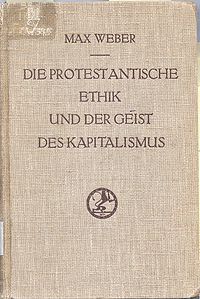 In sociology
, a discipline that arose in direct response to the social problems of "modernity" (Harriss 2000, 325), the term most generally refers to the social conditions, processes, and discourses consequent to the Age of Enlightenment
. In the most basic terms, Anthony Giddens
describes modernity as
Modernity aimed towards "a progressive force promising to liberate humankind from ignorance and irrationality" (Rosenau 1992, 5). With new social and philosophical conditions, however, arose fundamental new challenges. The era of modernity is characterised socially by industrialisation and the division of labour, and philosophically by "the loss of certainty, and the realization that certainty can never be established, once and for all" (Delanty 2007). Central to this loss of certainty is the loss of religion
. Various 19th century intellectuals, from Auguste Comte
to Karl Marx
to Sigmund Freud
, attempted to offer scientific and/or political ideologies in the wake of secularisation. Modernity may be described as the "age of ideology."
Critical theorists
such as Theodor Adorno and Zygmunt Bauman
propose that modernity represents a departure from the central tenets of the Enlightenment and towards nefarious processes of alienation
, such as commodity fetishism
and the Holocaust (Adorno 1973; Bauman 1989). Contemporary sociological critical theory
presents the concept of "rationalization
" in even more negative terms than those Weber originally defined. Processes of rationalization—as progress for the sake of progress—may in many cases have what critical theory says is a negative and dehumanising effect on modern society.
Consequent to debate about economic globalization
, the comparative analysis of civilisations, and the post-colonial perspective of "alternative modernities," Shmuel Eisenstadt
introduced the concept of "multiple modernities" (2003; see also Delanty 2007). Modernity as a "plural condition" is the central concept of this sociologic approach and perspective, which broadens the definition of "modernity" from exclusively denoting Western European culture to a culturally relativistic
definition, thereby: "Modernity is not Westernization, and its key processes and dynamics can be found in all societies" (Delanty 2007).
which no longer placed humanity's home, on Earth
, in the centre. Kepler used mathematics to discuss physics and described regularities of nature this way. Galileo actually made his famous proof of uniform acceleration in freefall using mathematics .
Francis Bacon
, especially in his Novum Organum
, argued for a new experimental based approach to science, which sought no knowledge of formal or final causes
, and was therefore materialist
, like the ancient philosophy of Democritus
and Epicurus
. But he also added a theme that science should seek to control nature for the sake of humanity, and not seek to understand it just for the sake of understanding. In both these things he was influenced of Machiavelli's earlier criticism of medieval Scholasticism
, and his proposal that leaders should aim to control their own fortune .
Influenced both by Galileo's new physics and Bacon, René Descartes
argued soon after that mathematics
and geometry
provided a model of how scientific knowledge could be built up in small steps. He also argued openly that human beings themselves could be understood as complex machines .
Isaac Newton
, influenced by Descartes, but also, like Bacon, a proponent of experimentation, provided the archetypal example of how both Cartesian
mathematics
, geometry
and theoretical
deduction
on the one hand, and Baconian
experimental observation
and induction
on the other hand, together could lead to great advances in the practical understanding of regularities in nature
(d'Alembert 2009 [1751]; Henry 2004).
ing itself which in turn led to a new understanding of less rationalistic human activities especially the arts. The initial influence was upon the movements known as German Idealism
and Romanticism
in the 18th and 19th century. Modern art therefore belongs only to the later phases of modernity.
For this reason art history
keeps the term "modernity" distinct from the terms Modern Age
and Modernism
– as a discrete "term applied to the cultural condition in which the seemingly absolute necessity of innovation
becomes a primary fact of life, work, and thought". And modernity in art "is more than merely the state of being modern, or the opposition between old and new" (Smith 2009).
In the essay
"The Painter of Modern Life" (1864), Charles Baudelaire
gives a literary definition: "By modernity I mean the transitory, the fugitive, the contingent" (Baudelaire 1964, 13).
Advancing technological innovation, affecting artistic technique and the means of manufacture, changed rapidly the possibilities of art and its status in a rapidly changing society. Photography challenged the place of the painter and painting. Architecture was transformed by the availability of steel for structures.
, modernity is "marked and defined by an obsession with 'evidence
'," visual culture
, and personal visibility (Leppert 2004, 19). Generally, the large-scale social integration constituting modernity, involves the:
Feudalism
Feudalism was a set of legal and military customs in medieval Europe that flourished between the 9th and 15th centuries, which, broadly defined, was a system for ordering society around relationships derived from the holding of land in exchange for service or labour.Although derived from the...
(or agrarianism
Agrarianism
Agrarianism has two common meanings. The first meaning refers to a social philosophy or political philosophy which values rural society as superior to urban society, the independent farmer as superior to the paid worker, and sees farming as a way of life that can shape the ideal social values...
) toward capitalism
Capitalism
Capitalism is an economic system that became dominant in the Western world following the demise of feudalism. There is no consensus on the precise definition nor on how the term should be used as a historical category...
, industrialization, secularization
Secularization
Secularization is the transformation of a society from close identification with religious values and institutions toward non-religious values and secular institutions...
, rationalization
Rationalization (sociology)
Rationalization is a term used in sociology to refer to a process in which an increasing number of social actions become based on considerations of teleological efficiency or calculation rather than on motivations derived from morality, emotion, custom, or tradition...
, the nation-state
Nation-state
The nation state is a state that self-identifies as deriving its political legitimacy from serving as a sovereign entity for a nation as a sovereign territorial unit. The state is a political and geopolitical entity; the nation is a cultural and/or ethnic entity...
and its constituent institutions and forms of surveillance
Surveillance
Surveillance is the monitoring of the behavior, activities, or other changing information, usually of people. It is sometimes done in a surreptitious manner...
(Barker 2005, 444). Conceptually, modernity relates to the modern era and to modernism
Modernism
Modernism, in its broadest definition, is modern thought, character, or practice. More specifically, the term describes the modernist movement, its set of cultural tendencies and array of associated cultural movements, originally arising from wide-scale and far-reaching changes to Western society...
, but forms a distinct concept. Whereas the Enlightenment invokes a specific movement in Western philosophy, modernity tends to refer only to the social relations associated with the rise of capitalism. Modernity may also refer to tendencies in intellectual culture, particularly the movements intertwined with secularisation and post-industrial life
Personal life
Personal life is the course of an individual's life, especially when viewed as the sum of personal choices contributing to one's personal identity. It is a common notion in modern existence—although more so in more prosperous parts of the world such as Western Europe and North America...
, such as Marxism
Marxism
Marxism is an economic and sociopolitical worldview and method of socioeconomic inquiry that centers upon a materialist interpretation of history, a dialectical view of social change, and an analysis and critique of the development of capitalism. Marxism was pioneered in the early to mid 19th...
, existentialism
Existentialism
Existentialism is a term applied to a school of 19th- and 20th-century philosophers who, despite profound doctrinal differences, shared the belief that philosophical thinking begins with the human subject—not merely the thinking subject, but the acting, feeling, living human individual...
, and the formal establishment of social science. In context, modernity has been associated with cultural and intellectual
Intellectual
An intellectual is a person who uses intelligence and critical or analytical reasoning in either a professional or a personal capacity.- Terminology and endeavours :"Intellectual" can denote four types of persons:...
movements of 1436—1789 and extending to the 1970s or later (Toulmin 1992, 3–5).
Related terms
The term "modern" (Latin modernus from modo, "just now") dates from the 5th century, originally distinguishing the Christian era from the PaganPaganism
Paganism is a blanket term, typically used to refer to non-Abrahamic, indigenous polytheistic religious traditions....
era, yet the word entered general usage only in the 17th-century quarrel of the Ancients and the Moderns
Quarrel of the Ancients and the Moderns
The quarrel of the Ancients and the Moderns was a literary and artistic debate that heated up in the early 1690s and shook the Académie française.-Description:...
— debating: "Is Modern culture superior to Classical (Græco–Roman) culture?" — a literary and art
Art
Art is the product or process of deliberately arranging items in a way that influences and affects one or more of the senses, emotions, and intellect....
istic quarrel within the Académie française
Académie française
L'Académie française , also called the French Academy, is the pre-eminent French learned body on matters pertaining to the French language. The Académie was officially established in 1635 by Cardinal Richelieu, the chief minister to King Louis XIII. Suppressed in 1793 during the French Revolution,...
in the early 1690s.
In these usages, "modernity" denoted the renunciation of the recent past, favouring a new beginning, and a re-interpretation of historical origin. The distinction between "modernity" and "modern" did not arise until the 19th century (Delanty 2007).
Phases of modernity
According to one of Marshall BermanMarshall Berman
Marshall Berman is an American philosopher and Marxist Humanist writer. He is currently Distinguished Professor of Political Science at The City College of New York and at the Graduate Center of the City University of New York, teaching Political Philosophy and Urbanism.-Biography:An alumnus of...
's books (Berman 1983,), modernity is periodized into three conventional phases (dubbed "Early," "Classical," and "Late," respectively, by Peter Osborne (1992, 25):
- Early modernityEarly modern periodIn history, the early modern period of modern history follows the late Middle Ages. Although the chronological limits of the period are open to debate, the timeframe spans the period after the late portion of the Middle Ages through the beginning of the Age of Revolutions...
: 1500–1789 (or 1453–1789 in traditional historiography) - Classical modernity: 1789–1900 (corresponding to the long 19th century (1789–1914) in HobsbawmEric HobsbawmEric John Ernest Hobsbawm , CH, FBA, is a British Marxist historian, public intellectual, and author...
's scheme) - Late modernity: 1900–1989
Some authors, such as Lyotard
Jean-François Lyotard
Jean-François Lyotard was a French philosopher and literary theorist. He is well known for his articulation of postmodernism after the late 1970s and the analysis of the impact of postmodernity on the human condition...
and Baudrillard
Jean Baudrillard
Jean Baudrillard was a French sociologist, philosopher, cultural theorist, political commentator, and photographer. His work is frequently associated with postmodernism and post-structuralism.-Life:...
, believe that modernity ended in the mid or late 20th century and thus have defined a period subsequent to modernity, namely Postmodernity
Postmodernity
Postmodernity is generally used to describe the economic or cultural state or condition of society which is said to exist after modernity...
(1930s/1950s/1990s–present). Other theorists, however, consider the period from the late 20th century to present to be merely another phase of modernity; this phase is called "Liquid" modernity by Bauman
Zygmunt Bauman
Zygmunt Bauman is a Polish sociologist who, since 1971, has resided in England after being driven out of Poland by an anti-Semitic campaign, engineered by the Communist government which he had previously supported...
or "High" modernity by Giddens (see: Descriptions of postmodernity).
Politically
Politically, modernity's earliest phase starts with Niccolò MachiavelliNiccolò Machiavelli
Niccolò di Bernardo dei Machiavelli was an Italian historian, philosopher, humanist, and writer based in Florence during the Renaissance. He is one of the main founders of modern political science. He was a diplomat, political philosopher, playwright, and a civil servant of the Florentine Republic...
's works which openly rejected the medieval and Aristotelian style of analyzing politics by comparison with ideas about how things should be, in favour of realistic analysis of how things really are. He also proposed that an aim of politics is to control one's own chance or fortune, and that relying upon providence actually leads to evil. Machiavelli argued, for example, that violent divisions within political communities are unavoidable, but can also be a source of strength which law-makers and leaders should account for and even encourage in some ways (Strauss 1987).
Machiavelli's recommendations were sometimes influential upon kings and princes, but eventually came to be seen as favoring free republics over monarchies . Machiavelli in turn influenced Francis Bacon
Francis Bacon
Francis Bacon, 1st Viscount St Albans, KC was an English philosopher, statesman, scientist, lawyer, jurist, author and pioneer of the scientific method. He served both as Attorney General and Lord Chancellor of England...
, Marchamont Needham
Marchamont Needham
Marchamont Needham was a journalist, publisher and pamphleteer during the English Civil War, who wrote official news and propaganda for both sides of the conflict....
, Harrington , John Milton
John Milton
John Milton was an English poet, polemicist, a scholarly man of letters, and a civil servant for the Commonwealth of England under Oliver Cromwell...
, David Hume
David Hume
David Hume was a Scottish philosopher, historian, economist, and essayist, known especially for his philosophical empiricism and skepticism. He was one of the most important figures in the history of Western philosophy and the Scottish Enlightenment...
, and many others (Strauss 1958).
Important modern political doctrines which stem from the new Machiavellian realism include Mandeville
Mandeville
-People:*Bernard Mandeville, philosopher*Geoffrey de Mandeville, 1st Earl of Essex*Geoffrey de Mandeville, 2nd Earl of Essex*Sir John Mandeville, French language author*William de Mandeville, 3rd Earl of Essex-Places:*Mandeville, Eure, Normandy, France...
's influential proposal that "Private Vices by the dextrous Management of a skilful Politician may be turned into Publick Benefits” (the last sentence of his Fable of the Bees), and also the doctrine of a constitutional "separation of powers
Separation of powers
The separation of powers, often imprecisely used interchangeably with the trias politica principle, is a model for the governance of a state. The model was first developed in ancient Greece and came into widespread use by the Roman Republic as part of the unmodified Constitution of the Roman Republic...
" in government, first clearly proposed by Montesquieu. Both these principles are enshrined within the constitution
Constitution
A constitution is a set of fundamental principles or established precedents according to which a state or other organization is governed. These rules together make up, i.e. constitute, what the entity is...
s of most modern democracies. It has been observed that while Machiavelli's realism saw a value to war and political violence, his lasting influence has been "tamed" so that useful conflict was deliberately converted as much as possible to formalized political struggles and the economic "conflict" encouraged between free, private enterprises .
Starting with Thomas Hobbes
Thomas Hobbes
Thomas Hobbes of Malmesbury , in some older texts Thomas Hobbs of Malmsbury, was an English philosopher, best known today for his work on political philosophy...
, attempts were made to use the methods of the new modern physical sciences, as proposed by Bacon
Bacon
Bacon is a cured meat prepared from a pig. It is first cured using large quantities of salt, either in a brine or in a dry packing; the result is fresh bacon . Fresh bacon may then be further dried for weeks or months in cold air, boiled, or smoked. Fresh and dried bacon must be cooked before eating...
and Descartes, applied to humanity and politics (Berns 1987). Notable attempts to improve upon the methodological approach of Hobbes include those of Locke
Locke
-People:*Locke , information about the surname and list of people*Locke *John Locke , English philosopher*Matthew Locke , baroque composer*Edwin A...
, Spinoza , Giambattista Vico
Giambattista Vico
Giovanni Battista ' Vico or Vigo was an Italian political philosopher, rhetorician, historian, and jurist....
(1984 xli), and Rousseau (1997 part 1). David Hume
David Hume
David Hume was a Scottish philosopher, historian, economist, and essayist, known especially for his philosophical empiricism and skepticism. He was one of the most important figures in the history of Western philosophy and the Scottish Enlightenment...
made what he considered to be the first proper attempt at trying to apply Bacon's scientific method to political subjects (Hume 1896 [1739], intro.), rejecting some aspects of the approach of Hobbes.
Modernist republicanism openly influenced the foundation of republics during the Dutch Revolt
Dutch Revolt
The Dutch Revolt or the Revolt of the Netherlands This article adopts 1568 as the starting date of the war, as this was the year of the first battles between armies. However, since there is a long period of Protestant vs...
(1568–1609) , English Civil War
English Civil War
The English Civil War was a series of armed conflicts and political machinations between Parliamentarians and Royalists...
(1642–1651) , American Revolution
American Revolution
The American Revolution was the political upheaval during the last half of the 18th century in which thirteen colonies in North America joined together to break free from the British Empire, combining to become the United States of America...
(1775–1783) , and the French Revolution
French Revolution
The French Revolution , sometimes distinguished as the 'Great French Revolution' , was a period of radical social and political upheaval in France and Europe. The absolute monarchy that had ruled France for centuries collapsed in three years...
(1789–1799) .
A second phase of modernist political thinking begins with Rousseau, who questioned the natural rationality and sociality of humanity and proposed that human nature
Human nature
Human nature refers to the distinguishing characteristics, including ways of thinking, feeling and acting, that humans tend to have naturally....
was much more malleable than had been previously thought. By this logic, what makes a good political system or a good man is completely dependent upon the chance path a whole people has taken over history. This thought influenced the political (and aesthetic) thinking of Immanuel Kant
Immanuel Kant
Immanuel Kant was a German philosopher from Königsberg , researching, lecturing and writing on philosophy and anthropology at the end of the 18th Century Enlightenment....
, Edmund Burke
Edmund Burke
Edmund Burke PC was an Irish statesman, author, orator, political theorist and philosopher who, after moving to England, served for many years in the House of Commons of Great Britain as a member of the Whig party....
and others and led to a critical review of modernist politics. On the conservative side, Burke argued that this understanding encouraged caution and avoidance of radical change. However more ambitious movements also developed from this insight into human culture
Culture
Culture is a term that has many different inter-related meanings. For example, in 1952, Alfred Kroeber and Clyde Kluckhohn compiled a list of 164 definitions of "culture" in Culture: A Critical Review of Concepts and Definitions...
, initially Romanticism
Romanticism
Romanticism was an artistic, literary and intellectual movement that originated in the second half of the 18th century in Europe, and gained strength in reaction to the Industrial Revolution...
and Historicism
Historicism
Historicism is a mode of thinking that assigns a central and basic significance to a specific context, such as historical period, geographical place and local culture. As such it is in contrast to individualist theories of knowledges such as empiricism and rationalism, which neglect the role of...
, and eventually both the Communism
Communism
Communism is a social, political and economic ideology that aims at the establishment of a classless, moneyless, revolutionary and stateless socialist society structured upon common ownership of the means of production...
of Karl Marx
Karl Marx
Karl Heinrich Marx was a German philosopher, economist, sociologist, historian, journalist, and revolutionary socialist. His ideas played a significant role in the development of social science and the socialist political movement...
, and the modern forms of nationalism
Nationalism
Nationalism is a political ideology that involves a strong identification of a group of individuals with a political entity defined in national terms, i.e. a nation. In the 'modernist' image of the nation, it is nationalism that creates national identity. There are various definitions for what...
inspired by the French Revolution
French Revolution
The French Revolution , sometimes distinguished as the 'Great French Revolution' , was a period of radical social and political upheaval in France and Europe. The absolute monarchy that had ruled France for centuries collapsed in three years...
, including, in one extreme, the German Nazi movement .
Sociologically
Sociology
Sociology is the study of society. It is a social science—a term with which it is sometimes synonymous—which uses various methods of empirical investigation and critical analysis to develop a body of knowledge about human social activity...
, a discipline that arose in direct response to the social problems of "modernity" (Harriss 2000, 325), the term most generally refers to the social conditions, processes, and discourses consequent to the Age of Enlightenment
Age of Enlightenment
The Age of Enlightenment was an elite cultural movement of intellectuals in 18th century Europe that sought to mobilize the power of reason in order to reform society and advance knowledge. It promoted intellectual interchange and opposed intolerance and abuses in church and state...
. In the most basic terms, Anthony Giddens
Anthony Giddens
Anthony Giddens, Baron Giddens is a British sociologist who is known for his theory of structuration and his holistic view of modern societies. He is considered to be one of the most prominent modern contributors in the field of sociology, the author of at least 34 books, published in at least 29...
describes modernity as
...a shorthand term for modern society, or industrial civilization. Portrayed in more detail, it is associated with (1) a certain set of attitudes towards the world, the idea of the world as open to transformation, by human intervention; (2) a complex of economic institutions, especially industrial production and a market economy; (3) a certain range of political institutions, including the nation-state and mass democracy. Largely as a result of these characteristics, modernity is vastly more dynamic than any previous type of social order. It is a society—more technically, a complex of institutionInstitutionAn institution is any structure or mechanism of social order and cooperation governing the behavior of a set of individuals within a given human community...
s—which, unlike any preceding culture, lives in the future, rather than the past (Giddens 1998, 94).
Modernity aimed towards "a progressive force promising to liberate humankind from ignorance and irrationality" (Rosenau 1992, 5). With new social and philosophical conditions, however, arose fundamental new challenges. The era of modernity is characterised socially by industrialisation and the division of labour, and philosophically by "the loss of certainty, and the realization that certainty can never be established, once and for all" (Delanty 2007). Central to this loss of certainty is the loss of religion
Religion
Religion is a collection of cultural systems, belief systems, and worldviews that establishes symbols that relate humanity to spirituality and, sometimes, to moral values. Many religions have narratives, symbols, traditions and sacred histories that are intended to give meaning to life or to...
. Various 19th century intellectuals, from Auguste Comte
Auguste Comte
Isidore Auguste Marie François Xavier Comte , better known as Auguste Comte , was a French philosopher, a founder of the discipline of sociology and of the doctrine of positivism...
to Karl Marx
Karl Marx
Karl Heinrich Marx was a German philosopher, economist, sociologist, historian, journalist, and revolutionary socialist. His ideas played a significant role in the development of social science and the socialist political movement...
to Sigmund Freud
Sigmund Freud
Sigmund Freud , born Sigismund Schlomo Freud , was an Austrian neurologist who founded the discipline of psychoanalysis...
, attempted to offer scientific and/or political ideologies in the wake of secularisation. Modernity may be described as the "age of ideology."
Critical theorists
Critical theory
Critical theory is an examination and critique of society and culture, drawing from knowledge across the social sciences and humanities. The term has two different meanings with different origins and histories: one originating in sociology and the other in literary criticism...
such as Theodor Adorno and Zygmunt Bauman
Zygmunt Bauman
Zygmunt Bauman is a Polish sociologist who, since 1971, has resided in England after being driven out of Poland by an anti-Semitic campaign, engineered by the Communist government which he had previously supported...
propose that modernity represents a departure from the central tenets of the Enlightenment and towards nefarious processes of alienation
Social alienation
The term social alienation has many discipline-specific uses; Roberts notes how even within the social sciences, it “is used to refer both to a personal psychological state and to a type of social relationship”...
, such as commodity fetishism
Commodity fetishism
In Marx's critique of political economy, commodity fetishism denotes the mystification of human relations said to arise out of the growth of market trade, when social relationships between people are expressed as, mediated by and transformed into, objectified relationships between things .The...
and the Holocaust (Adorno 1973; Bauman 1989). Contemporary sociological critical theory
Critical theory
Critical theory is an examination and critique of society and culture, drawing from knowledge across the social sciences and humanities. The term has two different meanings with different origins and histories: one originating in sociology and the other in literary criticism...
presents the concept of "rationalization
Rationalization (sociology)
Rationalization is a term used in sociology to refer to a process in which an increasing number of social actions become based on considerations of teleological efficiency or calculation rather than on motivations derived from morality, emotion, custom, or tradition...
" in even more negative terms than those Weber originally defined. Processes of rationalization—as progress for the sake of progress—may in many cases have what critical theory says is a negative and dehumanising effect on modern society.
Consequent to debate about economic globalization
Globalization
Globalization refers to the increasingly global relationships of culture, people and economic activity. Most often, it refers to economics: the global distribution of the production of goods and services, through reduction of barriers to international trade such as tariffs, export fees, and import...
, the comparative analysis of civilisations, and the post-colonial perspective of "alternative modernities," Shmuel Eisenstadt
Shmuel Eisenstadt
Shmuel Noah Eisenstadt was an Israeli sociologist. In 1959 he was appointed to a teaching post in the sociology department of the Hebrew University in Jerusalem. From 1990 until his death in September of 2010 he had been a professor emeritus...
introduced the concept of "multiple modernities" (2003; see also Delanty 2007). Modernity as a "plural condition" is the central concept of this sociologic approach and perspective, which broadens the definition of "modernity" from exclusively denoting Western European culture to a culturally relativistic
Cultural relativism
Cultural relativism is the principle that an individual human's beliefs and activities should be understood by others in terms of that individual's own culture. This principle was established as axiomatic in anthropological research by Franz Boas in the first few decades of the 20th century and...
definition, thereby: "Modernity is not Westernization, and its key processes and dynamics can be found in all societies" (Delanty 2007).
Scientifically
In the 16th and 17th centuries, Copernicus, Kepler, Galileo and others developed a new approach to physics and astronomy which changed the way people came to think about many things. Copernicus presented new models of the solar systemSolar System
The Solar System consists of the Sun and the astronomical objects gravitationally bound in orbit around it, all of which formed from the collapse of a giant molecular cloud approximately 4.6 billion years ago. The vast majority of the system's mass is in the Sun...
which no longer placed humanity's home, on Earth
Earth
Earth is the third planet from the Sun, and the densest and fifth-largest of the eight planets in the Solar System. It is also the largest of the Solar System's four terrestrial planets...
, in the centre. Kepler used mathematics to discuss physics and described regularities of nature this way. Galileo actually made his famous proof of uniform acceleration in freefall using mathematics .
Francis Bacon
Francis Bacon
Francis Bacon, 1st Viscount St Albans, KC was an English philosopher, statesman, scientist, lawyer, jurist, author and pioneer of the scientific method. He served both as Attorney General and Lord Chancellor of England...
, especially in his Novum Organum
Novum Organum
The Novum Organum, full original title Novum Organum Scientiarum, is a philosophical work by Francis Bacon, written in Latin and published in 1620. The title translates as new instrument, i.e. new instrument of science. This is a reference to Aristotle's work Organon, which was his treatise on...
, argued for a new experimental based approach to science, which sought no knowledge of formal or final causes
Four causes
Four Causes refers to a principle in Aristotelian science that is used to understand change. Aristotle described four different types of causes, or ways in which an object could be explained: "we do not have knowledge of a thing until we have grasped its why, that is to say, its cause", He argued...
, and was therefore materialist
Materialism
In philosophy, the theory of materialism holds that the only thing that exists is matter; that all things are composed of material and all phenomena are the result of material interactions. In other words, matter is the only substance...
, like the ancient philosophy of Democritus
Democritus
Democritus was an Ancient Greek philosopher born in Abdera, Thrace, Greece. He was an influential pre-Socratic philosopher and pupil of Leucippus, who formulated an atomic theory for the cosmos....
and Epicurus
Epicurus
Epicurus was an ancient Greek philosopher and the founder of the school of philosophy called Epicureanism.Only a few fragments and letters remain of Epicurus's 300 written works...
. But he also added a theme that science should seek to control nature for the sake of humanity, and not seek to understand it just for the sake of understanding. In both these things he was influenced of Machiavelli's earlier criticism of medieval Scholasticism
Scholasticism
Scholasticism is a method of critical thought which dominated teaching by the academics of medieval universities in Europe from about 1100–1500, and a program of employing that method in articulating and defending orthodoxy in an increasingly pluralistic context...
, and his proposal that leaders should aim to control their own fortune .
Influenced both by Galileo's new physics and Bacon, René Descartes
René Descartes
René Descartes ; was a French philosopher and writer who spent most of his adult life in the Dutch Republic. He has been dubbed the 'Father of Modern Philosophy', and much subsequent Western philosophy is a response to his writings, which are studied closely to this day...
argued soon after that mathematics
Mathematics
Mathematics is the study of quantity, space, structure, and change. Mathematicians seek out patterns and formulate new conjectures. Mathematicians resolve the truth or falsity of conjectures by mathematical proofs, which are arguments sufficient to convince other mathematicians of their validity...
and geometry
Geometry
Geometry arose as the field of knowledge dealing with spatial relationships. Geometry was one of the two fields of pre-modern mathematics, the other being the study of numbers ....
provided a model of how scientific knowledge could be built up in small steps. He also argued openly that human beings themselves could be understood as complex machines .
Isaac Newton
Isaac Newton
Sir Isaac Newton PRS was an English physicist, mathematician, astronomer, natural philosopher, alchemist, and theologian, who has been "considered by many to be the greatest and most influential scientist who ever lived."...
, influenced by Descartes, but also, like Bacon, a proponent of experimentation, provided the archetypal example of how both Cartesian
Cartesianism
Cartesian means of or relating to the French philosopher and mathematician René Descartes—from his name—Rene Des-Cartes. It may refer to:*Cartesian anxiety*Cartesian circle*Cartesian dualism...
mathematics
Mathematics
Mathematics is the study of quantity, space, structure, and change. Mathematicians seek out patterns and formulate new conjectures. Mathematicians resolve the truth or falsity of conjectures by mathematical proofs, which are arguments sufficient to convince other mathematicians of their validity...
, geometry
Geometry
Geometry arose as the field of knowledge dealing with spatial relationships. Geometry was one of the two fields of pre-modern mathematics, the other being the study of numbers ....
and theoretical
Theory
The English word theory was derived from a technical term in Ancient Greek philosophy. The word theoria, , meant "a looking at, viewing, beholding", and referring to contemplation or speculation, as opposed to action...
deduction
Deduction
Deduction may refer to:in logic:* Deductive reasoning, inference in which the conclusion is of no greater generality than the premises...
on the one hand, and Baconian
Baconian method
The Baconian method is the investigative method developed by Sir Francis Bacon. The method was put forward in Bacon's book Novum Organum , or 'New Method', and was supposed to replace the methods put forward in Aristotle's Organon...
experimental observation
Scientific method
Scientific method refers to a body of techniques for investigating phenomena, acquiring new knowledge, or correcting and integrating previous knowledge. To be termed scientific, a method of inquiry must be based on gathering empirical and measurable evidence subject to specific principles of...
and induction
Induction
-General use:* Induction , induction of childbirth* Rite of passage** Introduction of an individual into a body such as the armed forces** Formal introduction of a priest into possession of the position to which she or he has been presented and instituted...
on the other hand, together could lead to great advances in the practical understanding of regularities in nature
Nature (philosophy)
Nature is a concept with two major sets of inter-related meanings, referring on the one hand to the things which are natural, or subject to the normal working of "laws of nature", or on the other hand to the essential properties and causes of those things to be what they naturally are, or in other...
(d'Alembert 2009 [1751]; Henry 2004).
Artistically
After modernist political thinking had already become widely known in France, Rousseau's re-examination of human nature led to a new criticism of the value of reasonReason
Reason is a term that refers to the capacity human beings have to make sense of things, to establish and verify facts, and to change or justify practices, institutions, and beliefs. It is closely associated with such characteristically human activities as philosophy, science, language, ...
ing itself which in turn led to a new understanding of less rationalistic human activities especially the arts. The initial influence was upon the movements known as German Idealism
German idealism
German idealism was a philosophical movement that emerged in Germany in the late 18th and early 19th centuries. It developed out of the work of Immanuel Kant in the 1780s and 1790s, and was closely linked both with romanticism and the revolutionary politics of the Enlightenment...
and Romanticism
Romanticism
Romanticism was an artistic, literary and intellectual movement that originated in the second half of the 18th century in Europe, and gained strength in reaction to the Industrial Revolution...
in the 18th and 19th century. Modern art therefore belongs only to the later phases of modernity.
For this reason art history
Art history
Art history has historically been understood as the academic study of objects of art in their historical development and stylistic contexts, i.e. genre, design, format, and style...
keeps the term "modernity" distinct from the terms Modern Age
Modern history
Modern history, or the modern era, describes the historical timeline after the Middle Ages. Modern history can be further broken down into the early modern period and the late modern period after the French Revolution and the Industrial Revolution...
and Modernism
Modernism
Modernism, in its broadest definition, is modern thought, character, or practice. More specifically, the term describes the modernist movement, its set of cultural tendencies and array of associated cultural movements, originally arising from wide-scale and far-reaching changes to Western society...
– as a discrete "term applied to the cultural condition in which the seemingly absolute necessity of innovation
Innovation
Innovation is the creation of better or more effective products, processes, technologies, or ideas that are accepted by markets, governments, and society...
becomes a primary fact of life, work, and thought". And modernity in art "is more than merely the state of being modern, or the opposition between old and new" (Smith 2009).
In the essay
Essay
An essay is a piece of writing which is often written from an author's personal point of view. Essays can consist of a number of elements, including: literary criticism, political manifestos, learned arguments, observations of daily life, recollections, and reflections of the author. The definition...
"The Painter of Modern Life" (1864), Charles Baudelaire
Charles Baudelaire
Charles Baudelaire was a French poet who produced notable work as an essayist, art critic, and pioneering translator of Edgar Allan Poe. His most famous work, Les Fleurs du mal expresses the changing nature of beauty in modern, industrializing Paris during the nineteenth century...
gives a literary definition: "By modernity I mean the transitory, the fugitive, the contingent" (Baudelaire 1964, 13).
Advancing technological innovation, affecting artistic technique and the means of manufacture, changed rapidly the possibilities of art and its status in a rapidly changing society. Photography challenged the place of the painter and painting. Architecture was transformed by the availability of steel for structures.
Modernity defined
Of the available conceptual definitions in sociologySociology
Sociology is the study of society. It is a social science—a term with which it is sometimes synonymous—which uses various methods of empirical investigation and critical analysis to develop a body of knowledge about human social activity...
, modernity is "marked and defined by an obsession with 'evidence
Evidence
Evidence in its broadest sense includes everything that is used to determine or demonstrate the truth of an assertion. Giving or procuring evidence is the process of using those things that are either presumed to be true, or were themselves proven via evidence, to demonstrate an assertion's truth...
'," visual culture
Visual culture
Visual Culture as an academic subject is a field of study that generally includes some combination of cultural studies, art history, critical theory, philosophy, and anthropology, by focusing on aspects of culture that rely on visual images.- Overview :...
, and personal visibility (Leppert 2004, 19). Generally, the large-scale social integration constituting modernity, involves the:
- increased movement of goods, capitalCapital (economics)In economics, capital, capital goods, or real capital refers to already-produced durable goods used in production of goods or services. The capital goods are not significantly consumed, though they may depreciate in the production process...
, people, and information among formerly discrete populations, and consequent influence beyond the local area - increased formal social organisation of mobile populaces, development of "circuits" on which they and their influence travel, and societal standardization conducive to socio-economic mobility
- increased specialization of the segments of society, i.e., division of labor, and area inter-dependency
See also
- Modernisation
- Rationalization (sociology)Rationalization (sociology)Rationalization is a term used in sociology to refer to a process in which an increasing number of social actions become based on considerations of teleological efficiency or calculation rather than on motivations derived from morality, emotion, custom, or tradition...
- UrbanizationUrbanizationUrbanization, urbanisation or urban drift is the physical growth of urban areas as a result of global change. The United Nations projected that half of the world's population would live in urban areas at the end of 2008....
- Industrialization
- Mass societyMass societyMass society is a description associated with society in the modern, industrial era. "Guided by the structural-functional approach and drawing on the ideas of Tönnies, Durkheim, and Weber, understands modernity as the emergence of a mass society...
- PostmodernityPostmodernityPostmodernity is generally used to describe the economic or cultural state or condition of society which is said to exist after modernity...
- HypermodernityHypermodernityHypermodernity is a type, mode, or stage of society that reflects a deepening or intensification of modernity. Characteristics include a deep faith in humanity's ability to understand, control, and manipulate every aspect of human experience...
- TransmodernityTransmodernity"Transmodernity" is a philosophical concept coined by the Spanish philosopher and feminist Rosa María Rodríguez Magda in 1989 in her essay La sonrisa de Saturno. Hacia una teoría transmoderna....
- Late modernityLate modernityLate modernity is a term that has been used to describe the condition or state of some highly developed present day societies...
- Second modernitySecond modernitySecond modernity is a phrase coined by the German sociologist Ulrich Beck, and is his word for the period after modernity.Re-modernity is a renaissance of modernity through realization that not all risks can be controlled...
- Islam and modernityIslam and modernityIslam and modernity is a topic of discussion in contemporary sociology of religion. Neither Islam nor modernity are simple or unified entities. They are abstract quantities which could not be reduced into simple categories. The history of Islam, like that of other religions, is a history of...
- Modern Orthodox JudaismModern Orthodox JudaismModern Orthodox Judaism is a movement within Orthodox Judaism that attempts to synthesize Jewish values and the observance of Jewish law, with the secular, modern world....
- Modernism (Roman Catholicism)Modernism (Roman Catholicism)Modernism refers to theological opinions expressed during the late 19th and early 20th centuries, but with influence reaching into the 21st century, which are characterized by a break with the past. Catholic modernists form an amorphous group. The term "modernist" appears in Pope Pius X's 1907...
- Buddhist modernismBuddhist modernismBuddhist modernism consists of the "forms of Buddhism that have emerged out of an engagement with the dominant cultural and intellectual forces of modernity." While there can be no complete, essential definition of what constitutes a Buddhist Modernist tradition, most scholars agree that...
Further reading
- Arendt, HannahHannah ArendtHannah Arendt was a German American political theorist. She has often been described as a philosopher, although she refused that label on the grounds that philosophy is concerned with "man in the singular." She described herself instead as a political theorist because her work centers on the fact...
. 1958. "The Origins Of Totalitarianism" Cleavland: World Publishing Co. ISBN 0805242252 - Berman, MarshallMarshall BermanMarshall Berman is an American philosopher and Marxist Humanist writer. He is currently Distinguished Professor of Political Science at The City College of New York and at the Graduate Center of the City University of New York, teaching Political Philosophy and Urbanism.-Biography:An alumnus of...
. 1982. "All That Is Solid Melts into Air: The Experience of Modernity." New York: Simon and Schuster. ISBN 067124602X Reprinted 1988, New York: Viking Penguin ISBN 0140109625 - Buci-Glucksmann, ChristineChristine Buci-GlucksmannChristine Buci-Glucksmann is a French philosopher and Professor Emeritus from University of Paris VIII specializing in the aesthetics of the Baroque, Japan and computer art...
. 1994. Baroque Reason: The Aesthetics of Modernity. Thousand Oaks, Calif: Sage Publications. ISBN 080398975X (cloth) ISBN 0803989768 (pbk) - Carroll, Michael Thomas. 2000. Popular Modernity in America: Experience, Technology, Mythohistory. SUNY Series in Postmodern Culture. Albany: State University of New York Press. ISBN 0791447138 (hc) ISBN 0791447146 (pbk)
- Corchia, Luca. 2008. "Il concetto di modernità in Jürgen Habermas. Un indice ragionato." The Lab's Quarterly/Il Trimestrale del Laboratorio 2:396ff. ISSN 2035-5548.
- Crouch, Christopher. 2000. "Modernism in Art Design and Architecture," New York: St. Martins Press. ISBN 0312218303 (cloth) ISBN 031221832X (pbk)
- Eisenstadt, Shmuel Noah. 2003. Comparative Civilizations and Multiple Modernities, 2 vols. Leiden and Boston: Brill.
- Gaonkar, Dilip Parameshwar (ed.). 2001. Alternative Modernities. A Millennial Quartet Book. Durham: Duke University Press. ISBN 0822327031 (cloth); ISBN 0822327147 (pbk)
- Giddens, Anthony. 1990. The Consequences of Modernity. Stanford: Stanford University Press. ISBN 0804717621 (cloth); ISBN 0804718911 (pbk); Cambridge, UK: Polity Press in association with Basil Blackwell, Oxford. ISBN 0745607934
- Jarzombek, MarkMark JarzombekMark Jarzombek is a US-born architectural historian, author and critic. Since 1995 he has served as Director of the History Theory Criticism Section of the Department of Architecture at MIT, Cambridge MA, United States....
. 2000. The Psychologizing of Modernity: Art, Architecture, History. Cambridge: Cambridge University Press. - Kolakowsi, Leszek. 1990. Modernity on Endless Trial. Chicago: University of Chicago Press. ISBN 0226450457
- Latour, BrunoBruno LatourBruno Latour is a French sociologist of science and anthropologist and an influential theorist in the field of Science and Technology Studies...
. 1993. We Have Never Been ModernWe Have Never Been ModernWe Have Never Been Modern is a 1991 book by Bruno Latour, originally published in French as Nous n'avons jamais été modernes : Essai d'anthropologie symétrique ....
, translated by Catherine Porter. Cambridge, MA: Harvard University Press. ISBN 0674948386 (hb) ISBN 0674948394 (pbk.) - Perreau-Saussine, Emile. 2005. . Commentaire no. 109 (Spring): 181–93.
External links
- Religion and Modernity – Modern mans' encounter with religion