

Tannin

Encyclopedia
Astringent
An astringent substance is a chemical compound that tends to shrink or constrict body tissues, usually locally after topical medicinal application. The word "astringent" derives from Latin adstringere, meaning "to bind fast"...
, bitter plant polyphenol
Polyphenol
Polyphenols are a structural class of natural, synthetic, and semisynthetic organic chemicals characterized by the presence of large multiples of phenol structural units...
ic compound that binds to and precipitate
Precipitation (chemistry)
Precipitation is the formation of a solid in a solution or inside anothersolid during a chemical reaction or by diffusion in a solid. When the reaction occurs in a liquid, the solid formed is called the precipitate, or when compacted by a centrifuge, a pellet. The liquid remaining above the solid...
s protein
Protein
Proteins are biochemical compounds consisting of one or more polypeptides typically folded into a globular or fibrous form, facilitating a biological function. A polypeptide is a single linear polymer chain of amino acids bonded together by peptide bonds between the carboxyl and amino groups of...
s and various other organic compounds including amino acid
Amino acid
Amino acids are molecules containing an amine group, a carboxylic acid group and a side-chain that varies between different amino acids. The key elements of an amino acid are carbon, hydrogen, oxygen, and nitrogen...
s and alkaloid
Alkaloid
Alkaloids are a group of naturally occurring chemical compounds that contain mostly basic nitrogen atoms. This group also includes some related compounds with neutral and even weakly acidic properties. Also some synthetic compounds of similar structure are attributed to alkaloids...
s.
The term tannin (from tanna, an Old High German
Old High German
The term Old High German refers to the earliest stage of the German language and it conventionally covers the period from around 500 to 1050. Coherent written texts do not appear until the second half of the 8th century, and some treat the period before 750 as 'prehistoric' and date the start of...
word for oak
Oak
An oak is a tree or shrub in the genus Quercus , of which about 600 species exist. "Oak" may also appear in the names of species in related genera, notably Lithocarpus...
or fir
Fir
Firs are a genus of 48–55 species of evergreen conifers in the family Pinaceae. They are found through much of North and Central America, Europe, Asia, and North Africa, occurring in mountains over most of the range...
tree, as in Tannenbaum) refers to the use of wood tannins from oak in tanning
Tanning
Tanning is the making of leather from the skins of animals which does not easily decompose. Traditionally, tanning used tannin, an acidic chemical compound from which the tanning process draws its name . Coloring may occur during tanning...
animal hides into leather
Leather
Leather is a durable and flexible material created via the tanning of putrescible animal rawhide and skin, primarily cattlehide. It can be produced through different manufacturing processes, ranging from cottage industry to heavy industry.-Forms:...
; hence the words "tan" and "tanning" for the treatment of leather. However, the term "tannin" by extension is widely applied to any large polyphenol
Polyphenol
Polyphenols are a structural class of natural, synthetic, and semisynthetic organic chemicals characterized by the presence of large multiples of phenol structural units...
ic compound containing sufficient hydroxyl
Hydroxyl
A hydroxyl is a chemical group containing an oxygen atom covalently bonded with a hydrogen atom. In inorganic chemistry, the hydroxyl group is known as the hydroxide ion, and scientists and reference works generally use these different terms though they refer to the same chemical structure in...
s and other suitable groups (such as carboxyls) to form strong complexes with proteins and other macromolecule
Macromolecule
A macromolecule is a very large molecule commonly created by some form of polymerization. In biochemistry, the term is applied to the four conventional biopolymers , as well as non-polymeric molecules with large molecular mass such as macrocycles...
s.
The tannin compounds are widely distributed in many species of plants, where they play a role in protection from predation, and perhaps also as pesticides, and in plant growth regulation. The astringency from the tannins is what causes the dry and puckery feeling in the mouth following the consumption of unripened fruit or red wine. Likewise, the destruction or modification of tannins with time plays an important role in the ripening of fruit and the aging of wine
Aging of wine
The aging of wine, and its ability to potentially improve wine quality, distinguishes wine from most other consumable goods. While wine is perishable and capable of deteriorating, complex chemical reactions involving a wine's sugars, acids and phenolic compounds can alter the aroma, color,...
.
Tannins have molecular weights ranging from 500 to over 3,000 (gallic acid
Gallic acid
Gallic acid is a trihydroxybenzoic acid, a type of phenolic acid, a type of organic acid, also known as 3,4,5-trihydroxybenzoic acid, found in gallnuts, sumac, witch hazel, tea leaves, oak bark, and other plants. The chemical formula is C6H23COOH. Gallic acid is found both free and as part of...
ester
Ester
Esters are chemical compounds derived by reacting an oxoacid with a hydroxyl compound such as an alcohol or phenol. Esters are usually derived from an inorganic acid or organic acid in which at least one -OH group is replaced by an -O-alkyl group, and most commonly from carboxylic acids and...
s) and up to 20,000 (proanthocyanidins). Tannins are incompatible with alkali
Alkali
In chemistry, an alkali is a basic, ionic salt of an alkali metal or alkaline earth metal element. Some authors also define an alkali as a base that dissolves in water. A solution of a soluble base has a pH greater than 7. The adjective alkaline is commonly used in English as a synonym for base,...
s, gelatin
Gelatin
Gelatin is a translucent, colorless, brittle , flavorless solid substance, derived from the collagen inside animals' skin and bones. It is commonly used as a gelling agent in food, pharmaceuticals, photography, and cosmetic manufacturing. Substances containing gelatin or functioning in a similar...
, heavy metals, iron
Iron
Iron is a chemical element with the symbol Fe and atomic number 26. It is a metal in the first transition series. It is the most common element forming the planet Earth as a whole, forming much of Earth's outer and inner core. It is the fourth most common element in the Earth's crust...
, lime water
Lime water
Limewater is the common name for saturated calcium hydroxide solution. It is sparsely soluble. Its chemical formula is Ca2. Since calcium hydroxide is only sparsely soluble, i.e. ca. 1.5 g per liter at 25 °C, there is no visible distinction to clear water. Attentive observers will notice a slightly...
, metallic salts, strong oxidizing agents and zinc sulfate
Zinc sulfate
Zinc sulfate is the inorganic compound with the formula ZnSO4 as well as any of three hydrates. It was historically known as "white vitriol". It is a colorless solid that is a common source of soluble zinc ions.-Production and reactivity:...
, since they form complexes and precipitate in aqueous solution.
Occurrence
Tannins are distributed in species throughout the plant kingdom. They are commonly found in both gymnospermGymnosperm
The gymnosperms are a group of seed-bearing plants that includes conifers, cycads, Ginkgo, and Gnetales. The term "gymnosperm" comes from the Greek word gymnospermos , meaning "naked seeds", after the unenclosed condition of their seeds...
s as well as angiosperms. Tannins are mainly physically located in the vacuole
Vacuole
A vacuole is a membrane-bound organelle which is present in all plant and fungal cells and some protist, animal and bacterial cells. Vacuoles are essentially enclosed compartments which are filled with water containing inorganic and organic molecules including enzymes in solution, though in certain...
s or surface wax of plants. These storage sites keep tannins active against plant predators, but also keep some tannins from affecting plant metabolism while the plant tissue is alive; it is only after cell breakdown and death that the tannins are active in metabolic effects. Tannins are classified as ergastic substance
Ergastic substance
Ergastic substances are non-protoplasm materials found in cells. The living protoplasm of a cell is sometimes called the bioplasm and distinct from the ergastic substances of the cell...
s, i.e., non-protoplasm materials found in cells.
Tannins are found in leaf, bud, seed, root, and stem tissues. An example of the location of the tannins in stem tissue is that they are often found in the growth areas of trees, such as the secondary phloem and xylem and the layer between the cortex and epidermis. Tannins may help regulate the growth of these tissues.
There may be a loss in the bio-availability of still other tannins in plants due to birds, pests, and other pathogens.
The most abundant polyphenols are the condensed tannins, found in virtually all families of plants, and comprising up to 50% of the dry weight of leaves.
Presence in soils
The convergent evolutionConvergent evolution
Convergent evolution describes the acquisition of the same biological trait in unrelated lineages.The wing is a classic example of convergent evolution in action. Although their last common ancestor did not have wings, both birds and bats do, and are capable of powered flight. The wings are...
of tannin-rich plant communities has occurred on nutrient-poor acidic soils throughout the world. Tannins were once believed to function as anti-herbivore defenses, but more and more ecologists now recognize them as important controllers of decomposition and nitrogen cycling processes. As concern grows about global warming, there is great interest to better understand the role of polyphenols as regulators of carbon cycling, in particular in northern boreal forests.
Presence in water and wood
Water
Water is a chemical substance with the chemical formula H2O. A water molecule contains one oxygen and two hydrogen atoms connected by covalent bonds. Water is a liquid at ambient conditions, but it often co-exists on Earth with its solid state, ice, and gaseous state . Water also exists in a...
soluble
Solubility
Solubility is the property of a solid, liquid, or gaseous chemical substance called solute to dissolve in a solid, liquid, or gaseous solvent to form a homogeneous solution of the solute in the solvent. The solubility of a substance fundamentally depends on the used solvent as well as on...
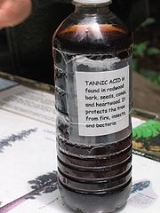
tannins from decaying vegetation and leaves along a stream may produce what is known as a blackwater river
Blackwater river
A blackwater river is a river with a deep, slow-moving channel that flows through forested swamps and wetlands. As vegetation decays in the water, tannins are leached out, resulting in transparent, acidic water that is darkly stained, resembling tea or coffee. Most major blackwater rivers are in...
. Water flowing out of bog
Bog
A bog, quagmire or mire is a wetland that accumulates acidic peat, a deposit of dead plant material—often mosses or, in Arctic climates, lichens....
s has a characteristic brown color from dissolved peat
Peat
Peat is an accumulation of partially decayed vegetation matter or histosol. Peat forms in wetland bogs, moors, muskegs, pocosins, mires, and peat swamp forests. Peat is harvested as an important source of fuel in certain parts of the world...
tannins. The presence of tannins (and/or humic acid
Humic acid
Humic acid is a principal component of humic substances, which are the major organic constituents of soil , peat, coal, many upland streams, dystrophic lakes, and ocean water. It is produced by biodegradation of dead organic matter...
) in well water
Water well
A water well is an excavation or structure created in the ground by digging, driving, boring or drilling to access groundwater in underground aquifers. The well water is drawn by an electric submersible pump, a trash pump, a vertical turbine pump, a handpump or a mechanical pump...
can make it smell bad or taste bitter, but not be unsafe to drink.
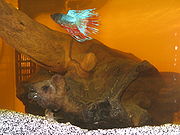
Tannins leaching from an unprepared driftwood decoration in an aquarium can cause pH lowering and coloring of the water to a tea-like tinge. A remedy is to boil the wood
Wood
Wood is a hard, fibrous tissue found in many trees. It has been used for hundreds of thousands of years for both fuel and as a construction material. It is an organic material, a natural composite of cellulose fibers embedded in a matrix of lignin which resists compression...
in water several times (which will also darken and waterlog
Underwater logging
Underwater logging is the process of logging trees from underwater forests. When artificial reservoirs and dams are built, large areas of forest are often inundated; although the trees die, the wood is often preserved. The trees can then be felled using special underwater machinery and floated up...
the wood, i.e., make it sink), discarding the water each time. Using peat as an aquarium substrate
Substrate (aquarium)
The substrate of an aquarium refers to the material used on the tank bottom. It can affect water chemistry, filtration, and the well-being of the aquarium's inhabitants, and is also an important part of the aquarium's aesthetic appeal...
can lead to the same problem.
Many hours of boiling the driftwood may need to be followed by many weeks or months of constant soaking and many water changes before the water will stay clear. Adding baking soda
Sodium bicarbonate
Sodium bicarbonate or sodium hydrogen carbonate is the chemical compound with the formula Na HCO3. Sodium bicarbonate is a white solid that is crystalline but often appears as a fine powder. It has a slightly salty, alkaline taste resembling that of washing soda . The natural mineral form is...
to the water to raise its pH level
Soil pH
The soil pH is a measure of the acidity or basicity in soils. pH is defined as the negative logarithm of the activity of hydrogen ions in solution. It ranges from 0 to 14, with 7 being neutral. A pH below 7 is acidic and above 7 is basic. Soil pH is considered a master variable in soils as it...
will accelerate the process of leaching, as the more alkaline
Alkalinity
Alkalinity or AT measures the ability of a solution to neutralize acids to the equivalence point of carbonate or bicarbonate. The alkalinity is equal to the stoichiometric sum of the bases in solution...
solution can draw out tannic acid
Tannic acid
Tannic acid is a specific commercial form of tannin, a type of polyphenol. Its weak acidity is due to the numerous phenol groups in the structure...
from the wood faster than the pH-neutral water.
Softwood
Softwood
The term softwood is used to describe wood from trees that are known as gymnosperms.Conifers are an example. It may also be used to describe trees, which tend to be evergreen, notable exceptions being bald cypress and the larches....
s, while in general much lower in tannins than hardwoods, are usually not recommended for use in an aquarium so using a hardwood
Hardwood
Hardwood is wood from angiosperm trees . It may also be used for those trees themselves: these are usually broad-leaved; in temperate and boreal latitudes they are mostly deciduous, but in tropics and subtropics mostly evergreen.Hardwood contrasts with softwood...
with a very light color, indicating a low tannin content
Concentration
In chemistry, concentration is defined as the abundance of a constituent divided by the total volume of a mixture. Four types can be distinguished: mass concentration, molar concentration, number concentration, and volume concentration...
, can be an easy way to avoid tannins. Tannic acid
Acid
An acid is a substance which reacts with a base. Commonly, acids can be identified as tasting sour, reacting with metals such as calcium, and bases like sodium carbonate. Aqueous acids have a pH of less than 7, where an acid of lower pH is typically stronger, and turn blue litmus paper red...
is brown in color, so in general white woods have a low tannin content. Woods with a lot of yellow, red, or brown coloration to them (like southern yellow pine, cedar, redwood, red oak, etc.) tend to contain a lot of tannin. Finnish hardwoods, like birch and aspen, do not contain tannins.
Classes of tannins
There are three major classes of tannins:| Base Unit: | 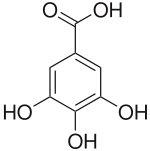 Gallic acid Gallic acid is a trihydroxybenzoic acid, a type of phenolic acid, a type of organic acid, also known as 3,4,5-trihydroxybenzoic acid, found in gallnuts, sumac, witch hazel, tea leaves, oak bark, and other plants. The chemical formula is C6H23COOH. Gallic acid is found both free and as part of... |
 |
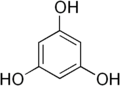 Phloroglucinol Phloroglucinol is a benzenetriol. It is an organic compound that is used in the synthesis of pharmaceuticals and explosives. This molecule exists in two forms, or tautomers, 1,3,5-trihydroxybenzene, which has phenol-like, and 1,3,5-cyclohexanetrione , which has ketone-like character. These two... |
|---|---|---|---|
| Class/Polymer: | Hydrolyzable tannins | Non-Hydrolyzable or condensed tannins |
Phlorotannin Phlorotannin A phlorotannin is a type of tannin found in brown algae such as kelps and rockweeds or sargassacean species. Contrary to hydrolysable or condensed tannins, these compounds are oligomers of phloroglucinol... s |
| Sources | Plants | Plants | Brown algae Brown algae The Phaeophyceae or brown algae , is a large group of mostly marine multicellular algae, including many seaweeds of colder Northern Hemisphere waters. They play an important role in marine environments, both as food and for the habitats they form... |
Pseudo tannins
Pseudo tannins are low molecular weight compounds associated with other compounds. They do not answer gold beater skin test unlike hydrolysable and condensed tannins. (When gold beater skinGoldbeater's skin
Goldbeater's skin — the outer membrane of calf's intestine — is a parchment traditionally used in the process of making gold leaf by beating, reducing gold into mere 1μm-thick leaves....
or ox skin is dipped in HCl
Hydrochloric acid
Hydrochloric acid is a solution of hydrogen chloride in water, that is a highly corrosive, strong mineral acid with many industrial uses. It is found naturally in gastric acid....
& treated with 1% FeSO4
Iron(II) sulfate
Iron sulfate or ferrous sulfate is the chemical compound with the formula FeSO4. Known since ancient times as copperas and as green vitriol, the blue-green heptahydrate is the most common form of this material...
solution, after washing with water it gives a blue / black colour). They are found in tea
Tea
Tea is an aromatic beverage prepared by adding cured leaves of the Camellia sinensis plant to hot water. The term also refers to the plant itself. After water, tea is the most widely consumed beverage in the world...
or coffee
Coffee
Coffee is a brewed beverage with a dark,init brooo acidic flavor prepared from the roasted seeds of the coffee plant, colloquially called coffee beans. The beans are found in coffee cherries, which grow on trees cultivated in over 70 countries, primarily in equatorial Latin America, Southeast Asia,...
or in:
- Gallic acidGallic acidGallic acid is a trihydroxybenzoic acid, a type of phenolic acid, a type of organic acid, also known as 3,4,5-trihydroxybenzoic acid, found in gallnuts, sumac, witch hazel, tea leaves, oak bark, and other plants. The chemical formula is C6H23COOH. Gallic acid is found both free and as part of...
: rhubarbRhubarbRhubarb is a group of plants that belong to the genus Rheum in the family Polygonaceae. They are herbaceous perennial plants growing from short, thick rhizomes. They have large leaves that are somewhat triangular-shaped with long fleshy petioles... - flavan-3-olFlavan-3-olFlavan-3-ols are a class of flavonoids that use the 2-phenyl-3,4-dihydro-2H-chromen-3-ol skeleton. These compounds include the catechins and the catechin gallates....
s (Catechins): AcaciaAcaciaAcacia is a genus of shrubs and trees belonging to the subfamily Mimosoideae of the family Fabaceae, first described in Africa by the Swedish botanist Carl Linnaeus in 1773. Many non-Australian species tend to be thorny, whereas the majority of Australian acacias are not...
, catechuCatechuFor the region in India, see Kutch District.Catechu is an extract of any of several species of Acacia—but especially Acacia catechu—produced by boiling the wood in water and evaporating the resulting brew....
, cocoa, guaranaGuaranaGuarana , Paullinia cupana, syn. P. crysan, P. sorbilis) is a climbing plant in the maple family, Sapindaceae, native to the Amazon basin and especially common in Brazil. Guarana features large leaves and clusters of flowers, and is best known for its fruit, which is about the size of a coffee bean... - Chlorogenic acidChlorogenic acidChlorogenic acid is a hydroxycinnamic acid, a member of a family of naturally occurring organic compounds. These are esters of polyphenolic caffeic acid and cyclitol -quinic acid. It is an important biosynthetic intermediate. It also is one of the phenols found in coffee, bamboo Phyllostachys...
: Nux-vomica, coffeeCoffeeCoffee is a brewed beverage with a dark,init brooo acidic flavor prepared from the roasted seeds of the coffee plant, colloquially called coffee beans. The beans are found in coffee cherries, which grow on trees cultivated in over 70 countries, primarily in equatorial Latin America, Southeast Asia,...
, mateMate (beverage)Mate , also known as chimarrão or cimarrón, is a traditional South American infused drink, particularly in Argentina, Uruguay, Paraguay, southern states of Brazil, south of Chile, the Bolivian Chaco, and to some extent, Syria and Lebanon... - Ipecacuanhic acid: Carapichea ipecacuanha
Nutrition
Tannins have traditionally been considered antinutritionalAntinutrient
Antinutrients are natural or synthetic compounds that interfere with the absorption of nutrients. Nutrition studies focus on those antinutrients commonly found in food sources and beverages....
but it is now known that their beneficial or antinutritional properties depend upon their chemical structure and dosage. The new technologies used to analyze molecular and chemical structures have shown that a division into condensed and hydrolyzable tannins is far too simplistic. Recent studies have demonstrated that products containing chestnut
Chestnut
Chestnut , some species called chinkapin or chinquapin, is a genus of eight or nine species of deciduous trees and shrubs in the beech family Fagaceae, native to temperate regions of the Northern Hemisphere. The name also refers to the edible nuts they produce.-Species:The chestnut belongs to the...
tannins included at low dosages (0.15–0.2 %) in the diet can be beneficial. Some studies suggest that chestnut tannins have been shown to have positive effects on silage
Silage
Silage is fermented, high-moisture fodder that can be fed to ruminants or used as a biofuel feedstock for anaerobic digesters. It is fermented and stored in a process called ensiling or silaging, and is usually made from grass crops, including corn , sorghum or other cereals, using the entire...
quality in the round bale silages, in particular reducing NPN
Non-protein nitrogen
Non-protein nitrogen is a term used in animal nutrition to refer collectively to components such as urea, biuret, and ammonia, which are not proteins but can be converted into proteins by microbes in the ruminant stomach...
s (non protein nitrogen) in the lowest wilting level. Improved fermentability of soya meal
Soybean
The soybean or soya bean is a species of legume native to East Asia, widely grown for its edible bean which has numerous uses...
nitrogen in the rumen
Rumen
The rumen, also known as a paunch, forms the larger part of the reticulorumen, which is the first chamber in the alimentary canal of ruminant animals. It serves as the primary site for microbial fermentation of ingested feed...
has also been reported by F. Mathieu and J.P. Jouany (1993). Studies by S. Gonzalez et al. (2002) on in vitro ammonia release and dry matter degradation of soybean meal comparing three different types of tannins (quebracho, acacia
Acacia
Acacia is a genus of shrubs and trees belonging to the subfamily Mimosoideae of the family Fabaceae, first described in Africa by the Swedish botanist Carl Linnaeus in 1773. Many non-Australian species tend to be thorny, whereas the majority of Australian acacias are not...
and chestnut) demonstrated that chestnut tannins are more efficient in protecting soybean meal from in vitro degradation by rumen bacteria.
Condensed tannins inhibit herbivore digestion by binding to consumed plant proteins and making them more difficult for animals to digest, and by interfering with protein absorption and digestive enzymes (for more on that topic, see plant defense against herbivory
Plant defense against herbivory
Plant defense against herbivory or host-plant resistance describes a range of adaptations evolved by plants which improve their survival and reproduction by reducing the impact of herbivores. Plants use several strategies to defend against damage caused by herbivores...
).
Many tannin-consuming animals secrete a tannin-binding protein (mucin
Mucin
Mucins are a family of high molecular weight, heavily glycosylated proteins produced by epithelial tissues in most metazoans. Mucins' key characteristic is their ability to form gels; therefore they are a key component in most gel-like secretions, serving functions from lubrication to cell...
) in their saliva. Tannin-binding capacity of salivary mucin is directly related to its proline content. Advantages in using salivary proline-rich proteins (PRPs) to inactivate tannins are:
- PRPs inactivate tannins to a greater extent than do dietary proteins; this results in reduced fecal nitrogen losses
- PRPs contain non specific nitrogen and nonessential amino acids; this makes them more convenient for an animal to exploit rather than using up valuable dietary protein
Beer
In addition to the alpha acidAlpha acid
Alpha acids are a class of compounds primarily of importance to the production of beer. They are found in the resin glands of the flowers of the hop plant and are the source of hop bitterness. Alpha acids may be isomerized to form iso-alpha acids by the application of heat in solution...
s extracted from hops
Hops
Hops are the female flower clusters , of a hop species, Humulus lupulus. They are used primarily as a flavoring and stability agent in beer, to which they impart a bitter, tangy flavor, though hops are also used for various purposes in other beverages and herbal medicine...
to provide bitterness in beer, condensed tannins are also present. These originate both from the malt and hops. Especially in Germany, trained brewmasters consider the presence of tannins as a flaw. However, in some styles, the presence of this astringency is acceptable or even desired, as, for example, in a Flanders red ale
Flanders red ale
Flanders red ale is a style of sour ale usually brewed in Belgium. Although sharing a common ancestor with English porters of the 17th century, the Flanders red ale has evolved along a different track: the beer is often fermented with organisms other than Saccharomyces cerevisiae, especially...
.
In lager type beers, the tannins can form a precipitate with specific haze forming proteins in the beer
Beer
Beer is the world's most widely consumed andprobably oldest alcoholic beverage; it is the third most popular drink overall, after water and tea. It is produced by the brewing and fermentation of sugars, mainly derived from malted cereal grains, most commonly malted barley and malted wheat...
resulting in turbidity at low temperature. This chill haze can be prevented by removing part of the tannins or part of the haze forming proteins. Tannins are removed using PVPP
Polyvinylpolypyrrolidone
Polyvinylpolypyrrolidone is a highly cross-linked modification of polyvinylpyrrolidone ....
, haze forming proteins by using silica or tannic acid.
Fruit juices
Although citrus fruits do not themselves contain tannins, orange-colored juices often contain food dyes with tannins. Apple juice, grape juices and berry juices are all high in tannins. Sometimes tannins are even added to juices and ciders to create a more astringent feel to the taste.Coffee
Tannins were not found in any bean sample, and, in contrast to previous reports, hydrolysable tannins sensu stricto were not detected in pulp. The presence of soluble condensed tannins in Coffea arabicaCoffea arabica
Coffea arabica is a species of Coffea originally indigenous to the mountains of Yemen in the Arabian Peninsula, hence its name, and also from the southwestern highlands of Ethiopia and southeastern Sudan. It is also known as the "coffee shrub of Arabia", "mountain coffee" or "arabica coffee"...
pulp was confirmed at approximately 1%.
Pomegranates
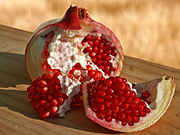
Pomegranate
The pomegranate , Punica granatum, is a fruit-bearing deciduous shrub or small tree growing between five and eight meters tall.Native to the area of modern day Iran, the pomegranate has been cultivated in the Caucasus since ancient times. From there it spread to Asian areas such as the Caucasus as...
s contain a diverse array of tannins, in particular hydrolysable tannins. The most abundant of pomegranate tannins are called punicalagin
Punicalagin
Punicalagin is an ellagitannin, a polyphenol compound which are isomers of 2,3--hexahydroxydiphenoyl-4,6--gallagyl-D-glucose, hydrolysable tannins with a molecular weight of 1084. They are found in forms alpha and beta in pomegranates...
s. Punicalagins have a molecular weight of 1038 and are the largest molecule found intact in rat plasma after oral ingestion and were found to show no toxic effects in rats who were given a 6% diet of punicalagins for 37 days. Punicalagins are also found to be the major component responsible for pomegranate juice's antioxidant
Antioxidant
An antioxidant is a molecule capable of inhibiting the oxidation of other molecules. Oxidation is a chemical reaction that transfers electrons or hydrogen from a substance to an oxidizing agent. Oxidation reactions can produce free radicals. In turn, these radicals can start chain reactions. When...
and health benefits.
Several dietary supplements and nutritional ingredients are available that contain extracts of whole pomegranate and/or are standardized to punicalagins, the marker compound of pomegranate. Extracts of pomegranate are also Generally Recognized as Safe
Generally recognized as safe
Generally recognized as safe is an American Food and Drug Administration designation that a chemical or substance added to food is considered safe by experts, and so is exempted from the usual Federal Food, Drug, and Cosmetic Act food additive tolerance requirements.-History:On January 1, 1958,...
(GRAS) by the United States Food and Drug Administration
Food and Drug Administration
The Food and Drug Administration is an agency of the United States Department of Health and Human Services, one of the United States federal executive departments...
.
It has been recommended to look for pomegranate ingredients that mimic the polyphenol ratio of the fruit, as potent synergistic effects have been observed in 'natural spectrum' extracts, especially pomegranate concentrate normalized to punicalagins.
Persimmons
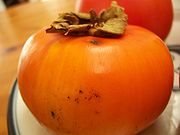
Some persimmon
Persimmon
A persimmon is the edible fruit of a number of species of trees in the genus Diospyros in the ebony wood family . The word Diospyros means "the fire of Zeus" in ancient Greek. As a tree, it is a perennial plant...
s are highly astringent and therefore inedible when they are not extremely ripe (to be specific, the Korean, American, and Hachiya or Japanese). This is due to the high level of tannins, and if eaten by humans (and many other animals), the mouth will become completely dry, yet the saliva glands will continue to secrete saliva, which cannot affect the tannin-laced food.
Berries
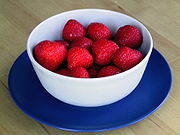
Most berries, such as cranberries
Cranberry
Cranberries are a group of evergreen dwarf shrubs or trailing vines in the subgenus Oxycoccus of the genus Vaccinium. In some methods of classification, Oxycoccus is regarded as a genus in its own right...
, strawberries
Strawberry
Fragaria is a genus of flowering plants in the rose family, Rosaceae, commonly known as strawberries for their edible fruits. Although it is commonly thought that strawberries get their name from straw being used as a mulch in cultivating the plants, the etymology of the word is uncertain. There...
and blueberries
Blueberry
Blueberries are flowering plants of the genus Vaccinium with dark-blue berries and are perennial...
, contain both hydrolyzable and condensed tannins.
Nuts
Nuts that can be consumed raw such as hazelnut
Hazelnut
A hazelnut is the nut of the hazel and is also known as a cob nut or filbert nut according to species. A cob is roughly spherical to oval, about 15–25 mm long and 10–15 mm in diameter, with an outer fibrous husk surrounding a smooth shell. A filbert is more elongated, being about twice...
s, walnut
Walnut
Juglans is a plant genus of the family Juglandaceae, the seeds of which are known as walnuts. They are deciduous trees, 10–40 meters tall , with pinnate leaves 200–900 millimetres long , with 5–25 leaflets; the shoots have chambered pith, a character shared with the wingnuts , but not the hickories...
s, and pecan
Pecan
The pecan , Carya illinoinensis, is a species of hickory, native to south-central North America, in Mexico from Coahuila south to Jalisco and Veracruz, in the United States from southern Iowa, Illinois, Missouri, and Indiana east to western Kentucky, southwestern Ohio, North Carolina, South...
s contain high amounts of tannins. Almond
Almond
The almond , is a species of tree native to the Middle East and South Asia. Almond is also the name of the edible and widely cultivated seed of this tree...
s feature a lower content. Tannin concentration in the crude extract of these nuts did not directly translate to the same relationships for the condensed fraction. Acorn
Acorn
The acorn, or oak nut, is the nut of the oaks and their close relatives . It usually contains a single seed , enclosed in a tough, leathery shell, and borne in a cup-shaped cupule. Acorns vary from 1–6 cm long and 0.8–4 cm broad...
s contain such high concentrations of tannins that they need to be processed before they can be consumed safely.
The areca nut also contains tannin, which contributes to its antibacterial properties.
Smoked foods
Tannins from the wood of mesquiteMesquite
Mesquite is a leguminous plant of the Prosopis genus found in northern Mexico through the Sonoran Desert and Chihuahuan Deserts, and up into the Southwestern United States as far north as southern Kansas, west to the Colorado Desert in California,and east to the eastern fifth of Texas, where...
, cherry
Cherry
The cherry is the fruit of many plants of the genus Prunus, and is a fleshy stone fruit. The cherry fruits of commerce are usually obtained from a limited number of species, including especially cultivars of the wild cherry, Prunus avium....
, oak, and other woods used in smoking are present on the surface of smoked fish and meat.
Herbs and spices
CloveClove
Cloves are the aromatic dried flower buds of a tree in the family Myrtaceae. Cloves are native to the Maluku islands in Indonesia and used as a spice in cuisines all over the world...
s, tarragon
Tarragon
Tarragon or dragon's-wort is a perennial herb in the family Asteraceae related to wormwood. Corresponding to its species name, a common term for the plant is "dragon herb". It is native to a wide area of the Northern Hemisphere from easternmost Europe across central and eastern Asia to India,...
, cumin
Cumin
Cumin is a flowering plant in the family Apiaceae, native from the east Mediterranean to India. Its seeds are used in the cuisines of many different cultures, in both whole and ground form.-Etymology:...
, thyme
Thyme
Thyme is a culinary and medicinal herb of the genus Thymus.-History:Ancient Egyptians used thyme for embalming. The ancient Greeks used it in their baths and burnt it as incense in their temples, believing it was a source of courage...
, vanilla
Vanilla
Vanilla is a flavoring derived from orchids of the genus Vanilla, primarily from the Mexican species, Flat-leaved Vanilla . The word vanilla derives from the Spanish word "", little pod...
, and cinnamon
Cinnamon
Cinnamon is a spice obtained from the inner bark of several trees from the genus Cinnamomum that is used in both sweet and savoury foods...
all contain tannins.
Legumes
Most legumes contain tannins. Red-colored beans contain the most tannins, and white-colored beans have the least. PeanutsPeanut
The peanut, or groundnut , is a species in the legume or "bean" family , so it is not a nut. The peanut was probably first cultivated in the valleys of Peru. It is an annual herbaceous plant growing tall...
without shells have a very low tannin content. Chickpea
Chickpea
The chickpea is a legume of the family Fabaceae, subfamily Faboideae...
s (garbanzo beans) have a smaller amount of tannins.
Toxicity
Tannins have been shown to precipitate proteins, which in some ruminantRuminant
A ruminant is a mammal of the order Artiodactyla that digests plant-based food by initially softening it within the animal's first compartment of the stomach, principally through bacterial actions, then regurgitating the semi-digested mass, now known as cud, and chewing it again...
animals inhibits the absorption of nutrients from high-tannin grains such as sorghum
Sorghum
Sorghum is a genus of numerous species of grasses, one of which is raised for grain and many of which are used as fodder plants either cultivated or as part of pasture. The plants are cultivated in warmer climates worldwide. Species are native to tropical and subtropical regions of all continents...
.
In sensitive individuals, a large intake of tannins may cause bowel irritation, kidney irritation, liver damage, irritation of the stomach, and gastrointestinal pain. With the exception of tea, long-term and/or excessive use of herbs containing high concentrations of tannins is not recommended. A correlation has been made between esophageal
Esophageal cancer
Esophageal cancer is malignancy of the esophagus. There are various subtypes, primarily squamous cell cancer and adenocarcinoma . Squamous cell cancer arises from the cells that line the upper part of the esophagus...
or nasal cancer in humans and regular consumption of certain herbs with high tannin concentrations.
Many plants employ tannins to deter animals. It has not been determined whether tannin was produced for another purpose, e.g. as pesticide, or whether it evolved specifically for the purpose of inhibiting predation. Animals that consume excessive amounts of these plants fall ill or die. Acorns are a well-known problem in cattle breeding. The lethal dose is said to be around 6% of the animal's body weight. This is only an approximate figure, since acorns from red oak
Red oak
Red oak may refer to:*Lobatae, a group of oak trees*Quercus rubra, the northern red oak, a tree native to southeastern Canada and the northeastern United States* Agkistrodon contortrix, a venomous snake species found in North America...
were shown to contain on average two to four times the tannins of those from white oak
White oak
Quercus alba, the white oak, is one of the pre-eminent hardwoods of eastern North America. It is a long-lived oak of the Fagaceae family, native to eastern North America and found from southern Quebec west to eastern Minnesota and south to northern Florida and eastern Texas. Specimens have been...
. Some deer and moose were found to have perished due to ingesting acorns. Symptoms include ataxia
Ataxia
Ataxia is a neurological sign and symptom that consists of gross lack of coordination of muscle movements. Ataxia is a non-specific clinical manifestation implying dysfunction of the parts of the nervous system that coordinate movement, such as the cerebellum...
and shortness of breath. Some animals, like squirrels and mule deer
Mule Deer
The mule deer is a deer indigenous to western North America. The Mule Deer gets its name from its large mule-like ears. There are believed to be several subspecies, including the black-tailed deer...
, possess the ability to consume high concentrations of tannins without ill effects. Humans would usually find the bitter taste of foods containing high amounts of tannins unpalatable. (Some humans were found to be unable to taste bitter foods.) Tannins are leached
Leaching
In general, leaching is the extraction of certain materials from a carrier into a liquid . Specifically, it may refer to:...
from acorns before they are used for human consumption.
Metal chelation
If ingested in excessive quantities, tannins inhibit the absorption of mineralMineral
A mineral is a naturally occurring solid chemical substance formed through biogeochemical processes, having characteristic chemical composition, highly ordered atomic structure, and specific physical properties. By comparison, a rock is an aggregate of minerals and/or mineraloids and does not...
s such as iron
Human iron metabolism
Human iron metabolism is the set of chemical reactions maintaining human homeostasis of iron. Iron is an essential element for most life on Earth, including human beings. The control of this necessary but potentially toxic substance is an important part of many aspects of human health and disease...
, which may, if prolonged, lead to anemia
Anemia
Anemia is a decrease in number of red blood cells or less than the normal quantity of hemoglobin in the blood. However, it can include decreased oxygen-binding ability of each hemoglobin molecule due to deformity or lack in numerical development as in some other types of hemoglobin...
. This is because tannins are metal ion chelators
Chelation
Chelation is the formation or presence of two or more separate coordinate bonds between apolydentate ligand and a single central atom....
and tannin-chelated metal ions are not bioavailable
Bioavailability
In pharmacology, bioavailability is a subcategory of absorption and is used to describe the fraction of an administered dose of unchanged drug that reaches the systemic circulation, one of the principal pharmacokinetic properties of drugs. By definition, when a medication is administered...
. Tannins only reduce the bioavailability of plant sources of iron, also known as non-heme. Animal sources, or heme iron absorption will not be affected by tannins. Tannic acid does not affect absorption of other trace minerals such as zinc, copper, and manganese
Manganese
Manganese is a chemical element, designated by the symbol Mn. It has the atomic number 25. It is found as a free element in nature , and in many minerals...
in rats.
Tannins interfere with iron absorption through a complex formation with iron when it is in the gastrointestinal lumen, which decreases the bioavailability of iron. There is an important difference in the way in which the phenolic compounds interact with different hydroxylation patterns (gallic acid
Gallic acid
Gallic acid is a trihydroxybenzoic acid, a type of phenolic acid, a type of organic acid, also known as 3,4,5-trihydroxybenzoic acid, found in gallnuts, sumac, witch hazel, tea leaves, oak bark, and other plants. The chemical formula is C6H23COOH. Gallic acid is found both free and as part of...
, catechin
Catechin
Catechin is a natural phenol antioxidant plant secondary metabolite. The term catechins is also commonly used to refer to the related family of flavonoids and the subgroup flavan-3-ols ....
, chlorogenic acid
Chlorogenic acid
Chlorogenic acid is a hydroxycinnamic acid, a member of a family of naturally occurring organic compounds. These are esters of polyphenolic caffeic acid and cyclitol -quinic acid. It is an important biosynthetic intermediate. It also is one of the phenols found in coffee, bamboo Phyllostachys...
) and the effect on iron absorption. The content of the iron-binding galloyl groups may be the major determinant of the inhibitory effect of phenolic compounds. However, condensed tannins do not interfere with iron absorption.
In order to prevent these problems, it is advised to drink tea and coffee between meals, not during. Foods rich in vitamin C
Vitamin C
Vitamin C or L-ascorbic acid or L-ascorbate is an essential nutrient for humans and certain other animal species. In living organisms ascorbate acts as an antioxidant by protecting the body against oxidative stress...
help neutralize tannin's effects on iron absorption. Adding lemon juice to tea will reduce the negative effect of tannins in iron absorption as well. Adding milk to coffee and tea has very little to no influence on the inhibitory effect of tannins.
Tannin market
Tannin production began at the beginning of the 19th century with the industrial revolution, to produce tanning material for the need for more leather. Before that time, processes used plant material and were long (up to six months).There has been a collapse in the vegetable tannin market in the 1950s-1960s, due to the appearance of synthetic tannins, due the scarity of vegetable tannins during World War II. At that time, many small tannin industry sites closed. Vegetable tannins are estimated to be used for the production of 10-20% of the global leather production.
The cost of the final product depends on the method used to extract the tannins, in particular the use of solvents, alkali and other chemicals used (for instance glycerin). For large quantities, the most cost-effective method is hot water extraction
Hot water extraction
The Hot Water Extraction method, is a method used in chemistry for extraction and for "steam cleaning"...
.
Tannic acid
Tannic acid
Tannic acid is a specific commercial form of tannin, a type of polyphenol. Its weak acidity is due to the numerous phenol groups in the structure...
is used worldwide as clarifying agent in alcoholic drinks and as aroma ingredient in both alcoholic and soft drinks or juices. Tannins from different botanical origins also find extensive uses in the wine industry.
Uses
Tannins are an important ingredient in the process of tanning leather. OakOak
An oak is a tree or shrub in the genus Quercus , of which about 600 species exist. "Oak" may also appear in the names of species in related genera, notably Lithocarpus...
bark, mimosa
Mimosa
Mimosa is a genus of about 400 species of herbs and shrubs, in the subfamily Mimosoideae of the legume family Fabaceae. The generic name is derived from the Greek word μιμος , meaning "mimic."...
, chestnut and quebracho tree
Quebracho tree
Quebracho is a common name in Spanish to describe very hard wood tree species. The etymology of the name derived from quiebrahacha, or quebrar hacha, meaning "axe-breaker".-Species:...
have traditionally been the primary source of tannery
Tanning
Tanning is the making of leather from the skins of animals which does not easily decompose. Traditionally, tanning used tannin, an acidic chemical compound from which the tanning process draws its name . Coloring may occur during tanning...
tannin, though inorganic tanning agents are also in use today and account for 90% of the world's leather production.
Tannins produce different colors with ferric chloride (either blue, blue black, or green to greenish-black) according to the type of tannin. Iron gall ink is produced by treating a solution of tannins with iron(II) sulfate
Iron(II) sulfate
Iron sulfate or ferrous sulfate is the chemical compound with the formula FeSO4. Known since ancient times as copperas and as green vitriol, the blue-green heptahydrate is the most common form of this material...
.
Tannin is a component in a type of industrial particleboard adhesive
Adhesive
An adhesive, or glue, is a mixture in a liquid or semi-liquid state that adheres or bonds items together. Adhesives may come from either natural or synthetic sources. The types of materials that can be bonded are vast but they are especially useful for bonding thin materials...
developed jointly by the Tanzania Industrial Research and Development Organization and Forintek Labs Canada. Pinus radiata tannins has been investigated for the production of wood adhesives
Wood glue
Wood glue is an adhesive used to tightly bond pieces of wood together. Many substances have been used as glues.-Types of wood glue:* For many centuries animal glue, especially hide glue was the traditional glue for all kinds of woodwork. It is still used today, mainly for musical instruments and...
.
Condensed tannins, i.e. quebracho tannin, and Hydrolyzable tannins, i.e., chestnut tannin, appear to be able to substitute a high proportion of synthetic phenol in phenol-formaldehyde resins for wood particleboard.
Tannins can be used for production of anti-corrosive
Corrosion
Corrosion is the disintegration of an engineered material into its constituent atoms due to chemical reactions with its surroundings. In the most common use of the word, this means electrochemical oxidation of metals in reaction with an oxidant such as oxygen...
primer, sold under brand name-Nox Primer for treatment of rusted steel surfaces prior to painting, rust converter to transform oxidized steel into a smooth sealed surface and rust inhibitor.
The use of resin
Resin
Resin in the most specific use of the term is a hydrocarbon secretion of many plants, particularly coniferous trees. Resins are valued for their chemical properties and associated uses, such as the production of varnishes, adhesives, and food glazing agents; as an important source of raw materials...
s made of tannins has been investigated to remove mercury
Mercury (element)
Mercury is a chemical element with the symbol Hg and atomic number 80. It is also known as quicksilver or hydrargyrum...
and methylmercury
Methylmercury
Methylmercury is an organometallic cation with the formula . It is a bioaccumulative environmental toxicant.-Structure:...
from solution. Immobilized tannins have been tested to recover uranium
Uranium
Uranium is a silvery-white metallic chemical element in the actinide series of the periodic table, with atomic number 92. It is assigned the chemical symbol U. A uranium atom has 92 protons and 92 electrons, of which 6 are valence electrons...
from seawater.
Medical uses and potential
Tannins can also be effective in protecting the kidneys. When incubated with red grape juice and red wines with a high content of condensed tannins, the poliovirus, herpes simplex virus, and various enteric viruses are inactivated.Tannins have shown potential antiviral, antibacterial and antiparasitic effects.
It is believed that tannins isolated from the stem bark of Myracrodruon urundeuva
Myracrodruon urundeuva
Myracrodruon urundeuva is a timber tree, which is often used for beekeeping...
may have neuroprotective functions capable of reversing 6-hydroxydopamine-induced toxicity. The plant has shown promise as a potential therapeutic agent, which may be beneficial in patients with neurological disease. Souza et al. discovered that the tannins isolated from the stem bark also have anti-inflammatory and antiulcer activity in rodents, showing a strong antioxidant property with possible therapeutic applications.
Foods rich in tannins can be used in the treatment of HFE hereditary hemochromatosis, a hereditary disease characterized by excessive absorption of dietary iron, resulting in a pathological increase in total body iron stores.
Producers
There are three main producers of tannins in the world:- Ajinomoto OmniChem NaturalSpecialities, a subsidiary of the AjinomotoAjinomotoAjinomoto Co. Inc. , is a Japanese food and chemical corporation which produces seasonings, cooking oils, TV dinners, sweeteners, amino acids and pharmaceuticals...
group, is specializing in the tannin production - Silva Team produces tannins for leather tanning, oenology or other uses
- UnitánUnitánUnitán is an Argentine company producing quebracho tannins. Its production amounts to 40.000 tonnes of tannins sold to the tanning industry, the drilling industry, for the enological applications and as animal food....
, an Argentine company, produces quebracho tannins.
Following companies are not producers but blenders of tannins for specific applications:
- AEB group, an Italian company based in Brescia, blends & markets tannins for oenology applications
- Enartis, an Italian company based in San Martino, develops and sells oenological tannins