

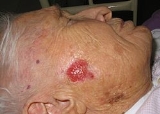
Skin cancer

Encyclopedia
Skin neoplasms are skin
growths with differing causes and varying degrees of malignancy. The three most common malignant skin cancers are basal cell cancer, squamous cell cancer, and melanoma
, each of which is named after the type of skin cell from which it arises. Skin cancer
generally develops in the epidermis (the outermost layer of skin), so a tumor
can usually be seen. This means that it is often possible to detect skin cancers at an early stage. Unlike many other cancers, including those originating in the lung
, pancreas
, and stomach
, only a small minority of those affected will actually die of the disease, though it can be disfiguring. Melanoma survival rates are poorer than for non-melanoma skin cancer, although when melanoma is diagnosed at an early stage, treatment is easier and more people survive.
Skin cancer is the most commonly diagnosed type of cancer. Melanoma and non-melanoma skin cancers combined are more common than lung
, breast
, colorectal
, and prostate cancer
. Melanoma is less common than both basal cell carcinoma and squamous cell carcinoma, but it is the most serious — for example, in the UK there were over 11,700 new cases of melanoma in 2008, and over 2,000 deaths. It is the second most common cancer in young adults aged 15–34 in the UK. Most cases are caused by over-exposure to UV rays from the sun or sunbeds. Non-melanoma skin cancers are the most common skin cancers. The majority of these are basal cell carcinomas. These are usually localized growths caused by excessive cumulative exposure to the sun and do not tend to spread.
(BCC), squamous cell carcinoma
(SCC) and malignant melanoma.
Basal cell carcinomas are present on sun-exposed areas of the skin, especially the face. They rarely metastasize and rarely cause death. They are easily treated with surgery or radiation. Squamous cell carcinoma
s (SCC) are common, but much less common than basal cell cancers. They metastasize more frequently than BCCs. Even then, the metastasis rate is quite low, with the exception of SCCs of the lip, ear, and in immunosuppressed patients. Melanomas are the least frequent of the 3 common skin cancers. They frequently metastasize, and could potentially cause death once they spread.
Less common skin cancers include: Dermatofibrosarcoma protuberans
, Merkel cell carcinoma
, Kaposi's sarcoma
, keratoacanthoma
, spindle cell tumors, sebaceous carcinomas, microcystic adnexal carcinoma, Pagets's disease of the breast, atypical fibroxanthoma, leimyosarcoma, and angiosarcoma.
The BCC and the SCC often carry a UV-signature mutation indicating that these cancers are caused by UV-B radiation via the direct DNA damage. However the malignant melanoma is predominantly caused by UV-A radiation via the indirect DNA damage. The indirect DNA damage is caused by free radicals and reactive oxygen species. Research indicates that the absorption of three sunscreen ingredients into the skin, combined with a 60-minute exposure to UV, leads to an increase of free radicals in the skin, if applied in too little quantities and too infrequently. However, the researchers add that newer creams often do not contain these specific compounds, and that the combination of other ingredients tends to retain the compounds on the surface of the skin. They also add the frequent re-application reduces the risk of radical formation.
that do not heal, ulcering in the skin, discolored skin, and changes in existing mole
s, such as jagged edges to the mole and enlargement of the mole.
usually presents as a raised, smooth, pearly bump on the sun-exposed skin of the head
, neck
or shoulder
s. Sometimes small blood vessel
s can be seen within the tumor. Crusting and bleeding in the center of the tumor frequently develops. It is often mistaken for a sore that does not heal. This form of skin cancer is the least deadly and with proper treatment can be completely eliminated, often without scarring.
is commonly a red, scaling, thickened patch on sun-exposed skin. Some are firm hard nodules and dome shaped like keratoacanthoma
s. Ulceration and bleeding may occur. When SCC is not treated, it may develop into a large mass. Squamous cell is the second most common skin cancer. It is dangerous, but not nearly as dangerous as a melanoma.
s are brown to black looking lesions. Unfortunately, a few melanomas are pink, red or fleshy in color; these are called amelanotic melanomas. These tend to be more aggressive. Warning signs of malignant melanoma include change in the size, shape, color or elevation of a mole. Other signs are the appearance of a new mole during adulthood or new pain, itching, ulceration or bleeding. An often-used mnemonic is "ABCD", where A= asymmetrical, B= "borders" (irregular= "Coast of Maine sign"), C= "color" (variegated) and D= "diameter" (larger than 6 mm—the size of a pencil eraser).
s are most often rapidly growing, non-tender red, purple or skin colored bumps that are not painful or itchy. They may be mistaken for a cyst or other type of cancer.
Macroscopically, the tumor is often elevated, fungating, or may be ulcerated with irregular borders. Microscopically, tumor cells destroy the basement membrane
and form sheets or compact masses which invade the subjacent connective tissue (dermis). In well differentiated carcinomas, tumor cells are pleomorphic
/atypical, but resembling normal keratinocytes from prickle layer (large, polygonal, with abundant eosinophilic
(pink) cytoplasm and central nucleus). Their disposal tends to be similar to that of normal epidermis: immature/basal cells at the periphery, becoming more mature to the centre of the tumor masses. Tumor cells transform into keratinized squamous cells and form round nodules with concentric, laminated layers, called "cell nests" or "epithelial/keratinous pearls". The surrounding stroma is reduced and contains inflammatory infiltrate (lymphocytes). Poorly differentiated squamous carcinomas contain more pleomorphic cells and no keratinization.
There is insufficient evidence to recommend for or against screening for skin cancer
,
While sunscreen
has been shown to protect against BCC and SCC it may not protect against malignant melanoma. When sunscreen penetrates into the skin it generates reactive chemicals. The experimental and epidemiological evidence suggests that sunscreen use is correlated with malignant melanoma incidence. This gives rise to questions regarding the possibility that a sunscreen user's lifetime exposure to ultraviolet light may be higher than average. Alternatively, one might question whether sun screens are themselves tumor promoters or carcinogens. Arguably, sunscreen users are the ones most likely to be burned or have been burned by sun light. Similarly, most sunscreens primarily screen UVB, the primary cause of sunburn, while UVA is the primary cause of melanoma. Thus, by limiting the discomfort of sunburn, UVB screening may indirectly result in more UVA exposure. In any case, if some sunscreens promote skin cancer, physical light-scattering sunscreens based in zinc oxide, titanium dioxide or some other natural base are likely safer than chemical blockers such as benzones, etc., as they will be less chemically active.
or CCPDMA
) might be indicated. In the case of an elderly frail man with multiple complicating medical problems, a difficult to excise basal cell cancer of the nose might warrant radiation therapy (slightly lower cure rate) or no treatment at all. Topical chemotherapy might be indicated for large superficial basal cell carcinoma for good cosmetic outcome, whereas it might be inadequate for invasive nodular basal cell carcinoma
or invasive squamous cell carcinoma
.. In general, melanoma is poorly responsive to radiation or chemotherapy.
For low-risk disease, radiation therapy (external beam radiotherapy
or brachytherapy
), topical chemotherapy (imiquimod
or 5-fluorouracil) and cryotherapy (freezing the cancer off) can provide adequate control of the disease; both, however, may have lower overall cure rates than certain type of surgery. Other modalities of treatment such as photodynamic therapy, topical chemotherapy, electrodesiccation and curettage can be found in the discussions of basal cell carcinoma
and squamous cell carcinoma
.
Mohs' micrographic surgery (Mohs surgery
) is a technique used to remove the cancer with the least amount of surrounding tissue and the edges are checked immediately to see if tumor is found. This provides the opportunity to remove the least amount of tissue and provide the best cosmetically favorable results. This is especially important for areas where excess skin is limited, such as the face. Cure rates are equivalent to wide excision. Special training is required to perform this technique. An alternative method is CCPDMA
and can be performed by a pathologist not familiar with Mohs surgery
.
In the case of disease that has spread (metastasized), further surgical procedures or chemotherapy
may be required.
When skin defects are small in size, most can be repaired with simple repair where skin edges are approximated and closed with sutures. This will result in a linear scar. If the repair is made along a natural skin fold or wrinkle line, the scar will be hardly visible. Larger defects may require repair with a skin graft, local skin flap, pedicled skin flap, or a microvascular free flap. Skin grafts and local skin flaps are by far more common than the other listed choices.
Skin grafting is patching of a defect with skin that is removed from another site in the body. The skin graft is sutured to the edges of the defect, and a bolster is placed atop the graft for seven to ten days, to immobilize the graft as it heals in place. There are two forms of skin grafting: split thickness and full thickness. In a split thickness skin graft, a shaver is used to shave a layer of skin from the abdomen or thigh. The donor site, regenerates skin and heals over a period of two weeks. In a full thickness skin graft, a segment of skin is totally removed and the donor site needs to be sutured closed. Split thickness grafts can be used to repair larger defects, but the grafts are inferior in their cosmetic appearance. Full thickness skin grafts are more acceptable cosmetically. However, full thickness grafts can only be used for small or moderate sized defects.
Local skin flaps are a method of closing defects with tissue that closely matches the defect in color and quality. Skin from the periphery of the defect site is mobilized and repositioned to fill the deficit. Various forms of local flaps can be designed to minimize disruption to surrounding tissues and maximize cosmetic outcome of the reconstruction. Pedicled skin flaps are a method of transferring skin with an intact blood supply from a nearby region of the body. An example of such reconstruction is a pedicled forehead flap for repair of a large nasal skin defect. Once the flap develops a source of blood supply form its new bed, the vascular pedicle can be detached.
was performed by the dermatologist Howard Rogers, MD, PhD, and his colleagues based on the evaluation of Medicare
databases. The results of their research showed that cases of non-melanoma skin cancer rose an average of 4.2% a year.
More than 3.5 million cases of skin cancer are diagnosed annually in the United States, which makes it the most common form of cancer in that country. According to the Skin Cancer Foundation, one in five Americans will develop skin cancer at some point of their lives. The first most common form of skin cancer is basal cell carcinoma, followed by the squamous cell carcinoma. Although the incidence of many cancers in the United States is falling, the incidence of melanoma keeps growing, with approximately 68,729 melanomas diagnosed in 2004 according to reports of the National Cancer Institute
.
The survival rate for patients with melanoma depends upon when they start treatment. The cure rate is very high when melanoma is detected in early stages, when it can easily be removed surgically. The prognosis is less favorable if the melanoma has spread to other parts of the body
.
In the UK, 84,500 non-melanoma skin cancers were registered in 2007 although a study estimated that at least 100,000 cases are diagnosed each year. Most NMSCs were basal cell carcinomas or squamous cell carcinomas. In 2007, 10,672 cases of malignant melanoma were diagnosed.
According to the British Association of Dermatologists child
ren, from 0 to 14 years, and teenagers, from 15 to 19 years, exhibit the highest rates of skin cancers of any European country. Furthermore, incidence of melanoma increased four times in UK teenagers from 1978 to 1997.
Australia
exhibits one of the highest rates of skin cancer incidence in the world, almost four times the rates registered in the United States, the UK and Canada
. Around 434,000 people receive treatment for non-melanoma skin cancers and 10,300 are treated for melanoma. Melanoma is the common type of cancer in people between 15–44 years in Australia.
Skin
-Dermis:The dermis is the layer of skin beneath the epidermis that consists of connective tissue and cushions the body from stress and strain. The dermis is tightly connected to the epidermis by a basement membrane. It also harbors many Mechanoreceptors that provide the sense of touch and heat...
growths with differing causes and varying degrees of malignancy. The three most common malignant skin cancers are basal cell cancer, squamous cell cancer, and melanoma
Melanoma
Melanoma is a malignant tumor of melanocytes. Melanocytes are cells that produce the dark pigment, melanin, which is responsible for the color of skin. They predominantly occur in skin, but are also found in other parts of the body, including the bowel and the eye...
, each of which is named after the type of skin cell from which it arises. Skin cancer
Cancer
Cancer , known medically as a malignant neoplasm, is a large group of different diseases, all involving unregulated cell growth. In cancer, cells divide and grow uncontrollably, forming malignant tumors, and invade nearby parts of the body. The cancer may also spread to more distant parts of the...
generally develops in the epidermis (the outermost layer of skin), so a tumor
Tumor
A tumor or tumour is commonly used as a synonym for a neoplasm that appears enlarged in size. Tumor is not synonymous with cancer...
can usually be seen. This means that it is often possible to detect skin cancers at an early stage. Unlike many other cancers, including those originating in the lung
Lung
The lung is the essential respiration organ in many air-breathing animals, including most tetrapods, a few fish and a few snails. In mammals and the more complex life forms, the two lungs are located near the backbone on either side of the heart...
, pancreas
Pancreas
The pancreas is a gland organ in the digestive and endocrine system of vertebrates. It is both an endocrine gland producing several important hormones, including insulin, glucagon, and somatostatin, as well as a digestive organ, secreting pancreatic juice containing digestive enzymes that assist...
, and stomach
Stomach
The stomach is a muscular, hollow, dilated part of the alimentary canal which functions as an important organ of the digestive tract in some animals, including vertebrates, echinoderms, insects , and molluscs. It is involved in the second phase of digestion, following mastication .The stomach is...
, only a small minority of those affected will actually die of the disease, though it can be disfiguring. Melanoma survival rates are poorer than for non-melanoma skin cancer, although when melanoma is diagnosed at an early stage, treatment is easier and more people survive.
Skin cancer is the most commonly diagnosed type of cancer. Melanoma and non-melanoma skin cancers combined are more common than lung
Lung cancer
Lung cancer is a disease characterized by uncontrolled cell growth in tissues of the lung. If left untreated, this growth can spread beyond the lung in a process called metastasis into nearby tissue and, eventually, into other parts of the body. Most cancers that start in lung, known as primary...
, breast
Breast cancer
Breast cancer is cancer originating from breast tissue, most commonly from the inner lining of milk ducts or the lobules that supply the ducts with milk. Cancers originating from ducts are known as ductal carcinomas; those originating from lobules are known as lobular carcinomas...
, colorectal
Colorectal cancer
Colorectal cancer, commonly known as bowel cancer, is a cancer caused by uncontrolled cell growth , in the colon, rectum, or vermiform appendix. Colorectal cancer is clinically distinct from anal cancer, which affects the anus....
, and prostate cancer
Prostate cancer
Prostate cancer is a form of cancer that develops in the prostate, a gland in the male reproductive system. Most prostate cancers are slow growing; however, there are cases of aggressive prostate cancers. The cancer cells may metastasize from the prostate to other parts of the body, particularly...
. Melanoma is less common than both basal cell carcinoma and squamous cell carcinoma, but it is the most serious — for example, in the UK there were over 11,700 new cases of melanoma in 2008, and over 2,000 deaths. It is the second most common cancer in young adults aged 15–34 in the UK. Most cases are caused by over-exposure to UV rays from the sun or sunbeds. Non-melanoma skin cancers are the most common skin cancers. The majority of these are basal cell carcinomas. These are usually localized growths caused by excessive cumulative exposure to the sun and do not tend to spread.
Classification
There are three main types of skin cancer: basal cell carcinomaBasal cell carcinoma
Basal-cell carcinoma is the most common type of skin cancer. It rarely metastasizes or kills. However, because it can cause significant destruction and disfigurement by invading surrounding tissues, it is still considered malignant. Statistically, approximately 3 out of 10 Caucasians may develop a...
(BCC), squamous cell carcinoma
Squamous cell carcinoma
Squamous cell carcinoma , occasionally rendered as "squamous-cell carcinoma", is a histologically distinct form of cancer. It arises from the uncontrolled multiplication of malignant cells deriving from epithelium, or showing particular cytological or tissue architectural characteristics of...
(SCC) and malignant melanoma.
| Cancer | Description | Illustration |
|---|---|---|
| Basal cell carcinoma Basal cell carcinoma Basal-cell carcinoma is the most common type of skin cancer. It rarely metastasizes or kills. However, because it can cause significant destruction and disfigurement by invading surrounding tissues, it is still considered malignant. Statistically, approximately 3 out of 10 Caucasians may develop a... |
Note the pearly translucency to fleshy color, tiny blood vessels on the surface, and sometime ulceration which can be characteristics. The key term is translucency. | |
| Squamous cell carcinoma Squamous cell carcinoma Squamous cell carcinoma , occasionally rendered as "squamous-cell carcinoma", is a histologically distinct form of cancer. It arises from the uncontrolled multiplication of malignant cells deriving from epithelium, or showing particular cytological or tissue architectural characteristics of... |
Commonly presents as a red, crusted, or scaly patch or bump. Often a very rapid growing tumor, pain is a common characteristic. | |
| Malignant melanoma | The common appearance is an asymmetrical area, with an irregular border, color variation, and often greater than 6 mm diameter. |  |
Basal cell carcinomas are present on sun-exposed areas of the skin, especially the face. They rarely metastasize and rarely cause death. They are easily treated with surgery or radiation. Squamous cell carcinoma
Squamous cell carcinoma
Squamous cell carcinoma , occasionally rendered as "squamous-cell carcinoma", is a histologically distinct form of cancer. It arises from the uncontrolled multiplication of malignant cells deriving from epithelium, or showing particular cytological or tissue architectural characteristics of...
s (SCC) are common, but much less common than basal cell cancers. They metastasize more frequently than BCCs. Even then, the metastasis rate is quite low, with the exception of SCCs of the lip, ear, and in immunosuppressed patients. Melanomas are the least frequent of the 3 common skin cancers. They frequently metastasize, and could potentially cause death once they spread.
Less common skin cancers include: Dermatofibrosarcoma protuberans
Dermatofibrosarcoma protuberans
Dermatofibrosarcoma protuberans is a very rare tumor. It is a rare neoplasm of the dermis layer of the skin, and is classified as a sarcoma. There is only about 1 case per million per year. DFSP is a fibrosarcoma, more precisely a cutaneous soft tissue sarcoma...
, Merkel cell carcinoma
Merkel cell carcinoma
Merkel cell carcinoma Merkel cell carcinoma Merkel cell carcinoma (also known as a "Cutaneous apudoma," "Primary neuroendocrine carcinoma of the skin," "Primary small cell carcinoma of the skin," and "Trabecular carcinoma of the skin"...
, Kaposi's sarcoma
Kaposi's sarcoma
Kaposi's sarcoma is a tumor caused by Human herpesvirus 8 , also known as Kaposi's sarcoma-associated herpesvirus . It was originally described by Moritz Kaposi , a Hungarian dermatologist practicing at the University of Vienna in 1872. It became more widely known as one of the AIDS defining...
, keratoacanthoma
Keratoacanthoma
Keratoacanthoma is a common low-grade skin tumour that is believed to originate from the neck of the hair follicle. Many pathologists consider it to be a form of squamous cell carcinoma...
, spindle cell tumors, sebaceous carcinomas, microcystic adnexal carcinoma, Pagets's disease of the breast, atypical fibroxanthoma, leimyosarcoma, and angiosarcoma.
The BCC and the SCC often carry a UV-signature mutation indicating that these cancers are caused by UV-B radiation via the direct DNA damage. However the malignant melanoma is predominantly caused by UV-A radiation via the indirect DNA damage. The indirect DNA damage is caused by free radicals and reactive oxygen species. Research indicates that the absorption of three sunscreen ingredients into the skin, combined with a 60-minute exposure to UV, leads to an increase of free radicals in the skin, if applied in too little quantities and too infrequently. However, the researchers add that newer creams often do not contain these specific compounds, and that the combination of other ingredients tends to retain the compounds on the surface of the skin. They also add the frequent re-application reduces the risk of radical formation.
Signs and symptoms
There are a variety of different skin cancer symptoms. These include changes in the skinSkin
-Dermis:The dermis is the layer of skin beneath the epidermis that consists of connective tissue and cushions the body from stress and strain. The dermis is tightly connected to the epidermis by a basement membrane. It also harbors many Mechanoreceptors that provide the sense of touch and heat...
that do not heal, ulcering in the skin, discolored skin, and changes in existing mole
Mole (skin marking)
A melanocytic nevus is a type of lesion that contains nevus cells .Some sources equate the term mole with "melanocytic nevus". Other sources reserve the term "mole" for other purposes....
s, such as jagged edges to the mole and enlargement of the mole.
Basal cell carcinoma
Basal cell carcinomaBasal cell carcinoma
Basal-cell carcinoma is the most common type of skin cancer. It rarely metastasizes or kills. However, because it can cause significant destruction and disfigurement by invading surrounding tissues, it is still considered malignant. Statistically, approximately 3 out of 10 Caucasians may develop a...
usually presents as a raised, smooth, pearly bump on the sun-exposed skin of the head
Head
In anatomy, the head of an animal is the rostral part that usually comprises the brain, eyes, ears, nose and mouth . Some very simple animals may not have a head, but many bilaterally symmetric forms do....
, neck
Neck
The neck is the part of the body, on many terrestrial or secondarily aquatic vertebrates, that distinguishes the head from the torso or trunk. The adjective signifying "of the neck" is cervical .-Boner anatomy: The cervical spine:The cervical portion of the human spine comprises seven boney...
or shoulder
Shoulder
The human shoulder is made up of three bones: the clavicle , the scapula , and the humerus as well as associated muscles, ligaments and tendons. The articulations between the bones of the shoulder make up the shoulder joints. The major joint of the shoulder is the glenohumeral joint, which...
s. Sometimes small blood vessel
Blood vessel
The blood vessels are the part of the circulatory system that transports blood throughout the body. There are three major types of blood vessels: the arteries, which carry the blood away from the heart; the capillaries, which enable the actual exchange of water and chemicals between the blood and...
s can be seen within the tumor. Crusting and bleeding in the center of the tumor frequently develops. It is often mistaken for a sore that does not heal. This form of skin cancer is the least deadly and with proper treatment can be completely eliminated, often without scarring.
Squamous cell carcinoma
Squamous cell carcinomaSquamous cell carcinoma
Squamous cell carcinoma , occasionally rendered as "squamous-cell carcinoma", is a histologically distinct form of cancer. It arises from the uncontrolled multiplication of malignant cells deriving from epithelium, or showing particular cytological or tissue architectural characteristics of...
is commonly a red, scaling, thickened patch on sun-exposed skin. Some are firm hard nodules and dome shaped like keratoacanthoma
Keratoacanthoma
Keratoacanthoma is a common low-grade skin tumour that is believed to originate from the neck of the hair follicle. Many pathologists consider it to be a form of squamous cell carcinoma...
s. Ulceration and bleeding may occur. When SCC is not treated, it may develop into a large mass. Squamous cell is the second most common skin cancer. It is dangerous, but not nearly as dangerous as a melanoma.
Melanoma
Most melanomaMelanoma
Melanoma is a malignant tumor of melanocytes. Melanocytes are cells that produce the dark pigment, melanin, which is responsible for the color of skin. They predominantly occur in skin, but are also found in other parts of the body, including the bowel and the eye...
s are brown to black looking lesions. Unfortunately, a few melanomas are pink, red or fleshy in color; these are called amelanotic melanomas. These tend to be more aggressive. Warning signs of malignant melanoma include change in the size, shape, color or elevation of a mole. Other signs are the appearance of a new mole during adulthood or new pain, itching, ulceration or bleeding. An often-used mnemonic is "ABCD", where A= asymmetrical, B= "borders" (irregular= "Coast of Maine sign"), C= "color" (variegated) and D= "diameter" (larger than 6 mm—the size of a pencil eraser).
Other
Merkel cell carcinomaMerkel cell carcinoma
Merkel cell carcinoma Merkel cell carcinoma Merkel cell carcinoma (also known as a "Cutaneous apudoma," "Primary neuroendocrine carcinoma of the skin," "Primary small cell carcinoma of the skin," and "Trabecular carcinoma of the skin"...
s are most often rapidly growing, non-tender red, purple or skin colored bumps that are not painful or itchy. They may be mistaken for a cyst or other type of cancer.
Causes
Ultraviolet radiation from sun exposure is the primary cause of skin cancer. Other factors that play a role include:- Smoking tobaccoTobaccoTobacco is an agricultural product processed from the leaves of plants in the genus Nicotiana. It can be consumed, used as a pesticide and, in the form of nicotine tartrate, used in some medicines...
- HPV infections increase the risk of squamous cell carcinoma.
- Some genetic syndromes including congenital melanocytic nevi syndrome which is characterized by the presence of neviNevusNevus is the medical term for sharply-circumscribed and chronic lesions of the skin. These lesions are commonly named birthmarks and moles. Nevi are benign by definition...
(birthmarks or moles) of varying size which are either present at birth, or appear within 6 months of birth. Nevi larger than 20 mm (3/4") in size are at higher risk for becoming cancerous. - Chronic non-healing wounds. These are called Marjolin's ulcerMarjolin's ulcerMarjolin's ulcer refers to an aggressive ulcerating squamous cell carcinoma presenting in an area of previously traumatized, chronically inflamed, or scarred skin...
s based on their appearance, and can develop into squamous cell carcinoma. - Ionizing radiationIonizing radiationIonizing radiation is radiation composed of particles that individually have sufficient energy to remove an electron from an atom or molecule. This ionization produces free radicals, which are atoms or molecules containing unpaired electrons...
, environmental carcinogens, artificial UV radiation (e.g. tanning beds), aging, and light skin color.
Pathophysiology
Squamous cell carcinoma is a malignant epithelial tumor which originates in epidermis, squamous mucosa or areas of squamous metaplasia.Macroscopically, the tumor is often elevated, fungating, or may be ulcerated with irregular borders. Microscopically, tumor cells destroy the basement membrane
Basement membrane
The basement membrane is a thin sheet of fibers that underlies the epithelium, which lines the cavities and surfaces of organs including skin, or the endothelium, which lines the interior surface of blood vessels.- Composition :...
and form sheets or compact masses which invade the subjacent connective tissue (dermis). In well differentiated carcinomas, tumor cells are pleomorphic
Pleomorphism (cytology)
Pleomorphism is a term used in histology and cytopathology to describe variability in the size and shape of cells and/or their nuclei. It is a feature characteristic of malignant neoplasms....
/atypical, but resembling normal keratinocytes from prickle layer (large, polygonal, with abundant eosinophilic
Eosinophilic
Eosinophilic refers to the staining of certain tissues, cells, or organelles after they have been washed with eosin, a dye.Eosin is an acidic dye; thus, the structure being stained is basic....
(pink) cytoplasm and central nucleus). Their disposal tends to be similar to that of normal epidermis: immature/basal cells at the periphery, becoming more mature to the centre of the tumor masses. Tumor cells transform into keratinized squamous cells and form round nodules with concentric, laminated layers, called "cell nests" or "epithelial/keratinous pearls". The surrounding stroma is reduced and contains inflammatory infiltrate (lymphocytes). Poorly differentiated squamous carcinomas contain more pleomorphic cells and no keratinization.
Prevention
The risk of developing skin cancer can be reduced through a number of measures including:- Decreasing indoor tanningTanningTanning is the making of leather from the skins of animals which does not easily decompose. Traditionally, tanning used tannin, an acidic chemical compound from which the tanning process draws its name . Coloring may occur during tanning...
and mid day sun exposure and increasing the use of sunscreenSunscreenSunblock is a lotion, spray, gel or other topical product that absorbs or reflects some of the sun's ultraviolet radiation on the skin exposed to sunlight and thus helps protect against sunburn... - Avoiding the use of tobacco products
- Reducing overexposure to ultravioletUltravioletUltraviolet light is electromagnetic radiation with a wavelength shorter than that of visible light, but longer than X-rays, in the range 10 nm to 400 nm, and energies from 3 eV to 124 eV...
(UV) radiation, especially in early years - Wearing protective clothing (long sleeves and hats) when outdoors
- Broad-spectrum sunscreen that blocks both UVA and UVB radiation
- Reapplying sun block according to the manufacturer's directions
There is insufficient evidence to recommend for or against screening for skin cancer
Skin cancer
Skin neoplasms are skin growths with differing causes and varying degrees of malignancy. The three most common malignant skin cancers are basal cell cancer, squamous cell cancer, and melanoma, each of which is named after the type of skin cell from which it arises...
,
While sunscreen
Sunscreen
Sunblock is a lotion, spray, gel or other topical product that absorbs or reflects some of the sun's ultraviolet radiation on the skin exposed to sunlight and thus helps protect against sunburn...
has been shown to protect against BCC and SCC it may not protect against malignant melanoma. When sunscreen penetrates into the skin it generates reactive chemicals. The experimental and epidemiological evidence suggests that sunscreen use is correlated with malignant melanoma incidence. This gives rise to questions regarding the possibility that a sunscreen user's lifetime exposure to ultraviolet light may be higher than average. Alternatively, one might question whether sun screens are themselves tumor promoters or carcinogens. Arguably, sunscreen users are the ones most likely to be burned or have been burned by sun light. Similarly, most sunscreens primarily screen UVB, the primary cause of sunburn, while UVA is the primary cause of melanoma. Thus, by limiting the discomfort of sunburn, UVB screening may indirectly result in more UVA exposure. In any case, if some sunscreens promote skin cancer, physical light-scattering sunscreens based in zinc oxide, titanium dioxide or some other natural base are likely safer than chemical blockers such as benzones, etc., as they will be less chemically active.
Management
Treatment is dependent on type of cancer, location of the cancer, age of the patient, and whether the cancer is primary or a recurrence. Treatment is also determined by the specific type of cancer. A small basal cell cancer in a young person the treatment with the best cure rate (Mohs surgeryMohs surgery
Mohs surgery, also known as chemosurgery, created by a general surgeon, Dr. Frederic E. Mohs, is microscopically controlled surgery used to treat common types of skin cancer. It is one of the many methods of obtaining complete margin control during removal of a skin cancer using frozen section...
or CCPDMA
CCPDMA
CCPDMA is the acronym for "complete circumferential peripheral and deep margin assessment". It is the preferred method for the removal of certain cancers, especially skin cancers.A classical example of CCPDMA is Mohs surgery...
) might be indicated. In the case of an elderly frail man with multiple complicating medical problems, a difficult to excise basal cell cancer of the nose might warrant radiation therapy (slightly lower cure rate) or no treatment at all. Topical chemotherapy might be indicated for large superficial basal cell carcinoma for good cosmetic outcome, whereas it might be inadequate for invasive nodular basal cell carcinoma
Basal cell carcinoma
Basal-cell carcinoma is the most common type of skin cancer. It rarely metastasizes or kills. However, because it can cause significant destruction and disfigurement by invading surrounding tissues, it is still considered malignant. Statistically, approximately 3 out of 10 Caucasians may develop a...
or invasive squamous cell carcinoma
Squamous cell carcinoma
Squamous cell carcinoma , occasionally rendered as "squamous-cell carcinoma", is a histologically distinct form of cancer. It arises from the uncontrolled multiplication of malignant cells deriving from epithelium, or showing particular cytological or tissue architectural characteristics of...
.. In general, melanoma is poorly responsive to radiation or chemotherapy.
For low-risk disease, radiation therapy (external beam radiotherapy
External beam radiotherapy
External beam radiotherapy or teletherapy is the most common form of radiotherapy. The patient sits or lies on a couch and an external source of radiation is pointed at a particular part of the body...
or brachytherapy
Brachytherapy
Brachytherapy , also known as internal radiotherapy, sealed source radiotherapy, curietherapy or endocurietherapy, is a form of radiotherapy where a radiation source is placed inside or next to the area requiring treatment...
), topical chemotherapy (imiquimod
Imiquimod
Imiquimod is a prescription medication that acts as an immune response modifier. It is marketed by Meda AB, Graceway Pharmaceuticals and iNova Pharmaceuticals under the trade names Aldara and Zyclara, and by Mochida as Beselna. It is also referred to as R-837.- History :The original FDA approval...
or 5-fluorouracil) and cryotherapy (freezing the cancer off) can provide adequate control of the disease; both, however, may have lower overall cure rates than certain type of surgery. Other modalities of treatment such as photodynamic therapy, topical chemotherapy, electrodesiccation and curettage can be found in the discussions of basal cell carcinoma
Basal cell carcinoma
Basal-cell carcinoma is the most common type of skin cancer. It rarely metastasizes or kills. However, because it can cause significant destruction and disfigurement by invading surrounding tissues, it is still considered malignant. Statistically, approximately 3 out of 10 Caucasians may develop a...
and squamous cell carcinoma
Squamous cell carcinoma
Squamous cell carcinoma , occasionally rendered as "squamous-cell carcinoma", is a histologically distinct form of cancer. It arises from the uncontrolled multiplication of malignant cells deriving from epithelium, or showing particular cytological or tissue architectural characteristics of...
.
Mohs' micrographic surgery (Mohs surgery
Mohs surgery
Mohs surgery, also known as chemosurgery, created by a general surgeon, Dr. Frederic E. Mohs, is microscopically controlled surgery used to treat common types of skin cancer. It is one of the many methods of obtaining complete margin control during removal of a skin cancer using frozen section...
) is a technique used to remove the cancer with the least amount of surrounding tissue and the edges are checked immediately to see if tumor is found. This provides the opportunity to remove the least amount of tissue and provide the best cosmetically favorable results. This is especially important for areas where excess skin is limited, such as the face. Cure rates are equivalent to wide excision. Special training is required to perform this technique. An alternative method is CCPDMA
CCPDMA
CCPDMA is the acronym for "complete circumferential peripheral and deep margin assessment". It is the preferred method for the removal of certain cancers, especially skin cancers.A classical example of CCPDMA is Mohs surgery...
and can be performed by a pathologist not familiar with Mohs surgery
Mohs surgery
Mohs surgery, also known as chemosurgery, created by a general surgeon, Dr. Frederic E. Mohs, is microscopically controlled surgery used to treat common types of skin cancer. It is one of the many methods of obtaining complete margin control during removal of a skin cancer using frozen section...
.
In the case of disease that has spread (metastasized), further surgical procedures or chemotherapy
Chemotherapy
Chemotherapy is the treatment of cancer with an antineoplastic drug or with a combination of such drugs into a standardized treatment regimen....
may be required.
Reconstruction
Currently, surgical excision is the most common form of treatment for skin cancers. The goal of reconstructive surgery is restoration of normal appearance and function. The choice of technique in reconstruction is dictated by the size and location of the defect. Excision and reconstruction of facial skin cancers is generally more challenging due to presence of highly visible and functional anatomic structures in the face.When skin defects are small in size, most can be repaired with simple repair where skin edges are approximated and closed with sutures. This will result in a linear scar. If the repair is made along a natural skin fold or wrinkle line, the scar will be hardly visible. Larger defects may require repair with a skin graft, local skin flap, pedicled skin flap, or a microvascular free flap. Skin grafts and local skin flaps are by far more common than the other listed choices.
Skin grafting is patching of a defect with skin that is removed from another site in the body. The skin graft is sutured to the edges of the defect, and a bolster is placed atop the graft for seven to ten days, to immobilize the graft as it heals in place. There are two forms of skin grafting: split thickness and full thickness. In a split thickness skin graft, a shaver is used to shave a layer of skin from the abdomen or thigh. The donor site, regenerates skin and heals over a period of two weeks. In a full thickness skin graft, a segment of skin is totally removed and the donor site needs to be sutured closed. Split thickness grafts can be used to repair larger defects, but the grafts are inferior in their cosmetic appearance. Full thickness skin grafts are more acceptable cosmetically. However, full thickness grafts can only be used for small or moderate sized defects.
Local skin flaps are a method of closing defects with tissue that closely matches the defect in color and quality. Skin from the periphery of the defect site is mobilized and repositioned to fill the deficit. Various forms of local flaps can be designed to minimize disruption to surrounding tissues and maximize cosmetic outcome of the reconstruction. Pedicled skin flaps are a method of transferring skin with an intact blood supply from a nearby region of the body. An example of such reconstruction is a pedicled forehead flap for repair of a large nasal skin defect. Once the flap develops a source of blood supply form its new bed, the vascular pedicle can be detached.
Prognosis
The mortality rate of basal cell and squamous cell carcinoma are around 0.3% causing 2000 deaths per year in the US. In comparison the mortality rate of melanoma is 15-20% and it causes 6500 deaths per year. Even though it is much less common, malignant melanoma is responsible for 75% of all skin cancer-related deaths.Epidemiology
A study of the incidence of non-melanoma skin cancer from 1992 to 2006 in the United StatesUnited States
The United States of America is a federal constitutional republic comprising fifty states and a federal district...
was performed by the dermatologist Howard Rogers, MD, PhD, and his colleagues based on the evaluation of Medicare
Medicare (United States)
Medicare is a social insurance program administered by the United States government, providing health insurance coverage to people who are aged 65 and over; to those who are under 65 and are permanently physically disabled or who have a congenital physical disability; or to those who meet other...
databases. The results of their research showed that cases of non-melanoma skin cancer rose an average of 4.2% a year.
More than 3.5 million cases of skin cancer are diagnosed annually in the United States, which makes it the most common form of cancer in that country. According to the Skin Cancer Foundation, one in five Americans will develop skin cancer at some point of their lives. The first most common form of skin cancer is basal cell carcinoma, followed by the squamous cell carcinoma. Although the incidence of many cancers in the United States is falling, the incidence of melanoma keeps growing, with approximately 68,729 melanomas diagnosed in 2004 according to reports of the National Cancer Institute
National Cancer Institute
The National Cancer Institute is part of the National Institutes of Health , which is one of 11 agencies that are part of the U.S. Department of Health and Human Services. The NCI coordinates the U.S...
.
The survival rate for patients with melanoma depends upon when they start treatment. The cure rate is very high when melanoma is detected in early stages, when it can easily be removed surgically. The prognosis is less favorable if the melanoma has spread to other parts of the body
Body
With regard to living things, a body is the physical body of an individual. "Body" often is used in connection with appearance, health issues and death...
.
In the UK, 84,500 non-melanoma skin cancers were registered in 2007 although a study estimated that at least 100,000 cases are diagnosed each year. Most NMSCs were basal cell carcinomas or squamous cell carcinomas. In 2007, 10,672 cases of malignant melanoma were diagnosed.
According to the British Association of Dermatologists child
Child
Biologically, a child is generally a human between the stages of birth and puberty. Some vernacular definitions of a child include the fetus, as being an unborn child. The legal definition of "child" generally refers to a minor, otherwise known as a person younger than the age of majority...
ren, from 0 to 14 years, and teenagers, from 15 to 19 years, exhibit the highest rates of skin cancers of any European country. Furthermore, incidence of melanoma increased four times in UK teenagers from 1978 to 1997.
Australia
Australia
Australia , officially the Commonwealth of Australia, is a country in the Southern Hemisphere comprising the mainland of the Australian continent, the island of Tasmania, and numerous smaller islands in the Indian and Pacific Oceans. It is the world's sixth-largest country by total area...
exhibits one of the highest rates of skin cancer incidence in the world, almost four times the rates registered in the United States, the UK and Canada
Canada
Canada is a North American country consisting of ten provinces and three territories. Located in the northern part of the continent, it extends from the Atlantic Ocean in the east to the Pacific Ocean in the west, and northward into the Arctic Ocean...
. Around 434,000 people receive treatment for non-melanoma skin cancers and 10,300 are treated for melanoma. Melanoma is the common type of cancer in people between 15–44 years in Australia.
External links
- skintumor.info Gallery
- American Cancer Society's Detailed Guide: Skin Cancer — Basal and Squamous Cell
- American Cancer Society's Detailed Guide: Skin Cancer — Melanoma
- skin neoplasm
- Medical Encyclopedia WebMD: Melanoma/Skin Cancer Health Center
- Medical Encyclopedia WebMD: Skin Cancer, Non Melanoma Guide
- Medical Encyclopedia MayoClinic: Skin cancer
- Skin Cancer Melanoma Warning Signs
- Interactive Health Tutorials Medline Plus: Skin cancer Using animated graphics and you can also listen to the tutorial
- Skin cancer at the Open Directory ProjectOpen Directory ProjectThe Open Directory Project , also known as Dmoz , is a multilingual open content directory of World Wide Web links. It is owned by Netscape but it is constructed and maintained by a community of volunteer editors.ODP uses a hierarchical ontology scheme for organizing site listings...
- Skin cancer at the Yahoo! DirectoryYahoo! DirectoryThe Yahoo! Directory is a web directory that rivals the Open Directory Project in size. The directory was Yahoo!'s first offering. When Yahoo! changed to crawler-based listings for its main results in October 2002, the human-edited directory's significance dropped, but it was still being updated in...
- Skin Cancer Foundation — Basal Cell Carcinoma
- Skin Cancer Foundation — Melanoma
- Skin Cancer Foundation — Squamous Cell Carcinoma
- Skin Cancer Foundation — Skin Cancer Facts
- Clinically reviewed non-melanoma skin cancer information for patients, from Cancer Research UKCancer Research UKCancer Research UK is a cancer research and awareness charity in the United Kingdom, formed on 4 February 2002 by the merger of The Cancer Research Campaign and the Imperial Cancer Research Fund. Its aim is to reduce the number of deaths from cancer. As the world's largest independent cancer...