
All Topics  
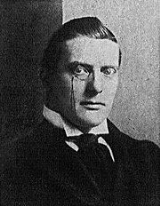
Austen Chamberlain

 
Austen Chamberlain

   Email Print
   Bookmark   Link


Austen Chamberlain


Sir Joseph Austen Chamberlain, KG
Order of the Garter

The Most Noble Order of the Garter is an order of chivalry, or knighthood, originating in medieval England, and presently bestowed on recipients in the United Kingdom and other Commonwealth realms; it is the pinnacle of the Orders, decorations, and medals of the United Kingdom....
 (16 October 1863 – 17 March 1937) was a British statesman
Statesman

A statesman or stateswoman or statesperson is usually a politician or other notable figure of state who has had a long and respected career in politics at the national and international level....
, politician
Politics

Politics is the process by which groups of people make decisions. The term is generally applied to behaviour within civil governments, but politics has been observed in all human group interactions, including corporation, academia, and religion institutions....
, and recipient of the Nobel Peace Prize
Nobel Peace Prize

The Nobel Peace Prize is one of five Nobel Prizes bequeathed by the Swedish industrialist and inventor Alfred Nobel. According to Nobel's will , the Peace Prize should be awarded "to the person who shall have done the most or the best work for :wikt:fraternity between nations, for the abolition or reduction of standing armies and for the h...
.

en Chamberlain was born in Birmingham, the second child and eldest son of Joseph Chamberlain
Joseph Chamberlain

Joseph Chamberlain was an influential British businessman, politician, and statesman.In his early years Chamberlain was a radically minded Liberal Party member, a campaigner for educational reform, and President of the Board of Trade....
, then a rising industrialist and political radical
Radicalism (historical)

The term Radical was used during the late 18th century for proponents of the Radical Movement. It later become a general term for those favoring or seeking political reforms which include dramatic changes to the social order....
, later Lord Mayor of Birmingham and a dominant figure in Liberal
Liberal Party (UK)

The Liberal Party was one of the two major British political parties from the early 19th century until the rise of the Labour Party in the 1920s, and a third party of varying strength and importance up to 1988, when it merged with the Social Democratic Party to form a new party which would become known as the Liberal Democrats....
 and Unionist
Conservative Party (UK)

The Conservative and Unionist Party, more commonly known as the Conservative Party, is a conservative political party in the United Kingdom....
 politics at the end of the 19th Century. His mother, the former Harriet Kenrick, died in childbirth.


Discussion
Ask a question about 'Austen Chamberlain'
Start a new discussion about 'Austen Chamberlain'
Answer questions from other users
Full Discussion Forum


Quotations


Gentlemen do not behave in such a way.

On the Hoare-Laval Pact 1935. Quoted in Harold Macmillan Winds of Change (Macmillan, 1966), pp. 411-12.

I tell you I look forward with terror to her Germany making war upon us again in ten years.

1925. Quoted in Sir Charles Petrie, The Life and Letters of Sir Austen Chamberlain: Vol. II (Cassell, 1940), p. 263.

No British Government ever will and ever can risk the bones of a British grenadier.

On the Polish Corridor in a letter to Sir Eyre Crowe. (16 February, 1925).

We have a peculair interest because the true defence of our country, owing to scientific development, is now no longer the Channel...but upon the Rhine.

Speech at the Imperial Conference, 1926.

Scratch me and you will find the Nonconformist.

1927. Quoted in Sir Charles Petrie, The Life and Letters of Sir Austen Chamberlain: Vol. II (Cassell, 1940), p. 321.


Encyclopedia


Sir Joseph Austen Chamberlain, KG
Order of the Garter

The Most Noble Order of the Garter is an order of chivalry, or knighthood, originating in medieval England, and presently bestowed on recipients in the United Kingdom and other Commonwealth realms; it is the pinnacle of the Orders, decorations, and medals of the United Kingdom....
 (16 October 1863 – 17 March 1937) was a British statesman
Statesman

A statesman or stateswoman or statesperson is usually a politician or other notable figure of state who has had a long and respected career in politics at the national and international level....
, politician
Politics

Politics is the process by which groups of people make decisions. The term is generally applied to behaviour within civil governments, but politics has been observed in all human group interactions, including corporation, academia, and religion institutions....
, and recipient of the Nobel Peace Prize
Nobel Peace Prize

The Nobel Peace Prize is one of five Nobel Prizes bequeathed by the Swedish industrialist and inventor Alfred Nobel. According to Nobel's will , the Peace Prize should be awarded "to the person who shall have done the most or the best work for :wikt:fraternity between nations, for the abolition or reduction of standing armies and for the h...
.

Early career

Austen Chamberlain was born in Birmingham, the second child and eldest son of Joseph Chamberlain
Joseph Chamberlain

Joseph Chamberlain was an influential British businessman, politician, and statesman.In his early years Chamberlain was a radically minded Liberal Party member, a campaigner for educational reform, and President of the Board of Trade....
, then a rising industrialist and political radical
Radicalism (historical)

The term Radical was used during the late 18th century for proponents of the Radical Movement. It later become a general term for those favoring or seeking political reforms which include dramatic changes to the social order....
, later Lord Mayor of Birmingham and a dominant figure in Liberal
Liberal Party (UK)

The Liberal Party was one of the two major British political parties from the early 19th century until the rise of the Labour Party in the 1920s, and a third party of varying strength and importance up to 1988, when it merged with the Social Democratic Party to form a new party which would become known as the Liberal Democrats....
 and Unionist
Conservative Party (UK)

The Conservative and Unionist Party, more commonly known as the Conservative Party, is a conservative political party in the United Kingdom....
 politics at the end of the 19th Century. His mother, the former Harriet Kenrick, died in childbirth. Joseph married Harriet's cousin, Florence, and had further children, the oldest of whom, Neville
Neville Chamberlain

Arthur Neville Chamberlain was a British Conservative Party politician and Prime Minister of the United Kingdom from 1937 to 1940. Chamberlain is best known for appeasement foreign policy, in particular regarding his signing of the Munich Agreement in 1938, conceding the Sudetenland region of Czechoslovakia to Germany, and for his "containm...
, would become Prime Minister
Prime Minister of the United Kingdom

The Prime Minister of the United Kingdom of Great Britain and Northern Ireland is the political leader of the United Kingdom and the head of government Her Majesty's Government....
 in the year of Austen's death. Austen was educated first at Rugby School
Rugby School

Rugby School, located in the town of Rugby, Warwickshire, Warwickshire, is regarded as one of the UK's leading co-educational boarding school and is one of the oldest public school in England....
, before passing on to Trinity College, Cambridge
Trinity College, Cambridge

Trinity College is one of the 31 Colleges of the University of Cambridge of the University of Cambridge. Trinity has more members than any other college in Cambridge or University of Oxford, with around 700 undergraduates, 430 graduate students, and over 160 Fellows; however, counting only the student body it has somewhat fewer than Homert...
. Chamberlain made his first political address there in 1884 at a meeting of the Political Society of his university, and it would appear that from an early age his father had intended for politics to be his Austen's future path. He was Vice-President, but not President, of the Cambridge Union Society.

With this in mind, Austen was dispatched first to France, where he studied at the Paris Institute of Political Studies (best known as the Sciences Po). Whilst there, Austen developed a lasting admiration (some would say love) for the French people and their culture. For nine months, he was shown the brilliance of Paris under the Third Republic
Third Republic

There were several Third Republics in the course of history.* French Third Republic * History of the Philippines#Independent Philippines and the Third Republic ...
, and met and dined with the likes of Georges Clemenceau
Georges Clemenceau

Georges Benjamin Clemenceau was a French statesman, physician, and journalist. He served as the List of Prime Ministers of France from 1906-1909 and 1917-1920....
 and Alexandre Ribot
Alexandre Ribot

Alexandre-F?lix-Joseph Ribot was a France politician, four times List of Prime Ministers of France....
.

From Paris, Austen was sent to Berlin for twelve months, there to imbibe the political culture of the other great European power, Germany. Though in his letters home to Beatrice and Neville he showed an obvious preference for France and the lifestyle he had left behind there, Chamberlain undertook to learn German and learn from his experience in the capital of the Kaiserreich
Kaiserreich

Kaiserreich is the German term for a monarchical empire. Literally a Kaiser's Reich, an emperor's domain or realm.This term could apply to many non-German states, but as a descriptor of a German state it applies to:...
. Among others, Austen met and dined with the “Iron Chancellor” Otto von Bismarck
Otto von Bismarck

Otto Eduard Leopold von Bismarck, Count of Bismarck-Sch?nhausen, Duke of Lauenburg, Prince of Bismarck, , was a Kingdom of Prussia and Germany statesman and aristocrat of the 19th century....
, an experience which was to hold a special place in his heart for the duration of his life.

While attending the University of Berlin, Austen also developed a suspicion for the pronounced nationalism then arising in the German Empire. This was based upon his experience of the lecturing style of Heinrich von Treitschke
Heinrich von Treitschke

Heinrich Gotthard von Treitschke was a nationalism Germany historian and political writer during the time of the German Empire....
, who opened up to Austen "a new side of the German character - a narrow-minded, proud, intolerant Prussian chauvinism", the consequences of which he was later to ponder during the First World War, and the crises of the 1930s.

Though he was again upset to leave his newfound friends and return to the constraints of life under his father’s roof, Austen returned to the United Kingdom in 1888, lured largely by the prize of a parliamentary constituency.

He was first elected to parliament as a member of his father's own Liberal Unionist Party
Liberal Unionist Party

The Liberal Unionists were a United Kingdom political party that split away from the Liberal Party in 1886. Led by Spencer Compton Cavendish, 8th Duke of Devonshire and Joseph Chamberlain the party formed a political alliance with the Conservative Party in opposition to Ireland Home Rule#Irish home rule ....
 in 1892, sitting for the seat of East Worcestershire
East Worcestershire (UK Parliament constituency)

East Worcestershire was a county constituency in the county of Worcestershire, represented in the British House of Commons of the Parliament of the United Kingdom....
. Owing to the prominence of his father and the alliance between the anti-Home Rule
Home rule

Home rule refers to a demand that constituent parts of a state be given greater self-governance within the greater administrative purview of the central government....
 Liberal Unionists and Conservative Party
Conservative Party (UK)

The Conservative and Unionist Party, more commonly known as the Conservative Party, is a conservative political party in the United Kingdom....
, Chamberlain was returned unopposed on 30 March, and at the first sitting of the new session, Austen walked up the floor of the house flanked by his father and his uncle Richard
Richard Chamberlain (politician)

Richard Chamberlain was a Liberal Party and later Liberal Unionist Party politician in the United Kingdom.The younger brother of Joseph Chamberlain, he was Lord Mayor of Birmingham from 1879 to 1880, and later Member of Parliament for Islington West from United Kingdom general election, 1885 to United Kingdom general election, 1892....
.

Owing to the dissolution of parliament and the August general election, Chamberlain was unable to make his maiden speech until April 1893. This speech, when delivered, was acclaimed by the four-time Prime Minister William Ewart Gladstone
William Ewart Gladstone

William Ewart Gladstone was a United Kingdom of Great Britain and Ireland Liberal Party statesman and four times Prime Minister of the United Kingdom ....
 as “one of the best speeches which has been made”. That Chamberlain was speaking against Gladstone’s Second Home Rule
Home rule

Home rule refers to a demand that constituent parts of a state be given greater self-governance within the greater administrative purview of the central government....
 Bill does not seem to have dampened the enthusiasm of the Prime Minister, who responded by publicly congratulating both Austen and his father Joseph on such an excellent performance. This was highly significant, given the bad blood existing between Joseph Chamberlain and his former leader.

Appointed a junior Whip of the Liberal Unionists after the general election, Austen’s main role was to act as his father’s “standard bearer” in matters of policy. Upon the massive Conservative and Unionist
Conservative Party (UK)

The Conservative and Unionist Party, more commonly known as the Conservative Party, is a conservative political party in the United Kingdom....
 landslide win in the election of 1895, Chamberlain was appointed a Civil Lord of the Admiralty, holding that post until 1900, when he became Financial Secretary to the Treasury
Financial Secretary to the Treasury

Financial Secretary to the Treasury is a junior Ministerial post in the HM Treasury. It is the 4th most significant Ministerial role within the Treasury after the Chancellor of the Exchequer, the Chief Secretary to the Treasury, and the Paymaster General....
. In 1902, following the retirement of Prime Minister Robert Arthur Talbot Gascoyne-Cecil, 3rd Marquess of Salisbury, Chamberlain was promoted to the position of Postmaster General
United Kingdom Postmaster General

The Postmaster General in the United Kingdom is a defunct Minister of the Crown position in HM Government. Aside from maintaining the postal system, the Telegraph Act of 1868 established the Postmaster General's right to exclusively maintain electric Telegraphys....
 by the new premier, the Conservative Arthur James Balfour.

In the wake of the struggle between his father and Balfour, Austen Chamberlain became Chancellor of the Exchequer
Chancellor of the Exchequer

The Chancellor of the Exchequer is the title held by the British Cabinet of the United Kingdom Minister who is responsible for all economic and financial matters....
 in 1903. Austen's appointment was largely a compromise solution to the bitter division of the two Unionist heavyweights, which threatened to split the coalition between supporters of Chamberlain's free-trade campaign and Balfour's more cautious advocacy of protectionism. While Austen supported his father’s programme, his influence within the cabinet was diminished following the departure of the senior Chamberlain to the back benches. Facing a resurgent Liberal opposition and the threat of an internal party split, Balfour eventually took the Unionists into opposition in December 1905, and in the ensuing rout in the election of 1906
United Kingdom general election, 1906

The United Kingdom general election of 1906 was held from 12 January to 8 February 1906.The Liberal Party , led by sitting minority Prime Minister of the United Kingdom Henry Campbell-Bannerman, won a large majority in the election....
, Austen Chamberlain found himself one of the few surviving Liberal Unionists in the House of Commons
British House of Commons

The House of Commons is the lower house of the Parliament of the United Kingdom, which also comprises the British monarchy and the House of Lords ....
.

Following his father's stroke and enforced retirement from active politics a few months later, Austen became the effective leader of the Tariff Reform campaign within the Unionist Party, and thus a contender for the eventual leadership of the party itself.

Leadership questions

With the Unionists in disarray after the two successive electoral defeats
United Kingdom general election, 1910

There were two general elections held in the United Kingdom in 1910:*United Kingdom general election, January 1910 was held from 15 January – 10 February 1910....
 of 1910, Arthur James Balfour was forced from his position as party leader in November 1911. Chamberlain was one of the leading candidates to succeed as Conservative leader - even though he was still technically only a member of the Liberal Unionist wing of the coalition (the two parties merged formally in 1912). Chamberlain was opposed by Canadian-born Andrew Bonar Law
Andrew Bonar Law

Andrew Bonar Law was a Canada-born United Kingdom Conservative Party statesman and Prime Minister of the United Kingdom. He is the only British Prime Minister to have been born outside the British Isles....
, Walter Long and the Irish Unionist Sir Edward Carson
Edward Carson, Baron Carson

Edward Henry Carson, Baron Carson, Her Majesty's Most Honourable Privy Council, Knight Bachelor, Queen's Counsel was a leader of the Ulster Unionist Party....
, though given their standing in the party, only Chamberlain and Long had a realistic chance of success. Though Balfour had intended Chamberlain to succeed him, it became clear from an early canvass of the sitting MPs that Long would be elected by a slender margin. After a short period of internal party campaigning, Chamberlain determined to withdraw from the contest for the good of the still-divided party. He succeeded in persuading Long to withdraw with him, in favour of Bonar Law, who was subsequently chosen by unanimous vote as a compromise candidate.

Chamberlain's action, though it prevented him from attaining the party leadership, and arguably ultimately the premiership, did a great deal to maintain unity within the Conservative and Liberal Unionist parties at a time of great uncertainty and strain.

Austen Chamberlain   Punch Cartoon   Project Gutenberg Etext 16509

Years of crisis and the First World War

In the last years before the outbreak of the Great War
World War I

World War I, or the First World War , was a global military conflict which involved the Great powers, organized into two opposing military alliances: the Allies of World War I and the Central Powers....
, Chamberlain was concerned with one issue above all others: Home Rule
Home rule

Home rule refers to a demand that constituent parts of a state be given greater self-governance within the greater administrative purview of the central government....
 for Ireland. The issue which had prompted his father to split the Liberal Party in the 1880s now threatened to spill over into outright civil war, with the government of Herbert Henry Asquith committed to the passage of a Third Home Rule Bill
Home Rule Act 1914

The Home Rule Act of 1914, also known as the Third Home Rule Act , and formally known as the Government of Ireland Act 1914 , was a United Kingdom Act of Parliament intended to provide self-governance for Ireland within the United Kingdom of Great Britain and Ireland....
. Chamberlain was resolutely opposed to the dissolution of the Union with Ireland, and to the strain of these years was added the death of his father in July 1914, only a few days after the assassination of the Austrian Archduke Franz Ferdinand began the train of events which led to the First World War.

Pressure from the Conservative opposition, in part led by Chamberlain eventually resulted in the formation of the wartime coalition government
Coalition government

A coalition government is a Cabinet of a parliamentary system government in which several political party cooperate. The usual reason given for this arrangement is that no party on its own can achieve a majority in the parliament....
, in 1915. Chamberlain joined the cabinet as Secretary of State for India
Secretary of State for India

File:John Morley, 1st Viscount Morley of Blackburn - Project Gutenberg eText 17976.jpgThe office of Secretary of State for India, or India Secretary, was created in 1858 when Company rule in India ended and British India was brought under direct British administration ....
. Chamberlain remained at the India Office after Lloyd George
David Lloyd George

David Lloyd George, 1st Earl Lloyd-George of Dwyfor Order of Merit , Privy Council of the United Kingdom was a United Kingdom statesman and the only Wales Prime Minister of the United Kingdom - he is also the only one to have spoken English language as a second language, Welsh language having been his first....
 succeeded Asquith as Prime Minister in late 1916, but following the failure of various British campaigns in Mesopotamia
Mesopotamian Campaign

The Mesopotamian campaign was a campaign in the Middle Eastern theatre of World War I of the World War I fought between Allied Powers represented by the British Empire, mostly troops from the Indian Empire, and Central Powers, mostly of the Ottoman Empire....
 (undertaken by the separately-administered Indian Army
British Indian Army

The Indian Army was the principal army of the British Raj in India during the last half-century before the Partition of India of India in 1947....
), Chamberlain resigned his post in 1917. This was despite any wrongdoing on his part, and it is widely believed that Austen acted according to his principles: he was the minister ultimately responsible; therefore the fault lay with him. He was widely acclaimed for such a selfless act.

Later he returned to government and became a member of the War Cabinet
War Cabinet

A War Cabinet is a committee formed by a government in time of war. It is usually a subset of the full executive cabinet of ministers. It is also quite common for a War Cabinet to have senior military officers and opposition politicians as members....
 in 1918. Following the victory of the Lloyd George coalition in the elections of 1918
United Kingdom general election, 1918

The United Kingdom general election of 1918 was the first to be held after the Representation of the People Act 1918, which meant it was the first United Kingdom general election in which women could vote....
, Chamberlain was again appointed to the position of Chancellor of the Exchequer. Chamberlain immediately faced the huge task of restoring Britain’s finances after four disastrous years of wartime expenditure.

Leadership

Citing ill health, Bonar Law retired from the leadership of the Conservative branch of the Lloyd George government in the spring of 1921. Due to his seniority and the general dislike of Lord Curzon, his counterpart in the House of Lords
House of Lords

The House of Lords is the second house of the Parliament of the United Kingdom and is also commonly referred to as "the Lords". The Parliament comprises the British monarchy, the British House of Commons , and the Lords....
, Chamberlain succeeded Bonar Law as leader of the party in the House of Commons
British House of Commons

The House of Commons is the lower house of the Parliament of the United Kingdom, which also comprises the British monarchy and the House of Lords ....
 and also took over in the office of Lord Privy Seal
Lord Privy Seal

The Lord Privy Seal or Lord Keeper of the Privy Seal is the fifth of the Great Officers of State in the United Kingdom, ranking beneath the Lord President of the Council and above the Lord Great Chamberlain....
. He was succeeded at the Exchequer by Sir Robert Horne, and it seemed that after ten years of waiting, Austen would again be given the opportunity of succeeding to the premiership. The Lloyd George coalition was beginning to falter, following numerous scandals and the unsuccessful conclusion of the Anglo-Irish War, and it was widely believed that it would not survive until the next general election. Strangely, though he had had little regard for Lloyd George in preceding years, the opportunity of working closely with the “Welsh Wizard” gave Chamberlain a new insight into his nominal superior in the government (by now, the Conservative party was by far the largest partner in the government).

This was an unfortunate change of allegiance for Chamberlain, for by late 1921 the Conservative rank-and-file was growing more and more restless for an end to the coalition and a return to single-party (and therefore Conservative) government. Conservatives in the House of Lords began to publicly oppose the coalition, and disregarded calls for support from Chamberlain. In the country at large Conservative candidates began to oppose the coalition at by-elections and this discontent spread to the House of Commons. In the autumn of 1922, Chamberlain faced a backbench revolt (largely led by Stanley Baldwin
Stanley Baldwin

Stanley Baldwin, 1st Earl Baldwin of Bewdley, Order of the Garter, Privy Council of the United Kingdom was a British Conservative Party politician, statesman, and major figure on the political scene in the interwar years....
) designed to oust Lloyd George, and at a meeting of the Carlton Club
Carlton Club

The Carlton Club is a gentlemen's club in London....
 in October of that year, Chamberlain resigned the party leadership rather than act against what he believed to be his duty. Chamberlain was succeeded by Andrew Bonar Law, whose views and intentions he had divined the evening before the vote at a private meeting. Bonar Law formed a government shortly thereafter, but Chamberlain was not given a post nor, it would seem, would have he accepted a position had it been offered. Chamberlain therefore was the only Commons leader of the Conservative Party
Conservative Party (UK)

The Conservative and Unionist Party, more commonly known as the Conservative Party, is a conservative political party in the United Kingdom....
 in the twentieth century not to attain the post of Prime Minister until William Hague
William Hague

William Jefferson Hague is a United Kingdom politician. He is the Conservative Party Member of Parliament for Richmond , Shadow Foreign Secretary and Senior Member of the Shadow Cabinet ....
.

Foreign Secretary and the triumph of Locarno

At the second resignation of Bonar Law in May 1923 (Law would die from throat cancer later the same year), Chamberlain was passed over again for the leadership of the party in favour of Stanley Baldwin
Stanley Baldwin

Stanley Baldwin, 1st Earl Baldwin of Bewdley, Order of the Garter, Privy Council of the United Kingdom was a British Conservative Party politician, statesman, and major figure on the political scene in the interwar years....
. Baldwin offered Chamberlain the post of Lord Privy Seal, but Chamberlain insisted that other former ministers from the Coalition should be included as well and Baldwin refused. However Chamberlain did return to government when Baldwin formed his second ministry following success in the election of October 1924, serving in the important office of Secretary of State for Foreign Affairs from 1924 to 1929. In this office, Chamberlain was largely allowed a free hand by the easygoing Baldwin.

It is as Foreign Secretary that Chamberlain’s place in history was finally assured. In a difficult period in international relations, Chamberlain not only faced a split in the Entente Cordiale
Entente Cordiale

The Entente cordiale is a series of agreements signed on 8 April 1904 between the United Kingdom of Great Britain and Ireland and French Third Republic....
 occasioned by the French invasion of the Ruhr
Ruhr

The Ruhr is a medium-size river in western Germany , a right tributary of the Rhine....
, but also the controversy over the Geneva Protocol, which threatened to dilute British sovereignty over the issue of League of Nations
League of Nations

The League of Nations was an inter-governmental organization founded as a result of the Treaty of Versailles in 1919?1920. At its greatest extent from 28 September 1934 to 23 February 1935, it had 58 members....
 economic sanctions.

Despite the importance to history of these pressing issues, Chamberlain’s reputation chiefly rests on his part in the negotiations over what came to be known as the Locarno Pact of 1925. Seeking to maintain the post-war status quo in the West, Chamberlain responded favourably to the approaches of the German Chancellor Gustav Stresemann
Gustav Stresemann

was a German liberal politician and statesman who served as Chancellor of Germany and Foreign Minister of Germany during the Weimar Republic. He was co-laureate of the Nobel Peace Prize in 1926....
 for a British guarantee of Germany’s western borders. Together with Aristide Briand
Aristide Briand

Aristide Briand was a France statesman who served several terms as Prime Minister of France and won the Nobel Peace Prize....
 of France, Chamberlain and Stresemann met at the town of Locarno
Locarno

Locarno is the capital of the Locarno , located on the northern tip of Lake Maggiore in the Switzerland Cantons of Switzerland of Ticino, close to Ascona at the foot of the Swiss Alps....
 in October 1925 and signed a mutual agreement (together with representatives from Belgium and Italy) to settle all differences between the nations by arbitration and never resort to war. For his services, Chamberlain was not only awarded the Nobel Peace Prize
Nobel Peace Prize

The Nobel Peace Prize is one of five Nobel Prizes bequeathed by the Swedish industrialist and inventor Alfred Nobel. According to Nobel's will , the Peace Prize should be awarded "to the person who shall have done the most or the best work for :wikt:fraternity between nations, for the abolition or reduction of standing armies and for the h...
, but was made a Knight of the Order of the Garter
Order of the Garter

The Most Noble Order of the Garter is an order of chivalry, or knighthood, originating in medieval England, and presently bestowed on recipients in the United Kingdom and other Commonwealth realms; it is the pinnacle of the Orders, decorations, and medals of the United Kingdom....
. Chamberlain also secured Britain's accession to the Kellogg-Briand Pact
Kellogg-Briand Pact

The Kellogg-Briand Pact, also known as the Pact of Paris or Paris Peace Pact., after the city where it was signed on August 27, 1928, was an international treaty "providing for the renunciation of war as an instrument of national policy." It failed in its purpose but was significant for later developments in international law....
, which theoretically outlawed war as an instrument of policy. Chamberlain famously said that Italian dictator Benito Mussolini
Benito Mussolini

Benito Amilcare Andrea Mussolini, Order of the Bath Sovereign Military Order of Malta Order of the Tower and Sword was an Italy politician who led the National Fascist Party and is credited with being one of the key figures in the creation of Fascism....
 was "a man with whom business could be done".

Later career

Following his less-satisfactory engagement in issues in the Far East and Egypt, and the resignation of Baldwin’s government after the election of 1929, Chamberlain resigned his position as Foreign Secretary and went into retirement. He briefly returned to government in 1931 as First Lord of the Admiralty in Ramsay MacDonald's
Ramsay MacDonald

James Ramsay MacDonald was a British politician and twice Prime Minister of the United Kingdom. He rose from humble origins to become the first Labour Party Prime Minister in 1924....
 first National Government
UK National Government

In the United Kingdom the term National Government is in an abstract sense used to refer to a coalition of some or all List of political parties in the United Kingdom#Major political parties in the United Kingdom....
, but soon retired after having been forced to deal with the unfortunate Invergordon Mutiny
Invergordon Mutiny

The Invergordon Mutiny was an industrial action by around a thousand sailors in the Atlantic Fleet , that took place on 15 September-16 September 1931....
.

Over the next six years as a senior backbencher he gave strong support to the National Government
UK National Government

In the United Kingdom the term National Government is in an abstract sense used to refer to a coalition of some or all List of political parties in the United Kingdom#Major political parties in the United Kingdom....
 but was critical of their foreign policy
Appeasement

Appeasement is "the policy of settling international quarrels by admitting and satisfying grievances through rational negotiation and compromise, thereby avoiding the resort to an armed conflict which would be expensive, bloody, and possibly dangerous." The term is most often applied to the foreign policy of United Kingdom Prime Minister of t...
. In 1935 the government faced a parliamentary rebellion over the Hoare-Laval Pact
Hoare-Laval Pact

The Hoare-Laval Pact was a December 1935 proposal by United Kingdom Secretary of State for Foreign Affairs Samuel Hoare, 1st Viscount Templewood and France Prime Minister of France Pierre Laval for ending the Second Italo-Ethiopian War....
 and Austen’s opposition to the vote of censure is widely believed to have been instrumental in saving the government from defeat on the floor of the House. Chamberlain was again briefly considered for the post of Foreign Secretary, but it is safe to assume that he would have refused if ever asked. Instead his advice was sought as to the suitability of Parliamentary Private Secretary
Parliamentary Private Secretary

A Parliamentary Private Secretary is a role given to a United Kingdom Member of Parliament by a senior Minister in government or shadow minister to act as their contact for the House of Commons; in the Lords, the department's Parliamentary Under Secretary there takes on this duty....
 Anthony Eden
Anthony Eden

Robert Anthony Eden, 1st Earl of Avon, Order of the Garter, Military Cross, Privy Council of the United Kingdom was a British people Conservative Party politician, who was Secretary of State for Foreign and Commonwealth Affairs for three periods between 1935 and 1955, including during World War II....
 for the post. Winston Churchill
Winston Churchill

Sir Winston Leonard Spencer-Churchill, Order of the Garter, Order of Merit, Order of the Companions of Honour, Territorial Decoration, Fellow of the Royal Society, Her Majesty's Most Honourable Privy Council, Queen's Privy Council for Canada was a Politics of the United Kingdom known chiefly for his leadership of the United King...
 claims in his memoirs that had this crisis ended differently Chamberlain may have been called upon as a respected statesman to form a government of his own, but this view is not widely supported, and may be in part due to Chamberlain’s position as the first public champion of what later became Churchill’s great cause – opposition to the German Nazi government of Adolf Hitler
Adolf Hitler

Adolf Hitler was an Austrian-born Germany politician and the leader of the National Socialist German Workers Party , popularly known as the Nazi Party....
.

Last great service

During the period 1934 to 1937, Chamberlain was, with Winston Churchill, Roger Keyes and Leo Amery, the most prominent voice calling for British rearmament in the face of a growing threat from Nazi
Nazism

Nazism, officially National Socialism , refers to the ideology and practices of the National Socialist German Workers? Party under Adolf Hitler, and the policies adopted by the dictatorial government of Nazi Germany from 1933 to 1945....
 Germany. In addition to speaking eloquently in Parliament on the matter, he was the chairman of two Conservative
Conservative Party (UK)

The Conservative and Unionist Party, more commonly known as the Conservative Party, is a conservative political party in the United Kingdom....
 parliamentary delegations in late 1936 which met with the Prime Minister, Stanley Baldwin
Stanley Baldwin

Stanley Baldwin, 1st Earl Baldwin of Bewdley, Order of the Garter, Privy Council of the United Kingdom was a British Conservative Party politician, statesman, and major figure on the political scene in the interwar years....
, to remonstrate with him about his government’s delay in rearming the British defence forces. More respected in this period than Churchill, Chamberlain became something of an icon to young Conservatives, as the last survivor of the Victorian Age of high politics.

Though he never again served in a government, Sir Austen Chamberlain survived in good health until March 1937, dying just ten weeks before his half-brother Neville Chamberlain, finally became the first (and only) member of the distinguished Chamberlain dynasty to become Prime Minister.

Chamberlain died on 17 March 1937 aged 73.

His estate was probated at 45,044 pounds sterling, a relatively modest sum for such a famous public figure. Much of his father's fortune had been lost in an attempt to grow sisal in the West Indies in the early 1890s, and unlike his younger brother, Neville, Austen never went into business to make money for himself.

Chamberlain owned a country home with the unfortunate name of "Twytts' Ghyll".

The personal and political papers of Sir Austen Chamberlain are housed in the Special Collections of the main library of the University of Birmingham
University of Birmingham

The University of Birmingham is a United Kingdom 'Red brick universities' university located in the city of Birmingham, England. Founded in Edgbaston in 1900 as a successor to Mason Science College, and with origins dating back to the 1825 Birmingham Medical School, it was the first of the so-called Red brick universities to receive a Royal...
.

Further reading

For such a prominent historical figure, Chamberlain has had very little attention from academics. The official biography, by Sir Charles Petrie
Charles Petrie

Sir Charles Alexander Petrie, 3rd Baronet was a popular historian. Of Irish people lineage, but born in Liverpool, he succeeded to the family baronetcy in 1927....
 is still quite readable, though the most recent work – by David Dutton – is a far more balanced account. Dutton is widely regarded as the expert in the field, though he disagrees somewhat with Richard Grayson’s assessment of Sir Austen’s views on France and Germany respectively. Some current work is being undertaken on the Chamberlain family by Peter Marsh - author of the most recent biography of Joseph Chamberlain - and Richard Scully is currently working on Sir Austen’s year in Germany and its subsequent effect on his opinions and politics.
  • David Dutton, Austen Chamberlain – Gentleman in Politics, Bolton: R. Anderson, 1985.
  • Richard Grayson, Austen Chamberlain and the Commitment to Europe: British Foreign Policy, 1924-1929, London: Frank Cass, 1997.
  • Sir Charles Petrie
    Charles Petrie

    Sir Charles Alexander Petrie, 3rd Baronet was a popular historian. Of Irish people lineage, but born in Liverpool, he succeeded to the family baronetcy in 1927....
    , The Chamberlain Tradition, London: Lovat Dickson Limited, 1938.
  • Sir Charles Petrie, The Life and Letters of the Right Hon. Sir Austen Chamberlain, London: Cassell & Co., 1939.
  • Robert C. Self (ed.), The Austen Chamberlain Diary Letters: The Correspondence of Sir Austen Chamberlain with his Sisters Hilda and Ida, 1916-1937, Cambridge: Cambridge University Press, 1995.


External links


Offices held