
All Topics  
Thyme

 
Thyme

   Email Print
   Bookmark   Link


Thyme


  Thyme is a well known herb; in common usage the name may refer to
  • any or all members of the plant genus
    Genus

    A genus is a low-level taxonomic rank used in the classification of living and fossil organisms. The taxonomic ranks are domain , kingdom , phylum, class , order , family , genus, and species....
     Thymus
    Thymus (genus)

    The genus Thymus, with the common English name thyme, contains about 350 species of aromatic perennial plant herbaceous and sub-shrubs to 40 cm tall, in the family Lamiaceae....
    ,
  • common thyme, Thymus vulgaris
    Thymus vulgaris

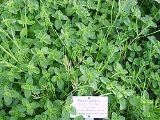
    Thymus vulgaris or Common Thyme is a low growing herbaceous plant, sometimes becoming somewhat woody. It is native to southern Europe....
    , and some other species that are used as culinary herbs or for medicinal purposes.


History

Ancient Egypt
Ancient Egypt

Ancient Egypt was an Ancient history civilization in eastern North Africa, concentrated along the lower reaches of the Nile in what is now the modern nation of Egypt....
ians used thyme in embalming
Embalming

File:Embalming fluid.jpgEmbalming, in most modern cultures, is the art and science of temporarily preserving human remains to forestall decomposition and to make them suitable for display at a funeral....
. The ancient Greeks
Ancient Greece

The term Ancient Greece refers to the period of History of Greece lasting from the Greek Dark Ages ca. 1100 BC and the Dorian invasion, to 146 BC and the Roman Republic conquest of Greece after the Battle of Corinth ....
 used it in their baths and burnt it as incense
Incense

Incense is composed of aromatic Biotic material materials. It releases fragrant smoke when burned. The term incense refers to the substance itself, rather than to the odor that it produces....
 in their temples, believing that thyme was a source of courage
Courage

Courage, also known as bravery, will, intrepidity, and fortitude, is the ability to confront fear, pain, Risk, uncertainty, or intimidation....
. It was thought that the spread of thyme throughout Europe was thanks to the Romans
Ancient Rome

Ancient Rome was a civilization that grew out of a small agricultural community founded on the Italian Peninsula as early as the 10th century BC....
, as they used it to purify their rooms and to "give an aromatic flavour to cheese and liqueurs".. In the European Middle Ages
Middle Ages

File:Karl 1 mit papst gelasius gregor1 sacramentar v karl d kahlen.jpgThe Middle Ages of European history are a period in history which lasted for roughly a millennium, commonly dated from the fall of the Roman Empire in the 5th century to the beginning of the Early Modern Period in the 16th century, marked by the division of Western Christi...
, the herb was placed beneath pillows to aid sleep and ward off nightmares. In this period, women would also often give knight
Knight

File:Gothic armor 2.jpgKnight is the term for a social position originating in the Middle Ages. In the Commonwealth of Nations, knighthood is a non-heritable form of gentry....
s and warriors gifts that included thyme leaves as it was believed to bring courage to the bearer. Thyme was also used as incense and placed on coffin
Coffin

A coffin is a funerary box used in the display and containment of deceased remains ? either for burial or cremation....
s during funerals as it was supposed to assure passage into the next life.

Cultivation

Thyme is widely cultivated for its strong flavour, which is due to its content of thymol
Thymol

Thymol also known as isopropylmethylphenol, is a monoterpene phenols derivative of cymene, C10H14OH, isomeric with carvacrol, found in oil of thyme, and Liquid-liquid extraction as a white crystalline substance of a pleasant aromatic odor and strong antiseptic properties....
..

Thyme is best cultivated in a hot sunny location with well drained soil. It is generally planted in the spring and thereafter grows as a perennial. It can be propagated by seed, cuttings, or by dividing rooted sections of the plant. It tolerates drought well.

Thyme retains its flavour on drying better than many other herbs.

Culinary use

Thyme is a good source of iron and is used widely in cooking. Thyme is a basic ingredient in French
French cuisine

French cuisine is a style of cooking derived from the nation of France. It evolved from centuries of social and political change. The Middle Ages brought lavish banquets to the upper class with ornate, heavily seasoned food prepared by chefs such as Guillaume Tirel....
, Greek, Italian
Italian cuisine

Italian cuisine as a national cuisine known today has evolved through centuries of social and political changes, with its roots traced back to 4th century BC....
, Lebanese
Lebanese cuisine

Lebanese cuisine, Lebanese and Levant cuisine in general is regarded as one of the world's healthiest cuisines because of the use of minimally processed vegetarian recipes, in addition to an abundance of fruits, vegetables, cereals, legumes, and nuts....
, Persian, Portuguese, Libyan, Spanish
Spanish cuisine

Spanish cuisine consists of a variety of dishes which stem from differences in geography, culture and climate. It is heavily influenced by seafood available from the waters that surround the country, and reflects the country's deep maritime roots....
, Syrian, and Turkish cuisines, and in those derived from them. It is also widely used in Arab
Arab cuisine

Arab cuisine is defined as the various regional cuisines spanning the Arab World from Iraq to Morocco to Somalia to Yemen, and incorporating Levantine, Egyptian and others....
 and Caribbean
Caribbean cuisine

Caribbean cuisine is a fusion of African cuisine, Amerindian cuisine, British cuisine, Spanish cuisine, French cuisine, Dutch cuisine, Indian cuisine, Chinese cuisine and America....
 cuisines.


Thyme is often used to flavour meats, soups and stews. It has a particular affinity to and is often used as a primary flavour with lamb, tomatoes and eggs.


Thyme, while flavourful, does not overpower and blends well with other herbs and spices. In French cuisine

French cuisine

French cuisine is a style of cooking derived from the nation of France. It evolved from centuries of social and political change. The Middle Ages brought lavish banquets to the upper class with ornate, heavily seasoned food prepared by chefs such as Guillaume Tirel....
, along with bay
Bay leaf

Bay leaf , Greek Daphni, Romanian Dafin, Portuguese Louro; is the aromatic leaf of several species of the Laurel family . Fresh or dried bay leaves are used in cooking for their distinctive flavor and fragrance....
 and parsley
Parsley

Parsley is a bright green, biennial plant herb, also used as spice. It is very common in Middle Eastern cuisine, European cuisine, and American cuisine cooking....
 it is a common component of the bouquet garni
Bouquet garni

The bouquet garni is a bundle of herbs usually tied together with string and mainly used to prepare soup, stock , and various stews. The bouquet is boiled with the other ingredients, but is removed prior to consumption....
, and of herbes de Provence
Herbes de Provence

Herbes de Provence is a mixture of dried herbs from Provence invented in the 1970s.The mixture typically contains rosemary, marjoram, basil, bay leaf, thyme, and sometimes lavender flowers and other herbs....
. In some Levantine countries, the condiment za'atar
Za'atar

Za'atar , also spelled satar, zahatar or zatr, is a mixture of herbs and spices used as a condiment with Middle Eastern origins....
 (Arabic for thyme) contains thyme as a vital ingredient.


Thyme is sold both fresh and dried. The fresh form is more flavourful but also less convenient; storage life is rarely more than a week. While summer-seasonal, fresh thyme is often available year-round.

Fresh thyme is commonly sold in bunches of sprigs. A sprig is a single stem snipped from the plant. It is composed of a woody stem with paired leaf or flower clusters ("leaves") spaced ½ to 1" apart. A recipe may measure thyme by the bunch (or fraction thereof), or by the sprig, or by the tablespoon or teaspoon. If the recipe does not specify fresh or dried, assume that it means fresh.

Depending on how it is used in a dish, the whole sprig may be used (e.g. in a bouquet garni

Bouquet garni

The bouquet garni is a bundle of herbs usually tied together with string and mainly used to prepare soup, stock , and various stews. The bouquet is boiled with the other ingredients, but is removed prior to consumption....
), or the leaves removed and the stems discarded. Usually when a recipe specifies 'bunch' or 'sprig' it means the whole form; when it specifies spoons it means the leaves. It is perfectly acceptable to substitute dried for whole thyme.

Leaves may be removed from stems either by scraping with the back of a knife, or by pulling through the fingers or tines of a fork. Leaves are often chopped.


Thyme retains its flavour on drying better than many other herbs. Dried, and especially powdered thyme occupies less space than fresh, so less of it is required when substituted in a recipe. As a rule of thumb, use one third as much dried as fresh thyme - a little less if it is ground. Substitution is often more complicated than that because recipes can specify sprigs and sprigs can vary in yield of leaves. Assuming a 4" sprig (they are often somewhat longer), estimate that 6 sprigs will yield one tablespoon of leaves. The dried equivalent is 1:3, so substitute 1 teaspoon of dried or ¾ tsp of ground thyme for 6 small sprigs.

As with bay, thyme is slow to release its flavours so it is usually added early in the cooking process.

Medicinal use

The essential oil of common thyme (Thymus vulgaris) is made up of 20-54% thymol
Thymol

Thymol also known as isopropylmethylphenol, is a monoterpene phenols derivative of cymene, C10H14OH, isomeric with carvacrol, found in oil of thyme, and Liquid-liquid extraction as a white crystalline substance of a pleasant aromatic odor and strong antiseptic properties....
. Thymol, an antiseptic
Antiseptic

Antiseptics are antimicrobials that are applied to living biological tissue/skin to reduce the possibility of infection, sepsis, or putrefaction....
, is the main active ingredient in Listerine
Listerine

Listerine is a brand name for antiseptic mouthwash. Its original formula has notoriously strong flavor, although variations have been released that are marketed as tasting milder....
 mouthwash. Before the advent of modern antibiotics, it was used to medicate bandages. It has also been shown to be effective against the fungus that commonly infects toenails.

A tea made by infusing
Infusion

An infusion is the outcome of Wikt:steep plants with a desired flavour in water or edible oil.An infusion is very similar to a decoction but is used with herbs that are more volatile or dissolve readily in water, or release their active ingredients easily in oil....
 the herb in water can be used for cough and bronchitis
Bronchitis

Bronchitis is an inflammation of the large bronchus in the lungs. It can progress to pneumonia. Acute bronchitis is usually caused by viruses or bacteria and may last several days or weeks....
. Medicinally thyme is used for respiratory infections in the form of a tincture
Tincture

In medicine, a tincture is an alcoholic extract or solution of a non-Volatility substance; . To qualify as a tincture, the alcoholic extract is to have an ethanol percentage of at least 40-60% ....
, tisane
Tisane

An herbal tea, tisane, or ptisan is an herbal infusion made from anything other than the leaves of the tea bush . Originated from both China and Middle East....
, salve
Salve

A salve is a medical ointment used to soothe the head or other body surface. A popular eye medicine known as "Phrygian powder" was one of Laodicea on the Lycus's sources of wealth....
, syrup
Syrup

In cooking, a syrup is a thick, viscous liquid, containing a large amount of dissolved sugars, but showing little tendency to deposit crystals....
 or by steam inhalation. Because it is antiseptic, thyme boiled in water and cooled is very effective against inflammation of the throat when gargled 3 times a day. The inflammation will normally disappear in 2 - 5 days. Other infections and wounds can be dripped with thyme that has been boiled in water and cooled.

In traditional Jamaican childbirth practice, thyme tea is given to the mother after delivery of the baby. Its oxytocin
Oxytocin

Oxytocin is a mammalian hormone that also acts as a neurotransmitter in the brain.It is best known for its roles in female reproduction: it is released in large amounts after distension of the cervix and vagina during labor, and after stimulation of the nipples, facilitating childbirth and breastfeeding, respectively....
-like effect causes uterine contractions and more rapid delivery of the placenta but this was said by Sheila Kitzinger
Sheila Kitzinger

Sheila Helena Elizabeth Kitzinger MBE is a United Kingdom natural childbirth activist and author on childbirth and pregnancy. She is a social anthropologist specialising in pregnancy, childbirth and the parenting of babies and young children....
 to cause an increased prevalence of retained placenta.

Important species

Thymus vulgaris
Thymus vulgaris

Thymus vulgaris or Common Thyme is a low growing herbaceous plant, sometimes becoming somewhat woody. It is native to southern Europe....
 (Common Thyme or Garden Thyme) is a commonly used culinary herb
Herb

A herb is a plant that is valued for qualities such as medicinal properties, flavor, scent, or the like....
. It also has medicinal uses. Common thyme is a Mediterranean perennial which is best suited to well-drained soils and enjoys full sun.

Thymus herba-barona (Caraway Thyme) is used both as a culinary herb and a groundcover, and has a very strong caraway
Caraway

Caraway or Persian cumin is a biennial plant in the family Apiaceae, native to Europe and western Asia.The plant is similar in appearance to a carrot plant, with finely divided, feathery leaves with thread-like divisions, growing on 20?30 cm stems....
 scent due to the chemical carvone
Carvone

Carvone is a member of a family of chemicals called terpene. Carvone is found naturally in many essential oils, but is most abundant in the oils from seeds of caraway and dill....
.

Thymus × citriodorus (Citrus Thyme; hybrid T. pulegioides × T. vulgaris) is also a popular culinary herb, with cultivar
Cultivar

A cultivar is a cultivated plant that has been selected and given a unique name because of its decorative or useful characteristics; it is usually distinct from similar plants and when Plant propagation it retains those characteristics....
s selected with aromas of various citrus
Citrus

Citrus is a common term and genus of flowering plants in the family Rutaceae, originating in tropical and subtropical southeast regions of the world....
 fruit (lemon thyme, etc.)

Thymus pseudolanuginosus

Thymus pseudolanuginosus, also known as T. lanuginosus and commonly called woolly thyme, is a low growing creeper with hairy or woolly leaves and stems....
 (Woolly Thyme) is not a culinary herb, but is grown as a ground cover.

Thymus serpyllum (Wild Thyme) is an important nectar source
Nectar source

A nectar source is a flowering plant that produces nectar as part of its reproductive strategy. These plants create nectar, which attract pollinating insects and sometimes other animals such as birds....
 plant for honeybees. All thyme species are nectar sources, but wild thyme covers large areas of droughty, rocky soils in southern Europe (Greece is especially famous for wild thyme honey) and North Africa, as well as in similar landscapes in the Berkshire Mountains and Catskill Mountains
Catskill Mountains

The Catskill Mountains , a natural area in New York northwest of New York City and southwest of Albany, New York, are a mature dissected plateau, an uplifted region that was subsequently eroded into sharp relief....
 of the northeastern US.

Popular cultivars

There are a number of different cultivars of thyme with established or growing popularity, including:
  • English thyme -- the most common
  • Lemon thyme -- smells of lemons
  • Variegated lemon thyme -- with bi-colour leaves
  • Orange thyme -- an unusually low-growing, ground cover thyme that smells like orange
  • Creeping thyme -- the lowest-growing of the widely used thymes, good for walkways
  • Silver thyme -- white/cream variegate
  • Summer thyme -- unusually strong flavour


Bibliography

  • S. S. Tawfik, M. I. Abbady, Ahmed M. Zahran and A. M. K. ?Abouelalla. Therapeutic Efficacy Attained with Thyme ?Essential Oil Supplementation Throughout ?-irradiated ?Rats. Egypt. J. Rad. Sci. Applic., 19(1): 1-22 (2006).?? ?? ?
  • Rohde, E. S. (1920). A Garden of Herbs.

See also

  • Cat thyme
    Cat thyme

    Cat thyme is a close relative of germander; despite what its name suggests, it is not a thyme. Its small, oval leaves give it a thyme-like appearance, but the musty scent is quite unlike the delicate aroma of thyme, cat thyme is a mounding, tender perennial plant with grey-green leaves tipped by fragrant pink flowers in summer....


External links

  • (fr. with translator)