
All Topics  
Walnut

 
Walnut

   Email Print
   Bookmark   Link


Walnut


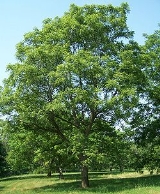
Walnuts (genus Juglans) are plant
Plant

Plants are Life organisms belonging to the Kingdom Plantae. They include familiar organisms such as trees, herbs, bushes, grasses, vines, ferns, mosses, and green algae....
s in the family Juglandaceae
Juglandaceae

The Juglandaceae, also known as the Walnut Family, is a family of trees, or sometimes shrubs, in the order Fagales. Various members of this family are native to the Americas, Eurasia, and Southeast Asia....
. They are deciduous
Deciduous

Deciduous means falling off at maturity or tending to fall off and is typically used in reference to trees or shrubs that lose their leaves seasonally and to the shedding of other plant structures such as petals after flowering or fruit when ripe....
 tree
TREE

TREE was a Boston hardcore punk band formed in the summer of 1990. They were active in the Boston music scene until disbanding in 2002....
s, 10–40 meters tall (about 30–130 ft), with pinnate
Pinnate

Pinnate is a term used to describe feather-like or multi-divided features arising from both sides of a common axis in plant or animal structures, and comes from the Latin word pinna for "feather"....
 leaves 200–900 millimetres long (7–35 in
Inch

An inch is the name of a Units of measurement of length in a number of different systems, including Imperial units, and United States customary units....
), with 5–25 leaflets; the shoots have chambered pith
Pith

Pith is a light substance that is found in vascular plants. It consists of soft, spongy parenchyma cells, and is located in the center of the Plant stem....
, a character shared with the wingnuts (Pterocarya) but not the hickories
Hickory

Trees in the genus Carya are commonly known as Hickory. The genus includes 17?19 species of deciduous trees with pinnately compound leaf and large nut ....
 (Carya) in the same family.

The 21 species in the genus range across the north temperate Old World
Old World

The Old World consists of those parts of Earth known to Europeans, Asians, and Africans in the 15th century....
 from southeast Europe
Europe

Europe is, conventionally, one of the world's seven continents. Comprising the westernmost peninsula of Eurasia, Europe is generally divided from Asia to its east by the water divide of the Ural Mountains, the Ural , the Caspian Sea, and by the Caucasus Mountains to the southeast....
 east to Japan
Japan

Japan is an island country in East Asia. Located in the Pacific Ocean, it lies to the east of the Sea of Japan, People's Republic of China, North Korea, South Korea and Russia, stretching from the Sea of Okhotsk in the north to the East China Sea and Taiwan in the south....
, and more widely in the New World
New World

The New World is one of the names used for the non-Eurasian/non-African parts of the Earth, specifically the Americas and Australasia. When the term originated in the late 15th century, the Americas were new to the Europeans, who previously thought of the world as consisting only of Europe, Asia, and Africa ....
 from southeast Canada
Canada

Canada is a country occupying most of northern North America, extending from the Atlantic Ocean in the east to the Pacific Ocean in the west and northward into the Arctic Ocean....
 west to California
California

California is a U.S. state on the West Coast of the United States of the United States, along the Pacific Ocean. It is bordered by Oregon to the north, Nevada to the east, Arizona to the southeast, and to the south the Mexico state of Baja California....
 and south to Argentina
Argentina

Argentina, officially the Argentine Republic , is a country in South America, constituted as a federation of 23 provinces and an autonomous city....
.


Nutrition Facts


Discussion
Ask a question about 'Walnut'
Start a new discussion about 'Walnut'
Answer questions from other users
Full Discussion Forum


Encyclopedia


Walnuts (genus Juglans) are plant
Plant

Plants are Life organisms belonging to the Kingdom Plantae. They include familiar organisms such as trees, herbs, bushes, grasses, vines, ferns, mosses, and green algae....
s in the family Juglandaceae
Juglandaceae

The Juglandaceae, also known as the Walnut Family, is a family of trees, or sometimes shrubs, in the order Fagales. Various members of this family are native to the Americas, Eurasia, and Southeast Asia....
. They are deciduous
Deciduous

Deciduous means falling off at maturity or tending to fall off and is typically used in reference to trees or shrubs that lose their leaves seasonally and to the shedding of other plant structures such as petals after flowering or fruit when ripe....
 tree
TREE

TREE was a Boston hardcore punk band formed in the summer of 1990. They were active in the Boston music scene until disbanding in 2002....
s, 10–40 meters tall (about 30–130 ft), with pinnate
Pinnate

Pinnate is a term used to describe feather-like or multi-divided features arising from both sides of a common axis in plant or animal structures, and comes from the Latin word pinna for "feather"....
 leaves 200–900 millimetres long (7–35 in
Inch

An inch is the name of a Units of measurement of length in a number of different systems, including Imperial units, and United States customary units....
), with 5–25 leaflets; the shoots have chambered pith
Pith

Pith is a light substance that is found in vascular plants. It consists of soft, spongy parenchyma cells, and is located in the center of the Plant stem....
, a character shared with the wingnuts (Pterocarya) but not the hickories
Hickory

Trees in the genus Carya are commonly known as Hickory. The genus includes 17?19 species of deciduous trees with pinnately compound leaf and large nut ....
 (Carya) in the same family.

The 21 species in the genus range across the north temperate Old World
Old World

The Old World consists of those parts of Earth known to Europeans, Asians, and Africans in the 15th century....
 from southeast Europe
Europe

Europe is, conventionally, one of the world's seven continents. Comprising the westernmost peninsula of Eurasia, Europe is generally divided from Asia to its east by the water divide of the Ural Mountains, the Ural , the Caspian Sea, and by the Caucasus Mountains to the southeast....
 east to Japan
Japan

Japan is an island country in East Asia. Located in the Pacific Ocean, it lies to the east of the Sea of Japan, People's Republic of China, North Korea, South Korea and Russia, stretching from the Sea of Okhotsk in the north to the East China Sea and Taiwan in the south....
, and more widely in the New World
New World

The New World is one of the names used for the non-Eurasian/non-African parts of the Earth, specifically the Americas and Australasia. When the term originated in the late 15th century, the Americas were new to the Europeans, who previously thought of the world as consisting only of Europe, Asia, and Africa ....
 from southeast Canada
Canada

Canada is a country occupying most of northern North America, extending from the Atlantic Ocean in the east to the Pacific Ocean in the west and northward into the Arctic Ocean....
 west to California
California

California is a U.S. state on the West Coast of the United States of the United States, along the Pacific Ocean. It is bordered by Oregon to the north, Nevada to the east, Arizona to the southeast, and to the south the Mexico state of Baja California....
 and south to Argentina
Argentina

Argentina, officially the Argentine Republic , is a country in South America, constituted as a federation of 23 provinces and an autonomous city....
. The Latin name, Juglans, derives from Jovis glans, "Jupiter's acorn": figuratively, a nut fit for a god.

The word walnut derives from Old English
Old English language

Old English is an early form of the English language that was spoken and written in parts of what are now England and south-eastern Scotland between the mid-5th century and the mid-12th century....
 wealhhnutu, literally "foreign nut", wealh meaning "foreign" (wealh is akin to the terms Welsh and Vlach; see *Walha
Walha

Walh or Walha is an ancient Germanic languages word, meaning "foreigner" or "stranger" or "roman", . The word can be found in Old High German walhisk ?Roman?, in Old English wilisc ?foreign, non-English, Cymric?, in Old Norse as valskr ?French?....
 and History of the term Vlach
History of the term Vlach

Vlachs is a Slavic languages-derived term from the Germanic word Valah/Valach used to designate the Romance speaking peoples of South-Eastern Europe: Romanians, Aromanians, Megleno-Romanians and Istro-Romanians....
). The walnut was so called because it was introduced from Gaul
Gaul

Gaul is the name used for the region of Western Europe comprising part of present day northern Italy, France, Belgium, western Switzerland and the parts of the Netherlands and Germany on the west bank of the River Rhine....
 and Italy
Italy

Italy , officially the Italian Republic , is a country located on the Italian Peninsula in Southern Europe and on the two largest islands in the Mediterranean Sea, Sicily and Sardinia....
. The previous Latin
Latin

Latin is an Italic language, historically spoken in Latium and Ancient Rome. Through the Military history of the Roman Empire, Latin spread throughout the Mediterranean and a large part of Europe....
 name for the walnut was nux Gallica, "Gallic
Gaul

Gaul is the name used for the region of Western Europe comprising part of present day northern Italy, France, Belgium, western Switzerland and the parts of the Netherlands and Germany on the west bank of the River Rhine....
 nut".

Species and classification

  • Sect. Juglans. Leaves large (20–45 cm) with 5–9 broad leaflets, hairless, margins entire. Wood hard. Southeast Europe
    Europe

    Europe is, conventionally, one of the world's seven continents. Comprising the westernmost peninsula of Eurasia, Europe is generally divided from Asia to its east by the water divide of the Ural Mountains, the Ural , the Caspian Sea, and by the Caucasus Mountains to the southeast....
     to central Asia
    Asia

    Asia is the world's largest and most populous continent. It covers 8.6% of the Earth's total surface area and, with over 4 billion people, it contains more than 60% of the world's current human population....
    .
    • Juglans regia L. (J. duclouxiana Dode, J. fallax Dode, J. orientis Dode) — common walnut, Persian, English, or Carpathian walnut
    • Juglans sigillata
      Juglans sigillata

      Juglans sigillata, known as the Iron Walnut, is a species of walnut tree. The tree has been cultivated for its edible nuts. The nuts are oval-shaped with bumps and ridges....
      Dode — Iron Walnut (doubtfully distinct from J. regia)
  • Sect. Rhysocaryon. Leaves large (20–50 cm) with 11–23 slender leaflets, finely pubescent, margins serrated. Wood hard. North America
    North America

    North America is the northern continent of the Americas, situated in the Earth's northern hemisphere and almost totally in the western hemisphere....
    , South America
    South America

    South America is the southern continent of the Americas, situated entirely in the Western Hemisphere and mostly in the Southern Hemisphere, with a relatively small portion in the Northern Hemisphere....
    .
    • Juglans australis
      Juglans australis

      Juglans australis is a species of plant in the Juglandaceae family. This large , fast-growing tree is found in the "Piso Montano H?medo" of Argentina and in Bolivia....
       Griseb. (J. boliviana Dode) — Argentine Walnut
    • Juglans boliviana (C. DC.) Dode — Bolivian walnut, Peruvian walnut
    • Juglans brasiliensis Dode — Brazilian Walnut
    • Juglans californica
      Juglans californica

      Juglans californica, the California Black Walnut, also called the California Walnut, or the Southern California Black Walnut, is a large shrub or small tree endemism to California....
       S.Wats. — California Black Walnut
    • Juglans hindsii (Jepson) R.E.Smith — Hinds' Black Walnut
    • Juglans hirsuta Manning — Nuevo Leon Walnut
    • Juglans jamaicensis
      Juglans jamaicensis

      Juglans jamaicensis is a species of plant in the Juglandaceae family. It is found in Cuba, the Dominican Republic, Haiti, and Puerto Rico. It is threatened by habitat loss....
       C.DC. (J. insularis Griseb.) — West Indies Walnut
    • Juglans major (Torrey) Heller (J. arizonica Dode, J. elaeopyron Dode, J. torreyi Dode) — Arizona Black Walnut
      • Juglans major var. glabrata Manning
    • Juglans microcarpa Berlandier (J. rupestris Engelm.) — Texas Walnut or Little Black Walnut
      • Juglans microcarpa var. stewartii (Johnston) Manning
    • Juglans mollis Engelm. — Mexican Walnut
    • Juglans neotropica Diels (J. honorei Dode) — Andean Walnut
      Andean Walnut

      Juglans neotropica is a species of plant in the Juglandaceae family. It is found in Colombia, Ecuador, and Peru. It is threatened by habitat loss....
      , Cedro Negro , Cedro Nogal , Nogal , Nogal Bogotano
    • Juglans nigra L. — Eastern Black Walnut
      Black Walnut

      Black walnut or American walnut is a species of Flowering plant tree in the hickory family, Juglandaceae, that is native to eastern North America....
    • Juglans olanchana
      Juglans olanchana

      Juglans olanchana is a semideciduous tree up to 40 m in height and 1.5 m in diameter, which belongs to the Juglandaceae family. It is found in Colombia, Ecuador, Guatemala, Honduras, Mexico, Nicaragua, and Peru....
       Standl. & L.O.Williams — Cedro Negro, Nogal , Walnut
    • Juglans peruviana Dode — Peruvian Walnut
    • Juglans soratensis Manning
    • Juglans steyermarkii Manning — Guatemalan Walnut
    • Juglans venezuelensis Manning — Venezuela Walnut
  • Sect. Cardiocaryon. Leaves very large (40–90 cm) with 11–19 broad leaflets, softly downy, margins serrated. Wood soft. Northeast Asia
    Asia

    Asia is the world's largest and most populous continent. It covers 8.6% of the Earth's total surface area and, with over 4 billion people, it contains more than 60% of the world's current human population....
    , eastern North America
    North America

    North America is the northern continent of the Americas, situated in the Earth's northern hemisphere and almost totally in the western hemisphere....
    .
    • Juglans ailantifolia Carr. (J. cordiformis Maxim., J. sieboldiana Maxim.) — Japanese Walnut
      Japanese Walnut

      The Japanese Walnut , is a species of walnut native to Japan and Sakhalin. It is a deciduous tree growing to 20 m tall, rarely 30 m, and 40-80 cm stem diameter, with light grey bark....
      • Juglans ailantifolia var. cordiformis — Heartnut
        Japanese Walnut

        The Japanese Walnut , is a species of walnut native to Japan and Sakhalin. It is a deciduous tree growing to 20 m tall, rarely 30 m, and 40-80 cm stem diameter, with light grey bark....
    • Juglans cinerea L. — Butternut
      Butternut (tree)

      Juglans cinerea, commonly known as Butternut or White Walnut, is a species of walnut native to the eastern United States of America and southeast Canada, from southern Quebec west to Minnesota, south to northern Alabama and southwest to northern Arkansas.Snow, cited above, says "New Brunswick to Georgia, westward to Dakota and...
    • Juglans mandshurica
      Juglans mandshurica

      The Manchurian walnut is a deciduous tree of the genus Juglans , native to the Eastern Asiatic Region . It grows to about 25 m.The leaves are alternate, 40?90 cm long, odd-pinnate, with 7?19 leaflets, 6?17 cm long and 2?7.5 cm broad ....
      Maxim. (J. cathayensis Dode, J. formosana Hayata, J. hopeiensis Dode, J. stenocarpa Maxim.) — Manchurian Walnut or Chinese Walnut.


Juglans Ailantifolia
The best-known member of the genus is the common walnut (
J. regia, literally "royal walnut"), native from the Balkans
Balkans

The Balkans is the historical name of a geographic subregion of southeastern Europe. The region takes its name from the Balkan Mountains, which run through the centre of Bulgaria into eastern Serbia....
 in southeast Europe
Europe

Europe is, conventionally, one of the world's seven continents. Comprising the westernmost peninsula of Eurasia, Europe is generally divided from Asia to its east by the water divide of the Ural Mountains, the Ural , the Caspian Sea, and by the Caucasus Mountains to the southeast....
, southwest & central Asia
Asia

Asia is the world's largest and most populous continent. It covers 8.6% of the Earth's total surface area and, with over 4 billion people, it contains more than 60% of the world's current human population....
 to the Himalaya and southwest China
China

China is a Culture of China, an ancient civilization, and, depending on perspective, a national or multinational entity extending over a large area in East Asia....
. According to the UN Food and Agriculture Organization (FAO), Shahmirzad orchard in Iran is the largest in the world (700-750 ha). In Kyrgyzstan
Kyrgyzstan

Kyrgyzstan , officially the Kyrgyz Republic, is a country in Central Asia. Landlocked and mountainous, it is bordered by Kazakhstan to the north, Uzbekistan to the west, Tajikistan to the southwest and People's Republic of China to the east....
 alone there are 230,700 ha of walnut-fruit forest, where
J. regia is the dominant overstory tree(Hemery and Popov 1998). This is the species which is widely cultivated for its delicious nuts
Nut (fruit)

Nut is a general term for the large, dry, oily seed or fruit of some plant. While a wide variety of dried seeds and fruits are called nuts, only a certain number of them are considered by biologists to be true nuts....
.
J. regia is also called English walnut because English merchants marine once controlled its world commerce.

The Black Walnut
Black Walnut

Black walnut or American walnut is a species of Flowering plant tree in the hickory family, Juglandaceae, that is native to eastern North America....
 (
J. nigra) is a common species in its native eastern North America
North America

North America is the northern continent of the Americas, situated in the Earth's northern hemisphere and almost totally in the western hemisphere....
, and is also widely cultivated elsewhere. The nuts are edible, but have a smaller kernel and an extremely tough shell, and they are not widely grown for nut production. The wood is particularly valuable.

The Hinds' Black Walnut (
J. hindsii) is native to northern California, where it has been widely used commercially as a rootstock for J. regia trees. Hinds' black walnut shells do not have the deep grooves that are characteristic of the black walnut (J. nigra).

The Butternut
Butternut (tree)

Juglans cinerea, commonly known as Butternut or White Walnut, is a species of walnut native to the eastern United States of America and southeast Canada, from southern Quebec west to Minnesota, south to northern Alabama and southwest to northern Arkansas.Snow, cited above, says "New Brunswick to Georgia, westward to Dakota and...
 (
J. cinerea) is also native to eastern North America, where it is currently endangered
Endangered species

An endangered species is a population of an organism which is at risk of becoming extinct because it is either few in numbers, or threatened by changing environmental or predation parameters....
 by an introduced disease, butternut canker, caused by the fungus
Fungus

A fungus is a Eukaryote organism that is a member of the Kingdom Fungi . The fungi are a monophyletic group, also called the Eumycota , that is phylogeny distinct from the morphologically similar slime molds and water molds ....
 
Sirococcus clavigignenti. Its leaves are 40–60 cm long, the fruits are oval, the shell has very tall ridges, and the kernel is especially high in fat.

The Japanese Walnut
Japanese Walnut

The Japanese Walnut , is a species of walnut native to Japan and Sakhalin. It is a deciduous tree growing to 20 m tall, rarely 30 m, and 40-80 cm stem diameter, with light grey bark....
 (
J. ailantifolia) is similar to Butternut, distinguished by the larger leaves up to 90 cm long, and round (not oval) nuts. The variety
cordiformis, often called the heartnut has heart-shaped nuts; the common name of this variety is the source of the sectional name Cardiocaryon.

Hybrids
  • Juglans x bixbyi Rehd. — J. ailantifolia x J. cinerea
  • Juglans x intermedia Carr. — J. nigra x J. regia
  • Juglans x notha Rehd. — J. ailantifolia x J. regia
  • Juglans x quadrangulata (Carr.) Rehd. — J. cinerea x J. regia
  • Juglans x sinensis (D. C.) Rehd. — J. mandschurica x J. regia
  • Juglans x paradox Burbank — J. hindsii x J. regia
  • Juglans x royal Burbank — J. hindsii x J. nigra


Cultivation and uses

The two most commercially important species are
J. regia for timber and nuts, and J. nigra for timber. Both species have similar cultivation requirements and are widely grown in temperate zones.

Walnuts are light-demanding species that benefit from protection from wind. Walnuts are also very hardy against drought.

Interplanting walnut plantations with a nitrogen fixing
Nitrogen fixation

Nitrogen fixation is the process by which nitrogen is taken from its relatively inert molecular form in the Earth's atmosphere and converted into nitrogen compounds ....
 plant such as
Elaeagnus × ebbingei or Elaeagnus umbellata
Elaeagnus umbellata

Elaeagnus umbellata, also referred to as Japanese Silverberry, Umbellate Oleaster or Autumn-olive, is a species of Elaeagnus native to eastern Asia from the Himalayas east to Japan....
, and various Alnus species results in a 30% increase in tree height and girth (Hemery 2001).

When grown for nuts care must be taken to select cultivar
Cultivar

A cultivar is a cultivated plant that has been selected and given a unique name because of its decorative or useful characteristics; it is usually distinct from similar plants and when Plant propagation it retains those characteristics....
s that are compatible for pollination purposes, although some cultivars are marketed as "self fertile" they will generally fruit better with a different pollination partner. There are many different cultivars available for growers, offering different growth habit, flowering and leafing, kernel flavour and shell thickness. A key trait for more northerly latitudes of North America and Europe is phenology
Phenology

Phenology is the study of periodic plant and animal life cycle events and how these are influenced by seasonal and interannual variations in climate....
, with ‘late flushing’ being particularly important to avoid frost damage in Spring. Some cultivars have been developed for novel ‘hedge’ production systems developed in Europe and would not suit more traditional orchard systems.

Fruit

Some fruits are borderline and difficult to categorize. Hickory nuts (Carya) and Walnuts (Juglans) in the Juglandaceae
Juglandaceae

The Juglandaceae, also known as the Walnut Family, is a family of trees, or sometimes shrubs, in the order Fagales. Various members of this family are native to the Americas, Eurasia, and Southeast Asia....
 family grow within an outer husk; these fruits are technically drupe
Drupe

In botany, a drupe is a fruit in which an outer fleshy part surrounds a shell of hardened endocarp with a seed inside. These fruits develop from a single carpel, and mostly from flowers with superior ovary....
s or drupaceous nuts, and thus not true botanical nuts.
Tryma is a specialized term for such nut-like drupes.

Nuts
Walnut03
The nuts
Nut (fruit)

Nut is a general term for the large, dry, oily seed or fruit of some plant. While a wide variety of dried seeds and fruits are called nuts, only a certain number of them are considered by biologists to be true nuts....
 of all the species are edible, but the walnuts commonly available in shops are from the common walnut, the only species which has a large nut and thin shell. A horticultural form selected for thin nut shells and hardiness in temperate zones is sometimes known as the 'Carpathian' walnut. The nuts are rich in oil
Walnut oil

Walnut oil is oil extracted from walnuts....
, and are widely eaten both fresh and in cookery. Walnut oil is expensive and consequently is used sparingly; most often in salad dressing. Walnuts are also an excellent source of omega-3 fatty acids, and have been shown as helpful in lowering cholesterol
Cholesterol

Cholesterol is a lipidic, waxy alcohol found in the cell membranes and transported in the blood plasma of all animals. It is an essential component of mammalian cell membranes where it is required to establish proper membrane permeability and membrane fluidity....
. They need to be kept dry and refrigerated to store well; in warm conditions they become rancid in a few weeks, particularly after shelling. Oil paint
Oil paint

Oil paint is a type of slow-drying paint consisting of small pigment particles suspended in a drying oil. Oil paints have been used in England as early as the 13th century for simple decoration, but were not widely adopted for artistic purposes until the 15th century....
 often employs walnut oil as an effective binding medium, known for its clear, glossy consistency and non-toxicity.

Two-thirds of the world export market and 99% of the US commercial production is grown in California's Central Valley and in Coastal Valleys, from Redding in the north to Bakersfield in the south. Over 30 varieties are grown there, but Chandler and Hartley account for over half of total production.

In California commercial production, the black walnut (
J. hindsii) is used mainly as a rootstock
Rootstock

A rootstock is a plant, and sometimes just the stump, which already has an established, healthy root, used for grafting a cutting or budding from another plant....
 for common walnuts because of its resistance to oak root fungus. Black walnuts are more work to crack and remove from the shell.

One ounce of English walnuts has 18.5 grams of total fat and 2.6 grams of omega 3’s. One ounce of black walnut has 16.7 grams of total fat and .57 grams of omega 3’s.
Walnuts02
In some countries immature nuts in their husks are preserved in vinegar. In England these are called "pickled walnuts" and this is one of the major uses for fresh nuts from the small scale plantings. In Armenian cuisine
Armenian cuisine

Armenian cuisine includes the foods and cooking techniques of the Armenians and the Armenian diaspora. The cuisine reflects the history and geography where Armenians have lived as well as incorporating outside influences....
, walnuts are preserved in sugar syrup and eaten whole. In Italy, liqueur
Liqueur

A liqueur is an alcoholic beverage that has been flavored with fruit, herbs, Nut , spices, flowers, or cream and bottled with added sugar. Liqueurs are typically quite sweet; they are usually not aged for long but may have resting periods during their production to allow flavors to marry....
s called Nocino
Nocino

Nocino is a sticky dark brown liqueur from the Emilia-Romagna region in Northern Italy. It is made from unripe green walnuts steeped in alcohol....
 and Nocello
Nocello

Nocello is a walnut- and hazelnut-flavored liqueur from Italy. It is produced by the Toschi Vignola s.r.l. company of Savignano sul Panaro, Province of Modena, Emilia-Romagna, Italy....
 are flavoured with walnuts, while
Salsa di Noci ("Walnut Sauce") is a pasta sauce originating from Liguria
Liguria

Liguria is a coastal Regions of Italy of north-western Italy, the third smallest of the Italian regions. Its capital is Genoa. It is a popular region with tourists for its beautiful beaches, picturesque little towns, and food....
. In Georgia, walnuts are ground along with other ingredients to make walnut sauce
Walnut sauce

Walnut sauce is a food paste with origins in Iranian cuisine made primarily from walnuts and especially popular in Georgian cuisine....
.

Walnuts are heavily used in India. In Jammu, India it is used widely as a
prasad (offering) to Mother Goddess Vaisnav Devi and, generally, as a dry food in the season of festivals such as Diwali
Diwali

Diwali is a significant festival in Hinduism, Sikhism, Buddhism, and Jainism, and an official holiday in India. Adherents of these religions celebrate Diwali as the Festival of Lights....
.

Shells
The walnut shell has a wide variety of uses. Eastern black walnut (
J. nigra) shell is the hardest of the walnut shells, and therefore has the highest resistance to break-down.
  • Cleansing and polishing: Walnut shells are mostly used to clean soft metals, fiberglass, plastics, wood and stone. This environmentally friendly and recyclable soft grit abrasive is well suited for air blasting, de-burring, de-scaling, and polishing operations because of its elasticity and resilience. Uses include cleaning automobile and jet engines, electronic circuit boards, and paint and graffiti removal. For example: In the early days of jet transportation, crushed walnut shells were used to scour the compressor airfoils clean, but when engines with air cooled vanes and blades in the turbine started being manufactured this practice was stopped. The problem being that the crushed shells tended to plug up the cooling passages to the turbine, resulting in turbine failures due to overheating.
  • Oil well drilling: The shell is used widely in oil well drilling for lost circulation material in making and maintaining seals in fracture zones and unconsolidated formations.
  • Flour made from walnut shells is widely used in the plastics industry.
  • Paint thickener: Walnut shells are added to paint to give it a thicker consistency for "plaster effect" ranges.
  • Explosives: Used as a filler in dynamite.
  • Cosmetic cleaner: Occasionally used in soap and exfoliating cleansers


Husks
Walnut husks are often used to create a rich yellow-brown to dark brown dye
Dye

A dye can generally be described as a colored substance that has an Chemical affinity to the Wiktionary:substrate to which it is being applied....
 that is used for dyeing fabric
Textile

A textile is a flexible material consisting of a network of natural or artificial fibres often referred to as thread or yarn. Yarn is produced by Spinning raw wool fibres, linen, cotton, or other material on a spinning wheel to produce long strands known as yarn....
 and for other purposes. When picking walnuts, the husks should be handled wearing rubber gloves, to avoid dyeing one's fingers, as the dye does not require a mordant
Mordant

A mordant is a substance used to set dyes on fabrics by forming an insoluble compound with the dye. It may be used for dyeing fabrics, or for intensifying stains in cell or tissue preparations....
.

Wood


Walnut Pith
The common walnut and the black walnut and its allies, are important for their attractive timber, which is hard, dense, tight-grained and polishes to a very smooth finish. The colour ranges from creamy white in the sapwood to a dark chocolate colour in the heartwood. When kiln-dried, walnut wood tends toward a dull brown colour, but when air-dried can become a rich purplish-brown. Because of its colour, hardness and grain it is a prized furniture and carving wood. Walnut burl
Burl

A burl is a tree growth in which the wood grain has grown in a Deformity manner. It is commonly found in the form of a rounded outgrowth on a tree trunk or branch that is filled with small Wood#Knots from dormant buds....
s (or 'burrs' in Europe) are commonly used to create bowls and other turned pieces. Veneer
Veneer

A veneer is a thin covering over another surface. More specifically, it may refer to:*Wood veneer, a term used in architecture and woodworking...
 sliced from walnut burl is one of the most valuable and highly prized by cabinet makers and prestige car manufacturers. Walnut wood has been the timber of choice for gun makers for centuries, including the Lee Enfield rifle of the First World War. It remains one the most popular choices for rifle and shotgun stocks, and is generally considered to be the premium – as well as the most traditional – wood for gun stocks, due to its resilience to compression along the grain. Walnut is also used in lutherie
Luthier

A luthier is someone who makes or repairs stringed instruments. The word luthier comes from the French language word wikt:en:luth#French which is French for "lute"....
, i.e. making stringed instruments. The wood of the Butternut and related Asian species is of much lower value, softer, coarser, less strong and heavy, and paler in colour.

In North America, forestry research has been undertaken mostly on
J. nigra aiming to improve the quality of planting stock and markets. In some areas of the US black walnut is the most valuable commercial timber species. is the key body linking growers with scientists. In Europe, various EU-led scientific programs have studied walnut growing for timber.

Parkland and garden trees

Walnuts are very attractive trees in park
Park

A park is a Environmental protection, in its natural or semi-natural state or planted, and set aside for human recreation and enjoyment....
s and large garden
Garden

A garden is a planned space, usually outdoors, set aside for the display, cultivation, and enjoyment of plants and other forms of nature. The garden can incorporate both natural and man-made materials....
s. Walnut trees are easily propagated from the nuts. Seedlings grow rapidly on good soils. The Japanese Walnut in particular is grown for its huge leaves, which have a 'tropical' appearance.

As garden trees they have some drawbacks, in particular the falling nuts, and the releasing of the allelopathic compound juglone
Juglone

Juglone is an aromatic organic compound with the molecular formula C10H6O3. It occurs naturally in the leaves, roots and bark of plants in the Juglandaceae family, particularly the Black Walnut....
, though a number of gardeners do grow them. However, different walnut species vary in the amount of juglone they release from the roots and fallen leaves - the black walnut
Black Walnut

Black walnut or American walnut is a species of Flowering plant tree in the hickory family, Juglandaceae, that is native to eastern North America....
 in particular is known for its toxicity, both to plants and horses. Juglone is toxic to plants
Allelopathy

Allelopathy is the inhibition of growth of a plant due to biomolecules released by another. It is the opposite of symbiosis mutualism. The biomolecules are called allelochemicals and are produced by some plants as secondary metabolites....
 such as tomato
Tomato

The Tomato is an herbaceous, usually sprawling plant in the Solanaceae or nightshade family, as are its close cousins Nicotiana, potatoes, aubergine , chilli peppers, and the poisonous Atropa belladonna....
, apple
APPLE

This article is about the satellite APPLE. For the fruit apple, see Apple. For other uses see Apple .The Ariane Passenger PayLoad Experiment , was an experimental communication satellite with a C-Band transponder launched by Indian Space Research Organisation satellite on June 19, 1981 by Ariane 1, a launch vehicle of the European Spac...
, and birch
Birch

Birch is the name of any tree of the genus Betula , in the family Betulaceae, closely related to the beech/oak family, Fagaceae....
 and may cause stunting and death of nearby vegetation. Juglone appears to be one of the walnut's primary defence mechanisms against potential competitors for resources (water, nutrients and sunlight), and its effects are felt most strongly inside the tree's "drip line" (the circle around the tree marked by the horizontal distance of its outermost branches). However, even plants at a seemingly great distance outside the drip line can be affected, and juglone can linger in the soil for several years even after a walnut is removed as its roots slowly decompose and release juglone into the soil.

Walnut as wildlife food plants

Walnuts are used as food plants by the larva
Larva

A larva is a young form of animal with indirect developmental biology, going through or undergoing metamorphosis .The larva can look completely different from the adult form, for example, a caterpillar differs from a butterfly....
e of some Lepidoptera
Lepidoptera

Lepidoptera is an order of insect that includes moths and butterfly. It is one of the most speciose orders in the class Insecta, encompassing moths and the three superfamilies of butterfly, skipper , and Hedylidae....
 species. These include:
  • Brown-tail
    Brown-tail

    The Brown-tail is a moth of the family Lymantriidae. It is distributed throughout Europe.The wings of this species are pure white, as is the body, apart from a tuft of brown hairs at the end of the abdomen....
     (
    Euproctis chrysorrhoea)
  • the Coleophora
    Coleophora

    Coleophora is a very large genus of moths of the family Coleophoridae with around 1000 described species. The genus is represented on all continents but the majority are found in the Nearctic and Palaearctic regions....
    case-bearers C. laticornella (recorded on J. nigra) and C. pruniella.
  • Common Emerald
    Common Emerald

    The Common Emerald is a moth of the family Geometridae. The species is found throughout the Nearctic and Palearctic regions and the Near East....
     (
    Hemithea aestivaria)
  • Emperor Moth (Pavonia pavonia)
  • The Engrailed
    Engrailed

    'The Engrailed' is a moth of the family Geometridae. Some authors split this moth into two species: E. bistortata 'The Engrailed' and E....
     (
    Ectropis crepuscularia)
  • Walnut Sphinx (Amorpha juglandis)


In addition, the nuts are a popular snack among woodland creatures, specifically mice and squirrels.

See also

  • Hickory
    Hickory

    Trees in the genus Carya are commonly known as Hickory. The genus includes 17?19 species of deciduous trees with pinnately compound leaf and large nut ....
  • Pecan
    Pecan

    The Pecan is a species of hickory, native to south-central North America, in the United States from southern Iowa, Illinois and Indiana east to western Kentucky, North Carolina and western Tennessee, south through Georgia , Alabama, Mississippi, Louisiana, Texas, Oklahoma and Arkansas ; and in Mexico from Coahuila south to Jalisco and Veracr...


External links