

Polyphenol

Encyclopedia
Polyphenols are a structural class of natural
, synthetic, and semisynthetic organic chemicals characterized by the presence of large multiples of phenol
structural units (right). The number and characteristics of these phenol structures underlie the unique physical, chemical, and biological (metabolic, toxic, therapeutic, etc.) properties of particular members of the polyphenol class. The name derives from poly-, from the ancient Greek word πολύς (polus, meaning “many, much”) and the word phenol which refers to a chemical structure formed by attaching to an aromatic benzenoid (phenyl) ring, an hydroxyl
(-OH) group akin to that found in alcohols (hence the "-ol" suffix). The term polyphenol appears to have been in use since 1894.
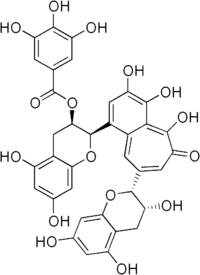
Examples of the compound class include the black tea antioxidant theaflavin-3-gallate
shown below, and the hydrolyzable tannin, tannic acid, shown above. Notably, the historically important chemical class of the tannin
s is a subset of the polyphenols. These examples highlight the high density of phenolic substructures that characterize the class and underlie their properties, and introduces their origin as plant-derived substances (phytochemical
s).
Individual polyphenols engage in reactions related to their core structure—standard phenolic reactions (e.g., ionization, oxidations to ortho- and para-quinones, and other underlying aromatic transformations related to the presence of the phenolic hydroxyl, etc.; see phenol image above)—as well as reactions related to their peripheral structures (e.g., nucleophilic additions, oxidative and hydrolytic bond cleavages, etc.). As critically, per the definition, the polyphenols display behaviors more explicitly limited to the polyphenol class—for instance, formation of particular metal complexes (e.g., intense blue-black iron(III) complexes), and precipitation of proteins and particular amine-containing organics (e.g., particular alkaloid
natural products).
is first studied (see, for instance, pharmacognosy
to understand the process from plant extract to determined chemical structures), and with a desire to associate newly discovered phenolic substances with particularly well-studied, pharmacologically interesting "true" polyphenols (e.g., for pattern, see ,).
The need to distinguish between structure classes, even in rough terms, relates to the critical concept of structure-activity relationship
s (SAR)—the fact that the biological activities of chemical agents are structure-derived and structure-dependent., Hence, understanding of the way in which phenol
ic chemical structures vary (disambiguating types) is important to understanding of how and why biological activities vary with those structures (see, e.g., ,). This in turn underlies good correlative research and consumer decision-making about use of any phenol
ic agent, including polyphenols.
group on one or more phenol
unit per molecule
. At wiktionary, they are alcohol
s [sic] containing two or more benzene
rings that each have at least one hydroxyl group attached, a definition that likewise confounds simple natural phenol
s and polyphenols, and further confounds the very different properties of alcohol
ic and phenol
ic hydroxyl groups. Likewise, the term polyphenol is increasingly confounded in some parts of the bioactivity and analytical research literature with simple and mid-molecular weight plant phenolic natural products (see next paragraph), though less so in literatures of modern organic and natural products chemistry where more precise understandings of naming apply.
In the parts of literature where polyphenol is used less rigorously, the term is used almost interchangeably with other terms/structures such as simple natural phenol
s, intermediate weight phenolics, and the newer and less precedented term phenoloids.
Finally, some web sources give definitions based solely on antioxidant properties or other health benefits, or on plant origins.The former is rejected as a sufficient condition and an oversimplification (not all antioxidants are polyphenols and vice versa, and phenolic benefits and toxicity are defined by their SAR). The latter is rejected on chemical terms, because identical chemical agents can be isolated from various natural sources other than plants, or with effort can be prepared synthetically.
versus chemical nomenclature vary and are to an extent at odds. Dictionaries of English words on the web or otherwise collect and report the meanings of words as their uses appear and change over time. Chemical nomenclature on the other hand (with IUPAC nomenclature
as the best example) is necessarily more restrictive: it aims to standardize communication and practice so that when a chemical term is used, it has a fixed meaning relating to chemical structure, and thereby, can give insights into chemical properties and derived molecular functions. These differing aims can have profound effects on valid understanding in chemistry, especially with regard to chemical classes made popular for perceived health benefits; this is particularly true in the new media age of the web, where word meanings can rapidly change.
The tension between nomenclature vs. other definitions is evident in the polyphenol literature, and correlates with commercial interest in promoting nutraceutical and supplement products (e.g.), and with broad scientific interest in new phenolic substances—where new discoveries must be tied to earlier ones even though new reports often precede structure assignment; hence, first assignments of activity with structure (SAR) may be incomplete or inaccurate.
While the polyphenol definition provides only rough boundaries, they are structurally and functionally relevant and useful; despite web definitions to the contrary, all chemicals presenting a phenolic group are not polyphenols, and so cannot be expected to provide the health benefits associated with, for instance, tea and wine polyphenols (see below). Moreover, phenol
itself, C6H5OH, the simplest phenol, along with other examples, are not therapeutic agents; phenol itself is caustic, and toxic if taken internally. As structural complexity increases from phenol to di-,tri- and oligophenols, and on through to commercially and medically important true polyphenols, one encounters hepatotoxins, drugs, endocrine disruptors—the problematic bisphenol A
can fit some loose polyphenol definitions—industrial dyes, plant pigments (i.e., all manner of bioactive agents).
In short, the general and specific biologic and therapeutic properties of all phenolic substances connect to chemical structure
, and chemical definitions and classifications such as "polyphenol" must substitute in literature and common use for more detailed structural knowledge. The ability to connect beneficial properties—value in commercial tanning
, anti-proliferative pharmacology
, etc.—with the polyphenol chemical class will only succeed with meaningful nomenclature applied to this and other phenol classes.
, A. Swain and T. White that characterized specific structural characteristics common to plant phenolics used in tanning, research chemist Edwin Haslam
and colleagues developed the four-point definition based on solubility, molecular weight, numbers of phenolic substructures, and aromatic ring density presented above. This definition is now know as the White–Bate-Smith–Swain–Haslam (WBSSH) definition. It is the definition applied in the highest level research and practical discussions of the structure class.
 Notably, the four-point definition disambiguates in rough terms the higher molecular weight and more structurally and functionally complex polyphenols from plant-derived "simple" natural phenol
s—monoaromatics such gallic
and caffeic acid
s—and from other plant-originating dimer and trimer types of phenolic natural product classes—e.g., lignan
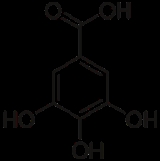
s and flavanoids—that occupy the interesting structure and property "space" between simple and polyphenols. For instance, the gallic acid
dimer, ellagic acid
(M.W. 302, right) is an example of a dimeric phenolic compound at the core of various natural products. An example raspberry ellagitannin
(M.W. ~2450),—a possible radical-scavenging antioxidant—on the other hand, is a polyphenol per se, containing 6 ellagic acid-type components and two additional monomeric phenolics, for a total of 14 gallic acid units (and all of their substituent phenolic hydroxyl groups). Hence, there are structural, property-associated, and functional characteristics which underlie the naming differences between complex polyphenols and their component phenolic substructures, just as the complex antibiotic structure, vancomycin
, and any other complex organic chemical structure is clearly disambiguated from its component parts (e.g., in the vancomycin case, from glucosyl-vancosamine, hydroxychlorotyrosine, etc.) in order to make sense in communicating.
The association of the polyphenol term with a component class, the physiologically and pharmacologically interesting flavanoids—with 2 core aromatic rings, and commonly with 4-6 core phenolic hydroxyl groups (0-9 possible)—is an example of nomenclature and structure-function confounding. Simple flavanoids have chemical behaviors and biologic toxicities and therapeutic potentials distinct from the polyphenols; e.g., flavonoids display a range of solubilities depending on substitution pattern, and typically stabilize protein structures in aqueous solution rather than instigating precipitation (c.f. and defined polyphenol solubility and protein precipitation properties, above). Physical, chemical, and biologic properties (SAR) associated with phenolic structural classes cannot be generalized across the broad expanses between classes, and sometimes not much beyond a particular individual chemical structure.
. Strictly speaking, polymers require the presence of repeating monomeric structures, either ordered or random, and this requirement is generally unmet in polyphenols. This is true, even though in some molecules such as tannic acid
—shown above—and the condensed tannins, particular phenolic units appear more than once in the structure. An example which highlights the distinction and the dependence of properties on structure (i.e., SAR) is the relation of polyphenols to the true phenol
ic polymer lignin
, a complex, random polymer that constitutes the wood
y tissue of gymnosperm
s. Lignin is the most abundant phenol
-containing natural substance and, in general, the most abundant terrestrial polymeric substance. Lignin
is formed by extensive radical-mediated cross-linking of simple phenols derived from plant phenylpropanoid
biosynthetic pathways. It is very high molecular weight, very highly oxidized, and truly polymeric—it is wood, insoluble, and without strong ongoing therapeutic interest. It is not a polyphenol, akin to the ellagitannin
—pictured and discussed above—that meets WBSSH definition components (moderate water-solubility, phenolic count, etc.)—which is not fully oxidized, and is of significant therapeutic interest.
Note, there is theoretically no reason to exclude the possibility of limited polymerization of a phenolic monomer, such that it would result in formation of a soluble structure that would be both a polyphenol by the WBSSH definition, and have the repeating characteristics of a true polymer. The arecatannin
-type natural products from Ceylonese cassia bark and Areca seed may be considered as an example of such.
s), the phenol substructures of polyphenols have various further nomenclatures depending on the number of phenolic hydroxyl groups. A phenol, per se, is the term for a substructure with one phenolic hydroxyl group, catechol- and resorcinol-types (benzenediol
s) have two, and pyrogallol- and phloroglucinol-types (benzenetriol
s) have three. Polyphenols always have heteroatom substituents other than hydroxyl groups; as might be expected, ether and ester linkages are common, as are various carboxylic acid derivatives (see theaflavin gallate image).
 As the earlier images suggest, polyphenol compositions are normally limited to carbon
, hydrogen
and oxygen
in undefined proportion. Carbon frameworks can be complex, arising from various biosynthetic pathways aimed at plant and related secondary metabolites; e.g., the 7-atom ring (7-membered ring) appearing in theaflavin
structure above is an example of a "carbocycle" that is of a nonbenzenoid aromatic tropolone
type. In addition, various biaryl
s and triaryls occur (e.g., biphenyl
s), see figure at right, and benzopyran
s and normal and C-glucoside
derivatives frequently appear (further figure at right) —e.g. in condensed, complex and hydrolyzable tannins such as in stenophyllanin A (1), acutissimin B (2), mongolicain A (3), stenophynin A (4), mongolicanin (5), and mongolicin B (6). Spiro-type structures
as illustrated at right appear as in preceding compound (3); furanoid, pyrone
, and other heterocycles appear as in compounds (4) and (6); (diaryl)methyl structures as in (1), (2), and (6); as do pyrans and dioxin
s, etc. Because of the preponderance of saccharide-derived core structures (e.g., see tannic acid
image above), as well as spiro- and other structure types, natural chiral (stereo) centers abound.
, especially lignin
and the phenolic part of suberin
.
Polyphenols are reactive species toward oxidation. The Fenton's reagent
, a mixture producing reactive oxygen species
, used in association with a photo-oxidation system may be used to treat oil mill waste water. A complex mixture of polyphenols, found in food for example, can undergo autoxidation
during the ageing process. Simple natural phenols can lead to the formation of B-type procyanidin
s in wines or in model solutions. This is correlated to the non enzymatic browning color change characteristic of this process. This phenomenon can be observed in foods like carrot purees. ABTS
may be used to characterise polyphenol oxidation products.
Polyphenols can interact with protein
s (case of tannin
s) and other food matrices.
to produce a mixture of phenylene
and oxyphenylene.
Natural phenols can be enzymatically polymerised. Laccase
and peroxidase
induced the polymerization of syringic acid
to give a poly(1,4-phenylene oxide) bearing a carboxylic acid at one end and a phenolic hydroxyl group at the other.
, polyphenols are generally divided into hydrolyzable tannin
s (gallic acid
esters of glucose
and other sugars or cyclitol
s) and phenylpropanoid
s, such as lignin
s, flavonoid
s, and condensed tannins. This division is derived from the variety of simple polyphenolic units derived from secondary plant metabolism as well as classical divisions based upon the relative importance of each base component to different fields of study. Tannin chemistry originated in the importance of tannic acid
to the tanning
industry; lignins to the chemistry of soil
and plant structure; and flavonoids to the chemistry of plant secondary metabolite
s for plant defense
, and flower color (e.g. from anthocyanin
s).
s. For instance, in the Indian subcontinent
, the pomegranate
peel
, high in tannins and other polyphenols, or its juice, is employed in the dyeing of non-synthetic fabrics.
Polyphenols, especially, tannin
s, can be used as precursors in green chemistry
notably to produce plastics or resins by polymerisation with or without the use of formaldehyde
or adhesive
s for particleboards. The aims are generally to make use of plant residues from grape, olive (called pomace
s) or pecan
shells left after processing.
A special form of polyphenols-derived resins are the EUV
resist
s.
Polyphenols are also used for the production of creosote
to treat wood.
action and may help reduce tooth decay.
Some polyphenols produced by plants in case of pathogens attacks are called phytoalexin
s. Such compounds can be implied in the hypersensitive response
of plants. High levels of polyphenols in some woods can explain their natural preservation
against rot.
Cucumbers grown on vermicompost
may be less susceptible to striped cucumber beetle
attack due to a higher induced level of polyphenols in the plant.
Polyphenols can be involved in allelopathic
interactions in soil or in water. The fruit pulp of the plant Liriope muscari
contains phenolic compounds which inhibit its own seeds germination.
Polyphenols can be a source of pollution in sites near processing plants producing olive oil, coffee (see coffee wastewater
) or paper. Laccase
s (found for instance in the fungal species Panellus stipticus
) can be used in bioremediation
.
Polyphenol content can be an element of chemotaxonomy
.
Polyphenols can also be found in animals. In arthropod
s like insect
s and crustacean
s polyphenols play a role in epicuticle hardening (sclerotization). The hardening of the cuticle is due to the presence of a polyphenol oxidase
. In crustaceans, there is a second oxidase activity leading to cuticle pigmentation. There is apparently no polyphenol tanning occurring in arachnid
s cuticle.
(PPO) is an enzyme that catalyses the oxidation of o-diphenols to produce o-quinones. It is the rapid polymerisation of o-quinones to produce black, brown or red polyphenolic pigments that is the cause of fruit browning. In insects, PPO serves for the cuticle hardening.
Laccase
is a major enzyme that initiates the cleavage of hydrocarbon rings, which catalyzes the addition of a hydroxyl
group to phenolic compounds. This enzyme can be found in fungi like Panellus stipticus
, organisms able to break down lignin
, a complex aromatic polymer in wood that is highly resistant to degradation by conventional enzyme systems.
Anthracycline
s or hypericin
are derived from polyketide
s cyclisation.
The glycosylated form increases the solubility
of polyphenols.
 Polyphenols are considered antinutrient
s, compounds that interfere with the absorption of nutrients as a mechanism of plant defense against herbivores
. Leaf protein concentrate
s used as animal food can also be rich in polyphenols. Animals produce salivary proteins, like protein IB5
, as herbivore adaptations to plant defense
, to counter the tannin
s astringent
effect. Some animals like the greater glider
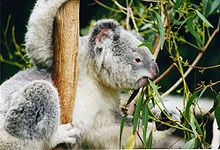
or the koala can digest low nutrient foliage, specifically eucalypt leaf matter, which contains a variety of phenolic and terpenoid compounds and a high concentration of lignified fiber. Some frugivore
s like bird
s are reported to not sense
astringency.
 Polyphenols from algae (phlorotannin
s) may be used as additive
s to prevent lipid oxidation during fish preservation
.
compounds with antioxidant properties in vegetables have been found to be retained significantly better through steaming
than through frying
.
Polyphenols in wine, beer and various nonalcoholic juice beverages can be removed using finings
, substances that are usually added at or near the completion of the processing of brewing.
argument to sell functional foods, dietary supplement
s or anti-aging cream
s.
Functional food
s may contain polyphenols. For superfruit
beverages, which may include extracts from fruits like açai or pomegranate
, the detailed composition of polyphenols is usually not revealed on the nutrition label. Instead, there may be an ORAC value given for the in vitro antioxidant
capacity of the product. Polyphenol-enriched drinks may actually deliver the intended blend of bioavailable polyphenols, which would normally require consumption of several different plant-derived foods.
As a matter of pharmacovigilance
, health benefits from using these products have not been scientifically confirmed or approved by regulatory authorities and may only be supported by preliminary research. Accordingly, there are no recommended Dietary Reference Intake
levels established for polyphenols as exist for essential nutrients.
.
Compared with the effects of polyphenols in vitro, the effects in vivo, although the subject of ongoing research, are limited and vague. The reasons for this are 1) the absence of validated in vivo biomarkers, especially for inflammation
or carcinogenesis
; 2) long-term studies failing to demonstrate effects with a mechanism of action
, specificity or efficacy; and 3) invalid applications of high, unphysiological test concentrations in the in vitro studies, which are subsequently irrelevant for the design of in vivo experiments. In rats, polyphenols absorbed in the small intestine
may be bound in protein-polyphenol complexes modified by intestinal microflora enzymes, allowing derivative compounds formed by ring-fission to be better absorbed.
effect. Casein
found in milk
added to a polyphenol-rich food like tea may reduce the absorbed polyphenols content by the formation of a complex as demonstrated in vitro. Moreover other substances such as caffeine
can form insoluble complexes with polyphenols.
Polyphenols may also interact with fiber
s like pectin
s and have a positive effect in large intestine accessibility.
: extraction
, isolation, structural elucidation
, then quantification
.
of polyphenols can be performed using a solvent like water, hot water
, methanol, methanol/formic acid, methanol/water/acetic or formic acid etc. Liquid liquid extraction can be also performed or countercurrent chromatography
. Solid phase extraction
can also be made on C18 sorbent cartridges. Other techniques are ultrasonic extraction, heat reflux extraction, microwave-assisted extraction, critical carbon dioxide, pressurized liquid extraction or use of ethanol in an immersion extractor. The extraction conditions (temperature, extraction time, ratio of solvent to raw material, solvent and concentrations) have to be optimized.
Mainly found in the fruit skins and seeds, high levels of polyphenols may reflect only the measured extractable polyphenol (EPP) content of a fruit which may also contain non-extractable polyphenols.
Concentration can be made by ultrafiltration
. Purification can be achieved by preparative chromatography.
is used as a reagent for staining phenolics in thin layer chromatography
. Polyphenols can be studied by the mean of spectroscopy
, especially in the ultra violet domain, by fractionation
or paper chromatography
. They can also be analysed by chemical characterisation.
Instrumental chemistry
analyses include separation
by high performance liquid chromatography
(HPLC), and especially by reversed-phase liquid chromatography (RPLC), can be coupled to mass spectrometry
. Purified compounds can be identified by the mean of nuclear magnetic resonance
.
The DMACA reagent
is an histological dye specific to polyphenols used in microscopy analyses. The autofluorescence
of polyphenols can also be used, especially for localisation of lignin
and suberin
.
, is used to oxidize known concentrations of a standard tannin solution, producing a standard curve
. The tannin content of the unknown is then expressed as equivalents of the appropriate hydrolyzable or condensed tannin.
Some methods for quantification of total polyphenol content are based on colorimetric
measurements. Some tests are relatively specific to polyphenols (for instance the Porter's assay). Total phenols (or antioxidant effect) can be measured using the Folin-Ciocalteu reaction. Results are typically expressed as gallic acid equivalents. Polyphenols are seldom evaluated by antibodies technologies.
Other tests measure the antioxidant capacity of a fraction. Some make use of the ABTS
radical cation which is reactive towards most antioxidants including phenolics, thiol
s and vitamin C
. During this reaction, the blue ABTS radical cation is converted back to its colorless neutral form. The reaction may be monitored spectrophotometrically. This assay is often referred to as the Trolox equivalent antioxidant capacity
(TEAC) assay. The reactivity of the various antioxidants tested are compared to that of Trolox
, which is a vitamin E
analog.
Other antioxidant capacity assays which use Trolox as a standard include the diphenylpicrylhydrazyl (DPPH), oxygen radical absorbance capacity
(ORAC), ferric reducing ability of plasma
(FRAP) assays or inhibition of copper-catalyzed in vitro human low-density lipoprotein oxidation.
New methods including the use of biosensor
s can help monitor the content of polyphenols in food.
Quantitation results produced by the mean of diode array detector-coupled HPLC are generally given as relative
rather than absolute value
s as there is a lack of commercially available standard
s for every polyphenolic molecules.
analyses on acquired data can be performed to compare samples from different origins.
cells suspensions, polyphenol production is regulated
by sugar
s levels.
Review articles
Other tools
Natural product
A natural product is a chemical compound or substance produced by a living organism - found in nature that usually has a pharmacological or biological activity for use in pharmaceutical drug discovery and drug design...
, synthetic, and semisynthetic organic chemicals characterized by the presence of large multiples of phenol
Phenol
Phenol, also known as carbolic acid, phenic acid, is an organic compound with the chemical formula C6H5OH. It is a white crystalline solid. The molecule consists of a phenyl , bonded to a hydroxyl group. It is produced on a large scale as a precursor to many materials and useful compounds...
structural units (right). The number and characteristics of these phenol structures underlie the unique physical, chemical, and biological (metabolic, toxic, therapeutic, etc.) properties of particular members of the polyphenol class. The name derives from poly-, from the ancient Greek word πολύς (polus, meaning “many, much”) and the word phenol which refers to a chemical structure formed by attaching to an aromatic benzenoid (phenyl) ring, an hydroxyl
Hydroxyl
A hydroxyl is a chemical group containing an oxygen atom covalently bonded with a hydrogen atom. In inorganic chemistry, the hydroxyl group is known as the hydroxide ion, and scientists and reference works generally use these different terms though they refer to the same chemical structure in...
(-OH) group akin to that found in alcohols (hence the "-ol" suffix). The term polyphenol appears to have been in use since 1894.
Basis in the organic chemical and natural products literature
The most research-informed and chemistry-aware definition of the polyphenol term describes the class as (i) generally moderately water-soluble compounds, (ii) with molecular weight of 500–4000 Da, (iii) >12 phenolic hydroxyl groups, and (iv) 5–7 aromatic rings per 1000 Da, where the limits to these ranges are necessarily somewhat flexible.Examples of the compound class include the black tea antioxidant theaflavin-3-gallate
Theaflavin-3-gallate
Theaflavin-3-gallate is a theaflavin derivative. It can be found in black tea....
shown below, and the hydrolyzable tannin, tannic acid, shown above. Notably, the historically important chemical class of the tannin
Tannin
A tannin is an astringent, bitter plant polyphenolic compound that binds to and precipitates proteins and various other organic compounds including amino acids and alkaloids.The term tannin refers to the use of...
s is a subset of the polyphenols. These examples highlight the high density of phenolic substructures that characterize the class and underlie their properties, and introduces their origin as plant-derived substances (phytochemical
Phytochemical
Phytochemicals are biologically active chemical compounds that occur naturally in plants . Phytochemicals are the molecules responsible for the color and organoleptic properties . For example, the deep purple color of blueberries and the smell of garlic...
s).
Individual polyphenols engage in reactions related to their core structure—standard phenolic reactions (e.g., ionization, oxidations to ortho- and para-quinones, and other underlying aromatic transformations related to the presence of the phenolic hydroxyl, etc.; see phenol image above)—as well as reactions related to their peripheral structures (e.g., nucleophilic additions, oxidative and hydrolytic bond cleavages, etc.). As critically, per the definition, the polyphenols display behaviors more explicitly limited to the polyphenol class—for instance, formation of particular metal complexes (e.g., intense blue-black iron(III) complexes), and precipitation of proteins and particular amine-containing organics (e.g., particular alkaloid
Alkaloid
Alkaloids are a group of naturally occurring chemical compounds that contain mostly basic nitrogen atoms. This group also includes some related compounds with neutral and even weakly acidic properties. Also some synthetic compounds of similar structure are attributed to alkaloids...
natural products).
Underlying importance of class definition to structure-activity understanding
Less than rigorous use of the polyphenol term toward the lower molecular weight end of the range is understandable; it is associated, for instance, with the limited understanding of chemical structure in play when a plant extractPlant extract
Plant extract may refer to:* Herbalism and traditional medicine* Biopesticides...
is first studied (see, for instance, pharmacognosy
Pharmacognosy
Pharmacognosy is the study of medicines derived from natural sources. The American Society of Pharmacognosy defines pharmacognosy as "the study of the physical, chemical, biochemical and biological properties of drugs, drug substances or potential drugs or drug substances of natural origin as well...
to understand the process from plant extract to determined chemical structures), and with a desire to associate newly discovered phenolic substances with particularly well-studied, pharmacologically interesting "true" polyphenols (e.g., for pattern, see ,).
The need to distinguish between structure classes, even in rough terms, relates to the critical concept of structure-activity relationship
Structure-activity relationship
The structure–activity relationship is the relationship between the chemical or 3D structure of a molecule and its biological activity. The analysis of SAR enables the determination of the chemical groups responsible for evoking a target biological effect in the organism...
s (SAR)—the fact that the biological activities of chemical agents are structure-derived and structure-dependent., Hence, understanding of the way in which phenol
Phenol
Phenol, also known as carbolic acid, phenic acid, is an organic compound with the chemical formula C6H5OH. It is a white crystalline solid. The molecule consists of a phenyl , bonded to a hydroxyl group. It is produced on a large scale as a precursor to many materials and useful compounds...
ic chemical structures vary (disambiguating types) is important to understanding of how and why biological activities vary with those structures (see, e.g., ,). This in turn underlies good correlative research and consumer decision-making about use of any phenol
Phenol
Phenol, also known as carbolic acid, phenic acid, is an organic compound with the chemical formula C6H5OH. It is a white crystalline solid. The molecule consists of a phenyl , bonded to a hydroxyl group. It is produced on a large scale as a precursor to many materials and useful compounds...
ic agent, including polyphenols.
Catalog of conflicting definitions based on common and web-usage
In the Merriam Webster and Babylon on-line dictionaries, rather than differentiation based on the presence of many (poly) phenolic substructures, polyphenols are instead defined as molecules with more than one hydroxylHydroxyl
A hydroxyl is a chemical group containing an oxygen atom covalently bonded with a hydrogen atom. In inorganic chemistry, the hydroxyl group is known as the hydroxide ion, and scientists and reference works generally use these different terms though they refer to the same chemical structure in...
group on one or more phenol
Phenol
Phenol, also known as carbolic acid, phenic acid, is an organic compound with the chemical formula C6H5OH. It is a white crystalline solid. The molecule consists of a phenyl , bonded to a hydroxyl group. It is produced on a large scale as a precursor to many materials and useful compounds...
unit per molecule
Molecule
A molecule is an electrically neutral group of at least two atoms held together by covalent chemical bonds. Molecules are distinguished from ions by their electrical charge...
. At wiktionary, they are alcohol
Alcohol
In chemistry, an alcohol is an organic compound in which the hydroxy functional group is bound to a carbon atom. In particular, this carbon center should be saturated, having single bonds to three other atoms....
s [sic] containing two or more benzene
Benzene
Benzene is an organic chemical compound. It is composed of 6 carbon atoms in a ring, with 1 hydrogen atom attached to each carbon atom, with the molecular formula C6H6....
rings that each have at least one hydroxyl group attached, a definition that likewise confounds simple natural phenol
Natural phenol
Natural phenols, bioavailable phenols, plant phenolics, low molecular weight phenols or phenoloids are a class of natural products. They are small molecules containing one or more phenolic group. These molecules are smaller in size than polyphenols, containing less than 12 phenolic groups...
s and polyphenols, and further confounds the very different properties of alcohol
Alcohol
In chemistry, an alcohol is an organic compound in which the hydroxy functional group is bound to a carbon atom. In particular, this carbon center should be saturated, having single bonds to three other atoms....
ic and phenol
Phenol
Phenol, also known as carbolic acid, phenic acid, is an organic compound with the chemical formula C6H5OH. It is a white crystalline solid. The molecule consists of a phenyl , bonded to a hydroxyl group. It is produced on a large scale as a precursor to many materials and useful compounds...
ic hydroxyl groups. Likewise, the term polyphenol is increasingly confounded in some parts of the bioactivity and analytical research literature with simple and mid-molecular weight plant phenolic natural products (see next paragraph), though less so in literatures of modern organic and natural products chemistry where more precise understandings of naming apply.
In the parts of literature where polyphenol is used less rigorously, the term is used almost interchangeably with other terms/structures such as simple natural phenol
Natural phenol
Natural phenols, bioavailable phenols, plant phenolics, low molecular weight phenols or phenoloids are a class of natural products. They are small molecules containing one or more phenolic group. These molecules are smaller in size than polyphenols, containing less than 12 phenolic groups...
s, intermediate weight phenolics, and the newer and less precedented term phenoloids.
Finally, some web sources give definitions based solely on antioxidant properties or other health benefits, or on plant origins.The former is rejected as a sufficient condition and an oversimplification (not all antioxidants are polyphenols and vice versa, and phenolic benefits and toxicity are defined by their SAR). The latter is rejected on chemical terms, because identical chemical agents can be isolated from various natural sources other than plants, or with effort can be prepared synthetically.
Different aims of lexicography vs. chemical nomenclature in polyphenol definition
It is generally understood that the aims of normal English lexicographyLexicography
Lexicography is divided into two related disciplines:*Practical lexicography is the art or craft of compiling, writing and editing dictionaries....
versus chemical nomenclature vary and are to an extent at odds. Dictionaries of English words on the web or otherwise collect and report the meanings of words as their uses appear and change over time. Chemical nomenclature on the other hand (with IUPAC nomenclature
IUPAC nomenclature
A chemical nomenclature is a set of rules to generate systematic names for chemical compounds. The nomenclature used most frequently worldwide is the one created and developed by the International Union of Pure and Applied Chemistry ....
as the best example) is necessarily more restrictive: it aims to standardize communication and practice so that when a chemical term is used, it has a fixed meaning relating to chemical structure, and thereby, can give insights into chemical properties and derived molecular functions. These differing aims can have profound effects on valid understanding in chemistry, especially with regard to chemical classes made popular for perceived health benefits; this is particularly true in the new media age of the web, where word meanings can rapidly change.
The tension between nomenclature vs. other definitions is evident in the polyphenol literature, and correlates with commercial interest in promoting nutraceutical and supplement products (e.g.), and with broad scientific interest in new phenolic substances—where new discoveries must be tied to earlier ones even though new reports often precede structure assignment; hence, first assignments of activity with structure (SAR) may be incomplete or inaccurate.
While the polyphenol definition provides only rough boundaries, they are structurally and functionally relevant and useful; despite web definitions to the contrary, all chemicals presenting a phenolic group are not polyphenols, and so cannot be expected to provide the health benefits associated with, for instance, tea and wine polyphenols (see below). Moreover, phenol
Phenol
Phenol, also known as carbolic acid, phenic acid, is an organic compound with the chemical formula C6H5OH. It is a white crystalline solid. The molecule consists of a phenyl , bonded to a hydroxyl group. It is produced on a large scale as a precursor to many materials and useful compounds...
itself, C6H5OH, the simplest phenol, along with other examples, are not therapeutic agents; phenol itself is caustic, and toxic if taken internally. As structural complexity increases from phenol to di-,tri- and oligophenols, and on through to commercially and medically important true polyphenols, one encounters hepatotoxins, drugs, endocrine disruptors—the problematic bisphenol A
Bisphenol A
Bisphenol A is an organic compound with two phenol functional groups. It is used to make polycarbonate plastic and epoxy resins, along with other applications....
can fit some loose polyphenol definitions—industrial dyes, plant pigments (i.e., all manner of bioactive agents).
In short, the general and specific biologic and therapeutic properties of all phenolic substances connect to chemical structure
Chemical structure
A chemical structure includes molecular geometry, electronic structure and crystal structure of molecules. Molecular geometry refers to the spatial arrangement of atoms in a molecule and the chemical bonds that hold the atoms together. Molecular geometry can range from the very simple, such as...
, and chemical definitions and classifications such as "polyphenol" must substitute in literature and common use for more detailed structural knowledge. The ability to connect beneficial properties—value in commercial tanning
Tanning
Tanning is the making of leather from the skins of animals which does not easily decompose. Traditionally, tanning used tannin, an acidic chemical compound from which the tanning process draws its name . Coloring may occur during tanning...
, anti-proliferative pharmacology
Pharmacology
Pharmacology is the branch of medicine and biology concerned with the study of drug action. More specifically, it is the study of the interactions that occur between a living organism and chemicals that affect normal or abnormal biochemical function...
, etc.—with the polyphenol chemical class will only succeed with meaningful nomenclature applied to this and other phenol classes.
Origin of the rigorous polyphenol definition
Building off of earlier natural products research efforts of E.C. Bate-SmithEdgar Charles Bate-Smith
Edgar Charles Bate-Smith was an English chemist and phytochemist specialising in food chemistry. He worked in the Low Temperature Research Station in Cambridge where his main fields of research were meat and polyphenols....
, A. Swain and T. White that characterized specific structural characteristics common to plant phenolics used in tanning, research chemist Edwin Haslam
Edwin Haslam
Edwin Haslam is a physical organic chemist and an author of books on polyphenols. He is an alumnus of Sir John Deane's College in Northwich, Cheshire, United Kingdom....
and colleagues developed the four-point definition based on solubility, molecular weight, numbers of phenolic substructures, and aromatic ring density presented above. This definition is now know as the White–Bate-Smith–Swain–Haslam (WBSSH) definition. It is the definition applied in the highest level research and practical discussions of the structure class.
Disambiguation of polyphenols from simpler and polymeric phenols
Natural phenol
Natural phenols, bioavailable phenols, plant phenolics, low molecular weight phenols or phenoloids are a class of natural products. They are small molecules containing one or more phenolic group. These molecules are smaller in size than polyphenols, containing less than 12 phenolic groups...
s—monoaromatics such gallic
Gallic acid
Gallic acid is a trihydroxybenzoic acid, a type of phenolic acid, a type of organic acid, also known as 3,4,5-trihydroxybenzoic acid, found in gallnuts, sumac, witch hazel, tea leaves, oak bark, and other plants. The chemical formula is C6H23COOH. Gallic acid is found both free and as part of...
and caffeic acid
Caffeic acid
Caffeic acid is a hydroxycinnamic acid, a naturally occurring organic compound. This yellow solid consists of both phenolic and acrylic functional groups...
s—and from other plant-originating dimer and trimer types of phenolic natural product classes—e.g., lignan
Lignan
The lignans are a group of chemical compounds found in plants. Lignans are one of the major classes of phytoestrogens, which are estrogen-like chemicals and also act as antioxidants. The other classes of phytoestrogens are the isoflavones and coumestans...
s and flavanoids—that occupy the interesting structure and property "space" between simple and polyphenols. For instance, the gallic acid
Gallic acid
Gallic acid is a trihydroxybenzoic acid, a type of phenolic acid, a type of organic acid, also known as 3,4,5-trihydroxybenzoic acid, found in gallnuts, sumac, witch hazel, tea leaves, oak bark, and other plants. The chemical formula is C6H23COOH. Gallic acid is found both free and as part of...
dimer, ellagic acid
Ellagic acid
Ellagic acid is a natural phenol antioxidant found in numerous fruits and vegetables including blackberries, raspberries, strawberries, cranberries, walnuts, pecans, pomegranates, wolfberry and other plant foods...
(M.W. 302, right) is an example of a dimeric phenolic compound at the core of various natural products. An example raspberry ellagitannin
Raspberry ellagitannin
The raspberry ellagitannin is an ellagitannin found in raspberries. It is a polyphenol per se, containing 6 ellagic acid-type components and two additional monomeric phenolics, for a total of 14 gallic acid units ....
(M.W. ~2450),—a possible radical-scavenging antioxidant—on the other hand, is a polyphenol per se, containing 6 ellagic acid-type components and two additional monomeric phenolics, for a total of 14 gallic acid units (and all of their substituent phenolic hydroxyl groups). Hence, there are structural, property-associated, and functional characteristics which underlie the naming differences between complex polyphenols and their component phenolic substructures, just as the complex antibiotic structure, vancomycin
Vancomycin
Vancomycin INN is a glycopeptide antibiotic used in the prophylaxis and treatment of infections caused by Gram-positive bacteria. It has traditionally been reserved as a drug of "last resort", used only after treatment with other antibiotics had failed, although the emergence of...
, and any other complex organic chemical structure is clearly disambiguated from its component parts (e.g., in the vancomycin case, from glucosyl-vancosamine, hydroxychlorotyrosine, etc.) in order to make sense in communicating.
The association of the polyphenol term with a component class, the physiologically and pharmacologically interesting flavanoids—with 2 core aromatic rings, and commonly with 4-6 core phenolic hydroxyl groups (0-9 possible)—is an example of nomenclature and structure-function confounding. Simple flavanoids have chemical behaviors and biologic toxicities and therapeutic potentials distinct from the polyphenols; e.g., flavonoids display a range of solubilities depending on substitution pattern, and typically stabilize protein structures in aqueous solution rather than instigating precipitation (c.f. and defined polyphenol solubility and protein precipitation properties, above). Physical, chemical, and biologic properties (SAR) associated with phenolic structural classes cannot be generalized across the broad expanses between classes, and sometimes not much beyond a particular individual chemical structure.
Polyphenols, versus phenolic polymers
The use of the term polyphenol does not indicate that this class of larger phenols are a type of polymerPolymer
A polymer is a large molecule composed of repeating structural units. These subunits are typically connected by covalent chemical bonds...
. Strictly speaking, polymers require the presence of repeating monomeric structures, either ordered or random, and this requirement is generally unmet in polyphenols. This is true, even though in some molecules such as tannic acid
Tannic acid
Tannic acid is a specific commercial form of tannin, a type of polyphenol. Its weak acidity is due to the numerous phenol groups in the structure...
—shown above—and the condensed tannins, particular phenolic units appear more than once in the structure. An example which highlights the distinction and the dependence of properties on structure (i.e., SAR) is the relation of polyphenols to the true phenol
Phenol
Phenol, also known as carbolic acid, phenic acid, is an organic compound with the chemical formula C6H5OH. It is a white crystalline solid. The molecule consists of a phenyl , bonded to a hydroxyl group. It is produced on a large scale as a precursor to many materials and useful compounds...
ic polymer lignin
Lignin
Lignin or lignen is a complex chemical compound most commonly derived from wood, and an integral part of the secondary cell walls of plants and some algae. The term was introduced in 1819 by de Candolle and is derived from the Latin word lignum, meaning wood...
, a complex, random polymer that constitutes the wood
Wood
Wood is a hard, fibrous tissue found in many trees. It has been used for hundreds of thousands of years for both fuel and as a construction material. It is an organic material, a natural composite of cellulose fibers embedded in a matrix of lignin which resists compression...
y tissue of gymnosperm
Gymnosperm
The gymnosperms are a group of seed-bearing plants that includes conifers, cycads, Ginkgo, and Gnetales. The term "gymnosperm" comes from the Greek word gymnospermos , meaning "naked seeds", after the unenclosed condition of their seeds...
s. Lignin is the most abundant phenol
Phenol
Phenol, also known as carbolic acid, phenic acid, is an organic compound with the chemical formula C6H5OH. It is a white crystalline solid. The molecule consists of a phenyl , bonded to a hydroxyl group. It is produced on a large scale as a precursor to many materials and useful compounds...
-containing natural substance and, in general, the most abundant terrestrial polymeric substance. Lignin
Lignin
Lignin or lignen is a complex chemical compound most commonly derived from wood, and an integral part of the secondary cell walls of plants and some algae. The term was introduced in 1819 by de Candolle and is derived from the Latin word lignum, meaning wood...
is formed by extensive radical-mediated cross-linking of simple phenols derived from plant phenylpropanoid
Phenylpropanoid
The phenylpropanoids are a diverse family of organic compounds that are synthesized by plants from the amino acid phenylalanine. Their name is derived from the six-carbon, aromatic phenyl group and the three-carbon propene tail of cinnamic acid, which is synthesized from phenylalanine in the first...
biosynthetic pathways. It is very high molecular weight, very highly oxidized, and truly polymeric—it is wood, insoluble, and without strong ongoing therapeutic interest. It is not a polyphenol, akin to the ellagitannin
Ellagitannin
The ellagitannins are a diverse class of hydrolyzable tannins, a type of polyphenol formed primarily from the oxidative linkage of galloyl groups in 1,2,3,4,6-Pentagalloyl glucose...
—pictured and discussed above—that meets WBSSH definition components (moderate water-solubility, phenolic count, etc.)—which is not fully oxidized, and is of significant therapeutic interest.
Note, there is theoretically no reason to exclude the possibility of limited polymerization of a phenolic monomer, such that it would result in formation of a soluble structure that would be both a polyphenol by the WBSSH definition, and have the repeating characteristics of a true polymer. The arecatannin
Arecatannin
Arecatannins are a class of condensed tannins contained in the seeds of Areca catechu also called betel nut. The arecatannin-type natural products from Ceylonese cassia bark and Areca seed may be considered as an example of true polyphenols....
-type natural products from Ceylonese cassia bark and Areca seed may be considered as an example of such.
Structural features
In common with simple and mid-molecular weight phenolic dimers and trimers (natural phenolNatural phenol
Natural phenols, bioavailable phenols, plant phenolics, low molecular weight phenols or phenoloids are a class of natural products. They are small molecules containing one or more phenolic group. These molecules are smaller in size than polyphenols, containing less than 12 phenolic groups...
s), the phenol substructures of polyphenols have various further nomenclatures depending on the number of phenolic hydroxyl groups. A phenol, per se, is the term for a substructure with one phenolic hydroxyl group, catechol- and resorcinol-types (benzenediol
Benzenediol
Benzenediols or dihydroxybenzenes are organic chemical compounds in which two hydroxyl groups are substituted onto a benzene ring. These aromatic compounds are classed as phenols, and more specifically as polyphenols...
s) have two, and pyrogallol- and phloroglucinol-types (benzenetriol
Benzenetriol
Benzenetriols or trihydroxybenzenes are aromatic chemical compounds and polyphenols in which three hydroxyl groups are substituted onto a benzene ring....
s) have three. Polyphenols always have heteroatom substituents other than hydroxyl groups; as might be expected, ether and ester linkages are common, as are various carboxylic acid derivatives (see theaflavin gallate image).
| |
 |
|
 |
|
| Phenol Phenol, also known as carbolic acid, phenic acid, is an organic compound with the chemical formula C6H5OH. It is a white crystalline solid. The molecule consists of a phenyl , bonded to a hydroxyl group. It is produced on a large scale as a precursor to many materials and useful compounds... |
Pyrocatechol Catechol, also known as pyrocatechol or 1,2-dihydroxybenzene, is an organic compound with the molecular formula C6H42. It is the ortho isomer of the three isomeric benzenediols. This colourless compound occurs naturally in trace amounts... |
Pyrogallol Pyrogallol or benzene-1,2,3-triol is a benzenetriol. It is a white crystalline powder and a powerful reducing agent. It was first prepared by Scheele 1786 by heating gallic acid. An alternate preparation is heating para-chlorophenoldisulphonic acid with potassium hydroxide.When in alkaline... |
Resorcinol Resorcinol is a dihydroxy benzene. It is the 1,3-isomer of benzenediol with the formula C6H42.-Nomenclature:Benzene-1,3-diol is the name recommended by the International Union of Pure and Applied Chemistry in its 1993 Recommendations for the Nomenclature of Organic Chemistry.-Production:It is... |
Phloroglucinol Phloroglucinol is a benzenetriol. It is an organic compound that is used in the synthesis of pharmaceuticals and explosives. This molecule exists in two forms, or tautomers, 1,3,5-trihydroxybenzene, which has phenol-like, and 1,3,5-cyclohexanetrione , which has ketone-like character. These two... |
Carbon
Carbon is the chemical element with symbol C and atomic number 6. As a member of group 14 on the periodic table, it is nonmetallic and tetravalent—making four electrons available to form covalent chemical bonds...
, hydrogen
Hydrogen
Hydrogen is the chemical element with atomic number 1. It is represented by the symbol H. With an average atomic weight of , hydrogen is the lightest and most abundant chemical element, constituting roughly 75% of the Universe's chemical elemental mass. Stars in the main sequence are mainly...
and oxygen
Oxygen
Oxygen is the element with atomic number 8 and represented by the symbol O. Its name derives from the Greek roots ὀξύς and -γενής , because at the time of naming, it was mistakenly thought that all acids required oxygen in their composition...
in undefined proportion. Carbon frameworks can be complex, arising from various biosynthetic pathways aimed at plant and related secondary metabolites; e.g., the 7-atom ring (7-membered ring) appearing in theaflavin
Theaflavin
Theaflavin and its derivatives, known collectively as theaflavins, are antioxidant polyphenols that are formed from flavan-3-ols such as in tea leaves during the enzymatic oxidation of tea leaves, such as in black tea. Theaflavins are types of thearubigins, and are therefore reddish in color...
structure above is an example of a "carbocycle" that is of a nonbenzenoid aromatic tropolone
Tropolone
Tropolone is a derivative of tropone with a hydroxyl group in the 2-position.Two methods for the synthesis of tropolone are by bromination of 1,2-cycloheptanedione with N-bromosuccinimide followed by dehydrohalogenation at elevated temperatures and by acyloin condensation of the ethyl ester of...
type. In addition, various biaryl
Aryl
In the context of organic molecules, aryl refers to any functional group or substituent derived from an aromatic ring, be it phenyl, naphthyl, thienyl, indolyl, etc....
s and triaryls occur (e.g., biphenyl
Biphenyl
Biphenyl is an organic compound that forms colorless crystals. It has a distinctively pleasant smell. Biphenyl is an aromatic hydrocarbon with a molecular formula 2...
s), see figure at right, and benzopyran
Benzopyran
Benzopyran is an polycyclic organic compound that results from the fusion of a benzene ring to a heterocyclic pyran ring. According to IUPAC nomenclature it is called chromene. There are two isomers of benzopyran depending on the orientation of the fusion of the two rings, resulting in 1-benzopyran...
s and normal and C-glucoside
Glucoside
A glucoside is a glycoside that is derived from glucose. Glucosides are common in plants, but rare in animals. Glucose is produced when a glucoside is hydrolysed by purely chemical means, or decomposed by fermentation or enzymes....
derivatives frequently appear (further figure at right) —e.g. in condensed, complex and hydrolyzable tannins such as in stenophyllanin A (1), acutissimin B (2), mongolicain A (3), stenophynin A (4), mongolicanin (5), and mongolicin B (6). Spiro-type structures
Spiro compound
A spiro compound is a bicyclic organic compound with rings connected through just one atom. The rings can be different in nature or identical. The connecting atom is also called the spiroatom, most often a quaternary carbon...
as illustrated at right appear as in preceding compound (3); furanoid, pyrone
Pyrone
Pyrones or pyranones are a class of cyclic chemical compounds. They contain an unsaturated six membered ring containing one oxygen atom and a ketone functional group. There are two isomers denoted as 2-pyrone and 4-pyrone. The 2-pyrone structure is found in nature as part of the coumarin ring...
, and other heterocycles appear as in compounds (4) and (6); (diaryl)methyl structures as in (1), (2), and (6); as do pyrans and dioxin
Dioxins and dioxin-like compounds
Dioxins and dioxin-like compounds are by-products of various industrial processes, and are commonly regarded as highly toxic compounds that are environmental pollutants and persistent organic pollutants . They include:...
s, etc. Because of the preponderance of saccharide-derived core structures (e.g., see tannic acid
Tannic acid
Tannic acid is a specific commercial form of tannin, a type of polyphenol. Its weak acidity is due to the numerous phenol groups in the structure...
image above), as well as spiro- and other structure types, natural chiral (stereo) centers abound.
Chemical properties
Polyphenols are molecules producing autofluorescenceAutofluorescence
Autofluorescence is the natural emission of light by biological entities such as mitochondria and lysosomes, and is used to distinguish the light originating from artificially added fluorescent markers...
, especially lignin
Lignin
Lignin or lignen is a complex chemical compound most commonly derived from wood, and an integral part of the secondary cell walls of plants and some algae. The term was introduced in 1819 by de Candolle and is derived from the Latin word lignum, meaning wood...
and the phenolic part of suberin
Suberin
Suberin is a waxy substance found in higher plants. Suberin is a main constituent of cork, and is named after the Cork Oak, Quercus suber.-Anatomy and physiology:...
.
Polyphenols are reactive species toward oxidation. The Fenton's reagent
Fenton's reagent
Fenton's reagent is a solution of hydrogen peroxide and an iron catalyst that is used to oxidize contaminants or waste waters. Fenton's reagent can be used to destroy organic compounds such as trichloroethylene and tetrachloroethylene ....
, a mixture producing reactive oxygen species
Reactive oxygen species
Reactive oxygen species are chemically reactive molecules containing oxygen. Examples include oxygen ions and peroxides. Reactive oxygen species are highly reactive due to the presence of unpaired valence shell electrons....
, used in association with a photo-oxidation system may be used to treat oil mill waste water. A complex mixture of polyphenols, found in food for example, can undergo autoxidation
Autoxidation
Autoxidation is any oxidation that occurs in open air or in presence of oxygen and/or UV radiation and forms peroxides and hydroperoxides. A classic example of autoxidation is that of simple ethers like diethyl ether, whose peroxides can be dangerously explosive. It can be considered to be a slow,...
during the ageing process. Simple natural phenols can lead to the formation of B-type procyanidin
B type proanthocyanidin
B type proanthocyanidins are a specific type of proanthocyanidin, which are a class of flavanoids. They are oligomers of flavan-3-ols.-Dimeric B type proanthoanthocyanidins :...
s in wines or in model solutions. This is correlated to the non enzymatic browning color change characteristic of this process. This phenomenon can be observed in foods like carrot purees. ABTS
ABTS
In biochemistry, 2,2'-azino-bis or ABTS is chemical compound used to observe the reaction kinetics of specific enzymes...
may be used to characterise polyphenol oxidation products.
Polyphenols can interact with protein
Protein
Proteins are biochemical compounds consisting of one or more polypeptides typically folded into a globular or fibrous form, facilitating a biological function. A polypeptide is a single linear polymer chain of amino acids bonded together by peptide bonds between the carboxyl and amino groups of...
s (case of tannin
Tannin
A tannin is an astringent, bitter plant polyphenolic compound that binds to and precipitates proteins and various other organic compounds including amino acids and alkaloids.The term tannin refers to the use of...
s) and other food matrices.
Chemical synthesis
Polyphenols can be synthetised chemically from phenolPhenol
Phenol, also known as carbolic acid, phenic acid, is an organic compound with the chemical formula C6H5OH. It is a white crystalline solid. The molecule consists of a phenyl , bonded to a hydroxyl group. It is produced on a large scale as a precursor to many materials and useful compounds...
to produce a mixture of phenylene
Phenylene
The phenylene group is based on a di-substituted benzene ring . For example, poly is a polymer built up from para-phenylene repeating units....
and oxyphenylene.
Natural phenols can be enzymatically polymerised. Laccase
Laccase
Laccases are copper-containing oxidase enzymes that are found in many plants, fungi, and microorganisms. The copper is bound in several sites; Type 1, Type 2, and/or Type 3. The ensemble of types 2 and 3 copper is called a trinuclear cluster . Type 1 copper is available to action of solvents,...
and peroxidase
Peroxidase
Peroxidases are a large family of enzymes that typically catalyze a reaction of the form:For many of these enzymes the optimal substrate is hydrogen peroxide, but others are more active with organic hydroperoxides such as lipid peroxides...
induced the polymerization of syringic acid
Syringic acid
Syringic acid is a naturally occurring O-methylated trihydroxybenzoic acid, a type of chemical compound. It can be found in the açaí palm and its oil , in Ardisia elliptica...
to give a poly(1,4-phenylene oxide) bearing a carboxylic acid at one end and a phenolic hydroxyl group at the other.
Classification and nomenclature
In terms of chemical classificationChemical classification
Chemical classification systems attempt to classify as elements or compounds according to certain chemical functional or structural properties. Whereas the structural properties are largely intrinsic, functional properties and the derived classifications depend to a certain degree on the type of...
, polyphenols are generally divided into hydrolyzable tannin
Tannin
A tannin is an astringent, bitter plant polyphenolic compound that binds to and precipitates proteins and various other organic compounds including amino acids and alkaloids.The term tannin refers to the use of...
s (gallic acid
Gallic acid
Gallic acid is a trihydroxybenzoic acid, a type of phenolic acid, a type of organic acid, also known as 3,4,5-trihydroxybenzoic acid, found in gallnuts, sumac, witch hazel, tea leaves, oak bark, and other plants. The chemical formula is C6H23COOH. Gallic acid is found both free and as part of...
esters of glucose
Glucose
Glucose is a simple sugar and an important carbohydrate in biology. Cells use it as the primary source of energy and a metabolic intermediate...
and other sugars or cyclitol
Cyclitol
Cyclitols are cycloalkanes containing one hydroxyl group on three or more ring atoms. They are cyclic polyols. Cyclitols are one of the compatible solutes which are formed in a plant as a response to salt or water stress...
s) and phenylpropanoid
Phenylpropanoid
The phenylpropanoids are a diverse family of organic compounds that are synthesized by plants from the amino acid phenylalanine. Their name is derived from the six-carbon, aromatic phenyl group and the three-carbon propene tail of cinnamic acid, which is synthesized from phenylalanine in the first...
s, such as lignin
Lignin
Lignin or lignen is a complex chemical compound most commonly derived from wood, and an integral part of the secondary cell walls of plants and some algae. The term was introduced in 1819 by de Candolle and is derived from the Latin word lignum, meaning wood...
s, flavonoid
Flavonoid
Flavonoids , are a class of plant secondary metabolites....
s, and condensed tannins. This division is derived from the variety of simple polyphenolic units derived from secondary plant metabolism as well as classical divisions based upon the relative importance of each base component to different fields of study. Tannin chemistry originated in the importance of tannic acid
Tannic acid
Tannic acid is a specific commercial form of tannin, a type of polyphenol. Its weak acidity is due to the numerous phenol groups in the structure...
to the tanning
Tanning
Tanning is the making of leather from the skins of animals which does not easily decompose. Traditionally, tanning used tannin, an acidic chemical compound from which the tanning process draws its name . Coloring may occur during tanning...
industry; lignins to the chemistry of soil
Soil
Soil is a natural body consisting of layers of mineral constituents of variable thicknesses, which differ from the parent materials in their morphological, physical, chemical, and mineralogical characteristics...
and plant structure; and flavonoids to the chemistry of plant secondary metabolite
Secondary metabolite
Secondary metabolites are organic compounds that are not directly involved in the normal growth, development, or reproduction of an organism. Unlike primary metabolites, absence of secondary metabolities does not result in immediate death, but rather in long-term impairment of the organism's...
s for plant defense
Plant defense against herbivory
Plant defense against herbivory or host-plant resistance describes a range of adaptations evolved by plants which improve their survival and reproduction by reducing the impact of herbivores. Plants use several strategies to defend against damage caused by herbivores...
, and flower color (e.g. from anthocyanin
Anthocyanin
Anthocyanins are water-soluble vacuolar pigments that may appear red, purple, or blue according to pH...
s).
Chemical uses
Some polyphenols are traditionally used as dyeDye
A dye is a colored substance that has an affinity to the substrate to which it is being applied. The dye is generally applied in an aqueous solution, and requires a mordant to improve the fastness of the dye on the fiber....
s. For instance, in the Indian subcontinent
Indian subcontinent
The Indian subcontinent, also Indian Subcontinent, Indo-Pak Subcontinent or South Asian Subcontinent is a region of the Asian continent on the Indian tectonic plate from the Hindu Kush or Hindu Koh, Himalayas and including the Kuen Lun and Karakoram ranges, forming a land mass which extends...
, the pomegranate
Pomegranate
The pomegranate , Punica granatum, is a fruit-bearing deciduous shrub or small tree growing between five and eight meters tall.Native to the area of modern day Iran, the pomegranate has been cultivated in the Caucasus since ancient times. From there it spread to Asian areas such as the Caucasus as...
peel
Peel (fruit)
Peel, also known as rind or skin, is the outer protective layer of a fruit or vegetable which could be peeled off. The rind is usually the botanical exocarp, but the term exocarp does also include the hard cases of nuts, which are not named peels since they are not peeled off by hand or peeler, but...
, high in tannins and other polyphenols, or its juice, is employed in the dyeing of non-synthetic fabrics.
Polyphenols, especially, tannin
Tannin
A tannin is an astringent, bitter plant polyphenolic compound that binds to and precipitates proteins and various other organic compounds including amino acids and alkaloids.The term tannin refers to the use of...
s, can be used as precursors in green chemistry
Green chemistry
Green chemistry, also called sustainable chemistry, is a philosophy of chemical research and engineering that encourages the design of products and processes that minimize the use and generation of hazardous substances...
notably to produce plastics or resins by polymerisation with or without the use of formaldehyde
Formaldehyde
Formaldehyde is an organic compound with the formula CH2O. It is the simplest aldehyde, hence its systematic name methanal.Formaldehyde is a colorless gas with a characteristic pungent odor. It is an important precursor to many other chemical compounds, especially for polymers...
or adhesive
Adhesive
An adhesive, or glue, is a mixture in a liquid or semi-liquid state that adheres or bonds items together. Adhesives may come from either natural or synthetic sources. The types of materials that can be bonded are vast but they are especially useful for bonding thin materials...
s for particleboards. The aims are generally to make use of plant residues from grape, olive (called pomace
Pomace
Pomace , or marc , is the solid remains of grapes, olives, or other fruit after pressing for juice or oil. It contains the skins, pulp, seeds, and stems of the fruit....
s) or pecan
Pecan
The pecan , Carya illinoinensis, is a species of hickory, native to south-central North America, in Mexico from Coahuila south to Jalisco and Veracruz, in the United States from southern Iowa, Illinois, Missouri, and Indiana east to western Kentucky, southwestern Ohio, North Carolina, South...
shells left after processing.
A special form of polyphenols-derived resins are the EUV
Extreme ultraviolet
Extreme Ultraviolet radiation is high-energy ultraviolet radiation, generally defined to be electromagnetic radiation in the part of the electromagnetic spectrum spanning wavelengths from 120 nm down to 10 nm, and therefore having photons with energies from 10 eV up to 124 eV...
resist
Resist
In semiconductor fabrication, a resist is a thin layer used to transfer a circuit pattern to the semiconductor substrate which it is deposited upon. A resist can be patterned via lithography to form a micrometer-scale, temporary mask that protects selected areas of the underlying substrate during...
s.
Polyphenols are also used for the production of creosote
Creosote
Creosote is the portion of chemical products obtained by the distillation of a tar that remains heavier than water, notably useful for its anti-septic and preservative properties...
to treat wood.
Occurrence in nature
The most abundant polyphenols are the condensed tannins, found in virtually all families of plants, and comprising up to 50% of the dry weight of leaves. Plant polyphenols have antioxidantAntioxidant
An antioxidant is a molecule capable of inhibiting the oxidation of other molecules. Oxidation is a chemical reaction that transfers electrons or hydrogen from a substance to an oxidizing agent. Oxidation reactions can produce free radicals. In turn, these radicals can start chain reactions. When...
action and may help reduce tooth decay.
Some polyphenols produced by plants in case of pathogens attacks are called phytoalexin
Phytoalexin
Phytoalexins are antimicrobial substances synthesized de novo by plants that accumulate rapidly at areas of incompatible pathogen infection. They are broad spectrum inhibitors and are chemically diverse with different types characteristic of particular plant species...
s. Such compounds can be implied in the hypersensitive response
Hypersensitive response
The hypersensitive response is a mechanism, used by plants, to prevent the spread of infection by microbial pathogens. The HR is characterized by the rapid death of cells in the local region surrounding an infection. The HR serves to restrict the growth and spread of pathogens to other parts of...
of plants. High levels of polyphenols in some woods can explain their natural preservation
Wood preservation
All measures that are taken to ensure a long life of wood fall under the definition wood preservation . Apart from structural wood preservation measures, there are a number of different preservatives and processes that can extend the life of wood, timber, wood structures or engineered wood...
against rot.
Cucumbers grown on vermicompost
Vermicompost
Vermicompost is the product or process of composting utilizing various species of worms, usually red wigglers, white worms, and earthworms to create a heterogeneous mixture of decomposing vegetable or food waste, bedding materials, and vermicast...
may be less susceptible to striped cucumber beetle
Striped cucumber beetle
The striped cucumber beetle, Acalymma vittatum, is a beetle of the family Chrysomelidae and a serious pest of cucurbit crops in both larval and adult stages.-Description:...
attack due to a higher induced level of polyphenols in the plant.
Polyphenols can be involved in allelopathic
Allelopathy
Allelopathy is a biological phenomenon by which an organism produces one or more biochemicals that influence the growth, survival, and reproduction of other organisms. These biochemicals are known as allelochemicals and can have beneficial or detrimental effects on the target organisms...
interactions in soil or in water. The fruit pulp of the plant Liriope muscari
Liriope muscari
Liriope muscari is a species of low, herbaceous flowering plants from East Asia. Common names in English include big blue lilyturf, lilyturf, border grass, and monkey grass...
contains phenolic compounds which inhibit its own seeds germination.
Polyphenols can be a source of pollution in sites near processing plants producing olive oil, coffee (see coffee wastewater
Coffee wastewater
The unpicked fruit of the coffee tree, known as the coffee cherry, must undergo a long process to make it ready for consumption. This process often entails the usage of massive amounts of water and the production of considerable amounts of both solid and liquid waste. To determine the type of waste...
) or paper. Laccase
Laccase
Laccases are copper-containing oxidase enzymes that are found in many plants, fungi, and microorganisms. The copper is bound in several sites; Type 1, Type 2, and/or Type 3. The ensemble of types 2 and 3 copper is called a trinuclear cluster . Type 1 copper is available to action of solvents,...
s (found for instance in the fungal species Panellus stipticus
Panellus stipticus
Panellus stipticus, commonly known as the bitter oyster, the astringent panus, the luminescent panellus, or the stiptic fungus, is a species of fungus in the Mycenaceae family, and the type species of the genus Panellus...
) can be used in bioremediation
Bioremediation
Bioremediation is the use of microorganism metabolism to remove pollutants. Technologies can be generally classified as in situ or ex situ. In situ bioremediation involves treating the contaminated material at the site, while ex situ involves the removal of the contaminated material to be treated...
.
Polyphenol content can be an element of chemotaxonomy
Chemotaxonomy
Chemotaxonomy , also called chemosystematics, is the attempt to classify and identify organisms , according to demonstrable differences and similarities in their biochemical compositions. The compounds studied in most of the cases are mostly proteins, amino acids and peptides...
.
Polyphenols can also be found in animals. In arthropod
Arthropod
An arthropod is an invertebrate animal having an exoskeleton , a segmented body, and jointed appendages. Arthropods are members of the phylum Arthropoda , and include the insects, arachnids, crustaceans, and others...
s like insect
Insect
Insects are a class of living creatures within the arthropods that have a chitinous exoskeleton, a three-part body , three pairs of jointed legs, compound eyes, and two antennae...
s and crustacean
Crustacean
Crustaceans form a very large group of arthropods, usually treated as a subphylum, which includes such familiar animals as crabs, lobsters, crayfish, shrimp, krill and barnacles. The 50,000 described species range in size from Stygotantulus stocki at , to the Japanese spider crab with a leg span...
s polyphenols play a role in epicuticle hardening (sclerotization). The hardening of the cuticle is due to the presence of a polyphenol oxidase
Polyphenol oxidase
Polyphenol oxidase is a tetramer which contains four atoms of copper per molecule, and binding sites for two aromatic compounds and oxygen...
. In crustaceans, there is a second oxidase activity leading to cuticle pigmentation. There is apparently no polyphenol tanning occurring in arachnid
Arachnid
Arachnids are a class of joint-legged invertebrate animals in the subphylum Chelicerata. All arachnids have eight legs, although in some species the front pair may convert to a sensory function. The term is derived from the Greek words , meaning "spider".Almost all extant arachnids are terrestrial...
s cuticle.
Biosynthesis
Polyphenol oxidasePolyphenol oxidase
Polyphenol oxidase is a tetramer which contains four atoms of copper per molecule, and binding sites for two aromatic compounds and oxygen...
(PPO) is an enzyme that catalyses the oxidation of o-diphenols to produce o-quinones. It is the rapid polymerisation of o-quinones to produce black, brown or red polyphenolic pigments that is the cause of fruit browning. In insects, PPO serves for the cuticle hardening.
Laccase
Laccase
Laccases are copper-containing oxidase enzymes that are found in many plants, fungi, and microorganisms. The copper is bound in several sites; Type 1, Type 2, and/or Type 3. The ensemble of types 2 and 3 copper is called a trinuclear cluster . Type 1 copper is available to action of solvents,...
is a major enzyme that initiates the cleavage of hydrocarbon rings, which catalyzes the addition of a hydroxyl
Hydroxyl
A hydroxyl is a chemical group containing an oxygen atom covalently bonded with a hydrogen atom. In inorganic chemistry, the hydroxyl group is known as the hydroxide ion, and scientists and reference works generally use these different terms though they refer to the same chemical structure in...
group to phenolic compounds. This enzyme can be found in fungi like Panellus stipticus
Panellus stipticus
Panellus stipticus, commonly known as the bitter oyster, the astringent panus, the luminescent panellus, or the stiptic fungus, is a species of fungus in the Mycenaceae family, and the type species of the genus Panellus...
, organisms able to break down lignin
Lignin
Lignin or lignen is a complex chemical compound most commonly derived from wood, and an integral part of the secondary cell walls of plants and some algae. The term was introduced in 1819 by de Candolle and is derived from the Latin word lignum, meaning wood...
, a complex aromatic polymer in wood that is highly resistant to degradation by conventional enzyme systems.
Anthracycline
Anthracycline
Anthracyclines are a class of drugs used in cancer chemotherapy derived from Streptomyces bacterium Streptomyces peucetius var...
s or hypericin
Hypericin
Hypericin is a naphthodianthrone, a red-colored anthraquinone-derivative, which, together with hyperforin, is one of the principal active constituents of Hypericum . Hypericin is believed to act as an antibiotic and non-specific kinase inhibitor...
are derived from polyketide
Polyketide
Polyketides are secondary metabolites from bacteria, fungi, plants, and animals. Polyketides are usually biosynthesized through the decarboxylative condensation of malonyl-CoA derived extender units in a similar process to fatty acid synthesis...
s cyclisation.
The glycosylated form increases the solubility
Solubility
Solubility is the property of a solid, liquid, or gaseous chemical substance called solute to dissolve in a solid, liquid, or gaseous solvent to form a homogeneous solution of the solute in the solvent. The solubility of a substance fundamentally depends on the used solvent as well as on...
of polyphenols.
Content in food
Antinutrient
Antinutrients are natural or synthetic compounds that interfere with the absorption of nutrients. Nutrition studies focus on those antinutrients commonly found in food sources and beverages....
s, compounds that interfere with the absorption of nutrients as a mechanism of plant defense against herbivores
Plant defense against herbivory
Plant defense against herbivory or host-plant resistance describes a range of adaptations evolved by plants which improve their survival and reproduction by reducing the impact of herbivores. Plants use several strategies to defend against damage caused by herbivores...
. Leaf protein concentrate
Leaf protein concentrate
Leaf protein concentrate is a concentrated form of the proteins found in the leaves of plants. It has been examined as a human or animal food source, because it is potentially the cheapest, most abundant source of available protein...
s used as animal food can also be rich in polyphenols. Animals produce salivary proteins, like protein IB5
Protein IB5
The protein IB5 is a human parotid salivary protein containing several repeats of a short proline-rich sequence and known to bind with polyphenols .-References:* Tannin interactions with a full-length human salivary proline-rich protein display a stronger...
, as herbivore adaptations to plant defense
Herbivore adaptations to plant defense
Herbivores are dependent on plants for food, and have coevolved mechanisms to obtain this food despite the evolution of a diverse arsenal of plant defenses against herbivory. Herbivore adaptations to plant defense have been likened to “offensive traits” and consist of those traits that allow for...
, to counter the tannin
Tannin
A tannin is an astringent, bitter plant polyphenolic compound that binds to and precipitates proteins and various other organic compounds including amino acids and alkaloids.The term tannin refers to the use of...
s astringent
Astringent
An astringent substance is a chemical compound that tends to shrink or constrict body tissues, usually locally after topical medicinal application. The word "astringent" derives from Latin adstringere, meaning "to bind fast"...
effect. Some animals like the greater glider
Greater Glider
The Greater Glider is a small gliding marsupial found in Australia. It is not closely related to the Petaurus group of gliding marsupials but instead to the Lemur-like Ringtail Possum , with which it shares the subfamily Hemibelideinae.The Greater Glider is nocturnal and is a solitary herbivore...
or the koala can digest low nutrient foliage, specifically eucalypt leaf matter, which contains a variety of phenolic and terpenoid compounds and a high concentration of lignified fiber. Some frugivore
Frugivore
A frugivore is a fruit eater. It can be any type of herbivore or omnivore where fruit is a preferred food type. Because approximately 20% of all mammalian herbivores also eat fruit, frugivory is considered to be common among mammals. Since frugivores eat a lot of fruit they are highly dependent...
s like bird
Bird
Birds are feathered, winged, bipedal, endothermic , egg-laying, vertebrate animals. Around 10,000 living species and 188 families makes them the most speciose class of tetrapod vertebrates. They inhabit ecosystems across the globe, from the Arctic to the Antarctic. Extant birds range in size from...
s are reported to not sense
Sense
Senses are physiological capacities of organisms that provide inputs for perception. The senses and their operation, classification, and theory are overlapping topics studied by a variety of fields, most notably neuroscience, cognitive psychology , and philosophy of perception...
astringency.
In human food
Phlorotannin
A phlorotannin is a type of tannin found in brown algae such as kelps and rockweeds or sargassacean species. Contrary to hydrolysable or condensed tannins, these compounds are oligomers of phloroglucinol...
s) may be used as additive
Food additive
Food additives are substances added to food to preserve flavor or enhance its taste and appearance.Some additives have been used for centuries; for example, preserving food by pickling , salting, as with bacon, preserving sweets or using sulfur dioxide as in some wines...
s to prevent lipid oxidation during fish preservation
Food preservation
Food preservation is the process of treating and handling food to stop or slow down spoilage and thus allow for longer storage....
.
Role of processing in phenolic composition
Phenolic and carotenoidCarotenoid
Carotenoids are tetraterpenoid organic pigments that are naturally occurring in the chloroplasts and chromoplasts of plants and some other photosynthetic organisms like algae, some bacteria, and some types of fungus. Carotenoids can be synthesized fats and other basic organic metabolic building...
compounds with antioxidant properties in vegetables have been found to be retained significantly better through steaming
Steaming
Steaming is a method of cooking using steam. Steaming is considered a healthy cooking technique and capable of cooking almost all kinds of food.-Method:...
than through frying
Frying
Frying is the cooking of food in oil or another fat, a technique that originated in ancient Egypt around 2500 BC. Chemically, oils and fats are the same, differing only in melting point, but the distinction is only made when needed. In commerce, many fats are called oils by custom, e.g...
.
Polyphenols in wine, beer and various nonalcoholic juice beverages can be removed using finings
Finings
FiningsThe term is a mass noun rather than a plural. are substances that are usually added at or near the completion of the processing of brewing wine, beer and various nonalcoholic juice beverages. Their purpose is for removal of organic compounds; to either improve clarity or adjust flavor/aroma...
, substances that are usually added at or near the completion of the processing of brewing.
Marketing argument
The presence of polyphenols is a marketingMarketing
Marketing is the process used to determine what products or services may be of interest to customers, and the strategy to use in sales, communications and business development. It generates the strategy that underlies sales techniques, business communication, and business developments...
argument to sell functional foods, dietary supplement
Dietary supplement
A dietary supplement, also known as food supplement or nutritional supplement, is a preparation intended to supplement the diet and provide nutrients, such as vitamins, minerals, fiber, fatty acids, or amino acids, that may be missing or may not be consumed in sufficient quantities in a person's diet...
s or anti-aging cream
Anti-aging cream
Anti-aging creams are predominantly moisturiser based cosmeceutical skin care products marketed with the promise of making the consumer look younger by reducing visible wrinkles, expression lines, blemishes, pigmentation changes, discolourations and other environmentally related conditions of the...
s.
Functional food
Functional food
Functional food is a food where a new ingredient has been added to a food and the new product has a new function ....
s may contain polyphenols. For superfruit
Superfruit
Superfruit, a marketing term first used in the food and beverage industry in 2005, refers to a fruit which combines exceptional nutrient richness and antioxidant quality with appealing taste that can stimulate and retain loyalty for consumer products. "Superfruit" has not official U.S. Food and...
beverages, which may include extracts from fruits like açai or pomegranate
Pomegranate
The pomegranate , Punica granatum, is a fruit-bearing deciduous shrub or small tree growing between five and eight meters tall.Native to the area of modern day Iran, the pomegranate has been cultivated in the Caucasus since ancient times. From there it spread to Asian areas such as the Caucasus as...
, the detailed composition of polyphenols is usually not revealed on the nutrition label. Instead, there may be an ORAC value given for the in vitro antioxidant
Antioxidant
An antioxidant is a molecule capable of inhibiting the oxidation of other molecules. Oxidation is a chemical reaction that transfers electrons or hydrogen from a substance to an oxidizing agent. Oxidation reactions can produce free radicals. In turn, these radicals can start chain reactions. When...
capacity of the product. Polyphenol-enriched drinks may actually deliver the intended blend of bioavailable polyphenols, which would normally require consumption of several different plant-derived foods.
As a matter of pharmacovigilance
Pharmacovigilance
Pharmacovigilance is the pharmacological science relating to the detection, assessment, understanding and prevention of adverse effects, particularly long term and short term side effects of medicines...
, health benefits from using these products have not been scientifically confirmed or approved by regulatory authorities and may only be supported by preliminary research. Accordingly, there are no recommended Dietary Reference Intake
Dietary Reference Intake
The Dietary Reference Intake is a system of nutrition recommendations from the Institute of Medicine of the U.S. National Academy of Sciences. The DRI system is used by both the United States and Canada and is intended for the general public and health professionals...
levels established for polyphenols as exist for essential nutrients.
Bioavailability
Questions on the relationship between health benefits and polyphenols generally revolve around bioavailabilityBioavailability
In pharmacology, bioavailability is a subcategory of absorption and is used to describe the fraction of an administered dose of unchanged drug that reaches the systemic circulation, one of the principal pharmacokinetic properties of drugs. By definition, when a medication is administered...
.
Compared with the effects of polyphenols in vitro, the effects in vivo, although the subject of ongoing research, are limited and vague. The reasons for this are 1) the absence of validated in vivo biomarkers, especially for inflammation
Inflammation
Inflammation is part of the complex biological response of vascular tissues to harmful stimuli, such as pathogens, damaged cells, or irritants. Inflammation is a protective attempt by the organism to remove the injurious stimuli and to initiate the healing process...
or carcinogenesis
Carcinogenesis
Carcinogenesis or oncogenesis is literally the creation of cancer. It is a process by which normal cells are transformed into cancer cells...
; 2) long-term studies failing to demonstrate effects with a mechanism of action
Mechanism of action
In pharmacology, the term mechanism of action refers to the specific biochemical interaction through which a drug substance produces its pharmacological effect...
, specificity or efficacy; and 3) invalid applications of high, unphysiological test concentrations in the in vitro studies, which are subsequently irrelevant for the design of in vivo experiments. In rats, polyphenols absorbed in the small intestine
Small intestine
The small intestine is the part of the gastrointestinal tract following the stomach and followed by the large intestine, and is where much of the digestion and absorption of food takes place. In invertebrates such as worms, the terms "gastrointestinal tract" and "large intestine" are often used to...
may be bound in protein-polyphenol complexes modified by intestinal microflora enzymes, allowing derivative compounds formed by ring-fission to be better absorbed.
Matrix effect
The poor bioavailability of polyphenols in vivo may be due to a matrixMatrix (chemical analysis)
In chemical analysis, matrix refers to the components of a sample other than the analyte. The matrix can have a considerable effect on the way the analysis is conducted and the quality of the results obtained; such effects are called matrix effects. For example, the ionic strength of the solution...
effect. Casein
Casein
Casein is the name for a family of related phosphoprotein proteins . These proteins are commonly found in mammalian milk, making up 80% of the proteins in cow milk and between 60% and 65% of the proteins in human milk....
found in milk
Milk
Milk is a white liquid produced by the mammary glands of mammals. It is the primary source of nutrition for young mammals before they are able to digest other types of food. Early-lactation milk contains colostrum, which carries the mother's antibodies to the baby and can reduce the risk of many...
added to a polyphenol-rich food like tea may reduce the absorbed polyphenols content by the formation of a complex as demonstrated in vitro. Moreover other substances such as caffeine
Caffeine
Caffeine is a bitter, white crystalline xanthine alkaloid that acts as a stimulant drug. Caffeine is found in varying quantities in the seeds, leaves, and fruit of some plants, where it acts as a natural pesticide that paralyzes and kills certain insects feeding on the plants...
can form insoluble complexes with polyphenols.
Polyphenols may also interact with fiber
Dietary fiber
Dietary fiber, dietary fibre, or sometimes roughage is the indigestible portion of plant foods having two main components:* soluble fiber that is readily fermented in the colon into gases and physiologically active byproducts, and* insoluble fiber that is metabolically inert, absorbing water as it...
s like pectin
Pectin
Pectin is a structural heteropolysaccharide contained in the primary cell walls of terrestrial plants. It was first isolated and described in 1825 by Henri Braconnot...
s and have a positive effect in large intestine accessibility.
Analysis
The analysis techniques are those of phytochemistryPhytochemistry
Phytochemistry is in the strict sense of the word the study of phytochemicals. These are chemicals derived from plants. In a narrower sense the terms are often used to describe the large number of secondary metabolic compounds found in plants. Many of these are known to provide protection against...
: extraction
Extraction (chemistry)
Extraction in chemistry is a separation process consisting in the separation of a substance from a matrix. It may refer to Liquid-liquid extraction, and Solid phase extraction....
, isolation, structural elucidation
Structural elucidation
Structural elucidation is the determination of the chemical structure of chemically uncharacterised substances such as natural products. It is preceded by the extraction and isolation steps. It makes use of various chromatography techniques as well as spectrometric techniques...
, then quantification
Quantification
Quantification has several distinct senses. In mathematics and empirical science, it is the act of counting and measuring that maps human sense observations and experiences into members of some set of numbers. Quantification in this sense is fundamental to the scientific method.In logic,...
.
Extraction
ExtractionExtraction (chemistry)
Extraction in chemistry is a separation process consisting in the separation of a substance from a matrix. It may refer to Liquid-liquid extraction, and Solid phase extraction....
of polyphenols can be performed using a solvent like water, hot water
Hot water extraction
The Hot Water Extraction method, is a method used in chemistry for extraction and for "steam cleaning"...
, methanol, methanol/formic acid, methanol/water/acetic or formic acid etc. Liquid liquid extraction can be also performed or countercurrent chromatography
Countercurrent chromatography
Countercurrent chromatography or partition chromatography is a category of chromatography techniques; laboratory techniques for the separation of mixtures, in this case liquid-liquid mixtures.-Chromatography:...
. Solid phase extraction
Solid phase extraction
Solid-phase extraction is a separation process by which compounds that are dissolved or suspended in a liquid mixture are separated from other compounds in the mixture according to their physical and chemical properties. Analytical laboratories use solid phase extraction to concentrate and purify...
can also be made on C18 sorbent cartridges. Other techniques are ultrasonic extraction, heat reflux extraction, microwave-assisted extraction, critical carbon dioxide, pressurized liquid extraction or use of ethanol in an immersion extractor. The extraction conditions (temperature, extraction time, ratio of solvent to raw material, solvent and concentrations) have to be optimized.
Mainly found in the fruit skins and seeds, high levels of polyphenols may reflect only the measured extractable polyphenol (EPP) content of a fruit which may also contain non-extractable polyphenols.
Concentration can be made by ultrafiltration
Ultrafiltration
Ultrafiltration is a variety of membrane filtration in which hydrostatic pressure forces a liquid against a semipermeable membrane. Suspended solids and solutes of high molecular weight are retained, while water and low molecular weight solutes pass through the membrane...
. Purification can be achieved by preparative chromatography.
Analysis techniques
Phosphomolybdic acidPhosphomolybdic acid
Phosphomolybdic acid, also known as dodeca molybdophosphoric acid or PMA is a component of Masson's trichrome stain. It is a yellow-green compound, freely soluble in water and polar organic solvents such as ethanol...
is used as a reagent for staining phenolics in thin layer chromatography
Thin layer chromatography
Thin layer chromatography is a chromatography technique used to separate mixtures. Thin layer chromatography is performed on a sheet of glass, plastic, or aluminum foil, which is coated with a thin layer of adsorbent material, usually silica gel, aluminium oxide, or cellulose...
. Polyphenols can be studied by the mean of spectroscopy
Spectroscopy
Spectroscopy is the study of the interaction between matter and radiated energy. Historically, spectroscopy originated through the study of visible light dispersed according to its wavelength, e.g., by a prism. Later the concept was expanded greatly to comprise any interaction with radiative...
, especially in the ultra violet domain, by fractionation
Fractionation
See also: Fractionated spacecraftFractionation is a separation process in which a certain quantity of a mixture is divided up in a number of smaller quantities in which the composition changes according to a gradient. Fractions are collected based on differences in a specific property of the...
or paper chromatography
Paper chromatography
Paper chromatography is an analytical chemistry technique for separating and identifying mixtures that are or can be colored, especially pigments. This can also be used in secondary or primary colors in ink experiments. This method has been largely replaced by thin layer chromatography, however it...
. They can also be analysed by chemical characterisation.
Instrumental chemistry
Instrumental chemistry
Instrumental analysis is a field of analytical chemistry that investigates analytes using scientific instruments.-Spectroscopy:Spectroscopy measures the interaction of the molecules with electromagnetic radiation...
analyses include separation
Separation process
In chemistry and chemical engineering, a separation process, or simply a separation, is any mass transfer process used to convert a mixture of substances into two or more distinct product mixtures, at least one of which is enriched in one or more of the mixture's constituents. In some cases, a...
by high performance liquid chromatography
High performance liquid chromatography
High-performance liquid chromatography , HPLC, is a chromatographic technique that can separate a mixture of compounds and is used in biochemistry and analytical chemistry to identify, quantify and purify the individual components of the mixture.HPLC typically utilizes different types of stationary...
(HPLC), and especially by reversed-phase liquid chromatography (RPLC), can be coupled to mass spectrometry
Mass spectrometry
Mass spectrometry is an analytical technique that measures the mass-to-charge ratio of charged particles.It is used for determining masses of particles, for determining the elemental composition of a sample or molecule, and for elucidating the chemical structures of molecules, such as peptides and...
. Purified compounds can be identified by the mean of nuclear magnetic resonance
Nuclear magnetic resonance
Nuclear magnetic resonance is a physical phenomenon in which magnetic nuclei in a magnetic field absorb and re-emit electromagnetic radiation...
.
Microscopy analysis
The DMACA reagent
DMACA reagent
DMACA is an histological dye used to detect indole production in cells. It is used for the rapid identification of bacteria containing tryptophanase enzyme systems....
is an histological dye specific to polyphenols used in microscopy analyses. The autofluorescence
Autofluorescence
Autofluorescence is the natural emission of light by biological entities such as mitochondria and lysosomes, and is used to distinguish the light originating from artificially added fluorescent markers...
of polyphenols can also be used, especially for localisation of lignin
Lignin
Lignin or lignen is a complex chemical compound most commonly derived from wood, and an integral part of the secondary cell walls of plants and some algae. The term was introduced in 1819 by de Candolle and is derived from the Latin word lignum, meaning wood...
and suberin
Suberin
Suberin is a waxy substance found in higher plants. Suberin is a main constituent of cork, and is named after the Cork Oak, Quercus suber.-Anatomy and physiology:...
.
Quantification
A method for polyphenolic content quantification is volumetric titration. An oxidizing agent, permanganatePermanganate
A permanganate is the general name for a chemical compound containing the manganate ion, . Because manganese is in the +7 oxidation state, the permanganate ion is a strong oxidizing agent. The ion has tetrahedral geometry...
, is used to oxidize known concentrations of a standard tannin solution, producing a standard curve
Standard curve
A standard curve is a quantitative research tool, a method of plotting assay data that is used to determine the concentration of a substance, particularly proteins and DNA. It can be used in many biological experiments...
. The tannin content of the unknown is then expressed as equivalents of the appropriate hydrolyzable or condensed tannin.
Some methods for quantification of total polyphenol content are based on colorimetric
Colorimetry
Colorimetry is "the science and technology used to quantify and describe physically the human color perception."It is similar to spectrophotometry, but is distinguished by its interest in reducing spectra to the physical correlates of color perception, most often the CIE 1931 XYZ color space...
measurements. Some tests are relatively specific to polyphenols (for instance the Porter's assay). Total phenols (or antioxidant effect) can be measured using the Folin-Ciocalteu reaction. Results are typically expressed as gallic acid equivalents. Polyphenols are seldom evaluated by antibodies technologies.
Other tests measure the antioxidant capacity of a fraction. Some make use of the ABTS
ABTS
In biochemistry, 2,2'-azino-bis or ABTS is chemical compound used to observe the reaction kinetics of specific enzymes...
radical cation which is reactive towards most antioxidants including phenolics, thiol
Thiol
In organic chemistry, a thiol is an organosulfur compound that contains a carbon-bonded sulfhydryl group...
s and vitamin C
Vitamin C
Vitamin C or L-ascorbic acid or L-ascorbate is an essential nutrient for humans and certain other animal species. In living organisms ascorbate acts as an antioxidant by protecting the body against oxidative stress...
. During this reaction, the blue ABTS radical cation is converted back to its colorless neutral form. The reaction may be monitored spectrophotometrically. This assay is often referred to as the Trolox equivalent antioxidant capacity
Trolox equivalent antioxidant capacity
Trolox equivalent antioxidant capacity measures the antioxidant capacity of a given substance, as compared to the standard, Trolox. Most commonly, antioxidant capacity is measured using the ABTS Decolorization Assay...
(TEAC) assay. The reactivity of the various antioxidants tested are compared to that of Trolox
Trolox
Trolox is Hoffman-LaRoche's trade name for 6-hydroxy-2,5,7,8-tetramethylchroman-2-carboxylic acid, a water-soluble derivative of vitamin E. It is an antioxidant, like vitamin E, and is used in biological or biochemical applications to reduce oxidative stress or damage.Trolox equivalent antioxidant...
, which is a vitamin E
Vitamin E
Vitamin E is used to refer to a group of fat-soluble compounds that include both tocopherols and tocotrienols. There are many different forms of vitamin E, of which γ-tocopherol is the most common in the North American diet. γ-Tocopherol can be found in corn oil, soybean oil, margarine and dressings...
analog.
Other antioxidant capacity assays which use Trolox as a standard include the diphenylpicrylhydrazyl (DPPH), oxygen radical absorbance capacity
Oxygen radical absorbance capacity
Oxygen Radical Absorbance Capacity is a method of measuring antioxidant capacities in biological samples in vitro.A wide variety of foods has been tested using this method, with certain spices, berries and legumes rated highly. There exists no physiological proof in vivo that free-radical theory...
(ORAC), ferric reducing ability of plasma
Ferric reducing ability of plasma
Ferric reducing ability of plasma is an antioxidant capacity assays which uses Trolox as a standard. The FRAP assay is often used to measure the antioxidant capacity of foods, beverages and nutritional supplements containing polyphenols....
(FRAP) assays or inhibition of copper-catalyzed in vitro human low-density lipoprotein oxidation.
New methods including the use of biosensor
Biosensor
A biosensor is an analytical device for the detection of an analyte that combines a biological component with a physicochemical detector component.It consists of 3 parts:* the sensitive biological element A biosensor is an analytical device for the detection of an analyte that combines a biological...
s can help monitor the content of polyphenols in food.
Quantitation results produced by the mean of diode array detector-coupled HPLC are generally given as relative
Relative
-General use:*Kinship, the principle binding the most basic social units society. If two people are connected by circumstances of birth, they are said to be relatives-Philosophy:...
rather than absolute value
Absolute value
In mathematics, the absolute value |a| of a real number a is the numerical value of a without regard to its sign. So, for example, the absolute value of 3 is 3, and the absolute value of -3 is also 3...
s as there is a lack of commercially available standard
Standard (metrology)
In the science of measurement, a standard is an object, system, or experiment that bears a defined relationship to a unit of measurement of a physical quantity. Standards are the fundamental reference for a system of weights and measures, against which all other measuring devices are compared...
s for every polyphenolic molecules.
Other techniques
ChemometricsChemometrics
Chemometrics is the science of extracting information from chemical systems by data-driven means. It is a highly interfacial discipline, using methods frequently employed in core data-analytic disciplines such as multivariate statistics, applied mathematics, and computer science, in order to...
analyses on acquired data can be performed to compare samples from different origins.
Genetic analysis
In Vitis viniferaVitis vinifera
Vitis vinifera is a species of Vitis, native to the Mediterranean region, central Europe, and southwestern Asia, from Morocco and Portugal north to southern Germany and east to northern Iran....
cells suspensions, polyphenol production is regulated
Regulation of gene expression
Gene modulation redirects here. For information on therapeutic regulation of gene expression, see therapeutic gene modulation.Regulation of gene expression includes the processes that cells and viruses use to regulate the way that the information in genes is turned into gene products...
by sugar
Sugar
Sugar is a class of edible crystalline carbohydrates, mainly sucrose, lactose, and fructose, characterized by a sweet flavor.Sucrose in its refined form primarily comes from sugar cane and sugar beet...
s levels.
Further reading
Books- Daayf, F. / Lattanzio, V. (eds.). Recent Advances in Polyphenol Research (Vol. 1). 2008. Wiley – Blackwell. ISBN 9781405158374
- Santos-Buelga, C. / Escribano-Bailon, M.T. / Lattanzio, V. (eds.). Recent Advances in Polyphenol Research (Vol. 2). 2010. Wiley – Blackwell. ISBN 9781405193993
Review articles
- D’Archivo, M. et al. ”Polyphenols, dietary sources and bioavailability”, Annali dell'Istituto Superiore di Sanità (2007),43(4):348-361.
- Quideau, S. et al. ”Plant Polyphenols: Chemical Properties, Biological Activities, and Synthesis”, Angewandte Chemie International Edition (2011),50(3):586-621.
External links
Other tools
- Phenol-Explorer, the first comprehensive and freely available electronic database on polyphenol content in foods.
- KNApSACK
- massbank.jp, a high resolution Mass Spectral Database
- PubChem, NCBI
- liberherbarum.com, the incomplete reference-guide to Herbal medicine, Copyright © Erik Gotfredsen.
- metabolomics.jp (English, Japanese)
- KEGG: Kyoto Encyclopedia of Genes and Genomes
- ChEBI
- Comparative Toxicogenomics Database for toxicity