


Aging of wine

Encyclopedia
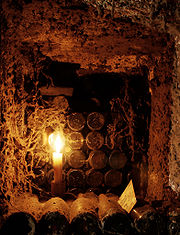
Wine
Wine is an alcoholic beverage, made of fermented fruit juice, usually from grapes. The natural chemical balance of grapes lets them ferment without the addition of sugars, acids, enzymes, or other nutrients. Grape wine is produced by fermenting crushed grapes using various types of yeast. Yeast...
, and its ability to potentially improve wine quality, distinguishes wine from most other consumable goods. While wine is perishable and capable of deteriorating, complex chemical reactions involving a wine's sugars, acids and phenolic compounds
Phenolic compounds in wine
The phenolic compounds - natural phenol and polyphenols - in wine include a large group of several hundred chemical compounds that affect the taste, color and mouthfeel of wine. These compounds include phenolic acids, stilbenes, flavonols, dihydroflavonols, anthocyanins, flavanol monomers and...
(such as tannins) can alter the aroma, color, mouthfeel
Mouthfeel
Mouthfeel is a product's physical and chemical interaction in the mouth, an aspect of food rheology. It is a concept used in many areas related to the testing and evaluating of foodstuffs, such as wine-tasting and rheology. It is evaluated from initial perception on the palate, to first bite,...
and taste of the wine in a way that may be more pleasing to the taster. The ability of a wine to age is influenced by many factors including grape variety, vintage
Vintage
Vintage, in wine-making, is the process of picking grapes and creating the finished product . A vintage wine is one made from grapes that were all, or primarily, grown and harvested in a single specified year. In certain wines, it can denote quality, as in Port wine, where Port houses make and...
, viticultural practices, wine region and winemaking
Winemaking
Winemaking, or vinification, is the production of wine, starting with selection of the grapes or other produce and ending with bottling the finished wine. Although most wine is made from grapes, it may also be made from other fruit or non-toxic plant material...
style. The condition that the wine is kept in after bottling can also influence how well a wine ages and may require significant time and financial investment.
History
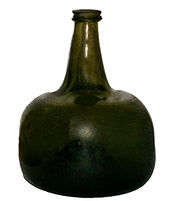
Earthenware
Earthenware is a common ceramic material, which is used extensively for pottery tableware and decorative objects.-Types of earthenware:Although body formulations vary between countries and even between individual makers, a generic composition is 25% ball clay, 28% kaolin, 32% quartz, and 15%...
amphorae and kept for many years. In Rome, the most sought after wines—Falernian and Surrentine—were prized for their ability to age for decades. In the Book of Luke, it is noted that "old wine" was valued over "new wine" . The Greek physician Galen
Galen
Aelius Galenus or Claudius Galenus , better known as Galen of Pergamon , was a prominent Roman physician, surgeon and philosopher...
wrote that the "taste" of aged wine was desirable and that this could be accomplished by heating or smoking the wine, though, in Galen's opinion, these artificially aged wines were not as healthy to consume as naturally aged wines.
Following the Fall of the Roman Empire, appreciation for aged wine was virtually non-existent. Most of the wines produced in northern Europe were light bodied, pale in color and with low alcohol. These wines did not have much aging potential and barely lasted a few months before they rapidly deteriorated into vinegar
Vinegar
Vinegar is a liquid substance consisting mainly of acetic acid and water, the acetic acid being produced through the fermentation of ethanol by acetic acid bacteria. Commercial vinegar is produced either by fast or slow fermentation processes. Slow methods generally are used with traditional...
. The older a wine got the cheaper its price became as merchants eagerly sought to rid themselves of aging wine. By the 16th century, sweeter and more alcoholic wines (like Malmsey and Sack
Sack (wine)
Sack is an antiquated wine term referring to white fortified wine imported from mainland Spain or the Canary Islands. There were sack of different origins such as:* Canary sack from the Canary Islands,* Malaga sack from Málaga,...
) were being made in the Mediterranean and gaining attention for their aging ability. Similarly, Riesling
Riesling
Riesling is a white grape variety which originated in the Rhine region of Germany. Riesling is an aromatic grape variety displaying flowery, almost perfumed, aromas as well as high acidity. It is used to make dry, semi-sweet, sweet and sparkling white wines. Riesling wines are usually varietally...
from Germany with its combination of acidity and sugar were also demonstrating their ability to age. In 17th century two innovations occurred that radically changed the wine industry's view on aging. One was the development of the cork and bottle which allowed producers to package and store wine in a virtually air-tight environment. The second was the growing popularity of fortifying wines such as Port, Madeira and Sherries. The added alcohol was found to act as a preservative, allowing wines to survive long sea voyages to England
England
England is a country that is part of the United Kingdom. It shares land borders with Scotland to the north and Wales to the west; the Irish Sea is to the north west, the Celtic Sea to the south west, with the North Sea to the east and the English Channel to the south separating it from continental...
, The Americas and the East Indies
East Indies
East Indies is a term used by Europeans from the 16th century onwards to identify what is now known as Indian subcontinent or South Asia, Southeastern Asia, and the islands of Oceania, including the Malay Archipelago and the Philippines...
. The English, in particular, were growing in their appreciation of aged wines like Port and Claret
Claret
Claret is a name primarily used in British English for red wine from the Bordeaux region of France.-Usage:Claret derives from the French clairet, a now uncommon dark rosé and the most common wine exported from Bordeaux until the 18th century...
from Bordeaux. Demand for matured wines had a pronounced effect on the wine trade. For producers, the cost and space of storing barrels or bottles of wine was prohibitive so a merchant class evolved with warehouses and the finances to facilitate aging wines for a longer period of time. In regions like Bordeaux, Oporto and Burgundy, this situation dramatically increased the balance of power towards the merchant classes.
Aging potential
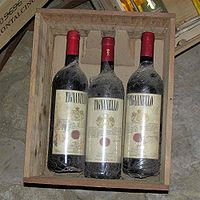
In general, wines with a low pH
PH
In chemistry, pH is a measure of the acidity or basicity of an aqueous solution. Pure water is said to be neutral, with a pH close to 7.0 at . Solutions with a pH less than 7 are said to be acidic and solutions with a pH greater than 7 are basic or alkaline...
(such as Pinot noir
Pinot Noir
Pinot noir is a black wine grape variety of the species Vitis vinifera. The name may also refer to wines created predominantly from Pinot noir grapes...
and Sangiovese
Sangiovese
Sangiovese is a red Italian wine grape variety whose name derives from the Latin sanguis Jovis, "the blood of Jove"...
) have a greater capability of aging. With red wines, a high level of flavor compounds, such as phenolic
Phenolic compounds in wine
The phenolic compounds - natural phenol and polyphenols - in wine include a large group of several hundred chemical compounds that affect the taste, color and mouthfeel of wine. These compounds include phenolic acids, stilbenes, flavonols, dihydroflavonols, anthocyanins, flavanol monomers and...
s (most notably tannins), will increase the likelihood that a wine will be able to age. Wines with high levels of phenols include Cabernet Sauvignon
Cabernet Sauvignon
Cabernet Sauvignon is one of the world's most widely recognized red wine grape varieties. It is grown in nearly every major wine producing country among a diverse spectrum of climates from Canada's Okanagan Valley to Lebanon's Beqaa Valley...
, Nebbiolo and Syrah. The white wines with the longest aging potential tend to be those with a high amount of extract and acidity. The acidity in white wines plays a similar role that tannins have with red wines in acting as a preservative. The process of making white wines, which includes little to no skin contact, means that white wines have a significantly lower amount of phenolic compounds, though barrel fermentation
Fermentation (wine)
The process of fermentation in wine turns grape juice into an alcoholic beverage. During fermentation, yeast interact with sugars in the juice to create ethanol, commonly known as ethyl alcohol, and carbon dioxide...
and oak aging can impart some phenols. Similarly, the minimal skin contact with rosé
Rosé
A rosé is a type of wine that has some of the color typical of a red wine, but only enough to turn it pink. The pink color can range from a pale orange to a vivid near-purple, depending on the grapes and wine making techniques.- Production techniques :There are three major ways to produce rosé...
wine limits their aging potential.
After aging at the winery most wood-aged Ports, Sherries, Vins doux naturels, Vins de liqueur
Vins de liqueur
A vin de liqueur is a sweet fortified style of French wine that is fortified with brandy just prior to fermentation. The term vin de liqueur is also used by the European Union to refer to all fortified wines....
, basic level Ice wine
Ice wine
Ice wine is a type of dessert wine produced from grapes that have been frozen while still on the vine. The sugars and other dissolved solids do not freeze, but the water does, allowing a more concentrated grape must to be pressed from the frozen grapes, resulting in a smaller amount of more...
s and sparkling wines are bottled when the producer feels that they are ready to be consumed. These wines are ready to drink upon release and will not benefit much from aging. Vintage Ports and other bottled-aged Ports & Sherries will benefit from some additional aging, as can vintage Champagne. In 2009, a 184-year-old bottle of Perrier-Jouët
Perrier-Jouët
Perrier-Jouët is a Champagne producer based in the Épernay region of Champagne. The house was founded in 1811 by Pierre-Nicolas-Marie Perrier-Jouët, and produces both vintage and non-vintage cuvee, approximately 3,000,000 bottles annually, with its prestige label named Belle Epoque. Perrier-Jouët...
was opened and tasted, still drinkable, with notes of "truffles and caramel", according to the experts.
Little to no aging potential
A guideline provided by Master of Wine Jancis RobinsonJancis Robinson
Jancis Mary Robinson OBE, MW is a British wine critic, journalist and editor of wine literature. She currently writes a weekly column for the Financial Times, and writes for her website jancisrobinson.com...
- German QBAs
- Asti and MoscatoMoscatoMoscato can have several meanings see:*Muscat *Judah Moscato *Vincent Moscato...
Spumante - Rosé and blush wines like White ZinfandelWhite ZinfandelWhite Zinfandel, often abbreviated as White Zin, is an off-dry to sweet, pink-colored blush wine. White Zinfandel is made from the Zinfandel wine grape, which would otherwise produce a bold and spicy red wine. As such, it is not a grape variety but a method of processing Zinfandel grapes...
- Branded wines like Yellow TailYellow tail (wine)Yellow Tail is a brand of wine produced by Casella Wines Pty Ltd. Casella wines is based in Yenda, Australia, which has a population of approximately 1000 people. The Casella family has produced wines since the 1820s in Italy...
, Mouton CadetMouton CadetMouton Cadet is the brand name of a popular range of modestly priced, generic Bordeaux wines, considered Bordeaux' most successful brand. Created by Baron Philippe de Rothschild of the Rothschild banking dynasty, the wine named after his premier cru vineyard Château Mouton Rothschild, Mouton Cadet...
, etc. - European table wineTable wineTable wine is a wine term with two different meanings: a wine style; and a quality level within wine classification.In the United States, table wine primarily designates a wine style - ordinary wine which is neither fortified nor sparkling....
- American jug & box wineBox wineA box wine is a wine packaged as a Bag-In-Box. Such packages contain a plastic bladder protected by a box, usually made of corrugated fiberboard.- History :...
- Inexpensive varietalVarietal"Varietal" describes wines made primarily from a single named grape variety, and which typically displays the name of that variety on the wine label. Examples of grape varieties commonly used in varietal wines are Cabernet Sauvignon, Chardonnay and Merlot...
s (with the possible exception of Cabernet SauvignonCabernet SauvignonCabernet Sauvignon is one of the world's most widely recognized red wine grape varieties. It is grown in nearly every major wine producing country among a diverse spectrum of climates from Canada's Okanagan Valley to Lebanon's Beqaa Valley...
) - The majority of Vin de paysVin de paysVin de pays is a French term meaning "country wine". Vins de pays are a step in the French wine classification which is above the table wine classification, but below the VDQS and Appellation d'origine contrôlée classifications...
- All Nouveau wines
- VermouthVermouthVermouth is a fortified wine flavored with various dry ingredients. The modern versions of the beverage were first produced around the late 18th and early 19th centuries in Italy and France...
- Basic SherrySherrySherry is a fortified wine made from white grapes that are grown near the town of Jerez , Spain. In Spanish, it is called vino de Jerez....
- Tawny Ports
Good aging potential
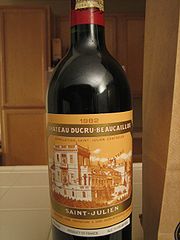
- Botrytized wines (5–25 yrs)
- ChardonnayChardonnayChardonnay is a green-skinned grape variety used to make white wine. It is originated from the Burgundy wine region of eastern France but is now grown wherever wine is produced, from England to New Zealand...
(2–6 yrs) - RieslingRieslingRiesling is a white grape variety which originated in the Rhine region of Germany. Riesling is an aromatic grape variety displaying flowery, almost perfumed, aromas as well as high acidity. It is used to make dry, semi-sweet, sweet and sparkling white wines. Riesling wines are usually varietally...
(2–30 yrs) - Hungarian FurmintFurmintFurmint is a variety of wine grape from the Pontian Balcanica branch of Vitis vinifera, used for white wines. The name Furmint is taken from the word "froment" for the wheat-gold color of the wine it produces. While it is possible that it the grape is native to Hungary, the grape was likely...
(3–25 yrs) - Loire ValleyLoire Valley (wine)The Loire Valley wine region includes the French wine regions situated along the Loire River from the Muscadet region near the city of Nantes on the Atlantic coast to the region of Sancerre and Pouilly-Fumé just southeast of the city of Orléans in north central France. In between are the regions of...
Chenin blancChenin BlancChenin blanc , is a white wine grape variety from the Loire valley of France. Its high acidity means it can be used to make everything from sparkling wines to well-balanced dessert wines, although it can produce very bland, neutral wines if the vine's natural vigor is not controlled...
(4–30 yrs) - Hunter Valley SemillonSémillonSémillon is a golden-skinned grape used to make dry and sweet white wines, most notably in France and Australia.-History:The origin of the Sémillon grape is hard to determine. It is known that it first arrived in Australia in the early 19th century and by the 1820s the grape covered over 90 percent...
(6–15 yrs) - Cabernet SauvignonCabernet SauvignonCabernet Sauvignon is one of the world's most widely recognized red wine grape varieties. It is grown in nearly every major wine producing country among a diverse spectrum of climates from Canada's Okanagan Valley to Lebanon's Beqaa Valley...
(4–20 yrs) - MerlotMerlotMerlot is a darkly blue-coloured wine grape, that is used as both a blending grape and for varietal wines. The name Merlot is thought to derive from the Old French word for young blackbird, merlot, a diminutive of merle, the blackbird , probably from the color of the grape. Merlot-based wines...
(2–10 yrs) - Nebbiolo (4–20 yrs)
- Pinot noirPinot NoirPinot noir is a black wine grape variety of the species Vitis vinifera. The name may also refer to wines created predominantly from Pinot noir grapes...
(2–8 yrs) - SangioveseSangioveseSangiovese is a red Italian wine grape variety whose name derives from the Latin sanguis Jovis, "the blood of Jove"...
(2–8 yrs) - Syrah (4–16 yrs)
- ZinfandelZinfandelZinfandel is a variety of red grape planted in over 10 percent of California vineyards. DNA fingerprinting revealed that it is genetically equivalent to the Croatian grape Crljenak Kaštelanski, and also the Primitivo variety traditionally grown in Puglia , where it was introduced in the 18th century...
(2–6 yrs) - Classified Bordeaux (8–25 yrs)
- Grand Cru Burgundy (8–25 yrs)
- AglianicoAglianicoAglianico is a black grape grown in the Basilicata and Campania regions of Italy. The vine originated in Greece and was brought to the south of Italy by Greek settlers. The name may be a corruption of Vitis hellenica, Latin for "Greek vine"...
from TaurasiTaurasi (wine)Taurasi and Taurasi riserva are red, still Italian wines based principally on the Aglianico grape variety produced in the Province of Avellino in the Campania region. They were awarded Denominazione di Origine Controllata status in 1970 and Denominazione di Origine Controllata e Garantita status...
(4–15 yrs) - BagaBaga (grape)Baga is a red Portuguese wine grape variety planted primarily in the Bairrada DOC. As a varietal, Baga produces tannic wines with high acidity.-Synonyms:...
from Bairrada (4–8 yrs) - Hungarian KadarkaKadarkaKadarka or Gamza is a dark-skinned variety of grape used for red wine. It has a long history and is popular in Hungary and Bulgaria, where it is known as гъмза Gamza. It used to be an important constituent of the Hungarian red cuvée Bull's Blood of Eger or Szekszárd, but has long been in decline in...
(3–7 yrs) - Bulgarian Melnik (3–7 yrs)
- CroatianCroatian wineCroatian wine has a history dating back to the Ancient Greek settlers, and their wine production on the southern Dalmatian islands of Vis, Hvar and Korčula some 2,500 years ago. Like other old world wine producers, many traditional grape varieties still survive in Croatia, perfectly suited to...
Plavac MaliPlavac MaliPlavac Mali, a cross between ancestral Zinfandel and Dobričić grapes, is the primary red wine grape grown along the Dalmatian coast of Croatia...
(4–8 yrs) - GeorgianGeorgian wineGeorgia is one of the oldest wine producing regions of the world. The fertile valleys of the South Caucasus, which Georgia straddles, are believed by many archaeologists to be the source of the world's first cultivated grapevines and neolithic wine production, over 8,000 years ago...
SaperaviSaperaviSaperavi is an acidic, teinturier-type grape variety native to Georgia, where it is used to make many of the region's distinctive wines, along with the Alexandreuli and Rkastiteli varieties. Leaves are 3-lobed, large, and roundish...
(3–10 yrs) - Madiran TannatTannatTannat is a red wine grape, historically grown in South West France in the Madiran AOC and is now one of the most prominent grapes in Uruguay, where it is considered the "national grape". It is also grown in Argentina, Australia, Brazil, Peru, and in Italy's Puglia region where it is used as a...
(4–12 yrs) - Spanish TempranilloTempranilloTempranillo is a variety of black grape widely grown to make full-bodied red wines in its native Spain. It is the main grape used in Rioja, and is often referred to as Spain's "noble grape". Its name is the diminutive of the Spanish temprano , a reference to the fact that it ripens several weeks...
(2–8 yrs) - Greek XynomavroXynomavroXinomavro is the principal red wine grape of the uplands of the Naoussa in the prefecture of Imathia, and Amyntaion areas, in Northern Greece. Various writers have compared Xinomavro to Bordeaux, Burgundy, Barolo, etc....
(4–10 yrs) - Vintage Ports (20–50yrs)
Wine constituents
The ratio of sugarSugar
Sugar is a class of edible crystalline carbohydrates, mainly sucrose, lactose, and fructose, characterized by a sweet flavor.Sucrose in its refined form primarily comes from sugar cane and sugar beet...
s, acid
Acid
An acid is a substance which reacts with a base. Commonly, acids can be identified as tasting sour, reacting with metals such as calcium, and bases like sodium carbonate. Aqueous acids have a pH of less than 7, where an acid of lower pH is typically stronger, and turn blue litmus paper red...
s and phenolics
Phenolic compounds in wine
The phenolic compounds - natural phenol and polyphenols - in wine include a large group of several hundred chemical compounds that affect the taste, color and mouthfeel of wine. These compounds include phenolic acids, stilbenes, flavonols, dihydroflavonols, anthocyanins, flavanol monomers and...
to water
Water
Water is a chemical substance with the chemical formula H2O. A water molecule contains one oxygen and two hydrogen atoms connected by covalent bonds. Water is a liquid at ambient conditions, but it often co-exists on Earth with its solid state, ice, and gaseous state . Water also exists in a...
is a key determination of how well a wine can age. The less water in the grapes prior to harvest
Harvest (wine)
The harvesting of wine grapes is one of the most crucial steps in the process of winemaking. The time of harvest is determined primarily by the ripeness of the grape as measured by sugar, acid and tannin levels with winemakers basing their decision to pick based on the style of wine they wish to...
, the more likely the resulting wine will have some aging potential. Grape variety, climate, vintage and viticultural practice come into play here. Grape varieties with thicker skins, from a dry growing season where little irrigation was used and yields were kept low will have less water and a higher ratio of sugar, acids and phenolics. The process of making Eisweins, where water is removed from the grape during pressing as frozen ice crystals, has a similar effect of decreasing the amount of water and increasing aging potential.
In winemaking, the duration of maceration
Maceration (wine)
Maceration is the winemaking process where the phenolic materials of the grape— tannins, coloring agents and flavor compounds— are leached from the grape skins, seeds and stems into the must. Maceration is the process by which the red wine receives its red color, since 99% of all grape juice is...
or skin contact will influence how much phenolic compounds are leached from skins into the wine. Pigmented tannins, anthocyanin
Anthocyanin
Anthocyanins are water-soluble vacuolar pigments that may appear red, purple, or blue according to pH...
s, colloid
Colloid
A colloid is a substance microscopically dispersed evenly throughout another substance.A colloidal system consists of two separate phases: a dispersed phase and a continuous phase . A colloidal system may be solid, liquid, or gaseous.Many familiar substances are colloids, as shown in the chart below...
s, tannin-polysaccharides and tannin-protein
Protein
Proteins are biochemical compounds consisting of one or more polypeptides typically folded into a globular or fibrous form, facilitating a biological function. A polypeptide is a single linear polymer chain of amino acids bonded together by peptide bonds between the carboxyl and amino groups of...
s not only influence a wine's resulting color but also act as preservatives. During fermentation adjustment to a wine's acid levels can be made with wines with lower pH having more aging potential. Exposure to oak either during fermentation or after during barrel aging will introduce more phenolic compounds to the wines. Prior to bottling, excessive fining or filtering of the wine could strip the wine of some phenolic solids and may lessen a wine's ability to age.
Storage factors
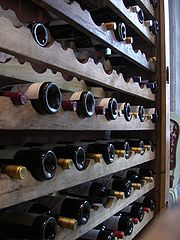
The storage condition of the bottled wine will influence a wine's aging. Vibrations and heat fluctuations can hasten a wine's deterioration and cause adverse effect on the wines. In general, a wine has a greater potential to develop complexity and more aromatic bouquet if it is allowed to age slowly in a relatively cool environment. The lower the temperature, the more slowly a wine develops. On average, the rate of chemical reactions in wine double with each 18 °F (8 °C) increase in temperature. Wine expert Karen MacNeilKaren MacNeil
Karen MacNeil is an American author, journalist, wine educator and consultant based in Napa Valley. MacNeil is also the creator and chairman of the Rudd Center for Professional Wine Studies at the Culinary Institute of America in St...
, recommends keeping wine intended for aging in a cool area with a constant temperature around 55°F (13°C). Wine can be stored at temperatures as high as 69°F (20°C) without long term negative effect. Professor Cornelius Ough of the University of California, Davis
University of California, Davis
The University of California, Davis is a public teaching and research university established in 1905 and located in Davis, California, USA. Spanning over , the campus is the largest within the University of California system and third largest by enrollment...
believes that wine could be exposed to temperatures as high as 120 °F (49 °C) for a few hours and not be damaged. However, most experts believe that extreme temperature fluctuations (such as repeated transferring a wine from a warm room to a cool refrigerator) would be detrimental to the wine. The ultra-violet rays of direct sunlight should also be avoided because of the free radicals that can develop in the wine and result in oxidation.
Wines packaged in large format bottles, such as magnums and 3 liter
Litér
- External links :*...
Jeroboams, seem to age more slowly than wines packaged in regular 750 ml bottles or half bottles. This may be because of the greater proportion of oxygen exposed to the wine during the bottle process. The advent of alternative wine closures
Alternative wine closures
Alternative wine closures are substitute closures used in the wine industry for sealing wine bottles in place of traditional cork closures. The emergence of these alternatives has grown in response to quality control efforts by winemakers to protect against "cork taint" caused by the presence of...
to cork, such as screw caps and synthetic corks have opened up recent discussions on the aging potential of wines sealed with these alternative closures. Currently there are no conclusive results and the topic is the subject of ongoing research.
Bottle shock
One of the short-term aging needs of wine is a period where the wine is considered "sick" due to the trauma and volatility of the bottling experience. During bottling some oxygen is exposed to the wine, causing a domino effect of chemical reaction with various components of the wine. The time it takes for the wine to settle down and have the oxygen fully dissolve and integrate with the wine is considered its period of "bottle shock". During this time the wine could taste drastically different than it did prior to bottling or how it will taste after the wine has settled. While many modern bottling lines try to treat the wine as gently as possible and utilize inert gasInert gas
An inert gas is a non-reactive gas used during chemical synthesis, chemical analysis, or preservation of reactive materials. Inert gases are selected for specific settings for which they are functionally inert since the cost of the gas and the cost of purifying the gas are usually a consideration...
es to minimize the amount of oxygen exposure, all wine goes through some period of bottle shock. The length of this period will vary with each individual wine.
Cork taint
The transfer of off-flavours in the cork used to bottle a wine during prolonged can be detrimental to the quality of the bottle. The formation of cork taint is a complex process which may result from a wide range of factors ranging from the growing conditions of the cork oak, the processing of the cork into stoppers, or the molds growing on the cork itself.Dumb phase
During the course of aging a wine may slip into a "dumb phase" where its aromas and flavors are very muted. In Bordeaux this phase is called the age ingrat or "difficult age" and is likened to a teenager going through adolescenceAdolescence
Adolescence is a transitional stage of physical and mental human development generally occurring between puberty and legal adulthood , but largely characterized as beginning and ending with the teenage stage...
. The cause or length of time that this "dumb phase" will last is not yet fully understood and seems to vary from bottle to bottle.
Effects on wine
Mouthfeel
Mouthfeel is a product's physical and chemical interaction in the mouth, an aspect of food rheology. It is a concept used in many areas related to the testing and evaluating of foodstuffs, such as wine-tasting and rheology. It is evaluated from initial perception on the palate, to first bite,...
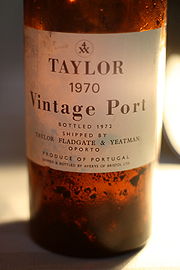
. An inky dark color will eventually fade to a light brick red. These changes occur due to the complex chemical reactions of the phenolic compounds of the wine. In processes that begin during fermentation and continue after bottling, these compounds bind together and aggregate. Eventually these particles reach a certain size where they are too large to stay suspended in the solution and precipitate out. The presence of visible sediment in a bottle will usually indicate a mature wine. The resulting wine, with this loss of tannins and pigment, will have a paler color and taste softer, less astringent. The sediment, while harmless, can have an unpleasant taste and is often separated from the wine by decanting.
During the aging process, the perception of a wine's acidity may change even though the total measurable amount of acidity is more or less constant throughout a wine's life. This is due to the esterification of the acids, combining with alcohols in complex array to form ester
Ester
Esters are chemical compounds derived by reacting an oxoacid with a hydroxyl compound such as an alcohol or phenol. Esters are usually derived from an inorganic acid or organic acid in which at least one -OH group is replaced by an -O-alkyl group, and most commonly from carboxylic acids and...
s. In addition to making a wine taste less acidic, these esters introduce a range of possible aromas. Eventually the wine may age to a point where other components of the wine (such as a tannins and fruit) are less noticeable themselves, which will then bring back a heightened perception of wine acidity. Other chemical processes that occur during aging include the hydrolysis
Hydrolysis
Hydrolysis is a chemical reaction during which molecules of water are split into hydrogen cations and hydroxide anions in the process of a chemical mechanism. It is the type of reaction that is used to break down certain polymers, especially those made by condensation polymerization...
of flavor precursors which detach themselves from glucose
Glucose
Glucose is a simple sugar and an important carbohydrate in biology. Cells use it as the primary source of energy and a metabolic intermediate...
molecules and introduce new flavor notes in the older wine and aldehydes become oxidized. The interaction of certain phenolics develop what is known as tertiary
Tertiary
The Tertiary is a deprecated term for a geologic period 65 million to 2.6 million years ago. The Tertiary covered the time span between the superseded Secondary period and the Quaternary...
aromas which are different from the primary aromas that are derived from the grape and during fermentation.

The natural esterification that takes place in wine
Wine
Wine is an alcoholic beverage, made of fermented fruit juice, usually from grapes. The natural chemical balance of grapes lets them ferment without the addition of sugars, acids, enzymes, or other nutrients. Grape wine is produced by fermenting crushed grapes using various types of yeast. Yeast...
s and other alcoholic beverages during the aging process is an example of acid-catalysed esterification. Over time, the acidity of the acetic acid
Acetic acid
Acetic acid is an organic compound with the chemical formula CH3CO2H . It is a colourless liquid that when undiluted is also called glacial acetic acid. Acetic acid is the main component of vinegar , and has a distinctive sour taste and pungent smell...
and tannins in an aging wine will catalytically protonate other organic acids (including acetic acid itself), encouraging ethanol
Ethanol
Ethanol, also called ethyl alcohol, pure alcohol, grain alcohol, or drinking alcohol, is a volatile, flammable, colorless liquid. It is a psychoactive drug and one of the oldest recreational drugs. Best known as the type of alcohol found in alcoholic beverages, it is also used in thermometers, as a...
to react as a nucleophile. As a result, ethyl acetate
Ethyl acetate
Ethyl acetate is the organic compound with the formula CH3COOCH2CH3. This colorless liquid has a characteristic sweet smell and is used in glues, nail polish removers, and cigarettes...
– the ester of ethanol and acetic acid—is the most abundant ester in wines. Other combinations of organic alcohols (such as phenol-containing compounds) and organic acids lead to a variety of different esters in wines, contributing to their different flavours, smells and tastes. Of course, when compared to sulfuric acid conditions, the acid conditions in a wine are mild, so yield is low (often in tenths or hundredths of a percentage point by volume) and take years for ester to accumulate.
Artificial aging
There is a long history of man using artificial means to try to accelerate the natural aging process. In Ancient RomeAncient Rome
Ancient Rome was a thriving civilization that grew on the Italian Peninsula as early as the 8th century BC. Located along the Mediterranean Sea and centered on the city of Rome, it expanded to one of the largest empires in the ancient world....
a smoke chamber known as a fumarium
Fumarium
A Fumarium was a smoke chamber used in Ancient Rome to enhance the flavor of wine through artificially "aging" the wine. Amphorae were placed in the chamber, which was built on top of a heated hearth, in order to impart a smoky flavor in the wine that also seemed to sharpen the acidity. The wine...
was used to enhance the flavor of wine through artificial aging. Amphora
Amphora
An amphora is a type of vase-shaped, usually ceramic container with two handles and a long neck narrower than the body...
e were placed in the chamber, which was built on top of a heated hearth
Hearth
In common historic and modern usage, a hearth is a brick- or stone-lined fireplace or oven often used for cooking and/or heating. For centuries, the hearth was considered an integral part of a home, often its central or most important feature...
, in order to impart a smoky flavor in the wine that also seemed to sharpen the acidity. The wine would sometimes come out of the fumarium with a paler color just like aged wine. Modern winemaking techniques like micro-oxygenation can have the side effect of artificially aging the wine. In the production of Madeira and rancio wines, the wines are deliberately exposed to excessive temperatures to accelerate the maturation of the wine. Other techniques used to artificially age wine (with inconclusive results on their effectiveness) include shaking the wine, exposing it to radiation
Radiation
In physics, radiation is a process in which energetic particles or energetic waves travel through a medium or space. There are two distinct types of radiation; ionizing and non-ionizing...
, magnetism
Magnetism
Magnetism is a property of materials that respond at an atomic or subatomic level to an applied magnetic field. Ferromagnetism is the strongest and most familiar type of magnetism. It is responsible for the behavior of permanent magnets, which produce their own persistent magnetic fields, as well...
or ultra-sonic waves. More recently, experiments with artificial aging through high-voltage electricity have produced results above the remaining techniques, as assessed by a panel of wine tasters.
Other artificial wine-aging gadgets include the "Clef du Vin", which is a metallic object that is dipped into wine and purportedly ages the wine one year for every second of dipping. The product has received mixed reviews from wine commentators.
See also
- Coates Law of MaturityCoates Law of MaturityCoates Law of Maturity is a principle used in wine tasting relating to the aging ability of wine. Developed by the British Master of Wine, Clive Coates, the principle states that a wine will remain at its peak drinking quality for a duration of time that is equal to the time of maturation required...
- Ullage (wine)Ullage (wine)Ullage is a winemaking term that has several meanings but most commonly refers to the headspace of air between wine and the top of the container that it is in...
- Storage of wineStorage of wineStorage is an important consideration for any wine that is being kept for long-term aging. While most wine produced today is meant for near-term consumption , there are certain situations in which it may be set aside for long-term storage...
- Premature oxidationPremature oxidationPremature oxidation, is a flaw that occurs in white wines, when the presumably ageworthy wine is expected to be in good condition yet is found to be oxidised and often undrinkable. In particular the affliction has received attention in connection to incidents of whites produced in Burgundy...