

Prostate cancer

Encyclopedia
Prostate cancer is a form of cancer
that develops in the prostate
, a gland in the male
reproductive system
. Most prostate cancers are slow growing; however, there are cases of aggressive prostate cancers. The cancer cells may metastasize
(spread) from the prostate to other parts of the body, particularly the bone
s and lymph node
s. Prostate cancer may cause pain, difficulty in urinating
, problems during sexual intercourse, or erectile dysfunction
. Other symptoms can potentially develop during later stages of the disease.
Rates of detection of prostate cancers vary widely across the world, with South and East Asia detecting less frequently than in Europe, and especially the United States. Prostate cancer tends to develop in men over the age of fifty and although it is one of the most prevalent types of cancer in men, many never have symptoms, undergo no therapy, and eventually die of other causes. This is because cancer of the prostate is, in most cases, slow-growing, symptom-free, and since men with the condition are older they often die of causes unrelated to the prostate cancer, such as heart/circulatory disease, pneumonia
, other unconnected cancers, or old age
. On the other hand, the more aggressive prostate cancers account for more cancer-related mortality than any other cancer except lung cancer. About two-thirds of cases are slow growing, the other third more aggressive and fast developing.
Many factors, including genetics
and diet
, have been implicated in the development of prostate cancer. The presence of prostate cancer may be indicated by symptom
s, physical examination
, prostate-specific antigen (PSA), or biopsy
. The PSA test increases cancer detection but does not decrease mortality. Moreover, prostate test screening is controversial at the moment and may lead to unnecessary, even harmful, consequences in some patients. Nonetheless, suspected prostate cancer is typically confirmed by taking a biopsy
of the prostate and examining it under a microscope
. Further tests, such as CT scans and bone scan
s, may be performed to determine whether prostate cancer has spread.
Treatment options for prostate cancer with intent to cure are primarily surgery
, radiation therapy
, stereotactic radiosurgery, and proton therapy
. Other treatments, such as hormonal therapy
, chemotherapy
, cryosurgery
, and high intensity focused ultrasound
(HIFU) also exist, although not FDA approved, depending on the clinical scenario and desired outcome.
The age and underlying health of the man, the extent of metastasis
, appearance under the microscope
, and response of the cancer to initial treatment are important in determining the outcome
of the disease. The decision whether or not to treat localized prostate cancer (a tumor that is contained within the prostate) with curative intent is a patient trade-off
between the expected beneficial and harmful effects in terms of patient survival and quality of life
.
. These include frequent urination, nocturia
(increased urination at night), difficulty starting and maintaining a steady stream of urine, hematuria
(blood in the urine), and dysuria
(painful urination).
Prostate cancer is associated with urinary dysfunction as the prostate gland surrounds the prostatic urethra. Changes within the gland, therefore, directly affect urinary function. Because the vas deferens
deposits seminal fluid into the prostatic urethra, and secretions from the prostate gland itself are included in semen content, prostate cancer may also cause problems with sexual function and performance, such as difficulty achieving erection
or painful ejaculation
.
Advanced prostate cancer can spread to other parts of the body, possibly causing additional symptoms. The most common symptom is bone pain
, often in the vertebrae (bones of the spine), pelvis
, or rib
s. Spread of cancer into other bones such as the femur
is usually to the proximal part of the bone. Prostate cancer in the spine
can also compress the spinal cord
, causing leg weakness and urinary
and fecal incontinence
.
with prostate cancer appear to have double the risk of getting the disease compared to men without prostate cancer in the family. This risk appears to be greater for men with an affected brother than for men with an affected father. In the United States in 2005, there were an estimated 230,000 new cases of prostate cancer and 30,000 deaths due to prostate cancer. Men with high blood pressure are more likely to develop prostate cancer. A 2010 study found that prostate basal cells were the most common site of origin for prostate cancers.
variants. Men who have a first-degree relative (father or brother) with prostate cancer have twice the risk of developing prostate cancer, and those with two first-degree relatives affected have a fivefold greater risk compared with men with no family history. In the United States, prostate cancer more commonly affects black men than white or Hispanic men, and is also more deadly in black men.
In contrast, the incidence and mortality rates for Hispanic men are one third lower than for non-Hispanic whites. Studies of twins
in Scandinavia
suggest that forty percent of prostate cancer risk can be explained by inherited factors
.
No single gene is responsible for prostate cancer; many different genes have been implicated. Mutations in BRCA1
and BRCA2
, important risk factors for ovarian cancer
and breast cancer
in women, have also been implicated in prostate cancer. Other linked genes include the Hereditary Prostate cancer gene 1
(HPC1), the androgen receptor, and the vitamin D receptor. TMPRSS2
-ETS gene family
fusion
, specifically TMPRSS2-ERG
or TMPRSS2-ETV1
/4 promotes cancer cell growth.
Loss of cancer suppressor genes, early in the prostatic carcinogenesis, have been localized to chromosomes 8p, 10q, 13q,and 16q. P53
mutations in the primary prostate cancer are relatively low and are more frequently seen in metastatic settings, hence, p53
mutations are late event in pathology of prostate cancer. Other tumor suppressor genes that are thought to play a role in prostate cancer include PTEN (gene)
and KAI1. "Up to 70 percent of men with prostate cancer have lost one copy of the PTEN gene at the time of diagnosis"
Relative frequency of loss of E-cadherin and CD44
has also been observed.
Lower blood
levels of vitamin D
may increase the risk of developing prostate cancer. This may be linked to lower exposure to ultraviolet (UV) light, since UV light exposure can increase vitamin D in the body.
Green tea
may be protective (due to its catechins content), although the most comprehensive clinical study indicates that it has no protective effect. Other holistic methods are also studied.
Taking multivitamins more than seven times a week may increase the risks of contracting the disease. This research was unable to highlight the exact vitamins responsible for this increase (almost double), although they suggest that vitamin A, vitamin E and beta-carotene may lie at its heart. It is advised that those taking multivitamins never exceed the stated daily dose on the label.
Folic acid
supplements
have recently been linked to an increase in risk of developing prostate cancer. A ten-year research
study led by University of Southern California
researchers showed that men who took daily folic acid
supplements of 1 mg were three times more likely to be diagnosed with prostate cancer than men who took a placebo
.
High alcohol intake may increase the risk of prostate cancer and interfere with folate metabolism. Low folate intake and high alcohol intake may increase the risk of prostate cancer to a greater extent than the sole effect of either one by itself. A case control study consisting of 137 veterans addressed this hypothesis and the results were that high folate intake was related to a 79% lower risk of developing prostate cancer and there was no association between alcohol consumption by itself and prostate cancer risk. Folate's effect however was only significant when coupled with low alcohol intake. There is a significant decrease in risk of prostate cancer with increasing dietary folate intake but this association only remains in individuals with low levels of alcohol consumption. There was no association found in this study between folic acid supplements and risk of prostate cancer.
s may also decrease prostate cancer risk.
Infection
or inflammation
of the prostate (prostatitis
) may increase the chance for prostate cancer while another study shows infection may help prevent prostate cancer by increasing blood to the area. In particular, infection with the sexually transmitted infections chlamydia, gonorrhea
, or syphilis
seems to increase risk. Finally, obesity
and elevated blood levels of testosterone
may increase the risk for prostate cancer. There is an association between vasectomy and prostate cancer however more research is needed to determine if this is a causative relationship.
Research released in May 2007, found that US war veterans who had been exposed to Agent Orange
had a 48% increased risk of prostate cancer recurrence following surgery.
or XMRV, with human prostate tumors. Subsequent reports on the virus have been contradictory. A group of US researchers found XMRV protein expression in human prostate tumors, while German scientists failed to find XMRV-specific antibodies or XMRV-specific nucleic acid sequences in prostate cancer samples.
 The prostate
is a part of the male reproductive
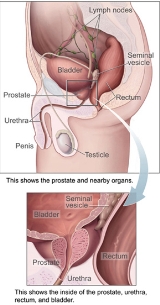
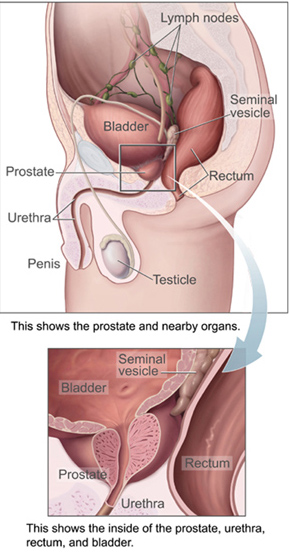
system that helps make and store seminal fluid. In adult men, a typical prostate is about three centimeters long and weighs about twenty grams. It is located in the pelvis
, under the urinary bladder
and in front of the rectum
. The prostate surrounds part of the urethra
, the tube that carries urine
from the bladder during urination
and semen during ejaculation
. Because of its location, prostate diseases often affect urination, ejaculation, and rarely defecation
. The prostate contains many small gland
s which make about twenty percent of the fluid constituting semen
. In prostate cancer, the cells of these prostate glands mutate
into cancer cells. The prostate glands require male hormone
s, known as androgen
s, to work properly. Androgens include testosterone
, which is made in the testes; dehydroepiandrosterone
, made in the adrenal gland
s; and dihydrotestosterone
, which is converted from testosterone within the prostate itself. Androgens are also responsible for secondary sex characteristic
s such as facial hair and increased muscle mass.
 Prostate cancer is classified as an adenocarcinoma
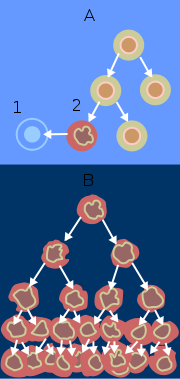
, or glandular cancer, that begins when normal semen-secreting prostate gland cells mutate into cancer cells. The region of prostate gland where the adenocarcinoma is most common is the peripheral zone. Initially, small clumps of cancer cells remain confined to otherwise normal prostate glands, a condition known as carcinoma in situ
or prostatic intraepithelial neoplasia (PIN). Although there is no proof that PIN is a cancer precursor, it is closely associated with cancer. Over time, these cancer cells begin to multiply and spread to the surrounding prostate tissue (the stroma
) forming a tumor
. Eventually, the tumor may grow large enough to invade nearby organs such as the seminal vesicles or the rectum
, or the tumor cells may develop the ability to travel in the blood
stream and lymphatic system
. Prostate cancer is considered a malignant
tumor because it is a mass of cells that can invade other parts of the body. This invasion of other organs is called metastasis
. Prostate cancer most commonly metastasizes to the bone
s, lymph node
s, and may invade rectum, bladder
and lower ureters after local progression. The route of metastasis to bone is thought to be venous as the prostatic venous plexus
draining the prostate connects with the vertebral veins.
The prostate is a zinc accumulating, citrate
producing organ. The protein ZIP1 is responsible for the active transport of zinc into prostate cells. One of zinc's important roles is to change the metabolism of the cell in order to produce citrate, an important component of semen. The process of zinc accumulation, alteration of metabolism, and citrate production is energy inefficient, and prostate cells sacrifice enormous amounts of energy (ATP) in order to accomplish this task. Prostate cancer cells are generally devoid of zinc. This allows prostate cancer cells to save energy not making citrate, and utilize the new abundance of energy to grow and spread. The absence of zinc is thought to occur via a silencing of the gene that produces the transporter protein ZIP1. ZIP1 is now called a tumor suppressor gene product for the gene SLC39A1
. The cause of the epigenetic silencing is unknown. Strategies which transport zinc into transformed prostate cells effectively eliminate these cells in animals. Zinc inhibits NF-κB pathways, is anti-proliferative, and induces apoptosis in abnormal cells. Unfortunately, oral ingestion of zinc is ineffective since high concentrations of zinc into prostate cells is not possible without the active transporter, ZIP1.
RUNX2
is a transcription factor that prevents cancer cells from undergoing apoptosis thereby contributing to the development of prostate cancer.
The PI3k/Akt signaling cascade works with the transforming growth factor beta/SMAD signaling cascade to ensure prostate cancer cell survival and protection against apoptosis. X-linked inhibitor of apoptosis (XIAP) is hypothesized to promote prostate cancer cell survival and growth and is a target of research because if this inhibitor can be shut down then the apoptosis cascade can carry on its function in preventing cancer cell proliferation. Macrophage inhibitory cytokine-1
(MIC-1) stimulates the focal adhesion kinase (FAK) signaling pathway which leads to prostate cancer cell growth and survival.
The androgen receptor
helps prostate cancer cells to survive and is a target for many anti cancer research studies; so far, inhibiting the androgen receptor has only proven to be effective in mouse studies.
Prostate specific membrane antigen (PSMA) stimulates the development of prostate cancer by increasing folate levels for the cancer cells to use to survive and grow; PSMA increases available folates for use by hydrolyzing glutamated folates.
The only test that can fully confirm the diagnosis of prostate cancer is a biopsy
, the removal of small pieces of the prostate for microscopic examination. However, prior to a biopsy, less invasive testing can be conducted.
According to Professor Hardev Pandha, The Prostate Project Chair of Urological Oncology at the University of Surrey's Postgraduate Medical School, a non-invasive test looking for the presence of the protein Engrailed-2 (EN2)
in the urine to be more reliable and accurate than existing tests.
"In this study, we showed that the new test was twice as good at finding prostate cancer as the standard PSA test. Only rarely did we find EN2 in the urine of men who were cancer free, so if we find EN2 we can be reasonably sure that a man has prostate cancer. EN2 was not detected in men with non-cancer disorders of the prostate such as prostatitis or benign enlargement. These conditions often cause a high PSA result, causing considerable stress for the patient and sometimes also unnecessary further tests such as prostate biopsies."
There are also several other tests that can be used to gather more information about the prostate and the urinary tract. Digital rectal examination
(DRE) may allow a doctor to detect prostate abnormalities. Cystoscopy
shows the urinary tract from inside the bladder, using a thin, flexible camera tube inserted down the urethra
. Transrectal ultrasonography
creates a picture of the prostate using sound waves from a probe in the rectum.
or radiologist
obtains tissue samples from the prostate via the rectum. A biopsy gun inserts and removes special hollow-core needles (usually three to six on each side of the prostate) in less than a second. Prostate biopsies are routinely done on an outpatient basis and rarely require hospitalization. Fifty-five percent of men report discomfort during prostate biopsy.
) of any cancer found. Prostate specific membrane antigen
is a transmembrane carboxypeptidase
and exhibits folate hydrolase
activity. This protein
is overexpressed in prostate cancer tissues
and is associated with a higher Gleason score
.
s in order to determine the origin of malignant cells that have metastasized.
Small cell carcinoma
is a very rare (1%) type of prostate cancer that cannot be diagnosed using the PSA. researchers are trying to determine the best way to screen for this type of prostate cancer because it is a relatively unknown and rare type of prostate cancer but very serious and quick to spread to other parts of the body.
Possible methods include chromatographic separation methods by mass spectrometry, or protein capturing by immunoassays or immunized antibodies. The test method will involve quantifying the amount of the biomarker PCI
, with reference to the Gleason Score
. Not only is this test quick, it is also sensitive. It can detect patients in the diagnostic grey zone, particularly those with a serum free to total Prostate Specific Antigen
ratio of 10-20%.
The oncoprotein BCL-2
, has been associated with the development of androgen-independent prostate cancer due to its high levels of expression in androgen-independent tumours in advanced stages of the pathology. The upregulation of BCL-2 after androgen ablation in prostate carcinoma cell lines and in a castrated-male rat model further established a connection between BCL-2 expression and prostate cancer progression.
The expression of Ki-67 by immunohistochemistry may be a significant predictor of patient outcome for men with prostate cancer.
ERK5 is a protein that may be used as a marker. ERK5 is present in abnormally high levels of prostate cancer, including invasive cancer which has spread to other parts of the body. It is also present in relapsed cancer following previous hormone therapy. Research shows that reducing the amount of ERK5 found in cancerous cells reduces their invasiveness.
, or how far the cancer has spread. Knowing the stage helps define prognosis
and is useful when selecting therapies. The most common system is the four-stage TNM system (abbreviated from Tumor/Nodes/Metastases). Its components include the size of the tumor, the number of involved lymph node
s, and the presence of any other metastases
.
The most important distinction made by any staging system is whether or not the cancer is still confined to the prostate. In the TNM system, clinical T1 and T2 cancers are found only in the prostate, while T3 and T4 cancers have spread elsewhere. Several tests can be used to look for evidence of spread. These include computed tomography
to evaluate spread within the pelvis, bone scan
s to look for spread to the bones, and endorectal coil magnetic resonance imaging
to closely evaluate the prostatic capsule and the seminal vesicles. Bone scans should reveal osteoblast
ic appearance due to increased bone density in the areas of bone metastasis—opposite to what is found in many other cancers that metastasize.
After a prostate biopsy, a pathologist
looks at the samples under a microscope. If cancer is present, the pathologist reports the grade
of the tumor. The grade tells how much the tumor tissue differs from normal prostate tissue and suggests how fast the tumor is likely to grow. The Gleason system is used to grade prostate tumors from 2 to 10, where a Gleason score
of 10 indicates the most abnormalities. The pathologist assigns a number from 1 to 5 for the most common pattern observed under the microscope, then does the same for the second-most-common pattern. The sum of these two numbers is the Gleason score. The Whitmore-Jewett stage is another method sometimes used.
is an attempt to find unsuspected cancers, and may lead to more specific follow-up tests such as a biopsy
, with cell samples taken for closer study. Options include the digital rectal exam
(DRE) and the prostate-specific antigen (PSA) blood test. Such screening is controversial and, in some patients, may lead to unnecessary, even harmful, consequences. A 2010 analysis concluded that routine screening with either a DRE or PSA is not supported by the evidence as there is no mortality
benefit from screening. More recently, the United States Preventive Services Task Force (USPSTF) recommended against the PSA test for prostate cancer screening in healthy men. This USPSTF recommendation, released in October 2011, is based on "review of evidence" studies concluding that "Prostate-specific antigen–based screening results in small or no reduction in prostate cancer–specific mortality and is associated with harms related to subsequent evaluation and treatments, some of which may be unnecessary."
Modern screening tests have found cancers that might never have developed into serious disease, and that "the slight reduction of risk by surgically removing the prostate or treating it with radiation may not outweigh the substantial side effects of these treatments," an opinion also shared by the CDC
.
to dihydrotestosterone
, finasteride
and dutasteride
, have also shown some promise. The use of these medications for primary prevention is still in the testing phase, and they are not widely used for this purpose. A 2008 study found that finasteride reduces the incidence of prostate cancer by 30%, without any increase in the risk of High-Grade prostate cancer. In the original study it turns out that the smaller prostate caused by finasteride means that a doctor is more likely to hit upon cancer nests and more likely to find aggressive-looking cells.
Compared to placebo treatment, taking 5-alpha-reductase inhibitors (5-ARIs) can reduce a man’s risk of being diagnosed with prostate cancer from around 5–9% to around 4-6% during up to 7 years of treatment, according to a Cochrane Review of studies.
supplements affect risk. Trans fats may be associated with an increased risk of cancer but the evidence is still limited. The American Dietetic Association and Dieticians of Canada report a decreased incidence of prostate cancer for those following a vegetarian diet.
, the inventor of the Gleason score, advocated for renaming the very common 3+3 prostate "cancer" to prostate adenosis
, because he believed it so unlikely to harm the patient. Treatment may also be inappropriate or impossible if the patient has other serious health problems or is not expected to live long enough for symptoms to appear.
Which option is best depends on the stage of the disease, the Gleason score, and the PSA level. Other important factors are age, general health, and patient views about potential treatments and their possible side effects. Because all treatments can have significant side effect
s, such as erectile dysfunction
and urinary incontinence
, treatment discussions often focus on balancing the goals of therapy with the risks of lifestyle alterations. A combination of the treatment options is often recommended for managing prostate cancer.
The National Comprehensive Cancer Network
(NCCN) offers evidence-based guidelines for prostate cancer that can guide treatment choices for specific clinical situations. This requires a good estimation of the patient's long-term health-adjusted life expectancy, because this factor is the most important determinant of survival in newly diagnosed patients. A simplified approach shows how to estimate health-adjusted life expectancy and apply the NCCN guidelines so that patients can have a roadmap to reach the decision recommended for their clinical situation, which they can alter according to their personal values, including fear of cancer and fear of side effects.
Patients can also use a newly developed 18-item questionnaire to learn whether they have good knowledge and understanding about their treatment options before they choose an option. Most newly diagnosed patients who have already made a treatment choice can not correctly answer over half of the questions.
The selection of treatment options involves many factors. For example, if radiation therapy
is done first, and fails, then radical prostatectomy is a very technically challenging surgery and may not be feasible. On the other hand, radiation therapy done after surgical failure may have many complications. The desire to maximize subsequent options in case of failure may affect the treatment decision.
, also called active surveillance. This involves monitoring the tumor for signs of growth or the appearance of symptoms. The monitoring process may involve blood tests, manual palpation of the prostate, or repeated biopsies. The goal of surveillance is to avoid overtreatment and the sometimes serious, permanent side effects of treatment for a slow-growing or self-limited tumor that would never cause any problems for the patient. This approach is not used for aggressive cancers, but it may cause anxiety
for patients who wrongly believe that all cancer is deadly or themselves to have a life-threatening cancer.
For the 50% to 75% of patients with prostate cancer that will cause no harm before the man dies of something unrelated, watchful waiting is the best strategy. Active surveillance is the best choice for older, low-risk patients.
(i.e. radical prostatectomy), radiation therapy
including brachytherapy
(prostate brachytherapy
) and external beam radiation therapy, High-intensity focused ultrasound (HIFU), chemotherapy
, oral chemotherapeutic drugs (Temozolomide/TMZ), cryosurgery
, hormonal therapy
, or some combination.
Because of PSA screening, almost 90% of patients are diagnosed when the cancer is localized to the prostate gland and its removal by surgery or radiotherapy will in most cases lead to a cure. Because of this almost 94% of U.S. patients choose treatment. However, in 50% to 75% of these patients the cancer would not have affected their survival even without treatment, and by accepting treatment they have a high chance of sexual, urinary, and bowel side effects. For instance, two-thirds of treated patients cannot get sufficient erections for intercourse, and almost a third have urinary leakage. However, some cancers will grow faster and prostate cancer is the second most common reason of cancer death in U.S. men, after lung cancer.
Although the widespread use of prostate specific antigen (PSA) screening in the USA has resulted in diagnosis at earlier age and cancer stage, the vast majority of cases are still diagnosed in men older than 65 years, and approximately 25% of cases are diagnosed in men older than 75 years. Though US National Comprehensive Cancer Network guidelines recommend using life expectancy greater than or less than 10 years to help make treatment decisions, in practice, many elderly patients are not offered curative treatment options such as radical prostatectomy (RP) or radiation therapy and are instead treated with hormonal therapy or watchful waiting. This pattern can be attributed to factors such as medical co-morbidity and patient preferences is regard to quality of life in addition to prostate cancer specific risk factors such as pretreatment PSA, Gleason score and clinical stage. As the average life expectancy increases due to advances in treatment of cardiovascular, pulmonary and other chronic disease, it is likely that more elderly patients will be living long enough to suffer the consequences of their prostate cancer. Therefore, there is currently much interest in the role of aggressive prostate cancer treatment modalities such as with surgery or radiation in the elderly population who have localized disease. The results of one randomized controlled trial published by the Scandinavian Prostate Cancer Group 4 evaluated cancer-specific mortality in patients treated with RP compared with watchful waiting. The patients receiving radical prostatectomy had a relative risk reduction of 30.7% [95% confidence interval 2.5%-50.7%], but an absolute risk reduction of 6% [95% confidence interval 0.5%-11.5%]. The number needed to treat was calculated to be 16. This means that, over the median follow up period of approximately 10 years, 16 patients with localized prostate cancer would need to receive radical prostatectomy rather than watchful waiting in order to prevent one death due to prostate cancer. Further subset analysis revealed that this benefit did not apply to all ages equally. In men younger than 65 years, patients randomized to receive radical prostatectomy actually had a 10-18% absolute risk reduction in cancer-specific mortality compared to those randomized to watchful waiting. However, in men older than 65, there was no statistically significant risk reduction even when adjusted for PSA level, Gleason score and tumor stage. Randomized, controlled trials comparing radical prostatectomy, radiation therapy, hormonal therapy and watchful waiting would provide the best evidence for how to best treat elderly patients.
If the cancer has spread beyond the prostate, treatment options significantly change, so most doctors that treat prostate cancer use a variety of nomogram
s to predict the probability of spread. Treatment by watchful waiting/active surveillance, external beam radiation therapy, brachytherapy, cryosurgery, HIFU, and surgery are, in general, offered to men whose cancer remains within the prostate. Hormonal therapy
and chemotherapy are often reserved for disease that has spread beyond the prostate. However, there are exceptions: radiation therapy may be used for some advanced tumors, and hormonal therapy
is used for some early stage tumors. Cryotherapy
(the process of freezing the tumor), hormonal therapy
, and chemotherapy may also be offered if initial treatment fails and the cancer progresses.
/testosterone
/DHT
by chemical or surgical means), these cancers still show reliance upon hormones for androgen receptor
activation. Before 2004, all treatments for castration-resistant prostate cancer (CRPC) were considered palliative and not shown to prolong survival. However, there are now several treatments available to treat CRPC that improve survival.
The cancer chemotherapic
docetaxel has been used as treatment for (CRPC) with a median survival benefit of 2 to 3 months. Docetaxel's FDA approval in 2004 was significant as it was the first treatment proven to prolong survival in CRPC. In 2010, the FDA approved a second-line chemotherapy treatment known as cabazitaxel
.
Off-label use of the oral drug ketoconazole
is sometimes used as a way to further manipulate hormones with a therapeutic effect in CRPC. However, many side effects are possible with this drug and abiraterone
is likely to supplant usage since it has a similar mechanism of action with less toxic side effects.
A combination of bevacizumab
(Avastin), docetaxel, thalidomide
and prednisone
appears effective in the treatment of CRPC.
The immunotherapy treatment with sipuleucel-T
is also effective in the treatment of CRPC with a median survival benefit of 4.1 months.
The second line hormonal therapy abiraterone
(Zytiga) completed a phase 3 trial for CRPC patients who have failed chemotherapy in 2010. Results were positive with overall survival increased by 4.6 months when compared to placebo. On April 28, 2011, the U.S. Food and Drug Administration approved abiraterone acetate in combination with prednisone
to treat patients with late-stage (metastatic) castration-resistant prostate cancer who have received prior docetaxel (chemotherapy).
Alpharadin
completed a phase 3 trial for CRPC patients with bone metastasis. A pre-planned interim analysis showed improved survival and quality of life. The study was stopped for ethical reasons to give the placebo group the same treatment. Apharadin uses bone targeted Radium-223 isotopes to kill cancer cells by alpha radiation. Alpharadin is an investigational agent and is not approved for marketing by the European Medicines Agency (EMA), the U.S. Food and Drug Administration (FDA), or any other health authorities.
There are also several treatments currently in clinical trials to treat CRPC. These include the 2nd generation hormonal therapies MDV3100
and orteronel
(TAK-700), the immunotherapy PROSTVAC, the clusterin
protein inhibitor OGX-011, and the bone metastasis-targeting cabozantinib
(XL-184).
, death from prostate cancer was one-fifth to one-half the rates in the United States and Europe
in the 1990s. In India
in the 1990s, half of the people with prostate cancer confined to the prostate died within ten years. African-American men have 50–60 times more prostate cancer and prostate cancer deaths than men in Shanghai
, China
. In Nigeria
, two percent of men develop prostate cancer, and 64% of them are dead after two years.
In patients who undergo treatment, the most important clinical prognostic indicators of disease outcome are stage, pre-therapy PSA level, and Gleason score. In general, the higher the grade and the stage, the poorer the prognosis. Nomogram
s can be used to calculate the estimated risk of the individual patient. The predictions are based on the experience of large groups of patients suffering from cancers at various stages.
In 1941, Charles Huggins reported that androgen ablation therapy causes regression of primary and metastatic androgen-dependent prostate cancer. He was awarded the 1966 Nobel Prize for Physiology or Medicine for this discovery. Androgen ablation therapy causes remission in 80-90% of patients undergoing therapy, resulting in a median progression-free survival of 12 to 33 months. After remission, an androgen-independent phenotype typically emerges, wherein the median overall survival is 23–37 months from the time of initiation of androgen ablation therapy. The actual mechanism contributes to the progression of prostate cancer is not clear and may vary between individual patient. A few possible mechanisms have been proposed.
, prostate cancer is least common among Asian men and most common among black men, with figures for white men in between. The average annual incidence rate of prostate cancer between 1988 and 1992 among Chinese men in the United States was 15 times higher than that of their counterparts living in Shanghai and Tianjin. However, these high rates may be affected by increasing rates of detection. Many suggest that prostate cancer may be under reported, yet BPH
incidence in China and Japan is similar to rates in Western countries.,
Prostate cancer develops primarily in men over fifty. It is the most common type of cancer in men in the United States, with 186,000 new cases in 2008 and 28,600 deaths. It is the second leading cause of cancer death in U.S. men after lung cancer
. In the United Kingdom it is also the second most common cause of cancer death after lung cancer, where around 35,000 cases are diagnosed every year and of which around 10,000 die of it. Many factors, including genetics
and diet
, have been implicated in the development of prostate cancer. The Prostate Cancer Prevention Trial found that finasteride
reduces the incidence of prostate cancer by 30%. There had been a controversy about this also increasing the risk of more aggressive cancers, but more recent research showed this may not be the case.
More than 80% of men will develop prostate cancer by the age of 80. However, in the majority of cases, it will be slow-growing and harmless. In such men, diagnosing prostate cancer is overdiagnosis
—the needless identification of a technically aberrant condition that will never harm the patient—and treatment in such men exposes them to all of the adverse effects, with no possibility of extending their lives.
anatomist Niccolò Massa
in 1536, and illustrated by Flemish
anatomist Andreas Vesalius
in 1538, prostate cancer was not identified until 1853. Prostate cancer was initially considered a rare disease, probably because of shorter life expectancies
and poorer detection methods in the 19th century. The first treatments of prostate cancer were surgeries to relieve urinary obstruction. Removal of the entire gland (radical perineal prostatectomy
) was first performed in 1904 by Hugh H. Young at Johns Hopkins Hospital
. Surgical removal of the testes (orchiectomy) to treat prostate cancer was first performed in the 1890s, but with limited success. Transurethral resection of the prostate
(TURP) replaced radical prostatectomy for symptomatic relief of obstruction in the middle of the 20th century because it could better preserve penile erectile function. Radical retropubic prostatectomy was developed in 1983 by Patrick Walsh. This surgical approach allowed for removal of the prostate and lymph nodes with maintenance of penile function.
In 1941, Charles B. Huggins published studies in which he used estrogen
to oppose testosterone production in men with metastatic prostate cancer. This discovery of "chemical castration
" won Huggins the 1966 Nobel Prize in Physiology or Medicine
. The role of the hormone GnRH in reproduction was determined by Andrzej W. Schally
and Roger Guillemin
, who both won the 1977 Nobel Prize in Physiology or Medicine for this work.
Receptor agonists, such as leuprolide
and goserelin
, were subsequently developed and used to treat prostate cancer.
Radiation therapy
for prostate cancer was first developed in the early 20th century and initially consisted of intraprostatic radium
implants. External beam radiation became more popular as stronger radiation sources became available in the middle of the 20th century. Brachytherapy with implanted seeds was first described in 1983.
Systemic chemotherapy for prostate cancer was first studied in the 1970s. The initial regimen of cyclophosphamide
and 5-fluorouracil was quickly joined by multiple regimens using a host of other systemic chemotherapy drugs.
On 30 July 2010 Owen Witte M.D. et al. of UCLA published a series of studies in Science
during which they had introduced viruses known to cause cancerous mutation in prostate cells: AKT, ERG, and AR into isolated samples of basal
and luminal cells and grafted the treated tissue into mice. After 16 weeks, none of the luminal samples had undergone malignant mutation, while the basal samples had mutated into prostate-like tubules which had then developed malignancy and formed cancerous tumors, which appeared identical to human samples under magnification. This led to the conclusion that the prostate basal cell may be the most likely "site of origin" of prostate cancer.
noted that Britain
had 3,000 nurses specializing in breast cancer
, compared to only one for prostate cancer. It also discovered that the waiting time between referral and diagnosis was two weeks for breast cancer but three months for prostate cancer. A 2007 report by The National Prostate Cancer Coalition stated that for every prostate cancer drug on the market, there were seven used to treat breast cancer. The Times
also noted an "anti-male bias in cancer funding" with a four to one discrepancy in the United Kingdom
by both the government and by cancer charities such as Cancer Research UK
. Equality campaigners such as author Warren Farrell
cite such stark spending inequalities as a clear example of governments unfairly favouring women's health over men's health.
Disparities also extend into areas such as detection, with governments failing to fund or mandate prostate cancer screening while fully supporting breast cancer programs. For example, a 2007 report found 49 U.S. states mandate insurance coverage for routine breast cancer screening, compared to 28 for prostate cancer. Prostate cancer also experiences significantly less media coverage than other, equally prevalent cancers, with a study by Prostate Coalition showing 2.6 breast cancer stories for each one covering cancer of the prostate.
model to an androgen-stimulated phenotype in athymic mice. These observation suggest the possibility to use androgen to treat the development of relapsed androgen-independent prostate tumors in patients.
Oral infusion of green tea
catechins, a potential alternative therapy for prostate cancer by natural compounds, has been shown to inhibit the development, progression, and metastasis
as well in autochthonous transgenic adenocarcinoma of the mouse prostate (TRAMP) model, which spontaneously develops prostate cancer.
The insulin-like growth factor signaling axis is thought to play a key role in the progression of prostate carcinoma. It consists of two ligands (IGF-1 and IGF-2), two receptors (IGF-IR and IGF-IIR) and six related high-affinity IGF-binding proteins (IGFBP 1-6). Altered expression of IGF axis members has been implicated in the development of many different types of cancers, including prostate.
A genistein
derivative KBU2046 is under investigation for prostate cancer. MDV3100
is in phase III trials for HRPC (chemo-naive and post-chemo patient populations).
, PC-3 (PC3
), and DU-145 (DU145
) are commonly used prostate cancer cell lines. The LNCaP cancer cell line was established from a human lymph node metastatic lesion of prostatic adenocarcinoma. PC-3 and DU-145 cells were established from human prostatic adenocarcinoma metastatic to bone and to brain, respectively. LNCaP cells express androgen receptor
(AR); however, PC-3 and DU-145 cells express very little or no AR. AR, an androgen-activated transcription factor
, belongs to the steroid nuclear receptor
family. Development of the prostate is dependent on androgen signaling mediated through AR, and AR is also important during the development of prostate cancer. The proliferation of LNCaP cells is androgen
-dependent but the proliferation of PC-3 and DU-145 cells is androgen
-insensitive. Elevation of AR expression is often observed in advanced prostate tumor
s in patients. Some androgen-independent LNCaP sublines have been developed from the ATCC androgen-dependent LNCaP cells after androgen deprivation for study of prostate cancer progression. These androgen
-independent LNCaP cells have elevated AR
expression and express prostate specific antigen
upon androgen
treatment. The paradox is that androgen
s inhibit the proliferation of these androgen
-independent prostate cancer
cells.
) have proven capable of early detection. So far, however, this area of research has been tested only in animal and LNCaP
cell models.
EN2
Presence of the EN2 (gene)
in urine has been correlated to a high probability of prostate cancer. Co-researchers Hardev Pandha, and Richard Morgan published their findings in the 1 March 2011 issue of the journal Clinical Cancer Research
. A laboratory test currently identifies EN2 in urine, and a home test kit is envisioned similar to a home pregnancy test strip. According to Morgan, "We are preparing several large studies in the UK and in the US and although the EN2 test is not yet available, several companies have expressed interest in taking it forward."
PCA3
Another potential non-invasive method of early prostate tumor detection is through a molecular test that detects the presence of cell-associated PCA3
mRNA in fluid massaged from the prostate by the doctor and first-void urinated out within a limited amount of urine into the specimen container. PCA3 mRNA is expressed almost exclusively by prostate cells and has been shown to be highly over-expressed in prostate cancer cells. The test result is currently reported as a specimen ratio of PCA3 mRNA to PSA mRNA. Although not a replacement for serum PSA level, the PCA3 test is an additional tool to help decide whether, in men suspected of having prostate cancer (especially if an initial biopsy fails to explain the elevated serum PSA), a biopsy/rebiopsy is really needed. The higher the expression of PCA3 in the sample, the greater the likelihood of a positive biopsy; i.e., the presence of cancer cells in the prostate.
Early prostate cancer antigen-2
It was reported in April 2007 that research is being conducted on a new blood test for early prostate cancer antigen-2
(EPCA-2) that may alert men if they have prostate cancer and how aggressive it will be.
Thrombophlebitis
is associated with an increased risk of prostate cancer and may be a good way for physicians to remind themselves to screen patients with thrombophlebitis for prostate cancer as well since these two are closely linked.
Prostasomes
Epithelial cells of the prostate secrete prostasomes
as well as PSA. Prostasomes are membrane–surrounded, prostate-derived organelles that appear extracellularly, and one of their physiological functions is to protect the sperm from attacks by the female immune system. Cancerous prostate cells continue to synthesize and secrete prostasomes, and may be shielded against immunological attacks by these prostasomes. Research of several aspects of prostasomal involvement in prostate cancer has been performed.
Cancer
Cancer , known medically as a malignant neoplasm, is a large group of different diseases, all involving unregulated cell growth. In cancer, cells divide and grow uncontrollably, forming malignant tumors, and invade nearby parts of the body. The cancer may also spread to more distant parts of the...
that develops in the prostate
Prostate
The prostate is a compound tubuloalveolar exocrine gland of the male reproductive system in most mammals....
, a gland in the male
Male
Male refers to the biological sex of an organism, or part of an organism, which produces small mobile gametes, called spermatozoa. Each spermatozoon can fuse with a larger female gamete or ovum, in the process of fertilization...
reproductive system
Reproductive system
The reproductive system or genital system is a system of organs within an organism which work together for the purpose of reproduction. Many non-living substances such as fluids, hormones, and pheromones are also important accessories to the reproductive system. Unlike most organ systems, the sexes...
. Most prostate cancers are slow growing; however, there are cases of aggressive prostate cancers. The cancer cells may metastasize
Metastasis
Metastasis, or metastatic disease , is the spread of a disease from one organ or part to another non-adjacent organ or part. It was previously thought that only malignant tumor cells and infections have the capacity to metastasize; however, this is being reconsidered due to new research...
(spread) from the prostate to other parts of the body, particularly the bone
Bone
Bones are rigid organs that constitute part of the endoskeleton of vertebrates. They support, and protect the various organs of the body, produce red and white blood cells and store minerals. Bone tissue is a type of dense connective tissue...
s and lymph node
Lymph node
A lymph node is a small ball or an oval-shaped organ of the immune system, distributed widely throughout the body including the armpit and stomach/gut and linked by lymphatic vessels. Lymph nodes are garrisons of B, T, and other immune cells. Lymph nodes are found all through the body, and act as...
s. Prostate cancer may cause pain, difficulty in urinating
Urination
Urination, also known as micturition, voiding, peeing, weeing, pissing, and more rarely, emiction, is the ejection of urine from the urinary bladder through the urethra to the outside of the body. In healthy humans the process of urination is under voluntary control...
, problems during sexual intercourse, or erectile dysfunction
Erectile dysfunction
Erectile dysfunction is sexual dysfunction characterized by the inability to develop or maintain an erection of the penis during sexual performance....
. Other symptoms can potentially develop during later stages of the disease.
Rates of detection of prostate cancers vary widely across the world, with South and East Asia detecting less frequently than in Europe, and especially the United States. Prostate cancer tends to develop in men over the age of fifty and although it is one of the most prevalent types of cancer in men, many never have symptoms, undergo no therapy, and eventually die of other causes. This is because cancer of the prostate is, in most cases, slow-growing, symptom-free, and since men with the condition are older they often die of causes unrelated to the prostate cancer, such as heart/circulatory disease, pneumonia
Pneumonia
Pneumonia is an inflammatory condition of the lung—especially affecting the microscopic air sacs —associated with fever, chest symptoms, and a lack of air space on a chest X-ray. Pneumonia is typically caused by an infection but there are a number of other causes...
, other unconnected cancers, or old age
Old age
Old age consists of ages nearing or surpassing the average life span of human beings, and thus the end of the human life cycle...
. On the other hand, the more aggressive prostate cancers account for more cancer-related mortality than any other cancer except lung cancer. About two-thirds of cases are slow growing, the other third more aggressive and fast developing.
Many factors, including genetics
Genetics
Genetics , a discipline of biology, is the science of genes, heredity, and variation in living organisms....
and diet
Diet (nutrition)
In nutrition, diet is the sum of food consumed by a person or other organism. Dietary habits are the habitual decisions an individual or culture makes when choosing what foods to eat. With the word diet, it is often implied the use of specific intake of nutrition for health or weight-management...
, have been implicated in the development of prostate cancer. The presence of prostate cancer may be indicated by symptom
Symptom
A symptom is a departure from normal function or feeling which is noticed by a patient, indicating the presence of disease or abnormality...
s, physical examination
Physical examination
Physical examination or clinical examination is the process by which a doctor investigates the body of a patient for signs of disease. It generally follows the taking of the medical history — an account of the symptoms as experienced by the patient...
, prostate-specific antigen (PSA), or biopsy
Biopsy
A biopsy is a medical test involving sampling of cells or tissues for examination. It is the medical removal of tissue from a living subject to determine the presence or extent of a disease. The tissue is generally examined under a microscope by a pathologist, and can also be analyzed chemically...
. The PSA test increases cancer detection but does not decrease mortality. Moreover, prostate test screening is controversial at the moment and may lead to unnecessary, even harmful, consequences in some patients. Nonetheless, suspected prostate cancer is typically confirmed by taking a biopsy
Biopsy
A biopsy is a medical test involving sampling of cells or tissues for examination. It is the medical removal of tissue from a living subject to determine the presence or extent of a disease. The tissue is generally examined under a microscope by a pathologist, and can also be analyzed chemically...
of the prostate and examining it under a microscope
Microscope
A microscope is an instrument used to see objects that are too small for the naked eye. The science of investigating small objects using such an instrument is called microscopy...
. Further tests, such as CT scans and bone scan
Bone scan
A bone scan or bone scintigraphy is a nuclear scanning test to find certain abnormalities in bone which are triggering the bone's attempts to heal. It is primarily used to help diagnose a number of conditions relating to bones, including: cancer of the bone or cancers that have spread to the bone,...
s, may be performed to determine whether prostate cancer has spread.
Treatment options for prostate cancer with intent to cure are primarily surgery
Surgery
Surgery is an ancient medical specialty that uses operative manual and instrumental techniques on a patient to investigate and/or treat a pathological condition such as disease or injury, or to help improve bodily function or appearance.An act of performing surgery may be called a surgical...
, radiation therapy
Radiation therapy
Radiation therapy , radiation oncology, or radiotherapy , sometimes abbreviated to XRT or DXT, is the medical use of ionizing radiation, generally as part of cancer treatment to control malignant cells.Radiation therapy is commonly applied to the cancerous tumor because of its ability to control...
, stereotactic radiosurgery, and proton therapy
Proton therapy
Proton therapy is a type of particle therapy which uses a beam of protons to irradiate diseased tissue, most often in the treatment of cancer. The chief advantage of proton therapy is the ability to more precisely localize the radiation dosage when compared with other types of external beam...
. Other treatments, such as hormonal therapy
Hormonal therapy (oncology)
Hormonal therapy is one of the major modalities of medical treatment for cancer, others being cytotoxic chemotherapy and targeted therapy . It involves the manipulation of the endocrine system through exogenous administration of specific hormones, particularly steroid hormones, or drugs which...
, chemotherapy
Chemotherapy
Chemotherapy is the treatment of cancer with an antineoplastic drug or with a combination of such drugs into a standardized treatment regimen....
, cryosurgery
Cryosurgery
Cryosurgery is the application of extreme cold to destroy abnormal or diseased tissue. The term comes from the Greek words cryo and surgery meaning "hand work" or "handiwork"....
, and high intensity focused ultrasound
High intensity focused ultrasound
High-Intensity Focused Ultrasound is a highly precise medical procedure using high-intensity focused ultrasound to heat and destroy pathogenic tissue rapidly through ablation...
(HIFU) also exist, although not FDA approved, depending on the clinical scenario and desired outcome.
The age and underlying health of the man, the extent of metastasis
Metastasis
Metastasis, or metastatic disease , is the spread of a disease from one organ or part to another non-adjacent organ or part. It was previously thought that only malignant tumor cells and infections have the capacity to metastasize; however, this is being reconsidered due to new research...
, appearance under the microscope
Microscope
A microscope is an instrument used to see objects that are too small for the naked eye. The science of investigating small objects using such an instrument is called microscopy...
, and response of the cancer to initial treatment are important in determining the outcome
Prognosis
Prognosis is a medical term to describe the likely outcome of an illness.When applied to large statistical populations, prognostic estimates can be very accurate: for example the statement "45% of patients with severe septic shock will die within 28 days" can be made with some confidence, because...
of the disease. The decision whether or not to treat localized prostate cancer (a tumor that is contained within the prostate) with curative intent is a patient trade-off
Patient trade-off
The trade-off dilemma refers to the choice between the expected beneficial and harmful effects in terms of patient survival and quality of life for a particular treatment. The choice involves a trade-off so it is of central importance for the patient and the physician to have access to empirical...
between the expected beneficial and harmful effects in terms of patient survival and quality of life
Quality of life
The term quality of life is used to evaluate the general well-being of individuals and societies. The term is used in a wide range of contexts, including the fields of international development, healthcare, and politics. Quality of life should not be confused with the concept of standard of...
.
Signs and symptoms
Early prostate cancer usually causes no symptoms. Sometimes, however, prostate cancer does cause symptoms, often similar to those of diseases such as benign prostatic hyperplasiaBenign prostatic hyperplasia
Benign prostatic hyperplasia also known as benign prostatic hypertrophy , benign enlargement of the prostate , and adenofibromyomatous hyperplasia, refers to the increase in size of the prostate....
. These include frequent urination, nocturia
Nocturia
Nocturia , also called nycturia , is the need to get up in the night to urinate, thus interrupting sleep. Its occurrence is more frequent in pregnant women and in the elderly...
(increased urination at night), difficulty starting and maintaining a steady stream of urine, hematuria
Hematuria
In medicine, hematuria, or haematuria, is the presence of red blood cells in the urine. It may be idiopathic and/or benign, or it can be a sign that there is a kidney stone or a tumor in the urinary tract , ranging from trivial to lethal...
(blood in the urine), and dysuria
Dysuria
In medicine, specifically urology, dysuria refers to painful urination.Difficult urination is also sometimes described as dysuria.It is one of a constellation of irritative bladder symptoms, which includes urinary frequency and haematuria....
(painful urination).
Prostate cancer is associated with urinary dysfunction as the prostate gland surrounds the prostatic urethra. Changes within the gland, therefore, directly affect urinary function. Because the vas deferens
Vas deferens
The vas deferens , also called ductus deferens, , is part of the male anatomy of many vertebrates; they transport sperm from the epididymis in anticipation of ejaculation....
deposits seminal fluid into the prostatic urethra, and secretions from the prostate gland itself are included in semen content, prostate cancer may also cause problems with sexual function and performance, such as difficulty achieving erection
Erection
Penile erection is a physiological phenomenon where the penis becomes enlarged and firm. Penile erection is the result of a complex interaction of psychological, neural, vascular and endocrine factors, and is usually, though not exclusively, associated with sexual arousal...
or painful ejaculation
Ejaculation
Ejaculation is the ejecting of semen from the male reproductory tract, and is usually accompanied by orgasm. It is usually the final stage and natural objective of male sexual stimulation, and an essential component of natural conception. In rare cases ejaculation occurs because of prostatic disease...
.
Advanced prostate cancer can spread to other parts of the body, possibly causing additional symptoms. The most common symptom is bone pain
Bone pain
Bone pain is a debilitating form of pain emanating from the bone tissue. It occurs as a result of a wide range of diseases and/or physical conditions and may severely impair the quality of life for patients who suffer from it...
, often in the vertebrae (bones of the spine), pelvis
Pelvis
In human anatomy, the pelvis is the lower part of the trunk, between the abdomen and the lower limbs .The pelvis includes several structures:...
, or rib
Rib
In vertebrate anatomy, ribs are the long curved bones which form the rib cage. In most vertebrates, ribs surround the chest, enabling the lungs to expand and thus facilitate breathing by expanding the chest cavity. They serve to protect the lungs, heart, and other internal organs of the thorax...
s. Spread of cancer into other bones such as the femur
Femur
The femur , or thigh bone, is the most proximal bone of the leg in tetrapod vertebrates capable of walking or jumping, such as most land mammals, birds, many reptiles such as lizards, and amphibians such as frogs. In vertebrates with four legs such as dogs and horses, the femur is found only in...
is usually to the proximal part of the bone. Prostate cancer in the spine
Vertebral column
In human anatomy, the vertebral column is a column usually consisting of 24 articulating vertebrae, and 9 fused vertebrae in the sacrum and the coccyx. It is situated in the dorsal aspect of the torso, separated by intervertebral discs...
can also compress the spinal cord
Spinal cord
The spinal cord is a long, thin, tubular bundle of nervous tissue and support cells that extends from the brain . The brain and spinal cord together make up the central nervous system...
, causing leg weakness and urinary
Urinary incontinence
Urinary incontinence is any involuntary leakage of urine. It is a common and distressing problem, which may have a profound impact on quality of life. Urinary incontinence almost always results from an underlying treatable medical condition but is under-reported to medical practitioners...
and fecal incontinence
Fecal incontinence
Fecal incontinence is the loss of regular control of the bowels. Involuntary excretion and leaking are common occurrences for those affected. Subjects relating to defecation are often socially unacceptable, thus those affected may be beset by feelings of shame and humiliation...
.
Causes
The specific causes of prostate cancer remain unknown. The primary risk factors are age and family history. Prostate cancer is very uncommon in men younger than 45, but becomes more common with advancing age. The average age at the time of diagnosis is 70. However, many men never know they have prostate cancer. Autopsy studies of Chinese, German, Israeli, Jamaican, Swedish, and Ugandan men who died of other causes have found prostate cancer in thirty percent of men in their 50s, and in eighty percent of men in their 70s. Men who have first-degree family membersDegree of relationship
Degree of relationship is a measurement of kinship, and may generally be measured as either one vertical or horizontal step in a standard family tree....
with prostate cancer appear to have double the risk of getting the disease compared to men without prostate cancer in the family. This risk appears to be greater for men with an affected brother than for men with an affected father. In the United States in 2005, there were an estimated 230,000 new cases of prostate cancer and 30,000 deaths due to prostate cancer. Men with high blood pressure are more likely to develop prostate cancer. A 2010 study found that prostate basal cells were the most common site of origin for prostate cancers.
Genetic
Genetic background may contribute to prostate cancer risk, as suggested by associations with race, family, and specific geneGene
A gene is a molecular unit of heredity of a living organism. It is a name given to some stretches of DNA and RNA that code for a type of protein or for an RNA chain that has a function in the organism. Living beings depend on genes, as they specify all proteins and functional RNA chains...
variants. Men who have a first-degree relative (father or brother) with prostate cancer have twice the risk of developing prostate cancer, and those with two first-degree relatives affected have a fivefold greater risk compared with men with no family history. In the United States, prostate cancer more commonly affects black men than white or Hispanic men, and is also more deadly in black men.
In contrast, the incidence and mortality rates for Hispanic men are one third lower than for non-Hispanic whites. Studies of twins
Twin study
Twin studies help disentangle the relative importance of environmental and genetic influences on individual traits and behaviors. Twin research is considered a key tool in behavioral genetics and related fields...
in Scandinavia
Scandinavia
Scandinavia is a cultural, historical and ethno-linguistic region in northern Europe that includes the three kingdoms of Denmark, Norway and Sweden, characterized by their common ethno-cultural heritage and language. Modern Norway and Sweden proper are situated on the Scandinavian Peninsula,...
suggest that forty percent of prostate cancer risk can be explained by inherited factors
Heritability
The Heritability of a population is the proportion of observable differences between individuals that is due to genetic differences. Factors including genetics, environment and random chance can all contribute to the variation between individuals in their observable characteristics...
.
No single gene is responsible for prostate cancer; many different genes have been implicated. Mutations in BRCA1
BRCA1
BRCA1 is a human caretaker gene that produces a protein called breast cancer type 1 susceptibility protein, responsible for repairing DNA. The first evidence for the existence of the gene was provided by the King laboratory at UC Berkeley in 1990...
and BRCA2
BRCA2
BRCA2 is a protein that in humans is encoded by the BRCA2 gene.BRCA2 orthologs have been identified in most mammals for which complete genome data are available....
, important risk factors for ovarian cancer
Ovarian cancer
Ovarian cancer is a cancerous growth arising from the ovary. Symptoms are frequently very subtle early on and may include: bloating, pelvic pain, difficulty eating and frequent urination, and are easily confused with other illnesses....
and breast cancer
Breast cancer
Breast cancer is cancer originating from breast tissue, most commonly from the inner lining of milk ducts or the lobules that supply the ducts with milk. Cancers originating from ducts are known as ductal carcinomas; those originating from lobules are known as lobular carcinomas...
in women, have also been implicated in prostate cancer. Other linked genes include the Hereditary Prostate cancer gene 1
RNASEL
2-5A-dependent ribonuclease is an enzyme that in humans is encoded by the RNASEL gene.-Further reading:...
(HPC1), the androgen receptor, and the vitamin D receptor. TMPRSS2
TMPRSS2
Transmembrane protease, serine 2 is an enzyme that in humans is encoded by the TMPRSS2 gene.-ERG Gene Fusion:TMPRSS2 protein's function in prostate carcinogenesis relies on overexpression of ETS transcription factors, such as ERG and ETV1 through gene fusion. TMPRSS2-ERG fusion gene is the most...
-ETS gene family
ETS transcription factor family
In the field of molecular biology, the ETS family is one of the largest families of transcription factors and is unique to metazoans. There are 29 genes in humans, 28 in the mouse, 10 in Caenorhabditis elegans and 9 in Drosophila. The founding member of this family was identified as a gene...
fusion
Fusion gene
A fusion gene is a hybrid gene formed from two previously separate genes. It can occur as the result of a translocation, interstitial deletion, or chromosomal inversion...
, specifically TMPRSS2-ERG
ERG (gene)
Transcriptional regulator ERG is a protein that in humans is encoded by the ERG gene . ERG is a member of the ETS family of transcription factors.- Function :...
or TMPRSS2-ETV1
ETV1
ETS translocation variant 1 is a protein that in humans is encoded by the ETV1 gene....
/4 promotes cancer cell growth.
Loss of cancer suppressor genes, early in the prostatic carcinogenesis, have been localized to chromosomes 8p, 10q, 13q,and 16q. P53
P53
p53 , is a tumor suppressor protein that in humans is encoded by the TP53 gene. p53 is crucial in multicellular organisms, where it regulates the cell cycle and, thus, functions as a tumor suppressor that is involved in preventing cancer...
mutations in the primary prostate cancer are relatively low and are more frequently seen in metastatic settings, hence, p53
P53
p53 , is a tumor suppressor protein that in humans is encoded by the TP53 gene. p53 is crucial in multicellular organisms, where it regulates the cell cycle and, thus, functions as a tumor suppressor that is involved in preventing cancer...
mutations are late event in pathology of prostate cancer. Other tumor suppressor genes that are thought to play a role in prostate cancer include PTEN (gene)
PTEN (gene)
Phosphatase and tensin homolog is a protein that, in humans, is encoded by the PTEN gene. Mutations of this gene are a step in the development of many cancers....
and KAI1. "Up to 70 percent of men with prostate cancer have lost one copy of the PTEN gene at the time of diagnosis"
Relative frequency of loss of E-cadherin and CD44
CD44
The CD44 antigen is a cell-surface glycoprotein involved in cell–cell interactions, cell adhesion and migration. In humans, the CD44 antigen is encoded by the CD44 gene.- Tissue distribution and isoforms :...
has also been observed.
Dietary
While a number of dietary factors have been linked to prostate cancer the evidence is still tentative. Evidence supports little role for dietary fruits and vegetables in prostate cancer occurrence. Red meat and processed meat also appear to have little effect.Lower blood
Blood
Blood is a specialized bodily fluid in animals that delivers necessary substances such as nutrients and oxygen to the cells and transports metabolic waste products away from those same cells....
levels of vitamin D
Vitamin D
Vitamin D is a group of fat-soluble secosteroids. In humans, vitamin D is unique both because it functions as a prohormone and because the body can synthesize it when sun exposure is adequate ....
may increase the risk of developing prostate cancer. This may be linked to lower exposure to ultraviolet (UV) light, since UV light exposure can increase vitamin D in the body.
Green tea
Green tea
Green tea is made solely from the leaves of Camellia sinensis that have undergone minimal oxidation during processing. Green tea originates from China and has become associated with many cultures throughout Asia. It has recently become more widespread in the West, where black tea is traditionally...
may be protective (due to its catechins content), although the most comprehensive clinical study indicates that it has no protective effect. Other holistic methods are also studied.
Taking multivitamins more than seven times a week may increase the risks of contracting the disease. This research was unable to highlight the exact vitamins responsible for this increase (almost double), although they suggest that vitamin A, vitamin E and beta-carotene may lie at its heart. It is advised that those taking multivitamins never exceed the stated daily dose on the label.
Folic acid
Folic acid
Folic acid and folate , as well as pteroyl-L-glutamic acid, pteroyl-L-glutamate, and pteroylmonoglutamic acid are forms of the water-soluble vitamin B9...
supplements
Dietary supplement
A dietary supplement, also known as food supplement or nutritional supplement, is a preparation intended to supplement the diet and provide nutrients, such as vitamins, minerals, fiber, fatty acids, or amino acids, that may be missing or may not be consumed in sufficient quantities in a person's diet...
have recently been linked to an increase in risk of developing prostate cancer. A ten-year research
Research
Research can be defined as the scientific search for knowledge, or as any systematic investigation, to establish novel facts, solve new or existing problems, prove new ideas, or develop new theories, usually using a scientific method...
study led by University of Southern California
University of Southern California
The University of Southern California is a private, not-for-profit, nonsectarian, research university located in Los Angeles, California, United States. USC was founded in 1880, making it California's oldest private research university...
researchers showed that men who took daily folic acid
Folic acid
Folic acid and folate , as well as pteroyl-L-glutamic acid, pteroyl-L-glutamate, and pteroylmonoglutamic acid are forms of the water-soluble vitamin B9...
supplements of 1 mg were three times more likely to be diagnosed with prostate cancer than men who took a placebo
Placebo
A placebo is a simulated or otherwise medically ineffectual treatment for a disease or other medical condition intended to deceive the recipient...
.
High alcohol intake may increase the risk of prostate cancer and interfere with folate metabolism. Low folate intake and high alcohol intake may increase the risk of prostate cancer to a greater extent than the sole effect of either one by itself. A case control study consisting of 137 veterans addressed this hypothesis and the results were that high folate intake was related to a 79% lower risk of developing prostate cancer and there was no association between alcohol consumption by itself and prostate cancer risk. Folate's effect however was only significant when coupled with low alcohol intake. There is a significant decrease in risk of prostate cancer with increasing dietary folate intake but this association only remains in individuals with low levels of alcohol consumption. There was no association found in this study between folic acid supplements and risk of prostate cancer.
Medication exposure
There are also some links between prostate cancer and medications, medical procedures, and medical conditions. Use of the cholesterol-lowering drugs known as the statinStatin
Statins are a class of drugs used to lower cholesterol levels by inhibiting the enzyme HMG-CoA reductase, which plays a central role in the production of cholesterol in the liver. Increased cholesterol levels have been associated with cardiovascular diseases, and statins are therefore used in the...
s may also decrease prostate cancer risk.
Infection
Infection
An infection is the colonization of a host organism by parasite species. Infecting parasites seek to use the host's resources to reproduce, often resulting in disease...
or inflammation
Inflammation
Inflammation is part of the complex biological response of vascular tissues to harmful stimuli, such as pathogens, damaged cells, or irritants. Inflammation is a protective attempt by the organism to remove the injurious stimuli and to initiate the healing process...
of the prostate (prostatitis
Prostatitis
Prostatitis is an inflammation of the prostate gland, in men. A prostatitis diagnosis is assigned at 8% of all urologist and 1% of all primary care physician visits in the United States.-Classification:...
) may increase the chance for prostate cancer while another study shows infection may help prevent prostate cancer by increasing blood to the area. In particular, infection with the sexually transmitted infections chlamydia, gonorrhea
Gonorrhea
Gonorrhea is a common sexually transmitted infection caused by the bacterium Neisseria gonorrhoeae. The usual symptoms in men are burning with urination and penile discharge. Women, on the other hand, are asymptomatic half the time or have vaginal discharge and pelvic pain...
, or syphilis
Syphilis
Syphilis is a sexually transmitted infection caused by the spirochete bacterium Treponema pallidum subspecies pallidum. The primary route of transmission is through sexual contact; however, it may also be transmitted from mother to fetus during pregnancy or at birth, resulting in congenital syphilis...
seems to increase risk. Finally, obesity
Obesity
Obesity is a medical condition in which excess body fat has accumulated to the extent that it may have an adverse effect on health, leading to reduced life expectancy and/or increased health problems...
and elevated blood levels of testosterone
Testosterone
Testosterone is a steroid hormone from the androgen group and is found in mammals, reptiles, birds, and other vertebrates. In mammals, testosterone is primarily secreted in the testes of males and the ovaries of females, although small amounts are also secreted by the adrenal glands...
may increase the risk for prostate cancer. There is an association between vasectomy and prostate cancer however more research is needed to determine if this is a causative relationship.
Research released in May 2007, found that US war veterans who had been exposed to Agent Orange
Agent Orange
Agent Orange is the code name for one of the herbicides and defoliants used by the U.S. military as part of its herbicidal warfare program, Operation Ranch Hand, during the Vietnam War from 1961 to 1971. Vietnam estimates 400,000 people were killed or maimed, and 500,000 children born with birth...
had a 48% increased risk of prostate cancer recurrence following surgery.
Viral
In 2006, researchers associated a previously unknown retrovirus, Xenotropic MuLV-related virusXenotropic MuLV-related virus
Xenotropic murine leukemia virus-related virus is a gammaretrovirus that was first described in 2006. Initial reports linked the virus to prostate cancer, and later to chronic fatigue syndrome , but these were followed by a large number of studies in which no association was found...
or XMRV, with human prostate tumors. Subsequent reports on the virus have been contradictory. A group of US researchers found XMRV protein expression in human prostate tumors, while German scientists failed to find XMRV-specific antibodies or XMRV-specific nucleic acid sequences in prostate cancer samples.
Pathophysiology
Prostate
The prostate is a compound tubuloalveolar exocrine gland of the male reproductive system in most mammals....
is a part of the male reproductive
Reproductive system
The reproductive system or genital system is a system of organs within an organism which work together for the purpose of reproduction. Many non-living substances such as fluids, hormones, and pheromones are also important accessories to the reproductive system. Unlike most organ systems, the sexes...
system that helps make and store seminal fluid. In adult men, a typical prostate is about three centimeters long and weighs about twenty grams. It is located in the pelvis
Pelvis
In human anatomy, the pelvis is the lower part of the trunk, between the abdomen and the lower limbs .The pelvis includes several structures:...
, under the urinary bladder
Urinary bladder
The urinary bladder is the organ that collects urine excreted by the kidneys before disposal by urination. A hollow muscular, and distensible organ, the bladder sits on the pelvic floor...
and in front of the rectum
Rectum
The rectum is the final straight portion of the large intestine in some mammals, and the gut in others, terminating in the anus. The human rectum is about 12 cm long...
. The prostate surrounds part of the urethra
Urethra
In anatomy, the urethra is a tube that connects the urinary bladder to the genitals for the removal of fluids out of the body. In males, the urethra travels through the penis, and carries semen as well as urine...
, the tube that carries urine
Urine
Urine is a typically sterile liquid by-product of the body that is secreted by the kidneys through a process called urination and excreted through the urethra. Cellular metabolism generates numerous by-products, many rich in nitrogen, that require elimination from the bloodstream...
from the bladder during urination
Urination
Urination, also known as micturition, voiding, peeing, weeing, pissing, and more rarely, emiction, is the ejection of urine from the urinary bladder through the urethra to the outside of the body. In healthy humans the process of urination is under voluntary control...
and semen during ejaculation
Ejaculation
Ejaculation is the ejecting of semen from the male reproductory tract, and is usually accompanied by orgasm. It is usually the final stage and natural objective of male sexual stimulation, and an essential component of natural conception. In rare cases ejaculation occurs because of prostatic disease...
. Because of its location, prostate diseases often affect urination, ejaculation, and rarely defecation
Defecation
Defecation is the final act of digestion by which organisms eliminate solid, semisolid or liquid waste material from the digestive tract via the anus. Waves of muscular contraction known as peristalsis in the walls of the colon move fecal matter through the digestive tract towards the rectum...
. The prostate contains many small gland
Gland
A gland is an organ in an animal's body that synthesizes a substance for release of substances such as hormones or breast milk, often into the bloodstream or into cavities inside the body or its outer surface .- Types :...
s which make about twenty percent of the fluid constituting semen
Semen
Semen is an organic fluid, also known as seminal fluid, that may contain spermatozoa. It is secreted by the gonads and other sexual organs of male or hermaphroditic animals and can fertilize female ova...
. In prostate cancer, the cells of these prostate glands mutate
Mutation
In molecular biology and genetics, mutations are changes in a genomic sequence: the DNA sequence of a cell's genome or the DNA or RNA sequence of a virus. They can be defined as sudden and spontaneous changes in the cell. Mutations are caused by radiation, viruses, transposons and mutagenic...
into cancer cells. The prostate glands require male hormone
Hormone
A hormone is a chemical released by a cell or a gland in one part of the body that sends out messages that affect cells in other parts of the organism. Only a small amount of hormone is required to alter cell metabolism. In essence, it is a chemical messenger that transports a signal from one...
s, known as androgen
Androgen
Androgen, also called androgenic hormone or testoid, is the generic term for any natural or synthetic compound, usually a steroid hormone, that stimulates or controls the development and maintenance of male characteristics in vertebrates by binding to androgen receptors...
s, to work properly. Androgens include testosterone
Testosterone
Testosterone is a steroid hormone from the androgen group and is found in mammals, reptiles, birds, and other vertebrates. In mammals, testosterone is primarily secreted in the testes of males and the ovaries of females, although small amounts are also secreted by the adrenal glands...
, which is made in the testes; dehydroepiandrosterone
Dehydroepiandrosterone
5-Dehydroepiandrosterone is a 19-carbon endogenous steroid hormone. It is the major secretory steroidal product of the adrenal glands and is also produced by the gonads and the brain. DHEA is the most abundant circulating steroid in humans....
, made in the adrenal gland
Adrenal gland
In mammals, the adrenal glands are endocrine glands that sit atop the kidneys; in humans, the right suprarenal gland is triangular shaped, while the left suprarenal gland is semilunar shaped...
s; and dihydrotestosterone
Dihydrotestosterone
Dihydrotestosterone is an androgen or male sex hormone. The enzyme 5α-reductase synthesises DHT in the prostate, testes, hair follicles, and adrenal glands...
, which is converted from testosterone within the prostate itself. Androgens are also responsible for secondary sex characteristic
Secondary sex characteristic
Secondary sex characteristics are features that distinguish the two sexes of a species, but that are not directly part of the reproductive system. They are believed to be the product of sexual selection for traits which give an individual an advantage over its rivals in courtship and aggressive...
s such as facial hair and increased muscle mass.
Adenocarcinoma
Adenocarcinoma is a cancer of an epithelium that originates in glandular tissue. Epithelial tissue includes, but is not limited to, the surface layer of skin, glands and a variety of other tissue that lines the cavities and organs of the body. Epithelium can be derived embryologically from...
, or glandular cancer, that begins when normal semen-secreting prostate gland cells mutate into cancer cells. The region of prostate gland where the adenocarcinoma is most common is the peripheral zone. Initially, small clumps of cancer cells remain confined to otherwise normal prostate glands, a condition known as carcinoma in situ
Carcinoma in situ
Carcinoma in situ is an early form of cancer that is defined by the absence of invasion of tumor cells into the surrounding tissue, usually before penetration through the basement membrane. In other words, the neoplastic cells proliferate in their normal habitat, hence the name "in situ"...
or prostatic intraepithelial neoplasia (PIN). Although there is no proof that PIN is a cancer precursor, it is closely associated with cancer. Over time, these cancer cells begin to multiply and spread to the surrounding prostate tissue (the stroma
Stroma (animal tissue)
In animal tissue, stroma refers to the connective, supportive framework of a biological cell, tissue, or organ.The stroma in animal tissue is contrasted with the parenchyma.Examples include:* Stroma of iris...
) forming a tumor
Tumor
A tumor or tumour is commonly used as a synonym for a neoplasm that appears enlarged in size. Tumor is not synonymous with cancer...
. Eventually, the tumor may grow large enough to invade nearby organs such as the seminal vesicles or the rectum
Rectum
The rectum is the final straight portion of the large intestine in some mammals, and the gut in others, terminating in the anus. The human rectum is about 12 cm long...
, or the tumor cells may develop the ability to travel in the blood
Blood
Blood is a specialized bodily fluid in animals that delivers necessary substances such as nutrients and oxygen to the cells and transports metabolic waste products away from those same cells....
stream and lymphatic system
Lymphatic system
The lymphoid system is the part of the immune system comprising a network of conduits called lymphatic vessels that carry a clear fluid called lymph unidirectionally toward the heart. Lymphoid tissue is found in many organs, particularly the lymph nodes, and in the lymphoid follicles associated...
. Prostate cancer is considered a malignant
Malignant
Malignancy is the tendency of a medical condition, especially tumors, to become progressively worse and to potentially result in death. Malignancy in cancers is characterized by anaplasia, invasiveness, and metastasis...
tumor because it is a mass of cells that can invade other parts of the body. This invasion of other organs is called metastasis
Metastasis
Metastasis, or metastatic disease , is the spread of a disease from one organ or part to another non-adjacent organ or part. It was previously thought that only malignant tumor cells and infections have the capacity to metastasize; however, this is being reconsidered due to new research...
. Prostate cancer most commonly metastasizes to the bone
Bone
Bones are rigid organs that constitute part of the endoskeleton of vertebrates. They support, and protect the various organs of the body, produce red and white blood cells and store minerals. Bone tissue is a type of dense connective tissue...
s, lymph node
Lymph node
A lymph node is a small ball or an oval-shaped organ of the immune system, distributed widely throughout the body including the armpit and stomach/gut and linked by lymphatic vessels. Lymph nodes are garrisons of B, T, and other immune cells. Lymph nodes are found all through the body, and act as...
s, and may invade rectum, bladder
Bladder
Bladder usually refers to an anatomical hollow organBladder may also refer to:-Biology:* Urinary bladder in humans** Urinary bladder ** Bladder control; see Urinary incontinence** Artificial urinary bladder, in humans...
and lower ureters after local progression. The route of metastasis to bone is thought to be venous as the prostatic venous plexus
Prostatic venous plexus
The prostatic veins form a well-marked prostatic plexus which lies partly in the fascial sheath of the prostate and partly between the sheath and the prostatic capsule...
draining the prostate connects with the vertebral veins.
The prostate is a zinc accumulating, citrate
Citrate
A citrate can refer either to the conjugate base of citric acid, , or to the esters of citric acid. An example of the former, a salt is trisodium citrate; an ester is triethyl citrate.-Other citric acid ions:...
producing organ. The protein ZIP1 is responsible for the active transport of zinc into prostate cells. One of zinc's important roles is to change the metabolism of the cell in order to produce citrate, an important component of semen. The process of zinc accumulation, alteration of metabolism, and citrate production is energy inefficient, and prostate cells sacrifice enormous amounts of energy (ATP) in order to accomplish this task. Prostate cancer cells are generally devoid of zinc. This allows prostate cancer cells to save energy not making citrate, and utilize the new abundance of energy to grow and spread. The absence of zinc is thought to occur via a silencing of the gene that produces the transporter protein ZIP1. ZIP1 is now called a tumor suppressor gene product for the gene SLC39A1
SLC39A1
Zinc transporter ZIP1 is a protein that in humans is encoded by the SLC39A1 gene.The protein ZIP1 is responsible for the active transport of zinc into prostate cells. In many prostate cancers SLC39A1 is silenced causing prostate cancer cells to be low in zinc.-Further reading:...
. The cause of the epigenetic silencing is unknown. Strategies which transport zinc into transformed prostate cells effectively eliminate these cells in animals. Zinc inhibits NF-κB pathways, is anti-proliferative, and induces apoptosis in abnormal cells. Unfortunately, oral ingestion of zinc is ineffective since high concentrations of zinc into prostate cells is not possible without the active transporter, ZIP1.
RUNX2
Runx2
Runt-related transcription factor 2 also known as core-binding factor subunit alpha-1 is a protein that in humans is encoded by the RUNX2 gene RUNX2 is a key transcription factor associated with osteoblast differentiation....
is a transcription factor that prevents cancer cells from undergoing apoptosis thereby contributing to the development of prostate cancer.
The PI3k/Akt signaling cascade works with the transforming growth factor beta/SMAD signaling cascade to ensure prostate cancer cell survival and protection against apoptosis. X-linked inhibitor of apoptosis (XIAP) is hypothesized to promote prostate cancer cell survival and growth and is a target of research because if this inhibitor can be shut down then the apoptosis cascade can carry on its function in preventing cancer cell proliferation. Macrophage inhibitory cytokine-1
GDF15
Growth differentiation factor 15 is a protein belonging to the transforming growth factor beta superfamily that has a role in regulating inflammatory and apoptotic pathways in injured tissues and during disease processes. GDF15 is also known as TGF-PL, MIC-1, PDF, PLAB, and PTGFB. GDF15 mRNA is...
(MIC-1) stimulates the focal adhesion kinase (FAK) signaling pathway which leads to prostate cancer cell growth and survival.
The androgen receptor
Androgen receptor
The androgen receptor , also known as NR3C4 , is a type of nuclear receptor that is activated by binding of either of the androgenic hormones testosterone or dihydrotestosterone in the cytoplasm and then translocating into the nucleus...
helps prostate cancer cells to survive and is a target for many anti cancer research studies; so far, inhibiting the androgen receptor has only proven to be effective in mouse studies.
Prostate specific membrane antigen (PSMA) stimulates the development of prostate cancer by increasing folate levels for the cancer cells to use to survive and grow; PSMA increases available folates for use by hydrolyzing glutamated folates.
Diagnosis
The American Cancer Society's position regarding early detection is "Research has not yet proven that the potential benefits of testing outweigh the harms of testing and treatment. The American Cancer Society believes that men should not be tested without learning about what we know and don’t know about the risks and possible benefits of testing and treatment. Starting at age 50, (45 if African American or brother or father suffered from condition before age 65) talk to your doctor about the pros and cons of testing so you can decide if testing is the right choice for you."The only test that can fully confirm the diagnosis of prostate cancer is a biopsy
Biopsy
A biopsy is a medical test involving sampling of cells or tissues for examination. It is the medical removal of tissue from a living subject to determine the presence or extent of a disease. The tissue is generally examined under a microscope by a pathologist, and can also be analyzed chemically...
, the removal of small pieces of the prostate for microscopic examination. However, prior to a biopsy, less invasive testing can be conducted.
According to Professor Hardev Pandha, The Prostate Project Chair of Urological Oncology at the University of Surrey's Postgraduate Medical School, a non-invasive test looking for the presence of the protein Engrailed-2 (EN2)
EN2 (gene)
Homeobox protein engrailed-2 is a protein that in humans is encoded by the EN2 gene.-In cancer diagnosis:A promising method of diagnosing prostate cancer is to detect EN2 in urine...
in the urine to be more reliable and accurate than existing tests.
"In this study, we showed that the new test was twice as good at finding prostate cancer as the standard PSA test. Only rarely did we find EN2 in the urine of men who were cancer free, so if we find EN2 we can be reasonably sure that a man has prostate cancer. EN2 was not detected in men with non-cancer disorders of the prostate such as prostatitis or benign enlargement. These conditions often cause a high PSA result, causing considerable stress for the patient and sometimes also unnecessary further tests such as prostate biopsies."
There are also several other tests that can be used to gather more information about the prostate and the urinary tract. Digital rectal examination
Rectal examination
A rectal examination or rectal exam is an internal examination of the rectum such as by a physician or other healthcare professional.-Procedure:...
(DRE) may allow a doctor to detect prostate abnormalities. Cystoscopy
Cystoscopy
Cystoscopy is endoscopy of the urinary bladder via the urethra. It is carried out with a cystoscope.Diagnostic cystoscopy is usually carried out with local anaesthesia...
shows the urinary tract from inside the bladder, using a thin, flexible camera tube inserted down the urethra
Urethra
In anatomy, the urethra is a tube that connects the urinary bladder to the genitals for the removal of fluids out of the body. In males, the urethra travels through the penis, and carries semen as well as urine...
. Transrectal ultrasonography
Transrectal ultrasonography
Transrectal ultrasound create an image of organs in the pelvis. The most common indication for transrectal ultrasound is for the evaluation of the prostate gland in men with elevated prostate specific antigen or prostatic nodules on digital rectal exam. Ultrasound may reveal prostate cancer, benign...
creates a picture of the prostate using sound waves from a probe in the rectum.
Prostate imaging
Ultrasound (US) and Magnetic Resonance Imaging (MRI)are the two main imaging methods used for prostate cancer detection. Urologists use transrectal ultrasound during prostate biopsy and can sometimes see a hypoechoic area. But US has poor tissue resolution and thus, is generally not clinically used. In contrast, prostate MRI has superior soft tissue resolution. MRI is a type of imaging that uses magnetic fields to locate and characterize prostate cancer. Multi-parametric prostate MRI consists of four types of MRI sequences called T2 weighted imaging, T1 weighted imaging, Diffusion Weighted Imaging, MR Spectrocopic Imaging and Dynamic-Contrast Enhanced Imaging. Genitourinary radiologists use multi-parametric MRI to locate and identify prostate cancer. Currently, MRI is used to identify targets for prostate biopsy using fusion MRI with ultrasound (US) or MRI-guidance alone. In men who are candidates for active surveillance, fusion MR/US guided prostate biopsy detected 33% of cancers compared to 7% with standard ultrasound guided biopsy. Prostate MRI is also used for surgical planning for men undergoing robotic prostatectomy. It has also shown to help surgeons decide whether to resect or spare the neurovascular bundle, determine return to urinary continence and help assess surgical difficulty. . Some prostate advocacy groups believe prostate MRI should be used to screen for prostate cancer--"manogram"-- like mammogram is for breast cancer. NIH-funded clinical trials are underway to delineate the value of MRI for some of these applications.Biopsy
If cancer is suspected, a biopsy is offered expediently. During a biopsy a urologistUrology
Urology is the medical and surgical specialty that focuses on the urinary tracts of males and females, and on the reproductive system of males. Medical professionals specializing in the field of urology are called urologists and are trained to diagnose, treat, and manage patients with urological...
or radiologist
Radiology
Radiology is a medical specialty that employs the use of imaging to both diagnose and treat disease visualized within the human body. Radiologists use an array of imaging technologies to diagnose or treat diseases...
obtains tissue samples from the prostate via the rectum. A biopsy gun inserts and removes special hollow-core needles (usually three to six on each side of the prostate) in less than a second. Prostate biopsies are routinely done on an outpatient basis and rarely require hospitalization. Fifty-five percent of men report discomfort during prostate biopsy.
Gleason score
The tissue samples are then examined under a microscope to determine whether cancer cells are present, and to evaluate the microscopic features (or Gleason scoreGleason score
The Gleason Grading system is used to help evaluate the prognosis of men with prostate cancer. Together with other parameters, it is incorporated into a strategy of prostate cancer staging which predicts prognosis and helps guide therapy. A Gleason score is given to prostate cancer based upon its...
) of any cancer found. Prostate specific membrane antigen
Prostate specific membrane antigen
Prostate-specific membrane antigen is a type 2 integral membrane glycoproteinfound in prostate tissues and a few other tissues. It is a possible therapeutic target for prostate cancer. Although it is a marker for prostate cancer little is known about its function in the body...
is a transmembrane carboxypeptidase
Carboxypeptidase
A carboxypeptidase is a protease enzyme that hydrolyzes the peptide bond of an amino acid residue at the carboxy-terminal end...
and exhibits folate hydrolase
Hydrolase
In biochemistry, a hydrolase is an enzyme that catalyzes the hydrolysis of a chemical bond. For example, an enzyme that catalyzed the following reaction is a hydrolase:-Nomenclature:...
activity. This protein
Protein
Proteins are biochemical compounds consisting of one or more polypeptides typically folded into a globular or fibrous form, facilitating a biological function. A polypeptide is a single linear polymer chain of amino acids bonded together by peptide bonds between the carboxyl and amino groups of...
is overexpressed in prostate cancer tissues
Tissue (biology)
Tissue is a cellular organizational level intermediate between cells and a complete organism. A tissue is an ensemble of cells, not necessarily identical, but from the same origin, that together carry out a specific function. These are called tissues because of their identical functioning...
and is associated with a higher Gleason score
Gleason score
The Gleason Grading system is used to help evaluate the prognosis of men with prostate cancer. Together with other parameters, it is incorporated into a strategy of prostate cancer staging which predicts prognosis and helps guide therapy. A Gleason score is given to prostate cancer based upon its...
.
Tumor markers
Tissue samples can be stained for the presence of PSA and other tumor markerTumor marker
A tumor marker is a substance found in the blood, urine, or body tissues that can be elevated in cancer, among other tissue types. There are many different tumor markers, each indicative of a particular disease process, and they are used in oncology to help detect the presence of cancer...
s in order to determine the origin of malignant cells that have metastasized.
Small cell carcinoma
Small cell carcinoma
Small cell carcinoma is a type of highly malignant cancer that most commonly arises within the lung, although it can occasionally arise in other body sites, such as the cervix and prostate....
is a very rare (1%) type of prostate cancer that cannot be diagnosed using the PSA. researchers are trying to determine the best way to screen for this type of prostate cancer because it is a relatively unknown and rare type of prostate cancer but very serious and quick to spread to other parts of the body.
Possible methods include chromatographic separation methods by mass spectrometry, or protein capturing by immunoassays or immunized antibodies. The test method will involve quantifying the amount of the biomarker PCI
Protein C inhibitor
Protein C inhibitor is a serine protease inhibitor which limits the expression of protein C .An N-terminal fragment of PCI is a possible serum biomarker for prostate cancer.-Interactions:...
, with reference to the Gleason Score
Gleason score
The Gleason Grading system is used to help evaluate the prognosis of men with prostate cancer. Together with other parameters, it is incorporated into a strategy of prostate cancer staging which predicts prognosis and helps guide therapy. A Gleason score is given to prostate cancer based upon its...
. Not only is this test quick, it is also sensitive. It can detect patients in the diagnostic grey zone, particularly those with a serum free to total Prostate Specific Antigen
Prostate specific antigen
Prostate-specific antigen also known as gamma-seminoprotein or kallikrein-3 is a glycoprotein that in humans is encoded by the KLK3 gene. KLK3 is a member of the kallikrein-related peptidase family that are secreted by the epithelial cells of the prostate gland...
ratio of 10-20%.
The oncoprotein BCL-2
Bcl-2
Bcl-2 is the founding member of the Bcl-2 family of apoptosis regulator proteins encoded by the BCL2 gene. Bcl-2 derives its name from B-cell lymphoma 2, as it is the second member of a range of proteins initially described in chromosomal translocations involving chromosomes 14 and 18 in...
, has been associated with the development of androgen-independent prostate cancer due to its high levels of expression in androgen-independent tumours in advanced stages of the pathology. The upregulation of BCL-2 after androgen ablation in prostate carcinoma cell lines and in a castrated-male rat model further established a connection between BCL-2 expression and prostate cancer progression.
The expression of Ki-67 by immunohistochemistry may be a significant predictor of patient outcome for men with prostate cancer.
ERK5 is a protein that may be used as a marker. ERK5 is present in abnormally high levels of prostate cancer, including invasive cancer which has spread to other parts of the body. It is also present in relapsed cancer following previous hormone therapy. Research shows that reducing the amount of ERK5 found in cancerous cells reduces their invasiveness.
Classification
An important part of evaluating prostate cancer is determining the stageCancer staging
The stage of a cancer is a description of the extent the cancer has spread. The stage often takes into account the size of a tumor, how deeply it has penetrated, whether it has invaded adjacent organs, how many lymph nodes it has metastasized to , and whether it has spread to distant organs...
, or how far the cancer has spread. Knowing the stage helps define prognosis
Prognosis
Prognosis is a medical term to describe the likely outcome of an illness.When applied to large statistical populations, prognostic estimates can be very accurate: for example the statement "45% of patients with severe septic shock will die within 28 days" can be made with some confidence, because...
and is useful when selecting therapies. The most common system is the four-stage TNM system (abbreviated from Tumor/Nodes/Metastases). Its components include the size of the tumor, the number of involved lymph node
Lymph node
A lymph node is a small ball or an oval-shaped organ of the immune system, distributed widely throughout the body including the armpit and stomach/gut and linked by lymphatic vessels. Lymph nodes are garrisons of B, T, and other immune cells. Lymph nodes are found all through the body, and act as...
s, and the presence of any other metastases
Metastasis
Metastasis, or metastatic disease , is the spread of a disease from one organ or part to another non-adjacent organ or part. It was previously thought that only malignant tumor cells and infections have the capacity to metastasize; however, this is being reconsidered due to new research...
.
The most important distinction made by any staging system is whether or not the cancer is still confined to the prostate. In the TNM system, clinical T1 and T2 cancers are found only in the prostate, while T3 and T4 cancers have spread elsewhere. Several tests can be used to look for evidence of spread. These include computed tomography
Computed tomography
X-ray computed tomography or Computer tomography , is a medical imaging method employing tomography created by computer processing...
to evaluate spread within the pelvis, bone scan
Bone scan
A bone scan or bone scintigraphy is a nuclear scanning test to find certain abnormalities in bone which are triggering the bone's attempts to heal. It is primarily used to help diagnose a number of conditions relating to bones, including: cancer of the bone or cancers that have spread to the bone,...
s to look for spread to the bones, and endorectal coil magnetic resonance imaging
Endorectal coil magnetic resonance imaging
Endorectal coil magnetic resonance imaging or endorectal coil MRI is a type of medical imaging in which MRI is used in conjunction with a coil placed into the rectum in order to obtain high quality images of the area surrounding the rectum...
to closely evaluate the prostatic capsule and the seminal vesicles. Bone scans should reveal osteoblast
Osteoblast
Osteoblasts are mononucleate cells that are responsible for bone formation; in essence, osteoblasts are specialized fibroblasts that in addition to fibroblastic products, express bone sialoprotein and osteocalcin.Osteoblasts produce a matrix of osteoid, which is composed mainly of Type I collagen...
ic appearance due to increased bone density in the areas of bone metastasis—opposite to what is found in many other cancers that metastasize.
After a prostate biopsy, a pathologist
Pathology
Pathology is the precise study and diagnosis of disease. The word pathology is from Ancient Greek , pathos, "feeling, suffering"; and , -logia, "the study of". Pathologization, to pathologize, refers to the process of defining a condition or behavior as pathological, e.g. pathological gambling....
looks at the samples under a microscope. If cancer is present, the pathologist reports the grade
Grading (tumors)
In pathology, grading is a measure of the cell appearance in tumors and other neoplasms. Some pathology grading systems apply only to malignant neoplasms ; others apply also to benign neoplasms. The neoplastic grading is a measure of cell anaplasia in the sampled tumors arising from the...
of the tumor. The grade tells how much the tumor tissue differs from normal prostate tissue and suggests how fast the tumor is likely to grow. The Gleason system is used to grade prostate tumors from 2 to 10, where a Gleason score
Gleason score
The Gleason Grading system is used to help evaluate the prognosis of men with prostate cancer. Together with other parameters, it is incorporated into a strategy of prostate cancer staging which predicts prognosis and helps guide therapy. A Gleason score is given to prostate cancer based upon its...
of 10 indicates the most abnormalities. The pathologist assigns a number from 1 to 5 for the most common pattern observed under the microscope, then does the same for the second-most-common pattern. The sum of these two numbers is the Gleason score. The Whitmore-Jewett stage is another method sometimes used.
Screening
Prostate cancer screeningScreening (medicine)
Screening, in medicine, is a strategy used in a population to detect a disease in individuals without signs or symptoms of that disease. Unlike what generally happens in medicine, screening tests are performed on persons without any clinical sign of disease....
is an attempt to find unsuspected cancers, and may lead to more specific follow-up tests such as a biopsy
Biopsy
A biopsy is a medical test involving sampling of cells or tissues for examination. It is the medical removal of tissue from a living subject to determine the presence or extent of a disease. The tissue is generally examined under a microscope by a pathologist, and can also be analyzed chemically...
, with cell samples taken for closer study. Options include the digital rectal exam
Rectal examination
A rectal examination or rectal exam is an internal examination of the rectum such as by a physician or other healthcare professional.-Procedure:...
(DRE) and the prostate-specific antigen (PSA) blood test. Such screening is controversial and, in some patients, may lead to unnecessary, even harmful, consequences. A 2010 analysis concluded that routine screening with either a DRE or PSA is not supported by the evidence as there is no mortality
Mortality rate
Mortality rate is a measure of the number of deaths in a population, scaled to the size of that population, per unit time...
benefit from screening. More recently, the United States Preventive Services Task Force (USPSTF) recommended against the PSA test for prostate cancer screening in healthy men. This USPSTF recommendation, released in October 2011, is based on "review of evidence" studies concluding that "Prostate-specific antigen–based screening results in small or no reduction in prostate cancer–specific mortality and is associated with harms related to subsequent evaluation and treatments, some of which may be unnecessary."
Modern screening tests have found cancers that might never have developed into serious disease, and that "the slight reduction of risk by surgically removing the prostate or treating it with radiation may not outweigh the substantial side effects of these treatments," an opinion also shared by the CDC
Centers for Disease Control and Prevention
The Centers for Disease Control and Prevention are a United States federal agency under the Department of Health and Human Services headquartered in Druid Hills, unincorporated DeKalb County, Georgia, in Greater Atlanta...
.
Prevention
There is a significant relation between lifestyle (including food consumption) and cancer prevention.Medications
Two medications which block the conversion of testosteroneTestosterone
Testosterone is a steroid hormone from the androgen group and is found in mammals, reptiles, birds, and other vertebrates. In mammals, testosterone is primarily secreted in the testes of males and the ovaries of females, although small amounts are also secreted by the adrenal glands...
to dihydrotestosterone
Dihydrotestosterone
Dihydrotestosterone is an androgen or male sex hormone. The enzyme 5α-reductase synthesises DHT in the prostate, testes, hair follicles, and adrenal glands...
, finasteride
Finasteride
Finasteride is a synthetic antiandrogen that inhibits type II 5-alpha reductase, the enzyme that converts testosterone to dihydrotestosterone...
and dutasteride
Dutasteride
Dutasteride is a dual 5-a reductase inhibitor that inhibits conversion of testosterone to dihydrotestosterone ....
, have also shown some promise. The use of these medications for primary prevention is still in the testing phase, and they are not widely used for this purpose. A 2008 study found that finasteride reduces the incidence of prostate cancer by 30%, without any increase in the risk of High-Grade prostate cancer. In the original study it turns out that the smaller prostate caused by finasteride means that a doctor is more likely to hit upon cancer nests and more likely to find aggressive-looking cells.
Compared to placebo treatment, taking 5-alpha-reductase inhibitors (5-ARIs) can reduce a man’s risk of being diagnosed with prostate cancer from around 5–9% to around 4-6% during up to 7 years of treatment, according to a Cochrane Review of studies.
Ejaculation frequency
More frequent ejaculation also may decrease a man's risk of prostate cancer. One study showed that men who ejaculated 3-5 times a week at the age of 15-19 had a decreased rate of prostate cancer when they are old, though other studies have shown no benefit. The results contradict those of previous studies, that suggested that having many sexual partners, or a high frequency of sexual activity, increases the risk of prostate cancer by up to 40 percent. A key difference may be that these earlier studies defined sexual activity as sexual intercourse, whereas this study focused on the number of ejaculations, whether or not intercourse was involved. Another study completed in 2004 reported that "Most categories of ejaculation frequency were unrelated to risk of prostate cancer. However, high ejaculation frequency was related to decreased risk of total prostate cancer." The report abstract concluded, "Our results suggest that ejaculation frequency is not related to increased risk of prostate cancer."Diet
Consuming fish appears to lower prostate cancer deaths but not the occurrence of prostate cancer. Omega-3 fatty acids are unlikely to prevent prostate cancer. There is no evidence that vitaminVitamin
A vitamin is an organic compound required as a nutrient in tiny amounts by an organism. In other words, an organic chemical compound is called a vitamin when it cannot be synthesized in sufficient quantities by an organism, and must be obtained from the diet. Thus, the term is conditional both on...
supplements affect risk. Trans fats may be associated with an increased risk of cancer but the evidence is still limited. The American Dietetic Association and Dieticians of Canada report a decreased incidence of prostate cancer for those following a vegetarian diet.
Making decisions
The first decision to be made in managing prostate cancer is whether any treatment at all is needed. Prostate cancer, especially the most common, low-grade forms found in the typical elderly patient, often grows so slowly that no treatment is required at all. Donald GleasonDonald Gleason
Donald F. Gleason, M.D., Ph.D. was an American physician and pathologist, best known for devising the "Gleason score" which predicts the aggressiveness of prostate cancer in patients...
, the inventor of the Gleason score, advocated for renaming the very common 3+3 prostate "cancer" to prostate adenosis
Adenosis
Adenosis is a disease of a gland. The diseased gland has abnormal formation of glandular tissue or abnormal enlargement of glandular tissue....
, because he believed it so unlikely to harm the patient. Treatment may also be inappropriate or impossible if the patient has other serious health problems or is not expected to live long enough for symptoms to appear.
Which option is best depends on the stage of the disease, the Gleason score, and the PSA level. Other important factors are age, general health, and patient views about potential treatments and their possible side effects. Because all treatments can have significant side effect
Adverse effect (medicine)
In medicine, an adverse effect is a harmful and undesired effect resulting from a medication or other intervention such as surgery.An adverse effect may be termed a "side effect", when judged to be secondary to a main or therapeutic effect. If it results from an unsuitable or incorrect dosage or...
s, such as erectile dysfunction
Erectile dysfunction
Erectile dysfunction is sexual dysfunction characterized by the inability to develop or maintain an erection of the penis during sexual performance....
and urinary incontinence
Urinary incontinence
Urinary incontinence is any involuntary leakage of urine. It is a common and distressing problem, which may have a profound impact on quality of life. Urinary incontinence almost always results from an underlying treatable medical condition but is under-reported to medical practitioners...
, treatment discussions often focus on balancing the goals of therapy with the risks of lifestyle alterations. A combination of the treatment options is often recommended for managing prostate cancer.
The National Comprehensive Cancer Network
National Comprehensive Cancer Network
National Comprehensive Cancer Network is an alliance of twenty-one cancer centers in the United States, most of which are designated by the National Cancer Institute as comprehensive cancer centers...
(NCCN) offers evidence-based guidelines for prostate cancer that can guide treatment choices for specific clinical situations. This requires a good estimation of the patient's long-term health-adjusted life expectancy, because this factor is the most important determinant of survival in newly diagnosed patients. A simplified approach shows how to estimate health-adjusted life expectancy and apply the NCCN guidelines so that patients can have a roadmap to reach the decision recommended for their clinical situation, which they can alter according to their personal values, including fear of cancer and fear of side effects.
Patients can also use a newly developed 18-item questionnaire to learn whether they have good knowledge and understanding about their treatment options before they choose an option. Most newly diagnosed patients who have already made a treatment choice can not correctly answer over half of the questions.
The selection of treatment options involves many factors. For example, if radiation therapy
Radiation therapy
Radiation therapy , radiation oncology, or radiotherapy , sometimes abbreviated to XRT or DXT, is the medical use of ionizing radiation, generally as part of cancer treatment to control malignant cells.Radiation therapy is commonly applied to the cancerous tumor because of its ability to control...
is done first, and fails, then radical prostatectomy is a very technically challenging surgery and may not be feasible. On the other hand, radiation therapy done after surgical failure may have many complications. The desire to maximize subsequent options in case of failure may affect the treatment decision.
Watchful waiting
A common initial strategy is watchful waitingWatchful waiting
Watchful waiting is an approach to a medical problem in which time is allowed to pass before medical intervention or therapy is used. During this time, repeated testing may be performed....
, also called active surveillance. This involves monitoring the tumor for signs of growth or the appearance of symptoms. The monitoring process may involve blood tests, manual palpation of the prostate, or repeated biopsies. The goal of surveillance is to avoid overtreatment and the sometimes serious, permanent side effects of treatment for a slow-growing or self-limited tumor that would never cause any problems for the patient. This approach is not used for aggressive cancers, but it may cause anxiety
Anxiety
Anxiety is a psychological and physiological state characterized by somatic, emotional, cognitive, and behavioral components. The root meaning of the word anxiety is 'to vex or trouble'; in either presence or absence of psychological stress, anxiety can create feelings of fear, worry, uneasiness,...
for patients who wrongly believe that all cancer is deadly or themselves to have a life-threatening cancer.
For the 50% to 75% of patients with prostate cancer that will cause no harm before the man dies of something unrelated, watchful waiting is the best strategy. Active surveillance is the best choice for older, low-risk patients.
Aggressive treatment
Treatment for aggressive prostate cancers involves surgerySurgery
Surgery is an ancient medical specialty that uses operative manual and instrumental techniques on a patient to investigate and/or treat a pathological condition such as disease or injury, or to help improve bodily function or appearance.An act of performing surgery may be called a surgical...
(i.e. radical prostatectomy), radiation therapy
Radiation therapy
Radiation therapy , radiation oncology, or radiotherapy , sometimes abbreviated to XRT or DXT, is the medical use of ionizing radiation, generally as part of cancer treatment to control malignant cells.Radiation therapy is commonly applied to the cancerous tumor because of its ability to control...
including brachytherapy
Brachytherapy
Brachytherapy , also known as internal radiotherapy, sealed source radiotherapy, curietherapy or endocurietherapy, is a form of radiotherapy where a radiation source is placed inside or next to the area requiring treatment...
(prostate brachytherapy
Prostate brachytherapy
Brachytherapy is a type of radiotherapy, or radiation treatment, offered to certain cancer patients. There are two types of brachytherapy – high dose-rate and low dose-rate...
) and external beam radiation therapy, High-intensity focused ultrasound (HIFU), chemotherapy
Chemotherapy
Chemotherapy is the treatment of cancer with an antineoplastic drug or with a combination of such drugs into a standardized treatment regimen....
, oral chemotherapeutic drugs (Temozolomide/TMZ), cryosurgery
Cryosurgery
Cryosurgery is the application of extreme cold to destroy abnormal or diseased tissue. The term comes from the Greek words cryo and surgery meaning "hand work" or "handiwork"....
, hormonal therapy
Hormonal therapy (oncology)
Hormonal therapy is one of the major modalities of medical treatment for cancer, others being cytotoxic chemotherapy and targeted therapy . It involves the manipulation of the endocrine system through exogenous administration of specific hormones, particularly steroid hormones, or drugs which...
, or some combination.
Because of PSA screening, almost 90% of patients are diagnosed when the cancer is localized to the prostate gland and its removal by surgery or radiotherapy will in most cases lead to a cure. Because of this almost 94% of U.S. patients choose treatment. However, in 50% to 75% of these patients the cancer would not have affected their survival even without treatment, and by accepting treatment they have a high chance of sexual, urinary, and bowel side effects. For instance, two-thirds of treated patients cannot get sufficient erections for intercourse, and almost a third have urinary leakage. However, some cancers will grow faster and prostate cancer is the second most common reason of cancer death in U.S. men, after lung cancer.
Although the widespread use of prostate specific antigen (PSA) screening in the USA has resulted in diagnosis at earlier age and cancer stage, the vast majority of cases are still diagnosed in men older than 65 years, and approximately 25% of cases are diagnosed in men older than 75 years. Though US National Comprehensive Cancer Network guidelines recommend using life expectancy greater than or less than 10 years to help make treatment decisions, in practice, many elderly patients are not offered curative treatment options such as radical prostatectomy (RP) or radiation therapy and are instead treated with hormonal therapy or watchful waiting. This pattern can be attributed to factors such as medical co-morbidity and patient preferences is regard to quality of life in addition to prostate cancer specific risk factors such as pretreatment PSA, Gleason score and clinical stage. As the average life expectancy increases due to advances in treatment of cardiovascular, pulmonary and other chronic disease, it is likely that more elderly patients will be living long enough to suffer the consequences of their prostate cancer. Therefore, there is currently much interest in the role of aggressive prostate cancer treatment modalities such as with surgery or radiation in the elderly population who have localized disease. The results of one randomized controlled trial published by the Scandinavian Prostate Cancer Group 4 evaluated cancer-specific mortality in patients treated with RP compared with watchful waiting. The patients receiving radical prostatectomy had a relative risk reduction of 30.7% [95% confidence interval 2.5%-50.7%], but an absolute risk reduction of 6% [95% confidence interval 0.5%-11.5%]. The number needed to treat was calculated to be 16. This means that, over the median follow up period of approximately 10 years, 16 patients with localized prostate cancer would need to receive radical prostatectomy rather than watchful waiting in order to prevent one death due to prostate cancer. Further subset analysis revealed that this benefit did not apply to all ages equally. In men younger than 65 years, patients randomized to receive radical prostatectomy actually had a 10-18% absolute risk reduction in cancer-specific mortality compared to those randomized to watchful waiting. However, in men older than 65, there was no statistically significant risk reduction even when adjusted for PSA level, Gleason score and tumor stage. Randomized, controlled trials comparing radical prostatectomy, radiation therapy, hormonal therapy and watchful waiting would provide the best evidence for how to best treat elderly patients.
If the cancer has spread beyond the prostate, treatment options significantly change, so most doctors that treat prostate cancer use a variety of nomogram
Nomogram
A nomogram, nomograph, or abac is a graphical calculating device developed by P.E. Elyasberg, a two-dimensional diagram designed to allow the approximate graphical computation of a function: it uses a coordinate system other than Cartesian coordinates...
s to predict the probability of spread. Treatment by watchful waiting/active surveillance, external beam radiation therapy, brachytherapy, cryosurgery, HIFU, and surgery are, in general, offered to men whose cancer remains within the prostate. Hormonal therapy
Hormonal therapy (oncology)
Hormonal therapy is one of the major modalities of medical treatment for cancer, others being cytotoxic chemotherapy and targeted therapy . It involves the manipulation of the endocrine system through exogenous administration of specific hormones, particularly steroid hormones, or drugs which...
and chemotherapy are often reserved for disease that has spread beyond the prostate. However, there are exceptions: radiation therapy may be used for some advanced tumors, and hormonal therapy
Hormonal therapy (oncology)
Hormonal therapy is one of the major modalities of medical treatment for cancer, others being cytotoxic chemotherapy and targeted therapy . It involves the manipulation of the endocrine system through exogenous administration of specific hormones, particularly steroid hormones, or drugs which...
is used for some early stage tumors. Cryotherapy
Cryotherapy
Cryotherapy is the local or general use of low temperatures in medical therapy or the removal of heat from a body part. The term "cryotherapy" comes from the Greek cryo meaning cold and the word therapy meaning cure...
(the process of freezing the tumor), hormonal therapy
Hormonal therapy (oncology)
Hormonal therapy is one of the major modalities of medical treatment for cancer, others being cytotoxic chemotherapy and targeted therapy . It involves the manipulation of the endocrine system through exogenous administration of specific hormones, particularly steroid hormones, or drugs which...
, and chemotherapy may also be offered if initial treatment fails and the cancer progresses.
Castration-resistant prostate cancer
Most hormone dependent cancers become refractory after one to three years and resume growth despite hormone therapy. Previously considered "hormone-refractory prostate cancer" or "androgen-independent prostate cancer", the term castration-resistant has replaced "hormone refractory" because while they are no longer responsive to castration treatment (reduction of available androgenAndrogen
Androgen, also called androgenic hormone or testoid, is the generic term for any natural or synthetic compound, usually a steroid hormone, that stimulates or controls the development and maintenance of male characteristics in vertebrates by binding to androgen receptors...
/testosterone
Testosterone
Testosterone is a steroid hormone from the androgen group and is found in mammals, reptiles, birds, and other vertebrates. In mammals, testosterone is primarily secreted in the testes of males and the ovaries of females, although small amounts are also secreted by the adrenal glands...
/DHT
Dihydrotestosterone
Dihydrotestosterone is an androgen or male sex hormone. The enzyme 5α-reductase synthesises DHT in the prostate, testes, hair follicles, and adrenal glands...
by chemical or surgical means), these cancers still show reliance upon hormones for androgen receptor
Androgen receptor
The androgen receptor , also known as NR3C4 , is a type of nuclear receptor that is activated by binding of either of the androgenic hormones testosterone or dihydrotestosterone in the cytoplasm and then translocating into the nucleus...
activation. Before 2004, all treatments for castration-resistant prostate cancer (CRPC) were considered palliative and not shown to prolong survival. However, there are now several treatments available to treat CRPC that improve survival.
The cancer chemotherapic
Chemotherapy
Chemotherapy is the treatment of cancer with an antineoplastic drug or with a combination of such drugs into a standardized treatment regimen....
docetaxel has been used as treatment for (CRPC) with a median survival benefit of 2 to 3 months. Docetaxel's FDA approval in 2004 was significant as it was the first treatment proven to prolong survival in CRPC. In 2010, the FDA approved a second-line chemotherapy treatment known as cabazitaxel
Cabazitaxel
Cabazitaxel is a semi-synthetic derivative of a natural taxoid. It was developed by Sanofi-Aventis and was approved by the U.S. Food and Drug Administration for the treatment of hormone-refractory prostate cancer on June 17, 2010...
.
Off-label use of the oral drug ketoconazole
Ketoconazole
Ketoconazole is a synthetic antifungal drug used to prevent and treat fungal skin infections, especially in immunocompromised patients such as those with AIDS or those on chemotherapy. Ketoconazole is sold commercially as an anti-dandruff shampoo, topical cream, and oral tablet.Ketoconazole is...
is sometimes used as a way to further manipulate hormones with a therapeutic effect in CRPC. However, many side effects are possible with this drug and abiraterone
Abiraterone
Abiraterone is a drug used in castration-resistant prostate cancer . It is formulated as the prodrug abiraterone acetate and sold under the trade name Zytiga...
is likely to supplant usage since it has a similar mechanism of action with less toxic side effects.
A combination of bevacizumab
Bevacizumab
Bevacizumab is a drug that blocks angiogenesis, the growth of new blood vessels. It is commonly used to treat various cancers, including colorectal, lung, breast, kidney, and glioblastomas....
(Avastin), docetaxel, thalidomide
Thalidomide
Thalidomide was introduced as a sedative drug in the late 1950s that was typically used to cure morning sickness. In 1961, it was withdrawn due to teratogenicity and neuropathy. There is now a growing clinical interest in thalidomide, and it is introduced as an immunomodulatory agent used...
and prednisone
Prednisone
Prednisone is a synthetic corticosteroid drug that is particularly effective as an immunosuppressant drug. It is used to treat certain inflammatory diseases and some types of cancer, but has significant adverse effects...
appears effective in the treatment of CRPC.
The immunotherapy treatment with sipuleucel-T
Sipuleucel-T
Sipuleucel-T , manufactured by Dendreon Corporation, is a therapeutic cancer vaccine for prostate cancer . It must be prepared specifically for each patient. In metastatic prostate cancer, it has extended survival by about four months...
is also effective in the treatment of CRPC with a median survival benefit of 4.1 months.
The second line hormonal therapy abiraterone
Abiraterone
Abiraterone is a drug used in castration-resistant prostate cancer . It is formulated as the prodrug abiraterone acetate and sold under the trade name Zytiga...
(Zytiga) completed a phase 3 trial for CRPC patients who have failed chemotherapy in 2010. Results were positive with overall survival increased by 4.6 months when compared to placebo. On April 28, 2011, the U.S. Food and Drug Administration approved abiraterone acetate in combination with prednisone
Prednisone
Prednisone is a synthetic corticosteroid drug that is particularly effective as an immunosuppressant drug. It is used to treat certain inflammatory diseases and some types of cancer, but has significant adverse effects...
to treat patients with late-stage (metastatic) castration-resistant prostate cancer who have received prior docetaxel (chemotherapy).
Alpharadin
Alpharadin
Alpharadin is an experimental radiopharmaceutical under clinical evaluation to improve survival in patients with bone metastases from advanced cancer. It is being developed by the Norwegian company Algeta ASA, in a partnership with Bayer...
completed a phase 3 trial for CRPC patients with bone metastasis. A pre-planned interim analysis showed improved survival and quality of life. The study was stopped for ethical reasons to give the placebo group the same treatment. Apharadin uses bone targeted Radium-223 isotopes to kill cancer cells by alpha radiation. Alpharadin is an investigational agent and is not approved for marketing by the European Medicines Agency (EMA), the U.S. Food and Drug Administration (FDA), or any other health authorities.
There are also several treatments currently in clinical trials to treat CRPC. These include the 2nd generation hormonal therapies MDV3100
MDV3100
MDV3100 is an experimental androgen receptor antagonist drug developed by the pharmaceutical company Medivation for the treatment of castration-resistant prostate cancer currently in Phase 3 clinical trials. Results so far have been encouraging; Medivation has reported up to an 89% decrease in...
and orteronel
Orteronel
Orteronel is an experimental drug for the treatment of cancer under development by Millennium Pharmaceuticals. It is currently in Phase III clinical trials for metastatic, hormone-refractory prostate cancer....
(TAK-700), the immunotherapy PROSTVAC, the clusterin
Clusterin
Clusterin is a 75 - 80 kDa disulfide-linked heterodimeric protein associated with the clearance of cellular debris and apoptosis...
protein inhibitor OGX-011, and the bone metastasis-targeting cabozantinib
Cabozantinib
Cabozantinib is a small molecule inhibitor of the tyrosine kinases Met and VEGFR2, and has been shown to reduce tumor growth, metastasis, and angiogenesis.It is being developed by Exelixis Inc....
(XL-184).
Prognosis
Prostate cancer rates are higher and prognoses are poorer in developed countries than the rest of the world. Many of the risk factors for prostate cancer are more prevalent in the developed world, including longer life expectancy and diets high in red meat. (People who consume larger amounts of meat and dairy also tend to consume fewer portions of fruits and vegetables. It is not currently clear whether both of these factors, or just one of them, contribute to the occurrence of prostate cancer.) Also, where there is more access to screening programs, there is a higher detection rate. Prostate cancer is the ninth-most-common cancer in the world, but is the number-one non-skin cancer in men from the United States. Prostate cancer affected eighteen percent of American men and caused death in three percent in 2005. In JapanJapan
Japan is an island nation in East Asia. Located in the Pacific Ocean, it lies to the east of the Sea of Japan, China, North Korea, South Korea and Russia, stretching from the Sea of Okhotsk in the north to the East China Sea and Taiwan in the south...
, death from prostate cancer was one-fifth to one-half the rates in the United States and Europe
Europe
Europe is, by convention, one of the world's seven continents. Comprising the westernmost peninsula of Eurasia, Europe is generally 'divided' from Asia to its east by the watershed divides of the Ural and Caucasus Mountains, the Ural River, the Caspian and Black Seas, and the waterways connecting...
in the 1990s. In India
India
India , officially the Republic of India , is a country in South Asia. It is the seventh-largest country by geographical area, the second-most populous country with over 1.2 billion people, and the most populous democracy in the world...
in the 1990s, half of the people with prostate cancer confined to the prostate died within ten years. African-American men have 50–60 times more prostate cancer and prostate cancer deaths than men in Shanghai
Shanghai
Shanghai is the largest city by population in China and the largest city proper in the world. It is one of the four province-level municipalities in the People's Republic of China, with a total population of over 23 million as of 2010...
, China
China
Chinese civilization may refer to:* China for more general discussion of the country.* Chinese culture* Greater China, the transnational community of ethnic Chinese.* History of China* Sinosphere, the area historically affected by Chinese culture...
. In Nigeria
Nigeria
Nigeria , officially the Federal Republic of Nigeria, is a federal constitutional republic comprising 36 states and its Federal Capital Territory, Abuja. The country is located in West Africa and shares land borders with the Republic of Benin in the west, Chad and Cameroon in the east, and Niger in...
, two percent of men develop prostate cancer, and 64% of them are dead after two years.
In patients who undergo treatment, the most important clinical prognostic indicators of disease outcome are stage, pre-therapy PSA level, and Gleason score. In general, the higher the grade and the stage, the poorer the prognosis. Nomogram
Nomogram
A nomogram, nomograph, or abac is a graphical calculating device developed by P.E. Elyasberg, a two-dimensional diagram designed to allow the approximate graphical computation of a function: it uses a coordinate system other than Cartesian coordinates...
s can be used to calculate the estimated risk of the individual patient. The predictions are based on the experience of large groups of patients suffering from cancers at various stages.
In 1941, Charles Huggins reported that androgen ablation therapy causes regression of primary and metastatic androgen-dependent prostate cancer. He was awarded the 1966 Nobel Prize for Physiology or Medicine for this discovery. Androgen ablation therapy causes remission in 80-90% of patients undergoing therapy, resulting in a median progression-free survival of 12 to 33 months. After remission, an androgen-independent phenotype typically emerges, wherein the median overall survival is 23–37 months from the time of initiation of androgen ablation therapy. The actual mechanism contributes to the progression of prostate cancer is not clear and may vary between individual patient. A few possible mechanisms have been proposed.
Classification systems
Many prostate cancers are not destined to be lethal, and most men will ultimately die from causes other than of the disease. Decisions about treatment type and timing may, therefore, be informed by an estimation of the risk that the tumor will ultimately recur after treatment and/or progress to metastases and mortality. Several tools are available to help predict outcomes, such as pathologic stage and recurrence after surgery or radiation therapy. Most combine stage, grade, and PSA level, and some also add the number or percent of biopsy cores positive, age, and/or other information.- The D'Amico classification stratifies men by low, intermediate, or high risk based on stage, grade, and PSA. It is used widely in clinical practice and research settings. The major downside to the 3-level system is that it does not account for multiple adverse parameters (e.g., high Gleason score and high PSA) in stratifying patients.
- The Partin tables predict pathologic outcomes (margin status, extraprostatic extension, and seminal vesicle invasion) based on the same three variables and are published as lookup tables.
- The Kattan nomograms predict recurrence after surgery and/or radiation therapy, based on data available either at time of diagnosis or after surgery. The nomograms can be calculated using paper graphs or software available on a website or for handheld computers. The Kattan score represents the likelihood of remaining free of disease at a given time interval following treatment.
- The UCSF Cancer of the Prostate Risk Assessment (CAPRA) score predicts both pathologic status and recurrence after surgery. It offers comparable accuracy as the Kattan preoperative nomogram, and can be calculated without paper tables or a calculator. Points are assigned based on PSA, Grade, stage, age, and percent of cores positive; the sum yields a 0–10 score, with every 2 points representing roughly a doubling of risk of recurrence. The CAPRA score was derived from community-based data in the CaPSURE database. It has been validated among over 10,000 prostatectomy patients, including patients from CaPSURE; the SEARCH registry, representing data from several Veterans Administration and active military medical centers; a multi-institutional cohort in Germany; and the prostatectomy cohort at Johns Hopkins University. More recently, it has been shown to predict metastasis and mortality following prostatectomy, radiation therapy, watchful waiting, or androgen deprivation therapy.
Epidemiology
Rates of prostate cancer vary widely across the world. Although the rates vary widely between countries, it is least common in South and East Asia, more common in Europe, and most common in the United States. According to the American Cancer SocietyAmerican Cancer Society
The American Cancer Society is the "nationwide community-based voluntary health organization" dedicated, in their own words, "to eliminating cancer as a major health problem by preventing cancer, saving lives, and diminishing suffering from cancer, through research, education, advocacy, and...
, prostate cancer is least common among Asian men and most common among black men, with figures for white men in between. The average annual incidence rate of prostate cancer between 1988 and 1992 among Chinese men in the United States was 15 times higher than that of their counterparts living in Shanghai and Tianjin. However, these high rates may be affected by increasing rates of detection. Many suggest that prostate cancer may be under reported, yet BPH
Benign prostatic hyperplasia
Benign prostatic hyperplasia also known as benign prostatic hypertrophy , benign enlargement of the prostate , and adenofibromyomatous hyperplasia, refers to the increase in size of the prostate....
incidence in China and Japan is similar to rates in Western countries.,
Prostate cancer develops primarily in men over fifty. It is the most common type of cancer in men in the United States, with 186,000 new cases in 2008 and 28,600 deaths. It is the second leading cause of cancer death in U.S. men after lung cancer
Lung cancer
Lung cancer is a disease characterized by uncontrolled cell growth in tissues of the lung. If left untreated, this growth can spread beyond the lung in a process called metastasis into nearby tissue and, eventually, into other parts of the body. Most cancers that start in lung, known as primary...
. In the United Kingdom it is also the second most common cause of cancer death after lung cancer, where around 35,000 cases are diagnosed every year and of which around 10,000 die of it. Many factors, including genetics
Genetics
Genetics , a discipline of biology, is the science of genes, heredity, and variation in living organisms....
and diet
Diet (nutrition)
In nutrition, diet is the sum of food consumed by a person or other organism. Dietary habits are the habitual decisions an individual or culture makes when choosing what foods to eat. With the word diet, it is often implied the use of specific intake of nutrition for health or weight-management...
, have been implicated in the development of prostate cancer. The Prostate Cancer Prevention Trial found that finasteride
Finasteride
Finasteride is a synthetic antiandrogen that inhibits type II 5-alpha reductase, the enzyme that converts testosterone to dihydrotestosterone...
reduces the incidence of prostate cancer by 30%. There had been a controversy about this also increasing the risk of more aggressive cancers, but more recent research showed this may not be the case.
More than 80% of men will develop prostate cancer by the age of 80. However, in the majority of cases, it will be slow-growing and harmless. In such men, diagnosing prostate cancer is overdiagnosis
Overdiagnosis
Overdiagnosis is the diagnosis of "disease" that will never cause symptoms or death during a patient's lifetime. Overdiagnosis is the least familiar side effect of testing for early forms of disease – and, arguably, the most important...
—the needless identification of a technically aberrant condition that will never harm the patient—and treatment in such men exposes them to all of the adverse effects, with no possibility of extending their lives.
History
Although the prostate was first described by VenetianVenice
Venice is a city in northern Italy which is renowned for the beauty of its setting, its architecture and its artworks. It is the capital of the Veneto region...
anatomist Niccolò Massa
Niccolò Massa
Niccolò Massa was an Italian anatomist who wrote an early anatomy text Anatomiae Libri Introductorius in 1536.- References :Introduction to Northwestern University translation of book one of Andreas Vesalius' De Humani Corporis Fabrica, 2003. Introduction by Vivian Nutton. In 1536 Niccolo Massa...
in 1536, and illustrated by Flemish
Flanders
Flanders is the community of the Flemings but also one of the institutions in Belgium, and a geographical region located in parts of present-day Belgium, France and the Netherlands. "Flanders" can also refer to the northern part of Belgium that contains Brussels, Bruges, Ghent and Antwerp...
anatomist Andreas Vesalius
Vesalius
Andreas Vesalius was a Flemish anatomist, physician, and author of one of the most influential books on human anatomy, De humani corporis fabrica . Vesalius is often referred to as the founder of modern human anatomy. Vesalius is the Latinized form of Andries van Wesel...
in 1538, prostate cancer was not identified until 1853. Prostate cancer was initially considered a rare disease, probably because of shorter life expectancies
Life expectancy
Life expectancy is the expected number of years of life remaining at a given age. It is denoted by ex, which means the average number of subsequent years of life for someone now aged x, according to a particular mortality experience...
and poorer detection methods in the 19th century. The first treatments of prostate cancer were surgeries to relieve urinary obstruction. Removal of the entire gland (radical perineal prostatectomy
Prostatectomy
A prostatectomy is the surgical removal of all or part of the prostate gland. Abnormalities of the prostate, such as a tumour, or if the gland itself becomes enlarged for any reason, can restrict the normal flow of urine along the urethra....
) was first performed in 1904 by Hugh H. Young at Johns Hopkins Hospital
Johns Hopkins Hospital
The Johns Hopkins Hospital is the teaching hospital and biomedical research facility of Johns Hopkins University School of Medicine, located in Baltimore, Maryland . It was founded using money from a bequest by philanthropist Johns Hopkins...
. Surgical removal of the testes (orchiectomy) to treat prostate cancer was first performed in the 1890s, but with limited success. Transurethral resection of the prostate
Transurethral resection of the prostate
Transurethral resection of the prostate is a urological operation. It is used to treat benign prostatic hyperplasia . As the name indicates, it is performed by visualising the prostate through the urethra and removing tissue by electrocautery or sharp dissection...
(TURP) replaced radical prostatectomy for symptomatic relief of obstruction in the middle of the 20th century because it could better preserve penile erectile function. Radical retropubic prostatectomy was developed in 1983 by Patrick Walsh. This surgical approach allowed for removal of the prostate and lymph nodes with maintenance of penile function.
In 1941, Charles B. Huggins published studies in which he used estrogen
Estrogen
Estrogens , oestrogens , or œstrogens, are a group of compounds named for their importance in the estrous cycle of humans and other animals. They are the primary female sex hormones. Natural estrogens are steroid hormones, while some synthetic ones are non-steroidal...
to oppose testosterone production in men with metastatic prostate cancer. This discovery of "chemical castration
Castration
Castration is any action, surgical, chemical, or otherwise, by which a male loses the functions of the testicles or a female loses the functions of the ovaries.-Humans:...
" won Huggins the 1966 Nobel Prize in Physiology or Medicine
Nobel Prize in Physiology or Medicine
The Nobel Prize in Physiology or Medicine administered by the Nobel Foundation, is awarded once a year for outstanding discoveries in the field of life science and medicine. It is one of five Nobel Prizes established in 1895 by Swedish chemist Alfred Nobel, the inventor of dynamite, in his will...
. The role of the hormone GnRH in reproduction was determined by Andrzej W. Schally
Andrzej W. Schally
Andrzej "Andrew" Viktor Schally is a Polish-born American endocrinologist and Nobel Prize laureate in medicine, sharing the prize that year with Roger Guillemin and Rosalyn Sussman Yalow.-Biography:...
and Roger Guillemin
Roger Guillemin
Roger Charles Louis Guillemin received the National Medal of Science in 1976, and the Nobel prize for medicine in 1977 for his work on neurohormones, sharing the prize that year with Andrew Schally and Rosalyn Sussman Yalow.Completing his undergraduate work at the University of Burgundy, Guillemin...
, who both won the 1977 Nobel Prize in Physiology or Medicine for this work.
Receptor agonists, such as leuprolide
Leuprolide
Leuprorelin or leuprolide acetate is a GnRH analog. Proper Sequence: Pyr-His-Trp-Ser-Tyr-D-Leu-Leu-Arg-Pro-NHEt - Mode of action:Leuprolide acts as an agonist at pituitary GnRH receptors...
and goserelin
Goserelin
Goserelin acetate is an injectable gonadotropin releasing hormone superagonist , also known as a luteinizing hormone releasing hormone agonist. Structurally, it is a decapeptide...
, were subsequently developed and used to treat prostate cancer.
Radiation therapy
Radiation therapy
Radiation therapy , radiation oncology, or radiotherapy , sometimes abbreviated to XRT or DXT, is the medical use of ionizing radiation, generally as part of cancer treatment to control malignant cells.Radiation therapy is commonly applied to the cancerous tumor because of its ability to control...
for prostate cancer was first developed in the early 20th century and initially consisted of intraprostatic radium
Radium
Radium is a chemical element with atomic number 88, represented by the symbol Ra. Radium is an almost pure-white alkaline earth metal, but it readily oxidizes on exposure to air, becoming black in color. All isotopes of radium are highly radioactive, with the most stable isotope being radium-226,...
implants. External beam radiation became more popular as stronger radiation sources became available in the middle of the 20th century. Brachytherapy with implanted seeds was first described in 1983.
Systemic chemotherapy for prostate cancer was first studied in the 1970s. The initial regimen of cyclophosphamide
Cyclophosphamide
Cyclophosphamide , also known as cytophosphane, is a nitrogen mustard alkylating agent, from the oxazophorines group....
and 5-fluorouracil was quickly joined by multiple regimens using a host of other systemic chemotherapy drugs.
On 30 July 2010 Owen Witte M.D. et al. of UCLA published a series of studies in Science
Science Magazine
Science Magazine was a half-hour television show produced by the Canadian Broadcasting Corporation from 1975 to 1979.The show was hosted by geneticist David Suzuki, who previously hosted the daytime youth programme Suzuki On Science...
during which they had introduced viruses known to cause cancerous mutation in prostate cells: AKT, ERG, and AR into isolated samples of basal
Stratum germinativum
The stratum basale is the deepest layer of the five layers of the epidermis, which is the outer covering of skin in mammals. The stratum basale is a continuous layer of cells...
and luminal cells and grafted the treated tissue into mice. After 16 weeks, none of the luminal samples had undergone malignant mutation, while the basal samples had mutated into prostate-like tubules which had then developed malignancy and formed cancerous tumors, which appeared identical to human samples under magnification. This led to the conclusion that the prostate basal cell may be the most likely "site of origin" of prostate cancer.
Discrimination
People with prostate cancer generally encounter significant disparities in awareness, funding, media coverage, and research—and therefore, inferior treatment and poorer outcomes—compared to other cancers of equal prevalence. In 2001 The GuardianThe Guardian
The Guardian, formerly known as The Manchester Guardian , is a British national daily newspaper in the Berliner format...
noted that Britain
United Kingdom
The United Kingdom of Great Britain and Northern IrelandIn the United Kingdom and Dependencies, other languages have been officially recognised as legitimate autochthonous languages under the European Charter for Regional or Minority Languages...
had 3,000 nurses specializing in breast cancer
Breast cancer
Breast cancer is cancer originating from breast tissue, most commonly from the inner lining of milk ducts or the lobules that supply the ducts with milk. Cancers originating from ducts are known as ductal carcinomas; those originating from lobules are known as lobular carcinomas...
, compared to only one for prostate cancer. It also discovered that the waiting time between referral and diagnosis was two weeks for breast cancer but three months for prostate cancer. A 2007 report by The National Prostate Cancer Coalition stated that for every prostate cancer drug on the market, there were seven used to treat breast cancer. The Times
The Times
The Times is a British daily national newspaper, first published in London in 1785 under the title The Daily Universal Register . The Times and its sister paper The Sunday Times are published by Times Newspapers Limited, a subsidiary since 1981 of News International...
also noted an "anti-male bias in cancer funding" with a four to one discrepancy in the United Kingdom
United Kingdom
The United Kingdom of Great Britain and Northern IrelandIn the United Kingdom and Dependencies, other languages have been officially recognised as legitimate autochthonous languages under the European Charter for Regional or Minority Languages...
by both the government and by cancer charities such as Cancer Research UK
Cancer Research UK
Cancer Research UK is a cancer research and awareness charity in the United Kingdom, formed on 4 February 2002 by the merger of The Cancer Research Campaign and the Imperial Cancer Research Fund. Its aim is to reduce the number of deaths from cancer. As the world's largest independent cancer...
. Equality campaigners such as author Warren Farrell
Warren Farrell
Warren Farrell is an American author of seven books on men's and women's issues. His books cover twelve fields: history, law, sociology and politics ; couples’ communication ; economic and career issues ; child psychology and child custody ; and...
cite such stark spending inequalities as a clear example of governments unfairly favouring women's health over men's health.
Disparities also extend into areas such as detection, with governments failing to fund or mandate prostate cancer screening while fully supporting breast cancer programs. For example, a 2007 report found 49 U.S. states mandate insurance coverage for routine breast cancer screening, compared to 28 for prostate cancer. Prostate cancer also experiences significantly less media coverage than other, equally prevalent cancers, with a study by Prostate Coalition showing 2.6 breast cancer stories for each one covering cancer of the prostate.
Prostate Cancer Awareness Month
Prostate Cancer Awareness Month takes place in September in a number of countries. A light blue ribbon is used to promote the cause.Research
Androgen at a concentration of 10-fold higher than the physiological concentration has also been shown to cause growth suppression and reversion of androgen-independent prostate cancer xenografts or androgen-independent prostate tumors derived in vivoIn vivo
In vivo is experimentation using a whole, living organism as opposed to a partial or dead organism, or an in vitro controlled environment. Animal testing and clinical trials are two forms of in vivo research...
model to an androgen-stimulated phenotype in athymic mice. These observation suggest the possibility to use androgen to treat the development of relapsed androgen-independent prostate tumors in patients.
Oral infusion of green tea
Green tea
Green tea is made solely from the leaves of Camellia sinensis that have undergone minimal oxidation during processing. Green tea originates from China and has become associated with many cultures throughout Asia. It has recently become more widespread in the West, where black tea is traditionally...
catechins, a potential alternative therapy for prostate cancer by natural compounds, has been shown to inhibit the development, progression, and metastasis
Metastasis
Metastasis, or metastatic disease , is the spread of a disease from one organ or part to another non-adjacent organ or part. It was previously thought that only malignant tumor cells and infections have the capacity to metastasize; however, this is being reconsidered due to new research...
as well in autochthonous transgenic adenocarcinoma of the mouse prostate (TRAMP) model, which spontaneously develops prostate cancer.
The insulin-like growth factor signaling axis is thought to play a key role in the progression of prostate carcinoma. It consists of two ligands (IGF-1 and IGF-2), two receptors (IGF-IR and IGF-IIR) and six related high-affinity IGF-binding proteins (IGFBP 1-6). Altered expression of IGF axis members has been implicated in the development of many different types of cancers, including prostate.
A genistein
Genistein
Genistein is one of several known isoflavones. Isoflavones, such as genistein and daidzein, are found in a number of plants including lupin, fava beans, soybeans, kudzu, and psoralea being the primary food source, also in the medicinal plant, Flemingia vestita and coffee Besides functioning as...
derivative KBU2046 is under investigation for prostate cancer. MDV3100
MDV3100
MDV3100 is an experimental androgen receptor antagonist drug developed by the pharmaceutical company Medivation for the treatment of castration-resistant prostate cancer currently in Phase 3 clinical trials. Results so far have been encouraging; Medivation has reported up to an 89% decrease in...
is in phase III trials for HRPC (chemo-naive and post-chemo patient populations).
Prostate cancer models
Scientists have established a few prostate cancer cell lines to investigate the mechanism involved in the progression of prostate cancer. LNCaPLncap
LNCaP cells are a cell line of human cells commonly used in the field of oncology. LNCaP cells are androgen-sensitive human prostate adenocarcinoma cells derived from the left supraclavicular lymph node metastasis from a 50-year-old caucasian male in 1977...
, PC-3 (PC3
Pc3
PC3 and DU145 human prostate cancer cell lines are the "classical" cell lines of prostatic cancer. PC3 cells have high metastatic potential compared to DU145 cells which have a moderate metastatic potential....
), and DU-145 (DU145
Du145
DU145 and PC3 human prostate cancer cell lines are the "classical" cell lines of prostatic cancer. DU145 cells have moderate metastatic potential compared to PC3 cells which have high metastatic potential....
) are commonly used prostate cancer cell lines. The LNCaP cancer cell line was established from a human lymph node metastatic lesion of prostatic adenocarcinoma. PC-3 and DU-145 cells were established from human prostatic adenocarcinoma metastatic to bone and to brain, respectively. LNCaP cells express androgen receptor
Androgen receptor
The androgen receptor , also known as NR3C4 , is a type of nuclear receptor that is activated by binding of either of the androgenic hormones testosterone or dihydrotestosterone in the cytoplasm and then translocating into the nucleus...
(AR); however, PC-3 and DU-145 cells express very little or no AR. AR, an androgen-activated transcription factor
Transcription factor
In molecular biology and genetics, a transcription factor is a protein that binds to specific DNA sequences, thereby controlling the flow of genetic information from DNA to mRNA...
, belongs to the steroid nuclear receptor
Nuclear receptor
In the field of molecular biology, nuclear receptors are a class of proteins found within cells that are responsible for sensing steroid and thyroid hormones and certain other molecules...
family. Development of the prostate is dependent on androgen signaling mediated through AR, and AR is also important during the development of prostate cancer. The proliferation of LNCaP cells is androgen
Androgen
Androgen, also called androgenic hormone or testoid, is the generic term for any natural or synthetic compound, usually a steroid hormone, that stimulates or controls the development and maintenance of male characteristics in vertebrates by binding to androgen receptors...
-dependent but the proliferation of PC-3 and DU-145 cells is androgen
Androgen
Androgen, also called androgenic hormone or testoid, is the generic term for any natural or synthetic compound, usually a steroid hormone, that stimulates or controls the development and maintenance of male characteristics in vertebrates by binding to androgen receptors...
-insensitive. Elevation of AR expression is often observed in advanced prostate tumor
Tumor
A tumor or tumour is commonly used as a synonym for a neoplasm that appears enlarged in size. Tumor is not synonymous with cancer...
s in patients. Some androgen-independent LNCaP sublines have been developed from the ATCC androgen-dependent LNCaP cells after androgen deprivation for study of prostate cancer progression. These androgen
Androgen
Androgen, also called androgenic hormone or testoid, is the generic term for any natural or synthetic compound, usually a steroid hormone, that stimulates or controls the development and maintenance of male characteristics in vertebrates by binding to androgen receptors...
-independent LNCaP cells have elevated AR
Androgen receptor
The androgen receptor , also known as NR3C4 , is a type of nuclear receptor that is activated by binding of either of the androgenic hormones testosterone or dihydrotestosterone in the cytoplasm and then translocating into the nucleus...
expression and express prostate specific antigen
Prostate specific antigen
Prostate-specific antigen also known as gamma-seminoprotein or kallikrein-3 is a glycoprotein that in humans is encoded by the KLK3 gene. KLK3 is a member of the kallikrein-related peptidase family that are secreted by the epithelial cells of the prostate gland...
upon androgen
Androgen
Androgen, also called androgenic hormone or testoid, is the generic term for any natural or synthetic compound, usually a steroid hormone, that stimulates or controls the development and maintenance of male characteristics in vertebrates by binding to androgen receptors...
treatment. The paradox is that androgen
Androgen
Androgen, also called androgenic hormone or testoid, is the generic term for any natural or synthetic compound, usually a steroid hormone, that stimulates or controls the development and maintenance of male characteristics in vertebrates by binding to androgen receptors...
s inhibit the proliferation of these androgen
Androgen
Androgen, also called androgenic hormone or testoid, is the generic term for any natural or synthetic compound, usually a steroid hormone, that stimulates or controls the development and maintenance of male characteristics in vertebrates by binding to androgen receptors...
-independent prostate cancer
Cancer
Cancer , known medically as a malignant neoplasm, is a large group of different diseases, all involving unregulated cell growth. In cancer, cells divide and grow uncontrollably, forming malignant tumors, and invade nearby parts of the body. The cancer may also spread to more distant parts of the...
cells.
Diagnosis
At present, an active area of research and non-clinically applied investigations involve non-invasive methods of prostate tumor detection. Adenoviruses modified to transfect tumor cells with harmless yet distinct genes (such as luciferaseLuciferase
Luciferase is a generic term for the class of oxidative enzymes used in bioluminescence and is distinct from a photoprotein. One famous example is the firefly luciferase from the firefly Photinus pyralis. "Firefly luciferase" as a laboratory reagent usually refers to P...
) have proven capable of early detection. So far, however, this area of research has been tested only in animal and LNCaP
Lncap
LNCaP cells are a cell line of human cells commonly used in the field of oncology. LNCaP cells are androgen-sensitive human prostate adenocarcinoma cells derived from the left supraclavicular lymph node metastasis from a 50-year-old caucasian male in 1977...
cell models.
EN2
Presence of the EN2 (gene)
EN2 (gene)
Homeobox protein engrailed-2 is a protein that in humans is encoded by the EN2 gene.-In cancer diagnosis:A promising method of diagnosing prostate cancer is to detect EN2 in urine...
in urine has been correlated to a high probability of prostate cancer. Co-researchers Hardev Pandha, and Richard Morgan published their findings in the 1 March 2011 issue of the journal Clinical Cancer Research
Clinical Cancer Research
Clinical Cancer Research is a peer-reviewed medical journal on clinical oncology published by the American Association for Cancer Research.-History of the journal:...
. A laboratory test currently identifies EN2 in urine, and a home test kit is envisioned similar to a home pregnancy test strip. According to Morgan, "We are preparing several large studies in the UK and in the US and although the EN2 test is not yet available, several companies have expressed interest in taking it forward."
PCA3
Another potential non-invasive method of early prostate tumor detection is through a molecular test that detects the presence of cell-associated PCA3
PCA3
Prostate cancer antigen 3 is a gene which has noncoding messenger RNA that is overexpressed in prostate cancer. This messenger RNA is useful as a tumor marker.-Use as biomarker:...
mRNA in fluid massaged from the prostate by the doctor and first-void urinated out within a limited amount of urine into the specimen container. PCA3 mRNA is expressed almost exclusively by prostate cells and has been shown to be highly over-expressed in prostate cancer cells. The test result is currently reported as a specimen ratio of PCA3 mRNA to PSA mRNA. Although not a replacement for serum PSA level, the PCA3 test is an additional tool to help decide whether, in men suspected of having prostate cancer (especially if an initial biopsy fails to explain the elevated serum PSA), a biopsy/rebiopsy is really needed. The higher the expression of PCA3 in the sample, the greater the likelihood of a positive biopsy; i.e., the presence of cancer cells in the prostate.
Early prostate cancer antigen-2
It was reported in April 2007 that research is being conducted on a new blood test for early prostate cancer antigen-2
Early prostate cancer antigen-2
Early prostate cancer antigen-2 is a protein of which blood levels are elevated in prostate cancer. It appears to provide more accuracy in identifying early prostate cancer than the standard prostate cancer marker, PSA....
(EPCA-2) that may alert men if they have prostate cancer and how aggressive it will be.
Thrombophlebitis
Thrombophlebitis
Thrombophlebitis is phlebitis related to a thrombus . When it occurs repeatedly in different locations, it is known as "Thrombophlebitis migrans" or "migrating thrombophlebitis".-Signs and symptoms:...
is associated with an increased risk of prostate cancer and may be a good way for physicians to remind themselves to screen patients with thrombophlebitis for prostate cancer as well since these two are closely linked.
Prostasomes
Epithelial cells of the prostate secrete prostasomes
Prostasomes
Prostasomes were discovered in 1978 as submicrometre membranous vesicles secreted by the prostate gland epithelial cells into seminal fluid. They possess an unusual lipid composition and a tight and highly-ordered structure of their lipoprotein membranes resembling lipid raft...
as well as PSA. Prostasomes are membrane–surrounded, prostate-derived organelles that appear extracellularly, and one of their physiological functions is to protect the sperm from attacks by the female immune system. Cancerous prostate cells continue to synthesize and secrete prostasomes, and may be shielded against immunological attacks by these prostasomes. Research of several aspects of prostasomal involvement in prostate cancer has been performed.