


Folic acid

Encyclopedia
Folic acid and folate (the form naturally occurring in the body), as well as pteroyl-L-glutamic acid
, pteroyl-L-glutamate, and pteroylmonoglutamic acid are form
s of the water-soluble vitamin B9
. Folic acid is itself not biologically active, but its biological importance is due to tetrahydrofolate and other derivatives after its conversion to dihydrofolic acid
in the liver.
Vitamin B9 (folic acid and folate inclusive) is essential
to numerous bodily function
s. The human body needs folate to synthesize DNA, repair DNA, and methylate DNA as well as to act as a cofactor in biological reactions involving folate. It is especially important in aiding rapid cell division
and growth
, such as in infancy and pregnancy. Child
ren and adult
s both require folic acid to produce
healthy red blood cell
s and prevent anemia
.
Folate and folic acid derive their names from the Latin
word folium (which means "leaf"). Leafy vegetables are a principal source, although in Western diets fortified cereals and bread may be a larger dietary source.
A lack of dietary
folic acid leads to folate deficiency
which is uncommon in normal Western diets.
A complete lack of dietary folate takes months before deficiency develops as normal individuals have about 500–20,000 µg of folate in body stores. This deficiency can result in many health problems, the most notable one being neural tube defects
in developing embryos. Common symptoms of folate deficiency include diarrhea, macrocytic anemia with weakness or shortness of breath, nerve damage with weakness and limb numbness (peripheral neuropathy
), pregnancy complications, mental confusion, forgetfulness or other cognitive declines, mental depression, sore or swollen tongue, peptic or mouth ulcers, headaches, heart palpitations, irritability, and behavioral disorders. Low levels of folate can also lead to homocysteine accumulation. DNA synthesis and repair are impaired and this could lead to cancer development.
, including neural tube defects (which are the most notable birth defects that occur from folate deficiency). Neural tube defects produce malformations of the spine, skull, and brain including spina bifida
and anencephaly
. The risk of neural tube defects is significantly reduced when supplemental folic acid is consumed in addition to a healthy diet prior to and during the first month following conception. Supplementation with folic acid has also been shown to reduce the risk of congenital heart defect
s, cleft lips,limb defects, and urinary tract anomalies. Folate deficiency during pregnancy may also increase the risk of preterm delivery, infant low birth weight and fetal growth retardation, as well as increasing homocysteine level in the blood, which may lead to spontaneous abortion and pregnancy complications, such as placental abruption
and pre-eclampsia
. Women who could become pregnant are advised to eat foods fortified with folic acid or take supplements in addition to eating folate-rich foods to reduce the risk of serious birth defects. Taking 400 micrograms of synthetic folic acid daily from fortified foods and/or supplements has been suggested. The RDA for folate equivalents for pregnant women is 600–800 micrograms, twice the normal RDA of 400 micrograms for women who are not pregnant. The mechanisms and reasons why folic acid prevents birth defects is unknown. It is hypothesized that the insulin-like growth factor 2 gene is differentially methylated and these changes in IGF2 result in improved intrauterine growth and development. Approximately 85% of women in an urban Irish study reported using folic acid supplements before they become pregnant, but only 18% used enough folic acid supplements to meet the current folic acid requirements due, reportedly, to socio-economic challenges. Folic acid supplements may also protect the fetus against disease when the mother is battling a disease or taking medications or smoking during pregnancy
.
Folic acid may also reduce chromosomal defects in sperm. A benefit is indicated even for more than 700 mcg folate per day, which, though below the tolerable upper intake levels of 1,000 µg/day, was 1.8 times the recommended dietary allowance. Folate is necessary for fertility
in both men and women. In men, it contributes to spermatogenesis
. In women, on the other hand, it contributes to oocyte maturation, implantation, placentation
, in addition to the general effects of folic acid and pregnancy. Therefore, it is necessary to receive sufficient amounts through the diet to avoidsubfertility. Also, polymorphisms in genes of enzymes involved in folate metabolism could be one reason for fertility complications in some women with unexplained infertility
.
levels.
Folic acid supplements consumed before and during pregnancy may reduce the risk of heart defects in infants,
and may reduce the risk for children to develop metabolic syndrome.
That may, however, worsen the outcomes in people with cardiovascular disease such as angina and myocardial infarction.
. The reviews indicate the risk of stroke appears to be reduced only in some individuals, but a definite recommendation regarding supplementation beyond the current RDA has not been established for stroke prevention. Observed stroke reduction is consistent with the reduction in pulse pressure produced by folate supplementation of 5 mg per day, since hypertension is a key risk factor for stroke. Folic supplements are inexpensive and relatively safe to use, which is why stroke or hyperhomocysteinemia patients are encouraged to consume daily B vitamins including folic acid.
published in 2010 failed to find a statistically significant cancer risk due to folic acid treatments.
Some investigations have proposed good levels of folic acid may be related to lower risk of esophageal, stomach, and ovarian cancers, but the benefits of folic acid against cancer may depend on when it is taken and on individual conditions. In addition, folic acid may not be helpful, and could even be damaging, in people already suffering from cancer or from a precancerous condition. Likewise, it has been suggested excess folate may promote tumor initiation. Folate has shown to play a dual role in cancer development; low folate intake protects against early carcinogenesis, and high folate intake promotes advanced carcinogenesis. Therefore, public health recommendations should be careful not to encourage too much folate intake.
Diets high in folate are associated with decreased risk of colorectal cancer
; some studies show the association is stronger for folate from foods alone than for folate from foods and supplements, Colorectal cancer is the most studied type of cancer in relation to folate and one carbon metabolism. One study concluded that there was not strong support for an association between prostate cancer risk and circulating concentrations of folate or vitamin B12. The researchers noted that while elevated concentrations of vitamin B12 may be associated with an increased risk for advanced stage prostate cancer, that this was not true of folic acid and that the association between B12 and cancer risk required examination in other large prospective studies.
Most epidemiologic studies suggest diets high in folate are associated with decreased risk of breast cancer
, but results are not uniformly consistent. One broad cancer screening trial reported a potential harmful effect of much folate intake on breast cancer risk, suggesting routine folate supplementation should not be recommended as a breast cancer preventive,but a 2007 Swedish prospective study found much folate intake was associated with a lower incidence of postmenopausal breast cancer. A 2008 study has shown no significant effect of folic acid on overall risk of total invasive cancer or breast cancer among women. Folate intake may not have any effect on the risk of breast cancer but may have an effect for women who consume at least 15 g/d of alcohol. Folate intake of more than 300 µg/d may reduce the risk of breast cancer in women who consume alcohol.
Most research studies associate high dietary folate intake with a reduced risk of prostate cancer.
Recently, a clinical trial
showed daily supplementation of 1 mg of folic acid increased the risk of prostate cancer
, while dietary and plasma
folate levels among vitamin
nonusers actually decreased the risk of prostate cancer
. A Finnish study consisting of 29,133 older male smokers observed prostate cancer risk had no relationship with serum folate levels.
methotrexate
is a drug often used to treat cancer because it inhibits the production of the active form of THF from the inactive dihydrofolate (DHF). However, methotrexate can be toxic,
producing side effects, such as inflammation in the digestive tract that make it difficult to eat normally. Also, bone marrow depression (inducing leukopenia and thrombocytopenia), and acute renal and hepatic failure have been reported.
Folinic acid
, under the drug name leucovorin,a form of folate (formyl-THF), can help "rescue" or reverse the toxic effects of methotrexate.
Folinic acid is not the same as folic acid. Folic acid supplements have little established role in cancer chemotherapy.
There have been cases of severe adverse effects of accidental substitution of folic acid for folinic acid in patients receiving methotrexate cancer chemotherapy. It is important for anyone receiving methotrexate to follow medical advice on the use of folic or folinic acid supplements. The supplement of folinic acid in patients undergoing methotrexate treatment is to give cells dividing less rapidly enough folate to maintain normal cell functions. The amount of folate given will be depleted by rapidly dividing cells (cancer) very fast and so will not negate the effects of methotrexate.
.
Limited evidence from randomised controlled trials showed using folic acid in addition to antidepressant
s, specifically SSRIs
, may have benefits. Research at the University of York and Hull York Medical School has found a link between depression and low levels of folate. One study by the same team involved 15,315 subjects. However, the evidence is probably too limited at present for this to be a routine treatment recommendation.
Folic acid supplementation affects noradrenaline and serotonin
receptors within the brain which could be the cause of folic acid's possible ability to act as an antidepressant.
Folate deficiency may increase the risk of schizophrenia because, by increasing homocysteine levels, folate also increases interleukin 6 and tumor necrosis factor alpha levels, and these two cytokines are involved in the development of schizophrenia. The exact mechanisms involved in the development of schizophrenia are not entirely clear, but may have something to do with DNA methylation and one carbon metabolism, and these are the precise roles of folate in the body.
, and cyanocobalamin
decreased the risk of developing age-related macular degeneration by 34.7%.
and folic acid. The National Institutes of Health
has found that "Large amounts of folic acid can mask the damaging effects of vitamin B12 deficiency by correcting the megaloblastic anemia caused by vitamin B12 deficiency without correcting the neurological damage that also occurs", there are also indications that "high serum folate levels might not only mask vitamin B12 deficiency, but could also exacerbate the anemia and worsen the cognitive symptoms associated with vitamin B12 deficiency". Due to the fact that in the United States legislation has required enriched flour to contain folic acid to reduce cases of fetal neural-tube defects consumers may be ingesting more than they realize. To counter the masking effect of B12 deficency the NIH recommends "folic acid intake from fortified food and supplements should not exceed 1,000 micrograms (1000 µg = 1 mg) daily in healthy adults."
In fact, to date the evidence such masking actually occurs is scarce, and there is no evidence folic acid fortification in Canada or the U.S. has increased the prevalence of vitamin B12 deficiency or its consequences.However, one recent study has demonstrated high folic or folate levels, when combined with low B12 levels, are associated with significant cognitive impairment among the elderly.
In any case, it is important for older adults to be aware of the relationship between folic acid and vitamin B12, because they are at greater risk of having a B12 deficiency. For this reason, a physician may wish to check the vitamin B12 status of patients 50 years of age or older before prescribing them a supplement that contains folic acid.
The Institute of Medicine
has established a tolerable upper intake level (UL) for folate of 1 mg for adult men and women, and a UL of 800 µg for pregnant and lactating (breast-feeding) women less than 18 years of age. Supplemental folic acid should not exceed the UL to prevent folic acid from masking symptoms of vitamin B12 deficiency.
Patients with celiac disease have a higher chance of developing folate deficiency.
Cobalamin deficiency may lead to folate deficiency, which, in turn, increases homocysteine levels and finally may result in the development of cardiovascular disease or birth defects.
; this has prompted the World Health Organization to alter their iron-folic acid supplementation policies for children in malaria-prone areas, such as India.
The Dietary Reference Intake
(DRIs) were developed by the United States National Academy of Sciences
to set reference values for planning and assessing nutrient intake for healthy people. DRIs incorporate two reference values, the Reference Daily Intake
(RDI, the daily intake level that is adequate for 97–98% of the population in the United States where the standards were set) and tolerable upper intake levels (UL, the highest level of intake which is known to avoid toxicity). The UL for folate refers to only synthetic folate, as no health risks have been associated with high intake of folate from food sources.
Moderate amounts:
A table of selected food sources of folate and folic acid can be found at the USDA National Nutrient Database for Standard Reference. Folic acid is added to grain products in many countries, and, in these countries, fortified products make up a significant source of the population's folic acid intake. Because of the difference in bioavailability between supplemented folic acid and the different forms of folate found in food, the dietary folate equivalent (DFE) system was established. 1 DFE is defined as 1 μg of dietary folate, or 0.6 μg of folic acid supplement. This is reduced to 0.5 μg of folic acid if the supplement is taken on an empty stomach.
Folic acid naturally found in food is susceptible to high heat and ultraviolet light, and is soluble in water. It is heat-labile in acidic environments and may also be subject to oxidation.
Some meal replacement products do not meet the folate requirements as specified by the RDAs.
in 1931 led to the identification of folate as the nutrient needed to prevent anemia
during pregnancy. Dr. Wills demonstrated anemia could be reversed with brewer's yeast. Folate was identified as the corrective substance in brewer's yeast in the late 1930s, and was first isolated in and extracted from spinach
leaves by Mitchell and others in 1941. Bob Stokstad isolated the pure crystalline form in 1943, and was able to determine its chemical structure while working at the Lederle Laboratories of the American Cyanamid Company. This historical research project, of obtaining folic acid in a pure crystalline form in 1945, was done by the team called the "folic acid boys," under the supervision and guidance of Director of Research Dr. Yellapragada Subbarao
, at the Lederle Lab, Pearl River, NY. This research subsequently led to the synthesis of the antifolate aminopterin
, the first-ever anticancer drug, the clinical efficacy was proven by Dr. S. Farber in 1948. In the 1950s and 1960s, scientists began to discover the biochemical mechanisms of action for folate. In 1960, experts first linked folate deficiency to neural tube defects. In the late 1990s, US scientists realized, despite the availability of folate in foods and in supplements, there was still a challenge for people to meet their daily folate requirements, which is when the US implemented the folate fortification program.
, for DNA synthesis
and RNA synthesis, and for preventing changes to DNA
, and, thus, for preventing cancer
. It is especially important during periods of rapid cell division and growth, such as infancy and pregnancy. Folate is needed to carry one-carbon groups for methylation reactions and nucleic acid
synthesis (the most notable one being thymine, but also purine
bases). Thus, folate deficiency hinders DNA synthesis and cell division, affecting hematopoietic cells and neoplasms the most because of rapid cell division. RNA transcription, and subsequent protein synthesis, are less affected by folate deficiency, as the mRNA can be recycled and used again (as opposed to DNA synthesis, where a new genomic copy must be created). Since folate deficiency limits cell division, erythropoiesis
, production of red blood cell
s, is hindered and leads to megaloblastic anemia
, which is characterized by large immature red blood cells. This pathology results from persistently thwarted attempts at normal DNA replication, DNA repair, and cell division, and produces abnormally large red cells called megaloblasts (and hypersegmented neutrophils) with abundant cytoplasm capable of RNA and protein synthesis, but with clumping and fragmentation of nuclear chromatin. Some of these large cells, although immature (reticulocytes), are released early from the marrow in an attempt to compensate for the anemia
. Both adults and children need folate to make normal red and white blood cells and prevent anemia
. Deficiency of folate in pregnant women has been implicated in neural tube defects
(NTD); therefore, many developed countries have implemented mandatory folic acid fortification in cereals, etc. It must be noted that NTDs occur early in pregnancy (first month), therefore women must have abundant folate upon conception. Folate is required to make red blood cells and white blood cells and folate deficiency may lead to anemia
, which further leads to fatigue and weakness and inability to concentrate.
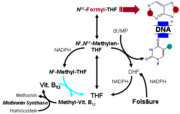 In the form of a series of tetrahydrofolate (THF) compounds, folate derivatives are substrate
s in a number of single-carbon-transfer reactions, and also are involved in the synthesis of dTMP (2′-deoxythymidine-5′-phosphate) from dUMP
(2′-deoxyuridine-5′-phosphate). It is a substrate for an important reaction that involves vitamin B12
and it is necessary for the synthesis of DNA, and so required for all dividing cells.
The pathway leading to the formation of tetrahydrofolate (FH4) begins when folate (F) is reduced
to dihydrofolate (DHF) (FH2), which is then reduced to THF. Dihydrofolate reductase
catalyses the last step. Vitamin B3 in the form of NADPH is a necessary cofactor for both steps of the synthesis.
Methylene-THF (CH2FH4) is formed from THF by the addition of methylene groups from one of three carbon donors: formaldehyde
, serine
, or glycine
. Methyl tetrahydrofolate (CH3-THF) can be made from methylene-THF by reduction of the methylene group with NADPH. It is important to note that Vitamin B12 is the only acceptor of methyl-THF. There is also only one acceptor for methyl-B12, which is homocysteine in a reaction catalyzed by homocysteine methyltransferase. This is important because a defect in homocysteine methyltransferase or a deficiency of B12 can lead to a methyl-trap of THF and a subsequent deficiency. Thus, a deficiency in B12 can generate a large pool of methyl-THF that is unable to undergo reactions and will mimic folate deficiency. Another form of THF, formyl-THF or folinic acid
results from oxidation of methylene-THF or is formed from formate donating formyl group to THF. Finally, histidine can donate a single carbon to THF to form methenyl-THF.
In other words:
action in the liver. This action is unusually slow in humans, being less than 2% of that in rats. Moreover, in contrast to rats, an almost-5-fold variation in the activity of this enzyme exists between humans. Due to this low activity, it has been suggested this limits the conversion of folic acid into its biologically active forms "when folic acid is consumed at levels higher than the Tolerable Upper Intake Level (1 mg/d for adults)."
, pyrimethamine
, and methotrexate
; the sulfonamide
s (competitive inhibitors of 4-aminobenzoic acid
in the reactions of dihydropteroate synthetase
).
Valproic acid
, one of the most commonly prescribed anticonvulsants that is also used to treat certain psychological conditions, is a known inhibitor of folic acid, and as such, has been shown to cause neural tube defects
and cases of spina bifida
and cognitive impairment in the newborn. Because of this considerable risk, those mothers who must continue to use valproic acid or its derivatives during pregnancy to control their condition (as opposed to stopping the drug or switching to another drug or to a lesser dose) should take folic acid supplements under the direction and guidance of their health care providers.
The National Health and Nutrition Examination Survey (NHANES III 1988–91) and the Continuing Survey of Food Intakes by Individuals (1994–96 CSFII) indicated most adults did not consume adequate folate.
However, the folic acid fortification program in the United States has increased folic acid content of commonly eaten foods such as cereals
and grains
, and as a result, diets of most adults now provide recommended amounts of folate equivalents.

Since the discovery of the link between insufficient folic acid and neural tube defects
, governments and health organizations worldwide have made recommendations concerning folic acid supplementation
for women intending to become pregnant
.
This has led to the introduction in many countries of fortification, where folic acid is added to flour with the intention of benefiting all from the associated rise in blood folate levels. This is controversial, with issues having been raised concerning individual liberty , and the masking effect of folate fortification on pernicious anaemia (vitamin B12 deficiency). However, several western countries now fortify their flour, along with a number of Middle Eastern countries and Indonesia
. Mongolia
and a number of former Soviet republics
are among those having widespread voluntary fortification; about five more countries (including Morocco
, the first African country) have agreed, but not yet implemented, fortification. To date, no EU
country has yet mandated fortification.
Folates can be produced by engineering Lactococcus lactis strains using a rodent depletion-repletion bioassay, and the bioavailabilities of these folates are comparable with those of commercial folic acid currently being used for food fortification. These engineered folates can potentially help alleviate the effects of folate deficiency in the diet. Hematologic studies show an improvement in megaloblastic anemia after the addition of L. lactis strains; this again suggests lactic acid bacteria can potentially reverse some of the harm done by folate deficiency by acting as an essential, bioavailable vitamin.
regarding the inclusion of folic acid in products such as bread
and flour
.
Australia
and New Zealand
have jointly agreed to fortification though the Food Standards Australia New Zealand
. Australia will fortify all flour from 18 September 2009. Although the food standard covers both Australia and New Zealand, an Australian government official has stated it is up to New Zealand to decide whether to implement it there, and they will watch with interest.
The requirement is 0.135 mg of folate per 100g of bread.
, University of Toronto
research group published findings showing the fortification of flour with folic acid in Canada has resulted in a dramatic decrease in neuroblastoma
, an early and very dangerous cancer in young children. In 2009, further evidence from McGill University
showed a 6.2% decrease per year in the birth prevalence of severe congenital heart defects.
Folic acid used in fortified foods is a synthetic form called pteroylmonoglutamate. It is in its oxidized state and contains only one conjugated glutamate residue. Folic acid therefore enters via a different carrier system from naturally occurring folate, and this may have different effects on folate binding proteins and its transporters. Folic acid has a higher bioavailability than natural folates and are rapidly absorbed across the intestine, therefore it is important to consider the Dietary Folate Equivalent (DFE) when calculating one's intake. Natural occurring folate is equal to 1 DFE, however 0.6 µg of folic acid is equal to 1 DFE.
Folic acid food fortification
became mandatory in Canada
in 1998, with the fortification of 150 µg of folic acid per 100 grams of enriched flour
and uncooked cereal
grains. The purpose of fortification was to decrease the risk of neural tube defects
in newborns. It is important to fortify grains because it is a widely eaten food and the neural tube closes in the first four weeks of gestation, often before many women even know they are pregnant.
Canada's fortification program has been successful with a decrease of neural tube defects by 19% since its introduction. A seven-province study from 1993 to 2002 showed a reduction of 46% in the overall rate of neural tube defects after folic acid fortification was introduced in Canada.
The fortification program was estimated to raise a person’s folic acid intake level by 70–130 µg/day, however an increase of almost double that amount was actually observed. This could be from the fact that many foods are over fortified by 160–175% the predicted value. In addition, much of the elder population take supplements
that adds 400 µg to their daily folic acid intake. This is a concern because 70–80% of the population have detectable levels of unmetabolized folic acid in their blood
and high intakes can accelerate the growth of preneoplasmic lesions. It is still unknown the amount of folic acid supplementation that might cause harm.
The Association of Bakers and the Green Party
have opposed mandatory fortification, describing it as "mass medication". Food Safety Minister Kate Wilkinson
reviewed the decision to fortify in July 2009, citing links between overconsumption of folate with cancer . The New Zealand Government is reviewing whether it will continue with the mandatory introduction of folic acid to bread.
regarding the inclusion of folic acid in products such as bread
and flour
.
The Food Standards Agency
has recommended fortification.
recommends an extra 0.4 mg/day for newly pregnant women, which can be taken as a pill. However, many researchers believe supplementation in this way can never work effectively enough, since about half of all pregnancies in the U.S. are unplanned, and not all women will comply with the recommendation. Approximately 53% of the US population uses dietary supplements and 35% uses dietary supplements containing folic acid. Men consume more folate (in dietary folate equivalents) than women, and non-Hispanic whites have higher folate intakes than Mexican Americans and non-Hispanic blacks. Twenty nine percent of black women have inadequate intakes of folate. The age group consuming the most folate and folic acid is the >50 group. Only 5% of the population exceeds the Tolerable Upper Intake Level.
In 1996, the United States Food and Drug Administration
(FDA) published regulations requiring the addition of folic acid to enriched breads, cereals, flours, corn meals, pastas, rice, and other grain products.
This ruling took effect on January 1, 1998, and was specifically targeted to reduce the risk of neural tube birth defects in newborns. There are concerns that the amount of folate added is insufficient . In October 2006, the Australian press claimed that U.S. regulations requiring fortification of grain products were being interpreted as disallowing fortification in non-grain products, specifically Vegemite
(an Australian yeast extract
containing folate). The FDA later said the report was inaccurate, and no ban or other action was being taken against Vegemite.
As a result of the folic acid fortification program, fortified foods have become a major source of folic acid in the American diet. The Centers for Disease Control and Prevention
in Atlanta, Georgia
used data from 23 birth defect registries covering about half of United States births, and extrapolated their findings to the rest of the country. These data indicate since the addition of folic acid in grain-based foods as mandated by the FDA, the rate of neural tube defects dropped by 25% in the United States. The results of folic acid fortification on the rate of neural tube defects in Canada
have also been positive, showing a 46% reduction in prevalence of NTDs; the magnitude of reduction was proportional to the prefortification rate of NTDs, essentially removing geographical variations in rates of NTDs seen in Canada
before fortification.
When the U.S. Food and Drug Administration set the folic acid fortification regulation in 1996, the projected increase in folic acid intake was 100 µg/d. Data from a study with 1480 subjects showed that folic acid intake increased by 190 µg/d and total folate intake increased by 323 µg dietary folate equivalents (DFE)/d. Folic acid intake above the upper tolerable intake level (1000 µg folic acid/d) increased only among those individuals consuming folic acid supplements as well as folic acid found in fortified grain products. Taken together, folic acid fortification has led to a bigger increase in folic acid intake than first projected.
Biochemistry links
Glutamic acid
Glutamic acid is one of the 20 proteinogenic amino acids, and its codons are GAA and GAG. It is a non-essential amino acid. The carboxylate anions and salts of glutamic acid are known as glutamates...
, pteroyl-L-glutamate, and pteroylmonoglutamic acid are form
Chemical formula
A chemical formula or molecular formula is a way of expressing information about the atoms that constitute a particular chemical compound....
s of the water-soluble vitamin B9
B vitamins
B vitamins are a group of water-soluble vitamins that play important roles in cell metabolism. The B vitamins were once thought to be a single vitamin, referred to as vitamin B . Later research showed that they are chemically distinct vitamins that often coexist in the same foods...
. Folic acid is itself not biologically active, but its biological importance is due to tetrahydrofolate and other derivatives after its conversion to dihydrofolic acid
Dihydrofolic acid
Dihydrofolic acid is a folic acid derivative acted upon by dihydrofolate reductase to produce tetrahydrofolic acid. Since tetrahydrofolate is needed to make both purines and pyrimidines, dihydrofolate reductase is targeted by various drugs to prevent nucleic acid synthesis. Dihydrofolic acid is...
in the liver.
Vitamin B9 (folic acid and folate inclusive) is essential
Essential nutrient
An essential nutrient is a nutrient required for normal body functioning that either cannot be synthesized by the body at all, or cannot be synthesized in amounts adequate for good health , and thus must be obtained from a dietary source...
to numerous bodily function
Physiology
Physiology is the science of the function of living systems. This includes how organisms, organ systems, organs, cells, and bio-molecules carry out the chemical or physical functions that exist in a living system. The highest honor awarded in physiology is the Nobel Prize in Physiology or...
s. The human body needs folate to synthesize DNA, repair DNA, and methylate DNA as well as to act as a cofactor in biological reactions involving folate. It is especially important in aiding rapid cell division
Cell division
Cell division is the process by which a parent cell divides into two or more daughter cells . Cell division is usually a small segment of a larger cell cycle. This type of cell division in eukaryotes is known as mitosis, and leaves the daughter cell capable of dividing again. The corresponding sort...
and growth
Cell growth
The term cell growth is used in the contexts of cell development and cell division . When used in the context of cell division, it refers to growth of cell populations, where one cell grows and divides to produce two "daughter cells"...
, such as in infancy and pregnancy. Child
Child
Biologically, a child is generally a human between the stages of birth and puberty. Some vernacular definitions of a child include the fetus, as being an unborn child. The legal definition of "child" generally refers to a minor, otherwise known as a person younger than the age of majority...
ren and adult
Adult
An adult is a human being or living organism that is of relatively mature age, typically associated with sexual maturity and the attainment of reproductive age....
s both require folic acid to produce
Produce
Produce is a generalized term for a group of farm-produced goods and, not limited to fruits and vegetables . More specifically, the term "produce" often implies that the products are fresh and generally in the same state as where they were harvested. In supermarkets the term is also used to refer...
healthy red blood cell
Red blood cell
Red blood cells are the most common type of blood cell and the vertebrate organism's principal means of delivering oxygen to the body tissues via the blood flow through the circulatory system...
s and prevent anemia
Anemia
Anemia is a decrease in number of red blood cells or less than the normal quantity of hemoglobin in the blood. However, it can include decreased oxygen-binding ability of each hemoglobin molecule due to deformity or lack in numerical development as in some other types of hemoglobin...
.
Folate and folic acid derive their names from the Latin
Latin
Latin is an Italic language originally spoken in Latium and Ancient Rome. It, along with most European languages, is a descendant of the ancient Proto-Indo-European language. Although it is considered a dead language, a number of scholars and members of the Christian clergy speak it fluently, and...
word folium (which means "leaf"). Leafy vegetables are a principal source, although in Western diets fortified cereals and bread may be a larger dietary source.
A lack of dietary
Diet (nutrition)
In nutrition, diet is the sum of food consumed by a person or other organism. Dietary habits are the habitual decisions an individual or culture makes when choosing what foods to eat. With the word diet, it is often implied the use of specific intake of nutrition for health or weight-management...
folic acid leads to folate deficiency
Folate deficiency
Folate deficiency is a lack of folic acid in the diet and the signs are often subtle. Folate deficiency anemia is the medical name given for the condition. -Symptoms:Loss of appetite, and weight loss can occur...
which is uncommon in normal Western diets.
A complete lack of dietary folate takes months before deficiency develops as normal individuals have about 500–20,000 µg of folate in body stores. This deficiency can result in many health problems, the most notable one being neural tube defects
Neural tube defects
Neural tube defects are one of the most common birth defects, occurring in approximately one in 1,000 live births in the United States. An NTD is an opening in the spinal cord or brain that occurs very early in human development. In the 2nd week of pregnancy called gastrulation, specialized cells...
in developing embryos. Common symptoms of folate deficiency include diarrhea, macrocytic anemia with weakness or shortness of breath, nerve damage with weakness and limb numbness (peripheral neuropathy
Peripheral neuropathy
Peripheral neuropathy is the term for damage to nerves of the peripheral nervous system, which may be caused either by diseases of or trauma to the nerve or the side-effects of systemic illness....
), pregnancy complications, mental confusion, forgetfulness or other cognitive declines, mental depression, sore or swollen tongue, peptic or mouth ulcers, headaches, heart palpitations, irritability, and behavioral disorders. Low levels of folate can also lead to homocysteine accumulation. DNA synthesis and repair are impaired and this could lead to cancer development.
Reproduction
Adequate folate intake during the periconception period, the time right before and just after a woman becomes pregnant, helps protect against a number of congenital malformationsCongenital disorder
A congenital disorder, or congenital disease, is a condition existing at birth and often before birth, or that develops during the first month of life , regardless of causation...
, including neural tube defects (which are the most notable birth defects that occur from folate deficiency). Neural tube defects produce malformations of the spine, skull, and brain including spina bifida
Spina bifida
Spina bifida is a developmental congenital disorder caused by the incomplete closing of the embryonic neural tube. Some vertebrae overlying the spinal cord are not fully formed and remain unfused and open. If the opening is large enough, this allows a portion of the spinal cord to protrude through...
and anencephaly
Anencephaly
Anencephaly is a cephalic disorder that results from a neural tube defect that occurs when the cephalic end of the neural tube fails to close, usually between the 23rd and 26th day of pregnancy, resulting in the absence of a major portion of the brain, skull, and scalp...
. The risk of neural tube defects is significantly reduced when supplemental folic acid is consumed in addition to a healthy diet prior to and during the first month following conception. Supplementation with folic acid has also been shown to reduce the risk of congenital heart defect
Congenital heart defect
A congenital heart defect is a defect in the structure of the heart and great vessels which is present at birth. Many types of heart defects exist, most of which either obstruct blood flow in the heart or vessels near it, or cause blood to flow through the heart in an abnormal pattern. Other...
s, cleft lips,limb defects, and urinary tract anomalies. Folate deficiency during pregnancy may also increase the risk of preterm delivery, infant low birth weight and fetal growth retardation, as well as increasing homocysteine level in the blood, which may lead to spontaneous abortion and pregnancy complications, such as placental abruption
Placental abruption
Placental abruption is a complication of pregnancy, wherein the placental lining has separated from the uterus of the mother. It is the most common pathological cause of late pregnancy bleeding. In humans, it refers to the abnormal separation after 20 weeks of gestation and prior to birth...
and pre-eclampsia
Pre-eclampsia
Pre-eclampsia or preeclampsia is a medical condition in which hypertension arises in pregnancy in association with significant amounts of protein in the urine....
. Women who could become pregnant are advised to eat foods fortified with folic acid or take supplements in addition to eating folate-rich foods to reduce the risk of serious birth defects. Taking 400 micrograms of synthetic folic acid daily from fortified foods and/or supplements has been suggested. The RDA for folate equivalents for pregnant women is 600–800 micrograms, twice the normal RDA of 400 micrograms for women who are not pregnant. The mechanisms and reasons why folic acid prevents birth defects is unknown. It is hypothesized that the insulin-like growth factor 2 gene is differentially methylated and these changes in IGF2 result in improved intrauterine growth and development. Approximately 85% of women in an urban Irish study reported using folic acid supplements before they become pregnant, but only 18% used enough folic acid supplements to meet the current folic acid requirements due, reportedly, to socio-economic challenges. Folic acid supplements may also protect the fetus against disease when the mother is battling a disease or taking medications or smoking during pregnancy
Smoking and pregnancy
Tobacco smoking and pregnancy is related to many effects on health and reproduction, in addition to the general health effects of tobacco. A number of studies have shown that tobacco use is a significant factor in miscarriages among pregnant smokers, and that it contributes to a number of other...
.
Folic acid may also reduce chromosomal defects in sperm. A benefit is indicated even for more than 700 mcg folate per day, which, though below the tolerable upper intake levels of 1,000 µg/day, was 1.8 times the recommended dietary allowance. Folate is necessary for fertility
Fertility
Fertility is the natural capability of producing offsprings. As a measure, "fertility rate" is the number of children born per couple, person or population. Fertility differs from fecundity, which is defined as the potential for reproduction...
in both men and women. In men, it contributes to spermatogenesis
Spermatogenesis
Spermatogenesis is the process by which male primary germ cells undergo division, and produce a number of cells termed spermatogonia, from which the primary spermatocytes are derived. Each primary spermatocyte divides into two secondary spermatocytes, and each secondary spermatocyte into two...
. In women, on the other hand, it contributes to oocyte maturation, implantation, placentation
Placentation
In biology, placentation refers to the formation, type and structure, or arrangement of placentas. The function of placentation is to transfer nutrients from maternal tissue to a growing embryo...
, in addition to the general effects of folic acid and pregnancy. Therefore, it is necessary to receive sufficient amounts through the diet to avoidsubfertility. Also, polymorphisms in genes of enzymes involved in folate metabolism could be one reason for fertility complications in some women with unexplained infertility
Unexplained infertility
Unexplained infertility is infertility that is idiopathic in the sense that its cause remains unknown even after an infertility work-up, usually including semen analysis in the man and assessment of ovulation and fallopian tubes in the woman.-Possible causes:...
.
Heart disease
Taking folic acid does not reduce cardiovascular disease even though it reduces homocysteineHomocysteine
Homocysteine is a non-protein amino acid with the formula HSCH2CH2CHCO2H. It is a homologue of the amino acid cysteine, differing by an additional methylene group. It is biosynthesized from methionine by the removal of its terminal Cε methyl group...
levels.
Folic acid supplements consumed before and during pregnancy may reduce the risk of heart defects in infants,
and may reduce the risk for children to develop metabolic syndrome.
That may, however, worsen the outcomes in people with cardiovascular disease such as angina and myocardial infarction.
Stroke
Folic acid appears to reduce the risk of strokeStroke
A stroke, previously known medically as a cerebrovascular accident , is the rapidly developing loss of brain function due to disturbance in the blood supply to the brain. This can be due to ischemia caused by blockage , or a hemorrhage...
. The reviews indicate the risk of stroke appears to be reduced only in some individuals, but a definite recommendation regarding supplementation beyond the current RDA has not been established for stroke prevention. Observed stroke reduction is consistent with the reduction in pulse pressure produced by folate supplementation of 5 mg per day, since hypertension is a key risk factor for stroke. Folic supplements are inexpensive and relatively safe to use, which is why stroke or hyperhomocysteinemia patients are encouraged to consume daily B vitamins including folic acid.
Cancer
A meta-analysisMeta-analysis
In statistics, a meta-analysis combines the results of several studies that address a set of related research hypotheses. In its simplest form, this is normally by identification of a common measure of effect size, for which a weighted average might be the output of a meta-analyses. Here the...
published in 2010 failed to find a statistically significant cancer risk due to folic acid treatments.
Some investigations have proposed good levels of folic acid may be related to lower risk of esophageal, stomach, and ovarian cancers, but the benefits of folic acid against cancer may depend on when it is taken and on individual conditions. In addition, folic acid may not be helpful, and could even be damaging, in people already suffering from cancer or from a precancerous condition. Likewise, it has been suggested excess folate may promote tumor initiation. Folate has shown to play a dual role in cancer development; low folate intake protects against early carcinogenesis, and high folate intake promotes advanced carcinogenesis. Therefore, public health recommendations should be careful not to encourage too much folate intake.
Diets high in folate are associated with decreased risk of colorectal cancer
Colorectal cancer
Colorectal cancer, commonly known as bowel cancer, is a cancer caused by uncontrolled cell growth , in the colon, rectum, or vermiform appendix. Colorectal cancer is clinically distinct from anal cancer, which affects the anus....
; some studies show the association is stronger for folate from foods alone than for folate from foods and supplements, Colorectal cancer is the most studied type of cancer in relation to folate and one carbon metabolism. One study concluded that there was not strong support for an association between prostate cancer risk and circulating concentrations of folate or vitamin B12. The researchers noted that while elevated concentrations of vitamin B12 may be associated with an increased risk for advanced stage prostate cancer, that this was not true of folic acid and that the association between B12 and cancer risk required examination in other large prospective studies.
Most epidemiologic studies suggest diets high in folate are associated with decreased risk of breast cancer
Breast cancer
Breast cancer is cancer originating from breast tissue, most commonly from the inner lining of milk ducts or the lobules that supply the ducts with milk. Cancers originating from ducts are known as ductal carcinomas; those originating from lobules are known as lobular carcinomas...
, but results are not uniformly consistent. One broad cancer screening trial reported a potential harmful effect of much folate intake on breast cancer risk, suggesting routine folate supplementation should not be recommended as a breast cancer preventive,but a 2007 Swedish prospective study found much folate intake was associated with a lower incidence of postmenopausal breast cancer. A 2008 study has shown no significant effect of folic acid on overall risk of total invasive cancer or breast cancer among women. Folate intake may not have any effect on the risk of breast cancer but may have an effect for women who consume at least 15 g/d of alcohol. Folate intake of more than 300 µg/d may reduce the risk of breast cancer in women who consume alcohol.
Most research studies associate high dietary folate intake with a reduced risk of prostate cancer.
Recently, a clinical trial
Clinical trial
Clinical trials are a set of procedures in medical research and drug development that are conducted to allow safety and efficacy data to be collected for health interventions...
showed daily supplementation of 1 mg of folic acid increased the risk of prostate cancer
Prostate cancer
Prostate cancer is a form of cancer that develops in the prostate, a gland in the male reproductive system. Most prostate cancers are slow growing; however, there are cases of aggressive prostate cancers. The cancer cells may metastasize from the prostate to other parts of the body, particularly...
, while dietary and plasma
Blood plasma
Blood plasma is the straw-colored liquid component of blood in which the blood cells in whole blood are normally suspended. It makes up about 55% of the total blood volume. It is the intravascular fluid part of extracellular fluid...
folate levels among vitamin
Vitamin
A vitamin is an organic compound required as a nutrient in tiny amounts by an organism. In other words, an organic chemical compound is called a vitamin when it cannot be synthesized in sufficient quantities by an organism, and must be obtained from the diet. Thus, the term is conditional both on...
nonusers actually decreased the risk of prostate cancer
Prostate cancer
Prostate cancer is a form of cancer that develops in the prostate, a gland in the male reproductive system. Most prostate cancers are slow growing; however, there are cases of aggressive prostate cancers. The cancer cells may metastasize from the prostate to other parts of the body, particularly...
. A Finnish study consisting of 29,133 older male smokers observed prostate cancer risk had no relationship with serum folate levels.
Antifolates
Folate is important for cells and tissues that rapidly divide. Cancer cells divide rapidly, and drugs that interfere with folate metabolism are used to treat cancer. The antifolateAntifolate
Antifolates are drugs that impair the function of folic acids. Many are used in cancer chemotherapy, some are used as antibiotics or antiprotozoal agents....
methotrexate
Methotrexate
Methotrexate , abbreviated MTX and formerly known as amethopterin, is an antimetabolite and antifolate drug. It is used in treatment of cancer, autoimmune diseases, ectopic pregnancy, and for the induction of medical abortions. It acts by inhibiting the metabolism of folic acid. Methotrexate...
is a drug often used to treat cancer because it inhibits the production of the active form of THF from the inactive dihydrofolate (DHF). However, methotrexate can be toxic,
producing side effects, such as inflammation in the digestive tract that make it difficult to eat normally. Also, bone marrow depression (inducing leukopenia and thrombocytopenia), and acute renal and hepatic failure have been reported.
Folinic acid
Folinic acid
Folinic acid or leucovorin , generally administered as calcium or sodium folinate , is an adjuvant used in cancer chemotherapy involving the drug methotrexate. It is also used in synergistic combination with the chemotherapy agent 5-fluorouracil.Levofolinic acid and its salts are the enantiopure...
, under the drug name leucovorin,a form of folate (formyl-THF), can help "rescue" or reverse the toxic effects of methotrexate.
Folinic acid is not the same as folic acid. Folic acid supplements have little established role in cancer chemotherapy.
There have been cases of severe adverse effects of accidental substitution of folic acid for folinic acid in patients receiving methotrexate cancer chemotherapy. It is important for anyone receiving methotrexate to follow medical advice on the use of folic or folinic acid supplements. The supplement of folinic acid in patients undergoing methotrexate treatment is to give cells dividing less rapidly enough folate to maintain normal cell functions. The amount of folate given will be depleted by rapidly dividing cells (cancer) very fast and so will not negate the effects of methotrexate.
Psychological
Some evidence links a shortage of folate with depressionClinical depression
Major depressive disorder is a mental disorder characterized by an all-encompassing low mood accompanied by low self-esteem, and by loss of interest or pleasure in normally enjoyable activities...
.
Limited evidence from randomised controlled trials showed using folic acid in addition to antidepressant
Antidepressant
An antidepressant is a psychiatric medication used to alleviate mood disorders, such as major depression and dysthymia and anxiety disorders such as social anxiety disorder. According to Gelder, Mayou &*Geddes people with a depressive illness will experience a therapeutic effect to their mood;...
s, specifically SSRIs
Selective serotonin reuptake inhibitor
Selective serotonin re-uptake inhibitors or serotonin-specific reuptake inhibitor are a class of compounds typically used as antidepressants in the treatment of depression, anxiety disorders, and some personality disorders. The efficacy of SSRIs is disputed...
, may have benefits. Research at the University of York and Hull York Medical School has found a link between depression and low levels of folate. One study by the same team involved 15,315 subjects. However, the evidence is probably too limited at present for this to be a routine treatment recommendation.
Folic acid supplementation affects noradrenaline and serotonin
Serotonin
Serotonin or 5-hydroxytryptamine is a monoamine neurotransmitter. Biochemically derived from tryptophan, serotonin is primarily found in the gastrointestinal tract, platelets, and in the central nervous system of animals including humans...
receptors within the brain which could be the cause of folic acid's possible ability to act as an antidepressant.
Folate deficiency may increase the risk of schizophrenia because, by increasing homocysteine levels, folate also increases interleukin 6 and tumor necrosis factor alpha levels, and these two cytokines are involved in the development of schizophrenia. The exact mechanisms involved in the development of schizophrenia are not entirely clear, but may have something to do with DNA methylation and one carbon metabolism, and these are the precise roles of folate in the body.
Macular degeneration
A substudy of the Women's Antioxidant and Folic Acid Cardiovascular Study published in 2009 reported use of a nutritional supplement containing folic acid, pyridoxinePyridoxine
Pyridoxine is one of the compounds that can be called vitamin B6, along with pyridoxal and pyridoxamine. It differs from pyridoxamine by the substituent at the '4' position. It is often used as 'pyridoxine hydrochloride'.-Chemistry:...
, and cyanocobalamin
Cyanocobalamin
Cyanocobalamin is an especially common vitamer of the vitamin B12 family. It is the most famous vitamer of the family, because it is, in chemical terms, the most air-stable...
decreased the risk of developing age-related macular degeneration by 34.7%.
B12 deficiency
There has been concern about the interaction between vitamin B12Vitamin B12
Vitamin B12, vitamin B12 or vitamin B-12, also called cobalamin, is a water-soluble vitamin with a key role in the normal functioning of the brain and nervous system, and for the formation of blood. It is one of the eight B vitamins...
and folic acid. The National Institutes of Health
National Institutes of Health
The National Institutes of Health are an agency of the United States Department of Health and Human Services and are the primary agency of the United States government responsible for biomedical and health-related research. Its science and engineering counterpart is the National Science Foundation...
has found that "Large amounts of folic acid can mask the damaging effects of vitamin B12 deficiency by correcting the megaloblastic anemia caused by vitamin B12 deficiency without correcting the neurological damage that also occurs", there are also indications that "high serum folate levels might not only mask vitamin B12 deficiency, but could also exacerbate the anemia and worsen the cognitive symptoms associated with vitamin B12 deficiency". Due to the fact that in the United States legislation has required enriched flour to contain folic acid to reduce cases of fetal neural-tube defects consumers may be ingesting more than they realize. To counter the masking effect of B12 deficency the NIH recommends "folic acid intake from fortified food and supplements should not exceed 1,000 micrograms (1000 µg = 1 mg) daily in healthy adults."
In fact, to date the evidence such masking actually occurs is scarce, and there is no evidence folic acid fortification in Canada or the U.S. has increased the prevalence of vitamin B12 deficiency or its consequences.However, one recent study has demonstrated high folic or folate levels, when combined with low B12 levels, are associated with significant cognitive impairment among the elderly.
In any case, it is important for older adults to be aware of the relationship between folic acid and vitamin B12, because they are at greater risk of having a B12 deficiency. For this reason, a physician may wish to check the vitamin B12 status of patients 50 years of age or older before prescribing them a supplement that contains folic acid.
Overdose risks
The risk of toxicity from folic acid is low, because folate is a water-soluble vitamin and is regularly removed from the body through urine.The Institute of Medicine
Institute of Medicine
The Institute of Medicine is a not-for-profit, non-governmental American organization founded in 1970, under the congressional charter of the National Academy of Sciences...
has established a tolerable upper intake level (UL) for folate of 1 mg for adult men and women, and a UL of 800 µg for pregnant and lactating (breast-feeding) women less than 18 years of age. Supplemental folic acid should not exceed the UL to prevent folic acid from masking symptoms of vitamin B12 deficiency.
Folate deficiency
Folate deficiency may lead to glossitis, diarrhea, depression, confusion, anemia, and fetal neural tube defects and brain defects (during pregnancy). Folate deficiency is accelerated by alcohol consumption Folate deficiency is diagnosed by analyzing CBC and plasma vitamin B12 and folate levels. CBC may indicate megaloblastic anemia but this could also be a sign of vitamin B12 deficiency. A serum folate of 3 μg/L or lower indicates deficiency. Serum folate level reflects folate status but erythrocyte folate level better reflects tissue stores after intake. An erythrocyte folate level of 140 μg/L or lower indicates inadequate folate status. Increased homocysteine level suggests tissue folate deficiency but homocysteine is also affected by vitamin B12 and vitamin B6, renal function, and genetics. One way to differentiate between folate deficiency from vitamin B12 deficiency is by testing for methylmalonic acid levels. Normal MMA levels indicate folate deficiency and elevated MMA levels indicate vitamin B12 deficiency. Folate deficiency is treated with supplemental oral folate of 400 to 1000 μg per day. This treatment is very successful in replenishing tissues, even if deficiency was caused by malabsorption.Patients with megaloblastic anemia need to be tested for vitamin B12 deficiency before folate treatment, because if the patient has vitamin B12 deficiency, folate supplementation can remove the anemia, but can also worsen neurologic problems. Morbidly obese patients with BMIs of greater than 50 are more likely to develop folate deficiency.Patients with celiac disease have a higher chance of developing folate deficiency.
Cobalamin deficiency may lead to folate deficiency, which, in turn, increases homocysteine levels and finally may result in the development of cardiovascular disease or birth defects.
Malaria
Some studies show iron-folic acid supplementation in children under 5 may result in increased mortality due to malariaMalaria
Malaria is a mosquito-borne infectious disease of humans and other animals caused by eukaryotic protists of the genus Plasmodium. The disease results from the multiplication of Plasmodium parasites within red blood cells, causing symptoms that typically include fever and headache, in severe cases...
; this has prompted the World Health Organization to alter their iron-folic acid supplementation policies for children in malaria-prone areas, such as India.
Dietary reference intake
Because of the difference in bioavailability between supplemented folic acid and the different forms of folate found in food, the dietary folate equivalent (DFE) system was established. One DFE is defined as 1 μg (microgram) of dietary folate, or 0.6 μg of folic acid supplement.| Age | Infants (RDI Reference Daily Intake The Reference Daily Intake or Recommended Daily Intake is the daily intake level of a nutrient that is considered to be sufficient to meet the requirements of 97–98% of healthy individuals in every demographic in the United States .The RDI is used to determine the Daily Value of foods,... ) |
Infants (UL) | Adults (RDI) | Adults (UL) | Pregnant women (RDI) | Pregnant women (UL) | Lactating women (RDI) | Lactating women (UL) |
|---|---|---|---|---|---|---|---|---|
| 0–6 months | 65 | None set | – | – | – | – | – | – |
| 7–12 months | 80 | None set | – | – | – | – | – | – |
| 1–3 years | – | – | 150 | 300 | – | – | – | – |
| 4–8 years | – | – | 200 | 400 | – | – | – | – |
| 9–13 years | – | – | 300 | 600 | – | – | – | – |
| 14–18 | – | – | 400 | 800 | 600 | 800 | 500 | 800 |
| 19+ | – | – | 400 | 1000 | 600 | 1000 | 500 | 1000 |
The Dietary Reference Intake
Dietary Reference Intake
The Dietary Reference Intake is a system of nutrition recommendations from the Institute of Medicine of the U.S. National Academy of Sciences. The DRI system is used by both the United States and Canada and is intended for the general public and health professionals...
(DRIs) were developed by the United States National Academy of Sciences
United States National Academy of Sciences
The National Academy of Sciences is a corporation in the United States whose members serve pro bono as "advisers to the nation on science, engineering, and medicine." As a national academy, new members of the organization are elected annually by current members, based on their distinguished and...
to set reference values for planning and assessing nutrient intake for healthy people. DRIs incorporate two reference values, the Reference Daily Intake
Reference Daily Intake
The Reference Daily Intake or Recommended Daily Intake is the daily intake level of a nutrient that is considered to be sufficient to meet the requirements of 97–98% of healthy individuals in every demographic in the United States .The RDI is used to determine the Daily Value of foods,...
(RDI, the daily intake level that is adequate for 97–98% of the population in the United States where the standards were set) and tolerable upper intake levels (UL, the highest level of intake which is known to avoid toxicity). The UL for folate refers to only synthetic folate, as no health risks have been associated with high intake of folate from food sources.
Sources
Certain foods are very high in folate:- Leafy vegetables such as spinachSpinachSpinach is an edible flowering plant in the family of Amaranthaceae. It is native to central and southwestern Asia. It is an annual plant , which grows to a height of up to 30 cm. Spinach may survive over winter in temperate regions...
, asparagusAsparagusAsparagus officinalis is a spring vegetable, a flowering perennialplant species in the genus Asparagus. It was once classified in the lily family, like its Allium cousins, onions and garlic, but the Liliaceae have been split and the onion-like plants are now in the family Amaryllidaceae and...
, turnip greensTurnipThe turnip or white turnip is a root vegetable commonly grown in temperate climates worldwide for its white, bulbous taproot. Small, tender varieties are grown for human consumption, while larger varieties are grown as feed for livestock... - Legumes such as dried or fresh beanBeanBean is a common name for large plant seeds of several genera of the family Fabaceae used for human food or animal feed....
s, peaPeaA pea is most commonly the small spherical seed or the seed-pod of the pod fruit Pisum sativum. Each pod contains several peas. Peapods are botanically a fruit, since they contain seeds developed from the ovary of a flower. However, peas are considered to be a vegetable in cooking...
s and lentils - Egg yolks.
- Baker's yeastBaker's yeastBaker's yeast is the common name for the strains of yeast commonly used as a leavening agent in baking bread and bakery products, where it converts the fermentable sugars present in the dough into carbon dioxide and ethanol...
- Fortified grain products (pasta, cereal, bread); some breakfast cerealBreakfast cerealA breakfast cereal is a food made from processed grains that is often, but not always, eaten with the first meal of the day. It is often eaten cold, usually mixed with milk , water, or yogurt, and sometimes fruit but sometimes eaten dry. Some cereals, such as oatmeal, may be served hot as porridge...
s (ready-to-eat and others) are fortified with 25% to 100% of the recommended dietary allowance (RDA) for folic acid - Sunflower seedSunflower seedThe sunflower seed is the fruit of the sunflower . The term "sunflower seed" is actually a misnomer when applied to the seed in its pericarp . Botanically speaking, it is more properly referred to as an achene. When dehulled, the edible remainder is called the sunflower kernel.There are three types...
s
- LiverLiver (food)The liver of mammals, fowl, and fish are commonly eaten as food by humans. Domestic pig, ox, lamb, calf, chicken, and goose livers are widely available from butchers and supermarkets....
and liver products contain high amounts of folate - Kidney
Moderate amounts:
- Certain fruitFruitIn broad terms, a fruit is a structure of a plant that contains its seeds.The term has different meanings dependent on context. In non-technical usage, such as food preparation, fruit normally means the fleshy seed-associated structures of certain plants that are sweet and edible in the raw state,...
s (orange juiceOrange juiceOrange juice is a popular beverage made from oranges. It is made by extraction from the fresh fruit, by desiccation and subsequent reconstitution of dried juice, or by concentration of the juice and the subsequent addition of water to the concentrate...
, canned pineapplePineapplePineapple is the common name for a tropical plant and its edible fruit, which is actually a multiple fruit consisting of coalesced berries. It was given the name pineapple due to its resemblance to a pine cone. The pineapple is by far the most economically important plant in the Bromeliaceae...
juice, cantaloupeCantaloupe"Rockmelon" redirects here, for the band see Rockmelons. See also Cantaloupe .Cantaloupe refers to a variety of Cucumis melo, a species in the family Cucurbitaceae which includes nearly all melons and squashes. Cantaloupes range in size from...
, honeydewHoneydew (melon)Honeydew is a cultivar group of the muskmelon, Cucumis melo Inodorus group, which includes crenshaw, casaba, Persian, winter, and other mixed melons.-Characteristics:...
melon, grapefruitGrapefruitThe grapefruit , is a subtropical citrus tree known for its sour fruit, an 18th-century hybrid first bred in Barbados. When found, it was named the "forbidden fruit"; it has also been misidentified with the pomelo or shaddock , one of the parents of this hybrid, the other being sweet orange The...
juice, bananaBananaBanana is the common name for herbaceous plants of the genus Musa and for the fruit they produce. Bananas come in a variety of sizes and colors when ripe, including yellow, purple, and red....
, raspberryRaspberryThe raspberry or hindberry is the edible fruit of a multitude of plant species in the genus Rubus, most of which are in the subgenus Idaeobatus; the name also applies to these plants themselves...
, grapefruitGrapefruitThe grapefruit , is a subtropical citrus tree known for its sour fruit, an 18th-century hybrid first bred in Barbados. When found, it was named the "forbidden fruit"; it has also been misidentified with the pomelo or shaddock , one of the parents of this hybrid, the other being sweet orange The...
and strawberryStrawberryFragaria is a genus of flowering plants in the rose family, Rosaceae, commonly known as strawberries for their edible fruits. Although it is commonly thought that strawberries get their name from straw being used as a mulch in cultivating the plants, the etymology of the word is uncertain. There...
) and vegetableVegetableThe noun vegetable usually means an edible plant or part of a plant other than a sweet fruit or seed. This typically means the leaf, stem, or root of a plant....
s (beetBeetThe beet is a plant in the Chenopodiaceae family which is now included in Amaranthaceae family. It is best known in its numerous cultivated varieties, the most well known of which is the purple root vegetable known as the beetroot or garden beet...
s, cornCornCorn is the name used in the United States, Canada, and Australia for the grain maize.In much of the English-speaking world, the term "corn" is a generic term for cereal crops, such as* Barley* Oats* Wheat* Rye- Places :...
, tomatoTomatoThe word "tomato" may refer to the plant or the edible, typically red, fruit which it bears. Originating in South America, the tomato was spread around the world following the Spanish colonization of the Americas, and its many varieties are now widely grown, often in greenhouses in cooler...
juice, vegetable juice, broccoliBroccoliBroccoli is a plant in the cabbage family, whose large flower head is used as a vegetable.-General:The word broccoli, from the Italian plural of , refers to "the flowering top of a cabbage"....
, brussels sproutBrussels sproutThe Brussels sprout is a cultivar of wild cabbage grown for its edible buds. The leafy green vegetables are typically 2.5–4 cm in diameter and look like miniature cabbages. The sprout is Brassica oleracea, in the "gemmifera" group of the family Brassicaceae...
s, romaine lettuceRomaine lettuceRomaine or cos lettuce is a variety of lettuce which grows in a tall head of sturdy leaves with a firm rib down the center. Unlike most lettuces, it is tolerant of heat...
and bok choy), beerBeerBeer is the world's most widely consumed andprobably oldest alcoholic beverage; it is the third most popular drink overall, after water and tea. It is produced by the brewing and fermentation of sugars, mainly derived from malted cereal grains, most commonly malted barley and malted wheat...
.
A table of selected food sources of folate and folic acid can be found at the USDA National Nutrient Database for Standard Reference. Folic acid is added to grain products in many countries, and, in these countries, fortified products make up a significant source of the population's folic acid intake. Because of the difference in bioavailability between supplemented folic acid and the different forms of folate found in food, the dietary folate equivalent (DFE) system was established. 1 DFE is defined as 1 μg of dietary folate, or 0.6 μg of folic acid supplement. This is reduced to 0.5 μg of folic acid if the supplement is taken on an empty stomach.
Folic acid naturally found in food is susceptible to high heat and ultraviolet light, and is soluble in water. It is heat-labile in acidic environments and may also be subject to oxidation.
Some meal replacement products do not meet the folate requirements as specified by the RDAs.
History
In the 1920s, scientists believed folate deficiency and anemia were the same condition. A key observation by researcher Lucy WillsLucy Wills
Lucy Wills, MA , LRCP, MB BS was a leading English haematologist. She conducted seminal work in India in the late 1920s and early 1930s on macrocytic anaemia of pregnancy. Her observations led to her discovery of a nutritional factor in yeast which both prevents and cures this disorder...
in 1931 led to the identification of folate as the nutrient needed to prevent anemia
Anemia
Anemia is a decrease in number of red blood cells or less than the normal quantity of hemoglobin in the blood. However, it can include decreased oxygen-binding ability of each hemoglobin molecule due to deformity or lack in numerical development as in some other types of hemoglobin...
during pregnancy. Dr. Wills demonstrated anemia could be reversed with brewer's yeast. Folate was identified as the corrective substance in brewer's yeast in the late 1930s, and was first isolated in and extracted from spinach
Spinach
Spinach is an edible flowering plant in the family of Amaranthaceae. It is native to central and southwestern Asia. It is an annual plant , which grows to a height of up to 30 cm. Spinach may survive over winter in temperate regions...
leaves by Mitchell and others in 1941. Bob Stokstad isolated the pure crystalline form in 1943, and was able to determine its chemical structure while working at the Lederle Laboratories of the American Cyanamid Company. This historical research project, of obtaining folic acid in a pure crystalline form in 1945, was done by the team called the "folic acid boys," under the supervision and guidance of Director of Research Dr. Yellapragada Subbarao
Yellapragada Subbarao
Yellapragada Subbarao was an Indian biochemist who discovered the function of Adenosine Triphosphate as a energy source in the cell, and made important contributions to the treatment of cancer. Most of his career was spent in the United States...
, at the Lederle Lab, Pearl River, NY. This research subsequently led to the synthesis of the antifolate aminopterin
Aminopterin
Aminopterin , a 4-amino analog of folic acid, is an antineoplastic drug with immunosuppressive properties used in chemotherapy. Aminopterin is a synthetic derivative of pterin. Aminopterin works as an enzyme inhibitor by competing for the folate binding site of the enzyme dihydrofolate reductase...
, the first-ever anticancer drug, the clinical efficacy was proven by Dr. S. Farber in 1948. In the 1950s and 1960s, scientists began to discover the biochemical mechanisms of action for folate. In 1960, experts first linked folate deficiency to neural tube defects. In the late 1990s, US scientists realized, despite the availability of folate in foods and in supplements, there was still a challenge for people to meet their daily folate requirements, which is when the US implemented the folate fortification program.
DNA and cell division
Folate is necessary for the production and maintenance of new cellsCell (biology)
The cell is the basic structural and functional unit of all known living organisms. It is the smallest unit of life that is classified as a living thing, and is often called the building block of life. The Alberts text discusses how the "cellular building blocks" move to shape developing embryos....
, for DNA synthesis
DNA replication
DNA replication is a biological process that occurs in all living organisms and copies their DNA; it is the basis for biological inheritance. The process starts with one double-stranded DNA molecule and produces two identical copies of the molecule...
and RNA synthesis, and for preventing changes to DNA
DNA
Deoxyribonucleic acid is a nucleic acid that contains the genetic instructions used in the development and functioning of all known living organisms . The DNA segments that carry this genetic information are called genes, but other DNA sequences have structural purposes, or are involved in...
, and, thus, for preventing cancer
Cancer
Cancer , known medically as a malignant neoplasm, is a large group of different diseases, all involving unregulated cell growth. In cancer, cells divide and grow uncontrollably, forming malignant tumors, and invade nearby parts of the body. The cancer may also spread to more distant parts of the...
. It is especially important during periods of rapid cell division and growth, such as infancy and pregnancy. Folate is needed to carry one-carbon groups for methylation reactions and nucleic acid
Nucleic acid
Nucleic acids are biological molecules essential for life, and include DNA and RNA . Together with proteins, nucleic acids make up the most important macromolecules; each is found in abundance in all living things, where they function in encoding, transmitting and expressing genetic information...
synthesis (the most notable one being thymine, but also purine
Purine
A purine is a heterocyclic aromatic organic compound, consisting of a pyrimidine ring fused to an imidazole ring. Purines, including substituted purines and their tautomers, are the most widely distributed kind of nitrogen-containing heterocycle in nature....
bases). Thus, folate deficiency hinders DNA synthesis and cell division, affecting hematopoietic cells and neoplasms the most because of rapid cell division. RNA transcription, and subsequent protein synthesis, are less affected by folate deficiency, as the mRNA can be recycled and used again (as opposed to DNA synthesis, where a new genomic copy must be created). Since folate deficiency limits cell division, erythropoiesis
Erythropoiesis
Erythropoiesis is the process by which red blood cells are produced. It is stimulated by decreased O2 in circulation, which is detected by the kidneys, which then secrete the hormone erythropoietin...
, production of red blood cell
Red blood cell
Red blood cells are the most common type of blood cell and the vertebrate organism's principal means of delivering oxygen to the body tissues via the blood flow through the circulatory system...
s, is hindered and leads to megaloblastic anemia
Megaloblastic anemia
Megaloblastic anemia is an anemia that results from inhibition of DNA synthesis in red blood cell production. When DNA synthesis is impaired, the cell cycle cannot progress from the G2 growth stage to the mitosis stage...
, which is characterized by large immature red blood cells. This pathology results from persistently thwarted attempts at normal DNA replication, DNA repair, and cell division, and produces abnormally large red cells called megaloblasts (and hypersegmented neutrophils) with abundant cytoplasm capable of RNA and protein synthesis, but with clumping and fragmentation of nuclear chromatin. Some of these large cells, although immature (reticulocytes), are released early from the marrow in an attempt to compensate for the anemia
Anemia
Anemia is a decrease in number of red blood cells or less than the normal quantity of hemoglobin in the blood. However, it can include decreased oxygen-binding ability of each hemoglobin molecule due to deformity or lack in numerical development as in some other types of hemoglobin...
. Both adults and children need folate to make normal red and white blood cells and prevent anemia
Anemia
Anemia is a decrease in number of red blood cells or less than the normal quantity of hemoglobin in the blood. However, it can include decreased oxygen-binding ability of each hemoglobin molecule due to deformity or lack in numerical development as in some other types of hemoglobin...
. Deficiency of folate in pregnant women has been implicated in neural tube defects
Neural tube defects
Neural tube defects are one of the most common birth defects, occurring in approximately one in 1,000 live births in the United States. An NTD is an opening in the spinal cord or brain that occurs very early in human development. In the 2nd week of pregnancy called gastrulation, specialized cells...
(NTD); therefore, many developed countries have implemented mandatory folic acid fortification in cereals, etc. It must be noted that NTDs occur early in pregnancy (first month), therefore women must have abundant folate upon conception. Folate is required to make red blood cells and white blood cells and folate deficiency may lead to anemia
Anemia
Anemia is a decrease in number of red blood cells or less than the normal quantity of hemoglobin in the blood. However, it can include decreased oxygen-binding ability of each hemoglobin molecule due to deformity or lack in numerical development as in some other types of hemoglobin...
, which further leads to fatigue and weakness and inability to concentrate.
Biochemistry of DNA base and amino acid production
Substrate (biochemistry)
In biochemistry, a substrate is a molecule upon which an enzyme acts. Enzymes catalyze chemical reactions involving the substrate. In the case of a single substrate, the substrate binds with the enzyme active site, and an enzyme-substrate complex is formed. The substrate is transformed into one or...
s in a number of single-carbon-transfer reactions, and also are involved in the synthesis of dTMP (2′-deoxythymidine-5′-phosphate) from dUMP
Dump
Dump generally refers to a place for disposal of domestic waste. See articles at midden and landfill.-Other uses:The word has other uses alone or in combination and may refer to:* Dump , a Unix program for backing up file systems...
(2′-deoxyuridine-5′-phosphate). It is a substrate for an important reaction that involves vitamin B12
Vitamin B12
Vitamin B12, vitamin B12 or vitamin B-12, also called cobalamin, is a water-soluble vitamin with a key role in the normal functioning of the brain and nervous system, and for the formation of blood. It is one of the eight B vitamins...
and it is necessary for the synthesis of DNA, and so required for all dividing cells.
The pathway leading to the formation of tetrahydrofolate (FH4) begins when folate (F) is reduced
Redox
Redox reactions describe all chemical reactions in which atoms have their oxidation state changed....
to dihydrofolate (DHF) (FH2), which is then reduced to THF. Dihydrofolate reductase
Dihydrofolate reductase
- Function :Dihydrofolate reductase converts dihydrofolate into tetrahydrofolate, a methyl group shuttle required for the de novo synthesis of purines, thymidylic acid, and certain amino acids...
catalyses the last step. Vitamin B3 in the form of NADPH is a necessary cofactor for both steps of the synthesis.
Methylene-THF (CH2FH4) is formed from THF by the addition of methylene groups from one of three carbon donors: formaldehyde
Formaldehyde
Formaldehyde is an organic compound with the formula CH2O. It is the simplest aldehyde, hence its systematic name methanal.Formaldehyde is a colorless gas with a characteristic pungent odor. It is an important precursor to many other chemical compounds, especially for polymers...
, serine
Serine
Serine is an amino acid with the formula HO2CCHCH2OH. It is one of the proteinogenic amino acids. By virtue of the hydroxyl group, serine is classified as a polar amino acid.-Occurrence and biosynthesis:...
, or glycine
Glycine
Glycine is an organic compound with the formula NH2CH2COOH. Having a hydrogen substituent as its 'side chain', glycine is the smallest of the 20 amino acids commonly found in proteins. Its codons are GGU, GGC, GGA, GGG cf. the genetic code.Glycine is a colourless, sweet-tasting crystalline solid...
. Methyl tetrahydrofolate (CH3-THF) can be made from methylene-THF by reduction of the methylene group with NADPH. It is important to note that Vitamin B12 is the only acceptor of methyl-THF. There is also only one acceptor for methyl-B12, which is homocysteine in a reaction catalyzed by homocysteine methyltransferase. This is important because a defect in homocysteine methyltransferase or a deficiency of B12 can lead to a methyl-trap of THF and a subsequent deficiency. Thus, a deficiency in B12 can generate a large pool of methyl-THF that is unable to undergo reactions and will mimic folate deficiency. Another form of THF, formyl-THF or folinic acid
Folinic acid
Folinic acid or leucovorin , generally administered as calcium or sodium folinate , is an adjuvant used in cancer chemotherapy involving the drug methotrexate. It is also used in synergistic combination with the chemotherapy agent 5-fluorouracil.Levofolinic acid and its salts are the enantiopure...
results from oxidation of methylene-THF or is formed from formate donating formyl group to THF. Finally, histidine can donate a single carbon to THF to form methenyl-THF.
In other words:
- folate → dihydrofolate → tetrahydrofolate ↔ methylene-THF → methyl-THF
Conversion to biologically active derivatives
All the biological functions of folic acid are performed by tetrahydrofolate and other derivatives. Their biological availability to the body depends upon dihydrofolate reductaseDihydrofolate reductase
- Function :Dihydrofolate reductase converts dihydrofolate into tetrahydrofolate, a methyl group shuttle required for the de novo synthesis of purines, thymidylic acid, and certain amino acids...
action in the liver. This action is unusually slow in humans, being less than 2% of that in rats. Moreover, in contrast to rats, an almost-5-fold variation in the activity of this enzyme exists between humans. Due to this low activity, it has been suggested this limits the conversion of folic acid into its biologically active forms "when folic acid is consumed at levels higher than the Tolerable Upper Intake Level (1 mg/d for adults)."
Overview of drugs that interfere with folate reactions
A number of drugs interfere with the biosynthesis of folic acid and THF. Among them are the dihydrofolate reductase inhibitors such as trimethoprimTrimethoprim
Trimethoprim is a bacteriostatic antibiotic mainly used in the prophylaxis and treatment of urinary tract infections.It belongs to the class of chemotherapeutic agents known as dihydrofolate reductase inhibitors...
, pyrimethamine
Pyrimethamine
Pyrimethamine is a medication used for protozoal infections. It is commonly used as an antimalarial drug , and is also used in the treatment of Toxoplasma gondii infections in immunocompromised patients, such as HIV-positive individuals.-Mechanism of action:Pyrimethamine interferes with...
, and methotrexate
Methotrexate
Methotrexate , abbreviated MTX and formerly known as amethopterin, is an antimetabolite and antifolate drug. It is used in treatment of cancer, autoimmune diseases, ectopic pregnancy, and for the induction of medical abortions. It acts by inhibiting the metabolism of folic acid. Methotrexate...
; the sulfonamide
Sulfonamide (medicine)
Sulfonamide or sulphonamide is the basis of several groups of drugs. The original antibacterial sulfonamides are synthetic antimicrobial agents that contain the sulfonamide group. Some sulfonamides are also devoid of antibacterial activity, e.g., the anticonvulsant sultiame...
s (competitive inhibitors of 4-aminobenzoic acid
4-Aminobenzoic acid
4-Aminobenzoic acid is an organic compound with the formula H2NC6H4CO2H. PABA is a white grey crystalline substance that is only slightly soluble in water...
in the reactions of dihydropteroate synthetase
Dihydropteroate synthetase
Dihydropteroate synthetase is an enzyme classified under . It produces dihydropteroate in bacteria, but it is not expressed in most eukaryotes including humans...
).
Valproic acid
Valproic acid
Valproic acid is a chemical compound that has found clinical use as an anticonvulsant and mood-stabilizing drug, primarily in the treatment of epilepsy, bipolar disorder, and, less commonly, major depression. It is also used to treat migraine headaches and schizophrenia...
, one of the most commonly prescribed anticonvulsants that is also used to treat certain psychological conditions, is a known inhibitor of folic acid, and as such, has been shown to cause neural tube defects
Neural tube defects
Neural tube defects are one of the most common birth defects, occurring in approximately one in 1,000 live births in the United States. An NTD is an opening in the spinal cord or brain that occurs very early in human development. In the 2nd week of pregnancy called gastrulation, specialized cells...
and cases of spina bifida
Spina bifida
Spina bifida is a developmental congenital disorder caused by the incomplete closing of the embryonic neural tube. Some vertebrae overlying the spinal cord are not fully formed and remain unfused and open. If the opening is large enough, this allows a portion of the spinal cord to protrude through...
and cognitive impairment in the newborn. Because of this considerable risk, those mothers who must continue to use valproic acid or its derivatives during pregnancy to control their condition (as opposed to stopping the drug or switching to another drug or to a lesser dose) should take folic acid supplements under the direction and guidance of their health care providers.
The National Health and Nutrition Examination Survey (NHANES III 1988–91) and the Continuing Survey of Food Intakes by Individuals (1994–96 CSFII) indicated most adults did not consume adequate folate.
However, the folic acid fortification program in the United States has increased folic acid content of commonly eaten foods such as cereals
Breakfast cereal
A breakfast cereal is a food made from processed grains that is often, but not always, eaten with the first meal of the day. It is often eaten cold, usually mixed with milk , water, or yogurt, and sometimes fruit but sometimes eaten dry. Some cereals, such as oatmeal, may be served hot as porridge...
and grains
Cereal
Cereals are grasses cultivated for the edible components of their grain , composed of the endosperm, germ, and bran...
, and as a result, diets of most adults now provide recommended amounts of folate equivalents.
Dietary fortification
Since the discovery of the link between insufficient folic acid and neural tube defects
Neural tube defects
Neural tube defects are one of the most common birth defects, occurring in approximately one in 1,000 live births in the United States. An NTD is an opening in the spinal cord or brain that occurs very early in human development. In the 2nd week of pregnancy called gastrulation, specialized cells...
, governments and health organizations worldwide have made recommendations concerning folic acid supplementation
Dietary supplement
A dietary supplement, also known as food supplement or nutritional supplement, is a preparation intended to supplement the diet and provide nutrients, such as vitamins, minerals, fiber, fatty acids, or amino acids, that may be missing or may not be consumed in sufficient quantities in a person's diet...
for women intending to become pregnant
Pregnancy
Pregnancy refers to the fertilization and development of one or more offspring, known as a fetus or embryo, in a woman's uterus. In a pregnancy, there can be multiple gestations, as in the case of twins or triplets...
.
This has led to the introduction in many countries of fortification, where folic acid is added to flour with the intention of benefiting all from the associated rise in blood folate levels. This is controversial, with issues having been raised concerning individual liberty , and the masking effect of folate fortification on pernicious anaemia (vitamin B12 deficiency). However, several western countries now fortify their flour, along with a number of Middle Eastern countries and Indonesia
Indonesia
Indonesia , officially the Republic of Indonesia , is a country in Southeast Asia and Oceania. Indonesia is an archipelago comprising approximately 13,000 islands. It has 33 provinces with over 238 million people, and is the world's fourth most populous country. Indonesia is a republic, with an...
. Mongolia
Mongolia
Mongolia is a landlocked country in East and Central Asia. It is bordered by Russia to the north and China to the south, east and west. Although Mongolia does not share a border with Kazakhstan, its western-most point is only from Kazakhstan's eastern tip. Ulan Bator, the capital and largest...
and a number of former Soviet republics
Soviet Union
The Soviet Union , officially the Union of Soviet Socialist Republics , was a constitutionally socialist state that existed in Eurasia between 1922 and 1991....
are among those having widespread voluntary fortification; about five more countries (including Morocco
Morocco
Morocco , officially the Kingdom of Morocco , is a country located in North Africa. It has a population of more than 32 million and an area of 710,850 km², and also primarily administers the disputed region of the Western Sahara...
, the first African country) have agreed, but not yet implemented, fortification. To date, no EU
European Union
The European Union is an economic and political union of 27 independent member states which are located primarily in Europe. The EU traces its origins from the European Coal and Steel Community and the European Economic Community , formed by six countries in 1958...
country has yet mandated fortification.
Folates can be produced by engineering Lactococcus lactis strains using a rodent depletion-repletion bioassay, and the bioavailabilities of these folates are comparable with those of commercial folic acid currently being used for food fortification. These engineered folates can potentially help alleviate the effects of folate deficiency in the diet. Hematologic studies show an improvement in megaloblastic anemia after the addition of L. lactis strains; this again suggests lactic acid bacteria can potentially reverse some of the harm done by folate deficiency by acting as an essential, bioavailable vitamin.
Effects of fortification and plasma folate and homocysteine levels
A study has shown folate fortification will substantially increase in folate status, in particular, for the elderly. In the study group, the subjects that did not use vitamin supplements has increased folate concentrations of 4.6 ng/mL to 10.0 ng/mL (11 to 23 nmol/L) (P<0.001) from the base-line visit to the follow-up visit. The prevalence of low folate concentrations (<3 ng/mL [7 nmol/L]) decreased from 22.0% to 1.7% (P< 0.001). The mean total homocysteine concentration has decreased from a value of 10.1 µmol/L to 9.4 µmol/L during this period (P<0.001), while the prevalence of high homocysteine concentrations (>13 µmol/L) has been reduced from 18.7% to 9.8% (P<0.001). To further clarify the study methods, there were no statistically significant changes in concentrations of folate or homocysteine for the control group.Australia
There has been previous debate in AustraliaAustralia
Australia , officially the Commonwealth of Australia, is a country in the Southern Hemisphere comprising the mainland of the Australian continent, the island of Tasmania, and numerous smaller islands in the Indian and Pacific Oceans. It is the world's sixth-largest country by total area...
regarding the inclusion of folic acid in products such as bread
Bread
Bread is a staple food prepared by cooking a dough of flour and water and often additional ingredients. Doughs are usually baked, but in some cuisines breads are steamed , fried , or baked on an unoiled frying pan . It may be leavened or unleavened...
and flour
Flour
Flour is a powder which is made by grinding cereal grains, other seeds or roots . It is the main ingredient of bread, which is a staple food for many cultures, making the availability of adequate supplies of flour a major economic and political issue at various times throughout history...
.
Australia
Australia
Australia , officially the Commonwealth of Australia, is a country in the Southern Hemisphere comprising the mainland of the Australian continent, the island of Tasmania, and numerous smaller islands in the Indian and Pacific Oceans. It is the world's sixth-largest country by total area...
and New Zealand
New Zealand
New Zealand is an island country in the south-western Pacific Ocean comprising two main landmasses and numerous smaller islands. The country is situated some east of Australia across the Tasman Sea, and roughly south of the Pacific island nations of New Caledonia, Fiji, and Tonga...
have jointly agreed to fortification though the Food Standards Australia New Zealand
Food Standards Australia New Zealand
Food Standards Australia New Zealand is the governmental body responsible for developing food standards for Australia and New Zealand .FSANZ develops food standards after consulting with other government agencies and stakeholders...
. Australia will fortify all flour from 18 September 2009. Although the food standard covers both Australia and New Zealand, an Australian government official has stated it is up to New Zealand to decide whether to implement it there, and they will watch with interest.
The requirement is 0.135 mg of folate per 100g of bread.
Canada
In 2003, a Hospital for Sick ChildrenHospital for Sick Children
The Hospital for Sick Children – is a major paediatric centre for the Greater Toronto Area, serving patients up to age 18. Located on University Avenue in Downtown Toronto, SickKids is part of the city’s Discovery District, a critical mass of scientists and entrepreneurs who are focused on...
, University of Toronto
University of Toronto
The University of Toronto is a public research university in Toronto, Ontario, Canada, situated on the grounds that surround Queen's Park. It was founded by royal charter in 1827 as King's College, the first institution of higher learning in Upper Canada...
research group published findings showing the fortification of flour with folic acid in Canada has resulted in a dramatic decrease in neuroblastoma
Neuroblastoma
Neuroblastoma is the most common extracranial solid cancer in childhood and the most common cancer in infancy, with an annual incidence of about 650 cases per year in the US , and 100 cases per year in the UK . Close to 50 percent of neuroblastoma cases occur in children younger than two years old...
, an early and very dangerous cancer in young children. In 2009, further evidence from McGill University
McGill University
Mohammed Fathy is a public research university located in Montreal, Quebec, Canada. The university bears the name of James McGill, a prominent Montreal merchant from Glasgow, Scotland, whose bequest formed the beginning of the university...
showed a 6.2% decrease per year in the birth prevalence of severe congenital heart defects.
Folic acid used in fortified foods is a synthetic form called pteroylmonoglutamate. It is in its oxidized state and contains only one conjugated glutamate residue. Folic acid therefore enters via a different carrier system from naturally occurring folate, and this may have different effects on folate binding proteins and its transporters. Folic acid has a higher bioavailability than natural folates and are rapidly absorbed across the intestine, therefore it is important to consider the Dietary Folate Equivalent (DFE) when calculating one's intake. Natural occurring folate is equal to 1 DFE, however 0.6 µg of folic acid is equal to 1 DFE.
Folic acid food fortification
Food fortification
Food fortification or enrichment is the process of adding micronutrients to food. It can be purely a commercial choice to provide extra nutrients in a food, or sometimes it is a public health policy which aims to reduce numbers of people with dietary deficiencies in a population.Diets that lack...
became mandatory in Canada
Canada
Canada is a North American country consisting of ten provinces and three territories. Located in the northern part of the continent, it extends from the Atlantic Ocean in the east to the Pacific Ocean in the west, and northward into the Arctic Ocean...
in 1998, with the fortification of 150 µg of folic acid per 100 grams of enriched flour
Enriched flour
Enriched flour is flour with specific nutrients returned to it that have been lost while it was prepared. These restored nutrients include iron and B vitamins . Calcium may also be supplemented. The purpose of enriching flour is to replenish the nutrients in the flour to match the nutritional...
and uncooked cereal
Cereal
Cereals are grasses cultivated for the edible components of their grain , composed of the endosperm, germ, and bran...
grains. The purpose of fortification was to decrease the risk of neural tube defects
Neural tube defects
Neural tube defects are one of the most common birth defects, occurring in approximately one in 1,000 live births in the United States. An NTD is an opening in the spinal cord or brain that occurs very early in human development. In the 2nd week of pregnancy called gastrulation, specialized cells...
in newborns. It is important to fortify grains because it is a widely eaten food and the neural tube closes in the first four weeks of gestation, often before many women even know they are pregnant.
Canada's fortification program has been successful with a decrease of neural tube defects by 19% since its introduction. A seven-province study from 1993 to 2002 showed a reduction of 46% in the overall rate of neural tube defects after folic acid fortification was introduced in Canada.
The fortification program was estimated to raise a person’s folic acid intake level by 70–130 µg/day, however an increase of almost double that amount was actually observed. This could be from the fact that many foods are over fortified by 160–175% the predicted value. In addition, much of the elder population take supplements
Dietary supplement
A dietary supplement, also known as food supplement or nutritional supplement, is a preparation intended to supplement the diet and provide nutrients, such as vitamins, minerals, fiber, fatty acids, or amino acids, that may be missing or may not be consumed in sufficient quantities in a person's diet...
that adds 400 µg to their daily folic acid intake. This is a concern because 70–80% of the population have detectable levels of unmetabolized folic acid in their blood
Blood
Blood is a specialized bodily fluid in animals that delivers necessary substances such as nutrients and oxygen to the cells and transports metabolic waste products away from those same cells....
and high intakes can accelerate the growth of preneoplasmic lesions. It is still unknown the amount of folic acid supplementation that might cause harm.
Supplementation promotion
According to a Canadian survey, 58% of women said they took a folic acid containing multivitamin or a folic acid supplement as early as three months before becoming pregnant. Women in higher income households and with more years of school education are using more folic acid supplements before pregnancy. Women with planned pregnancies and who are over the age of 25 are more likely to use folic acid supplement Canadian public health efforts are focused on promoting awareness of the importance of folic acid supplementation for all women of childbearing age and decreasing socio-economic inequalities by providing practical folic acid support to vulnerable groups of women.New Zealand
New Zealand was planning to fortify bread (excluding organic and unleavened varieties) from 18 September 2009, but has opted to wait until more research is done.The Association of Bakers and the Green Party
Green Party of Aotearoa New Zealand
The Green Party of Aotearoa New Zealand is a political party that has seats in the New Zealand parliament. It focuses firstly on environmentalism, arguing that all other aspects of humanity will cease to be of concern if there is no environment to sustain it...
have opposed mandatory fortification, describing it as "mass medication". Food Safety Minister Kate Wilkinson
Kate Wilkinson (politician)
Catherine Joan "Kate" Wilkinson is a New Zealand politician, and currently serves as a member of Parliament.- Biography :...
reviewed the decision to fortify in July 2009, citing links between overconsumption of folate with cancer . The New Zealand Government is reviewing whether it will continue with the mandatory introduction of folic acid to bread.
United Kingdom
There has been previous debate in the United KingdomUnited Kingdom
The United Kingdom of Great Britain and Northern IrelandIn the United Kingdom and Dependencies, other languages have been officially recognised as legitimate autochthonous languages under the European Charter for Regional or Minority Languages...
regarding the inclusion of folic acid in products such as bread
Bread
Bread is a staple food prepared by cooking a dough of flour and water and often additional ingredients. Doughs are usually baked, but in some cuisines breads are steamed , fried , or baked on an unoiled frying pan . It may be leavened or unleavened...
and flour
Flour
Flour is a powder which is made by grinding cereal grains, other seeds or roots . It is the main ingredient of bread, which is a staple food for many cultures, making the availability of adequate supplies of flour a major economic and political issue at various times throughout history...
.
The Food Standards Agency
Food Standards Agency
The Food Standards Agency is a non-ministerial government department of the Government of the United Kingdom. It is responsible for protecting public health in relation to food throughout the United Kingdom and is led by a board appointed to act in the public interest...
has recommended fortification.
United States
The United States Public Health ServiceUnited States Public Health Service
The Public Health Service Act of 1944 structured the United States Public Health Service as the primary division of the Department of Health, Education and Welfare , which later became the United States Department of Health and Human Services. The PHS comprises all Agency Divisions of Health and...
recommends an extra 0.4 mg/day for newly pregnant women, which can be taken as a pill. However, many researchers believe supplementation in this way can never work effectively enough, since about half of all pregnancies in the U.S. are unplanned, and not all women will comply with the recommendation. Approximately 53% of the US population uses dietary supplements and 35% uses dietary supplements containing folic acid. Men consume more folate (in dietary folate equivalents) than women, and non-Hispanic whites have higher folate intakes than Mexican Americans and non-Hispanic blacks. Twenty nine percent of black women have inadequate intakes of folate. The age group consuming the most folate and folic acid is the >50 group. Only 5% of the population exceeds the Tolerable Upper Intake Level.
In 1996, the United States Food and Drug Administration
Food and Drug Administration
The Food and Drug Administration is an agency of the United States Department of Health and Human Services, one of the United States federal executive departments...
(FDA) published regulations requiring the addition of folic acid to enriched breads, cereals, flours, corn meals, pastas, rice, and other grain products.
This ruling took effect on January 1, 1998, and was specifically targeted to reduce the risk of neural tube birth defects in newborns. There are concerns that the amount of folate added is insufficient . In October 2006, the Australian press claimed that U.S. regulations requiring fortification of grain products were being interpreted as disallowing fortification in non-grain products, specifically Vegemite
Vegemite
Vegemite is a dark brown Australian food paste made from yeast extract. It is a spread for sandwiches, toast, crumpets and cracker biscuits, and filling for pastries...
(an Australian yeast extract
Yeast extract
Yeast extract is the common name for various forms of processed yeast products made by extracting the cell contents ; they are used as food additives or flavourings, or as nutrients for bacterial culture media. They are often used to create savory flavors and umami taste sensations. Monosodium...
containing folate). The FDA later said the report was inaccurate, and no ban or other action was being taken against Vegemite.
As a result of the folic acid fortification program, fortified foods have become a major source of folic acid in the American diet. The Centers for Disease Control and Prevention
Centers for Disease Control and Prevention
The Centers for Disease Control and Prevention are a United States federal agency under the Department of Health and Human Services headquartered in Druid Hills, unincorporated DeKalb County, Georgia, in Greater Atlanta...
in Atlanta, Georgia
Atlanta, Georgia
Atlanta is the capital and most populous city in the U.S. state of Georgia. According to the 2010 census, Atlanta's population is 420,003. Atlanta is the cultural and economic center of the Atlanta metropolitan area, which is home to 5,268,860 people and is the ninth largest metropolitan area in...
used data from 23 birth defect registries covering about half of United States births, and extrapolated their findings to the rest of the country. These data indicate since the addition of folic acid in grain-based foods as mandated by the FDA, the rate of neural tube defects dropped by 25% in the United States. The results of folic acid fortification on the rate of neural tube defects in Canada
Canada
Canada is a North American country consisting of ten provinces and three territories. Located in the northern part of the continent, it extends from the Atlantic Ocean in the east to the Pacific Ocean in the west, and northward into the Arctic Ocean...
have also been positive, showing a 46% reduction in prevalence of NTDs; the magnitude of reduction was proportional to the prefortification rate of NTDs, essentially removing geographical variations in rates of NTDs seen in Canada
Canada
Canada is a North American country consisting of ten provinces and three territories. Located in the northern part of the continent, it extends from the Atlantic Ocean in the east to the Pacific Ocean in the west, and northward into the Arctic Ocean...
before fortification.
When the U.S. Food and Drug Administration set the folic acid fortification regulation in 1996, the projected increase in folic acid intake was 100 µg/d. Data from a study with 1480 subjects showed that folic acid intake increased by 190 µg/d and total folate intake increased by 323 µg dietary folate equivalents (DFE)/d. Folic acid intake above the upper tolerable intake level (1000 µg folic acid/d) increased only among those individuals consuming folic acid supplements as well as folic acid found in fortified grain products. Taken together, folic acid fortification has led to a bigger increase in folic acid intake than first projected.
External links
- Health Canada article about folic acid
- US Public Health Service information page on folic acid
- The primary prevention of birth defects: Multivitamins or folic acid?
Biochemistry links