


Green tea

Encyclopedia
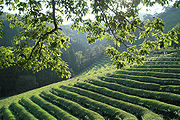
Camellia sinensis
Camellia sinensis is the species of plant whose leaves and leaf buds are used to produce Chinese tea. It is of the genus Camellia , a genus of flowering plants in the family Theaceae. White tea, green tea, oolong, pu-erh tea and black tea are all harvested from this species, but are processed...
that have undergone minimal oxidation during processing
Tea processing
Tea processing is the method in which the leaves from the tea plant Camellia sinensis are transformed into the dried leaves for brewing tea. The categories of tea are distinguished by the processing they undergo. In its most general form, tea processing involves different manners and degree of...
. Green tea originates from China
China
Chinese civilization may refer to:* China for more general discussion of the country.* Chinese culture* Greater China, the transnational community of ethnic Chinese.* History of China* Sinosphere, the area historically affected by Chinese culture...
and has become associated with many cultures throughout Asia
Asia
Asia is the world's largest and most populous continent, located primarily in the eastern and northern hemispheres. It covers 8.7% of the Earth's total surface area and with approximately 3.879 billion people, it hosts 60% of the world's current human population...
. It has recently become more widespread in the West
Western world
The Western world, also known as the West and the Occident , is a term referring to the countries of Western Europe , the countries of the Americas, as well all countries of Northern and Central Europe, Australia and New Zealand...
, where black tea
Black tea
Black tea is a variety of tea that is more oxidized than the oolong, green, and white varieties.All four varieties are made from leaves of the shrub Camellia sinensis. Black tea is generally stronger in flavor and contains more caffeine than the less oxidized teas. Two principal varieties of the...
is traditionally consumed. Many varieties of green tea have been created in countries where they are grown. These varieties can differ substantially due to variable growing conditions, horticulture, production processing, and harvesting time.
Over the last few decades green tea has been subjected to many scientific and medical studies to determine the extent of its long-purported health benefits, with some evidence suggesting that regular green tea drinkers may have a lower risk of developing heart disease
Heart disease
Heart disease, cardiac disease or cardiopathy is an umbrella term for a variety of diseases affecting the heart. , it is the leading cause of death in the United States, England, Canada and Wales, accounting for 25.4% of the total deaths in the United States.-Types:-Coronary heart disease:Coronary...
and certain types of cancer. Although green tea does not raise the metabolic rate enough to produce immediate weight loss, a green tea extract containing polyphenols and caffeine
Caffeine
Caffeine is a bitter, white crystalline xanthine alkaloid that acts as a stimulant drug. Caffeine is found in varying quantities in the seeds, leaves, and fruit of some plants, where it acts as a natural pesticide that paralyzes and kills certain insects feeding on the plants...
has been shown to induce thermogenesis
Thermogenesis
Thermogenesis is the process of heat production in organisms. It occurs mostly in warm-blooded animals, but a few species of thermogenic plants exist.-Types:...
and stimulate fat oxidation, boosting the metabolic rate 4% without increasing the heart rate.
According to a survey released by the United States Department of Agriculture in 2007, the mean content of flavonoids in a cup of green tea is higher than that in the same volume of other food and drink items that are traditionally considered of health contributing nature, including fresh fruits, vegetable juices or wine. Flavonoids are a group of phytochemicals in most plant products that are responsible for such health effects as anti-oxidative and anticarcinogenic functions. However, based on the same USDA survey, the content of flavanoids may vary dramatically amongst different tea products.
History
Tea consumption has its legendary origins in China of more than 4,000 years ago. Green tea has been used as both a beverage and a method of traditional medicine in most of Asia, including China, Japan, Taiwan, Vietnam, Korea and Thailand, to help everything from controlling bleeding and helping heal wounds to regulating body temperature, blood sugar and promoting digestion.A book written in the Tang dynasty in china is considered one of the most important in the history of green tea. The book was written by Lu Yu and is called the "Tea Classic" or "Cha Jing". It was written between 600 and 900 AD and spoke about exactly how and where one should enjoy a fine cup of green tea.
The Kissa Yojoki (Book of Tea), written by Zen
Zen
Zen is a school of Mahāyāna Buddhism founded by the Buddhist monk Bodhidharma. The word Zen is from the Japanese pronunciation of the Chinese word Chán , which in turn is derived from the Sanskrit word dhyāna, which can be approximately translated as "meditation" or "meditative state."Zen...
priest Eisai
Eisai
Myōan Eisai was a Japanese Buddhist priest, credited with bringing the Rinzai school of Zen Buddhism and green tea from China to Japan. He is often known simply as Eisai Zenji , literally "Zen master Eisai"....
in 1191, describes how drinking green tea can have a positive effect on the five vital organs, especially the heart
Heart
The heart is a myogenic muscular organ found in all animals with a circulatory system , that is responsible for pumping blood throughout the blood vessels by repeated, rhythmic contractions...
. The book discusses tea's medicinal qualities, which include easing the effects of alcohol
Alcohol
In chemistry, an alcohol is an organic compound in which the hydroxy functional group is bound to a carbon atom. In particular, this carbon center should be saturated, having single bonds to three other atoms....
, acting as a stimulant
Stimulant
Stimulants are psychoactive drugs which induce temporary improvements in either mental or physical function or both. Examples of these kinds of effects may include enhanced alertness, wakefulness, and locomotion, among others...
, curing blotchiness, quenching thirst, eliminating indigestion, curing beriberi disease
Beriberi
Beriberi is a nervous system ailment caused by a thiamine deficiency in the diet. Thiamine is involved in the breakdown of energy molecules such as glucose and is also found on the membranes of neurons...
, preventing fatigue
Fatigue (physical)
Fatigue is a state of awareness describing a range of afflictions, usually associated with physical and/or mental weakness, though varying from a general state of lethargy to a specific work-induced burning sensation within one's muscles...
, and improving urinary and brain
Brain
The brain is the center of the nervous system in all vertebrate and most invertebrate animals—only a few primitive invertebrates such as sponges, jellyfish, sea squirts and starfishes do not have one. It is located in the head, usually close to primary sensory apparatus such as vision, hearing,...
function. Part One also explains the shapes of tea plants, tea flowers, and tea leaves, and covers how to grow tea plants and process tea leaves. In Part Two, the book discusses the specific dosage and method required for individual physical ailments.
Growing, harvesting and processing
Green tea is processed and grown in a variety of ways, depending on the type of green tea desired. As a result of these methods, maximum amounts of polyphenols and antioxidants are retained, giving maximum green tea benefits. The growing conditions can be broken down into two basic types - those grown in the sun and those grown under the shade. The green tea plants are grown in rows that are pruned to produce shoots in a regular manner, and are generally harvested three times per year. The first flush takes place in late April to early May. The second harvest usually takes place from June through July, and the third picking takes place in late July to early August. Sometimes, there will also be a fourth harvest. It is the first flush in the spring which brings the best quality leaves, with higher prices to match.Processed green teas, known as "aracha" are stored under low humidity refrigeration in 30 or 60 kg paper bags at 0-5°C (32-41°F). This aracha has yet to be refined at this stage, with a final firing taking place before blending
Tea blending and additives
Tea blending describes the process of blending different teas together to produce a final product. This occurs chiefly with black tea that is blended to make most tea bags but can also occur with such teas as Pu-erh, where leaves are blended from different regions before being compressed. The aim...
, selection, and packaging takes place. The leaves in this state will be re-fired throughout the year as they are needed, giving the green teas a longer shelf life and better flavor. The first flush tea of May will readily store in this fashion until the next year's harvest. After this re-drying process, each crude tea will be sifted and graded according to size. Finally, each lot will be blended according to the blend order by the tasters and packed for sale.
Brewing and serving
SteepingSteeping
Steeping or weltering may mean:# Saturation in a liquid solvent to extract a soluble ingredient, where the solvent is the desired product. Tea is prepared for drinking by steeping the leaves in heated water to release the flavor and nutrients...
is the process of making a cup of tea; it is also referred to as brewing
Brewing
Brewing is the production of beer through steeping a starch source in water and then fermenting with yeast. Brewing has taken place since around the 6th millennium BCE, and archeological evidence suggests that this technique was used in ancient Egypt...
. In general, two grams of tea per 100ml of water, or about one teaspoon of green tea per five ounce cup, should be used. With very high-quality teas like gyokuro
Gyokuro
Gyokuro is a fine and expensive type of green tea from Japan. It differs from the standard green tea known as sencha , because it is grown under the shade rather than the full sun. Another Japanese green tea that is shaded during growth is kabusecha , which differs from gyokuro in the length of...
, more than this amount of leaf is used, and the leaf is steeped multiple times for short durations.
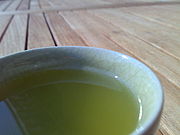
Green tea steeping time and temperature varies with different tea. The hottest steeping temperatures are 81°C to 87°C (180°F to 190°F) water and the longest steeping times two to three minutes. The coolest brewing temperatures are 61°C to 69°C (140°F to 160°F) and the shortest times about 30 seconds. In general, lower-quality green teas are steeped hotter and longer, while higher-quality teas are steeped cooler and shorter. Steeping green tea too hot or too long will result in a bitter, astringent brew, regardless of the initial quality. It is thought that excessively hot water results in tannin chemical release, which is especially problematic in green teas, as they have higher contents of these. High-quality green teas can be and usually are steeped multiple times; two or three steepings is typical. The steeping technique also plays a very important role in avoiding the tea developing an overcooked taste. The container in which the tea is steeped or teapot should also be warmed beforehand so that the tea does not immediately cool down. It is common practice for tea leaf to be left in the cup or pot and for hot water to be added as the tea is drunk until the flavor degrades.
Chinese green tea
HunanHunan
' is a province of South-Central China, located to the south of the middle reaches of the Yangtze River and south of Lake Dongting...
Province
- Junshan Yinzhen (Silver Needle tea)[君山银针], known as one of the ten most famous Chinese Teas, is one variety of Yellow Tea, like the Huo Mountain Yellow Buds (霍山黄芽) and the Mengding Yellow Buds (蒙顶黄芽). It is cultivated on Junshan Island, YueyangYueyangYueyang is a prefecture-level city at the northeastern corner of Hunan province, South Central China, on the southern shores of Dongting Lake.The Yueyang metropolitan area occupies 14,896 km². and the city proper occupies 304 km²...
City, Hunan Province (湖南省,岳阳,洞庭湖君山).
Zhejiang
Zhejiang
Zhejiang is an eastern coastal province of the People's Republic of China. The word Zhejiang was the old name of the Qiantang River, which passes through Hangzhou, the provincial capital...
Province is home to the most famous of all teas, Xi Hu Longjing (西湖龙井), as well as many other high-quality green teas.
- 龙井 Longjing
- The most well-known of famous Chinese teasChina Famous TeaChina's Famous Teas or The Ten Great Chinese Teas is a list of ten notable Chinese teas. Contrary to popular belief, there is no steadfast list...
from HangzhouHangzhouHangzhou , formerly transliterated as Hangchow, is the capital and largest city of Zhejiang Province in Eastern China. Governed as a sub-provincial city, and as of 2010, its entire administrative division or prefecture had a registered population of 8.7 million people...
(杭州), whose name in Chinese means dragon well. It is pan-fried and has a distinctive flat appearance. Falsification of Longjing is very common, and most of the tea on the market is in fact produced in SichuanSichuan' , known formerly in the West by its postal map spellings of Szechwan or Szechuan is a province in Southwest China with its capital in Chengdu...
Province and hence not authentic Longjing.- 景宁惠明茶 Hui Ming
- Named after a temple in ZhejiangZhejiangZhejiang is an eastern coastal province of the People's Republic of China. The word Zhejiang was the old name of the Qiantang River, which passes through Hangzhou, the provincial capital...
.- 开化龙顶 Long Ding
- A tea from Kaihua CountyKaihua CountyKaihua County is a county under the jurisdiction of Quzhou city in Zhejiang Province of the People's Republic of China. It is located in the westernmost portion of Zhejiang, and is the source of the Qiantang River. The district's total area is 2224 square kilometers, and its population is 340,000...
known as Dragon Mountain.- 华顶云雾 Hua Ding
- A tea from Tiantai CountyTiantai CountyTiantai County , located in the east of Zhejiang Province, People's Republic of China is noted for its scenic Mount Tiantai, which is also an important Tiantai Buddhism site. With a total area of and a population of 560,000, Tiantai is a middle-scale city that administers twelve towns, three...
and named after a peak in the Tiantai mountain range.- 天目青顶 Qing Ding
- A tea from Tian Mu, also known as Green Top.
- 平水珠茶 GunpowderGunpowder teaGunpowder tea is a form of green Chinese tea produced in Zhejiang Province of China in which each leaf has been rolled into a small round pellet. It is believed to take its English name from the fact that the tea resembles blackpowder grains...
- 平水珠茶 Gunpowder
- A popular tea also known as zhuchá. It originated in ZhejiangZhejiangZhejiang is an eastern coastal province of the People's Republic of China. The word Zhejiang was the old name of the Qiantang River, which passes through Hangzhou, the provincial capital...
but is now grown elsewhere in ChinaChinaChinese civilization may refer to:* China for more general discussion of the country.* Chinese culture* Greater China, the transnational community of ethnic Chinese.* History of China* Sinosphere, the area historically affected by Chinese culture...
. - This tea is also the quintessential ingredient in brewing Moroccan green tea with fresh mint.
Jiangsu
Jiangsu
' is a province of the People's Republic of China, located along the east coast of the country. The name comes from jiang, short for the city of Jiangning , and su, for the city of Suzhou. The abbreviation for this province is "苏" , the second character of its name...
Province
.jpg)
- 洞庭碧螺春 Bi Luo ChunBi Luo Chun teaBi Luo Chun is a famous green tea originally grown in the Dong Ting mountain of Tai Hu, Jiangsu Province, China. Also known as Pi Lo Chun, it is renowned for its delicate appearance, fruity taste, floral aroma, showy white hairs and early cropping....
- A Chinese famous teaChina Famous TeaChina's Famous Teas or The Ten Great Chinese Teas is a list of ten notable Chinese teas. Contrary to popular belief, there is no steadfast list...
also known as Green Snail Spring, from Dong Ting. As with LongjingLongjingLongjing may refer to:*Longjing tea , a variety of green tea from Hangzhou, Zhejiang*Longjing, Hangzhou , production site of Longjing tea, located in Hangzhou*Longjing, Jilin , city in Yanbian Prefecture, Jilin...
, falsification is common and most of the tea marketed under this name may, in fact, be grown in SichuanSichuan' , known formerly in the West by its postal map spellings of Szechwan or Szechuan is a province in Southwest China with its capital in Chengdu...
.- 南京雨花茶 Rain Flower
- A tea from NanjingNanjing' is the capital of Jiangsu province in China and has a prominent place in Chinese history and culture, having been the capital of China on several occasions...
.- 金坛雀舌 Que She (Tongue of golden altar sparrow)
- originate in Jin Tan city of Jiangsu Province.
- 太湖白云 White Cloud
Fujian
Fujian
' , formerly romanised as Fukien or Huguing or Foukien, is a province on the southeast coast of mainland China. Fujian is bordered by Zhejiang to the north, Jiangxi to the west, and Guangdong to the south. Taiwan lies to the east, across the Taiwan Strait...
Province
- Fujian Province is known for mountain-grown organic green tea as well as white teaWhite teaWhite tea is a lightly oxidized tea grown and harvested almost exclusively in China, primarily in the Fujian province.White tea comes from the delicate buds and younger leaves of the Chinese Camellia sinensis plant. These buds and leaves are allowed to wither in natural sunlight before they are...
and oolong tea. The coastal mountains provide a perfect growing environment for tea growing. Green tea is picked in spring and summer seasons.
- Famous tea varieties from this south-eastern region of mainland ChinaMainland ChinaMainland China, the Chinese mainland or simply the mainland, is a geopolitical term that refers to the area under the jurisdiction of the People's Republic of China . According to the Taipei-based Mainland Affairs Council, the term excludes the PRC Special Administrative Regions of Hong Kong and...
include Mao Feng ("fur tip"), Cui Jian ("jade sword") and Mo Li Hua Cha ("dragon pearl") green teas as well as Bai Mu Dan (white peony) white tea and Tie Guanyin (铁观音) ("iron goddess") oolong tea. Green tea is heat-cured using ovens or dings; white tea is fast-dried; oolong tea is oxidized through carefully controlled fermentationFermentationFermentation may refer to:* Fermentation , the use of fermentation in food preparation* Fermentation , a metabolic process whereby electrons released from nutrients are ultimately transferred to molecules obtained from the breakdown of those same nutrients* Fermentation , the process of...
.
Hubei
Hubei
' Hupeh) is a province in Central China. The name of the province means "north of the lake", referring to its position north of Lake Dongting...
Province
- Yu Lu
- A steamed tea known as Gyokuro (Jade Dew) made in the JapaneseJapanese cuisineJapanese cuisine has developed over the centuries as a result of many political and social changes throughout Japan. The cuisine eventually changed with the advent of the Medieval age which ushered in a shedding of elitism with the age of shogun rule...
style.
Henan
Henan
Henan , is a province of the People's Republic of China, located in the central part of the country. Its one-character abbreviation is "豫" , named after Yuzhou , a Han Dynasty state that included parts of Henan...
Province
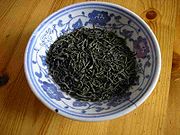
- 信阳毛尖 Xin Yang Mao JianMao Jian teaXin Yang Mao Jian tea is a green tea produced in Xinyang, Henan. It is designated as a China Famous Tea.Xin Yang Mao Jian is one type of green tea that originally was produced in northern China. The name can be divided into two parts that are associated with two aspects: "Xin Yang", the first...
- A Chinese famous teaChina Famous TeaChina's Famous Teas or The Ten Great Chinese Teas is a list of ten notable Chinese teas. Contrary to popular belief, there is no steadfast list...
also known as Green Tip, or Tippy Green.
Jiangxi
Jiangxi
' is a southern province in the People's Republic of China. Spanning from the banks of the Yangtze River in the north into hillier areas in the south, it shares a border with Anhui to the north, Zhejiang to the northeast, Fujian to the east, Guangdong to the south, Hunan to the west, and Hubei to...
Province
- 珍眉 Chun MeeChun Mee teaChun Mee is a popular green tea. It has a dusty appearance and is generally more acidic and less sweet than other green teas. It was originally produced only in the Jiangxi province, but is now grown elsewhere.It is often referred as "9371"....
- Name means "precious eyebrows"; from JiangxiJiangxi' is a southern province in the People's Republic of China. Spanning from the banks of the Yangtze River in the north into hillier areas in the south, it shares a border with Anhui to the north, Zhejiang to the northeast, Fujian to the east, Guangdong to the south, Hunan to the west, and Hubei to...
, it is now grown elsewhere.- Gou Gu Nao
- A well-known tea within China and recipient of numerous national awards.
- Yun Wu
- A tea also known as Cloud and Mist.
Anhui Province
Anhui
Anhui
Anhui is a province in the People's Republic of China. Located in eastern China across the basins of the Yangtze River and the Huai River, it borders Jiangsu to the east, Zhejiang to the southeast, Jiangxi to the south, Hubei to the southwest, Henan to the northwest, and Shandong for a tiny...
Province is home to several varieties of tea, including three Chinese famous teas
China Famous Tea
China's Famous Teas or The Ten Great Chinese Teas is a list of ten notable Chinese teas. Contrary to popular belief, there is no steadfast list...
. These are:
- 大方 Da FangDa Fang teaDa Fang tea is grown at the south of Huangshan in Xi County of Anhui Province, in China. It has similarities to Longjing and a nutty aroma....
- A tea from HuangshanHuangshanHuangshan may refer to:*Huangshan , a scenic mountain range and UNESCO World Heritage Site*Huangshan City, a prefecture-level city centered on the Huangshan Mountains...
also known as Big Square suneet.- 黄山毛峰 Huangshan MaofengHuang Shan Mao Feng teaHuangshan Mao Feng tea is a green tea produced in the Anhui province of China. The Tea is one of the most famous teas in China and can almost always be found on the China Famous Tea list. The tea is grown near Huangshan Mountain, which is home to many famous varieties of Green Tea...
- 黄山毛峰 Huangshan Maofeng
- A Chinese famous teaChina Famous TeaChina's Famous Teas or The Ten Great Chinese Teas is a list of ten notable Chinese teas. Contrary to popular belief, there is no steadfast list...
from Huangshan.- 六安瓜片 Liuan Leaf
- A Chinese famous teaChina Famous TeaChina's Famous Teas or The Ten Great Chinese Teas is a list of ten notable Chinese teas. Contrary to popular belief, there is no steadfast list...
also known as Melon Seed.- 猴魁 Hou KuiHou Kui teaTaiping Hou Kui tea is grown at the foot of Huangshan in Taiping County, Anhui. The tea has been produced since the beginning of the 20th century and is produced around the small village of Hou Keng...
- 猴魁 Hou Kui
- A Chinese famous teaChina Famous TeaChina's Famous Teas or The Ten Great Chinese Teas is a list of ten notable Chinese teas. Contrary to popular belief, there is no steadfast list...
also known as Monkey tea.- 屯绿 Tun Lu
- A tea from Tunxi DistrictTunxi DistrictTunxi District forms the central district of Huangshan City, Anhui Province, People's Republic of China. It has a population of 150,000 and an area of .Tunxi District has jurisdiction over four subdistricts and five towns....
.- 火青 Huo Qing
- A tea from Jing CountyJing County, AnhuiJing County is a county in Anhui Province, People's Republic of China, under the jurisdiction of Xuancheng City. It has a population of 360,000 and an area of . The government of Jing County is located in Chengguang Town....
, also known as Fire Green.- 雾里青 Wuliqing
- Wuliqing was known since the Song dynasty. Since 2002 Wuliqing is produced again according to the original processing methods by a company called Tianfang (天方). Zhan Luojiu a tea expert and professor at the Anhui Agricultural University who relived its production procedure.
- HysonHysonHyson or Lucky Dragon Tea is a Chinese green tea that comes from the Anhui Provence of China. It is made from young leaves that are thinly rolled to have a long, twisted appearance that unfurls when brewed. The name Hyson is likely a Chinese name meaning "flourishing spring". However, some believe...
- Hyson
- A medium-quality tea from many provincesProvince (China)A province, in the context of Chinese government, is a translation of sheng formally provincial level divisions, which is an administrative division. Provinces, municipalities, autonomous regions, and the special administrative regions, make up the four types of province of administrative division...
, an early-harvested tea.
Sichuan
Sichuan
' , known formerly in the West by its postal map spellings of Szechwan or Szechuan is a province in Southwest China with its capital in Chengdu...
Province
- 竹叶青茶 Zhu Ye Qing
- Also known as Meng Ding Cui Zhu or Green Bamboo.
- 蒙顶甘露 Meng Ding Gan LuMeng Ding Gan Lu teaGanlu is the most famous tea from Mount Meng Shan, Sichuan Province in the southwest part of China.It is believed that the tea was first discovered by Buddhist monk, Wu Li Zhen, as early as 202 BC–24 AD....
- 蒙顶甘露 Meng Ding Gan Lu
- A yellowish-green tea with sweet aftertaste.
Japanese green tea
Japan
Japan is an island nation in East Asia. Located in the Pacific Ocean, it lies to the east of the Sea of Japan, China, North Korea, South Korea and Russia, stretching from the Sea of Okhotsk in the north to the East China Sea and Taiwan in the south...
and therefore is more commonly known simply as . It is even referred to as though it was first used in China during the Song Dynasty
Song Dynasty
The Song Dynasty was a ruling dynasty in China between 960 and 1279; it succeeded the Five Dynasties and Ten Kingdoms Period, and was followed by the Yuan Dynasty. It was the first government in world history to issue banknotes or paper money, and the first Chinese government to establish a...
, and brought to Japan by Myōan Eisai, a Japanese Buddhist priest who also introduced the Rinzai school of Zen
Zen
Zen is a school of Mahāyāna Buddhism founded by the Buddhist monk Bodhidharma. The word Zen is from the Japanese pronunciation of the Chinese word Chán , which in turn is derived from the Sanskrit word dhyāna, which can be approximately translated as "meditation" or "meditative state."Zen...
Buddhism.
Types of tea are commonly graded depending on the quality and the parts of the plant used as well as how they are processed. There are large variations in both price and quality within these broad categories, and there are many specialty green teas that fall outside this spectrum. The best Japanese green tea is said to be that from the region of Fukuoka Prefecture
Fukuoka Prefecture
is a prefecture of Japan located on Kyūshū Island. The capital is the city of Fukuoka.- History :Fukuoka Prefecture includes the former provinces of Chikugo, Chikuzen, and Buzen....
and the Uji region of Kyoto
Kyoto
is a city in the central part of the island of Honshū, Japan. It has a population close to 1.5 million. Formerly the imperial capital of Japan, it is now the capital of Kyoto Prefecture, as well as a major part of the Osaka-Kobe-Kyoto metropolitan area.-History:...
. Shizuoka Prefecture
Shizuoka Prefecture
is a prefecture of Japan located in the Chūbu region on Honshu island. The capital is the city of Shizuoka.- History :Shizuoka prefecture was formed from the former Tōtōmi, Suruga and Izu provinces.The area was the home of the first Tokugawa Shogun...
produces 40% of raw tea leaf.
- Gyokuro is a fine and expensive type that differs from Sencha (煎茶) in that it is grown under the shade rather than the full sun for approximately 20 days. The name "Gyokuro" translates as "jade dew" and refers to the pale green color of the infusion. The shading causes the amino acids (TheanineTheanineTheanine , also gamma-glutamylethylamide or 5-N-ethyl-glutamine, is an amino acid and a glutamic acid analog commonly found in tea , primarily in green tea, and also in the basidiomycete mushroom Boletus badius and in guayusa. More specifically, this compound is called L-theanine, being the...
) and caffeine in the tea leaves to increase, while catechins (the source of bitterness in tea, along with caffeine) decreases, giving rise to a sweet taste. The tea also has a distinct aroma.
- Kabusecha is made from the leaves grown in the shade prior to harvest, although not for as long as Gyokuro. It has a more delicate flavor than Sencha. It is sometimes marketed as Gyokuro.
- The first and second flush of green tea made from leaves that are exposed directly to sunlight. This is the most common green tea in Japan. The name describes the method for preparing the beverage.
-
- Sencha, which, in the processing of the leaves, has been steamed two times longer than usual Sencha, giving it a deeper color and producing a fuller flavor in the beverage.
- Tamaryokucha has a tangy, berry-like taste, with a long almondy aftertaste and a deep aroma with tones of citrus, grass, and berries. It is also called Guricha.
- Lower grade of SenchaSenchaSencha is a Japanese green tea, specifically one made without grinding the tea leaves. The word "sencha" means "decocted tea," referring to the method that the tea beverage is made from the dried tea leaves...
harvested as a third- or fourth-flush tea between summer and autumn. Aki-Bancha (autumn Bancha) is not made from entire leaves, but from the trimmed unnecessary twigs of the tea plant.
- Kamairicha is a pan-fried green tea that does not undergo the usual steam treatments of Japanese tea and does not have the characteristic bitter taste of most Japanese tea.
- By-product of Sencha or Gyokuro
-
- A tea made from stems, stalks, and twigs. Kukicha has a mildly nutty, and slightly creamy sweet flavor.
-
- Mecha is green tea derived from a collection of leaf buds and tips of the early crops. Mecha is harvested in spring and made as rolled leaf teas that are graded somewhere between Gyokuro and Sencha in quality.
-
- Konacha is the dust and smallest parts after processing Gyokuro or Sencha. It is cheaper than Sencha and usually served at SushiSushiis a Japanese food consisting of cooked vinegared rice combined with other ingredients . Neta and forms of sushi presentation vary, but the ingredient which all sushi have in common is shari...
restaurants. It is also marketed as or Gyokurokocha.
- Konacha is the dust and smallest parts after processing Gyokuro or Sencha. It is cheaper than Sencha and usually served at Sushi
- Other
-
- A fine ground tea made from Tencha. It has a very similar cultivation process as Gyokuro. It is used primarily in the tea ceremonyTea ceremonyA tea ceremony is a ritualised form of making tea. The term generally refers to either chayi Chinese tea ceremony, chado Japanese tea ceremony, tarye Korean tea ceremony. The Japanese tea ceremony is more well known, and was influenced by the Chinese tea ceremony during ancient and medieval times....
. Matcha is also a popular flavor of ice creamGreen tea ice creamor Matcha ice is a Japanese ice cream flavour. This flavour is extremely popular in Japan and other parts of East Asia, and almost all ice cream manufacturers produce a version of it, including foreign vendors such as Häagen-Dazs and Baskin Robbins. The name matcha comes from a specific type of...
and other sweets in Japan.
- A fine ground tea made from Tencha. It has a very similar cultivation process as Gyokuro. It is used primarily in the tea ceremony
-
- Bancha (sometimes Sencha) and roasted genmai (brown riceBrown riceBrown rice is unmilled or partly milled rice, a kind of whole, natural grain. It has a mild nutty flavor, is chewier and more nutritious than white rice, but goes rancid more quickly because the germ—which is removed to make white rice—contains fats that can spoil...
) blend. It is often mixed with a small amount of Matcha to make the color better.
- Bancha (sometimes Sencha) and roasted genmai (brown rice
-
- A green tea roasted over charcoalCharcoalCharcoal is the dark grey residue consisting of carbon, and any remaining ash, obtained by removing water and other volatile constituents from animal and vegetation substances. Charcoal is usually produced by slow pyrolysis, the heating of wood or other substances in the absence of oxygen...
(usually Bancha).
- A green tea roasted over charcoal
-
- Half-finished products used for Matcha production. The name indicates its intended eventual milling into matcha. Because, like gyokuroGyokuroGyokuro is a fine and expensive type of green tea from Japan. It differs from the standard green tea known as sencha , because it is grown under the shade rather than the full sun. Another Japanese green tea that is shaded during growth is kabusecha , which differs from gyokuro in the length of...
, it is cultivated in shade, it has a sweet aroma. In its processing, it is not rolled during drying, and tencha therefore remains spread out like the original fresh leaf.
- Half-finished products used for Matcha production. The name indicates its intended eventual milling into matcha. Because, like gyokuro
-
- Half-finished products used for Sencha and Gyokuro production. It contains all parts of the tea plant.
-
- First flush tea. The name is used for either Sencha or Gyokuro.
-
- Milled green tea, used just like instant coffee. Another name for this recent style of tea is "tokeru ocha," or "tea that melts.
Research and health effects
Green tea contains salubrious polyphenols, in particular catechins, the most abundant of which is epigallocatechin gallateEpigallocatechin gallate
Epigallocatechin gallate , also known as epigallocatechin 3-gallate, is the ester of epigallocatechin and gallic acid, and is a type of catechin....
. Green tea also contains carotenoids, tocopherol
Tocopherol
Tocopherols are a class of chemical compounds of which many have vitamin E activity. It is a series of organic compounds consisting of various methylated phenols...
s, ascorbic acid (vitamin C), minerals such as chromium, manganese, selenium or zinc, and certain phytochemical
Phytochemical
Phytochemicals are biologically active chemical compounds that occur naturally in plants . Phytochemicals are the molecules responsible for the color and organoleptic properties . For example, the deep purple color of blueberries and the smell of garlic...
compounds. It is a more potent antioxidant than black tea
Black tea
Black tea is a variety of tea that is more oxidized than the oolong, green, and white varieties.All four varieties are made from leaves of the shrub Camellia sinensis. Black tea is generally stronger in flavor and contains more caffeine than the less oxidized teas. Two principal varieties of the...
, although black tea has substances that green tea does not such as theaflavin
Theaflavin
Theaflavin and its derivatives, known collectively as theaflavins, are antioxidant polyphenols that are formed from flavan-3-ols such as in tea leaves during the enzymatic oxidation of tea leaves, such as in black tea. Theaflavins are types of thearubigins, and are therefore reddish in color...
.
In vitro
In vitro
In vitro refers to studies in experimental biology that are conducted using components of an organism that have been isolated from their usual biological context in order to permit a more detailed or more convenient analysis than can be done with whole organisms. Colloquially, these experiments...
, animal, preliminary observational, and clinical human studies suggest that green tea can reduce the risk of cardiovascular disease, dental cavities, kidney stones, and cancer, while improving bone density and cognitive function. However, the human studies are inconsistent.
Green tea consumption is associated with reduced heart disease in epidemiological studies. Animal studies have found that it can reduce cholesterol. However, several small, brief human trials found that tea consumption did not reduce cholesterol in humans. In 2003 a randomized clinical trial found that a green tea extract with added theaflavin from black tea reduced cholesterol.
A study performed at Birmingham (UK) University, showed that average fat oxidation rates were 17% higher after ingestion of green tea extract than after ingestion of a placebo. Likewise, the contribution of fat oxidation to total energy expenditure was also significantly higher by a similar percentage following ingestion of green tea extract. This implies that ingestion of green tea extract can not only increase fat oxidation during moderately intensive exercise but also improve insulin sensitivity and glucose tolerance in healthy young men.
A study performed at the Queen Margaret University, Edinburgh looked at the effects of short-term green tea consumption on a group of students between the ages of 19–37. Participants were asked not to alter their diet and to drink 4 cups of green tea per day for 14 days. The results showed that short-term consumption of commercial green tea reduces systolic and diastolic Blood Pressure
Blood pressure
Blood pressure is the pressure exerted by circulating blood upon the walls of blood vessels, and is one of the principal vital signs. When used without further specification, "blood pressure" usually refers to the arterial pressure of the systemic circulation. During each heartbeat, BP varies...
, fasting total cholesterol, body fat and body weight. These results suggest a role for green tea in decreasing established potential cardiovascular risk factors. This study also suggests that reductions may be more pronounced in the overweight population where a significant proportion are obese and have a high risk of cardiovascular disease.
In a study performed at the Israel Institute of Technology, it was shown that the main antioxidant polyphenol of green tea extract, EGCG
Epigallocatechin gallate
Epigallocatechin gallate , also known as epigallocatechin 3-gallate, is the ester of epigallocatechin and gallic acid, and is a type of catechin....
, when fed to mice induced with Parkinson's and Alzheimer's disease, helped to protect brain cells from dying, as well as 'rescuing' already damaged neurons in the brain, a phenomenon called neurorescue or neurorestoration. The findings of the study, led by Dr. Silvia Mandell, were presented at the Fourth International Scientific Symposium on Tea and Human Health in Washington D.C., in 2007. Resulting tests underway in China, under the auspices of the Michael J. Fox Foundation
The Michael J. Fox Foundation
The Michael J. Fox Foundation for Parkinson's Research is dedicated to finding a cure for Parkinson's disease through an aggressively funded research agenda and to ensuring the development of improved therapies for those living with Parkinson's today. Established by actor Michael J...
, are being held on early Parkinson's patients.
A study performed at the National institute of Chemistry in Ljubljana
Ljubljana
Ljubljana is the capital of Slovenia and its largest city. It is the centre of the City Municipality of Ljubljana. It is located in the centre of the country in the Ljubljana Basin, and is a mid-sized city of some 270,000 inhabitants...
, Slovenia
Slovenia
Slovenia , officially the Republic of Slovenia , is a country in Central and Southeastern Europe touching the Alps and bordering the Mediterranean. Slovenia borders Italy to the west, Croatia to the south and east, Hungary to the northeast, and Austria to the north, and also has a small portion of...
, demonstrated that EGCG
Epigallocatechin gallate
Epigallocatechin gallate , also known as epigallocatechin 3-gallate, is the ester of epigallocatechin and gallic acid, and is a type of catechin....
from green tea inhibits an essential bacterial enzyme gyrase by binding to the ATP
Adenosine triphosphate
Adenosine-5'-triphosphate is a multifunctional nucleoside triphosphate used in cells as a coenzyme. It is often called the "molecular unit of currency" of intracellular energy transfer. ATP transports chemical energy within cells for metabolism...
binding site of the B subunit. This activity probably contributes to the antimicrobial activity of green tea extract and may be responsible for the effectiveness of green tea in oral hygiene.
In a recent case-control study of the eating habits of 2,018 women, consumption of mushrooms and green tea was linked to a 90% lower occurrence of breast cancer
Breast cancer
Breast cancer is cancer originating from breast tissue, most commonly from the inner lining of milk ducts or the lobules that supply the ducts with milk. Cancers originating from ducts are known as ductal carcinomas; those originating from lobules are known as lobular carcinomas...
.
A recent study on rats at the University of Hong Kong, published in the February issue of Journal of Agricultural and Food Chemistry
Journal of Agricultural and Food Chemistry
The Journal of Agricultural and Food Chemistry is a peer-reviewed scientific journal, published since 1950 by the American Chemical Society. It is currently indexed in: Chemical Abstracts Service , Scopus, ProQuest, PubMed, CABI, Ovid, Web of Science, and SwetsWise.The current Editor-in-Chief is...
, found that the catechins in green tea were absorbed by the lens
Lens (anatomy)
The crystalline lens is a transparent, biconvex structure in the eye that, along with the cornea, helps to refract light to be focused on the retina. The lens, by changing shape, functions to change the focal distance of the eye so that it can focus on objects at various distances, thus allowing a...
, retina
Retina
The vertebrate retina is a light-sensitive tissue lining the inner surface of the eye. The optics of the eye create an image of the visual world on the retina, which serves much the same function as the film in a camera. Light striking the retina initiates a cascade of chemical and electrical...
and other parts of the eye
Human eye
The human eye is an organ which reacts to light for several purposes. As a conscious sense organ, the eye allows vision. Rod and cone cells in the retina allow conscious light perception and vision including color differentiation and the perception of depth...
. The absorbed catechins reduced oxidative stress in the eye for up to 20 hours, suggesting that green tea may be effective in preventing glaucoma
Glaucoma
Glaucoma is an eye disorder in which the optic nerve suffers damage, permanently damaging vision in the affected eye and progressing to complete blindness if untreated. It is often, but not always, associated with increased pressure of the fluid in the eye...
and other diseases of the eye.
Scientific studies
2011 research by the Linus Pauling Institute at Oregon State University found that EGCG in green tea has a powerful ability to increase regulatory T cells in the body and boost the immune system and suppress autoimmune disorders.According to research reported at the Sixth International Conference on Frontiers in Cancer Prevention, sponsored by the American Association for Cancer Research, a standardized green tea polyphenol preparation (Polyphenon
Polyphenon
Polyphenon is the trademark applied to a series of high grade green tea polyphenol extracts manufactured by the Mitsui Norin Co., Ltd. of Japan. The extracts are in part the result of a water based extraction method which begins with green tea leaves, and then involves successive steps which...
E) limits the growth of colorectal tumors in rats treated with a substance that causes the cancer. "Our findings show that rats fed a diet containing Polyphenon E are less than half as likely to develop colon cancer," Dr. Hang Xiao, from the Ernest Mario School of Pharmacy at Rutgers University, Piscataway, New Jersey, noted in a statement.
A study published in the September 13, 2006 issue of the Journal of the American Medical Association
Journal of the American Medical Association
The Journal of the American Medical Association is a weekly, peer-reviewed, medical journal, published by the American Medical Association. Beginning in July 2011, the editor in chief will be Howard C. Bauchner, vice chairman of pediatrics at Boston University’s School of Medicine, replacing ...
concluded "Green tea consumption is associated with reduced mortality due to all causes and due to cardiovascular disease but not with reduced mortality due to cancer." The study, conducted by the Tohoku University
Tohoku University
, abbreviated to , located in the city of Sendai, Miyagi Prefecture in the Tōhoku Region, Japan, is a Japanese national university. It is the third oldest Imperial University in Japan and is a member of the National Seven Universities...
School of Public Policy in Japan, followed 40,530 Japanese adults, ages 40–79, with no history of stroke
Stroke
A stroke, previously known medically as a cerebrovascular accident , is the rapidly developing loss of brain function due to disturbance in the blood supply to the brain. This can be due to ischemia caused by blockage , or a hemorrhage...
, coronary heart disease, or cancer at baseline beginning in 1994. The study followed all participants for up to 11 years for death from all causes and for up to 7 years for death from a specific cause. Participants who consumed 5 or more cups of tea per day had a 16 percent lower risk of all-cause mortality and a 26 percent lower risk of cardiovascular disease ("CVD") than participants who consumed less than one cup of tea per day. The study also states, "If green tea does protect humans against CVD or cancer, it is expected that consumption of this beverage would substantially contribute to the prolonging of life expectancy, given that CVD and cancer are the two leading causes of death worldwide."
A study in the February 2006 edition of the American Journal of Clinical Nutrition concluded "A higher consumption of green tea is associated with a lower prevalence of cognitive impairment in humans."
In May 2006, researchers at Yale University School of Medicine
Yale School of Medicine
The Yale School of Medicine at Yale University is a private medical school located in New Haven, Connecticut, U.S. It was founded in 1810 as The Medical Institution of Yale College, and formally opened its doors in 1813....
weighed in on the issue with a review article that looked at more than 100 studies on the health benefits of green tea. They pointed to what they called an "Asian paradox," which refers to lower rates of heart disease and cancer in Asia despite high rates of cigarette
Cigarette
A cigarette is a small roll of finely cut tobacco leaves wrapped in a cylinder of thin paper for smoking. The cigarette is ignited at one end and allowed to smoulder; its smoke is inhaled from the other end, which is held in or to the mouth and in some cases a cigarette holder may be used as well...
smoking. They theorized that the 1.2 liters of green tea that is consumed by many Asians each day provides high levels of polyphenols and other antioxidant
Antioxidant
An antioxidant is a molecule capable of inhibiting the oxidation of other molecules. Oxidation is a chemical reaction that transfers electrons or hydrogen from a substance to an oxidizing agent. Oxidation reactions can produce free radicals. In turn, these radicals can start chain reactions. When...
s. These compounds may work in several ways to improve cardiovascular health, including preventing blood platelets from sticking together (this anticoagulant
Anticoagulant
An anticoagulant is a substance that prevents coagulation of blood. A group of pharmaceuticals called anticoagulants can be used in vivo as a medication for thrombotic disorders. Some anticoagulants are used in medical equipment, such as test tubes, blood transfusion bags, and renal dialysis...
effect is the reason doctors warn surgical patients to avoid green tea prior to procedures that rely on a patient's clotting ability) and improving cholesterol levels, said the researchers, whose study appeared in the May issue of the Journal of the American College of Surgeons. To be specific, green tea may prevent the oxidation of LDL cholesterol (the "bad" type), which, in turn, can reduce the buildup of plaque in arteries, the researchers wrote.
A study published in the August 22, 2006 edition of Biological Psychology looked at the modification of the stress response via L-Theanine, a chemical found in green tea. It "suggested that the oral intake of L-Theanine could cause anti-stress effects via the inhibition of cortical neuron excitation."
In a double-blind
Double-blind
A blind or blinded experiment is a scientific experiment where some of the people involved are prevented from knowing certain information that might lead to conscious or subconscious bias on their part, invalidating the results....
, randomized, placebo-controlled trial conducted by Division of Cardiovascular Medicine, Vanderbilt University Medical Center
Vanderbilt University Medical Center
The Vanderbilt University Medical Center is a collection of several hospitals and clinics, as well as the schools of medicine and nursing associated with Vanderbilt University in Nashville, Tennessee.It comprises the following units:...
, Nashville, Tennessee; 240 adults were given either theaflavin-enriched green tea extract in form of 375 mg capsule daily or a placebo. After 12 weeks, patients in the tea extract group had significantly less low-density lipoprotein cholesterol (LDL-C) and total cholesterol (16.4% and 11.3% lower than baseline, p<0.01) than the placebo group. The author concluded that theaflavin-enriched green tea extract can be used together with other dietary approaches to reduce LDL-C.
A study published in the January, 2005 edition of the American Journal of Clinical Nutrition concluded "Daily consumption of tea containing 690 mg catechins for 12 wk reduced body fat, which suggests that the ingestion of catechins might be useful in the prevention and improvement of lifestyle-related diseases, mainly obesity."
According to a Case Western Reserve University
Case Western Reserve University
Case Western Reserve University is a private research university located in Cleveland, Ohio, USA...
School of Medicine study published in the April 13, 2005 issue of the Proceedings of the National Academy of Sciences
Proceedings of the National Academy of Sciences
The Proceedings of the National Academy of Sciences of the United States of America, usually referred to as PNAS, is the official journal of the United States National Academy of Sciences...
, antioxidants in green tea may prevent and reduce the severity of rheumatoid arthritis. The study examined the effects of green tea polyphenols on collagen-induced arthritis in mice, which is similar to rheumatoid arthritis in humans. In each of three different study groups, the mice given the green tea polyphenols were significantly less likely to develop arthritis. Of the 18 mice that received the green tea, only eight (44 percent) developed arthritis. Among the 18 mice that did not receive the green tea, all but one (94 percent) developed arthritis. In addition, researchers noted that the eight arthritic mice that received the green tea polyphenols developed less severe forms of arthritis.
A German study found that an extract of green tea and hot water (filtered), applied externally to the skin for 10 minutes, three times a day could help people with skin damaged from radiation therapy (after 16–22 days).
A study published in the December 1999 American Journal of Clinical Nutrition found that "Green tea has thermogenic properties and promotes fat oxidation beyond that explained by its caffeine content per se. The green tea extract may play a role in the control of body composition via sympathetic activation of thermogenesis, fat oxidation, or both."
In lab tests, EGCG
Epigallocatechin gallate
Epigallocatechin gallate , also known as epigallocatechin 3-gallate, is the ester of epigallocatechin and gallic acid, and is a type of catechin....
, found in green tea, was found to prevent HIV from attacking T-Cells. However, it is not yet known if this has any effect on humans.
A study in the August, 2003 issue of a new potential application of Cellular and Molecular Life Sciences found that "a new potential application of (–)-epigallocatechin-3-gallate [a component of green tea] in prevention or treatment of inflammatory processes is suggested"
However, pharmacological and toxicological evidence does indicate that green tea polyphenols can in fact cause oxidative stress and liver toxicity in vivo at certain concentrations. This would imply that consumers should exercise caution when consuming herbal products produced from concentrated green tea extract. Other evidence presented in the review cautions against the drinking of green tea by pregnant women.
A more frequent consumption of green tea was associated with a lower prevalence of depressive symptoms in a Japanese study. Researchers conducted a cross-sectional study in 1,058 community-dwelling elderly Japanese individuals 70 years of age. The prevalence of mild and severe depressive symptoms was 34.1 percent and 20.2 percent, respectively. After adjustment for confounding factors, the odds ratios for mild and severe depressive symptoms when higher green tea consumption was compared with green tea consumption of 1 cup/d were: 2 to 3 cups green tea/d and 4 cups green tea/d. Similar relations were also observed in the case of severe depressive symptoms.
A 2004 study found that components of green tea (catechins) were effective against the parasite Trypanosoma cruzi
Trypanosoma cruzi
Trypanosoma cruzi is a species of parasitic euglenoid trypanosomes. This species causes the trypanosomiasis diseases in humans and animals in America...
, which causes Chagas' disease, a major disease in South and Central America.
Unproven claims
Green tea has been credited with providing a wide variety of health benefits. However, many of these claims have not been validated by scientific evidence.- The prevention and treatment of cancer. See also flavonoid and cancer.
- Treating multiple sclerosisMultiple sclerosisMultiple sclerosis is an inflammatory disease in which the fatty myelin sheaths around the axons of the brain and spinal cord are damaged, leading to demyelination and scarring as well as a broad spectrum of signs and symptoms...
. - Some green tea lovers restrict their intake as it contains caffeineCaffeineCaffeine is a bitter, white crystalline xanthine alkaloid that acts as a stimulant drug. Caffeine is found in varying quantities in the seeds, leaves, and fruit of some plants, where it acts as a natural pesticide that paralyzes and kills certain insects feeding on the plants...
equivalent to a third the amount found in coffeeCoffeeCoffee is a brewed beverage with a dark,init brooo acidic flavor prepared from the roasted seeds of the coffee plant, colloquially called coffee beans. The beans are found in coffee cherries, which grow on trees cultivated in over 70 countries, primarily in equatorial Latin America, Southeast Asia,...
. Too much caffeine can cause nauseaNauseaNausea , is a sensation of unease and discomfort in the upper stomach with an involuntary urge to vomit. It often, but not always, precedes vomiting...
, insomniaInsomniaInsomnia is most often defined by an individual's report of sleeping difficulties. While the term is sometimes used in sleep literature to describe a disorder demonstrated by polysomnographic evidence of disturbed sleep, insomnia is often defined as a positive response to either of two questions:...
, or frequent urinationFrequent urinationFrequent urination, or urinary frequency, is the need to urinate more often than usual. It is often, though not necessarily, associated with urinary incontinence and polyuria.A frequent need to urinate at night is called nocturia...
.
The weight loss effect of green tea has not been proven completely, though there are some studies that have come back with some promising results. People who are trying to refrain from caffeine intake should remember that Green Tea also contains caffeine. There are green tea versions available that are without caffeine, so a consumer might want to check for this on the green tea packaging before assuming that the green tea that they are purchasing has no caffeine.
United States Food and Drug Administration
The article Tea: A Story of Serendipity appeared in the March 1996 issue of the United States Food and Drug Administration Consumer Magazine and looked at the potential benefits of green tea. At that time the FDA had not done any reviews of the potential benefits of green tea and was waiting to do so until health claims were filed. The FDA has since denied two petitions to make qualified health claims as to the health benefits of green tea.On June 30, 2005, in response to "Green Tea and Reduced Risk of Cancer Health Claim", the FDA stated:
"FDA concludes that there is no credible evidence to support qualified health claims for green tea consumption and a reduced risk of gastric, lung, colon/rectal, esophageal, pancreatic, ovarian, and combined cancers. Thus, the FDA is denying these claims. However, the FDA concludes that there is very limited credible evidence for qualified health claims specifically for green tea and breast cancer and for green tea and prostate cancer, provided that the qualified claims are appropriately worded so as to not mislead consumers."
On May 9, 2006, in response to "Green Tea and Reduced Risk of Cardiovascular Disease", the FDA concluded "there is no credible evidence to support qualified health claims for green tea or green tea extract and a reduction of a number of risk factors associated with CVD."
However in October 2006, the FDA approved an ointment based on green tea. New Drug Application (NDA) number N021902, for kunecatechins ointment 15% (proprietary name Veregen) was approved on October 31, 2006, and added to the "Prescription Drug Product List" in October 2006. Kunecatechins ointment is indicated for the topical treatment of external genital
Genital wart
Genital warts is a highly contagious sexually transmitted disease caused by some sub-types of human papillomavirus . It is spread through direct skin-to-skin contact during oral, genital, or anal sex with an infected partner...
and perianal warts.
Possible drug interactions
A 2009 study at the University of Southern California using mouse models showed that several of the polyphenolic ingredients of green tea, such as EGCGEpigallocatechin gallate
Epigallocatechin gallate , also known as epigallocatechin 3-gallate, is the ester of epigallocatechin and gallic acid, and is a type of catechin....
, can bind with the anticancer drug bortezomib
Bortezomib
Bortezomib is the first therapeutic proteasome inhibitor to be tested in humans. It is approved in the U.S. for treating relapsed multiple myeloma and mantle cell lymphoma...
, significantly reducing its bioavailability and thereby rendering it therapeutically useless. This chemical reaction between EGCG and bortezomib is highly specific and depends on the presence of a boronic acid
Boronic acid
A boronic acid is an alkyl or aryl substituted boric acid containing a carbon–boron bond belonging to the larger class of organoboranes. Boronic acids act as Lewis acids. Their unique feature is that they are capable of forming reversible covalent complexes with sugars, amino acids, hydroxamic...
functional group in the bortezomib molecule. Dr. Schönthal, who headed the study, suggests that consumption of green tea, concentrated green tea extract, and other green tea products (such as EGCG capsules) be strongly contraindicated for patients undergoing bortezomib treatment.
Use of green tea in conjunction with anticoagulants may result in reduced effectiveness; there is a correlation between the quantity of tea consumed and the method of production may affect the amount of Vitamin K
Vitamin K
Vitamin K is a group of structurally similar, fat soluble vitamins that are needed for the posttranslational modification of certain proteins required for blood coagulation and in metabolic pathways in bone and other tissue. They are 2-methyl-1,4-naphthoquinone derivatives...
.
Caffeine
Unless specifically decaffeinated, green tea contains caffeineCaffeine
Caffeine is a bitter, white crystalline xanthine alkaloid that acts as a stimulant drug. Caffeine is found in varying quantities in the seeds, leaves, and fruit of some plants, where it acts as a natural pesticide that paralyzes and kills certain insects feeding on the plants...
. While coffee and tea are both sources of caffeine, the amount of caffeine in any single serving of these beverages varies significantly. An average serving of brewed coffee contains 145 mg of caffeine, the same serving size of green tea provides 25 mg (black tea provides 47–60 mg and white tea 15 mg). One of the more confusing aspects of caffeine content is the fact that while coffee contains less caffeine than tea when measured in its dry form, the caffeine content of a prepared cup of coffee is significantly higher than the caffeine content of a prepared cup of tea.
Safety
In 2008 the US Pharmacopeia reviewed the safety of green tea extract. It found 216 case reports, 34 on liver damage, of which 27 were categorized as possible and 7 were categorized as probable. Potential for adverse effects is increased when extracts are used, in particular on an empty stomach.Production and exports
006 Green tea production and export. (in thousands of metric tons)
|


Import of Japanese tea
On June 17, 2011, radioactiveRadioactive decay
Radioactive decay is the process by which an atomic nucleus of an unstable atom loses energy by emitting ionizing particles . The emission is spontaneous, in that the atom decays without any physical interaction with another particle from outside the atom...
cesium
Caesium
Caesium or cesium is the chemical element with the symbol Cs and atomic number 55. It is a soft, silvery-gold alkali metal with a melting point of 28 °C , which makes it one of only five elemental metals that are liquid at room temperature...
of 1,038 becquerel
Becquerel
The becquerel is the SI-derived unit of radioactivity. One Bq is defined as the activity of a quantity of radioactive material in which one nucleus decays per second. The Bq unit is therefore equivalent to an inverse second, s−1...
s per kilogram was detected at Charles de Gaulle airport in France
France
The French Republic , The French Republic , The French Republic , (commonly known as France , is a unitary semi-presidential republic in Western Europe with several overseas territories and islands located on other continents and in the Indian, Pacific, and Atlantic oceans. Metropolitan France...
in tea leaves imported from Shizuoka Prefecture
Shizuoka Prefecture
is a prefecture of Japan located in the Chūbu region on Honshu island. The capital is the city of Shizuoka.- History :Shizuoka prefecture was formed from the former Tōtōmi, Suruga and Izu provinces.The area was the home of the first Tokugawa Shogun...
, Japan
Japan
Japan is an island nation in East Asia. Located in the Pacific Ocean, it lies to the east of the Sea of Japan, China, North Korea, South Korea and Russia, stretching from the Sea of Okhotsk in the north to the East China Sea and Taiwan in the south...
, which was more than twice as much as the restricted amount of 500 becquerels per kilogram designated by the European Union
European Union
The European Union is an economic and political union of 27 independent member states which are located primarily in Europe. The EU traces its origins from the European Coal and Steel Community and the European Economic Community , formed by six countries in 1958...
, and the government of France announced that they rejected them, which amounted to 162 kilograms. The governor of Shizuoka Prefecture Heita Kawakatsu stated that the tea leaves "have absolutely no problem when they drink them because it will be diluted to about ten becquerels per kilogram when they steep them even if the leaves have 1,000 becquerels per kilogram," which was a consequence of own examinations of the prefecture. Minister for Consumer Affairs and Food Safety Renhō stated on June 3, 2011, that "there are cases in which aracha
Aracha
Aracha , also known as Unrefined or Crude Tea, is a type of green tea produced in Japan. Unlike most other teas, aracha green tea is produced using the entire leaf of the tea plant, including the leaf blade, leaf stem, broken particles of the leaf, and the fine leaf hair...
are sold as furikake
Furikake
is a dry Japanese condiment meant to be sprinkled on top of rice. It typically consists of a mixture of dried and ground fish, sesame seeds, chopped seaweed, sugar, salt, and monosodium glutamate...
(condiments sprinkled on rice) and so on and they are eaten as they are, therefore we think that it is important to inspect tea leaves including aracha from the viewpoint of consumers' safety."
See also
- Green tea polyphenols
- Chinese tea cultureChinese tea cultureChinese tea culture refers to the methods of preparation of tea, the equipment used to make tea and the occasions in which tea is consumed in China. The terms chayi "Art of Tea 茶藝" and "Tea Ceremony" have been used, but the term "Tea Culture茶文化" includes more than just the ceremony...
- Japanese tea ceremonyJapanese tea ceremonyThe Japanese tea ceremony, also called the Way of Tea, is a Japanese cultural activity involving the ceremonial preparation and presentation of matcha, powdered green tea. In Japanese, it is called . The manner in which it is performed, or the art of its performance, is called...
- Potential effects of tea on health
- Reactive oxygen speciesReactive oxygen speciesReactive oxygen species are chemically reactive molecules containing oxygen. Examples include oxygen ions and peroxides. Reactive oxygen species are highly reactive due to the presence of unpaired valence shell electrons....
- Yellow teaYellow teaYellow tea usually implies a special tea processed similarly to green tea, but with a slower drying phase, where the damp tea leaves are allowed to sit and yellow. The tea generally has a very yellow-green appearance and a smell different from both white tea and green tea...
- Korean teaKorean teaKorean tea refers to various types of tisane that can be served hot or cold. Not necessarily related to "common" tea, they are made from diverse substances including fruits, leaves, roots, and grains used in traditional Korean medicine....
- White teaWhite teaWhite tea is a lightly oxidized tea grown and harvested almost exclusively in China, primarily in the Fujian province.White tea comes from the delicate buds and younger leaves of the Chinese Camellia sinensis plant. These buds and leaves are allowed to wither in natural sunlight before they are...
- yerba mateYerba mateMaté, yerba maté or erva maté , Ilex paraguariensis, is a species of holly native to subtropical South America in northeastern Argentina, Bolivia, southern Brazil, Uruguay and Paraguay...
- ilex guayusaIlex guayusaIlex guayusa is an Amazonian tree of the holly genus, native to the Ecuadorian Amazon Rainforest. One of three known caffeinated holly trees, the leaves of the guayusa tree are dried and brewed like a tea for their stimulative effects....
Further reading
Books- Evans, John C. Tea in China: The History of China's National Drink. Greenwood Press, 1992. ISBN 9780313280498
- Lam, K.C./Lam, K.S. The Way of Tea: The Sublime Art of Oriental Tea Drinking. Barron's Educational Series, 2002. ISBN 9780764119682
Review articles
- Chacko, S.M. et al. ”Beneficial effects of green tea: A literature review”, Chinese Medicine (2010),5:13.
- Schönthal, A.H. “Adverse effects of concentrated green tea extracts”, Molecular Nutrition & Food Research (2011),55(6):874-885.
- Yang, C.S. et al. “Cancer prevention by tea: animal studies, molecular mechanisms and human relevance”, Nature Reviews Cancer (2009),9(6):429-439.
- Yang, C.S. et al. ”Green Tea and Cancer Prevention”, Nutrition and Cancer (2010),62(7):931-937.