
All Topics  
Breast cancer

 
Breast Cancer

   Email Print
   Bookmark   Link


Breast cancer


Breast cancer is a cancer
Cancer

Cancer is a class of diseases in which a group of cell display uncontrolled growth , invasion , and sometimes metastasis . These three malignant properties of cancers differentiate them from benign tumors, which are self-limited, do not invade or metastasize....
 that starts in the cells
Cell (biology)

The cell is the structural and functional unit of all known Life organisms. It is the smallest unit of an organism that is classified as living, and is often called the building bricks of life....
 of the breast
Breast

The breast is the upper ventral region of an animal?s torso, particularly that of mammals, including human beings. The breasts of a female primate?s body contain the mammary glands, which secrete milk used to feed infants....
 in women and men. Worldwide, breast cancer is the second most common type of cancer after lung cancer
Lung cancer

Lung cancer is a disease of uncontrolled cell growth in tissue of the lung. This growth may lead to metastasis, which is the invasion of adjacent tissue and infiltration beyond the lungs....
 (10.4% of all cancer incidence, both sexes counted) and the fifth most common cause of cancer death. In 2005, breast cancer caused 502,000 deaths worldwide (7% of cancer deaths; almost 1% of all deaths).

Breast cancer is about 100 times as frequent among women as among men, but survival rates are equal in both sexes


Breast cancer is usually, but not always, primarily classified by its histological appearance.


Discussion
Ask a question about 'Breast cancer'
Start a new discussion about 'Breast cancer'
Answer questions from other users
Full Discussion Forum


Recent Posts


Encyclopedia


Breast cancer is a cancer
Cancer

Cancer is a class of diseases in which a group of cell display uncontrolled growth , invasion , and sometimes metastasis . These three malignant properties of cancers differentiate them from benign tumors, which are self-limited, do not invade or metastasize....
 that starts in the cells
Cell (biology)

The cell is the structural and functional unit of all known Life organisms. It is the smallest unit of an organism that is classified as living, and is often called the building bricks of life....
 of the breast
Breast

The breast is the upper ventral region of an animal?s torso, particularly that of mammals, including human beings. The breasts of a female primate?s body contain the mammary glands, which secrete milk used to feed infants....
 in women and men. Worldwide, breast cancer is the second most common type of cancer after lung cancer
Lung cancer

Lung cancer is a disease of uncontrolled cell growth in tissue of the lung. This growth may lead to metastasis, which is the invasion of adjacent tissue and infiltration beyond the lungs....
 (10.4% of all cancer incidence, both sexes counted) and the fifth most common cause of cancer death. In 2005, breast cancer caused 502,000 deaths worldwide (7% of cancer deaths; almost 1% of all deaths).

Breast cancer is about 100 times as frequent among women as among men, but survival rates are equal in both sexes

Classification


Breast cancers are described along four different classification schemes, or groups, each based on different criteria and serving a different purpose:
  • Pathology
    Pathology

    Pathology is the study and diagnosis of disease through examination of Organ , tissue , bodily fluids and whole bodies . The term also encompasses the related science study of disease processes, called General pathology....
     - Each tumor is classified by its histological
    Histology

    Histology is the study of the anatomy of cell and tissue of plants and animals. It is performed by examining a thin slice of tissue under a light microscope or electron microscope....
     (microscopic anatomy) appearance and other criteria.
  • Grade of tumor
    Bloom-Richardson grade

    The Bloom-Richardson grade is a histology grade assigned by pathologists to invasive breast cancers. It is the most common type of cancer grade system currently used....
     - The histological grade of a tumor
    Tumor

    A tumor or tumour is the name for a swelling or lesion formed by an abnormal growth of cells . Tumor is not synonymous with cancer. A tumor can be Benign neoplasm, Carcinoma in situ or malignant, whereas cancer is by definition malignant....
     is determined by a pathologist under a microscope. A well-differentiated (low grade) tumor resembles normal tissue. A poorly differentiated (high grade) tumor is composed of disorganized cells and, therefore, does not look like normal tissue. Moderately differentiated (intermediate grade) tumors are somewhere in between.
  • Protein
    Protein expression

    Protein expression is a subcomponent of gene expression. It consists of the stages after DNA has been translated into amino acid chains, which are ultimately folded into proteins....
     & gene expression
    Gene expression

    Gene expression is the process by which inheritable information from a gene, such as the DNA sequence, is made into a functional gene product, such as protein or RNA....
     status - Currently, all breast cancers should be tested for expression, or detectable effect, of the estrogen receptor
    Estrogen receptor

    Estrogen receptor refers to a group of receptor s which are activated by the hormone estrogen . Two types of estrogen receptor exist: ER which is a member of the nuclear receptor family of intracellular receptors and the estrogen G protein coupled receptor GPR30 , which is a G-protein coupled receptor....
     (ER), progesterone receptor
    Progesterone receptor

    The progesterone receptor also known as NR3C3 , is an intracellular steroid receptor that specifically binds progesterone. PR is encoded by a single gene residing on chromosome 11q22, it has two main forms, A and B, that differ in their molecular weight....
     (PR) and HER2/neu
    HER2/neu

    HER2/neu stands for "Human Epidermal growth factor Receptor 2" and is a protein giving higher aggressiveness in breast cancers. It is a member of the ErbB protein family, more commonly known as the ErbB....
     proteins. These tests are usually done by immunohistochemistry
    Immunohistochemistry

    Immunohistochemistry or IHC refers to the process of localizing proteins in cells of a tissue section exploiting the principle of antibody binding specifically to antigens in biological tissues....
     and are presented in a pathologist's report. The profile of expression of a given tumor helps predict its prognosis
    Prognosis

    Prognosis is a medicine term denoting the Physician's prediction of how a patient will progress, and whether there is a chance of recovery. This word is often used in medical reports dictating a physician's view on a case....
    , or outlook, and helps an oncologist
    Oncology

    Oncology is the branch of medicine that studies tumors . A medical professional who practices oncology is an oncologist. The term originates from the Greek onkos , meaning bulk, mass, or tumor and the suffix -logy, meaning "study of"....
     choose the most appropriate treatment. More genes and/or proteins may be tested in the future.
  • Stage of a tumor
    Cancer staging

    The stage of a cancer is a descriptor of how much the cancer has spread. The stage often takes into account the size of a tumor, how deep it has penetrated, whether it has invaded adjacent organs, how many lymph nodes it has metastasis to , and whether it has spread to distant organs....
     - The currently accepted staging scheme for breast cancer is the TNM classification. This considers the Tumor
    Tumor

    A tumor or tumour is the name for a swelling or lesion formed by an abnormal growth of cells . Tumor is not synonymous with cancer. A tumor can be Benign neoplasm, Carcinoma in situ or malignant, whereas cancer is by definition malignant....
     itself, whether it has spread to lymph Node
    Lymph node

    A Lymph node is an organ consisting of many types of cells, and is a part of the lymphatic system. Lymph nodes are found all through the body, and act as filters or traps for foreign particles....
    s, and whether there are any Metastases
    Metastasis

    Metastasis , or Metastatic disease, sometimes abbreviated mets, is the spread of a disease from one Organ or part to another non-adjacent organ or part....
     to locations other than the breast and lymph nodes.


Breast cancer is usually, but not always, primarily classified by its histological appearance. Rare variants are defined on the basis of physical exam findings. For example, Inflammatory breast cancer
Inflammatory breast cancer

Inflammatory breast cancer is an especially aggressive type of breast cancer that can occur in women of any age . It is unique because it often does not present with a lump and therefore often is not detected by mammography or ultrasound....
 (IBC), a form of ductal carcinoma or malignant cancer in the ducts, is distinguished from other carcinoma
Carcinoma

A carcinoma is any malignant cancer that arises from Epithelium. Carcinomas invade surrounding tissues and organs and may Metastasis, or spread, to lymph nodes and other sites....
s by the inflamed
Inflammation

Inflammation is the complex biological response of Blood vessel tissues to harmful stimuli, such as pathogens, damaged cells, or irritants. It is a protective attempt by the organism to remove the injurious stimuli as well as initiate the healing process for the tissue....
 appearance of the affected breast. In the future, some pathologic classifications may be changed. For example, a subset of ductal carcinomas may be re-named basal-like carcinoma
Basal-like carcinoma

The basal-like carcinoma is a newly proposed subtype of breast cancer defined by its gene expression and protein expression profile. In the current world health organization breast tumor classification, these tumors are classified as ductal carcinoma....
 (part of the "triple-negative" tumors
Triple Negative Breast Cancer

Triple-negative breast cancer refers to a specific subtype of breast cancer that does not genetic expression the genes for estrogen receptor , progesterone receptor or Her2/neu....
).

Signs and symptoms


The first symptom
Symptom

A symptom is a departure from normal function or feeling which is noticed by a patient, indicating the presence of disease or abnormality. A symptom is subjective, observed by the patient, and not measured....
, or subjective sign, of breast cancer is typically a lump that feels different from the surrounding breast tissue. According to the Merck Manual
Merck Manual of Diagnosis and Therapy

The Merck Manual of Diagnosis and Therapy, often called simply The Merck Manual, is the world's best-selling medical textbook. First published in 1899, it is now in its 18th edition....
, more than 80% of breast cancer cases are discovered when the woman feels a lump. According to the American Cancer Society
American Cancer Society

The American Cancer Society is the "nationwide community-based voluntary health organization dedicated to eliminating cancer as a major health problem by preventing cancer, saving lives, and diminishing suffering from cancer, through research, education, advocacy and service."...
 (ACS), the first medical sign
Medical sign

A medical sign is an Objectivity indication of some medical fact or characteristic that may be detected by a physician during a physical examination of a patient....
, or objective indication of breast cancer as detected by a physician, is discovered by mammogram. Lumps found in lymph nodes located in the armpits and/or collarbone can also indicate breast cancer.

Indications of breast cancer other than a lump may include changes in breast size or shape, skin dimpling, nipple inversion, or spontaneous single-nipple discharge. Pain is an unreliable tool in determining the presence or absence of breast cancer, but may be indicative of other breast-related health issues such as mastodynia.

When breast cancer cells invade the dermal lymphatics, small lymph vessels in the skin of the breast, its presentation can resemble skin inflammation and thus is known as inflammatory breast cancer (IBC). Symptoms of inflammatory breast cancer include pain, swelling, warmth and redness throughout the breast, as well as an orange peel texture to the skin referred to as peau d'orange.

Another reported symptom complex of breast cancer is Paget's disease of the breast
Paget's disease of the breast

Paget's disease of the breast, also known as Paget's disease of the nipple, is a condition that outwardly may have the appearance of eczema - with skin changes involving the nipple of the breast....
. This syndrome
Syndrome

In medicine and psychology, the term syndrome refers to the association of several clinically recognizable features, sign , symptoms , phenomena or characteristics that often occur together, so that the presence of one feature alerts the physician to the presence of the others....
 presents as eczema
Eczema

Eczema is a form of dermatitis, or inflammation of the epidermis. The term eczema is broadly applied to a range of persistent skin conditions....
toid skin changes such as redness and mild flaking of the nipple skin. As Paget's advances, symptoms may include tingling, itching, increased sensitivity, burning, and pain. There may also be discharge from the nipple. Approximately half of women diagnosed with Paget's also have a lump in the breast.

Occasionally, breast cancer presents as metastatic disease, that is, cancer that has spread beyond the original organ. Metastatic breast cancer will cause symptoms that depend on the location of metastasis. More common sites of metastasis include bone, liver, lung and brain. Unexplained weight loss can occasionally herald an occult breast cancer, as can symptoms of fevers or chills. Bone or joint pains can sometimes be manifestations of metastatic breast cancer, as can jaundice or neurological symptoms. These symptoms are "non-specific," meaning they can also be manifestations of many other illnesses.

Most symptoms of breast disorder do not turn out to represent underlying breast cancer. Benign breast diseases such as mastitis
Mastitis

Mastitis is the inflammation of the parenchyma of the mammary gland . It is called wikt:puerperal mastitis when it occurs in lactating mothers and non-puerperal otherwise....
 and fibroadenoma
Fibroadenoma

Fibroadenoma of the breast is a benign fibroepithelial tumor characterized by proliferation of both glandular and Stroma elements....
 of the breast are more common causes of breast disorder symptoms. The appearance of a new symptom should be taken seriously by both patients and their doctors, because of the possibility of an underlying breast cancer at almost any age.

Epidemiology and etiology


Epidemiological
Epidemiology

Epidemiology is the study of factors affecting the health and illness of populations, and serves as the foundation and logic of interventions made in the interest of public health and preventive medicine....
 risk factors for a disease can provide important clues as to the etiology
Etiology

Etiology is the study of Causality. The word is derived from the Ancient Greek , aitiologia, "giving a reason for" .The word is most commonly used in medical and philosophical theories, where it is used to refer to the study of why things occur, or even the reasons behind the way that things act, and is used in philosophy, physics, psy...
, or cause, of a disease. The first case-control
Case-control

Case-control is a type of epidemiological study design. Case-control studies are used to identify factors that may contribute to a medical condition by comparing subjects who have that condition with patients who do not have the condition but are otherwise similar ....
led study on breast cancer epidemiology was done by Janet Lane-Claypon
Janet Lane-Claypon

Janet Elizabeth Lane-Claypon was an English physician and one of the founders of the science of epidemiology, pioneering the use of so-called Cohort study and case-control studies....
, who published a comparative study in 1926 of 500 breast cancer cases and 500 control patients of the same background and lifestyle for the British Ministry of Health.

Today, breast cancer, like other forms of cancer, is considered to be the final outcome of multiple environmental and hereditary factors. Some of these factors include:
  1. Lesions to DNA
    DNA

    Deoxyribonucleic acid is a nucleic acid that contains the genetics instructions used in the development and functioning of all known living organisms and some viruses....
     such as genetic mutations
    Mutation

    In biology, mutations are changes to the nucleotide sequence of the genetic material of an organism. Mutations can be caused by copying errors in the genetic material during cell division, by exposure to ultraviolet or ionizing radiation, chemical mutagens, or virus , or can be induced by the organism, itself, by cellular processes such as s...
    . Mutations that can lead to breast cancer have been experimentally linked to estrogen exposure. Beyond the contribution of estrogen, research has implicated viral transformation
    Viral transformation

    Viral transformation most commonly refers to the virus-induced malignant transformation of an animal cell in a body or cell culture. In molecular biology, the term may also refer to the transfection of DNA into a host cell using a viral vector....
     and the contribution of ionizing radiation
    Ionizing radiation

    Ionizing radiation consists of subatomic particle radiation or electromagnetic radiation that are energetic enough to detach electrons from atoms or molecules, ionize them....
     in causing genetic mutations.
  2. Failure of immune surveillance, a theory in which the immune system removes malignant cells throughout one's life.
  3. Abnormal growth factor
    Growth factor

    The term growth factor refers to a naturally occurring protein capable of stimulating cellular growth, proliferation and cellular differentiation....
     signaling in the interaction between stromal cell
    Stromal cell

    In cell biology, stromal cells are connective tissue cells of an organ found in the loose connective tissue. These are most often associated with the uterus mucosa , prostate, bone marrow precursor cells, and the ovary as well as the hematopoietic system and elsewhere....
    s and epithelial cells can facilitate malignant cell growth. For example, tumors can induce blood vessel growth (angiogenesis
    Angiogenesis

    Angiogenesis is a physiological process involving the growth of new blood vessels from pre-existing vessels. Though there has been some debate over this, vasculogenesis is the term used for spontaneous blood-vessel formation, and Intussusception is the term for new blood vessel formation by splitting off existing ones....
    ) by secreting various growth factors further facilitating cancer growth.
  4. Inherited defects in DNA repair genes, such as BRCA1, BRCA2 and p53.For example, people in less-developing countries reported to have low incidence rate than other in developed countries.


Although many epidemiological risk factors have been identified, the cause of any individual breast cancer is often unknowable. In other words, epidemiological research informs the patterns of breast cancer incidence across certain populations, but not in a given individual. Due to breast cancer is vary in different racial and ethnic group. The primary risk factors that have been identified are sex, age, childbearing, hormones, a high-fat diet, alcohol intake, obesity, and environmental factors such as tobacco use, radiation and shiftwork.

No etiology is known for 95% of breast cancer cases, while approximately 5% of new breast cancers are attributable to hereditary syndromes. In particular, carriers of the breast cancer susceptibility genes, BRCA1
BRCA1

BRCA1 is a human gene, some mutations of which are associated with a significant increase in the risk of breast cancer, as well as other cancers....
 and BRCA2
BRCA2

BRCA2 is a human gene that is involved in the repair of chromosome damage and belongs to a class of genes known as tumor suppressor genes. Tumor suppressor genes regulate the cycle of cell division by keeping cells from growing and dividing too rapidly or in an uncontrolled way....
, are at a 30-40% increased risk for breast and ovarian cancer, depending on in which portion of the protein the mutation occurs.

Worldwide, breast cancer is by far the most common cancer amongst women, with an incidence rate more than twice that of colorectal cancer and cervical cancer and about three times that of lung cancer. However breast cancer mortality worldwide is just 25% greater than that of lung cancer in women. In 2005, breast cancer caused 502,000 deaths worldwide (7% of cancer deaths; almost 1% of all deaths). The number of cases worldwide has significantly increased since the 1970s, a phenomenon partly blamed on modern lifestyles in the Western world.

The incidence of breast cancer varies greatly around the world, being lower in less-developed countries and greatest in the more-developed countries. In the twelve world regions, the annual age-standardized incidence rates per 100,000 women are as follows: in Eastern Asia, 18; South Central Asia, 22; sub-Saharan Africa, 22; South-Eastern Asia, 26; North Africa and Western Asia, 28; South and Central America, 42; Eastern Europe, 49; Southern Europe, 56; Northern Europe, 73; Oceania, 74; Western Europe, 78; and in North America, 90.

United States

Women in the United States have the highest incidence rates of breast cancer in the world; 141 among white women and 122 among African American women. Among women in the US, breast cancer is the most common cancer and the second-most common cause of cancer death (after lung cancer). Women in the US have a 1 in 8 (12.5%) lifetime chance of developing invasive breast cancer and a 1 in 35 (3%) chance of breast cancer causing their death. In 2007, breast cancer was expected to cause 40,910 deaths in the US (7% of cancer deaths; almost 2% of all deaths).

In the US, both incidence and death rates for breast cancer have been declining in the last few years in Native Americans and Alaskan Natives. Nevertheless, a US study conducted in 2005 by the Society for Women's Health Research
Society for Women's Health Research

The Society for Women?s Health Research is a non-profit organization in the United States whose mission is to improve the health of all women through research, education and advocacy....
 indicated that breast cancer remains the most feared disease, even though heart disease
Heart disease

Heart disease is an umbrella term for a variety for different diseases affecting the heart. As of 2007, it is the leading cause of death in the United States, England, Canada and Wales, killing one person every 34 seconds in the United States alone....
 is a much more common cause of death among women. Many doctors say that women exaggerate their risk of breast cancer.

Racial disparities in diagnosis and treatment

Several studies have found that black women in the U.S. are more likely to die from breast cancer even though white women are more likely to be diagnosed with the disease. Even after diagnosis, black women are less likely to get treatment compared to white women. Scholars have advanced several theories for the disparities, including inadequate access to screening, reduced availability of the most advanced surgical and medical techniques, or some biological characteristic of the disease in the African American population. Some studies suggest that the racial disparity in breast cancer outcomes may reflect cultural biases more than biological disease differences. Research is currently ongoing to define the contribution of both biological and cultural factors.

UK

45,000 cases diagnosed and 12,500 deaths per annum. 60% of cases are treated with Tamoxifen
Tamoxifen

Tamoxifen is an orally taken selective estrogen receptor modulator that is used in the treatment of breast cancer and is currently the world's largest selling drug for that purpose....
, of these the drug becomes ineffective in 35%.

Prevention


Several factors can influence breast cancer incidence either positively or negatively. Those factors are discussed in a specific Wikipedia article.

Screening


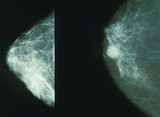
Breast cancer screening is an attempt to find unsuspected cancers. The most common screening methods are self and clinical breast exams, x-ray mammography, and breast Magnetic Resonance Imaging
Magnetic resonance imaging

GaneshMagnetic resonance imaging , or nuclear magnetic resonance imaging , is primarily a medical imaging technique most commonly used in radiology to visualize the structure and function of the body....
 (MRI). Genetic testing may also be used.

Breast self-examination

Breast self-examination is a method for finding abnormalities of the breast. The method involves looking at and feeling each breast for possible distortions or swelling....
 involves examining one's own breasts using a specific palpation
Palpation

Palpation is used as part of a physical examination in which an object is felt to determine its size, shape, firmness, or location. Palpation should not be confused with palpitation, which is an awareness of the beating of the heart....
 technique to detect any lumps in the breast tissue, which may be cancerous. Clinical exams are similar, except they are performed by a clinician or doctor.

X-ray mammography
Mammography

Mammography is the process of using low-dose amplitude-X-rays to examine the human breast. The goal of mammography is the early detection of breast cancer, typically through detection of characteristic masses and/or microcalcifications....
 uses x-ray
X-ray

X-radiation is a form of electromagnetic radiation. X-rays have a wavelength in the range of 10 to 0.01 nanometers, corresponding to frequency in the range 30 Hertz to 30 Hertz and energies in the range 120 Electron volt to 120 keV....
s to examine the breast for any uncharacteristic masses or lumps. Regular mammograms -- the process of getting breast mammography -- is often recommended as a preventative measure, particularly for older women and at-risk individuals. A recent study involving 160,921 women recruited at age 39-41 showed that annual screening mammograms up to age 48 did decrease breast cancer mortality over an average of 10.7 years. This reduction, however, was not statistically significant. The results may be due to chance. According to these findings, about 2,500 women would need to be screened to prevent one breast cancer death during this time period.

Breast MRIs are another imaging technique that can be used to spot potentially cancerous masses.

The most recent technology for breast cancer screening is ultrasound computed tomography
Computed tomography

Computed tomography is a medical imaging method employing tomography. Geometry Processing is used to generate a stereoscopy of the inside of an object from a large series of two-dimensional X-ray images taken around a single axis of rotation....
, which uses sound waves to create a three-dimensional image and detect breast cancer without the use of dangerous radiation used in x-ray mammography. This method was discovered at Los Alamos National Laboratory.

Genetic testing for breast cancer typically involves testing for mutations in the BRCA
BRCA

BRCA can refer to one of several things:*BRCA1 and BRCA2, a pair of genes involved in breast cancer.*British Radio Car Association ? an organisation governing all types of radio controlled car racing in the United Kingdom....
 genes. This is not generally a recommended technique except for those at elevated risk for breast cancer.

Diagnosis

While screening techniques discussed above are useful in determining the presence of cancer, they are not in and of themselves diagnostic of cancer. Pathology
Pathology

Pathology is the study and diagnosis of disease through examination of Organ , tissue , bodily fluids and whole bodies . The term also encompasses the related science study of disease processes, called General pathology....
 is the study and diagnosis of disease; only microscopic evaluation of a biopsy specimen can yield a cancer diagnosis. A number of procedures can obtain tissue or cells for histological or cytological examination. Such procedures include fine-needle aspiration, nipple aspirates, ductal lavage, core needle biopsy, and local surgical excision. Occasionally, pre-surgical procedures such as fine needle aspirate may not yield enough tissue to make a diagnosis, or may miss the cancer entirely.

Staging


Breast cancer is staged
Cancer staging

The stage of a cancer is a descriptor of how much the cancer has spread. The stage often takes into account the size of a tumor, how deep it has penetrated, whether it has invaded adjacent organs, how many lymph nodes it has metastasis to , and whether it has spread to distant organs....
 according to the TNM system, updated in the AJCC Staging Manual, now on its sixth edition. Prognosis is closely linked to results of staging, and staging is also used to allocate patients to treatments both in clinical trials and clinical practice. For a more detailed discussion on staging of breast cancer, see here
Breast cancer classification

Breast cancer classification divides all forms of breast cancer according to four different schemes, each based on different criteria and serving a different purpose....
.

Approximately 90% of new breast cancer cases in the US will be classified as "early-stage" cases (DCIS, Stage I,IIA, IIB or IIIA), due to early detection and prevention techniques. Early-stage treatment options are different from late-stage options.

Hormone receptors


Breast lesions are examined for certain markers, notably sex steroid hormone receptors. About two thirds of postmenopausal breast cancers are estrogen receptor
Estrogen receptor

Estrogen receptor refers to a group of receptor s which are activated by the hormone estrogen . Two types of estrogen receptor exist: ER which is a member of the nuclear receptor family of intracellular receptors and the estrogen G protein coupled receptor GPR30 , which is a G-protein coupled receptor....
 positive (ER+) and progesterone receptor
Progesterone receptor

The progesterone receptor also known as NR3C3 , is an intracellular steroid receptor that specifically binds progesterone. PR is encoded by a single gene residing on chromosome 11q22, it has two main forms, A and B, that differ in their molecular weight....
 positive (PR+). Receptor status modifies the treatment as, for instance, only ER-positive tumors, not ER-negative tumors, are sensitive to hormonal therapy.

HER2


The breast cancer is also usually tested for the presence of human epidermal growth factor receptor 2, a protein also known as HER2, neu or erbB2. HER2 is a cell-surface protein involved in cell development. In normal cells, HER2 controls aspects of cell growth and division. When activated in cancer cells, HER2 accelerates tumor formation. About 20-30% of breast cancers overexpress HER2. Those patients may be candidates for the drug trastuzumab
Trastuzumab

Trastuzumab is a monoclonal antibody that interferes with the HER2/neu Receptor .The HER receptors are proteins that are embedded in the cell membrane and communicate molecular signals from outside the cell to inside the cell, and turn genes on and off....
, both in the postsurgical setting (so-called "adjuvant
Adjuvant

Adjuvants are pharmacology or immunology agents that modify the effect of other agents while having few if any direct effects when given by themselves....
" therapy), and in the metastatic setting.

Treatment

The mainstay of breast cancer treatment is surgery
Surgery

Surgery is a medical specialty that uses operative manual and instrumental techniques on a patient to investigate and/or treat a pathological condition such as disease or injury, to help improve bodily function or appearance, or sometimes for some other reason....
 when the tumor is localized, with possible adjuvant hormonal therapy (with tamoxifen
Tamoxifen

Tamoxifen is an orally taken selective estrogen receptor modulator that is used in the treatment of breast cancer and is currently the world's largest selling drug for that purpose....
 or an aromatase inhibitor
Aromatase inhibitor

Aromatase inhibitors are a class of medications used in the treatment of breast cancer and ovarian cancer in menopause women that block the aromatase enzyme....
), chemotherapy
Chemotherapy

Chemotherapy, in its most general sense, refers to treatment of disease by chemicals that kill cells, specifically those of micro-organisms or cancer....
, and/or radiotherapy. At present, the treatment recommendations after surgery (adjuvant therapy) follow a pattern. This pattern is subject to change, as every two years, a worldwide conference takes place in St. Gallen, Switzerland, to discuss the actual results of worldwide multi-center studies. Depending on clinical criteria (age, type of cancer, size, metastasis) patients are roughly divided to high risk and low risk cases, with each risk category following different rules for therapy. Treatment possibilities include radiation therapy, chemotherapy, hormone therapy, and immune therapy.

In planning treatment, doctors can also use PCR tests like Oncotype DX
Oncotype DX

Oncotype DX, created by Genomic Health, is a diagnostic test that quantifies the likelihood of disease recurrence in women with early-stage breast cancer and assesses the likely benefit from certain types of chemotherapy....
 or microarray
Microarray

Different kinds of biological assays are called microarrays:*DNA microarrays, such as cDNA microarrays and oligonucleotide microarrays*MMChips, for surveillance of microRNA populations...
 tests like MammaPrint
MammaPrint

MammaPrint is a molecular diagnostic test that is used to assess the risk that a breast tumor will spread to other parts of the body . MammaPrint is marketed by Agendia and is based on the well-known Amsterdam 70-gene breast cancer gene signature as published by Laura van 't Veer et al....
 that predict breast cancer recurrence risk based on gene expression. In February 2007, the MammaPrint test became the first breast cancer predictor to win formal approval from the Food and Drug Administration
Food and Drug Administration

The U.S. Food and Drug Administration is an Government agency of the United States Department of Health and Human Services and is responsible for regulating and supervising the safety of foods, dietary supplements, Medications, vaccines, Biopharmaceutical, blood transfusion, medical devices, Electromagnetic radiation-emitting devices, veteri...
. This is a new gene test to help predict whether women with early-stage breast cancer will relapse in 5 or 10 years, this could help influence how aggressively the initial tumor is treated.

Interstitial laser thermotherapy (ILT) is an innovative method of treating breast cancer in a minimally invasive manner and without the need for surgical removal, and with the absence of any adverse effect on the health and survival of the patient during intermediate followup .

Radiation treatment is also used to help destroy cancer cells that may linger after surgery. Radiation can reduce the risk of recurrence by 50-66% (1/2 - 2/3rds reduction of risk) when delivered in the correct dose.

Prognosis

A prognosis is the medical team's "best guess" in how cancer will affect a patient. There are many prognostic factors associated with breast cancer: staging, tumour size and location, grade, whether disease is systemic (has metastasized, or traveled to other parts of the body), recurrence of the disease, and age of patient.

Stage is the most important, as it takes into consideration size, local involvement, lymph node status and whether metastatic disease is present. The higher the stage at diagnosis, the worse the prognosis. The stage is raised by the invasiveness of disease to lymph nodes, chest wall, skin or beyond, and the aggressiveness of the cancer cells. The stage is lowered by the presence of cancer-free zones and close-to-normal cell behaviour (grading). Size is not a factor in staging unless the cancer invasive. Ductal Carcinoma
Ductal carcinoma

Mammary ductal carcinoma is the most common type of breast cancer in women. It comes in two forms: infiltrating ductal carcinoma , an invasive, malignant and abnormal proliferation of neoplasm cells in the breast tissue and ductal carcinoma in situ , a noninvasive, possibly malignant neoplasm that is still confined to the lact...
 in situ throughout the entire breast is stage zero.

Grading is based on how biopsied, cultured cells behave. The closer to normal cancer cells are, the slower their growth and the better the prognosis. If cells are not well differentiated, they will appear immature, will divide more rapidly, and will tend to spread. Well differentiated is given a grade of 1, moderate is grade 2, while poor or undifferentiated is given a higher grade of 3 or 4 (depending upon the scale used).

Younger women tend to have a poorer prognosis than post-menopausal women due to several factors. Their breasts are active with their cycles, they may be nursing infants, and may be unaware of changes in their breasts. Therefore, younger women are usually at a more advanced stage when diagnosed.

The presence of estrogen and progesterone receptors in the cancer cell, while not prognostic, is important in guiding treatment. Those who do not test positive for these specific receptors will not respond to hormone therapy
Hormone therapy

Hormone therapy, or hormonal therapy is the use of hormones in medical treatment. Treatment with hormone antagonists may also referred to as hormonal therapy....
.

Likewise, HER2/neu status directs the course of treatment. Patients whose cancer cells are positive for HER2/neu have more aggressive disease and may be treated with trastuzumab, a monoclonal antibody that targets this protein.

Elevated CA15-3
Ca15-3

CA15-3 is a tumor marker used to monitor certain cancers, especially breast cancer. Elevated CA15-3, in conjunction with alkaline phosphatase, was shown to increase chances of early recurrence in breast cancer....
, in conjunction with alkaline phosphatase
Alkaline phosphatase

Alkaline phosphatase is a hydrolase enzyme responsible for removing phosphate groups from many types of molecules, including nucleotides, proteins, and alkaloids....
, was shown to increase chances of early recurrence in breast cancer.

Psychological aspects of diagnosis and treatment

The emotional impact of cancer diagnosis, symptoms, treatment, and related issues can be severe. Most larger hospitals are associated with cancer support group
Cancer support group

Cancer support groups provide a setting in which cancer patients can talk about living with cancer with others who may be having similar experiences....
s which provide a supportive environment to help patients cope and gain perspective from cancer survivors. Online cancer support groups are also very beneficial to cancer patients, especially in dealing with uncertainty and body-image problems inherent in cancer treatment.

Not all breast cancer patients experience their illness in the same manner. Factors such as age can have a significant impact on the way a patient copes with a breast cancer diagnosis. For example, a recent study conducted by researchers at the College of Public Health of the University of Georgia showed that older women may face a more difficult recovery from breast cancer than their younger counterparts. As the incidence of breast cancer in women over 50 rises and survival rates increase, breast cancer is increasingly becoming a geriatric issue that warrants both further research and the expansion of specialized cancer support services tailored for specific age groups.

Metastasis

Most people understand breast cancer as something that happens in the breast. However it can metastasize (spread) via lymphatics to nearby lymph nodes, usually those under the arm. That is why surgery for breast cancer always involves some type of surgery for the glands under the arm — either axillary clearance, sampling, or sentinel node biopsy.

Breast cancer can also spread to other parts of the body via blood vessels or the lymphatic system
Lymphatic system

The lymphatic system in vertebrates is a network of conduits that carry a clear fluid called lymph. It also includes the lymphoid tissue through which the lymph travels....
. So it can spread to the lungs, pleura (the lining of the lungs), liver, brain, and most commonly to the bones. Seventy percent of the time that breast cancer spreads to other locations, it spreads to bone, especially the vertebrae and the long bones of the arms, legs, and ribs. Usually when breast cancer spreads to bone, it eats away healthy bone, causing weak spots, where the bones can break easily. That is why breast cancer patients are often seen wearing braces or using a wheelchair, and have aching bones.

When breast cancer is found in bones, it has usually spread to more than one site. At this stage, it is treatable, often for many years, but it is not curable. Like normal breast cells, these tumors in the bone often thrive on female hormones, especially estrogen. Therefore treatment with medicines that lower estrogen levels may be prescribed.

History

Breast cancer may be one of the oldest known forms of cancer tumors in humans. The oldest description of cancer was discovered in Egypt and dates back to approximately 1600 BC. The Edwin Smith Papyrus
Edwin Smith papyrus

The Edwin Smith Papyrus is the only surviving copy of part of an Ancient Egyptian textbook on Physical trauma surgery. It is among the world's earliest surviving examples of medical literature, the Kahun Gynecological Papyrus being older, and is the world's oldest surgical document....
 describes 8 cases of tumors or ulcers of the breast that were treated by cauterization
Cauterization

The medical practice or technique of Cauterization is a medical term describing the burn of the body to remove or close off a part of itin a process called Cautery which destroys some tissue
.The writing says about the disease, "There is no treatment." For centuries, physicians described similar cases in their practises, with the same sad conclusion. It wasn't until doctors achieved greater understanding of the circulatory system in the 17th century that they could establish a link between breast cancer and the lymph nodes in the armpit. The French surgeon Jean Louis Petit
Jean Louis Petit

Jean-Louis Petit was a French surgeon, inventor of the tourniquet. He was first enthusiastic about anatomy, received a master's certificate in surgery in Paris in 1700....
 (1674-1750) and later the Scottish surgeon Benjamin Bell
Benjamin Bell

Benjamin Bell was a Scottish surgeon. Bell was born in Dumfries and educated in that town. His family owned Blackett House in Middlebie Parish , which Bell was later to sell to fund the education of himself and his family....
 (1749-1806) were the first to remove the lymph nodes, breast tissue, and underlying chest muscle. Their successful work was carried on by William Stewart Halsted
William Stewart Halsted

William Stewart Halsted is considered by many to be the most innovative, influential and important surgeon America has ever produced....
 who started performing mastectomies
Radical mastectomy

Radical mastectomy is a surgical procedure in which the breast, underlying chest muscle , and lymph nodes of the axilla are removed as a treatment for breast cancer....
 in 1882. The Halsted radical mastectomy often involved removing both breasts, associated lymph nodes, and the underlying pectoral muscles. This often led to long-term pain and disability, but was seen as necessary in order to prevent the cancer from recurring. Radical mastectomies remained the standard until the 1970s, when a new understanding of metastasis
Metastasis

Metastasis , or Metastatic disease, sometimes abbreviated mets, is the spread of a disease from one Organ or part to another non-adjacent organ or part....
 led to perceiving cancer as a systemic illness as well as a localized one, and more sparing procedures were developed that proved equally effective.

Prominent women who lost their lives because of breast cancer include Empress Theodora, wife of Justinian; Anne of Austria
Anne of Austria

Anne of Austria was Queen consort of France and Navarre and regent for her son, Louis XIV of France. During her regency Jules Cardinal Mazarin served as France's Religious minister....
, mother of Louis XIV of France; Mary Washington, mother of George, and Rachel Carson
Rachel Carson

Rachel Louise Carson was an American Marine biology and nature writer whose writings are credited with advancing the global environmental movement....
, the environmentalist.

Cultural references

In the month of October, breast cancer is recognized by survivors, family and friends of survivors and/or victims of the disease. A pink ribbon
Pink ribbon

The pink ribbon is an international symbol of breast cancer awareness....
 is worn to recognize the struggle that sufferers face when battling the cancer.

Pink for October is an initiative started by Matthew Oliphant, which asks that any sites willing to help make people aware of breast cancer, change their template or layout to include the color pink, so that when visitors view the site, they see that the majority of the site is pink. Then after reading a short amount of information about breast cancer, or being redirected to another site, they are aware of the disease itself.

The patron saint of breast cancer is Saint Agatha of Sicily.

The pink and blue ribbon was designed in 1996 by Nancy Nick, President and Founder of the John W. Nick Foundation to bring awareness that "Men Get Breast Cancer Too!"

Gallery


See also


External links