


French American

Encyclopedia
French Americans or Franco-Americans are Americans
of French
or French Canadian
descent. About 11.8 million U.S. residents are of this descent, and about 1.6 million speak French
at home.
An additional 450,000 U.S. residents speak a French-based creole language, according to the 2000 census.
While Americans of French descent make up a substantial percentage of the American population, French Americans arguably are less visible than other similarly sized ethnic groups. This is due in part to the tendency of French American groups to identify more strongly with "New World" regional identities such as Acadian
, Cajun
, or Louisiana Creole
. This has inhibited the development of a wider French American identity. The majority of Americans of French and French Canadian descent are descendants of those who first settled in Canada
in the 17th century (known as New France
at the time), which later became the Province of Quebec
in 1763, Lower Canada
in 1791, and a Canadian province
of Quebec
after Canadian Confederation
in 1867. The majority of Americans of French descent, mostly resident in New England and the Midwest, are descendants of the Quebec Diaspora and the first Canadiens, while few are of Acadian descent from the Canadian Maritime provinces
. Immigration to the United States from France was much lower than from other parts of Europe, such as Ireland
, Great Britain
, Germany
, Scandinavia
, Italy
, or Poland
.
. In many parts of the country, like the Midwest
and Louisiana
, they were the founders of some of these villages, cities, and first state inhabitants.
While found throughout the country, French Americans are most numerous in New England
, northern New York
, the Midwest
, and Louisiana
. French is the fourth most-spoken language in the country, behind English
, Spanish
, and Chinese
. Often, French Americans are identified more specifically as being of French Canadian, Cajun, or Louisiana Creole
descent. An important part of French American history is the Quebec diaspora
of the 1840s-1930s, in which one million French Canadians moved to the United States, principally to the New England states, Minnesota
, Wisconsin
and Michigan
.
Historically, the French in Canada had among the highest birth rates in world history, which is why their population was large even though immigration from France was relatively low.
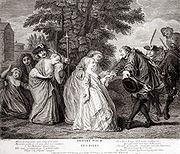 They also moved to different regions within Canada, namely Ontario
and Manitoba
. Many of the early male migrants worked in the lumber industry in both regions, and, to a lesser degree, in the burgeoning mining
industry in the upper Great Lakes
.
, in what is now the Canadian provinces of New Brunswick
, Nova Scotia
, and Prince Edward Island
, in the 17th and early 18th centuries. In 1755, after capturing Fort Beauséjour
in the region, the British Army
forced the Acadians to either swear an oath of loyalty to the British Crown
or face expulsion. Thousands refused to take the oath, causing them to be sent, penniless, to the 13 colonies to the south in what has become known as the Great Upheaval
. Over the next generation, some four thousand managed to make the long trek to Louisiana, where they began a new life. The name Cajun is a corruption of the word Acadian. Many still live in what is known as the Cajun Country, where much of their colonial culture survives. French Louisiana
, when it was sold by Napoleon in 1803, covered all or part of than fifteen current U.S. states and contained French and Canadian colonists dispersed across it, though they were most numerous in its southernmost portion.
In Louisiana today, more than 15% of the population of the Cajun Country reported in the 2000 United States Census that French was spoken at home.
Another significant source of immigrants to Louisiana was Saint Domingue, which gained its independence as the Republic of Haiti in 1804, following a bloody revolution; much of its white population (along with some mulattoes) fled during this time, often to Louisiana, where they largely assimilated into the Creole culture.
Biloxi in Mississippi
, and Mobile
in Alabama
, still contain French American heritage since they were founded by the Canadian Pierre Le Moyne d'Iberville
.
The Houma Tribe
in Louisiana still speak the same French they had been taught 300 years ago.
of Boston was a prominent figure.
, Robert de LaSalle, Jacques Marquette
, Nicholas Perrot, Pierre Le Moyne d'Iberville
, Antoine de la Mothe Cadillac, Pierre Dugué de Boisbriant, Lucien Galtier
, Pierre Laclède
, René Auguste Chouteau
, Julien Dubuque
, Pierre de La Vérendrye
, and Pierre Parrant
.
The French Canadians set up a number of villages along the waterways, including Prairie du Chien, Wisconsin
; La Baye, Wisconsin
; Cahokia, Illinois
; Kaskaskia, Illinois
; Detroit, Michigan
; Sault Sainte Marie, Michigan; Saint Ignace, Michigan; Vincennes, Indiana
; St. Paul, Minnesota; St. Louis, Missouri
; and Sainte Genevieve, Missouri. They also built a series of forts in the area, such as Fort de Chartres
, Fort Crevecoeur
, Fort Saint Louis, Fort Ouiatenon
, Fort Miami (Michigan)
, Fort Miami (Indiana), Fort Saint Joseph
, Fort La Baye
, Fort de Buade
, Fort Saint Antoine
, Fort Crevecoeur
, Fort Trempealeau
, Fort Beauharnois
, Fort Orleans
, Fort St. Charles
, Fort Kaministiquia
, Fort Michilimackinac
, Fort Rouillé
, Fort Niagara
, Fort Le Boeuf
, Fort Venango
, and Fort Duquesne
. The forts were serviced by soldiers and fur trappers who had long networks reaching through the Great Lakes back to Montreal.
The region was relinquished by France
to the British
in 1763 as a result of the Treaty of Paris
. Three years of war by the Natives, called Pontiac's War ensued. It became part of the Province of Quebec
in 1774, and was seized by the United States during the Revolution.
and New Brunswick
to work in textile mill cities in New England. In the same period, Francophones from Quebec soon became a majority of the workers in the saw mill and logging camps in the Adirondack Mountains
and their foothills. Others sought opportunities for farming and other trades such as blacksmiths in Northern New York State. By the mid-20th century French Americans comprised 30% of the Maine's population. Some migrants became lumberjacks but most concentrated in industrialized areas and into enclaves known as 'Little Canada
s.'
French Canadian immigrant women saw the United States as a place of opportunity and possibility where they could create alternatives for themselves distinct from the expectations of their parents and their community. By the early 20th century some French Canadian women even began to see migration to the United States to work as a rite of passage and a time of self-discovery and self-reliance. When these women did marry, they had fewer children with longer intervals between children than their Canadian counterparts. Some women never married, and oral accounts suggest that self-reliance and economic independence were important reasons for choosing work over marriage and motherhood. These women conformed to traditional gender ideals in order to retain their 'Canadienne' cultural identity, but they also redefined these roles in ways that provided them increased independence in their roles as wives and mothers.
The French Americans became active in the Catholic Church where they tried with little success to challenge its domination by Irish clerics. They founded such newspapers as 'Le Messager' and 'La Justice.' The first hospital in Lewiston, Maine, became a reality in 1889 when the Sisters of Charity of Montreal, the 'Grey Nuns,' opened the doors of the Asylum of Our Lady of Lourdes. This hospital was central to the Grey Nuns' mission of providing social services for Lewiston's predominately French Canadian mill workers. The Grey Nuns struggled to establish their institution despite meager financial resources, language barriers, and opposition from the established medical community. Immigration dwindled after World War I.
The French Canadian community in New England tried to preserve some of its cultural norms. This doctrine, like efforts to preserve francophone culture in Quebec, became known as la Survivance
.
Potvin (2003) has studied the evolution of French Catholic parishes in New England. The predominantly Irish hierarchy of the 19th century was slow to recognize the need for French-language parishes; several bishops even called for assimilation and English language-only parochial schools. In the 20th century, a number of parochial schools for Francophone students opened, though they gradually closed toward the end of the century and a large share of the French-speaking population left the Church. At the same time, the number of priests available to staff these parishes also diminished. By the 21st century the emphasis was on retaining local reminders of French American culture rather than on retaining the language itself. With the decline of the state's textile industry during the 1950s, the French element experienced a period of upward mobility and assimilation. This pattern of assimilation increased during the 1970s and 1980s as many Catholic organizations switched to English names and parish children entered public schools; some parochial schools closed in the 1970s. Although some ties to its French Canadian origins remain, the community was largely anglicized by the 1990s, moving almost completely from 'Canadien' to 'American'.
Representative of the assimilation process was the career of singer and icon of American popular culture Rudy Vallée
(1901–1986). He grew up in Westbrook, Maine
, and after serving in World War I attended the University of Maine, then transferred to Yale, and went on to become as a popular music star. He never forgot his Maine roots, and maintained an estate at Kezar Lake.
were one of the most important Catholic groups present during the American Civil War
. The exact number is unclear, but thousands of French Americans appear to have served in this conflict. Union forces did not keep reliable statistics concerning foreign enlistments. However, historians have estimated anywhere from 20,000 to 40,000 French Americans serving in this war. In addition to those born in the United States, many who served in the Union forces came from Canada or had resided there for several years. Canada's national anthem
was written by such a soldier named Calixa Lavallée
, who wrote this anthem while he served for the Union attaining the rank of Lieutenant. The French government and British government supported the Confederate
cause, but no soldiers were sent. Leading Confederate General P.G.T. Beauregard was a noted French American from Louisiana.
because of its conservatism, emphasis on order, and advocacy of the tariff to protect the textile workers from foreign competition. In 1928, with Catholic Al Smith
as the Democratic candidate, the French Americans moved over to the Democratic column and stayed there for six presidential elections. They formed part of the New Deal Coalition
. Unlike the Irish and German Catholics, very few French Americans deserted the Democratic ranks because of the foreign policy and war issues of the 1940 and 1944 campaigns. In 1952 many French Americans broke from the Democrats but returned heavily in 1960.
As the ancestors of most French Americans had for the most part left France before the French Revolution
, they usually prefer the Fleur-de-lis
to the modern French tricolor
.
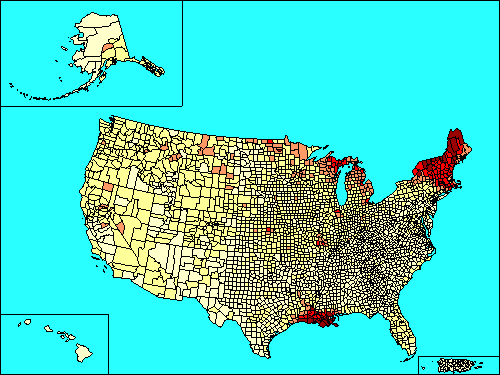 According to the U.S. Census Bureau of 2000, 5.3% of Americans are of French and/or French Canadian ancestry. French Americans made up close to, or more than, 10% of the population of:
In states that once made up part of New France
(excluding Louisiana):
Franco Americans also made up more than 4% of the population in
States with the largest French communities including (according to the 2010 U.S. Census)
French and French Canadian
There was tension between the English-speaking Irish Catholics, who controlled the Church in New England, and the French immigrants, who wanted their language taught in the parochial schools. The Irish controlled all the Catholic colleges in New England, except for Assumption College
in Massachusetts, controlled by the French, and one school in New Hampshire controlled by Germans. Tension reached a breaking point during the Sentinelle affair of the 1920s, in which Franco-American Catholics of Providence, Rhode Island, challenged their bishop over control of parish funds in an unsuccessful bid to wrest power from the Irish American episcopate.
Marie-Rose Ferron was a mystic stigmatic; she was born in Quebec and lived in Woonsocket, Rhode Island. Between about 1925 and 1936, she was a popular "victim soul" who suffered physically to redeem the sins of her community. Father Onésime Boyer, promoted her cult.
immigrants aided the growth of Spanish. According to the U.S. 2000 Census, French is the third most spoken language in the United States after English and Spanish, with 2 097 206 speakers, up from 1 930 404 in 1990. In addition to parts of Louisiana
, the language is also commonly spoken in Florida
, northern Maine
, New Hampshire
, Vermont
, and New York City
; home to large French-speaking communities from France, Canada, and Haiti.
As a result of French immigration to what is now the United States in the seventeenth and eighteenth centuries, the French language was once widely spoken in much of the country, especially in the former Louisiana Territory
, as well as in the Northeast
. French-language newspapers existed in many American cities; especially New Orleans and in certain cities in New England. Americans of French descent often lived in predominately French neighborhoods; where they attended schools and churches that used their language. In New England, Upstate New York, and the Midwest, French Canadian neighborhoods were known as "Little Canada".
(Louisiana, Vermont, Illinois), indirect French origin through other languages (Michigan, Wisconsin, Arkansas, Delaware, New Jersey) or possible / disputed French origin (Maine, Oregon).
| valign="top" |
|}
United States
The United States of America is a federal constitutional republic comprising fifty states and a federal district...
of French
French people
The French are a nation that share a common French culture and speak the French language as a mother tongue. Historically, the French population are descended from peoples of Celtic, Latin and Germanic origin, and are today a mixture of several ethnic groups...
or French Canadian
French Canadian
French Canadian or Francophone Canadian, , generally refers to the descendents of French colonists who arrived in New France in the 17th and 18th centuries...
descent. About 11.8 million U.S. residents are of this descent, and about 1.6 million speak French
French language
French is a Romance language spoken as a first language in France, the Romandy region in Switzerland, Wallonia and Brussels in Belgium, Monaco, the regions of Quebec and Acadia in Canada, and by various communities elsewhere. Second-language speakers of French are distributed throughout many parts...
at home.
An additional 450,000 U.S. residents speak a French-based creole language, according to the 2000 census.
While Americans of French descent make up a substantial percentage of the American population, French Americans arguably are less visible than other similarly sized ethnic groups. This is due in part to the tendency of French American groups to identify more strongly with "New World" regional identities such as Acadian
Acadian
The Acadians are the descendants of the 17th-century French colonists who settled in Acadia . Acadia was a colony of New France...
, Cajun
Cajun
Cajuns are an ethnic group mainly living in the U.S. state of Louisiana, consisting of the descendants of Acadian exiles...
, or Louisiana Creole
Louisiana Creole people
Louisiana Creole people refers to those who are descended from the colonial settlers in Louisiana, especially those of French and Spanish descent. The term was first used during colonial times by the settlers to refer to those who were born in the colony, as opposed to those born in the Old World...
. This has inhibited the development of a wider French American identity. The majority of Americans of French and French Canadian descent are descendants of those who first settled in Canada
Canada
Canada is a North American country consisting of ten provinces and three territories. Located in the northern part of the continent, it extends from the Atlantic Ocean in the east to the Pacific Ocean in the west, and northward into the Arctic Ocean...
in the 17th century (known as New France
New France
New France was the area colonized by France in North America during a period beginning with the exploration of the Saint Lawrence River by Jacques Cartier in 1534 and ending with the cession of New France to Spain and Great Britain in 1763...
at the time), which later became the Province of Quebec
Quebec Act
The Quebec Act of 1774 was an Act of the Parliament of Great Britain setting procedures of governance in the Province of Quebec...
in 1763, Lower Canada
Lower Canada
The Province of Lower Canada was a British colony on the lower Saint Lawrence River and the shores of the Gulf of Saint Lawrence...
in 1791, and a Canadian province
Provinces and territories of Canada
The provinces and territories of Canada combine to make up the world's second-largest country by area. There are ten provinces and three territories...
of Quebec
Quebec
Quebec or is a province in east-central Canada. It is the only Canadian province with a predominantly French-speaking population and the only one whose sole official language is French at the provincial level....
after Canadian Confederation
Canadian Confederation
Canadian Confederation was the process by which the federal Dominion of Canada was formed on July 1, 1867. On that day, three British colonies were formed into four Canadian provinces...
in 1867. The majority of Americans of French descent, mostly resident in New England and the Midwest, are descendants of the Quebec Diaspora and the first Canadiens, while few are of Acadian descent from the Canadian Maritime provinces
Maritimes
The Maritime provinces, also called the Maritimes or the Canadian Maritimes, is a region of Eastern Canada consisting of three provinces, New Brunswick, Nova Scotia, and Prince Edward Island. On the Atlantic coast, the Maritimes are a subregion of Atlantic Canada, which also includes the...
. Immigration to the United States from France was much lower than from other parts of Europe, such as Ireland
Ireland
Ireland is an island to the northwest of continental Europe. It is the third-largest island in Europe and the twentieth-largest island on Earth...
, Great Britain
Great Britain
Great Britain or Britain is an island situated to the northwest of Continental Europe. It is the ninth largest island in the world, and the largest European island, as well as the largest of the British Isles...
, Germany
Germany
Germany , officially the Federal Republic of Germany , is a federal parliamentary republic in Europe. The country consists of 16 states while the capital and largest city is Berlin. Germany covers an area of 357,021 km2 and has a largely temperate seasonal climate...
, Scandinavia
Scandinavia
Scandinavia is a cultural, historical and ethno-linguistic region in northern Europe that includes the three kingdoms of Denmark, Norway and Sweden, characterized by their common ethno-cultural heritage and language. Modern Norway and Sweden proper are situated on the Scandinavian Peninsula,...
, Italy
Italy
Italy , officially the Italian Republic languages]] under the European Charter for Regional or Minority Languages. In each of these, Italy's official name is as follows:;;;;;;;;), is a unitary parliamentary republic in South-Central Europe. To the north it borders France, Switzerland, Austria and...
, or Poland
Poland
Poland , officially the Republic of Poland , is a country in Central Europe bordered by Germany to the west; the Czech Republic and Slovakia to the south; Ukraine, Belarus and Lithuania to the east; and the Baltic Sea and Kaliningrad Oblast, a Russian exclave, to the north...
.
History
Unlike other immigrants who came to the United States from other countries, some French Americans arrived prior to the founding of the United StatesAmerican Revolution
The American Revolution was the political upheaval during the last half of the 18th century in which thirteen colonies in North America joined together to break free from the British Empire, combining to become the United States of America...
. In many parts of the country, like the Midwest
Midwestern United States
The Midwestern United States is one of the four U.S. geographic regions defined by the United States Census Bureau, providing an official definition of the American Midwest....
and Louisiana
Louisiana
Louisiana is a state located in the southern region of the United States of America. Its capital is Baton Rouge and largest city is New Orleans. Louisiana is the only state in the U.S. with political subdivisions termed parishes, which are local governments equivalent to counties...
, they were the founders of some of these villages, cities, and first state inhabitants.
While found throughout the country, French Americans are most numerous in New England
New England
New England is a region in the northeastern corner of the United States consisting of the six states of Maine, New Hampshire, Vermont, Massachusetts, Rhode Island, and Connecticut...
, northern New York
New York
New York is a state in the Northeastern region of the United States. It is the nation's third most populous state. New York is bordered by New Jersey and Pennsylvania to the south, and by Connecticut, Massachusetts and Vermont to the east...
, the Midwest
Midwestern United States
The Midwestern United States is one of the four U.S. geographic regions defined by the United States Census Bureau, providing an official definition of the American Midwest....
, and Louisiana
Louisiana
Louisiana is a state located in the southern region of the United States of America. Its capital is Baton Rouge and largest city is New Orleans. Louisiana is the only state in the U.S. with political subdivisions termed parishes, which are local governments equivalent to counties...
. French is the fourth most-spoken language in the country, behind English
English language
English is a West Germanic language that arose in the Anglo-Saxon kingdoms of England and spread into what was to become south-east Scotland under the influence of the Anglian medieval kingdom of Northumbria...
, Spanish
Spanish language
Spanish , also known as Castilian , is a Romance language in the Ibero-Romance group that evolved from several languages and dialects in central-northern Iberia around the 9th century and gradually spread with the expansion of the Kingdom of Castile into central and southern Iberia during the...
, and Chinese
Chinese language
The Chinese language is a language or language family consisting of varieties which are mutually intelligible to varying degrees. Originally the indigenous languages spoken by the Han Chinese in China, it forms one of the branches of Sino-Tibetan family of languages...
. Often, French Americans are identified more specifically as being of French Canadian, Cajun, or Louisiana Creole
Louisiana Creole people
Louisiana Creole people refers to those who are descended from the colonial settlers in Louisiana, especially those of French and Spanish descent. The term was first used during colonial times by the settlers to refer to those who were born in the colony, as opposed to those born in the Old World...
descent. An important part of French American history is the Quebec diaspora
Quebec diaspora
The Quebec diaspora consists of Quebec emigrants and their descendants dispersed over the North American continent and historically concentrated in the New England region of the United States, Ontario, and the Canadian Prairies...
of the 1840s-1930s, in which one million French Canadians moved to the United States, principally to the New England states, Minnesota
Minnesota
Minnesota is a U.S. state located in the Midwestern United States. The twelfth largest state of the U.S., it is the twenty-first most populous, with 5.3 million residents. Minnesota was carved out of the eastern half of the Minnesota Territory and admitted to the Union as the thirty-second state...
, Wisconsin
Wisconsin
Wisconsin is a U.S. state located in the north-central United States and is part of the Midwest. It is bordered by Minnesota to the west, Iowa to the southwest, Illinois to the south, Lake Michigan to the east, Michigan to the northeast, and Lake Superior to the north. Wisconsin's capital is...
and Michigan
Michigan
Michigan is a U.S. state located in the Great Lakes Region of the United States of America. The name Michigan is the French form of the Ojibwa word mishigamaa, meaning "large water" or "large lake"....
.
Historically, the French in Canada had among the highest birth rates in world history, which is why their population was large even though immigration from France was relatively low.
Ontario
Ontario is a province of Canada, located in east-central Canada. It is Canada's most populous province and second largest in total area. It is home to the nation's most populous city, Toronto, and the nation's capital, Ottawa....
and Manitoba
Manitoba
Manitoba is a Canadian prairie province with an area of . The province has over 110,000 lakes and has a largely continental climate because of its flat topography. Agriculture, mostly concentrated in the fertile southern and western parts of the province, is vital to the province's economy; other...
. Many of the early male migrants worked in the lumber industry in both regions, and, to a lesser degree, in the burgeoning mining
Mining
Mining is the extraction of valuable minerals or other geological materials from the earth, from an ore body, vein or seam. The term also includes the removal of soil. Materials recovered by mining include base metals, precious metals, iron, uranium, coal, diamonds, limestone, oil shale, rock...
industry in the upper Great Lakes
Great Lakes
The Great Lakes are a collection of freshwater lakes located in northeastern North America, on the Canada – United States border. Consisting of Lakes Superior, Michigan, Huron, Erie, and Ontario, they form the largest group of freshwater lakes on Earth by total surface, coming in second by volume...
.
Louisiana
The Cajuns of Louisiana have a unique heritage. Their ancestors settled AcadiaAcadia
Acadia was the name given to lands in a portion of the French colonial empire of New France, in northeastern North America that included parts of eastern Quebec, the Maritime provinces, and modern-day Maine. At the end of the 16th century, France claimed territory stretching as far south as...
, in what is now the Canadian provinces of New Brunswick
New Brunswick
New Brunswick is one of Canada's three Maritime provinces and is the only province in the federation that is constitutionally bilingual . The provincial capital is Fredericton and Saint John is the most populous city. Greater Moncton is the largest Census Metropolitan Area...
, Nova Scotia
Nova Scotia
Nova Scotia is one of Canada's three Maritime provinces and is the most populous province in Atlantic Canada. The name of the province is Latin for "New Scotland," but "Nova Scotia" is the recognized, English-language name of the province. The provincial capital is Halifax. Nova Scotia is the...
, and Prince Edward Island
Prince Edward Island
Prince Edward Island is a Canadian province consisting of an island of the same name, as well as other islands. The maritime province is the smallest in the nation in both land area and population...
, in the 17th and early 18th centuries. In 1755, after capturing Fort Beauséjour
Fort Beauséjour
Fort Beauséjour, was built during Father Le Loutre's War from 1751-1755; it is located at the Isthmus of Chignecto in present-day Aulac, New Brunswick, Canada...
in the region, the British Army
British Army
The British Army is the land warfare branch of Her Majesty's Armed Forces in the United Kingdom. It came into being with the unification of the Kingdom of England and Scotland into the Kingdom of Great Britain in 1707. The new British Army incorporated Regiments that had already existed in England...
forced the Acadians to either swear an oath of loyalty to the British Crown
Monarchy of the United Kingdom
The monarchy of the United Kingdom is the constitutional monarchy of the United Kingdom and its overseas territories. The present monarch, Queen Elizabeth II, has reigned since 6 February 1952. She and her immediate family undertake various official, ceremonial and representational duties...
or face expulsion. Thousands refused to take the oath, causing them to be sent, penniless, to the 13 colonies to the south in what has become known as the Great Upheaval
Great Upheaval
The Expulsion of the Acadians was the forced removal by the British of the Acadian people from present day Canadian Maritime provinces: Nova Scotia, New Brunswick, and Prince Edward Island...
. Over the next generation, some four thousand managed to make the long trek to Louisiana, where they began a new life. The name Cajun is a corruption of the word Acadian. Many still live in what is known as the Cajun Country, where much of their colonial culture survives. French Louisiana
Louisiana (New France)
Louisiana or French Louisiana was an administrative district of New France. Under French control from 1682–1763 and 1800–03, the area was named in honor of Louis XIV, by French explorer René-Robert Cavelier, Sieur de la Salle...
, when it was sold by Napoleon in 1803, covered all or part of than fifteen current U.S. states and contained French and Canadian colonists dispersed across it, though they were most numerous in its southernmost portion.
In Louisiana today, more than 15% of the population of the Cajun Country reported in the 2000 United States Census that French was spoken at home.
Another significant source of immigrants to Louisiana was Saint Domingue, which gained its independence as the Republic of Haiti in 1804, following a bloody revolution; much of its white population (along with some mulattoes) fled during this time, often to Louisiana, where they largely assimilated into the Creole culture.
Biloxi in Mississippi
Mississippi
Mississippi is a U.S. state located in the Southern United States. Jackson is the state capital and largest city. The name of the state derives from the Mississippi River, which flows along its western boundary, whose name comes from the Ojibwe word misi-ziibi...
, and Mobile
Mobile, Alabama
Mobile is the third most populous city in the Southern US state of Alabama and is the county seat of Mobile County. It is located on the Mobile River and the central Gulf Coast of the United States. The population within the city limits was 195,111 during the 2010 census. It is the largest...
in Alabama
Alabama
Alabama is a state located in the southeastern region of the United States. It is bordered by Tennessee to the north, Georgia to the east, Florida and the Gulf of Mexico to the south, and Mississippi to the west. Alabama ranks 30th in total land area and ranks second in the size of its inland...
, still contain French American heritage since they were founded by the Canadian Pierre Le Moyne d'Iberville
Pierre Le Moyne d'Iberville
Pierre Le Moyne d'Iberville pronounced as described in note] Pierre Le Moyne d'Iberville pronounced as described in note] Pierre Le Moyne d'Iberville pronounced as described in note] (16 July 1661 – 9 July 1702 (probable)was a soldier, ship captain, explorer, colonial administrator, knight of...
.
The Houma Tribe
Houma Tribe
The Houma people are a Native America tribe. They belong to the United Houma Nation, a state recognized tribe in Louisiana. They primarily live in East and West Feliciana, and Pointe Coupee Parishes, about 100 miles north of the town of Houma named for them, west of the mouth of the Mississippi...
in Louisiana still speak the same French they had been taught 300 years ago.
Colonial era
In the 17th and early 18th centuries there was an influx of a few thousand Huguenots, who were Protestant refugees fleeing religious persecution in France. For nearly a century they fostered a distinctive French Protestant identity that enabled them to remain aloof from American society, but by the time of the American Revolution they had generally intermarried and merged into the larger Presbyterian community. The largest number settling in South Carolina, where the French comprised four percent of the white population in 1790. With the help of the well organized international Huguenot community, many also moved to Virginia. In the north, Paul ReverePaul Revere
Paul Revere was an American silversmith and a patriot in the American Revolution. He is most famous for alerting Colonial militia of approaching British forces before the battles of Lexington and Concord, as dramatized in Henry Wadsworth Longfellow's poem, Paul Revere's Ride...
of Boston was a prominent figure.
Midwest
From the beginning of the 17th century, French Canadians explored and traveled to the region with their coureur de bois and explorers, such as Jean NicoletJean Nicolet
Jean Nicolet de Belleborne was a French coureur des bois noted for exploring Green Bay in what is now the U.S. state of Wisconsin.-Life:...
, Robert de LaSalle, Jacques Marquette
Jacques Marquette
Father Jacques Marquette S.J. , sometimes known as Père Marquette, was a French Jesuit missionary who founded Michigan's first European settlement, Sault Ste. Marie, and later founded St. Ignace, Michigan...
, Nicholas Perrot, Pierre Le Moyne d'Iberville
Pierre Le Moyne d'Iberville
Pierre Le Moyne d'Iberville pronounced as described in note] Pierre Le Moyne d'Iberville pronounced as described in note] Pierre Le Moyne d'Iberville pronounced as described in note] (16 July 1661 – 9 July 1702 (probable)was a soldier, ship captain, explorer, colonial administrator, knight of...
, Antoine de la Mothe Cadillac, Pierre Dugué de Boisbriant, Lucien Galtier
Lucien Galtier
Lucien Galtier was the first Roman Catholic priest who served in Minnesota. While he was a native of France, the place of his birth is uncertain and even the year, some sources claiming 1811 but his tomb bearing the date December 17, 1812. In the 1830s, people were settling across the Minnesota...
, Pierre Laclède
Pierre Laclède
Pierre Laclède or Pierre Laclède Liguest was a French fur trader who, with his young assistant and "stepson" Auguste Chouteau, founded St...
, René Auguste Chouteau
René Auguste Chouteau
Rene Auguste Chouteau , also known as Auguste Chouteau, was founder of St. Louis, Missouri, a successful fur trader and a politician. He and his partner had a monopoly for many years of fur trade with the large Osage tribe on the Missouri River...
, Julien Dubuque
Julien Dubuque
Julien Dubuque was a French Canadian from the area of Champlain, Quebec who arrived near what now is known as Dubuque, Iowa - which was named after him. He was one of the first men to settle in the area. He initially received permission from the Meskwaki Native American tribe to mine the lead in...
, Pierre de La Vérendrye
Pierre Gaultier de Varennes, sieur de La Vérendrye
Pierre Gaultier de Varennes, sieur de La Vérendrye was a French Canadian military officer, fur trader and explorer. In the 1730s he and his four sons opened up the area west of Lake Superior and thus began the process that added Western Canada to the original New France in the Saint Lawrence basin...
, and Pierre Parrant
Pierre Parrant
Pierre “Pig’s Eye” Parrant is recognized as being the first person of European descent to live within the borders of what would eventually become the city of Saint Paul, Minnesota...
.
The French Canadians set up a number of villages along the waterways, including Prairie du Chien, Wisconsin
Prairie du Chien, Wisconsin
Prairie du Chien is a city in and the county seat of Crawford County, Wisconsin, United States. The population was 5,911 at the 2010 census. Its Zip Code is 53821....
; La Baye, Wisconsin
Green Bay, Wisconsin
Green Bay is a city in and the county seat of Brown County in the U.S. state of Wisconsin, located at the head of Green Bay, a sub-basin of Lake Michigan, at the mouth of the Fox River. It has an elevation of above sea level and is located north of Milwaukee. As of the 2010 United States Census,...
; Cahokia, Illinois
Cahokia, Illinois
Cahokia is a village in St. Clair County, Illinois, United States. As of the 2000 census, the village had a population of 16,391. The name is a reference to one of the clans of the historic Illini confederacy, who were encountered by early French explorers to the region.Early European settlers also...
; Kaskaskia, Illinois
Kaskaskia, Illinois
Kaskaskia is a village in Randolph County, Illinois, United States. In the 2010 census the population was 14, making it the second-smallest incorporated community in the State of Illinois in terms of population. A major French colonial town of the Illinois Country, its peak population was about...
; Detroit, Michigan
Detroit, Michigan
Detroit is the major city among the primary cultural, financial, and transportation centers in the Metro Detroit area, a region of 5.2 million people. As the seat of Wayne County, the city of Detroit is the largest city in the U.S. state of Michigan and serves as a major port on the Detroit River...
; Sault Sainte Marie, Michigan; Saint Ignace, Michigan; Vincennes, Indiana
Vincennes, Indiana
Vincennes is a city in and the county seat of Knox County, Indiana, United States. It is located on the Wabash River in the southwestern part of the state. The population was 18,701 at the 2000 census...
; St. Paul, Minnesota; St. Louis, Missouri
St. Louis, Missouri
St. Louis is an independent city on the eastern border of Missouri, United States. With a population of 319,294, it was the 58th-largest U.S. city at the 2010 U.S. Census. The Greater St...
; and Sainte Genevieve, Missouri. They also built a series of forts in the area, such as Fort de Chartres
Fort de Chartres
Fort de Chartres was a French fortification first built in 1720 on the east bank of the Mississippi River in present-day Illinois. The Fort de Chartres name was also applied to the two successive fortifications built nearby during the 18th century in the era of French colonial control over...
, Fort Crevecoeur
Fort Crevecoeur
Fort Crevecoeur was founded near the present site of Creve Coeur, a suburb of Peoria, Illinois, in January 1680.-Founding:...
, Fort Saint Louis, Fort Ouiatenon
Fort Ouiatenon
Fort Ouiatenon was the first fortified European settlement in what is now called Indiana. It was a French trading post at the joining of the Tippecanoe River and the Wabash River located approximately three miles southwest of modern-day West Lafayette...
, Fort Miami (Michigan)
Fort Miami (Michigan)
Fort Miami was a fort on the bank of the St. Joseph River at the site of the present-day city of St. Joseph, Michigan, in the United States.It was established in November 1679 by a band of French explorers led by René Robert Cavelier, Sieur de La Salle on the banks of what was then called the River...
, Fort Miami (Indiana), Fort Saint Joseph
Fort St. Joseph (Niles)
Fort Saint Joseph was a fort established on land granted to the Jesuits by King Louis XIV; it was located on what is now the south side of the present-day town of Niles, Michigan. Père Claude-Jean Allouez established the Mission de Saint-Joseph in the 1680s...
, Fort La Baye
Fort La Baye
Fort La Baye was a French military post at La Baye, which was built in 1717, and occupied until 1760.By 1718, there were a number of Canadien families living in the area near the fort. Other families settled across the river from the fort in an area which was called Munnomonee, because of the...
, Fort de Buade
Fort de Buade
Fort de Buade was a French fort at the present site of St. Ignace in the U.S. state of Michigan. It was garrisoned between 1683 and 1701.-The mission:...
, Fort Saint Antoine
Fort Saint Antoine
Fort Saint Antoine was a seventeenth-century French fort in Wisconsin.The fort was founded in 1686 by Nicholas Perrot and a group of Canadiens.-Perrot's expedition:...
, Fort Crevecoeur
Fort Crevecoeur
Fort Crevecoeur was founded near the present site of Creve Coeur, a suburb of Peoria, Illinois, in January 1680.-Founding:...
, Fort Trempealeau
Fort Trempealeau
Fort Trempealeau was founded in 1685 by Nicholas Perrot and a groupe of Canadiens. In the fall of 1685, Perrot and his men arrived at Mont Trempealeau by canoe. The Winnebagos called this mountain, Hay-nee-ah-cheh, or the mountain in the water. That is why Perrot called it in french, la montagne...
, Fort Beauharnois
Fort Beauharnois
Fort Beauharnois was a French fort built on the shores of Lake Pepin, a wide part of the upper Mississippi River, in 1727. The location chosen was on lowlands and the fort was rebuilt in 1730 on higher ground. It was the site of the first Roman Catholic chapel in Minnesota, which was dedicated to...
, Fort Orleans
Fort Orleans
Fort Orleans was a French fort in colonial North America, the first fort built by any European forces on the Missouri River. It was built near the mouth of the Grand River near present-day Brunswick. Intended to be the linchpin in the vast New France empire stretching from Montreal to New Mexico,...
, Fort St. Charles
Fort St. Charles
Fort Saint Charles was a secure trading post constructed in 1732, one of several western forts built under the direction of military commander La Vérendrye...
, Fort Kaministiquia
Fort Kaministiquia
Fort Camanistigoyan, now standardized as Fort Kaministiquia, located at the mouth of the Kaministiquia River on Lake Superior in what is now northwestern Ontario, Canada, was established in 1717 by Zacharie Robutel de la Noue following the restoration of the system of trading permits by...
, Fort Michilimackinac
Fort Michilimackinac
Fort Michilimackinac was an 18th century French, and later British, fort and trading post in the Great Lakes of North America. Built around 1715, it was located along the southern shore of the strategic Straits of Mackinac connecting Lake Huron and Lake Michigan, at the northern tip of the lower...
, Fort Rouillé
Fort Rouillé
Fort Rouillé or Fort Toronto was a French trading post located in Toronto, Ontario, Canada, that was established around 1750 but abandoned in 1759. The fort site is now part of the public lands of Exhibition Place...
, Fort Niagara
Fort Niagara
Fort Niagara is a fortification originally built to protect the interests of New France in North America. It is located near Youngstown, New York, on the eastern bank of the Niagara River at its mouth, on Lake Ontario.-Origin:...
, Fort Le Boeuf
Fort Le Boeuf
Fort Le Boeuf, , was a fort established by the French in 1753 on a fork of French Creek, in present-day Waterford, in northwest Pennsylvania...
, Fort Venango
Fort Venango
Fort Venango was a small British fort built in 1760 near the site of present Franklin, Pennsylvania. The fort replaced Fort Machault, a French fort burned by the French in 1759 after they left the area near the end of the French and Indian War. On June 16, 1763, during Pontiac's Rebellion, the fort...
, and Fort Duquesne
Fort Duquesne
Fort Duquesne was a fort established by the French in 1754, at the junction of the Allegheny and Monongahela rivers in what is now downtown Pittsburgh in the state of Pennsylvania....
. The forts were serviced by soldiers and fur trappers who had long networks reaching through the Great Lakes back to Montreal.
The region was relinquished by France
France
The French Republic , The French Republic , The French Republic , (commonly known as France , is a unitary semi-presidential republic in Western Europe with several overseas territories and islands located on other continents and in the Indian, Pacific, and Atlantic oceans. Metropolitan France...
to the British
Great Britain
Great Britain or Britain is an island situated to the northwest of Continental Europe. It is the ninth largest island in the world, and the largest European island, as well as the largest of the British Isles...
in 1763 as a result of the Treaty of Paris
Treaty of Paris (1763)
The Treaty of Paris, often called the Peace of Paris, or the Treaty of 1763, was signed on 10 February 1763, by the kingdoms of Great Britain, France and Spain, with Portugal in agreement. It ended the French and Indian War/Seven Years' War...
. Three years of war by the Natives, called Pontiac's War ensued. It became part of the Province of Quebec
Quebec Act
The Quebec Act of 1774 was an Act of the Parliament of Great Britain setting procedures of governance in the Province of Quebec...
in 1774, and was seized by the United States during the Revolution.
New England, New York State
In the late 19th century, many Francophones arrived in New England from QuebecQuebec
Quebec or is a province in east-central Canada. It is the only Canadian province with a predominantly French-speaking population and the only one whose sole official language is French at the provincial level....
and New Brunswick
New Brunswick
New Brunswick is one of Canada's three Maritime provinces and is the only province in the federation that is constitutionally bilingual . The provincial capital is Fredericton and Saint John is the most populous city. Greater Moncton is the largest Census Metropolitan Area...
to work in textile mill cities in New England. In the same period, Francophones from Quebec soon became a majority of the workers in the saw mill and logging camps in the Adirondack Mountains
Adirondack Mountains
The Adirondack Mountains are a mountain range located in the northeastern part of New York, that runs through Clinton, Essex, Franklin, Fulton, Hamilton, Herkimer, Lewis, Saint Lawrence, Saratoga, Warren, and Washington counties....
and their foothills. Others sought opportunities for farming and other trades such as blacksmiths in Northern New York State. By the mid-20th century French Americans comprised 30% of the Maine's population. Some migrants became lumberjacks but most concentrated in industrialized areas and into enclaves known as 'Little Canada
Little Canada
Little Canada is a name for any of the various communities where French Canadians congregated upon emigrating to the United States in the 19th and early 20th centuries....
s.'
French Canadian immigrant women saw the United States as a place of opportunity and possibility where they could create alternatives for themselves distinct from the expectations of their parents and their community. By the early 20th century some French Canadian women even began to see migration to the United States to work as a rite of passage and a time of self-discovery and self-reliance. When these women did marry, they had fewer children with longer intervals between children than their Canadian counterparts. Some women never married, and oral accounts suggest that self-reliance and economic independence were important reasons for choosing work over marriage and motherhood. These women conformed to traditional gender ideals in order to retain their 'Canadienne' cultural identity, but they also redefined these roles in ways that provided them increased independence in their roles as wives and mothers.
The French Americans became active in the Catholic Church where they tried with little success to challenge its domination by Irish clerics. They founded such newspapers as 'Le Messager' and 'La Justice.' The first hospital in Lewiston, Maine, became a reality in 1889 when the Sisters of Charity of Montreal, the 'Grey Nuns,' opened the doors of the Asylum of Our Lady of Lourdes. This hospital was central to the Grey Nuns' mission of providing social services for Lewiston's predominately French Canadian mill workers. The Grey Nuns struggled to establish their institution despite meager financial resources, language barriers, and opposition from the established medical community. Immigration dwindled after World War I.
The French Canadian community in New England tried to preserve some of its cultural norms. This doctrine, like efforts to preserve francophone culture in Quebec, became known as la Survivance
La Survivance
La Survivance is an expression used by French Canadians denoting the phlegmatic survival of francophone culture, typically in the face of Canadian anglophone or Anglo-American hegemony...
.
Potvin (2003) has studied the evolution of French Catholic parishes in New England. The predominantly Irish hierarchy of the 19th century was slow to recognize the need for French-language parishes; several bishops even called for assimilation and English language-only parochial schools. In the 20th century, a number of parochial schools for Francophone students opened, though they gradually closed toward the end of the century and a large share of the French-speaking population left the Church. At the same time, the number of priests available to staff these parishes also diminished. By the 21st century the emphasis was on retaining local reminders of French American culture rather than on retaining the language itself. With the decline of the state's textile industry during the 1950s, the French element experienced a period of upward mobility and assimilation. This pattern of assimilation increased during the 1970s and 1980s as many Catholic organizations switched to English names and parish children entered public schools; some parochial schools closed in the 1970s. Although some ties to its French Canadian origins remain, the community was largely anglicized by the 1990s, moving almost completely from 'Canadien' to 'American'.
Representative of the assimilation process was the career of singer and icon of American popular culture Rudy Vallée
Rudy Vallée
Rudy Vallée was an American singer, actor, bandleader, and entertainer.-Early life:Born Hubert Prior Vallée in Island Pond, Vermont, the son of Charles Alphonse and Catherine Lynch Vallée...
(1901–1986). He grew up in Westbrook, Maine
Westbrook, Maine
Westbrook is a city in Cumberland County, Maine, United States and a suburb of Portland. The population was 17,494 at the 2010 census. It is part of the Portland–South Portland–Biddeford, Maine metropolitan statistical area.-History:...
, and after serving in World War I attended the University of Maine, then transferred to Yale, and went on to become as a popular music star. He never forgot his Maine roots, and maintained an estate at Kezar Lake.
Civil War
French Americans in the Union forcesUnion (American Civil War)
During the American Civil War, the Union was a name used to refer to the federal government of the United States, which was supported by the twenty free states and five border slave states. It was opposed by 11 southern slave states that had declared a secession to join together to form the...
were one of the most important Catholic groups present during the American Civil War
American Civil War
The American Civil War was a civil war fought in the United States of America. In response to the election of Abraham Lincoln as President of the United States, 11 southern slave states declared their secession from the United States and formed the Confederate States of America ; the other 25...
. The exact number is unclear, but thousands of French Americans appear to have served in this conflict. Union forces did not keep reliable statistics concerning foreign enlistments. However, historians have estimated anywhere from 20,000 to 40,000 French Americans serving in this war. In addition to those born in the United States, many who served in the Union forces came from Canada or had resided there for several years. Canada's national anthem
O Canada
It has been noted that the opening theme of "O Canada" bears a strong resemblance to the "Marsch der Priester" , from the opera Die Zauberflöte , composed in 1791 by Wolfgang Amadeus Mozart, and that Lavallée's melody was inspired by Mozart's tune...
was written by such a soldier named Calixa Lavallée
Calixa Lavallée
Calixa Lavallée, , born Calixte Lavallée, was a French-Canadian-American musician and Union officer during the American Civil War who composed the music for O Canada, which officially became the national anthem of Canada in 1980.-Biography:Calixa Lavallée was born at Verchères, a suburb of...
, who wrote this anthem while he served for the Union attaining the rank of Lieutenant. The French government and British government supported the Confederate
Confederate States of America
The Confederate States of America was a government set up from 1861 to 1865 by 11 Southern slave states of the United States of America that had declared their secession from the U.S...
cause, but no soldiers were sent. Leading Confederate General P.G.T. Beauregard was a noted French American from Louisiana.
Politics
Walker (1962) examines the voting behavior in U.S. presidential elections from 1880 to 1960, using election returns from 30 French American communities in New England, along with sample survey data for the 1948-60 elections. From 1896 to 1924, French Americans typically supported the Republican PartyRepublican Party (United States)
The Republican Party is one of the two major contemporary political parties in the United States, along with the Democratic Party. Founded by anti-slavery expansion activists in 1854, it is often called the GOP . The party's platform generally reflects American conservatism in the U.S...
because of its conservatism, emphasis on order, and advocacy of the tariff to protect the textile workers from foreign competition. In 1928, with Catholic Al Smith
Al Smith
Alfred Emanuel Smith. , known in private and public life as Al Smith, was an American statesman who was elected the 42nd Governor of New York three times, and was the Democratic U.S. presidential candidate in 1928...
as the Democratic candidate, the French Americans moved over to the Democratic column and stayed there for six presidential elections. They formed part of the New Deal Coalition
New Deal coalition
The New Deal Coalition was the alignment of interest groups and voting blocs that supported the New Deal and voted for Democratic presidential candidates from 1932 until the late 1960s. It made the Democratic Party the majority party during that period, losing only to Dwight D. Eisenhower in 1952...
. Unlike the Irish and German Catholics, very few French Americans deserted the Democratic ranks because of the foreign policy and war issues of the 1940 and 1944 campaigns. In 1952 many French Americans broke from the Democrats but returned heavily in 1960.
As the ancestors of most French Americans had for the most part left France before the French Revolution
French Revolution
The French Revolution , sometimes distinguished as the 'Great French Revolution' , was a period of radical social and political upheaval in France and Europe. The absolute monarchy that had ruled France for centuries collapsed in three years...
, they usually prefer the Fleur-de-lis
Fleur-de-lis
The fleur-de-lis or fleur-de-lys is a stylized lily or iris that is used as a decorative design or symbol. It may be "at one and the same time, political, dynastic, artistic, emblematic, and symbolic", especially in heraldry...
to the modern French tricolor
Flag of France
The national flag of France is a tricolour featuring three vertical bands coloured royal blue , white, and red...
.
Population
| New Hampshire New Hampshire New Hampshire is a state in the New England region of the northeastern United States of America. The state was named after the southern English county of Hampshire. It is bordered by Massachusetts to the south, Vermont to the west, Maine and the Atlantic Ocean to the east, and the Canadian... |
25.2% | Vermont Vermont Vermont is a state in the New England region of the northeastern United States of America. The state ranks 43rd in land area, , and 45th in total area. Its population according to the 2010 census, 630,337, is the second smallest in the country, larger only than Wyoming. It is the only New England... |
23.3% | Maine Maine Maine is a state in the New England region of the northeastern United States, bordered by the Atlantic Ocean to the east and south, New Hampshire to the west, and the Canadian provinces of Quebec to the northwest and New Brunswick to the northeast. Maine is both the northernmost and easternmost... |
22.8% | Rhode Island Rhode Island The state of Rhode Island and Providence Plantations, more commonly referred to as Rhode Island , is a state in the New England region of the United States. It is the smallest U.S. state by area... |
17.2% | Louisiana Louisiana Louisiana is a state located in the southern region of the United States of America. Its capital is Baton Rouge and largest city is New Orleans. Louisiana is the only state in the U.S. with political subdivisions termed parishes, which are local governments equivalent to counties... |
16.2% | Massachusetts Massachusetts The Commonwealth of Massachusetts is a state in the New England region of the northeastern United States of America. It is bordered by Rhode Island and Connecticut to the south, New York to the west, and Vermont and New Hampshire to the north; at its east lies the Atlantic Ocean. As of the 2010... |
12.9% | Connecticut Connecticut Connecticut is a state in the New England region of the northeastern United States. It is bordered by Rhode Island to the east, Massachusetts to the north, and the state of New York to the west and the south .Connecticut is named for the Connecticut River, the major U.S. river that approximately... |
9.9% |
In states that once made up part of New France
New France
New France was the area colonized by France in North America during a period beginning with the exploration of the Saint Lawrence River by Jacques Cartier in 1534 and ending with the cession of New France to Spain and Great Britain in 1763...
(excluding Louisiana):
| Michigan Michigan Michigan is a U.S. state located in the Great Lakes Region of the United States of America. The name Michigan is the French form of the Ojibwa word mishigamaa, meaning "large water" or "large lake".... |
6.8% | Montana Montana Montana is a state in the Western United States. The western third of Montana contains numerous mountain ranges. Smaller, "island ranges" are found in the central third of the state, for a total of 77 named ranges of the Rocky Mountains. This geographical fact is reflected in the state's name,... |
5.3% | Minnesota Minnesota Minnesota is a U.S. state located in the Midwestern United States. The twelfth largest state of the U.S., it is the twenty-first most populous, with 5.3 million residents. Minnesota was carved out of the eastern half of the Minnesota Territory and admitted to the Union as the thirty-second state... |
5.3% | Wisconsin Wisconsin Wisconsin is a U.S. state located in the north-central United States and is part of the Midwest. It is bordered by Minnesota to the west, Iowa to the southwest, Illinois to the south, Lake Michigan to the east, Michigan to the northeast, and Lake Superior to the north. Wisconsin's capital is... |
5.0% | North Dakota North Dakota North Dakota is a state located in the Midwestern region of the United States of America, along the Canadian border. The state is bordered by Canada to the north, Minnesota to the east, South Dakota to the south and Montana to the west. North Dakota is the 19th-largest state by area in the U.S.... |
4.7% | Wyoming Wyoming Wyoming is a state in the mountain region of the Western United States. The western two thirds of the state is covered mostly with the mountain ranges and rangelands in the foothills of the Eastern Rocky Mountains, while the eastern third of the state is high elevation prairie known as the High... |
4.2% | Missouri Missouri Missouri is a US state located in the Midwestern United States, bordered by Iowa, Illinois, Kentucky, Tennessee, Arkansas, Oklahoma, Kansas and Nebraska. With a 2010 population of 5,988,927, Missouri is the 18th most populous state in the nation and the fifth most populous in the Midwest. It... |
3.8% | Kansas Kansas Kansas is a US state located in the Midwestern United States. It is named after the Kansas River which flows through it, which in turn was named after the Kansa Native American tribe, which inhabited the area. The tribe's name is often said to mean "people of the wind" or "people of the south... |
3.6% | Indiana Indiana Indiana is a US state, admitted to the United States as the 19th on December 11, 1816. It is located in the Midwestern United States and Great Lakes Region. With 6,483,802 residents, the state is ranked 15th in population and 16th in population density. Indiana is ranked 38th in land area and is... |
2.7% |
Franco Americans also made up more than 4% of the population in
| Washington | 4.6% | Oregon Oregon Oregon is a state in the Pacific Northwest region of the United States. It is located on the Pacific coast, with Washington to the north, California to the south, Nevada on the southeast and Idaho to the east. The Columbia and Snake rivers delineate much of Oregon's northern and eastern... |
4.6% | Alaska Alaska Alaska is the largest state in the United States by area. It is situated in the northwest extremity of the North American continent, with Canada to the east, the Arctic Ocean to the north, and the Pacific Ocean to the west and south, with Russia further west across the Bering Strait... |
4.2% |
States with the largest French communities including (according to the 2010 U.S. Census)
French and French Canadian
| 1. | California California California is a state located on the West Coast of the United States. It is by far the most populous U.S. state, and the third-largest by land area... |
1,210,000 | 2. | Louisiana Louisiana Louisiana is a state located in the southern region of the United States of America. Its capital is Baton Rouge and largest city is New Orleans. Louisiana is the only state in the U.S. with political subdivisions termed parishes, which are local governments equivalent to counties... |
1,070,000 | 3. | Massachusetts Massachusetts The Commonwealth of Massachusetts is a state in the New England region of the northeastern United States of America. It is bordered by Rhode Island and Connecticut to the south, New York to the west, and Vermont and New Hampshire to the north; at its east lies the Atlantic Ocean. As of the 2010... |
850,573 | 4. | Michigan Michigan Michigan is a U.S. state located in the Great Lakes Region of the United States of America. The name Michigan is the French form of the Ojibwa word mishigamaa, meaning "large water" or "large lake".... |
706,560 | 5. | New York New York New York is a state in the Northeastern region of the United States. It is the nation's third most populous state. New York is bordered by New Jersey and Pennsylvania to the south, and by Connecticut, Massachusetts and Vermont to the east... |
680,208 | 6. | Florida Florida Florida is a state in the southeastern United States, located on the nation's Atlantic and Gulf coasts. It is bordered to the west by the Gulf of Mexico, to the north by Alabama and Georgia and to the east by the Atlantic Ocean. With a population of 18,801,310 as measured by the 2010 census, it... |
630,000 |
Religion
Most Franco Americans have a Roman Catholic heritage (which includes most French Canadians and Cajuns). Besides the Protestant Huguenots who fled from France in the colonial era, there were some Protestants from Switzerland who came in the 19th century.There was tension between the English-speaking Irish Catholics, who controlled the Church in New England, and the French immigrants, who wanted their language taught in the parochial schools. The Irish controlled all the Catholic colleges in New England, except for Assumption College
Assumption College
Assumption College is a private, Roman Catholic, liberal arts college located on 185 acres in Worcester, Massachusetts. Assumption has an enrollment of about 2,117 undergraduates...
in Massachusetts, controlled by the French, and one school in New Hampshire controlled by Germans. Tension reached a breaking point during the Sentinelle affair of the 1920s, in which Franco-American Catholics of Providence, Rhode Island, challenged their bishop over control of parish funds in an unsuccessful bid to wrest power from the Irish American episcopate.
Marie-Rose Ferron was a mystic stigmatic; she was born in Quebec and lived in Woonsocket, Rhode Island. Between about 1925 and 1936, she was a popular "victim soul" who suffered physically to redeem the sins of her community. Father Onésime Boyer, promoted her cult.
French language in the United States
According to the National Education Bureau, French is the second most commonly taught foreign language in U.S. high schools, colleges, and universities behind Spanish. French was the most commonly taught foreign language until the 1980s; when the influx of HispanicHispanic
Hispanic is a term that originally denoted a relationship to Hispania, which is to say the Iberian Peninsula: Andorra, Gibraltar, Portugal and Spain. During the Modern Era, Hispanic sometimes takes on a more limited meaning, particularly in the United States, where the term means a person of ...
immigrants aided the growth of Spanish. According to the U.S. 2000 Census, French is the third most spoken language in the United States after English and Spanish, with 2 097 206 speakers, up from 1 930 404 in 1990. In addition to parts of Louisiana
Louisiana
Louisiana is a state located in the southern region of the United States of America. Its capital is Baton Rouge and largest city is New Orleans. Louisiana is the only state in the U.S. with political subdivisions termed parishes, which are local governments equivalent to counties...
, the language is also commonly spoken in Florida
Florida
Florida is a state in the southeastern United States, located on the nation's Atlantic and Gulf coasts. It is bordered to the west by the Gulf of Mexico, to the north by Alabama and Georgia and to the east by the Atlantic Ocean. With a population of 18,801,310 as measured by the 2010 census, it...
, northern Maine
Maine
Maine is a state in the New England region of the northeastern United States, bordered by the Atlantic Ocean to the east and south, New Hampshire to the west, and the Canadian provinces of Quebec to the northwest and New Brunswick to the northeast. Maine is both the northernmost and easternmost...
, New Hampshire
New Hampshire
New Hampshire is a state in the New England region of the northeastern United States of America. The state was named after the southern English county of Hampshire. It is bordered by Massachusetts to the south, Vermont to the west, Maine and the Atlantic Ocean to the east, and the Canadian...
, Vermont
Vermont
Vermont is a state in the New England region of the northeastern United States of America. The state ranks 43rd in land area, , and 45th in total area. Its population according to the 2010 census, 630,337, is the second smallest in the country, larger only than Wyoming. It is the only New England...
, and New York City
New York City
New York is the most populous city in the United States and the center of the New York Metropolitan Area, one of the most populous metropolitan areas in the world. New York exerts a significant impact upon global commerce, finance, media, art, fashion, research, technology, education, and...
; home to large French-speaking communities from France, Canada, and Haiti.
As a result of French immigration to what is now the United States in the seventeenth and eighteenth centuries, the French language was once widely spoken in much of the country, especially in the former Louisiana Territory
Louisiana Territory
The Territory of Louisiana or Louisiana Territory was an organized incorporated territory of the United States that existed from July 4, 1805 until June 4, 1812, when it was renamed to Missouri Territory...
, as well as in the Northeast
Northeastern United States
The Northeastern United States is a region of the United States as defined by the United States Census Bureau.-Composition:The region comprises nine states: the New England states of Connecticut, Maine, Massachusetts, New Hampshire, Rhode Island and Vermont; and the Mid-Atlantic states of New...
. French-language newspapers existed in many American cities; especially New Orleans and in certain cities in New England. Americans of French descent often lived in predominately French neighborhoods; where they attended schools and churches that used their language. In New England, Upstate New York, and the Midwest, French Canadian neighborhoods were known as "Little Canada".
Cities founded by the French and French Canadians
- Biloxi, MississippiBiloxi, MississippiBiloxi is a city in Harrison County, Mississippi, in the United States. The 2010 census recorded the population as 44,054. Along with Gulfport, Biloxi is a county seat of Harrison County....
founded in 1699 by Canadien Pierre Le Moyne d'IbervillePierre Le Moyne d'IbervillePierre Le Moyne d'Iberville pronounced as described in note] Pierre Le Moyne d'Iberville pronounced as described in note] Pierre Le Moyne d'Iberville pronounced as described in note] (16 July 1661 – 9 July 1702 (probable)was a soldier, ship captain, explorer, colonial administrator, knight of...
. - Boise, IdahoBoise, IdahoBoise is the capital and most populous city of the U.S. state of Idaho, as well as the county seat of Ada County. Located on the Boise River, it anchors the Boise City-Nampa metropolitan area and is the largest city between Salt Lake City, Utah and Portland, Oregon.As of the 2010 Census Bureau,...
, founded in the 1820s by French fur traders, means "wooded." - Bourbonnais, IllinoisBourbonnais, IllinoisBourbonnais is a village in Kankakee County, Illinois, United States. The population was 15,256 at the 2000 census, but it was estimated to have grown to 19,119 in 2009...
named after French Canadian fur trader Francois Bourbonnais. The first permanent resident was French Canadian fur trader Noel LeVasseur in the 1830s. - Chicago, Illinois founded by the French and the Indians, is pronounced with the French pronunciation of the sound ché as opposed to the English chi. It also contained a u at the end, Chécagou.
- Coeur d'Alene, IdahoCoeur d'Alene, IdahoCoeur d'Alene is the largest city and county seat of Kootenai County, Idaho, United States. It is the principal city of the Coeur d'Alene Metropolitan Statistical Area. Coeur d'Alene has the second largest metropolitan area in the state of Idaho. As of the 2010 census the population of Coeur...
French Canadian fur traders allegedly named the local Indian tribe the Coeur d'AleneCoeur d'Alene TribeThe Coeur d'Alene are a Native American people who lived in villages along the Coeur d'Alene, St. Joe, Clark Fork and Spokane Rivers; as well as sites on the shores of Lake Coeur d'Alene, Lake Pend Oreille and Hayden Lake, in what is now northern Idaho, eastern Washington and western Montana.In...
out of respect for their tough trading practices. Coeur d'Alêne literally means "heart of the awl." - Detroit, MichiganDetroit, MichiganDetroit is the major city among the primary cultural, financial, and transportation centers in the Metro Detroit area, a region of 5.2 million people. As the seat of Wayne County, the city of Detroit is the largest city in the U.S. state of Michigan and serves as a major port on the Detroit River...
was founded by Antoine de la Mothe Cadillac in 1701, a French army captain, and was originally called Fort Pontchartrain du Détroit, after the minister of marine under Louis XIV and the French word Détroit for "straitStraitA strait or straits is a narrow, typically navigable channel of water that connects two larger, navigable bodies of water. It most commonly refers to a channel of water that lies between two land masses, but it may also refer to a navigable channel through a body of water that is otherwise not...
." - Dubuque, IowaDubuque, IowaDubuque is a city in and the county seat of Dubuque County, Iowa, United States, located along the Mississippi River. In 2010 its population was 57,637, making it the ninth-largest city in the state and the county's population was 93,653....
was established as a lead mining site by Canadien Julien DubuqueJulien DubuqueJulien Dubuque was a French Canadian from the area of Champlain, Quebec who arrived near what now is known as Dubuque, Iowa - which was named after him. He was one of the first men to settle in the area. He initially received permission from the Meskwaki Native American tribe to mine the lead in...
in 1788 - French Camp, CaliforniaFrench Camp, CaliforniaFrench Camp is a census-designated place in San Joaquin County, California, United States. The population was 3,376 at the 2010 census, down from 4,109 at the 2000 census. San Joaquin General Hospital is located in French Camp....
was the terminus of the Oregon-California Trail used by French-Canadian fur traders (including Michel LaframboiseMichel LaframboiseMichel Laframboise was a French Canadian fur trader in the Oregon Country that settled on the French Prairie in the modern U.S. state of Oregon. A native of Quebec, he worked for the Pacific Fur Company, the North West Company, and the Hudson’s Bay Company before he later became a farmer and...
)in the 1830s and 1840s, making it one of the oldest settlements in San Joaquin County. - Green Bay, WisconsinGreen Bay, WisconsinGreen Bay is a city in and the county seat of Brown County in the U.S. state of Wisconsin, located at the head of Green Bay, a sub-basin of Lake Michigan, at the mouth of the Fox River. It has an elevation of above sea level and is located north of Milwaukee. As of the 2010 United States Census,...
or La Baye, was founded by Jean NicoletJean NicoletJean Nicolet de Belleborne was a French coureur des bois noted for exploring Green Bay in what is now the U.S. state of Wisconsin.-Life:...
in 1634. Many descendants of Green Bay are direct descendants of the French CanadianFrench CanadianFrench Canadian or Francophone Canadian, , generally refers to the descendents of French colonists who arrived in New France in the 17th and 18th centuries...
habitantsHabitantsHabitants is the name used to refer to both the French settlers and the inhabitants of French origin who farmed the land along the two shores of the St. Lawrence Gulf and River in what is the present-day Province of Quebec in Canada...
and their families. - Juneau, AlaskaJuneau, AlaskaThe City and Borough of Juneau is a unified municipality located on the Gastineau Channel in the panhandle of the U.S. state of Alaska. It has been the capital of Alaska since 1906, when the government of the then-District of Alaska was moved from Sitka as dictated by the U.S. Congress in 1900...
was founded in 1891 and named in honour of Joseph Juneau, a gold prospector from the region of MontrealMontrealMontreal is a city in Canada. It is the largest city in the province of Quebec, the second-largest city in Canada and the seventh largest in North America...
, who settled the first mining camp in the area. - Kaskaskia, IllinoisKaskaskia, IllinoisKaskaskia is a village in Randolph County, Illinois, United States. In the 2010 census the population was 14, making it the second-smallest incorporated community in the State of Illinois in terms of population. A major French colonial town of the Illinois Country, its peak population was about...
was founded in 1703 by French Jesuit missionaries and was Illinois's first capital. - Mobile, AlabamaMobile, AlabamaMobile is the third most populous city in the Southern US state of Alabama and is the county seat of Mobile County. It is located on the Mobile River and the central Gulf Coast of the United States. The population within the city limits was 195,111 during the 2010 census. It is the largest...
founded in 1702 by Pierre Le Moyne d'IbervillePierre Le Moyne d'IbervillePierre Le Moyne d'Iberville pronounced as described in note] Pierre Le Moyne d'Iberville pronounced as described in note] Pierre Le Moyne d'Iberville pronounced as described in note] (16 July 1661 – 9 July 1702 (probable)was a soldier, ship captain, explorer, colonial administrator, knight of...
and his brother Jean-Baptiste Le Moyne. It was the first capital of Louisana. - Natchitoches, LouisianaNatchitoches, LouisianaNatchitoches is a city in and the parish seat of Natchitoches Parish, Louisiana, United States. Established in 1714 by Louis Juchereau de St. Denis as part of French Louisiana, the community was named after the Natchitoches Indian tribe. The City of Natchitoches was first incorporated on February...
was founded in 1714 by Louis Juchereau de St. DenisLouis Juchereau de St. DenisLouis Antoine Juchereau de St. Denis was born in Beauport, New France to Nicolas Juchereau and Marie Thérèse Giffard, the eleventh of twelve children. He was the grandson of Robert Giffard de Moncel, a surgeon who became a nobleman of New France. St...
. - New Orleans, LouisianaNew Orleans, LouisianaNew Orleans is a major United States port and the largest city and metropolitan area in the state of Louisiana. The New Orleans metropolitan area has a population of 1,235,650 as of 2009, the 46th largest in the USA. The New Orleans – Metairie – Bogalusa combined statistical area has a population...
was founded in 1718 by Jean-Baptiste Le Moyne. - Pierre, South DakotaPierre, South DakotaPierre is the capital of the U.S. state of South Dakota and the county seat of Hughes County. The population was 13,646 at the 2010 census, making it the second least populous state capital after Montpelier, Vermont...
was named after Pierre Chouteau, Jr.Pierre Chouteau, Jr.Pierre Chouteau, Jr. , also referred to as Pierre Cadet Chouteau, was an American merchant and a member of the wealthy Chouteau fur-trading family of St. Louis, Missouri.-Early life and education:...
, a fur trader of French Canadian origin, who built Fort Pierre, where the capital of Pierre stands today. - Prairie du Chien, WisconsinPrairie du Chien, WisconsinPrairie du Chien is a city in and the county seat of Crawford County, Wisconsin, United States. The population was 5,911 at the 2010 census. Its Zip Code is 53821....
established in 1685 by Nicholas Perrot as a fur trading post. - Prairie du Rocher, IllinoisPrairie du Rocher, IllinoisPrairie du Rocher is a village in Randolph County, Illinois, United States. Founded in the French colonial period in the American Midwest, the community is located near bluffs that flank the east side of the Mississippi River along the floodplain often called the "American Bottom".Prairie du...
was founded in 1722 by Sister Thérèse Langlois, four years after Fort de ChartresFort de ChartresFort de Chartres was a French fortification first built in 1720 on the east bank of the Mississippi River in present-day Illinois. The Fort de Chartres name was also applied to the two successive fortifications built nearby during the 18th century in the era of French colonial control over...
was built by Pierre Dugué de BoisbriandPierre Dugué de BoisbriandPierre Dugué de Boisbriand was a Canadien who commanded several areas in North America colonized by France in the early 18th Century, rising to become the fourth governor of the French colony of Louisiana....
. - Saint Charles, MissouriSaint Charles, MissouriSt. Charles is a city in, and the county seat of, St. Charles County, Missouri. As of the 2010 census, the city had a population of 65,794, making St. Charles the 2nd largest city in St. Charles County. It lies just to the northwest of St. Louis, Missouri on the Missouri River, and, for a time,...
was founded by Louis Blanchette, a French Canadian, in 1769. - Saint Louis, Missouri was founded by a French trader, Pierre LaclèdePierre LaclèdePierre Laclède or Pierre Laclède Liguest was a French fur trader who, with his young assistant and "stepson" Auguste Chouteau, founded St...
, and his stepson, a trader from Louisiana, René Auguste ChouteauRené Auguste ChouteauRene Auguste Chouteau , also known as Auguste Chouteau, was founder of St. Louis, Missouri, a successful fur trader and a politician. He and his partner had a monopoly for many years of fur trade with the large Osage tribe on the Missouri River...
in 1764. - Sainte Genevieve, Missouri was founded in 1735 by habitants.
- Saint Ignace, Michigan was founded by father Jacques MarquetteJacques MarquetteFather Jacques Marquette S.J. , sometimes known as Père Marquette, was a French Jesuit missionary who founded Michigan's first European settlement, Sault Ste. Marie, and later founded St. Ignace, Michigan...
in 1671. - Saint Paul, MinnesotaSaint Paul, MinnesotaSaint Paul is the capital and second-most populous city of the U.S. state of Minnesota. The city lies mostly on the east bank of the Mississippi River in the area surrounding its point of confluence with the Minnesota River, and adjoins Minneapolis, the state's largest city...
was established in 1838 by Pierre ParrantPierre ParrantPierre “Pig’s Eye” Parrant is recognized as being the first person of European descent to live within the borders of what would eventually become the city of Saint Paul, Minnesota...
and settled by French Canadians. In 1841, it was named Saint-Paul by Father Lucien GaltierLucien GaltierLucien Galtier was the first Roman Catholic priest who served in Minnesota. While he was a native of France, the place of his birth is uncertain and even the year, some sources claiming 1811 but his tomb bearing the date December 17, 1812. In the 1830s, people were settling across the Minnesota...
in honor of Paul the Apostle. - Sault Sainte Marie, Michigan was founded in 1668 by fathers Jacques MarquetteJacques MarquetteFather Jacques Marquette S.J. , sometimes known as Père Marquette, was a French Jesuit missionary who founded Michigan's first European settlement, Sault Ste. Marie, and later founded St. Ignace, Michigan...
and Claude DablonClaude DablonClaude Dablon was a Jesuit missionary, born in Dieppe, France.At the age of twenty-one he entered the Society of Jesus, and after his course of studies and teaching in France, arrived in Canada in 1655. He was at once dispatched with Father Chaumonot to begin a central mission among the Iroquois... - Vincennes, IndianaVincennes, IndianaVincennes is a city in and the county seat of Knox County, Indiana, United States. It is located on the Wabash River in the southwestern part of the state. The population was 18,701 at the 2000 census...
was established in 1732 by François-Marie Bissot, Sieur de VincennesFrançois-Marie Bissot, Sieur de VincennesFrançois Marie Bissot, Sieur de Vincennes was a French Canadian explorer and soldier who established several forts in what is now the U.S. state of Indiana, including Fort Vincennes....
and rallied to the cause of the American revolution with Father Pierre GibaultPierre GibaultFather Pierre Gibault was a Jesuit missionary and priest in the Northwest Territory in the 18th century, and an American Patriot during the American Revolution....
.
State names given to American states
Most of the names were bestowed by early French explorers who were not permanent residents of the area that became the U.S. Upwards of 10 U.S. states have names of either direct French origin(Louisiana, Vermont, Illinois), indirect French origin through other languages (Michigan, Wisconsin, Arkansas, Delaware, New Jersey) or possible / disputed French origin (Maine, Oregon).
- ArkansasArkansasArkansas is a state located in the southern region of the United States. Its name is an Algonquian name of the Quapaw Indians. Arkansas shares borders with six states , and its eastern border is largely defined by the Mississippi River...
– named by French explorers from the corrupted Indian word meaning "south wind"; - DelawareDelawareDelaware is a U.S. state located on the Atlantic Coast in the Mid-Atlantic region of the United States. It is bordered to the south and west by Maryland, and to the north by Pennsylvania...
– named after Lord de la WarrThomas West, 3rd Baron De La WarrThomas West, 3rd and 12th Baron De La Warr was the Englishman after whom the bay, the river, and, consequently, an American Indian people and U.S. state, all later called "Delaware", were named....
(Anglo-Norman surname originally de la Guerre meaning; "of the war"); - IllinoisIllinoisIllinois is the fifth-most populous state of the United States of America, and is often noted for being a microcosm of the entire country. With Chicago in the northeast, small industrial cities and great agricultural productivity in central and northern Illinois, and natural resources like coal,...
– French for the land of the Illini, a Native American tribe; - LouisianaLouisianaLouisiana is a state located in the southern region of the United States of America. Its capital is Baton Rouge and largest city is New Orleans. Louisiana is the only state in the U.S. with political subdivisions termed parishes, which are local governments equivalent to counties...
– from the French "Louisiane", in honor of king Louis XIV of FranceLouis XIV of FranceLouis XIV , known as Louis the Great or the Sun King , was a Bourbon monarch who ruled as King of France and Navarre. His reign, from 1643 to his death in 1715, began at the age of four and lasted seventy-two years, three months, and eighteen days...
; - MaineMaineMaine is a state in the New England region of the northeastern United States, bordered by the Atlantic Ocean to the east and south, New Hampshire to the west, and the Canadian provinces of Quebec to the northwest and New Brunswick to the northeast. Maine is both the northernmost and easternmost...
– most likely from the French province of the same nameMaine (province)Le Maine is one of the traditional provinces of France . It corresponds to the old county of Maine, with its center, the city of Le Mans.-Location:...
. because Henrietta Maria of FranceHenrietta Maria of FranceHenrietta Maria of France ; was the Queen consort of England, Scotland and Ireland as the wife of King Charles I...
, queen of Charles I of EnglandCharles I of EnglandCharles I was King of England, King of Scotland, and King of Ireland from 27 March 1625 until his execution in 1649. Charles engaged in a struggle for power with the Parliament of England, attempting to obtain royal revenue whilst Parliament sought to curb his Royal prerogative which Charles...
was said to have owned the province of MaineMaine (province)Le Maine is one of the traditional provinces of France . It corresponds to the old county of Maine, with its center, the city of Le Mans.-Location:...
in France. - MichiganMichiganMichigan is a U.S. state located in the Great Lakes Region of the United States of America. The name Michigan is the French form of the Ojibwa word mishigamaa, meaning "large water" or "large lake"....
– French transcription of OjibweOjibwe languageOjibwe , also called Anishinaabemowin, is an indigenous language of the Algonquian language family. Ojibwe is characterized by a series of dialects that have local names and frequently local writing systems...
word Mishigamaw which means "great lake" - New JerseyNew JerseyNew Jersey is a state in the Northeastern and Middle Atlantic regions of the United States. , its population was 8,791,894. It is bordered on the north and east by the state of New York, on the southeast and south by the Atlantic Ocean, on the west by Pennsylvania and on the southwest by Delaware...
– named after the Bailliage de JerseyJerseyJersey, officially the Bailiwick of Jersey is a British Crown Dependency off the coast of Normandy, France. As well as the island of Jersey itself, the bailiwick includes two groups of small islands that are no longer permanently inhabited, the Minquiers and Écréhous, and the Pierres de Lecq and...
, the largest of the British Channel IslandsChannel IslandsThe Channel Islands are an archipelago of British Crown Dependencies in the English Channel, off the French coast of Normandy. They include two separate bailiwicks: the Bailiwick of Guernsey and the Bailiwick of Jersey...
, whose inhabitants are of Norman descent and many of whom still speak a Norman-French dialect. English and French are the official languages of Jersey and Guernsey; - OregonOregonOregon is a state in the Pacific Northwest region of the United States. It is located on the Pacific coast, with Washington to the north, California to the south, Nevada on the southeast and Idaho to the east. The Columbia and Snake rivers delineate much of Oregon's northern and eastern...
– may have been named by early French explorers after "le fleuve aux ouragans", the hurricane river, a name used to describe the windiness of the Columbia RiverColumbia RiverThe Columbia River is the largest river in the Pacific Northwest region of North America. The river rises in the Rocky Mountains of British Columbia, Canada, flows northwest and then south into the U.S. state of Washington, then turns west to form most of the border between Washington and the state...
; - VermontVermontVermont is a state in the New England region of the northeastern United States of America. The state ranks 43rd in land area, , and 45th in total area. Its population according to the 2010 census, 630,337, is the second smallest in the country, larger only than Wyoming. It is the only New England...
– comes from a contraction of French words, Vert, green, and mont, mount, mountain. Hence the "Green Mountain" (la montagne verte) state; - WisconsinWisconsinWisconsin is a U.S. state located in the north-central United States and is part of the Midwest. It is bordered by Minnesota to the west, Iowa to the southwest, Illinois to the south, Lake Michigan to the east, Michigan to the northeast, and Lake Superior to the north. Wisconsin's capital is...
– named after the Meskousing RiverWisconsin River-External links:* * * , Wisconsin Historical Society* * * *...
. This spelling was later corrupted from the local Native American language to "Ouisconsin" by French explorers, and over time this version became the French name for both the Wisconsin River and the surrounding lands. English speakers anglicized the spelling to its modern form when they began to arrive in greater numbers during the early 19th Century;
Historiography
Richard (2002) examines the major trends in the historiography regarding the Franco-Americans who came to New England in 1860-1930. He identifies three categories of scholars: survivalists, who emphasized the common destiny of Franco-Americans and celebrated their survival; regionalists and social historians, who aimed to uncover the diversity of the Franco-American past in distinctive communities across New England; and pragmatists, who argued that the forces of acculturation were too strong for the Franco-American community to overcome. The 'pragmatists versus survivalists' debate over the fate of the Franco-American community may be the ultimate weakness of Franco-American historiography. Such teleological stances impede the progress of research by funneling scholarly energies in limited directions while many other avenues, for example, Franco-American politics, arts, and ties to Quebec, remain unexplored.Immigration from France, Canada, and Acadia
| French immigration to the United States from 1827 to 1870 | |
|---|---|
| Year | French immigrants |
| 1827 | 1,280 |
| 1828 | 2,843 |
| 1829 | 582 |
| 1830 | 1,174 |
| 1831 | 2,038 |
| 1832 | 5,361 |
| 1833 | 4,682 |
| 1834 | 2,989 |
| 1835 | 2,696 |
| 1836 | 4,443 |
| 1837 | 5,074 |
| 1838 | 3,675 |
| 1839 | 7,198 |
| 1840 | 7,419 |
| 1841 | 5,006 |
| 1842 | 4,504 |
| 1843 | 3,346 |
| 1844 | 3,155 |
| 1845 | 7,663 |
| 1846 | 10,583 |
| 1847 | 20,040 |
| 1848 | 7,743 |
| 1849 | 5,841 |
| 1850 | 9,389 |
| 1851 | 20,126 |
| 1852 | 6,763 |
| 1853 | 10,170 |
| 1854 | 13,317 |
| 1855 | 6,044 |
| 1856 | 7,246 |
| 1857 | 2,397 |
| 1858 | 3,155 |
| 1859 | 2,579 |
| 1860 | 3,961 |
| 1861 | 2,326 |
| 1862 | 3,142 |
| 1863 | 1,838 |
| 1864 | 3,128 |
| 1865 | 3,583 |
| 1866 | 6,855 |
| 1867 | 5,237 |
| 1868 | 1,989 |
| 1869 | 4,531 |
| 1870 | 5,120 |
| Total | 242,231 |
| valign="top" |
| Distribution of French Canadians in New England, 1860-1880 | |||||||||||||||||||||||||||||||||||
|---|---|---|---|---|---|---|---|---|---|---|---|---|---|---|---|---|---|---|---|---|---|---|---|---|---|---|---|---|---|---|---|---|---|---|---|
| State | Francophones | Percentage | Francophones | Percentage |
Maine Maine Maine is a state in the New England region of the northeastern United States, bordered by the Atlantic Ocean to the east and south, New Hampshire to the west, and the Canadian provinces of Quebec to the northwest and New Brunswick to the northeast. Maine is both the northernmost and easternmost... |
7,490 | 20.0% | 29,000 | 13.9% |
New Hampshire New Hampshire New Hampshire is a state in the New England region of the northeastern United States of America. The state was named after the southern English county of Hampshire. It is bordered by Massachusetts to the south, Vermont to the west, Maine and the Atlantic Ocean to the east, and the Canadian... |
1,780 | 4.7% | 26,200 | 12.6% |
Vermont Vermont Vermont is a state in the New England region of the northeastern United States of America. The state ranks 43rd in land area, , and 45th in total area. Its population according to the 2010 census, 630,337, is the second smallest in the country, larger only than Wyoming. It is the only New England... |
16,580 | 44.3% | 33,500 | 16.1% |
Massachusetts Massachusetts The Commonwealth of Massachusetts is a state in the New England region of the northeastern United States of America. It is bordered by Rhode Island and Connecticut to the south, New York to the west, and Vermont and New Hampshire to the north; at its east lies the Atlantic Ocean. As of the 2010... |
7,780 | 20.8% | 81,000 | 38.9% |
Rhode Island Rhode Island The state of Rhode Island and Providence Plantations, more commonly referred to as Rhode Island , is a state in the New England region of the United States. It is the smallest U.S. state by area... |
1,810 | 5.0% | 19,800 | 9.5% |
Connecticut Connecticut Connecticut is a state in the New England region of the northeastern United States. It is bordered by Rhode Island to the east, Massachusetts to the north, and the state of New York to the west and the south .Connecticut is named for the Connecticut River, the major U.S. river that approximately... |
1,980 | 5.3% | 18,500 | 8.9% | |
| Total | 37,420 | 100% | 208,100 | 100% | |||||||||||||||||||||||||||||||
| Distribution of French Canadians in New England, 1900-1930 | |||||||||||||||||||||||||||||||||||
|---|---|---|---|---|---|---|---|---|---|---|---|---|---|---|---|---|---|---|---|---|---|---|---|---|---|---|---|---|---|---|---|---|---|---|---|
| State | Francophones | Percentage | Francophones | Percentage |
Maine Maine Maine is a state in the New England region of the northeastern United States, bordered by the Atlantic Ocean to the east and south, New Hampshire to the west, and the Canadian provinces of Quebec to the northwest and New Brunswick to the northeast. Maine is both the northernmost and easternmost... |
58,583 | 11.3% | 99,765 | 13.4% |
New Hampshire New Hampshire New Hampshire is a state in the New England region of the northeastern United States of America. The state was named after the southern English county of Hampshire. It is bordered by Massachusetts to the south, Vermont to the west, Maine and the Atlantic Ocean to the east, and the Canadian... |
74,598 | 14.4% | 101,324 | 13.6% |
Vermont Vermont Vermont is a state in the New England region of the northeastern United States of America. The state ranks 43rd in land area, , and 45th in total area. Its population according to the 2010 census, 630,337, is the second smallest in the country, larger only than Wyoming. It is the only New England... |
41,286 | 8.0% | 46,956 | 6.4% |
Massachusetts Massachusetts The Commonwealth of Massachusetts is a state in the New England region of the northeastern United States of America. It is bordered by Rhode Island and Connecticut to the south, New York to the west, and Vermont and New Hampshire to the north; at its east lies the Atlantic Ocean. As of the 2010... |
250,024 | 48.1% | 336,871 | 45.3% |
Rhode Island Rhode Island The state of Rhode Island and Providence Plantations, more commonly referred to as Rhode Island , is a state in the New England region of the United States. It is the smallest U.S. state by area... |
56,382 | 10.9% | 91,173 | 12.3% |
Connecticut Connecticut Connecticut is a state in the New England region of the northeastern United States. It is bordered by Rhode Island to the east, Massachusetts to the north, and the state of New York to the west and the south .Connecticut is named for the Connecticut River, the major U.S. river that approximately... |
37,914 | 7.3% | 67,130 | 9.0% | |
| Total | 518,887 | 100% | 743,219 | 100% | |||||||||||||||||||||||||||||||
| Deportation of Acadians from Acadia to Thirteen British Colonies in 1755 | |||||||||||||||||||||||||||
|---|---|---|---|---|---|---|---|---|---|---|---|---|---|---|---|---|---|---|---|---|---|---|---|---|---|---|---|
| State | Acadians | Percentage |
Massachusetts Massachusetts The Commonwealth of Massachusetts is a state in the New England region of the northeastern United States of America. It is bordered by Rhode Island and Connecticut to the south, New York to the west, and Vermont and New Hampshire to the north; at its east lies the Atlantic Ocean. As of the 2010... |
2,000 | 26.75% |
Virginia Virginia The Commonwealth of Virginia , is a U.S. state on the Atlantic Coast of the Southern United States. Virginia is nicknamed the "Old Dominion" and sometimes the "Mother of Presidents" after the eight U.S. presidents born there... |
1,500 | 20.06% |
Carolinas | 1,027 | 13.74% |
Maryland Maryland Maryland is a U.S. state located in the Mid Atlantic region of the United States, bordering Virginia, West Virginia, and the District of Columbia to its south and west; Pennsylvania to its north; and Delaware to its east... |
1,000 | 13.38% |
Connecticut Connecticut Connecticut is a state in the New England region of the northeastern United States. It is bordered by Rhode Island to the east, Massachusetts to the north, and the state of New York to the west and the south .Connecticut is named for the Connecticut River, the major U.S. river that approximately... |
700 | 9.4% |
Pennsylvania Pennsylvania The Commonwealth of Pennsylvania is a U.S. state that is located in the Northeastern and Mid-Atlantic regions of the United States. The state borders Delaware and Maryland to the south, West Virginia to the southwest, Ohio to the west, New York and Ontario, Canada, to the north, and New Jersey to... |
500 | 6.7% |
Georgia Georgia (U.S. state) Georgia is a state located in the southeastern United States. It was established in 1732, the last of the original Thirteen Colonies. The state is named after King George II of Great Britain. Georgia was the fourth state to ratify the United States Constitution, on January 2, 1788... |
450 | 6.0% |
New York New York New York is a state in the Northeastern region of the United States. It is the nation's third most populous state. New York is bordered by New Jersey and Pennsylvania to the south, and by Connecticut, Massachusetts and Vermont to the east... |
300 | 4.0% | |
| Total | 7,477 | 100% | |||||||||||||||||||||||||
| Acadian immigration to Louisiana from Canada, New England, and France from 1763 to 1790 |
||||||||||||||||
|---|---|---|---|---|---|---|---|---|---|---|---|---|---|---|---|---|
| From | Acadians | Percentage | Years |
Canada Canada Canada is a North American country consisting of ten provinces and three territories. Located in the northern part of the continent, it extends from the Atlantic Ocean in the east to the Pacific Ocean in the west, and northward into the Arctic Ocean... |
4,000 | 56.34% | 1763 - 1790 |
New England New England New England is a region in the northeastern corner of the United States consisting of the six states of Maine, New Hampshire, Vermont, Massachusetts, Rhode Island, and Connecticut... |
1,500 | 21.13% | 1765 - 1770 |
France France The French Republic , The French Republic , The French Republic , (commonly known as France , is a unitary semi-presidential republic in Western Europe with several overseas territories and islands located on other continents and in the Indian, Pacific, and Atlantic oceans. Metropolitan France... |
1,600 | 22.54% | 1785 | |
| Total | 7,100 | 100% | ||||||||||||||
| Distribution of French Americans in certain parts of the United States | |||||||||||||||||||||
|---|---|---|---|---|---|---|---|---|---|---|---|---|---|---|---|---|---|---|---|---|---|
| State(s) | Franco-Americans | Percentage |
Midwest | 2,550,000 | 21.6% |
New England New England New England is a region in the northeastern corner of the United States consisting of the six states of Maine, New Hampshire, Vermont, Massachusetts, Rhode Island, and Connecticut... |
2,320,000 | 19.7% |
California California California is a state located on the West Coast of the United States. It is by far the most populous U.S. state, and the third-largest by land area... |
1,210,000 | 10.3% |
Louisiana Louisiana Louisiana is a state located in the southern region of the United States of America. Its capital is Baton Rouge and largest city is New Orleans. Louisiana is the only state in the U.S. with political subdivisions termed parishes, which are local governments equivalent to counties... |
1,070,000 | 9.7% |
New York New York New York is a state in the Northeastern region of the United States. It is the nation's third most populous state. New York is bordered by New Jersey and Pennsylvania to the south, and by Connecticut, Massachusetts and Vermont to the east... |
835,300 | 7.1% |
Florida Florida Florida is a state in the southeastern United States, located on the nation's Atlantic and Gulf coasts. It is bordered to the west by the Gulf of Mexico, to the north by Alabama and Georgia and to the east by the Atlantic Ocean. With a population of 18,801,310 as measured by the 2010 census, it... |
630,000 | 5.3% | |
| Total | 8,615,300 | 73% | |||||||||||||||||||
|}
See also
- Acadians
- Canadian American
- European AmericanEuropean AmericanA European American is a citizen or resident of the United States who has origins in any of the original peoples of Europe...
- French ArgentineFrench ArgentineA French Argentine is an Argentine citizen of full or partial French ancestry. French Argentines form the third or fourth largest ancestry group after Italian Argentines, Spanish Argentines, and perhaps German Argentines...
- French CanadianFrench CanadianFrench Canadian or Francophone Canadian, , generally refers to the descendents of French colonists who arrived in New France in the 17th and 18th centuries...
- Hyphenated AmericanHyphenated AmericanIn the United States, the term hyphenated American is an epithet commonly used from 1890 to 1920 to disparage Americans who were of foreign birth or origin, and who displayed an allegiance to a foreign country. It was most commonly used to disparage German Americans or Irish Americans who called...
- List of French Americans
- The Huguenot Society of AmericaThe Huguenot Society of AmericaHuguenot Society of America is a hereditary patriotic society, organized in New York City on April 12, 1883, and incorporated on June 12, 1885.-About:...
Primary sources
- Madore, Nelson, and Barry Rodrigue, eds. Voyages: A Maine Franco-American Reader (2009)
- Robbins, Rhea Cote. Wednesday's Child (2008)
- Robbins, Rhea Cote, ed. Canuck and Other Stories (2006)
External links
- Extensive studies, Documents, Statistics and Resources of Franco American History
- Franco American Center
- Franco American Women's Institute
- Institut français
- Dave Martucci, Franco-American flags, in Flags of the World
- Vivre en Orange County - French Community in Orange County, CaliforniaOrange County, CaliforniaOrange County is a county in the U.S. state of California. Its county seat is Santa Ana. As of the 2010 census, its population was 3,010,232, up from 2,846,293 at the 2000 census, making it the third most populous county in California, behind Los Angeles County and San Diego County...
- Bonjour L.A. !- Bonjour L.A. ! Los Angeles with a French touch
- Council for the Development of French in Louisiana - a state agency.
- http://www.reynoldstonnewyork.org Oral History of French Canadians in Franklin County, New York and of a small sawmill and logging community in the Northern New York State populated by French Canadians