
All Topics  
Benin

 
Benin

   Email Print
   Bookmark   Link


Benin


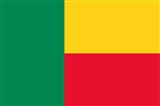
Benin , officially the Republic of Benin, is a country in Western Africa
West Africa

West Africa or Western Africa is the westernmost region of the African continent. Geopolitically, the United Nations subregion of Western Africa includes the following 16 countries distributed over an area of approximately 5 million square km:...
. It borders Togo
Togo

Togo is a narrow country in West Africa bordering Ghana to the west, Benin to the east and Burkina Faso to the north. It extends south to the Gulf of Guinea, on which the capital Lom? is located....
 to the west, Nigeria
Nigeria

Nigeria, officially the Federal Republic of Nigeria, is a federation constitutional republic comprising States of Nigeria and one Federal Capital Territory, Nigeria....
 to the east and Burkina Faso
Burkina Faso

Burkina Faso , also known by its short-form name Burkina, is a landlocked nation in West Africa. It is surrounded by six countries: Mali to the north, Niger to the east, Benin to the south east, Togo and Ghana to the south, and C?te d'Ivoire to the south west....
 and Niger
Niger

Niger , officially the Republic of Niger, is a landlocked country in Western Africa, named after the Niger River. It borders Nigeria and Benin to the south, Burkina Faso and Mali to the west, Algeria and Libya to the north and Chad to the east....
 to the north; its short coastline to the south leads to the Bight of Benin
Bight of Benin

The Bight of Benin is a bight on the western African coast that extends eastward for about 400 miles from Cape St. Paul to the Nun outlet of the Niger River....
. Its size is just over 110,000 km˛ with a population of almost 8,500,000. Its capital is the Yoruba
Yoruba

Yoruba may refer to:* Yoruba people, a West African ethnic group* Yoruba language, the language spoken by the Yoruba people* Yoruba religion, the traditional religion of the Yoruba people...
 founded city of Porto Novo, but the seat of government
Seat of government

The seat of government is defined by Brewer's Politics as "the building, complex of buildings or city from which a government exercises its authority"....
 is the Fon
FON

FON is a company that runs a system of shared wireless networks. The business was launched in November 2005.People can become members by agreeing to let FON share their wireless internet connection....
 city of Cotonou
Cotonou

Cotonou is the economic capital of Benin, as well as its largest city. Its official population count was 761,137 inhabitants in 2006; however, some estimates indicate its population may be as high as 1.2 million....
. Benin was known as
Geographical renaming

Geographical renaming is the act of changing the Geonym of a geography feature or area. This can range from the uncontroversial change of a street name to a highly disputed change to the name of a country....
 Dahomey
Dahomey

Dahomey was the name of a country in west Africa now called the Benin. The Kingdom of Dahomey was a powerful west African state founded in the seventeenth century which survived until 1894....
 until 1975.

ng the colonial period and at independence, the country was known as Dahomey.


Discussion
Ask a question about 'Benin'
Start a new discussion about 'Benin'
Answer questions from other users
Full Discussion Forum


Recent Posts


Encyclopedia


Benin , officially the Republic of Benin, is a country in Western Africa
West Africa

West Africa or Western Africa is the westernmost region of the African continent. Geopolitically, the United Nations subregion of Western Africa includes the following 16 countries distributed over an area of approximately 5 million square km:...
. It borders Togo
Togo

Togo is a narrow country in West Africa bordering Ghana to the west, Benin to the east and Burkina Faso to the north. It extends south to the Gulf of Guinea, on which the capital Lom? is located....
 to the west, Nigeria
Nigeria

Nigeria, officially the Federal Republic of Nigeria, is a federation constitutional republic comprising States of Nigeria and one Federal Capital Territory, Nigeria....
 to the east and Burkina Faso
Burkina Faso

Burkina Faso , also known by its short-form name Burkina, is a landlocked nation in West Africa. It is surrounded by six countries: Mali to the north, Niger to the east, Benin to the south east, Togo and Ghana to the south, and C?te d'Ivoire to the south west....
 and Niger
Niger

Niger , officially the Republic of Niger, is a landlocked country in Western Africa, named after the Niger River. It borders Nigeria and Benin to the south, Burkina Faso and Mali to the west, Algeria and Libya to the north and Chad to the east....
 to the north; its short coastline to the south leads to the Bight of Benin
Bight of Benin

The Bight of Benin is a bight on the western African coast that extends eastward for about 400 miles from Cape St. Paul to the Nun outlet of the Niger River....
. Its size is just over 110,000 km˛ with a population of almost 8,500,000. Its capital is the Yoruba
Yoruba

Yoruba may refer to:* Yoruba people, a West African ethnic group* Yoruba language, the language spoken by the Yoruba people* Yoruba religion, the traditional religion of the Yoruba people...
 founded city of Porto Novo, but the seat of government
Seat of government

The seat of government is defined by Brewer's Politics as "the building, complex of buildings or city from which a government exercises its authority"....
 is the Fon
FON

FON is a company that runs a system of shared wireless networks. The business was launched in November 2005.People can become members by agreeing to let FON share their wireless internet connection....
 city of Cotonou
Cotonou

Cotonou is the economic capital of Benin, as well as its largest city. Its official population count was 761,137 inhabitants in 2006; however, some estimates indicate its population may be as high as 1.2 million....
. Benin was known as
Geographical renaming

Geographical renaming is the act of changing the Geonym of a geography feature or area. This can range from the uncontroversial change of a street name to a highly disputed change to the name of a country....
 Dahomey
Dahomey

Dahomey was the name of a country in west Africa now called the Benin. The Kingdom of Dahomey was a powerful west African state founded in the seventeenth century which survived until 1894....
 until 1975.

Name

During the colonial period and at independence, the country was known as Dahomey. It was changed in 1975 to the People's Republic of Benin after the body of water on which the country lies, the Bight of Benin
Bight of Benin

The Bight of Benin is a bight on the western African coast that extends eastward for about 400 miles from Cape St. Paul to the Nun outlet of the Niger River....
, which had in turn been named after the Benin Empire
Benin Empire

The Benin Empire or Edo Empire was a large pre-colonial African state of modern Nigeria. It is not to be confused with the modern-day country called Benin ....
. Thus the country of Benin has no direct connection to Benin City
Benin City

Benin City, a city in Edo State, Nigeria, southern Nigeria, is a city approximately twenty-five miles North of the Benin River. It is situated 200 miles by road east of Lagos....
 in modern Nigeria, nor to the Benin bronzes
Benin Bronzes

The Benin Bronzes are a collection of more than 1,000 brass plaques from the royal palace of the Kingdom of Benin. They were seized by a United Kingdom force in the "Punitive Expedition" of 1897 and given to the British Foreign Office....
.

The new name was chosen for its neutrality. Dahomey was the name of the former Kingdom of Dahomey, which covered only the southern third of the present country and therefore did not represent the northwestern Atakora nor the kingdom of Borgu
Borgu

Borgu was a country in Africa, partitioned between the British Empire and France by the Anglo-French Convention of 1898. It lies in what is now Nigeria and the Republic of Benin....
, which covered the northeastern third.

History

The kingdom of Dahomey formed from a mixture of ethnic groups on the Abomey
Abomey

Abomey is a town in Benin, formerly the capital of the ancient kingdom of Dahomey. The kingdom was established about 1625. The royal palaces of Abomey are a group of earthen structures built by the Fon people people between the mid-17th and late 19th Centuries....
 plain. Historians theorized that the insecurity caused by slave trading may have contributed to mass migrations of groups to modern day Abomey, including some Aja
AJA

AJA or Aja may refer to:* Access to Justice Act 1999*Aja mountain, a mountain in Ha'il, Saudi Arabia.*Aja people, a group of people living in Benin...
, a Gbe
GBE

Gbe, GBE, or GbE can mean:* Gbe languages, a group of languages in West Africa* Knight or Dame Grand Cross of the Order of the British Empire, part of the British honours system...
 people who are believed to have founded the city. Those Aja living in Abomey mingled with the local Fons
Fons

Fons can refer to:* an alternate spelling of Fontus, a god in the Roman mythologyFons is the name or part of the name of several commune in France of France:...
, also a Gbe people, creating a new ethnic group known as "Dahomey". The Gbe peoples are said to be descendents of a number of migrants from Wyo. Gangnihessou
Gangnihessou

Gangnihessou, or Ganye Hessou, is the first of the traditional "twelve monarchs of Dahomey." Dahomey was an African kingdom situated in what is now Benin....
, (a member of an Aja
AJA

AJA or Aja may refer to:* Access to Justice Act 1999*Aja mountain, a mountain in Ha'il, Saudi Arabia.*Aja people, a group of people living in Benin...
 dynasty that in the 16th century along with the Ajay
Ajay

Ajay is a 1996 Hindi Language Movie directed by Suneel Darshan and starring Sunny Deol, Karishma Kapoor, Reena Roy, Sadashiv Amrapurkar. Other cast includes Kiran Kumar, Suresh Oberoi, Mohnish Bahl, Sharat Saxena, Farida Jalal, Laxmikant Berde...
 populace had come from Tadeo
Tadeo

General This is commonly known as a style for playing the game of poker. With this strategy, the odds of a winning hand are greatly improved....
 before settling and ruling separately in what is now Abominate, Allard
Allard

The Allard Motor Company was an English car manufacturer founded in 1936 by Sydney Allard. The company, based in Putney, London until 1945 and then in Clapham, London, produced approximately 1900 cars until its closure in 1966....
, and Porto Nov), became the first ruler of the Dahomey Kingdom. Dahomey had a military culture aimed at securing and eventually expanding the borders of the small kingdom with its capital at modern day Abomey.

The Dahomey kingdom was known for its culture and traditions. Boys were often apprenticed to older soldiers at a young age, and learned about the kingdom's military customs until they were old enough to join the navy. Dahomey was also famous for instituting an elite female soldier corps, called Ahosi or "our mothers" in the Fongbe language, and known by many Europeans as the Dahomean Amazons
Amazons

The Amazons , ) are a nation of all-female warriors in Classical and Greek mythology, who were possibly historical. Herodotus placed them in a region bordering Scythia in Sarmatians....
. This emphasis on military preparation and achievement earned Dahomey the nickname of "black Sparta
Sparta

Sparta was a city-state in ancient Greece, situated on the Eurotas River in the southern part of the Peloponnese. From circa 650 BC it rose to become the dominant military power in the region and as such was recognized as the overall leader of the combined Greek forces during the Greco-Persian Wars....
" from European observers and 19th century explorers like Sir Richard Burton.

Though the leaders of Dahomey appeared initially to resist the slave trade, it flourished in the region of Dahomey for almost three hundred years, leading to the area being named "the Slave Coast". Court protocols, which demanded that a portion of war captives from the kingdom's many battles be decapitated, decreased the number of enslaved people exported from the area. The number went from 20,000 per year at the beginning of the seventeenth century to 12,000 at the beginning of the 1800s. The decline was partly due to the banning of the trans-Atlantic trade by Britain and other countries. This decline continued until 1885, when the last Portuguese slave ship departed from the coast of present-day Benin Republic.

By the middle of the nineteenth century, Dahomey started to lose its status as the regional power. This enabled the French
France

France , officially the French Republic , is a country whose Metropolitan France is located in Western Europe and that also comprises various Overseas departments and territories of France....
 to take over the area in 1892. In 1899, the French included land called Dahomey
French Dahomey

Dahomey was a French Third Republic colony of and a part of French West Africafrom 1904 to 1958. After World War II, by the establishment of the French Fourth Republic in 1947, Dahomey became part of the French Union with an increased autonomy....
 within the French West Africa
French West Africa

File:AOFMap1936.jpgFile:Gor?ePalais.JPG French West Africa was a federation of eight French colonial empires#Second French colonial empire territories in Africa: Mauritania, Senegambia and Niger, French Sudan , French Guinea , C?te d'Ivoire, French Upper Volta and Dahomey ....
 colony. In 1958, France granted autonomy to the Republic of Dahomey
Republic of Dahomey

The Republic of Dahomey was established on December 11, 1958, as a self-governing colony within the French Community. Prior to attaining autonomy it had been French Dahomey, part of the French Union....
, and full independence as of August 1, 1960. The president who led them to independence was Hubert Maga.

For the next 12 years, ethnic strife contributed to a period of turbulence. There were several coups and regime changes, with three figures dominating - Sourou Apithy, Hubert Maga
Hubert Maga

Coutoucou Hubert Maga was a politician from Dahomey .Dahomey was renamed Benin in 1975. See . He arose on a political scene where one's power was regionalism ....
, and Justin Ahomadegbé - each of them representing a different area and ethnicity of the country. These three agreed to form a presidential council after violence marred the 1970 elections.

In 1972, a military coup led by Mathieu Kérékou
Mathieu Kérékou

Mathieu K?r?kou, also known as Ahmed K?r?kou, was List of Presidents of Benin of Benin from 1972 to 1991 and again from 1996 to 2006. After seizing power in a military coup, he ruled the country for 17 years, for most of that time under an officially Marxist ideology, before he was stripped of his powers by the National Conference of 1...
 overthrew the council. Kérékou established a Marxist
Marxism

Marxism is the political philosophy and practice derived from the work of Karl Marx and Friedrich Engels. Marxism holds at its core a Marxist analysis of Critique of capitalism and a theory of social change....
 government under the control of Military Council of the Revolution (CNR). In 1975 he renamed the country the People's Republic of Benin
People's Republic of Benin

The People's Republic of Benin was the official name of the African country of Benin as a socialist state from November 30, 1975 to March 1, 1990....
. In 1979, the CNR was dissolved and elections took place. By the late 1980s, Kérékou abandoned Marxism after an economic crisis and decided to re-establish a parliamentary capitalist
Capitalism

Capitalism is an economic system in which wealth, and the means of producing wealth, are private property and controlled rather than commonly, publicly, or state-owned and controlled....
 system.

In 1991 he was defeated by Nicéphore Soglo
Nicéphore Soglo

Nic?phore Dieudonn? Soglo is a Beninese politician who was Heads of Government of Benin from 1990 to 1991 and Heads of State of Benin from 1991 to 1996....
 and became the first black African president to step down after an election. Kérékou returned to power after winning the 1996 vote. In 2001, a closely fought election resulted in Kérékou's winning another term. His opponents claimed election irregularities.

President Kérékou and former President Soglo did not run in the 2006 elections, as both were barred by the constitution's restricting age and total terms of candidates. President Kérékou is widely praised for making no effort to change the constitution so that he could remain in office or run again, unlike some African leaders.

On March 5, 2006, an election was held that was considered free and fair. It resulted in a runoff
RUNOFF

RUNOFF was the first computer text formatting computer program to see significant use. It was written in 1964 for the Compatible Time-Sharing System operating system by Jerome H....
 between Yayi Boni
Yayi Boni

Dr Thomas Yayi Boni , a Beninois banker and politician, is the current President of Benin. He took office on 6 April 2006 after winning Benin presidential election, 2006 held in the previous month....
 and Adrien Houngbédji
Adrien Houngbédji

Adrien Houngb?dji is a Beninese politician. A former Prime Minister and President of the National Assembly of Benin, he is the leader of the Democratic Renewal Party , one of the country's main political parties, and has run in every presidential election since 1991....
. The runoff election was held on March 19 and was won by Yayi Boni, who assumed office on April 6. The success of the fair multi-party elections in Benin won praise internationally. Benin is widely considered a model democracy in Africa.

Politics


Benin's politics take place in a framework of a presidential
Presidential system

A presidential system is a system of government where an executive branch exists and presides separately from the legislature, to which it is not wikt:accountable and which cannot, in normal circumstances, wikt:dismiss it....
 representative democratic
Representative democracy

File:Electoral democracies.pngRepresentative democracy is a form of government founded on the principle of Election individuals representing the people, as opposed to either autocracy or direct democracy....
 republic
Republic

A republic is a state or country that is not led by a hereditary monarch but in which the people have an impact on its government. The word originates from the Latin term res publica....
, whereby the President of Benin, who is currently Yayi Boni
Yayi Boni

Dr Thomas Yayi Boni , a Beninois banker and politician, is the current President of Benin. He took office on 6 April 2006 after winning Benin presidential election, 2006 held in the previous month....
, is both head of state
Head of State

Head of state is the generic term for the individual or collective office that serves as the chief public representative of a monarchic or republican nation-state, federation, commonwealth or any other political state....
 and head of government
Head of government

The head of government is the chief officer of the executive branch of a government, often presiding over a cabinet . In a parliamentary system, the head of government is often styled Prime Minister, President of the Government, Premier, etc....
, and of a multi-party system
Multi-party system

A multi-party system is a system in which three or more political parties have the capacity to gain control of government separately or in coalition....
. Executive power is exercised by the government. Legislative power is vested in both the government
Government

Government is the body within any organization that has the authority to make and the power to enforce laws, regulations, or rules. Typically, the government refers to a civil government -- local, provincial, or national -- but commercial, academic, religious, or other formal organizations are also administered by governing bodies....
 and the legislature. The Judiciary
Judiciary

In law, the judiciary is the system of courts which administer justice in the name of the Sovereignty or state, a mechanism for the dispute resolution....
 is independent of the executive and the legislature. The political system is derived from the 1990 Constitution of Benin
Constitution of Benin

The Constitution of Benin was adopted by referendum on 2 December 1990.External links ...
 and the subsequent transition to democracy in 1991.

In its 2007 Worldwide Press Freedom Index, Reporters Without Borders
Reporters Without Borders

Reporters Without Borders, or RWB is a Paris-based international non-governmental organization that advocates freedom of the press. It was founded in 1985 by current Secretary General Robert M?nard, Rony Brauman and the journalist Jean-Claude Guillebaud....
 ranked Benin 53rd out of 169 countries.

Departments and communes

Image:Benin departments named.png|thumb|right|Departments of Benin rect 96 41 108 60 Alibori
Alibori Department

Alibori is the largest and northernmost Departments of Benin of Benin, with an area of 25,683 km? and a population of 355,950 . The department is subdivided into 6 communes, each centered at one of the principal towns: Banikoara, Gogounou, Kandi, Karimama, Malanville, and Segbana....
rect 43 70 56 89 Atakora
Atakora Department

Atakora is the northwestern Departments of Benin of Benin, bordering Togo to the west and Burkina Faso to the north. Also, it borders the departments of Alibori Department, Borgou Department, and Donga Department....
rect 68 237 80 256 Atlantique
Atlantique Department

Atlantique is one of the twelve departments of Benin of Benin.Atlantique is divided into the communes of Abomey-Calavi, Allada, Kpomass?, Ouidah, S?-Ava, Toffo, Tori-Bossito, and Z?....
rect 85 105 98 125 Borgou
Borgou Department

Borgou is one of the twelve departments of Benin of Benin. Borgou borders the country of Nigeria and the departments of Alibori Department, Atakora Department, Collines Department and Donga Department....
rect 68 176 81 196 Collines
Collines Department

Collines is one of the twelve departments of Benin. Collines was created in 1999 after the Benin government split up the former six departments of Atakora Department, Atlantique Department, Borgou Department, Mono Department, Oueme Department and Zou Department into twelve....
rect 48 116 60 134 Donga
Donga Department

Donga is one of the twelve departments of Benin of Benin. Donga was created in 1999 when the government split up the original six departments into twelve....
rect 50 224 62 242 Couffo
Kouffo Department

Kouffo is one of the twelve departments of Benin of Benin. The area of Kouffo is 2,404 km.? . Kouffo borders the country of Togo and it also borders the departments of Mono Department, Zou Department, and Atlantique Department....
rect 84 254 97 271 Littoral
Littoral Department

Littoral is one of the twelve departments of Benin of Benin, and is divided into 13 arrondissements. It contains just one commune/city, Cotonou, the largest in the country and the economic capital....
rect 53 242 65 257 Mono
Mono Department

Mono is one of the twelve departments of Benin of Benin. The capital of this department is Lokossa. The department of Kouffo Department was part of Mono until 1999 when the Benin government split up some of the departments and made new departments....
rect 98 237 118 255 Ouémé
Ouémé Department

Oueme is one of the twelve departments of Benin of Benin.In 1999 the northern part of the department was split off to form the new Plateau Department....
rect 98 206 117 224 Plateau
Plateau Department

Plateau is one of the twelve departments of Benin of Benin.Plateau is divided into the communes of Ifangni, Adja-Ou?r?, K?tou, Pob? and Sak?t?....
rect 62 211 78 229 Zou
Zou Department

Zou is one of the twelve departments of Benin of Benin.Zou is divided into the communes of Abomey, Abgangnizoun, Bohicon, Cov?, Djidja, Ouinhi, Za-Kpota, Zangnanado, and Zogbodomey....
Benin is divided into 12 departments
Department (subnational entity)

In the terminology of political geography and historiography a national department is an administrative division political division of a country established by the cognizant government authority holding sovereign power for the territory....
 (French: départements), and subdivided into 77 communes. In 1999, the previous six departments were each split into two halves, forming the current 12. The six new departments have not been assigned an official capital yet.

  1. Alibori
    Alibori Department

    Alibori is the largest and northernmost Departments of Benin of Benin, with an area of 25,683 km? and a population of 355,950 . The department is subdivided into 6 communes, each centered at one of the principal towns: Banikoara, Gogounou, Kandi, Karimama, Malanville, and Segbana....
  2. Atakora
    Atakora Department

    Atakora is the northwestern Departments of Benin of Benin, bordering Togo to the west and Burkina Faso to the north. Also, it borders the departments of Alibori Department, Borgou Department, and Donga Department....
  3. Atlantique
    Atlantique Department

    Atlantique is one of the twelve departments of Benin of Benin.Atlantique is divided into the communes of Abomey-Calavi, Allada, Kpomass?, Ouidah, S?-Ava, Toffo, Tori-Bossito, and Z?....
  4. Borgou
    Borgou Department

    Borgou is one of the twelve departments of Benin of Benin. Borgou borders the country of Nigeria and the departments of Alibori Department, Atakora Department, Collines Department and Donga Department....
  5. Collines
    Collines Department

    Collines is one of the twelve departments of Benin. Collines was created in 1999 after the Benin government split up the former six departments of Atakora Department, Atlantique Department, Borgou Department, Mono Department, Oueme Department and Zou Department into twelve....
  6. Donga
    Donga Department

    Donga is one of the twelve departments of Benin of Benin. Donga was created in 1999 when the government split up the original six departments into twelve....
  7. Kouffo
    Kouffo Department

    Kouffo is one of the twelve departments of Benin of Benin. The area of Kouffo is 2,404 km.? . Kouffo borders the country of Togo and it also borders the departments of Mono Department, Zou Department, and Atlantique Department....
  8. Littoral
    Littoral Department

    Littoral is one of the twelve departments of Benin of Benin, and is divided into 13 arrondissements. It contains just one commune/city, Cotonou, the largest in the country and the economic capital....
  9. Mono
    Mono Department

    Mono is one of the twelve departments of Benin of Benin. The capital of this department is Lokossa. The department of Kouffo Department was part of Mono until 1999 when the Benin government split up some of the departments and made new departments....
  10. Ouémé
    Ouémé Department

    Oueme is one of the twelve departments of Benin of Benin.In 1999 the northern part of the department was split off to form the new Plateau Department....
  11. Plateau
    Plateau Department

    Plateau is one of the twelve departments of Benin of Benin.Plateau is divided into the communes of Ifangni, Adja-Ou?r?, K?tou, Pob? and Sak?t?....
  12. Zou
    Zou Department

    Zou is one of the twelve departments of Benin of Benin.Zou is divided into the communes of Abomey, Abgangnizoun, Bohicon, Cov?, Djidja, Ouinhi, Za-Kpota, Zangnanado, and Zogbodomey....


Geography

Benin Map
Benin, a narrow, key-shaped, north-south strip of land in west Africa, lies between the Equator and the Tropic of Cancer. Benin's latitude ranges from 6°30'N to 12°30'N and its longitude from 1°E to 3°40'E. Benin is bounded by Togo to the west, Burkina Faso and Niger to the north, Nigeria to the east, and the Bight of Benin to the south. With an area of 112,622 square kilometers, roughly the size of Pennsylvania, Benin extends from the Niger River in the north to the Atlantic Ocean in the south, a distance of 700 kilometers (about 500 miles). Although the coastline measures 121 kilometers (about 80 miles) the country measures about 325 kilometers (about 215 miles) at its widest point. It is one of the smaller countries in West Africa: eight times smaller than Nigeria, its neighbor to the east. It is, however, twice as large as Togo, its neighbor to the west. A relief map of Benin shows that it has little variation in elevation (average elevation 200 meters).

The country can be divided into four areas from the south to the north. The low-lying, sandy, coastal plain (highest elevation 10 meters) is, at most, 10 kilometers wide. It is marshy and dotted with lakes and lagoons communicating with the ocean. The plateaus of southern Benin (altitude between 20 meters and 200 meters) are split by valleys running north to south along the Couffo, Zou, and Oueme Rivers. An area of flat lands dotted with rocky hills whose altitude seldom reaches 400 meters extends around Nikki and Save. Finally, a range of mountains extends along the northwest border and into Togo; this is the Atacora, with the highest point, Mont Sokbaro, at 658 meters. Two types of landscape predominate in the south.

Benin has fields of lying fallow, mangroves, and remnants of large sacred forests. In the rest of the country, the savanna is covered with thorny scrubs and dotted with huge baobab trees. Some forests line the banks of rivers. In the north and the northwest of Benin the Reserve du W du Niger and Pendjari National Park attract tourists eager to see elephants, lions, antelopes, hippos, and monkeys.

Benin's climate is hot and humid. Annual rainfall in the coastal area averages 36 cm. (14 in.), not particularly high for coastal West Africa. Benin has two rainy and two dry seasons. The principal rainy season is from April to late July, with a shorter less intense rainy period from late September to November. The main dry season is from December to April, with a short cooler dry season from late July to early September. Temperatures and humidity are high along the tropical coast. In Cotonou, the average maximum temperature is 31 °C (89 °F); the minimum is 24 °C (75 °F).

Variations in temperature increase when moving north through a savanna and plateau toward the Sahel. A dry wind from the Sahara called the Harmattan blows from December to March. Grass dries up, the vegetation turns reddish brown, and a veil of fine dust hangs over the country, causing the skies to be overcast. It also is the season when farmers burn brush in the fields.

Economy

The economy of Benin remains underdeveloped and dependent on subsistence agriculture, cotton production, and regional trade. Growth in real output has averaged around 5% in the past seven years, but rapid population growth has offset much of this increase. Inflation has subsided over the past several years. In order to raise growth still further, Benin plans to attract more foreign investment, place more emphasis on tourism, facilitate the development of new food processing systems and agricultural products, and encourage new information and communication technology.

Projects to improve the business climate by reforms to the land tenure system, the commercial justice system, and the financial sector were included in Benin's $307 million Millennium Challenge Account grant signed in February 2006. The 2001 privatization policy continues in telecommunications, water, electricity, and agriculture though the government annulled the privatization of Benin's state cotton company in November 2007 after the discovery of irregularities in the bidding process.

The Paris Club and bilateral creditors have eased the external debt situation, with Benin benefiting from a G8 debt reduction announced in July 2005, while pressing for more rapid structural reforms. An insufficient electrical supply continues to adversely affect Benin's economic growth though the government recently has taken steps to increase domestic power production.

Although trade unions in Benin
Trade unions in Benin

Trade unions in Benin operate in relative freedom, with approximately 75% of the formal sector being trade union. There are, however, concerns expressed by the International Labour Organization and the International Trade Union Confederation about the discrepancies between the government's Benin Labour Code and the labour practices outline...
 represent up to 75% of the formal workforce, the large informal economy has been noted by the International Trade Union Confederation
International Trade Union Confederation

The International Trade Union Confederation is the world's largest trade union federation. It was formed on November 1, 2006 out of the merger of the International Confederation of Free Trade Unions and the World Confederation of Labour ....
 (ITCU) to contain ongoing problems, including a lack of women's wage equality, the use of child labour
Child labor

Child labour, or child labor, is the employment of children at regular and sustained labour. This practice is considered exploitative by many countries and international organizations....
, and the continuing issue of forced labour
Unfree labour

Unfree labour is a generic or collective term for those work relations, especially in modern history or Early Modern period history, in which people are employed against their will by the threat of destitution, detention, violence , or other extreme hardship to themselves, or to members of their families....
.

Demographics


The majority of Benin's 7.86 million people live in the south. The population is young, with a life expectancy of 53 years. About 42 African ethnic groups live in this country; these various groups settled in Benin at different times and also migrated within the country. Ethnic groups include the Yoruba in the southeast (migrated from Nigeria in the 12th century); the Dendi in the north-central area (they came from Mali in the 16th century); the Bariba and the Fulbe (Peul) in the northeast; the Betammaribe and the Somba in the Atacora Range; the Fon in the area around Abomey in the South Central and the Mina, Xueda, and Aja (who came from Togo) on the coast.

Recent migrations have brought other African nationals to Benin that include Nigerians, Togolese, and Malians. The foreign community also includes many Lebanese and Indians involved in trade and commerce. The personnel of the many European embassies and foreign aid missions and of nongovernmental organizations and various missionary groups account for a large part of the 5,500 European population.

Religion


In the 2002 census, 42.8% of the population of Benin were Christian
Christianity

Christianity is a Monotheistic religion #Christian view religion centered on the life and teachings of Jesus as New Testament view on Jesus' life....
 (27.1 percent Roman Catholic, 5 percent Celestial Church of Christ
Celestial Church of Christ

The Celestial Church of Christ is an African Initiated Church founded by Samuel Bilehou Oshoffa in 1947....
, 3.2 percent Methodist, 7.5 percent other Christian denominations), 24.4 percent were Muslim, 17.3 percent practices Vodun, 6 percent other traditional local religious groups, 1.9 percent other religious groups, and 6.5 percent claim no religious affiliation.

Indigenous religions include local animistic
Animism

Animism is a philosophical, religious or spiritual idea that souls or spirits exist not only in humans and animals but also in plants, rock s, natural phenomena such as thunder, geographic features such as mountains or rivers, or other entities of the natural environment, a proposition also known as hylozoism in philosophy....
 religions in the Atakora (Atakora and Donga provinces) and Vodun and Orisha
Orisha

An Orisha is a spirit or deity that reflects one of the manifestations of Olodumare in the Yoruba mythology spiritual or religion . This religion has found its way throughout the world and is now expressed in several varieties which include Anago, Adefunmi, Candombl?, Lucum?, and the Orisa religion of Trinidad, as well as some aspects o...
 or Orisa veneration among the Yoruba and Tado peoples in the center and south of the country. The town of Ouidah
Ouidah

File:Ouidah.jpgOuidah is a city on the Atlantic Ocean coast of Benin....
 on the central coast is the spiritual center of Beninese Vodun.

The major introduced religions are Islam
Islam

Islam is a Monotheism, Abrahamic religion originating with the teachings of the Prophets of Islam Muhammad, a 7th century Arab religious and political figure....
, introduced by the Songhai Empire
Songhai Empire

The Songhai Empire, also known as the Songhay Empire, was a pre-colonial African state of west Africa. From the early 15th to the late 16th century, Songhai was one of the largest African empires in history....
 and Hausa merchants, and now followed throughout Alibori, Borgou, and Donga
Donga

Donga may refer to:In places:*Donga Department, in Benin*Donga, Angola, a town in Angola*Donga, Nigeria, a town in Taraba State of Nigeria, inhabited principally by the Chamba Tribe; the traditional head is the "Gara Donga"...
 provinces, as well as among the Yoruba (who also follow Christianity), and Christianity
Christianity

Christianity is a Monotheistic religion #Christian view religion centered on the life and teachings of Jesus as New Testament view on Jesus' life....
, followed throughout the south and center of Benin and in Otammari country in the Atakora. Many, however, continue to hold Vodun and Orisha
Orisha

An Orisha is a spirit or deity that reflects one of the manifestations of Olodumare in the Yoruba mythology spiritual or religion . This religion has found its way throughout the world and is now expressed in several varieties which include Anago, Adefunmi, Candombl?, Lucum?, and the Orisa religion of Trinidad, as well as some aspects o...
 beliefs and have incorporated into Christianity the pantheon of Vodun and Orisha
Orisha

An Orisha is a spirit or deity that reflects one of the manifestations of Olodumare in the Yoruba mythology spiritual or religion . This religion has found its way throughout the world and is now expressed in several varieties which include Anago, Adefunmi, Candombl?, Lucum?, and the Orisa religion of Trinidad, as well as some aspects o...
.

Culture

There are three main religions. Benin has played an important role in the African music scene, producing one of the biggest stars to come out of the continent in Angélique Kidjo
Angélique Kidjo

Ang?lique Kidjo is a Grammy Award-winning Beninese singer-songwriter, noted for her diverse musical influences and creative music videos....
. Post-independence, the country was home to a vibrant and innovative music scene, where native folk music combined with Ghana
Ghana

The Republic of Ghana is a country in West Africa. It borders C?te d'Ivoire to the west, Burkina Faso to the north, Togo to the east, and the Gulf of Guinea to the south....
ian highlife
Highlife

Highlife is a musical genre that originated in Ghana in the 1800s and spread to Sierra Leone, Nigeria and other West African countries by 1920. It is very popular in Liberia and all of English-speaking West Africa, although little has been produced in other countries due to economic challenges brought on by war and instability....
, French
France

France , officially the French Republic , is a country whose Metropolitan France is located in Western Europe and that also comprises various Overseas departments and territories of France....
 cabaret
Cabaret

Cabaret is a form of entertainment featuring comedy, song, dance, and theatre, distinguished mainly by the performance venue — a restaurant or nightclub with a stage for performances and the audience sitting at tables watching the performance being introduced by a master of ceremonies, or MC....
, American
United States

The United States of America is a Federal government constitutional republic comprising U.S. state and a federal district. The country is situated mostly in central North America, where its Contiguous United States and Washington, D.C., the Capital districts and territories, lie between the Pacific Ocean and Atlantic Oceans, Borders of the U...
 rock
Rock and roll

Rock and roll is a form of music that evolved in the United States in the late 1940s and early 1950s. Its roots lay mainly in rhythm and blues, Country music, folk music, gospel music, and jazz....
, funk
Funk

Funk is an United States Music genre that originated in the mid- to late-1960s when African American musicians blended soul music, soul jazz and R&B into a rhythmic, danceable new form of music....
 and soul
Soul music

Soul music is a music genre originating in the United States combining elements of gospel music and rhythm and blues. According to the Rock and Roll Hall of Fame, soul is "music that arose out of the African American culture through the transmutation of gospel and rhythm & blues into a form of funky, Secularity testifying." The genre occasion...
, and Congo
Music of the Democratic Republic of the Congo

Describing the music of the Democratic Republic of the Congo is difficult, due to vagaries surrounding the meanings of various terms. The country itself was formerly called Zaire and is now sometimes referred to as Congo-Kinshasa to distinguish it from the Republic of the Congo ....
lese rumba. Ignacio Blazio Osho was perhaps the most influential musician of this period, alongside Pedro Gnonnas y sus Panchos, Les Volcans de la Capitale and Picoby Band d'Abomey. Pedro produced the song Feso Jaiye, which became a hit and was performed by many bands at the 2nd All-Africa Games in 1973.

Beninese literature had a strong oral tradition long before French
French language

French is a Romance language spoken around the world by around 80 million people as first language, by 190 million as second language, and by about another 200 million people as an acquired tongue, with significant speakers in 54 countries....
 became the dominant language. Felix Couchoro wrote the first Benin
Benin

Benin , officially the Republic of Benin, is a country in West Africa. It borders Togo to the west, Nigeria to the east and Burkina Faso and Niger to the north; its short coastline to the south leads to the Bight of Benin....
ese novel, L'Esclave in 1929
1929 in literature

The year 1929 in literature involved some significant events and new books....
. Many Religions there though are Christian Local languages are used as the languages of instruction in elementary schools, with French only introduced after several years. Beninois languages are generally transcribed with a separate letter for each speech sound (phoneme
Phoneme

In human language, a phoneme is the smallest posited linguistically distinctive unit of sound. Phonemes carry no semantic content themselves. In theoretical terms, phonemes are not the physical segment s themselves, but cognitive abstractions or categorizations of them....
), rather than using diacritic
Diacritic

A diacritic is a small sign added to a letter to alter pronunciation or to distinguish between similar words. The term derives from the Greek language d?a???t???? ....
s as in French or digraph
Digraph (orthography)

A digraph, bigraph , or digram is a pair of characters used to write one phoneme or a sequence of phonemes that does not correspond to the normal values of the two characters combined....
s as in English. This includes Beninese Yoruba
Yoruba language

Yoruba is a dialect continuum of West Africa with over 25 million speakers. The native tongue of the approximately 28 million Yoruba people, it is spoken, among other languages, in Nigeria, Benin, and Togo and traces of it are found among communities in Brazil, Sierra Leone , northern Ghana and Cuba ....
, which in Nigeria
Nigeria

Nigeria, officially the Federal Republic of Nigeria, is a federation constitutional republic comprising States of Nigeria and one Federal Capital Territory, Nigeria....
 is written with both diacritics and digraphs. For instance, the mid vowel
Mid vowel

A mid vowel is a vowel sound used in some spoken languages. The defining characteristic of a mid vowel is that the tongue is positioned mid-way between an open vowel and a close vowel....
s written é č, ô, o in French are written in Beninese languages, whereas the consonant
Consonant

In articulatory phonetics, a consonant is a speech sound that is articulated with complete or partial closure of the upper vocal tract, the upper vocal tract being defined as that part of the vocal tract that lies above the larynx....
s written ng and sh or ch in English are written ? and c. However, digraphs are used for nasal vowel
Nasal vowel

A nasal vowel is a vowel that is produced with a lowering of the Soft palate so that air escapes both through nose as well as the mouth. The term stands in opposition to the term "oral vowel" refers to an ordinary vowel without this nasalisation....
s and the labial-velar consonant
Labial-velar consonant

Labial-velar consonants are Doubly articulated consonant at the Soft palate and the lips. They are sometimes called "labiovelar consonants", a term which can also refer to labialization velars, such as and the approximant ....
s kp and gb, as in the name of the Fon language Fon gbe , and diacritics are used as tone marks
Tone (linguistics)

Tone is the use of pitch in language to distinguish lexical or grammatical meaning?that is, to distinguish or inflection words. All languages use pitch to express emotional and other paralinguistic information, and to convey emphasis, contrast, and other such features in what is called intonation , but not all languages use tones to distingu...
.French-language publications, a mixture of French and Beninois orthographies may be seen.

Health

During the 1980s, less than 30 percent of the population had access to primary health care services. Benin had one of the highest death rates for children under the age of five in the world. Its infant mortality rate stood at 203 deaths for every 1000 live births. Only one of three mothers had access to child healthcare services. The Bamako Initiative
Bamako Initiative

The Bamako Initiative was a formal statement adopted by African health ministers in 1987 in Bamako, Mali, to implement strategies designed to increase the availability of essential drugs and other healthcare services for Sub-Saharan Africans....
 changed that dramatically by introducing community-based healthcare reform, resulting in more efficient and equitable provision of services. A comprehensive approach strategy was extended to all areas of health care, with subsequent improvement in the health care indicators and improvement in health care efficiency and cost.

See also

  • List of Benin-related topics
    List of Benin-related topics

    This is a list of topics related to Benin. Those interested in the subject can monitor changes to the pages by clicking on Related changes in the sidebar....


External links


Government
  • has details of Benin anti-corruption efforts
  • (official site)
  • [https://www.cia.gov/library/publications/world-leaders-1/world-leaders-b/benin.html Chief of State and Cabinet Members]


General information
  • from BBC News
    BBC News

    BBC News, formerly BBC News and Current Affairs, is the department within the BBC responsible for the corporation's news-gathering and production of news programmes on BBC television, radio and online....
    * from UCB Libraries GovPubs
News media
  • from Stanford University


Travel