


Trans fat

Encyclopedia
Trans fat is the common name for unsaturated fat
with trans-isomer (E-isomer) fatty acid
(s). Because the term refers to the configuration of a double carbon-carbon bond, trans fats are sometimes monounsaturated
or polyunsaturated
, but never saturated
.
Trans fats are not essential fatty acids. The consumption of trans fats increases the risk of coronary heart disease
by raising levels of LDL cholesterol and lowering levels of "good" HDL cholesterol. Health authorities worldwide recommend that consumption of trans fat be reduced to trace amounts. Trans fats from partially hydrogenated oils are more harmful than naturally occurring oils. Two Canadian studies, that received funding by the Alberta Livestock and Meat Agency and the Dairy Farmers of Canada, have shown that the natural trans fat vaccenic acid, found in beef and dairy products, can have the opposite health effect and can actually be beneficial compared to hydrogenated vegetable shortening, or a mixture of pork lard and soy fat, e.g. lowering total and LDL cholesterol and triglyceride levels.
Unsaturated fat is a fat molecule containing one or more double bond
s between the carbon atoms. Since the carbons are double-bonded to each other, there are fewer bonds connected to hydrogen, so there are fewer hydrogen atoms, hence the name, 'unsaturated'. Cis and trans are terms that refer to the arrangement of the two hydrogen atoms bonded to the carbon atoms involved in a double bond. In the cis arrangement, the hydrogens are on the same side of the double bond. In the trans arrangement, the hydrogens are on opposite sides of the double bond.
The process of hydrogenation
adds hydrogen
atoms to unsaturated fats, eliminating double bonds and making them into partially or completely saturated fat
s. However, partial hydrogenation, if it is chemical rather than enzymatic, converts a part of cis-isomers into trans-unsaturated fats instead of hydrogenating them completely. Trans fats also occur naturally in a limited number of cases: Vaccenyl
and conjugated linoleyl
(CLA) containing trans fats occur naturally in trace amounts in meat and dairy products from ruminants, although the latter also constitutes a cis fat.
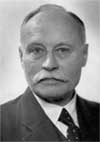
 Nobel
Nobel
laureate
Paul Sabatier
worked in the late 1890s to develop the chemistry of hydrogenation, which enabled the margarine
, oil hydrogenation, and synthetic methanol
industries. Whereas Sabatier considered hydrogenation of only vapors, the German
chemist
Wilhelm Normann
showed in 1901 that liquid oils could be hydrogenated, and patent
ed the process in 1902.
During the years 1905 – 1910, Normann built a fat-hardening facility in the Herford
company. At the same time, the invention was extended to a large-scale plant in Warrington
, England
, at Joseph Crosfield
& Sons, Limited. It took only two years until the hardened fat could be successfully produced in the plant in Warrington, commencing production in the autumn of 1909. The initial year's production totalled nearly 3,000 tonnes.
In 1909, Procter & Gamble
acquired the US rights to the Normann patent;
in 1911, they began marketing the first hydrogenated shortening
, Crisco
(composed largely of partially hydrogenated cottonseed oil
). Further success came from the marketing technique of giving away free cookbooks in which every recipe called for Crisco.
Normann's hydrogenation process made it possible to stabilize affordable whale oil
or fish oil
for human consumption, a practice kept secret to avoid consumer distaste.
Prior to 1910, dietary fats consisted primarily of butterfat
, beef tallow
, and lard
. During Napoleon’s reign in France in the early 19th century, a type of margarine was invented to feed the troops using tallow and buttermilk; it did not gain acceptance in the U.S. In the early 20th century, soybeans began to be imported into the U.S. as a source of protein; soybean oil was a by-product. What to do with that oil became an issue. At the same time, there was not enough butterfat available for consumers. The method of hydrogenating fat and turning a liquid fat into a solid one had been discovered, and now the ingredients (soybeans) and the “need” (shortage of butter) were there. Later, the means for storage, the refrigerator, was a factor in trans fat development. The fat industry found that hydrogenated fats provided some special features to margarines, which, unlike butter, allowed margarine to be taken out of the refrigerator and immediately spread on a slice of bread. By some minor changes to the chemical composition of hydrogenated fat, such hydrogenated fat was found to provide superior baking properties compared to lard. Margarine made from hydrogenated soybean oil began to replace butterfat. Hydrogenated fat such as Crisco and Spry
, sold in England, began to replace lard in the baking of bread, pies, cookies, and cakes in 1920.
In the 1940s, Dr Catherine Kousmine
researched the effects of trans fats on cancer.
Production of hydrogenated fats increased steadily until the 1960s, as processed vegetable fats replaced animal fats in the US and other western countries. At first, the argument was a financial one due to lower costs; advocates also said that the unsaturated trans fats of margarine were healthier than the saturated fat
s of butter.
As early as 1956 there were suggestions in the scientific literature that trans fats could be a cause of the large increase in coronary artery disease but after three decades the concerns were still largely unaddressed. Studies in the early 1990s, however, brought renewed scrutiny and confirmation of the negative health impact of trans fats. In 1994, it was estimated that trans fats caused 20,000 deaths annually in the US from heart disease.
Mandatory food labeling for trans fats was introduced in several countries. Campaigns were launched by activists to bring attention to the issue and change the practices of food manufacturers. In January 2007, faced with the prospect of an outright ban on the sale of their product, Crisco was reformulated to meet the United States Food and Drug Administration definition of "zero grams trans fats per serving" (that is less than one gram per tablespoon, or up to 7% by weight) by boosting the saturation and then cutting the resulting solid with oils.
A University of Guelph
research group has found a way to mix oils (such as olive, soybean and canola), water, monoglycerides and fatty acids to form a "cooking fat" that acts the same way as trans and saturated fats.
Fatty acids are characterized as either saturated or unsaturated based on the presence of double bonds in its structure. If the molecule contains no double bonds, it is said to be saturated; otherwise, it is unsaturated to some degree.
Only unsaturated fats can be trans or cis fat, since only a double bond can be locked to these orientations. Saturated fatty acids are never called trans fats because they have no double bonds, and, therefore, all their bonds are freely rotatable. Other types of fatty acids such as crepenynic acid, which contains a triple bond
, are rare and of no nutritional significance.
Carbon atoms are tetravalent, forming four covalent bond
s with other atoms, whereas hydrogen atoms bond with only one other atom. In saturated fatty acids, each carbon atom is connected to its two neighbour carbon atoms as well as two hydrogen atoms. In unsaturated fatty acids, the carbon atoms that are missing a hydrogen atom are joined by double bonds rather than single bonds so that each carbon atom participates in four bonds.
 Hydrogenation
of an unsaturated fatty acid refers to the addition of hydrogen atoms to the acid, causing double bonds to become single ones, as carbon atoms acquire new hydrogen partners (to maintain four bonds per carbon atom). Full hydrogenation results in a molecule containing the maximum amount of hydrogen (in other words, the conversion of an unsaturated fatty acid into a saturated one). Partial hydrogenation results in the addition of hydrogen atoms at some of the empty positions, with a corresponding reduction in the number of double bonds. Typical commercial hydrogenation is partial in order to obtain a malleable mixture of fats that is solid
at room temperature
, but melts upon baking (or consumption).
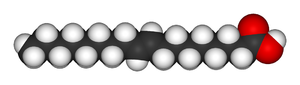
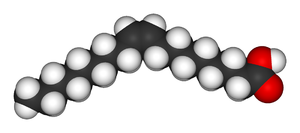
In most naturally occurring unsaturated fatty acids, the hydrogen atoms are on the same side of the double bonds of the carbon chain (cis configuration — from the Latin, meaning "on the same side"). However, partial hydrogenation reconfigures most of the double bonds that do not become chemically saturated, twisting them so that the hydrogen atoms end up on different sides of the chain. This type of configuration is called trans, from the Latin, meaning "across." The trans configuration is the lower energy form, and is favored when catalytically equilibrated as a side reaction in hydrogenation.
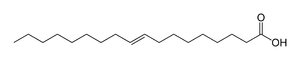
The same molecule, containing the same number of atoms, with a double bond in the same location, can be either a trans or a cis fatty acid depending on the configuration of the double bond. For example, oleic acid
and elaidic acid
are both unsaturated fatty acids with the chemical formula
C9H17C9H17O2. They both have a double bond located midway along the carbon chain. It is the configuration of this bond that sets them apart. The configuration has implications for the physical-chemical
properties of the molecule. The trans configuration is straighter, while the cis configuration is noticeably kinked as can be seen from the three-dimensional representation shown above.
The trans fatty acid elaidic acid has different chemical and physical properties, owing to the slightly different bond configuration. It can be noted that it has a much higher melting point, 45 °C
, than oleic acid, 13.4 °C, due to the ability of the trans molecules to pack more tightly, forming a solid that is more difficult to break apart. This notably means that it is a solid at human body temperatures.
In food production, the goal is not to simply change the configuration of double bonds while maintaining the same ratios of hydrogen to carbon. Instead, the goal is to decrease the number of double bonds and increase the amount of hydrogen in the fatty acid. This changes the consistency of the fatty acid and makes it less prone to rancidity (in which free radicals attack double bonds). Production of trans fatty acids is therefore an undesirable side effect of partial hydrogenation.
Catalytic partial hydrogenation necessarily produces trans-fats, because of the reaction mechanism. In the first reaction step, one hydrogen is added, with the other, coordinatively unsaturated, carbon being attached to the catalyst. The second step is the addition of hydrogen to the remaining carbon, producing a saturated fatty acid. The first step is reversible, such that the hydrogen is readsorbed on the catalyst and the double bond is re-formed. The intermediate with only one hydrogen added contains no double bond and can freely rotate. Thus, the double bond can re-form as either cis or trans, of which trans is favored, regardless the starting material. Complete hydrogenation also hydrogenates any produced trans fats to give saturated fats.
Researchers at the United States Department of Agriculture
have investigated whether hydrogenation can be achieved without the side effect of trans fat production. They varied the pressure
under which the chemical reaction was conducted — applying 1400 kPa
(200 psi) of pressure to soybean oil in a 2-liter vessel while heating it to between 140 °C and 170 °C. The standard 140 kPa (20 psi) process of hydrogenation produces a product of about 40% trans fatty acid by weight, compared to about 17% using the high-pressure method. Blended with unhydrogenated liquid soybean oil, the high-pressure-processed oil produced margarine containing 5 to 6% trans fat. Based on current U.S. labeling requirements (see below), the manufacturer could claim the product was free of trans fat. The level of trans fat may also be altered by modification of the temperature and the length of time during hydrogenation.
Trans fat levels may be measured. Measurement techniques include chromatography
(by silver ion chromatography on thin layer chromatography
plates, or small high-performance liquid chromatography
columns of silica gel
with bonded phenylsulfonic acid groups whose hydrogen atoms have been exchanged for silver
ions). The role of silver lies in its ability to form complexes with unsaturated compounds. Gas chromatography and mid-infrared spectroscopy
are other methods in use.
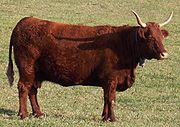 A type of trans fat occurs naturally in the milk and body fat of ruminant
s (such as cattle
and sheep) at a level of 2–5% of total fat. Natural trans fats, which include conjugated linoleic acid
(CLA) and vaccenic acid
, originate in the rumen
of these animals. CLA has two double bonds, one in the cis configuration and one in trans, which makes it simultaneously a cis- and a trans-fatty acid.
Animal-based fats were once the only trans fats consumed, but by far the largest amount of trans fat consumed today is created by the processed food industry as a side effect of partially hydrogenating unsaturated plant fats (generally vegetable oils). These partially hydrogenated fats have displaced natural solid fats and liquid oils in many areas, the most notable ones being in the fast food, snack food
, fried food, and baked goods industries. They can only be made by cooking with a very high heat, beyond the temperatures possible in a household kitchen.
Partially hydrogenated oils have been used in food for many reasons. Partial hydrogenation increases product shelf life
and decreases refrigeration requirements. Many baked foods require semi-solid fats to suspend solids at room temperature; partially hydrogenated oils have the right consistency to replace animal fats such as butter
and lard
at lower cost. They are also an inexpensive alternative to other semi-solid oils such as palm oil
.
Partially hydrogenated plant oils, and also non-hydrogenated plant shortenings made from naturally saturated palm oil, coconut oil and palm kernel oil, can be used to replace animal fats in foodstuffs for adherents to the dietary rules of Kashrut
(kosher) and Halal
, and for all vegetarians
and vegans.
Foods containing artificial trans fats formed by partially hydrogenating plant fats may contain up to 45% trans fat compared to their total fat. Baking shortenings, in general, contain 30% trans fats compared to their total fats, whereas animal fats from ruminants such as butter contain up to 4%. Margarines not reformulated to reduce trans fats may contain up to 15% trans fat by weight.
It has been established that trans fats in human milk
fluctuate with maternal consumption of trans fat, and that the amount of trans fats in the bloodstream of breastfed infants fluctuates with the amounts found in their milk. Reported percentages of trans fats (compared to total fats) in human milk range from 1% in Spain, 2% in France, 4% in Germany, and 7% in Canada and the United States.
Trans fats are used in shortenings for deep-frying in restaurants, as they can be used for longer than most conventional oils before becoming rancid. In the early 21st century, non-hydrogenated vegetable oils that have lifespans exceeding that of the frying shortenings became available. As fast-food chains routinely use different fats in different locations, trans fat levels in fast food can have large variations. For example, an analysis of samples of McDonald's
French fries collected in 2004 and 2005 found that fries served in New York City
contained twice as much trans fat as in Hungary
, and 28 times as much as in Denmark
(where trans fats are restricted). At KFC, the pattern was reversed with Hungary's product containing twice the trans fat of the New York product. Even within the US there was variation, with fries in New York containing 30% more trans fat than those from Atlanta
.
(NAS) advises the United States and Canadian governments on nutritional science for use in public policy and product labeling programs. Their 2002 Dietary Reference Intakes for Energy, Carbohydrate, Fiber, Fat, Fatty Acids, Cholesterol, Protein, and Amino Acids contains their findings and recommendations regarding consumption of trans fat (summary).
Their recommendations are based on two key facts. First, "trans fatty acids are not essential and provide no known benefit to human health", whether of animal or plant origin. Second, while both saturated and trans fats increase levels of LDL cholesterol (so-called bad cholesterol), trans fats also lower levels of HDL cholesterol (good cholesterol); thus increasing the risk of coronary heart disease
. The NAS is concerned "that dietary trans fatty acids are more deleterious with respect to coronary heart disease than saturated fatty acids". This analysis is supported by a 2006 New England Journal of Medicine
(NEJM) scientific review that states "from a nutritional standpoint, the consumption of trans fatty acids results in considerable potential harm but no apparent benefit."
Because of these facts and concerns, the NAS has concluded there is no safe level of trans fat consumption. There is no adequate level, recommended daily amount or tolerable upper limit for trans fats. This is because any incremental increase in trans fat intake increases the risk of coronary heart disease.
Despite this concern, the NAS dietary recommendations have not recommended the elimination of trans fat from the diet. This is because trans fat is naturally present in many animal foods in trace quantities, and therefore its removal from ordinary diets might introduce undesirable side effects and nutritional imbalances if proper nutritional planning is not undertaken. The NAS has, therefore, "recommended that trans fatty acid consumption be as low as possible while consuming a nutritionally adequate diet". Like the NAS, the World Health Organization
has tried to balance public health goals with a practical level of trans fat consumption, recommending in 2003 that trans fats be limited to less than 1% of overall energy intake.
The US National Dairy Council has asserted that the trans fats present in animal foods are of a different type than those in partially hydrogenated oils, and do not appear to exhibit the same negative effects. While a recent scientific review agrees with the conclusion (stating that "the sum of the current evidence suggests that the Public health implications of consuming trans fats from ruminant products are relatively limited"), it cautions that this may be due to the low consumption of trans fats from animal sources compared to artificial ones.
The exact biochemical
methods by which trans fats produce specific health problems are a topic of continuing research. One theory is that the human lipase enzyme works only on the cis configuration and cannot metabolize a trans fat. A lipase
is a water-soluble enzyme
that helps digest, transport, and process dietary lipids such as triglycerides, fats, and oils in most – if not all – living organisms. While the mechanisms through which trans fats contribute to coronary heart disease
are fairly well understood, the mechanism for trans fat's effect on diabetes is still under investigation.
(CHD). A comprehensive review of studies of trans fats was published in 2006 in the New England Journal of Medicine
reports a strong and reliable connection between trans fat consumption and CHD, concluding that "On a per-calorie basis, trans fats appear to increase the risk of CHD more than any other macronutrient, conferring a substantially increased risk at low levels of consumption (1 to 3% of total energy intake)". This study estimates that between 30,000 and 100,000 cardiac deaths per year in the United States are attributable to the consumption of trans fats.
The major evidence for the effect of trans fat on CHD comes from the Nurses' Health Study
— a cohort study
that has been following 120,000 female nurses since its inception in 1976. In this study, Hu and colleagues analyzed data from 900 coronary events from the study's population
during 14 years of followup. He determined that a nurse's CHD risk roughly doubled (relative risk
of 1.94, CI
: 1.43 to 2.61) for each 2% increase in trans fat calories consumed (instead of carbohydrate calories). By contrast, it takes more than a 15% increase in saturated fat calories (instead of carbohydrate calories) to produce a similar increase in risk. "The replacement of saturated fat or trans unsaturated fat by cis (unhydrogenated) unsaturated fats was associated with larger reductions in risk than an isocaloric replacement by carbohydrates." Hu also reports on the benefits of reducing trans fat consumption. Replacing 2% of food energy
from trans fat with non-trans unsaturated fats more than halves the risk of CHD (53%). By comparison, replacing a larger 5% of food energy from saturated fat with non-trans unsaturated fats reduces the risk of CHD by 43%.
Another study considered deaths due to CHD, with consumption of trans fats being linked to an increase in mortality, and consumption of polyunsaturated fat
s being linked to a decrease in mortality.
There are two accepted tests that measure an individual's risk for coronary heart disease, both blood test
s. The first considers ratio
s of two types of cholesterol
, the other the amount of a cell-signalling cytokine
called C-reactive protein
. The ratio test is more accepted, while the cytokine test may be more powerful but is still being studied. The effect of trans fat consumption has been documented on each as follows:
. Hydrogenated oils and fats come under the scope of Codex Stan 19. Non-dairy fat spreads are covered by Codex Stan 256-2007. In the Codex Alimentarius, trans fat to be labelled as such is defined as the geometrical isomers of monounsaturated and polyunsaturated fatty acids having non-conjugated [interrupted by at least one methylene group (-CH2-CH2-)] carbon-carbon double bonds in the trans configuration. This definition excludes specifically the healthy 'trans fats' (vaccenic acid
and conjugated linoleic acid
) which are present especially in human milk, dairy products, and beef.
, asked fast food outlets to reduce their trans fat usage. A draft plan was proposed, with a September 2007 timetable, in order to reduce reliance on trans fats and saturated fats.
Currently, Australia's food labeling laws do not require trans fats to be shown separately from the total fat content. However, margarine in Australia has been virtually free of trans fat since 1996.
motion seeking a ban similar to Denmark's was introduced by Jack Layton
of the New Democratic Party
, and passed through the House of Commons
by an overwhelming 193-73 vote. Like all Commons motions, it served as an expression of the views of the House but was not binding on the government and has no force under the law.
Since December 2005, Health Canada
has required that food labels list the amount of trans fat in the nutrition facts section for most foods. Products with less than 0.2 grams of trans fat per serving may be labeled as free of trans fats. These labelling allowances are not widely known, but as an awareness of them develops, controversy over truthful labelling is growing. In Canada, trans fat quantities on labels include naturally occurring trans fats from animal sources.
In June 2006, a task force co-chaired by Health Canada and the Heart and Stroke Foundation of Canada
recommended a limit of 5% trans fat (of total fat) in all products sold to consumers in Canada (2% for tub margarines and spreads). The amount was selected such that "most of the industrially produced trans fats would be removed from the Canadian diet, and about half of the remaining trans fat intake would be of naturally occurring trans fats". This recommendation has been endorsed by the Canadian Restaurant and Foodservices Association
and Food & Consumer Products of Canada has congratulated the task force on the report, although it did not recommend delaying implementation to 2010 as they had previously advocated.
Ten months after submitting their report the Heart and Stroke Foundation of Canada
and Toronto Public Health
issued a plea to the government of Canada: "to act immediately on the task force's recommendations and to eliminate harmful trans fat from Canada's food supply."
On June 20, 2007, the federal government announced its intention to regulate trans fats to the June 2006 standard unless the food industry voluntarily complied with these limits within two years.
On January 1, 2008, Calgary became the first city in Canada to ban trans fats from restaurants and fast food chains. Trans fats present in cooking oils may not exceed 2% of the total fat content. However, the replacement of local health regions with the Alberta Health Services Board in 2009 has temporarily eliminated all enforcement of the ban.
Effective September 30, 2009, British Columbia
became the first province in Canada to mandate the June 2006 recommendation in provincially regulated food services establishments.
became the first country to introduce laws strictly regulating the sale of many foods containing trans fats in March 2003, a move which effectively bans
partially hydrogenated oils. The limit is 2% of fats and oils destined for human consumption. It should be noted that this restriction is on the ingredients rather than the final products. This regulatory approach has made Denmark the only country in which it is possible to eat "far less" than 1 g of industrially produced trans fats on a daily basis, even with a diet including prepared foods. It is hypothesized that the Danish government's efforts to decrease trans fat intake from 6g to 1g per day over 20 years is related to a 50% decrease in deaths from ischemic heart disease.
followed Denmark's trans fats ban, and implemented its own beginning in April 2008.
produced a scientific opinion on trans fatty acids.
(FSA) asked for better labelling in the UK. In the July 29, 2006 edition of the British Medical Journal
, an editorial also called for better labelling. In January 2007, the British Retail Consortium announced that major UK retailers, including Asda
, Boots
, Co-op, Iceland
, Marks and Spencer, Sainsbury's, Tesco
and Waitrose
intended to cease adding trans fatty acids to their own products by the end of 2007.
Sainsbury's became the first UK major retailer to ban all trans fat from all their own brand foods.
On 13 December 2007, the Food Standards Agency
issued news releases stating that voluntary measures to reduce trans fats in food had already resulted in safe levels of consumer intake.
On 15 April 2010, a BMJ (British Medical Journal) editorial called for trans fats to be "virtually eliminated in the United Kingdom by next year". This call was supported by the National Institute for Health and Clinical Excellence
(NICE) on 22 June 2010.
 Before 2006, consumers in the United States
could not directly determine the presence (or quantity) of trans fats in food products. This information could only be inferred from the ingredient list, notably from the partially hydrogenated ingredients. According to the FDA, the average American consumes 5.8 grams of trans fat per day (2.6% of energy intake) It should be strongly noted that monoglycerides and diglycerides are not considered fats by the FDA, despite their nearly equal calorie per weight contribution during actual ingestion. Critically important is the apparent fact [citation strongly desired] that trans fatty acids which are part of mono- and diglycerides are not required to be listed on the ingredients label as making contributions to calorie count or trans fatty acid content.
On July 11, 2003, the Food and Drug Administration
(FDA) issued a regulation requiring manufacturers to list trans fat on the Nutrition Facts panel of foods and some dietary supplements. The new labeling rule became mandatory across the board, even for companies that petitioned for extensions, on January 1, 2008. However, unlike in many other countries, trans fat levels of less than 0.5 grams per serving can be listed as 0 grams trans fat on the food label. According to a study published in the Journal of Public Policy & Marketing, without an interpretive footnote or further information on recommended daily value, many consumers do not know how to interpret the meaning of trans fat content on the Nutrition Facts panel. In fact, without specific prior knowledge about trans fat and its negative health effects, consumers, including those at risk for heart disease, may misinterpret nutrient information provided on the panel. The FDA did not approve nutrient content claims such as "trans fat free" or "low trans fat", as they could not determine a "recommended daily value". Nevertheless, the agency is planning a consumer study to evaluate the consumer understanding of such claims and perhaps consider a regulation allowing their use on packaged foods. However, there is no requirement to list trans fats on institutional food packaging; thus bulk purchasers such as schools, hospitals, and cafeterias are unable to evaluate the trans fat content of commercial food items. The FDA defines trans fats as containing one or more trans linkage that are not in a conjugated system
. This is an important distinction, as it distinguishes non-conjugated synthetic trans fats from naturally occurring fatty acids with conjugated trans double bonds, such as conjugated linoleic acid
.
Critics of the plan, including FDA advisor Dr. Carlos Camargo, have expressed concern that the 0.5 gram per serving threshold is too high to refer to a food as free of trans fat. This is because a person eating many servings of a product, or eating multiple products over the course of the day may still consume a significant amount of trans fat. Despite this, the FDA estimates that by 2009, trans fat labeling will have prevented from 600 to 1,200 cases of coronary heart disease and 250 to 500 deaths each year. This benefit is expected to result from consumers choosing alternative foods lower in trans fats as well as manufacturers reducing the amount of trans fats in their products.
The American Medical Association
supports any state and federal efforts to ban the use of artificial trans fats in U.S. restaurants and bakeries.
The American Public Health Association
adopted a new policy statement regarding trans fats in 2007. These new guidelines, entitled Restricting Trans Fatty Acids in the Food Supply, recommend that the government require nutrition facts labeling of trans fats on all commercial food products. They also urge federal, state, and local governments to ban and monitor use of trans fats in restaurants. Furthermore, the APHA recommends barring the sales and availability of foods containing significant amounts of trans fat in public facilities including universities, prisons, and day care facilities etc.
, California
, became the first American city wherein all restaurants voluntarily cook with trans fat-free oils. Montgomery County
, Maryland
approved a ban on partially hydrogenated oils, becoming the first county in the nation to restrict trans fats.
New York City
embarked on a campaign in 2005 to reduce consumption of trans fats, noting that heart disease is the primary cause of resident deaths. This has included a Public education campaign (see trans fat pamphlet) and a request to restaurant owners to eliminate trans fat from their offerings voluntarily. Finding that the voluntary program was not successful, New York City's Board of Health in 2006 solicited public comments on a proposal to ban artificial trans fats in restaurants. The board voted to ban trans fat in restaurant food on December 5, 2006. New York was the first large US city to strictly limit trans fats in restaurants. Restaurants were barred from using most frying and spreading fats containing artificial trans fats above 0.5 g per serving on July 1, 2007, and were supposed to have met the same target in all of their foods by July 1, 2008.
The Philadelphia City Council voted unanimously to pass a ban on February 8, 2007, which was signed into law on February 15, 2007, by Mayor John F. Street
. By September 1, 2007, eateries must cease frying food in trans fats. A year later, trans fat must not be used as an ingredient in commercial kitchens. The law does not apply to prepackaged foods sold in the city. On October 10, 2007, the Philadelphia City Council approved the use of trans fats by small bakeries throughout the city.
Nassau County, A suburban county on Long Island, New York, banned trans fats in restaurants effective April 1, 2008. Bakeries were granted an extension until April 1, 2011.
Albany County
of New York passed a ban on trans fats. The ban was adopted after a unanimous vote by the county legislature on May 14, 2007. The decision was made after New York City's decision, but no plan has been put into place. Legislators received a letter from Rick J. Sampson, president and CEO of the New York State Restaurant Association, calling on them to "delay any action on this issue until the full impact of the New York City ban is known."
San Francisco officially asked its restaurants to stop using trans fat in January 2008. The voluntary program will grant a city decal to restaurants that comply and apply for the decal. Legislators say the next step will be a mandatory ban.
Chicago
also considered a ban on oils containing trans fats for large chain restaurants, and finally settled on a partial ban on oils and posting requirements for fast food restaurants.
On December 19, 2006, Massachusetts
state representative Peter Koutoujian
filed the first state level legislation that would ban restaurants from preparing foods with trans fats. The statewide legislation has not yet passed. However, the city of Boston
did ban the sale of foods containing artificial trans fats at more than 0.5 grams per serving, which is similar to the New York City regulation; there are some exceptions for clearly labeled packaged foods and charitable bake sales.
Maryland
and Vermont
were considering statewide bans of trans fats as of March 2007.
King County
of Washington passed a ban on artificial trans fats effective February 1, 2009.
On July 25, 2008, California became the first state to ban trans fats in restaurants effective January 1, 2010. California restaurants are prohibited from using oil, shortening, and margarine containing artificial trans fats in spreads or for frying, with the exception of deep frying donuts. Donuts and other baked goods will be prohibited from containing artificial trans fats as of January 1, 2011. Packaged foods are not covered by the ban and can legally contain trans fats.
, a natural oil extracted from the fruit of oil palm trees that is semi-solid at room temperature (15–25 degrees Celsius), is increasingly being used as an alternative to partially hydrogenated fats in baking and processed food applications. However, a 2006 study supported by the National Institutes of Health and the USDA Agricultural Research Service concluded that palm oil is not a safe substitute for partially hydrogenated fats (trans fats) in the food industry, because palm oil results in adverse changes in the blood concentrations of LDL cholesterol and apolipoprotein B just as trans fat does.
The J.M. Smucker Company, American manufacturer of Crisco
(the original partially hydrogenated vegetable shortening), in 2004 released a new formulation made from solid saturated
palm oil
cut with soybean oil
and sunflower oil
. This blend yielded an equivalent shortening much like the previous partially hydrogenated Crisco, and was labelled zero grams of trans fat per 1 tablespoon
serving (as compared with 1.5 grams per tablespoon of original Crisco). As of January 24, 2007, Smucker claims that all Crisco shortening products in the US have been reformulated to contain less than one gram of trans fat per serving while keeping saturated fat content less than butter. The separately marketed trans fat free version introduced in 2004 was discontinued.
On May 22, 2004, Unilever
, the corporate descendant of Joseph Crosfield
& Sons (the original producer of Wilhelm Normann
's hydrogenation hardened oils) announced that they have eliminated trans fats from all their margarine products in Canada
, including their flagship Becel brand.
Agribusiness giant Bunge Limited
, through their Bunge Oils division, are now producing and marketing an NT product line of non-hydrogenated oils, margarines and shortenings, made from corn, canola, and soy oils.
Since 2003, Loders Croklaan, a wholly owned subsidiary of Malaysia's IOI Group
has been providing trans fat free bakery and confectionery fats, made from palm oil
, for giant food companies in the United States to make more heart healthy margarine
.
in an attempt to force Kraft to remove trans fats from the Oreo
cookie. The lawsuit was withdrawn when Kraft agreed to work on ways to find a substitute for the trans fat in the Oreo. In November 2006, Arby's announced that by May 2007, it would be eliminating trans fat from its French fries and reducing it in other products.
Similarly, in 2006, the Center for Science in the Public Interest
sued KFC
over its use of trans fats in fried foods. Concerning their class action complaint, KFC reviewed alternative oil options, saying "there are a number of factors to consider including maintaining KFC's unique taste and flavor of Colonel Sanders
' Original Recipe". On October 30, 2006, KFC announced that it will replace the partially hydrogenated soybean oil it currently uses with a zero trans fat low linoleic soybean oil in all restaurants in the US by April 2007, although its biscuits will still contain trans fats. Despite the US-specific nature of the lawsuit, KFC is making changes outside of the US as well; in Canada, KFC's brand owner is switching to trans fat free Canadian canola oil by early 2007. Wendy's
announced in June 2006 plans to eliminate trans fats from 6,300 restaurants in the United States and Canada, starting in August 2006. In November 2006, Taco Bell made a similar announcement, promising to remove trans fat from many of their menu items by switching to canola oil. By April 2007, 15 Taco Bell menu items were completely free of trans fat. In January 2007, McDonald's
announced they will start phasing out the trans fat in their fries after years of testing and several delays. This can be partially attributed to New York's recent ban, with the company stating they would not be selling a unique oil just for New York customers but would implement a nationwide change. Chick-fil-A's menu is trans fat free as of October 9, 2007. Raising Canes fast food chicken restaurant recently tested a trans fat free chicken strip, but there is no plan to reduce their current menu due to the new strip being considered to taste "unsatisfactory."
In response to a May 2007 law suit from the Center for Science in the Public Interest
, Burger King
announced that its 7,100 US restaurants will begin the switch to zero trans fat oil by the end of 2007.
The Walt Disney Company announced that they will begin getting rid of trans fats in meals at US theme parks by the end of 2007, and will stop the inclusion of trans fats in licensed or promotional products by 2008.
The Girl Scouts of the USA
announced in November 2006 that all of their cookies will contain less than 0.5g trans fats per serving, thus meeting or exceeding the FDA guidelines for the "zero trans fat" designation.
Health Canada's monitoring program, which tracks the changing amounts of TFA and SFA in fast and prepared foods shows considerable progress in TFA reduction by some industrial users while others lag behind. In many cases, SFAs are being substituted for the TFAs.
Unsaturated fat
An unsaturated fat is a fat or fatty acid in which there is at least one double bond within the fatty acid chain. A fat molecule is monounsaturated if it contains one double bond, and polyunsaturated if it contains more than one double bond. Where double bonds are formed, hydrogen atoms are...
with trans-isomer (E-isomer) fatty acid
Fatty acid
In chemistry, especially biochemistry, a fatty acid is a carboxylic acid with a long unbranched aliphatic tail , which is either saturated or unsaturated. Most naturally occurring fatty acids have a chain of an even number of carbon atoms, from 4 to 28. Fatty acids are usually derived from...
(s). Because the term refers to the configuration of a double carbon-carbon bond, trans fats are sometimes monounsaturated
Monounsaturated fat
In biochemistry and nutrition, monounsaturated fats or MUFA are fatty acids that have one double bond in the fatty acid chain and all of the remainder of the carbon atoms in the chain are single-bonded...
or polyunsaturated
Polyunsaturated fat
In nutrition, polyunsaturated fat, or polyunsaturated fatty acid, are fatty acids in which more than one carbon–carbon double bond exists within the representative molecule. That is, the molecule has two or more points on its structure capable of supporting hydrogen atoms not currently part of the...
, but never saturated
Saturated fat
Saturated fat is fat that consists of triglycerides containing only saturated fatty acids. Saturated fatty acids have no double bonds between the individual carbon atoms of the fatty acid chain. That is, the chain of carbon atoms is fully "saturated" with hydrogen atoms...
.
Trans fats are not essential fatty acids. The consumption of trans fats increases the risk of coronary heart disease
Coronary heart disease
Coronary artery disease is the end result of the accumulation of atheromatous plaques within the walls of the coronary arteries that supply the myocardium with oxygen and nutrients. It is sometimes also called coronary heart disease...
by raising levels of LDL cholesterol and lowering levels of "good" HDL cholesterol. Health authorities worldwide recommend that consumption of trans fat be reduced to trace amounts. Trans fats from partially hydrogenated oils are more harmful than naturally occurring oils. Two Canadian studies, that received funding by the Alberta Livestock and Meat Agency and the Dairy Farmers of Canada, have shown that the natural trans fat vaccenic acid, found in beef and dairy products, can have the opposite health effect and can actually be beneficial compared to hydrogenated vegetable shortening, or a mixture of pork lard and soy fat, e.g. lowering total and LDL cholesterol and triglyceride levels.
Unsaturated fat is a fat molecule containing one or more double bond
Double bond
A double bond in chemistry is a chemical bond between two chemical elements involving four bonding electrons instead of the usual two. The most common double bond, that between two carbon atoms, can be found in alkenes. Many types of double bonds between two different elements exist, for example in...
s between the carbon atoms. Since the carbons are double-bonded to each other, there are fewer bonds connected to hydrogen, so there are fewer hydrogen atoms, hence the name, 'unsaturated'. Cis and trans are terms that refer to the arrangement of the two hydrogen atoms bonded to the carbon atoms involved in a double bond. In the cis arrangement, the hydrogens are on the same side of the double bond. In the trans arrangement, the hydrogens are on opposite sides of the double bond.
The process of hydrogenation
Hydrogenation
Hydrogenation, to treat with hydrogen, also a form of chemical reduction, is a chemical reaction between molecular hydrogen and another compound or element, usually in the presence of a catalyst. The process is commonly employed to reduce or saturate organic compounds. Hydrogenation typically...
adds hydrogen
Hydrogen
Hydrogen is the chemical element with atomic number 1. It is represented by the symbol H. With an average atomic weight of , hydrogen is the lightest and most abundant chemical element, constituting roughly 75% of the Universe's chemical elemental mass. Stars in the main sequence are mainly...
atoms to unsaturated fats, eliminating double bonds and making them into partially or completely saturated fat
Saturated fat
Saturated fat is fat that consists of triglycerides containing only saturated fatty acids. Saturated fatty acids have no double bonds between the individual carbon atoms of the fatty acid chain. That is, the chain of carbon atoms is fully "saturated" with hydrogen atoms...
s. However, partial hydrogenation, if it is chemical rather than enzymatic, converts a part of cis-isomers into trans-unsaturated fats instead of hydrogenating them completely. Trans fats also occur naturally in a limited number of cases: Vaccenyl
Vaccenic acid
Vaccenic acid is an omega-7 fatty acid. It is a naturally occurring trans-fatty acid found in the fat of ruminants and in dairy products such as milk, butter, and yogurt. It is also the predominant fatty acid comprising trans fat in human milk....
and conjugated linoleyl
Conjugated linoleic acid
Conjugated linoleic acids are a family of at least 28 isomers of linoleic acid found mainly in the meat and dairy products derived from ruminants. As the name implies, the double bonds of CLAs are conjugated, with only one single bond between them....
(CLA) containing trans fats occur naturally in trace amounts in meat and dairy products from ruminants, although the latter also constitutes a cis fat.
History
Nobel Prize
The Nobel Prizes are annual international awards bestowed by Scandinavian committees in recognition of cultural and scientific advances. The will of the Swedish chemist Alfred Nobel, the inventor of dynamite, established the prizes in 1895...
laureate
Laureate
In English, the word laureate has come to signify eminence or association with literary or military glory. It is also used for winners of the Nobel Prize.-History:...
Paul Sabatier
Paul Sabatier (chemist)
Paul Sabatier FRS was a French chemist, born at Carcassonne. He taught science classes most of his life before he became Dean of the Faculty of Science at the University of Toulouse in 1905....
worked in the late 1890s to develop the chemistry of hydrogenation, which enabled the margarine
Margarine
Margarine , as a generic term, can indicate any of a wide range of butter substitutes, typically composed of vegetable oils. In many parts of the world, the market share of margarine and spreads has overtaken that of butter...
, oil hydrogenation, and synthetic methanol
Methanol
Methanol, also known as methyl alcohol, wood alcohol, wood naphtha or wood spirits, is a chemical with the formula CH3OH . It is the simplest alcohol, and is a light, volatile, colorless, flammable liquid with a distinctive odor very similar to, but slightly sweeter than, ethanol...
industries. Whereas Sabatier considered hydrogenation of only vapors, the German
Germany
Germany , officially the Federal Republic of Germany , is a federal parliamentary republic in Europe. The country consists of 16 states while the capital and largest city is Berlin. Germany covers an area of 357,021 km2 and has a largely temperate seasonal climate...
chemist
Chemist
A chemist is a scientist trained in the study of chemistry. Chemists study the composition of matter and its properties such as density and acidity. Chemists carefully describe the properties they study in terms of quantities, with detail on the level of molecules and their component atoms...
Wilhelm Normann
Wilhelm Normann
Wilhelm Normann was a German chemist who introduced the hydrogenation of fats in 1901, creating what later became known as trans fats...
showed in 1901 that liquid oils could be hydrogenated, and patent
Patent
A patent is a form of intellectual property. It consists of a set of exclusive rights granted by a sovereign state to an inventor or their assignee for a limited period of time in exchange for the public disclosure of an invention....
ed the process in 1902.
During the years 1905 – 1910, Normann built a fat-hardening facility in the Herford
Herford
Herford is a town in North Rhine-Westphalia, Germany, located in the lowlands between the hill chains of the Wiehen Hills and the Teutoburg Forest. It is the capital of the district of Herford.- Geographic location :...
company. At the same time, the invention was extended to a large-scale plant in Warrington
Warrington
Warrington is a town, borough and unitary authority area of Cheshire, England. It stands on the banks of the River Mersey, which is tidal to the west of the weir at Howley. It lies 16 miles east of Liverpool, 19 miles west of Manchester and 8 miles south of St Helens...
, England
England
England is a country that is part of the United Kingdom. It shares land borders with Scotland to the north and Wales to the west; the Irish Sea is to the north west, the Celtic Sea to the south west, with the North Sea to the east and the English Channel to the south separating it from continental...
, at Joseph Crosfield
Joseph Crosfield
Joseph Crosfield was a businessman who established a soap and chemical manufacturing business in Warrington, which was in the historic county of Lancashire and is now in the ceremonial county of Cheshire...
& Sons, Limited. It took only two years until the hardened fat could be successfully produced in the plant in Warrington, commencing production in the autumn of 1909. The initial year's production totalled nearly 3,000 tonnes.
In 1909, Procter & Gamble
Procter & Gamble
Procter & Gamble is a Fortune 500 American multinational corporation headquartered in downtown Cincinnati, Ohio and manufactures a wide range of consumer goods....
acquired the US rights to the Normann patent;
in 1911, they began marketing the first hydrogenated shortening
Shortening
Shortening is any fat that is solid at room temperature and used to make crumbly pastry. The reason it is called shortening is because it prevents cross-linkage between gluten molecules. Cross linking is what causes doughs to be sticky. Seeing as cake is not meant to be sticky, shortening is used...
, Crisco
Crisco
Crisco is a brand of shortening produced by the J. M. Smucker Co. popular in the United States. Introduced in June 1911 by Procter & Gamble, it was the first shortening to be made entirely of vegetable oil...
(composed largely of partially hydrogenated cottonseed oil
Cottonseed oil
Cottonseed oil is a cooking oil extracted from the seeds of cotton plant of various species, mainly Gossypium hirsutum and Gossypium herbaceum...
). Further success came from the marketing technique of giving away free cookbooks in which every recipe called for Crisco.
Normann's hydrogenation process made it possible to stabilize affordable whale oil
Whale oil
Whale oil is the oil obtained from the blubber of various species of whales, particularly the three species of right whale and the bowhead whale prior to the modern era, as well as several other species of baleen whale...
or fish oil
Fish oil
Fish oil is oil derived from the tissues of oily fish. Fish oils contain the omega-3 fatty acids eicosapentaenoic acid , and docosahexaenoic acid , precursors of certain eicosanoids that are known to reduce inflammation throughout the body, and are thought to have many health benefits.Fish do not...
for human consumption, a practice kept secret to avoid consumer distaste.
Prior to 1910, dietary fats consisted primarily of butterfat
Butterfat
Butterfat or milkfat is the fatty portion of milk. Milk and cream are often sold according to the amount of butterfat they contain.- Composition :The fatty acids of butterfat are typically composed as follows :...
, beef tallow
Tallow
Tallow is a rendered form of beef or mutton fat, processed from suet. It is solid at room temperature. Unlike suet, tallow can be stored for extended periods without the need for refrigeration to prevent decomposition, provided it is kept in an airtight container to prevent oxidation.In industry,...
, and lard
Lard
Lard is pig fat in both its rendered and unrendered forms. Lard was commonly used in many cuisines as a cooking fat or shortening, or as a spread similar to butter. Its use in contemporary cuisine has diminished because of health concerns posed by its saturated-fat content and its often negative...
. During Napoleon’s reign in France in the early 19th century, a type of margarine was invented to feed the troops using tallow and buttermilk; it did not gain acceptance in the U.S. In the early 20th century, soybeans began to be imported into the U.S. as a source of protein; soybean oil was a by-product. What to do with that oil became an issue. At the same time, there was not enough butterfat available for consumers. The method of hydrogenating fat and turning a liquid fat into a solid one had been discovered, and now the ingredients (soybeans) and the “need” (shortage of butter) were there. Later, the means for storage, the refrigerator, was a factor in trans fat development. The fat industry found that hydrogenated fats provided some special features to margarines, which, unlike butter, allowed margarine to be taken out of the refrigerator and immediately spread on a slice of bread. By some minor changes to the chemical composition of hydrogenated fat, such hydrogenated fat was found to provide superior baking properties compared to lard. Margarine made from hydrogenated soybean oil began to replace butterfat. Hydrogenated fat such as Crisco and Spry
Spry Vegetable Shortening
Spry was a brand of vegetable shortening produced by Lever Brothers starting in 1936. It was a competitor for Procter & Gamble's Crisco, and through aggressive marketing through its mascot Aunt Jenny had reached 75 percent of Crisco's market share...
, sold in England, began to replace lard in the baking of bread, pies, cookies, and cakes in 1920.
In the 1940s, Dr Catherine Kousmine
Catherine Kousmine
Catherine Kousmine was a Russian scientist who believed in nutritionally based medicine...
researched the effects of trans fats on cancer.
Production of hydrogenated fats increased steadily until the 1960s, as processed vegetable fats replaced animal fats in the US and other western countries. At first, the argument was a financial one due to lower costs; advocates also said that the unsaturated trans fats of margarine were healthier than the saturated fat
Saturated fat
Saturated fat is fat that consists of triglycerides containing only saturated fatty acids. Saturated fatty acids have no double bonds between the individual carbon atoms of the fatty acid chain. That is, the chain of carbon atoms is fully "saturated" with hydrogen atoms...
s of butter.
As early as 1956 there were suggestions in the scientific literature that trans fats could be a cause of the large increase in coronary artery disease but after three decades the concerns were still largely unaddressed. Studies in the early 1990s, however, brought renewed scrutiny and confirmation of the negative health impact of trans fats. In 1994, it was estimated that trans fats caused 20,000 deaths annually in the US from heart disease.
Mandatory food labeling for trans fats was introduced in several countries. Campaigns were launched by activists to bring attention to the issue and change the practices of food manufacturers. In January 2007, faced with the prospect of an outright ban on the sale of their product, Crisco was reformulated to meet the United States Food and Drug Administration definition of "zero grams trans fats per serving" (that is less than one gram per tablespoon, or up to 7% by weight) by boosting the saturation and then cutting the resulting solid with oils.
A University of Guelph
University of Guelph
The University of Guelph, also known as U of G, is a comprehensive public research university in Guelph, Ontario, Canada. It was established in 1964 after the amalgamation of Ontario Agricultural College, the Macdonald Institute, and the Ontario Veterinary College...
research group has found a way to mix oils (such as olive, soybean and canola), water, monoglycerides and fatty acids to form a "cooking fat" that acts the same way as trans and saturated fats.
Chemistry
In chemical terms, trans fat refers to a lipid molecule that contains one or more double bonds in trans geometric configuration. A double bond may exhibit one of two possible configurations: trans or cis. In trans configuration, the carbon chain extends from opposite sides of the double bond, rendering a straighter molecule, whereas, in cis configuration, the carbon chain extends from the same side of the double bond, rendering a bent molecule.| Trans (Elaidic acid Elaidic acid Elaidic acid is the major trans fat found in hydrogenated vegetable oils and occurs in small amounts in caprine and bovine milk . It is the trans isomer of oleic acid. The name of the elaidinization reaction comes from elaidic acid.Elaidic acid increases CETP activity, which in turn raises VLDL... ) |
Cis (Oleic acid Oleic acid Oleic acid is a monounsaturated omega-9 fatty acid found in various animal and vegetable fats. It has the formula CH37CH=CH7COOH. It is an odorless, colourless oil, although commercial samples may be yellowish. The trans isomer of oleic acid is called elaidic acid... ) |
Saturated (Stearic acid Stearic acid Stearic acid is the saturated fatty acid with an 18 carbon chain and has the IUPAC name octadecanoic acid. It is a waxy solid, and its chemical formula is CH316CO2H. Its name comes from the Greek word στέαρ "stéatos", which means tallow. The salts and esters of stearic acid are called stearates... ) |
|---|---|---|
| Elaidic acid is the principal trans unsaturated fatty acid often found in partially hydrogenated vegetable oils. | Oleic acid is a cis unsaturated fatty acid that comprises 55–80% of olive oil. | Stearic acid is a saturated fatty acid found in animal fats and is the intended product in full hydrogenation. Stearic acid is neither cis nor trans because it has no double bonds. |
 |
 |
.png) |
 |
 |
 |
| These fatty acids are geometric isomers (structurally identical except for the arrangement of the double bond). | This fatty acid contains no double bond and is not isomeric with the previous two. | |
Fatty acids are characterized as either saturated or unsaturated based on the presence of double bonds in its structure. If the molecule contains no double bonds, it is said to be saturated; otherwise, it is unsaturated to some degree.
Only unsaturated fats can be trans or cis fat, since only a double bond can be locked to these orientations. Saturated fatty acids are never called trans fats because they have no double bonds, and, therefore, all their bonds are freely rotatable. Other types of fatty acids such as crepenynic acid, which contains a triple bond
Triple bond
A triple bond in chemistry is a chemical bond between two chemical elements involving six bonding electrons instead of the usual two in a covalent single bond. The most common triple bond, that between two carbon atoms, can be found in alkynes. Other functional groups containing a triple bond are...
, are rare and of no nutritional significance.
Carbon atoms are tetravalent, forming four covalent bond
Covalent bond
A covalent bond is a form of chemical bonding that is characterized by the sharing of pairs of electrons between atoms. The stable balance of attractive and repulsive forces between atoms when they share electrons is known as covalent bonding....
s with other atoms, whereas hydrogen atoms bond with only one other atom. In saturated fatty acids, each carbon atom is connected to its two neighbour carbon atoms as well as two hydrogen atoms. In unsaturated fatty acids, the carbon atoms that are missing a hydrogen atom are joined by double bonds rather than single bonds so that each carbon atom participates in four bonds.
Hydrogenation
Hydrogenation, to treat with hydrogen, also a form of chemical reduction, is a chemical reaction between molecular hydrogen and another compound or element, usually in the presence of a catalyst. The process is commonly employed to reduce or saturate organic compounds. Hydrogenation typically...
of an unsaturated fatty acid refers to the addition of hydrogen atoms to the acid, causing double bonds to become single ones, as carbon atoms acquire new hydrogen partners (to maintain four bonds per carbon atom). Full hydrogenation results in a molecule containing the maximum amount of hydrogen (in other words, the conversion of an unsaturated fatty acid into a saturated one). Partial hydrogenation results in the addition of hydrogen atoms at some of the empty positions, with a corresponding reduction in the number of double bonds. Typical commercial hydrogenation is partial in order to obtain a malleable mixture of fats that is solid
Solid
Solid is one of the three classical states of matter . It is characterized by structural rigidity and resistance to changes of shape or volume. Unlike a liquid, a solid object does not flow to take on the shape of its container, nor does it expand to fill the entire volume available to it like a...
at room temperature
Room temperature
-Comfort levels:The American Society of Heating, Refrigerating and Air-Conditioning Engineers has listings for suggested temperatures and air flow rates in different types of buildings and different environmental circumstances. For example, a single office in a building has an occupancy ratio per...
, but melts upon baking (or consumption).
In most naturally occurring unsaturated fatty acids, the hydrogen atoms are on the same side of the double bonds of the carbon chain (cis configuration — from the Latin, meaning "on the same side"). However, partial hydrogenation reconfigures most of the double bonds that do not become chemically saturated, twisting them so that the hydrogen atoms end up on different sides of the chain. This type of configuration is called trans, from the Latin, meaning "across." The trans configuration is the lower energy form, and is favored when catalytically equilibrated as a side reaction in hydrogenation.
The same molecule, containing the same number of atoms, with a double bond in the same location, can be either a trans or a cis fatty acid depending on the configuration of the double bond. For example, oleic acid
Oleic acid
Oleic acid is a monounsaturated omega-9 fatty acid found in various animal and vegetable fats. It has the formula CH37CH=CH7COOH. It is an odorless, colourless oil, although commercial samples may be yellowish. The trans isomer of oleic acid is called elaidic acid...
and elaidic acid
Elaidic acid
Elaidic acid is the major trans fat found in hydrogenated vegetable oils and occurs in small amounts in caprine and bovine milk . It is the trans isomer of oleic acid. The name of the elaidinization reaction comes from elaidic acid.Elaidic acid increases CETP activity, which in turn raises VLDL...
are both unsaturated fatty acids with the chemical formula
Chemical formula
A chemical formula or molecular formula is a way of expressing information about the atoms that constitute a particular chemical compound....
C9H17C9H17O2. They both have a double bond located midway along the carbon chain. It is the configuration of this bond that sets them apart. The configuration has implications for the physical-chemical
Physical chemistry
Physical chemistry is the study of macroscopic, atomic, subatomic, and particulate phenomena in chemical systems in terms of physical laws and concepts...
properties of the molecule. The trans configuration is straighter, while the cis configuration is noticeably kinked as can be seen from the three-dimensional representation shown above.
The trans fatty acid elaidic acid has different chemical and physical properties, owing to the slightly different bond configuration. It can be noted that it has a much higher melting point, 45 °C
Celsius
Celsius is a scale and unit of measurement for temperature. It is named after the Swedish astronomer Anders Celsius , who developed a similar temperature scale two years before his death...
, than oleic acid, 13.4 °C, due to the ability of the trans molecules to pack more tightly, forming a solid that is more difficult to break apart. This notably means that it is a solid at human body temperatures.
In food production, the goal is not to simply change the configuration of double bonds while maintaining the same ratios of hydrogen to carbon. Instead, the goal is to decrease the number of double bonds and increase the amount of hydrogen in the fatty acid. This changes the consistency of the fatty acid and makes it less prone to rancidity (in which free radicals attack double bonds). Production of trans fatty acids is therefore an undesirable side effect of partial hydrogenation.
Catalytic partial hydrogenation necessarily produces trans-fats, because of the reaction mechanism. In the first reaction step, one hydrogen is added, with the other, coordinatively unsaturated, carbon being attached to the catalyst. The second step is the addition of hydrogen to the remaining carbon, producing a saturated fatty acid. The first step is reversible, such that the hydrogen is readsorbed on the catalyst and the double bond is re-formed. The intermediate with only one hydrogen added contains no double bond and can freely rotate. Thus, the double bond can re-form as either cis or trans, of which trans is favored, regardless the starting material. Complete hydrogenation also hydrogenates any produced trans fats to give saturated fats.
Researchers at the United States Department of Agriculture
United States Department of Agriculture
The United States Department of Agriculture is the United States federal executive department responsible for developing and executing U.S. federal government policy on farming, agriculture, and food...
have investigated whether hydrogenation can be achieved without the side effect of trans fat production. They varied the pressure
Pressure
Pressure is the force per unit area applied in a direction perpendicular to the surface of an object. Gauge pressure is the pressure relative to the local atmospheric or ambient pressure.- Definition :...
under which the chemical reaction was conducted — applying 1400 kPa
Pascal (unit)
The pascal is the SI derived unit of pressure, internal pressure, stress, Young's modulus and tensile strength, named after the French mathematician, physicist, inventor, writer, and philosopher Blaise Pascal. It is a measure of force per unit area, defined as one newton per square metre...
(200 psi) of pressure to soybean oil in a 2-liter vessel while heating it to between 140 °C and 170 °C. The standard 140 kPa (20 psi) process of hydrogenation produces a product of about 40% trans fatty acid by weight, compared to about 17% using the high-pressure method. Blended with unhydrogenated liquid soybean oil, the high-pressure-processed oil produced margarine containing 5 to 6% trans fat. Based on current U.S. labeling requirements (see below), the manufacturer could claim the product was free of trans fat. The level of trans fat may also be altered by modification of the temperature and the length of time during hydrogenation.
Trans fat levels may be measured. Measurement techniques include chromatography
Chromatography
Chromatography is the collective term for a set of laboratory techniques for the separation of mixtures....
(by silver ion chromatography on thin layer chromatography
Thin layer chromatography
Thin layer chromatography is a chromatography technique used to separate mixtures. Thin layer chromatography is performed on a sheet of glass, plastic, or aluminum foil, which is coated with a thin layer of adsorbent material, usually silica gel, aluminium oxide, or cellulose...
plates, or small high-performance liquid chromatography
High-performance liquid chromatography
High-performance liquid chromatography , HPLC, is a chromatographic technique that can separate a mixture of compounds and is used in biochemistry and analytical chemistry to identify, quantify and purify the individual components of the mixture.HPLC typically utilizes different types of stationary...
columns of silica gel
Silica gel
Silica gel is a granular, vitreous, porous form of silica made synthetically from sodium silicate. Despite its name, silica gel is a solid. It is a naturally occurring mineral that is purified and processed into either granular or beaded form...
with bonded phenylsulfonic acid groups whose hydrogen atoms have been exchanged for silver
Silver
Silver is a metallic chemical element with the chemical symbol Ag and atomic number 47. A soft, white, lustrous transition metal, it has the highest electrical conductivity of any element and the highest thermal conductivity of any metal...
ions). The role of silver lies in its ability to form complexes with unsaturated compounds. Gas chromatography and mid-infrared spectroscopy
Infrared spectroscopy
Infrared spectroscopy is the spectroscopy that deals with the infrared region of the electromagnetic spectrum, that is light with a longer wavelength and lower frequency than visible light. It covers a range of techniques, mostly based on absorption spectroscopy. As with all spectroscopic...
are other methods in use.
Presence in food
Ruminant
A ruminant is a mammal of the order Artiodactyla that digests plant-based food by initially softening it within the animal's first compartment of the stomach, principally through bacterial actions, then regurgitating the semi-digested mass, now known as cud, and chewing it again...
s (such as cattle
Cattle
Cattle are the most common type of large domesticated ungulates. They are a prominent modern member of the subfamily Bovinae, are the most widespread species of the genus Bos, and are most commonly classified collectively as Bos primigenius...
and sheep) at a level of 2–5% of total fat. Natural trans fats, which include conjugated linoleic acid
Conjugated linoleic acid
Conjugated linoleic acids are a family of at least 28 isomers of linoleic acid found mainly in the meat and dairy products derived from ruminants. As the name implies, the double bonds of CLAs are conjugated, with only one single bond between them....
(CLA) and vaccenic acid
Vaccenic acid
Vaccenic acid is an omega-7 fatty acid. It is a naturally occurring trans-fatty acid found in the fat of ruminants and in dairy products such as milk, butter, and yogurt. It is also the predominant fatty acid comprising trans fat in human milk....
, originate in the rumen
Rumen
The rumen, also known as a paunch, forms the larger part of the reticulorumen, which is the first chamber in the alimentary canal of ruminant animals. It serves as the primary site for microbial fermentation of ingested feed...
of these animals. CLA has two double bonds, one in the cis configuration and one in trans, which makes it simultaneously a cis- and a trans-fatty acid.
Animal-based fats were once the only trans fats consumed, but by far the largest amount of trans fat consumed today is created by the processed food industry as a side effect of partially hydrogenating unsaturated plant fats (generally vegetable oils). These partially hydrogenated fats have displaced natural solid fats and liquid oils in many areas, the most notable ones being in the fast food, snack food
Snack food
A snack is a portion of food oftentimes smaller than that of a regular meal, that is generally eaten between meals. Snacks come in a variety of forms including packaged and processed foods and items made from fresh ingredients at home....
, fried food, and baked goods industries. They can only be made by cooking with a very high heat, beyond the temperatures possible in a household kitchen.
Partially hydrogenated oils have been used in food for many reasons. Partial hydrogenation increases product shelf life
Shelf life
Shelf life is the length of time that food, drink, medicine, chemicals, and many other perishable items are given before they are considered unsuitable for sale, use, or consumption...
and decreases refrigeration requirements. Many baked foods require semi-solid fats to suspend solids at room temperature; partially hydrogenated oils have the right consistency to replace animal fats such as butter
Butter
Butter is a dairy product made by churning fresh or fermented cream or milk. It is generally used as a spread and a condiment, as well as in cooking applications, such as baking, sauce making, and pan frying...
and lard
Lard
Lard is pig fat in both its rendered and unrendered forms. Lard was commonly used in many cuisines as a cooking fat or shortening, or as a spread similar to butter. Its use in contemporary cuisine has diminished because of health concerns posed by its saturated-fat content and its often negative...
at lower cost. They are also an inexpensive alternative to other semi-solid oils such as palm oil
Palm oil
Palm oil, coconut oil and palm kernel oil are edible plant oils derived from the fruits of palm trees. Palm oil is extracted from the pulp of the fruit of the oil palm Elaeis guineensis; palm kernel oil is derived from the kernel of the oil palm and coconut oil is derived from the kernel of the...
.
Partially hydrogenated plant oils, and also non-hydrogenated plant shortenings made from naturally saturated palm oil, coconut oil and palm kernel oil, can be used to replace animal fats in foodstuffs for adherents to the dietary rules of Kashrut
Kashrut
Kashrut is the set of Jewish dietary laws. Food in accord with halakha is termed kosher in English, from the Ashkenazi pronunciation of the Hebrew term kashér , meaning "fit" Kashrut (also kashruth or kashrus) is the set of Jewish dietary laws. Food in accord with halakha (Jewish law) is termed...
(kosher) and Halal
Halal
Halal is a term designating any object or an action which is permissible to use or engage in, according to Islamic law. The term is used to designate food seen as permissible according to Islamic law...
, and for all vegetarians
Vegetarianism
Vegetarianism encompasses the practice of following plant-based diets , with or without the inclusion of dairy products or eggs, and with the exclusion of meat...
and vegans.
Foods containing artificial trans fats formed by partially hydrogenating plant fats may contain up to 45% trans fat compared to their total fat. Baking shortenings, in general, contain 30% trans fats compared to their total fats, whereas animal fats from ruminants such as butter contain up to 4%. Margarines not reformulated to reduce trans fats may contain up to 15% trans fat by weight.
It has been established that trans fats in human milk
Breast milk
Breast milk, more specifically human milk, is the milk produced by the breasts of a human female for her infant offspring...
fluctuate with maternal consumption of trans fat, and that the amount of trans fats in the bloodstream of breastfed infants fluctuates with the amounts found in their milk. Reported percentages of trans fats (compared to total fats) in human milk range from 1% in Spain, 2% in France, 4% in Germany, and 7% in Canada and the United States.
Trans fats are used in shortenings for deep-frying in restaurants, as they can be used for longer than most conventional oils before becoming rancid. In the early 21st century, non-hydrogenated vegetable oils that have lifespans exceeding that of the frying shortenings became available. As fast-food chains routinely use different fats in different locations, trans fat levels in fast food can have large variations. For example, an analysis of samples of McDonald's
McDonald's
McDonald's Corporation is the world's largest chain of hamburger fast food restaurants, serving around 64 million customers daily in 119 countries. Headquartered in the United States, the company began in 1940 as a barbecue restaurant operated by the eponymous Richard and Maurice McDonald; in 1948...
French fries collected in 2004 and 2005 found that fries served in New York City
New York City
New York is the most populous city in the United States and the center of the New York Metropolitan Area, one of the most populous metropolitan areas in the world. New York exerts a significant impact upon global commerce, finance, media, art, fashion, research, technology, education, and...
contained twice as much trans fat as in Hungary
Hungary
Hungary , officially the Republic of Hungary , is a landlocked country in Central Europe. It is situated in the Carpathian Basin and is bordered by Slovakia to the north, Ukraine and Romania to the east, Serbia and Croatia to the south, Slovenia to the southwest and Austria to the west. The...
, and 28 times as much as in Denmark
Denmark
Denmark is a Scandinavian country in Northern Europe. The countries of Denmark and Greenland, as well as the Faroe Islands, constitute the Kingdom of Denmark . It is the southernmost of the Nordic countries, southwest of Sweden and south of Norway, and bordered to the south by Germany. Denmark...
(where trans fats are restricted). At KFC, the pattern was reversed with Hungary's product containing twice the trans fat of the New York product. Even within the US there was variation, with fries in New York containing 30% more trans fat than those from Atlanta
Atlanta, Georgia
Atlanta is the capital and most populous city in the U.S. state of Georgia. According to the 2010 census, Atlanta's population is 420,003. Atlanta is the cultural and economic center of the Atlanta metropolitan area, which is home to 5,268,860 people and is the ninth largest metropolitan area in...
.
Nutritional guidelines
The National Academy of SciencesUnited States National Academy of Sciences
The National Academy of Sciences is a corporation in the United States whose members serve pro bono as "advisers to the nation on science, engineering, and medicine." As a national academy, new members of the organization are elected annually by current members, based on their distinguished and...
(NAS) advises the United States and Canadian governments on nutritional science for use in public policy and product labeling programs. Their 2002 Dietary Reference Intakes for Energy, Carbohydrate, Fiber, Fat, Fatty Acids, Cholesterol, Protein, and Amino Acids contains their findings and recommendations regarding consumption of trans fat (summary).
Their recommendations are based on two key facts. First, "trans fatty acids are not essential and provide no known benefit to human health", whether of animal or plant origin. Second, while both saturated and trans fats increase levels of LDL cholesterol (so-called bad cholesterol), trans fats also lower levels of HDL cholesterol (good cholesterol); thus increasing the risk of coronary heart disease
Coronary heart disease
Coronary artery disease is the end result of the accumulation of atheromatous plaques within the walls of the coronary arteries that supply the myocardium with oxygen and nutrients. It is sometimes also called coronary heart disease...
. The NAS is concerned "that dietary trans fatty acids are more deleterious with respect to coronary heart disease than saturated fatty acids". This analysis is supported by a 2006 New England Journal of Medicine
New England Journal of Medicine
The New England Journal of Medicine is an English-language peer-reviewed medical journal published by the Massachusetts Medical Society. It describes itself as the oldest continuously published medical journal in the world.-History:...
(NEJM) scientific review that states "from a nutritional standpoint, the consumption of trans fatty acids results in considerable potential harm but no apparent benefit."
Because of these facts and concerns, the NAS has concluded there is no safe level of trans fat consumption. There is no adequate level, recommended daily amount or tolerable upper limit for trans fats. This is because any incremental increase in trans fat intake increases the risk of coronary heart disease.
Despite this concern, the NAS dietary recommendations have not recommended the elimination of trans fat from the diet. This is because trans fat is naturally present in many animal foods in trace quantities, and therefore its removal from ordinary diets might introduce undesirable side effects and nutritional imbalances if proper nutritional planning is not undertaken. The NAS has, therefore, "recommended that trans fatty acid consumption be as low as possible while consuming a nutritionally adequate diet". Like the NAS, the World Health Organization
World Health Organization
The World Health Organization is a specialized agency of the United Nations that acts as a coordinating authority on international public health. Established on 7 April 1948, with headquarters in Geneva, Switzerland, the agency inherited the mandate and resources of its predecessor, the Health...
has tried to balance public health goals with a practical level of trans fat consumption, recommending in 2003 that trans fats be limited to less than 1% of overall energy intake.
The US National Dairy Council has asserted that the trans fats present in animal foods are of a different type than those in partially hydrogenated oils, and do not appear to exhibit the same negative effects. While a recent scientific review agrees with the conclusion (stating that "the sum of the current evidence suggests that the Public health implications of consuming trans fats from ruminant products are relatively limited"), it cautions that this may be due to the low consumption of trans fats from animal sources compared to artificial ones.
Health risks
Partially hydrogenated vegetable oils have been an increasingly significant part of the human diet for about 100 years (in particular, since the later half of the 20th century and where more processed foods are consumed), and some deleterious effects of trans fat consumption are scientifically accepted, forming the basis of the health guidelines discussed above.The exact biochemical
Biochemistry
Biochemistry, sometimes called biological chemistry, is the study of chemical processes in living organisms, including, but not limited to, living matter. Biochemistry governs all living organisms and living processes...
methods by which trans fats produce specific health problems are a topic of continuing research. One theory is that the human lipase enzyme works only on the cis configuration and cannot metabolize a trans fat. A lipase
Lipase
A lipase is an enzyme that catalyzes the formation or cleavage of fats . Lipases are a subclass of the esterases.Lipases perform essential roles in the digestion, transport and processing of dietary lipids in most, if not all, living organisms...
is a water-soluble enzyme
Enzyme
Enzymes are proteins that catalyze chemical reactions. In enzymatic reactions, the molecules at the beginning of the process, called substrates, are converted into different molecules, called products. Almost all chemical reactions in a biological cell need enzymes in order to occur at rates...
that helps digest, transport, and process dietary lipids such as triglycerides, fats, and oils in most – if not all – living organisms. While the mechanisms through which trans fats contribute to coronary heart disease
Coronary heart disease
Coronary artery disease is the end result of the accumulation of atheromatous plaques within the walls of the coronary arteries that supply the myocardium with oxygen and nutrients. It is sometimes also called coronary heart disease...
are fairly well understood, the mechanism for trans fat's effect on diabetes is still under investigation.
Coronary heart disease
The primary health risk identified for trans fat consumption is an elevated risk of coronary heart diseaseCoronary heart disease
Coronary artery disease is the end result of the accumulation of atheromatous plaques within the walls of the coronary arteries that supply the myocardium with oxygen and nutrients. It is sometimes also called coronary heart disease...
(CHD). A comprehensive review of studies of trans fats was published in 2006 in the New England Journal of Medicine
New England Journal of Medicine
The New England Journal of Medicine is an English-language peer-reviewed medical journal published by the Massachusetts Medical Society. It describes itself as the oldest continuously published medical journal in the world.-History:...
reports a strong and reliable connection between trans fat consumption and CHD, concluding that "On a per-calorie basis, trans fats appear to increase the risk of CHD more than any other macronutrient, conferring a substantially increased risk at low levels of consumption (1 to 3% of total energy intake)". This study estimates that between 30,000 and 100,000 cardiac deaths per year in the United States are attributable to the consumption of trans fats.
The major evidence for the effect of trans fat on CHD comes from the Nurses' Health Study
Nurses' Health Study
The Nurses Health Study, established in 1976 by Dr. Frank Speizer, and the Nurses' Health Study II, established in 1989 by Dr. Walter Willett, are the most definitive long-term epidemiological studies conducted to date on older women's health. The study has followed 121,700 female registered...
— a cohort study
Cohort study
A cohort study or panel study is a form of longitudinal study used in medicine, social science, actuarial science, and ecology. It is an analysis of risk factors and follows a group of people who do not have the disease, and uses correlations to determine the absolute risk of subject contraction...
that has been following 120,000 female nurses since its inception in 1976. In this study, Hu and colleagues analyzed data from 900 coronary events from the study's population
Statistical population
A statistical population is a set of entities concerning which statistical inferences are to be drawn, often based on a random sample taken from the population. For example, if we were interested in generalizations about crows, then we would describe the set of crows that is of interest...
during 14 years of followup. He determined that a nurse's CHD risk roughly doubled (relative risk
Relative risk
In statistics and mathematical epidemiology, relative risk is the risk of an event relative to exposure. Relative risk is a ratio of the probability of the event occurring in the exposed group versus a non-exposed group....
of 1.94, CI
Confidence interval
In statistics, a confidence interval is a particular kind of interval estimate of a population parameter and is used to indicate the reliability of an estimate. It is an observed interval , in principle different from sample to sample, that frequently includes the parameter of interest, if the...
: 1.43 to 2.61) for each 2% increase in trans fat calories consumed (instead of carbohydrate calories). By contrast, it takes more than a 15% increase in saturated fat calories (instead of carbohydrate calories) to produce a similar increase in risk. "The replacement of saturated fat or trans unsaturated fat by cis (unhydrogenated) unsaturated fats was associated with larger reductions in risk than an isocaloric replacement by carbohydrates." Hu also reports on the benefits of reducing trans fat consumption. Replacing 2% of food energy
Food energy
Food energy is the amount of energy obtained from food that is available through cellular respiration.Food energy is expressed in food calories or kilojoules...
from trans fat with non-trans unsaturated fats more than halves the risk of CHD (53%). By comparison, replacing a larger 5% of food energy from saturated fat with non-trans unsaturated fats reduces the risk of CHD by 43%.
Another study considered deaths due to CHD, with consumption of trans fats being linked to an increase in mortality, and consumption of polyunsaturated fat
Polyunsaturated fat
In nutrition, polyunsaturated fat, or polyunsaturated fatty acid, are fatty acids in which more than one carbon–carbon double bond exists within the representative molecule. That is, the molecule has two or more points on its structure capable of supporting hydrogen atoms not currently part of the...
s being linked to a decrease in mortality.
There are two accepted tests that measure an individual's risk for coronary heart disease, both blood test
Blood test
A blood test is a laboratory analysis performed on a blood sample that is usually extracted from a vein in the arm using a needle, or via fingerprick....
s. The first considers ratio
Ratio
In mathematics, a ratio is a relationship between two numbers of the same kind , usually expressed as "a to b" or a:b, sometimes expressed arithmetically as a dimensionless quotient of the two which explicitly indicates how many times the first number contains the second In mathematics, a ratio is...
s of two types of cholesterol
Cholesterol
Cholesterol is a complex isoprenoid. Specifically, it is a waxy steroid of fat that is produced in the liver or intestines. It is used to produce hormones and cell membranes and is transported in the blood plasma of all mammals. It is an essential structural component of mammalian cell membranes...
, the other the amount of a cell-signalling cytokine
Cytokine
Cytokines are small cell-signaling protein molecules that are secreted by the glial cells of the nervous system and by numerous cells of the immune system and are a category of signaling molecules used extensively in intercellular communication...
called C-reactive protein
C-reactive protein
C-reactive protein is a protein found in the blood, the levels of which rise in response to inflammation...
. The ratio test is more accepted, while the cytokine test may be more powerful but is still being studied. The effect of trans fat consumption has been documented on each as follows:
- Cholesterol ratio: This ratio compares the levels of LDL (so-called "bad" cholesterol) to HDL (so-called "good" cholesterol). Trans fat behaves like saturated fatSaturated fatSaturated fat is fat that consists of triglycerides containing only saturated fatty acids. Saturated fatty acids have no double bonds between the individual carbon atoms of the fatty acid chain. That is, the chain of carbon atoms is fully "saturated" with hydrogen atoms...
by raising the level of LDL, but, unlike saturated fat, it has the additional effect of decreasing levels of HDL. The net increase in LDL/HDL ratio with trans fat is approximately double that due to saturated fat. (Higher ratios are worse.) One randomized crossover studyCrossover studyA crossover study is a longitudinal study in which subjects receive a sequence of different treatments . While crossover studies can be observational studies, many important crossover studies are controlled experiments, which are discussed in this article...
published in 2003 comparing the effect of eating a mealPostprandialPostprandial means after eating a meal while preprandial is before a meal.-Usages of the term:This term is used in many contexts but also in relation to blood sugar levels, which are normally measured 2 hours after and before eating in a postprandial glucose test...
on blood lipids of (relatively) cis and trans fat rich meals showed that cholesteryl esterCholesteryl esterA cholesteryl ester is, as its name would imply, an ester of cholesterol. The ester bond is formed between the carboxylate group of a fatty acid and the hydroxyl group of cholesterol. Cholesteryl Esters have a lower solubility in water than Cholesterol and, in other words, are more hydrophobic...
transfer (CET) was 28% higher after the trans meal than after the cis meal and that lipoprotein concentrations were enriched in apolipoproteinApolipoproteinApolipoproteins are proteins that bind lipids to form lipoproteins and transport the lipids through the lymphatic and circulatory systems....
(a) after the trans meals. - C-reactive protein (CRP): A study of over 700 nurses showed that those in the highest quartileQuartileIn descriptive statistics, the quartiles of a set of values are the three points that divide the data set into four equal groups, each representing a fourth of the population being sampled...
of trans fat consumption had blood levels of CRP that were 73% higher than those in the lowest quartile.
Other effects
There are suggestions that the negative consequences of trans fat consumption go beyond the cardiovascular risk. In general, there is much less scientific consensus asserting that eating trans fat specifically increases the risk of other chronic health problems:- Alzheimer's DiseaseAlzheimer's diseaseAlzheimer's disease also known in medical literature as Alzheimer disease is the most common form of dementia. There is no cure for the disease, which worsens as it progresses, and eventually leads to death...
: A study published in Archives of NeurologyArchives of NeurologyArchives of Neurology is a monthly peer-reviewed medical journal published by the American Medical Association. Archives of Neurology publishes research on the nervous system as well as the various mechanisms of Neurological disease....
in February 2003 suggested that the intake of both trans fats and saturated fats promote the development of Alzheimer disease, although not confirmed in an animal model. - CancerCancerCancer , known medically as a malignant neoplasm, is a large group of different diseases, all involving unregulated cell growth. In cancer, cells divide and grow uncontrollably, forming malignant tumors, and invade nearby parts of the body. The cancer may also spread to more distant parts of the...
: There is no scientific consensus that consumption of trans fats significantly increases cancerCancerCancer , known medically as a malignant neoplasm, is a large group of different diseases, all involving unregulated cell growth. In cancer, cells divide and grow uncontrollably, forming malignant tumors, and invade nearby parts of the body. The cancer may also spread to more distant parts of the...
risks across the board. The American Cancer Society states that a relationship between trans fats and cancer "has not been determined." One study has found a positive connection between trans fat and prostate cancer. However, a larger study found a correlation between trans fats and a significant decrease in high-grade prostate cancer. An increased intake of trans fatty acids may raise the risk of breast cancer by 75%, suggest the results from the French part of the European Prospective Investigation into Cancer and Nutrition. - Diabetes: There is a growing concern that the risk of type 2 diabetesDiabetes mellitus type 2Diabetes mellitus type 2formerly non-insulin-dependent diabetes mellitus or adult-onset diabetesis a metabolic disorder that is characterized by high blood glucose in the context of insulin resistance and relative insulin deficiency. Diabetes is often initially managed by increasing exercise and...
increases with trans fat consumption. However, consensus has not been reached. For example, one study found that risk is higher for those in the highest quartileQuartileIn descriptive statistics, the quartiles of a set of values are the three points that divide the data set into four equal groups, each representing a fourth of the population being sampled...
of trans fat consumption. Another study has found no diabetes risk once other factors such as total fat intake and BMI were accounted for. - ObesityObesityObesity is a medical condition in which excess body fat has accumulated to the extent that it may have an adverse effect on health, leading to reduced life expectancy and/or increased health problems...
: Research indicates that trans fat may increase weight gain and abdominal fat, despite a similar caloric intake. A 6-year experiment revealed that monkeys fed a trans fat diet gained 7.2% of their body weight, as compared to 1.8% for monkeys on a mono-unsaturated fat diet. Although obesity is frequently linked to trans fat in the popular media, this is generally in the context of eating too many calories; there is not a strong scientific consensus connecting trans fat and obesity, although the 6-year experiment did find such a link, concluding that "under controlled feeding conditions, long-term TFA consumption was an independent factor in weight gain. TFAs enhanced intra-abdominal deposition of fat, even in the absence of caloric excess, and were associated with insulin resistance, with evidence that there is impaired post-insulin receptor binding signal transduction." - Liver Dysfunction: Trans fats are metabolized differently by the liverLiverThe liver is a vital organ present in vertebrates and some other animals. It has a wide range of functions, including detoxification, protein synthesis, and production of biochemicals necessary for digestion...
than other fats and interfere with delta 6 desaturaseDesaturaseA fatty acid desaturase is an enzyme that removes two hydrogen atoms from a fatty acid, creating a carbon/carbon double bond. These desaturases are classified as...
. Delta 6 desaturase is an enzymeEnzymeEnzymes are proteins that catalyze chemical reactions. In enzymatic reactions, the molecules at the beginning of the process, called substrates, are converted into different molecules, called products. Almost all chemical reactions in a biological cell need enzymes in order to occur at rates...
involved in converting essential fatty acids to arachidonic acidArachidonic acidArachidonic acid is a polyunsaturated omega-6 fatty acid 20:4.It is the counterpart to the saturated arachidic acid found in peanut oil, Arachidonic acid (AA, sometimes ARA) is a polyunsaturated omega-6 fatty acid 20:4(ω-6).It is the counterpart to the saturated arachidic acid found in peanut oil,...
and prostaglandinProstaglandinA prostaglandin is any member of a group of lipid compounds that are derived enzymatically from fatty acids and have important functions in the animal body. Every prostaglandin contains 20 carbon atoms, including a 5-carbon ring....
s, both of which are important to the functioning of cells. - Infertility in womenFemale infertility-Causes and factors:Causes or factors of female infertility can basically be classified regarding whether they are acquired or genetic, or strictly by location.-Acquired versus genetic:...
: One 2007 study found, "Each 2% increase in the intake of energy from trans unsaturated fats, as opposed to that from carbohydrates, was associated with a 73% greater risk of ovulatory infertility...". - DepressionDepression (mood)Depression is a state of low mood and aversion to activity that can affect a person's thoughts, behaviour, feelings and physical well-being. Depressed people may feel sad, anxious, empty, hopeless, helpless, worthless, guilty, irritable, or restless...
: Spanish researchers analysed the diets of 12,059 people over six years and found those who ate the most trans fats had a 48 per cent higher risk of depression than those who did not eat trans fats.
International
The international trade in food is standardized in the Codex AlimentariusCodex Alimentarius
The Codex Alimentarius is a collection of internationally recognized standards, codes of practice, guidelines and other recommendations relating to foods, food production and food safety. Its name derives from the Codex Alimentarius Austriacus...
. Hydrogenated oils and fats come under the scope of Codex Stan 19. Non-dairy fat spreads are covered by Codex Stan 256-2007. In the Codex Alimentarius, trans fat to be labelled as such is defined as the geometrical isomers of monounsaturated and polyunsaturated fatty acids having non-conjugated [interrupted by at least one methylene group (-CH2-CH2-)] carbon-carbon double bonds in the trans configuration. This definition excludes specifically the healthy 'trans fats' (vaccenic acid
Vaccenic acid
Vaccenic acid is an omega-7 fatty acid. It is a naturally occurring trans-fatty acid found in the fat of ruminants and in dairy products such as milk, butter, and yogurt. It is also the predominant fatty acid comprising trans fat in human milk....
and conjugated linoleic acid
Conjugated linoleic acid
Conjugated linoleic acids are a family of at least 28 isomers of linoleic acid found mainly in the meat and dairy products derived from ruminants. As the name implies, the double bonds of CLAs are conjugated, with only one single bond between them....
) which are present especially in human milk, dairy products, and beef.
Argentina
Since August 2006 food products should be labelled with the amount of trans fat in them. Since 2010 vegetable oils and fats direcly sold to consumers must only contain 2% of trans fat over total fat, and other food must contain less than 5% of their total fat.Australia
The Australian federal government has indicated that it wants to pursue actively a policy of reducing trans fats from fast foods. The former federal assistant health minister, Christopher PyneChristopher Pyne
Christopher Maurice Pyne, MP , Australian politician, has been a Liberal member of the Australian House of Representatives since 13 March 1993, representing the Division of Sturt, South Australia.-Early years:...
, asked fast food outlets to reduce their trans fat usage. A draft plan was proposed, with a September 2007 timetable, in order to reduce reliance on trans fats and saturated fats.
Currently, Australia's food labeling laws do not require trans fats to be shown separately from the total fat content. However, margarine in Australia has been virtually free of trans fat since 1996.
Brazil
Resolution 360 of 23 December 2003 by the Brazilian ministry of health required for the first time in the country that the amount of trans fat to be specified in labels of food products. On 31 July 2006 such labelling of trans fat contents became mandatory. In 2007 the ministry established a target to reduce the total amount of trans fat in any industrialized food sold in Brazil to a maximum of 2% by the end of 2010.Canada
In November 2004, an opposition dayOpposition day
An opposition day is a day in a legislature using the Westminster System in which an opposition party sets the agenda. Most days the parliamentary agenda is set by the government; opposition days allow the smaller parties to choose the subject for debate. The number of days varies between...
motion seeking a ban similar to Denmark's was introduced by Jack Layton
Jack Layton
John Gilbert "Jack" Layton, PC was a Canadian social democratic politician and the Leader of the Official Opposition. He was the leader of the New Democratic Party from 2003 to 2011, and previously sat on Toronto City Council, serving at times during that period as acting mayor and deputy mayor of...
of the New Democratic Party
New Democratic Party
The New Democratic Party , commonly referred to as the NDP, is a federal social-democratic political party in Canada. The interim leader of the NDP is Nycole Turmel who was appointed to the position due to the illness of Jack Layton, who died on August 22, 2011. The provincial wings of the NDP in...
, and passed through the House of Commons
Canadian House of Commons
The House of Commons of Canada is a component of the Parliament of Canada, along with the Sovereign and the Senate. The House of Commons is a democratically elected body, consisting of 308 members known as Members of Parliament...
by an overwhelming 193-73 vote. Like all Commons motions, it served as an expression of the views of the House but was not binding on the government and has no force under the law.
Since December 2005, Health Canada
Health Canada
Health Canada is the department of the government of Canada with responsibility for national public health.The current Minister of Health is Leona Aglukkaq, a Conservative Member of Parliament appointed to the position by Prime Minister Stephen Harper.-Branches, regions and agencies:Health Canada...
has required that food labels list the amount of trans fat in the nutrition facts section for most foods. Products with less than 0.2 grams of trans fat per serving may be labeled as free of trans fats. These labelling allowances are not widely known, but as an awareness of them develops, controversy over truthful labelling is growing. In Canada, trans fat quantities on labels include naturally occurring trans fats from animal sources.
In June 2006, a task force co-chaired by Health Canada and the Heart and Stroke Foundation of Canada
Heart and Stroke Foundation of Canada
The Heart and Stroke Foundation of Canada is a registered Canadian charity. The foundation's purpose is centered around educating individuals about the prevention and management of heart disease and stroke, and to fund medical research regarding the causes of these conditions...
recommended a limit of 5% trans fat (of total fat) in all products sold to consumers in Canada (2% for tub margarines and spreads). The amount was selected such that "most of the industrially produced trans fats would be removed from the Canadian diet, and about half of the remaining trans fat intake would be of naturally occurring trans fats". This recommendation has been endorsed by the Canadian Restaurant and Foodservices Association
Canadian Restaurant and Foodservices Association
The Canadian Restaurant and Foodservices Association or CRFA is an industry and advocacy group organizing the Canadian restaurant, foodservice and catering industry....
and Food & Consumer Products of Canada has congratulated the task force on the report, although it did not recommend delaying implementation to 2010 as they had previously advocated.
Ten months after submitting their report the Heart and Stroke Foundation of Canada
Heart and Stroke Foundation of Canada
The Heart and Stroke Foundation of Canada is a registered Canadian charity. The foundation's purpose is centered around educating individuals about the prevention and management of heart disease and stroke, and to fund medical research regarding the causes of these conditions...
and Toronto Public Health
Public health
Public health is "the science and art of preventing disease, prolonging life and promoting health through the organized efforts and informed choices of society, organizations, public and private, communities and individuals" . It is concerned with threats to health based on population health...
issued a plea to the government of Canada: "to act immediately on the task force's recommendations and to eliminate harmful trans fat from Canada's food supply."
On June 20, 2007, the federal government announced its intention to regulate trans fats to the June 2006 standard unless the food industry voluntarily complied with these limits within two years.
On January 1, 2008, Calgary became the first city in Canada to ban trans fats from restaurants and fast food chains. Trans fats present in cooking oils may not exceed 2% of the total fat content. However, the replacement of local health regions with the Alberta Health Services Board in 2009 has temporarily eliminated all enforcement of the ban.
Effective September 30, 2009, British Columbia
British Columbia
British Columbia is the westernmost of Canada's provinces and is known for its natural beauty, as reflected in its Latin motto, Splendor sine occasu . Its name was chosen by Queen Victoria in 1858...
became the first province in Canada to mandate the June 2006 recommendation in provincially regulated food services establishments.
Denmark
DenmarkDenmark
Denmark is a Scandinavian country in Northern Europe. The countries of Denmark and Greenland, as well as the Faroe Islands, constitute the Kingdom of Denmark . It is the southernmost of the Nordic countries, southwest of Sweden and south of Norway, and bordered to the south by Germany. Denmark...
became the first country to introduce laws strictly regulating the sale of many foods containing trans fats in March 2003, a move which effectively bans
Ban (law)
A ban is, generally, any decree that prohibits something.Bans are formed for the prohibition of activities within a certain political territory. Some see this as a negative act and others see it as maintaining the "status quo"...
partially hydrogenated oils. The limit is 2% of fats and oils destined for human consumption. It should be noted that this restriction is on the ingredients rather than the final products. This regulatory approach has made Denmark the only country in which it is possible to eat "far less" than 1 g of industrially produced trans fats on a daily basis, even with a diet including prepared foods. It is hypothesized that the Danish government's efforts to decrease trans fat intake from 6g to 1g per day over 20 years is related to a 50% decrease in deaths from ischemic heart disease.
Switzerland
SwitzerlandSwitzerland
Switzerland name of one of the Swiss cantons. ; ; ; or ), in its full name the Swiss Confederation , is a federal republic consisting of 26 cantons, with Bern as the seat of the federal authorities. The country is situated in Western Europe,Or Central Europe depending on the definition....
followed Denmark's trans fats ban, and implemented its own beginning in April 2008.
European Union
In 2004, the European Food Safety AuthorityEuropean Food Safety Authority
The European Food Safety Authority is an agency of the European Union that provides independent scientific advice and communication on existing and emerging risks associated with the food chain, created by European Regulation 178/2002....
produced a scientific opinion on trans fatty acids.
United Kingdom
In October 2005, the Food Standards AgencyFood Standards Agency
The Food Standards Agency is a non-ministerial government department of the Government of the United Kingdom. It is responsible for protecting public health in relation to food throughout the United Kingdom and is led by a board appointed to act in the public interest...
(FSA) asked for better labelling in the UK. In the July 29, 2006 edition of the British Medical Journal
British Medical Journal
BMJ is a partially open-access peer-reviewed medical journal. Originally called the British Medical Journal, the title was officially shortened to BMJ in 1988. The journal is published by the BMJ Group, a wholly owned subsidiary of the British Medical Association...
, an editorial also called for better labelling. In January 2007, the British Retail Consortium announced that major UK retailers, including Asda
Asda
Asda Stores Ltd is a British supermarket chain which retails food, clothing, general merchandise, toys and financial services. It also has a mobile telephone network, , Asda Mobile...
, Boots
Boots UK
Boots UK Limited , is a leading pharmacy chain in the United Kingdom, with outlets in most high streets throughout the country...
, Co-op, Iceland
Iceland (supermarket)
Iceland is a supermarket chain in the United Kingdom and Ireland. Iceland's primary product lines include frozen foods, such as frozen prepared meals and frozen vegetables - hence the name of the company...
, Marks and Spencer, Sainsbury's, Tesco
Tesco
Tesco plc is a global grocery and general merchandise retailer headquartered in Cheshunt, United Kingdom. It is the third-largest retailer in the world measured by revenues and the second-largest measured by profits...
and Waitrose
Waitrose
Waitrose Limited is an upmarket chain of supermarkets in the United Kingdom and is the food division of the British retailer and worker co-operative the John Lewis Partnership. Its head office is in Bracknell, Berkshire, England...
intended to cease adding trans fatty acids to their own products by the end of 2007.
Sainsbury's became the first UK major retailer to ban all trans fat from all their own brand foods.
On 13 December 2007, the Food Standards Agency
Food Standards Agency
The Food Standards Agency is a non-ministerial government department of the Government of the United Kingdom. It is responsible for protecting public health in relation to food throughout the United Kingdom and is led by a board appointed to act in the public interest...
issued news releases stating that voluntary measures to reduce trans fats in food had already resulted in safe levels of consumer intake.
On 15 April 2010, a BMJ (British Medical Journal) editorial called for trans fats to be "virtually eliminated in the United Kingdom by next year". This call was supported by the National Institute for Health and Clinical Excellence
National Institute for Health and Clinical Excellence
The National Institute for Health and Clinical Excellence is a special health authority of the English National Health Service , serving both English NHS and the Welsh NHS...
(NICE) on 22 June 2010.
United States
United States
The United States of America is a federal constitutional republic comprising fifty states and a federal district...
could not directly determine the presence (or quantity) of trans fats in food products. This information could only be inferred from the ingredient list, notably from the partially hydrogenated ingredients. According to the FDA, the average American consumes 5.8 grams of trans fat per day (2.6% of energy intake) It should be strongly noted that monoglycerides and diglycerides are not considered fats by the FDA, despite their nearly equal calorie per weight contribution during actual ingestion. Critically important is the apparent fact [citation strongly desired] that trans fatty acids which are part of mono- and diglycerides are not required to be listed on the ingredients label as making contributions to calorie count or trans fatty acid content.
On July 11, 2003, the Food and Drug Administration
Food and Drug Administration
The Food and Drug Administration is an agency of the United States Department of Health and Human Services, one of the United States federal executive departments...
(FDA) issued a regulation requiring manufacturers to list trans fat on the Nutrition Facts panel of foods and some dietary supplements. The new labeling rule became mandatory across the board, even for companies that petitioned for extensions, on January 1, 2008. However, unlike in many other countries, trans fat levels of less than 0.5 grams per serving can be listed as 0 grams trans fat on the food label. According to a study published in the Journal of Public Policy & Marketing, without an interpretive footnote or further information on recommended daily value, many consumers do not know how to interpret the meaning of trans fat content on the Nutrition Facts panel. In fact, without specific prior knowledge about trans fat and its negative health effects, consumers, including those at risk for heart disease, may misinterpret nutrient information provided on the panel. The FDA did not approve nutrient content claims such as "trans fat free" or "low trans fat", as they could not determine a "recommended daily value". Nevertheless, the agency is planning a consumer study to evaluate the consumer understanding of such claims and perhaps consider a regulation allowing their use on packaged foods. However, there is no requirement to list trans fats on institutional food packaging; thus bulk purchasers such as schools, hospitals, and cafeterias are unable to evaluate the trans fat content of commercial food items. The FDA defines trans fats as containing one or more trans linkage that are not in a conjugated system
Conjugated system
In chemistry, a conjugated system is a system of connected p-orbitals with delocalized electrons in compounds with alternating single and multiple bonds, which in general may lower the overall energy of the molecule and increase stability. Lone pairs, radicals or carbenium ions may be part of the...
. This is an important distinction, as it distinguishes non-conjugated synthetic trans fats from naturally occurring fatty acids with conjugated trans double bonds, such as conjugated linoleic acid
Conjugated linoleic acid
Conjugated linoleic acids are a family of at least 28 isomers of linoleic acid found mainly in the meat and dairy products derived from ruminants. As the name implies, the double bonds of CLAs are conjugated, with only one single bond between them....
.
Critics of the plan, including FDA advisor Dr. Carlos Camargo, have expressed concern that the 0.5 gram per serving threshold is too high to refer to a food as free of trans fat. This is because a person eating many servings of a product, or eating multiple products over the course of the day may still consume a significant amount of trans fat. Despite this, the FDA estimates that by 2009, trans fat labeling will have prevented from 600 to 1,200 cases of coronary heart disease and 250 to 500 deaths each year. This benefit is expected to result from consumers choosing alternative foods lower in trans fats as well as manufacturers reducing the amount of trans fats in their products.
The American Medical Association
American Medical Association
The American Medical Association , founded in 1847 and incorporated in 1897, is the largest association of medical doctors and medical students in the United States.-Scope and operations:...
supports any state and federal efforts to ban the use of artificial trans fats in U.S. restaurants and bakeries.
The American Public Health Association
American Public Health Association
The American Public Health Association is Washington, D.C.-based professional organization for public health professionals in the United States. Founded in 1872 by Dr. Stephen Smith, APHA has more than 30,000 members worldwide...
adopted a new policy statement regarding trans fats in 2007. These new guidelines, entitled Restricting Trans Fatty Acids in the Food Supply, recommend that the government require nutrition facts labeling of trans fats on all commercial food products. They also urge federal, state, and local governments to ban and monitor use of trans fats in restaurants. Furthermore, the APHA recommends barring the sales and availability of foods containing significant amounts of trans fat in public facilities including universities, prisons, and day care facilities etc.
State and local regulation in the United States
The state of California and some US cities are acting to reduce consumption of trans fats. In May 2005, TiburonTiburon, California
Tiburon is an incorporated town in Marin County, California. It occupies most of the Tiburon Peninsula, which reaches south into the San Francisco Bay. The smaller city of Belvedere occupies the south-east part of the peninsula and is contiguous with Tiburon...
, California
California
California is a state located on the West Coast of the United States. It is by far the most populous U.S. state, and the third-largest by land area...
, became the first American city wherein all restaurants voluntarily cook with trans fat-free oils. Montgomery County
Montgomery County, Maryland
Montgomery County is a county in the U.S. state of Maryland, situated just to the north of Washington, D.C., and southwest of the city of Baltimore. It is one of the most affluent counties in the United States, and has the highest percentage of residents over 25 years of age who hold post-graduate...
, Maryland
Maryland
Maryland is a U.S. state located in the Mid Atlantic region of the United States, bordering Virginia, West Virginia, and the District of Columbia to its south and west; Pennsylvania to its north; and Delaware to its east...
approved a ban on partially hydrogenated oils, becoming the first county in the nation to restrict trans fats.
New York City
New York City
New York is the most populous city in the United States and the center of the New York Metropolitan Area, one of the most populous metropolitan areas in the world. New York exerts a significant impact upon global commerce, finance, media, art, fashion, research, technology, education, and...
embarked on a campaign in 2005 to reduce consumption of trans fats, noting that heart disease is the primary cause of resident deaths. This has included a Public education campaign (see trans fat pamphlet) and a request to restaurant owners to eliminate trans fat from their offerings voluntarily. Finding that the voluntary program was not successful, New York City's Board of Health in 2006 solicited public comments on a proposal to ban artificial trans fats in restaurants. The board voted to ban trans fat in restaurant food on December 5, 2006. New York was the first large US city to strictly limit trans fats in restaurants. Restaurants were barred from using most frying and spreading fats containing artificial trans fats above 0.5 g per serving on July 1, 2007, and were supposed to have met the same target in all of their foods by July 1, 2008.
The Philadelphia City Council voted unanimously to pass a ban on February 8, 2007, which was signed into law on February 15, 2007, by Mayor John F. Street
John F. Street
John Franklin Street was the 97th Mayor of the City of Philadelphia. He was first elected to a term beginning on January 3, 2000, and was re-elected to a second term beginning in 2004...
. By September 1, 2007, eateries must cease frying food in trans fats. A year later, trans fat must not be used as an ingredient in commercial kitchens. The law does not apply to prepackaged foods sold in the city. On October 10, 2007, the Philadelphia City Council approved the use of trans fats by small bakeries throughout the city.
Nassau County, A suburban county on Long Island, New York, banned trans fats in restaurants effective April 1, 2008. Bakeries were granted an extension until April 1, 2011.
Albany County
Albany County, New York
Albany County is a county located in the U.S. state of New York, and is part of the Albany-Schenectady-Troy Metropolitan Statistical Area. The name is from the title of the Duke of York and Albany, who became James II of England . As of the 2010 census, the population was 304,204...
of New York passed a ban on trans fats. The ban was adopted after a unanimous vote by the county legislature on May 14, 2007. The decision was made after New York City's decision, but no plan has been put into place. Legislators received a letter from Rick J. Sampson, president and CEO of the New York State Restaurant Association, calling on them to "delay any action on this issue until the full impact of the New York City ban is known."
San Francisco officially asked its restaurants to stop using trans fat in January 2008. The voluntary program will grant a city decal to restaurants that comply and apply for the decal. Legislators say the next step will be a mandatory ban.
Chicago
Chicago
Chicago is the largest city in the US state of Illinois. With nearly 2.7 million residents, it is the most populous city in the Midwestern United States and the third most populous in the US, after New York City and Los Angeles...
also considered a ban on oils containing trans fats for large chain restaurants, and finally settled on a partial ban on oils and posting requirements for fast food restaurants.
On December 19, 2006, Massachusetts
Massachusetts
The Commonwealth of Massachusetts is a state in the New England region of the northeastern United States of America. It is bordered by Rhode Island and Connecticut to the south, New York to the west, and Vermont and New Hampshire to the north; at its east lies the Atlantic Ocean. As of the 2010...
state representative Peter Koutoujian
Peter Koutoujian
Peter J. Koutoujian is an American politician who is the current Sheriff of Middlesex County, Massachusetts and a former member of the Massachusetts House of Representatives....
filed the first state level legislation that would ban restaurants from preparing foods with trans fats. The statewide legislation has not yet passed. However, the city of Boston
Boston
Boston is the capital of and largest city in Massachusetts, and is one of the oldest cities in the United States. The largest city in New England, Boston is regarded as the unofficial "Capital of New England" for its economic and cultural impact on the entire New England region. The city proper had...
did ban the sale of foods containing artificial trans fats at more than 0.5 grams per serving, which is similar to the New York City regulation; there are some exceptions for clearly labeled packaged foods and charitable bake sales.
Maryland
Maryland
Maryland is a U.S. state located in the Mid Atlantic region of the United States, bordering Virginia, West Virginia, and the District of Columbia to its south and west; Pennsylvania to its north; and Delaware to its east...
and Vermont
Vermont
Vermont is a state in the New England region of the northeastern United States of America. The state ranks 43rd in land area, , and 45th in total area. Its population according to the 2010 census, 630,337, is the second smallest in the country, larger only than Wyoming. It is the only New England...
were considering statewide bans of trans fats as of March 2007.
King County
King County, Washington
King County is a county located in the U.S. state of Washington. The population in the 2010 census was 1,931,249. King is the most populous county in Washington, and the 14th most populous in the United States....
of Washington passed a ban on artificial trans fats effective February 1, 2009.
On July 25, 2008, California became the first state to ban trans fats in restaurants effective January 1, 2010. California restaurants are prohibited from using oil, shortening, and margarine containing artificial trans fats in spreads or for frying, with the exception of deep frying donuts. Donuts and other baked goods will be prohibited from containing artificial trans fats as of January 1, 2011. Packaged foods are not covered by the ban and can legally contain trans fats.
Manufacturer response
Palm oilPalm oil
Palm oil, coconut oil and palm kernel oil are edible plant oils derived from the fruits of palm trees. Palm oil is extracted from the pulp of the fruit of the oil palm Elaeis guineensis; palm kernel oil is derived from the kernel of the oil palm and coconut oil is derived from the kernel of the...
, a natural oil extracted from the fruit of oil palm trees that is semi-solid at room temperature (15–25 degrees Celsius), is increasingly being used as an alternative to partially hydrogenated fats in baking and processed food applications. However, a 2006 study supported by the National Institutes of Health and the USDA Agricultural Research Service concluded that palm oil is not a safe substitute for partially hydrogenated fats (trans fats) in the food industry, because palm oil results in adverse changes in the blood concentrations of LDL cholesterol and apolipoprotein B just as trans fat does.
The J.M. Smucker Company, American manufacturer of Crisco
Crisco
Crisco is a brand of shortening produced by the J. M. Smucker Co. popular in the United States. Introduced in June 1911 by Procter & Gamble, it was the first shortening to be made entirely of vegetable oil...
(the original partially hydrogenated vegetable shortening), in 2004 released a new formulation made from solid saturated
Saturated fat
Saturated fat is fat that consists of triglycerides containing only saturated fatty acids. Saturated fatty acids have no double bonds between the individual carbon atoms of the fatty acid chain. That is, the chain of carbon atoms is fully "saturated" with hydrogen atoms...
palm oil
Palm oil
Palm oil, coconut oil and palm kernel oil are edible plant oils derived from the fruits of palm trees. Palm oil is extracted from the pulp of the fruit of the oil palm Elaeis guineensis; palm kernel oil is derived from the kernel of the oil palm and coconut oil is derived from the kernel of the...
cut with soybean oil
Soybean oil
Soybean oil is a vegetable oil extracted from the seeds of the soybean . It is one of the most widely consumed cooking oils. As a drying oil, processed soybean oil is also used as a base for printing inks and oil paints...
and sunflower oil
Sunflower oil
Sunflower oil is the non-volatile oil expressed from sunflower seeds. Sunflower oil is commonly used in food as a frying oil, and in cosmetic formulations as an emollient. Sunflower oil was first industrially produced in 1835 in the Russian Empire.- Composition :Sunflower oil is mainly a...
. This blend yielded an equivalent shortening much like the previous partially hydrogenated Crisco, and was labelled zero grams of trans fat per 1 tablespoon
Tablespoon
A tablespoon is a type of large spoon usually used for serving. A tablespoonful, the capacity of one tablespoon, is commonly used as a measure of volume in cooking...
serving (as compared with 1.5 grams per tablespoon of original Crisco). As of January 24, 2007, Smucker claims that all Crisco shortening products in the US have been reformulated to contain less than one gram of trans fat per serving while keeping saturated fat content less than butter. The separately marketed trans fat free version introduced in 2004 was discontinued.
On May 22, 2004, Unilever
Unilever
Unilever is a British-Dutch multinational corporation that owns many of the world's consumer product brands in foods, beverages, cleaning agents and personal care products....
, the corporate descendant of Joseph Crosfield
Joseph Crosfield
Joseph Crosfield was a businessman who established a soap and chemical manufacturing business in Warrington, which was in the historic county of Lancashire and is now in the ceremonial county of Cheshire...
& Sons (the original producer of Wilhelm Normann
Wilhelm Normann
Wilhelm Normann was a German chemist who introduced the hydrogenation of fats in 1901, creating what later became known as trans fats...
's hydrogenation hardened oils) announced that they have eliminated trans fats from all their margarine products in Canada
Canada
Canada is a North American country consisting of ten provinces and three territories. Located in the northern part of the continent, it extends from the Atlantic Ocean in the east to the Pacific Ocean in the west, and northward into the Arctic Ocean...
, including their flagship Becel brand.
Agribusiness giant Bunge Limited
Bunge Limited
Bunge Limited is a Bermudan food conglomerate with its headquarters in White Plains, New York. As well as being a leading global soybean exporter it is also involved in food processing, grain trading, and fertilizer...
, through their Bunge Oils division, are now producing and marketing an NT product line of non-hydrogenated oils, margarines and shortenings, made from corn, canola, and soy oils.
Since 2003, Loders Croklaan, a wholly owned subsidiary of Malaysia's IOI Group
IOI Group
IOI Corporation Berhad commonly referred to as IOI, was incorporated on 31 October 1969 as Industrial Oxygen Incorporated Sdn Bhd. IOI is one of Malaysia's biggest conglomerates that started off from industrial gas manufacturing. It ventured into property development in 1982, followed by oil palm...
has been providing trans fat free bakery and confectionery fats, made from palm oil
Palm oil
Palm oil, coconut oil and palm kernel oil are edible plant oils derived from the fruits of palm trees. Palm oil is extracted from the pulp of the fruit of the oil palm Elaeis guineensis; palm kernel oil is derived from the kernel of the oil palm and coconut oil is derived from the kernel of the...
, for giant food companies in the United States to make more heart healthy margarine
Margarine
Margarine , as a generic term, can indicate any of a wide range of butter substitutes, typically composed of vegetable oils. In many parts of the world, the market share of margarine and spreads has overtaken that of butter...
.
Major users' response
Some major food chains have chosen to remove or reduce trans fats in their products. In some cases these changes have been voluntary. In other cases, however, food vendors have been targeted by legal action that has generated a lot of media attention. In May 2003, BanTransFats.com Inc., a U.S. non-profit corporation, filed a lawsuit against the food manufacturer Kraft FoodsKraft Foods
Kraft Foods Inc. is an American confectionery, food and beverage conglomerate. It markets many brands in more than 170 countries. 12 of its brands annually earn more than $1 billion worldwide: Cadbury, Jacobs, Kraft, LU, Maxwell House, Milka, Nabisco, Oscar Mayer, Philadelphia, Trident, Tang...
in an attempt to force Kraft to remove trans fats from the Oreo
Oreo
Oreo is a trademark for a popular sandwich cookie by the Nabisco Division of Kraft Foods. The current design consists of a sweet, white filling commonly referred to as 'cream' or 'creme', sandwiched between two circular chocolate or golden cookie pieces....
cookie. The lawsuit was withdrawn when Kraft agreed to work on ways to find a substitute for the trans fat in the Oreo. In November 2006, Arby's announced that by May 2007, it would be eliminating trans fat from its French fries and reducing it in other products.
Similarly, in 2006, the Center for Science in the Public Interest
Center for Science in the Public Interest
Center for Science in the Public Interest is a Washington, D.C.-based non-profit watchdog and consumer advocacy group focusing on nutritional education and awareness.-History and funding:...
sued KFC
KFC
KFC, founded and also known as Kentucky Fried Chicken, is a chain of fast food restaurants based in Louisville, Kentucky, in the United States. KFC has been a brand and operating segment, termed a concept of Yum! Brands since 1997 when that company was spun off from PepsiCo as Tricon Global...
over its use of trans fats in fried foods. Concerning their class action complaint, KFC reviewed alternative oil options, saying "there are a number of factors to consider including maintaining KFC's unique taste and flavor of Colonel Sanders
Colonel Sanders
Harland David "Colonel" Sanders was an American fast food businessman who founded the Kentucky Fried Chicken restaurant chain, now re-branded as KFC...
' Original Recipe". On October 30, 2006, KFC announced that it will replace the partially hydrogenated soybean oil it currently uses with a zero trans fat low linoleic soybean oil in all restaurants in the US by April 2007, although its biscuits will still contain trans fats. Despite the US-specific nature of the lawsuit, KFC is making changes outside of the US as well; in Canada, KFC's brand owner is switching to trans fat free Canadian canola oil by early 2007. Wendy's
Wendy's
Wendy's is an international fast food chain restaurant founded by Dave Thomas on November 15, 1969, in Columbus, Ohio, United States. The company decided to move its headquarters to Dublin, Ohio, on January 29, 2006. It has been owned by Triarc since 2008...
announced in June 2006 plans to eliminate trans fats from 6,300 restaurants in the United States and Canada, starting in August 2006. In November 2006, Taco Bell made a similar announcement, promising to remove trans fat from many of their menu items by switching to canola oil. By April 2007, 15 Taco Bell menu items were completely free of trans fat. In January 2007, McDonald's
McDonald's
McDonald's Corporation is the world's largest chain of hamburger fast food restaurants, serving around 64 million customers daily in 119 countries. Headquartered in the United States, the company began in 1940 as a barbecue restaurant operated by the eponymous Richard and Maurice McDonald; in 1948...
announced they will start phasing out the trans fat in their fries after years of testing and several delays. This can be partially attributed to New York's recent ban, with the company stating they would not be selling a unique oil just for New York customers but would implement a nationwide change. Chick-fil-A's menu is trans fat free as of October 9, 2007. Raising Canes fast food chicken restaurant recently tested a trans fat free chicken strip, but there is no plan to reduce their current menu due to the new strip being considered to taste "unsatisfactory."
In response to a May 2007 law suit from the Center for Science in the Public Interest
Center for Science in the Public Interest
Center for Science in the Public Interest is a Washington, D.C.-based non-profit watchdog and consumer advocacy group focusing on nutritional education and awareness.-History and funding:...
, Burger King
Burger King
Burger King, often abbreviated as BK, is a global chain of hamburger fast food restaurants headquartered in unincorporated Miami-Dade County, Florida, United States. The company began in 1953 as Insta-Burger King, a Jacksonville, Florida-based restaurant chain...
announced that its 7,100 US restaurants will begin the switch to zero trans fat oil by the end of 2007.
The Walt Disney Company announced that they will begin getting rid of trans fats in meals at US theme parks by the end of 2007, and will stop the inclusion of trans fats in licensed or promotional products by 2008.
The Girl Scouts of the USA
Girl Scouts of the USA
The Girl Scouts of the United States of America is a youth organization for girls in the United States and American girls living abroad. It describes itself as "the world's preeminent organization dedicated solely to girls". It was founded by Juliette Gordon Low in 1912 and was organized after Low...
announced in November 2006 that all of their cookies will contain less than 0.5g trans fats per serving, thus meeting or exceeding the FDA guidelines for the "zero trans fat" designation.
Health Canada's monitoring program, which tracks the changing amounts of TFA and SFA in fast and prepared foods shows considerable progress in TFA reduction by some industrial users while others lag behind. In many cases, SFAs are being substituted for the TFAs.
External links
- "Ban the Trans: These Sorry Lipids Should Go Away"
- Center for Science in the Public Interest Trans Fat Page
- Federal Register - 68 FR 41433 July 11, 2003: Food Labeling; Trans Fatty Acids in Nutrition Labeling; Consumer Research to Consider Nutrient Content and Health Claims and Possible Footnote or Disclosure Statements; Final Rule and Proposed Rule