
All Topics  
Patent

 
Patent

   Email Print
   Bookmark   Link


Patent


A patent is a set of exclusive right
Exclusive right

In Anglo-Saxon law, an exclusive right is a de facto, non-tangible prerogative existing in law to perform an action or acquire a benefit and to permit or deny others the right to perform the same action or to acquire the same benefit....
s granted by a state
State

A state is a political Social contract with effective sovereignty over a geographic area and representing a population. These may be nation states, State or multinational states....
 to an inventor or his assignee for a limited period of time
Term of patent

The term of a patent is the maximum period during which it can be maintained into force. It is usually expressed in number of years either starting from the filing date of the patent application or from the date of grant of the patent....
 in exchange for a disclosure of an invention
Invention

An invention is the creation of a new configuration, composition of matter, device, or process. Some inventions are based on pre-existing models or ideas....
.

The procedure for granting patents, the requirements placed on the patentee and the extent of the exclusive rights vary widely between countries according to national laws and international agreements. Typically, however, a patent application must include one or more claim
Claim (patent)

Patent claims are usually in the form of a series of specified elements and corresponding limitations, or more precisely noun phrases, following the description portion of the invention in a patent or patent application....
s defining the invention which must be new
Novelty (patent)

Novelty is a patentability requirement. An invention is not patentable if the claim ed subject matter was disclosed before the date of filing, or before the date of priority right if a priority is claimed, of the patent application....
, inventive
Inventive step and non-obviousness

The inventive step and non-obviousness reflect a same general patentability requirement present in most patent laws, according to which an invention should be sufficiently inventive — i.e., non-obvious — in order to be patented....
, and useful
Utility (patent)

In United States patent law, utility is a patentability requirement. Today, the utility requirement is the lowest bar and is easily met. Largely utility is used to prevent the patenting of inoperative devices such as perpetual motion machines....
 or industrially applicable
Industrial applicability

In patent law, industrial applicability or industrial application is a patentability requirement according to which a patent can only be granted for an invention which is susceptible of industry application, i.e....
.


Discussion
Ask a question about 'Patent'
Start a new discussion about 'Patent'
Answer questions from other users
Full Discussion Forum


Timeline

1421   The first patent is issued by the Republic of Florence.Terence, Kealey. ''The Economic Laws of Scientific Research.'' 1996.

1790   United States Patent system established.

1790   Inventor Samuel Hopkins becomes the first to be issued a U.S. patent (for an improved method of making potash).

1794   Eli Whitney is granted a patent for the cotton gin.

1809   Mary Kies is the first American woman to be awarded a patent.

1829   In the United States, William Burt obtains the first patent for a writing mechanism. (See typewriter)

1830   Barthélemy Thimonnier is granted a patent (#7454) for a sewing machine in France. It chains stitches at 200/minute.

1836   Samuel Colt receives an American patent for the Colt revolver.

1839   William Otis receives a patent for the steam shovel.

1844   Charles Goodyear receives a patent for vulcanization, a process to strengthen rubber.


Quotations


A country without a patent office and good patent laws is just a crab and can't travel any way but sideways and backwards.

Mark Twain, A Connecticut Yankee in King Arthur's Court (1889)


Encyclopedia


A patent is a set of exclusive right
Exclusive right

In Anglo-Saxon law, an exclusive right is a de facto, non-tangible prerogative existing in law to perform an action or acquire a benefit and to permit or deny others the right to perform the same action or to acquire the same benefit....
s granted by a state
State

A state is a political Social contract with effective sovereignty over a geographic area and representing a population. These may be nation states, State or multinational states....
 to an inventor or his assignee for a limited period of time
Term of patent

The term of a patent is the maximum period during which it can be maintained into force. It is usually expressed in number of years either starting from the filing date of the patent application or from the date of grant of the patent....
 in exchange for a disclosure of an invention
Invention

An invention is the creation of a new configuration, composition of matter, device, or process. Some inventions are based on pre-existing models or ideas....
.

The procedure for granting patents, the requirements placed on the patentee and the extent of the exclusive rights vary widely between countries according to national laws and international agreements. Typically, however, a patent application must include one or more claim
Claim (patent)

Patent claims are usually in the form of a series of specified elements and corresponding limitations, or more precisely noun phrases, following the description portion of the invention in a patent or patent application....
s defining the invention which must be new
Novelty (patent)

Novelty is a patentability requirement. An invention is not patentable if the claim ed subject matter was disclosed before the date of filing, or before the date of priority right if a priority is claimed, of the patent application....
, inventive
Inventive step and non-obviousness

The inventive step and non-obviousness reflect a same general patentability requirement present in most patent laws, according to which an invention should be sufficiently inventive — i.e., non-obvious — in order to be patented....
, and useful
Utility (patent)

In United States patent law, utility is a patentability requirement. Today, the utility requirement is the lowest bar and is easily met. Largely utility is used to prevent the patenting of inoperative devices such as perpetual motion machines....
 or industrially applicable
Industrial applicability

In patent law, industrial applicability or industrial application is a patentability requirement according to which a patent can only be granted for an invention which is susceptible of industry application, i.e....
. In many countries, certain subject areas
Patentable subject matter

Patentable, statutory or patent-eligible subject matter is subject matter which is susceptible of patent protection. The laws or patent practices of many countries suggest that certain subject matter is or is not something for which a patent should be granted....
 are excluded from patents, such as business methods
Business method patent

Business method patents are a class of patents which disclose and claim new methods of doing business. This includes new types of electronic commerce, insurance, banking, tax etc....
 and mental acts. The exclusive right granted to a patentee in most countries is the right to prevent others from making, using, selling, or distributing the patented invention without permission.

Definition

The term patent usually refers to a right granted to anyone who invents or discovers any new and useful process, machine, article of manufacture, or composition of matter, or any new and useful improvement thereof. The additional qualification utility patents is used in the United States to distinguish them from other types of patents but should not be confused with utility model
Utility model

A utility model is an intellectual property right to protect inventions. This right is available in a number of national legislations, such as Argentina, Austria, Brazil, Chile, China, Denmark, Finland, France, Germany, Hungary, Italy, Japan, Malaysia, Mexico, Morocco, Philippines, Poland, Portugal, Russia, South Korea, Spain, Taiwan, Uzbekis...
s granted by other countries. Examples of particular species of patents for inventions include biological patent
Biological patent

A biological patent is a patent relating to an invention or discovery in biology....
s, business method patent
Business method patent

Business method patents are a class of patents which disclose and claim new methods of doing business. This includes new types of electronic commerce, insurance, banking, tax etc....
s, chemical patent
Chemical patent

A chemical patent or pharmaceutical patent is a patent for an invention in the chemical industry or pharmaceuticals industry. Strictly speaking, in most jurisdictions, there are essentially no differences between the legal requirements to obtain a patent for an invention in the chemical or pharmaceutical fields, in comparison to obtain...
s and software patent
Software patent

Software patent does not have a universally accepted definition. One definition suggested by the Foundation for a Free Information Infrastructure is that a software patent is a "patent on any performance of a computer realised by means of a computer program"....
s.

Some other types of intellectual property rights are referred to as patents in some jurisdictions: industrial design rights
Industrial design rights

Industrial design rights are intellectual property rights that protect the visual design of objects that are not purely utilitarian. An industrial design consists of the creation of a shape, configuration or composition of pattern or color, or combination of pattern and color in three dimensional form containing aesthetic value....
 are called design patents in some jurisdictions (they protect the visual design of objects that are not purely utilitarian), plant breeders' rights
Plant breeders' rights

Plant breeders' rights , also known as plant variety rights , are intellectual property rights granted to the plant breeding of a new variety of plant ....
 are sometimes called plant patents, and utility models or Gebrauchsmuster
Gebrauchsmuster

In Germany and Austrian patent laws, the Gebrauchsmuster , also known as German utility model or Austrian utility model, is a patent-like, intellectual property right protecting inventions....
 are sometimes called petty patents or innovation patents. This article relates primarily to the patent for an invention, although so-called petty patents and utility models may also be granted for inventions.

Certain grants made by the monarch in pursuance of the royal prerogative were sometimes called letters patent
Letters patent

Letters patent are a type of legal instrument in the form of an open letter issued by a monarch or government, granting an office, right, government-granted monopoly, title, or status to a person or to some entity such as a corporation....
, which was a government notice to the public of a grant of an exclusive right to ownership and possession. These were often grants of a patent-like monopoly and predate the modern British origins of the patent system. For other uses of the term patent see Land patent
Land patent

A land patent is evidence of right, Title , and/or interest to a wikt:tract of land, usually granted by a central government, Federal government, or state government to an individual or private company....
s, which were land grants by early state governments in the USA. This reflects the original meaning of letters patent that had a broader scope than current usage.

Etymology

The word patent originates from the Latin
Latin

Latin is an Italic language, historically spoken in Latium and Ancient Rome. Through the Military history of the Roman Empire, Latin spread throughout the Mediterranean and a large part of Europe....
 patere, which means "to lay open" (i.e., to make available for public inspection), and more directly as a shortened version of the term letters patent
Letters patent

Letters patent are a type of legal instrument in the form of an open letter issued by a monarch or government, granting an office, right, government-granted monopoly, title, or status to a person or to some entity such as a corporation....
, which originally denoted an open for public reading royal decree granting exclusive rights to a person.

Law


Effects

A patent is not a right to practice or use the invention. Rather, a patent provides the right
Right

Rights are legal or moral entitlements or permissions. Rights are of vital importance in theories of justice and deontology.Many contemporary notions of rights are Universality and egalitarianism, with equal rights granted to all people....
 to exclude others from making, using, selling, offering for sale, or importing the patented invention
Invention

An invention is the creation of a new configuration, composition of matter, device, or process. Some inventions are based on pre-existing models or ideas....
 for the term of the patent
Term of patent

The term of a patent is the maximum period during which it can be maintained into force. It is usually expressed in number of years either starting from the filing date of the patent application or from the date of grant of the patent....
, which is usually 20 years from the filing date subject to the payment of maintenance fees
Maintenance fee (patent)

Maintenance fees or renewal fees are fees that are paid to maintain a granted patent in force. Some patent laws require the payment of maintenance fees for pending patent applications....
. A patent is, in effect, a limited property right that the government offers to inventors in exchange for their agreement to share the details of their inventions with the public. Like any other property right, it may be sold, licensed, mortgage
Mortgage

A mortgage is the transfer of an interest in property to a lender as a security for a debt - usually a loan of money. While a mortgage in itself is not a debt, it is the lender's security for a debt....
d, assigned or transferred, given away, or simply abandoned.

The rights conveyed by a patent vary country-by-country. For example, in the United States, a patent covers research, except "purely philosophical" inquiry. A U.S. patent is infringed by any "making" of the invention, even a making that goes toward development of a new invention — which may itself become subject of a patent.

A patent being an exclusionary right does not, however, necessarily give the owner of the patent the right to exploit the patent. For example, many inventions are improvements of prior inventions which may still be covered by someone else's patent. If an inventor takes an existing, patented mouse trap
Mouse Trap

Mouse Trap is a 1981 arcade game released by Exidy, similar to Pac-Man. It was ported to three home systems by Coleco; Coleco's ColecoVision, Mattel's Intellivision, and the Atari 2600....
 design, adds a new feature to make an improved mouse trap, and obtains a patent on the improvement, he or she can only legally build his or her improved mouse trap with permission from the patent holder of the original mouse trap, assuming the original patent is still in force. On the other hand, the owner of the improved mouse trap can exclude the original patent owner from using the improvement.

Some countries have "working provisions" which require that the invention be exploited in the jurisdiction it covers. Consequences of not working an invention vary from one country to another, ranging from revocation of the patent rights to the awarding of a compulsory license awarded by the courts to a party wishing to exploit a patented invention. The patentee has the opportunity to challenge the revocation or license, but is usually required to provide evidence that the reasonable requirements of the public have been met by the working of invention.

Enforcement

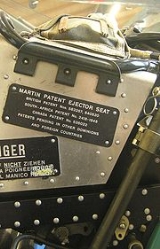
Ejector Seat With Patents Crooped
Patents can generally only be enforced through civil lawsuits (for example, for a U.S. patent, by an action for patent infringement in a United States federal court), although some countries (such as France
France

France , officially the French Republic , is a country whose Metropolitan France is located in Western Europe and that also comprises various Overseas departments and territories of France....
 and Austria
Austria

Austria , officially the Republic of Austria , is a landlocked country in Central Europe. It borders both Germany and the Czech Republic to the north, Slovakia and Hungary to the east, Slovenia and Italy to the south, and Switzerland and Liechtenstein to the west....
) have criminal penalties for wanton infringement. Typically, the patent owner will seek monetary compensation for past infringement, and will seek an injunction
Injunction

An injunction is an equitable remedy in the form of a court order, whereby a party is required to do, or to refrain from doing, certain acts. The party that fails to adhere to the injunction faces civil or criminal penalties and may have to pay damages or accept sanctions for failing to follow the court's order....
 prohibiting the defendant from engaging in future acts of infringement. In order to prove infringement, the patent owner must establish that the accused infringer practices all of the requirements of at least one of the claims of the patent (noting that in many jurisdictions the scope of the patent may not be limited to what is literally stated in the claims, for example due to the "doctrine of equivalents
Doctrine of equivalents

The doctrine of equivalents is a legal rule in most of the world's patent systems that allows a court to hold a party liable for patent infringement even though the infringing device or process does not fall within the literal scope of a claim , but nevertheless is equivalent to the claimed invention....
").

An important limitation on the ability of a patent owner to successfully assert the patent in civil litigation is the accused infringer's right to challenge the validity of that patent. Civil courts hearing patent cases can and often do declare patents invalid. The grounds on which a patent can be found invalid are set out in the relevant patent legislation and vary between countries. Often, the grounds are a sub-set of the requirements for patentability
Patentability

Within the context of a state or multilateralism body of law, an invention is patentable if it meets the relevant legal conditions to be granted a patent....
 in the relevant country. Whilst an infringer is generally free to rely on any available ground of invalidity (such as a prior publication
Novelty (patent)

Novelty is a patentability requirement. An invention is not patentable if the claim ed subject matter was disclosed before the date of filing, or before the date of priority right if a priority is claimed, of the patent application....
, for example), some countries have sanctions to prevent the same validity questions being relitigated. An example is the UK Certificate of contested validity
Certificate of contested validity

In United Kingdom patent, a certificate of contested validity is an order usually made by the Patents Court or Patents County Court after a Patent infringement action in which the Patentability of the patent is unsuccessfully challenged....
. The vast majority of patent rights, however, are not determined through litigation, but are resolved privately through patent licensing. Patent licensing agreements
License

The verb license or grant license means to give permission. The noun license refers to that permission as well as to the document memorializing that permission....
 are effectively contract
Contract

A contract is an exchange of promises between two or more parties to do, or refrain from doing, an act which is enforceable in a court of law. It is a binding legal agreement....
s in which the patent owner (the licensor) agrees not to sue the licensee for infringement of the licensor's patent rights, usually in return for a royalty or other payment. It is common for companies engaged in complex technical fields to enter into dozens of license agreements associated with the production of a single product. Moreover, it is equally common for competitors in such fields to license patents to each other under cross-licensing
Cross-licensing

A cross-licensing agreement is a contract between two or more parties where each party grants rights to their intellectual property to the other parties....
 agreements in order to gain access to each other's patents.

The United Nations Statistics Division reports that the United States was the top market for patents in force in 2000 closely followed by the EU and Japan.

Ownership


In most countries, both natural persons and corporate entities may apply for a patent. In the United States, however, only the inventor(s) may apply for a patent although it may be assigned
Assignment (law)

An assignment is a term used with similar meanings in the law of contracts and in the law of real estate. In both instances, it encompasses the transfer of rights held by one party?the assignor?to another party?the assignee....
 to a corporate entity subsequently and inventors may be required to assign inventions to their employers under the contract of employment. In most European countries, ownership of an invention may pass from the inventor to their employer by rule of law if the invention was made in the course of the inventor's normal employment duties.

The inventors, their successors or their assignees become the proprietors of the patent when and if it is granted. If a patent is granted to more than one proprietor, the laws of the country in question and any agreement between the proprietors may affect the extent to which each proprietor can exploit the patent. For example, in some countries, each proprietor may freely license or assign their rights in the patent to another person while the law in other countries prohibits such actions without the permission of the other proprietor(s).

The ability to assign ownership rights increases the liquidity
Market liquidity

Market liquidity is a business, economics or investment term that refers to an asset's ability to be easily converted through an act of buying or selling without causing a significant movement in the price and with minimum loss of value....
 of a patent as property. Inventors can obtain patents and then sell them to third parties. The third parties then own the patents and have the same rights to prevent others from exploiting the claimed inventions, as if they had originally made the inventions themselves.

Governing laws

The grant and enforcement of patents are governed by national laws, and also by international treaties, where those treaties have been given effect in national laws. Patents are, therefore, territorial in nature.

Commonly, a nation forms a patent office
Patent office

A patent office is a governmental or intergovernmental organization which controls the issue of patents. In other words, "patent offices are government bodies that may grant a patent or reject the patent application based on whether or not the application fulfils the requirements for patentability." ...
 with responsibility for operating that nation's patent system, within the relevant patent laws. The patent office generally has responsibility for the grant of patents, with infringement being the remit of national courts.

There is a trend towards global harmonization of patent laws, with the World Trade Organization
World Trade Organization

The World Trade Organization is an international organization designed to supervise and Free trade international trade. The WTO came into being on 1 January 1995, and is the successor to the General Agreement on Tariffs and Trade , which was created in 1947, and continued to operate for almost five decades as a de facto international org...
 (WTO) being particularly active in this area. The TRIPs Agreement
Agreement on Trade-Related Aspects of Intellectual Property Rights

The Agreement on Trade Related Aspects of Intellectual Property Rights is an international agreement administered by the World Trade Organization that sets down minimum standards for many forms of intellectual property regulation....
 has been largely successful in providing a forum for nations to agree on an aligned set of patent laws. Conformity with the TRIPs agreement is a requirement of admission to the WTO and so compliance is seen by many nations as important. This has also led to many developing nations, which may historically have developed different laws to aid their development, enforcing patents laws in line with global practice.

A key international convention relating to patents is the Paris Convention for the Protection of Industrial Property
Paris Convention for the Protection of Industrial Property

The Paris Convention for the Protection of Industrial Property, signed in Paris, France, on March 20, 1883, was one of the first intellectual property treaty....
, initially signed in 1883. The Paris Convention sets out a range of basic rules relating to patents, and although the convention does not have direct legal effect in all national jurisdictions, the principles of the convention are incorporated into all notable current patent systems. The most significant aspect of the convention is the provision of the right to claim priority
Priority right

In patent, industrial design rights and trademark laws, a priority right or right of priority is a time-limited right, triggered by the first filing of an application for a patent, an industrial design or a trademark respectively....
: filing an application in any one member state of the Paris Convention preserves the right for one year to file in any other member state, and receive the benefit of the original filing date. Because the right to a patent is intensely date-driven, this right is fundamental to modern patent usage.

The authority for patent statutes in different countries varies. In the United States, the Constitution
United States Constitution

The Constitution of the United States of America is the supreme law of the United States. It is the foundation and source of the legal authority underlying the existence of the United States of America; the Federal Government of the United States; and all the State & local governments and Territorial Administrative bodies contained therein....
 empowers Congress
United States Congress

The United States Congress is the Bicameralism legislature of the Federal government of the United States of the United States of America, consisting of two houses, the United States Senate and the United States House of Representatives....
 to make laws to "promote the Progress of Science and useful Arts..." The laws Congress passed are codified in Title 35 of the United States Code
Title 35 of the United States Code

Title 35 of the United States Code is a title of United States Code regarding United States patent law.* Part I--United States Patent and Trademark Office...
 and created the United States Patent and Trademark Office
United States Patent and Trademark Office

The United States Patent and Trademark Office is an agency in the United States Department of Commerce that issues patents to inventors and businesses for their inventions, and trademark registration for product and intellectual property identification....
. In the UK, substantive patent law is contained in the Patents Act 1977 as amended.

In addition, there are international treaty procedures, such as the procedures under the European Patent Convention
European Patent Convention

File:EuropeanPatentConvention 2008.PNGThe Convention on the Grant of European Patents of 5 October 1973, commonly known as the European Patent Convention , is a multilateral treaty instituting the European Patent Organisation and providing an autonomous law system according to which European patents are granted....
 (EPC) [administered by the European Patent Organisation
European Patent Organisation

The European Patent Organisation is a public international intellectual property organisation created in 1977 to grant patents in Europe under the European Patent Convention of 1973....
 (EPOrg)], and the Patent Cooperation Treaty
Patent Cooperation Treaty

The Patent Cooperation Treaty is an international patent law treaty, concluded in 1970. It provides a unified procedure for filing patent applications to protect inventions in each of its Contracting States ....
 (PCT) (administered by WIPO and covering 137 countries), that centralise some portion of the filing and examination procedure. Similar arrangements exist among the member states of ARIPO
African Regional Intellectual Property Organization

The African Regional Intellectual Property Organization , formerly African Regional Industrial Property Organization, is an intergovernmental organization for cooperation among African states in patent and other industrial property matters....
, OAPI
Organisation Africaine de la Propriété Intellectuelle

The Organisation Africaine de la Propri?t? Intellectuelle or OAPI is an intellectual property organization, headquartered in Yaound?, Cameroon....
, the analogous treaties among African countries.

Application and prosecution


A patent is requested by filing a written application
Patent application

A patent application is a request pending at a patent office for the grant of a patent for the invention described and claim by that application....
 at the relevant patent office. The application contains a description of how to make and use the invention that must provide sufficient detail
Sufficiency of disclosure

Most patent law systems require that a patent application disclose a claim ed invention in sufficient detail for the notional person skilled in the art to carry out that claimed invention....
 for a person skilled in the art (i.e., the relevant area of technology) to make and use the invention. In some countries there are requirements for providing specific information such as the usefulness of the invention, the best mode of performing the invention known to the inventor, or the technical problem or problems solved by the invention. Drawings illustrating the invention may also be provided.

The application also includes one or more claims, although it is not always a requirement to submit these when first filing the application. The claims set out what the applicant is seeking to protect in that they define what the patent owner has a right to exclude others from making, using, or selling, as the case may be. In other words, the claims define what a patent covers or the "scope of protection".

For a patent to be granted, that is to take legal effect in a particular country, the patent application must meet the patentability
Patentability

Within the context of a state or multilateralism body of law, an invention is patentable if it meets the relevant legal conditions to be granted a patent....
 requirements of that country. Most patent offices examine the application for compliance with these requirements. If the application does not comply, objections are communicated to the applicant or their patent agent or attorney
Patent attorney

A patent attorney is an Lawyer who has the specialized qualifications necessary for representing clients in obtaining patents and acting in all matters and procedures relating to patent law and practice, such as filing an opposition....
 and one or more opportunties to respond to the objections to bring the application into compliance are usually provided.

Once granted the patent is subject in most countries to renewal fees
Maintenance fee (patent)

Maintenance fees or renewal fees are fees that are paid to maintain a granted patent in force. Some patent laws require the payment of maintenance fees for pending patent applications....
 to keep the patent in force. These fees are generally payable on a yearly basis, although the US is a notable exception.

Economics


Rationale

There are four primary incentives embodied in the patent system: to invent in the first place; to disclose the invention once made; to invest the sums necessary to experiment, produce and market the invention; and to design around
Design around

In the field of patents, the phrase "to design around? means to invent an alternative to a patented invention that does not infringe the patent?s Claim s....
 and improve upon earlier patents.

  1. Patents provide incentives for economically efficient research and development
    Research and development

    The phrase research and development , according to the Organization for Economic Co-operation and Development, refers to "creative work undertaken on a systematic basis in order to increase the stock of knowledge, including knowledge of man, culture and society, and the use of this stock of knowledge to devise new applications [sic]" ...
     (R&D). Many large modern corporation
    Corporation

    A corporation is a legal entity separate from the persons that form it. It is a legal entity owned by individual stockholders. In British tradition it is the term designating a body corporate, where it can be either a corporation sole or a corporation aggregate ....
    s have annual R&D budgets of hundreds of millions or even billions of dollars. Without patents, R&D spending would be significantly less or eliminated altogether, limiting the possibility of technological advances or breakthroughs. Corporations would be much more conservative about the R&D investments they made, as third parties would be free to exploit
    Free rider problem

    In economics, collective bargaining, psychology and political science, "free riders" are those who consume more than their fair share of a resource, or shoulder less than a fair share of the costs of its production....
     any developments. This second justification is closely related to the basic ideas underlying traditional property rights.
  2. In accordance with the original definition of the term "patent," patents facilitate and encourage disclosure of innovation
    Innovation

    The term innovation means a new way of doing something. It may refer to incremental, radical, and revolutionary changes in thinking, products, processes, or organizations....
    s into the public domain
    Public domain

    File:PD-icon.svgThe public domain is a range of abstract materials?commonly referred to as intellectual property?which are not owned or controlled by anyone....
     for the common good
    Common good

    The common good is a term that can refer to several different concepts. In the popular meaning, the common good describes a specific "Goodness and value theory" that is shared and beneficial for all members of a given community....
    . If inventor
    Inventor

    An inventor is a person who creates or discovers a new method, form, device or other useful means. The word inventor comes form the latin verb invenire, invent-, to find....
    s did not have the legal protection of patents, in many cases, they would prefer or tend to keep their inventions secret. Awarding patents generally makes the details of new technology publicly available, for exploitation by anyone after the patent expires, or for further improvement by other inventors. Furthermore, when a patent's term
    Term of patent

    The term of a patent is the maximum period during which it can be maintained into force. It is usually expressed in number of years either starting from the filing date of the patent application or from the date of grant of the patent....
     has expired, the public record ensures that the patentee's idea is not lost to humanity.
  3. In many industries (especially those with high fixed cost
    Fixed cost

    In economics, fixed costs are business expenses that are not dependent on the activities of the business They tend to be time-related, such as salaries or rents being paid per month....
    s and either low marginal cost
    Marginal cost

    In economics and finance, marginal cost is the change in total cost that arises when the quantity produced changes by one unit. It is the cost of producing one more unit of a good....
    s or low reverse engineering costs — computer processors, software, and pharmaceuticals for example), once an invention exists, the cost of commercialization (testing, tooling up a factory, developing a market, etc.) is far more than the initial conception cost. (For example, the internal "rule of thumb" at several computer companies in the 1980s was that post-R&D costs were 7-to-1). Unless there is some way to prevent copies from competing at the marginal cost of production, companies will not make that productization investment.


One effect of modern patent usage is that a small-time inventor can use the exclusive right status to become a licensor. This allows the inventor to accumulate capital from licensing the invention and may allow innovation to occur because he or she may choose to not manage a manufacturing buildup for the invention. Thus the inventor's time and energy can be spent on pure innovation, allowing others to concentrate on manufacturability.

Costs

The costs of preparing and filing a patent application, prosecuting it until grant and maintaining the patent vary from one jurisdiction to another, and may also be dependent upon the type and complexity of the invention, and on the type of patent.

The European Patent Office estimated in 2005 that the average cost of obtaining a European patent (via a Euro-direct application, i.e. not based on a PCT application) and maintaining the patent for a 10 year term was around 32 000 Euro. Since the London Agreement
London Agreement (2000)

The London Agreement, formally the Agreement on the application of Article 65 of the Convention on the Grant of European Patents and sometimes referred to as the London Protocol, is a patent law agreement concluded in London on 17 October 2000 and aimed at reducing the translation costs of European patents granted under the Europe...
 entered into force on May 1, 2008, this estimation is however no longer up-to-date, since fewer translations are required.

Criticism

Patents have been criticized for being granted on already known inventions. In 1938, for example, R. Buckminster Fuller
Buckminster Fuller

Richard Buckminster ?Bucky? Fuller was an American architect, author, designer, futurist, inventor, and visionary. He was the second president of Mensa International....
, inventor of the geodesic dome
Geodesic dome

A geodesic dome is a spherical or partial-spherical thin-shell structure based on a network of great circles lying on the surface of a sphere....
 wrote:

"At present (1938), the (US patent) files, are so extraordinarily complex and the items so multitudinous that a veritable army of governmental servants is required to attend them and sort them into some order of distinguishable categories to which reference may be made when corresponding with patent applicants for the purposes of examiner citation of "prior art" disclosure. This complexity makes it inevitable that the human-equation involved in government servants relative to carelessness or mechanical limitations should occasion the granting of multitudes of "probably" invalid patent claims."


Patents have also been criticized for conferring a "negative right" upon a patent owner, permitting them to exclude competitors from using or exploiting the invention, even if the competitor subsequently develops the same invention independently. This may be subsequent to the date of invention, or to the priority date
Priority right

In patent, industrial design rights and trademark laws, a priority right or right of priority is a time-limited right, triggered by the first filing of an application for a patent, an industrial design or a trademark respectively....
, depending upon the relevant patent law (see First to file and first to invent
First to file and first to invent

First to file and first to invent are legal concepts that define who has the right to the grant of a patent for an invention. The first to file system is used in the majority of countries, with the notable exception of the United States, which operates a first to invent system....
).

Patents may hinder innovation as well in the case of "troll" entities. A holding company, pejoratively known as a "patent troll
Patent troll

Patent troll is a pejorative used for a person or company that enforces its patents against one or more alleged patent infringement in a manner considered unduly aggressive or opportunistic, often with no intention to manufacture or market the patented invention....
", owns a portfolio of patents, and sues others for infringement of these patents while doing little to develop the technology itself.

Another theoretical problem with patent rights was proposed by law professors Michael Heller
Michael Heller (law professor)

Michael Heller is a law professor known for his focus on property law. Heller coined the term ?tragedy of the anticommons? while working as a law professor at University of Michigan Law School, in a 1998 paper entitled "The Tragedy of the Anticommons: Property in the Transition from Marx to Markets,? published in the Harvard Law Review....
 and Rebecca Sue Eisenberg in a 1998 Science article. Building from Heller's theory of the tragedy of the anticommons
Tragedy of the anticommons

The tragedy of the anticommons is a neologism coined by Michael Heller to describe a coordination breakdown where the existence of numerous rights holders frustrates achieving a socially desirable outcome....
, the professors postulated that intellectual property rights may become so fragmented that, effectively, no one can take advantage of them as to do so would require an agreement between the owners of all of the fragments.

In regards to pharmaceutical patents, the preservation of exclusivity rights on medications prevents generic alternatives to enter the market and thus maintains a high price of drug treatments. This can have significant effects in the developing world as those who are most in need of basic essential medicines are unable to afford such high priced pharmaceuticals. Another criticism of pharmaceutical patenting relates the rationale of exclusivity rights and subsequent high drug prices as required to make back the vast investment needed to further research and development. Critics have investigated pharmaceutical budget allocations to address this price justification and revealed that marketing expenditures of new drugs have often doubled the amount that was allocated for required research and development.

In response to these criticisms against pharmaceutical patents it has been pointed out that less than 5% of medicines on the WHO’s essential drugs list are subject to patent protection and that countries who believe that intellectual property is impeding health care may not be aware that the medicines in question, particularly for HIV/AIDS related drugs, are not patented in their country. Also, the pharmaceutical industry has contributed US$2 billion in healthcare efforts in developing countries, providing HIV/AIDS drugs at lower cost or even free of charge in certain countries and has used differential pricing and parallel imports as a means to provide medication to the poor. Other groups are investigating ways in which social inclusion and equitable distribution of research and development findings can be obtained within the existing intellectual property framework, although these efforts have received less exposure.

History

Uspatents18002004
In 500 BC, in the Greek city of Sybaris
Sybaris

Sybaris was a celebrated city of Magna Graecia on the western shore of the Gulf of Taranto. The wealth of the city in the 6th century BC was such that the Sybarites became synonymous with pleasure and luxury....
 (located in what is now southern Italy), "encouragement was held out to all who should discover any new refinement in luxury, the profits arising from which were secured to the inventor by patent for the space of a year."

Patents in the modern sense originated in 1474, when the Republic of Venice
Republic of Venice

The Most Serene Republic of Venice or Venetian Republic was a state originating from the city of Venice . It existed for over a millennium, from the late 7th century AD until the year 1797....
 enacted a decree by which new and inventive devices, once they had been put into practice, had to be communicated to the Republic in order to obtain the right to prevent others from using them.

England followed with the Statute of Monopolies
Statute of Monopolies 1623

England's Statute of Monopolies 1623 of 1623 , while generally condemning monopoly, provided the true and first inventor of a given item up to fourteen years of exclusive rights to their invention, provided that: ...?they be not contrary to the law nor mischievous to the state by raising prices of commodities at home, or hurt of trade, or generally...
 in 1623 under King James I
James I of England

James VI and I was List of monarchs of Scotland as James VI, and List of English monarchs and King of Ireland as James I. He ruled in Kingdom of Scotland as James VI from 24 July 1567, when he was only one year old, succeeding his mother Mary I of Scotland....
, which declared that patents could only be granted for "projects of new invention." During the reign of Queen Anne
Anne of Great Britain

Anne became Queen of England, Queen of Scots and Kingdom of Ireland on 8 March 1702, succeeding her brother-in-law, William III of England. Her Roman Catholic father, James II of England, was Glorious Revolution in 1688/9; her brother-in-law and her sister then became joint monarchs as William III & II and Mary II of England, the only such c...
 (1702–1714), the lawyers of the English Court developed the requirement that a written description of the invention must be submitted. These developments, which were in place during the Colonial period, formed the basis for modern English and United States patent law.

In the United States, during the colonial period and Articles of Confederation
Articles of Confederation

The Articles of Confederation and Perpetual Union was the constitution of the revolutionary wartime alliance of the thirteen United States. The Articles' ratification was completed in 1781, and legally federated several sovereign and independent states, allied under the Articles of Association into a new federation styled the "United States...
 years (1778–1789), several states adopted patent systems of their own. The first Congress adopted a Patent Act
Patent Act of 1790

The Patent Act of 1790 was the United States' first patent statute. It was entitled An Act to promote the progress of useful Arts, and passed on April 10, 1790....
, in 1790, and the first patent was issued under this Act on (to Samuel Hopkins
Samuel Hopkins (inventor)

Samuel Hopkins was an United States inventor from Philadelphia, Pennsylvania, and Pittsford, Vermont. On July 31, 1790 he was granted the first U.S....
 of Vermont for a potash
Potash

Potash is the common name given to potassium carbonate and various mined and manufactured salts that contain the element potassium in water-soluble form....
 production technique).

See also

  • List of patent legal concepts
    List of patent legal concepts

    This is a list of legal concepts relating to patents, including special types of patents and patent applications ....
  • List of patent related topics
    List of patent related topics

    This is a list of topics related to patents. See list of patent legal concepts for a list of articles on various legal aspects of patents, including special types of patents and patent applications....
  • List of people associated with patent law
    List of people associated with patent law

    This is a list of notable people associated with patent law and patent-related institutions. For a list of notable inventors, see list of inventors....


External links

  • , maintained by World Intellectual Property Organization
    World Intellectual Property Organization

    The World Intellectual Property Organization is one of the 16 specialized agencies of the United Nations. WIPO was created in 1967 "to encourage creative activity, to promote the protection of intellectual property throughout the world"....
     (WIPO)