

Arachidonic acid

Encyclopedia
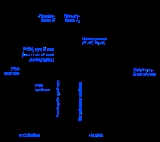
Arachidonic acid is a polyunsaturated omega-6 fatty acid
20:4(ω-6).
It is the counterpart to the saturated arachidic acid
found in peanut
oil, (L. arachis – peanut.)
, arachidonic acid is a carboxylic acid
with a 20-carbon chain and four cis
-double bonds; the first double bond is located at the sixth carbon from the omega end.
Some chemistry sources define 'arachidonic acid' to designate any of the eicosatetraenoic acid
s. However, almost all writings in biology, medicine and nutrition limit the term to all-cis-5,8,11,14-eicosatetraenoic acid.
s (especially phosphatidylethanolamine
, phosphatidylcholine
, and phosphatidylinositides) of membrane
s of the body's cell
s, and is abundant in the brain
, muscles, liver
.
In addition to being involved in cellular signaling as a lipid second messenger involved in the regulation of signaling enzymes, such as PLC
-γ, PLC-δ, and PKC
-α, -β, and -γ isoforms, arachidonic acid is a key inflammatory intermediate and can also act as a vasodilator. (Note separate synthetic pathways, as described in section below)
s. However, it does become essential if there is a deficiency in linoleic acid
or if there is an inability to convert linoleic acid to arachidonic acid, which is required by most mammal
s. Some mammals lack the ability to—or have a very limited capacity to—convert linoleic acid into arachidonic acid, making it an essential part of their diet. Since little or no arachidonic acid is found in common plants, such animals are obligate carnivore
s; the cat is a common example. A commercial source of arachidonic acid has been derived, however, from the fungus Mortierella alpina.
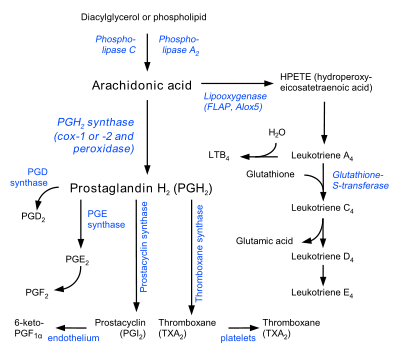 Arachidonic acid is freed from a phospholipid
molecule by the enzyme phospholipase A2
(PLA2), which cleaves off the fatty acid
, but can also be generated from DAG by diacylglycerol lipase
.
Arachidonic acid generated for signaling purposes appears to be derived by the action of a phosphatidylcholine-specific cytosolic phospholipase A2
(cPLA2, 85 kDa), whereas inflammatory arachidonic acid is generated by the action of a low-molecular-weight secretory PLA2 (sPLA2, 14-18 kDa).
Arachidonic acid is a precursor in the production of eicosanoid
s:
The production of these derivatives and their action in the body are collectively known as the arachidonic acid cascade; see essential fatty acid interactions
for more details.
Furthermore, any agent increasing intracellular calcium
may cause activation of some forms of PLA2.
(PLC), yielding diacylglycerol (DAG), which subsequently is cleaved by DAG lipase
to yield arachidonic acid.
Receptors that activate this pathway include:
PLC may also be activated by MAP kinase. Activators of this pathway include PDGF and FGF
.
(DHA). The two account for approximately 20% of its fatty acid content. Like DHA, neurological health is reliant upon sufficient levels of arachidonic acid. Among other things, arachidonic acid helps to maintain hippocampal
cell membrane fluidity. It also helps protect the brain from oxidative stress by activating peroxisome proliferator-activated receptor gamma
. ARA also activates syntaxin-3 (STX-3), a protein involved in the growth and repair of neurons.
Arachidonic acid is also involved in early neurological development. In one study funded by the U.S. National Institute of Child Health and Human Development, infants (18 months) given supplemental arachidonic acid for 17 weeks demonstrated significant improvements in intelligence, as measured by the Mental Development Index (MDI). This effect is further enhanced by the simultaneous supplementation of ARA with DHA.
In adults, the disturbed metabolism of ARA may be associated with neurological disorders such as Alzheimer’s disease and Bipolar disorder
. This may involve significant alterations in the conversion of arachidonic acid to other bioactive molecules (overexpression or disturbances in the ARA enzyme cascade). It is of note that the dietary arachidonic acid consumption is not associated with the onset of Alzheimer's disease, and studies suggest that the supplementation of arachidonic acid during the early stages of this disease may actually be effective in reducing symptoms and slowing the disease progress. Additional studies on the supplementation of arachidonic acid with Alzheimer's are needed.
The performance data results from the paper include the following statistically significant improvement, and statistically strong trends:
A significant group × time interaction for relative Wingate peak power was observed among groups (P = 0.02) with gains in peak power being significantly greater in the AA group (0.3 ± 1.2 W·kg-1) vs. PLA (0.2 ± 0.7 W·kg-1, Figure 1). Using repeated measures ANOVA with delta scores, AA experienced significantly greater increases in comparison to the PLA group at day 50 (P < 0.05). Statistical trends were seen in Wingate total work (AA: 1,292 ± 1,206 vs. PLA: 510 ± 1,249 J, P = 0.09, ηp 2 = 0.052), favoring the AA group.
With regard to inflammation, the paper reported a statistically significant reduction in resting IL-6 levels (a central regulator of inflammation):
IL-6 levels experienced a significant group × time interaction (P = 0.04) among groups with subsequent post-hoc analyses revealing that IL-6 was significantly lower at day 25 of the study. One way ANOVA of IL-6 delta values at day 25 revealed significantly greater increases in PLA when compared to AA group (AA: 0.8 ± 13.5 pg·ml-1 vs. PLA: 52.5 ± 1.6 pg·ml-1, P = 0.01; Figure 2)
Arachidonic acid was shown to improve peak muscle power, reduce resting IL-6 levels, and produce statistically strong trends of improvements in muscle endurance, average power, and bench press 1-rep maximum lift. This study provides preliminary evidence supporting the use of arachidonic acid in sports nutrition. Further research is needed.
Arachidonic acid does still play a central role in inflammation related to injury and many diseased states. How it is metabolized in the body dictates its inflammatory or anti-inflammatory activity. Individuals suffering from joint pains or active inflammatory disease may find that increased arachidonic acid consumption exacerbates symptoms, it is presumed because it is being more readily converted to inflammatory compounds. Likewise, high arachidonic acid consumption is not advised for individuals with a history of inflammatory disease, or that are in compromised health. It is also of note that, while ARA supplementation does not appear to have pro-inflammatory effects in healthy individuals, it may counter the anti-inflammatory effects of omega-3 fatty acid
supplementation.
A scientific advisory from the American Heart Association has favorably evaluated the health impact of dietary Omega-6 fats, including arachidonic acid. The group does not recommend limiting this essential fatty acid. In fact, the paper recommends individuals follow a diet that consists of at least 5-10% of calories coming from omega-6 fats, including arachidonic acid. Dietary ARA is not a risk factor for heart disease, and may play a role in maintaining optimal metabolism and reduced heart disease risk. It is, therefore, recommended to maintain sufficient intake levels of both omega 3 and omega 6 essential fatty acids for optimal health.
Arachidonic acid is not carcinogenic, and studies show the dietary level is not associated with an increased risk of cancers. ARA remains integral to the inflammatory and cell growth process, however, which is disturbed in many types of disease including cancer. Therefore, the safety of arachidonic acid supplementation in patients suffering from cancer, inflammatory, or other diseased states is unknown, and supplementation is not recommended.
Omega-6 fatty acid
n−6 fatty acids are a family of unsaturated fatty acids that have in common a final carbon–carbon double bond in the n−6 position, that is, the sixth bond, counting from the methyl end.The biological effects of the n−6 fatty acids are largely mediated by their conversion to n-6 eicosanoids...
20:4(ω-6).
It is the counterpart to the saturated arachidic acid
Arachidic acid
Arachidic acid, also called eicosanoic acid, is the saturated fatty acid with a 20 carbon chain. It is as a minor constituent of peanut oil and corn oil . Its name derives from the Latin arachis — peanut...
found in peanut
Peanut
The peanut, or groundnut , is a species in the legume or "bean" family , so it is not a nut. The peanut was probably first cultivated in the valleys of Peru. It is an annual herbaceous plant growing tall...
oil, (L. arachis – peanut.)
Chemistry
In chemical structureChemical structure
A chemical structure includes molecular geometry, electronic structure and crystal structure of molecules. Molecular geometry refers to the spatial arrangement of atoms in a molecule and the chemical bonds that hold the atoms together. Molecular geometry can range from the very simple, such as...
, arachidonic acid is a carboxylic acid
Carboxylic acid
Carboxylic acids are organic acids characterized by the presence of at least one carboxyl group. The general formula of a carboxylic acid is R-COOH, where R is some monovalent functional group...
with a 20-carbon chain and four cis
Cis
Cis may have the following meanings:* "Cis-" as a prefix of Latin origin, meaning "on the same side [as]" or "on this side [of]", with several derived usages:** In chemistry, cis- refers to cis-trans isomerism...
-double bonds; the first double bond is located at the sixth carbon from the omega end.
Some chemistry sources define 'arachidonic acid' to designate any of the eicosatetraenoic acid
Eicosatetraenoic acid
Eicosatetraenoic acid, ETA, designates any straight chain 20:4 fatty acid.Two isomers, both of them essential fatty acids, are of particular interest:* all-cis 5,8,11,14-eicosatetraenoic acid is an ω-6 fatty acid with the trivial name arachidonic acid...
s. However, almost all writings in biology, medicine and nutrition limit the term to all-cis-5,8,11,14-eicosatetraenoic acid.
Biology
Arachidonic acid is a polyunsaturated fatty acid that is present in the phospholipidPhospholipid
Phospholipids are a class of lipids that are a major component of all cell membranes as they can form lipid bilayers. Most phospholipids contain a diglyceride, a phosphate group, and a simple organic molecule such as choline; one exception to this rule is sphingomyelin, which is derived from...
s (especially phosphatidylethanolamine
Phosphatidylethanolamine
Phosphatidylethanolamine is a lipid found in biological membranes. It is synthesized by the addition of CDP-ethanolamine to diglyceride, releasing CMP. S-adenosyl methionine can subsequently methylate the amine of phosphatidyl ethanolamine to yield phosphatidyl choline.Cephalin is a phospholipid,...
, phosphatidylcholine
Phosphatidylcholine
Phosphatidylcholines are a class of phospholipids that incorporate choline as a headgroup.They are a major component of biological membranes and can be easily obtained from a variety of readily available sources such as egg yolk or soy beans from which they are mechanically extracted or chemically...
, and phosphatidylinositides) of membrane
Cell membrane
The cell membrane or plasma membrane is a biological membrane that separates the interior of all cells from the outside environment. The cell membrane is selectively permeable to ions and organic molecules and controls the movement of substances in and out of cells. It basically protects the cell...
s of the body's cell
Cell (biology)
The cell is the basic structural and functional unit of all known living organisms. It is the smallest unit of life that is classified as a living thing, and is often called the building block of life. The Alberts text discusses how the "cellular building blocks" move to shape developing embryos....
s, and is abundant in the brain
Brain
The brain is the center of the nervous system in all vertebrate and most invertebrate animals—only a few primitive invertebrates such as sponges, jellyfish, sea squirts and starfishes do not have one. It is located in the head, usually close to primary sensory apparatus such as vision, hearing,...
, muscles, liver
Liver
The liver is a vital organ present in vertebrates and some other animals. It has a wide range of functions, including detoxification, protein synthesis, and production of biochemicals necessary for digestion...
.
In addition to being involved in cellular signaling as a lipid second messenger involved in the regulation of signaling enzymes, such as PLC
Phospholipase C
Phosphoinositide phospholipase C is a family of eukaryotic intracellular enzymes that play an important role in signal transduction processes. In general, this enzyme is denoted as Phospholipase C, although three other families of phospholipase C enzymes have been identified in bacteria and in...
-γ, PLC-δ, and PKC
Protein kinase C
Protein kinase C also known as PKC is a family of enzymes that are involved in controlling the function of other proteins through the phosphorylation of hydroxyl groups of serine and threonine amino acid residues on these proteins. PKC enzymes in turn are activated by signals such as increases in...
-α, -β, and -γ isoforms, arachidonic acid is a key inflammatory intermediate and can also act as a vasodilator. (Note separate synthetic pathways, as described in section below)
Essential fatty acid
Arachidonic acid is not one of the essential fatty acidEssential fatty acid
Essential fatty acids, or EFAs, are fatty acids that humans and other animals must ingest because the body requires them for good health but cannot synthesize them...
s. However, it does become essential if there is a deficiency in linoleic acid
Linoleic acid
Linoleic acid is an unsaturated n-6 fatty acid. It is a colorless liquid at room temperature. In physiological literature, it has a lipid number of 18:2...
or if there is an inability to convert linoleic acid to arachidonic acid, which is required by most mammal
Mammal
Mammals are members of a class of air-breathing vertebrate animals characterised by the possession of endothermy, hair, three middle ear bones, and mammary glands functional in mothers with young...
s. Some mammals lack the ability to—or have a very limited capacity to—convert linoleic acid into arachidonic acid, making it an essential part of their diet. Since little or no arachidonic acid is found in common plants, such animals are obligate carnivore
Carnivore
A carnivore meaning 'meat eater' is an organism that derives its energy and nutrient requirements from a diet consisting mainly or exclusively of animal tissue, whether through predation or scavenging...
s; the cat is a common example. A commercial source of arachidonic acid has been derived, however, from the fungus Mortierella alpina.
Synthesis and cascade
Phospholipid
Phospholipids are a class of lipids that are a major component of all cell membranes as they can form lipid bilayers. Most phospholipids contain a diglyceride, a phosphate group, and a simple organic molecule such as choline; one exception to this rule is sphingomyelin, which is derived from...
molecule by the enzyme phospholipase A2
Phospholipase A2
Phospholipases A2 are enzymes that release fatty acids from the second carbon group of glycerol. This particular phospholipase specifically recognizes the sn-2 acyl bond of phospholipids and catalytically hydrolyzes the bond releasing arachidonic acid and lysophospholipids...
(PLA2), which cleaves off the fatty acid
Fatty acid
In chemistry, especially biochemistry, a fatty acid is a carboxylic acid with a long unbranched aliphatic tail , which is either saturated or unsaturated. Most naturally occurring fatty acids have a chain of an even number of carbon atoms, from 4 to 28. Fatty acids are usually derived from...
, but can also be generated from DAG by diacylglycerol lipase
Diacylglycerol lipase
Diacylglycerol lipase, also known as DAG lipase, DAGL or DGL, is a key enzyme in the biosynthesis of the endocannabinoid 2-arachidonoylglycerol. It catalyzes the hydrolysis of diacylglycerol, releasing a free fatty acid and monoacylglycerol....
.
Arachidonic acid generated for signaling purposes appears to be derived by the action of a phosphatidylcholine-specific cytosolic phospholipase A2
Phospholipase A2
Phospholipases A2 are enzymes that release fatty acids from the second carbon group of glycerol. This particular phospholipase specifically recognizes the sn-2 acyl bond of phospholipids and catalytically hydrolyzes the bond releasing arachidonic acid and lysophospholipids...
(cPLA2, 85 kDa), whereas inflammatory arachidonic acid is generated by the action of a low-molecular-weight secretory PLA2 (sPLA2, 14-18 kDa).
Arachidonic acid is a precursor in the production of eicosanoid
Eicosanoid
In biochemistry, eicosanoids are signaling molecules made by oxidation of twenty-carbon essential fatty acids, ....
s:
- The enzymes cyclooxygenaseCyclooxygenaseCyclooxygenase is an enzyme that is responsible for formation of important biological mediators called prostanoids, including prostaglandins, prostacyclin and thromboxane. Pharmacological inhibition of COX can provide relief from the symptoms of inflammation and pain...
and peroxidasePeroxidasePeroxidases are a large family of enzymes that typically catalyze a reaction of the form:For many of these enzymes the optimal substrate is hydrogen peroxide, but others are more active with organic hydroperoxides such as lipid peroxides...
lead to prostaglandin H2Prostaglandin H2Prostaglandin H2 is a type of Prostaglandin which is derived from arachidonic acid and is a precursor for many other biologically significant molecules.It is acted upon by:* prostacyclin synthase to create prostacyclin...
, which in turn is used to produce the prostaglandinProstaglandinA prostaglandin is any member of a group of lipid compounds that are derived enzymatically from fatty acids and have important functions in the animal body. Every prostaglandin contains 20 carbon atoms, including a 5-carbon ring....
s, prostacyclinProstacyclinProstacyclin is a member of the family of lipid molecules known as eicosanoids.As a drug, it is also known as "epoprostenol". The terms are sometimes used interchangeably.-History:...
, and thromboxaneThromboxaneThromboxane is a member of the family of lipids known as eicosanoids. The two major thromboxanes are thromboxane A2 and thromboxane B2. The distinguishing feature of thromboxanes is a 6-membered ether-containing ring....
s. - The enzyme 5-lipoxygenase leads to 5-HPETE, which in turn is used to produce the leukotrieneLeukotrieneLeukotrienes are fatty signaling molecules. They were first found in leukocytes . One of their roles is to trigger contractions in the smooth muscles lining the trachea; their overproduction is a major cause of inflammation in asthma and allergic rhinitis...
s. - Arachidonic acid is also used in the biosynthesis of anandamideAnandamideAnandamide, also known as N-arachidonoylethanolamide or AEA, is an endogenous cannabinoid neurotransmitter. The name is taken from the Sanskrit word ananda, which means "bliss, delight", and amide. It is synthesized from N-arachidonoyl phosphatidylethanolamine by multiple pathways...
. - Some arachidonic acid is converted into hydroxyeicosatetraenoic acids (HETEs) and epoxyeicosatrienoic acidEpoxyeicosatrienoic acidThe Epoxyeicosatrienoic acids or EETs are signaling molecules formed by the action of Cytochrome P450 epoxygenase on 20-carbon essential fatty acids, such as arachidonic acid, from which it is produced by the enzyme epoxygenase....
s (EETs) by epoxygenaseEpoxygenaseEpoxygenase is an enzyme that produces hydroxyeicosatetraenoic acids and epoxyeicosatrienoic acids from arachidonic acid, causing effects such as cell proliferation and decrease in cyclooxygenase activity. -HETEs:...
.
The production of these derivatives and their action in the body are collectively known as the arachidonic acid cascade; see essential fatty acid interactions
Essential fatty acid interactions
The actions of the ω-3 and ω-6 essential fatty acids are best characterized by their interactions; they cannot be understood separately.Arachidonic acid is a 20-carbon ω-6 conditionally essential fatty acid...
for more details.
PLA2 activation
PLA2, in turn, is activated by ligand binding to receptors, including:- 5-HT2 receptor5-HT2 receptorThe 5-HT2 receptors are a subfamily of 5-HT receptors that bind the endogenous neurotransmitter serotonin . The 5-HT2 subfamily consists of three G protein-coupled receptors which are coupled to Gq/G11 and mediate excitatory neurotransmission, including 5-HT2A, 5-HT2B, and 5-HT2C...
s - mGLUR1Metabotropic glutamate receptor 1The glutamate receptor, metabotropic 1, also known as GRM1, is a human gene which encodes the metabotropic glutamate receptor 1 protein.-Function:...
- bFGFBasic fibroblast growth factorBasic fibroblast growth factor, also known as bFGF, FGF2 or FGF-β, is a member of the fibroblast growth factor family.- Function :...
receptor - INF-α receptor
- INF-γ receptorInterferon-gamma receptorThe interferon-gamma receptor is a receptor which binds interferon-γ, the sole member of interferon type II.- Structure and function :...
Furthermore, any agent increasing intracellular calcium
Calcium
Calcium is the chemical element with the symbol Ca and atomic number 20. It has an atomic mass of 40.078 amu. Calcium is a soft gray alkaline earth metal, and is the fifth-most-abundant element by mass in the Earth's crust...
may cause activation of some forms of PLA2.
PLC activation
Alternatively, arachidonic acid may be cleaved from phospholipids by phospholipase CPhospholipase C
Phosphoinositide phospholipase C is a family of eukaryotic intracellular enzymes that play an important role in signal transduction processes. In general, this enzyme is denoted as Phospholipase C, although three other families of phospholipase C enzymes have been identified in bacteria and in...
(PLC), yielding diacylglycerol (DAG), which subsequently is cleaved by DAG lipase
Diacylglycerol lipase
Diacylglycerol lipase, also known as DAG lipase, DAGL or DGL, is a key enzyme in the biosynthesis of the endocannabinoid 2-arachidonoylglycerol. It catalyzes the hydrolysis of diacylglycerol, releasing a free fatty acid and monoacylglycerol....
to yield arachidonic acid.
Receptors that activate this pathway include:
- A1 receptor
- D2 receptorDopamine receptor D2Dopamine receptor D2, also known as D2R, is a protein that, in humans, is encoded by the DRD2 gene.- Function :This gene encodes the D2 subtype of the dopamine receptor. This G protein-coupled receptor inhibits adenylyl cyclase activity...
- α-2 adrenergic receptorAlpha-2 adrenergic receptorThe alpha-2 adrenergic receptor is a G protein-coupled receptor associated with the Gi heterotrimeric G-protein. It consists of three highly homologous subtypes, including α2A-, α2B-, and α2C-adrenergic. Some species other than humans express a fourth α2D-adrenergic receptor as well...
- 5-HT1 receptor5-HT1 receptorThe 5-HT1 receptors are a subfamily of 5-HT receptors that bind the endogenous neurotransmitter serotonin . The 5-HT1 subfamily consists of five G protein-coupled receptors that are coupled to Gi/Go and mediate inhibitory neurotransmission, including 5-HT1A, 5-HT1B, 5-HT1D, 5-HT1E, and 5-HT1F...
PLC may also be activated by MAP kinase. Activators of this pathway include PDGF and FGF
Fibroblast growth factor
Fibroblast growth factors, or FGFs, are a family of growth factors involved in angiogenesis, wound healing, and embryonic development. The FGFs are heparin-binding proteins and interactions with cell-surface associated heparan sulfate proteoglycans have been shown to be essential for FGF signal...
.
Muscle growth
Through its conversion to active components such as the prostaglandin PGF2alpha, arachidonic acid is necessary for the repair and growth of skeletal muscle tissue. This role makes ARA an important dietary component in support of the muscle anabolic process. One of the lead researchers of the Baylor study (see Bodybuilding section) on arachidonic acid, Mike Roberts MS, CSCS, has authored an article published under the title Arachidonic Acid, The New Mass Builder explaining the role of this nutrient in muscle anabolism, and its potential for the enhancement of muscle size and strength. The paper explains that for optimal muscle growth a training stimulus must elicit localized inflammation and soreness. It explains that arachidonic acid (AA, 20:4n-6) is an essential Omega-6 (1-6) polyunsaturated fatty acid that is abundant in skeletal muscle membrane phospholipids (figure 2). It is also the body's principal building block for the production of prostaglandins, which are known to have various physiological roles including a close involvement in inflammation. Also, the prostaglandin isomer PGF2a has a potent ability to stimulate muscle growth. As such, arachidonic acid is a regulator of localized muscle inflammation, and may be a central nutrient controlling the intensity of the anabolic/tissue-rebuilding response to weight training.Brain
Arachidonic acid is one of the most abundant fatty acids in the brain, and is present in similar quantities to docosahexaenoic acidDocosahexaenoic acid
Docosahexaenoic acid is an omega-3 fatty acid that is a primary structural component of the human brain and retina. In chemical structure, DHA is a carboxylic acid with a 22-carbon chain and six cis double bonds; the first double bond is located at the third carbon from the omega end...
(DHA). The two account for approximately 20% of its fatty acid content. Like DHA, neurological health is reliant upon sufficient levels of arachidonic acid. Among other things, arachidonic acid helps to maintain hippocampal
Hippocampus
The hippocampus is a major component of the brains of humans and other vertebrates. It belongs to the limbic system and plays important roles in the consolidation of information from short-term memory to long-term memory and spatial navigation. Humans and other mammals have two hippocampi, one in...
cell membrane fluidity. It also helps protect the brain from oxidative stress by activating peroxisome proliferator-activated receptor gamma
Peroxisome proliferator-activated receptor gamma
Peroxisome proliferator-activated receptor gamma , also known as the glitazone receptor, or NR1C3 is a type II nuclear receptor that in humans is encoded by the PPARG gene.Two isoforms of PPARG are detected in the human and in the mouse: PPAR-γ1 and...
. ARA also activates syntaxin-3 (STX-3), a protein involved in the growth and repair of neurons.
Arachidonic acid is also involved in early neurological development. In one study funded by the U.S. National Institute of Child Health and Human Development, infants (18 months) given supplemental arachidonic acid for 17 weeks demonstrated significant improvements in intelligence, as measured by the Mental Development Index (MDI). This effect is further enhanced by the simultaneous supplementation of ARA with DHA.
In adults, the disturbed metabolism of ARA may be associated with neurological disorders such as Alzheimer’s disease and Bipolar disorder
Bipolar disorder
Bipolar disorder or bipolar affective disorder, historically known as manic–depressive disorder, is a psychiatric diagnosis that describes a category of mood disorders defined by the presence of one or more episodes of abnormally elevated energy levels, cognition, and mood with or without one or...
. This may involve significant alterations in the conversion of arachidonic acid to other bioactive molecules (overexpression or disturbances in the ARA enzyme cascade). It is of note that the dietary arachidonic acid consumption is not associated with the onset of Alzheimer's disease, and studies suggest that the supplementation of arachidonic acid during the early stages of this disease may actually be effective in reducing symptoms and slowing the disease progress. Additional studies on the supplementation of arachidonic acid with Alzheimer's are needed.
Bodybuilding supplement
Arachidonic acid is marketed as an anabolic bodybuilding supplement in a variety of products. The first clinical study concerning the use of arachidonic acid as a sport supplement was conducted at Baylor University and published in the Journal of the International Society of Sports Nutrition.The performance data results from the paper include the following statistically significant improvement, and statistically strong trends:
A significant group × time interaction for relative Wingate peak power was observed among groups (P = 0.02) with gains in peak power being significantly greater in the AA group (0.3 ± 1.2 W·kg-1) vs. PLA (0.2 ± 0.7 W·kg-1, Figure 1). Using repeated measures ANOVA with delta scores, AA experienced significantly greater increases in comparison to the PLA group at day 50 (P < 0.05). Statistical trends were seen in Wingate total work (AA: 1,292 ± 1,206 vs. PLA: 510 ± 1,249 J, P = 0.09, ηp 2 = 0.052), favoring the AA group.
With regard to inflammation, the paper reported a statistically significant reduction in resting IL-6 levels (a central regulator of inflammation):
IL-6 levels experienced a significant group × time interaction (P = 0.04) among groups with subsequent post-hoc analyses revealing that IL-6 was significantly lower at day 25 of the study. One way ANOVA of IL-6 delta values at day 25 revealed significantly greater increases in PLA when compared to AA group (AA: 0.8 ± 13.5 pg·ml-1 vs. PLA: 52.5 ± 1.6 pg·ml-1, P = 0.01; Figure 2)
Arachidonic acid was shown to improve peak muscle power, reduce resting IL-6 levels, and produce statistically strong trends of improvements in muscle endurance, average power, and bench press 1-rep maximum lift. This study provides preliminary evidence supporting the use of arachidonic acid in sports nutrition. Further research is needed.
Dietary arachidonic acid and inflammation
Under normal metabolic conditions, the increased consumption of arachidonic acid is unlikely to increase inflammation. ARA is metabolized to both pro-inflammatory and anti-inflammatory molecules. Studies giving between 840 mg and 2,000 mg per day to healthy individuals for up to 50 days have shown no increases in inflammation or related metabolic activities. Increased arachidonic acid levels are actually associated with reduced pro-inflammatory IL-6 and IL-1 levels, and increased anti-inflammatory tumor necrosis factor-beta. This may result in a reduction in systemic inflammation.Arachidonic acid does still play a central role in inflammation related to injury and many diseased states. How it is metabolized in the body dictates its inflammatory or anti-inflammatory activity. Individuals suffering from joint pains or active inflammatory disease may find that increased arachidonic acid consumption exacerbates symptoms, it is presumed because it is being more readily converted to inflammatory compounds. Likewise, high arachidonic acid consumption is not advised for individuals with a history of inflammatory disease, or that are in compromised health. It is also of note that, while ARA supplementation does not appear to have pro-inflammatory effects in healthy individuals, it may counter the anti-inflammatory effects of omega-3 fatty acid
Omega-3 fatty acid
N−3 fatty acids are essential unsaturated fatty acids with a double bond starting after the third carbon atom from the end of the carbon chain....
supplementation.
Health effects of arachidonic acid supplementation
Arachidonic acid supplementation in daily dosages of 1,000-1,500 mg for 50 days has been well tolerated during several clinical studies, with no significant side-effects reported. All common markers of health including kidney and liver function, serum lipids, immunity, and platelet aggregation appear to be unaffected with this level and duration of use. Furthermore, higher concentrations of ARA in muscle tissue may be correlated with improved insulin sensitivity. Arachidonic acid supplementation by healthy adults appears to offer no toxicity or significant safety risk.A scientific advisory from the American Heart Association has favorably evaluated the health impact of dietary Omega-6 fats, including arachidonic acid. The group does not recommend limiting this essential fatty acid. In fact, the paper recommends individuals follow a diet that consists of at least 5-10% of calories coming from omega-6 fats, including arachidonic acid. Dietary ARA is not a risk factor for heart disease, and may play a role in maintaining optimal metabolism and reduced heart disease risk. It is, therefore, recommended to maintain sufficient intake levels of both omega 3 and omega 6 essential fatty acids for optimal health.
Arachidonic acid is not carcinogenic, and studies show the dietary level is not associated with an increased risk of cancers. ARA remains integral to the inflammatory and cell growth process, however, which is disturbed in many types of disease including cancer. Therefore, the safety of arachidonic acid supplementation in patients suffering from cancer, inflammatory, or other diseased states is unknown, and supplementation is not recommended.
See also
- Polyunsaturated fatPolyunsaturated fatIn nutrition, polyunsaturated fat, or polyunsaturated fatty acid, are fatty acids in which more than one carbon–carbon double bond exists within the representative molecule. That is, the molecule has two or more points on its structure capable of supporting hydrogen atoms not currently part of the...
- Polyunsaturated fatty acidPolyunsaturated fatty acidPolyunsaturated fatty acids are fatty acids that contain more than one double bond in their backbone. This class includes many important compounds, such as essential fatty acids and those that give drying oils their characteristic property....
- AspirinAspirinAspirin , also known as acetylsalicylic acid , is a salicylate drug, often used as an analgesic to relieve minor aches and pains, as an antipyretic to reduce fever, and as an anti-inflammatory medication. It was discovered by Arthur Eichengrun, a chemist with the German company Bayer...
—inhibits cyclooxygenaseCyclooxygenaseCyclooxygenase is an enzyme that is responsible for formation of important biological mediators called prostanoids, including prostaglandins, prostacyclin and thromboxane. Pharmacological inhibition of COX can provide relief from the symptoms of inflammation and pain...
enzyme to prevent the conversion of arachidonic acid to other signal molecules
External links
- Arachidonic Acid at acnp.org