

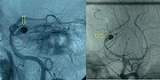
Subarachnoid hemorrhage

Encyclopedia
A subarachnoid hemorrhage (SAH, icon), or subarachnoid haemorrhage in British English
, is bleeding
into the subarachnoid space
—the area between the arachnoid membrane and the pia mater
surrounding the brain
. This may occur spontaneously, usually from a ruptured cerebral aneurysm
, or may result from head injury
.
Symptom
s of SAH include a severe headache
with a rapid onset ("thunderclap headache
"), vomiting
, confusion or a lowered level of consciousness, and sometimes seizure
s. The diagnosis
is generally confirmed with a CT scan
of the head, or occasionally by lumbar puncture
. Treatment is by prompt neurosurgery
or radiologically guided interventions
with medications and other treatments to help prevent recurrence of the bleeding and complications. Surgery for aneurysms was introduced in the 1930s, but since the 1990s many aneurysms are treated by a less invasive procedure called "coiling
", which is carried out by instrumentation through large blood vessels.
SAH is a form of stroke
and comprises 1–7% of all strokes. It is a medical emergency
and can lead to death or severe disability
—even when recognized and treated at an early stage. Up to half of all cases of SAH are fatal and 10–15% of casualties die before reaching a hospital, and those who survive often have neurological or cognitive impairment.
(a headache described as "like being kicked in the head", or the "worst ever", developing over seconds to minutes). This headache often pulsates towards the occiput
(the back of the head). About one-third of sufferers have no symptoms apart from the characteristic headache, and about one in ten people who seek medical care
with this symptom are later diagnosed with a subarachnoid hemorrhage. Vomiting
may be present, and 1 in 14 have seizure
s. Confusion
, decreased level of consciousness or coma
may be present, as may neck stiffness and other signs of meningism
. Neck stiffness usually presents six hours after initial onset of SAH. Isolated dilation
of a pupil and loss of the pupillary light reflex may reflect brain herniation
as a result of rising intracranial pressure
(pressure inside the skull). Intraocular hemorrhage
(bleeding into the eyeball) may occur in response to the raised pressure: subhyaloid hemorrhage (bleeding under the hyaloid membrane
, which envelops the vitreous body of the eye) and vitreous hemorrhage may be visible on fundoscopy. This is known as Terson syndrome
(occurring in 3–13% of cases) and is more common in more severe SAH.
Oculomotor nerve
abnormalities (affected eye looking downward and outward and inability to lift the eyelid on the same side
) or palsy
(loss of feeling) may indicate bleeding from the posterior communicating artery
. Seizures are more common if the hemorrhage is from an aneurysm; it is otherwise difficult to predict the site and origin of the hemorrhage from the symptoms. SAH in a person known to have seizures is often diagnostic of an arteriovenous malformation
.
The combination of intracerebral hemorrhage and raised intracranial pressure (if present) leads to a "sympathetic surge", i.e. over-activation of the sympathetic system. This is thought to occur through two mechanisms, a direct effect on the medulla
which leads to activation of the descending sympathetic
nervous system
and a local release of inflammatory mediators which circulate to the peripheral circulation where they activate the sympathetic system. As a consequence of the sympathetic surge there is a sudden increase in blood pressure
; mediated by increased contractility
of the ventricle
and increased vasoconstriction
leading to increased systemic vascular resistance. The consequences of this sympathetic surge can be sudden, severe, and are frequently life threatening. The high plasma
concentrations of adrenaline also may cause cardiac arrhythmias (irregularities in the heart rate and rhythm), electrocardiographic changes
(in 27% of cases) and cardiac arrest
(in 3% of cases) may occur rapidly after the onset of hemorrhage. A further consequence of this process is neurogenic pulmonary edema
where a process of increased pressure within the pulmonary circulation causes leaking of fluid from the pulmonary capillaries into the air spaces, the alveoli, of the lung.
Subarachnoid hemorrhage may also occur in people who have suffered a head injury. Symptoms may include headache, decreased level of consciousness and hemiparesis
(weakness of one side of the body). SAH is a frequent occurrence in traumatic brain injury, and carries a poor prognosis if it is associated with deterioration in the level of consciousness.
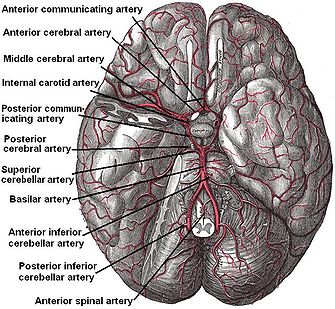
—a weakness in the wall of one of the arteries
in the brain that becomes enlarged. They tend to be located in the circle of Willis
and its branches. While most cases of SAH are due to bleeding from small aneurysms, larger aneurysms (which are less common) are more likely to rupture.
In 15–20% of cases of spontaneous SAH, no aneurysm is detected on the first angiogram
. About half of these are attributed to non-aneurysmal perimesencephalic hemorrhage, in which the blood is limited to the subarachnoid spaces around the midbrain (i.e. mesencephalon). In these, the origin of the blood is uncertain. The remainder are due to other disorders affecting the blood vessels (such as arteriovenous malformations
), disorders of the blood vessels in the spinal cord
, and bleeding into various tumor
s. Cocaine
abuse and sickle cell anemia (usually in children) and, rarely, anticoagulant
therapy, problems with blood clotting
and pituitary apoplexy
can also result in SAH.
Subarachnoid blood can be detected on CT scanning in as many as 60% of people with traumatic brain injury
. Traumatic SAH (tSAH) usually occurs near the site of a skull fracture
or intracerebral contusion. It usually happens in the setting of other forms of traumatic brain injury and has been linked with a poorer prognosis. It is unclear, however, if this is a direct result of the SAH or whether the presence of subarachnoid blood is simply an indicator of severity of the head injury and the prognosis is determined by other associated mechanisms.
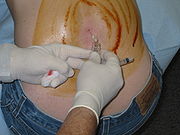
and performing a physical examination
; these are aimed at determining whether the symptoms are due to SAH or to another cause. The diagnosis cannot, however, be made on clinical grounds alone; therefore medical imaging
is generally required to confirm or exclude bleeding. The modality of choice is computed tomography
(CT scan) of the brain. This has a high sensitivity and will correctly identify over 95% of cases—especially on the first day after the onset of bleeding. Magnetic resonance imaging
(MRI) may be more sensitive than CT after several days. Within six hours of the onset of symptoms a single study has reported that CT is 100% sensitive.
, in which cerebrospinal fluid
(CSF) is removed with a needle from the lumbar
sac, will show evidence of hemorrhage in 3% of people in whom CT was found normal; lumbar puncture is therefore regarded as mandatory in people with suspected SAH if imaging is negative. At least three tubes of CSF are collected. If an elevated number of red blood cell
s is present equally in all bottles, this indicates a subarachnoid hemorrhage. If the number of cells decreases per bottle, it is more likely that it is due to damage to a small blood vessel during the procedure (known as a "traumatic tap"). While there is no official cutoff for red blood cells in the CSF no documented cases have occurred at less than "a few hundred cells" per high-powered field.
The CSF sample is also examined for xanthochromia—the yellow appearance of centrifugated
fluid. More sensitive is spectrophotometry
(measuring the absorption of particular wavelengths of light) for detection of bilirubin
, a breakdown product of hemoglobin
from red blood cells. Xanthochromia and spectrophotometry remain reliable ways to detect SAH several days after the onset of headache. An interval of at least 12 hours between the onset of the headache and lumbar puncture is required, as it takes several hours for the hemoglobin from the red blood cells to be metabolized into bilirubin.
As only 10% of people admitted to the emergency department with a thunderclap headache are suffering from an SAH, other possible causes are usually considered simultaneously, such as meningitis
, migraine
, and cerebral venous sinus thrombosis
. Intracerebral hemorrhage, in which bleeding occurs within the brain itself, is twice as common as SAH and is often misdiagnosed as the latter. It is not unusual for SAH to be initially misdiagnosed as a migraine or tension headache
, which can lead to a delay in obtaining a CT scan. In a 2004 study, this occurred in 12% of all cases and was more likely in people who had smaller hemorrhages and no impairment in their mental status. The delay in diagnosis led to a worse outcome. In some people, the headache resolves by itself, and no other symptoms are present. This type of headache is referred to as "sentinel headache", because it is presumed to result from a small leak (a "warning leak") from an aneurysm. A sentinel headache still warrants investigations with CT scan and lumbar puncture, as further bleeding may occur in the subsequent three weeks.
(injecting radiocontrast through a catheter
to the brain arteries) and CT angiography
(visualizing blood vessel
s with radiocontrast
on a CT scan) to identify aneurysms. Catheter angiography also offers the possibility of coiling an aneurysm (see below).
s and ST elevation
that mimics a heart attack.
is ubiquitously used for assessing consciousness. Three specialized scores are used to evaluate SAH; in each, a higher number is associated with a worse outcome. These scales have been derived by retrospectively matching characteristics of patients with their outcomes.
The first scale of severity was described by Hunt and Hess in 1968:
The Fisher Grade classifies the appearance of subarachnoid hemorrhage on CT scan.
This scale has been modified by Claassen and coworkers, reflecting the additive risk from SAH size and accompanying intraventricular hemorrhage
(0 - none; 1 - minmimal SAH w/o IVH; 2 - minimal SAH with IVH; 3 - thick SAH w/o IVH; 4 - thick SAH with IVH);.
The World Federation of Neurosurgeons (WFNS) classification uses Glasgow coma score (GCS) and focal neurological deficit to gauge severity of symptoms.
A comprehensive classification scheme
has been suggested by Ogilvy and Carter to predict outcome and gauge therapy. The system consists of five grades and it assigns one point for the presence or absence of each of five factors: age greater than 50; Hunt and Hess grade 4 or 5; Fisher scale 3 or 4; aneurysm size greater than 10 mm; and posterior circulation aneurysm 25 mm or more.
 Screening
for aneurysms is not performed on a population level; because they are relatively rare, it would not be cost-effective. If someone has two or more first-degree relatives who have suffered an aneurysmal subarachnoid hemorrhage, screening may be worthwhile.
Autosomal dominant polycystic kidney disease (ADPKD), a hereditary kidney condition, is known to be associated with cerebral aneurysms in 8% of cases, but most such aneurysms are small and therefore unlikely to rupture. As a result, screening is only recommended in families with ADPKD where one family member has suffered a ruptured aneurysm.
An aneurysm may be detected incidentally on brain imaging; this presents a conundrum, as all treatments for cerebral aneurysms are associated with potential complications. The International Study of Unruptured Intracranial Aneurysms (ISUIA) provided prognostic data both in people who had previously suffered a subarachnoid hemorrhage and people who had aneurysms detected by other means. Those who had previously suffered SAH were more likely to bleed from other aneurysms. In contrast, those who had never bled and had small aneurysms (smaller than 10 mm) were very unlikely to suffer SAH and were likely to sustain harm from attempts to repair these aneurysms. On the basis of the ISUIA and other studies, it is now recommended that people are only considered for preventative treatment if they have a reasonable life expectancy
and have aneurysms that are highly likely to rupture. At the same time, there is only limited evidence that endovascular treatment of unruptured aneurysms is actually beneficial.
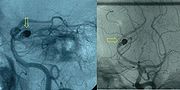 Management involves general measures to stabilize the patient while also using specific investigations and treatments. These include the prevention of rebleeding by obliterating the bleeding source, prevention of a phenomenon known as vasospasm
, and prevention and treatment of complications.
Stabilizing the patient is the first priority. Those with a depressed level of consciousness may need to be intubated
and mechanically ventilated
. Blood pressure, pulse
, respiratory rate
and Glasgow Coma Scale are monitored frequently. Once the diagnosis is confirmed, admission to an intensive care unit
may be preferable, especially since 15% may have further bleeding soon after admission. Nutrition is an early priority, with oral
or nasogastric tube
feeding being preferable over parenteral
routes. Analgesia (pain control) is generally restricted to less sedating agents such as codeine
, as sedation
may impact on the mental status and thus interfere with the ability to monitor the level of consciousness. Deep vein thrombosis
is prevented with compression stockings
, intermittent pneumatic compression of the calves
or both. A bladder catheter
is usually inserted to monitor fluid balance. Benzodiazepine
s may be administered to help relieve distress. Antiemetic
drugs should be given to awake persons.
, depressed level of consciousness or focal neurologic symptoms may benefit from urgent surgical removal of the blood or occlusion of the bleeding site. The remainder are stabilized more extensively and undergo a transfemoral angiogram
or CT angiogram later. It is hard to predict who will suffer a rebleed, yet it may happen at any time and carries a dismal prognosis. After the first 24 hours have passed, rebleeding risk remains around 40% over the subsequent four weeks, suggesting that interventions should be aimed at reducing this risk as soon as possible.
If a cerebral aneurysm
is identified on angiography, two measures are available to reduce the risk of further bleeding from the same aneurysm: clipping
and coiling
. Clipping requires a craniotomy
(opening of the skull) to locate the aneurysm, followed by the placement of clips around the neck of the aneurysm. Coiling is performed through the large blood vessels (endovascularly): a catheter is inserted into the femoral artery
in the groin and advanced through the aorta
to the arteries (both carotid arteries
and both vertebral arteries
) that supply the brain. When the aneurysm has been located, platinum
coils are deployed that cause a blood clot to form
in the aneurysm, obliterating it. The decision as to which treatment is undertaken is typically made by a multidisciplinary team consisting of a neurosurgeon
, neuroradiologist
and often other health professionals.
Generally, the decision between clipping and coiling is made on the basis of the location of the aneurysm, its size and the condition of the patient. Aneurysms of the middle cerebral artery
and its related vessels are hard to reach with angiography and tend to be amenable to clipping. Those of the basilar artery
and posterior cerebral artery are hard to reach surgically and are more accessible for endovascular management. These approaches are based on general experience, and the only randomized controlled trial
directly comparing the different modalities was performed in relatively well patients with small (less than 10 mm) aneurysms of the anterior cerebral artery and anterior communicating artery
(together the "anterior circulation"), who constitute about 20% of all patients with aneurysmal SAH. This trial, the International Subarachnoid Aneurysm Trial (ISAT), showed that in this group the likelihood of death or being dependent on others for activities of daily living
was reduced (7.4% absolute risk reduction
, 23.5% relative risk
reduction) if endovascular coiling was used as opposed to surgery. The main drawback of coiling is the possibility that the aneurysm will recur; this risk is extremely small in the surgical approach. In ISAT, 8.3% needed further treatment in the longer term. Hence, people who have undergone coiling are typically followed up for many years afterwards with angiography or other measures to ensure recurrence of aneurysms is identified early. Other trials have also found a higher rate of recurrence necessitating further treatments.
, is a serious complication of SAH. It can cause ischemic
brain injury
(referred to as "delayed ischemia") and permanent brain damage
due to lack of oxygen in parts of the brain. It can be fatal if severe. Delayed ischemia is characterized by new neurological symptoms, and can be confirmed by transcranial doppler
or cerebral angiography. About one third of all people admitted with subarachnoid hemorrhage will have delayed ischemia, and half of those suffer permanent damage as a result. It is possible to screen for the development of vasospasm with transcranial doppler every 24–48 hours. A blood flow velocity of more than 120 centimeters per second
is suggestive of vasospasm.
The use of calcium channel blocker
s, thought to be able to prevent the spasm of blood vessels by preventing calcium
from entering smooth muscle cells, has been proposed for the prevention of vasospasm. The oral calcium channel blocker nimodipine
improves outcome if administered between the fourth and twenty-first day after the hemorrhage, even if it does not significantly reduce the amount of vasospasm detected on angiography. In traumatic subarachnoid hemorrhage, nimodipine does not affect long-term outcome, and is not recommended. Other calcium channel blockers and magnesium sulfate
have been studied, but are not presently recommended; neither is there any evidence that shows benefit if nimodipine is given intravenously.
Some older studies have suggested that statin therapy might reduce vasospasm, but a subsequent meta-analysis including three further trials did not demonstrate evidence for benefit of statin
use on either vasospasm or clinical outcomes.
A protocol referred to as "triple H" is often used as a measure to treat vasospasm when it causes symptoms; this is the use of intravenous fluids to achieve a state of hypertension
(high blood pressure), hypervolemia
(excess fluid in the circulation) and hemodilution (mild dilution of the blood). Evidence for this approach is inconclusive; no randomized controlled trials have been undertaken to demonstrate its benefits.
If the symptoms of delayed ischemia do not improve with medical treatment, angiography may be attempted to identify the sites of vasospasms and administer vasodilator medication (drugs that relax the blood vessel wall) directly into the artery. Angioplasty
(opening the constricted area with a balloon) may also be performed.
(obstruction of the flow of cerebrospinal fluid) may complicate SAH in both the short and long term. It is detected on CT scanning, on which there is enlargement of the lateral ventricles
. If the level of consciousness is decreased, drainage of the excess fluid is performed by therapeutic lumbar puncture, extraventricular drain
(a temporary device inserted into one of the ventricles) or occasionally a permanent shunt
. Relief of hydrocephalus can lead to an enormous improvement in a person's condition. Fluctuations in blood pressure and electrolyte disturbance
s, as well as pneumonia
and cardiac decompensation occur in about half the hospitalized persons with SAH and may worsen prognosis. Seizure
s occur during the hospital stay in about a third of cases. Many believe that patients might benefit from prevention with antiepileptic drugs. Although this is widely practiced, it is controversial and not based on good evidence. In some studies, use of these drugs was associated with a worse prognosis; this might be because they actually cause harm, or because they are used more often in persons with a poorer prognosis. There is a possibility of a gastric hemorrhage due to stress ulcers.
) for SAH is between 40 and 50%, but trends for survival are improving. Of those who survive hospitalization, more than a quarter have significant restrictions in their lifestyle, and less than a fifth have no residual symptoms whatsoever. Delay in diagnosis of minor SAH (mistaking the sudden headache for migraine) contributes to poor outcome. Factors found on admission that are associated with poorer outcome include poorer neurological grade; systolic hypertension; a previous diagnosis of heart attack
or SAH; liver disease
; more blood and larger aneurysm on the initial CT scan; location of an aneurysm in the posterior circulation
; and higher age. Factors that carry a worse prognosis during the hospital stay include occurrence of delayed ischemia resulting from vasospasm, development of intracerebral hematoma or intraventricular hemorrhage (bleeding into the ventricles
of the brain) and presence of fever
on the eighth day of admission.
So-called "angiogram-negative subarachnoid hemorrhage", SAH that does not show an aneurysm with four-vessel angiography, carries a better prognosis than SAH with aneurysm; however, it is still associated with a risk of ischemia, rebleeding and hydrocephalus
. Perimesencephalic SAH (bleeding around the mesencephalon
in the brain), however, has a very low rate of rebleeding or delayed ischemia, and the prognosis of this subtype is excellent.
The prognosis of head trauma is thought to be influenced in part by the location and amount of subarachnoid bleeding. It is difficult to isolate the effects of SAH from those of other aspects of traumatic brain injury; it is unknown whether the presence of subarachnoid blood actually worsens the prognosis or whether it is merely a sign that a significant trauma has occurred. People with moderate and severe traumatic brain injury who have SAH when admitted to a hospital have as much as twice the risk of dying as those who do not. They also have a higher risk of severe disability and persistent vegetative state
, and traumatic SAH has been correlated with other markers of poor outcome such as post traumatic epilepsy, hydrocephalus, and longer stays in the intensive care unit. However, more than 90% of people with traumatic subarachnoid bleeding and a Glasgow Coma Score over 12 have a good outcome.
There is also modest evidence that genetic factors influence the prognosis in SAH. For example, having two copies of ApoE4 (a variant of the gene encoding apolipoprotein E
that also plays a role in Alzheimer's disease
) seems to increase risk for delayed ischemia and a worse outcome. The occurrence of hyperglycemia
(high blood sugars) after an episode of SAH confers a higher risk of poor outcome.
e. Even in those who have made good neurological recovery, anxiety, depression, posttraumatic stress disorder and cognitive impairment are common; 46% of people who have suffered a subarachnoid hemorrhage have cognitive impairment that affects their quality of life. Over 60% report frequent headaches. Aneurysmal subarachnoid hemorrhage may lead to damage of the hypothalamus
and the pituitary gland
, two areas of the brain that play a central role in hormonal regulation and production. More than a quarter of people with a previous SAH may develop hypopituitarism
(deficiencies in one or more of the hypothalamic-pituitary hormones such as growth hormone
, luteinizing hormone
or follicle-stimulating hormone
).
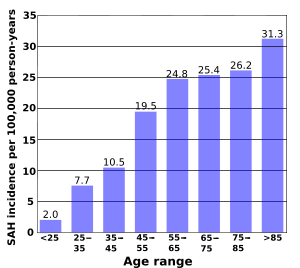 According to a review of 51 studies from 21 countries, the average incidence
of subarachnoid hemorrhage is 9.1 per 100,000 annually. Studies from Japan and Finland show higher rates in those countries (22.7 and 19.7, respectively), for reasons that are not entirely understood. South
and Central America, in contrast, have a rate of 4.2 per 100,000 on average.
Although the group of people at risk for SAH is younger than the population usually affected by stroke, the risk still increases with age. Young people are much much less likely than middle-aged people (risk ratio 0.1, or 10%) to suffer a subarachnoid hemorrhage. The risk continues to rise with age and is 60% higher in the very elderly (over 85) than in those between 45 and 55. Risk of SAH is about 25% higher in women over 55 compared to men the same age, probably reflecting the hormonal changes that result from the menopause
, such as a decrease in estrogen
levels.
Genetics may play a role in a person's disposition to SAH; risk is increased three- to fivefold in first-degree relatives of people who have suffered a subarachnoid hemorrhage. However, lifestyle factors are more important in determining overall risk. These risk factors are smoking
, hypertension (high blood pressure) and excessive alcohol
intake. Having smoked in the past confers a doubled risk of SAH compared to those who have never smoked. Some protection of uncertain significance is conferred by Caucasian ethnicity
, hormone replacement therapy
, diabetes mellitus
and higher than normal levels of cholesterol
. Approximately 4% of aneurysmal bleeds occur after sexual intercourse
and 10% of people with SAH are bending over or lifting heavy objects at the onset of their symptoms.
Overall, about 1% of all people have one or more cerebral aneurysms. Most of these, however, are small and unlikely to rupture.
, the existence of cerebral aneurysms and the fact that they could rupture was not established until the 18th century. The associated symptoms were described in more detail in 1886 by Edinburgh
physician Dr Byrom Bramwell. In 1924, London neurologist
Sir Dr Charles P. Symonds
(1890–1978) gave a complete account of all major symptoms of subarachnoid hemorrhage, and he coined the term "spontaneous subarachnoid hemorrhage". Symonds also described the use of lumbar puncture and xanthochromia in diagnosis.
The first surgical intervention was performed by Mr Norman Dott, who was a pupil of Dr Harvey Cushing
then working in Edinburgh. He introduced the wrapping of aneurysms in the 1930s, and was an early pioneer in the use of angiograms. American neurosurgeon Dr Walter Dandy
, working in Baltimore
, was the first to introduce clips in 1938. Microsurgery
was applied to aneurysm treatment in 1972 in order to further improve outcomes. The 1980s saw the introduction of triple H therapy as a treatment for delayed ischemia due to vasospasm, and trials with nimodipine in an attempt to prevent this complication. In 1983, the Russian neurosurgeon Zubkov and colleagues reported the first use of transluminal balloon angioplasty for vasospasm after aneurysmal SAH. The Italian neurosurgeon Dr Guido Guglielmi introduced his endovascular coil treatment in 1991.
American and British English spelling differences
One of the ways in which American English and British English differ is in spelling.-Historical origins:In the early 18th century, English spelling was not standardized. Differences became noticeable after the publishing of influential dictionaries...
, is bleeding
Bleeding
Bleeding, technically known as hemorrhaging or haemorrhaging is the loss of blood or blood escape from the circulatory system...
into the subarachnoid space
Subarachnoid space
In the central nervous system, the subarachnoid cavity is the interval between the arachnoid membrane and pia mater....
—the area between the arachnoid membrane and the pia mater
Pia mater
Pia mater often referred to as simply the pia, is the delicate innermost layer of the meninges, the membranes surrounding the brain and spinal cord. The word finds its roots in Latin, meaning literally "tender mother." The other two meningeal membranes are the dura mater and the arachnoid mater....
surrounding the brain
Human brain
The human brain has the same general structure as the brains of other mammals, but is over three times larger than the brain of a typical mammal with an equivalent body size. Estimates for the number of neurons in the human brain range from 80 to 120 billion...
. This may occur spontaneously, usually from a ruptured cerebral aneurysm
Cerebral aneurysm
A cerebral or brain aneurysm is a cerebrovascular disorder in which weakness in the wall of a cerebral artery or vein causes a localized dilation or ballooning of the blood vessel.- Signs and symptoms :...
, or may result from head injury
Head injury
Head injury refers to trauma of the head. This may or may not include injury to the brain. However, the terms traumatic brain injury and head injury are often used interchangeably in medical literature....
.
Symptom
Symptom
A symptom is a departure from normal function or feeling which is noticed by a patient, indicating the presence of disease or abnormality...
s of SAH include a severe headache
Headache
A headache or cephalalgia is pain anywhere in the region of the head or neck. It can be a symptom of a number of different conditions of the head and neck. The brain tissue itself is not sensitive to pain because it lacks pain receptors. Rather, the pain is caused by disturbance of the...
with a rapid onset ("thunderclap headache
Thunderclap headache
A thunderclap headache is a headache that is severe and sudden-onset. It is defined as a severe headache that takes seconds to minutes to reach maximum intensity. It can be indicative of a number of medical problems, most importantly subarachnoid hemorrhage, which can be potentially life-threatening...
"), vomiting
Vomiting
Vomiting is the forceful expulsion of the contents of one's stomach through the mouth and sometimes the nose...
, confusion or a lowered level of consciousness, and sometimes seizure
Seizure
An epileptic seizure, occasionally referred to as a fit, is defined as a transient symptom of "abnormal excessive or synchronous neuronal activity in the brain". The outward effect can be as dramatic as a wild thrashing movement or as mild as a brief loss of awareness...
s. The diagnosis
Medical diagnosis
Medical diagnosis refers both to the process of attempting to determine or identify a possible disease or disorder , and to the opinion reached by this process...
is generally confirmed with a CT scan
Computed tomography
X-ray computed tomography or Computer tomography , is a medical imaging method employing tomography created by computer processing...
of the head, or occasionally by lumbar puncture
Lumbar puncture
A lumbar puncture is a diagnostic and at times therapeutic procedure that is performed in order to collect a sample of cerebrospinal fluid for biochemical, microbiological, and cytological analysis, or very rarely as a treatment to relieve increased intracranial pressure.-Indications:The...
. Treatment is by prompt neurosurgery
Neurosurgery
Neurosurgery is the medical specialty concerned with the prevention, diagnosis, treatment, and rehabilitation of disorders which affect any portion of the nervous system including the brain, spine, spinal cord, peripheral nerves, and extra-cranial cerebrovascular system.-In the United States:In...
or radiologically guided interventions
Interventional radiology
Interventional radiology is a specialty of radiology, in which image-guided procedures are used to diagnose and treat a multitude of diseases across all body systems...
with medications and other treatments to help prevent recurrence of the bleeding and complications. Surgery for aneurysms was introduced in the 1930s, but since the 1990s many aneurysms are treated by a less invasive procedure called "coiling
Guglielmi Detachable Coil
A Guglielmi Detachable Coil, or GDC, is a platinum coil commonly used in intracranial non-invasive surgery for the occlusion of brain aneurysms. It was invented by Italian interventional neuroradiologist Dr...
", which is carried out by instrumentation through large blood vessels.
SAH is a form of stroke
Stroke
A stroke, previously known medically as a cerebrovascular accident , is the rapidly developing loss of brain function due to disturbance in the blood supply to the brain. This can be due to ischemia caused by blockage , or a hemorrhage...
and comprises 1–7% of all strokes. It is a medical emergency
Medical emergency
A medical emergency is an injury or illness that is acute and poses an immediate risk to a person's life or long term health. These emergencies may require assistance from another person, who should ideally be suitably qualified to do so, although some of these emergencies can be dealt with by the...
and can lead to death or severe disability
Disability
A disability may be physical, cognitive, mental, sensory, emotional, developmental or some combination of these.Many people would rather be referred to as a person with a disability instead of handicapped...
—even when recognized and treated at an early stage. Up to half of all cases of SAH are fatal and 10–15% of casualties die before reaching a hospital, and those who survive often have neurological or cognitive impairment.
Signs and symptoms
The classic symptom of subarachnoid hemorrhage is thunderclap headacheThunderclap headache
A thunderclap headache is a headache that is severe and sudden-onset. It is defined as a severe headache that takes seconds to minutes to reach maximum intensity. It can be indicative of a number of medical problems, most importantly subarachnoid hemorrhage, which can be potentially life-threatening...
(a headache described as "like being kicked in the head", or the "worst ever", developing over seconds to minutes). This headache often pulsates towards the occiput
Occiput
The occiput is the anatomical term for the posterior portion of the head, in insects the posterior part of those head capsule.-Clinical significance:Trauma to the occiput can cause a basilar skull fracture....
(the back of the head). About one-third of sufferers have no symptoms apart from the characteristic headache, and about one in ten people who seek medical care
Health care
Health care is the diagnosis, treatment, and prevention of disease, illness, injury, and other physical and mental impairments in humans. Health care is delivered by practitioners in medicine, chiropractic, dentistry, nursing, pharmacy, allied health, and other care providers...
with this symptom are later diagnosed with a subarachnoid hemorrhage. Vomiting
Vomiting
Vomiting is the forceful expulsion of the contents of one's stomach through the mouth and sometimes the nose...
may be present, and 1 in 14 have seizure
Seizure
An epileptic seizure, occasionally referred to as a fit, is defined as a transient symptom of "abnormal excessive or synchronous neuronal activity in the brain". The outward effect can be as dramatic as a wild thrashing movement or as mild as a brief loss of awareness...
s. Confusion
ConFusion
ConFusion is an annual science fiction convention organized by the Stilyagi Air Corps and its parent organization, the Ann Arbor Science Fiction Association. Commonly, it is held the third weekend of January. It is the oldest science fiction convention in Michigan, a regional, general SF con...
, decreased level of consciousness or coma
Coma
In medicine, a coma is a state of unconsciousness, lasting more than 6 hours in which a person cannot be awakened, fails to respond normally to painful stimuli, light or sound, lacks a normal sleep-wake cycle and does not initiate voluntary actions. A person in a state of coma is described as...
may be present, as may neck stiffness and other signs of meningism
Meningism
Meningism is the triad of nuchal rigidity , photophobia and headache. It is a sign of irritation of the meninges, such as seen in meningitis, subarachnoid hemorrhages and various other diseases...
. Neck stiffness usually presents six hours after initial onset of SAH. Isolated dilation
Pupillary response
Pupillary response or dilation of the pupil is a physiological response that varies the size of the pupil of the eye via the iris dilator muscle...
of a pupil and loss of the pupillary light reflex may reflect brain herniation
Brain herniation
Brain herniation, also known as cistern obliteration, is a deadly side effect of very high intracranial pressure that occurs when the brain shifts across structures within the skull...
as a result of rising intracranial pressure
Intracranial pressure
Intracranial pressure is the pressure inside the skull and thus in the brain tissue and cerebrospinal fluid . The body has various mechanisms by which it keeps the ICP stable, with CSF pressures varying by about 1 mmHg in normal adults through shifts in production and absorption of CSF...
(pressure inside the skull). Intraocular hemorrhage
Intraocular hemorrhage
Intraocular hemorrhage is bleeding into the eyeball Intraocular hemorrhage (sometimes hemophthalmos or hemophthalmia) is bleeding (hemorrhage) into the eyeball Intraocular hemorrhage (sometimes hemophthalmos or hemophthalmia) is bleeding (hemorrhage) into the eyeball (oculus in Latin. It may be...
(bleeding into the eyeball) may occur in response to the raised pressure: subhyaloid hemorrhage (bleeding under the hyaloid membrane
Vitreous membrane
The vitreous membrane is a layer of collagen separating the vitreous humour from the rest of the eye. At least two parts have been identified anatomically. The posterior hyaloid membrane separates the rear of the vitreous from the retinaThe anterior hyaloid membrane separates the front of the...
, which envelops the vitreous body of the eye) and vitreous hemorrhage may be visible on fundoscopy. This is known as Terson syndrome
Terson syndrome
Terson syndrome or Terson's syndrome is the occurrence of a vitreous hemorrhage of the human eye in association with subarachnoid hemorrhage. Vitreous hemorrhage of the eye can also occur in association with intracranial hemorrhage and elevated intracranial pressure . Intraocular hemorrhage can be...
(occurring in 3–13% of cases) and is more common in more severe SAH.
Oculomotor nerve
Oculomotor nerve
The oculomotor nerve is the 3rd of 12 paired cranial nerves. It enters the orbit via the superior orbital fissure and controls most of the eye's movements, including constriction of the pupil and maintaining an open eyelid by innervating the Levator palpebrae superiors muscle. The optic nerve is...
abnormalities (affected eye looking downward and outward and inability to lift the eyelid on the same side
Ptosis (eyelid)
Ptosis is a drooping of the upper or lower eyelid. The drooping may be worse after being awake longer, when the individual's muscles are tired. This condition is sometimes called "lazy eye", but that term normally refers to amblyopia...
) or palsy
Palsy
In medicine, palsy is the paralysis of a body part, often accompanied by loss of sensation and by uncontrolled body movements, such as shaking. Medical conditions involving palsy include cerebral palsy , brachial palsy , and Bell's palsy ....
(loss of feeling) may indicate bleeding from the posterior communicating artery
Posterior communicating artery
In human anatomy, the posterior communicating artery is one of a pair of right-sided and left-sided blood vessels in the circle of Willis. It connects the three cerebral arteries of the same side. Anteriorly, it connects to the internal carotid artery prior the terminal bifurcation of the ICA...
. Seizures are more common if the hemorrhage is from an aneurysm; it is otherwise difficult to predict the site and origin of the hemorrhage from the symptoms. SAH in a person known to have seizures is often diagnostic of an arteriovenous malformation
Arteriovenous malformation
Arteriovenous malformation or AVM is an abnormal connection between veins and arteries, usually congenital. This pathology is widely known because of its occurrence in the central nervous system, but can appear in any location. An arteriovenous malformation is a vascular anomaly. It is a...
.
The combination of intracerebral hemorrhage and raised intracranial pressure (if present) leads to a "sympathetic surge", i.e. over-activation of the sympathetic system. This is thought to occur through two mechanisms, a direct effect on the medulla
Medulla
Medulla refers to the middle of something and derives from the Latin word for marrow. Its anatomical uses include:* Medulla oblongata, a part of the brain stem* Renal medulla, a part of the kidney* Adrenal medulla, a part of the adrenal gland...
which leads to activation of the descending sympathetic
Sympathetic
The word sympathetic means different things in different contexts.* In neurology and neuroscience, the sympathetic nervous system is a part of the autonomic nervous system...
nervous system
Nervous system
The nervous system is an organ system containing a network of specialized cells called neurons that coordinate the actions of an animal and transmit signals between different parts of its body. In most animals the nervous system consists of two parts, central and peripheral. The central nervous...
and a local release of inflammatory mediators which circulate to the peripheral circulation where they activate the sympathetic system. As a consequence of the sympathetic surge there is a sudden increase in blood pressure
Blood pressure
Blood pressure is the pressure exerted by circulating blood upon the walls of blood vessels, and is one of the principal vital signs. When used without further specification, "blood pressure" usually refers to the arterial pressure of the systemic circulation. During each heartbeat, BP varies...
; mediated by increased contractility
Contractility
Myocardial contractility is the intrinsic ability of the heart to contract independent of preload and afterload. Changes in the ability to produce force during contraction result from different degrees of binding between myosin and actin filaments...
of the ventricle
Ventricle
Ventricle may refer to:* Ventricle , the pumping chambers of the heart* Ventricular system in the brain* Ventricle of the larynx, a structure in the larynx* Stomach of the gastrointestinal tract...
and increased vasoconstriction
Vasoconstriction
Vasoconstriction is the narrowing of the blood vessels resulting from contraction of the muscular wall of the vessels, particularly the large arteries, small arterioles and veins. The process is the opposite of vasodilation, the widening of blood vessels. The process is particularly important in...
leading to increased systemic vascular resistance. The consequences of this sympathetic surge can be sudden, severe, and are frequently life threatening. The high plasma
Plasma
Plasma may refer to:* Blood plasma, the yellow-colored liquid component of blood, in which blood cells are suspended* Plasma , an ionized state of matter similar to a gas...
concentrations of adrenaline also may cause cardiac arrhythmias (irregularities in the heart rate and rhythm), electrocardiographic changes
Electrocardiogram
Electrocardiography is a transthoracic interpretation of the electrical activity of the heart over a period of time, as detected by electrodes attached to the outer surface of the skin and recorded by a device external to the body...
(in 27% of cases) and cardiac arrest
Cardiac arrest
Cardiac arrest, is the cessation of normal circulation of the blood due to failure of the heart to contract effectively...
(in 3% of cases) may occur rapidly after the onset of hemorrhage. A further consequence of this process is neurogenic pulmonary edema
Pulmonary edema
Pulmonary edema , or oedema , is fluid accumulation in the air spaces and parenchyma of the lungs. It leads to impaired gas exchange and may cause respiratory failure...
where a process of increased pressure within the pulmonary circulation causes leaking of fluid from the pulmonary capillaries into the air spaces, the alveoli, of the lung.
Subarachnoid hemorrhage may also occur in people who have suffered a head injury. Symptoms may include headache, decreased level of consciousness and hemiparesis
Hemiparesis
Hemiparesis is weakness on one side of the body. It is less severe than hemiplegia - the total paralysis of the arm, leg, and trunk on one side of the body. Thus, the patient can move the impaired side of his body, but with reduced muscular strength....
(weakness of one side of the body). SAH is a frequent occurrence in traumatic brain injury, and carries a poor prognosis if it is associated with deterioration in the level of consciousness.
Causes
In 85% of cases of spontaneous SAH, the cause is rupture of a cerebral aneurysmCerebral aneurysm
A cerebral or brain aneurysm is a cerebrovascular disorder in which weakness in the wall of a cerebral artery or vein causes a localized dilation or ballooning of the blood vessel.- Signs and symptoms :...
—a weakness in the wall of one of the arteries
Artery
Arteries are blood vessels that carry blood away from the heart. This blood is normally oxygenated, exceptions made for the pulmonary and umbilical arteries....
in the brain that becomes enlarged. They tend to be located in the circle of Willis
Circle of Willis
The Circle of Willis is a circle of arteries that supply blood to the brain...
and its branches. While most cases of SAH are due to bleeding from small aneurysms, larger aneurysms (which are less common) are more likely to rupture.
In 15–20% of cases of spontaneous SAH, no aneurysm is detected on the first angiogram
Angiogram
Angiography or arteriography is a medical imaging technique used to visualize the inside, or lumen, of blood vessels and organs of the body, with particular interest in the arteries, veins and the heart chambers...
. About half of these are attributed to non-aneurysmal perimesencephalic hemorrhage, in which the blood is limited to the subarachnoid spaces around the midbrain (i.e. mesencephalon). In these, the origin of the blood is uncertain. The remainder are due to other disorders affecting the blood vessels (such as arteriovenous malformations
Cerebral arteriovenous malformation
A cerebral arteriovenous malformation is an abnormal connection between the arteries and veins in the brain.-Signs and symptoms:The most frequently observed problems related to an AVM are headaches and seizures while at least 15% of the population at detection have no symptoms at all...
), disorders of the blood vessels in the spinal cord
Spinal cord
The spinal cord is a long, thin, tubular bundle of nervous tissue and support cells that extends from the brain . The brain and spinal cord together make up the central nervous system...
, and bleeding into various tumor
Tumor
A tumor or tumour is commonly used as a synonym for a neoplasm that appears enlarged in size. Tumor is not synonymous with cancer...
s. Cocaine
Cocaine
Cocaine is a crystalline tropane alkaloid that is obtained from the leaves of the coca plant. The name comes from "coca" in addition to the alkaloid suffix -ine, forming cocaine. It is a stimulant of the central nervous system, an appetite suppressant, and a topical anesthetic...
abuse and sickle cell anemia (usually in children) and, rarely, anticoagulant
Anticoagulant
An anticoagulant is a substance that prevents coagulation of blood. A group of pharmaceuticals called anticoagulants can be used in vivo as a medication for thrombotic disorders. Some anticoagulants are used in medical equipment, such as test tubes, blood transfusion bags, and renal dialysis...
therapy, problems with blood clotting
Coagulopathy
Coagulopathy is a condition in which the blood’s ability to clot is impaired. This condition can cause prolonged or excessive bleeding, which may occur spontaneously or following an injury or medical and dental procedures.The normal clotting process depends on the interplay of various proteins in...
and pituitary apoplexy
Pituitary apoplexy
Pituitary apoplexy or pituitary tumor apoplexy is bleeding into or impaired blood supply of the pituitary gland at the base of the brain. This usually occurs in the presence of a tumor of the pituitary, although in 80% of cases this has not been diagnosed previously...
can also result in SAH.
Subarachnoid blood can be detected on CT scanning in as many as 60% of people with traumatic brain injury
Traumatic brain injury
Traumatic brain injury , also known as intracranial injury, occurs when an external force traumatically injures the brain. TBI can be classified based on severity, mechanism , or other features...
. Traumatic SAH (tSAH) usually occurs near the site of a skull fracture
Skull fracture
A skull fracture is a break in one or more of the bones in the skull usually occurring as a result of blunt force trauma. If the force of the impact is excessive the bone may fracture at or near the site of the impact...
or intracerebral contusion. It usually happens in the setting of other forms of traumatic brain injury and has been linked with a poorer prognosis. It is unclear, however, if this is a direct result of the SAH or whether the presence of subarachnoid blood is simply an indicator of severity of the head injury and the prognosis is determined by other associated mechanisms.
Diagnosis
Imaging
The initial steps for evaluating a person with a suspected subarachnoid hemorrhage are obtaining a medical historyMedical history
The medical history or anamnesis of a patient is information gained by a physician by asking specific questions, either of the patient or of other people who know the person and can give suitable information , with the aim of obtaining information useful in formulating a diagnosis and providing...
and performing a physical examination
Physical examination
Physical examination or clinical examination is the process by which a doctor investigates the body of a patient for signs of disease. It generally follows the taking of the medical history — an account of the symptoms as experienced by the patient...
; these are aimed at determining whether the symptoms are due to SAH or to another cause. The diagnosis cannot, however, be made on clinical grounds alone; therefore medical imaging
Medical imaging
Medical imaging is the technique and process used to create images of the human body for clinical purposes or medical science...
is generally required to confirm or exclude bleeding. The modality of choice is computed tomography
Computed tomography
X-ray computed tomography or Computer tomography , is a medical imaging method employing tomography created by computer processing...
(CT scan) of the brain. This has a high sensitivity and will correctly identify over 95% of cases—especially on the first day after the onset of bleeding. Magnetic resonance imaging
Magnetic resonance imaging
Magnetic resonance imaging , nuclear magnetic resonance imaging , or magnetic resonance tomography is a medical imaging technique used in radiology to visualize detailed internal structures...
(MRI) may be more sensitive than CT after several days. Within six hours of the onset of symptoms a single study has reported that CT is 100% sensitive.
Lumbar puncture
Lumbar punctureLumbar puncture
A lumbar puncture is a diagnostic and at times therapeutic procedure that is performed in order to collect a sample of cerebrospinal fluid for biochemical, microbiological, and cytological analysis, or very rarely as a treatment to relieve increased intracranial pressure.-Indications:The...
, in which cerebrospinal fluid
Cerebrospinal fluid
Cerebrospinal fluid , Liquor cerebrospinalis, is a clear, colorless, bodily fluid, that occupies the subarachnoid space and the ventricular system around and inside the brain and spinal cord...
(CSF) is removed with a needle from the lumbar
Lumbar
In tetrapod anatomy, lumbar is an adjective that means of or pertaining to the abdominal segment of the torso, between the diaphragm and the sacrum ...
sac, will show evidence of hemorrhage in 3% of people in whom CT was found normal; lumbar puncture is therefore regarded as mandatory in people with suspected SAH if imaging is negative. At least three tubes of CSF are collected. If an elevated number of red blood cell
Red blood cell
Red blood cells are the most common type of blood cell and the vertebrate organism's principal means of delivering oxygen to the body tissues via the blood flow through the circulatory system...
s is present equally in all bottles, this indicates a subarachnoid hemorrhage. If the number of cells decreases per bottle, it is more likely that it is due to damage to a small blood vessel during the procedure (known as a "traumatic tap"). While there is no official cutoff for red blood cells in the CSF no documented cases have occurred at less than "a few hundred cells" per high-powered field.
The CSF sample is also examined for xanthochromia—the yellow appearance of centrifugated
Centrifugation
Centrifugation is a process that involves the use of the centrifugal force for the sedimentation of mixtures with a centrifuge, used in industry and in laboratory settings. More-dense components of the mixture migrate away from the axis of the centrifuge, while less-dense components of the mixture...
fluid. More sensitive is spectrophotometry
Spectrophotometry
In chemistry, spectrophotometry is the quantitative measurement of the reflection or transmission properties of a material as a function of wavelength...
(measuring the absorption of particular wavelengths of light) for detection of bilirubin
Bilirubin
Bilirubin is the yellow breakdown product of normal heme catabolism. Heme is found in hemoglobin, a principal component of red blood cells. Bilirubin is excreted in bile and urine, and elevated levels may indicate certain diseases...
, a breakdown product of hemoglobin
Hemoglobin
Hemoglobin is the iron-containing oxygen-transport metalloprotein in the red blood cells of all vertebrates, with the exception of the fish family Channichthyidae, as well as the tissues of some invertebrates...
from red blood cells. Xanthochromia and spectrophotometry remain reliable ways to detect SAH several days after the onset of headache. An interval of at least 12 hours between the onset of the headache and lumbar puncture is required, as it takes several hours for the hemoglobin from the red blood cells to be metabolized into bilirubin.
As only 10% of people admitted to the emergency department with a thunderclap headache are suffering from an SAH, other possible causes are usually considered simultaneously, such as meningitis
Meningitis
Meningitis is inflammation of the protective membranes covering the brain and spinal cord, known collectively as the meninges. The inflammation may be caused by infection with viruses, bacteria, or other microorganisms, and less commonly by certain drugs...
, migraine
Migraine
Migraine is a chronic neurological disorder characterized by moderate to severe headaches, and nausea...
, and cerebral venous sinus thrombosis
Cerebral venous sinus thrombosis
Cerebral venous sinus thrombosis is a rare form of stroke that results from thrombosis of the dural venous sinuses, which drain blood from the brain. Symptoms may include headache, abnormal vision, any of the symptoms of stroke such as weakness of the face and limbs on one side of the body, and...
. Intracerebral hemorrhage, in which bleeding occurs within the brain itself, is twice as common as SAH and is often misdiagnosed as the latter. It is not unusual for SAH to be initially misdiagnosed as a migraine or tension headache
Tension headache
A tension headache is the most common type of primary headache. The pain can radiate from the neck, back, eyes, or other muscle groups in the body. Tension-type headaches account for nearly 90% of all headaches...
, which can lead to a delay in obtaining a CT scan. In a 2004 study, this occurred in 12% of all cases and was more likely in people who had smaller hemorrhages and no impairment in their mental status. The delay in diagnosis led to a worse outcome. In some people, the headache resolves by itself, and no other symptoms are present. This type of headache is referred to as "sentinel headache", because it is presumed to result from a small leak (a "warning leak") from an aneurysm. A sentinel headache still warrants investigations with CT scan and lumbar puncture, as further bleeding may occur in the subsequent three weeks.
Angiography
After a subarachnoid hemorrhage is confirmed, its origin needs to be determined. If the bleeding is likely to have originated from an aneurysm (as determined by the CT scan appearance), the choice is between cerebral angiographyCerebral angiography
Cerebral angiography is a form of angiography which provides images of blood vessels in and around the brain, thereby allowing detection of abnormalities such as arteriovenous malformations and aneurysms....
(injecting radiocontrast through a catheter
Catheter
In medicine, a catheter is a tube that can be inserted into a body cavity, duct, or vessel. Catheters thereby allow drainage, administration of fluids or gases, or access by surgical instruments. The process of inserting a catheter is catheterization...
to the brain arteries) and CT angiography
Computed tomography angiography
Computed tomography angiography is a computed tomography technique used to visualize arterial and venous vessels throughout the body. This ranges from arteries serving the brain to those bringing blood to the lungs, kidneys, arms and legs.-Technique:...
(visualizing blood vessel
Blood vessel
The blood vessels are the part of the circulatory system that transports blood throughout the body. There are three major types of blood vessels: the arteries, which carry the blood away from the heart; the capillaries, which enable the actual exchange of water and chemicals between the blood and...
s with radiocontrast
Radiocontrast
Radiocontrast agents are a type of medical contrast medium used to improve the visibility of internal bodily structures in an X-ray based imaging techniques such as computed tomography or radiography...
on a CT scan) to identify aneurysms. Catheter angiography also offers the possibility of coiling an aneurysm (see below).
ECG
Electrocardiographic changes are relatively common in subarachnoid hemorrhage, occurring in 40–70% of cases. They may include QT prolongation, Q waves, cardiac dysrhythmiaCardiac dysrhythmia
Cardiac dysrhythmia is any of a large and heterogeneous group of conditions in which there is abnormal electrical activity in the heart. The heart beat may be too fast or too slow, and may be regular or irregular.Some arrhythmias are life-threatening medical emergencies that can result in cardiac...
s and ST elevation
ST elevation
ST elevations refers to a finding on an electrocardiogram, wherein the trace in the ST segment is abnormally high above the isoelectric line.-Measurement:...
that mimics a heart attack.
Classification
There are several grading scales available for SAH. The Glasgow Coma ScaleGlasgow Coma Scale
Glasgow Coma Scale or GCS is a neurological scale that aims to give a reliable, objective way of recording the conscious state of a person for initial as well as subsequent assessment...
is ubiquitously used for assessing consciousness. Three specialized scores are used to evaluate SAH; in each, a higher number is associated with a worse outcome. These scales have been derived by retrospectively matching characteristics of patients with their outcomes.
The first scale of severity was described by Hunt and Hess in 1968:
| Grade | Signs and symptoms | Survival |
|---|---|---|
| 1 | Asymptomatic Asymptomatic In medicine, a disease is considered asymptomatic if a patient is a carrier for a disease or infection but experiences no symptoms. A condition might be asymptomatic if it fails to show the noticeable symptoms with which it is usually associated. Asymptomatic infections are also called subclinical... or minimal headache and slight neck stiffness |
70% |
| 2 | Moderate to severe headache; neck stiffness; no neurologic Neurology Neurology is a medical specialty dealing with disorders of the nervous system. Specifically, it deals with the diagnosis and treatment of all categories of disease involving the central, peripheral, and autonomic nervous systems, including their coverings, blood vessels, and all effector tissue,... deficit except cranial nerve palsy Palsy In medicine, palsy is the paralysis of a body part, often accompanied by loss of sensation and by uncontrolled body movements, such as shaking. Medical conditions involving palsy include cerebral palsy , brachial palsy , and Bell's palsy .... |
60% |
| 3 | Drowsy; minimal neurologic deficit | 50% |
| 4 | Stuporous; moderate to severe hemiparesis; possibly early decerebrate rigidity and vegetative disturbances | 20% |
| 5 | Deep coma; decerebrate rigidity Abnormal posturing Abnormal posturing is an involuntary flexion or extension of the arms and legs, indicating severe brain injury. It occurs when one set of muscles becomes incapacitated while the opposing set is not, and an external stimulus such as pain causes the working set of muscles to contract. The posturing... ; moribund Death Death is the permanent termination of the biological functions that sustain a living organism. Phenomena which commonly bring about death include old age, predation, malnutrition, disease, and accidents or trauma resulting in terminal injury.... |
10% |
The Fisher Grade classifies the appearance of subarachnoid hemorrhage on CT scan.
| Grade | Appearance of hemorrhage |
|---|---|
| 1 | None evident |
| 2 | Less than 1 mm thick |
| 3 | More than 1 mm thick |
| 4 | Diffuse or none with intraventricular hemorrhage or parenchymal extension |
This scale has been modified by Claassen and coworkers, reflecting the additive risk from SAH size and accompanying intraventricular hemorrhage
Intraventricular hemorrhage
An intraventricular hemorrhage , often abbreviated "IVH," is a bleeding into the brain's ventricular system, where the cerebrospinal fluid is produced and circulates through towards the subarachnoid space...
(0 - none; 1 - minmimal SAH w/o IVH; 2 - minimal SAH with IVH; 3 - thick SAH w/o IVH; 4 - thick SAH with IVH);.
The World Federation of Neurosurgeons (WFNS) classification uses Glasgow coma score (GCS) and focal neurological deficit to gauge severity of symptoms.
| Grade | GCS | Focal neurological deficit |
|---|---|---|
| 1 | 15 | Absent |
| 2 | 13–14 | Absent |
| 3 | 13–14 | Present |
| 4 | 7–12 | Present or absent |
| 5 | <7 | Present or absent |
A comprehensive classification scheme
Classification scheme
In metadata a classification scheme is a hierarchical arrangement of kinds of things or groups of kinds of things. Typically it is accompanied by descriptive information of the classes or groups. A classification scheme is intended to be used for an arrangement or division of individual objects...
has been suggested by Ogilvy and Carter to predict outcome and gauge therapy. The system consists of five grades and it assigns one point for the presence or absence of each of five factors: age greater than 50; Hunt and Hess grade 4 or 5; Fisher scale 3 or 4; aneurysm size greater than 10 mm; and posterior circulation aneurysm 25 mm or more.
Screening and prevention
Screening (medicine)
Screening, in medicine, is a strategy used in a population to detect a disease in individuals without signs or symptoms of that disease. Unlike what generally happens in medicine, screening tests are performed on persons without any clinical sign of disease....
for aneurysms is not performed on a population level; because they are relatively rare, it would not be cost-effective. If someone has two or more first-degree relatives who have suffered an aneurysmal subarachnoid hemorrhage, screening may be worthwhile.
Autosomal dominant polycystic kidney disease (ADPKD), a hereditary kidney condition, is known to be associated with cerebral aneurysms in 8% of cases, but most such aneurysms are small and therefore unlikely to rupture. As a result, screening is only recommended in families with ADPKD where one family member has suffered a ruptured aneurysm.
An aneurysm may be detected incidentally on brain imaging; this presents a conundrum, as all treatments for cerebral aneurysms are associated with potential complications. The International Study of Unruptured Intracranial Aneurysms (ISUIA) provided prognostic data both in people who had previously suffered a subarachnoid hemorrhage and people who had aneurysms detected by other means. Those who had previously suffered SAH were more likely to bleed from other aneurysms. In contrast, those who had never bled and had small aneurysms (smaller than 10 mm) were very unlikely to suffer SAH and were likely to sustain harm from attempts to repair these aneurysms. On the basis of the ISUIA and other studies, it is now recommended that people are only considered for preventative treatment if they have a reasonable life expectancy
Life expectancy
Life expectancy is the expected number of years of life remaining at a given age. It is denoted by ex, which means the average number of subsequent years of life for someone now aged x, according to a particular mortality experience...
and have aneurysms that are highly likely to rupture. At the same time, there is only limited evidence that endovascular treatment of unruptured aneurysms is actually beneficial.
Treatment
Vasospasm
Vasospasm refers to a condition in which blood vessels spasm, leading to vasoconstriction. This can lead to tissue ischemia and death . Cerebral vasospasm may arise in the context of subarachnoid hemorrhage. Symptomatic vasospasm or delayed cerebral ischemia is a major contributor to...
, and prevention and treatment of complications.
Stabilizing the patient is the first priority. Those with a depressed level of consciousness may need to be intubated
Intubation
Tracheal intubation, usually simply referred to as intubation, is the placement of a flexible plastic or rubber tube into the trachea to maintain an open airway or to serve as a conduit through which to administer certain drugs...
and mechanically ventilated
Mechanical ventilation
In medicine, mechanical ventilation is a method to mechanically assist or replace spontaneous breathing. This may involve a machine called a ventilator or the breathing may be assisted by a physician, respiratory therapist or other suitable person compressing a bag or set of bellows...
. Blood pressure, pulse
Pulse
In medicine, one's pulse represents the tactile arterial palpation of the heartbeat by trained fingertips. The pulse may be palpated in any place that allows an artery to be compressed against a bone, such as at the neck , at the wrist , behind the knee , on the inside of the elbow , and near the...
, respiratory rate
Respiratory rate
Respiratory rate is also known by respiration rate, pulmonary ventilation rate, ventilation rate, or breathing frequency is the number of breaths taken within a set amount of time, typically 60 seconds....
and Glasgow Coma Scale are monitored frequently. Once the diagnosis is confirmed, admission to an intensive care unit
Intensive Care Unit
thumb|220px|ICU roomAn intensive-care unit , critical-care unit , intensive-therapy unit/intensive-treatment unit is a specialized department in a hospital that provides intensive-care medicine...
may be preferable, especially since 15% may have further bleeding soon after admission. Nutrition is an early priority, with oral
Mouth
The mouth is the first portion of the alimentary canal that receives food andsaliva. The oral mucosa is the mucous membrane epithelium lining the inside of the mouth....
or nasogastric tube
Nasogastric intubation
Nasogastric intubation is a medical process involving the insertion of a plastic tube through the nose, past the throat, and down into the stomach.-Uses:...
feeding being preferable over parenteral
Parenteral
Parenteral is a route of administration that involves piercing the skin or mucous membrane. Parenteral nutrition refers to providing nutrition via the veins.-Etymology:...
routes. Analgesia (pain control) is generally restricted to less sedating agents such as codeine
Codeine
Codeine or 3-methylmorphine is an opiate used for its analgesic, antitussive, and antidiarrheal properties...
, as sedation
Sedation
Sedation is the reduction of irritability or agitation by administration of sedative drugs, generally to facilitate a medical procedure or diagnostic procedure...
may impact on the mental status and thus interfere with the ability to monitor the level of consciousness. Deep vein thrombosis
Deep vein thrombosis
Deep vein thrombosis is the formation of a blood clot in a deep vein. Deep vein thrombosis commonly affects the leg veins or the deep veins of the pelvis. Occasionally the veins of the arm are affected...
is prevented with compression stockings
Compression stockings
Compression stockings and socks are specialised hosiery items designed to increase blood circulation. Their main theraputic purpose is to provide graduated pressure on the lower leg and foot and, in some cases, the thigh, to alleviate circulatory problems such as edema, phlebitis and...
, intermittent pneumatic compression of the calves
Calf (anatomy)
In human anatomy the calf is the back portion of the lower leg . In terms of muscle systems, the calf corresponds to the posterior compartment of the leg. Within the posterior compartment, the two largest muscles are known together as the calf muscle and attach to the heel via the Achilles tendon...
or both. A bladder catheter
Urinary catheterization
In urinary catheterization , a latex, polyurethane or silicone tube known as a urinary catheter is inserted into a patient's bladder via his or her urethra. Catheterization allows the patient's urine to drain freely from the bladder for collection. It may be used to inject liquids used for...
is usually inserted to monitor fluid balance. Benzodiazepine
Benzodiazepine
A benzodiazepine is a psychoactive drug whose core chemical structure is the fusion of a benzene ring and a diazepine ring...
s may be administered to help relieve distress. Antiemetic
Antiemetic
An antiemetic is a drug that is effective against vomiting and nausea. Antiemetics are typically used to treat motion sickness and the side effects of opioid analgesics, general anaesthetics, and chemotherapy directed against cancer....
drugs should be given to awake persons.
Prevention of rebleeding
People whose CT scan shows a large hematomaHematoma
A hematoma, or haematoma, is a localized collection of blood outside the blood vessels, usually in liquid form within the tissue. This distinguishes it from an ecchymosis, which is the spread of blood under the skin in a thin layer, commonly called a bruise...
, depressed level of consciousness or focal neurologic symptoms may benefit from urgent surgical removal of the blood or occlusion of the bleeding site. The remainder are stabilized more extensively and undergo a transfemoral angiogram
Cerebral angiography
Cerebral angiography is a form of angiography which provides images of blood vessels in and around the brain, thereby allowing detection of abnormalities such as arteriovenous malformations and aneurysms....
or CT angiogram later. It is hard to predict who will suffer a rebleed, yet it may happen at any time and carries a dismal prognosis. After the first 24 hours have passed, rebleeding risk remains around 40% over the subsequent four weeks, suggesting that interventions should be aimed at reducing this risk as soon as possible.
If a cerebral aneurysm
Cerebral aneurysm
A cerebral or brain aneurysm is a cerebrovascular disorder in which weakness in the wall of a cerebral artery or vein causes a localized dilation or ballooning of the blood vessel.- Signs and symptoms :...
is identified on angiography, two measures are available to reduce the risk of further bleeding from the same aneurysm: clipping
Clipping (medicine)
Clipping is a surgical procedure performed to treat an aneurysm. If the aneurysm is intracranial, a craniotomy is performed, and afterwards an Elgiloy or titanium Sugita clip is affixed around the aneurysm's neck....
and coiling
Guglielmi Detachable Coil
A Guglielmi Detachable Coil, or GDC, is a platinum coil commonly used in intracranial non-invasive surgery for the occlusion of brain aneurysms. It was invented by Italian interventional neuroradiologist Dr...
. Clipping requires a craniotomy
Craniotomy
A craniotomy is a surgical operation in which a bone flap is temporarily removed from the skull to access the brain. Craniotomies are often a critical operation performed on patients recording, brain imaging, and for neurological manipulations such as electrical stimulation and chemical...
(opening of the skull) to locate the aneurysm, followed by the placement of clips around the neck of the aneurysm. Coiling is performed through the large blood vessels (endovascularly): a catheter is inserted into the femoral artery
Femoral artery
The femoral artery is a general term comprising a few large arteries in the thigh. They begin at the inguinal ligament and end just above the knee at adductor canal or Hunter's canal traversing the extent of the femur bone....
in the groin and advanced through the aorta
Aorta
The aorta is the largest artery in the body, originating from the left ventricle of the heart and extending down to the abdomen, where it branches off into two smaller arteries...
to the arteries (both carotid arteries
Carotid artery
Carotid artery can refer to:* Common carotid artery* External carotid artery* Internal carotid artery...
and both vertebral arteries
Vertebral artery
The vertebral arteries are major arteries of the neck. They branch from the subclavian arteries and merge to form the single midline basilar artery in a complex called the vertebrobasilar system, which supplies blood to the posterior part of the circle of Willis and thus significant portions of the...
) that supply the brain. When the aneurysm has been located, platinum
Platinum
Platinum is a chemical element with the chemical symbol Pt and an atomic number of 78. Its name is derived from the Spanish term platina del Pinto, which is literally translated into "little silver of the Pinto River." It is a dense, malleable, ductile, precious, gray-white transition metal...
coils are deployed that cause a blood clot to form
Thrombosis
Thrombosis is the formation of a blood clot inside a blood vessel, obstructing the flow of blood through the circulatory system. When a blood vessel is injured, the body uses platelets and fibrin to form a blood clot to prevent blood loss...
in the aneurysm, obliterating it. The decision as to which treatment is undertaken is typically made by a multidisciplinary team consisting of a neurosurgeon
Neurosurgery
Neurosurgery is the medical specialty concerned with the prevention, diagnosis, treatment, and rehabilitation of disorders which affect any portion of the nervous system including the brain, spine, spinal cord, peripheral nerves, and extra-cranial cerebrovascular system.-In the United States:In...
, neuroradiologist
Neuroradiology
Neuroradiology is a subspecialty of radiology focusing on the diagnosis and characterization of abnormalities of the central and peripheral nervous system, spine, and head and neck. Primary imaging modalities include computed tomography and magnetic resonance imaging...
and often other health professionals.
Generally, the decision between clipping and coiling is made on the basis of the location of the aneurysm, its size and the condition of the patient. Aneurysms of the middle cerebral artery
Middle cerebral artery
-External links:*...
and its related vessels are hard to reach with angiography and tend to be amenable to clipping. Those of the basilar artery
Basilar artery
In human anatomy, the basilar artery is one of the arteries that supplies the brain with oxygen-rich blood.The two vertebral arteries and the basilar artery are sometimes together called the vertebrobasilar system, which supplies blood to the posterior part of circle of Willis and anastomoses with...
and posterior cerebral artery are hard to reach surgically and are more accessible for endovascular management. These approaches are based on general experience, and the only randomized controlled trial
Randomized controlled trial
A randomized controlled trial is a type of scientific experiment - a form of clinical trial - most commonly used in testing the safety and efficacy or effectiveness of healthcare services or health technologies A randomized controlled trial (RCT) is a type of scientific experiment - a form of...
directly comparing the different modalities was performed in relatively well patients with small (less than 10 mm) aneurysms of the anterior cerebral artery and anterior communicating artery
Anterior communicating artery
In human anatomy, the anterior communicating artery is a blood vessel of the brain that connects the left and right anterior cerebral arteries....
(together the "anterior circulation"), who constitute about 20% of all patients with aneurysmal SAH. This trial, the International Subarachnoid Aneurysm Trial (ISAT), showed that in this group the likelihood of death or being dependent on others for activities of daily living
Activities of daily living
Activities of Daily Living is a term used in healthcare to refer to daily self-care activities within an individual's place of residence, in outdoor environments, or both...
was reduced (7.4% absolute risk reduction
Absolute risk reduction
In epidemiology, the absolute risk reduction or risk difference is the decrease in risk of a given activity or treatment in relation to a control activity or treatment. It is the inverse of the number needed to treat....
, 23.5% relative risk
Relative risk
In statistics and mathematical epidemiology, relative risk is the risk of an event relative to exposure. Relative risk is a ratio of the probability of the event occurring in the exposed group versus a non-exposed group....
reduction) if endovascular coiling was used as opposed to surgery. The main drawback of coiling is the possibility that the aneurysm will recur; this risk is extremely small in the surgical approach. In ISAT, 8.3% needed further treatment in the longer term. Hence, people who have undergone coiling are typically followed up for many years afterwards with angiography or other measures to ensure recurrence of aneurysms is identified early. Other trials have also found a higher rate of recurrence necessitating further treatments.
Vasospasm
Vasospasm, in which the blood vessels constrict and thus restrict blood flowBlood flow
Blood flow is the continuous running of blood in the cardiovascular system.The human body is made up of several processes all carrying out various functions. We have the gastrointestinal system which aids the digestion and the absorption of food...
, is a serious complication of SAH. It can cause ischemic
Ischemia
In medicine, ischemia is a restriction in blood supply, generally due to factors in the blood vessels, with resultant damage or dysfunction of tissue. It may also be spelled ischaemia or ischæmia...
brain injury
Acquired brain injury
An acquired brain injury is brain damage caused by events after birth, rather than as part of a genetic or congenital disorder such as fetal alcohol syndrome, perinatal illness or perinatal hypoxia. ABI can result in cognitive, physical, emotional, or behavioural impairments that lead to permanent...
(referred to as "delayed ischemia") and permanent brain damage
Brain damage
"Brain damage" or "brain injury" is the destruction or degeneration of brain cells. Brain injuries occur due to a wide range of internal and external factors...
due to lack of oxygen in parts of the brain. It can be fatal if severe. Delayed ischemia is characterized by new neurological symptoms, and can be confirmed by transcranial doppler
Transcranial doppler
Transcranial Doppler is a test that measures the velocity of blood flow through the brain's blood vessels. Used to help in the diagnosis of emboli, stenosis, vasospasm from a subarachnoid hemorrhage , and other problems, this relatively quick and inexpensive test is growing in popularity in the...
or cerebral angiography. About one third of all people admitted with subarachnoid hemorrhage will have delayed ischemia, and half of those suffer permanent damage as a result. It is possible to screen for the development of vasospasm with transcranial doppler every 24–48 hours. A blood flow velocity of more than 120 centimeters per second
Metre per second
Metre per second is an SI derived unit of both speed and velocity , defined by distance in metres divided by time in seconds....
is suggestive of vasospasm.
The use of calcium channel blocker
Calcium channel blocker
A calcium channel blocker is a chemical that disrupts the movement of calcium through calcium channels.CCB drugs devised to target neurons are used as antiepileptics. However, the most widespread clinical usage of calcium channel blockers is to decrease blood pressure in patients with...
s, thought to be able to prevent the spasm of blood vessels by preventing calcium
Calcium
Calcium is the chemical element with the symbol Ca and atomic number 20. It has an atomic mass of 40.078 amu. Calcium is a soft gray alkaline earth metal, and is the fifth-most-abundant element by mass in the Earth's crust...
from entering smooth muscle cells, has been proposed for the prevention of vasospasm. The oral calcium channel blocker nimodipine
Nimodipine
Nimodipine is a dihydropyridine calcium channel blocker originally developed for the treatment of high blood pressure...
improves outcome if administered between the fourth and twenty-first day after the hemorrhage, even if it does not significantly reduce the amount of vasospasm detected on angiography. In traumatic subarachnoid hemorrhage, nimodipine does not affect long-term outcome, and is not recommended. Other calcium channel blockers and magnesium sulfate
Magnesium sulfate
Magnesium sulfate is a chemical compound containing magnesium, sulfur and oxygen, with the formula MgSO4. It is often encountered as the heptahydrate epsomite , commonly called Epsom salt, from the town of Epsom in Surrey, England, where the salt was distilled from the springs that arise where the...
have been studied, but are not presently recommended; neither is there any evidence that shows benefit if nimodipine is given intravenously.
Some older studies have suggested that statin therapy might reduce vasospasm, but a subsequent meta-analysis including three further trials did not demonstrate evidence for benefit of statin
Statin
Statins are a class of drugs used to lower cholesterol levels by inhibiting the enzyme HMG-CoA reductase, which plays a central role in the production of cholesterol in the liver. Increased cholesterol levels have been associated with cardiovascular diseases, and statins are therefore used in the...
use on either vasospasm or clinical outcomes.
A protocol referred to as "triple H" is often used as a measure to treat vasospasm when it causes symptoms; this is the use of intravenous fluids to achieve a state of hypertension
Hypertension
Hypertension or high blood pressure is a cardiac chronic medical condition in which the systemic arterial blood pressure is elevated. What that means is that the heart is having to work harder than it should to pump the blood around the body. Blood pressure involves two measurements, systolic and...
(high blood pressure), hypervolemia
Hypervolemia
Hypervolemia, or fluid overload, is the medical condition where there is too much fluid in the blood.The opposite condition is hypovolemia, which is too little fluid volume in the blood.-Causes:Excessive sodium or fluid intake:* IV therapy...
(excess fluid in the circulation) and hemodilution (mild dilution of the blood). Evidence for this approach is inconclusive; no randomized controlled trials have been undertaken to demonstrate its benefits.
If the symptoms of delayed ischemia do not improve with medical treatment, angiography may be attempted to identify the sites of vasospasms and administer vasodilator medication (drugs that relax the blood vessel wall) directly into the artery. Angioplasty
Angioplasty
Angioplasty is the technique of mechanically widening a narrowed or obstructed blood vessel, the latter typically being a result of atherosclerosis. An empty and collapsed balloon on a guide wire, known as a balloon catheter, is passed into the narrowed locations and then inflated to a fixed size...
(opening the constricted area with a balloon) may also be performed.
Other complications
HydrocephalusHydrocephalus
Hydrocephalus , also known as "water in the brain," is a medical condition in which there is an abnormal accumulation of cerebrospinal fluid in the ventricles, or cavities, of the brain. This may cause increased intracranial pressure inside the skull and progressive enlargement of the head,...
(obstruction of the flow of cerebrospinal fluid) may complicate SAH in both the short and long term. It is detected on CT scanning, on which there is enlargement of the lateral ventricles
Lateral ventricles
The lateral ventricles are part of the ventricular system of the brain. Classified as part of the telencephalon, they are the largest of the ventricles....
. If the level of consciousness is decreased, drainage of the excess fluid is performed by therapeutic lumbar puncture, extraventricular drain
Extraventricular drain
An external ventricular drain , also known as a ventriculostomy, is a device used in neurosurgery that relieves raised intracranial pressure and hydrocephalus when the normal flow of cerebrospinal fluid around the brain is obstructed...
(a temporary device inserted into one of the ventricles) or occasionally a permanent shunt
Cerebral shunt
Cerebral shunts are commonly used to treat hydrocephalus, the swelling of the brain due to excess buildup of cerebrospinal fluid . If left unchecked, the cerebral spinal fluid can build up leading to an increase in intracranial pressure which can lead to intracranial hematoma, cerebral edema,...
. Relief of hydrocephalus can lead to an enormous improvement in a person's condition. Fluctuations in blood pressure and electrolyte disturbance
Electrolyte disturbance
Electrolytes play a vital role in maintaining homeostasis within the body. They help to regulate myocardial and neurological function, fluid balance, oxygen delivery, acid-base balance and much more. Electrolyte imbalances can develop by the following mechanisms: excessive ingestion; diminished...
s, as well as pneumonia
Pneumonia
Pneumonia is an inflammatory condition of the lung—especially affecting the microscopic air sacs —associated with fever, chest symptoms, and a lack of air space on a chest X-ray. Pneumonia is typically caused by an infection but there are a number of other causes...
and cardiac decompensation occur in about half the hospitalized persons with SAH and may worsen prognosis. Seizure
Seizure
An epileptic seizure, occasionally referred to as a fit, is defined as a transient symptom of "abnormal excessive or synchronous neuronal activity in the brain". The outward effect can be as dramatic as a wild thrashing movement or as mild as a brief loss of awareness...
s occur during the hospital stay in about a third of cases. Many believe that patients might benefit from prevention with antiepileptic drugs. Although this is widely practiced, it is controversial and not based on good evidence. In some studies, use of these drugs was associated with a worse prognosis; this might be because they actually cause harm, or because they are used more often in persons with a poorer prognosis. There is a possibility of a gastric hemorrhage due to stress ulcers.
Early morbidity and mortality
SAH is often associated with a poor outcome. The death rate (mortalityMortality rate
Mortality rate is a measure of the number of deaths in a population, scaled to the size of that population, per unit time...
) for SAH is between 40 and 50%, but trends for survival are improving. Of those who survive hospitalization, more than a quarter have significant restrictions in their lifestyle, and less than a fifth have no residual symptoms whatsoever. Delay in diagnosis of minor SAH (mistaking the sudden headache for migraine) contributes to poor outcome. Factors found on admission that are associated with poorer outcome include poorer neurological grade; systolic hypertension; a previous diagnosis of heart attack
Myocardial infarction
Myocardial infarction or acute myocardial infarction , commonly known as a heart attack, results from the interruption of blood supply to a part of the heart, causing heart cells to die...
or SAH; liver disease
Liver
The liver is a vital organ present in vertebrates and some other animals. It has a wide range of functions, including detoxification, protein synthesis, and production of biochemicals necessary for digestion...
; more blood and larger aneurysm on the initial CT scan; location of an aneurysm in the posterior circulation
Circle of Willis
The Circle of Willis is a circle of arteries that supply blood to the brain...
; and higher age. Factors that carry a worse prognosis during the hospital stay include occurrence of delayed ischemia resulting from vasospasm, development of intracerebral hematoma or intraventricular hemorrhage (bleeding into the ventricles
Ventricular system
The ventricular system is a set of structures containing cerebrospinal fluid in the brain. It is continuous with the central canal of the spinal cord.-Components:The system comprises four ventricles:* right and left lateral ventricles* third ventricle...
of the brain) and presence of fever
Fever
Fever is a common medical sign characterized by an elevation of temperature above the normal range of due to an increase in the body temperature regulatory set-point. This increase in set-point triggers increased muscle tone and shivering.As a person's temperature increases, there is, in...
on the eighth day of admission.
So-called "angiogram-negative subarachnoid hemorrhage", SAH that does not show an aneurysm with four-vessel angiography, carries a better prognosis than SAH with aneurysm; however, it is still associated with a risk of ischemia, rebleeding and hydrocephalus
Hydrocephalus
Hydrocephalus , also known as "water in the brain," is a medical condition in which there is an abnormal accumulation of cerebrospinal fluid in the ventricles, or cavities, of the brain. This may cause increased intracranial pressure inside the skull and progressive enlargement of the head,...
. Perimesencephalic SAH (bleeding around the mesencephalon
Mesencephalon
The midbrain or mesencephalon is a portion of the central nervous system associated with vision, hearing, motor control, sleep/wake, arousal , and temperature regulation....
in the brain), however, has a very low rate of rebleeding or delayed ischemia, and the prognosis of this subtype is excellent.
The prognosis of head trauma is thought to be influenced in part by the location and amount of subarachnoid bleeding. It is difficult to isolate the effects of SAH from those of other aspects of traumatic brain injury; it is unknown whether the presence of subarachnoid blood actually worsens the prognosis or whether it is merely a sign that a significant trauma has occurred. People with moderate and severe traumatic brain injury who have SAH when admitted to a hospital have as much as twice the risk of dying as those who do not. They also have a higher risk of severe disability and persistent vegetative state
Persistent vegetative state
A persistent vegetative state is a disorder of consciousness in which patients with severe brain damage are in a state of partial arousal rather than true awareness. It is a diagnosis of some uncertainty in that it deals with a syndrome. After four weeks in a vegetative state , the patient is...
, and traumatic SAH has been correlated with other markers of poor outcome such as post traumatic epilepsy, hydrocephalus, and longer stays in the intensive care unit. However, more than 90% of people with traumatic subarachnoid bleeding and a Glasgow Coma Score over 12 have a good outcome.
There is also modest evidence that genetic factors influence the prognosis in SAH. For example, having two copies of ApoE4 (a variant of the gene encoding apolipoprotein E
Apolipoprotein E
Apolipoprotein E is a class of apolipoprotein found in the chylomicron and IDLs that binds to a specific receptor on liver cells and peripheral cells. It is essential for the normal catabolism of triglyceride-rich lipoprotein constituents.-Function:...
that also plays a role in Alzheimer's disease
Alzheimer's disease
Alzheimer's disease also known in medical literature as Alzheimer disease is the most common form of dementia. There is no cure for the disease, which worsens as it progresses, and eventually leads to death...
) seems to increase risk for delayed ischemia and a worse outcome. The occurrence of hyperglycemia
Hyperglycemia
Hyperglycemia or Hyperglycæmia, or high blood sugar, is a condition in which an excessive amount of glucose circulates in the blood plasma. This is generally a glucose level higher than 13.5mmol/l , but symptoms may not start to become noticeable until even higher values such as 15-20 mmol/l...
(high blood sugars) after an episode of SAH confers a higher risk of poor outcome.
Long-term outcomes
Neurocognitive symptoms, such as fatigue, mood disturbances, and other related symptoms are common sequelaSequela
A sequela) is a pathological condition resulting from a disease, injury, or other trauma.Chronic kidney disease, for example, is sometimes a sequela of diabetes, and neck pain is a common sequela of whiplash or other trauma to the cervical vertebrae. Post-traumatic stress disorder may be a...
e. Even in those who have made good neurological recovery, anxiety, depression, posttraumatic stress disorder and cognitive impairment are common; 46% of people who have suffered a subarachnoid hemorrhage have cognitive impairment that affects their quality of life. Over 60% report frequent headaches. Aneurysmal subarachnoid hemorrhage may lead to damage of the hypothalamus
Hypothalamus
The Hypothalamus is a portion of the brain that contains a number of small nuclei with a variety of functions...
and the pituitary gland
Pituitary gland
In vertebrate anatomy the pituitary gland, or hypophysis, is an endocrine gland about the size of a pea and weighing 0.5 g , in humans. It is a protrusion off the bottom of the hypothalamus at the base of the brain, and rests in a small, bony cavity covered by a dural fold...
, two areas of the brain that play a central role in hormonal regulation and production. More than a quarter of people with a previous SAH may develop hypopituitarism
Hypopituitarism
Hypopituitarism is the decreased secretion of one or more of the eight hormones normally produced by the pituitary gland at the base of the brain...
(deficiencies in one or more of the hypothalamic-pituitary hormones such as growth hormone
Growth hormone
Growth hormone is a peptide hormone that stimulates growth, cell reproduction and regeneration in humans and other animals. Growth hormone is a 191-amino acid, single-chain polypeptide that is synthesized, stored, and secreted by the somatotroph cells within the lateral wings of the anterior...
, luteinizing hormone
Luteinizing hormone
Luteinizing hormone is a hormone produced by the anterior pituitary gland. In females, an acute rise of LH called the LH surge triggers ovulation and development of the corpus luteum. In males, where LH had also been called interstitial cell-stimulating hormone , it stimulates Leydig cell...
or follicle-stimulating hormone
Follicle-stimulating hormone
Follicle-stimulating hormone is a hormone found in humans and other animals. It is synthesized and secreted by gonadotrophs of the anterior pituitary gland. FSH regulates the development, growth, pubertal maturation, and reproductive processes of the body. FSH and Luteinizing hormone act...
).
Epidemiology
Incidence (epidemiology)
Incidence is a measure of the risk of developing some new condition within a specified period of time. Although sometimes loosely expressed simply as the number of new cases during some time period, it is better expressed as a proportion or a rate with a denominator.Incidence proportion is the...
of subarachnoid hemorrhage is 9.1 per 100,000 annually. Studies from Japan and Finland show higher rates in those countries (22.7 and 19.7, respectively), for reasons that are not entirely understood. South
South America
South America is a continent situated in the Western Hemisphere, mostly in the Southern Hemisphere, with a relatively small portion in the Northern Hemisphere. The continent is also considered a subcontinent of the Americas. It is bordered on the west by the Pacific Ocean and on the north and east...
and Central America, in contrast, have a rate of 4.2 per 100,000 on average.
Although the group of people at risk for SAH is younger than the population usually affected by stroke, the risk still increases with age. Young people are much much less likely than middle-aged people (risk ratio 0.1, or 10%) to suffer a subarachnoid hemorrhage. The risk continues to rise with age and is 60% higher in the very elderly (over 85) than in those between 45 and 55. Risk of SAH is about 25% higher in women over 55 compared to men the same age, probably reflecting the hormonal changes that result from the menopause
Menopause
Menopause is a term used to describe the permanent cessation of the primary functions of the human ovaries: the ripening and release of ova and the release of hormones that cause both the creation of the uterine lining and the subsequent shedding of the uterine lining...
, such as a decrease in estrogen
Estrogen
Estrogens , oestrogens , or œstrogens, are a group of compounds named for their importance in the estrous cycle of humans and other animals. They are the primary female sex hormones. Natural estrogens are steroid hormones, while some synthetic ones are non-steroidal...
levels.
Genetics may play a role in a person's disposition to SAH; risk is increased three- to fivefold in first-degree relatives of people who have suffered a subarachnoid hemorrhage. However, lifestyle factors are more important in determining overall risk. These risk factors are smoking
Tobacco smoking
Tobacco smoking is the practice where tobacco is burned and the resulting smoke is inhaled. The practice may have begun as early as 5000–3000 BCE. Tobacco was introduced to Eurasia in the late 16th century where it followed common trade routes...
, hypertension (high blood pressure) and excessive alcohol
Alcoholic beverage
An alcoholic beverage is a drink containing ethanol, commonly known as alcohol. Alcoholic beverages are divided into three general classes: beers, wines, and spirits. They are legally consumed in most countries, and over 100 countries have laws regulating their production, sale, and consumption...
intake. Having smoked in the past confers a doubled risk of SAH compared to those who have never smoked. Some protection of uncertain significance is conferred by Caucasian ethnicity
Caucasian race
The term Caucasian race has been used to denote the general physical type of some or all of the populations of Europe, North Africa, the Horn of Africa, Western Asia , Central Asia and South Asia...
, hormone replacement therapy
Hormone therapy
Hormone therapy, or hormonal therapy is the use of hormones in medical treatment. Treatment with hormone antagonists may also referred to as hormonal therapy...
, diabetes mellitus
Diabetes mellitus
Diabetes mellitus, often simply referred to as diabetes, is a group of metabolic diseases in which a person has high blood sugar, either because the body does not produce enough insulin, or because cells do not respond to the insulin that is produced...
and higher than normal levels of cholesterol
Cholesterol
Cholesterol is a complex isoprenoid. Specifically, it is a waxy steroid of fat that is produced in the liver or intestines. It is used to produce hormones and cell membranes and is transported in the blood plasma of all mammals. It is an essential structural component of mammalian cell membranes...
. Approximately 4% of aneurysmal bleeds occur after sexual intercourse
Sexual intercourse
Sexual intercourse, also known as copulation or coitus, commonly refers to the act in which a male's penis enters a female's vagina for the purposes of sexual pleasure or reproduction. The entities may be of opposite sexes, or they may be hermaphroditic, as is the case with snails...
and 10% of people with SAH are bending over or lifting heavy objects at the onset of their symptoms.
Overall, about 1% of all people have one or more cerebral aneurysms. Most of these, however, are small and unlikely to rupture.
History
While the clinical picture of subarachnoid hemorrhage may have been recognized by HippocratesHippocrates
Hippocrates of Cos or Hippokrates of Kos was an ancient Greek physician of the Age of Pericles , and is considered one of the most outstanding figures in the history of medicine...
, the existence of cerebral aneurysms and the fact that they could rupture was not established until the 18th century. The associated symptoms were described in more detail in 1886 by Edinburgh
Edinburgh
Edinburgh is the capital city of Scotland, the second largest city in Scotland, and the eighth most populous in the United Kingdom. The City of Edinburgh Council governs one of Scotland's 32 local government council areas. The council area includes urban Edinburgh and a rural area...
physician Dr Byrom Bramwell. In 1924, London neurologist
Neurologist
A neurologist is a physician who specializes in neurology, and is trained to investigate, or diagnose and treat neurological disorders.Neurology is the medical specialty related to the human nervous system. The nervous system encompasses the brain, spinal cord, and peripheral nerves. A specialist...
Sir Dr Charles P. Symonds
Charles Symonds
Sir Charles Putnam Symonds KBE CB was an English neurologist.His initial medical training was at Guy's Hospital, followed by specialised training at the National Hospital for Neurology and Neurosurgery...
(1890–1978) gave a complete account of all major symptoms of subarachnoid hemorrhage, and he coined the term "spontaneous subarachnoid hemorrhage". Symonds also described the use of lumbar puncture and xanthochromia in diagnosis.
The first surgical intervention was performed by Mr Norman Dott, who was a pupil of Dr Harvey Cushing
Harvey Cushing
Harvey Williams Cushing, M.D. , was an American neurosurgeon and a pioneer of brain surgery, and the first to describe Cushing's syndrome...
then working in Edinburgh. He introduced the wrapping of aneurysms in the 1930s, and was an early pioneer in the use of angiograms. American neurosurgeon Dr Walter Dandy
Walter Dandy
Walter Edward Dandy, M.D. was an American neurosurgeon and scientist. He is considered one of the founding fathers of neurosurgery, along with Victor Horsley and Harvey Cushing...
, working in Baltimore
Baltimore
Baltimore is the largest independent city in the United States and the largest city and cultural center of the US state of Maryland. The city is located in central Maryland along the tidal portion of the Patapsco River, an arm of the Chesapeake Bay. Baltimore is sometimes referred to as Baltimore...
, was the first to introduce clips in 1938. Microsurgery
Microsurgery
Microsurgery is a general term for surgery requiring an operating microscope. The most obvious developments have been procedures developed to allow anastomosis of successively smaller blood vessels and nerves which have allowed transfer of tissue from one part of the body to another and...
was applied to aneurysm treatment in 1972 in order to further improve outcomes. The 1980s saw the introduction of triple H therapy as a treatment for delayed ischemia due to vasospasm, and trials with nimodipine in an attempt to prevent this complication. In 1983, the Russian neurosurgeon Zubkov and colleagues reported the first use of transluminal balloon angioplasty for vasospasm after aneurysmal SAH. The Italian neurosurgeon Dr Guido Guglielmi introduced his endovascular coil treatment in 1991.