Subarachnoid space

Encyclopedia
In the central nervous system
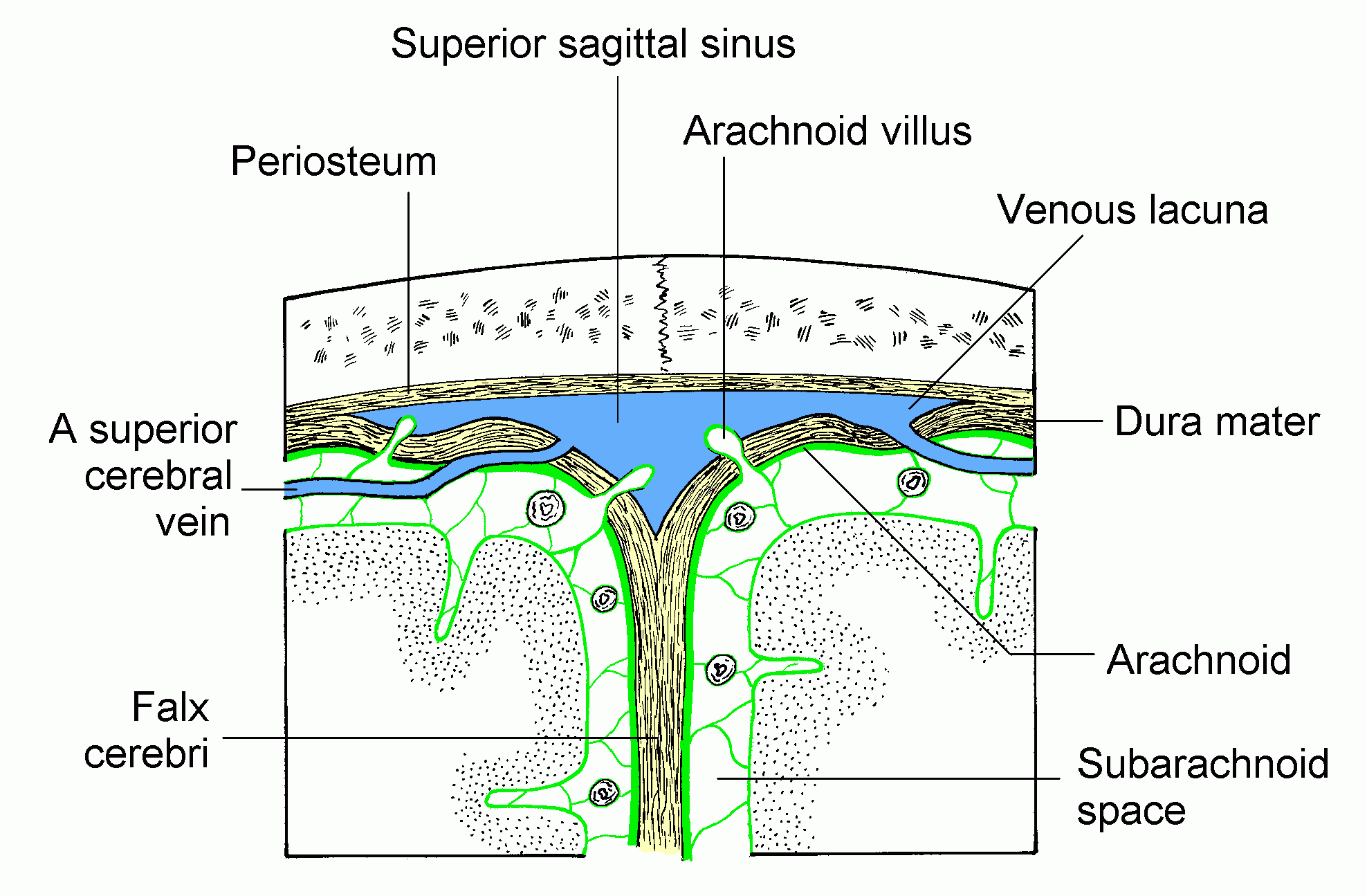
, the subarachnoid cavity (subarachnoid space) is the interval between the arachnoid membrane and pia mater
.
It is occupied by spongy tissue consisting of trabecula
e (delicate connective tissue filaments that extend from the arachnoid mater and blend into the pia mater) and intercommunicating channels in which the cerebrospinal fluid
is contained.
This cavity is small on the surface of the hemispheres of the brain
. On the summit of each gyrus
the pia mater and the arachnoid are in close contact, but in the sulci
between the gyri, triangular spaces are left, in which the subarachnoid trabecular tissue is found. Whilst the pia mater closely follows the surface of the brain and dips into the sulci, the arachnoid bridges across them from gyrus to gyrus.
At certain parts of the base of the brain, the arachnoid is separated from the pia mater by wide intervals, which communicate freely with each other and are named subarachnoid cisternæ; in these the subarachnoid tissue is less abundant. The subarachnoid space is the location of the interface between the vascular tissue and the cerebrospinal fluid
and is active in the blood brain barrier.
The arachnoid mater continues down the spinal cord
too, and the subarachnoid layer with it. It serves a similar function in the spinal cord as it does in the brain.
Central nervous system
The central nervous system is the part of the nervous system that integrates the information that it receives from, and coordinates the activity of, all parts of the bodies of bilaterian animals—that is, all multicellular animals except sponges and radially symmetric animals such as jellyfish...
, the subarachnoid cavity (subarachnoid space) is the interval between the arachnoid membrane and pia mater
Pia mater
Pia mater often referred to as simply the pia, is the delicate innermost layer of the meninges, the membranes surrounding the brain and spinal cord. The word finds its roots in Latin, meaning literally "tender mother." The other two meningeal membranes are the dura mater and the arachnoid mater....
.
It is occupied by spongy tissue consisting of trabecula
Trabecula
A trabecula is a small, often microscopic, tissue element in the form of a small beam, strut or rod, generally having a mechanical function, and usually composed of dense collagenous tissue They can be composed of other materials; in the heart, for example, muscles such as trabeculae carneae...
e (delicate connective tissue filaments that extend from the arachnoid mater and blend into the pia mater) and intercommunicating channels in which the cerebrospinal fluid
Cerebrospinal fluid
Cerebrospinal fluid , Liquor cerebrospinalis, is a clear, colorless, bodily fluid, that occupies the subarachnoid space and the ventricular system around and inside the brain and spinal cord...
is contained.
This cavity is small on the surface of the hemispheres of the brain
Brain
The brain is the center of the nervous system in all vertebrate and most invertebrate animals—only a few primitive invertebrates such as sponges, jellyfish, sea squirts and starfishes do not have one. It is located in the head, usually close to primary sensory apparatus such as vision, hearing,...
. On the summit of each gyrus
Gyrus
A gyrus is a ridge on the cerebral cortex. It is generally surrounded by one or more sulci .-Notable gyri:* Superior frontal gyrus, lat. gyrus frontalis superior* Middle frontal gyrus, lat. gyrus frontalis medius...
the pia mater and the arachnoid are in close contact, but in the sulci
Sulcus (neuroanatomy)
In neuroanatomy, a sulcus is a depression or fissure in the surface of the brain.It surrounds the gyri, creating the characteristic appearance of the brain in humans and other large mammals....
between the gyri, triangular spaces are left, in which the subarachnoid trabecular tissue is found. Whilst the pia mater closely follows the surface of the brain and dips into the sulci, the arachnoid bridges across them from gyrus to gyrus.
At certain parts of the base of the brain, the arachnoid is separated from the pia mater by wide intervals, which communicate freely with each other and are named subarachnoid cisternæ; in these the subarachnoid tissue is less abundant. The subarachnoid space is the location of the interface between the vascular tissue and the cerebrospinal fluid
Cerebrospinal fluid
Cerebrospinal fluid , Liquor cerebrospinalis, is a clear, colorless, bodily fluid, that occupies the subarachnoid space and the ventricular system around and inside the brain and spinal cord...
and is active in the blood brain barrier.
The arachnoid mater continues down the spinal cord
Spinal cord
The spinal cord is a long, thin, tubular bundle of nervous tissue and support cells that extends from the brain . The brain and spinal cord together make up the central nervous system...
too, and the subarachnoid layer with it. It serves a similar function in the spinal cord as it does in the brain.