

Codeine

Encyclopedia
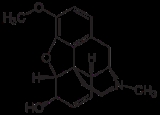
Codeine or 3-methylmorphine (a natural isomer of methylated morphine, the other being the semi-synthetic 6-methylmorphine
) is an opiate
used for its analgesic
, antitussive
, and antidiarrheal
properties. Codeine is the second-most predominant alkaloid
in opium
, at up to three percent; it is much more prevalent in the Iranian poppy (Papaver bractreatum), and codeine is extracted from this species in some places although the below-mentioned morphine methylation process is still much more common. It is considered the prototype of the weak to midrange opioids (tramadol
, dextropropoxyphene, dihydrocodeine, hydrocodone, oxycodone).
and to relieve cough
. Codeine is also occasionally used to treat diarrhea
, although loperamide
(which is available OTC
for milder diarrhea), diphenoxylate
, paregoric
or even laudanum
(also known as Tincture of Opium) are more frequently used to treat severe diarrhea.
), as co-codamol
, paracod, panadeine, Paramol or the Tylenol With Codeine series (e.g., Tylenol 3 and 4 tablets and elixir); with the analgesic acetylsalicylic acid (aspirin
), as co-codaprin
; or with the NSAID (non-steroidal anti-inflammatory
drug) ibuprofen
, as Nurofen Plus. These combinations provide greater pain relief than either agent alone (drug synergy
). Codeine is also commonly marketed in products containing codeine with other pain killers or muscle relaxers, as well as codeine mixed with phenacetin
(Emprazil With Codeine No. 1, 2, 3, and 4), naproxen
, indomethacin, diclofenac
and others as well as more complex mixtures including such mixtures as aspirin + paracetamol + codeine ± caffeine ± antihistamines and other agents such as those mentioned above.
Codeine-only products can be obtained with a prescription as a time release tablet (e.g., Codeine Contin 100 mg and Perduretas 50 mg). Codeine is also marketed in cough syrups with zero to a half-dozen other active ingredients, and a linctus (e.g., Paveral) for all of the uses for which codeine is indicated.
Injectable codeine is available for subcutaneous or intramuscular injection; intravenous injection can cause a serious reaction that can progress to anaphylaxis
. Codeine suppositories are also marketed in some countries.
, itching, nausea
, vomiting
, drowsiness, dry mouth, miosis
, orthostatic hypotension
, urinary retention
, depression
, constipation
and coughing (which is a paradoxical symptom). Some people may also have an allergic reaction to codeine, such as the swelling of skin and rashes. Erectile dysfunction and diminished libido can be a longer-term effect (years to decades) of many narcotic analgesics due to development of central hypogonadism
; this appears to be especially common in individuals with significant melanin
deficiencies, as the hormones tied to melanin production affect the absorption and conversion of these analgesics into progesterone. Additionally, the haplotypes of about 48% of the indigenous population of Great Britain
aggravate the condition, as the E647 sequence underwent epigenetic degradation and became a pseudogene
. The chance of vulnerability is doubled for males, as the critical sequence is located on the X chromosome.
Codeine and morphine as well as opium were used for control of diabetes until relatively recently, and still are in rare cases in some countries, and the hypoglycaemic effect of codeine, although usually weaker than that of morphine, diamorphine, or hydromorphone, can lead to cravings for sugar.
Tolerance to many of the effects of codeine develops with prolonged use, including therapeutic effects. The rate at which this occurs develops at different rates for different effects, with tolerance to the constipation-inducing effects developing particularly slowly for instance.
A potentially serious adverse drug reaction, as with other opioids, is respiratory depression. This depression is dose-related and is the mechanism for the potentially fatal consequences of overdose. As codeine is metabolized to morphine, morphine can be passed through breast milk in potentially lethal amounts, fatally depressing the respiration of a breastfed baby.
. When physical dependence has developed, withdrawal symptoms may occur if a person suddenly stops the medication. Withdrawal symptoms include: drug craving, runny nose, yawning, sweating, insomnia, weakness, stomach cramps, nausea, vomiting, diarrhea, muscle spasms, chills, irritability, and pain. To minimize withdrawal symptoms, long-term users should gradually reduce their codeine medication under the supervision of a healthcare professional. A support group called Codeine Free exists to help people who have found themselves dependent on codeine.
, since it was thought that its analgesia was due in large part to its O-demethylation to the much more powerful opiate, morphine
. However, more recent research shows that 80% of codeine is conjugated with glucuronic acid
to codeine-6-glucuronide
(C6G), which is the metabolite that is most responsible for codeine's analgesia, although the relative contributions of codeine-6-glucuronide and morphine to analgesia are unclear and highly debated. Only 5% of the dose is O-demethylated to morphine, which in turn is immediately glucuronidated at the 3- and 6-position and excreted renally. A portion (~ 15%) of the codeine is N-demethylized to norcodeine
. It is less potent than morphine and has a correspondingly lower dependence-liability than morphine. Like all opioids, continued use of codeine induces physical dependence
and can be psychologically addictive
. However, due to its low potency, the withdrawal symptoms are relatively mild compared to closely related opioids such as hydrocodone
and oxycodone
. As such, codeine has a lower physical dependence liability than most other opioids.
A dose of approximately 200 mg (oral) of codeine must be administered to give analgesia approximately equivalent to 30 mg (oral) of morphine (Rossi, 2004). However, codeine in general isn't used in single doses greater than 60 mg (and no more than 240 mg in 24 hours). When analgesia beyond 60 mg of codeine is required, stronger opioids such as hydrocodone
or oxycodone
are utilized. When used to relieve dry coughs, codeine is used in doses ranging from 5-15 mg and is usually mixed as a syrup with other drugs such as promethazine
which is an antihistamine
with strong sedative activity (some formulations come with different types of antihistamines), guaifenesin
which is an expectorant, and other drugs. When codeine isn't effective in relieving stronger dry coughs, then the opioid hydrocodone
is used instead.
Codeine is metabolized to C6G by uridine diphosphate glucuronosyl transferase UGT2B7
, and, since only about 5% of codeine is metabolized by cytochrome P450 CYP2D6
, the current evidence is that codeine-6-glucuronide (C6G) is the primary active compound. Claims about the supposed "ceiling effect" of codeine doses seemed to rest on the assumption that high doses of codeine saturated CYP2D6, which prevented further conversion of codeine to morphine, which is simply incorrect since we now know that codeine-6-glucuronide (C6G) is the main metabolite responsible for codeine's analgesia. There is also no evidence that CYP2D6 inhibition is useful in treating codeine dependence, though the metabolism of codeine to morphine (and hence further metabolism to glucuronide morphine conjugates) does have an effect on the abuse potential of codeine. However, CYP2D6 has been implicated in the toxicity and death of neonates when codeine is administered to lactating mothers, particularly those with increased 2D6 activity ("ultra-rapid" metabolisers).
. CYP3A4
produces norcodeine and UGT2B7
conjugates codeine, norcodeine, and morphine to the corresponding 3- and 6- glucuronides. Approximately 6–10% of the Caucasian population, 2% of Asians, and 1% of Arabs are "poor metabolizers"; they have little CYP2D6, and codeine is less effective for analgesia in these patients (Rossi, 2004). Srinivasan, Wielbo and Tebbett speculate that codeine-6-glucuronide is responsible for a large percentage of the analgesia of codeine, and, thus, these patients should experience some analgesia. Many of the adverse effects will still be experienced in poor metabolizers. Conversely, 0.5-2% of the population are "extensive metabolizers"; multiple copies of the gene for 2D6 produce high levels of CYP2D6 and will metabolize drugs through that pathway more quickly than others.
Some medications are CYP2D6 inhibitors and reduce or even completely block the conversion of codeine to morphine. The most well-known of these are two of the selective serotonin reuptake inhibitor
s, paroxetine
(Paxil) and fluoxetine
(Prozac) as well as the antihistamine diphenhydramine
and the antidepressant, buproprion (Wellbutrin, also known as Zyban). Other drugs, such as rifampicin
and dexamethasone
, induce CYP450 isozymes and thus increase the conversion rate.
Since codeine is a prodrug, metabolism differences have the opposite effect. Thus an extensive metabolizer may have adverse effects from a rapid buildup of codeine metabolites while a poor metabolizer may get little or no pain relief. CYP2D6 is dysfunctional in 7% of white and black Americans, resulting in reduced metabolism of codeine. Other individuals may have two or more copies of the CYP2D6 gene, resulting in rapid metabolism of the target drug. CYP2D6 metabolizes and activates codeine into morphine, which then undergoes glucuronidation. Life-threatening intoxication, including respiratory depression requiring intubation, can develop over a matter of days in patients who have multiple functional alleles of CYP2D6, resulting in ultra-rapid metabolism of opioids such as codeine into morphine.
The active metabolites of codeine, notably morphine, exert their effects by binding to and activating the μ-opioid receptor
.
(1920 in Germany), oxycodone
(1916 in Germany), dihydrocodeine
(1908 in Germany), and its derivatives such as nicocodeine
(1956 in Austria). Other series of codeine derivatives include isocodeine and its derivatives, which were developed in Germany starting around 1920. As an analgesic, codeine compares moderately to other opiates
. Related to codeine in other ways are codoxime
, thebacon, Codeine-N-Oxide (Genocodeine), related to the nitrogen morphine derivatives as is codeine methobromide, and heterocodeine
, which is a drug six times stronger than morphine and 72 times stronger than codeine due to a small re-arrangement of the molecule, viz. moving the methyl group from the 3 to the 6 position on the morphine carbon skeleton. Drugs bearing resemblance to codeine in effects due to close structural relationship are variations on the methyl groups at the 3 position including ethylmorphine
a.k.a. codethyline (Dionine) and benzylmorphine
(Peronine). While having no narcotic effects of its own, the important opioid precursor thebaine
differs from codeine only slightly in structure. Pseudocodeine and some other similar alkaloids not currently used in medicine are found in trace amounts in opium as well.
found in the opium poppy
, Papaver somniferum var. album, a plant in the papaveraceae
family. Opium poppy has been cultivated and utilized throughout human history for a variety of medicinal (analgesic, anti-tussive and anti-diarrheal) and hypnotic properties linked to the diversity of its active components, which include morphine, codeine and papaverine
.
Codeine is found in concentrations of 0.9 to 3.0 per cent in opium prepared by the latex method from unripe pods of Papaver somniferum. The name codeine is derived from the Greek word kodeia (κώδεια) for "poppy head". The relative proportion of codeine to morphine, the most common opium alkaloid at 4 to 23 per cent, tends to be somewhat higher in the poppy straw method of preparing opium alkaloids.
Until the beginning of the 19th century, raw opium was used in diverse preparations known as laudanum
(see Thomas de Quincey
's "Confessions of an English Opium-Eater
", 1821) and paregoric
elixir
s, a number of which were popular in England since the beginning of the 18th century; the original preparation seems to have been elaborated in Leiden, the Netherlands
around 1715 by a chemist named Lemort; in 1721 the London Pharmocopeia mentions an Elixir Asthmaticum, replaced by the term Elixir Paregoricum ("pain soother") in 1746.
The progressive isolation of opium's several active components opened the path to improved selectivity and safety of the opiates-based pharmacopeia.
Morphine
had already been isolated in Germany
by German pharmacist Friedrich Sertürner
in 1804. Codeine was first isolated decades later in 1832 in France
by Pierre Robiquet
, a French chemist and pharmacist already famous for the discovery of alizarin
, the most widespread red dye, while working on refined morphine extraction processes. This paved the way for the elaboration of a new generation of safer, codeine-based specific antitussive and antidiarrheal formulations.
Codeine is currently the most widely-used opiate in the world, and is one of the most commonly used drugs overall according to numerous reports by organizations including the World Health Organization and its League of Nations predecessor agency. It is one of the most effective orally administered opioid analgesics and has a wide safety margin. Its strength ranges from 8 to 12 percent of morphine in most people; differences in metabolism can change this figure as can other medications, depending on its route of administration.
While codeine can be directly extracted from opium, its original source, most codeine is synthesized from the much more abundant morphine
through the process of O-methylation
.
By 1972, the effects of the Nixon War On Drugs
had caused across-the-board shortages of illicit and licit opiates because of a scarcity of natural opium, poppy straw, and other sources of opium alkaloids, and the geopolitical situation was growing difficult for the United States. After a large percentage of the opium and morphine in the US National Stockpile of Strategic & Critical Materials
was tapped in order to ease severe shortages of medicinal opiates — the codeine-based antitussives in particular — in late 1973, researchers were tasked with finding a way to synthesize codeine and its derivatives. They quickly succeeded using petroleum or coal tar and a process developed at the United States' National Institutes of Health.
Numerous codeine salts have been prepared since the drug was discovered. The most commonly used are the hydrochloride (freebase conversion ratio 0.805), phosphate (0.736), sulphate (0.859), and citrate (0.842). Others include a salicylate NSAID, codeine salicylate (0.686), and at least four codeine-based barbiturates, the cyclohexenylethylbarbiturate (0.559), cyclopentenylallylbarbiturate (0.561), diallylbarbiturate (0.561), and diethylbarbiturate (0.619).
In some countries, cough syrups and tablets containing codeine are available without prescription; some potential recreational users are reported to buy codeine from multiple pharmacies so as not to arouse suspicion. A heroin addict may use codeine to ward off the effects of a withdrawal
.
Codeine is also available in conjunction with the anti-nausea medication promethazine
in the form of a syrup. Brand named as Phenergan with Codeine or in generic form as promethazine with codeine. Called 'syrup', this medication is quickly becoming one of the most commonly misused codeine preparations.
Codeine is also demethylated by reaction with pyridine
to illicitly synthesize morphine, which can then be acetylated to make heroin (diacetylmorphine). Pyridine is toxic and possibly carcinogenic, so morphine illicitly produced in this manner (and potentially contaminated with pyridine) may be particularly harmful. Codeine can also be turned into α-chlorocodide, which is used in the clandestine synthesis of desomorphine
(Permonid) (desomorphine attracted attention in 2010 in Russia
due to an upsurge in clandestine production, presumably due to its relatively simple synthesis from codeine
. The drug is easily made from codeine
, iodine
and red phosphorus, in a similar process to the manufacture of methamphetamine
from pseudoephedrine
, but desomorphine made this way is highly impure and contaminated with various toxic and corrosive byproducts.).
, Canada
, New Zealand
, Romania
, Sweden
, the United Kingdom
, the United States
, and many other countries, codeine is regulated under various narcotic control laws. In some countries it is available without prescription in combination preparations from licensed pharmacists in doses up to 15 mg/tablet in Australia, New Zealand, Poland, Romania (Codamin), and Costa Rica, 12.8 mg/tablet in the UK, 10 mg/tablet in Russia and Israel and 8 mg/tablet in Canada and Estonia.
, most preparations containing codeine do not require a doctor's prescription. Example products containing codeine include Néocodeion (cough pills), Codoliprane (codeine with paracetamol), Prontalgine and Migralgine (codeine, paracetamol and caffeine).
in Germany
and the similarly named narcotics and controlled substances law in Switzerland
. In Austria
, the drug is listed under the Suchtmittelgesetz
in categories corresponding to their classification under the Single Convention on Narcotic Drugs. Dispensing of products containing codeine and similar drugs (dihydrocodeine
, nicocodeine, benzylmorphine, ethylmorphine etc.), in general, require a prescription order from a doctor or the discretion of the pharmacist. Municipal and provincial regulations may impact availability, in particular in Austria and Switzerland, which allows cities and provinces to regulate the selling of the least-regulated schedule of the SMG/BtMG; and, of course, individual chemists' shops can opt out of providing them or imposing volume, frequency, or single-purchase limitations and other things of the same store. Plain codeine hydrochloride tablets (which in the USA would share CSA Schedule II with drugs like morphine, cocaine, hydromorphone, and bezitramide) as well as other non-injectable forms of codeine and its midrange derivatives can be dispensed in this way; the same goes for most chemical classes of benzodiazepines, the majority of non-barbiturate sedative/hypnotics, and at least a handful of barbiturates.
Title 76 of the Schengen treaty has made it possible for countries within the signatory states to import and export drugs with various provisos, recording and ordering requirements, and various other rules.
, codeine is regulated under Schedule 1 of Hong Kong's Chapter 134 Dangerous Drugs Ordinance. It can be used legally only by health professionals and for university research purposes. The substance can be given by pharmacists under a prescription. Anyone who supplies the substance without prescription can be fined $10,000 (HKD
). The maximum penalty for trafficking or manufacturing the substance is a $5,000,000 (HKD) fine and life imprisonment. Possession of the substance for consumption without license from the Department of Health is illegal with a $1,000,000 (HKD) fine and/or 7 years of jail time.
However, codeine is available without prescription from licensed pharmacists in doses up to 0.1% (5 mg/5ml) according to Hong Kong "Dangerous Drugs Ordinance".
and codeine require a prescription in Iceland. These tablets are known as Parkódín.
, new regulations came into effect on August 1, 2010 concerning codeine, due to worries about the overuse of the drug. Codeine remains a non-prescriptive, over-the-counter drug, but codeine products must be out of the view of the
public to facilitate the legislative requirement that these products “are not accessible to
the public for self-selection”. In practice, this means customers must ask pharmacists for the product containing codeine in name, and the pharmacist makes a judgement whether it is suitable for the patient to be using codeine, and that patients are fully advised of the correct use of these products.
and codeine is available in Italy as CoEfferalgan.
and ethylmorphine
products both in and outside of North America, was inaugurated with the Pure Food and Drug Act
of 1906 and related legislation and refined since.
Equivalent scales for labeling stronger opioids such as diacetylmorphine (heroin), morphine
, opium salts mixtures, and others were in common use in the past, and on occasion one can find past references to brand names for hydrocodone
(invented 1920, introduced in US 1943), hydromorphone
(invented 1924), oxycodone
(invented 1916), paregoric
and similar drugs containing narcotic content numbers. For example. from circa 1900 to 1925, the most common cough medicine was terpin hydrate
With Heroin Elixir No. 2.
Contrary to the advertising matter of some pharmacies, 60 mg is No. 4, not No. 6, and tablets with 45 mg of codeine are not No. 4 and would in all likelihood be classified as No. 3½ under that system. Whether the scale goes to No. 5 and higher is moot at this point, as in the United States and Canada single-dose-unit concentrations of more than 64 mg are not manufactured. The United States Controlled Substances Act
of 1970 does place dosage unit strengths of 90 mg of codeine and higher in Schedule II, even if mixed with another active ingredient. Oral tablets, hypodermic tablets, liquid forms, and capsules of less common doses are available in some cases the equivalent dihydrocodeine, dionine, benzylmorphine
, and opium dosages were previously available in North America (and in most cases still are in other countries, particularly the 45 mg paracetamol/codeine and 50 and 100 mg single-ingredient codeine tablets).
(or "AC&C"), which contains acetylsalicylic acid
(ASA), codeine, and caffeine
, and similar combinations using acetaminophen (paracetamol
) rather than acetylsalicylic acid (aspirin). Caffeine, being a stimulant, tends to offset the sedative effects of codeine. It also can increase the effectiveness and absorption rate of analgesics in some circumstances. Co-codaprin containing 8 mg codeine is often requested and sold as "Frosst 222" at pharmacies, where it is generally available over the counter
. Formulations containing more than 8 mg of codeine are available by prescription only.
, codeine is regulated by the Controlled Substances Act
. It is a Schedule II controlled substance for pain-relief products containing codeine alone or more than 90 mg per dosage unit. Tablets of codeine in combination with aspirin or acetaminophen (paracetamol
/Tylenol) made for pain relief are listed as Schedule III; and cough syrups are Schedule III or V, depending on formula. The acetaminophen/codeine pain-relief elixir (trade name Tylenol Elixir with Codeine) is a Schedule V controlled substance.
Preparations for cough or diarrhea containing small amounts of codeine in combination with two or more other active ingredients are Schedule V in the US, and in some states may be dispensed in amounts up to 4 fl. oz. per 48 hours (one or two states set the limit at 4 fl. oz. per 72 hours) without a prescription. Schedule V specifically consigns the product to state and local regulation beyond certain required record-keeping requirements (a dispensary log must be maintained for two years in a ledger from which pages cannot easily be removed and/or are pre-numbered, and the pharmacist must ask for photo identification) and also maintain controlled substances in the closed system at the root of the régime intended by the Controlled Substances Act of 1970; the codeine in these products was a Schedule II substance when the company making the Schedule V product acquired it for mixing up the end-product.
In locales where dilute codeine preparations are non-prescription, anywhere from very few to perhaps a moderate percentage of pharmacists will sell these preparations without a prescription. However, many states have their own laws that do require a prescription for Schedule V drugs. The December 2008 issue of The Bulletin of the National Codeine OTC Lobby (Vol. XVIII, No. 4) listed 12 states with some kind of OTC access to codeine, noting that small independent pharmacies are the most likely to have it. This situation is roughly equivalent to that in February 1991, when the aforementioned organisation undertook its first comprehensive study of Schedule V and overall codeine, dihydrocodeine, ethylmorphine, and hydrocodone availability.
Other drugs that are present in Schedule V narcotic preparations like the codeine syrups are ethylmorphine
and dihydrocodeine
. Paregoric
and hydrocodone were transferred to Schedule III from Schedule V even if the preparation contains two or more other active ingredients, and diphenoxylate
is usually covered by state prescription laws even though this relative of pethidine
is a Schedule V substance when adulterated with atropine to prevent abuse.
Around the world, codeine is, contingent on its concentration, a Schedule II and IV drug under the Single Convention on Narcotic Drugs
.
, higher-strength codeine formulations - such as 30/500 co-codamol, where 30 mg of codeine phosphate is combined with 500 mg paracetamol
- are prescription-only medicines (POM). Lower-strength combinations, such as 8/500 (various brands) or 12.8/500 (Panadol Ultra, Solpadeine MAX and others) are available as pharmacy supervised ("behind the counter") medicines. Codeine is also available combined with Ibuprofen
; a common formulation is 12.8 mg codeine alongside 200 mg Ibuprofen. It is also available 'behind the counter' with aspirin in doses of 8 mg codeine phosphate and 500mg aspirin
(Codis). Codeine Linctus of 15 mg per 5ml is also available behind the counter at some pharmacies, although a purchaser would have to request it specifically from the pharmacist. Intramuscular injection
of codeine is a controlled drug under the Misuse of Drugs Act 1971
.
Heterocodeine
Heterocodeine is an opiate derivative, the 6-methyl ether of morphine, and a structural isomer of codeine. Heterocodeine was first synthesised in 1932, and can be made from morphine by selective methylation. Codeine is the natural mono-methyl ester, so methylated where it must be metabolized to...
) is an opiate
Opiate
In medicine, the term opiate describes any of the narcotic opioid alkaloids found as natural products in the opium poppy plant.-Overview:Opiates are so named because they are constituents or derivatives of constituents found in opium, which is processed from the latex sap of the opium poppy,...
used for its analgesic
Analgesic
An analgesic is any member of the group of drugs used to relieve pain . The word analgesic derives from Greek an- and algos ....
, antitussive
Cough medicine
A cough medicine is a medicinal drug used in an attempt to treat coughing and related conditions. For dry coughs, treatment with cough suppressants may be attempted to suppress the body's urge to cough...
, and antidiarrheal
Antidiarrhoeal
An anti-diarrhoeal drug is any medication which provides symptomatic relief for diarrhoea.-Types:* Electrolyte solutions are used to replace lost fluids and salts in acute cases....
properties. Codeine is the second-most predominant alkaloid
Alkaloid
Alkaloids are a group of naturally occurring chemical compounds that contain mostly basic nitrogen atoms. This group also includes some related compounds with neutral and even weakly acidic properties. Also some synthetic compounds of similar structure are attributed to alkaloids...
in opium
Opium
Opium is the dried latex obtained from the opium poppy . Opium contains up to 12% morphine, an alkaloid, which is frequently processed chemically to produce heroin for the illegal drug trade. The latex also includes codeine and non-narcotic alkaloids such as papaverine, thebaine and noscapine...
, at up to three percent; it is much more prevalent in the Iranian poppy (Papaver bractreatum), and codeine is extracted from this species in some places although the below-mentioned morphine methylation process is still much more common. It is considered the prototype of the weak to midrange opioids (tramadol
Tramadol
Tramadol hydrochloride is a centrally acting synthetic opioid analgesic used in treating moderate pain. The drug has a wide range of applications, including treatment for restless legs syndrome and fibromyalgia...
, dextropropoxyphene, dihydrocodeine, hydrocodone, oxycodone).
Medical uses
Codeine is used to treat mild to moderate painPain
Pain is an unpleasant sensation often caused by intense or damaging stimuli such as stubbing a toe, burning a finger, putting iodine on a cut, and bumping the "funny bone."...
and to relieve cough
Cough
A cough is a sudden and often repetitively occurring reflex which helps to clear the large breathing passages from secretions, irritants, foreign particles and microbes...
. Codeine is also occasionally used to treat diarrhea
Diarrhea
Diarrhea , also spelled diarrhoea, is the condition of having three or more loose or liquid bowel movements per day. It is a common cause of death in developing countries and the second most common cause of infant deaths worldwide. The loss of fluids through diarrhea can cause dehydration and...
, although loperamide
Loperamide
Loperamide , a synthetic piperidine derivative, is an opioid drug used against diarrhea resulting from gastroenteritis or inflammatory bowel disease. In most countries it is available generically and under brand names such as Lopex, Imodium, Dimor, Fortasec, and Pepto Diarrhea Control...
(which is available OTC
Over-the-counter drug
Over-the-counter drugs are medicines that may be sold directly to a consumer without a prescription from a healthcare professional, as compared to prescription drugs, which may be sold only to consumers possessing a valid prescription...
for milder diarrhea), diphenoxylate
Diphenoxylate
Diphenoxylate is an opioid agonist used for the treatment of diarrhea that acts by slowing intestinal contractions and peristalsis allowing the body to consolidate intestinal contents and prolong transit time, thus allowing the intestines to draw moisture out of them at a normal or higher rate and...
, paregoric
Paregoric
Paregoric, or camphorated tincture of opium, also known as tinctura opii camphorata, is a medication known for its antidiarrheal, antitussive, and analgesic properties.-History:...
or even laudanum
Laudanum
Laudanum , also known as Tincture of Opium, is an alcoholic herbal preparation containing approximately 10% powdered opium by weight ....
(also known as Tincture of Opium) are more frequently used to treat severe diarrhea.
Formulations
Codeine is marketed as both a single-ingredient drug and in combination preparations with the analgesic acetaminophen (paracetamolParacetamol
Paracetamol INN , or acetaminophen USAN , is a widely used over-the-counter analgesic and antipyretic . It is commonly used for the relief of headaches and other minor aches and pains and is a major ingredient in numerous cold and flu remedies...
), as co-codamol
Co-codamol
Co-codamol is a non-proprietary name used to denote a compound analgesic, a combination of codeine phosphate and paracetamol . Co-codamol Co-codamol (BAN) is a non-proprietary name used to denote a compound analgesic, a combination of codeine phosphate and paracetamol (acetaminophen). Co-codamol...
, paracod, panadeine, Paramol or the Tylenol With Codeine series (e.g., Tylenol 3 and 4 tablets and elixir); with the analgesic acetylsalicylic acid (aspirin
Aspirin
Aspirin , also known as acetylsalicylic acid , is a salicylate drug, often used as an analgesic to relieve minor aches and pains, as an antipyretic to reduce fever, and as an anti-inflammatory medication. It was discovered by Arthur Eichengrun, a chemist with the German company Bayer...
), as co-codaprin
Co-codaprin
Co-codaprin is a non-proprietary name used to denote a compound analgesic, a combination of codeine phosphate with aspirin.Co-codaprin tablets are used for mild to moderate pain.-Canada:...
; or with the NSAID (non-steroidal anti-inflammatory
Anti-inflammatory
Anti-inflammatory refers to the property of a substance or treatment that reduces inflammation. Anti-inflammatory drugs make up about half of analgesics, remedying pain by reducing inflammation as opposed to opioids, which affect the central nervous system....
drug) ibuprofen
Ibuprofen
Ibuprofen is a nonsteroidal anti-inflammatory drug used for relief of symptoms of arthritis, fever, as an analgesic , especially where there is an inflammatory component, and dysmenorrhea....
, as Nurofen Plus. These combinations provide greater pain relief than either agent alone (drug synergy
Synergy
Synergy may be defined as two or more things functioning together to produce a result not independently obtainable.The term synergy comes from the Greek word from , , meaning "working together".-Definitions and usages:...
). Codeine is also commonly marketed in products containing codeine with other pain killers or muscle relaxers, as well as codeine mixed with phenacetin
Phenacetin
Phenacetin is an analgesic, once widely used; its use has declined because of its adverse effects.-History:Phenacetin was introduced in 1887, and was used principally as an analgesic, and was one of the first synthetic fever reducers to go on the market...
(Emprazil With Codeine No. 1, 2, 3, and 4), naproxen
Naproxen
Naproxen sodium is a nonsteroidal anti-inflammatory drug commonly used for the reduction of pain, fever, inflammation and stiffness caused by conditions such as:...
, indomethacin, diclofenac
Diclofenac
Diclofenac is a non-steroidal anti-inflammatory drug taken to reduce inflammation and as an analgesic reducing pain in certain conditions....
and others as well as more complex mixtures including such mixtures as aspirin + paracetamol + codeine ± caffeine ± antihistamines and other agents such as those mentioned above.
Codeine-only products can be obtained with a prescription as a time release tablet (e.g., Codeine Contin 100 mg and Perduretas 50 mg). Codeine is also marketed in cough syrups with zero to a half-dozen other active ingredients, and a linctus (e.g., Paveral) for all of the uses for which codeine is indicated.
Injectable codeine is available for subcutaneous or intramuscular injection; intravenous injection can cause a serious reaction that can progress to anaphylaxis
Anaphylaxis
Anaphylaxis is defined as "a serious allergic reaction that is rapid in onset and may cause death". It typically results in a number of symptoms including throat swelling, an itchy rash, and low blood pressure...
. Codeine suppositories are also marketed in some countries.
Adverse effects
Common effects other than analgesia associated with the use of codeine include euphoriaEuphoria (emotion)
Euphoria is medically recognized as a mental and emotional condition in which a person experiences intense feelings of well-being, elation, happiness, ecstasy, excitement and joy...
, itching, nausea
Nausea
Nausea , is a sensation of unease and discomfort in the upper stomach with an involuntary urge to vomit. It often, but not always, precedes vomiting...
, vomiting
Vomiting
Vomiting is the forceful expulsion of the contents of one's stomach through the mouth and sometimes the nose...
, drowsiness, dry mouth, miosis
Miosis
Miosis is the constriction of the pupil of the eye to two millimeters or less...
, orthostatic hypotension
Orthostatic hypotension
Orthostatic hypotension, also known as postural hypotension, orthostasis, and colloquially as head rush or dizzy spell, is a form of hypotension in which a person's blood pressure suddenly falls when the person stands up or stretches. The decrease is typically greater than 20/10 mm Hg, and may be...
, urinary retention
Urinary retention
Urinary retention, also known as ischuria, is a lack of ability to urinate. It is a common complication of benign prostatic hyperplasia , although it can also be caused by nerve dysfunction, constipation, infection, or medications...
, depression
Depression (mood)
Depression is a state of low mood and aversion to activity that can affect a person's thoughts, behaviour, feelings and physical well-being. Depressed people may feel sad, anxious, empty, hopeless, helpless, worthless, guilty, irritable, or restless...
, constipation
Constipation
Constipation refers to bowel movements that are infrequent or hard to pass. Constipation is a common cause of painful defecation...
and coughing (which is a paradoxical symptom). Some people may also have an allergic reaction to codeine, such as the swelling of skin and rashes. Erectile dysfunction and diminished libido can be a longer-term effect (years to decades) of many narcotic analgesics due to development of central hypogonadism
Hypogonadism
Hypogonadism is a medical term for decreased functional activity of the gonads. Low testosterone is caused by a decline or deficiency in gonadal production of testosterone in males...
; this appears to be especially common in individuals with significant melanin
Melanin
Melanin is a pigment that is ubiquitous in nature, being found in most organisms . In animals melanin pigments are derivatives of the amino acid tyrosine. The most common form of biological melanin is eumelanin, a brown-black polymer of dihydroxyindole carboxylic acids, and their reduced forms...
deficiencies, as the hormones tied to melanin production affect the absorption and conversion of these analgesics into progesterone. Additionally, the haplotypes of about 48% of the indigenous population of Great Britain
Great Britain
Great Britain or Britain is an island situated to the northwest of Continental Europe. It is the ninth largest island in the world, and the largest European island, as well as the largest of the British Isles...
aggravate the condition, as the E647 sequence underwent epigenetic degradation and became a pseudogene
Pseudogene
Pseudogenes are dysfunctional relatives of known genes that have lost their protein-coding ability or are otherwise no longer expressed in the cell...
. The chance of vulnerability is doubled for males, as the critical sequence is located on the X chromosome.
Codeine and morphine as well as opium were used for control of diabetes until relatively recently, and still are in rare cases in some countries, and the hypoglycaemic effect of codeine, although usually weaker than that of morphine, diamorphine, or hydromorphone, can lead to cravings for sugar.
Tolerance to many of the effects of codeine develops with prolonged use, including therapeutic effects. The rate at which this occurs develops at different rates for different effects, with tolerance to the constipation-inducing effects developing particularly slowly for instance.
A potentially serious adverse drug reaction, as with other opioids, is respiratory depression. This depression is dose-related and is the mechanism for the potentially fatal consequences of overdose. As codeine is metabolized to morphine, morphine can be passed through breast milk in potentially lethal amounts, fatally depressing the respiration of a breastfed baby.
Withdrawal and dependence
As with other opiate-based pain killers, chronic use of codeine can cause physical dependencePhysical dependence
Physical dependence refers to a state resulting from chronic use of a drug that has produced tolerance and where negative physical symptoms of withdrawal result from abrupt discontinuation or dosage reduction...
. When physical dependence has developed, withdrawal symptoms may occur if a person suddenly stops the medication. Withdrawal symptoms include: drug craving, runny nose, yawning, sweating, insomnia, weakness, stomach cramps, nausea, vomiting, diarrhea, muscle spasms, chills, irritability, and pain. To minimize withdrawal symptoms, long-term users should gradually reduce their codeine medication under the supervision of a healthcare professional. A support group called Codeine Free exists to help people who have found themselves dependent on codeine.
Pharmacology
Codeine was once considered to be a morphine prodrugProdrug
A prodrug is a pharmacological substance administered in an inactive form. Once administered, the prodrug is metabolised in vivo into an active metabolite, a process termed bioactivation. The rationale behind the use of a prodrug is generally for absorption, distribution, metabolism, and...
, since it was thought that its analgesia was due in large part to its O-demethylation to the much more powerful opiate, morphine
Morphine
Morphine is a potent opiate analgesic medication and is considered to be the prototypical opioid. It was first isolated in 1804 by Friedrich Sertürner, first distributed by same in 1817, and first commercially sold by Merck in 1827, which at the time was a single small chemists' shop. It was more...
. However, more recent research shows that 80% of codeine is conjugated with glucuronic acid
Glucuronic acid
Glucuronic acid is a carboxylic acid. Its structure is similar to that of glucose. However, glucuronic acid's sixth carbon is oxidized to a carboxylic acid...
to codeine-6-glucuronide
Glucuronide
A glucuronide, also known as glucuronoside, is any substance produced by linking glucuronic acid to another substance via a glycosidic bond...
(C6G), which is the metabolite that is most responsible for codeine's analgesia, although the relative contributions of codeine-6-glucuronide and morphine to analgesia are unclear and highly debated. Only 5% of the dose is O-demethylated to morphine, which in turn is immediately glucuronidated at the 3- and 6-position and excreted renally. A portion (~ 15%) of the codeine is N-demethylized to norcodeine
Norcodeine
Norcodeine is an opiate analogue that is the N-demethylated derivative of codeine.Norcodeine has relatively little opioid activity in its own right, but is formed as a metabolite of codeine following ingestion....
. It is less potent than morphine and has a correspondingly lower dependence-liability than morphine. Like all opioids, continued use of codeine induces physical dependence
Physical dependence
Physical dependence refers to a state resulting from chronic use of a drug that has produced tolerance and where negative physical symptoms of withdrawal result from abrupt discontinuation or dosage reduction...
and can be psychologically addictive
Substance dependence
The section about substance dependence in the Diagnostic and Statistical Manual of Mental Disorders does not use the word addiction at all. It explains:...
. However, due to its low potency, the withdrawal symptoms are relatively mild compared to closely related opioids such as hydrocodone
Hydrocodone
Hydrocodone or dihydrocodeinone is a semi-synthetic opioid derived from either of two naturally occurring opiates: codeine and thebaine. It is an orally active narcotic analgesic and antitussive...
and oxycodone
Oxycodone
Oxycodone is an opioid analgesic medication synthesized from opium-derived thebaine. It was developed in 1916 in Germany, as one of several new semi-synthetic opioids in an attempt to improve on the existing opioids: morphine, diacetylmorphine , and codeine.Oxycodone oral medications are generally...
. As such, codeine has a lower physical dependence liability than most other opioids.
A dose of approximately 200 mg (oral) of codeine must be administered to give analgesia approximately equivalent to 30 mg (oral) of morphine (Rossi, 2004). However, codeine in general isn't used in single doses greater than 60 mg (and no more than 240 mg in 24 hours). When analgesia beyond 60 mg of codeine is required, stronger opioids such as hydrocodone
Hydrocodone
Hydrocodone or dihydrocodeinone is a semi-synthetic opioid derived from either of two naturally occurring opiates: codeine and thebaine. It is an orally active narcotic analgesic and antitussive...
or oxycodone
Oxycodone
Oxycodone is an opioid analgesic medication synthesized from opium-derived thebaine. It was developed in 1916 in Germany, as one of several new semi-synthetic opioids in an attempt to improve on the existing opioids: morphine, diacetylmorphine , and codeine.Oxycodone oral medications are generally...
are utilized. When used to relieve dry coughs, codeine is used in doses ranging from 5-15 mg and is usually mixed as a syrup with other drugs such as promethazine
Promethazine
Promethazine is a first-generation antihistamine of the phenothiazine family. The drug has anti-motion sickness, antiemetic, and anticholinergic effects, as well as a strong sedative effect and in some countries is prescribed for insomnia when benzodiazepines are contraindicated...
which is an antihistamine
Antihistamine
An H1 antagonist is a histamine antagonist of the H1 receptor that serves to reduce or eliminate effects mediated by histamine, an endogenous chemical mediator released during allergic reactions...
with strong sedative activity (some formulations come with different types of antihistamines), guaifenesin
Guaifenesin
Guaifenesin INN or guaiphenesin , also glyceryl guaiacolate, is an expectorant drug sold over the counter and usually taken by mouth to assist the bringing up of phlegm from the airways in acute respiratory tract infections.-History:Similar medicines derived from the guaiac tree were in use as a...
which is an expectorant, and other drugs. When codeine isn't effective in relieving stronger dry coughs, then the opioid hydrocodone
Hydrocodone
Hydrocodone or dihydrocodeinone is a semi-synthetic opioid derived from either of two naturally occurring opiates: codeine and thebaine. It is an orally active narcotic analgesic and antitussive...
is used instead.
Codeine is metabolized to C6G by uridine diphosphate glucuronosyl transferase UGT2B7
UGT2B7
UGT2B7 is a phase II metabolism isoenzyme found to be active in the liver, kidneys, epithelial cells of the lower gastrointestinal tract and also has been reported in the brain...
, and, since only about 5% of codeine is metabolized by cytochrome P450 CYP2D6
CYP2D6
Cytochrome P450 2D6 , a member of the cytochrome P450 mixed-function oxidase system, is one of the most important enzymes involved in the metabolism of xenobiotics in the body. Also, many substances are bioactivated by CYP2D6 to form their active compounds...
, the current evidence is that codeine-6-glucuronide (C6G) is the primary active compound. Claims about the supposed "ceiling effect" of codeine doses seemed to rest on the assumption that high doses of codeine saturated CYP2D6, which prevented further conversion of codeine to morphine, which is simply incorrect since we now know that codeine-6-glucuronide (C6G) is the main metabolite responsible for codeine's analgesia. There is also no evidence that CYP2D6 inhibition is useful in treating codeine dependence, though the metabolism of codeine to morphine (and hence further metabolism to glucuronide morphine conjugates) does have an effect on the abuse potential of codeine. However, CYP2D6 has been implicated in the toxicity and death of neonates when codeine is administered to lactating mothers, particularly those with increased 2D6 activity ("ultra-rapid" metabolisers).
Pharmacokinetics
The conversion of codeine to morphine occurs in the liver and is catalysed by the cytochrome P450 enzyme CYP2D6CYP2D6
Cytochrome P450 2D6 , a member of the cytochrome P450 mixed-function oxidase system, is one of the most important enzymes involved in the metabolism of xenobiotics in the body. Also, many substances are bioactivated by CYP2D6 to form their active compounds...
. CYP3A4
CYP3A4
Cytochrome P450 3A4 , a member of the cytochrome P450 mixed-function oxidase system, is one of the most important enzymes involved in the metabolism of xenobiotics in the body. CYP3A4 is involved in the oxidation of the largest range of substrates of all the CYPs. As a result, CYP3A4 is present in...
produces norcodeine and UGT2B7
UGT2B7
UGT2B7 is a phase II metabolism isoenzyme found to be active in the liver, kidneys, epithelial cells of the lower gastrointestinal tract and also has been reported in the brain...
conjugates codeine, norcodeine, and morphine to the corresponding 3- and 6- glucuronides. Approximately 6–10% of the Caucasian population, 2% of Asians, and 1% of Arabs are "poor metabolizers"; they have little CYP2D6, and codeine is less effective for analgesia in these patients (Rossi, 2004). Srinivasan, Wielbo and Tebbett speculate that codeine-6-glucuronide is responsible for a large percentage of the analgesia of codeine, and, thus, these patients should experience some analgesia. Many of the adverse effects will still be experienced in poor metabolizers. Conversely, 0.5-2% of the population are "extensive metabolizers"; multiple copies of the gene for 2D6 produce high levels of CYP2D6 and will metabolize drugs through that pathway more quickly than others.
Some medications are CYP2D6 inhibitors and reduce or even completely block the conversion of codeine to morphine. The most well-known of these are two of the selective serotonin reuptake inhibitor
Selective serotonin reuptake inhibitor
Selective serotonin re-uptake inhibitors or serotonin-specific reuptake inhibitor are a class of compounds typically used as antidepressants in the treatment of depression, anxiety disorders, and some personality disorders. The efficacy of SSRIs is disputed...
s, paroxetine
Paroxetine
Paroxetine is an SSRI antidepressant. Marketing of the drug began in 1992 by the pharmaceutical company SmithKline Beecham, now GlaxoSmithKline...
(Paxil) and fluoxetine
Fluoxetine
Fluoxetine is an antidepressant of the selective serotonin reuptake inhibitor class. It is manufactured and marketed by Eli Lilly and Company...
(Prozac) as well as the antihistamine diphenhydramine
Diphenhydramine
Diphenhydramine hydrochloride is a first-generation antihistamine possessing anticholinergic, antitussive, antiemetic, and sedative properties which is mainly used to treat allergies. Like most other first-generation antihistamines, the drug also has a powerful hypnotic effect, and for this reason...
and the antidepressant, buproprion (Wellbutrin, also known as Zyban). Other drugs, such as rifampicin
Rifampicin
Rifampicin or rifampin is a bactericidal antibiotic drug of the rifamycin group. It is a semisynthetic compound derived from Amycolatopsis rifamycinica ...
and dexamethasone
Dexamethasone
Dexamethasone is a potent synthetic member of the glucocorticoid class of steroid drugs. It acts as an anti-inflammatory and immunosuppressant...
, induce CYP450 isozymes and thus increase the conversion rate.
Since codeine is a prodrug, metabolism differences have the opposite effect. Thus an extensive metabolizer may have adverse effects from a rapid buildup of codeine metabolites while a poor metabolizer may get little or no pain relief. CYP2D6 is dysfunctional in 7% of white and black Americans, resulting in reduced metabolism of codeine. Other individuals may have two or more copies of the CYP2D6 gene, resulting in rapid metabolism of the target drug. CYP2D6 metabolizes and activates codeine into morphine, which then undergoes glucuronidation. Life-threatening intoxication, including respiratory depression requiring intubation, can develop over a matter of days in patients who have multiple functional alleles of CYP2D6, resulting in ultra-rapid metabolism of opioids such as codeine into morphine.
The active metabolites of codeine, notably morphine, exert their effects by binding to and activating the μ-opioid receptor
Opioid receptor
Opioid receptors are a group of G protein-coupled receptors with opioids as ligands. The endogenous opioids are dynorphins, enkephalins, endorphins, endomorphins and nociceptin. The opioid receptors are ~40% identical to somatostatin receptors...
.
Relation to other opiates
Codeine is the starting material and prototype of a large class of mainly mild to moderately strong opioids such as hydrocodoneHydrocodone
Hydrocodone or dihydrocodeinone is a semi-synthetic opioid derived from either of two naturally occurring opiates: codeine and thebaine. It is an orally active narcotic analgesic and antitussive...
(1920 in Germany), oxycodone
Oxycodone
Oxycodone is an opioid analgesic medication synthesized from opium-derived thebaine. It was developed in 1916 in Germany, as one of several new semi-synthetic opioids in an attempt to improve on the existing opioids: morphine, diacetylmorphine , and codeine.Oxycodone oral medications are generally...
(1916 in Germany), dihydrocodeine
Dihydrocodeine
Dihydrocodeine, also called DHC, Drocode, Paracodeine and Parzone and known by the brand names of Synalgos DC, Panlor DC, Panlor SS, Contugesic, New Bron Solution-ACE, Huscode, Drocode, Paracodin, Codidol, Didor Continus, Dicogesic, Codhydrine, Dekacodin, DH-Codeine,...
(1908 in Germany), and its derivatives such as nicocodeine
Nicocodeine
Nicocodeine is an opiate derivative, closely related to dihydrocodeine and the codeine analogue of nicomorphine developed as a cough suppressant and analgesic. It is not commonly used in most countries, but has activity similar to other opiates. Nicocodeine and nicomorphine were introduced in the...
(1956 in Austria). Other series of codeine derivatives include isocodeine and its derivatives, which were developed in Germany starting around 1920. As an analgesic, codeine compares moderately to other opiates
Opiate comparison
Opioids are a class of compounds that elicit analgesic effects in humans and animals by binding to the μ-opioid receptor within the central nervous system. The following table lists commonly used opioid drugs and their relative potencies. Values for the potencies of opioids listed on this table...
. Related to codeine in other ways are codoxime
Codoxime
Codoxime is an opiate analogue that is a derivative of hydrocodone, where the 6-ketone group has been replaced by carboxymethyloxime. It has primarily antitussive effects and was found to have moderate potential to cause dependence in animal studies....
, thebacon, Codeine-N-Oxide (Genocodeine), related to the nitrogen morphine derivatives as is codeine methobromide, and heterocodeine
Heterocodeine
Heterocodeine is an opiate derivative, the 6-methyl ether of morphine, and a structural isomer of codeine. Heterocodeine was first synthesised in 1932, and can be made from morphine by selective methylation. Codeine is the natural mono-methyl ester, so methylated where it must be metabolized to...
, which is a drug six times stronger than morphine and 72 times stronger than codeine due to a small re-arrangement of the molecule, viz. moving the methyl group from the 3 to the 6 position on the morphine carbon skeleton. Drugs bearing resemblance to codeine in effects due to close structural relationship are variations on the methyl groups at the 3 position including ethylmorphine
Ethylmorphine
Ethylmorphine is an opiate narcotic analgesic .Ethylmorphine was invented in Germany at Merck in 1884 and was used as a weaker alternative to heroin for all indications. Chemically, ethylmorphine is a morphine molecule with a -25 group substituted for the aromatic 3- group...
a.k.a. codethyline (Dionine) and benzylmorphine
Benzylmorphine
Benzylmorphine is a semi-synthetic opiate narcotic introduced to the international market in 1896 and that of the United States very shortly thereafter...
(Peronine). While having no narcotic effects of its own, the important opioid precursor thebaine
Thebaine
Thebaine , its name coming from the Greek Θῆβαι, Thēbai, an ancient city in Upper Egypt, is an opiate alkaloid. A minor constituent of opium, thebaine is chemically similar to both morphine and codeine, but has stimulatory rather than depressant effects, causing convulsions similar to strychnine...
differs from codeine only slightly in structure. Pseudocodeine and some other similar alkaloids not currently used in medicine are found in trace amounts in opium as well.
History
Codeine, or 3-methylmorphine, is an alkaloidAlkaloid
Alkaloids are a group of naturally occurring chemical compounds that contain mostly basic nitrogen atoms. This group also includes some related compounds with neutral and even weakly acidic properties. Also some synthetic compounds of similar structure are attributed to alkaloids...
found in the opium poppy
Opium poppy
Opium poppy, Papaver somniferum, is the species of plant from which opium and poppy seeds are extracted. Opium is the source of many opiates, including morphine , thebaine, codeine, papaverine, and noscapine...
, Papaver somniferum var. album, a plant in the papaveraceae
Papaveraceae
Papaveraceae, informally known as the poppy family, are an economically important family of 44 genera and approximately 770 species of flowering plants in the order Ranunculales. The family is cosmopolitan, occurring in temperate and subtropical climates, but almost unknown in the tropics...
family. Opium poppy has been cultivated and utilized throughout human history for a variety of medicinal (analgesic, anti-tussive and anti-diarrheal) and hypnotic properties linked to the diversity of its active components, which include morphine, codeine and papaverine
Papaverine
Papaverine is an opium alkaloid antispasmodic drug, used primarily in the treatment of visceral spasm, vasospasm , and occasionally in the treatment of erectile dysfunction...
.
Codeine is found in concentrations of 0.9 to 3.0 per cent in opium prepared by the latex method from unripe pods of Papaver somniferum. The name codeine is derived from the Greek word kodeia (κώδεια) for "poppy head". The relative proportion of codeine to morphine, the most common opium alkaloid at 4 to 23 per cent, tends to be somewhat higher in the poppy straw method of preparing opium alkaloids.
Until the beginning of the 19th century, raw opium was used in diverse preparations known as laudanum
Laudanum
Laudanum , also known as Tincture of Opium, is an alcoholic herbal preparation containing approximately 10% powdered opium by weight ....
(see Thomas de Quincey
Thomas de Quincey
Thomas Penson de Quincey was an English esssayist, best known for his Confessions of an English Opium-Eater .-Child and student:...
's "Confessions of an English Opium-Eater
Confessions of an English Opium-Eater
Confessions of an English Opium-Eater is an autobiographical account written by Thomas De Quincey, about his laudanum addiction and its effect on his life...
", 1821) and paregoric
Paregoric
Paregoric, or camphorated tincture of opium, also known as tinctura opii camphorata, is a medication known for its antidiarrheal, antitussive, and analgesic properties.-History:...
elixir
Elixir
An elixir is a clear, sweet-flavored liquid used for medicinal purposes, to be taken orally and intended to cure one's ills. When used as a pharmaceutical preparation, an elixir contains at least one active ingredient designed to be taken orally....
s, a number of which were popular in England since the beginning of the 18th century; the original preparation seems to have been elaborated in Leiden, the Netherlands
Netherlands
The Netherlands is a constituent country of the Kingdom of the Netherlands, located mainly in North-West Europe and with several islands in the Caribbean. Mainland Netherlands borders the North Sea to the north and west, Belgium to the south, and Germany to the east, and shares maritime borders...
around 1715 by a chemist named Lemort; in 1721 the London Pharmocopeia mentions an Elixir Asthmaticum, replaced by the term Elixir Paregoricum ("pain soother") in 1746.
The progressive isolation of opium's several active components opened the path to improved selectivity and safety of the opiates-based pharmacopeia.
Morphine
Morphine
Morphine is a potent opiate analgesic medication and is considered to be the prototypical opioid. It was first isolated in 1804 by Friedrich Sertürner, first distributed by same in 1817, and first commercially sold by Merck in 1827, which at the time was a single small chemists' shop. It was more...
had already been isolated in Germany
Germany
Germany , officially the Federal Republic of Germany , is a federal parliamentary republic in Europe. The country consists of 16 states while the capital and largest city is Berlin. Germany covers an area of 357,021 km2 and has a largely temperate seasonal climate...
by German pharmacist Friedrich Sertürner
Friedrich Sertürner
Friedrich Wilhelm Adam Sertürner was a German pharmacist, who discovered morphine in 1804.-Biography:He was born on 19 June 1783 in Neuhaus ....
in 1804. Codeine was first isolated decades later in 1832 in France
France
The French Republic , The French Republic , The French Republic , (commonly known as France , is a unitary semi-presidential republic in Western Europe with several overseas territories and islands located on other continents and in the Indian, Pacific, and Atlantic oceans. Metropolitan France...
by Pierre Robiquet
Pierre Jean Robiquet
Pierre Jean Robiquet was a French chemist, who laid founding work in identifying amino acids, the fundamental bricks of proteins, through recognizing the first of them, asparagin, in 1806, in the take up of the industry of industrial dyes, with the identification of alizarin in 1826, and in the...
, a French chemist and pharmacist already famous for the discovery of alizarin
Alizarin
Alizarin or 1,2-dihydroxyanthraquinone is an organic compound with formula that has been used throughout history as a prominent dye, originally derived from the roots of plants of the madder genus.Alizarin was used as a red dye for the English parliamentary "new model" army...
, the most widespread red dye, while working on refined morphine extraction processes. This paved the way for the elaboration of a new generation of safer, codeine-based specific antitussive and antidiarrheal formulations.
Codeine is currently the most widely-used opiate in the world, and is one of the most commonly used drugs overall according to numerous reports by organizations including the World Health Organization and its League of Nations predecessor agency. It is one of the most effective orally administered opioid analgesics and has a wide safety margin. Its strength ranges from 8 to 12 percent of morphine in most people; differences in metabolism can change this figure as can other medications, depending on its route of administration.
While codeine can be directly extracted from opium, its original source, most codeine is synthesized from the much more abundant morphine
Morphine
Morphine is a potent opiate analgesic medication and is considered to be the prototypical opioid. It was first isolated in 1804 by Friedrich Sertürner, first distributed by same in 1817, and first commercially sold by Merck in 1827, which at the time was a single small chemists' shop. It was more...
through the process of O-methylation
Methylation
In the chemical sciences, methylation denotes the addition of a methyl group to a substrate or the substitution of an atom or group by a methyl group. Methylation is a form of alkylation with, to be specific, a methyl group, rather than a larger carbon chain, replacing a hydrogen atom...
.
By 1972, the effects of the Nixon War On Drugs
War on Drugs
The War on Drugs is a campaign of prohibition and foreign military aid and military intervention being undertaken by the United States government, with the assistance of participating countries, intended to both define and reduce the illegal drug trade...
had caused across-the-board shortages of illicit and licit opiates because of a scarcity of natural opium, poppy straw, and other sources of opium alkaloids, and the geopolitical situation was growing difficult for the United States. After a large percentage of the opium and morphine in the US National Stockpile of Strategic & Critical Materials
Defense National Stockpile Center
The Defense National Stockpile Center is a branch of the United State's Defense Logistics Agency, whose purpose it is to store, secure, and sell raw materials. The DNSC is based in Fort Belvoir and has operations throughout the United States...
was tapped in order to ease severe shortages of medicinal opiates — the codeine-based antitussives in particular — in late 1973, researchers were tasked with finding a way to synthesize codeine and its derivatives. They quickly succeeded using petroleum or coal tar and a process developed at the United States' National Institutes of Health.
Numerous codeine salts have been prepared since the drug was discovered. The most commonly used are the hydrochloride (freebase conversion ratio 0.805), phosphate (0.736), sulphate (0.859), and citrate (0.842). Others include a salicylate NSAID, codeine salicylate (0.686), and at least four codeine-based barbiturates, the cyclohexenylethylbarbiturate (0.559), cyclopentenylallylbarbiturate (0.561), diallylbarbiturate (0.561), and diethylbarbiturate (0.619).
Recreational use
Codeine can be used as a recreational drug.In some countries, cough syrups and tablets containing codeine are available without prescription; some potential recreational users are reported to buy codeine from multiple pharmacies so as not to arouse suspicion. A heroin addict may use codeine to ward off the effects of a withdrawal
Withdrawal
Withdrawal can refer to any sort of separation, but is most commonly used to describe the group of symptoms that occurs upon the abrupt discontinuation/separation or a decrease in dosage of the intake of medications, recreational drugs, and alcohol...
.
Codeine is also available in conjunction with the anti-nausea medication promethazine
Promethazine
Promethazine is a first-generation antihistamine of the phenothiazine family. The drug has anti-motion sickness, antiemetic, and anticholinergic effects, as well as a strong sedative effect and in some countries is prescribed for insomnia when benzodiazepines are contraindicated...
in the form of a syrup. Brand named as Phenergan with Codeine or in generic form as promethazine with codeine. Called 'syrup', this medication is quickly becoming one of the most commonly misused codeine preparations.
Codeine is also demethylated by reaction with pyridine
Pyridine
Pyridine is a basic heterocyclic organic compound with the chemical formula C5H5N. It is structurally related to benzene, with one C-H group replaced by a nitrogen atom...
to illicitly synthesize morphine, which can then be acetylated to make heroin (diacetylmorphine). Pyridine is toxic and possibly carcinogenic, so morphine illicitly produced in this manner (and potentially contaminated with pyridine) may be particularly harmful. Codeine can also be turned into α-chlorocodide, which is used in the clandestine synthesis of desomorphine
Desomorphine
Desomorphine is an opiate analogue invented in 1932 in the United States that is a derivative of morphine, where the 6-hydroxyl group has been removed and the 7,8 double bond has been saturated. It has sedative and analgesic effects, and is around 8-10 times more potent than morphine...
(Permonid) (desomorphine attracted attention in 2010 in Russia
Russia
Russia or , officially known as both Russia and the Russian Federation , is a country in northern Eurasia. It is a federal semi-presidential republic, comprising 83 federal subjects...
due to an upsurge in clandestine production, presumably due to its relatively simple synthesis from codeine
Codeine
Codeine or 3-methylmorphine is an opiate used for its analgesic, antitussive, and antidiarrheal properties...
. The drug is easily made from codeine
Codeine
Codeine or 3-methylmorphine is an opiate used for its analgesic, antitussive, and antidiarrheal properties...
, iodine
Iodine
Iodine is a chemical element with the symbol I and atomic number 53. The name is pronounced , , or . The name is from the , meaning violet or purple, due to the color of elemental iodine vapor....
and red phosphorus, in a similar process to the manufacture of methamphetamine
Methamphetamine
Methamphetamine is a psychostimulant of the phenethylamine and amphetamine class of psychoactive drugs...
from pseudoephedrine
Pseudoephedrine
Pseudoephedrine is a sympathomimetic drug of the phenethylamine and amphetamine chemical classes. It is used as a nasal/sinus decongestant and stimulant, or as a wakefulness-promoting agent....
, but desomorphine made this way is highly impure and contaminated with various toxic and corrosive byproducts.).
Detection
Codeine and/or its major metabolites may be quantitated in blood, plasma or urine to monitor therapy, confirm a diagnosis of poisoning or assist in a medicolegal death investigation. Drug abuse screening programs generally test urine, hair, sweat or oral fluid. Many commercial opiate screening tests directed at morphine cross-react appreciably with codeine and its metabolites, but chromatographic techniques can easily distinguish codeine from other opiates and opioids. It is important to note that codeine usage results in significant amounts of morphine as an excretion product. Furthermore, heroin contains codeine (or acetylcodeine) as an impurity and its use will result in excretion of small amounts of codeine. Poppy seed foods represent yet another source of low levels of codeine in one's biofluids. Blood or plasma codeine concentrations are typically in the 50–300 µg/L range in persons taking the drug therapeutically, 700–7000 µg/L in chronic users and 1000–10,000 µg/L in cases of acute fatal overdosage.Legal status
In AustraliaAustralia
Australia , officially the Commonwealth of Australia, is a country in the Southern Hemisphere comprising the mainland of the Australian continent, the island of Tasmania, and numerous smaller islands in the Indian and Pacific Oceans. It is the world's sixth-largest country by total area...
, Canada
Canada
Canada is a North American country consisting of ten provinces and three territories. Located in the northern part of the continent, it extends from the Atlantic Ocean in the east to the Pacific Ocean in the west, and northward into the Arctic Ocean...
, New Zealand
New Zealand
New Zealand is an island country in the south-western Pacific Ocean comprising two main landmasses and numerous smaller islands. The country is situated some east of Australia across the Tasman Sea, and roughly south of the Pacific island nations of New Caledonia, Fiji, and Tonga...
, Romania
Romania
Romania is a country located at the crossroads of Central and Southeastern Europe, on the Lower Danube, within and outside the Carpathian arch, bordering on the Black Sea...
, Sweden
Sweden
Sweden , officially the Kingdom of Sweden , is a Nordic country on the Scandinavian Peninsula in Northern Europe. Sweden borders with Norway and Finland and is connected to Denmark by a bridge-tunnel across the Öresund....
, the United Kingdom
United Kingdom
The United Kingdom of Great Britain and Northern IrelandIn the United Kingdom and Dependencies, other languages have been officially recognised as legitimate autochthonous languages under the European Charter for Regional or Minority Languages...
, the United States
United States
The United States of America is a federal constitutional republic comprising fifty states and a federal district...
, and many other countries, codeine is regulated under various narcotic control laws. In some countries it is available without prescription in combination preparations from licensed pharmacists in doses up to 15 mg/tablet in Australia, New Zealand, Poland, Romania (Codamin), and Costa Rica, 12.8 mg/tablet in the UK, 10 mg/tablet in Russia and Israel and 8 mg/tablet in Canada and Estonia.
Australia
In Australia, codeine preparations must be sold only at a pharmacy. The item is given over the counter, no prescriptions. The strongest available over the counter preparation containing codeine has 15 mg (with paracetamol, brand name Panadeine Extra); anything stronger requires a prescription.Denmark
In Denmark, codeine preparations must be sold only at a pharmacy. The item is given over the counter, no prescriptions. The strongest available over the counter preparation containing codeine has 9.6 mg (with aspirin, brand name Kodimagnyl); anything stronger requires a prescription.France
In FranceFrance
The French Republic , The French Republic , The French Republic , (commonly known as France , is a unitary semi-presidential republic in Western Europe with several overseas territories and islands located on other continents and in the Indian, Pacific, and Atlantic oceans. Metropolitan France...
, most preparations containing codeine do not require a doctor's prescription. Example products containing codeine include Néocodeion (cough pills), Codoliprane (codeine with paracetamol), Prontalgine and Migralgine (codeine, paracetamol and caffeine).
Germany, Switzerland and Austria
Codeine is listed under the BetäubungsmittelgesetzBetäubungsmittelgesetz
The Betäubungsmittelgesetz , generally meaning Narcotics Law, is the controlled-substances law of Germany. In common with the Misuse of Drugs Act of 1971 of the United Kingdom and Controlled Substances Acts of the US and Canada, it is a consolidation of prior regulation and an implementation of...
in Germany
Germany
Germany , officially the Federal Republic of Germany , is a federal parliamentary republic in Europe. The country consists of 16 states while the capital and largest city is Berlin. Germany covers an area of 357,021 km2 and has a largely temperate seasonal climate...
and the similarly named narcotics and controlled substances law in Switzerland
Switzerland
Switzerland name of one of the Swiss cantons. ; ; ; or ), in its full name the Swiss Confederation , is a federal republic consisting of 26 cantons, with Bern as the seat of the federal authorities. The country is situated in Western Europe,Or Central Europe depending on the definition....
. In Austria
Austria
Austria , officially the Republic of Austria , is a landlocked country of roughly 8.4 million people in Central Europe. It is bordered by the Czech Republic and Germany to the north, Slovakia and Hungary to the east, Slovenia and Italy to the south, and Switzerland and Liechtenstein to the...
, the drug is listed under the Suchtmittelgesetz
Suchtmittelgesetz
The Suchtmittelgesetz is the controlled-substances law of Austria, being passed in its current form after the accession of the country to the European Union...
in categories corresponding to their classification under the Single Convention on Narcotic Drugs. Dispensing of products containing codeine and similar drugs (dihydrocodeine
Dihydrocodeine
Dihydrocodeine, also called DHC, Drocode, Paracodeine and Parzone and known by the brand names of Synalgos DC, Panlor DC, Panlor SS, Contugesic, New Bron Solution-ACE, Huscode, Drocode, Paracodin, Codidol, Didor Continus, Dicogesic, Codhydrine, Dekacodin, DH-Codeine,...
, nicocodeine, benzylmorphine, ethylmorphine etc.), in general, require a prescription order from a doctor or the discretion of the pharmacist. Municipal and provincial regulations may impact availability, in particular in Austria and Switzerland, which allows cities and provinces to regulate the selling of the least-regulated schedule of the SMG/BtMG; and, of course, individual chemists' shops can opt out of providing them or imposing volume, frequency, or single-purchase limitations and other things of the same store. Plain codeine hydrochloride tablets (which in the USA would share CSA Schedule II with drugs like morphine, cocaine, hydromorphone, and bezitramide) as well as other non-injectable forms of codeine and its midrange derivatives can be dispensed in this way; the same goes for most chemical classes of benzodiazepines, the majority of non-barbiturate sedative/hypnotics, and at least a handful of barbiturates.
Title 76 of the Schengen treaty has made it possible for countries within the signatory states to import and export drugs with various provisos, recording and ordering requirements, and various other rules.
Greece
Codeine is classed as an illegal drug in Greece, and individuals possessing it could conceivably be arrested, even if they were legitimately prescribed it in another country.Hong Kong
In Hong KongHong Kong
Hong Kong is one of two Special Administrative Regions of the People's Republic of China , the other being Macau. A city-state situated on China's south coast and enclosed by the Pearl River Delta and South China Sea, it is renowned for its expansive skyline and deep natural harbour...
, codeine is regulated under Schedule 1 of Hong Kong's Chapter 134 Dangerous Drugs Ordinance. It can be used legally only by health professionals and for university research purposes. The substance can be given by pharmacists under a prescription. Anyone who supplies the substance without prescription can be fined $10,000 (HKD
Hong Kong dollar
The Hong Kong dollar is the currency of the jurisdiction. It is the eighth most traded currency in the world. In English, it is normally abbreviated with the dollar sign $, or alternatively HK$ to distinguish it from other dollar-denominated currencies...
). The maximum penalty for trafficking or manufacturing the substance is a $5,000,000 (HKD) fine and life imprisonment. Possession of the substance for consumption without license from the Department of Health is illegal with a $1,000,000 (HKD) fine and/or 7 years of jail time.
However, codeine is available without prescription from licensed pharmacists in doses up to 0.1% (5 mg/5ml) according to Hong Kong "Dangerous Drugs Ordinance".
Iceland
Preparations of paracetamolParacetamol
Paracetamol INN , or acetaminophen USAN , is a widely used over-the-counter analgesic and antipyretic . It is commonly used for the relief of headaches and other minor aches and pains and is a major ingredient in numerous cold and flu remedies...
and codeine require a prescription in Iceland. These tablets are known as Parkódín.
Ireland
In the Republic of IrelandRepublic of Ireland
Ireland , described as the Republic of Ireland , is a sovereign state in Europe occupying approximately five-sixths of the island of the same name. Its capital is Dublin. Ireland, which had a population of 4.58 million in 2011, is a constitutional republic governed as a parliamentary democracy,...
, new regulations came into effect on August 1, 2010 concerning codeine, due to worries about the overuse of the drug. Codeine remains a non-prescriptive, over-the-counter drug, but codeine products must be out of the view of the
public to facilitate the legislative requirement that these products “are not accessible to
the public for self-selection”. In practice, this means customers must ask pharmacists for the product containing codeine in name, and the pharmacist makes a judgement whether it is suitable for the patient to be using codeine, and that patients are fully advised of the correct use of these products.
Italy
Codeine tablets or preparations require a prescription in Italy. A preparation of paracetamolParacetamol
Paracetamol INN , or acetaminophen USAN , is a widely used over-the-counter analgesic and antipyretic . It is commonly used for the relief of headaches and other minor aches and pains and is a major ingredient in numerous cold and flu remedies...
and codeine is available in Italy as CoEfferalgan.
Japan
Codeine and similar mid-level centrally acting agents in combination with non-opioid analgesics, antihistamines, vitamins, inert GI agents like kaolin & pectin, mild laxatives, antacids, and herbal preparations, can be purchased over the counter, with 10 mg being the ceiling for OTC dispensing. This is also true of ethylmorphine and dihydrocodeine, and also diphenoxylate, some weak relatives of the thiambutene opioid family.Narcotic content numbers
Narcotic content number in the US names of codeine tablets and combination products like Tylenol With Codeine No. 3, Emprin With Codeine No. 4, and pure codeine tablets are as follows: No. 1 - 7½ or 8 mg (1/8 grain), No. 2 - 15 or 16 mg (1/4 grain), No. 3 - 30 or 32 mg (1/2 grain), No. 4 - 60 or 64 mg (1 grain). The Canadian "Frosst 222" series is identical to the above list: "222" contains 8 mg codeine, "282" 15 mg, "292" 30 mg, and "293" 60 mg. This system, which is also used at present in the trade names of some dihydrocodeineDihydrocodeine
Dihydrocodeine, also called DHC, Drocode, Paracodeine and Parzone and known by the brand names of Synalgos DC, Panlor DC, Panlor SS, Contugesic, New Bron Solution-ACE, Huscode, Drocode, Paracodin, Codidol, Didor Continus, Dicogesic, Codhydrine, Dekacodin, DH-Codeine,...
and ethylmorphine
Ethylmorphine
Ethylmorphine is an opiate narcotic analgesic .Ethylmorphine was invented in Germany at Merck in 1884 and was used as a weaker alternative to heroin for all indications. Chemically, ethylmorphine is a morphine molecule with a -25 group substituted for the aromatic 3- group...
products both in and outside of North America, was inaugurated with the Pure Food and Drug Act
Pure Food and Drug Act
The Pure Food and Drug Act of June 30, 1906, is a United States federal law that provided federal inspection of meat products and forbade the manufacture, sale, or transportation of adulterated food products and poisonous patent medicines...
of 1906 and related legislation and refined since.
Equivalent scales for labeling stronger opioids such as diacetylmorphine (heroin), morphine
Morphine
Morphine is a potent opiate analgesic medication and is considered to be the prototypical opioid. It was first isolated in 1804 by Friedrich Sertürner, first distributed by same in 1817, and first commercially sold by Merck in 1827, which at the time was a single small chemists' shop. It was more...
, opium salts mixtures, and others were in common use in the past, and on occasion one can find past references to brand names for hydrocodone
Hydrocodone
Hydrocodone or dihydrocodeinone is a semi-synthetic opioid derived from either of two naturally occurring opiates: codeine and thebaine. It is an orally active narcotic analgesic and antitussive...
(invented 1920, introduced in US 1943), hydromorphone
Hydromorphone
Hydromorphone, a more common synonym for dihydromorphinone, commonly a hydrochloride is a very potent centrally-acting analgesic drug of the opioid class. It is a derivative of morphine, to be specific, a hydrogenated ketone thereof and, therefore, a semi-synthetic drug...
(invented 1924), oxycodone
Oxycodone
Oxycodone is an opioid analgesic medication synthesized from opium-derived thebaine. It was developed in 1916 in Germany, as one of several new semi-synthetic opioids in an attempt to improve on the existing opioids: morphine, diacetylmorphine , and codeine.Oxycodone oral medications are generally...
(invented 1916), paregoric
Paregoric
Paregoric, or camphorated tincture of opium, also known as tinctura opii camphorata, is a medication known for its antidiarrheal, antitussive, and analgesic properties.-History:...
and similar drugs containing narcotic content numbers. For example. from circa 1900 to 1925, the most common cough medicine was terpin hydrate
Terpin hydrate
Terpin hydrate is an expectorant, commonly used to loosen mucus in the setting of acute or chronic bronchitis, and related conditions. It is derived from sources such as oil of turpentine, oregano, thyme and eucalyptus. Though it was quite popular in the USA since the late nineteenth century, it...
With Heroin Elixir No. 2.
Contrary to the advertising matter of some pharmacies, 60 mg is No. 4, not No. 6, and tablets with 45 mg of codeine are not No. 4 and would in all likelihood be classified as No. 3½ under that system. Whether the scale goes to No. 5 and higher is moot at this point, as in the United States and Canada single-dose-unit concentrations of more than 64 mg are not manufactured. The United States Controlled Substances Act
Controlled Substances Act
The Controlled Substances Act was enacted into law by the Congress of the United States as Title II of the Comprehensive Drug Abuse Prevention and Control Act of 1970. The CSA is the federal U.S. drug policy under which the manufacture, importation, possession, use and distribution of certain...
of 1970 does place dosage unit strengths of 90 mg of codeine and higher in Schedule II, even if mixed with another active ingredient. Oral tablets, hypodermic tablets, liquid forms, and capsules of less common doses are available in some cases the equivalent dihydrocodeine, dionine, benzylmorphine
Benzylmorphine
Benzylmorphine is a semi-synthetic opiate narcotic introduced to the international market in 1896 and that of the United States very shortly thereafter...
, and opium dosages were previously available in North America (and in most cases still are in other countries, particularly the 45 mg paracetamol/codeine and 50 and 100 mg single-ingredient codeine tablets).
Canada
In Canada, codeine preparations must be sold only at a pharmacy and be either behind the dispensing counter (or elsewhere, like in a back room) or on shelves in an area of the store that can be seen from the dispensing counter. Further, codeine can be sold over the counter only in combination with two or more ingredients, which has resulted in the prevalence of co-codaprinCo-codaprin
Co-codaprin is a non-proprietary name used to denote a compound analgesic, a combination of codeine phosphate with aspirin.Co-codaprin tablets are used for mild to moderate pain.-Canada:...
(or "AC&C"), which contains acetylsalicylic acid
Aspirin
Aspirin , also known as acetylsalicylic acid , is a salicylate drug, often used as an analgesic to relieve minor aches and pains, as an antipyretic to reduce fever, and as an anti-inflammatory medication. It was discovered by Arthur Eichengrun, a chemist with the German company Bayer...
(ASA), codeine, and caffeine
Caffeine
Caffeine is a bitter, white crystalline xanthine alkaloid that acts as a stimulant drug. Caffeine is found in varying quantities in the seeds, leaves, and fruit of some plants, where it acts as a natural pesticide that paralyzes and kills certain insects feeding on the plants...
, and similar combinations using acetaminophen (paracetamol
Paracetamol
Paracetamol INN , or acetaminophen USAN , is a widely used over-the-counter analgesic and antipyretic . It is commonly used for the relief of headaches and other minor aches and pains and is a major ingredient in numerous cold and flu remedies...
) rather than acetylsalicylic acid (aspirin). Caffeine, being a stimulant, tends to offset the sedative effects of codeine. It also can increase the effectiveness and absorption rate of analgesics in some circumstances. Co-codaprin containing 8 mg codeine is often requested and sold as "Frosst 222" at pharmacies, where it is generally available over the counter
Over-the-counter drug
Over-the-counter drugs are medicines that may be sold directly to a consumer without a prescription from a healthcare professional, as compared to prescription drugs, which may be sold only to consumers possessing a valid prescription...
. Formulations containing more than 8 mg of codeine are available by prescription only.
United States
In the United StatesUnited States
The United States of America is a federal constitutional republic comprising fifty states and a federal district...
, codeine is regulated by the Controlled Substances Act
Controlled Substances Act
The Controlled Substances Act was enacted into law by the Congress of the United States as Title II of the Comprehensive Drug Abuse Prevention and Control Act of 1970. The CSA is the federal U.S. drug policy under which the manufacture, importation, possession, use and distribution of certain...
. It is a Schedule II controlled substance for pain-relief products containing codeine alone or more than 90 mg per dosage unit. Tablets of codeine in combination with aspirin or acetaminophen (paracetamol
Paracetamol
Paracetamol INN , or acetaminophen USAN , is a widely used over-the-counter analgesic and antipyretic . It is commonly used for the relief of headaches and other minor aches and pains and is a major ingredient in numerous cold and flu remedies...
/Tylenol) made for pain relief are listed as Schedule III; and cough syrups are Schedule III or V, depending on formula. The acetaminophen/codeine pain-relief elixir (trade name Tylenol Elixir with Codeine) is a Schedule V controlled substance.
Preparations for cough or diarrhea containing small amounts of codeine in combination with two or more other active ingredients are Schedule V in the US, and in some states may be dispensed in amounts up to 4 fl. oz. per 48 hours (one or two states set the limit at 4 fl. oz. per 72 hours) without a prescription. Schedule V specifically consigns the product to state and local regulation beyond certain required record-keeping requirements (a dispensary log must be maintained for two years in a ledger from which pages cannot easily be removed and/or are pre-numbered, and the pharmacist must ask for photo identification) and also maintain controlled substances in the closed system at the root of the régime intended by the Controlled Substances Act of 1970; the codeine in these products was a Schedule II substance when the company making the Schedule V product acquired it for mixing up the end-product.
In locales where dilute codeine preparations are non-prescription, anywhere from very few to perhaps a moderate percentage of pharmacists will sell these preparations without a prescription. However, many states have their own laws that do require a prescription for Schedule V drugs. The December 2008 issue of The Bulletin of the National Codeine OTC Lobby (Vol. XVIII, No. 4) listed 12 states with some kind of OTC access to codeine, noting that small independent pharmacies are the most likely to have it. This situation is roughly equivalent to that in February 1991, when the aforementioned organisation undertook its first comprehensive study of Schedule V and overall codeine, dihydrocodeine, ethylmorphine, and hydrocodone availability.
Other drugs that are present in Schedule V narcotic preparations like the codeine syrups are ethylmorphine
Ethylmorphine
Ethylmorphine is an opiate narcotic analgesic .Ethylmorphine was invented in Germany at Merck in 1884 and was used as a weaker alternative to heroin for all indications. Chemically, ethylmorphine is a morphine molecule with a -25 group substituted for the aromatic 3- group...
and dihydrocodeine
Dihydrocodeine
Dihydrocodeine, also called DHC, Drocode, Paracodeine and Parzone and known by the brand names of Synalgos DC, Panlor DC, Panlor SS, Contugesic, New Bron Solution-ACE, Huscode, Drocode, Paracodin, Codidol, Didor Continus, Dicogesic, Codhydrine, Dekacodin, DH-Codeine,...
. Paregoric
Paregoric
Paregoric, or camphorated tincture of opium, also known as tinctura opii camphorata, is a medication known for its antidiarrheal, antitussive, and analgesic properties.-History:...
and hydrocodone were transferred to Schedule III from Schedule V even if the preparation contains two or more other active ingredients, and diphenoxylate
Diphenoxylate
Diphenoxylate is an opioid agonist used for the treatment of diarrhea that acts by slowing intestinal contractions and peristalsis allowing the body to consolidate intestinal contents and prolong transit time, thus allowing the intestines to draw moisture out of them at a normal or higher rate and...
is usually covered by state prescription laws even though this relative of pethidine
Pethidine
Pethidine or meperidine Pethidine (INN) or meperidine (USAN) Pethidine (INN) or meperidine (USAN) (commonly referred to as Demerol but also referred to as: isonipecaine; lidol; pethanol; piridosal; Algil; Alodan; Centralgin; Dispadol; Dolantin; Mialgin (in Indonesia); Petidin Dolargan (in Poland);...
is a Schedule V substance when adulterated with atropine to prevent abuse.
Around the world, codeine is, contingent on its concentration, a Schedule II and IV drug under the Single Convention on Narcotic Drugs
Single Convention on Narcotic Drugs
The Single Convention on Narcotic Drugs of 1961 is an international treaty to prohibit production and supply of specific drugs and of drugs with similar effects except under licence for specific purposes, such as medical treatment and research...
.
Spain
Codeine tablets or preparations require a prescription in Spain although it's often not enforced and many pharmacies will sell codeine products without the requirement of a prescription.Turkey
Codeine is available by a doctor's prescription. It is still possible to find some pharmacies who sell codeine without any prescription. In big cities, pharmacies often don't sell the drug at all. For OTC codeine containing combinations, the choice is up to the pharmacist.United Kingdom
In the United KingdomUnited Kingdom
The United Kingdom of Great Britain and Northern IrelandIn the United Kingdom and Dependencies, other languages have been officially recognised as legitimate autochthonous languages under the European Charter for Regional or Minority Languages...
, higher-strength codeine formulations - such as 30/500 co-codamol, where 30 mg of codeine phosphate is combined with 500 mg paracetamol
Paracetamol
Paracetamol INN , or acetaminophen USAN , is a widely used over-the-counter analgesic and antipyretic . It is commonly used for the relief of headaches and other minor aches and pains and is a major ingredient in numerous cold and flu remedies...
- are prescription-only medicines (POM). Lower-strength combinations, such as 8/500 (various brands) or 12.8/500 (Panadol Ultra, Solpadeine MAX and others) are available as pharmacy supervised ("behind the counter") medicines. Codeine is also available combined with Ibuprofen
Ibuprofen
Ibuprofen is a nonsteroidal anti-inflammatory drug used for relief of symptoms of arthritis, fever, as an analgesic , especially where there is an inflammatory component, and dysmenorrhea....
; a common formulation is 12.8 mg codeine alongside 200 mg Ibuprofen. It is also available 'behind the counter' with aspirin in doses of 8 mg codeine phosphate and 500mg aspirin
Aspirin
Aspirin , also known as acetylsalicylic acid , is a salicylate drug, often used as an analgesic to relieve minor aches and pains, as an antipyretic to reduce fever, and as an anti-inflammatory medication. It was discovered by Arthur Eichengrun, a chemist with the German company Bayer...
(Codis). Codeine Linctus of 15 mg per 5ml is also available behind the counter at some pharmacies, although a purchaser would have to request it specifically from the pharmacist. Intramuscular injection
Intramuscular injection
Intramuscular injection is the injection of a substance directly into a muscle. In medicine, it is one of several alternative methods for the administration of medications . It is used for particular forms of medication that are administered in small amounts...
of codeine is a controlled drug under the Misuse of Drugs Act 1971
Misuse of Drugs Act 1971
The Misuse of Drugs Act 1971 is an Act of Parliament which represents UK action in line with treaty commitments under the Single Convention on Narcotic Drugs, the Convention on Psychotropic Substances, and the United Nations Convention Against Illicit Traffic in Narcotic Drugs and Psychotropic...
.