


Camel

Encyclopedia
A camel is an even-toed ungulate
within the genus Camelus, bearing distinctive fatty deposits known as humps on its back. There are two species of camels: the dromedary
or Arabian
camel has a single hump, and the bactrian
has two humps. Dromedaries are native to the dry desert
areas of West Asia, and Bactrian camels are native to Central
and East Asia
. Both species are domesticated; they provide milk
and meat
, and are working animal
s.
The term camel (from the Arabic جمل, ǧml, derived from the triconsonantal root signifying "beauty") is also used more broadly to describe any of the six camel-like creatures in the family camelid
ae: the two true camels, and the four South America
n camelids: the llama
, alpaca
, guanaco, and vicuña
.
The average life expectancy
of a camel is 40 to 50 year
s. A fully grown adult camel stands 1.85 metre at the shoulder and 2.15 metre at the hump. The hump rises about 30 in (76.2 cm) out of its body. Camels can run at up to 65 kilometre per hour in short bursts and sustain speeds of up to 40 kilometre per hour.
Fossil evidence indicates that the ancestors of modern camels evolved in North America
during the Palaeogene period (see also Camelops
), and later spread to most parts of Asia. The people of ancient Somalia
or the Kingdom of Punt first domesticated camels well before 2000 BC.
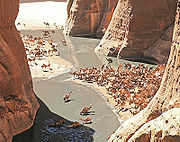 The 14 million dromedaries
alive today are domesticated animals (mostly living in the Horn of Africa
, the Sahel
, Maghreb
, Middle East
and the Indian subcontinent
). The Horn region alone has the largest concentration of camels in the world, where the dromedaries constitute an important part of local nomadic life
. They provide peripatetic Somali
and Ethiopian
people with milk, food and transportation.
The Bactrian camel
is now reduced to an estimated 1.4 million animals, mostly domesticated. It is thought that there are about 1,000 wild Bactrian camels in the Gobi Desert
in China and Mongolia.
There is a substantial feral
population of dromedaries estimated at up to 1,000,000 in central parts of Australia
, descended from individuals introduced as transport animals in the 19th century and early 20th century. This population is growing at approximately 8% per year. The government of South Australia
has recently decided to cull the animals using aerial marksmen, in part because the camels use too much of the limited resources needed by sheep farmers. For more information, see Australian feral camel
.
A small population of introduced camels, dromedaries and Bactrians survived in the Southwest United States until the second half of the 20th Century. These animals, imported from Turkey, were part of the U.S. Camel Corps experiment and used as draft animals in mines and escaped or were released after the project was terminated. Twenty-three Bactrian camels were brought to Canada during the Cariboo Gold Rush
.
in their humps minimizes heat-trapping insulation throughout the rest of their body, which may be an adaptation to living in hot climates. When this tissue is metabolized, it acts as a source of energy, and yields more than 1 g of water for each 1 g of fat converted through reaction with oxygen from air. This process of fat metabolization
generates a net loss of water through respiration for the oxygen required to convert the fat.
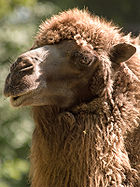 Their ability to withstand long periods without water is due to a series of physiological adaptations. Their red blood cell
s have an oval shape, unlike those of other mammals, which are circular. This facilitates their flow in a dehydrated
state. These cells are also more stable in order to withstand high osmotic
variation without rupturing when drinking large amounts of water (100 litres (211 US pt) to 150 litres (317 US pt) in one drink). Oval red corpuscles are not found in any other mammal, but are present in reptiles, birds, and fish.
Camels are able to withstand changes in body temperature and water consumption that would kill most other animals. Their temperature ranges from 34 °C (93 °F) at night and up to 41 °C (106 °F) during the day, and only above this threshold will they begin to sweat. The upper body temperature range is often not reached during the day in milder climatic conditions, and therefore, the camel may not sweat at all during the day. Evaporation of their sweat takes place at the skin level, not at the surface of their coat, thereby being very efficient at cooling the body compared to the amount of water lost through perspiration.
A feature of their nostrils is that a large amount of water vapor
in their exhalations is trapped and returned to their body fluids, thereby reducing the amount of water lost through respiration.
They can withstand at least 20-25% weight loss due to sweating (most mammals can only withstand about 15% dehydration before cardiac failure
results from circulatory disturbance). A camel's blood remains hydrated, even though the body fluids are lost, until this 25% limit is reached.
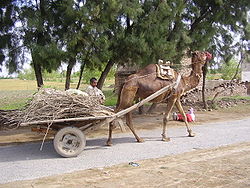 Camels eating green herbage can ingest sufficient moisture in milder conditions to maintain their bodies' hydrated state without the need for drinking.
A camel's thick coat reflects sunlight, and also insulates it from the intense heat radiated from desert sand. A shorn camel has to sweat 50% more to avoid overheating. Their long legs help by keeping them further from the hot ground. Camels have been known to swim.
Their mouth is very sturdy, able to chew thorny desert plants. Long eyelashes and ear hairs, together with sealable nostrils, form a barrier against sand. Their gait and their widened feet help them move without sinking into the sand.
The kidney
s and intestines of a camel are very efficient at retaining water. Urine comes out as a thick syrup, and their feces are so dry that they can fuel fires.
All camelids have an unusual immune system
. In all mammals, the Y-shaped antibody
molecules consist of two heavy (or long) chains along the length of the Y, and two light (or short) chains at each tip of the Y. Camels also have antibody molecules that have only two heavy chains, which makes them smaller and more durable. These heavy chain-only antibodies, which were discovered in 1993, probably developed 50 million years ago, after camelids split from ruminants and pigs, according to biochemist Serge Muyldermans.
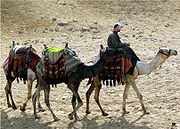 The karyotypes of different camelid species have been studied earlier by many groups, but no agreement on chromosome nomenclature of camelids has been reached. The most recent study used flow-sorted camel chromosomes building undoubtedly the camel's karyotype (2n=74) that consists of one metacentric, three submetacentric and 32 acrocentric autosomes. The Y is a small metacentric chromosome, while the X is a large metacentric chromosome.
According to molecular data, the New World and Old World camelids diverged 11 MYA. In spite of this, these species turned out to be conserved sufficiently to hybridize and produce live offspring(cama
). The dromedary-guanaco inter-specific hybrid provided the ideal platform to compare the karyotypes of Old World and New World camels.
The cama
is a camel/llama
hybrid bred by scientists who wanted to see how closely related the parent species were. The dromedary is six times the weight of a llama, hence artificial insemination was required to impregnate the llama female (llama male to dromedary female attempts have proven unsuccessful). Though born even smaller than a llama cria, the cama had the short ears and long tail of a camel, no hump and llama-like cloven hooves rather than the dromedary-like pads. At four years old, the cama became sexually mature and attracted to llama and guanaco females. A second cama (female) has since been produced using artificial insemination. Because camels and llamas both have 74 chromosome
s, scientists hope that the cama will be fertile. If so, there is potential for increasing size, meat/wool yield and pack/draft ability in South American camels. The cama apparently inherited the poor temperament of both parents as well as demonstrating the relatedness of the New World and Old World camelids.
Dromedary-Bactrian hybrids are called bukhts, are larger than either parent, have a single hump and are good draft camels. The females can be mated back to a Bactrian to produce ¾-bred riding camels. These hybrids are found in Kazakhstan.
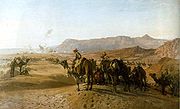
By at least 1200 BC, the first camel saddles had appeared, and Bactrian camels could be ridden. The first Arabian saddle was put way to the back of the camel, and control of the Bactrian camel was exercised by means of a stick. However, it wasn't until between 500-100 BC that Bactrian camels finally attained a military use. These new saddles were put over the humps of the animal, and they were also inflexible and bent, dividing the weight sufficiently over the animal. In the seventh century BC, the military Arabian saddle appeared, which improved the saddle design again slightly.
Camel cavalry
have been used in wars throughout Africa, the Middle East and into modern-day India. Armies have also used camels as freight animals instead of horses and mules.
In the East Roman Empire the Romans used auxiliary
forces known as Dromedarii
, whom they recruited in desert provinces. The camels were mostly used in combat because of their ability to scare off horses at close ranges, a quality famously employed by the Achaemenid Persians when fighting Lydia
, although the Persians usually used camels in baggage trains for arrows and equipment.
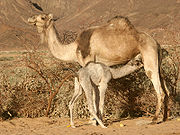 Camel milk
is a staple food
of desert nomad tribes and is considered a whole food, nomads requiring nothing but camel milk for up to six months. Camel milk is rich in vitamins, minerals, proteins and immunoglobulins. It is lower in fat and cholesterol fat than cow milk. It is said to have many healthful properties and is used as a medicinal product in India
, Mongolia, Kazakhstan, Africa and the Middle East. It is also used as an aphrodisiac
in these countries, an example being Ethiopia
. Bedouin
s believe that the curative powers of camel milk are enhanced if the camel's diet consists of certain desert plants. Camel milk can readily be made into a drinkable yogurt, but does not set as it has fewer milk solids than cow or goat's milk. Camel milk cream can be separated and made into butter or cheese but the yields will be low in comparison to buffalo or cow cream, again due to the low content of fat and solids.
Camel milk cannot be made into butter
by the traditional churning method. It can be made if it is soured first, churned, and a clarifying agent added, or if it is churned at 24 –, but times vary greatly in achieving results. Until recently, camel milk could not be made into camel cheese
because rennet
was unable to coagulate the milk proteins to allow the collection of curd
s. Under the commission of the FAO
, Professor J.P. Ramet of the École Nationale Supérieure d'Agronomie et des Industries Alimentaires
(ENSAIA) was able to produce curdling by the addition of calcium phosphate
and vegetable rennet. The cheese produced from this process has low levels of cholesterol and is easy to digest, even for the lactose intolerant. The sale of camel cheese is limited owing to the small output of the single dairy currently producing camel cheese and the absence of camel cheese in most camel cultures. Cheese imports from countries that traditionally breed camels are difficult to obtain due to restrictions on dairy imports from these regions.
Camel milk
has been made into ice cream
on a camel farm
in the Netherlands
.
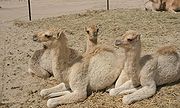 A camel carcass
can provide a substantial amount of meat. The male dromedary carcass can weigh 400 kg (882 lb) or more, while the carcass of a male Bactrian can weigh up to 650 kg (1,433 lb). The carcass of a female camel (or she-camel) weighs less than the male, ranging between 250 and 350 kg (551.2 and 771.6 lb). The brisket, ribs and loin are among the preferred parts, but the hump is considered a delicacy and is most favored. It is reported that camel meat tastes like coarse beef, but older camels can prove to be very tough and less flavorful. The meat from older camels is best prepared by slow cooking. Camel meat is low in fat, and can thus taste dry. The Abu Dhabi
Officers' Club serves a camel burger, as this allows the meat to be mixed with beef or lamb fat, improving both the texture and taste. In Karachi
, Pakistan
the exclusive Nihari
restaurants prepare this dish from camel meat, while the general restaurants prepare it with either beef
or water buffalo
meat.
Camel meat has been eaten for centuries. It has been recorded by ancient Greek
writers as an available dish in ancient Persia at banquets, usually roasted whole. The ancient Roman
emperor Heliogabalus
enjoyed camel's heel. Camel meat is still eaten in certain regions including Somalia
, where it is called Hilib geel, Saudi Arabia
, Egypt
, Libya
, Sudan
, Kazakhstan
and other arid regions where alternative forms of protein may be limited or where camel meat has had a long cultural history. In the Middle East, camel meat is the rarest and most prized source of pastırma
. Not just the meat, but also blood is a consumable item as is the case in northern Kenya
, where camel blood is a source of iron
, vitamin D
, salts and minerals. Camel meat is also occasionally found in Australian cuisine
, for example, a camel lasagne is available in Alice Springs.
resulting from the ingestion of raw camel liver.
for Muslims
; however, according to some Islamic schools of thought
, a state of impurity is brought on by the consumption of it. Consequently, they hold that Muslims must perform wudhu before praying.
There are Islamic traditions that allow the drinking of urine for medicinal purposes. However, these traditions have varying levels of authentication within Islamic scholarship.
Also, some Islamic schools of thought
consider it haraam
for a Muslim
to perform salah in places where camels lie as it is said to be a dwelling place of shaytan.
; although they chew their cud
, they do not possess cloven hooves
(See: Taboo food and drink
).
Even-toed ungulate
The even-toed ungulates are ungulates whose weight is borne about equally by the third and fourth toes, rather than mostly or entirely by the third as in odd-toed ungulates such as horses....
within the genus Camelus, bearing distinctive fatty deposits known as humps on its back. There are two species of camels: the dromedary
Dromedary
The dromedary or Arabian camel is a large, even-toed ungulate with one hump on its back. Its native range is unclear, but it was probably the Arabian Peninsula. The domesticated form occurs widely in North Africa and the Middle East...
or Arabian
Arabian Peninsula
The Arabian Peninsula is a land mass situated north-east of Africa. Also known as Arabia or the Arabian subcontinent, it is the world's largest peninsula and covers 3,237,500 km2...
camel has a single hump, and the bactrian
Bactrian camel
The Bactrian camel is a large, even-toed ungulate native to the steppes of central Asia. It is presently restricted in the wild to remote regions of the Gobi and Taklamakan Deserts of Mongolia and Xinjiang. A small number of wild Bactrian camels still roam the Mangystau Province of southwest...
has two humps. Dromedaries are native to the dry desert
Desert
A desert is a landscape or region that receives an extremely low amount of precipitation, less than enough to support growth of most plants. Most deserts have an average annual precipitation of less than...
areas of West Asia, and Bactrian camels are native to Central
Central Asia
Central Asia is a core region of the Asian continent from the Caspian Sea in the west, China in the east, Afghanistan in the south, and Russia in the north...
and East Asia
East Asia
East Asia or Eastern Asia is a subregion of Asia that can be defined in either geographical or cultural terms...
. Both species are domesticated; they provide milk
Camel milk
Camel's milk has supported Bedouin, nomad and pastoral cultures since the domestication of camels millennia ago. Herders may for periods survive solely on the milk when taking the camels on long distances to graze in desert and arid environments....
and meat
Meat
Meat is animal flesh that is used as food. Most often, this means the skeletal muscle and associated fat and other tissues, but it may also describe other edible tissues such as organs and offal...
, and are working animal
Working animal
A working animal is an animal, usually domesticated, that is kept by humans and trained to perform tasks. They may be close members of the family, such as guide or service dogs, or they may be animals trained strictly to perform a job, such as logging elephants. They may also be used for milk, a...
s.
The term camel (from the Arabic جمل, ǧml, derived from the triconsonantal root signifying "beauty") is also used more broadly to describe any of the six camel-like creatures in the family camelid
Camelid
Camelids are members of the biological family Camelidae, the only living family in the suborder Tylopoda. Dromedaries, Bactrian Camels, llamas, alpacas, vicuñas, and guanacos are in this group....
ae: the two true camels, and the four South America
South America
South America is a continent situated in the Western Hemisphere, mostly in the Southern Hemisphere, with a relatively small portion in the Northern Hemisphere. The continent is also considered a subcontinent of the Americas. It is bordered on the west by the Pacific Ocean and on the north and east...
n camelids: the llama
Llama
The llama is a South American camelid, widely used as a meat and pack animal by Andean cultures since pre-Hispanic times....
, alpaca
Alpaca
An alpaca is a domesticated species of South American camelid. It resembles a small llama in appearance.Alpacas are kept in herds that graze on the level heights of the Andes of southern Peru, northern Bolivia, Ecuador, and northern Chile at an altitude of to above sea level, throughout the year...
, guanaco, and vicuña
Vicuña
The vicuña or vicugna is one of two wild South American camelids, along with the guanaco, which live in the high alpine areas of the Andes. It is a relative of the llama, and is now believed to share a wild ancestor with domesticated alpacas, which are raised for their fibre...
.
The average life expectancy
Life expectancy
Life expectancy is the expected number of years of life remaining at a given age. It is denoted by ex, which means the average number of subsequent years of life for someone now aged x, according to a particular mortality experience...
of a camel is 40 to 50 year
Year
A year is the orbital period of the Earth moving around the Sun. For an observer on Earth, this corresponds to the period it takes the Sun to complete one course throughout the zodiac along the ecliptic....
s. A fully grown adult camel stands 1.85 metre at the shoulder and 2.15 metre at the hump. The hump rises about 30 in (76.2 cm) out of its body. Camels can run at up to 65 kilometre per hour in short bursts and sustain speeds of up to 40 kilometre per hour.
Fossil evidence indicates that the ancestors of modern camels evolved in North America
North America
North America is a continent wholly within the Northern Hemisphere and almost wholly within the Western Hemisphere. It is also considered a northern subcontinent of the Americas...
during the Palaeogene period (see also Camelops
Camelops
Camelops is an extinct genus of camels that once roamed western North America, where it disappeared at the end of the Pleistocene about 10,000 years ago. Its name is derived from the Greek κάμελος + , thus "camel-face."-Background:...
), and later spread to most parts of Asia. The people of ancient Somalia
Somalia
Somalia , officially the Somali Republic and formerly known as the Somali Democratic Republic under Socialist rule, is a country located in the Horn of Africa. Since the outbreak of the Somali Civil War in 1991 there has been no central government control over most of the country's territory...
or the Kingdom of Punt first domesticated camels well before 2000 BC.
Distribution and number
Dromedary
The dromedary or Arabian camel is a large, even-toed ungulate with one hump on its back. Its native range is unclear, but it was probably the Arabian Peninsula. The domesticated form occurs widely in North Africa and the Middle East...
alive today are domesticated animals (mostly living in the Horn of Africa
Horn of Africa
The Horn of Africa is a peninsula in East Africa that juts hundreds of kilometers into the Arabian Sea and lies along the southern side of the Gulf of Aden. It is the easternmost projection of the African continent...
, the Sahel
Sahel
The Sahel is the ecoclimatic and biogeographic zone of transition between the Sahara desert in the North and the Sudanian Savannas in the south.It stretches across the North African continent between the Atlantic Ocean and the Red Sea....
, Maghreb
Maghreb
The Maghreb is the region of Northwest Africa, west of Egypt. It includes five countries: Morocco, Algeria, Tunisia, Libya, and Mauritania and the disputed territory of Western Sahara...
, Middle East
Middle East
The Middle East is a region that encompasses Western Asia and Northern Africa. It is often used as a synonym for Near East, in opposition to Far East...
and the Indian subcontinent
Indian subcontinent
The Indian subcontinent, also Indian Subcontinent, Indo-Pak Subcontinent or South Asian Subcontinent is a region of the Asian continent on the Indian tectonic plate from the Hindu Kush or Hindu Koh, Himalayas and including the Kuen Lun and Karakoram ranges, forming a land mass which extends...
). The Horn region alone has the largest concentration of camels in the world, where the dromedaries constitute an important part of local nomadic life
Nomadic pastoralism
Nomadic pastoralism is a form of agriculture where livestock are herded in order to find fresh pastures on which to graze following an irregular pattern of movement - in contrast with transhumance where seasonal pastures are fix. The herded livestock may include cattle, yaks, sheep, goats,...
. They provide peripatetic Somali
Somali people
Somalis are an ethnic group located in the Horn of Africa, also known as the Somali Peninsula. The overwhelming majority of Somalis speak the Somali language, which is part of the Cushitic branch of the Afro-Asiatic language family...
and Ethiopian
People of Ethiopia
Ethiopia's population is highly diverse. Most of its people speak a Semitic or Cushitic language. The Oromo, Amhara, and Tigreans make up more than three-fourths of the population, but there are more than 80 different ethnic groups within Ethiopia. Some of these have as few as 10,000 members....
people with milk, food and transportation.
The Bactrian camel
Bactrian camel
The Bactrian camel is a large, even-toed ungulate native to the steppes of central Asia. It is presently restricted in the wild to remote regions of the Gobi and Taklamakan Deserts of Mongolia and Xinjiang. A small number of wild Bactrian camels still roam the Mangystau Province of southwest...
is now reduced to an estimated 1.4 million animals, mostly domesticated. It is thought that there are about 1,000 wild Bactrian camels in the Gobi Desert
Gobi Desert
The Gobi is a large desert region in Asia. It covers parts of northern and northwestern China, and of southern Mongolia. The desert basins of the Gobi are bounded by the Altai Mountains and the grasslands and steppes of Mongolia on the north, by the Hexi Corridor and Tibetan Plateau to the...
in China and Mongolia.
There is a substantial feral
Feral
A feral organism is one that has changed from being domesticated to being wild or untamed. In the case of plants it is a movement from cultivated to uncultivated or controlled to volunteer. The introduction of feral animals or plants to their non-native regions, like any introduced species, may...
population of dromedaries estimated at up to 1,000,000 in central parts of Australia
Australia
Australia , officially the Commonwealth of Australia, is a country in the Southern Hemisphere comprising the mainland of the Australian continent, the island of Tasmania, and numerous smaller islands in the Indian and Pacific Oceans. It is the world's sixth-largest country by total area...
, descended from individuals introduced as transport animals in the 19th century and early 20th century. This population is growing at approximately 8% per year. The government of South Australia
South Australia
South Australia is a state of Australia in the southern central part of the country. It covers some of the most arid parts of the continent; with a total land area of , it is the fourth largest of Australia's six states and two territories.South Australia shares borders with all of the mainland...
has recently decided to cull the animals using aerial marksmen, in part because the camels use too much of the limited resources needed by sheep farmers. For more information, see Australian feral camel
Australian feral camel
Thousands of the two main species of Australian feral camels, mostly dromedaries but also some bactrian camels, were imported into Australia during the 19th century for transport and construction as part of the colonisation of the central and western parts of Australia. Motorised transport replaced...
.
A small population of introduced camels, dromedaries and Bactrians survived in the Southwest United States until the second half of the 20th Century. These animals, imported from Turkey, were part of the U.S. Camel Corps experiment and used as draft animals in mines and escaped or were released after the project was terminated. Twenty-three Bactrian camels were brought to Canada during the Cariboo Gold Rush
Cariboo Gold Rush
The Cariboo Gold Rush was a gold rush in the Canadian province of British Columbia. Although the first gold discovery was made in 1859 at Horsefly Creek, followed by more strikes at Keithley Creek and Antler Horns lake in 1860, the actual rush did not begin until 1861, when these discoveries were...
.
Eco-behavioural adaptations
Camels do not store water in their humps as is commonly believed. The humps are actually a reservoir of fatty tissue. Concentrating body fatAdipose tissue
In histology, adipose tissue or body fat or fat depot or just fat is loose connective tissue composed of adipocytes. It is technically composed of roughly only 80% fat; fat in its solitary state exists in the liver and muscles. Adipose tissue is derived from lipoblasts...
in their humps minimizes heat-trapping insulation throughout the rest of their body, which may be an adaptation to living in hot climates. When this tissue is metabolized, it acts as a source of energy, and yields more than 1 g of water for each 1 g of fat converted through reaction with oxygen from air. This process of fat metabolization
Lipolysis
Lipolysis is the breakdown of lipids and involves the hydrolysis of triglycerides into free fatty acids followed by further degradation into acetyl units by beta oxidation. The process produces Ketones, which are found in large quantities in ketosis, a metabolic state that occurs when the liver...
generates a net loss of water through respiration for the oxygen required to convert the fat.
Red blood cell
Red blood cells are the most common type of blood cell and the vertebrate organism's principal means of delivering oxygen to the body tissues via the blood flow through the circulatory system...
s have an oval shape, unlike those of other mammals, which are circular. This facilitates their flow in a dehydrated
Dehydration
In physiology and medicine, dehydration is defined as the excessive loss of body fluid. It is literally the removal of water from an object; however, in physiological terms, it entails a deficiency of fluid within an organism...
state. These cells are also more stable in order to withstand high osmotic
Osmosis
Osmosis is the movement of solvent molecules through a selectively permeable membrane into a region of higher solute concentration, aiming to equalize the solute concentrations on the two sides...
variation without rupturing when drinking large amounts of water (100 litres (211 US pt) to 150 litres (317 US pt) in one drink). Oval red corpuscles are not found in any other mammal, but are present in reptiles, birds, and fish.
Camels are able to withstand changes in body temperature and water consumption that would kill most other animals. Their temperature ranges from 34 °C (93 °F) at night and up to 41 °C (106 °F) during the day, and only above this threshold will they begin to sweat. The upper body temperature range is often not reached during the day in milder climatic conditions, and therefore, the camel may not sweat at all during the day. Evaporation of their sweat takes place at the skin level, not at the surface of their coat, thereby being very efficient at cooling the body compared to the amount of water lost through perspiration.
A feature of their nostrils is that a large amount of water vapor
Water vapor
Water vapor or water vapour , also aqueous vapor, is the gas phase of water. It is one state of water within the hydrosphere. Water vapor can be produced from the evaporation or boiling of liquid water or from the sublimation of ice. Under typical atmospheric conditions, water vapor is continuously...
in their exhalations is trapped and returned to their body fluids, thereby reducing the amount of water lost through respiration.
They can withstand at least 20-25% weight loss due to sweating (most mammals can only withstand about 15% dehydration before cardiac failure
Congestive heart failure
Heart failure often called congestive heart failure is generally defined as the inability of the heart to supply sufficient blood flow to meet the needs of the body. Heart failure can cause a number of symptoms including shortness of breath, leg swelling, and exercise intolerance. The condition...
results from circulatory disturbance). A camel's blood remains hydrated, even though the body fluids are lost, until this 25% limit is reached.
A camel's thick coat reflects sunlight, and also insulates it from the intense heat radiated from desert sand. A shorn camel has to sweat 50% more to avoid overheating. Their long legs help by keeping them further from the hot ground. Camels have been known to swim.
Their mouth is very sturdy, able to chew thorny desert plants. Long eyelashes and ear hairs, together with sealable nostrils, form a barrier against sand. Their gait and their widened feet help them move without sinking into the sand.
The kidney
Kidney
The kidneys, organs with several functions, serve essential regulatory roles in most animals, including vertebrates and some invertebrates. They are essential in the urinary system and also serve homeostatic functions such as the regulation of electrolytes, maintenance of acid–base balance, and...
s and intestines of a camel are very efficient at retaining water. Urine comes out as a thick syrup, and their feces are so dry that they can fuel fires.
All camelids have an unusual immune system
Immune system
An immune system is a system of biological structures and processes within an organism that protects against disease by identifying and killing pathogens and tumor cells. It detects a wide variety of agents, from viruses to parasitic worms, and needs to distinguish them from the organism's own...
. In all mammals, the Y-shaped antibody
Antibody
An antibody, also known as an immunoglobulin, is a large Y-shaped protein used by the immune system to identify and neutralize foreign objects such as bacteria and viruses. The antibody recognizes a unique part of the foreign target, termed an antigen...
molecules consist of two heavy (or long) chains along the length of the Y, and two light (or short) chains at each tip of the Y. Camels also have antibody molecules that have only two heavy chains, which makes them smaller and more durable. These heavy chain-only antibodies, which were discovered in 1993, probably developed 50 million years ago, after camelids split from ruminants and pigs, according to biochemist Serge Muyldermans.
Genetics
According to molecular data, the New World and Old World camelids diverged 11 MYA. In spite of this, these species turned out to be conserved sufficiently to hybridize and produce live offspring(cama
Cama (animal)
A cama is a hybrid between a male dromedary camel and a female llama, produced via artificial insemination at the Camel Reproduction Centre in Dubai. The first cama was born on January 14, 1998...
). The dromedary-guanaco inter-specific hybrid provided the ideal platform to compare the karyotypes of Old World and New World camels.
The cama
Cama (animal)
A cama is a hybrid between a male dromedary camel and a female llama, produced via artificial insemination at the Camel Reproduction Centre in Dubai. The first cama was born on January 14, 1998...
is a camel/llama
Llama
The llama is a South American camelid, widely used as a meat and pack animal by Andean cultures since pre-Hispanic times....
hybrid bred by scientists who wanted to see how closely related the parent species were. The dromedary is six times the weight of a llama, hence artificial insemination was required to impregnate the llama female (llama male to dromedary female attempts have proven unsuccessful). Though born even smaller than a llama cria, the cama had the short ears and long tail of a camel, no hump and llama-like cloven hooves rather than the dromedary-like pads. At four years old, the cama became sexually mature and attracted to llama and guanaco females. A second cama (female) has since been produced using artificial insemination. Because camels and llamas both have 74 chromosome
Chromosome
A chromosome is an organized structure of DNA and protein found in cells. It is a single piece of coiled DNA containing many genes, regulatory elements and other nucleotide sequences. Chromosomes also contain DNA-bound proteins, which serve to package the DNA and control its functions.Chromosomes...
s, scientists hope that the cama will be fertile. If so, there is potential for increasing size, meat/wool yield and pack/draft ability in South American camels. The cama apparently inherited the poor temperament of both parents as well as demonstrating the relatedness of the New World and Old World camelids.
Dromedary-Bactrian hybrids are called bukhts, are larger than either parent, have a single hump and are good draft camels. The females can be mated back to a Bactrian to produce ¾-bred riding camels. These hybrids are found in Kazakhstan.
Military uses
By at least 1200 BC, the first camel saddles had appeared, and Bactrian camels could be ridden. The first Arabian saddle was put way to the back of the camel, and control of the Bactrian camel was exercised by means of a stick. However, it wasn't until between 500-100 BC that Bactrian camels finally attained a military use. These new saddles were put over the humps of the animal, and they were also inflexible and bent, dividing the weight sufficiently over the animal. In the seventh century BC, the military Arabian saddle appeared, which improved the saddle design again slightly.
Camel cavalry
Camel cavalry
Camel cavalry, or camelry, is a generic designation for armed forces using camels as a means of transportation. Sometimes warriors or soldiers of this type also fought from camel-back with spears, bows or rifles....
have been used in wars throughout Africa, the Middle East and into modern-day India. Armies have also used camels as freight animals instead of horses and mules.
In the East Roman Empire the Romans used auxiliary
Auxiliaries (Roman military)
Auxiliaries formed the standing non-citizen corps of the Roman army of the Principate , alongside the citizen legions...
forces known as Dromedarii
Dromedarii
Dromedarii were camel riding auxiliary forces recruited in the desert provinces of the Late Roman Empire.They were developed to take the place of horses where horses were not common...
, whom they recruited in desert provinces. The camels were mostly used in combat because of their ability to scare off horses at close ranges, a quality famously employed by the Achaemenid Persians when fighting Lydia
Lydia
Lydia was an Iron Age kingdom of western Asia Minor located generally east of ancient Ionia in the modern Turkish provinces of Manisa and inland İzmir. Its population spoke an Anatolian language known as Lydian....
, although the Persians usually used camels in baggage trains for arrows and equipment.
19th and 20th centuries
- The United States ArmyUnited States ArmyThe United States Army is the main branch of the United States Armed Forces responsible for land-based military operations. It is the largest and oldest established branch of the U.S. military, and is one of seven U.S. uniformed services...
established the U.S. Camel Corps, which was stationed in CaliforniaCaliforniaCalifornia is a state located on the West Coast of the United States. It is by far the most populous U.S. state, and the third-largest by land area...
in the 19th century. One may still see brick stables at the Benicia ArsenalBenicia ArsenalThe Benicia Arsenal 1851-1964, and Benicia Barracks 1852-1866, was a large military reservation located next to Suisun Bay in Benicia, California. For over 100 years, the arsenal was the primary US Army Ordnance facility for the West Coast of the United States.In 1847 a parcel of land adjoining...
in Benicia, CaliforniaBenicia, CaliforniaBenicia is a waterside city in Solano County, California, United States. It was the first city in California to be founded by Anglo-Americans, and served as the state capital for nearly thirteen months from 1853 to 1854. The population was 26,997 at the 2010 census. The city is located in the San...
, where they nowadays serve as artists' and artisans' studio spaces. During the American Civil WarAmerican Civil WarThe American Civil War was a civil war fought in the United States of America. In response to the election of Abraham Lincoln as President of the United States, 11 southern slave states declared their secession from the United States and formed the Confederate States of America ; the other 25...
, camels were used at an experimental stage, but were not used any further, as they were unpopular with the men. Some escaped and their descendants roamed the arid parts of the American West until as late as the early 20th century. - France created a méharisteMeharisteMéhariste is a French word that roughly translates to camel cavalry. The word is most commonly used as a designation of military units.-Origins of French Camel Corps:...
camel corps as part of the Armée d'Afrique in the Sahara from 1902, replacing regular units of Algerian spahis and tirailleurs earlier used to patrol the desert boundaries. The camel-mounted units remained in service until the end of French rule in 1962. The French transferred the French personnel to other units and disbanded the locally recruited méharistes. - In 1916, during World War IWorld War IWorld War I , which was predominantly called the World War or the Great War from its occurrence until 1939, and the First World War or World War I thereafter, was a major war centred in Europe that began on 28 July 1914 and lasted until 11 November 1918...
, the British created the Imperial Camel CorpsImperial Camel CorpsThe Imperial Camel Corps was a brigade-sized military formation which fought for the Allies in the Sinai and Palestine Campaign in World War I. Its personnel were infantry mounted on camels for movement across desert....
, which was a brigadeBrigadeA brigade is a major tactical military formation that is typically composed of two to five battalions, plus supporting elements depending on the era and nationality of a given army and could be perceived as an enlarged/reinforced regiment...
-sized military formation that fought in the Sinai and Palestine Campaign. It comprised infantry mounted on camels for movement across desert. In May 1918 the Corps was reduced in strength to a single battalionBattalionA battalion is a military unit of around 300–1,200 soldiers usually consisting of between two and seven companies and typically commanded by either a Lieutenant Colonel or a Colonel...
and was formally disbanded in May 1919. Also during World War I, the British Army created the Egyptian Camel Transport CorpsEgyptian Camel Transport CorpsThe Egyptian Camel Transport Corps were a group of Egyptian camel drivers who supported the British Army in Egypt during the First World War's Sinai and Palestine Campaign...
, which consisted of a group of Egyptian camel drivers and their camels. The Corps supported British war operations in the Sinai desert, Palestine and Syria by transporting supplies to the troops. - The Somaliland Camel CorpsSomaliland Camel CorpsThe Somaliland Camel Corps was a unit of the British Army based in British Somaliland from the early 20th century until the 1960s.Camels are a necessity in East Africa, being as important as ponies are in Mongolia...
was a unit of the British Army based in British SomalilandBritish SomalilandBritish Somaliland was a British protectorate in the northern part of present-day Somalia. For much of its existence, British Somaliland was bordered by French Somaliland, Ethiopia, and Italian Somaliland. From 1940 to 1941, it was occupied by the Italians and was part of Italian East Africa...
from the early 20th century until the 1960s. - The Bikaner Camel CorpsBikaner Camel CorpsThe Bikaner Camel Corps was a unit of Imperial Service Troops from India that fought for the allies in World War I and World War II.The Corps was founded by Maharaja Ganga Singh of the Indian state of Bikaner, as the Ganga Risala after the British government of India accepted his offer to raise a...
was a military unit from India that fought for the Allies in World War I and World War II. - The Tropas NómadasTropas NómadasThe Tropas Nómadas were an auxiliary regiment to the colonial army in Spanish Sahara , from the 1930s until the end of the Spanish presence in the territory in 1975...
(Nomad Troops) were an auxiliary regiment of SahrawiSahrawiMost frequently in English language usage, the term Sahrawi is usually used in reference to populations from the disputed Western Sahara territory, sometimes with a nationalist connotation....
tribesmen serving in the colonial army in Spanish Sahara (today Western Sahara). Operational from the 1930s until the end of the Spanish presence in the territory in 1975, the Tropas Nómadas were equipped with small arms and led by Spanish officers. The unit guarded outposts and sometimes conducted patrols on camelback.
Dairy
Camel milk
Camel's milk has supported Bedouin, nomad and pastoral cultures since the domestication of camels millennia ago. Herders may for periods survive solely on the milk when taking the camels on long distances to graze in desert and arid environments....
is a staple food
Staple food
A staple food is one that is eaten regularly and in such quantities that it constitutes a dominant portion of a diet, and that supplies a high proportion of energy and nutrient needs. Most people live on a diet based on one or more staples...
of desert nomad tribes and is considered a whole food, nomads requiring nothing but camel milk for up to six months. Camel milk is rich in vitamins, minerals, proteins and immunoglobulins. It is lower in fat and cholesterol fat than cow milk. It is said to have many healthful properties and is used as a medicinal product in India
India
India , officially the Republic of India , is a country in South Asia. It is the seventh-largest country by geographical area, the second-most populous country with over 1.2 billion people, and the most populous democracy in the world...
, Mongolia, Kazakhstan, Africa and the Middle East. It is also used as an aphrodisiac
Aphrodisiac
An aphrodisiac is a substance that increases sexual desire. The name comes from Aphrodite, the Greek goddess of sexuality and love. Throughout history, many foods, drinks, and behaviors have had a reputation for making sex more attainable and/or pleasurable...
in these countries, an example being Ethiopia
Ethiopia
Ethiopia , officially known as the Federal Democratic Republic of Ethiopia, is a country located in the Horn of Africa. It is the second-most populous nation in Africa, with over 82 million inhabitants, and the tenth-largest by area, occupying 1,100,000 km2...
. Bedouin
Bedouin
The Bedouin are a part of a predominantly desert-dwelling Arab ethnic group traditionally divided into tribes or clans, known in Arabic as ..-Etymology:...
s believe that the curative powers of camel milk are enhanced if the camel's diet consists of certain desert plants. Camel milk can readily be made into a drinkable yogurt, but does not set as it has fewer milk solids than cow or goat's milk. Camel milk cream can be separated and made into butter or cheese but the yields will be low in comparison to buffalo or cow cream, again due to the low content of fat and solids.
Camel milk cannot be made into butter
Butter
Butter is a dairy product made by churning fresh or fermented cream or milk. It is generally used as a spread and a condiment, as well as in cooking applications, such as baking, sauce making, and pan frying...
by the traditional churning method. It can be made if it is soured first, churned, and a clarifying agent added, or if it is churned at 24 –, but times vary greatly in achieving results. Until recently, camel milk could not be made into camel cheese
Camel milk
Camel's milk has supported Bedouin, nomad and pastoral cultures since the domestication of camels millennia ago. Herders may for periods survive solely on the milk when taking the camels on long distances to graze in desert and arid environments....
because rennet
Rennet
Rennet is a complex of enzymes produced in any mammalian stomach to digest the mother's milk, and is often used in the production of cheese. Rennet contains many enzymes, including a proteolytic enzyme that coagulates the milk, causing it to separate into solids and liquid...
was unable to coagulate the milk proteins to allow the collection of curd
Curd
Curds are a dairy product obtained by curdling milk with rennet or an edible acidic substance such as lemon juice or vinegar, and then draining off the liquid portion. The increased acidity causes the milk proteins to tangle into solid masses, or curds. The remaining liquid, which contains only...
s. Under the commission of the FAO
Food and Agriculture Organization
The Food and Agriculture Organization of the United Nations is a specialised agency of the United Nations that leads international efforts to defeat hunger. Serving both developed and developing countries, FAO acts as a neutral forum where all nations meet as equals to negotiate agreements and...
, Professor J.P. Ramet of the École Nationale Supérieure d'Agronomie et des Industries Alimentaires
École nationale supérieure d'agronomie et des industries alimentaires
The École Nationale Supérieure d'Agronomie et des Industries Alimentaires is a French grande école located in Vandoeuvre-lès-Nancy near Nancy in the Meurthe-et-Moselle département that specialises in biological and agricultural engineering.-External links:...
(ENSAIA) was able to produce curdling by the addition of calcium phosphate
Calcium phosphate
Calcium phosphate is the name given to a family of minerals containing calcium ions together with orthophosphates , metaphosphates or pyrophosphates and occasionally hydrogen or hydroxide ions ....
and vegetable rennet. The cheese produced from this process has low levels of cholesterol and is easy to digest, even for the lactose intolerant. The sale of camel cheese is limited owing to the small output of the single dairy currently producing camel cheese and the absence of camel cheese in most camel cultures. Cheese imports from countries that traditionally breed camels are difficult to obtain due to restrictions on dairy imports from these regions.
Camel milk
Milk
Milk is a white liquid produced by the mammary glands of mammals. It is the primary source of nutrition for young mammals before they are able to digest other types of food. Early-lactation milk contains colostrum, which carries the mother's antibodies to the baby and can reduce the risk of many...
has been made into ice cream
Ice cream
Ice cream is a frozen dessert usually made from dairy products, such as milk and cream, and often combined with fruits or other ingredients and flavours. Most varieties contain sugar, although some are made with other sweeteners...
on a camel farm
Farm
A farm is an area of land, or, for aquaculture, lake, river or sea, including various structures, devoted primarily to the practice of producing and managing food , fibres and, increasingly, fuel. It is the basic production facility in food production. Farms may be owned and operated by a single...
in the Netherlands
Netherlands
The Netherlands is a constituent country of the Kingdom of the Netherlands, located mainly in North-West Europe and with several islands in the Caribbean. Mainland Netherlands borders the North Sea to the north and west, Belgium to the south, and Germany to the east, and shares maritime borders...
.
Meat
Body
With regard to living things, a body is the physical body of an individual. "Body" often is used in connection with appearance, health issues and death...
can provide a substantial amount of meat. The male dromedary carcass can weigh 400 kg (882 lb) or more, while the carcass of a male Bactrian can weigh up to 650 kg (1,433 lb). The carcass of a female camel (or she-camel) weighs less than the male, ranging between 250 and 350 kg (551.2 and 771.6 lb). The brisket, ribs and loin are among the preferred parts, but the hump is considered a delicacy and is most favored. It is reported that camel meat tastes like coarse beef, but older camels can prove to be very tough and less flavorful. The meat from older camels is best prepared by slow cooking. Camel meat is low in fat, and can thus taste dry. The Abu Dhabi
Abu Dhabi
Abu Dhabi , literally Father of Gazelle, is the capital and the second largest city of the United Arab Emirates in terms of population and the largest of the seven member emirates of the United Arab Emirates. Abu Dhabi lies on a T-shaped island jutting into the Persian Gulf from the central western...
Officers' Club serves a camel burger, as this allows the meat to be mixed with beef or lamb fat, improving both the texture and taste. In Karachi
Karachi
Karachi is the largest city, main seaport and the main financial centre of Pakistan, as well as the capital of the province of Sindh. The city has an estimated population of 13 to 15 million, while the total metropolitan area has a population of over 18 million...
, Pakistan
Pakistan
Pakistan , officially the Islamic Republic of Pakistan is a sovereign state in South Asia. It has a coastline along the Arabian Sea and the Gulf of Oman in the south and is bordered by Afghanistan and Iran in the west, India in the east and China in the far northeast. In the north, Tajikistan...
the exclusive Nihari
Nihari
Nihari is a popular meat dish of Pakistanis of South Asia. Its roots lie in the Nawab kitchens having achieved fame via the storied royal kitchens of Lucknow in present-day Uttar Pradesh, long the seat of the Nawab of Avadh and is also relished in India by Muslims and non-Muslim foodies...
restaurants prepare this dish from camel meat, while the general restaurants prepare it with either beef
Beef
Beef is the culinary name for meat from bovines, especially domestic cattle. Beef can be harvested from cows, bulls, heifers or steers. It is one of the principal meats used in the cuisine of the Middle East , Australia, Argentina, Brazil, Europe and the United States, and is also important in...
or water buffalo
Water buffalo
The water buffalo is a domesticated bovid widely kept in Asia, Europe and South America.Water buffalo can also refer to:*Wild water buffalo , the wild ancestor of the domestic water buffalo...
meat.
Camel meat has been eaten for centuries. It has been recorded by ancient Greek
Ancient Greece
Ancient Greece is a civilization belonging to a period of Greek history that lasted from the Archaic period of the 8th to 6th centuries BC to the end of antiquity. Immediately following this period was the beginning of the Early Middle Ages and the Byzantine era. Included in Ancient Greece is the...
writers as an available dish in ancient Persia at banquets, usually roasted whole. The ancient Roman
Ancient Rome
Ancient Rome was a thriving civilization that grew on the Italian Peninsula as early as the 8th century BC. Located along the Mediterranean Sea and centered on the city of Rome, it expanded to one of the largest empires in the ancient world....
emperor Heliogabalus
Elagabalus
Elagabalus , also known as Heliogabalus, was Roman Emperor from 218 to 222. A member of the Severan Dynasty, he was Syrian on his mother's side, the son of Julia Soaemias and Sextus Varius Marcellus. Early in his youth he served as a priest of the god El-Gabal at his hometown, Emesa...
enjoyed camel's heel. Camel meat is still eaten in certain regions including Somalia
Somalia
Somalia , officially the Somali Republic and formerly known as the Somali Democratic Republic under Socialist rule, is a country located in the Horn of Africa. Since the outbreak of the Somali Civil War in 1991 there has been no central government control over most of the country's territory...
, where it is called Hilib geel, Saudi Arabia
Saudi Arabia
The Kingdom of Saudi Arabia , commonly known in British English as Saudi Arabia and in Arabic as as-Sa‘ūdiyyah , is the largest state in Western Asia by land area, constituting the bulk of the Arabian Peninsula, and the second-largest in the Arab World...
, Egypt
Egypt
Egypt , officially the Arab Republic of Egypt, Arabic: , is a country mainly in North Africa, with the Sinai Peninsula forming a land bridge in Southwest Asia. Egypt is thus a transcontinental country, and a major power in Africa, the Mediterranean Basin, the Middle East and the Muslim world...
, Libya
Libya
Libya is an African country in the Maghreb region of North Africa bordered by the Mediterranean Sea to the north, Egypt to the east, Sudan to the southeast, Chad and Niger to the south, and Algeria and Tunisia to the west....
, Sudan
Sudan
Sudan , officially the Republic of the Sudan , is a country in North Africa, sometimes considered part of the Middle East politically. It is bordered by Egypt to the north, the Red Sea to the northeast, Eritrea and Ethiopia to the east, South Sudan to the south, the Central African Republic to the...
, Kazakhstan
Kazakhstan
Kazakhstan , officially the Republic of Kazakhstan, is a transcontinental country in Central Asia and Eastern Europe. Ranked as the ninth largest country in the world, it is also the world's largest landlocked country; its territory of is greater than Western Europe...
and other arid regions where alternative forms of protein may be limited or where camel meat has had a long cultural history. In the Middle East, camel meat is the rarest and most prized source of pastırma
Pastirma
Pastirma or bastirma is a highly seasoned, air-dried cured beef in the cuisines of the former Ottoman countries.-Etymology:The name bastirma is from . bastırma is the gerund of the verb bastırmak , which means "to depress, restrain"...
. Not just the meat, but also blood is a consumable item as is the case in northern Kenya
Kenya
Kenya , officially known as the Republic of Kenya, is a country in East Africa that lies on the equator, with the Indian Ocean to its south-east...
, where camel blood is a source of iron
Iron
Iron is a chemical element with the symbol Fe and atomic number 26. It is a metal in the first transition series. It is the most common element forming the planet Earth as a whole, forming much of Earth's outer and inner core. It is the fourth most common element in the Earth's crust...
, vitamin D
Vitamin D
Vitamin D is a group of fat-soluble secosteroids. In humans, vitamin D is unique both because it functions as a prohormone and because the body can synthesize it when sun exposure is adequate ....
, salts and minerals. Camel meat is also occasionally found in Australian cuisine
Australian cuisine
Australian cuisine refers to the cuisine of the Commonwealth of Australia and its preceding indigenous and colonial societies. Indigenous Australians have occupied the lands of Australia for some 40,000-60,000 years, during which time they developed a unique hunter gatherer diet, known as "bush...
, for example, a camel lasagne is available in Alice Springs.
Health issues
A 2005 report issued jointly by the Saudi Ministry of Health and the United States Center for Disease Control details cases of human bubonic plagueBubonic plague
Plague is a deadly infectious disease that is caused by the enterobacteria Yersinia pestis, named after the French-Swiss bacteriologist Alexandre Yersin. Primarily carried by rodents and spread to humans via fleas, the disease is notorious throughout history, due to the unrivaled scale of death...
resulting from the ingestion of raw camel liver.
Islam
Camel meat is halalHalal
Halal is a term designating any object or an action which is permissible to use or engage in, according to Islamic law. The term is used to designate food seen as permissible according to Islamic law...
for Muslims
Islam
Islam . The most common are and . : Arabic pronunciation varies regionally. The first vowel ranges from ~~. The second vowel ranges from ~~~...
; however, according to some Islamic schools of thought
Islamic schools and branches
Muslims are basically divided in two major factions, Sunnis and Shias, that are further divided into various Schools of Jurisprudence and orders of Imamate. All other movements within such as Salafi, Modernists, the Mystical Sufi Orders, Deobandi and Barelvi are either Sunni or Shia or both...
, a state of impurity is brought on by the consumption of it. Consequently, they hold that Muslims must perform wudhu before praying.
There are Islamic traditions that allow the drinking of urine for medicinal purposes. However, these traditions have varying levels of authentication within Islamic scholarship.
Also, some Islamic schools of thought
Islamic schools and branches
Muslims are basically divided in two major factions, Sunnis and Shias, that are further divided into various Schools of Jurisprudence and orders of Imamate. All other movements within such as Salafi, Modernists, the Mystical Sufi Orders, Deobandi and Barelvi are either Sunni or Shia or both...
consider it haraam
Haraam
Haraam is an Arabic term meaning "forbidden", or "sacred". In Islam it is used to refer to anything that is prohibited by the word of Allah in the Qur'an or the Hadith Qudsi. Haraam is the highest status of prohibition given to anything that would result in sin when a Muslim commits it...
for a Muslim
Muslim
A Muslim, also spelled Moslem, is an adherent of Islam, a monotheistic, Abrahamic religion based on the Quran, which Muslims consider the verbatim word of God as revealed to prophet Muhammad. "Muslim" is the Arabic term for "submitter" .Muslims believe that God is one and incomparable...
to perform salah in places where camels lie as it is said to be a dwelling place of shaytan.
Judaism
According to Jewish tradition, camel meat and milk are not kosher. Camels possess only one of the two Kosher criteriaKosher foods
Kosher foods are those that conform to the regulations of the Jewish Halakhic law framework, kosher meaning fit or allowed to be eaten. A list of some kosher foods are found in the book of Leviticus 11:1-47. There are also certain kosher rules found there...
; although they chew their cud
Ruminant
A ruminant is a mammal of the order Artiodactyla that digests plant-based food by initially softening it within the animal's first compartment of the stomach, principally through bacterial actions, then regurgitating the semi-digested mass, now known as cud, and chewing it again...
, they do not possess cloven hooves
Cloven hoof
A cloven hoof is a hoof split into two toes. This is found on members of the mammalian order Artiodactyla. Examples of mammals that possess this type of hoof are deer and sheep. In folklore and popular culture, a cloven hoof has long been associated with the Devil.The two digits of cloven hoofed...
(See: Taboo food and drink
Taboo food and drink
Taboo food and drink are food and beverages which people abstain from consuming for religious, cultural or hygienic reasons. Many food taboos forbid the meat of a particular animal, including mammals, rodents, reptiles, amphibians, bony fish, and crustaceans...
).
See also
- DromedaryDromedaryThe dromedary or Arabian camel is a large, even-toed ungulate with one hump on its back. Its native range is unclear, but it was probably the Arabian Peninsula. The domesticated form occurs widely in North Africa and the Middle East...
- Bactrian camelBactrian camelThe Bactrian camel is a large, even-toed ungulate native to the steppes of central Asia. It is presently restricted in the wild to remote regions of the Gobi and Taklamakan Deserts of Mongolia and Xinjiang. A small number of wild Bactrian camels still roam the Mangystau Province of southwest...
- Camel howdah
- Camel racingCamel racingCamel racing is a popular sport in India, Pakistan, Saudi Arabia, Egypt, Bahrain, Jordan, Qatar, United Arab Emirates, Oman, Australia, and Mongolia. Professional camel racing, like horse racing, is an event for betting and tourist attraction...
- Camel wrestlingCamel wrestlingCamel wrestling is a sport in which two male Tülu camels wrestle, typically in response to a female camel in heat being led before them. It is most common in the Aegean region of Turkey, but is also been practiced in other parts of the Middle East and South Asia.-History:Camel fighting originated...
- Camelops (Wal-Mart camel)CamelopsCamelops is an extinct genus of camels that once roamed western North America, where it disappeared at the end of the Pleistocene about 10,000 years ago. Its name is derived from the Greek κάμελος + , thus "camel-face."-Background:...
- Australian feral camel
- Camel farming in SudanCamel farming in SudanOver the past few decades camels have regained recognition for their food-producing potential in arid and semi-arid areas of Sudan. After having been dismissed as uneconomical by the Sudanese government, their vital role in supporting human populations in some of the poorest and frequently...
- Camelus moreliCamelus MoreliCamelus moreli is a species of giant camel roughly dating back 100,000 years. It has been discovered in the Hummal area of the western Syrian desert. The new camelid was found together with Middle Paleolithic human remains....
Notations
- Camels and Camel Milk. Report Issued by FAO, United Nations. (1982)
- The Technology of Making Cheese from Camel Milk (Camelus dromedarius) Animal Production and Health Paper Issued by FAO, United Nations. (2001)
Further reading
- Gilchrist, W. (1851) A Practical Treatise on the Treatment of the Diseases of the Elephant, Camel & Horned Cattle: with instructions for improving their efficiency; also, a description of the medicines used in the treatment of their diseases; and a general outline of their anatomy. Calcutta: Military Orphan Press