

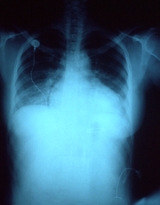
Congestive heart failure

Encyclopedia
Heart failure often called congestive heart failure (CHF) is generally defined as the inability of the heart
to supply sufficient blood flow
to meet the needs of the body. Heart failure can cause a number of symptoms including shortness of breath, leg swelling
, and exercise intolerance
. The condition is diagnosed with echocardiography
and blood test
s. Treatment commonly consists of lifestyle measures (such as smoking cessation
, light exercise including breathing protocols, decreased salt intake and other dietary changes) and medications, and sometimes devices or even surgery.
Common causes of heart failure include myocardial infarction
and other forms of ischemic heart disease, hypertension
, valvular heart disease
, and cardiomyopathy
. The term "heart failure" is sometimes incorrectly used to describe other cardiac-related illnesses, such as myocardial infarction
(heart attack) or cardiac arrest
, which can cause heart failure but are not equivalent to heart failure.
Heart failure is a common, costly, disabling, and potentially deadly condition.
In developed countries, around 2% of adults suffer from heart failure, but in those over the age of 65, this increases to 6–10%.
is insufficient in meeting the needs of the body and lungs. Often termed "congestive heart failure" or CHF, this is most commonly caused when cardiac output is low and the body becomes congested with fluid.
It may also occur when the body's requirements for oxygen and nutrients are increased and the demand outstrips what the heart can provide, (termed "high output cardiac failure"). This can occur from severe anemia
, Gram negative septicaemia, beriberi
(vitamin B1/thiamine deficiency), thyrotoxicosis, Paget's disease, arteriovenous fistula
e, or arteriovenous malformation
s.
Fluid overload is a common problem for people with heart failure but is not synonymous with it. Patients with treated heart failure will often be euvolaemic (a term for normal fluid status), or more rarely, dehydrated
.
Medical professionals use the words "acute" to mean of rapid onset and "chronic" of long duration. Chronic heart failure is therefore a long term situation, usually with stable treated symptomatology.
Acute decompensated heart failure
is a term used to describe exacerbated or decompensated heart failure, referring to episodes in which a patient can be characterized as having a change in heart failure signs and symptoms resulting in a need for urgent therapy or hospitalization.
There are several terms which are closely related to heart failure, and may be the cause of heart failure, but should not be confused with it:
Functional classification generally relies on the New York Heart Association Functional Classification
. The classes (I-IV) are:
This score documents severity of symptoms, and can be used to assess response to treatment. While its use is widespread, the NYHA score is not very reproducible and doesn't reliably predict the walking distance or exercise tolerance on formal testing.
In its 2001 guidelines the American College of Cardiology
/American Heart Association
working group introduced four stages of heart failure:
The ACC staging system is useful in that Stage A encompasses "pre-heart failure" - a stage where intervention with treatment can presumably prevent progression to overt symptoms. ACC stage A does not have a corresponding NYHA class. ACC Stage B would correspond to NYHA Class I. ACC Stage C corresponds to NYHA Class II and III, while ACC Stage D overlaps with NYHA Class IV.
or crackles, heard initially in the lung bases, and when severe, throughout the lung fields suggest the development of pulmonary edema
(fluid in the alveoli). Cyanosis
which suggests severe hypoxemia, is a late sign of extremely severe pulmonary edema.
Additional signs indicating left ventricular failure include a laterally displaced apex beat
(which occurs if the heart is enlarged) and a gallop rhythm
(additional heart sounds) may be heard as a marker of increased blood flow, or increased intra-cardiac pressure. Heart murmur
s may indicate the presence of valvular heart disease, either as a cause (e.g. aortic stenosis) or as a result (e.g., mitral regurgitation
) of the heart failure.
, ascites
, and hepatomegaly
. Jugular venous pressure
is frequently assessed as a marker of fluid status, which can be accentuated by eliciting hepatojugular reflux
. If the right ventricular pressure is increased, a parasternal heave
may be present, signifying the compensatory increase in contraction strength.
(fluid collection in between the lung and the chest wall). Though it can occur in isolated left- or right-sided heart failure, it is more common in biventricular failure because pleural veins drain both into the systemic and pulmonary venous system. When unilateral, effusions are often right sided.
There are several other exceptions to a simple left-right division of heart failure symptoms. Left sided forward failure overlaps with right sided backward failure. Additionally, the most common cause of right-sided heart failure is left-sided heart failure. The result is that patients commonly present with both sets of signs and symptoms.
(shortness of breath) on exertion (dyspnée d'effort) and in severe cases, dyspnea at rest. Increasing breathlessness on lying flat, called orthopnea, occurs. It is often measured in the number of pillows required to lie comfortably, and in severe cases, the patient may resort to sleeping while sitting up. Another symptom of heart failure is paroxysmal nocturnal dyspnea a sudden nighttime attack of severe breathlessness, usually several hours after going to sleep. Easy fatigueability and exercise intolerance are also common complaints related to respiratory compromise.
"Cardiac asthma" or wheezing may occur.
Compromise of left ventricular forward function may result in symptoms of poor systemic circulation such as dizziness
, confusion
and cool extremities at rest.
or anasarca
) and usually affects the dependent parts of the body first (causing foot and ankle swelling in people who are standing up, and sacral
edema in people who are predominantly lying down). Nocturia
(frequent nighttime urination) may occur when fluid from the legs is returned to the bloodstream while lying down at night. In progressively severe cases, ascites
(fluid accumulation in the abdominal cavity causing swelling) and hepatomegaly
(enlargement of the liver
) may develop. Significant liver congestion may result in impaired liver function, and jaundice and even coagulopathy
(problems of decreased blood clotting) may occur.
A 19 year study of 13000 healthy adults in the United States (the National Health and Nutrition Examination Survey
(NHANES I) found the following causes ranked by Population Attributable Risk score:
An Italian registry of over 6200 patients with heart failure showed the following underlying causes:
Rarer causes of heart failure include:
Obstructive sleep apnea
a condition of sleep disordered breathing overlaps with obesity, hypertension, and diabetes and is regarded as an independent cause of heart failure.
. This most commonly results from an intercurrent illness (such as pneumonia
), myocardial infarction
(a heart attack), arrhythmias, uncontrolled hypertension
, or a patient's failure to maintain a fluid restriction, diet, or medication. Other well recognized precipitating factors include anemia
and hyperthyroidism
which place additional strain on the heart muscle. Excessive fluid or salt intake, and medication that causes fluid retention such as NSAIDs
and thiazolidinedione
s, may also precipitate decompensation.
(in which protein is deposited in the heart muscle, causing it to stiffen). Over time these increases in workload will produce changes to the heart itself:
The general effect is one of reduced cardiac output and increased strain on the heart. This increases the risk of cardiac arrest (specifically due to ventricular dysrhythmias), and reduces blood supply to the rest of the body. In chronic disease the reduced cardiac output causes a number of changes in the rest of the body, some of which are physiological compensations, some of which are part of the disease process:
The increased peripheral resistance and greater blood volume place further strain on the heart and accelerates the process of damage to the myocardium. Vasoconstriction and fluid retention produce an increased hydrostatic pressure in the capillaries. This shifts the balance of forces in favour of interstitial fluid
formation as the increased pressure forces additional fluid out of the blood, into the tissue. This results in edema
(fluid build-up) in the tissues. In right-sided heart failure this commonly starts in the ankles where venous pressure is high due to the effects of gravity (although if the patient is bed-ridden, fluid accumulation may begin in the sacral region.) It may also occur in the abdominal cavity, where the fluid build-up is called ascites. In left-sided heart failure edema
can occur in the lungs - this is called cardiogenic pulmonary edema
. This reduces spare capacity for ventilation, causes stiffening of the lungs and reduces the efficiency of gas exchange by increasing the distance between the air and the blood. The consequences of this are shortness of breath, orthopnea and paroxysmal nocturnal dyspnea.
The symptoms of heart failure are largely determined by which side of the heart fails. The left side pumps blood into the systemic circulation, whilst the right side pumps blood into the pulmonary circulation
. Whilst left-sided heart failure will reduce cardiac output to the systemic circulation, the initial symptoms often manifest due to effects on the pulmonary circulation. In systolic dysfunction, the ejection fraction is decreased, leaving an abnormally elevated volume of blood in the left ventricle. In diastolic dysfunction, end-diastolic ventricular pressure will be high. This increase in volume or pressure backs up to the left atrium and then to the pulmonary veins. Increased volume or pressure in the pulmonary veins impairs the normal drainage of the alveoli and favors the flow of fluid from the capillaries to the lung parenchyma, causing pulmonary edema. This impairs gas exchange. Thus, left-sided heart failure often presents with respiratory symptoms: shortness of breath, orthopnea and paroxysmal nocturnal dyspnea.
In severe cardiomyopathy, the effects of decreased cardiac output and poor perfusion become more apparent, and patients will manifest with cold and clammy extremities, cyanosis, claudication, generalized weakness, dizziness, and syncope
The resultant hypoxia caused by pulmonary edema causes vasoconstriction in the pulmonary circulation, which results in pulmonary hypertension. Since the right ventricle generates far lower pressures than the left ventricle (approximately 20 mmHg versus around 120 mmHg, respectively, in the healthy individual) but nonetheless generates cardiac output exactly equal to the left ventricle, this means that a small increase in pulmonary vascular resistance causes a large increase in amount of work the right ventricle must perform. However, the main mechanism by which left-sided heart failure causes right-sided heart failure is actually not well understood. Some theories invoke mechanisms that are mediated by neurohormonal activation. Mechanical effects may also contribute. As the left ventricle distends, the intraventricular septum bows into the right ventricle, decreasing the capacity of the right ventricle.
, the molecular structure of individual myocytes is affected. Myocytes and their components can be damaged by inflammation (such as in myocarditis
) or by infiltration (such as in amyloidosis). Toxins and pharmacological agents (such as ethanol
, cocaine
, and amphetamines) cause intracellular damage and oxidative stress. The most common mechanism of damage is ischemia causing infarction and scar formation
. After myocardial infarction, dead myocytes are replaced by scar tissue, deleteriously affecting the function of the myocardium. On echocardiogram, this is manifest by abnormal or absent wall motion.
Because the ventricle is inadequately emptied, ventricular end-diastolic pressure and volumes increase. This is transmitted to the atrium. On the left side of the heart, the increased pressure is transmitted to the pulmonary vasculature, and the resultant hydrostatic pressure favors extravassation of fluid into the lung parenchyma, causing pulmonary edema. On the right side of the heart, the increased pressure is transmitted to the systemic venous circulation and systemic capillary beds, favoring extravassation of fluid into the tissues of target organs and extremities, resulting in dependent peripheral edema
.
Diastolic dysfunction can be caused by processes similar to those that cause systolic dysfunction, particularly causes that affect cardiac remodeling.
Diastolic dysfunction may not manifest itself except in physiologic extremes if systolic function is preserved. The patient may be completely asymptomatic at rest. However, they are exquisitely sensitive to increases in heart rate, and sudden bouts of tachycardia (which can be caused simply by physiological responses to exertion, fever, or dehydration, or by pathological tachyarrhythmias such as atrial fibrillation with rapid ventricular response) may result in flash pulmonary edema
. Adequate rate control (usually with a pharmacological agent that slows down AV conduction such as a calcium channel blocker or a beta-blocker) is therefore key to preventing decompensation.
Left ventricular diastolic function can be determined through echocardiography by measurement of various parameters such as the E/A ratio
(early-to-atrial left ventricular filling ratio), the E (early left ventricular filling) deceleration time, and the isovolumic relaxation time
.
for heart failure. Commonly used systems are the "Framingham criteria" (derived from the Framingham Heart Study
), the "Boston criteria", the "Duke criteria", and (in the setting of acute myocardial infarction) the "Killip class
".
is commonly used to support a clinical diagnosis of heart failure. This modality uses ultrasound
to determine the stroke volume
(SV, the amount of blood in the heart that exits the ventricles with each beat), the end-diastolic volume
(EDV, the total amount of blood at the end of diastole), and the SV in proportion to the EDV, a value known as the ejection fraction
(EF). In pediatrics, the shortening fraction is the preferred measure of systolic function. Normally, the EF should be between 50% and 70%; in systolic heart failure, it drops below 40%. Echocardiography can also identify valvular heart disease and assess the state of the pericardium
(the connective tissue sac surrounding the heart). Echocardiography may also aid in deciding what treatments will help the patient, such as medication, insertion of an implantable cardioverter-defibrillator
or cardiac resynchronization therapy. Echocardiography can also help determine if acute myocardial ischemia is the precipitating cause, and may manifest as regional wall motion abnormalities on echo.
Chest X-ray
s are frequently used to aid in the diagnosis of CHF. In the compensated patient, this may show cardiomegaly
(visible enlargement of the heart), quantified as the cardiothoracic ratio (proportion of the heart size to the chest). In left ventricular failure, there may be evidence of vascular redistribution ("upper lobe blood diversion" or "cephalization"), Kerley lines, cuffing of the areas around
the bronchi, and interstitial edema.
(ECG/EKG) may be used to identify arrhythmias, ischemic heart disease, right
and left ventricular hypertrophy
, and presence of conduction delay or abnormalities (e.g. left bundle branch block
). Although these findings are not specific to the diagnosis of heart failure a normal ECG virtually excludes left ventricular systolic dysfunction.
s routinely performed include electrolyte
s (sodium
, potassium
), measures of renal function
, liver function tests
, thyroid function tests, a complete blood count
, and often C-reactive protein
if infection is suspected. An elevated B-type natriuretic peptide
(BNP) is a specific test indicative of heart failure. Additionally, BNP can be used to differentiate between causes of dyspnea due to heart failure from other causes of dyspnea. If myocardial infarction is suspected, various cardiac markers may be used.
According to a meta-analysis
comparing BNP and N-terminal pro-BNP (NTproBNP) in the diagnosis of heart failure, BNP is a better indicator for heart failure and left ventricular systolic dysfunction. In groups of symptomatic patients, a diagnostic odds ratio
of 27 for BNP compares with a sensitivity of 85% and specificity of 84% in detecting heart failure.
may be used to identify possibilities for revascularisation through percutaneous coronary intervention
or bypass surgery
.
(calculation of fluid intake and excretion), monitoring body weight
(which in the shorter term reflects fluid shifts).
s for the diagnosis of heart failure. For example, the algorithm used by the Framingham Heart Study
adds together criteria mainly from physical examination. In contrast, the more extensive algorithm by the European Society of Cardiology
(ESC) weights the difference between supporting and opposing parameters from the medical history
, physical examination
, further medical tests as well as response to therapy.
Major criteria:
Minor criteria:
Minor criteria are acceptable only if they can not be attributed to another medical condition such as pulmonary hypertension, chronic lung disease, cirrhosis, ascites, or the nephrotic syndrome. The Framingham Heart Study criteria are 100% sensitive and 78% specific for identifying persons with definite congestive heart failure.
algorithm weights the following parameters in establishing the diagnosis of heart failure:
, alcohol
ingestion, anemia, thyrotoxicosis, arrhythmia, hypertension). Treatments include lifestyle and pharmacological modalities.
(ADHF), the immediate goal is to re-establish adequate perfusion and oxygen delivery to end organs. This entails ensuring that airway, breathing, and circulation are adequate. Immediated treatments usually involve some combination of vasodilators such as nitroglycerin, diuretics such as furosemide, and possibly non invasive positive pressure ventilation (NIPPV).
s (i.e., enalapril
, captopril
, lisinopril
, ramipril
) improve survival and quality of life in heart failure patients, and have been shown to reduce mortality in patients with left ventricular dysfunction in numerous randomized trials. In addition to pharmacologic agents (oral loop diuretics, beta-blockers, ACE inhibitors or angiotensin
receptor blockers, vasodilators, and in severe cardiomyopathy aldosterone receptor antagonists
), behavioral modification should be pursued, specifically with regards to dietary guidelines regarding salt and fluid intake. Exercise should be encouraged as tolerated, as sufficient conditioning can significantly improve quality-of-life.
In patients with severe cardiomyopathy, implantation of an automatic implantable cardioverter defibrillator
(AICD) should be considered. A select population will also probably benefit from ventricular resynchronization.
In select cases, cardiac transplantation can be considered. While this may resolve the problems associated with heart failure, the patient generally must remain on an immunosuppressive regimen to prevent rejection, which has its own significant downsides.
s with sympathomimetic effect. Both can be used in severe heart failure, generally in patients who require frequent exacerbations with hospitalization and/or refractory symptoms. While both medications have proven to improve symptoms, both also increase the risk of sudden cardiac death, and the research suggests an increased mortality rate for patients who are started on these medications. Extensive counseling about symptom management vs. risk of earlier death needs to be undertaken before starting the medication.
and discussed his or her wishes with this individual.
s for prognosing acute heart failure, the 'EFFECT rule' slightly outperformed other rules in stratifying patients and identifying those at low risk of death during hospitalization or within 30 days. Easy methods for identifying low risk patients are:
A very important method for assessing prognosis in advanced heart failure patients is cardiopulmonary exercise testing (CPX testing). CPX testing is usually required prior to heart transplantation as an indicator of prognosis. Cardiopulmonary exercise testing involves measurement of exhaled oxygen and carbon dioxide during exercise. The peak oxygen consumption (VO2 max) is used as an indicator of prognosis. As a general rule, a VO2 max less than 12-14 cc/kg/min indicates a poor survival and suggests that the patient may be a candidate for a heart transplant. Patients with a VO2 max<10 cc/kg/min have clearly poorer prognosis. The most recent International Society for Heart and Lung Transplantation (ISHLT) guidelines also suggest two other parameters that can be used for evaluation of prognosis in advanced heart failure, the heart failure survival score and the use of a criterion of VE/VCO2 slope > 35 from the CPX test. The heart failure survival score is a score calculated using a combination of clinical predictors and the VO2 max from the cardiopulmonary exercise test.
in the United Kingdom, and more than $35 billion in the United States.
Heart failure is associated with significantly reduced physical and mental health, resulting in a markedly decreased quality of life
. With the exception of heart failure caused by reversible conditions, the condition usually worsens with time. Although some people survive many years, progressive disease is associated with an overall annual mortality rate of 10%.
Heart failure is the leading cause of hospitalization in people older than 65. In developed countries, the mean age of patients with heart failure is 75 years old. In developing countries, two to three percent of the population suffers from heart failure, but in those 70 to 80 years old, it occurs in 20—30 percent.
Heart failure affects close to 5 million people in the USA and each year close to 500,000 new cases are diagnosed. What is of more concern is that more than 50% of patients seek re-admission within 6 months after treatment and the average duration of hospital stay is 6 days.
In tropical countries, the most common cause of HF is valvular heart disease
or some type of cardiomyopathy
. Moreover as underdeveloped countries become more affluent, there has also been an increase in diabetes, hypertension
and obesity
which has resulted in heart failure.
In USA, HF is much higher in African Americans, Hispanics, Native Americans and recent immigrants from the eastern bloc countries like Russia. This high prevalence in these ethnic populations has been linked to high incidence of diabetes and hypertension. In many new immigrants to the USA the high prevalence of heart failure has largely been attributed to lack of preventive health care or substandard treatment.
), they are more likely than men to have diastolic dysfunction, and seem to experience a lower overall quality of life than men after diagnosis.
Heart
The heart is a myogenic muscular organ found in all animals with a circulatory system , that is responsible for pumping blood throughout the blood vessels by repeated, rhythmic contractions...
to supply sufficient blood flow
Blood flow
Blood flow is the continuous running of blood in the cardiovascular system.The human body is made up of several processes all carrying out various functions. We have the gastrointestinal system which aids the digestion and the absorption of food...
to meet the needs of the body. Heart failure can cause a number of symptoms including shortness of breath, leg swelling
Peripheral edema
Peripheral edema is the swelling of tissues, usually in the lower limbs, due to the accumulation of fluids.The condition is commonly associated with aging, but can be caused by many other conditions, including congestive heart failure, trauma, alcoholism, altitude sickness, pregnancy,...
, and exercise intolerance
Exercise intolerance
Exercise intolerance is a condition where the patient is unable to do physical exercise at the level or for the duration that would be expected of someone in his or her general physical condition, or experiences unusually severe post-exercise pain, fatigue, or other negative effects...
. The condition is diagnosed with echocardiography
Echocardiography
An echocardiogram, often referred to in the medical community as a cardiac ECHO or simply an ECHO, is a sonogram of the heart . Also known as a cardiac ultrasound, it uses standard ultrasound techniques to image two-dimensional slices of the heart...
and blood test
Blood test
A blood test is a laboratory analysis performed on a blood sample that is usually extracted from a vein in the arm using a needle, or via fingerprick....
s. Treatment commonly consists of lifestyle measures (such as smoking cessation
Smoking cessation
Smoking cessation is the process of discontinuing the practice of inhaling a smoked substance. This article focuses exclusively on cessation of tobacco smoking; however, the methods described may apply to cessation of smoking other substances that can be difficult to stop using due to the...
, light exercise including breathing protocols, decreased salt intake and other dietary changes) and medications, and sometimes devices or even surgery.
Common causes of heart failure include myocardial infarction
Myocardial infarction
Myocardial infarction or acute myocardial infarction , commonly known as a heart attack, results from the interruption of blood supply to a part of the heart, causing heart cells to die...
and other forms of ischemic heart disease, hypertension
Hypertension
Hypertension or high blood pressure is a cardiac chronic medical condition in which the systemic arterial blood pressure is elevated. What that means is that the heart is having to work harder than it should to pump the blood around the body. Blood pressure involves two measurements, systolic and...
, valvular heart disease
Valvular heart disease
Valvular heart disease is any disease process involving one or more of the valves of the heart . Valve problems may be congenital or acquired...
, and cardiomyopathy
Cardiomyopathy
Cardiomyopathy, which literally means "heart muscle disease," is the deterioration of the function of the myocardium for any reason. People with cardiomyopathy are often at risk of arrhythmia or sudden cardiac death or both. Cardiomyopathy can often go undetected, making it especially dangerous to...
. The term "heart failure" is sometimes incorrectly used to describe other cardiac-related illnesses, such as myocardial infarction
Myocardial infarction
Myocardial infarction or acute myocardial infarction , commonly known as a heart attack, results from the interruption of blood supply to a part of the heart, causing heart cells to die...
(heart attack) or cardiac arrest
Cardiac arrest
Cardiac arrest, is the cessation of normal circulation of the blood due to failure of the heart to contract effectively...
, which can cause heart failure but are not equivalent to heart failure.
Heart failure is a common, costly, disabling, and potentially deadly condition.
In developed countries, around 2% of adults suffer from heart failure, but in those over the age of 65, this increases to 6–10%.
Terminology
Heart failure is a global term for the physiological state in which cardiac outputCardiac output
Cardiac output is the volume of blood being pumped by the heart, in particular by a left or right ventricle in the time interval of one minute. CO may be measured in many ways, for example dm3/min...
is insufficient in meeting the needs of the body and lungs. Often termed "congestive heart failure" or CHF, this is most commonly caused when cardiac output is low and the body becomes congested with fluid.
It may also occur when the body's requirements for oxygen and nutrients are increased and the demand outstrips what the heart can provide, (termed "high output cardiac failure"). This can occur from severe anemia
Anemia
Anemia is a decrease in number of red blood cells or less than the normal quantity of hemoglobin in the blood. However, it can include decreased oxygen-binding ability of each hemoglobin molecule due to deformity or lack in numerical development as in some other types of hemoglobin...
, Gram negative septicaemia, beriberi
Beriberi
Beriberi is a nervous system ailment caused by a thiamine deficiency in the diet. Thiamine is involved in the breakdown of energy molecules such as glucose and is also found on the membranes of neurons...
(vitamin B1/thiamine deficiency), thyrotoxicosis, Paget's disease, arteriovenous fistula
Arteriovenous fistula
An arteriovenous fistula is an abnormal connection or passageway between an artery and a vein. It may be congenital, surgically created for hemodialysis treatments, or acquired due to pathologic process, such as trauma or erosion of an arterial aneurysm....
e, or arteriovenous malformation
Arteriovenous malformation
Arteriovenous malformation or AVM is an abnormal connection between veins and arteries, usually congenital. This pathology is widely known because of its occurrence in the central nervous system, but can appear in any location. An arteriovenous malformation is a vascular anomaly. It is a...
s.
Fluid overload is a common problem for people with heart failure but is not synonymous with it. Patients with treated heart failure will often be euvolaemic (a term for normal fluid status), or more rarely, dehydrated
Dehydration
In physiology and medicine, dehydration is defined as the excessive loss of body fluid. It is literally the removal of water from an object; however, in physiological terms, it entails a deficiency of fluid within an organism...
.
Medical professionals use the words "acute" to mean of rapid onset and "chronic" of long duration. Chronic heart failure is therefore a long term situation, usually with stable treated symptomatology.
Acute decompensated heart failure
Acute decompensated heart failure
Acute decompensated heart failure is a common and potentially serious cause of acute respiratory distress.-Causes:Chronic stable heart failure may easily decompensate...
is a term used to describe exacerbated or decompensated heart failure, referring to episodes in which a patient can be characterized as having a change in heart failure signs and symptoms resulting in a need for urgent therapy or hospitalization.
There are several terms which are closely related to heart failure, and may be the cause of heart failure, but should not be confused with it:
- Cardiac arrestCardiac arrestCardiac arrest, is the cessation of normal circulation of the blood due to failure of the heart to contract effectively...
and asystoleAsystoleIn medicine, asystole is a state of no cardiac electrical activity, hence no contractions of the myocardium and no cardiac output or blood flow...
refer to situations in which there is no cardiac output at all. Without urgent treatment these result in sudden death. - Myocardial infarctionMyocardial infarctionMyocardial infarction or acute myocardial infarction , commonly known as a heart attack, results from the interruption of blood supply to a part of the heart, causing heart cells to die...
("Heart attack") refers to heart muscle damage due to insufficient blood supply, usually as a result of a blocked coronary artery. - CardiomyopathyCardiomyopathyCardiomyopathy, which literally means "heart muscle disease," is the deterioration of the function of the myocardium for any reason. People with cardiomyopathy are often at risk of arrhythmia or sudden cardiac death or both. Cardiomyopathy can often go undetected, making it especially dangerous to...
refers specifically to problems within the heart muscle, and these problems can result in heart failure. Ischemic cardiomyopathy implies that the cause of muscle damage is coronary artery disease. Dilated cardiomyopathyDilated cardiomyopathyDilated cardiomyopathy or DCM is a condition in which the heart becomes weakened and enlarged and cannot pump blood efficiently. The decreased heart function can affect the lungs, liver, and other body systems....
implies that the muscle damage has resulted in enlargement of the heart. Hypertrophic cardiomyopathyHypertrophic cardiomyopathyHypertrophic cardiomyopathy is a disease of the myocardium in which a portion of the myocardium is hypertrophied without any obvious cause...
involves enlargement and thickening of the heart muscle.
Classification
There are many different ways to categorize heart failure, including:- the side of the heart involved, (left heart failure versus right heart failure) Left heart failure compromises aortic flow to the body and brain. Right heart failure compromises pulmonic flow to the lungs. Mixed presentations are common, especially when the cardiac septum is involved.
- whether the abnormality is due to insufficient contractionMuscle contractionMuscle fiber generates tension through the action of actin and myosin cross-bridge cycling. While under tension, the muscle may lengthen, shorten, or remain the same...
and/or relaxation of the heart (systolic dysfunction vs. diastolic dysfunctionDiastolic dysfunctionDiastolic heart failure or diastolic dysfunction refers to decline in performance of one or both ventricles of the heart during the time phase of diastole...
) - whether the problem is primarily increased venous back pressure (preload), or failure to supply adequate arterial perfusion (afterloadAfterloadAfterload is the tension or stress developed in the wall of the left ventricle during ejection. Following Laplace's law, the tension upon the muscle fibers in the heart wall is the product of the pressure within the ventricle, multiplied by the volume within the ventricle, divided by the wall...
) - whether the abnormality is due to low cardiac output with high systemic vascular resistance or high cardiac output with low vascular resistance (low-output heart failure vs. high-output heart failure)
- the degree of functional impairment conferred by the abnormality (as in the NYHA functional classification)
- the degree of coexisting illness: i.e. heart failure/systemic hypertension, heart failure/pulmonary hypertension, heart failure/diabetes, heart failure/renal failure, etc.
Functional classification generally relies on the New York Heart Association Functional Classification
New York Heart Association Functional Classification
The New York Heart Association Functional Classification provides a simple way of classifying the extent of heart failure. It places patients in one of four categories based on how much they are limited during physical activity; the limitations/symptoms are in regards to normal breathing and...
. The classes (I-IV) are:
- Class I: no limitation is experienced in any activities; there are no symptoms from ordinary activities.
- Class II: slight, mild limitation of activity; the patient is comfortable at rest or with mild exertion.
- Class III: marked limitation of any activity; the patient is comfortable only at rest.
- Class IV: any physical activity brings on discomfort and symptoms occur at rest.
This score documents severity of symptoms, and can be used to assess response to treatment. While its use is widespread, the NYHA score is not very reproducible and doesn't reliably predict the walking distance or exercise tolerance on formal testing.
In its 2001 guidelines the American College of Cardiology
American College of Cardiology
The American College of Cardiology is a nonprofit medical association established in 1949 to advocate for quality cardiovascular care through education, research promotion, development and application of standards and guidelines, and to influence health care policy...
/American Heart Association
American Heart Association
The American Heart Association is a non-profit organization in the United States that fosters appropriate cardiac care in an effort to reduce disability and deaths caused by cardiovascular disease and stroke. It is headquartered in Dallas, Texas...
working group introduced four stages of heart failure:
- Stage A: Patients at high risk for developing HF in the future but no functional or structural heart disorder;
- Stage B: a structural heart disorder but no symptoms at any stage;
- Stage C: previous or current symptoms of heart failure in the context of an underlying structural heart problem, but managed with medical treatment;
- Stage D: advanced disease requiring hospital-based support, a heart transplant or palliative carePalliative carePalliative care is a specialized area of healthcare that focuses on relieving and preventing the suffering of patients...
.
The ACC staging system is useful in that Stage A encompasses "pre-heart failure" - a stage where intervention with treatment can presumably prevent progression to overt symptoms. ACC stage A does not have a corresponding NYHA class. ACC Stage B would correspond to NYHA Class I. ACC Stage C corresponds to NYHA Class II and III, while ACC Stage D overlaps with NYHA Class IV.
Signs and symptoms
Left-sided failure
Common respiratory signs are tachypnea (increased rate of breathing) and increased work of breathing (non-specific signs of respiratory distress). RalesRales
Crackles, crepitations, or rales are the clicking, rattling, or crackling noises that may be made by one or both lungs of a human with a respiratory disease during inhalation. They are often heard only with a stethoscope...
or crackles, heard initially in the lung bases, and when severe, throughout the lung fields suggest the development of pulmonary edema
Pulmonary edema
Pulmonary edema , or oedema , is fluid accumulation in the air spaces and parenchyma of the lungs. It leads to impaired gas exchange and may cause respiratory failure...
(fluid in the alveoli). Cyanosis
Cyanosis
Cyanosis is the appearance of a blue or purple coloration of the skin or mucous membranes due to the tissues near the skin surface being low on oxygen. The onset of cyanosis is 2.5 g/dL of deoxyhemoglobin. The bluish color is more readily apparent in those with high hemoglobin counts than it is...
which suggests severe hypoxemia, is a late sign of extremely severe pulmonary edema.
Additional signs indicating left ventricular failure include a laterally displaced apex beat
Apex beat
The apex beat, also called the point of maximum impulse , is the furthermost point outwards and downwards from the sternum at which the cardiac impulse can be felt...
(which occurs if the heart is enlarged) and a gallop rhythm
Gallop rhythm
A gallop rhythm refers to a rhythm of the heart on auscultation. It includes three or four sounds, thus resembling the sounds of a gallop....
(additional heart sounds) may be heard as a marker of increased blood flow, or increased intra-cardiac pressure. Heart murmur
Heart murmur
Murmurs are extra heart sounds that are produced as a result of turbulent blood flow that is sufficient to produce audible noise. Most murmurs can only be heard with the assistance of a stethoscope ....
s may indicate the presence of valvular heart disease, either as a cause (e.g. aortic stenosis) or as a result (e.g., mitral regurgitation
Mitral regurgitation
Mitral regurgitation , mitral insufficiency or mitral incompetence is a disorder of the heart in which the mitral valve does not close properly when the heart pumps out blood. It is the abnormal leaking of blood from the left ventricle, through the mitral valve, and into the left atrium, when...
) of the heart failure.
Right-sided failure
Physical examination can reveal pitting peripheral edemaEdema
Edema or oedema ; both words from the Greek , oídēma "swelling"), formerly known as dropsy or hydropsy, is an abnormal accumulation of fluid beneath the skin or in one or more cavities of the body that produces swelling...
, ascites
Ascites
Ascites is a gastroenterological term for an accumulation of fluid in the peritoneal cavity.The medical condition is also known as peritoneal cavity fluid, peritoneal fluid excess, hydroperitoneum or more archaically as abdominal dropsy. Although most commonly due to cirrhosis and severe liver...
, and hepatomegaly
Hepatomegaly
Hepatomegaly is the condition of having an enlarged liver. It is a nonspecific medical sign having many causes, which can broadly be broken down into infection, direct toxicity, hepatic tumours, or metabolic disorder. Often, hepatomegaly will present as an abdominal mass...
. Jugular venous pressure
Jugular venous pressure
The jugular venous pressure is the indirectly observed pressure over the venous system...
is frequently assessed as a marker of fluid status, which can be accentuated by eliciting hepatojugular reflux
Abdominojugular test
The abdominojugular test , also known as hepatojugular reflex or reflux, is used as an alternate test for measuring jugular venous pressure through the distension or swelling of the internal jugular vein...
. If the right ventricular pressure is increased, a parasternal heave
Parasternal heave
A parasternal heave is a praecordial impulse that may be palpable in patients with cardiac or respiratory disease. A parasternal impulse may be felt when the heel of the hand is rested just to the left of the sternum with the fingers lifted slightly off the chest. Normally no impulse or a slight...
may be present, signifying the compensatory increase in contraction strength.
Biventricular failure
Dullness of the lung fields to finger percussion and reduced breath sounds at the bases of the lung may suggest the development of a pleural effusionPleural effusion
Pleural effusion is excess fluid that accumulates between the two pleural layers, the fluid-filled space that surrounds the lungs. Excessive amounts of such fluid can impair breathing by limiting the expansion of the lungs during ventilation.-Pathophysiology:...
(fluid collection in between the lung and the chest wall). Though it can occur in isolated left- or right-sided heart failure, it is more common in biventricular failure because pleural veins drain both into the systemic and pulmonary venous system. When unilateral, effusions are often right sided.
Symptoms
Heart failure symptoms are traditionally and somewhat arbitrarily divided into "left" and "right" sided, recognizing that the left and right ventricles of the heart supply different portions of the circulation. However, heart failure is not exclusively backward failure (in the part of the circulation which drains to the ventricle).There are several other exceptions to a simple left-right division of heart failure symptoms. Left sided forward failure overlaps with right sided backward failure. Additionally, the most common cause of right-sided heart failure is left-sided heart failure. The result is that patients commonly present with both sets of signs and symptoms.
Left-sided failure
Backward failure of the left ventricle causes congestion of the pulmonary vasculature, and so the symptoms are predominantly respiratory in nature. Backward failure can be subdivided into failure of the left atrium, the left ventricle or both within the left circuit. The patient will have dyspneaDyspnea
Dyspnea , shortness of breath , or air hunger, is the subjective symptom of breathlessness.It is a normal symptom of heavy exertion but becomes pathological if it occurs in unexpected situations...
(shortness of breath) on exertion (dyspnée d'effort) and in severe cases, dyspnea at rest. Increasing breathlessness on lying flat, called orthopnea, occurs. It is often measured in the number of pillows required to lie comfortably, and in severe cases, the patient may resort to sleeping while sitting up. Another symptom of heart failure is paroxysmal nocturnal dyspnea a sudden nighttime attack of severe breathlessness, usually several hours after going to sleep. Easy fatigueability and exercise intolerance are also common complaints related to respiratory compromise.
"Cardiac asthma" or wheezing may occur.
Compromise of left ventricular forward function may result in symptoms of poor systemic circulation such as dizziness
Dizziness
Dizziness refers to an impairment in spatial perception and stability. The term is somewhat imprecise. It can be used to mean vertigo, presyncope, disequilibrium, or a non-specific feeling such as giddiness or foolishness....
, confusion
ConFusion
ConFusion is an annual science fiction convention organized by the Stilyagi Air Corps and its parent organization, the Ann Arbor Science Fiction Association. Commonly, it is held the third weekend of January. It is the oldest science fiction convention in Michigan, a regional, general SF con...
and cool extremities at rest.
Right-sided failure
Backward failure of the right ventricle leads to congestion of systemic capillaries. This generates excess fluid accumulation in the body. This causes swelling under the skin (termed peripheral edemaPeripheral edema
Peripheral edema is the swelling of tissues, usually in the lower limbs, due to the accumulation of fluids.The condition is commonly associated with aging, but can be caused by many other conditions, including congestive heart failure, trauma, alcoholism, altitude sickness, pregnancy,...
or anasarca
Anasarca
Anasarca, also known as "extreme generalized edema" is a medical condition characterised by widespread swelling of the skin due to effusion of fluid into the extracellular space....
) and usually affects the dependent parts of the body first (causing foot and ankle swelling in people who are standing up, and sacral
Sacrum
In vertebrate anatomy the sacrum is a large, triangular bone at the base of the spine and at the upper and back part of the pelvic cavity, where it is inserted like a wedge between the two hip bones. Its upper part connects with the last lumbar vertebra, and bottom part with the coccyx...
edema in people who are predominantly lying down). Nocturia
Nocturia
Nocturia , also called nycturia , is the need to get up in the night to urinate, thus interrupting sleep. Its occurrence is more frequent in pregnant women and in the elderly...
(frequent nighttime urination) may occur when fluid from the legs is returned to the bloodstream while lying down at night. In progressively severe cases, ascites
Ascites
Ascites is a gastroenterological term for an accumulation of fluid in the peritoneal cavity.The medical condition is also known as peritoneal cavity fluid, peritoneal fluid excess, hydroperitoneum or more archaically as abdominal dropsy. Although most commonly due to cirrhosis and severe liver...
(fluid accumulation in the abdominal cavity causing swelling) and hepatomegaly
Hepatomegaly
Hepatomegaly is the condition of having an enlarged liver. It is a nonspecific medical sign having many causes, which can broadly be broken down into infection, direct toxicity, hepatic tumours, or metabolic disorder. Often, hepatomegaly will present as an abdominal mass...
(enlargement of the liver
Liver
The liver is a vital organ present in vertebrates and some other animals. It has a wide range of functions, including detoxification, protein synthesis, and production of biochemicals necessary for digestion...
) may develop. Significant liver congestion may result in impaired liver function, and jaundice and even coagulopathy
Coagulopathy
Coagulopathy is a condition in which the blood’s ability to clot is impaired. This condition can cause prolonged or excessive bleeding, which may occur spontaneously or following an injury or medical and dental procedures.The normal clotting process depends on the interplay of various proteins in...
(problems of decreased blood clotting) may occur.
Chronic heart failure
The predominance of causes of heart failure are difficult to analyze due to challenges in diagnosis, differences in populations, and changing prevalence of causes with age.A 19 year study of 13000 healthy adults in the United States (the National Health and Nutrition Examination Survey
National Health and Nutrition Examination Survey
The National Health and Nutrition Examination Survey is a survey research program conducted by the National Center for Health Statistics to asses the health and nutritional status of adults and children in the United States, and to track changes over time. The survey combines interviews and...
(NHANES I) found the following causes ranked by Population Attributable Risk score:
- Ischaemic heart diseaseIschaemic heart diseaseIschaemic or ischemic heart disease , or myocardial ischaemia, is a disease characterized by ischaemia of the heart muscle, usually due to coronary artery disease...
62% - Cigarette smoking 16%
- HypertensionHypertensionHypertension or high blood pressure is a cardiac chronic medical condition in which the systemic arterial blood pressure is elevated. What that means is that the heart is having to work harder than it should to pump the blood around the body. Blood pressure involves two measurements, systolic and...
(high blood pressure)10% - ObesityObesityObesity is a medical condition in which excess body fat has accumulated to the extent that it may have an adverse effect on health, leading to reduced life expectancy and/or increased health problems...
8% - Diabetes 3%
- Valvular heart diseaseValvular heart diseaseValvular heart disease is any disease process involving one or more of the valves of the heart . Valve problems may be congenital or acquired...
2% (much higher in older populations)
An Italian registry of over 6200 patients with heart failure showed the following underlying causes:
- Ischaemic heart disease 40%
- Dilated cardiomyopathy 32%
- Valvular heart disease 12%
- Hypertension 11%
- Other 5%
Rarer causes of heart failure include:
- Viral myocarditisMyocarditisMyocarditis is inflammation of heart muscle . It resembles a heart attack but coronary arteries are not blocked.Myocarditis is most often due to infection by common viruses, such as parvovirus B19, less commonly non-viral pathogens such as Borrelia burgdorferi or Trypanosoma cruzi, or as a...
(an infection of the heart muscle) - Infiltrations of the muscle such as amyloidosisAmyloidosisIn medicine, amyloidosis refers to a variety of conditions whereby the body produces "bad proteins", denoted as amyloid proteins, which are abnormally deposited in organs and/or tissues and cause harm. A protein is described as being amyloid if, due to an alteration in its secondary structure, it...
- HIV cardiomyopathy (caused by human immunodeficiency virus)
- Connective tissue diseases such as systemic lupus erythematosusSystemic lupus erythematosusSystemic lupus erythematosus , often abbreviated to SLE or lupus, is a systemic autoimmune disease that can affect any part of the body. As occurs in other autoimmune diseases, the immune system attacks the body's cells and tissue, resulting in inflammation and tissue damage...
- Abuse of drugs such as alcohol and cocaine
- Pharmaceutical drugs such as chemotherapeutic agents
- Arrhythmias
Obstructive sleep apnea
Obstructive sleep apnea
Obstructive sleep apnea or obstructive sleep apnea syndrome is the most common type of sleep apnea and is caused by obstruction of the upper airway. It is characterized by repetitive pauses in breathing during sleep, despite the effort to breathe, and is usually associated with a reduction in...
a condition of sleep disordered breathing overlaps with obesity, hypertension, and diabetes and is regarded as an independent cause of heart failure.
Acute decompensated heart failure
Chronic stable heart failure may easily decompensateDecompensation
In medicine, decompensation is the functional deterioration of a previously working structure or system. Decompensation may occur due to fatigue, stress, illness, or old age. When a system is "compensated," it is able to function despite stressors or defects. Decompensation describes an inability...
. This most commonly results from an intercurrent illness (such as pneumonia
Pneumonia
Pneumonia is an inflammatory condition of the lung—especially affecting the microscopic air sacs —associated with fever, chest symptoms, and a lack of air space on a chest X-ray. Pneumonia is typically caused by an infection but there are a number of other causes...
), myocardial infarction
Myocardial infarction
Myocardial infarction or acute myocardial infarction , commonly known as a heart attack, results from the interruption of blood supply to a part of the heart, causing heart cells to die...
(a heart attack), arrhythmias, uncontrolled hypertension
Hypertension
Hypertension or high blood pressure is a cardiac chronic medical condition in which the systemic arterial blood pressure is elevated. What that means is that the heart is having to work harder than it should to pump the blood around the body. Blood pressure involves two measurements, systolic and...
, or a patient's failure to maintain a fluid restriction, diet, or medication. Other well recognized precipitating factors include anemia
Anemia
Anemia is a decrease in number of red blood cells or less than the normal quantity of hemoglobin in the blood. However, it can include decreased oxygen-binding ability of each hemoglobin molecule due to deformity or lack in numerical development as in some other types of hemoglobin...
and hyperthyroidism
Hyperthyroidism
Hyperthyroidism is the term for overactive tissue within the thyroid gland causing an overproduction of thyroid hormones . Hyperthyroidism is thus a cause of thyrotoxicosis, the clinical condition of increased thyroid hormones in the blood. Hyperthyroidism and thyrotoxicosis are not synonymous...
which place additional strain on the heart muscle. Excessive fluid or salt intake, and medication that causes fluid retention such as NSAIDs
Non-steroidal anti-inflammatory drug
Nonsteroidal anti-inflammatory drugs, usually abbreviated to NSAIDs or NAIDs, but also referred to as nonsteroidal anti-inflammatory agents/analgesics or nonsteroidal Anti-inflammatory medicines , are drugs with analgesic and antipyretic effects and which have, in higher doses, anti-inflammatory...
and thiazolidinedione
Thiazolidinedione
The thiazolidinediones , also known as glitazones, are a class of medications used in the treatment of diabetes mellitus type 2. They were introduced in the late 1990s.- Mechanism of action :...
s, may also precipitate decompensation.
Pathophysiology
Heart failure is caused by any condition which reduces the efficiency of the myocardium, or heart muscle, through damage or overloading. As such, it can be caused by as diverse an array of conditions as myocardial infarction (in which the heart muscle is starved of oxygen and dies), hypertension (which increases the force of contraction needed to pump blood) and amyloidosisAmyloidosis
In medicine, amyloidosis refers to a variety of conditions whereby the body produces "bad proteins", denoted as amyloid proteins, which are abnormally deposited in organs and/or tissues and cause harm. A protein is described as being amyloid if, due to an alteration in its secondary structure, it...
(in which protein is deposited in the heart muscle, causing it to stiffen). Over time these increases in workload will produce changes to the heart itself:
- Reduced force of contraction, due to overloading of the ventricleVentricle (heart)In the heart, a ventricle is one of two large chambers that collect and expel blood received from an atrium towards the peripheral beds within the body and lungs. The Atria primes the Pump...
. In health, increased filling of the ventricle results in increased force of contraction (by the Frank–Starling law of the heart) and thus a rise in cardiac output. In heart failure this mechanism fails, as the ventricle is loaded with blood to the point where heart muscle contraction becomes less efficient. This is due to reduced ability to cross-link actinActinActin is a globular, roughly 42-kDa moonlighting protein found in all eukaryotic cells where it may be present at concentrations of over 100 μM. It is also one of the most highly-conserved proteins, differing by no more than 20% in species as diverse as algae and humans...
and myosinMyosinMyosins comprise a family of ATP-dependent motor proteins and are best known for their role in muscle contraction and their involvement in a wide range of other eukaryotic motility processes. They are responsible for actin-based motility. The term was originally used to describe a group of similar...
filaments in over-stretched heart muscle. - A reduced stroke volume, as a result of a failure of systoleSystole (medicine)Systole is the contraction of the heart. Used alone, it usually means the contraction of the left ventricle.In all mammals, the heart has 4 chambers. The left and right ventricles pump together. The atria and ventricles pump in sequence...
, diastoleDiastoleDiastole is the period of time when the heart fills with blood after systole . Ventricular diastole is the period during which the ventricles are relaxing, while atrial diastole is the period during which the atria are relaxing...
or both. Increased end systolic volume is usually caused by reduced contractility. Decreased end diastolic volume results from impaired ventricular filling – as occurs when the compliance of the ventricle falls (i.e. when the walls stiffen). - Reduced spare capacity. As the heart works harder to meet normal metabolic demands, the amount cardiac output can increase in times of increased oxygen demand (e.g. exercise) is reduced. This contributes to the exercise intolerance commonly seen in heart failure. This translates to the loss of one's cardiac reserve. The cardiac reserve refers to the ability of the heart to work harder during exercise or strenuous activity. Since the heart has to work harder to meet the normal metabolic demands, it is incapable of meeting the metabolic demands of the body during exercise.
- Increased heart rate, stimulated by increased sympathetic activity in order to maintain cardiac output. Initially, this helps compensate for heart failure by maintaining blood pressure and perfusion, but places further strain on the myocardium, increasing coronary perfusion requirements, which can lead to worsening of ischemic heart disease. Sympathetic activity may also cause potentially fatal arrhythmias.
- HypertrophyHypertrophyHypertrophy is the increase in the volume of an organ or tissue due to the enlargement of its component cells. It should be distinguished from hyperplasia, in which the cells remain approximately the same size but increase in number...
(an increase in physical size) of the myocardium, caused by the terminally differentiated heart muscle fibres increasing in size in an attempt to improve contractility. This may contribute to the increased stiffness and decreased ability to relax during diastole. - Enlargement of the ventricles, contributing to the enlargement and spherical shape of the failing heart. The increase in ventricular volume also causes a reduction in stroke volume due to mechanical and contractile inefficiency.
The general effect is one of reduced cardiac output and increased strain on the heart. This increases the risk of cardiac arrest (specifically due to ventricular dysrhythmias), and reduces blood supply to the rest of the body. In chronic disease the reduced cardiac output causes a number of changes in the rest of the body, some of which are physiological compensations, some of which are part of the disease process:
- Arterial blood pressure falls. This destimulates baroreceptors in the carotid sinusCarotid sinusIn human anatomy, the carotid sinus is a localized dilation of the internal carotid artery at its origin, the common carotid artery.-Functions:...
and aortic archAortic archThe arch of the aorta or the transverse aortic arch is the part of the aorta that begins at the level of the upper border of the second sternocostal articulation of the right side, and runs at first upward, backward, and to the left in front of the trachea; it is then directed backward on the left...
which link to the nucleus tractus solitarius. This center in the brain increases sympathetic activity, releasing catecholamines into the blood stream. Binding to alpha-1 receptors results in systemic arterial vasoconstrictionVasoconstrictionVasoconstriction is the narrowing of the blood vessels resulting from contraction of the muscular wall of the vessels, particularly the large arteries, small arterioles and veins. The process is the opposite of vasodilation, the widening of blood vessels. The process is particularly important in...
. This helps restore blood pressure but also increases the total peripheral resistance, increasing the workload of the heart. Binding to beta-1 receptors in the myocardium increases the heart rate and make contractions more forceful, in an attempt to increase cardiac output. This also, however, increases the amount of work the heart has to perform. - Increased sympathetic stimulation also causes the hypothalamusHypothalamusThe Hypothalamus is a portion of the brain that contains a number of small nuclei with a variety of functions...
to secrete vasopressinVasopressinArginine vasopressin , also known as vasopressin, argipressin or antidiuretic hormone , is a neurohypophysial hormone found in most mammals, including humans. Vasopressin is a peptide hormone that controls the reabsorption of molecules in the tubules of the kidneys by affecting the tissue's...
(also known as antidiuretic hormone or ADH), which causes fluid retention at the kidneys. This increases the blood volume and blood pressure. - Reduced perfusionPerfusionIn physiology, perfusion is the process of nutritive delivery of arterial blood to a capillary bed in the biological tissue. The word is derived from the French verb "perfuser" meaning to "pour over or through."...
(blood flow) to the kidneys stimulates the release of reninReninRenin , also known as an angiotensinogenase, is an enzyme that participates in the body's renin-angiotensin system -- also known as the Renin-Angiotensin-Aldosterone Axis -- that mediates extracellular volume , and arterial vasoconstriction...
– an enzyme which catalyses the production of the potent vasopressor angiotensinAngiotensinAngiotensin, a peptide hormone, causes blood vessels to constrict, and drives blood pressure up. It is part of the renin-angiotensin system, which is a major target for drugs that lower blood pressure. Angiotensin also stimulates the release of aldosterone, another hormone, from the adrenal cortex...
. Angiotensin and its metabolites cause further vasocontriction, and stimulate increased secretion of the steroid aldosteroneAldosteroneAldosterone is a hormone that increases the reabsorption of sodium ions and water and the release of potassium in the collecting ducts and distal convoluted tubule of the kidneys' functional unit, the nephron. This increases blood volume and, therefore, increases blood pressure. Drugs that...
from the adrenal glands. This promotes salt and fluid retention at the kidneys, also increasing the blood volume. - The chronically high levels of circulating neuroendocrine hormones such as catecholamines, renin, angiotensin, and aldosterone affects the myocardium directly, causing structural remodelling of the heart over the long term. Many of these remodelling effects seem to be mediated by transforming growth factor beta (TGF-beta), which is a common downstream target of the signal transduction cascade initiated by catecholamines and angiotensin II, and also by epidermal growth factor (EGF), which is a target of the signaling pathway activated by aldosterone
- Reduced perfusion of skeletal muscle causes atrophy of the muscle fibres. This can result in weakness, increased fatigueability and decreased peak strength - all contributing to exercise intolerance.
The increased peripheral resistance and greater blood volume place further strain on the heart and accelerates the process of damage to the myocardium. Vasoconstriction and fluid retention produce an increased hydrostatic pressure in the capillaries. This shifts the balance of forces in favour of interstitial fluid
Interstitial fluid
Interstitial fluid is a solution that bathes and surrounds the cells of multicellular animals. It is the main component of the extracellular fluid, which also includes plasma and transcellular fluid...
formation as the increased pressure forces additional fluid out of the blood, into the tissue. This results in edema
Edema
Edema or oedema ; both words from the Greek , oídēma "swelling"), formerly known as dropsy or hydropsy, is an abnormal accumulation of fluid beneath the skin or in one or more cavities of the body that produces swelling...
(fluid build-up) in the tissues. In right-sided heart failure this commonly starts in the ankles where venous pressure is high due to the effects of gravity (although if the patient is bed-ridden, fluid accumulation may begin in the sacral region.) It may also occur in the abdominal cavity, where the fluid build-up is called ascites. In left-sided heart failure edema
Edema
Edema or oedema ; both words from the Greek , oídēma "swelling"), formerly known as dropsy or hydropsy, is an abnormal accumulation of fluid beneath the skin or in one or more cavities of the body that produces swelling...
can occur in the lungs - this is called cardiogenic pulmonary edema
Pulmonary edema
Pulmonary edema , or oedema , is fluid accumulation in the air spaces and parenchyma of the lungs. It leads to impaired gas exchange and may cause respiratory failure...
. This reduces spare capacity for ventilation, causes stiffening of the lungs and reduces the efficiency of gas exchange by increasing the distance between the air and the blood. The consequences of this are shortness of breath, orthopnea and paroxysmal nocturnal dyspnea.
The symptoms of heart failure are largely determined by which side of the heart fails. The left side pumps blood into the systemic circulation, whilst the right side pumps blood into the pulmonary circulation
Pulmonary circulation
Pulmonary circulation is the half portion of the cardiovascular system which carries Oxygen-depleted Blood away from the heart, to the Lungs, and returns oxygenated blood back to the heart. Encyclopedic description and discovery of the pulmonary circulation is widely attributed to Doctor Ibn...
. Whilst left-sided heart failure will reduce cardiac output to the systemic circulation, the initial symptoms often manifest due to effects on the pulmonary circulation. In systolic dysfunction, the ejection fraction is decreased, leaving an abnormally elevated volume of blood in the left ventricle. In diastolic dysfunction, end-diastolic ventricular pressure will be high. This increase in volume or pressure backs up to the left atrium and then to the pulmonary veins. Increased volume or pressure in the pulmonary veins impairs the normal drainage of the alveoli and favors the flow of fluid from the capillaries to the lung parenchyma, causing pulmonary edema. This impairs gas exchange. Thus, left-sided heart failure often presents with respiratory symptoms: shortness of breath, orthopnea and paroxysmal nocturnal dyspnea.
In severe cardiomyopathy, the effects of decreased cardiac output and poor perfusion become more apparent, and patients will manifest with cold and clammy extremities, cyanosis, claudication, generalized weakness, dizziness, and syncope
Syncope (medicine)
Syncope , the medical term for fainting, is precisely defined as a transient loss of consciousness and postural tone characterized by rapid onset, short duration, and spontaneous recovery due to global cerebral hypoperfusion that most often results from hypotension.Many forms of syncope are...
The resultant hypoxia caused by pulmonary edema causes vasoconstriction in the pulmonary circulation, which results in pulmonary hypertension. Since the right ventricle generates far lower pressures than the left ventricle (approximately 20 mmHg versus around 120 mmHg, respectively, in the healthy individual) but nonetheless generates cardiac output exactly equal to the left ventricle, this means that a small increase in pulmonary vascular resistance causes a large increase in amount of work the right ventricle must perform. However, the main mechanism by which left-sided heart failure causes right-sided heart failure is actually not well understood. Some theories invoke mechanisms that are mediated by neurohormonal activation. Mechanical effects may also contribute. As the left ventricle distends, the intraventricular septum bows into the right ventricle, decreasing the capacity of the right ventricle.
Systolic dysfunction
Heart failure caused by systolic dysfunction is more readily recognized. It can be simplistically described as failure of the pump function of the heart. It is characterized by a decreased ejection fraction (less than 45%). The strength of ventricular contraction is attenuated and inadequate for creating an adequate stroke volume, resulting in inadequate cardiac output. In general, this is caused by dysfunction or destruction of cardiac myocytes or their molecular components. In congenital diseases such as Duchenne muscular dystrophyDuchenne muscular dystrophy
Duchenne muscular dystrophy is a recessive X-linked form of muscular dystrophy, which results in muscle degeneration, difficulty walking, breathing, and death. The incidence is 1 in 3,000 boys. Females and males are affected, though females are rarely affected and are more often carriers...
, the molecular structure of individual myocytes is affected. Myocytes and their components can be damaged by inflammation (such as in myocarditis
Myocarditis
Myocarditis is inflammation of heart muscle . It resembles a heart attack but coronary arteries are not blocked.Myocarditis is most often due to infection by common viruses, such as parvovirus B19, less commonly non-viral pathogens such as Borrelia burgdorferi or Trypanosoma cruzi, or as a...
) or by infiltration (such as in amyloidosis). Toxins and pharmacological agents (such as ethanol
Ethanol
Ethanol, also called ethyl alcohol, pure alcohol, grain alcohol, or drinking alcohol, is a volatile, flammable, colorless liquid. It is a psychoactive drug and one of the oldest recreational drugs. Best known as the type of alcohol found in alcoholic beverages, it is also used in thermometers, as a...
, cocaine
Cocaine
Cocaine is a crystalline tropane alkaloid that is obtained from the leaves of the coca plant. The name comes from "coca" in addition to the alkaloid suffix -ine, forming cocaine. It is a stimulant of the central nervous system, an appetite suppressant, and a topical anesthetic...
, and amphetamines) cause intracellular damage and oxidative stress. The most common mechanism of damage is ischemia causing infarction and scar formation
Myocardial scarring
Myocardial scarring is fibrous tissue that replaces normal tissue destroyed by injury or disease pertaining to the muscular tissue of the heart....
. After myocardial infarction, dead myocytes are replaced by scar tissue, deleteriously affecting the function of the myocardium. On echocardiogram, this is manifest by abnormal or absent wall motion.
Because the ventricle is inadequately emptied, ventricular end-diastolic pressure and volumes increase. This is transmitted to the atrium. On the left side of the heart, the increased pressure is transmitted to the pulmonary vasculature, and the resultant hydrostatic pressure favors extravassation of fluid into the lung parenchyma, causing pulmonary edema. On the right side of the heart, the increased pressure is transmitted to the systemic venous circulation and systemic capillary beds, favoring extravassation of fluid into the tissues of target organs and extremities, resulting in dependent peripheral edema
Peripheral edema
Peripheral edema is the swelling of tissues, usually in the lower limbs, due to the accumulation of fluids.The condition is commonly associated with aging, but can be caused by many other conditions, including congestive heart failure, trauma, alcoholism, altitude sickness, pregnancy,...
.
Diastolic dysfunction
Heart failure caused by diastolic dysfunction is generally described as the failure of the ventricle to adequately relax and typically denotes a stiffer ventricular wall. This causes inadequate filling of the ventricle, and therefore results in an inadequate stroke volume. The failure of ventricular relaxation also results in elevated end-diastolic pressures, and the end result is identical to the case of systolic dysfunction (pulmonary edema in left heart failure, peripheral edema in right heart failure.)Diastolic dysfunction can be caused by processes similar to those that cause systolic dysfunction, particularly causes that affect cardiac remodeling.
Diastolic dysfunction may not manifest itself except in physiologic extremes if systolic function is preserved. The patient may be completely asymptomatic at rest. However, they are exquisitely sensitive to increases in heart rate, and sudden bouts of tachycardia (which can be caused simply by physiological responses to exertion, fever, or dehydration, or by pathological tachyarrhythmias such as atrial fibrillation with rapid ventricular response) may result in flash pulmonary edema
Flash pulmonary edema
In medicine, flash pulmonary edema , is rapid onset pulmonary edema. It is most often precipitated by acute myocardial infarction or mitral regurgitation, but can be caused by aortic regurgitation, heart failure, or almost any cause of elevated left ventricular filling pressures...
. Adequate rate control (usually with a pharmacological agent that slows down AV conduction such as a calcium channel blocker or a beta-blocker) is therefore key to preventing decompensation.
Left ventricular diastolic function can be determined through echocardiography by measurement of various parameters such as the E/A ratio
E/A ratio
The E/A ratio is the ratio between early and late ventricular filling velocity.The early diastolic one is caused by accumulation of blood in the atria during previous systole, and second, a late one created by atrial contraction .In a young and compliant heart, early ventricular filling accounts...
(early-to-atrial left ventricular filling ratio), the E (early left ventricular filling) deceleration time, and the isovolumic relaxation time
Isovolumic relaxation time
Isovolumic relaxation time is an interval in the cardiac cycle, from the aortic component of the second heart sound, that is, closure of the aortic valve, to onset of filling by opening of the mitral valve...
.
Diagnosis
No system of diagnostic criteria has been agreed as the gold standardGold standard (test)
In medicine and statistics, gold standard test refers to a diagnostic test or benchmark that is the best available under reasonable conditions. It does not have to be necessarily the best possible test for the condition in absolute terms...
for heart failure. Commonly used systems are the "Framingham criteria" (derived from the Framingham Heart Study
Framingham Heart Study
The Framingham Heart Study is a long-term, ongoing cardiovascular study on residents of the town of Framingham, Massachusetts. The study began in 1948 with 5,209 adult subjects from Framingham, and is now on its third generation of participants...
), the "Boston criteria", the "Duke criteria", and (in the setting of acute myocardial infarction) the "Killip class
Killip class
The Killip classification is a system used in individuals with an acute myocardial infarction , in order to risk stratify them. Individuals with a low Killip class are less likely to die within the first 30 days after their myocardial infarction than individuals with a high Killip class.-The...
".
Imaging
EchocardiographyEchocardiography
An echocardiogram, often referred to in the medical community as a cardiac ECHO or simply an ECHO, is a sonogram of the heart . Also known as a cardiac ultrasound, it uses standard ultrasound techniques to image two-dimensional slices of the heart...
is commonly used to support a clinical diagnosis of heart failure. This modality uses ultrasound
Ultrasound
Ultrasound is cyclic sound pressure with a frequency greater than the upper limit of human hearing. Ultrasound is thus not separated from "normal" sound based on differences in physical properties, only the fact that humans cannot hear it. Although this limit varies from person to person, it is...
to determine the stroke volume
Stroke volume
In cardiovascular physiology, stroke volume is the volume of blood pumped from one ventricle of the heart with each beat. SV is calculated using measurements of ventricle volumes from an echocardiogram and subtracting the volume of the blood in the ventricle at the end of a beat from the volume...
(SV, the amount of blood in the heart that exits the ventricles with each beat), the end-diastolic volume
End-diastolic volume
In cardiovascular physiology, end-diastolic volume is the volume of blood in the right and/or left ventricle at end Load or filling in . Because greater EDVs cause greater distention of the ventricle, EDV is often used synonymously with preload, which refers to the length of the sarcomeres in...
(EDV, the total amount of blood at the end of diastole), and the SV in proportion to the EDV, a value known as the ejection fraction
Ejection fraction
In cardiovascular physiology, ejection fraction is the fraction of Blood pumped out of the Right Ventricle of the heart to the Pulmonary Circulation and Left Ventricle of the heart to the Systemic Circulation with each Heart beat or Cardiac cycle...
(EF). In pediatrics, the shortening fraction is the preferred measure of systolic function. Normally, the EF should be between 50% and 70%; in systolic heart failure, it drops below 40%. Echocardiography can also identify valvular heart disease and assess the state of the pericardium
Pericardium
The pericardium is a double-walled sac that contains the heart and the roots of the great vessels.-Layers:...
(the connective tissue sac surrounding the heart). Echocardiography may also aid in deciding what treatments will help the patient, such as medication, insertion of an implantable cardioverter-defibrillator
Implantable cardioverter-defibrillator
An implantable cardioverter-defibrillator is a small battery-powered electrical impulse generator which is implanted in patients who are at risk of sudden cardiac death due to ventricular fibrillation and ventricular tachycardia. The device is programmed to detect cardiac arrhythmia and correct it...
or cardiac resynchronization therapy. Echocardiography can also help determine if acute myocardial ischemia is the precipitating cause, and may manifest as regional wall motion abnormalities on echo.
Chest X-ray
Chest X-ray
In medicine, a chest radiograph, commonly called a chest X-ray , is a projection radiograph of the chest used to diagnose conditions affecting the chest, its contents, and nearby structures...
s are frequently used to aid in the diagnosis of CHF. In the compensated patient, this may show cardiomegaly
Cardiomegaly
Cardiomegaly is a medical condition wherein the heart is enlarged. It is generally categorized in the following manner:* Cardiomegaly due to dilation* Cardiomegaly due to ventricular hypertrophy** Left ventricular hypertrophy...
(visible enlargement of the heart), quantified as the cardiothoracic ratio (proportion of the heart size to the chest). In left ventricular failure, there may be evidence of vascular redistribution ("upper lobe blood diversion" or "cephalization"), Kerley lines, cuffing of the areas around
Peribronchial cuffing
Peribronchial cuffing, also referred to as peribronchial thickening or bronchial wall thickening is a radiographic sign which occurs when excess fluid or mucus buildup in the small airway passages of the lung causes localized patches of atelectasis...
the bronchi, and interstitial edema.
Electrophysiology
An electrocardiogramElectrocardiogram
Electrocardiography is a transthoracic interpretation of the electrical activity of the heart over a period of time, as detected by electrodes attached to the outer surface of the skin and recorded by a device external to the body...
(ECG/EKG) may be used to identify arrhythmias, ischemic heart disease, right
Right ventricular hypertrophy
Right ventricular hypertrophy is a form of ventricular hypertrophy affecting the right ventricle.Blood travels through the right ventricle to the lungs via the pulmonary arteries. If conditions occur which decrease pulmonary circulation, meaning blood does not flow well from the heart to the...
and left ventricular hypertrophy
Left ventricular hypertrophy
Left ventricular hypertrophy is the thickening of the myocardium of the left ventricle of the heart.-Causes:While ventricular hypertrophy occurs naturally as a reaction to aerobic exercise and strength training, it is most frequently referred to as a pathological reaction to cardiovascular...
, and presence of conduction delay or abnormalities (e.g. left bundle branch block
Left bundle branch block
Left bundle branch block is a cardiac conduction abnormality seen on the electrocardiogram . In this condition, activation of the left ventricle is delayed, which results in the left ventricle contracting later than the right ventricle....
). Although these findings are not specific to the diagnosis of heart failure a normal ECG virtually excludes left ventricular systolic dysfunction.
Blood tests
Blood testBlood test
A blood test is a laboratory analysis performed on a blood sample that is usually extracted from a vein in the arm using a needle, or via fingerprick....
s routinely performed include electrolyte
Electrolyte
In chemistry, an electrolyte is any substance containing free ions that make the substance electrically conductive. The most typical electrolyte is an ionic solution, but molten electrolytes and solid electrolytes are also possible....
s (sodium
Sodium
Sodium is a chemical element with the symbol Na and atomic number 11. It is a soft, silvery-white, highly reactive metal and is a member of the alkali metals; its only stable isotope is 23Na. It is an abundant element that exists in numerous minerals, most commonly as sodium chloride...
, potassium
Potassium
Potassium is the chemical element with the symbol K and atomic number 19. Elemental potassium is a soft silvery-white alkali metal that oxidizes rapidly in air and is very reactive with water, generating sufficient heat to ignite the hydrogen emitted in the reaction.Potassium and sodium are...
), measures of renal function
Renal function
Renal function, in nephrology, is an indication of the state of the kidney and its role in renal physiology. Glomerular filtration rate describes the flow rate of filtered fluid through the kidney...
, liver function tests
Liver function tests
Liver function tests , are groups of clinical biochemistry laboratory blood assays designed to give information about the state of a patient's liver. The parameters measured include PT/INR, aPTT, albumin, billirubin and others...
, thyroid function tests, a complete blood count
Complete blood count
A complete blood count , also known as full blood count or full blood exam or blood panel, is a test panel requested by a doctor or other medical professional that gives information about the cells in a patient's blood...
, and often C-reactive protein
C-reactive protein
C-reactive protein is a protein found in the blood, the levels of which rise in response to inflammation...
if infection is suspected. An elevated B-type natriuretic peptide
Brain natriuretic peptide
Brain natriuretic peptide , now known as B-type natriuretic peptide or GC-B, is a 32 amino acid polypeptide secreted by the ventricles of the heart in response to excessive stretching of heart muscle cells...
(BNP) is a specific test indicative of heart failure. Additionally, BNP can be used to differentiate between causes of dyspnea due to heart failure from other causes of dyspnea. If myocardial infarction is suspected, various cardiac markers may be used.
According to a meta-analysis
Meta-analysis
In statistics, a meta-analysis combines the results of several studies that address a set of related research hypotheses. In its simplest form, this is normally by identification of a common measure of effect size, for which a weighted average might be the output of a meta-analyses. Here the...
comparing BNP and N-terminal pro-BNP (NTproBNP) in the diagnosis of heart failure, BNP is a better indicator for heart failure and left ventricular systolic dysfunction. In groups of symptomatic patients, a diagnostic odds ratio
Odds ratio
The odds ratio is a measure of effect size, describing the strength of association or non-independence between two binary data values. It is used as a descriptive statistic, and plays an important role in logistic regression...
of 27 for BNP compares with a sensitivity of 85% and specificity of 84% in detecting heart failure.
Angiography
Heart failure may be the result of coronary artery disease, and its prognosis depends in part on the ability of the coronary arteries to supply blood to the myocardium (heart muscle). As a result, coronary catheterizationCoronary catheterization
A coronary catheterization is a minimally invasive procedure to access the coronary circulation and blood filled chambers of the heart using a catheter. It is performed for both diagnostic and interventional purposes....
may be used to identify possibilities for revascularisation through percutaneous coronary intervention
Percutaneous coronary intervention
Percutaneous coronary intervention , commonly known as coronary angioplasty or simply angioplasty, is one therapeutic procedure used to treat the stenotic coronary arteries of the heart found in coronary heart disease. These stenotic segments are due to the build up of cholesterol-laden plaques...
or bypass surgery
Coronary artery bypass surgery
Coronary artery bypass surgery, also coronary artery bypass graft surgery, and colloquially heart bypass or bypass surgery is a surgical procedure performed to relieve angina and reduce the risk of death from coronary artery disease...
.
Monitoring
Various measures are often used to assess the progress of patients being treated for heart failure. These include fluid balanceFluid balance
Fluid balance is the concept of human homeostasis that the amount of fluid lost from the body is equal to the amount of fluid taken in. Euvolemia is the state of normal body fluid volume. Water is necessary for all life on Earth...
(calculation of fluid intake and excretion), monitoring body weight
Body weight
The term body weight is used in daily English speech as well as in the contexts of biological and medical sciences to describe the mass of an organism's body. Body weight is measured in kilograms throughout the world, although in some countries it is still measured in pounds or stones and pounds...
(which in the shorter term reflects fluid shifts).
Algorithms
There are various algorithmAlgorithm
In mathematics and computer science, an algorithm is an effective method expressed as a finite list of well-defined instructions for calculating a function. Algorithms are used for calculation, data processing, and automated reasoning...
s for the diagnosis of heart failure. For example, the algorithm used by the Framingham Heart Study
Framingham Heart Study
The Framingham Heart Study is a long-term, ongoing cardiovascular study on residents of the town of Framingham, Massachusetts. The study began in 1948 with 5,209 adult subjects from Framingham, and is now on its third generation of participants...
adds together criteria mainly from physical examination. In contrast, the more extensive algorithm by the European Society of Cardiology
European Society of Cardiology
The European Society of Cardiology is a membership organisation of more than 70,000 cardiology professionals across Europe and the Mediterranean. It is involved in scientific and educational activities for cardiology professionals and also promotes cardiovascular disease prevention messages to the...
(ESC) weights the difference between supporting and opposing parameters from the medical history
Medical history
The medical history or anamnesis of a patient is information gained by a physician by asking specific questions, either of the patient or of other people who know the person and can give suitable information , with the aim of obtaining information useful in formulating a diagnosis and providing...
, physical examination
Physical examination
Physical examination or clinical examination is the process by which a doctor investigates the body of a patient for signs of disease. It generally follows the taking of the medical history — an account of the symptoms as experienced by the patient...
, further medical tests as well as response to therapy.
Framingham criteria
By the Framingham criteria, diagnosis of congestive heart failure (heart failure with impaired pumping capability) requires the simultaneous presence of at least 2 of the following major criteria or 1 major criterion in conjunction with 2 of the following minor criteria:Major criteria:
- CardiomegalyCardiomegalyCardiomegaly is a medical condition wherein the heart is enlarged. It is generally categorized in the following manner:* Cardiomegaly due to dilation* Cardiomegaly due to ventricular hypertrophy** Left ventricular hypertrophy...
on chest radiography - S3 gallop (a third heart soundThird heart soundThe third heart sound or S3 is a rare extra heart sound that occurs soon after the normal two "lub-dub" heart sounds .-Physiology:It occurs at the beginning of diastole approximately 0.12 to 0.18 seconds after S2...
) - Acute pulmonary edema
- Paroxysmal nocturnal dyspnea
- Crackles on lung auscultationAuscultationAuscultation is the term for listening to the internal sounds of the body, usually using a stethoscope...
- Central venous pressureCentral venous pressureCentral venous pressure describes the pressure of blood in the thoracic vena cava, near the right atrium of the heart...
of more than 16 cm H2O at the right atrium - Jugular vein distension
- Positive abdominojugular testAbdominojugular testThe abdominojugular test , also known as hepatojugular reflex or reflux, is used as an alternate test for measuring jugular venous pressure through the distension or swelling of the internal jugular vein...
- Weight lossWeight lossWeight loss, in the context of medicine, health or physical fitness, is a reduction of the total body mass, due to a mean loss of fluid, body fat or adipose tissue and/or lean mass, namely bone mineral deposits, muscle, tendon and other connective tissue...
of more than 4.5 kg in 5 days in response to treatment (sometimes classified as a minor criterium)
Minor criteria:
- TachycardiaTachycardiaTachycardia comes from the Greek words tachys and kardia . Tachycardia typically refers to a heart rate that exceeds the normal range for a resting heart rate...
of more than 120 beats per minute - Nocturnal cough
- DyspneaDyspneaDyspnea , shortness of breath , or air hunger, is the subjective symptom of breathlessness.It is a normal symptom of heavy exertion but becomes pathological if it occurs in unexpected situations...
on ordinary exertion - Pleural effusionPleural effusionPleural effusion is excess fluid that accumulates between the two pleural layers, the fluid-filled space that surrounds the lungs. Excessive amounts of such fluid can impair breathing by limiting the expansion of the lungs during ventilation.-Pathophysiology:...
- Decrease in vital capacityVital capacityVital capacity is the maximum amount of air a person can expel from the lungs after a maximum inspiration. It is equal to the inspiratory reserve volume plus the tidal volume plus the expiratory reserve volume....
by one third from maximum recorded - HepatomegalyHepatomegalyHepatomegaly is the condition of having an enlarged liver. It is a nonspecific medical sign having many causes, which can broadly be broken down into infection, direct toxicity, hepatic tumours, or metabolic disorder. Often, hepatomegaly will present as an abdominal mass...
- Bilateral ankle edema
Minor criteria are acceptable only if they can not be attributed to another medical condition such as pulmonary hypertension, chronic lung disease, cirrhosis, ascites, or the nephrotic syndrome. The Framingham Heart Study criteria are 100% sensitive and 78% specific for identifying persons with definite congestive heart failure.
ESC algorithm
The ESCEuropean Society of Cardiology
The European Society of Cardiology is a membership organisation of more than 70,000 cardiology professionals across Europe and the Mediterranean. It is involved in scientific and educational activities for cardiology professionals and also promotes cardiovascular disease prevention messages to the...
algorithm weights the following parameters in establishing the diagnosis of heart failure:
| | Supports if present | Opposes if normal or absent |
|---|---|---|
| + - to some degree ++ - to intermediate degree +++ - to high degree |
||
| Compatible symptoms | ++ | ++ |
| Compatible signs | ++ | + |
| Cardiac dysfunction on echocardiography |
+++ | +++ |
| Response of symptoms or signs to therapy |
+++ | ++ |
| ECG | ||
| Normal | ++ | |
| Abnormal | ++ | + |
| Dysrhythmia | +++ | + |
| Laboratory | ||
| BNP > 400 pg/mL and/or NT-proBNP > 2000 pg/mL |
+++ | + |
| BNP < 100 pg/mL and NT-proBNP < 400 pg/mL |
+ | +++ |
| Hyponatraemia | + | + |
| Renal dysfunction | + | + |
| Mild elevations of troponin | + | + |
| Chest X-ray | ||
| Pulmonary congestion | +++ | + |
| Reduced exercise capacity | +++ | ++ |
| Abnormal pulmonary function tests | + | + |
| Abnormal haemodynamics at rest | +++ | ++ |
Management
Treatment focuses on improving the symptoms and preventing the progression of the disease. Reversible causes of the heart failure also need to be addressed: (e.g. infectionInfection
An infection is the colonization of a host organism by parasite species. Infecting parasites seek to use the host's resources to reproduce, often resulting in disease...
, alcohol
Alcohol
In chemistry, an alcohol is an organic compound in which the hydroxy functional group is bound to a carbon atom. In particular, this carbon center should be saturated, having single bonds to three other atoms....
ingestion, anemia, thyrotoxicosis, arrhythmia, hypertension). Treatments include lifestyle and pharmacological modalities.
Acute decompensation
In acute decompensated heart failureAcute decompensated heart failure
Acute decompensated heart failure is a common and potentially serious cause of acute respiratory distress.-Causes:Chronic stable heart failure may easily decompensate...
(ADHF), the immediate goal is to re-establish adequate perfusion and oxygen delivery to end organs. This entails ensuring that airway, breathing, and circulation are adequate. Immediated treatments usually involve some combination of vasodilators such as nitroglycerin, diuretics such as furosemide, and possibly non invasive positive pressure ventilation (NIPPV).
Chronic management
The goal is to prevent the development of acute decompensated heart failure, to counteract the deleterious effects of cardiac remodeling, and to minimize the symptoms that the patient suffers. First-line therapy for all heart failure patients is angiotensin-converting enzyme (ACE) inhibition. ACE inhibitorACE inhibitor
ACE inhibitors or angiotensin-converting enzyme inhibitors are a group of drugs used primarily for the treatment of hypertension and congestive heart failure...
s (i.e., enalapril
Enalapril
Enalapril is an angiotensin converting enzyme inhibitor used in the treatment of hypertension and some types of chronic heart failure. ACE raises blood pressure by constricting blood vessels. ACE inhibitors like enalapril prevent this effect. Enalapril has been shown to lower the death rate in...
, captopril
Captopril
Captopril is an angiotensin-converting enzyme inhibitor used for the treatment of hypertension and some types of congestive heart failure. Captopril was the first ACE inhibitor developed and was considered a breakthrough both because of its novel mechanism of action and also because of the...
, lisinopril
Lisinopril
Lisinopril is a drug of the angiotensin-converting enzyme inhibitor class that is primarily used in treatment of hypertension, congestive heart failure, and heart attacks and also in preventing renal and retinal complications of diabetes. Its indications, contraindications and side effects are as...
, ramipril
Ramipril
Ramipril is an angiotensin-converting enzyme inhibitor, used to treat high blood pressure and congestive heart failure.-Mechanism of action:ACE inhibitors lower the...
) improve survival and quality of life in heart failure patients, and have been shown to reduce mortality in patients with left ventricular dysfunction in numerous randomized trials. In addition to pharmacologic agents (oral loop diuretics, beta-blockers, ACE inhibitors or angiotensin
Angiotensin
Angiotensin, a peptide hormone, causes blood vessels to constrict, and drives blood pressure up. It is part of the renin-angiotensin system, which is a major target for drugs that lower blood pressure. Angiotensin also stimulates the release of aldosterone, another hormone, from the adrenal cortex...
receptor blockers, vasodilators, and in severe cardiomyopathy aldosterone receptor antagonists
Aldosterone antagonist
Aldosterone antagonist refers to diuretic drugs which antagonize the action of aldosterone at mineralocorticoid receptors. This group of drugs is often used as adjunctive therapy, in combination with other drugs, for the management of chronic heart failure...
), behavioral modification should be pursued, specifically with regards to dietary guidelines regarding salt and fluid intake. Exercise should be encouraged as tolerated, as sufficient conditioning can significantly improve quality-of-life.
In patients with severe cardiomyopathy, implantation of an automatic implantable cardioverter defibrillator
Implantable cardioverter-defibrillator
An implantable cardioverter-defibrillator is a small battery-powered electrical impulse generator which is implanted in patients who are at risk of sudden cardiac death due to ventricular fibrillation and ventricular tachycardia. The device is programmed to detect cardiac arrhythmia and correct it...
(AICD) should be considered. A select population will also probably benefit from ventricular resynchronization.
In select cases, cardiac transplantation can be considered. While this may resolve the problems associated with heart failure, the patient generally must remain on an immunosuppressive regimen to prevent rejection, which has its own significant downsides.
Home dobutamine and milrinone
These two medications are both inotropeInotrope
An inotrope is an agent that alters the force or energy of muscular contractions. Negatively inotropic agents weaken the force of muscular contractions...
s with sympathomimetic effect. Both can be used in severe heart failure, generally in patients who require frequent exacerbations with hospitalization and/or refractory symptoms. While both medications have proven to improve symptoms, both also increase the risk of sudden cardiac death, and the research suggests an increased mortality rate for patients who are started on these medications. Extensive counseling about symptom management vs. risk of earlier death needs to be undertaken before starting the medication.
Palliative care
Patients with CHF often have significant symptoms, such as shortness of breath and chest pain. Both palliative care and cardiology are trying to get palliative care involved earlier in the course of patients with heart failure, and some would argue any patient with NYHA class III CHF should have a palliative care referral. Palliative care can not only provide symptom management, but also assist with advanced care planning, goals of care in the case of a significant decline, and making sure the patient has a medical power of attorneyPower of attorney
A power of attorney or letter of attorney is a written authorization to represent or act on another's behalf in private affairs, business, or some other legal matter...
and discussed his or her wishes with this individual.
Hospice
Without transplantation, heart failure may not be reversible and cardiac function typically deteriorates with time. The growing number of patients with Stage IV heart failure (intractable symptoms of fatigue, shortness of breath or chest pain at rest despite optimal medical therapy) should be considered for palliative care or hospice, according to American College of Cardiology/American Heart Association guidelines.Prognosis
Prognosis in heart failure can be assessed in multiple ways including clinical prediction rules and cardiopulmonary exercise testing. Clinical prediction rules use a composite of clinical factors such as lab tests and blood pressure to estimate prognosis. Among several clinical prediction ruleClinical prediction rule
A clinical prediction rule is type of medical research study in which researchers try to identify the best combination of medical sign, symptoms, and other findings in predicting the probability of a specific disease or outcome....
s for prognosing acute heart failure, the 'EFFECT rule' slightly outperformed other rules in stratifying patients and identifying those at low risk of death during hospitalization or within 30 days. Easy methods for identifying low risk patients are:
- ADHERE Tree rule indicates that patients with blood urea nitrogenBlood urea nitrogenThe blood urea nitrogen test is a measure of the amount of nitrogen in the blood in the form of urea, and a measurement of renal function. Urea is a by- product from metabolism of proteins by the liver and is removed from the blood by the kidneys.-Physiology:The liver produces urea in the urea...
< 43 mg/dl and systolic blood pressure at least 115 mm Hg have less than 10% chance of inpatient death or complications. - BWH rule indicates that patients with systolic blood pressure over 90 mm Hg, respiratory rate of 30 or less breaths per minute, serum sodium over 135 mmol/L, no new ST-T wave changes have less than 10% chance of inpatient death or complications.
A very important method for assessing prognosis in advanced heart failure patients is cardiopulmonary exercise testing (CPX testing). CPX testing is usually required prior to heart transplantation as an indicator of prognosis. Cardiopulmonary exercise testing involves measurement of exhaled oxygen and carbon dioxide during exercise. The peak oxygen consumption (VO2 max) is used as an indicator of prognosis. As a general rule, a VO2 max less than 12-14 cc/kg/min indicates a poor survival and suggests that the patient may be a candidate for a heart transplant. Patients with a VO2 max<10 cc/kg/min have clearly poorer prognosis. The most recent International Society for Heart and Lung Transplantation (ISHLT) guidelines also suggest two other parameters that can be used for evaluation of prognosis in advanced heart failure, the heart failure survival score and the use of a criterion of VE/VCO2 slope > 35 from the CPX test. The heart failure survival score is a score calculated using a combination of clinical predictors and the VO2 max from the cardiopulmonary exercise test.
Epidemiology
Mostly as a result of the costs of hospitalization, it is associated with a high health expenditure; costs have been estimated to amount to 2% of the total budget of the National Health ServiceNational Health Service
The National Health Service is the shared name of three of the four publicly funded healthcare systems in the United Kingdom. They provide a comprehensive range of health services, the vast majority of which are free at the point of use to residents of the United Kingdom...
in the United Kingdom, and more than $35 billion in the United States.
Heart failure is associated with significantly reduced physical and mental health, resulting in a markedly decreased quality of life
Quality of life
The term quality of life is used to evaluate the general well-being of individuals and societies. The term is used in a wide range of contexts, including the fields of international development, healthcare, and politics. Quality of life should not be confused with the concept of standard of...
. With the exception of heart failure caused by reversible conditions, the condition usually worsens with time. Although some people survive many years, progressive disease is associated with an overall annual mortality rate of 10%.
Heart failure is the leading cause of hospitalization in people older than 65. In developed countries, the mean age of patients with heart failure is 75 years old. In developing countries, two to three percent of the population suffers from heart failure, but in those 70 to 80 years old, it occurs in 20—30 percent.
Heart failure affects close to 5 million people in the USA and each year close to 500,000 new cases are diagnosed. What is of more concern is that more than 50% of patients seek re-admission within 6 months after treatment and the average duration of hospital stay is 6 days.
In tropical countries, the most common cause of HF is valvular heart disease
Valvular heart disease
Valvular heart disease is any disease process involving one or more of the valves of the heart . Valve problems may be congenital or acquired...
or some type of cardiomyopathy
Cardiomyopathy
Cardiomyopathy, which literally means "heart muscle disease," is the deterioration of the function of the myocardium for any reason. People with cardiomyopathy are often at risk of arrhythmia or sudden cardiac death or both. Cardiomyopathy can often go undetected, making it especially dangerous to...
. Moreover as underdeveloped countries become more affluent, there has also been an increase in diabetes, hypertension
Hypertension
Hypertension or high blood pressure is a cardiac chronic medical condition in which the systemic arterial blood pressure is elevated. What that means is that the heart is having to work harder than it should to pump the blood around the body. Blood pressure involves two measurements, systolic and...
and obesity
Obesity
Obesity is a medical condition in which excess body fat has accumulated to the extent that it may have an adverse effect on health, leading to reduced life expectancy and/or increased health problems...
which has resulted in heart failure.
In USA, HF is much higher in African Americans, Hispanics, Native Americans and recent immigrants from the eastern bloc countries like Russia. This high prevalence in these ethnic populations has been linked to high incidence of diabetes and hypertension. In many new immigrants to the USA the high prevalence of heart failure has largely been attributed to lack of preventive health care or substandard treatment.
Sex
Men have a higher incidence of heart failure, but the overall prevalence rate is similar in both sexes, since women survive longer after the onset of heart failure. Women tend to be older when diagnosed with heart failure (after menopauseMenopause
Menopause is a term used to describe the permanent cessation of the primary functions of the human ovaries: the ripening and release of ova and the release of hormones that cause both the creation of the uterine lining and the subsequent shedding of the uterine lining...
), they are more likely than men to have diastolic dysfunction, and seem to experience a lower overall quality of life than men after diagnosis.
Race
New information suggests that elements of heart failure in African Americans and Caucasians may be different and therapy for heart failure has different efficacies depending on racial, ethnic, and genetic backgrounds.Age
Heart failure basically means that the heart muscles have become weak and do not function as normal. Heart failure is a progressive medical disorder. As the heart gets weaker, symptoms and signs become prominent. Heart failure can affect the entire heart or only the right or left side. In the majority of cases, both sides of the heart are affected. HF can occur at any age depending on the cause. In general heart failure does increase with age.External links
- American Heart Association's Heart Failure web site - information and resources for treating and living with heart failure.
- Heart Failure Matters – patient information website of the Heart Failure Association of the European Society of Cardiology