


Anarchism in the United States

Encyclopedia
Anarchism in the United States spans a wide range of anarchist philosophy
, from individualist anarchism
to anarchist communism
and other less known forms. America has two main traditions, native and immigrant, with the native tradition being strongly individualist and the immigrant tradition being collectivist and anarcho-communist. Influential American anarchists include Josiah Warren
, Henry David Thoreau
, Lysander Spooner
, Lucy Parsons
, Murray Rothbard
, Benjamin Tucker
, Voltairine de Cleyre
, Johann Most
, Luigi Galleani
, Emma Goldman
, Alexander Berkman
, social ecologist
Murray Bookchin
, Paul Goodman
, linguist Noam Chomsky
and John Zerzan
.
The first American anarchist publication was The Peaceful Revolutionist, edited by Josiah Warren
, whose earliest experiments and writings predate Pierre Proudhon.
, Aztec
, Inca, and Maya
cultures were clearly statist.
More recently, many participants in the American Indian Movement
have described themselves as anarchist and cooperation between anarchist and Indigenous groups has been a key feature of movements such as the Minnehaha Free State in Minneapolis, Minnesota
- (which is built on an Ojibwa
Reservation
) - and at Big Mountain.
Outside of indigenous communities, green anarchists
have been the most vocal in declaring solidarity with ongoing indigenous struggles, but social anarchists
in general are supportive as well.
controversy in Puritan
New England
. Some consider the first anarchist
in America to be Anne Hutchinson
(1591–1643), a proto-feminist
individualist.
The U.S., with its tradition of radical individualism
, which is "enshrined in the Declaration of Independence
", was a congenial environment for individualist anarchism. Josiah Warren cited the Declaration of Independence and Benjamin Tucker said that "Anarchists are simply unterrified Jeffersonian Democrats." In 1833 Josiah Warren began publishing "the first explicitly anarchist newspaper in the United States", called "The Peaceful Revolutionist." According to Rudolph Rocker, the American individualist anarchists were "influenced in their intellectual development much more by the principles expressed in the Declaration of Independence than by those of any of the representatives of libertarian socialism in Europe. They were all 'one hundred percent American' by descent, and almost all of them were born in the New England states. As a matter of fact, this school of thought had found literary expression in America before any modern radical movements were even thought of in Europe."
Beginning in 1881, Benjamin Tucker began publishing "Liberty," which was a forum to propagate individualist anarchist ideas. By that time, anarcho-communism and propaganda by the deed was arriving in America, "both of which Tucker detested." Tucker criticized the immigrant anarcho-communist Alexander Berkman's attempt to assassinate Henry Clay Frick, saying "The hope of humanity lies in the avoidance of that revolution by force which the Berkmans are trying to precipitate. No pity for Frick, no praise for Berkman such is the attitude of Liberty in the present crisis."
By the twentieth century, individualist anarchism in America was in decline. It was later revived by Murray Rothbard and the anarcho-capitalists in the mid-twentieth century.
According to Carlotta Anderson:
has roots tracing back to well before the American Civil War
. Early leaders included Albert Parsons
, his wife Lucy Parsons
, along with many immigrants who brought their radicalism with them such as Johann Most
, Emma Goldman
, and Big Bill Haywood, and many others. Their influence on the early American labor movement was dramatic, with the execution of Albert Parsons and the other Haymarket Martyrs providing a key rallying cry for the early American labor movement and spurring the creation of radical unions throughout the country. The largest - the Industrial Workers of the World
, was founded in 1905. Swedish-American musician Joe Hill
is also one of the most famous social anarchist protest singers to have ever lived.
Social anarchism includes anarcho-communism, anarcho-syndicalism
, libertarian socialism
, and other forms of anarchism that take the creation of social goods as their first priority.
Many anarchist communists
, such as the publishers of Barricada magazine in the United States and foreign immigrants to the US such as Luigi Galleani
and Johann Most
have been insurrectionary anarchists.
to Anarcho-Communists who sought an individualized society of decentralized communes." Anarchism started making a comeback in the United States in the early 1960s, primarily through the influence of the Beat
artists. Later in the 1960s, activists such as Abbie Hoffman
and the Diggers
identified with anarchism and were notable for the spectacular ways they put anarchist ideas into practice. In the late 60s, Murray Rothbard
and Karl Hess
began to call themselves anarchists and published Left and Right: A Journal of Libertarian Thought. In 1969, The Match!, which bills itself as a "Journal of Ethical Anarchism" began publication by anarchist without adjectives Fred Woodworth
and has published continuously since then.
In the 1970s, anarchist ideas caught on in the anti-nuclear, feminist, and environmental movements. Murray Bookchin
was a widely read anarchist thinker whose books on the environment were influential on the environmental movement. Anarchist tactics such as the affinity group were adopted by women involved in the radical feminist movement.
Anarchists became more visible in the 1980s, as a result of publishing, protests and conventions. In 1980, the First International Symposium on Anarchism was held in Portland, Oregon. In 1986, the Haymarket Remembered conference was held in Chicago, to observe the centennial of the infamous Haymarket Riot. This conference was followed by annual, continental conventions in Minneapolis (1987), Toronto (1988), and San Francisco (1989).
Recently there has been a resurgence in anarchist ideals in the United States. In the 1990s, a group of anarchists formed the Love and Rage Network, which was one of several new groups and projects formed in the U.S. during the decade. American anarchists increasingly became noticeable at protests, especially through a tactic known as the Black bloc
. U.S. anarchists became more prominent in 1999 as a result of the anti-WTO protests
in Seattle.
In the wake of hurricane Katrina, anarchist activists have been visible as founding members of the Common Ground Collective
.
called "New Harmony
," but was disappointed in its failure. He stressed the need for individual sovereignty. In True Civilization Warren equates "Sovereignty of the Individual" with the Declaration of Independence
's assertion of the inalienable rights. He claims that every person has an "instinct" for individual sovereignty, making individual rights inalienable and inviolate.
Basing his economics on the labor theory of value, Warren's economic principle was "cost the limit of price
," with "cost" referring to the amount of labor incurred in producing a commodity and bringing it to market. He opposed what he called "value the limit of price," where prices paid are determined simply by subjective valuation irrespective of labor costs, as being inequitable or unfair. In 1827, Warren put his theories into practice by starting a business called the Cincinnati Time Store
where the trade of goods was facilitated by private currency denominated in hours of labor. Warren was a strong supporter of the right of individuals to retain the product of their labor as private possessions. This position was shared by fellow anarchist Stephen Pearl Andrews
.

author, development critic
, naturalist, transcendentalist
, pacifist
, tax resister
and philosopher who is famous for Walden
, on simple living
amongst nature, and Civil Disobedience
. In 1849, Henry David Thoreau wrote "I heartily accept the motto, 'That government is best which governs least'; and I should like to see it acted up to more rapidly and systematically. Carried out, it finally amounts to this, which also I believe– 'That government is best which governs not at all'; and when men are prepared for it, that will be the kind of government which we will have." Although Thoreau never labeled himself an "anarchist," he has been regarded to be an individualist anarchist
.
(1819–1878) was an author, soldier, currency reformer, individualist anarchist, Unitarian minister and philosopher, active in transcendentalist
circles. In works such as Equality (1849) and Mutual Banking (1850) he synthesized the work of French socialists such as P.-J. Proudhon
and Pierre Leroux
with that of American currency reformers such as William Beck and Edward Kellogg. The result was a unique form of Christian mutualism
, which attempted to harmonize elements of capitalism
, communism
and socialism
. Greene was later involved with the New England Labor Reform League, and with the anti-death penalty work of The Prisoner's Friend. He was a regular contributor to Ezra Heywood's The Word until his death. William B. Greene's mutualistic
economic philosophy resembles the economic philosophy of the earlier French anarchist Pierre-Joseph Proudhon
and the economic system of the land banks that existed in the United States during the colonial period.
 Albert Richard Parsons (June 20, 1848 - November 11, 1887) was an anarchist labor activist, who was convicted of conspiracy and hanged following a bomb attack on police at the Haymarket Riot. It was in Chicago that Parsons developed his anarchist ideas, became a labor activist, and eventually became a founding member of the International Working People's Association
(IWPA). When he first came to Chicago, he found a job as a writer for the Times. Later in 1877, as a result of his becoming an outspoken supporter of worker's rights, he lost his position at the Times and was blacklisted by the industry altogether. Police Superintendent Michael Hickey told Parsons to leave Chicago during this time because his life was in danger. He then became devoted completely to his new anarchist ideas in favor of workers' rights and especially the eight-hour work day labor movement.
In addition to his involvement in the IWPA, Parsons was also involved with the Knights of Labor
during its embryonic period. Parsons joined the Knights of Labor, known then as "The Noble and Holy Order of the Knights of Labor," on July 4, 1876. At the time Parsons joined, the Knights of Labor was just a small fraternal organization with elaborate rituals, most of them copied from the Masons.
Lucy Parsons
(1853-March 7, 1942), the widow of Albert Parsons, was a radical
American
labor organizer, anarchist communist, and is remembered as a powerful orator. A founder of the Industrial Workers of the World
in 1905, Parsons was described by the Chicago Police Department as "more dangerous than a thousand rioters" in the 1920s, Lucy Parsons and her husband had become highly effective anarchist organizers primarily involved in the labor movement in the late 19th century, but also participating in revolutionary
activism
on behalf of political prisoners, people of color, the homeless and women. She began writing for The Socialist and The Alarm, the journal of the International Working People's Association
(IWPA), which she and Parsons, among others, founded in 1883. In 1892 she briefly published Freedom: A Revolutionary Anarchist-Communist Monthly, and was often arrested for giving public speeches or distributing anarchist literature. While she continued championing the anarchist cause, she came into ideological conflict with some of her contemporaries, including Emma Goldman
, over her focus on class politics over gender and sexual struggles.
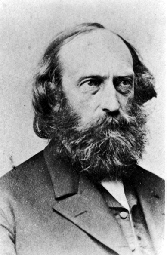 Stephen Pearl Andrews
was an individualist anarchist and close associate of Josiah Warren. Andrews was formerly associated with the Fourierist
movement, but converted to radical individualism after becoming acquainted with the work of Warren. Like Warren, he held the principle of "individual sovereignty" as being of paramount importance.
Andrews said that when individuals act in their own self-interest, they incidentally contribute to the well-being of others. He maintained that it is a "mistake" to create a "state, church or public morality" that individuals must serve rather than pursuing their own happiness. In Love, Marriage and Divorce, and the Sovereignty of the Individual he says: "Give up...the search after the remedy for the evils of government in more government. The road lies just the other way--toward individualism and freedom from all government...Nature made individuals, not nations; and while nations exist at all, the liberties of the individual must perish."
Warren and Andrews established the individualist anarchist colony called "Modern Times
" on Long Island, NY. In tribute to Andrews, Benjamin Tucker said: "Anarchist especially will ever remember and honor him because he has left behind him the ablest English book ever written in defense of Anarchist principles" (Liberty, III, 2).
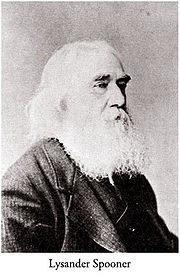 Lysander Spooner
was an individualist anarchist who apparently worked with little association with the other individualists of the time, but came to approximately the same conclusions. In this time, his philosophy evolved from appearing to support a limited role for the state to opposing its existence altogether. Spooner was a staunch advocate of "natural law," maintaining that each individually has a "natural right" to be free to do as one wishes as long as he refrains from initiating coercion on others or their property.
With this natural law came the right of contract, which Spooner found of extreme importance. He holds that government cannot create law, as law already exists naturally; anything government does that is not in accordance with natural law (coercion) is illegal. Maintaining that government does not exist by contract of every individual it claims to govern, he came to believe that government itself is in violation of natural law, as it finances its activities through taxation of those who have not contracted with it. He rejected the popular idea that a majority, in the case of democracy, can consent on behalf of a minority; as a majority is bound to the same natural law against coercion to which individuals are bound: "...if the majority, however large, or the people enter into a contract of government called a constitution by which they...destroy or invade the natural rights of any person or persons whatsoever, this contract of government is unlawful and void" (The Unconstitutionality of Slavery). Spooner was also a strong advocate of entrepreneurship, advising others to start their own businesses to avoid sharing profits with an employer. He believed this could be made easier if the government de-regulated banking and money, which he believed would keep interest rates low except for high risk borrowers.
was another individualist anarchist influenced by Warren, who was an ardent slavery abolitionist and feminist. Heywood saw what he believed to be a disproportionate concentration of capital in the hands of a few as the result of a selective extension of government-backed privileges to certain individuals and organizations.
He said: "Government is a northeast wind, drifting property into a few aristocratic heaps, at the expense of altogether too much democratic bare ground. Through cunning legislation, ... privileged classes are allowed to steal largely according to law."
He believed that there should be no profit in rent of buildings. He did not oppose rent, but believed that if the building was fully paid for that it was improper to charge more than what is necessary for transfer costs, insurance, and repair of deterioration that occurs during the occupation by the tenant. He even asserted that it may be encumbent on the owner of the building to pay rent to the tenant if the tenant keeps his residency in such a condition that saved it from deterioration if it was otherwise unoccupied. Whereas, Warren, Andrews, and Greene supported ownership of unused land, Heywood believed that title to unused land was a great evil. Heywood's philosophy was instrumental in furthering individualist anarchist ideas through his extensive pamphleteering and reprinting of works of Warren and Greene.
, being influenced by Warren (whom he credits as being his "first source of light"), Greene, Heywood, Proudhon
's mutualism
, and Stirner's
egoism
, is probably the most famous of the American individualists. Tucker defined anarchism as "the doctrine that all the affairs of men should be managed by individuals or voluntary associations, and that the State should be abolished" (State Socialism and Anarchism).
Like the individualists he was influenced by, he rejected the notion of society being a thing that has rights, insisting that only individuals can have rights. And, like all anarchists, he opposed the governmental practice of democracy, as it allows a majority to decide for a minority
. Tucker's main focus, however, was on economics. He opposed profit, believing that it is only made possible by the "suppression or restriction of competition" by government and vast concentration of wealth.
He believed that restriction of competition was accomplished by the establishment of four "monopolies": the banking/money monopoly, the land monopoly, the tariff monopoly, and the patent and copyright monopoly - the most harmful of these, according to him, being the money monopoly. He believed that restrictions on who may enter the banking business and issue currency, as well as protection of unused land, were responsible for wealth being concentrated in the hands of a privileged few.
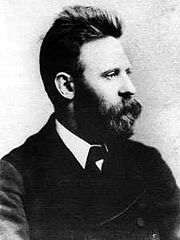 Johann Most (February 5, 1846 – March 17, 1906) was a German-American anarchist and orator, who in the late 19th century began to advocate the use of violence to achieve revolutionary political and social change. He is best known for popularizing the strategy of "propaganda of the deed
," which promoted direct action against individuals or institutions (including the use of violence) to force revolutionary change and inspire further action by others.
Encouraged by news of labor struggles and industrial disputes in the United States, Most emigrated himself, and promptly began agitating in his adopted land among other German émigrés.
He resumed the publication of Die Freiheit in New York. He was imprisoned in 1886, again in 1887, and in 1902, the last time for two months for publishing after the assassination of President McKinley
an editorial in which he argued that it was no crime to kill a ruler.
Most was famous for stating the concept of the Attentat
: "The existing system will be quickest and most radically overthrown by the annihilation of its exponents. Therefore, massacres of the enemies of the people must be set in motion." Most is best-known for a pamphlet published in 1885: The Science of Revolutionary Warfare: A Little Handbook of Instruction in the Use and Preparation of Nitroglycerine, Dynamite, Gun-Cotton, Fulminating Mercury, Bombs, Fuses, Poisons, Etc., Etc. This earned him the moniker "Dynamost." A gifted orator, Most propagated these ideas throughout Marxist and anarchist circles in the United States and attracted many adherents, most notably Emma Goldman
and Alexander Berkman
.
organizer, individualist anarchist, social activist, printer, publisher, essayist, and poet. He first joined the Socialist Labor Party in Detroit at the age of 27. In 1883, disenchanted with socialism, Labadie embraced individualist anarchism. He became closely allied with Benjamin Tucker, the country's foremost exponent of that doctrine, and frequently wrote for the latter's publication, "Liberty." Without the oppression of the state, Labadie believed, humans would choose to harmonize with "the great natural laws...without robbing [their] fellows through interest, profit, rent and taxes." However, his opposition to the State was not complete, as he supported government control of water utilities, streets, and railroads (Martin). Although he did not support the militant anarchism of the Haymarket anarchists, he fought for the clemency of the accused because he did not believe they were the perpetrators.
In 1888, Labadie organized the Michigan Federation of Labor, became its first president, and forged an alliance with Samuel Gompers. At age fifty he began writing verse and publishing artistic hand-crafted booklets. In 1908, the city postal inspector banned his mail because it bore stickers with anarchist quotations. A month later the Detroit water board, where he was working as a clerk, dismissed him for expressing anarchist sentiments. In both cases, the officials were forced to back down in the face of massive public protest for the person well-known in Detroit as its "Gentle Anarchist".
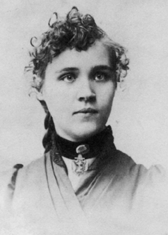 Voltairine de Cleyre
(November 17, 1866–June 20, 1912) was an individualist anarchist for several years before rejecting that label to embrace the philosophy of anarchism without adjectives
. In explaining her views on anarchism she said: "Anarchism...teaches the possibility of a society in which the needs of life may be fully supplied for all, and in which the opportunities for complete development of mind and body shall be the heritage of all... teaches that the present unjust organization of the production and distribution of wealth must finally be completely destroyed, and replaced by a system which will insure to each the liberty to work, without first seeking a master to whom he must surrender a tithe of his product, which will guarantee his liberty of access to the sources and means of production... Out of the blindly submissive, it makes the discontented; out of the unconsciously dissatisfied, it makes the consciously dissatisfied... Anarchism seeks to arouse the consciousness of oppression, the desire for a better society, and a sense of the necessity for unceasing warfare against capitalism and the State."
De Cleyre was held in high esteem by many anarchists. Emma Goldman
called her "the most gifted and brilliant anarchist woman America ever produced", and de Cleyre argued in Goldman's defense after Goldman was imprisoned for urging the hungry to expropriate food. In this speech, she condoned a right to take food when hungry but stopped short of advocating it: "I do not give you that advice... not that I do not think one little bit of sensitive human flesh is worth all the property rights in New York City... I say it is your business to decide whether you will starve and freeze in sight of food and clothing, outside of jail, or commit some overt act against the institution of property and take your place beside Timmermann and Goldman."
Her stance as an individualist versus a collectivist is controversial, with both sides claiming her as an adherent. In an 1894 article defending Emma Goldman, she states, "Miss Goldman is a communist; I am an individualist." Conversely, in a 1911 article entitled "The Mexican Revolution" she wrote that "The communistic customs of these people are very interesting and very instructive too...," in regards to Mexican Indian revolutionaries. Similarly, she instructs in "Why I am an Anarchist," that "the best thing ordinary workingmen or women could do was to organize their industry to get rid of money altogether . . . Let them produce together, co-operatively rather than as employer and employed; let them fraternize group by group, let each use what he needs of his own product, and deposit the rest in the storage-houses, and let those others who need goods have them as occasion arises." When she embraced "anarchism without adjectives", de Cleyre reasoned that: "Socialism and Communism both demand a degree of joint effort and administration which would beget more regulation than is wholly consistent with ideal Anarchism; Individualism and Mutualism, resting upon property, involve a development of the private policeman not at all compatible with my notion of freedom."
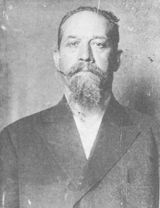 Luigi Galleani (1861 – November 4, 1931) was a 20th century anarchist best known for inspiring and advocating series of deadly bombings in the United States in 1919
. Galleani is best described as an anarchist communist
and an insurrectionary anarchist
.
The activities of Galleani and his group centered around the promotion of a radical and violent form of anarchism, ostensibly by speeches, newsletters, labor agitation, political protests, and secret meetings. However, many of Galleani's followers used bombs and other violent means, practices Galleani encouraged, but never participated in. With the assistance of a friendly chemist and explosives expert, Professor Ettore Molinari, Galleani authored the booklet La Salute è in voi! (Health is in You!) a 46-page explicit guide to on bomb-making. The New York City Bomb Squad considered it accurate and practical, though Galleani made an error, corrected only in 1908, that resulted in one or more premature explosions.
n born, but she immigrated to the United States at seventeen. Goldman played a pivotal role in the development of anarchism
in the US and Europe throughout the first half of the twentieth century, and was a major contributor to the contemporary trade union
and feminism
movements in the US. She was imprisoned in 1893 at Blackwell's Island penitentiary for publicly urging unemployed workers that they should "Ask for work. If they do not give you work, ask for bread. If they do not give you work or bread, take bread."
She was convicted of "inciting a riot" by a criminal court of New York, despite the testimonies of twelve witnesses in her defense. The jury based their verdict on the testimony of one individual, a Detective Jacobs. Voltairine de Cleyre
gave the lecture In Defense of Emma Goldman as a response to this imprisonment. She was later deported to Russia for criticizing the US government during World War I
(especially for the draft
), where she witnessed the results of the Russian Revolution. Emma Goldman became one of the most prominent and respected representatives of anarchist communism
worldwide.
, a wealthy industrialist involved in a bitter dispute with steelworkers in Homestead, Pennsylvania
, in the belief that a violent act was needed to electrify the anarchist movement. He was arrested, convicted of attempted murder and sentenced to twenty-two years' imprisonment, of which he served fourteen years, many of them in solitary confinement (an account of which is contained in his book Prison Memoirs of an Anarchist
).
Upon regaining his freedom, Berkman– shattered and physically broken– joined Emma Goldman as one of the leading figures of the anarchist movement in the US. He was deported alongside Goldman and, with her, led the libertarian critique of the Soviet Communist Party, denouncing what they saw as the betrayal of the revolution. While they helped persuade the main organizations of the international anarchist and anarcho-syndicalist movement not to participate in the Third International controlled by the Russians, their impact on the wider world was only partially successful.
author, educational theorist, and social critic of the early and middle 20th century. He was editor of the first version of The Freeman
magazine, and author of many works, including Our Enemy, the State, often cited by modern intellectuals and pundits like Murray Rothbard as a pivotal example of the ideology of individual liberty. Albert Jay Nock, a self described "philosophical anarchist", called for a laissez faire vision of society free from the influence of the political state
. He described the state as that which "claims and exercises the monopoly of crime". He opposed centralization
, regulation
, the income tax
, and mandatory education, along with what he saw as the degradation of society
. He denounced in equal terms all forms of totalitarianism
, including "Bolshevism, Fascism
, Hitlerism, Marxism
, [and] Communism
", but was also harshly critical of democracy
. Nock argued instead that, "[t]he practical reason for freedom
is that freedom seems to be the only condition under which any kind of substantial moral fiber can be developed– we have tried law
, compulsion and authoritarianism
of various kinds, and the result is nothing to be proud of."
 Nicola Sacco (April 22, 1891– August 23, 1927) and Bartolomeo Vanzetti (June 11, 1888– August 23, 1927) were two Italian
-born American anarchists
, influenced by Luigi Galleani
, who were arrested, tried
, and executed by electrocution
in the American
state
of Massachusetts
. Sacco and Vanzetti were accused of killing Frederick Parmenter, a shoe factory paymaster
, and Alessandro Berardelli, a security guard
, and of robbery
of $
15,766.51 from the factory's payroll
on April 15, 1920. Both Sacco and Vanzetti had alibi
s, but they were the only people accused of the crime. As a result of what many historians feel was a blatant disregard for political civil liberties
and strong anti-Italian prejudice
, Sacco and Vanzetti were denied a retrial. Judge Webster Thayer
, who heard the case, allegedly described the two as "anarchist bastards". The song "Two good men" by Woody Guthrie
recounts the tale.
pacifist
, Christian anarchist
, vegetarian
, social activist, member of the Catholic Worker Movement
and a Wobbly
. He established the "Joe Hill House of Hospitality
" in Salt Lake City, Utah
and practiced tax resistance
.
individualist anarchist Lathe operator, house painter, bricklayer, dramatist and political activist influenced by the work of Max Stirner
. He took the pseudonym "Brand" from a fictional character in one of Henrik Ibsen
´s plays. In the 1910s he started becoming involved in anarchist and anti-war activism around Milan. From the 1910s until the 1920s he participated in anarchist activities and popular uprisings in various countries including Switzerland, Germany, Hungary, Argentina and Cuba. He lived from the 1920s onwards in New York City and there he edited the individualist anarchist eclectic journal Eresia in 1928. He also wrote for other american anarchist publications such as L' Adunata dei refrattari
, Cultura Obrera, Controcorrente and Intessa Libertaria. During the Spanish Civil War
, he went to fight with the anarchists but was imprisoned and was helped on his release by Emma Goldman
. Afterwards Arrigoni became a longtime member of the Libertarian Book Club in New York City. He died in New York City when he was 90 years old on December 7, 1986.
(1960) and an activist on the pacifist Left in the 1960s and an inspiration to that era's student movement. He is less remembered as a co-founder of Gestalt Therapy
in the 1940s and '50s. In the mid-1940s, together with C. Wright Mills
, he contributed to Politics
, the journal edited during the 1940s by Dwight Macdonald
. In 1947, he published two books, Kafka's Prayer and Communitas
, a classic study of urban design coauthored with his brother Percival Goodman
. Fame came only with the 1960 publication of his Growing Up Absurd: Problems of Youth in the Organized System
. Goodman wrote on a wide variety of subjects; including education, Gestalt Therapy, city life and urban design
, children's rights
, politics, literary criticism
, and many more.
, which opposes the state and supports a free market. The relationship between anarcho-capitalism and the forms of free-market anarchism that preceded it is controversial. Rothbard was "a student and disciple of the Austrian economist Ludwig von Mises
, [who] combined the laissez-faire economics of his teacher with the absolutist views of human rights and rejection of the state he had absorbed from studying the individualist American anarchists of the nineteenth century such as Lysander Spooner and Benjamin Tucker." In The Ethics of Liberty
, Rothbard asserted the right of 100 percent self-ownership
, as the only principle compatible with a moral code that applies to every person - a "universal ethic" - and that it is a natural law by being what is naturally best for man.
Like the nineteenth century individualists, Rothbard believed that security should be provided by multiple competing businesses rather than by a tax-funded central agency. However, he rejected their labor theory of value
in favor of the modern neo-classical marginalist
view. Thus, like most modern economists, he did not believe that prices in a free market would, or should be, proportional to labor, or that "usury" or "exploitation" necessarily occurs where they are disproportionate. Instead, he believed that different prices of goods and services in a free market are ultimately the result of goods and services having different marginal utilities and that there is nothing unjust about this. Rothbard also disagreed with Tucker that interest would disappear with unregulated banking and money issuance. Rothbard believed that people in general do not wish to lend their money to others without compensation, so there is no reason why this would change where banking is unregulated. Nor, did he agree that unregulated banking would increase the supply of money because he believed the supply of money in a truly free market is self-regulating. And, he believed that it is good that it would not increase the supply or inflation would result. - Rothbard, Murray. The Spooner-Tucker Doctrine: An Economist's View
According to mutualist Kevin Carson, "most people who call themselves 'individualist anarchists' today are followers of Murray Rothbard's Austrian economics." Some contemporary individualists are not anarcho-capitalists. Rothbard strongly opposed communism in all its forms and other related ideologies that demand that wealth be distributed collectively instead of held individually. In anarcho-capitalism, the individual has no obligation to any other member of the community other than to refrain from aggressing against others or defrauding them (the Non-aggression principle
.)
anarchist, political and social philosopher, environmentalist
/conservationist
, atheist, speaker, and writer. For much of his life he called himself an anarchist, although as early as 1995 he privately renounced his identification with the anarchist movement. A pioneer in the ecology
movement, Bookchin was the founder of the social ecology
movement within libertarian socialist and ecological thought. He was the author of two dozen books on politics, philosophy, history, and urban affairs as well as ecology.
Bookchin was an anti-capitalist
and vocal advocate of the decentralisation
as well as partial deindustrialization
and deurbanization
of society. His writings on libertarian municipalism
, a theory of face-to-face, grassroots democracy, had an influence on the Green movement
and anti-capitalist direct action
groups such as Reclaim the Streets
. He was a staunch critic of biocentric
philosophies such as deep ecology
and the biologically deterministic
beliefs of sociobiology
, and his criticisms of "new age
" Greens such as Charlene Spretnak
contributed to the divisions that affected the North American Green movement in the 1990s.
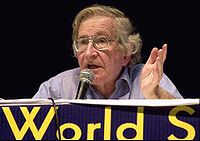 Noam Chomsky (icon; born December 7, 1928) is an American linguist, philosopher, cognitive scientist
, political activist, author, and lecturer. He is an Institute Professor
and professor emeritus
of linguistics
at the Massachusetts Institute of Technology
. Chomsky is well known in the academic and scientific community as one of the fathers of modern linguistics
. Since the 1960s, he has become known more widely as a political dissident, an anarchist, and a libertarian socialist
intellectual. Chomsky is often viewed as a notable figure in contemporary philosophy
.
Chomsky has stated that his "personal visions are fairly traditional anarchist ones, with origins in The Enlightenment and classical liberalism" and he has praised libertarian socialism
. He is a sympathizer of anarcho-syndicalism
and a member of the IWW
union. He wrote a book on anarchism titled, "Chomsky on Anarchism," which was published by the anarchist book collective, AK Press
, in 2006.
Noam Chomsky has been engaged in political activism all his adult life and expressed opinions on politics and world events that are widely cited, publicized, and discussed. Chomsky in turn argues that his views are those which the powerful do not want to hear, and for this reason considers himself an American political dissident
.
(born 1943) is an American
anarchist
and primitivist
philosopher and author. His works criticize agricultural
civilization
as inherently oppressive, and advocate drawing upon the ways of life of prehistoric humans as an inspiration for what a free society should look like. Some of his criticism has extended as far as challenging domestication
, language
, symbolic thought (such as mathematics
and art
) and the concept of time. His five major books are Elements of Refusal (1988), Future Primitive and Other Essays
(1994), Running on Emptiness (2002), Against Civilization: Readings and Reflections
(2005) and Twilight of the Machines (2008).
On May 7, 1995, a full-page interview with Zerzan was featured in The New York Times
. Another significant event that shot Zerzan to celebrity philosopher status was his association with members of the Eugene, Oregon
anarchist scene that later were the driving force behind the use of black bloc
tactics at the 1999 anti-World Trade Organization
protests in Seattle, Washington. Anarchists using black bloc tactics were thought to be chiefly responsible for the property destruction committed at numerous corporate storefronts and banks.
anarchist and lawyer
. He is the author of The Abolition of Work and Other Essays
, Beneath the Underground, Friendly Fire, Anarchy After Leftism, and numerous political essays. Kenn Thomas
hailed Black in 1999 as a "defender of the most liberatory tendencies within modern anti-authoritarian thought".
activist, speaker, and writer. He is co-editor of ZNet, and co-editor and co-founder of Z Magazine. He also co-founded South End Press
and has written numerous books and articles. He developed along with Robin Hahnel
the economic vision called participatory economics
.
Albert identifies himself as a market abolitionist and favors democratic participatory planning as an alternative.
During the 1960s, Albert was a member of Students for a Democratic Society
, and was active in the anti-Vietnam War movement
. Albert's memoir, Remembering Tomorrow: From SDS to Life After Capitalism (ISBN 1583227423), was published in 2007 by Seven Stories Press
.
philosopher involved in theoretical and practical activity, who now goes by the name Apio Ludd. He edited the anarchist publication Willful Disobedience, which was published from 1996 until 2005, and currently publishes a variety of anarchist, radical, surrealist
and poetic pamphlets and booklets through his project, Venomous Butterfly Publication. His ideas are influenced by insurrectionary anarchism
, Max Stirner
's egoism, surrealism
, the Situationist International and non-primitivist critiques of civilization. He previously published under the pen name Feral Faun.
Philosophy
Philosophy is the study of general and fundamental problems, such as those connected with existence, knowledge, values, reason, mind, and language. Philosophy is distinguished from other ways of addressing such problems by its critical, generally systematic approach and its reliance on rational...
, from individualist anarchism
Individualist anarchism
Individualist anarchism refers to several traditions of thought within the anarchist movement that emphasize the individual and his or her will over external determinants such as groups, society, traditions, and ideological systems. Individualist anarchism is not a single philosophy but refers to a...
to anarchist communism
Anarchist communism
Anarchist communism is a theory of anarchism which advocates the abolition of the state, markets, money, private property, and capitalism in favor of common ownership of the means of production, direct democracy and a horizontal network of voluntary associations and workers' councils with...
and other less known forms. America has two main traditions, native and immigrant, with the native tradition being strongly individualist and the immigrant tradition being collectivist and anarcho-communist. Influential American anarchists include Josiah Warren
Josiah Warren
Josiah Warren was an individualist anarchist, inventor, musician, and author in the United States. He is widely regarded as the first American anarchist, and the four-page weekly paper he edited during 1833, The Peaceful Revolutionist, was the first anarchist periodical published, an enterprise...
, Henry David Thoreau
Henry David Thoreau
Henry David Thoreau was an American author, poet, philosopher, abolitionist, naturalist, tax resister, development critic, surveyor, historian, and leading transcendentalist...
, Lysander Spooner
Lysander Spooner
Lysander Spooner was an American individualist anarchist, political philosopher, Deist, abolitionist, supporter of the labor movement, legal theorist, and entrepreneur of the nineteenth century. He is also known for competing with the U.S...
, Lucy Parsons
Lucy Parsons
Lucy Eldine Gonzalez Parsons was an American labor organizer and radical socialist. She is remembered as a powerful orator.-Life:...
, Murray Rothbard
Murray Rothbard
Murray Newton Rothbard was an American author and economist of the Austrian School who helped define capitalist libertarianism and popularized a form of free-market anarchism he termed "anarcho-capitalism." Rothbard wrote over twenty books and is considered a centrally important figure in the...
, Benjamin Tucker
Benjamin Tucker
Benjamin Ricketson Tucker was a proponent of American individualist anarchism in the 19th century, and editor and publisher of the individualist anarchist periodical Liberty.-Summary:Tucker says that he became an anarchist at the age of 18...
, Voltairine de Cleyre
Voltairine de Cleyre
Voltairine de Cleyre was an American anarchist writer and feminist. She was a prolific writer and speaker, opposing the state, marriage, and the domination of religion in sexuality and women's lives. She began her activist career in the freethought movement...
, Johann Most
Johann Most
Johann Joseph Most was a German-American politician, newspaper editor, and orator. He is credited with popularizing the concept of "Propaganda of the deed". His grandson was Boston Celtics radio play-by-play man Johnny Most...
, Luigi Galleani
Luigi Galleani
Luigi Galleani was an Italian anarchist active in the United States from 1901 to 1919, viewed by historians as an anarchist communist and an insurrectionary anarchist. He is best known for his enthusiastic advocacy of "propaganda of the deed", i.e...
, Emma Goldman
Emma Goldman
Emma Goldman was an anarchist known for her political activism, writing and speeches. She played a pivotal role in the development of anarchist political philosophy in North America and Europe in the first half of the twentieth century....
, Alexander Berkman
Alexander Berkman
Alexander Berkman was an anarchist known for his political activism and writing. He was a leading member of the anarchist movement in the early 20th century....
, social ecologist
Social ecology
Social ecology is a philosophy developed by Murray Bookchin in the 1960s.It holds that present ecological problems are rooted in deep-seated social problems, particularly in dominatory hierarchical political and social systems. These have resulted in an uncritical acceptance of an overly...
Murray Bookchin
Murray Bookchin
Murray Bookchin was an American libertarian socialist author, orator, and philosopher. A pioneer in the ecology movement, Bookchin was the founder of the social ecology movement within anarchist, libertarian socialist and ecological thought. He was the author of two dozen books on politics,...
, Paul Goodman
Paul Goodman (writer)
Paul Goodman was an American sociologist, poet, writer, anarchist, and public intellectual. Goodman is now mainly remembered as the author of Growing Up Absurd and an activist on the pacifist Left in the 1960s and an inspiration to that era's student movement...
, linguist Noam Chomsky
Noam Chomsky
Avram Noam Chomsky is an American linguist, philosopher, cognitive scientist, and activist. He is an Institute Professor and Professor in the Department of Linguistics & Philosophy at MIT, where he has worked for over 50 years. Chomsky has been described as the "father of modern linguistics" and...
and John Zerzan
John Zerzan
John Zerzan is an American anarchist and primitivist philosopher and author. His works criticize agricultural civilization as inherently oppressive, and advocate drawing upon the ways of life of prehistoric humans as an inspiration for what a free society should look like...
.
The first American anarchist publication was The Peaceful Revolutionist, edited by Josiah Warren
Josiah Warren
Josiah Warren was an individualist anarchist, inventor, musician, and author in the United States. He is widely regarded as the first American anarchist, and the four-page weekly paper he edited during 1833, The Peaceful Revolutionist, was the first anarchist periodical published, an enterprise...
, whose earliest experiments and writings predate Pierre Proudhon.
Indigenous anarchism
In general, Indigenous anarchism describes the majority of pre-Columbian native North American societies as anarchist in structure and function. Such claims are easiest to document among Indigenous peoples in some parts of what is now California, but the Iroquois League, the Mohawk Federation, and many other indigenous tribal governing structures throughout North America have been described as anarchist in structure. Despite this, some Native groups were far from an anarchist ideal; the MississippianMississippian culture
The Mississippian culture was a mound-building Native American culture that flourished in what is now the Midwestern, Eastern, and Southeastern United States from approximately 800 CE to 1500 CE, varying regionally....
, Aztec
Aztec
The Aztec people were certain ethnic groups of central Mexico, particularly those groups who spoke the Nahuatl language and who dominated large parts of Mesoamerica in the 14th, 15th and 16th centuries, a period referred to as the late post-classic period in Mesoamerican chronology.Aztec is the...
, Inca, and Maya
Maya civilization
The Maya is a Mesoamerican civilization, noted for the only known fully developed written language of the pre-Columbian Americas, as well as for its art, architecture, and mathematical and astronomical systems. Initially established during the Pre-Classic period The Maya is a Mesoamerican...
cultures were clearly statist.
More recently, many participants in the American Indian Movement
American Indian Movement
The American Indian Movement is a Native American activist organization in the United States, founded in 1968 in Minneapolis, Minnesota by urban Native Americans. The national AIM agenda focuses on spirituality, leadership, and sovereignty...
have described themselves as anarchist and cooperation between anarchist and Indigenous groups has been a key feature of movements such as the Minnehaha Free State in Minneapolis, Minnesota
Minnesota
Minnesota is a U.S. state located in the Midwestern United States. The twelfth largest state of the U.S., it is the twenty-first most populous, with 5.3 million residents. Minnesota was carved out of the eastern half of the Minnesota Territory and admitted to the Union as the thirty-second state...
- (which is built on an Ojibwa
Ojibwa
The Ojibwe or Chippewa are among the largest groups of Native Americans–First Nations north of Mexico. They are divided between Canada and the United States. In Canada, they are the third-largest population among First Nations, surpassed only by Cree and Inuit...
Reservation
Indian reservation
An American Indian reservation is an area of land managed by a Native American tribe under the United States Department of the Interior's Bureau of Indian Affairs...
) - and at Big Mountain.
Outside of indigenous communities, green anarchists
Green anarchism
Green anarchism, or ecoanarchism, is a school of thought within anarchism which puts a particular emphasis on environmental issues. An important early influence was the thought of the American anarchist Henry David Thoreau and his book Walden...
have been the most vocal in declaring solidarity with ongoing indigenous struggles, but social anarchists
Social anarchism
Social anarchism is a term originally used in 1971 by Giovanni Baldelli as the title of his book where he discusses the organization of an ethical society from an anarchist point of view...
in general are supportive as well.
Individualist anarchism
Native anarchism in the United States has a long pedigree that begins with the antinomianAntinomianism
Antinomianism is defined as holding that, under the gospel dispensation of grace, moral law is of no use or obligation because faith alone is necessary to salvation....
controversy in Puritan
Puritan
The Puritans were a significant grouping of English Protestants in the 16th and 17th centuries. Puritanism in this sense was founded by some Marian exiles from the clergy shortly after the accession of Elizabeth I of England in 1558, as an activist movement within the Church of England...
New England
New England
New England is a region in the northeastern corner of the United States consisting of the six states of Maine, New Hampshire, Vermont, Massachusetts, Rhode Island, and Connecticut...
. Some consider the first anarchist
Christian anarchism
Christian anarchism is a movement in political theology that combines anarchism and Christianity. It is the belief that there is only one source of authority to which Christians are ultimately answerable, the authority of God as embodied in the teachings of Jesus...
in America to be Anne Hutchinson
Anne Hutchinson
Anne Hutchinson was one of the most prominent women in colonial America, noted for her strong religious convictions, and for her stand against the staunch religious orthodoxy of 17th century Massachusetts...
(1591–1643), a proto-feminist
Christian feminism
Christian feminism is an aspect of feminist theology which seeks to advance and understand the equality of men and women morally, socially, spiritually, and in leadership from a Christian perspective. Christian feminists argue that contributions by women in that direction are necessary for a...
individualist.
The U.S., with its tradition of radical individualism
Individualism
Individualism is the moral stance, political philosophy, ideology, or social outlook that stresses "the moral worth of the individual". Individualists promote the exercise of one's goals and desires and so value independence and self-reliance while opposing most external interference upon one's own...
, which is "enshrined in the Declaration of Independence
United States Declaration of Independence
The Declaration of Independence was a statement adopted by the Continental Congress on July 4, 1776, which announced that the thirteen American colonies then at war with Great Britain regarded themselves as independent states, and no longer a part of the British Empire. John Adams put forth a...
", was a congenial environment for individualist anarchism. Josiah Warren cited the Declaration of Independence and Benjamin Tucker said that "Anarchists are simply unterrified Jeffersonian Democrats." In 1833 Josiah Warren began publishing "the first explicitly anarchist newspaper in the United States", called "The Peaceful Revolutionist." According to Rudolph Rocker, the American individualist anarchists were "influenced in their intellectual development much more by the principles expressed in the Declaration of Independence than by those of any of the representatives of libertarian socialism in Europe. They were all 'one hundred percent American' by descent, and almost all of them were born in the New England states. As a matter of fact, this school of thought had found literary expression in America before any modern radical movements were even thought of in Europe."
Beginning in 1881, Benjamin Tucker began publishing "Liberty," which was a forum to propagate individualist anarchist ideas. By that time, anarcho-communism and propaganda by the deed was arriving in America, "both of which Tucker detested." Tucker criticized the immigrant anarcho-communist Alexander Berkman's attempt to assassinate Henry Clay Frick, saying "The hope of humanity lies in the avoidance of that revolution by force which the Berkmans are trying to precipitate. No pity for Frick, no praise for Berkman such is the attitude of Liberty in the present crisis."
By the twentieth century, individualist anarchism in America was in decline. It was later revived by Murray Rothbard and the anarcho-capitalists in the mid-twentieth century.
According to Carlotta Anderson:
Social anarchism
Social anarchism in the contemporary United StatesUnited States
The United States of America is a federal constitutional republic comprising fifty states and a federal district...
has roots tracing back to well before the American Civil War
American Civil War
The American Civil War was a civil war fought in the United States of America. In response to the election of Abraham Lincoln as President of the United States, 11 southern slave states declared their secession from the United States and formed the Confederate States of America ; the other 25...
. Early leaders included Albert Parsons
Albert Parsons
Albert Richard Parsons was a pioneer American socialist and later anarchist newspaper editor, orator, and labor activist...
, his wife Lucy Parsons
Lucy Parsons
Lucy Eldine Gonzalez Parsons was an American labor organizer and radical socialist. She is remembered as a powerful orator.-Life:...
, along with many immigrants who brought their radicalism with them such as Johann Most
Johann Most
Johann Joseph Most was a German-American politician, newspaper editor, and orator. He is credited with popularizing the concept of "Propaganda of the deed". His grandson was Boston Celtics radio play-by-play man Johnny Most...
, Emma Goldman
Emma Goldman
Emma Goldman was an anarchist known for her political activism, writing and speeches. She played a pivotal role in the development of anarchist political philosophy in North America and Europe in the first half of the twentieth century....
, and Big Bill Haywood, and many others. Their influence on the early American labor movement was dramatic, with the execution of Albert Parsons and the other Haymarket Martyrs providing a key rallying cry for the early American labor movement and spurring the creation of radical unions throughout the country. The largest - the Industrial Workers of the World
Industrial Workers of the World
The Industrial Workers of the World is an international union. At its peak in 1923, the organization claimed some 100,000 members in good standing, and could marshal the support of perhaps 300,000 workers. Its membership declined dramatically after a 1924 split brought on by internal conflict...
, was founded in 1905. Swedish-American musician Joe Hill
Joe Hill
Joe Hill, born Joel Emmanuel Hägglund in Gävle , and also known as Joseph Hillström was a Swedish-American labor activist, songwriter, and member of the Industrial Workers of the World...
is also one of the most famous social anarchist protest singers to have ever lived.
Social anarchism includes anarcho-communism, anarcho-syndicalism
Anarcho-syndicalism
Anarcho-syndicalism is a branch of anarchism which focuses on the labour movement. The word syndicalism comes from the French word syndicat which means trade union , from the Latin word syndicus which in turn comes from the Greek word σύνδικος which means caretaker of an issue...
, libertarian socialism
Libertarian socialism
Libertarian socialism is a group of political philosophies that promote a non-hierarchical, non-bureaucratic, stateless society without private property in the means of production...
, and other forms of anarchism that take the creation of social goods as their first priority.
Insurrectionary anarchism
Insurrectionary anarchism is a revolutionary theory, practice, and tendency within the anarchist movement that opposes formal anarchist organizations such as labor unions and federations that are based on a political program and periodic congresses. Instead, insurrectionary anarchists advocate direct action (violent or otherwise), informal organization, including small affinity groups and mass organizations that include non-anarchist individuals of the exploited or excluded class.Many anarchist communists
Anarchist communism
Anarchist communism is a theory of anarchism which advocates the abolition of the state, markets, money, private property, and capitalism in favor of common ownership of the means of production, direct democracy and a horizontal network of voluntary associations and workers' councils with...
, such as the publishers of Barricada magazine in the United States and foreign immigrants to the US such as Luigi Galleani
Luigi Galleani
Luigi Galleani was an Italian anarchist active in the United States from 1901 to 1919, viewed by historians as an anarchist communist and an insurrectionary anarchist. He is best known for his enthusiastic advocacy of "propaganda of the deed", i.e...
and Johann Most
Johann Most
Johann Joseph Most was a German-American politician, newspaper editor, and orator. He is credited with popularizing the concept of "Propaganda of the deed". His grandson was Boston Celtics radio play-by-play man Johnny Most...
have been insurrectionary anarchists.
Re-emergence of anarchism in the U.S.
Anarchism dwindled into obscurity until the 1960s when it resurfaced and then "shattered into various anarchist splinters. These ranged from Anarcho-Capitalists who desired the organization of society solely on the basis of a free marketFree market
A free market is a competitive market where prices are determined by supply and demand. However, the term is also commonly used for markets in which economic intervention and regulation by the state is limited to tax collection, and enforcement of private ownership and contracts...
to Anarcho-Communists who sought an individualized society of decentralized communes." Anarchism started making a comeback in the United States in the early 1960s, primarily through the influence of the Beat
Beat generation
The Beat Generation refers to a group of American post-WWII writers who came to prominence in the 1950s, as well as the cultural phenomena that they both documented and inspired...
artists. Later in the 1960s, activists such as Abbie Hoffman
Abbie Hoffman
Abbot Howard "Abbie" Hoffman was a political and social activist who co-founded the Youth International Party ....
and the Diggers
Diggers (theater)
The Diggers were a radical community-action group of activists and Improv actors operating from 1966–68, based in the Haight-Ashbury neighborhood of San Francisco. Their politics were such that they have sometimes been categorized as "left-wing." More accurately, they were "community anarchists"...
identified with anarchism and were notable for the spectacular ways they put anarchist ideas into practice. In the late 60s, Murray Rothbard
Murray Rothbard
Murray Newton Rothbard was an American author and economist of the Austrian School who helped define capitalist libertarianism and popularized a form of free-market anarchism he termed "anarcho-capitalism." Rothbard wrote over twenty books and is considered a centrally important figure in the...
and Karl Hess
Karl Hess
Karl Hess was an American national-level speechwriter and author. He was also a political philosopher, editor, welder, motorcycle racer, tax resister, atheist, and libertarian activist...
began to call themselves anarchists and published Left and Right: A Journal of Libertarian Thought. In 1969, The Match!, which bills itself as a "Journal of Ethical Anarchism" began publication by anarchist without adjectives Fred Woodworth
Fred Woodworth
Fred Woodworth is an anarchist and atheist writer based in the United States. He is an anarchist without adjectives, saying: "I have no prefix or adjective for my anarchism. I think syndicalism can work, as can free-market anarcho-capitalism, anarcho-communism, even anarcho-hermits, depending on...
and has published continuously since then.
In the 1970s, anarchist ideas caught on in the anti-nuclear, feminist, and environmental movements. Murray Bookchin
Murray Bookchin
Murray Bookchin was an American libertarian socialist author, orator, and philosopher. A pioneer in the ecology movement, Bookchin was the founder of the social ecology movement within anarchist, libertarian socialist and ecological thought. He was the author of two dozen books on politics,...
was a widely read anarchist thinker whose books on the environment were influential on the environmental movement. Anarchist tactics such as the affinity group were adopted by women involved in the radical feminist movement.
Anarchists became more visible in the 1980s, as a result of publishing, protests and conventions. In 1980, the First International Symposium on Anarchism was held in Portland, Oregon. In 1986, the Haymarket Remembered conference was held in Chicago, to observe the centennial of the infamous Haymarket Riot. This conference was followed by annual, continental conventions in Minneapolis (1987), Toronto (1988), and San Francisco (1989).
Recently there has been a resurgence in anarchist ideals in the United States. In the 1990s, a group of anarchists formed the Love and Rage Network, which was one of several new groups and projects formed in the U.S. during the decade. American anarchists increasingly became noticeable at protests, especially through a tactic known as the Black bloc
Black bloc
A black bloc is a tactic for protests and marches, whereby individuals wear black clothing, scarves, ski masks, motorcycle helmets with padding, or other face-concealing items...
. U.S. anarchists became more prominent in 1999 as a result of the anti-WTO protests
WTO Ministerial Conference of 1999 protest activity
Protest activity surrounding the WTO Ministerial Conference of 1999, which was to be the launch of a new millennial round of trade negotiations, occurred on November 30, 1999 , when the World Trade Organization convened at the Washington State Convention and Trade Center in Seattle, Washington,...
in Seattle.
In the wake of hurricane Katrina, anarchist activists have been visible as founding members of the Common Ground Collective
Common Ground Collective
The Common Ground Collective is a decentralized network of non-profit organizations offering support to the residents of New Orleans. It was formed in the Algiers neighborhood of the city in the days after Hurricane Katrina in 2005.-History:...
.
Josiah Warren
Josiah Warren published a periodical called The Peaceful Revolutionist in 1833, which some believe to be the first anarchist newspaper. Warren had participated in a failed collectivist experiment headed by Robert OwenRobert Owen
Robert Owen was a Welsh social reformer and one of the founders of utopian socialism and the cooperative movement.Owen's philosophy was based on three intellectual pillars:...
called "New Harmony
New Harmony, Indiana
New Harmony is a historic town on the Wabash River in Harmony Township, Posey County, Indiana, United States. It lies north of Mount Vernon, the county seat. The population was 916 at the 2000 census. It is part of the Evansville metropolitan area. Many of the old Harmonist buildings still stand...
," but was disappointed in its failure. He stressed the need for individual sovereignty. In True Civilization Warren equates "Sovereignty of the Individual" with the Declaration of Independence
Declaration of independence
A declaration of independence is an assertion of the independence of an aspiring state or states. Such places are usually declared from part or all of the territory of another nation or failed nation, or are breakaway territories from within the larger state...
's assertion of the inalienable rights. He claims that every person has an "instinct" for individual sovereignty, making individual rights inalienable and inviolate.
Basing his economics on the labor theory of value, Warren's economic principle was "cost the limit of price
Cost the limit of price
Cost the limit of price was a maxim coined by Josiah Warren, indicating a version of the labor theory of value. Warren maintained that the just compensation for labor could only be an equivalent amount of labor . Thus, profit, rent, and interest were considered unjust economic arrangements...
," with "cost" referring to the amount of labor incurred in producing a commodity and bringing it to market. He opposed what he called "value the limit of price," where prices paid are determined simply by subjective valuation irrespective of labor costs, as being inequitable or unfair. In 1827, Warren put his theories into practice by starting a business called the Cincinnati Time Store
Cincinnati Time Store
The Cincinnati Time Store was a successful retail store that was created by American individualist anarchist Josiah Warren to test his theories that were based on his strict interpretation of the labor theory of value. The experimental store operated from May 18, 1827 until May 1830...
where the trade of goods was facilitated by private currency denominated in hours of labor. Warren was a strong supporter of the right of individuals to retain the product of their labor as private possessions. This position was shared by fellow anarchist Stephen Pearl Andrews
Stephen Pearl Andrews
Stephen Pearl Andrews was an American individualist anarchist and author of several books on Individualist anarchism.-Early life and work:...
.
Henry David Thoreau
Henry David Thoreau (July 12, 1817– May 6, 1862; was an AmericanUnited States
The United States of America is a federal constitutional republic comprising fifty states and a federal district...
author, development critic
Development criticism
Development criticism refers to criticisms of technological development.-Notable development critics:*Edward Abbey*John Africa*Stafford Beer *Charles A...
, naturalist, transcendentalist
Transcendentalism
Transcendentalism is a philosophical movement that developed in the 1830s and 1840s in the New England region of the United States as a protest against the general state of culture and society, and in particular, the state of intellectualism at Harvard University and the doctrine of the Unitarian...
, pacifist
Pacifism
Pacifism is the opposition to war and violence. The term "pacifism" was coined by the French peace campaignerÉmile Arnaud and adopted by other peace activists at the tenth Universal Peace Congress inGlasgow in 1901.- Definition :...
, tax resister
Tax resistance
Tax resistance is the refusal to pay tax because of opposition to the government that is imposing the tax or to government policy.Tax resistance is a form of civil disobedience and direct action...
and philosopher who is famous for Walden
Walden
Walden is an American book written by noted Transcendentalist Henry David Thoreau...
, on simple living
Simple living
Simple living encompasses a number of different voluntary practices to simplify one's lifestyle. These may include reducing one's possessions or increasing self-sufficiency, for example. Simple living may be characterized by individuals being satisfied with what they need rather than want...
amongst nature, and Civil Disobedience
Civil disobedience
Civil disobedience is the active, professed refusal to obey certain laws, demands, and commands of a government, or of an occupying international power. Civil disobedience is commonly, though not always, defined as being nonviolent resistance. It is one form of civil resistance...
. In 1849, Henry David Thoreau wrote "I heartily accept the motto, 'That government is best which governs least'; and I should like to see it acted up to more rapidly and systematically. Carried out, it finally amounts to this, which also I believe– 'That government is best which governs not at all'; and when men are prepared for it, that will be the kind of government which we will have." Although Thoreau never labeled himself an "anarchist," he has been regarded to be an individualist anarchist
Individualist anarchism
Individualist anarchism refers to several traditions of thought within the anarchist movement that emphasize the individual and his or her will over external determinants such as groups, society, traditions, and ideological systems. Individualist anarchism is not a single philosophy but refers to a...
.
William B. Greene
William Batchelder GreeneWilliam Batchelder Greene
William Batchelder Greene was a 19th century individualist anarchist, Unitarian minister, soldier and promotor of free banking in the United States.-Biography:...
(1819–1878) was an author, soldier, currency reformer, individualist anarchist, Unitarian minister and philosopher, active in transcendentalist
Transcendentalism
Transcendentalism is a philosophical movement that developed in the 1830s and 1840s in the New England region of the United States as a protest against the general state of culture and society, and in particular, the state of intellectualism at Harvard University and the doctrine of the Unitarian...
circles. In works such as Equality (1849) and Mutual Banking (1850) he synthesized the work of French socialists such as P.-J. Proudhon
Pierre-Joseph Proudhon
Pierre-Joseph Proudhon was a French politician, mutualist philosopher and socialist. He was a member of the French Parliament, and he was the first person to call himself an "anarchist". He is considered among the most influential theorists and organisers of anarchism...
and Pierre Leroux
Pierre Leroux
Pierre Henri Leroux , French philosopher and political economist, was born at Bercy, now a part of Paris, the son of an artisan.- Life :...
with that of American currency reformers such as William Beck and Edward Kellogg. The result was a unique form of Christian mutualism
Mutualism (economic theory)
Mutualism is an anarchist school of thought that originates in the writings of Pierre-Joseph Proudhon, who envisioned a society where each person might possess a means of production, either individually or collectively, with trade representing equivalent amounts of labor in the free market...
, which attempted to harmonize elements of capitalism
Capitalism
Capitalism is an economic system that became dominant in the Western world following the demise of feudalism. There is no consensus on the precise definition nor on how the term should be used as a historical category...
, communism
Communism
Communism is a social, political and economic ideology that aims at the establishment of a classless, moneyless, revolutionary and stateless socialist society structured upon common ownership of the means of production...
and socialism
Socialism
Socialism is an economic system characterized by social ownership of the means of production and cooperative management of the economy; or a political philosophy advocating such a system. "Social ownership" may refer to any one of, or a combination of, the following: cooperative enterprises,...
. Greene was later involved with the New England Labor Reform League, and with the anti-death penalty work of The Prisoner's Friend. He was a regular contributor to Ezra Heywood's The Word until his death. William B. Greene's mutualistic
Mutualism (economic theory)
Mutualism is an anarchist school of thought that originates in the writings of Pierre-Joseph Proudhon, who envisioned a society where each person might possess a means of production, either individually or collectively, with trade representing equivalent amounts of labor in the free market...
economic philosophy resembles the economic philosophy of the earlier French anarchist Pierre-Joseph Proudhon
Pierre-Joseph Proudhon
Pierre-Joseph Proudhon was a French politician, mutualist philosopher and socialist. He was a member of the French Parliament, and he was the first person to call himself an "anarchist". He is considered among the most influential theorists and organisers of anarchism...
and the economic system of the land banks that existed in the United States during the colonial period.
Albert and Lucy Parsons
International Working People's Association
The International Working People's Association , sometimes known as the "Black International," was an international anarchist political organization established in 1881 at a convention held in London, England...
(IWPA). When he first came to Chicago, he found a job as a writer for the Times. Later in 1877, as a result of his becoming an outspoken supporter of worker's rights, he lost his position at the Times and was blacklisted by the industry altogether. Police Superintendent Michael Hickey told Parsons to leave Chicago during this time because his life was in danger. He then became devoted completely to his new anarchist ideas in favor of workers' rights and especially the eight-hour work day labor movement.
In addition to his involvement in the IWPA, Parsons was also involved with the Knights of Labor
Knights of Labor
The Knights of Labor was the largest and one of the most important American labor organizations of the 1880s. Its most important leader was Terence Powderly...
during its embryonic period. Parsons joined the Knights of Labor, known then as "The Noble and Holy Order of the Knights of Labor," on July 4, 1876. At the time Parsons joined, the Knights of Labor was just a small fraternal organization with elaborate rituals, most of them copied from the Masons.
Lucy Parsons
Lucy Parsons
Lucy Eldine Gonzalez Parsons was an American labor organizer and radical socialist. She is remembered as a powerful orator.-Life:...
(1853-March 7, 1942), the widow of Albert Parsons, was a radical
Radicalization
Radicalization is the process in which an individual changes from passiveness or activism to become more revolutionary, militant or extremist. Radicalization is often associated with youth, adversity, alienation, social exclusion, poverty, or the perception of injustice to self or others.-...
American
United States
The United States of America is a federal constitutional republic comprising fifty states and a federal district...
labor organizer, anarchist communist, and is remembered as a powerful orator. A founder of the Industrial Workers of the World
Industrial Workers of the World
The Industrial Workers of the World is an international union. At its peak in 1923, the organization claimed some 100,000 members in good standing, and could marshal the support of perhaps 300,000 workers. Its membership declined dramatically after a 1924 split brought on by internal conflict...
in 1905, Parsons was described by the Chicago Police Department as "more dangerous than a thousand rioters" in the 1920s, Lucy Parsons and her husband had become highly effective anarchist organizers primarily involved in the labor movement in the late 19th century, but also participating in revolutionary
Revolutionary
A revolutionary is a person who either actively participates in, or advocates revolution. Also, when used as an adjective, the term revolutionary refers to something that has a major, sudden impact on society or on some aspect of human endeavor.-Definition:...
activism
Activism
Activism consists of intentional efforts to bring about social, political, economic, or environmental change. Activism can take a wide range of forms from writing letters to newspapers or politicians, political campaigning, economic activism such as boycotts or preferentially patronizing...
on behalf of political prisoners, people of color, the homeless and women. She began writing for The Socialist and The Alarm, the journal of the International Working People's Association
International Working People's Association
The International Working People's Association , sometimes known as the "Black International," was an international anarchist political organization established in 1881 at a convention held in London, England...
(IWPA), which she and Parsons, among others, founded in 1883. In 1892 she briefly published Freedom: A Revolutionary Anarchist-Communist Monthly, and was often arrested for giving public speeches or distributing anarchist literature. While she continued championing the anarchist cause, she came into ideological conflict with some of her contemporaries, including Emma Goldman
Emma Goldman
Emma Goldman was an anarchist known for her political activism, writing and speeches. She played a pivotal role in the development of anarchist political philosophy in North America and Europe in the first half of the twentieth century....
, over her focus on class politics over gender and sexual struggles.
Stephen Pearl Andrews
Stephen Pearl Andrews
Stephen Pearl Andrews was an American individualist anarchist and author of several books on Individualist anarchism.-Early life and work:...
was an individualist anarchist and close associate of Josiah Warren. Andrews was formerly associated with the Fourierist
Charles Fourier
François Marie Charles Fourier was a French philosopher. An influential thinker, some of Fourier's social and moral views, held to be radical in his lifetime, have become main currents in modern society...
movement, but converted to radical individualism after becoming acquainted with the work of Warren. Like Warren, he held the principle of "individual sovereignty" as being of paramount importance.
Andrews said that when individuals act in their own self-interest, they incidentally contribute to the well-being of others. He maintained that it is a "mistake" to create a "state, church or public morality" that individuals must serve rather than pursuing their own happiness. In Love, Marriage and Divorce, and the Sovereignty of the Individual he says: "Give up...the search after the remedy for the evils of government in more government. The road lies just the other way--toward individualism and freedom from all government...Nature made individuals, not nations; and while nations exist at all, the liberties of the individual must perish."
Warren and Andrews established the individualist anarchist colony called "Modern Times
Past and present anarchist communities
This is a list of anarchist communities, representing any society or portion thereof founded by anarchists, that functions according to anarchist philosophy and principles...
" on Long Island, NY. In tribute to Andrews, Benjamin Tucker said: "Anarchist especially will ever remember and honor him because he has left behind him the ablest English book ever written in defense of Anarchist principles" (Liberty, III, 2).
Lysander Spooner
Lysander Spooner
Lysander Spooner was an American individualist anarchist, political philosopher, Deist, abolitionist, supporter of the labor movement, legal theorist, and entrepreneur of the nineteenth century. He is also known for competing with the U.S...
was an individualist anarchist who apparently worked with little association with the other individualists of the time, but came to approximately the same conclusions. In this time, his philosophy evolved from appearing to support a limited role for the state to opposing its existence altogether. Spooner was a staunch advocate of "natural law," maintaining that each individually has a "natural right" to be free to do as one wishes as long as he refrains from initiating coercion on others or their property.
With this natural law came the right of contract, which Spooner found of extreme importance. He holds that government cannot create law, as law already exists naturally; anything government does that is not in accordance with natural law (coercion) is illegal. Maintaining that government does not exist by contract of every individual it claims to govern, he came to believe that government itself is in violation of natural law, as it finances its activities through taxation of those who have not contracted with it. He rejected the popular idea that a majority, in the case of democracy, can consent on behalf of a minority; as a majority is bound to the same natural law against coercion to which individuals are bound: "...if the majority, however large, or the people enter into a contract of government called a constitution by which they...destroy or invade the natural rights of any person or persons whatsoever, this contract of government is unlawful and void" (The Unconstitutionality of Slavery). Spooner was also a strong advocate of entrepreneurship, advising others to start their own businesses to avoid sharing profits with an employer. He believed this could be made easier if the government de-regulated banking and money, which he believed would keep interest rates low except for high risk borrowers.
Ezra Heywood
Ezra HeywoodEzra Heywood
Ezra Heywood was a 19th century North American individualist anarchist, slavery abolitionist, and feminist.-Philosophy:Heywood saw what he believed to be a disproportionate concentration of capital in the hands of a few as the result of a selective extension of government-backed privileges to...
was another individualist anarchist influenced by Warren, who was an ardent slavery abolitionist and feminist. Heywood saw what he believed to be a disproportionate concentration of capital in the hands of a few as the result of a selective extension of government-backed privileges to certain individuals and organizations.
He said: "Government is a northeast wind, drifting property into a few aristocratic heaps, at the expense of altogether too much democratic bare ground. Through cunning legislation, ... privileged classes are allowed to steal largely according to law."
He believed that there should be no profit in rent of buildings. He did not oppose rent, but believed that if the building was fully paid for that it was improper to charge more than what is necessary for transfer costs, insurance, and repair of deterioration that occurs during the occupation by the tenant. He even asserted that it may be encumbent on the owner of the building to pay rent to the tenant if the tenant keeps his residency in such a condition that saved it from deterioration if it was otherwise unoccupied. Whereas, Warren, Andrews, and Greene supported ownership of unused land, Heywood believed that title to unused land was a great evil. Heywood's philosophy was instrumental in furthering individualist anarchist ideas through his extensive pamphleteering and reprinting of works of Warren and Greene.
Benjamin Tucker
Benjamin TuckerBenjamin Tucker
Benjamin Ricketson Tucker was a proponent of American individualist anarchism in the 19th century, and editor and publisher of the individualist anarchist periodical Liberty.-Summary:Tucker says that he became an anarchist at the age of 18...
, being influenced by Warren (whom he credits as being his "first source of light"), Greene, Heywood, Proudhon
Pierre-Joseph Proudhon
Pierre-Joseph Proudhon was a French politician, mutualist philosopher and socialist. He was a member of the French Parliament, and he was the first person to call himself an "anarchist". He is considered among the most influential theorists and organisers of anarchism...
's mutualism
Mutualism (economic theory)
Mutualism is an anarchist school of thought that originates in the writings of Pierre-Joseph Proudhon, who envisioned a society where each person might possess a means of production, either individually or collectively, with trade representing equivalent amounts of labor in the free market...
, and Stirner's
Max Stirner
Johann Kaspar Schmidt , better known as Max Stirner , was a German philosopher, who ranks as one of the literary fathers of nihilism, existentialism, post-modernism and anarchism, especially of individualist anarchism...
egoism
Egoist anarchism
Egoist anarchism is a school of anarchist thought that originated in the philosophy of Max Stirner, a nineteenth century Hegelian philosopher whose "name appears with familiar regularity in historically orientated surveys of anarchist thought as one of the earliest and best-known exponents of...
, is probably the most famous of the American individualists. Tucker defined anarchism as "the doctrine that all the affairs of men should be managed by individuals or voluntary associations, and that the State should be abolished" (State Socialism and Anarchism).
Like the individualists he was influenced by, he rejected the notion of society being a thing that has rights, insisting that only individuals can have rights. And, like all anarchists, he opposed the governmental practice of democracy, as it allows a majority to decide for a minority
Majoritarianism
Majoritarianism is a traditional political philosophy or agenda which asserts that a majority of the population is entitled to a certain degree of primacy in society, and has the right to make decisions that affect the society...
. Tucker's main focus, however, was on economics. He opposed profit, believing that it is only made possible by the "suppression or restriction of competition" by government and vast concentration of wealth.
He believed that restriction of competition was accomplished by the establishment of four "monopolies": the banking/money monopoly, the land monopoly, the tariff monopoly, and the patent and copyright monopoly - the most harmful of these, according to him, being the money monopoly. He believed that restrictions on who may enter the banking business and issue currency, as well as protection of unused land, were responsible for wealth being concentrated in the hands of a privileged few.
Johann Most
Propaganda of the deed
Propaganda of the deed is a concept that refers to specific political actions meant to be exemplary to others...
," which promoted direct action against individuals or institutions (including the use of violence) to force revolutionary change and inspire further action by others.
Encouraged by news of labor struggles and industrial disputes in the United States, Most emigrated himself, and promptly began agitating in his adopted land among other German émigrés.
He resumed the publication of Die Freiheit in New York. He was imprisoned in 1886, again in 1887, and in 1902, the last time for two months for publishing after the assassination of President McKinley
William McKinley
William McKinley, Jr. was the 25th President of the United States . He is best known for winning fiercely fought elections, while supporting the gold standard and high tariffs; he succeeded in forging a Republican coalition that for the most part dominated national politics until the 1930s...
an editorial in which he argued that it was no crime to kill a ruler.
Most was famous for stating the concept of the Attentat
Propaganda of the deed
Propaganda of the deed is a concept that refers to specific political actions meant to be exemplary to others...
: "The existing system will be quickest and most radically overthrown by the annihilation of its exponents. Therefore, massacres of the enemies of the people must be set in motion." Most is best-known for a pamphlet published in 1885: The Science of Revolutionary Warfare: A Little Handbook of Instruction in the Use and Preparation of Nitroglycerine, Dynamite, Gun-Cotton, Fulminating Mercury, Bombs, Fuses, Poisons, Etc., Etc. This earned him the moniker "Dynamost." A gifted orator, Most propagated these ideas throughout Marxist and anarchist circles in the United States and attracted many adherents, most notably Emma Goldman
Emma Goldman
Emma Goldman was an anarchist known for her political activism, writing and speeches. She played a pivotal role in the development of anarchist political philosophy in North America and Europe in the first half of the twentieth century....
and Alexander Berkman
Alexander Berkman
Alexander Berkman was an anarchist known for his political activism and writing. He was a leading member of the anarchist movement in the early 20th century....
.
Joseph Labadie
Joseph Labadie was an American laborLabour movement
The term labour movement or labor movement is a broad term for the development of a collective organization of working people, to campaign in their own interest for better treatment from their employers and governments, in particular through the implementation of specific laws governing labour...
organizer, individualist anarchist, social activist, printer, publisher, essayist, and poet. He first joined the Socialist Labor Party in Detroit at the age of 27. In 1883, disenchanted with socialism, Labadie embraced individualist anarchism. He became closely allied with Benjamin Tucker, the country's foremost exponent of that doctrine, and frequently wrote for the latter's publication, "Liberty." Without the oppression of the state, Labadie believed, humans would choose to harmonize with "the great natural laws...without robbing [their] fellows through interest, profit, rent and taxes." However, his opposition to the State was not complete, as he supported government control of water utilities, streets, and railroads (Martin). Although he did not support the militant anarchism of the Haymarket anarchists, he fought for the clemency of the accused because he did not believe they were the perpetrators.
In 1888, Labadie organized the Michigan Federation of Labor, became its first president, and forged an alliance with Samuel Gompers. At age fifty he began writing verse and publishing artistic hand-crafted booklets. In 1908, the city postal inspector banned his mail because it bore stickers with anarchist quotations. A month later the Detroit water board, where he was working as a clerk, dismissed him for expressing anarchist sentiments. In both cases, the officials were forced to back down in the face of massive public protest for the person well-known in Detroit as its "Gentle Anarchist".
Voltairine de Cleyre
Voltairine de Cleyre
Voltairine de Cleyre was an American anarchist writer and feminist. She was a prolific writer and speaker, opposing the state, marriage, and the domination of religion in sexuality and women's lives. She began her activist career in the freethought movement...
(November 17, 1866–June 20, 1912) was an individualist anarchist for several years before rejecting that label to embrace the philosophy of anarchism without adjectives
Anarchism without adjectives
Anarchism without adjectives , in the words of historian George Richard Esenwein, "referred to an unhyphenated form of anarchism, that is, a doctrine without any qualifying labels such as communist, collectivist, mutualist, or individualist. For others, .....
. In explaining her views on anarchism she said: "Anarchism...teaches the possibility of a society in which the needs of life may be fully supplied for all, and in which the opportunities for complete development of mind and body shall be the heritage of all... teaches that the present unjust organization of the production and distribution of wealth must finally be completely destroyed, and replaced by a system which will insure to each the liberty to work, without first seeking a master to whom he must surrender a tithe of his product, which will guarantee his liberty of access to the sources and means of production... Out of the blindly submissive, it makes the discontented; out of the unconsciously dissatisfied, it makes the consciously dissatisfied... Anarchism seeks to arouse the consciousness of oppression, the desire for a better society, and a sense of the necessity for unceasing warfare against capitalism and the State."
De Cleyre was held in high esteem by many anarchists. Emma Goldman
Emma Goldman
Emma Goldman was an anarchist known for her political activism, writing and speeches. She played a pivotal role in the development of anarchist political philosophy in North America and Europe in the first half of the twentieth century....
called her "the most gifted and brilliant anarchist woman America ever produced", and de Cleyre argued in Goldman's defense after Goldman was imprisoned for urging the hungry to expropriate food. In this speech, she condoned a right to take food when hungry but stopped short of advocating it: "I do not give you that advice... not that I do not think one little bit of sensitive human flesh is worth all the property rights in New York City... I say it is your business to decide whether you will starve and freeze in sight of food and clothing, outside of jail, or commit some overt act against the institution of property and take your place beside Timmermann and Goldman."
Her stance as an individualist versus a collectivist is controversial, with both sides claiming her as an adherent. In an 1894 article defending Emma Goldman, she states, "Miss Goldman is a communist; I am an individualist." Conversely, in a 1911 article entitled "The Mexican Revolution" she wrote that "The communistic customs of these people are very interesting and very instructive too...," in regards to Mexican Indian revolutionaries. Similarly, she instructs in "Why I am an Anarchist," that "the best thing ordinary workingmen or women could do was to organize their industry to get rid of money altogether . . . Let them produce together, co-operatively rather than as employer and employed; let them fraternize group by group, let each use what he needs of his own product, and deposit the rest in the storage-houses, and let those others who need goods have them as occasion arises." When she embraced "anarchism without adjectives", de Cleyre reasoned that: "Socialism and Communism both demand a degree of joint effort and administration which would beget more regulation than is wholly consistent with ideal Anarchism; Individualism and Mutualism, resting upon property, involve a development of the private policeman not at all compatible with my notion of freedom."
Luigi Galleani
1919 United States anarchist bombings
The 1919 United States anarchist bombings were a series of bombings and attempted bombings carried out by anarchist followers of Luigi Galleani from April through June 1919...
. Galleani is best described as an anarchist communist
Anarchist communism
Anarchist communism is a theory of anarchism which advocates the abolition of the state, markets, money, private property, and capitalism in favor of common ownership of the means of production, direct democracy and a horizontal network of voluntary associations and workers' councils with...
and an insurrectionary anarchist
Insurrectionary anarchism
Insurrectionary anarchism is a revolutionary theory, practice and tendency within the anarchist movement which emphasizes the theme of insurrection within anarchist practice. It is critical of formal organizations such as labor unions and federations that are based on a political programme and...
.
The activities of Galleani and his group centered around the promotion of a radical and violent form of anarchism, ostensibly by speeches, newsletters, labor agitation, political protests, and secret meetings. However, many of Galleani's followers used bombs and other violent means, practices Galleani encouraged, but never participated in. With the assistance of a friendly chemist and explosives expert, Professor Ettore Molinari, Galleani authored the booklet La Salute è in voi! (Health is in You!) a 46-page explicit guide to on bomb-making. The New York City Bomb Squad considered it accurate and practical, though Galleani made an error, corrected only in 1908, that resulted in one or more premature explosions.
Emma Goldman
Emma Goldman (June 27, 1869– May 14, 1940) was LithuaniaLithuania
Lithuania , officially the Republic of Lithuania is a country in Northern Europe, the biggest of the three Baltic states. It is situated along the southeastern shore of the Baltic Sea, whereby to the west lie Sweden and Denmark...
n born, but she immigrated to the United States at seventeen. Goldman played a pivotal role in the development of anarchism
Anarchism
Anarchism is generally defined as the political philosophy which holds the state to be undesirable, unnecessary, and harmful, or alternatively as opposing authority in the conduct of human relations...
in the US and Europe throughout the first half of the twentieth century, and was a major contributor to the contemporary trade union
Trade union
A trade union, trades union or labor union is an organization of workers that have banded together to achieve common goals such as better working conditions. The trade union, through its leadership, bargains with the employer on behalf of union members and negotiates labour contracts with...
and feminism
Feminism
Feminism is a collection of movements aimed at defining, establishing, and defending equal political, economic, and social rights and equal opportunities for women. Its concepts overlap with those of women's rights...
movements in the US. She was imprisoned in 1893 at Blackwell's Island penitentiary for publicly urging unemployed workers that they should "Ask for work. If they do not give you work, ask for bread. If they do not give you work or bread, take bread."
She was convicted of "inciting a riot" by a criminal court of New York, despite the testimonies of twelve witnesses in her defense. The jury based their verdict on the testimony of one individual, a Detective Jacobs. Voltairine de Cleyre
Voltairine de Cleyre
Voltairine de Cleyre was an American anarchist writer and feminist. She was a prolific writer and speaker, opposing the state, marriage, and the domination of religion in sexuality and women's lives. She began her activist career in the freethought movement...
gave the lecture In Defense of Emma Goldman as a response to this imprisonment. She was later deported to Russia for criticizing the US government during World War I
World War I
World War I , which was predominantly called the World War or the Great War from its occurrence until 1939, and the First World War or World War I thereafter, was a major war centred in Europe that began on 28 July 1914 and lasted until 11 November 1918...
(especially for the draft
Conscription in the United States
Conscription in the United States has been employed several times, usually during war but also during the nominal peace of the Cold War...
), where she witnessed the results of the Russian Revolution. Emma Goldman became one of the most prominent and respected representatives of anarchist communism
Anarchist communism
Anarchist communism is a theory of anarchism which advocates the abolition of the state, markets, money, private property, and capitalism in favor of common ownership of the means of production, direct democracy and a horizontal network of voluntary associations and workers' councils with...
worldwide.
Alexander Berkman
Alexander Berkman (21 November 1870 - 28 June 1936) was a Russian writer and activist who, in 1892, attempted to assassinate Henry Clay FrickHenry Clay Frick
Henry Clay Frick was an American industrialist, financier, and art patron. He founded the H. C. Frick & Company coke manufacturing company, was chairman of the Carnegie Steel Company, and played a major role in the formation of the giant U.S. Steel steel manufacturing concern...
, a wealthy industrialist involved in a bitter dispute with steelworkers in Homestead, Pennsylvania
Homestead, Pennsylvania
Homestead is a borough in Allegheny County, Pennsylvania, USA, in the "Mon Valley," southeast of downtown Pittsburgh and directly across the river from the city limit line. The borough is known for the Homestead Strike of 1892, an important event in the history of labor relations in the United...
, in the belief that a violent act was needed to electrify the anarchist movement. He was arrested, convicted of attempted murder and sentenced to twenty-two years' imprisonment, of which he served fourteen years, many of them in solitary confinement (an account of which is contained in his book Prison Memoirs of an Anarchist
Prison Memoirs of an Anarchist
Prison Memoirs of an Anarchist is Alexander Berkman's account of his experience in prison in Western Penitentiary of Pennsylvania, in Pittsburgh, from 1892 to 1906...
).
Upon regaining his freedom, Berkman– shattered and physically broken– joined Emma Goldman as one of the leading figures of the anarchist movement in the US. He was deported alongside Goldman and, with her, led the libertarian critique of the Soviet Communist Party, denouncing what they saw as the betrayal of the revolution. While they helped persuade the main organizations of the international anarchist and anarcho-syndicalist movement not to participate in the Third International controlled by the Russians, their impact on the wider world was only partially successful.
Albert Jay Nock
Albert Jay Nock (October 13, 1870 - August 19, 1945) was an influential American individualist anarchist, libertarianLibertarianism
Libertarianism, in the strictest sense, is the political philosophy that holds individual liberty as the basic moral principle of society. In the broadest sense, it is any political philosophy which approximates this view...
author, educational theorist, and social critic of the early and middle 20th century. He was editor of the first version of The Freeman
The Freeman
The Freeman: Ideas on Liberty is one of the oldest and most respected libertarian journals in the United States. It is published by the Foundation for Economic Education . It started as a digest sized monthly study journal; it currently appears 10 times per year and is a larger-sized magazine. FEE...
magazine, and author of many works, including Our Enemy, the State, often cited by modern intellectuals and pundits like Murray Rothbard as a pivotal example of the ideology of individual liberty. Albert Jay Nock, a self described "philosophical anarchist", called for a laissez faire vision of society free from the influence of the political state
Sovereign state
A sovereign state, or simply, state, is a state with a defined territory on which it exercises internal and external sovereignty, a permanent population, a government, and the capacity to enter into relations with other sovereign states. It is also normally understood to be a state which is neither...
. He described the state as that which "claims and exercises the monopoly of crime". He opposed centralization
Centralization
Centralisation, or centralization , is the process by which the activities of an organisation, particularly those regarding planning and decision-making, become concentrated within a particular location and/or group....
, regulation
Regulation
Regulation is administrative legislation that constitutes or constrains rights and allocates responsibilities. It can be distinguished from primary legislation on the one hand and judge-made law on the other...
, the income tax
Income tax
An income tax is a tax levied on the income of individuals or businesses . Various income tax systems exist, with varying degrees of tax incidence. Income taxation can be progressive, proportional, or regressive. When the tax is levied on the income of companies, it is often called a corporate...
, and mandatory education, along with what he saw as the degradation of society
Society
A society, or a human society, is a group of people related to each other through persistent relations, or a large social grouping sharing the same geographical or virtual territory, subject to the same political authority and dominant cultural expectations...
. He denounced in equal terms all forms of totalitarianism
Totalitarianism
Totalitarianism is a political system where the state recognizes no limits to its authority and strives to regulate every aspect of public and private life wherever feasible...
, including "Bolshevism, Fascism
Fascism
Fascism is a radical authoritarian nationalist political ideology. Fascists seek to rejuvenate their nation based on commitment to the national community as an organic entity, in which individuals are bound together in national identity by suprapersonal connections of ancestry, culture, and blood...
, Hitlerism, Marxism
Marxism
Marxism is an economic and sociopolitical worldview and method of socioeconomic inquiry that centers upon a materialist interpretation of history, a dialectical view of social change, and an analysis and critique of the development of capitalism. Marxism was pioneered in the early to mid 19th...
, [and] Communism
Communism
Communism is a social, political and economic ideology that aims at the establishment of a classless, moneyless, revolutionary and stateless socialist society structured upon common ownership of the means of production...
", but was also harshly critical of democracy
Democracy
Democracy is generally defined as a form of government in which all adult citizens have an equal say in the decisions that affect their lives. Ideally, this includes equal participation in the proposal, development and passage of legislation into law...
. Nock argued instead that, "[t]he practical reason for freedom
Freedom (political)
Political freedom is a central philosophy in Western history and political thought, and one of the most important features of democratic societies...
is that freedom seems to be the only condition under which any kind of substantial moral fiber can be developed– we have tried law
Law
Law is a system of rules and guidelines which are enforced through social institutions to govern behavior, wherever possible. It shapes politics, economics and society in numerous ways and serves as a social mediator of relations between people. Contract law regulates everything from buying a bus...
, compulsion and authoritarianism
Authoritarianism
Authoritarianism is a form of social organization characterized by submission to authority. It is usually opposed to individualism and democracy...
of various kinds, and the result is nothing to be proud of."
Sacco and Vanzetti
Italy
Italy , officially the Italian Republic languages]] under the European Charter for Regional or Minority Languages. In each of these, Italy's official name is as follows:;;;;;;;;), is a unitary parliamentary republic in South-Central Europe. To the north it borders France, Switzerland, Austria and...
-born American anarchists
Anarchism
Anarchism is generally defined as the political philosophy which holds the state to be undesirable, unnecessary, and harmful, or alternatively as opposing authority in the conduct of human relations...
, influenced by Luigi Galleani
Luigi Galleani
Luigi Galleani was an Italian anarchist active in the United States from 1901 to 1919, viewed by historians as an anarchist communist and an insurrectionary anarchist. He is best known for his enthusiastic advocacy of "propaganda of the deed", i.e...
, who were arrested, tried
Trial (law)
In law, a trial is when parties to a dispute come together to present information in a tribunal, a formal setting with the authority to adjudicate claims or disputes. One form of tribunal is a court...
, and executed by electrocution
Electric chair
Execution by electrocution, usually performed using an electric chair, is an execution method originating in the United States in which the condemned person is strapped to a specially built wooden chair and electrocuted through electrodes placed on the body...
in the American
United States
The United States of America is a federal constitutional republic comprising fifty states and a federal district...
state
U.S. state
A U.S. state is any one of the 50 federated states of the United States of America that share sovereignty with the federal government. Because of this shared sovereignty, an American is a citizen both of the federal entity and of his or her state of domicile. Four states use the official title of...
of Massachusetts
Massachusetts
The Commonwealth of Massachusetts is a state in the New England region of the northeastern United States of America. It is bordered by Rhode Island and Connecticut to the south, New York to the west, and Vermont and New Hampshire to the north; at its east lies the Atlantic Ocean. As of the 2010...
. Sacco and Vanzetti were accused of killing Frederick Parmenter, a shoe factory paymaster
Paymaster
A paymaster often is, but is not required to be, a lawyer . When dealing with commission payments on contracts dealing with large amounts of money , most banks in the United States are very wary of handling such large amounts of money...
, and Alessandro Berardelli, a security guard
Security guard
A security guard is a person who is paid to protect property, assets, or people. Security guards are usually privately and formally employed personnel...
, and of robbery
Robbery
Robbery is the crime of taking or attempting to take something of value by force or threat of force or by putting the victim in fear. At common law, robbery is defined as taking the property of another, with the intent to permanently deprive the person of that property, by means of force or fear....
of $
United States dollar
The United States dollar , also referred to as the American dollar, is the official currency of the United States of America. It is divided into 100 smaller units called cents or pennies....
15,766.51 from the factory's payroll
Payroll
In a company, payroll is the sum of all financial records of salaries for an employee, wages, bonuses and deductions. In accounting, payroll refers to the amount paid to employees for services they provided during a certain period of time. Payroll plays a major role in a company for several reasons...
on April 15, 1920. Both Sacco and Vanzetti had alibi
Alibi
Alibi is a 1929 American crime film directed by Roland West. The screenplay was written by West and C. Gardner Sullivan, who adapted the 1927 Broadway stage play, Nightstick, written by Elaine Sterne Carrington, J.C...
s, but they were the only people accused of the crime. As a result of what many historians feel was a blatant disregard for political civil liberties
Civil liberties
Civil liberties are rights and freedoms that provide an individual specific rights such as the freedom from slavery and forced labour, freedom from torture and death, the right to liberty and security, right to a fair trial, the right to defend one's self, the right to own and bear arms, the right...
and strong anti-Italian prejudice
Anti-Italianism
Anti-Italianism is a hostility toward Italian people utilizing stereotypes about them, such as the idea that the Italians are tolerant of violence, political corruption, Italy's former alliance with Nazi Germany and criminal groups such as the Mafia...
, Sacco and Vanzetti were denied a retrial. Judge Webster Thayer
Webster Thayer
Webster Thayer was a judge of the Superior Court of Massachusetts, best known as the trial judge in the Sacco and Vanzetti case.-Background:...
, who heard the case, allegedly described the two as "anarchist bastards". The song "Two good men" by Woody Guthrie
Woody Guthrie
Woodrow Wilson "Woody" Guthrie is best known as an American singer-songwriter and folk musician, whose musical legacy includes hundreds of political, traditional and children's songs, ballads and improvised works. He frequently performed with the slogan This Machine Kills Fascists displayed on his...
recounts the tale.
Ammon Hennacy
Ammon Hennacy (July 24, 1893 – January 14, 1970) was an AmericanUnited States
The United States of America is a federal constitutional republic comprising fifty states and a federal district...
pacifist
Christian pacifism
Christian pacifism is the theological and ethical position that any form of violence is incompatible with the Christian faith. Christian pacifists state that Jesus himself was a pacifist who taught and practiced pacifism, and that his followers must do likewise.There have been various notable...
, Christian anarchist
Christian anarchism
Christian anarchism is a movement in political theology that combines anarchism and Christianity. It is the belief that there is only one source of authority to which Christians are ultimately answerable, the authority of God as embodied in the teachings of Jesus...
, vegetarian
Vegetarianism
Vegetarianism encompasses the practice of following plant-based diets , with or without the inclusion of dairy products or eggs, and with the exclusion of meat...
, social activist, member of the Catholic Worker Movement
Catholic Worker Movement
The Catholic Worker Movement is a collection of autonomous communities of Catholics and their associates founded by Dorothy Day and Peter Maurin in 1933. Its aim is to "live in accordance with the justice and charity of Jesus Christ." One of its guiding principles is hospitality towards those on...
and a Wobbly
Industrial Workers of the World
The Industrial Workers of the World is an international union. At its peak in 1923, the organization claimed some 100,000 members in good standing, and could marshal the support of perhaps 300,000 workers. Its membership declined dramatically after a 1924 split brought on by internal conflict...
. He established the "Joe Hill House of Hospitality
Joe Hill House
The Joe Hill House was a Catholic Worker Movement house of hospitality in Salt Lake City, Utah co-founded in 1961 by Ammon Hennacy and Mary Lathrop...
" in Salt Lake City, Utah
Salt Lake City, Utah
Salt Lake City is the capital and the most populous city of the U.S. state of Utah. The name of the city is often shortened to Salt Lake or SLC. With a population of 186,440 as of the 2010 Census, the city lies in the Salt Lake City metropolitan area, which has a total population of 1,124,197...
and practiced tax resistance
Tax resistance
Tax resistance is the refusal to pay tax because of opposition to the government that is imposing the tax or to government policy.Tax resistance is a form of civil disobedience and direct action...
.
Enrico Arrigoni
Enrico Arrigoni (pseudonym: Frank Brand) was an Italian AmericanItalian American
An Italian American , is an American of Italian ancestry. The designation may also refer to someone possessing Italian and American dual citizenship...
individualist anarchist Lathe operator, house painter, bricklayer, dramatist and political activist influenced by the work of Max Stirner
Max Stirner
Johann Kaspar Schmidt , better known as Max Stirner , was a German philosopher, who ranks as one of the literary fathers of nihilism, existentialism, post-modernism and anarchism, especially of individualist anarchism...
. He took the pseudonym "Brand" from a fictional character in one of Henrik Ibsen
Henrik Ibsen
Henrik Ibsen was a major 19th-century Norwegian playwright, theatre director, and poet. He is often referred to as "the father of prose drama" and is one of the founders of Modernism in the theatre...
´s plays. In the 1910s he started becoming involved in anarchist and anti-war activism around Milan. From the 1910s until the 1920s he participated in anarchist activities and popular uprisings in various countries including Switzerland, Germany, Hungary, Argentina and Cuba. He lived from the 1920s onwards in New York City and there he edited the individualist anarchist eclectic journal Eresia in 1928. He also wrote for other american anarchist publications such as L' Adunata dei refrattari
L' Adunata dei refrattari
L'Adunata dei refrattari was an Italian American anarchist publication published between 1923 and 1940 in New York City. It was first edited by Osvaldo Maraviglia and later by Max Sartin. It was illegally distributed in Italy during its fascist period...
, Cultura Obrera, Controcorrente and Intessa Libertaria. During the Spanish Civil War
Spanish Civil War
The Spanish Civil WarAlso known as The Crusade among Nationalists, the Fourth Carlist War among Carlists, and The Rebellion or Uprising among Republicans. was a major conflict fought in Spain from 17 July 1936 to 1 April 1939...
, he went to fight with the anarchists but was imprisoned and was helped on his release by Emma Goldman
Emma Goldman
Emma Goldman was an anarchist known for her political activism, writing and speeches. She played a pivotal role in the development of anarchist political philosophy in North America and Europe in the first half of the twentieth century....
. Afterwards Arrigoni became a longtime member of the Libertarian Book Club in New York City. He died in New York City when he was 90 years old on December 7, 1986.
Paul Goodman
Paul Goodman (September 9, 1911 – August 2, 1972) was an American sociologist, poet, writer, anarchist, and public intellectual. Goodman is now mainly remembered as the author of Growing Up AbsurdGrowing Up Absurd
Growing Up Absurd: Problems of Youth in the Organized Society is a non-fiction book written by Paul Goodman and published in 1960. This book analyses the causes and effects of: "the disgrace of the Organised System, of semimonopolies, government, advertisers, etc., and the disaffection of the...
(1960) and an activist on the pacifist Left in the 1960s and an inspiration to that era's student movement. He is less remembered as a co-founder of Gestalt Therapy
Gestalt therapy
Gestalt therapy is an existential/experiential form of psychotherapy that emphasizes personal responsibility, and that focuses upon the individual's experience in the present moment, the therapist-client relationship, the environmental and social contexts of a person's life, and the self-regulating...
in the 1940s and '50s. In the mid-1940s, together with C. Wright Mills
C. Wright Mills
Charles Wright Mills was an American sociologist. Mills is best remembered for his 1959 book The Sociological Imagination in which he lays out a view of the proper relationship between biography and history, theory and method in sociological scholarship...
, he contributed to Politics
Politics (journal)
Politics was a journal founded and edited by Dwight Macdonald from 1944 to 1949.Macdonald had previously been editor at Partisan Review from 1937 to 1943, but after falling out with its publishers, quit to start Politics as a rival publication, first on a monthly basis and then as a...
, the journal edited during the 1940s by Dwight Macdonald
Dwight Macdonald
Dwight Macdonald was an American writer, editor, film critic, social critic, philosopher, and political radical.-Early life and career:...
. In 1947, he published two books, Kafka's Prayer and Communitas
Communitas
Communitas is a Latin noun commonly referring either to an unstructured community in which people are equal, or to the very spirit of community. It also has special significance as a loanword in cultural anthropology and the social sciences....
, a classic study of urban design coauthored with his brother Percival Goodman
Percival Goodman
Percival Goodman was an American urban theorist and architect who designed more than 50 synagogues between 1948 and 1983. He has been called the "leading theorist" of modern synagogue design, and "the most prolific architect in Jewish history."-Biography:Percival Goodman was born in New York City...
. Fame came only with the 1960 publication of his Growing Up Absurd: Problems of Youth in the Organized System
Growing Up Absurd
Growing Up Absurd: Problems of Youth in the Organized Society is a non-fiction book written by Paul Goodman and published in 1960. This book analyses the causes and effects of: "the disgrace of the Organised System, of semimonopolies, government, advertisers, etc., and the disaffection of the...
. Goodman wrote on a wide variety of subjects; including education, Gestalt Therapy, city life and urban design
Urban design
Urban design concerns the arrangement, appearance and functionality of towns and cities, and in particular the shaping and uses of urban public space. It has traditionally been regarded as a disciplinary subset of urban planning, landscape architecture, or architecture and in more recent times has...
, children's rights
Children's rights
Children's rights are the human rights of children with particular attention to the rights of special protection and care afforded to the young, including their right to association with both biological parents, human identity as well as the basic needs for food, universal state-paid education,...
, politics, literary criticism
Literary criticism
Literary criticism is the study, evaluation, and interpretation of literature. Modern literary criticism is often informed by literary theory, which is the philosophical discussion of its methods and goals...
, and many more.
Murray Rothbard
Murray Rothbard (March 2, 1926 – January 7, 1995) was an American economist and political philosopher who is best known for theorizing anarcho-capitalismAnarcho-capitalism
Anarcho-capitalism is a libertarian and individualist anarchist political philosophy that advocates the elimination of the state in favour of individual sovereignty in a free market...
, which opposes the state and supports a free market. The relationship between anarcho-capitalism and the forms of free-market anarchism that preceded it is controversial. Rothbard was "a student and disciple of the Austrian economist Ludwig von Mises
Ludwig von Mises
Ludwig Heinrich Edler von Mises was an Austrian economist, philosopher, and classical liberal who had a significant influence on the modern Libertarian movement and the "Austrian School" of economic thought.-Biography:-Early life:...
, [who] combined the laissez-faire economics of his teacher with the absolutist views of human rights and rejection of the state he had absorbed from studying the individualist American anarchists of the nineteenth century such as Lysander Spooner and Benjamin Tucker." In The Ethics of Liberty
The Ethics of Liberty
The Ethics of Liberty, by American economist and historian Murray N. Rothbard, first published in 1982, is an exposition of the libertarian political position...
, Rothbard asserted the right of 100 percent self-ownership
Self-ownership
Self-ownership is the concept of property in one's own person, expressed as the moral or natural right of a person to be the exclusive controller of his own body and life. According to G...
, as the only principle compatible with a moral code that applies to every person - a "universal ethic" - and that it is a natural law by being what is naturally best for man.
Like the nineteenth century individualists, Rothbard believed that security should be provided by multiple competing businesses rather than by a tax-funded central agency. However, he rejected their labor theory of value
Labor theory of value
The labor theories of value are heterodox economic theories of value which argue that the value of a commodity is related to the labor needed to produce or obtain that commodity. The concept is most often associated with Marxian economics...
in favor of the modern neo-classical marginalist
Marginalism
Marginalism refers to the use of marginal concepts in economic theory. Marginalism is associated with arguments concerning changes in the quantity used of a good or service, as opposed to some notion of the over-all significance of that class of good or service, or of some total quantity...
view. Thus, like most modern economists, he did not believe that prices in a free market would, or should be, proportional to labor, or that "usury" or "exploitation" necessarily occurs where they are disproportionate. Instead, he believed that different prices of goods and services in a free market are ultimately the result of goods and services having different marginal utilities and that there is nothing unjust about this. Rothbard also disagreed with Tucker that interest would disappear with unregulated banking and money issuance. Rothbard believed that people in general do not wish to lend their money to others without compensation, so there is no reason why this would change where banking is unregulated. Nor, did he agree that unregulated banking would increase the supply of money because he believed the supply of money in a truly free market is self-regulating. And, he believed that it is good that it would not increase the supply or inflation would result. - Rothbard, Murray. The Spooner-Tucker Doctrine: An Economist's View
According to mutualist Kevin Carson, "most people who call themselves 'individualist anarchists' today are followers of Murray Rothbard's Austrian economics." Some contemporary individualists are not anarcho-capitalists. Rothbard strongly opposed communism in all its forms and other related ideologies that demand that wealth be distributed collectively instead of held individually. In anarcho-capitalism, the individual has no obligation to any other member of the community other than to refrain from aggressing against others or defrauding them (the Non-aggression principle
Non-aggression principle
The non-aggression principle , or NAP for short, is a moral stance which asserts that aggression is inherently illegitimate...
.)
Murray Bookchin
Murray Bookchin (January 14, 1921 – July 30, 2006) was an AmericanUnited States
The United States of America is a federal constitutional republic comprising fifty states and a federal district...
anarchist, political and social philosopher, environmentalist
Environmentalist
An environmentalist broadly supports the goals of the environmental movement, "a political and ethical movement that seeks to improve and protect the quality of the natural environment through changes to environmentally harmful human activities"...
/conservationist
Conservationist
Conservationists are proponents or advocates of conservation. They advocate for the protection of all the species in an ecosystem with a strong focus on the natural environment...
, atheist, speaker, and writer. For much of his life he called himself an anarchist, although as early as 1995 he privately renounced his identification with the anarchist movement. A pioneer in the ecology
Ecology
Ecology is the scientific study of the relations that living organisms have with respect to each other and their natural environment. Variables of interest to ecologists include the composition, distribution, amount , number, and changing states of organisms within and among ecosystems...
movement, Bookchin was the founder of the social ecology
Social ecology
Social ecology is a philosophy developed by Murray Bookchin in the 1960s.It holds that present ecological problems are rooted in deep-seated social problems, particularly in dominatory hierarchical political and social systems. These have resulted in an uncritical acceptance of an overly...
movement within libertarian socialist and ecological thought. He was the author of two dozen books on politics, philosophy, history, and urban affairs as well as ecology.
Bookchin was an anti-capitalist
Anti-capitalism
Anti-capitalism describes a wide variety of movements, ideas, and attitudes which oppose capitalism. Anti-capitalists, in the strict sense of the word, are those who wish to completely replace capitalism with another system....
and vocal advocate of the decentralisation
Décentralisation
Décentralisation is a french word for both a policy concept in French politics from 1968-1990, and a term employed to describe the results of observations of the evolution of spatial economic and institutional organization of France....
as well as partial deindustrialization
Deindustrialization
Deindustrialization is a process of social and economic change caused by the removal or reduction of industrial capacity or activity in a country or region, especially heavy industry or manufacturing industry. It is an opposite of industrialization.- Multiple interpretations :There are multiple...
and deurbanization
Urbanization
Urbanization, urbanisation or urban drift is the physical growth of urban areas as a result of global change. The United Nations projected that half of the world's population would live in urban areas at the end of 2008....
of society. His writings on libertarian municipalism
Libertarian municipalism
Libertarian municipalism is a term first used by libertarian socialist theorist Murray Bookchin, and is used to describe a system in which libertarian institutions of directly democratic assemblies would oppose and replace the state with a confederation of free municipalities...
, a theory of face-to-face, grassroots democracy, had an influence on the Green movement
Green Movement
The Green Movement refers to a series of actions after the 2009 Iranian presidential election, in which protesters demanded the removal of Mahmoud Ahmadinejad from office...
and anti-capitalist direct action
Direct action
Direct action is activity undertaken by individuals, groups, or governments to achieve political, economic, or social goals outside of normal social/political channels. This can include nonviolent and violent activities which target persons, groups, or property deemed offensive to the direct action...
groups such as Reclaim the Streets
Reclaim the Streets
Reclaim The Streets is a collective with a shared ideal of community ownership of public spaces. Participants characterize the collective as a resistance movement opposed to the dominance of corporate forces in globalization, and to the car as the dominant mode of transport.-Protests:Reclaim The...
. He was a staunch critic of biocentric
Biocentrism (ethics)
Biocentrism , in a political and ecological sense, is an ethical point of view which extends inherent value to non-human species, ecosystems, and processes in nature - regardless of their sentience...
philosophies such as deep ecology
Deep ecology
Deep ecology is a contemporary ecological philosophy that recognizes an inherent worth of all living beings, regardless of their instrumental utility to human needs. The philosophy emphasizes the interdependence of organisms within ecosystems and that of ecosystems with each other within the...
and the biologically deterministic
Biological determinism
Biological determination is the interpretation of humans and human life from a strictly biological point of view, and it is closely related to genetic determinism...
beliefs of sociobiology
Sociobiology
Sociobiology is a field of scientific study which is based on the assumption that social behavior has resulted from evolution and attempts to explain and examine social behavior within that context. Often considered a branch of biology and sociology, it also draws from ethology, anthropology,...
, and his criticisms of "new age
New Age
The New Age movement is a Western spiritual movement that developed in the second half of the 20th century. Its central precepts have been described as "drawing on both Eastern and Western spiritual and metaphysical traditions and then infusing them with influences from self-help and motivational...
" Greens such as Charlene Spretnak
Charlene Spretnak
Charlene Spretnak is an American author, activist, academic, and feminist. Born in 1946 in Pittsburgh, Pennsylvania, Spretnak was raised in Columbus, Ohio. She earned her B.A. from St. Louis University and her M.A. in English and American literature from the University of California, Berkeley, in...
contributed to the divisions that affected the North American Green movement in the 1990s.
Noam Chomsky
Cognitive science
Cognitive science is the interdisciplinary scientific study of mind and its processes. It examines what cognition is, what it does and how it works. It includes research on how information is processed , represented, and transformed in behaviour, nervous system or machine...
, political activist, author, and lecturer. He is an Institute Professor
Institute Professor
Institute Professor is the highest title that can be awarded to a faculty member at the Massachusetts Institute of Technology, a research university located in Cambridge, Massachusetts, United States...
and professor emeritus
Emeritus
Emeritus is a post-positive adjective that is used to designate a retired professor, bishop, or other professional or as a title. The female equivalent emerita is also sometimes used.-History:...
of linguistics
Linguistics
Linguistics is the scientific study of human language. Linguistics can be broadly broken into three categories or subfields of study: language form, language meaning, and language in context....
at the Massachusetts Institute of Technology
Massachusetts Institute of Technology
The Massachusetts Institute of Technology is a private research university located in Cambridge, Massachusetts. MIT has five schools and one college, containing a total of 32 academic departments, with a strong emphasis on scientific and technological education and research.Founded in 1861 in...
. Chomsky is well known in the academic and scientific community as one of the fathers of modern linguistics
Linguistics
Linguistics is the scientific study of human language. Linguistics can be broadly broken into three categories or subfields of study: language form, language meaning, and language in context....
. Since the 1960s, he has become known more widely as a political dissident, an anarchist, and a libertarian socialist
Libertarian socialism
Libertarian socialism is a group of political philosophies that promote a non-hierarchical, non-bureaucratic, stateless society without private property in the means of production...
intellectual. Chomsky is often viewed as a notable figure in contemporary philosophy
Contemporary philosophy
Contemporary philosophy is the present period in the history of Western philosophy beginning at the end of the 19th century with the professionalization of the discipline and the rise of analytic and continental philosophy....
.
Chomsky has stated that his "personal visions are fairly traditional anarchist ones, with origins in The Enlightenment and classical liberalism" and he has praised libertarian socialism
Libertarian socialism
Libertarian socialism is a group of political philosophies that promote a non-hierarchical, non-bureaucratic, stateless society without private property in the means of production...
. He is a sympathizer of anarcho-syndicalism
Anarcho-syndicalism
Anarcho-syndicalism is a branch of anarchism which focuses on the labour movement. The word syndicalism comes from the French word syndicat which means trade union , from the Latin word syndicus which in turn comes from the Greek word σύνδικος which means caretaker of an issue...
and a member of the IWW
Industrial Workers of the World
The Industrial Workers of the World is an international union. At its peak in 1923, the organization claimed some 100,000 members in good standing, and could marshal the support of perhaps 300,000 workers. Its membership declined dramatically after a 1924 split brought on by internal conflict...
union. He wrote a book on anarchism titled, "Chomsky on Anarchism," which was published by the anarchist book collective, AK Press
AK Press
AK Press is a worker-managed independent publisher and book distributor that specialises in radical left and anarchist literature. It is collectively owned and operated.-History:...
, in 2006.
Noam Chomsky has been engaged in political activism all his adult life and expressed opinions on politics and world events that are widely cited, publicized, and discussed. Chomsky in turn argues that his views are those which the powerful do not want to hear, and for this reason considers himself an American political dissident
Dissident
A dissident, broadly defined, is a person who actively challenges an established doctrine, policy, or institution. When dissidents unite for a common cause they often effect a dissident movement....
.
John Zerzan
John ZerzanJohn Zerzan
John Zerzan is an American anarchist and primitivist philosopher and author. His works criticize agricultural civilization as inherently oppressive, and advocate drawing upon the ways of life of prehistoric humans as an inspiration for what a free society should look like...
(born 1943) is an American
United States
The United States of America is a federal constitutional republic comprising fifty states and a federal district...
anarchist
Anarchism
Anarchism is generally defined as the political philosophy which holds the state to be undesirable, unnecessary, and harmful, or alternatively as opposing authority in the conduct of human relations...
and primitivist
Anarcho-primitivism
Anarcho-primitivism is an anarchist critique of the origins and progress of civilization. According to anarcho-primitivism, the shift from hunter-gatherer to agricultural subsistence gave rise to social stratification, coercion, and alienation...
philosopher and author. His works criticize agricultural
Agriculture
Agriculture is the cultivation of animals, plants, fungi and other life forms for food, fiber, and other products used to sustain life. Agriculture was the key implement in the rise of sedentary human civilization, whereby farming of domesticated species created food surpluses that nurtured the...
civilization
Civilization
Civilization is a sometimes controversial term that has been used in several related ways. Primarily, the term has been used to refer to the material and instrumental side of human cultures that are complex in terms of technology, science, and division of labor. Such civilizations are generally...
as inherently oppressive, and advocate drawing upon the ways of life of prehistoric humans as an inspiration for what a free society should look like. Some of his criticism has extended as far as challenging domestication
Domestication
Domestication or taming is the process whereby a population of animals or plants, through a process of selection, becomes accustomed to human provision and control. In the Convention on Biological Diversity a domesticated species is defined as a 'species in which the evolutionary process has been...
, language
Language
Language may refer either to the specifically human capacity for acquiring and using complex systems of communication, or to a specific instance of such a system of complex communication...
, symbolic thought (such as mathematics
Mathematics
Mathematics is the study of quantity, space, structure, and change. Mathematicians seek out patterns and formulate new conjectures. Mathematicians resolve the truth or falsity of conjectures by mathematical proofs, which are arguments sufficient to convince other mathematicians of their validity...
and art
Art
Art is the product or process of deliberately arranging items in a way that influences and affects one or more of the senses, emotions, and intellect....
) and the concept of time. His five major books are Elements of Refusal (1988), Future Primitive and Other Essays
Future Primitive and Other Essays
Future Primitive and Other Essays is a collection of essays by anarcho-primitivist philosopher John Zerzan published by Autonomedia in 1994. The book became the subject of increasing interest after Zerzan and his beliefs rose to fame in the aftermath of the trial of fellow thinker Theodore...
(1994), Running on Emptiness (2002), Against Civilization: Readings and Reflections
Against Civilization: Readings and Reflections
Against Civilization: Readings and Reflections is a book edited by John Zerzan. The book provides an insight on the harmful effects of civilization and describes the ideas that have given the rise to anarcho-primitivism....
(2005) and Twilight of the Machines (2008).
On May 7, 1995, a full-page interview with Zerzan was featured in The New York Times
The New York Times
The New York Times is an American daily newspaper founded and continuously published in New York City since 1851. The New York Times has won 106 Pulitzer Prizes, the most of any news organization...
. Another significant event that shot Zerzan to celebrity philosopher status was his association with members of the Eugene, Oregon
Eugene, Oregon
Eugene is the second largest city in the U.S. state of Oregon and the seat of Lane County. It is located at the south end of the Willamette Valley, at the confluence of the McKenzie and Willamette rivers, about east of the Oregon Coast.As of the 2010 U.S...
anarchist scene that later were the driving force behind the use of black bloc
Black bloc
A black bloc is a tactic for protests and marches, whereby individuals wear black clothing, scarves, ski masks, motorcycle helmets with padding, or other face-concealing items...
tactics at the 1999 anti-World Trade Organization
World Trade Organization
The World Trade Organization is an organization that intends to supervise and liberalize international trade. The organization officially commenced on January 1, 1995 under the Marrakech Agreement, replacing the General Agreement on Tariffs and Trade , which commenced in 1948...
protests in Seattle, Washington. Anarchists using black bloc tactics were thought to be chiefly responsible for the property destruction committed at numerous corporate storefronts and banks.
Bob Black
Bob Black is an AmericanUnited States
The United States of America is a federal constitutional republic comprising fifty states and a federal district...
anarchist and lawyer
Lawyer
A lawyer, according to Black's Law Dictionary, is "a person learned in the law; as an attorney, counsel or solicitor; a person who is practicing law." Law is the system of rules of conduct established by the sovereign government of a society to correct wrongs, maintain the stability of political...
. He is the author of The Abolition of Work and Other Essays
The Abolition of Work
"The Abolition of Work" is an essay written by Bob Black in 1985. The essay was part of Black's first book, an anthology of essays entitled The Abolition of Work and Other Essays published by Loompanics Unlimited. It is an exposition of Black's "type 3 anarchism" – a blend of post-Situationist...
, Beneath the Underground, Friendly Fire, Anarchy After Leftism, and numerous political essays. Kenn Thomas
Kenn Thomas
Kenn Thomas is a conspiracy theorist, writer, university library archivist, and editor & publisher of Steamshovel Press, a parapolitical conspiracy magazine...
hailed Black in 1999 as a "defender of the most liberatory tendencies within modern anti-authoritarian thought".
Michael Albert
Michael Albert (born April 8, 1947) is an AmericanPeople of the United States
The people of the United States, also known as simply Americans or American people, are the inhabitants or citizens of the United States. The United States is a multi-ethnic nation, home to people of different ethnic and national backgrounds...
activist, speaker, and writer. He is co-editor of ZNet, and co-editor and co-founder of Z Magazine. He also co-founded South End Press
South End Press
South End Press is a non-profit book publisher run on a model of participatory economics. It was founded in 1977 by Michael Albert, Lydia Sargent, John Schall, Pat Walker, Juliet Schor, Mary Lea, Joe Bowring, and Dave Millikan, among others, in Boston's South End...
and has written numerous books and articles. He developed along with Robin Hahnel
Robin Hahnel
Robin Hahnel is a Professor of Economics at Portland State University. He is best known for his work on participatory economics with Z Magazine editor Michael Albert. He is currently a visiting professor at Lewis & Clark College....
the economic vision called participatory economics
Participatory economics
Participatory economics, often abbreviated parecon, is an economic system proposed primarily by activist and political theorist Michael Albert and radical economist Robin Hahnel, among others. It uses participatory decision making as an economic mechanism to guide the production, consumption and...
.
Albert identifies himself as a market abolitionist and favors democratic participatory planning as an alternative.
During the 1960s, Albert was a member of Students for a Democratic Society
Students for a Democratic Society (1960 organization)
Students for a Democratic Society was a student activist movement in the United States that was one of the main iconic representations of the country's New Left. The organization developed and expanded rapidly in the mid-1960s before dissolving at its last convention in 1969...
, and was active in the anti-Vietnam War movement
Opposition to the Vietnam War
The movement against US involvment in the in Vietnam War began in the United States with demonstrations in 1964 and grew in strength in later years. The US became polarized between those who advocated continued involvement in Vietnam, and those who wanted peace. Peace movements consisted largely of...
. Albert's memoir, Remembering Tomorrow: From SDS to Life After Capitalism (ISBN 1583227423), was published in 2007 by Seven Stories Press
Seven Stories Press
Seven Stories Press is an independent publishing company. Located in New York City, the company was founded by editor Dan Simon in 1995 after he parted company with Four Walls Eight Windows. The company was named for its seven founding authors: Annie Ernaux, Gary Null, the estate of Nelson Algren,...
.
Wolfi Landstreicher
Wolfi Landstreicher is the former nom de plume ("Landstreicher" is the German word for vagabond, tramp) of a contemporary anarchistAnarchism
Anarchism is generally defined as the political philosophy which holds the state to be undesirable, unnecessary, and harmful, or alternatively as opposing authority in the conduct of human relations...
philosopher involved in theoretical and practical activity, who now goes by the name Apio Ludd. He edited the anarchist publication Willful Disobedience, which was published from 1996 until 2005, and currently publishes a variety of anarchist, radical, surrealist
Surrealism
Surrealism is a cultural movement that began in the early 1920s, and is best known for the visual artworks and writings of the group members....
and poetic pamphlets and booklets through his project, Venomous Butterfly Publication. His ideas are influenced by insurrectionary anarchism
Insurrectionary anarchism
Insurrectionary anarchism is a revolutionary theory, practice and tendency within the anarchist movement which emphasizes the theme of insurrection within anarchist practice. It is critical of formal organizations such as labor unions and federations that are based on a political programme and...
, Max Stirner
Max Stirner
Johann Kaspar Schmidt , better known as Max Stirner , was a German philosopher, who ranks as one of the literary fathers of nihilism, existentialism, post-modernism and anarchism, especially of individualist anarchism...
's egoism, surrealism
Surrealism
Surrealism is a cultural movement that began in the early 1920s, and is best known for the visual artworks and writings of the group members....
, the Situationist International and non-primitivist critiques of civilization. He previously published under the pen name Feral Faun.
Notable American anarchists
- Edward AbbeyEdward AbbeyEdward Paul Abbey was an American author and essayist noted for his advocacy of environmental issues, criticism of public land policies, and anarchist political views. His best-known works include the novel The Monkey Wrench Gang, which has been cited as an inspiration by radical environmental...
- Michael AlbertMichael AlbertMichael Albert is an American activist, economist, speaker, and writer. He is co-editor of ZNet, and co-editor and co-founder of Z Magazine. He also co-founded South End Press and has written numerous books and articles...
- Ashanti AlstonAshanti AlstonAshanti Alston Omowali is an anarchist activist, speaker, and writer, and former member of the Black Panther Party. Even though the party no longer exists, Alston sometimes refers to himself as a Black Panther, and sometimes as "the @narchist Panther", a term he coined in his @narchist Panther Zine...
- Sherman Martin Austin
- Randall AmsterRandall AmsterRandall Amster is an author, activist, and educator in areas including peace, ecology, homelessness, and anarchism. Born in Brooklyn, New York in 1966, Amster has worked as an attorney, judicial clerk, professor, and academic administrator during his professional career...
- Kuwasi BalagoonKuwasi BalagoonKuwasi Balagoon , born Donald Weems, was a Black Panther, a member of the Black Liberation Army, a New Afrikan anarchist, and a defendant in the Panther 21 case in the late sixties. Captured and convicted of various crimes, he spent most of the 1970s in prison...
- Hakim Bey
- Jello BiafraJello BiafraJello Biafra is an American musician, spoken word artist and leading figure of the Green Party of the United States. Biafra first gained attention as the lead singer and songwriter for San Francisco punk rock band Dead Kennedys...
- Bob BlackBob BlackBob Black is an American anarchist. He is the author of The Abolition of Work and Other Essays, Beneath the Underground, Friendly Fire, Anarchy After Leftism, and numerous political essays.-Writing:Some of his work from the early 1980s includes...
- Walter BlockWalter BlockWalter Edward Block is a free market economist and anarcho-capitalist associated with the Austrian School of economics.-Personal history and education:...
- Luisa CapetilloLuisa CapetilloLuisa Capetillo was one of Puerto Rico's most famous labor organizers. She was also a writer and an anarchist who fought for workers and women's rights.-Early years:...
- Kevin Carson
- Gary ChartierGary ChartierGary William Chartier is an American legal scholar, philosopher, theologian, and "left-wing market anarchist." He currently serves as Associate Professor of Law and Business Ethics and Associate Dean of the School of Business at La Sierra University in Riverside, California...
- Peter CoyotePeter CoyotePeter Coyote is an American actor, author, director, screenwriter and narrator of films, theatre, television and audio books. His voice work includes narrating the opening ceremony of the 2002 Winter Olympics and Apple's iPad campaign. He has also served as on-camera co-host of the 2000 Oscar...
- Chris CrassChris CrassChris Crass is an anarchist organizer and writer from San Francisco, California. He is an organizer with the , which is a center for political education and movement building. The Catalyst Project grew out of the Challenging White Supremacy workshop...
- Scott CrowScott CrowScott Crow is an anarchist community organizer and writer based in Austin, Texas. He is one of the founders of Common Ground Collective or Common Ground Relief with Malik Rahim, Sharon Johnson, Lisa Fithian, Kerul Dyer, Suncere Shakur, and Emily Posner, an organization formed in the aftermath of...
- Sam DolgoffSam DolgoffSam Dolgoff was an American anarchist and anarcho-syndicalist.Dolgoff was born in the shtetl of Ostrovno in Vitebsk, Russia, moving as a child to New York City in 1905 or 1906, where he lived in the Bronx and in Manhattan's Lower East Side where he died...
- Leon CzolgoszLeon CzolgoszLeon Czolgosz was the assassin of U.S. President William McKinley.In the last few years of his life, he claimed to have been heavily influenced by anarchists such as Emma Goldman and Alexander Berkman.- Early life :...
- Howard EhrlichHoward EhrlichHoward Ehrlich is an American sociologist and anarchist activist. Formerly a professor at University of Iowa, he was co-founder of Research Group One that conducted research on behalf of activist organizations in the US...
- Lorenzo Kom'boa ErvinLorenzo Kom'boa ErvinLorenzo Kom'boa Ervin is an American writer, activist, and Black anarchist. He is a former member of the Black Panther Party. He has lived in Memphis, Tennessee since 2010.- Youth and early activism :...
- Lisa FithianLisa FithianLisa Fithian is an American political activist. She began her work in the mid-1970s as a member of student government in her high school and at Skidmore College...
- David D. FriedmanDavid D. FriedmanDavid Director Friedman is an American economist, author, and Right-libertarian theorist. He is known as a leader in anarcho-capitalist political theory, which is the subject of his most popular book, The Machinery of Freedom...
- Peter GelderloosPeter GelderloosPeter Gelderloos is an American anarchist author known for his 2005 book, How Nonviolence Protects the State.Gelderloos was arrested in 2001 while attending a protest at the Georgia-based Western Hemisphere Institute for Security Cooperation , a controversial school that trains Central and South...
- David GraeberDavid GraeberDavid Rolfe Graeber is an American anthropologist and anarchist who currently holds the position of Reader in Social Anthropology at Goldsmiths, University of London. He was an associate professor of anthropology at Yale University, although Yale controversially declined to rehire him, and his...
- Hans-Hermann HoppeHans-Hermann HoppeHans-Hermann Hoppe is an Austrian School economist of the anarcho-capitalist tradition, and a Professor Emeritus of economics at the University of Nevada, Las Vegas.-Academic career:...
- Lawrence JarachLawrence Jarach- External links :* official website.Publications*"" by Lawrence Jarach at the Berkeley Daily Planet...
- Derrick JensenDerrick JensenDerrick Jensen is an American author and environmental activist living in Crescent City, California. Jensen has published several books questioning and critiquing modern civilization and its values, including A Language Older Than Words, The Culture of Make Believe, and Endgame. He holds a B.S...
- Ramsey KanaanRamsey KanaanRamsey Kanaan is a Lebanese-Scottish singer and publisher of anarchist literature, best known as the founder of AK Press, one of the largest distributors of anarchist and left-wing books in the world, named after his mother Ann Kanaan. He left AK in 2007 to found a new radical publisher PM Press...
- Stephan KinsellaStephan Kinsellaframe|right|Stephan KinsellaNorman Stephan Kinsella is an American intellectual property lawyer and libertarian legal theorist. His electronically published works are primarily published on his blog and websites associated with the Ludwig von Mises Institute and anarcho-capitalist...
- Samuel Edward Konkin IIISamuel Edward Konkin IIISamuel Edward Konkin III was the author of the New Libertarian Manifesto and a proponent of the political philosophy which he called agorism. Agorism is a leftward evolution of anarcho-capitalism, and subset of market anarchism...
- Roderick T. Long
- Jeff LuersJeff LuersJeffrey "Free" Luers is an political activist from Los Angeles, California, who served a ten year prison sentence for arson in the U.S. state of Oregon. On February 14, 2007, The Oregon Court of Appeals overturned Luers' sentence, instructing the Lane County circuit court to determine a new sentence...
- Judith MalinaJudith MalinaJudith Malina is an American theater and film actress, writer, and director, who was one of the founders of The Living Theatre.-Early life:...
- James J. MartinJames J. MartinJames J. Martin was an American historian. He was educated at the University of New Hampshire and the University of Michigan, earning a Ph.D. in history in 1949....
- Jason McQuinnJason McQuinnJason McQuinn is an American anarchist, founder and co-editor of Alternative Press Review, and founder and former co-editor of the journal Anarchy: A Journal of Desire Armed from 1980 to 1995, when Tad Kepley took it over, and again from 1997 to 2006...
- Cindy MilsteinCindy MilsteinCindy Milstein is an anarchist activist and educator who talks at various anarchist and socialist gatherings. One such talk was the very informal but in-depth class, "Anarchism 101" at the National Conference on Organized Resistance, at the American University in Washington DC, in 2003 and 2004...
- Chuck Munson
- Joe PeacottJoe PeacottJoe Peacott is an individualist anarchist writer based in the United States. He is a leading figure at BAD Press, a publishing outlet for individualist anarchist philosophy. His work on economics and sociology has been published by the Libertarian Alliance and referenced favourably by leading...
- Sharon PresleySharon PresleySharon Presley is an American libertarian and individualist anarchist feminist, writer, activist, and retired professor of psychology. She was also co-founder and former co-proprietor of Laissez Faire Books, which was once regarded as the largest libertarian bookstore.- Academic career :Presley...
- Keith PrestonKeith PrestonKeith Preston is a Third Position anarchist and self-described "pan-secessionist" writer and activist...
- Lew RockwellLew RockwellLlewellyn Harrison "Lew" Rockwell, Jr. is an American libertarian political commentator, activist, proponent of the Austrian School of economics, and chairman of the Ludwig von Mises Institute.-Life and work:...
- Crispin SartwellCrispin SartwellCrispin Gallegher Sartwell is an American philosophy professor, self-professed individualist anarchist and journalist. He received his B.A. from the University of Maryland, College Park, his M.A. from Johns Hopkins University and his Ph.D...
- Rebecca SolnitRebecca SolnitRebecca Solnit is a writer who lives in San Francisco. She has written on a variety of subjects including the environment, politics, place, and art....
- StarhawkStarhawkStarhawk is an American writer and activist. She is well known as a theorist of Paganism, and is one of the foremost popular voices of ecofeminism. She is a columnist for Beliefnet.com and On Faith, the Newsweek/Washington Post online forum on religion...
- Priya ReddyPriya ReddyWarcry is an environmentalist and anarchist activist, filmmaker, writer and political organizer living in New York City.- Life and work :As a child, Warcry emigrated with her parents from India to the United States in 1976...
- Dana WardDana WardDana Ward is a professor of Political Studies at Pitzer College, where he founded and maintains the Anarchy Archives and has taught since 1982. He was the Executive Director of The International Society of Political Psychology from July 1998 to the Fall of 2004...
- David Watson
- Brad WillBrad WillBradley Roland Will was an American activist, videographer and amateur journalist affiliated with Indymedia. On October 27, 2006 during a labor dispute in the Mexican city of Oaxaca, Will suffered two gunshot wounds that resulted in his death....
- Robert Anton WilsonRobert Anton WilsonRobert Anton Wilson , known to friends as "Bob", was an American author and polymath who became at various times a novelist, philosopher, psychologist, essayist, editor, playwright, poet, futurist, civil libertarian and self-described agnostic mystic...
- Fred WoodworthFred WoodworthFred Woodworth is an anarchist and atheist writer based in the United States. He is an anarchist without adjectives, saying: "I have no prefix or adjective for my anarchism. I think syndicalism can work, as can free-market anarcho-capitalism, anarcho-communism, even anarcho-hermits, depending on...
- Howard ZinnHoward ZinnHoward Zinn was an American historian, academic, author, playwright, and social activist. Before and during his tenure as a political science professor at Boston University from 1964-88 he wrote more than 20 books, which included his best-selling and influential A People's History of the United...
- Wolfi LandstreicherWolfi LandstreicherWolfi Landstreicher is the former nom de plume of a contemporary anarchist philosopher involved in theoretical and practical activity...
See also
- Anarchism and anarcho-capitalismAnarchism and anarcho-capitalismThis article discusses similarities and differences between anarcho-capitalism and other types of anarchism. Some social anarchists argue that anarcho-capitalism is not a form of anarchism due to their understanding of capitalism as inherently authoritarian...
- Anarchism in AmericaAnarchism in America (film)Anarchism in America is a 1983 documentary, directed by Steven Fischler and Joel Sucher, and produced by Pacific Street Films. It has been re-released by AK Press to DVD. The film begins by explaining the filmmakers' interest in anarchism based on their involvement in the group Transcendental...
, a film devoted to the subject - Cincinnati Time StoreCincinnati Time StoreThe Cincinnati Time Store was a successful retail store that was created by American individualist anarchist Josiah Warren to test his theories that were based on his strict interpretation of the labor theory of value. The experimental store operated from May 18, 1827 until May 1830...
, an attempt at an anarchist workplace - Classical liberalismClassical liberalismClassical liberalism is the philosophy committed to the ideal of limited government, constitutionalism, rule of law, due process, and liberty of individuals including freedom of religion, speech, press, assembly, and free markets....
, a philosophy from which anarchism took influence - Labor theory of propertyLabor theory of propertyThe labor theory of property or labor theory of appropriation or labor theory of ownership is a natural law theory that holds that property originally comes about by the exertion of labor upon natural resources...
, an economic theory subscribed to by some American anarchists - Anarchy in the United StatesAnarchy in the United StatesAnarchy in the United States is a phenomenon that existed mostly in colonial times. The historical records of it are sketchy, since historians tend to display scant interest in stateless societies. Nonetheless, Murray Rothbard and other historians have identified instances of it...
- Liberty, an American anarchist periodical published from 1881 to 1908
External links
- Anarchist Groups and Organizations in the United States
- http://www.historia-actual.org/Publicaciones/index.php/haol/article/view/419/361The rebirth of anarchism in North America,1957-2007 by David GraeberDavid GraeberDavid Rolfe Graeber is an American anthropologist and anarchist who currently holds the position of Reader in Social Anthropology at Goldsmiths, University of London. He was an associate professor of anthropology at Yale University, although Yale controversially declined to rehire him, and his...
] - "Anarchist Communism in the United States, 1886-1919" by Jessica Moran
- NATIVE AMERICAN ANARCHISM. A Study of Left-Wing American Individualism by Eunice Minette Schuster
- Bibliographical Essay by James J. Martin from his book Men Against the State: The Expositors of Individualist Anarchism in America, 1827–1908
- Prophets of the New World: Noam Chomsky, Murray Bookchin, and Fredy Perlman by John MooreJohn Moore (anarchist)John Moore was a British anarchist author, teacher and organiser. He died of a heart attack after collapsing on his way to work as a creative writing lecturer at the University of Luton...