
| |
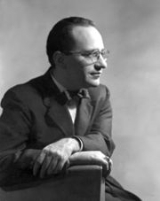
Murray Newton Rothbard (March 2, 1926 – January 7, 1995) was an American economist of the Austrian School who helped define modern libertarianism and founded a form of free-market anarchism he termed "anarcho-capitalism". Rothbard took the Austrian School's emphasis on spontaneous order and condemnation of central planning to an individualist anarchist conclusion.
bard was born to David and Rae Rothbard, who raised their Jewish family in the Bronx.

Discussion
Ask a question about 'Murray Rothbard'
Start a new discussion about 'Murray Rothbard'
Answer questions from other users
|
Quotations
Rights may be universal, but their enforcement must be local.
Two Just Wars: 1776 and 1861 (1994)
The more consistently Austrian an economist is, the better a writer he will be.
The problem is that he originated nothing that was true, and that whatever he originated was wrong ...
An Austrian Perspective on the History of Economic Thought (1995)
John Stuart was the quintessence of soft rather than hardcore, a woolly minded man of mush in striking contrast to his steel-edged father.
An Austrian Perspective on the History of Economic Thought (1995)

Encyclopedia
Murray Newton Rothbard (March 2, 1926 – January 7, 1995) was an American economist of the Austrian School who helped define modern libertarianism and founded a form of free-market anarchism he termed "anarcho-capitalism". Rothbard took the Austrian School's emphasis on spontaneous order and condemnation of central planning to an individualist anarchist conclusion.
Life and work
Rothbard was born to David and Rae Rothbard, who raised their Jewish family in the Bronx. "I grew up in a Communist culture," he recalled. He attended Columbia University, where he was awarded a Bachelor of Arts degree in mathematics and economics in 1945 and a Master of Arts degree in 1946. He earned a Doctor of Philosophy degree in economics in 1956 at Columbia doctorate under Arthur Burns, later the Chairman of the Federal Reserve.
During the early 1950s, he studied under the Austrian economist Ludwig von Mises at his seminars at New York University and was greatly influenced by Mises' book Human Action. In the 1950s and 1960s he worked for the classical liberal William Volker Fund on a book project that resulted in Man, Economy, and State, published in 1962. From 1963 to 1985, he taught at Polytechnic Institute of New York University in Brooklyn, New York. From 1986 until his death he was a distinguished professor at the University of Nevada, Las Vegas. Rothbard founded the Center for Libertarian Studies in 1976 and the Journal of Libertarian Studies in 1977. He was associated with the 1982 creation of the Ludwig von Mises Institute and later was its academic vice president. In 1987 he started the scholarly "Review of Austrian Economics," now called the Quarterly Journal of Austrian Economics.
In 1953 he married JoAnn Schumacher in New York City whom he called the “indispensable framework” for his life and work. He died in 1995 in Manhattan of a heart attack. The New York Times obituary called Rothbard "an economist and social philosopher who fiercely defended individual freedom against government intervention."
Austrian School writings
The Austrian School attempts to discover axioms of human action (called "praxeology" in the Austrian tradition). It supports free market economics and criticizes command economies because they destroy the information function of prices and inevitably lead to totalitarianism. Influential advocates were Eugen von Böhm-Bawerk, Friedrich Hayek and Ludwig von Mises. Rothbard argued that the entire Austrian economic theory is the working out of the logical implications of the fact that humans engage in purposeful action.
Rothbard also was knowledgeable in history and political philosophy. Rothbard's books, such as Man, Economy, and State, Power and Market, The Ethics of Liberty, and For a New Liberty, are considered by some to be classics of natural law libertarian thought. He studied the pre-Adam Smith economic schools, such as the Scholastics and the Physiocrats and discussed them in his unfinished, multi-volume work, An Austrian Perspective on the History of Economic Thought.
Rothbard divides the various kinds of state intervention in three categories: autistic intervention, which is interference with private non-exchange activities; binary intervention, which is forced exchange between individuals and the state; and triangular intervention, which is state-mandated exchange between individuals. According to Sanford Ikeda, Rothbard's typology "eliminates the gaps and inconsistencies that appear in Mises's original formulation."
Rothbard was an ardent critic of the influential economist John Maynard Keynes and Keynesian economic thought. His essay Keynes, the Man, is an attack upon Keynes' economic ideas and personage. Rothbard was also severely critical of, among others, utilitarian philosopher Jeremy Bentham in his essay, "Jeremy Bentham: The Utilitarian as Big Brother" published in his work, Classical Economics. Rothbard created "Rothbard's law" that "people tend to specialize in what they are worst at. Henry George, for example, is great on everything but land, so therefore he writes about land 90% of the time. Friedman is great except on money, so he concentrates on money.
Murray Rothbard devotes a chapter of Power and Market to the traditional role of the economist in public life. Rothbard notes that the functions of the economist on the free market differ strongly from those of the economist on the hampered market. "What can the economist do on the purely free market?" Rothbard asks. "He can explain the workings of the market economy (a vital task, especially since the untutored person tends to regard the market economy as sheer chaos), but he can do little else."
Anarcho-capitalist views Rothbard "combined the laissez-faire economics of his teacher [Ludwig Von Mises] with the absolutist views of human rights and rejection of the state he had absorbed from studying the individualist American anarchists of the nineteenth century such as Lysander Spooner and Benjamin Tucker." Of Spooner and Tucker, Rothbard wrote:
In Murray Rothbard's anarcho-capitalist model a system of protection agencies compete in a free market and are voluntarily supported by consumers who choose to use their protective and judicial services. Anarcho-capitalism would mean the end of the state monopoly on force.
Rothbard opposed what he considered the overspecialization of the academy and sought to fuse the disciplines of economics, history, ethics, and political science to create a "science of liberty." Rothbard described the moral basis for his anarcho-capitalist position in two of his books: For a New Liberty, published in 1972, and The Ethics of Liberty, published in 1982. In his Power and Market (1970), Rothbard described how a stateless economy would function.
In The Ethics of Liberty, Rothbard asserted the right of total self-ownership, as the only principle compatible with a moral code that applies to every person a "universal ethic" and that it is a natural law by being what is naturally best for man. He believed that, as a result, individuals owned the fruits of their labor. Accordingly, each person had the right to exchange his property with others. He believed that if an individual mixes his labor with unowned land then he is the proper owner, and from that point on it is private property that may only exchange hands by trade or gift. He also argued that such land would tend not to remain unused unless it makes economic sense to not put it to use.
Political Activism When young, he considered himself part of the Old Right, an anti-statist and anti-interventionist branch of the U.S. Republican party. When interventionist cold warriors of the National Review, such as William F. Buckley, Jr., gained influence in the Republican party in the 1950s, Rothbard quit the party. William F. Buckley later would write a bitter obituary in the National Review criticizing Rothbard's political views.
During the late 1950s, Rothbard was an associate of Ayn Rand and her Objectivist philosophy, but later had a falling out. He later lampooned the relationship in his play Mozart Was a Red. In the late 1960s, Rothbard advocated an alliance with the New Left anti-war movement, on the grounds that the conservative movement had been completely subsumed by the statist establishment. However, Rothbard later criticized the New Left for supporting a "People's Republic" style draft. It was during this phase that he associated with Karl Hess and founded Left and Right: A Journal of Libertarian Thought with Leonard Liggio and George Resch, which existed from 1965 to 1968. From 1969 to 1984 he edited The Libertarian Forum, also initially with Hess (although Hess's involvement ended in 1971).
Rothbard criticized the "frenzied nihilism" of left-wing libertarians but also criticized right-wing libertarians who were content to rely only on education to bring down the state; he believed that libertarians should adopt any non-immoral tactic available to them in order to bring about liberty.
During the 1970s and 1980s, Rothbard was active in the Libertarian Party. He was frequently involved in the party's internal politics. From 1978 to 1983, he was associated with the Libertarian Party Radical Caucus, allying himself with Justin Raimondo, Eric Garris and Williamson Evers. He opposed the "low tax liberalism" espoused by 1980 Libertarian Party presidential candidate Ed Clark and Cato Institute president Edward H Crane III. Rothbard split with the Radical Caucus at the 1983 national convention over cultural issues, and aligned himself with what he called the "rightwing populist" wing of the party, notably Lew Rockwell and Ron Paul, who ran for President on the Libertarian Party ticket in 1988 and in the 2008 Republican Party Primaries.
In 1989, Rothbard left the Libertarian Party and began building bridges to the post-Cold War anti-interventionist right, calling himself a paleolibertarian. He was the founding president of the conservative-libertarian John Randolph Club and supported the presidential campaign of Pat Buchanan in 1992, saying “with Pat Buchanan as our leader, we shall break the clock of social democracy.” However, later he became disillusioned and said Buchanan developed too much faith in economic planning and centralized state power.
Books * Man, Economy, and State (; ISBN 0-945466-30-7) (1962)
- The Panic of 1819. 1962, 2006 edition: ISBN 1-933550-08-2.
- America's Great Depression. () ([ISBN 0-945466-05-6. (1963, 1972, 1975, 1983, 2000)
- What Has Government Done to Our Money? ( / ) ISBN 0-945466-44-7. (1963)
- Economic Depressions: Causes and Cures (1969)
- Power and Market. ISBN 1-933550-05-8. (1970) (restored to Man, Economy, and State ISBN 0-945466-30-7, 2004)
- Education: Free and Compulsory. ISBN 0-945466-22-6. (1972)
- Left and Right, Selected Essays 1954-65 (1972)
- For a New Liberty: The Libertarian Manifesto ( / ) ISBN 0-945466-47-1. (1973, 1978)
- The Essential von Mises (1973)
- The Case for the 100 Percent Gold Dollar. ISBN 0-945466-34-X. ( / ) (1974)
- Egalitarianism as a Revolt Against Nature and Other Essays ISBN 0-945466-23-4. (1974)
- Conceived in Liberty (4 vol.) ISBN 0-945466-26-9. (1975-79)
- Individualism and the Philosophy of the Social Sciences. ISBN 0-932790-03-8. (1979)
- The Ethics of Liberty ( / ) ISBN 0-8147-7559-4. (1982)
- The Mystery of Banking (). ISBN 0-943940-04-4. (1983)
- Ludwig von Mises: Scholar, Creator, Hero. . (1988)
- Freedom, Inequality, Primitivism, and the Division of Labor. (included as Chapter 16 in Egalitarianism above) (1991)
- The Case Against the Fed (). ISBN 0-945466-17-X. (1994)
- An Austrian Perspective on the History of Economic Thought (2 vol.) ISBN 0-945466-48-X. (1995)
- Wall Street, Banks, and American Foreign Policy. () with an introduction by Justin Raimondo. (1995)
- Making Economic Sense. ISBN 0-945466-18-8. (1995, 2006)
- Logic of Action (2 vol.) ISBN 1-85898-015-1 and ISBN 1-85898-570-6. (1997)
- The Austrian Theory of the Trade Cycle and Other Essays. ISBN 0-945466-21-8. (also by Mises, Hayek, & Haberler)
- Irrepressible Rothbard: The Rothbard-Rockwell Report Essays of Murray N. Rothbard. (.) ISBN 1-883959-02-0. (2000)
- A History of Money and Banking in the United States. ISBN 0-945466-33-1. (2005)
- The Complete Libertarian Forum (2 vol.) () ISBN 1-933550-02-3. (2006)
- Economic Controversies (to be published 2007)
- The Betrayal of the American Right ISBN 978-1-933550-13-8 (2007)
Further reading
External links
- "" by David Gordon, also includes links to audio clips of Rothbard and the complete text of several books.
- ]
-
-
-
-
- of The Libertarian Forum, written about twice a month between 1969 and 1984.
-
- (pamphlet published by the Center for Libertarian Studies)
- - Rothbard's story of what happened with Ed Crane, the CATO institute and the Libertarian party
-
-
-
- Murray N. Rothbard, , The Quarterly Journal of Austrian Economics vol. 2, no. 3 (Fall 1999): 3 – 51
- , Belgium
- Murray N. Rotbard, , "LEFT AND RIGHT: A Journal of Libertarian Thought," Spring 1965.
|