

Polish Navy

Encyclopedia
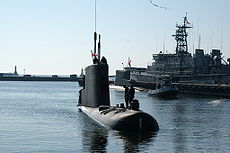
The Marynarka Wojenna Rzeczypospolitej Polskiej - MW RP (Republic of Poland Navy) Polish Navy, (or unofficially Polska Marynarka Wojenna - PMW) is the branch of Republic of Poland Armed Forces
responsible for naval operations. It has 80 ships (including 5 submarine
s, 2 frigate
s, 3 corvette
s, 3 missile boat
s - as of 2008) and about 14,300 commissioned and enlisted personnel. The traditional ship prefix
in the Polish Navy is ORP (Okręt Rzeczypospolitej Polskiej - "Ship of the Republic of Poland").
The Polish Navy is one of the bigger navies on the Baltic Sea
. It is mostly responsible for Baltic Sea
operations. Other duties include search and rescue operations covering parts of the Baltic, as well as hydrographic measurements and research.
Recently the Polish Navy played a more international role as part of the 2003 invasion of Iraq
, specifically providing logistical support for the United States Navy
.
s, and a Naval Air Brigade. In addition to this the Polish Navy supplies nearly 40 ships as part of the NATO Rapid Reaction Force, designed to be a force projection and conflict response force around the world.
The main mission of the Polish Navy is the defense of Polish territorial waters, the Polish coastline, and Polish interests abroad. Secondary roles include the support of NATO allied operations, such as in the Middle East
, and search and rescue
operations throughout the Baltic Sea.
, a Polish privateer
fleet defeated the Teutonic Knights
Navy and secured permanent access to the Baltic Sea. The Second Peace of Thorn (1466) acquired for Poland the strategic naval city of Danzig (Gdańsk), and with it the means of maintaining a large fleet on the Baltic. In 1561, following a victory over Russian Naval forces in the Baltic, the Polish Navy acquired a second key port at Riga
, in modern-day Latvia
.
The most celebrated victory of the Commonwealth Navy
was the Battle of Oliwa
in 1627 against Sweden
, during the Polish-Swedish War. The victory over Sweden secured for Poland permanent access to the Atlantic
, and laid the foundations for expeditions beyond Europe. Around this time the need for a permanent naval force was recognized by King Sigismund August, and the Commission of Royal Ships (Komisja Okrętów Królewskich) was created in 1625. This commission, along with the ultimate allocation of funds by the Sejm
in 1637, created a permanent Commonwealth Navy. However, the support for this navy was weak and it largely withered away by the 1650s.
The Duchy of Courland, by the time a fief of Polish-Lithuanian commonwealth
had a strong navy: it established colonies on Tobago
island in the West Indies (named New Courland) and on the estuary
of Gambia River
.
The Polish-Lithuanian Commonwealth
, although the dominant force in Central and Eastern Europe during the 16th-18th Centuries, never developed its navy to full potential. The small Polish coastline and the limited access to the Atlantic never allowed for a massive buildup of naval forces, especially not to the level of colonial powers such as England
and France
. The Partitions of Poland
at the end of the 18th century brought an end to the independent Polish Navy.
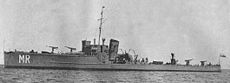 Following World War I
, the Second Polish Republic
on 28 November 1918, by the order of Józef Piłsudski, commander of the Armed Forces of Poland, founded the modern Polish Navy. The token naval force was placed under the command of Captain Bogumił Nowotny as its first chief. The first ships were acquired from a division of the Imperial German Navy (because of Great Britain's politics, it was very small part, limited to six torpedo boat
s).
In the 1920s and 1930s the Polish Navy underwent a modernisation program under the leadership of Vice-Admiral
Jerzy Świrski
(Chief of Naval Staff) and Rear-Admiral
Józef Unrug
(CO of the Fleet
). A number of modern ships were built in France
, the Netherlands
, and the United Kingdom
. Despite ambitious plans (including 2 cruisers and 12 destroyers), the budgetary limitations placed on the government by the Great Depression
never allowed the navy to expand beyond a small Baltic force. A building of one of submarines - the Orzeł, was even partly funded by a public collection. One of main goals of the Polish Navy was to protect the Polish coast against the Soviet Baltic Fleet
, therefore it put emphasis on fast submarines, strong destroyers and mine warfare. By September 1939 the Polish Navy consisted of 5 submarines, 4 destroyers, big minelayer
and various smaller support vessels and mine-warfare ships. This force was no match for the larger Kriegsmarine
, and so a strategy of harassment and indirect engagement was implemented.
.jpg) The outbreak of World War II
The outbreak of World War II
caught the Polish Navy off guard and in a state of expansion. Lacking numerical superiority, Polish Naval commanders decided to withdraw main surface ships to Great Britain
to join the Allied war effort and prevent them from being destroyed in a closed Baltic (Operation Peking
). On August 30, 1939, 3 destroyers (ORP Błyskawica, Grom
, and Burza
) sailed to the British naval base at Leith
in Scotland. They then operated in combination with Royal Navy
vessels against Germany. Also two submarines managed to flee from Baltic through the Danish straits
to Great Britain during the Polish September Campaign (one of them, ORP Orzeł, made a daring escape from internment in Tallinn
, Estonia
, and traveled without maps). Three submarines were interned in Sweden, while remaining surface vessels were sunk by German aircraft.
During the war the Polish Navy in exile was supplemented with leased British ships, including 2 cruiser
s, 7 destroyers, 3 submarines, and a number of smaller fast-attack vessels. The Polish Navy fought alongside the Allied
navies in Norway, the North Sea, the Atlantic and the Mediterranean, and aided in the escort of Atlantic and Arctic convoys. Polish naval vessels played a part in the sinking of the Bismarck
, and in the landings in Normandy during D-Day
. During the course of the war, 1 cruiser, 4 destroyers, 1 mine layer, 1 torpedo boat, 2 submarines and some smaller vessels (gunboats, mine hunters etc.) were sunk; in total, 26 ships were lost, mostly in September 1939. In addition to participating in the Bismarck sinking, the Polish Navy sank an enemy destroyer and 6 other surface ships, 2 submarines and a number of merchant vessels.
. During Communist times, Poland's Navy experienced a great buildup, including the development of a separate amphibious force of Polish Marines. The Navy also acquired a number of Soviet-made ships, including 2 destroyers, 2 missile destroyers, 13 submarines and 17 missile boats. Among them was a , Orzeł and a modified Kashin-class
missile destroyer, (Warszawa). Polish shipyards produced mostly landing craft, minesweepers and auxiliary vessels. The primary role of the Warsaw Pact Polish Navy was to be Baltic Sea control, as well as amphibious operations along the entire Baltic coastline against NATO forces in Denmark
and Germany. The collapse of the Soviet Union, the dissolution of the Warsaw Pact, and the fall of Communism ended this stance.
around the world. This includes a number of foreign acquisitions, including the acquisition of four s from Norway
, and two s from the United States. Polish Navy has also one submarine of the (Orzeł). The Naval air arm
has also acquired a number of SH-2G Super Seasprite helicopters. Highly appreciated is a special diver commando service Formoza
.
The Polish Navy has taken part in numerous joint force operations. In 1999 the naval base at Gdynia became the home base of all NATO submarine forces in the Baltic, codenamed "Cooperative Poseidon". That same year joint US-Polish submarine training manoeuvres codenamed "Baltic Porpoise" for the first time utilized the port in a multinational military nature.
. and Norwegian Naval Strike Missile
s for vessels and coastal defence units. It is planned to reinforce the Navy's helicopter fleet by around seven ASW
and SAR
units by latest 2013. The original order of seven Gawron-class corvettes has been reduced to two as it is planned to construct three s instead. Meanwhile, in a cost cutting operation, serving vessels will undergo upgrade and overhaul in order to maintain operational status. Concerns have been risen about the Polish Navy, as more vessels are being withdrawn from service without being replaced in the near future.
The naval jack of the Polish navy is based on a traditional 17th Century fighting jack design of a scimitar
ready to strike at the enemy. It was first used during the battle of Oliwa
in 1627 against Sweden, during the Polish-Swedish War. It is traditionally flown from the bow of the ship, and the ensign at the rear when in port. The jack used before 1955 and in 1960-1993 was similar, but the armed hand was in flesh colour, with blue sleeve. In 1955-1959 there was a different jack used.
Polish Armed Forces
Siły Zbrojne Rzeczypospolitej Polskiej are the national defense forces of Poland...
responsible for naval operations. It has 80 ships (including 5 submarine
Submarine
A submarine is a watercraft capable of independent operation below the surface of the water. It differs from a submersible, which has more limited underwater capability...
s, 2 frigate
Frigate
A frigate is any of several types of warship, the term having been used for ships of various sizes and roles over the last few centuries.In the 17th century, the term was used for any warship built for speed and maneuverability, the description often used being "frigate-built"...
s, 3 corvette
Corvette
A corvette is a small, maneuverable, lightly armed warship, originally smaller than a frigate and larger than a coastal patrol craft or fast attack craft , although many recent designs resemble frigates in size and role...
s, 3 missile boat
Missile boat
A Missile Boat is a small craft armed with anti-ship missiles. Being a small craft, missile boats are popular with nations interested in forming an inexpensive navy...
s - as of 2008) and about 14,300 commissioned and enlisted personnel. The traditional ship prefix
Ship prefix
A ship prefix is a combination of letters, usually abbreviations, used in front of the name of a civilian or naval ship.Prefixes for civilian vessels may either identify the type of propulsion, such as "SS" for steamship, or purpose, such as "RV" for research vessel. Civilian prefixes are often...
in the Polish Navy is ORP (Okręt Rzeczypospolitej Polskiej - "Ship of the Republic of Poland").
The Polish Navy is one of the bigger navies on the Baltic Sea
Baltic Sea
The Baltic Sea is a brackish mediterranean sea located in Northern Europe, from 53°N to 66°N latitude and from 20°E to 26°E longitude. It is bounded by the Scandinavian Peninsula, the mainland of Europe, and the Danish islands. It drains into the Kattegat by way of the Øresund, the Great Belt and...
. It is mostly responsible for Baltic Sea
Baltic Sea
The Baltic Sea is a brackish mediterranean sea located in Northern Europe, from 53°N to 66°N latitude and from 20°E to 26°E longitude. It is bounded by the Scandinavian Peninsula, the mainland of Europe, and the Danish islands. It drains into the Kattegat by way of the Øresund, the Great Belt and...
operations. Other duties include search and rescue operations covering parts of the Baltic, as well as hydrographic measurements and research.
Recently the Polish Navy played a more international role as part of the 2003 invasion of Iraq
2003 invasion of Iraq
The 2003 invasion of Iraq , was the start of the conflict known as the Iraq War, or Operation Iraqi Freedom, in which a combined force of troops from the United States, the United Kingdom, Australia and Poland invaded Iraq and toppled the regime of Saddam Hussein in 21 days of major combat operations...
, specifically providing logistical support for the United States Navy
United States Navy
The United States Navy is the naval warfare service branch of the United States Armed Forces and one of the seven uniformed services of the United States. The U.S. Navy is the largest in the world; its battle fleet tonnage is greater than that of the next 13 largest navies combined. The U.S...
.
Organization and mission
The Republic of Poland Navy is organized into 2 separate flotillaFlotilla
A flotilla , or naval flotilla, is a formation of small warships that may be part of a larger fleet. A flotilla is usually composed of a homogeneous group of the same class of warship, such as frigates, destroyers, torpedo boats, submarines, gunboats, or minesweepers...
s, and a Naval Air Brigade. In addition to this the Polish Navy supplies nearly 40 ships as part of the NATO Rapid Reaction Force, designed to be a force projection and conflict response force around the world.
- 3rd Ship Flotilla3rd Ship Flotilla3rd Ship Flotilla is a tactical unit of Polish Navy composed of 11 sub-units. The unit is a main strike force of Polish Navy, it operates various warships types such as frigates, corvettes, submarines or fast attack crafts...
(based at Gdynia) - 8th Coastal Defence Flotilla8th Coastal Defence Flotillathe 8th Coastal Defence Flotilla is a one of three tactical unit of the Polish Navy composed of 5 main sub-units. The 8th CDF was established in 1965.In 1994 it was named after vice-admiral Kazimierz PORĘBSKI. Flotilla consist of two ships squadrons, 2 ashore units, supported by Naval Base...
(based Świnoujście) - 1st Naval Brigade Aviation (based at Gdynia)
The main mission of the Polish Navy is the defense of Polish territorial waters, the Polish coastline, and Polish interests abroad. Secondary roles include the support of NATO allied operations, such as in the Middle East
Middle East
The Middle East is a region that encompasses Western Asia and Northern Africa. It is often used as a synonym for Near East, in opposition to Far East...
, and search and rescue
Search and rescue
Search and rescue is the search for and provision of aid to people who are in distress or imminent danger.The general field of search and rescue includes many specialty sub-fields, mostly based upon terrain considerations...
operations throughout the Baltic Sea.
Ships and naval aircraft
Surface Vessels
- FrigateFrigateA frigate is any of several types of warship, the term having been used for ships of various sizes and roles over the last few centuries.In the 17th century, the term was used for any warship built for speed and maneuverability, the description often used being "frigate-built"...
s:- 2 Oliver Hazard Perry ClassOliver Hazard Perry class frigateThe Oliver Hazard Perry class is a class of frigates named after the American Commodore Oliver Hazard Perry, the hero of the naval Battle of Lake Erie...
- 2 Oliver Hazard Perry Class
- CorvetteCorvetteA corvette is a small, maneuverable, lightly armed warship, originally smaller than a frigate and larger than a coastal patrol craft or fast attack craft , although many recent designs resemble frigates in size and role...
s:- 1 Kaszub class
- 2 Tarantul classTarantul class corvetteThe Project 1241.1 Molniya are a class of Soviet missile corvettes. They have the NATO reporting name Tarantul...
- Fast Attack CraftFast Attack CraftFast Attack Craft are small, fast, agile and offensive warships, that are armed with anti-ship missiles, guns or torpedoes. These are usually operated in close proximity to land as they lack both the sea-keeping and all-round defensive capabilities to survive in blue water. The size of the vessel...
:- 3 Orkan classOrkan classThe Orkan class or projekt 660 is series of three fast attack craft of the Polish Navy, in service since 1992.-History:...
- 3 Orkan class
- Mine Counter-Measure VesselsMinesweeper (ship)A minesweeper is a small naval warship designed to counter the threat posed by naval mines. Minesweepers generally detect then neutralize mines in advance of other naval operations.-History:...
- 12 Gardno class
- 4 Mamry class
- 3 206FM class206FMMinehunters 206 FM class were built in former "Komuny Paryskiej" shipyard .- Armament :*underwater vehicle*missile/artillery system*2 SAM launchers***chaff launchers*depth charges -External links:*...
Auxiliary Vessels
- Landing craftLanding craftLanding craft are boats and seagoing vessels used to convey a landing force from the sea to the shore during an amphibious assault. Most renowned are those used to storm the beaches of Normandy, the Mediterranean, and many Pacific islands during WWII...
:- 5 Lublin classLublin classThe Lublin class or projekt 767 are minelayer-landing ships designed and built in Poland for the Polish Navy, in service since 1989. Only 5 out of 12 planned ships were built by Northern Shipyard in Gdańsk due to Fall of Communism. They can carry up to 9 T-72 MBT or 17 transport vehicles like Star...
- 5 Lublin class
- Salvage Ships:
- 2 Piast class
- 5 Zbyszko class
- Auxiliary shipAuxiliary shipAn auxiliary ship is a naval ship which is designed to operate in any number of roles supporting combatant ships and other naval operations. Auxiliaries are not primary combatants, although they may have some limited combat capacity, usually of a self defensive nature.Auxiliaries are extremely...
:- 1 Kontradmiral Xawery Czernicki classORP Kontradmiral Xawery CzernickiORP Kontradmiral Xawery Czernicki is a multitask logistic support ship of the Polish Navy. The ship's design was based on a hull of the 130 class degaussing station planned by the Construction Bureau of the Refurbishing Shipyard in Gdańsk. The hull was ordered by the Russian Navy, but the contract...
- 1 Kontradmiral Xawery Czernicki class
- 40 other vessels (including survey ships and tankers).
Aircraft
- HelicopterHelicopterA helicopter is a type of rotorcraft in which lift and thrust are supplied by one or more engine-driven rotors. This allows the helicopter to take off and land vertically, to hover, and to fly forwards, backwards, and laterally...
s:- 4 Kaman SH-2SH-2 SeaspriteThe Kaman SH-2 Seasprite is a ship-based helicopter with anti-submarine, anti-surface threat capability, including over-the-horizon targeting. This aircraft extends and increases shipboard sensor and weapon capabilities against several types of enemy threats, including submarines of all types,...
Anti-submarine Helicopter - 2 Mil Mi-17Mil Mi-17The Mil Mi-17 is a Russian helicopter currently in production at two factories in Kazan and Ulan-Ude...
Transport - 10 PZL W-3 SAR and Utility
- 5 PZL Mi-2 Command and Utility
- 10 Mil Mi-14Mil Mi-14|-See also:-External links:******...
Anti-submarine and SAR
- 4 Kaman SH-2
- Fixed-wing aircraftFixed-wing aircraftA fixed-wing aircraft is an aircraft capable of flight using wings that generate lift due to the vehicle's forward airspeed. Fixed-wing aircraft are distinct from rotary-wing aircraft in which wings rotate about a fixed mast and ornithopters in which lift is generated by flapping wings.A powered...
:- 12 PZL M28B Bryza Patrol and Utility
Origins
The Polish Navy has its roots in naval vessels that were largely used on Poland's main rivers in defense of trade and commerce. During the Thirteen Years' War (1454–1466), this small force of inland ships for the first time saw real open sea combat. At the battle of the Vistula LagoonBattle of Zatoka Swieza
The Battle of Vistula Lagoon was fought on September 15, 1463 between the Teutonic Order navy, and the navy of Prussian Confederation which was allied with the King of Poland....
, a Polish privateer
Privateer
A privateer is a private person or ship authorized by a government by letters of marque to attack foreign shipping during wartime. Privateering was a way of mobilizing armed ships and sailors without having to spend public money or commit naval officers...
fleet defeated the Teutonic Knights
Teutonic Knights
The Order of Brothers of the German House of Saint Mary in Jerusalem , commonly the Teutonic Order , is a German medieval military order, in modern times a purely religious Catholic order...
Navy and secured permanent access to the Baltic Sea. The Second Peace of Thorn (1466) acquired for Poland the strategic naval city of Danzig (Gdańsk), and with it the means of maintaining a large fleet on the Baltic. In 1561, following a victory over Russian Naval forces in the Baltic, the Polish Navy acquired a second key port at Riga
Riga
Riga is the capital and largest city of Latvia. With 702,891 inhabitants Riga is the largest city of the Baltic states, one of the largest cities in Northern Europe and home to more than one third of Latvia's population. The city is an important seaport and a major industrial, commercial,...
, in modern-day Latvia
Latvia
Latvia , officially the Republic of Latvia , is a country in the Baltic region of Northern Europe. It is bordered to the north by Estonia , to the south by Lithuania , to the east by the Russian Federation , to the southeast by Belarus and shares maritime borders to the west with Sweden...
.
The most celebrated victory of the Commonwealth Navy
Polish-Lithuanian Commonwealth Navy
Polish–Lithuanian Commonwealth Navy was the navy of the Polish–Lithuanian Commonwealth.- Battle of Oliva :During the time of Polish–Swedish War in 1627, the Commonwealth fleet under command of Admiral Arend Dickmann achieved it most famous victory, breaking the Swedish blockade at the Battle of...
was the Battle of Oliwa
Battle of Oliwa
The naval Battle of Oliva, also Battle of Oliwa or Battle of Gdańsk Roadstead, took place on 28 November 1627 during the Polish-Swedish War outside Danzig harbour near Oliva , a village outside of Danzig...
in 1627 against Sweden
Sweden
Sweden , officially the Kingdom of Sweden , is a Nordic country on the Scandinavian Peninsula in Northern Europe. Sweden borders with Norway and Finland and is connected to Denmark by a bridge-tunnel across the Öresund....
, during the Polish-Swedish War. The victory over Sweden secured for Poland permanent access to the Atlantic
Atlantic Ocean
The Atlantic Ocean is the second-largest of the world's oceanic divisions. With a total area of about , it covers approximately 20% of the Earth's surface and about 26% of its water surface area...
, and laid the foundations for expeditions beyond Europe. Around this time the need for a permanent naval force was recognized by King Sigismund August, and the Commission of Royal Ships (Komisja Okrętów Królewskich) was created in 1625. This commission, along with the ultimate allocation of funds by the Sejm
Sejm
The Sejm is the lower house of the Polish parliament. The Sejm is made up of 460 deputies, or Poseł in Polish . It is elected by universal ballot and is presided over by a speaker called the Marshal of the Sejm ....
in 1637, created a permanent Commonwealth Navy. However, the support for this navy was weak and it largely withered away by the 1650s.
The Duchy of Courland, by the time a fief of Polish-Lithuanian commonwealth
Polish-Lithuanian Commonwealth
The Polish–Lithuanian Commonwealth was a dualistic state of Poland and Lithuania ruled by a common monarch. It was the largest and one of the most populous countries of 16th- and 17th‑century Europe with some and a multi-ethnic population of 11 million at its peak in the early 17th century...
had a strong navy: it established colonies on Tobago
Tobago
Tobago is the smaller of the two main islands that make up the Republic of Trinidad and Tobago. It is located in the southern Caribbean, northeast of the island of Trinidad and southeast of Grenada. The island lies outside the hurricane belt...
island in the West Indies (named New Courland) and on the estuary
Estuary
An estuary is a partly enclosed coastal body of water with one or more rivers or streams flowing into it, and with a free connection to the open sea....
of Gambia River
Gambia River
The Gambia River is a major river in West Africa, running from the Fouta Djallon plateau in north Guinea westward through Senegal and The Gambia to the Atlantic Ocean at the city of Banjul...
.
The Polish-Lithuanian Commonwealth
Polish-Lithuanian Commonwealth
The Polish–Lithuanian Commonwealth was a dualistic state of Poland and Lithuania ruled by a common monarch. It was the largest and one of the most populous countries of 16th- and 17th‑century Europe with some and a multi-ethnic population of 11 million at its peak in the early 17th century...
, although the dominant force in Central and Eastern Europe during the 16th-18th Centuries, never developed its navy to full potential. The small Polish coastline and the limited access to the Atlantic never allowed for a massive buildup of naval forces, especially not to the level of colonial powers such as England
England
England is a country that is part of the United Kingdom. It shares land borders with Scotland to the north and Wales to the west; the Irish Sea is to the north west, the Celtic Sea to the south west, with the North Sea to the east and the English Channel to the south separating it from continental...
and France
France
The French Republic , The French Republic , The French Republic , (commonly known as France , is a unitary semi-presidential republic in Western Europe with several overseas territories and islands located on other continents and in the Indian, Pacific, and Atlantic oceans. Metropolitan France...
. The Partitions of Poland
Partitions of Poland
The Partitions of Poland or Partitions of the Polish–Lithuanian Commonwealth took place in the second half of the 18th century and ended the existence of the Polish–Lithuanian Commonwealth, resulting in the elimination of sovereign Poland for 123 years...
at the end of the 18th century brought an end to the independent Polish Navy.
Twentieth century
World War I
World War I , which was predominantly called the World War or the Great War from its occurrence until 1939, and the First World War or World War I thereafter, was a major war centred in Europe that began on 28 July 1914 and lasted until 11 November 1918...
, the Second Polish Republic
Second Polish Republic
The Second Polish Republic, Second Commonwealth of Poland or interwar Poland refers to Poland between the two world wars; a period in Polish history in which Poland was restored as an independent state. Officially known as the Republic of Poland or the Commonwealth of Poland , the Polish state was...
on 28 November 1918, by the order of Józef Piłsudski, commander of the Armed Forces of Poland, founded the modern Polish Navy. The token naval force was placed under the command of Captain Bogumił Nowotny as its first chief. The first ships were acquired from a division of the Imperial German Navy (because of Great Britain's politics, it was very small part, limited to six torpedo boat
Torpedo boat
A torpedo boat is a relatively small and fast naval vessel designed to carry torpedoes into battle. The first designs rammed enemy ships with explosive spar torpedoes, and later designs launched self-propelled Whitehead torpedoes. They were created to counter battleships and other large, slow and...
s).
In the 1920s and 1930s the Polish Navy underwent a modernisation program under the leadership of Vice-Admiral
Vice Admiral
Vice admiral is a senior naval rank of a three-star flag officer, which is equivalent to lieutenant general in the other uniformed services. A vice admiral is typically senior to a rear admiral and junior to an admiral...
Jerzy Świrski
Jerzy Swirski
Jerzy Świrski was a Polish vice admiral and officer in the Russian Navy and Polish Navy....
(Chief of Naval Staff) and Rear-Admiral
Rear Admiral
Rear admiral is a naval commissioned officer rank above that of a commodore and captain, and below that of a vice admiral. It is generally regarded as the lowest of the "admiral" ranks, which are also sometimes referred to as "flag officers" or "flag ranks"...
Józef Unrug
Józef Unrug
Józef Michał Hubert Unrug was a German-born Polish vice admiral who helped reestablish Poland's navy after World War I. During the opening stages of World War II, he served as the Polish Navy's commander.-Biography:...
(CO of the Fleet
Naval fleet
A fleet, or naval fleet, is a large formation of warships, and the largest formation in any navy. A fleet at sea is the direct equivalent of an army on land....
). A number of modern ships were built in France
France
The French Republic , The French Republic , The French Republic , (commonly known as France , is a unitary semi-presidential republic in Western Europe with several overseas territories and islands located on other continents and in the Indian, Pacific, and Atlantic oceans. Metropolitan France...
, the Netherlands
Netherlands
The Netherlands is a constituent country of the Kingdom of the Netherlands, located mainly in North-West Europe and with several islands in the Caribbean. Mainland Netherlands borders the North Sea to the north and west, Belgium to the south, and Germany to the east, and shares maritime borders...
, and the United Kingdom
United Kingdom
The United Kingdom of Great Britain and Northern IrelandIn the United Kingdom and Dependencies, other languages have been officially recognised as legitimate autochthonous languages under the European Charter for Regional or Minority Languages...
. Despite ambitious plans (including 2 cruisers and 12 destroyers), the budgetary limitations placed on the government by the Great Depression
Great Depression
The Great Depression was a severe worldwide economic depression in the decade preceding World War II. The timing of the Great Depression varied across nations, but in most countries it started in about 1929 and lasted until the late 1930s or early 1940s...
never allowed the navy to expand beyond a small Baltic force. A building of one of submarines - the Orzeł, was even partly funded by a public collection. One of main goals of the Polish Navy was to protect the Polish coast against the Soviet Baltic Fleet
Baltic Fleet
The Twice Red Banner Baltic Fleet - is the Russian Navy's presence in the Baltic Sea. In previous historical periods, it has been part of the navy of Imperial Russia and later the Soviet Union. The Fleet gained the 'Twice Red Banner' appellation during the Soviet period, indicating two awards of...
, therefore it put emphasis on fast submarines, strong destroyers and mine warfare. By September 1939 the Polish Navy consisted of 5 submarines, 4 destroyers, big minelayer
Minelayer
Minelaying is the act of deploying explosive mines. Historically this has been carried out by ships, submarines and aircraft. Additionally, since World War I the term minelayer refers specifically to a naval ship used for deploying naval mines...
and various smaller support vessels and mine-warfare ships. This force was no match for the larger Kriegsmarine
Kriegsmarine
The Kriegsmarine was the name of the German Navy during the Nazi regime . It superseded the Kaiserliche Marine of World War I and the post-war Reichsmarine. The Kriegsmarine was one of three official branches of the Wehrmacht, the unified armed forces of Nazi Germany.The Kriegsmarine grew rapidly...
, and so a strategy of harassment and indirect engagement was implemented.
World War II
World War II
World War II, or the Second World War , was a global conflict lasting from 1939 to 1945, involving most of the world's nations—including all of the great powers—eventually forming two opposing military alliances: the Allies and the Axis...
caught the Polish Navy off guard and in a state of expansion. Lacking numerical superiority, Polish Naval commanders decided to withdraw main surface ships to Great Britain
Great Britain
Great Britain or Britain is an island situated to the northwest of Continental Europe. It is the ninth largest island in the world, and the largest European island, as well as the largest of the British Isles...
to join the Allied war effort and prevent them from being destroyed in a closed Baltic (Operation Peking
Peking Plan
The Peking PlanThe "Peking" in the name is the traditional English spelling of the former name of the city that is now the capital of China, which is now spelled in the pinyin system 'Beijing'. At the time, the city was not the capital, and its name was Peiping. Before the Second World War in the...
). On August 30, 1939, 3 destroyers (ORP Błyskawica, Grom
ORP Grom
ORP Grom was the lead ship of her class of destroyers serving in the Polish Navy during World War II. She was named after the Polish word for "thunderclap".-History:...
, and Burza
ORP Burza
ORP Burza was a of the Polish Navy which saw action in World War II.-History:ORP Burza was ordered on 2 April 1926 from the French shipyard Chantiers Naval Francais together with her sister ship Wicher...
) sailed to the British naval base at Leith
Leith
-South Leith v. North Leith:Up until the late 16th century Leith , comprised two separate towns on either side of the river....
in Scotland. They then operated in combination with Royal Navy
Royal Navy
The Royal Navy is the naval warfare service branch of the British Armed Forces. Founded in the 16th century, it is the oldest service branch and is known as the Senior Service...
vessels against Germany. Also two submarines managed to flee from Baltic through the Danish straits
Danish straits
The Danish straits are the three channels connecting the Baltic Sea to the North Sea through the Kattegat and Skagerrak. They transect Denmark, and are not to be confused with the Denmark Strait between Greenland and Iceland...
to Great Britain during the Polish September Campaign (one of them, ORP Orzeł, made a daring escape from internment in Tallinn
Tallinn
Tallinn is the capital and largest city of Estonia. It occupies an area of with a population of 414,940. It is situated on the northern coast of the country, on the banks of the Gulf of Finland, south of Helsinki, east of Stockholm and west of Saint Petersburg. Tallinn's Old Town is in the list...
, Estonia
Estonia
Estonia , officially the Republic of Estonia , is a state in the Baltic region of Northern Europe. It is bordered to the north by the Gulf of Finland, to the west by the Baltic Sea, to the south by Latvia , and to the east by Lake Peipsi and the Russian Federation . Across the Baltic Sea lies...
, and traveled without maps). Three submarines were interned in Sweden, while remaining surface vessels were sunk by German aircraft.
During the war the Polish Navy in exile was supplemented with leased British ships, including 2 cruiser
Cruiser
A cruiser is a type of warship. The term has been in use for several hundreds of years, and has had different meanings throughout this period...
s, 7 destroyers, 3 submarines, and a number of smaller fast-attack vessels. The Polish Navy fought alongside the Allied
Allies
In everyday English usage, allies are people, groups, or nations that have joined together in an association for mutual benefit or to achieve some common purpose, whether or not explicit agreement has been worked out between them...
navies in Norway, the North Sea, the Atlantic and the Mediterranean, and aided in the escort of Atlantic and Arctic convoys. Polish naval vessels played a part in the sinking of the Bismarck
German battleship Bismarck
Bismarck was the first of two s built for the German Kriegsmarine during World War II. Named after Chancellor Otto von Bismarck, the primary force behind the German unification in 1871, the ship was laid down at the Blohm & Voss shipyard in Hamburg in July 1936 and launched nearly three years later...
, and in the landings in Normandy during D-Day
D-Day
D-Day is a term often used in military parlance to denote the day on which a combat attack or operation is to be initiated. "D-Day" often represents a variable, designating the day upon which some significant event will occur or has occurred; see Military designation of days and hours for similar...
. During the course of the war, 1 cruiser, 4 destroyers, 1 mine layer, 1 torpedo boat, 2 submarines and some smaller vessels (gunboats, mine hunters etc.) were sunk; in total, 26 ships were lost, mostly in September 1939. In addition to participating in the Bismarck sinking, the Polish Navy sank an enemy destroyer and 6 other surface ships, 2 submarines and a number of merchant vessels.
Operations
The following selection illustrates the breadth of Polish Naval activity.- Pekin: evacuation from PolandPolandPoland , officially the Republic of Poland , is a country in Central Europe bordered by Germany to the west; the Czech Republic and Slovakia to the south; Ukraine, Belarus and Lithuania to the east; and the Baltic Sea and Kaliningrad Oblast, a Russian exclave, to the north...
(September, 1939) - WorekWorek PlanThe Worek Plan was an operation of the Polish Navy in the first days of World War II, in which its five submarines formed a screen in order to prevent German naval forces from carrying out landings on the Polish coast, and to attack enemy ships bombarding Polish coastal fortifications, in...
: submarine defensive blockade of the Polish coast (September, 1939) - Narvik: battling General DietlEduard DietlEduard Dietl was a German general of World War II. He was born in Bad Aibling, Bavaria. He was also a recipient of the Knight's Cross of the Iron Cross with Oak Leaves and Swords...
's forces during the Norwegian CampaignNorwegian CampaignThe Norwegian Campaign was a military campaign that was fought in Norway during the Second World War between the Allies and Germany, after the latter's invasion of the country. In April 1940, the United Kingdom and France came to Norway's aid with an expeditionary force...
(April–June, 1940) - DynamoOperation DynamoThe Dunkirk evacuation, commonly known as the Miracle of Dunkirk, code-named Operation Dynamo by the British, was the evacuation of Allied soldiers from the beaches and harbour of Dunkirk, France, between 26 May and the early hours of 3 June 1940, because the British, French and Belgian troops were...
: evacuation of Allied troops from Dunkirk conducted (May/ June, 1940) - HalberdOperation Halberd-Summary:During World War II, Operation Halberd was a British naval operation in September 1941 to escort a convoy from Gibraltar to Malta....
: Malta convoyMalta ConvoysThe Malta Convoys were a series of Allied supply convoys that sustained the besieged island of Malta during the Mediterranean Theatre of the Second World War...
(1941) - Bismarck: sinking of the Bismarck (May 26–27, 1941)
- AnkletOperation AnkletOperation Anklet was the codename given to a British Commando raid during the Second World War. The raid on the Lofoten Islands was carried out in December 1941, by 300 men from No. 12 Commando and the Norwegian Independent Company 1. The landing party was supported by 22 ships from three navies.At...
: British Commando raid on the Lofoten IslandsLofotenLofoten is an archipelago and a traditional district in the county of Nordland, Norway. Though lying within the Arctic Circle, the archipelago experiences one of the world's largest elevated temperature anomalies relative to its high latitude.-Etymology:...
, Norway (November, 1941) - HarpoonOperation Harpoon (1942)Not to be confused with Operation Harpoon Operation Harpoon was one of two simultaneous Allied convoys sent to supply Malta in the Axis-dominated Mediterranean Sea in mid-June 1942, during the Second World War. One convoy, Operation Vigorous, left Alexandria. The other, Operation Harpoon, travelled...
: Malta convoyMalta ConvoysThe Malta Convoys were a series of Allied supply convoys that sustained the besieged island of Malta during the Mediterranean Theatre of the Second World War...
(mid-June 1942) - JubileeDieppe RaidThe Dieppe Raid, also known as the Battle of Dieppe, Operation Rutter or later on Operation Jubilee, during the Second World War, was an Allied attack on the German-occupied port of Dieppe on the northern coast of France on 19 August 1942. The assault began at 5:00 AM and by 10:50 AM the Allied...
: attack on the German-occupied port of DieppeDieppe, Seine-MaritimeDieppe is a commune in the Seine-Maritime department in France. In 1999, the population of the whole Dieppe urban area was 81,419.A port on the English Channel, famous for its scallops, and with a regular ferry service from the Gare Maritime to Newhaven in England, Dieppe also has a popular pebbled...
, France (August 19, 1942) - TorchOperation TorchOperation Torch was the British-American invasion of French North Africa in World War II during the North African Campaign, started on 8 November 1942....
: Anglo-American invasion of French North AfricaFrench colonial empiresThe French colonial empire was the set of territories outside Europe that were under French rule primarily from the 17th century to the late 1960s. In the 19th and 20th centuries, the colonial empire of France was the second-largest in the world behind the British Empire. The French colonial empire...
(November, 1942) - HuskyAllied invasion of SicilyThe Allied invasion of Sicily, codenamed Operation Husky, was a major World War II campaign, in which the Allies took Sicily from the Axis . It was a large scale amphibious and airborne operation, followed by six weeks of land combat. It launched the Italian Campaign.Husky began on the night of...
: Allied invasion of SicilySicilySicily is a region of Italy, and is the largest island in the Mediterranean Sea. Along with the surrounding minor islands, it constitutes an autonomous region of Italy, the Regione Autonoma Siciliana Sicily has a rich and unique culture, especially with regard to the arts, music, literature,...
(July 1943) - BaytownAllied invasion of ItalyThe Allied invasion of Italy was the Allied landing on mainland Italy on September 3, 1943, by General Harold Alexander's 15th Army Group during the Second World War. The operation followed the successful invasion of Sicily during the Italian Campaign...
: landings in CalabriaCalabriaCalabria , in antiquity known as Bruttium, is a region in southern Italy, south of Naples, located at the "toe" of the Italian Peninsula. The capital city of Calabria is Catanzaro....
, Italy (September 1943) - Avalanche: landings near SalernoSalernoSalerno is a city and comune in Campania and is the capital of the province of the same name. It is located on the Gulf of Salerno on the Tyrrhenian Sea....
, Italy (September 1943) - Alacrity: Allied naval patrols around AzoresAzoresThe Archipelago of the Azores is composed of nine volcanic islands situated in the middle of the North Atlantic Ocean, and is located about west from Lisbon and about east from the east coast of North America. The islands, and their economic exclusion zone, form the Autonomous Region of the...
(1943) - ShingleOperation ShingleOperation Shingle , during the Italian Campaign of World War II, was an Allied amphibious landing against Axis forces in the area of Anzio and Nettuno, Italy. The operation was commanded by Major General John P. Lucas and was intended to outflank German forces of the Winter Line and enable an...
: Allied landing in the AnzioAnzioAnzio is a city and comune on the coast of the Lazio region of Italy, about south of Rome.Well known for its seaside harbour setting, it is a fishing port and a departure point for ferries and hydroplanes to the Pontine Islands of Ponza, Palmarola and Ventotene...
area, Italy (January, 1944) - TungstenOperation TungstenOperation Tungsten was a British naval operation during World War II. it was one of a number of aerial attacks on the German battleship Tirpitz while she was in Norwegian waters...
: Fleet Air ArmFleet Air ArmThe Fleet Air Arm is the branch of the British Royal Navy responsible for the operation of naval aircraft. The Fleet Air Arm currently operates the AgustaWestland Merlin, Westland Sea King and Westland Lynx helicopters...
attack on TirpitzGerman battleship TirpitzTirpitz was the second of two s built for the German Kriegsmarine during World War II. Named after Grand Admiral Alfred von Tirpitz, the architect of the Imperial Navy, the ship was laid down at the Kriegsmarinewerft in Wilhelmshaven in November 1936 and launched two and a half years later in April...
(April 1944) - Croquet: Allied anti-shipping patrol off Norway (1944)
- Potluck: Allied anti-shipping patrol off Norway (1944)
- NeptuneOperation NeptuneThe Normandy landings, codenamed Operation Neptune, were the landing operations of the Allied invasion of Normandy, in Operation Overlord, during World War II. The landings commenced on Tuesday, 6 June 1944 , beginning at 6:30 AM British Double Summer Time...
: the landing phase of Operation OverlordOperation OverlordOperation Overlord was the code name for the Battle of Normandy, the operation that launched the invasion of German-occupied western Europe during World War II by Allied forces. The operation commenced on 6 June 1944 with the Normandy landings...
(June 1944) - DragoonOperation DragoonOperation Dragoon was the Allied invasion of southern France on August 15, 1944, during World War II. The invasion was initiated via a parachute drop by the 1st Airborne Task Force, followed by an amphibious assault by elements of the U.S. Seventh Army, followed a day later by a force made up...
: Allied invasion of southern France(August 1944) - DeadlightOperation DeadlightOperation Deadlight was the code name for the scuttling of U-boats surrendered to the Allies after the defeat of Germany near the end of World War II....
: scuttling of surrendered U-boatU-boatU-boat is the anglicized version of the German word U-Boot , itself an abbreviation of Unterseeboot , and refers to military submarines operated by Germany, particularly in World War I and World War II...
s after World War II (late 1945/ early 1946)
Postwar
After World War II, on July 7, 1945, the new Soviet-imposed Communist government revived the Polish Navy with headquarters in GdyniaGdynia
Gdynia is a city in the Pomeranian Voivodeship of Poland and an important seaport of Gdańsk Bay on the south coast of the Baltic Sea.Located in Kashubia in Eastern Pomerania, Gdynia is part of a conurbation with the spa town of Sopot, the city of Gdańsk and suburban communities, which together...
. During Communist times, Poland's Navy experienced a great buildup, including the development of a separate amphibious force of Polish Marines. The Navy also acquired a number of Soviet-made ships, including 2 destroyers, 2 missile destroyers, 13 submarines and 17 missile boats. Among them was a , Orzeł and a modified Kashin-class
Mod Kashin class destroyer
The Modified Kashin class were six ships built and modified based on the Kashin class destroyer for the Soviet Navy between 1973 to 1980. Seven more ships were built after that for the Indian Navy. The Soviet designation for the Mod Kashin is Project 61MP.-Added Equipment:The main addition to the...
missile destroyer, (Warszawa). Polish shipyards produced mostly landing craft, minesweepers and auxiliary vessels. The primary role of the Warsaw Pact Polish Navy was to be Baltic Sea control, as well as amphibious operations along the entire Baltic coastline against NATO forces in Denmark
Denmark
Denmark is a Scandinavian country in Northern Europe. The countries of Denmark and Greenland, as well as the Faroe Islands, constitute the Kingdom of Denmark . It is the southernmost of the Nordic countries, southwest of Sweden and south of Norway, and bordered to the south by Germany. Denmark...
and Germany. The collapse of the Soviet Union, the dissolution of the Warsaw Pact, and the fall of Communism ended this stance.
21st century
Poland's entrance into the North Atlantic Treaty Organisation has greatly changed the structure and role of the Polish Navy. Whereas before, most of Naval High Command was concerned with coastal defense and Baltic Sea Operations, the current mindset is for integration with international naval operations. The focus is on expansion of subsurface naval capabilities, and in the creation of a large submarine force. To facilitate these changes the Republic of Poland has undertaken a number of modernization programs aimed at creating a force capable of power projectionPower projection
Power projection is a term used in military and political science to refer to the capacity of a state to conduct expeditionary warfare, i.e. to intimidate other nations and implement policy by means of force, or the threat thereof, in an area distant from its own territory.This ability is a...
around the world. This includes a number of foreign acquisitions, including the acquisition of four s from Norway
Norway
Norway , officially the Kingdom of Norway, is a Nordic unitary constitutional monarchy whose territory comprises the western portion of the Scandinavian Peninsula, Jan Mayen, and the Arctic archipelago of Svalbard and Bouvet Island. Norway has a total area of and a population of about 4.9 million...
, and two s from the United States. Polish Navy has also one submarine of the (Orzeł). The Naval air arm
Naval aviation
Naval aviation is the application of manned military air power by navies, including ships that embark fixed-wing aircraft or helicopters. In contrast, maritime aviation is the operation of aircraft in a maritime role under the command of non-naval forces such as the former RAF Coastal Command or a...
has also acquired a number of SH-2G Super Seasprite helicopters. Highly appreciated is a special diver commando service Formoza
FORMOZA
Formoza, MJDS en. "Naval Special Operations Unit", is a new name of the Polish Navy Special Operations Sections , now Special forces of Poland , which used to operate also under the name of Special Naval Frogmen Group...
.
The Polish Navy has taken part in numerous joint force operations. In 1999 the naval base at Gdynia became the home base of all NATO submarine forces in the Baltic, codenamed "Cooperative Poseidon". That same year joint US-Polish submarine training manoeuvres codenamed "Baltic Porpoise" for the first time utilized the port in a multinational military nature.
Modernisation 2018
The Polish Navy is undergoing a full modernisation, although with a limited spending budget of 5 billion złoty (to spend between 2010–2018). It has caused project cancellations, limitations as well as severe time delays to several projects as initially a 9 billion złoty spending budget was planned. However, the Polish Navy has acquired already Swedish RBS15 Mk3RBS15
The RBS-15 is a long-range fire-and-forget surface-to-surface and air-to-surface, anti-ship missile. The later version Mk. III has the ability to attack land targets as well...
. and Norwegian Naval Strike Missile
Naval Strike Missile
The Naval Strike Missile is an anti-ship and land-attack missile developed by the Norwegian company Kongsberg Defence & Aerospace , and whose initial serial production contract was signed in June 2007. It has been chosen by the Royal Norwegian Navy for its new Fridtjof Nansen class frigates and...
s for vessels and coastal defence units. It is planned to reinforce the Navy's helicopter fleet by around seven ASW
Anti-submarine warfare
Anti-submarine warfare is a branch of naval warfare that uses surface warships, aircraft, or other submarines to find, track and deter, damage or destroy enemy submarines....
and SAR
Search and rescue
Search and rescue is the search for and provision of aid to people who are in distress or imminent danger.The general field of search and rescue includes many specialty sub-fields, mostly based upon terrain considerations...
units by latest 2013. The original order of seven Gawron-class corvettes has been reduced to two as it is planned to construct three s instead. Meanwhile, in a cost cutting operation, serving vessels will undergo upgrade and overhaul in order to maintain operational status. Concerns have been risen about the Polish Navy, as more vessels are being withdrawn from service without being replaced in the near future.
Naval colors
The flag of the Polish Navy is a red flag with the emblem of the Polish Armed Forces - Navy on the foreground. The Naval Emblem has an anchor to distinguish it from other Armed Forces branches. It is traditionally flown on naval bases on land, and at the headquarters of naval command in Gdynia.The naval jack of the Polish navy is based on a traditional 17th Century fighting jack design of a scimitar
Scimitar
A scimitar is a backsword or sabre with a curved blade, originating in Southwest Asia .The Arabic term saif translates to "sword" in general, but is normally taken to refer to the scimitar type of curved backsword in particular.The curved sword or "scimitar" was widespread throughout the Muslim...
ready to strike at the enemy. It was first used during the battle of Oliwa
Battle of Oliwa
The naval Battle of Oliva, also Battle of Oliwa or Battle of Gdańsk Roadstead, took place on 28 November 1627 during the Polish-Swedish War outside Danzig harbour near Oliva , a village outside of Danzig...
in 1627 against Sweden, during the Polish-Swedish War. It is traditionally flown from the bow of the ship, and the ensign at the rear when in port. The jack used before 1955 and in 1960-1993 was similar, but the armed hand was in flesh colour, with blue sleeve. In 1955-1959 there was a different jack used.
See also
- Polish Armed Forces rank insigniaPolish Armed Forces rank insignia- Origins :Present Polish system of rank insignia is a direct descendant of various systems used in the past in the Polish Army. Some of the grades trace their name back to Middle Ages, for instance the rank of chorąży literally means a flag bearer...
- Andrzej KarwetaAndrzej KarwetaAndrzej Karweta was Vice Admiral of the Polish Navy and its commander-in-chief from November 2007 until his death in April 2010 in the Smolensk air crash..-Biography:...
, former commander-in-chief of the Polish Navy who died in the April 10, 2010 Polish Air Force Tu-154 crash2010 Polish Air Force Tu-154 crashThe 2010 Polish Air Force Tu-154 crash occurred on 10 April 2010, when a Tupolev Tu-154M aircraft of the Polish Air Force crashed near the city of Smolensk, Russia, killing all 96 people on board... - Roman KrzyżelewskiRoman KrzyzelewskiRoman Krzyżelewski was the commander-in-chief of the Polish Navy between October 2003 and November 2007.-Honours and awards:...
, previous commander-in-chief of the Polish Navy - List of ships of the Polish Navy
- Polish Navy contribution to World War II
- Polish Merchant NavyPolish Merchant NavyThe Polish Merchant Navy was created in the interwar period when the Second Polish Republic regained independence.During World War II, many ships of the Polish Navy joined the Allied merchant navy and its convoys, as part of the Polish contribution to World War II.After the war, the Polish...
- List of Polish admirals
- Polska Marynarka Wojenna in 1939