
See Also

Fixed-wing aircraft

A fixed-wing aircraft is a heavier-than-air craft where movement of the wings in relation to the aircraft is not used to generate lift. The term is used to distinguish from rotary-wing aircraft, where the movement of the lift surfaces relative to the aircraft generates lift. A rarer type of aircraft that is neither fixed-wing nor rotary-wing is an ornithopter Ornithopter

An ornithopter is an aircraft [i] that flies by wing-flapping. ... 

. A heliplane Gyrodynes and Heliplanes

A Gyrodyne is an intermediate form of heavier-than-air aircraft [i] having some of the characteristics o ... 

 is both fixed-wing and rotary-wing. Fixed-wing aircraft include a large range of craft from small trainers and recreational aircraft to large airliner Airliner

An airliner is a large fixed-wing aircraft [i] whose primary function is the transportation of paying pa ... 

s and military cargo aircraft Transport

Transport or transportation is the movement [i] of people [i] and goods [i] ... 

.

Discussions

  Discussion Features

   Ask a question about 'Fixed-wing aircraft'

   Start a new discussion about 'Fixed-wing aircraft'

   Answer questions about 'Fixed-wing aircraft'

   'Fixed-wing aircraft' discussion forum

Timeline

1902   In a field outside Grass Valley, California Grass Valley, California

Grass Valley is a city in Nevada County [i], California [i], United States [i] ... 

, Lyman Gilmore Lyman Gilmore

Lyman Wiswell Gilmore jr.,, was an aviation [i] pioneer. ... 

 reportedly becomes the first person to fly a powered airplane Fixed-wing aircraft

A fixed-wing aircraft is a heavier-than-air craft where movement of the wings in relation to the aircra... 

 (a steam Steam

In physical chemistry [i], and in engineering [i], steam refers to vaporized water [i]. ... 

-powered glider).

1910   Theodore Roosevelt Theodore Roosevelt

Theodore Roosevelt, Jr. , also known as T.R. and to the public as Teddy, was the 26th President of the United States [i] ... 

 becomes the first president to ride in an airplane Fixed-wing aircraft

A fixed-wing aircraft is a heavier-than-air craft where movement of the wings in relation to the aircra... 

.

1911   The destroyer ''USS Terry'' makes the first airplane Fixed-wing aircraft

A fixed-wing aircraft is a heavier-than-air craft where movement of the wings in relation to the aircra... 

 rescue at sea saving the life of James McCurdy 10 miles from Havana Havana

Havana is the capital [i] of Cuba [i] and, with a population of more than 2.2 million, is the largest c ... 

, Cuba Cuba

Cuba, officially the Republic of Cuba, consists of the island of Cuba, the Isle of Youth [i] and a ... 

.

1912   Albert Berry makes the first parachute Parachute

A parachute is a soft fabric device used to slow the motion of an object through an atmosphere by creati... 

 jump from a moving airplane Fixed-wing aircraft

A fixed-wing aircraft is a heavier-than-air craft where movement of the wings in relation to the aircra... 

.

1930   Elm Farm Ollie becomes the first cow Cattle

Cattle are domesticated [i] ungulate [i]s, a member of the subfamily [i] Bovinae [i] of t ... 

 to fly in an airplane Fixed-wing aircraft

A fixed-wing aircraft is a heavier-than-air craft where movement of the wings in relation to the aircra... 

 and also the first cow to be milked in an airplane.

1938   Howard Hughes Howard Hughes

Howard Robard Hughes Jr. was a pioneering aviator [i], engineer [i], industrialist [i] and film producer [i] ... 

 sets a new record by completing a 91 hour airplane Fixed-wing aircraft

A fixed-wing aircraft is a heavier-than-air craft where movement of the wings in relation to the aircra... 

 flight around the world.

1943   Franklin D. Roosevelt Franklin D. Roosevelt

Franklin Delano Roosevelt served as the 32nd President of the United States [i] and was elected to four ... 

 becomes the first President of the United States President of the United States

The President of the United States of America is the head of state [i] of the United States [i]. ... 

 to travel by airplane Fixed-wing aircraft

A fixed-wing aircraft is a heavier-than-air craft where movement of the wings in relation to the aircra... 

 while in office (Miami, Florida Miami, Florida

Miami is a major city [i] in southeastern Florida [i], in the United States [i]. ... 

 to Morocco Morocco

The Kingdom of Morocco is a country in North Africa [i]. ... 

 to meet with Winston Churchill Winston Churchill

Sir Winston Leonard Spencer-Churchill, KG [i], OM [i], CH [i] ... 

 to discuss World War II World War II

World War II, or the Second World War, was a worldwide [i] conflict [i] fought betwe ... 

).

1949   The B-50 Superfortress B-50 Superfortress

The Boeing B-50 Superfortress was a post-World War II [i] revision of the wartime B-29 Superfortress [i] ... 

 ''Lucky Lady II'' under Captain '''James Gallagher''' lands in Fort Worth, Texas Fort Worth, Texas

Fort Worth is the fifth-largest city in the state of Texas [i] and the 19th-largest in the United States [i] ... 

 after completing the first non-stop around-the-world airplane Fixed-wing aircraft

A fixed-wing aircraft is a heavier-than-air craft where movement of the wings in relation to the aircra... 

 flight. It was refueled in flight four times.

1971   In Cambodia Cambodia

The Kingdom of Cambodia is a country in Southeast Asia [i] with a population of more than 13 million. ... 

, Khmer Rouge Khmer Rouge

The Khmer Rouge was the extremist-Communist [i] organization that ruled Cambodia [i] from 1975 [i] to 1979 [i] ... 

 forces attack Phnom Penh Phnom Penh

Phnom Penh, Cambodia | align="center" colspan="2"| ... 

 and its airport, killing 44, wounding at least 30 and damaging 9 airplane Fixed-wing aircraft

A fixed-wing aircraft is a heavier-than-air craft where movement of the wings in relation to the aircra... 

s.


Encyclopedia


A fixed-wing aircraft is a heavier-than-air craft where movement of the wings in relation to the aircraft is not used to generate lift. The term is used to distinguish from rotary-wing aircraft, where the movement of the lift surfaces relative to the aircraft generates lift. A rarer type of aircraft that is neither fixed-wing nor rotary-wing is an ornithopter Ornithopter

An ornithopter is an aircraft [i] that flies by wing-flapping. ... 

. A heliplane Gyrodynes and Heliplanes

A Gyrodyne is an intermediate form of heavier-than-air aircraft [i] having some of the characteristics o ... 

 is both fixed-wing and rotary-wing.


Fixed-wing aircraft include a large range of craft from small trainers and recreational aircraft to large airliner Airliner

An airliner is a large fixed-wing aircraft [i] whose primary function is the transportation of paying pa ... 

s and military cargo aircraft Transport

Transport or transportation is the movement [i] of people [i] and goods [i] ... 

. Some aircraft use fixed wings to provide lift only part of the time and may or may not be referred to as fixed-wing.

The current term also embraces aircraft Aircraft

An aircraft is any machine [i] capable of atmospheric [i] flight [i]. ... 

 with folding wings that are intended to fold when on the ground. This is usually to ease storage or facilitate transport on, for example, a vehicle trailer or the powered lift connecting the hangar deck of an aircraft carrier Aircraft carrier

Additive synthesis is a technique of audio synthesis which creates music [i]al timbre [i].
... 

 to its flight deck. It also embraces "variable geometry" aircraft, such as the General Dynamics F-111 General Dynamics F-111

The General Dynamics [i] F-111 is a medium-range strategic bomber [i], reconnaissance [i], and tactical strike [i]... 

, Grumman Grumman Aircraft Engineering Corporation

The Grumman Aircraft Engineering Corporation, later Grumman Aerospace Corporation, was a leading p... 

 F-14 Tomcat F-14 Tomcat

The Grumman [i] F-14 Tomcat is a supersonic [i], twin-engine,... 

 and the Panavia Panavia Aircraft GmbH

Panavia Aircraft is a multinational company established by the three partner nations of the Tornado [i] ... 

 Tornado Panavia Tornado

The Panavia Tornado is a family of twin-engine fighters, which was jointly developed by the United Kingdom [i] ... 

, which can vary the sweep angle Swing-wing

A swing-wing is a wing [i] configuration that allows it to alter its planform [i] for various flight con ... 

 of their wings during flight. There are also rare examples of aircraft which can vary the angle of incidence Angle of incidence

An angle of incidence is the angle between a beam incident on a surface and the line perpendicular to th... 

 of their wings in flight, such the F-8 Crusader F-8 Crusader

[i] built by [[Vought|Chance-Vought]... 

, which are also considered to be "fixed-wing".


Two necessities for all fixed-wing aircraft are air flow over the wings for lifting of the aircraft, and an open area for landing. The majority of aircraft, however, also need an airport with the infrastructure to receive maintenance, restocking, refueling and for the loading and unloading of crew, cargo and/or passengers. While the vast majority of aircraft land and take off on land, some are capable of take off and landing on ice, snow and calm water.

The aircraft is the second fastest method of transport, after the rocket Rocket

The traditional definition of a rocket is a vehicle [i], missile [i] or aircraft [i] which obtains thrust [i] ... 

. Commercial jet aircraft can reach up to 875 km/h. Single-engined aircraft are capable of reaching 175 km/h or more at cruise speed. Supersonic aircraft can reach speeds faster than sound. The speed record for a plane powered by an air-breathing engine is currently held by the experimental NASA X-43 Boeing X-43

See also:
  • List of experimental aircraft [i]

... 

, which reached nearly ten times the speed of sound.

The biggest aircraft currently in service is Antonov An-225 Antonov An-225

The An-225 Mriya is a strategic airlift [i] transport aircraft [i] built by Antonov [i], and is the ... 

, while the fastest is Mikoyan MiG-31 Mikoyan MiG-31

The Mikoyan [i] MiG-31 is a supersonic interceptor [i] developed to replace the MiG-25 [i]... 

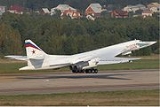
. The biggest supersonic jet ever produced and currently in service is Tupolev-160 Tupolev Tu-160

The Tupolev [i] Tu-160 is a supersonic [i], variable-geometry [i] heavy bomber [i] designed b ... 

.

Conventional aircraft

Conventional aircraft — from small planes such as the Cessna 210 Cessna 210

The Cessna 210 Centurion is a 6 seat, high-performance, single-engine general aviation [i] aircraft [i] ... 

 and Beech Bonanza Beechcraft Bonanza

The Beechcraft Bonanza is one of the most important civil aircraft [i] in aviation hist ... 

 to the gigantic Antonov 225 Antonov An-225

The An-225 Mriya is a strategic airlift [i] transport aircraft [i] built by Antonov [i], and is the ... 

 — consist of a fuselage Fuselage

The fuselage is an aircraft [i]'s main body section that holds crew and passengers or cargo [i].... 

, one or more wings to provide the majority of lift, a tailplane Tailplane

A tailplane is a small lifting [i] surface located behind the main lifting surfaces of a fixed-wing aircraft [i] ... 

 for stability, and a one or more vertical surfaces at the tail for stability.

Fixed parts

  • Wings - Each wing is a structure attached to the fuselage Fuselage

    The fuselage is an aircraft [i]'s main body section that holds crew and passengers or cargo [i].... 

      of the aircraft. Sometimes, the half of a wing on either side of the fuselage is referred to as a wing, e.g. left wing and right wing. Most aircraft are monoplanes Monoplane

    -

||-
||-
||}
A monoplane is an aircraft [i] with one main set of wing surfaces, in contrast to a biplane [i] ... 

 having one wing structure for providing lift. Biplanes Biplane

A biplane is a fixed-wing aircraft [i] with two main wings of similar spans, normally one mounted above, ... 

  or triplanes were popular in the past, and some are still made for special purposes like aerobatics Aerobatics

Aerobatics is the demonstration of flying [i] maneuvers for recreation or entertainment.
... 

. Fuel is often stored in tanks in the wing but may be stored in the fuselage as well.
  • Powerplants - An engine , also known as powerplants, serve to propel the aircraft on the ground and in the air. Aircraft use a variety of engines, including turbine Gas turbine

    A gas turbine, also called a combustion turbine, is a rotary engine [i] that extracts energy from ... 

    , reciprocating Reciprocating engine

    A reciprocating engine, also often known as a piston engine, is an engine [i] that uses one or mor ... 

    , and radial Radial engine

    The radial engine is a configuration [i] of internal combustion engine [i], in whic ... 

     engines. The engines are usually located under or on the wings or attached to the fuselage. A few aircraft have engines attached to the vertical or horizontal stabilizer.
  • Tailplane - A tailplane is a small wing that provides positive or negative lift to stabilize the aircraft in flight. Most often it is configured to provide negative lift. It may be a fixed horizontal stabilizer with a movable elevator or a stabilator that rotates on a shaft to change the angle of incidence Angle of incidence

    An angle of incidence is the angle between a beam incident on a surface and the line perpendicular to th... 

    .
  • Vertical Stabilizer - A vertical stabilizer or fin is a small vertical wing that is usually attached to the top rear of the fuselage. Some aircraft have two vertical stabilizers attached to the horizontal stabilizer or boom structures. A rudder is attached to the vertical stabilizer.

Control Surfaces and moving parts

  • Ailerons - Aileron Aileron

    Ailerons are hinged control surfaces attached to the trailing edge [i] of the wing [i] of a fixed-wing aircraft [i] ... 

    s are movable surfaces on the wings of the aircraft. They always act at the same time, but in inverse directions, so that the aircraft can be turned along its longitudinal axis. This movement is called roll. Because roll changes the direction of lift of the wings, it is the primary method of changing the direction of travel. Many larger aircraft use spoilers to achieve the same effect.
  • Elevators - The elevators Elevator

    An elevator is a transport [i] device used to move goods or people vertically. ... 

     are located on the horizontal stabilizer to control the rotation around the lateral axis called pitch. The elevator and horizontal stabilizer may be combined into a stabilator.
  • Elevons - On delta-wing aircraft the aileron Aileron

    Ailerons are hinged control surfaces attached to the trailing edge [i] of the wing [i] of a fixed-wing aircraft [i] ... 

    s and elevators Elevator

    An elevator is a transport [i] device used to move goods or people vertically. ... 

     are combined together to perform the same actions and are called elevons.
  • Rudder - The rudder Rudder

    A rudder is a device used to steer ships [i], boats [i], submarines [i], aircraft [i], hovercraft [i] or ... 

     is located on the vertical stabilizer and controls movement around the vertical axis called yaw.
  • Landing Gear - The landing gear Undercarriage

    -

||-
||-
||-
||}
The undercarriage or landing gear is the structure that supports an aircraft [i] ... 

 allow the aircraft to take off and land. They usually retract during flight to reduce drag; however, on smaller aircraft the gear may be fixed. Some aircraft are equipped with special landing gear, such as pontoon Pontoon

A pontoon is a flat-bottomed boat [i] or the floats used to support a structure on water. ... 

s or ski Ski

A ski is a long flat device worn on the feet designed to help the wearer slide over snow.... 

s, to allow them to land on water, snow or ice.
  • Flaps - The flaps change the profile of the wing of the aircraft, maximizing lift and control of the speed of the aircraft in air, particularly in operations of low speed - especially important in landing and take-off.


Other parts of aircraft include trim tabs, air brakes or spoilers, slats Slats

Slats are small aerodynamic surfaces on the leading edge of the wing [i]s of fixed-wing aircraft [i] whi ... 

, winglet Winglet

-
||-
||}
A winglet is a device used to improve the efficiency of aircraft [i] by lowering the lift-induced drag [i] ... 

s and canard Canard

In aeronautics [i], canard is a type of fixed-wing aircraft [i] in which the tailplane [i] is ahead of t ... 

s.

Unconventional aircraft have been built in a variety of forms. For example: lifting body Lifting body

The lifting body is an aircraft [i] configuration where the body itself produces lift [i]. ... 

, canard Canard

In aeronautics [i], canard is a type of fixed-wing aircraft [i] in which the tailplane [i] is ahead of t ... 

, V-tail V-tail

In aircraft, a V-tail is an unconventional arrangement of the tail control surfaces that replaces the tr... 

, flying wing Flying wing

Flying wing is the generic designation given for a fixed-wing aircraft [i] configuration which is capabl ... 

 and famously, the designs of Burt Rutan Burt Rutan

Elbert Leander "Burt" Rutan is an American aerospace engineer [i] noted for his or ... 

.

Flight

>


An aircraft flies due to aerodynamic reactions that happen when there is relative motion between air and a wing.

Lift is created as an airstream passes by something which deflects it. The force created by this deflection of the air creates an equal and opposite force on the wing according to Newton's third law of motion Newton's laws of motion

Newton's Laws of Motion are three physical law [i]s which provide relationships [i] ... 

. The deflection of airflow downward during the creation of lift is known as downwash Downwash

The term downwash has two meanings within the field of aerodynamics [i].
... 

.

Nearly any shape will produce lift if curved or tilted with respect to the air flow direction. However, most shapes will be very inefficient and create too much drag. One of the primary goals of wing design is to devise a shape that produces the most lift while producing the least lift-induced drag Lift-induced drag

In aerodynamics [i], lift-induced drag, or induced drag, is a drag [i] force [i] which occurs ... 

.

If a cross-section of a typical aircraft wing is viewed, the top of the wing can be seen to be curved downwards, while the bottom of the wing is less curved or straight, but angled to the airflow. This shape, called an airfoil Airfoil

An airfoil is the shape of a wing [i] or blade as seen in cross-section. ... 

 or aerofoil, creates lift when it travels through the air.

A false explanation for lift has been put forward in mainstream books, and even in scientific exhibitions. Known as the equal transit-time fallacy, it states that the parcels of air which are divided by an airfoil must rejoin again; because of the greater curvature of the upper surface of an aerofoil, the air going over the top must go faster in order to "catch up" with the air flowing around the bottom. Therefore, because of its higher speed the pressure of the air above the airfoil must be lower. Despite the fact that this "explanation" is probably the most common of all, it is false in that there is no requirement that divided parcels of air rejoin again, and in fact they do not do so.

Nevertheless, the deflection of the air does cause changes in the pressure above and below the wing; generally a higher pressure area forms below and a lower pressure forms above; these changes in pressure are necessary for the deflection to occur, and it is these pressure differences over the area of the wing that provides the force that holds the aircraft in the air.

Types of fixed-wing aircraft


Gliders


Gliders Glider

Gliders are heavier-than-air aircraft [i] primarily intended for unpowered flight. See also gliding [i] ... 

 or sailplanes are aircraft designed for unpowered flight. Most gliders are intended for use in the sport of gliding Gliding

Gliding is a recreation [i]al activity and competitive sport [i] where pilots fly un-powered aircraft [i]... 

 and have high aerodynamic efficiency: lift-to-drag ratios may exceed 60 to 1. The energy for sustained gliding flight must be obtained through the skillful exploitation of naturally occurring air movements in the atmosphere. Glider flights of several thousand kilometres at average speeds higher than two-hundred kilometres per hour have been achieved.

Specialised gliders have been used in war for delivery of assault troops, due to their low noise signature, as well as in atmospheric and aerodynamic research. Sport gliders equipped with engines and capable of self-launching are becoming increasingly common.

Propeller aircraft


Smaller and older propeller Propeller

A propeller is a device which transmits power by converting it into thrust [i] for propulsion [i] of a v ... 

 aircraft make use of reciprocating internal combustion engine Internal combustion engine

The internal combustion engine is a heat engine [i] in which the burning of a fuel [i] occurs ... 

s that turns a propeller to create thrust. They are quiet, but they fly at lower speeds, and have lower load capacity compared to similar sized jet powered aircraft. However, they are significantly cheaper and much more economic than jets, and are generally the best option for people who need to transport a few passengers and/or small amounts of cargo. They are also the aircraft of choice for pilots who wish to own their own aircraft.

Turboprop Turboprop

A Turboprop engine is a type of gas turbine engine [i] which uses most of its power to drive ... 

 aircraft are a halfway house between propeller and jet: they use a turbine Turbine

A turbine is a rotary engine [i] that extracts energy [i] from a fluid [i] flow. ... 

 engine similar to a jet to turn propellers. These aircraft are popular with commuter and regional airlines, as they tend to be more economical on shorter journeys.

Jet aircraft


Jet aircraft make use of turbine Turbine

A turbine is a rotary engine [i] that extracts energy [i] from a fluid [i] flow. ... 

s for the creation of thrust. These engines are much more powerful than a reciprocating engine. As a consequence, they have greater weight capacity and fly faster than propeller driven aircraft. One drawback, however, is that they are noisy; this makes jet aircraft a source of noise pollution Noise pollution

Noise pollution, usually called environmental noise in technical venues, is unwanted human-created... 

. However, large improvements have been made in dampening the sound of jet engines.

The jet aircraft was developed in England and Germany in 1931. The first jet was the Heinkel He 178, which was tested at Germany's Marienehe Airfield in 1939. In 1943 the Messerschmitt Me 262 Messerschmitt Me 262

The Messerschmitt [i] Me 262 Schwalbe is the world's first operational jet-powered [i] fighter [i]... 

, the first jet fighter aircraft, went into service in the German Luftwaffe Luftwaffe

The Deutsche Luftwaffe or Luftwaffe is the commonly used term for the German [i] air force [i] ... 

. In the early 1950s, only a few years after the first jet was produced in large numbers, the De Havilland Comet De Havilland Comet

The de Havilland [i] Comet of Britain [i] was the world's first commercial jet [i] ... 

 became the world's first jet airliner, but was removed from service due to structural inadequacies discovered after numerous pressurization and depressurization cycles.

Wide-body aircraft Wide-body aircraft

A wide-body aircraft is a large airliner [i] with a fuselage diameter of 5 to 6 metres and twin aisles. ... 

, such as the Airbus A340 Airbus A340

The Airbus A340 is a long-range four-engined widebody commercial passenger airplane [i] ... 

 and Boeing 777 Boeing 777

The Boeing 777 is a family of long-range wide-body [i] twin-engine airliner [i]s buil ... 

, can carry hundreds of passengers and several tons of cargo, and are able to travel for distances up to 13 thousand kilometers.

Jet aircraft possess high cruising speeds and high speeds for take-off and landing . Due to the speed needed for takeoff and landing, the jet aircraft makes use of flaps and leading edge devices for the control of lift and speed, and has engine reversers to direct the airflow forward, slowing down the aircraft upon landing, as well as the wheel brakes.
Supersonic jet aircraft


Supersonic aircraft, such as military fighters and bombers, Concorde Concorde

Arospatiale [i]-BAC [i] Concorde supersonic transport [i] , along with the ... 

, and others, make use of special turbines , that generate the huge amounts of power for flight faster than the speed of the sound. The design problems for supersonic aircraft are substantially different to those for sub-sonic aircraft.

Flight at supersonic speed creates more noise than flight at subsonic speeds, due to the phenomenon of sonic boom Sonic boom

A sonic boom is the audible component of a shock wave [i] in air. ... 

s. This limits supersonic flights to areas of low population density or open ocean. When approaching an area of heavier population density, supersonic aircraft are obliged to fly at subsonic speed.

Due to the high costs, limited areas of use and low demand there are no longer any supersonic aircraft in use by any major airline. The last Concorde flight was on 26 November, 2003. It appears that supersonic aircraft will remain in use almost exclusively by militaries around the world for the foreseeable future, though research into new civilian designs continues.

Rocket-powered aircraft


Experimental rocket powered aircraft were developed by the Germans as early as World War II World War II

World War II, or the Second World War, was a worldwide [i] conflict [i] fought betwe ... 

, although they were never mass produced by any power during that war. The first fixed wing aircraft to break the sound barrier Sound barrier

In aerodynamics [i], the sound barrier is the transition at transonic [i] speeds from subsonic [i] to supersonic [i] ... 

 was the rocket powered Bell X-1 Bell X-1

The Bell [i] X-1, originally XS-1 was the first aircraft [i] to exceed t ... 

. The later North American X-15 North American X-15

The North American [i] X-15 rocket plane [i] was perhaps the most important of t ... 

 was another important rocket plane that broke many speed and altitude records and laid much of the groundwork for later aircraft and spacecraft design. Rocket aircraft are not in common usage today, although rocket-assisted takeoffs are used for some military aircraft. SpaceShipOne SpaceShipOne

Scaled Composites Model 316 SpaceShipOne completed the first privately-funded human spaceflight [i] on June 21 [i] ... 

 is the most famous current rocket aircraft, being the testbed for developing a commercial sub-orbital passenger service; another rocket plane is the XCOR EZ-Rocket; and there is of course the Space Shuttle Space Shuttle

NASA [i]'s Space Shuttle, officially called Space Transportation System , is the United States [i] ... 

.

Ramjet aircraft


Ramjet Ramjet

A ramjet, sometimes referred to as a stovepipe jet, is a type of jet engine [i]. ... 

 aircraft are mostly in the experimental stage. The D-21 Tagboard Lockheed D-21/M-21

[i]
... 

 was an unmanned Mach 3+ reconnaissance drone that was put into production in 1969 for spying, but due to the development of better spy satellites, it was cancelled in 1971. The SR-71 SR-71 Blackbird

The Lockheed SR-71, unofficially known as the Blackbird and by its crews as the Habu, was an... 

's Pratt & Whitney J58 engines ran 80% as ramjets at high-speeds . The last SR-71 flight was in October 2001.

Scramjet aircraft


Scramjet Scramjet

A scramjet is a variation of a ramjet [i] where the flow of the air and combustion of the fuel air mixtu... 

 aircraft are in the experimental stage. The Boeing X-43 Boeing X-43

See also:
  • List of experimental aircraft [i]

... 

 is an experimental scramjet with a world speed record for a jet-powered aircraft - Mach 9.6, nearly 12,000 km/h at an altitude of about 36,000 meters . The X-43A set the flight speed record on 16 November, 2004.

History

The dream of flight goes back to the days of pre-history. Many stories from antiquity involve flight, such as the Greek legend of Icarus and Daedalus. Leonardo da Vinci drew an aircraft in the 15th century. With the first flight made by man in an aircraft lighter than air, a balloon Montgolfier brothers

The Montgolfier brothers, Joseph Michel Montgolfier and Jacques tienne Montgolfier , invented [i] ... 

, the biggest challenge became to create other craft, capable of controlled flight.

First attempts


In 1853, Englishman George Cayley George Cayley

Sir George Cayley, 6th Baronet was an exuberant English [i] polymath [i] from Brompton-by-Sawdon [i] ... 

 made the first manned glider flight. In 1856, Frenchman Jean-Marie Le Bris Jean-Marie Le Bris

Jean-Marie Le Bris was a French [i] aviator [i], born in Concarneau [i], Brittany [i], who accomp ... 

 made the first powered flight, by having his glider "L'Albatros artificiel" pulled by a horse on a beach. On 28 August 1883, the American John J. Montgomery John J. Montgomery

John Joseph Montgomery was an aviation [i] pioneer, inventor, professor at Santa Clara College [i] ... 

 made a controlled flight in a glider. Other aviators who had made similar flights at that time were Otto Lilienthal Otto Lilienthal

Otto Lilienthal, the German [i] "Glider King", was a pioneer of human aviation [i]. ... 

, Percy Pilcher Percy Pilcher

egory:English inventors|Pilcher, Percy]] [i]
... 

 and Octave Chanute Octave Chanute

Octave Chanute was an American [i] railroad [i] engineer and aviation [i] pioneer. ... 

.

Sir George Cayley George Cayley

Sir George Cayley, 6th Baronet was an exuberant English [i] polymath [i] from Brompton-by-Sawdon [i] ... 

, the inventor of the science of aerodynamics, was building and flying models of fixed-wing aircraft as early as 1803, and he built a successful passenger-carrying glider Glider

Gliders are heavier-than-air aircraft [i] primarily intended for unpowered flight. See also gliding [i] ... 

 in 1853. Self-powered aircraft were designed and constructed by Clément Ader Clément Ader

Clment Ader was a French [i] engineer born in Muret [i], Haute Garonne [i] remembered primarily f... 

. On October 9, 1890, Ader attempted to fly the Éole, which succeeded in taking off and flying a distance of approximately 50 meters before witnesses. In August 1892 the Avion II flew for a distance of 200 metres, and on October 14, 1897, Avion III flew a distance of more than 300 metres.

Richard Pearse Richard Pearse

Richard William Pearse, a farmer [i] and inventor [i] who emigrated from Cornwall [i] to New Zealand [i] ... 

 made a poorly documented uncontrolled flight on March 31 1903 in Waitohi, New Zealand New Zealand

New Zealand is a country in the south-western Pacific Ocean [i] consisting of two large islands and many ... 

.

On August 28 1903 in Hanover, the German Karl Jatho Karl Jatho

Karl Jatho was a German [i] pioneer and inventor, performer and public servant of the city of Hanover [i] ... 

 made his first flight.

The Wright Brothers Wright brothers

The Wright brothers, Orville Wright and Wilbur Wright , are generally credited with making the first co... 

 are commonly credited with the invention of the aircraft, but like Alexander Graham Bell Alexander Graham Bell

Alexander Graham Bell was a Scottish [i] scientist [i] and inventor [i]. ... 

's telephone Telephone

The telephone or phone is a telecommunication [i]s device which is used to transmit [i] ... 

, theirs was rather the first sustainable and well documented attempt. They made their first successful test flights on December 17 1903 and by 1905 Flyer Wright Flyer

The Wright Flyer was the first powered aircraft designed and built by the Wright Brothers [i]. ... 

 III was capable of fully controllable, stable flight for substantial periods. Strictly speaking, the Flyer's wings were not completely fixed, as it depended for stability on a flexing mechanism named wing warping. This was later superseded by the development of aileron Aileron

Ailerons are hinged control surfaces attached to the trailing edge [i] of the wing [i] of a fixed-wing aircraft [i] ... 

s, devices which performed a similar function but were attached to an otherwise rigid wing.

However, in some countries, particularly Brazil Brazil

Brazil, officially the Federative Republic of Brazil , is the largest and most populous country [i] ... 

, Alberto Santos-Dumont Alberto Santos-Dumont

Alberto Santos-Dumont was an important early pioneer of aviation [i]. ... 

 is considered to be the "Father of Aviation". Though launched after the Wright Brothers' first 150 flights, his 14-bis Santos-Dumont 14-bis

For the Brazilian band, see 14 Bis [i]
... 

took off, flew and landed without the use of catapults, high winds, or other external assistance. Most Brazilians, as well as admirers of Santos-Dumont, consider him to be the true inventor of the aircraft, although if full control by the pilot is considered a requisite for an aircraft, the Wright Brothers' 1905 Flyer would take precedence over other machines. Due to competing claims, the concept of the invention of the first flying machine First flying machine

There are conflicting views as to what was the first flying machine.... 

 has substantial ambiguity.

Wars in Europe, in particular World War I World War I

World War I, also known as the First World War, the Great War and "The War to End All War... 

, served as initial tests for the use of the aircraft as a weapon. First seen by generals and commanders as a "toy", the aircraft proved to be a machine of war capable of causing casualties to the enemy. In the first world war, the fighter "aces" appeared, of which the greatest was the German Manfred von Richthofen Manfred von Richthofen

Manfred Albrecht Freiherr von Richthofen was a German [i] pilot and is still regarded today as t ... 

, commonly called the Red Baron. On the side of the allies, the ace with the highest number of downed aircraft was René Fonck, of France.

After the First World War, aircraft continued to advance their technology. Charles Lindbergh Charles Lindbergh

Charles Augustus Lindbergh, Jr., known as "Lucky Lindy" and "The Lone Eagle", was an American [i] ... 

 became the first person to cross the Atlantic Ocean in solo flight nonstop, on 20 May 1927. The first commercial flights took place between the United States and Canada in 1919. The turbine or the jet engine was in development in the 1930s; military jet aircraft began operating in the 1940s.

Aircraft played a primary role in the Second World War, having a presence in all the major battles of the war, especially in the attack on Pearl Harbor, the battles of the Pacific and D-Day D-Day

In English military [i] parlance, D-Day is a term often used to denote the day on which a combat attack ... 

, as well as the Battle of Britain Battle of Britain

The Battle of Britain was one of the major campaigns of the early part of World War II [i] and is the na ... 

. They were also an essential part of several of the military strategies of the period, such as the German Blitzkrieg or the American and Japanese Aircraft carriers.

In October 1947, Chuck Yeager, in the Bell X-1, was the first recorded person to exceed the speed of sound. However, some British Spitfire pilots claimed to have exceeded Mach 1 in a dive. The Boeing X-43 Boeing X-43

See also:
  • List of experimental aircraft [i]

... 

 is an experimental scramjet with a world speed record for a jet-powered aircraft - Mach 9.6, or nearly 7,000 mph.

Aircraft in a civil military role continued to feed and supply Berlin Berlin

Berlin is the capital [i] city and a state [i] of Germany [i]. ... 

 in 1948, when access to railroads and roads to the city, completely surrounded by Eastern Germany, were blocked, by order of the Soviet Union.

The first commercial jet, the de Havilland Comet De Havilland Comet

The de Havilland [i] Comet of Britain [i] was the world's first commercial jet [i] ... 

, was introduced in 1952, and the first successful commercial jet, the Boeing 707, is still in use 50 years later. Boeing 707 Boeing 707

The Boeing 707 was a four engined commercial passenger jet airliner [i] developed by Boeing [i] ... 

 would develop into the later in Boeing 737 Boeing 737

The Boeing 737 is the world's most popular medium-range, narrowbody [i] commercial... 

. The Boeing 727 Boeing 727

The Boeing 727 is a mid-size, single-aisle commercial jet airliner.... 

 was another widely used passenger aircraft, and the Boeing 747 Boeing 747

|name =Boeing 747
|type =Airliner [i]
... 

, was the biggest commercial aircraft in the world up to 2005, when it was surpassed by the Airbus Airbus

Airbus S.A.S. [i] is a leading aircraft [i] manufacturer based in Toulouse [i] ... 

 A380 Airbus A380

The Airbus A380 is a double-deck [i], four-engined airliner [i] manufactured by Airbus S.A.S. [i]... 

.

Designing and constructing an aircraft

Small aircraft can be designed and constructed by amateurs as homebuilt Homebuilt aircraft

Also known as amateur-built aircraft, homebuilt aircraft are constructed by persons for whom this is... 

s. Other aviators with less knowledge make their aircraft using pre-manufactured kits, assembling the parts into a complete aircraft.

Most aircraft are constructed by companies with the objective of producing them in quantity for customers. The design and planning process, including safety tests, can last up to four years for small turboprops, and up to 12 years for aircraft with the capacity of the A380.

During this process, the objectives and design specifications of the aircraft are established. First the construction company uses drawings and equations, simulations, wind tunnel tests and experience to predict the behavior of the aircraft. Computers are used by companies to draw, plan and do initial simulations of the aircraft. Small models and mockups of all or certain parts of the aircraft are then tested in wind tunnels to verify the aerodynamics of the aircraft.

When the design has passed through these processes, the company constructs a limited number of these aircraft for testing on the ground. Representatives from an aviation governing agency often make a first flight. The flight tests continue until the aircraft has fulfilled all the requirements. Then, the governing public agency of aviation of the country authorizes the company to begin production of the aircraft.

In the United States, this agency is the Federal Aviation Administration Federal Aviation Administration

The Federal Aviation Administration is an agency of the United States Department of Transportation [i] ... 

 , and in the European Union, Joint Aviation Authorities . In Canada, the public agency in charge and authorizing the mass production of aircraft is Transport Canada Transport Canada

Transport Canada is the department [i] within the government of Canada [i] which is responsible ... 

.

In the case of the international sales of aircraft, a license from the public agency of aviation or transports of the country where the aircraft is also to be used is necessary. For example, aircraft from Airbus need to be certified by the FAA to be flown in the United States and vice versa, aircraft of Boeing need to be approved by the JAA to be flown in the European Union.

Recently, as quieter aircraft are becoming more and more needed due to the increase in air traffic, particularly over urban areas, MIT Massachusetts Institute of Technology

The Massachusetts Institute of Technology, or MIT, is a private world-leading research university [i] ... 

 has designed a delta-wing aircraft that is almost silent and appears to be a practical design for widespread use.

Industrialized production

There are few companies that produce aircraft on a large scale. However, the production of an aircraft for one company is a process that actually involves dozens, or even hundreds, of other companies and plants, that produce the parts that go into the aircraft. For example, one company can be responsible for the production of the landing gear, while another one is responsible for the radar. The production of such parts is not limited to the same city or country; in the case of large aircraft manufacturing companies, such parts can come from all over of the world.

The parts are sent to the main plant of the aircraft company, where the production line is located. In the case of large aircraft, production lines dedicated to the assembly of certain parts of the aircraft can exist, especially the wings and the fuselage.

When complete, an aircraft goes through a set of rigorous inspection, to search for imperfections and defects, and after being approved by the inspectors, the aircraft is tested by a pilot, in a flight test, in order to assure that the controls of the aircraft are working properly. With this final test, the aircraft is ready to receive the "final touchups" , and is then ready for the customer.

Safety

Statistics show that the risk of an air accident is very small - at least in airliners. Statistically, the chance of an accident while driving to the airport in a car is higher than having an accident during the flight. Many people have a fear of flying because the risk of death in the event of an aircraft accident is extremely high. Furthermore, car crashes rarely feature outside local news whereas air crashes are reported internationally, making the risk seem greater.

Aircraft are the second safest way to travel long distances after railway Rail transport

Rail transport is the transport [i] of passenger [i]s and goods [i] along railways or ... 

 trains. The per-trip safety of aircraft is somewhat safer than cars, but over the long distances that aircraft can cover they are much safer than the other types or transport.

The majority of aircraft accidents occur due to human error, that is, an error of the pilot or control tower. After human error, mechanical failure is the biggest cause of air accidents, which sometimes also can involve a human component, e.g. negligence of the airline in carrying out proper maintenance. Adverse weather is the third largest cause of accidents. Icing of wings, downbursts Downburst

A downburst is a column of sinking air that is capable of producing damaging straight-line winds of ... 

 and low visibility are often major contributors to weather related crashes. Birds actually have been ranked as a major cause for large rotor bursts on commercial turboprop engines, spurring extra safety measures to keep birds away. However, technology like ice detectors help pilots secure the safety of their aircraft.

See also

  • Aircraft Aircraft

    An aircraft is any machine [i] capable of atmospheric [i] flight [i]. ... 

  • Aircraft flight mechanics
  • List of altitude records reached by different aircraft types