
All Topics  
D-Day


   Email Print
   Bookmark   Link


D-Day


D-Day is a term often used in military
Military

A military is an organization authorized by its nation to use force, usually including use of weapons, in defending its country by combating actual or Threat of force ....
 parlance to denote the day on which a combat attack or operation is to be initiated. "D-Day" often represents a variable, designating the day upon which some significant event will occur or has occurred; see Military designation of days and hours
Military designation of days and hours

The military designation of days and hours within the North Atlantic Treaty Organisation , is specified in Allied Administrative Publication-6 , NATO Glossary of Terms and Definitions, and marked in what follows....
 for similar terms. The initial D in D-Day has had various meanings in the past, while more recently it has obtained the connotation of "Day" itself, thereby creating the phrase "Day-Day", or "Day of Days".

The best known D-Day is June 6, 1944 — the day on which the Invasion of Normandy began — commencing the Western Allied effort to liberate mainland Europe
Europe

Europe is, conventionally, one of the world's seven continents. Comprising the westernmost peninsula of Eurasia, Europe is generally divided from Asia to its east by the water divide of the Ural Mountains, the Ural , the Caspian Sea, and by the Caucasus Mountains to the southeast....
 from Nazi
Nazi Germany

Nazi Germany and the Third Reich are the colloquial English names for Germany under the regime of Adolf Hitler and the Nazi Party , which established a Totalitarianism dictatorship that existed from 1933 to 1945....
 occupation during World War II
World War II

World War II, or the Second World War , was a global military conflict which involved a Participants in World War II, including all of the great powers, organised into two opposing military alliances: the Allies of World War II and the Axis powers....
.


Discussion
Ask a question about 'D-Day'
Start a new discussion about 'D-Day'
Answer questions from other users
Full Discussion Forum


Recent Posts


Encyclopedia


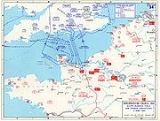
Allied Invasion Force
D-Day is a term often used in military
Military

A military is an organization authorized by its nation to use force, usually including use of weapons, in defending its country by combating actual or Threat of force ....
 parlance to denote the day on which a combat attack or operation is to be initiated. "D-Day" often represents a variable, designating the day upon which some significant event will occur or has occurred; see Military designation of days and hours
Military designation of days and hours

The military designation of days and hours within the North Atlantic Treaty Organisation , is specified in Allied Administrative Publication-6 , NATO Glossary of Terms and Definitions, and marked in what follows....
 for similar terms. The initial D in D-Day has had various meanings in the past, while more recently it has obtained the connotation of "Day" itself, thereby creating the phrase "Day-Day", or "Day of Days".

The best known D-Day is June 6, 1944 — the day on which the Invasion of Normandy began — commencing the Western Allied effort to liberate mainland Europe
Europe

Europe is, conventionally, one of the world's seven continents. Comprising the westernmost peninsula of Eurasia, Europe is generally divided from Asia to its east by the water divide of the Ural Mountains, the Ural , the Caspian Sea, and by the Caucasus Mountains to the southeast....
 from Nazi
Nazi Germany

Nazi Germany and the Third Reich are the colloquial English names for Germany under the regime of Adolf Hitler and the Nazi Party , which established a Totalitarianism dictatorship that existed from 1933 to 1945....
 occupation during World War II
World War II

World War II, or the Second World War , was a global military conflict which involved a Participants in World War II, including all of the great powers, organised into two opposing military alliances: the Allies of World War II and the Axis powers....
. However, many other invasions and operations had a designated D-Day, both before and after that operation.

The terms D-Day and H-Hour
Military designation of days and hours

The military designation of days and hours within the North Atlantic Treaty Organisation , is specified in Allied Administrative Publication-6 , NATO Glossary of Terms and Definitions, and marked in what follows....
 are used for the day and hour on which a combat attack or operation is to be initiated. They designate the day and hour of the operation when the day and hour have not yet been determined, or where secrecy is essential. There is but one D-Day and one H-Hour for all units participating in a given operation.

When used in combination with figures,and plus or minus signs, these terms indicate the point of time preceding or following a specific action. Thus, H-3 means 3 hours before H-Hour, and D+3 means 3 days after D-Day. H+75 minutes means H-Hour plus 1 hour and 15 minutes.

Planning papers for large-scale operations are made up in detail long before specific dates are set. Thus, orders are issued for the various steps to be carried out on the D-Day or H-Hour minus or plus a certain number of days, hours, or minutes. At the appropriate time, a subsequent order is issued that states the actual day and times.

History

The earliest use of these terms by the U.S. Army
United States Army

The United States Army is the branch of the United States Armed Forces responsible for Army operations. It is the largest and oldest established branch of the U.S....
 that the Center of Military History has been able to find was during World War I
World War I

World War I, or the First World War , was a global military conflict which involved the Great powers, organized into two opposing military alliances: the Allies of World War I and the Central Powers....
. In Field Order Number 9, First Army, American Expeditionary Force
American Expeditionary Force

The American Expeditionary warfare or AEF was the United States Armed Forces force sent to Europe in World War I.The AEF fought alongside allied forces against German Empire forces....
s, dated 7 September 1918: "The First Army will attack at H hour on D day with the object of forcing the evacuation of the St. Mihiel Salient
Battle of Saint-Mihiel

The Battle of Saint-Mihiel was a World War I battle fought between September 12 - 15, 1918, involving the American Expeditionary Force and 48,000 France troops under the command of U.S....
."

D-Day for the invasion of Normandy by the Allies was originally set for June 5, 1944, but bad weather and heavy seas caused Gen. Dwight D Eisenhower
Dwight D. Eisenhower

Dwight David ?Ike? Eisenhower was the List of Presidents of the United States President of the United States from 1953 until 1961 and a General of the Army in the United States Army....
 to delay until June 6 and that date has been popularly referred to ever since by the short title "D-Day". (In French, it is called Le Jour J.) Because of the connotation with the invasion of Normandy, planners of later military operations sometimes avoided the term to prevent confusion. For example, Douglas MacArthur
Douglas MacArthur

General of the Army Douglas MacArthur, Order of the Bath was an United States General officer, United Nations general and Field Marshal of the Philippine Army....
's invasion of Leyte
Battle of Leyte

The Battle of Leyte in the Pacific War of World War II was the invasion and conquest of Leyte in the Philippines by Military history of the United States during World War II and Military history of the Philippines during World War II guerrilla warfare forces under the command of General Douglas MacArthur, who fought against the Imperial Japa...
 began on "A-Day", and the invasion of Okinawa
Battle of Okinawa

The Battle of Okinawa, also known as Operation Iceberg, was fought on the Ryukyu Islands of Okinawa Island and was the largest amphibious warfare in the Pacific War of World War II....
 began on "L-Day". The Allies proposed invasions of Japan
Operation Downfall

Operation Downfall was the overall Allies of World War II plan for the invasion of Japan near the end of World War II. The operation was cancelled when Surrender of Japan following the atomic bombings of Hiroshima and Nagasaki of Hiroshima and Nagasaki, Nagasaki, and the Soviet Union's declaration of war against Japan....
 that would have begun on "X-Day" (Kyushu
Kyushu

or Kyushu is the third-largest island of Japan and most southwesterly of its Japanese Archipelago. Its alternate ancient names include Kyukoku , Chinzei , and Tsukushi-no-shima ....
, scheduled for November 1945) and "Y-Day" (Honshu
Honshu

or Honshu is the largest island of Japan. The nation's main island, it is south of Hokkaido across the Tsugaru Strait, north of Shikoku across the Inland Sea, and northeast of Kyushu across the Kanmon Strait....
, scheduled for March 1946).

External links