
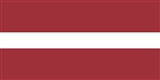
Latvia officially the
Republic of Latvia , is a
countryA country is a region legally identified as a distinct entity in political geography. A country may be an independent sovereign state or one that is occupied by another state, as a non-sovereign or formerly sovereign political division, or a geographic region associated with a previously...
in the
Baltic regionThe terms Baltic region, Baltic Rim countries, and Baltic Rim refer to slightly different combinations of countries in the general area surrounding the Baltic Sea.- Etymology :...
of
Northern EuropeNorthern Europe is the northern part or region of Europe. Northern Europe typically refers to the seven countries in the northern part of the European subcontinent which includes Denmark, Estonia, Latvia, Lithuania, Norway, Finland and Sweden...
. It is bordered to the north by
EstoniaEstonia , officially the Republic of Estonia , is a state in the Baltic region of Northern Europe. It is bordered to the north by the Gulf of Finland, to the west by the Baltic Sea, to the south by Latvia , and to the east by Lake Peipsi and the Russian Federation . Across the Baltic Sea lies...
(border length 343 km), to the south by
LithuaniaLithuania , officially the Republic of Lithuania is a country in Northern Europe, the biggest of the three Baltic states. It is situated along the southeastern shore of the Baltic Sea, whereby to the west lie Sweden and Denmark...
(588 km), to the east by the
Russian FederationRussia or , officially known as both Russia and the Russian Federation , is a country in northern Eurasia. It is a federal semi-presidential republic, comprising 83 federal subjects...
(276 km), to the southeast by
BelarusBelarus , officially the Republic of Belarus, is a landlocked country in Eastern Europe, bordered clockwise by Russia to the northeast, Ukraine to the south, Poland to the west, and Lithuania and Latvia to the northwest. Its capital is Minsk; other major cities include Brest, Grodno , Gomel ,...
(141 km) and shares maritime borders to the west with
SwedenSweden , officially the Kingdom of Sweden , is a Nordic country on the Scandinavian Peninsula in Northern Europe. Sweden borders with Norway and Finland and is connected to Denmark by a bridge-tunnel across the Öresund....
. With 2,229,641 inhabitants and a territory of 64589 km² (24,938 sq mi) it is one of the least populous and least densely populated countries of the
European UnionThe European Union is an economic and political union of 27 independent member states which are located primarily in Europe. The EU traces its origins from the European Coal and Steel Community and the European Economic Community , formed by six countries in 1958...
. The capital of Latvia is
RigaRiga is the capital and largest city of Latvia. With 702,891 inhabitants Riga is the largest city of the Baltic states, one of the largest cities in Northern Europe and home to more than one third of Latvia's population. The city is an important seaport and a major industrial, commercial,...
, the official language
LatvianLatvian is the official state language of Latvia. It is also sometimes referred to as Lettish. There are about 1.4 million native Latvian speakers in Latvia and about 150,000 abroad. The Latvian language has a relatively large number of non-native speakers, atypical for a small language...
and the currency Lats (Ls). The country has a temperate seasonal climate.
The
LatviansLatvians or Letts are the indigenous Baltic people of Latvia.-History:Latvians occasionally refer to themselves by the ancient name of Latvji, which may have originated from the word Latve which is a name of the river that presumably flowed through what is now eastern Latvia...
are a Baltic people, culturally related to the
EstoniansEstonians are a Finnic people closely related to the Finns and inhabiting, primarily, the country of Estonia. They speak a Finnic language known as Estonian...
and
LithuaniansLithuanians are the Baltic ethnic group native to Lithuania, where they number around 2,765,600 people. Another million or more make up the Lithuanian diaspora, largely found in countries such as the United States, Brazil, Canada, Colombia, Russia, United Kingdom and Ireland. Their native language...
. Together with the
Finno-UgricThe Finno-Ugric peoples are any of several peoples of Europe who speak languages of the proposed Finno-Ugric language family, such as the Finns, Estonians, Mordvins, and Hungarians...
LivsThe Livonians or Livs are the indigenous inhabitants of Livonia, a large part of what is today northwestern Latvia and southwestern Estonia. They spoke the Uralic Livonian language, a language which is closely related to Estonian and Finnish...
(or
LivoniansThe Livonians or Livs are the indigenous inhabitants of Livonia, a large part of what is today northwestern Latvia and southwestern Estonia. They spoke the Uralic Livonian language, a language which is closely related to Estonian and Finnish...
), the
LatviansLatvians or Letts are the indigenous Baltic people of Latvia.-History:Latvians occasionally refer to themselves by the ancient name of Latvji, which may have originated from the word Latve which is a name of the river that presumably flowed through what is now eastern Latvia...
are the indigenous people of Latvia.
LatvianLatvian is the official state language of Latvia. It is also sometimes referred to as Lettish. There are about 1.4 million native Latvian speakers in Latvia and about 150,000 abroad. The Latvian language has a relatively large number of non-native speakers, atypical for a small language...
is an
Indo-European languageThe Indo-European languages are a family of several hundred related languages and dialects, including most major current languages of Europe, the Iranian plateau, and South Asia and also historically predominant in Anatolia...
and along with
LithuanianLithuanian is the official state language of Lithuania and is recognized as one of the official languages of the European Union. There are about 2.96 million native Lithuanian speakers in Lithuania and about 170,000 abroad. Lithuanian is a Baltic language, closely related to Latvian, although they...
the only two surviving members of the
Baltic branchThe Baltic languages are a group of related languages belonging to the Balto-Slavic branch of the Indo-European language family and spoken mainly in areas extending east and southeast of the Baltic Sea in Northern Europe...
. Indigneous minority languages are
LatgalianLatgalian language can mean one of the following:#It was a language spoken by Latgalians in a great part of the area which is now Latvia. Latgalian was a member of the Baltic group of the Indo-European language family. Historically the Latvian language is derived from Latgalian Latgalian language...
and the nearly extinct Finno-Ugric
LivonianLivonian belongs to the Finnic branch of the Uralic languages. It is a nearly extinct language, with one of its last native speakers having died in February 2009. It is closely related to Estonian...
language. In terms of geography, territory and population Latvia is the middle of three
Baltic statesThe term Baltic states refers to the Baltic territories which gained independence from the Russian Empire in the wake of World War I: primarily the contiguous trio of Estonia, Latvia, Lithuania ; Finland also fell within the scope of the term after initially gaining independence in the 1920s.The...
:
EstoniaEstonia , officially the Republic of Estonia , is a state in the Baltic region of Northern Europe. It is bordered to the north by the Gulf of Finland, to the west by the Baltic Sea, to the south by Latvia , and to the east by Lake Peipsi and the Russian Federation . Across the Baltic Sea lies...
, Latvia and
LithuaniaLithuania , officially the Republic of Lithuania is a country in Northern Europe, the biggest of the three Baltic states. It is situated along the southeastern shore of the Baltic Sea, whereby to the west lie Sweden and Denmark...
. Latvia and
EstoniaEstonia , officially the Republic of Estonia , is a state in the Baltic region of Northern Europe. It is bordered to the north by the Gulf of Finland, to the west by the Baltic Sea, to the south by Latvia , and to the east by Lake Peipsi and the Russian Federation . Across the Baltic Sea lies...
share a long common history: historical Livonia, times of German, Polish-Lithuanian,
Swedish- Swedish infantry and cavalry regiments:Infantry regiments:* Garnisonsregementet i Riga * Guvenörsregementet i Riga * Livländsk infanteribataljon I...
,
RussianThe Russian Empire was a state that existed from 1721 until the Russian Revolution of 1917. It was the successor to the Tsardom of Russia and the predecessor of the Soviet Union...
, Nazi German and Soviet rule, 13th century
ChristianizationThe Northern Crusades or Baltic Crusades were crusades undertaken by the Christian kings of Denmark and Sweden, the German Livonian and Teutonic military orders, and their allies against the pagan peoples of Northern Europe around the southern and eastern shores of the Baltic Sea...
and 16th century
Protestant ReformationThe Protestant Reformation was a 16th-century split within Western Christianity initiated by Martin Luther, John Calvin and other early Protestants. The efforts of the self-described "reformers", who objected to the doctrines, rituals and ecclesiastical structure of the Roman Catholic Church, led...
. Both countries are home to a large number of
ethnic RussiansThe term Baltic Russians is usually used to refer to the Russian-speaking communities in the Baltic states: Estonia, Latvia, and Lithuania.The term "Baltic Russians" does not imply a separate ethnic subcategory among the Russians. It came into use in the context of discussions of their fate after...
(27.4% in Latvia and 26% in Estonia) of whom some are
non-citizensNon-citizens in Latvian law are individuals who are not citizens of Latvia or any other country but, who, in accordance with the Latvian law "Regarding the status of citizens of the former USSR who possess neither Latvian nor other citizenship", have the right to a non-citizen passport issued by...
. Latvia is historically predominantly
ProtestantProtestantism is one of the three major groupings within Christianity. It is a movement that began in Germany in the early 16th century as a reaction against medieval Roman Catholic doctrines and practices, especially in regards to salvation, justification, and ecclesiology.The doctrines of the...
, except for the region of
LatgaliaLatgale is one of the four historical and cultural regions of Latvia recognised in the Constitution of the Latvian Republic. It is the easternmost region north of the Daugava River...
in the southeast which is historically predominantly
Roman CatholicCatholicism is a broad term for the body of the Catholic faith, its theologies and doctrines, its liturgical, ethical, spiritual, and behavioral characteristics, as well as a religious people as a whole....
.
Latvia is a
unitaryA unitary state is a state governed as one single unit in which the central government is supreme and any administrative divisions exercise only powers that their central government chooses to delegate...
parliamentary republicA parliamentary republic or parliamentary constitutional republic is a type of republic which operates under a parliamentary system of government - meaning a system with no clear-cut separation of powers between the executive and legislative branches. There are a number of variations of...
and is divided into 118
administrative divisionsAdministrative divisions of Latvia, . According to the Administrative territorial reform of Latvia, Latvia changed its administrative divisions from two-level municipalities to one-level municipalities - districts were liquidated, but towns...
of which 109 municipalities and 9 cities. There are five planning regions:
CourlandCourland is one of the historical and cultural regions of Latvia. The regions of Semigallia and Selonia are sometimes considered as part of Courland.- Geography and climate :...
(Kurzeme), Latgalia (Latgale),
RigaRiga is the capital and largest city of Latvia. With 702,891 inhabitants Riga is the largest city of the Baltic states, one of the largest cities in Northern Europe and home to more than one third of Latvia's population. The city is an important seaport and a major industrial, commercial,...
(Rīga),
VidzemeVidzeme is one of the historical and cultural regions of Latvia. Literally meaning "the Middle Land" it is situated in north-central Latvia north of the Daugava River...
and Zemgale. The Republic of Latvia was founded on November 18, 1918. It was
occupied and annexedThe Baltic states under Soviet rule covers the period from the end of World War II in 1945, stretching from the sovietization to regaining the independence in 1991. The Baltic states were incorporated to the Soviet Union into the 1940 annexation as the Soviet socialist republics of Estonia, Latvia...
by the
Soviet UnionThe Soviet Union , officially the Union of Soviet Socialist Republics , was a constitutionally socialist state that existed in Eurasia between 1922 and 1991....
between 1940–1941 and 1945–1991 and by
Nazi GermanyNazi Germany , also known as the Third Reich , but officially called German Reich from 1933 to 1943 and Greater German Reich from 26 June 1943 onward, is the name commonly used to refer to the state of Germany from 1933 to 1945, when it was a totalitarian dictatorship ruled by...
between 1941-1945. The peaceful "
Singing RevolutionThe Singing Revolution is a commonly used name for events between 1987 and 1991 that led to the restoration of the independence of Estonia, Latvia and Lithuania...
" between 1987 and 1991 and "Baltic Chain" demonstration on August 23, 1989 led to the independence of the
Baltic statesThe term Baltic states refers to the Baltic territories which gained independence from the Russian Empire in the wake of World War I: primarily the contiguous trio of Estonia, Latvia, Lithuania ; Finland also fell within the scope of the term after initially gaining independence in the 1920s.The...
. Latvia declared the restoration of its
de facto independenceThe Declaration "On the Restoration of Independence of the Republic of Latvia" was adopted on 4 May 1990, by the Supreme Soviet of the Latvian SSR...
on August 21, 1991.
Latvia is a member of the
United NationsThe United Nations is an international organization whose stated aims are facilitating cooperation in international law, international security, economic development, social progress, human rights, and achievement of world peace...
,
European UnionThe European Union is an economic and political union of 27 independent member states which are located primarily in Europe. The EU traces its origins from the European Coal and Steel Community and the European Economic Community , formed by six countries in 1958...
,
Council of EuropeThe Council of Europe is an international organisation promoting co-operation between all countries of Europe in the areas of legal standards, human rights, democratic development, the rule of law and cultural co-operation...
,
NATO, OSCE,
IMFThe International Monetary Fund is an organization of 187 countries, working to foster global monetary cooperation, secure financial stability, facilitate international trade, promote high employment and sustainable economic growth, and reduce poverty around the world...
and WTO, and is part of the
Schengen AreaThe Schengen Area comprises the territories of twenty-five European countries that have implemented the Schengen Agreement signed in the town of Schengen, Luxembourg, in 1985...
. It was a member of the
League of NationsThe League of Nations was an intergovernmental organization founded as a result of the Paris Peace Conference that ended the First World War. It was the first permanent international organization whose principal mission was to maintain world peace...
(1921–1946) and the Baltic Free Trade Area (1994–2004). Latvia is also a member of the
Council of the Baltic Sea StatesThe Council of the Baltic Sea States is an overall political forum for regional intergovernmental cooperation which addresses the five priority areas of the environment, economic development, energy, education and culture, civil security and human dimension, including trafficking in human...
and is together with
EstoniaEstonia , officially the Republic of Estonia , is a state in the Baltic region of Northern Europe. It is bordered to the north by the Gulf of Finland, to the west by the Baltic Sea, to the south by Latvia , and to the east by Lake Peipsi and the Russian Federation . Across the Baltic Sea lies...
and
LithuaniaLithuania , officially the Republic of Lithuania is a country in Northern Europe, the biggest of the three Baltic states. It is situated along the southeastern shore of the Baltic Sea, whereby to the west lie Sweden and Denmark...
involved in trilateral
Baltic StatesThe term Baltic states refers to the Baltic territories which gained independence from the Russian Empire in the wake of World War I: primarily the contiguous trio of Estonia, Latvia, Lithuania ; Finland also fell within the scope of the term after initially gaining independence in the 1920s.The...
cooperation and Nordic-Baltic cooperation.
After economic stagnation in the early 1990s, Latvia posted Europe-leading
GDPGross domestic product refers to the market value of all final goods and services produced within a country in a given period. GDP per capita is often considered an indicator of a country's standard of living....
growth figures during 1998–2006. In the global financial crisis of 2008–2010 Latvia was the hardest hit of the
European UnionThe European Union is an economic and political union of 27 independent member states which are located primarily in Europe. The EU traces its origins from the European Coal and Steel Community and the European Economic Community , formed by six countries in 1958...
member states, with a GDP decline of 26.54% in that period. However by 2010 commentators noted signs of stabilisation in the Latvian economy. The United Nations lists Latvia as a country with a
Human Development IndexThe Human Development Index is a composite statistic used to rank countries by level of "human development" and separate "very high human development", "high human development", "medium human development", and "low human development" countries...
(HDI) of "Very High".
Etymology
The name
Latvija comes from the ancient Latgallians, one of four
Indo-EuropeanThe Proto-Indo-Europeans were the speakers of the Proto-Indo-European language , a reconstructed prehistoric language of Eurasia.Knowledge of them comes chiefly from the linguistic reconstruction, along with material evidence from archaeology and archaeogenetics...
Baltic tribesThe Balts or Baltic peoples , defined as speakers of one of the Baltic languages, a branch of the Indo-European language family, are descended from a group of Indo-European tribes who settled the area between the Jutland peninsula in the west and Moscow, Oka and Volga rivers basins in the east...
, who along with Couronians,
SeloniansSelonians were a tribe of Baltic peoples. The Selonians lived until the 15th century in Selonia, located in southeastern Latvia and northeastern Lithuania. They merged with neighbouring tribes, contributing to the ethnogenesis of Latvians and Lithuanians....
and
SemigalliansSemigallians were the Baltic tribe that lived in the southcentral part of contemporary Latvia and northern Lithuania...
formed the ethnic core of today’s Latvian people.
History
Around the beginning of the third millennium BC (3000 BC), the proto-Baltic ancestors of the Latvian people settled on the eastern coast of the
Baltic SeaThe Baltic Sea is a brackish mediterranean sea located in Northern Europe, from 53°N to 66°N latitude and from 20°E to 26°E longitude. It is bounded by the Scandinavian Peninsula, the mainland of Europe, and the Danish islands. It drains into the Kattegat by way of the Øresund, the Great Belt and...
. The
BaltsThe Balts or Baltic peoples , defined as speakers of one of the Baltic languages, a branch of the Indo-European language family, are descended from a group of Indo-European tribes who settled the area between the Jutland peninsula in the west and Moscow, Oka and Volga rivers basins in the east...
established trade routes to
RomeRome is the capital of Italy and the country's largest and most populated city and comune, with over 2.7 million residents in . The city is located in the central-western portion of the Italian Peninsula, on the Tiber River within the Lazio region of Italy.Rome's history spans two and a half...
and
ByzantiumByzantium was an ancient Greek city, founded by Greek colonists from Megara in 667 BC and named after their king Byzas . The name Byzantium is a Latinization of the original name Byzantion...
, trading local
amberAmber is fossilized tree resin , which has been appreciated for its color and natural beauty since Neolithic times. Amber is used as an ingredient in perfumes, as a healing agent in folk medicine, and as jewelry. There are five classes of amber, defined on the basis of their chemical constituents...
for precious metals. By 900 AD, four distinct Baltic tribes inhabited Latvia:
CuroniansThe Curonians or Kurs were a Baltic tribe living on the shores of the Baltic sea in what are now the western parts of Latvia and Lithuania from the 5th to the 16th centuries, when they merged with other Baltic tribes. They gave their name to the region of Courland , and they spoke the Old...
,
LatgaliansThe term Latgalians The term Latgalians The term Latgalians (Latgalian: latgalīši, latgali, (also spelt Latgallians and sometimes known as Lettigalls, Latgolans, or Lettigallians) can refer to the inhabitants of the Latgale region in eastern Latvia in general, the ethnic Latvians of Latgale...
,
SeloniansSelonians were a tribe of Baltic peoples. The Selonians lived until the 15th century in Selonia, located in southeastern Latvia and northeastern Lithuania. They merged with neighbouring tribes, contributing to the ethnogenesis of Latvians and Lithuanians....
,
SemigalliansSemigallians were the Baltic tribe that lived in the southcentral part of contemporary Latvia and northern Lithuania...
(in Latvian:
kurši,
latgaļi,
sēļi and
zemgaļi), as well as the
LivoniansThe Livonians or Livs are the indigenous inhabitants of Livonia, a large part of what is today northwestern Latvia and southwestern Estonia. They spoke the Uralic Livonian language, a language which is closely related to Estonian and Finnish...
(
lībieši) speaking a Finnic language.
The Medieval period
Although the local people had had contact with the outside world for centuries, they were more fully integrated into European society in the 12th century. The first missionaries, sent by the Pope, sailed up the Daugava River in the late 12th century, seeking converts. The local people, however, did not convert to Christianity as readily as hoped.
German crusadersThe Order of Brothers of the German House of Saint Mary in Jerusalem , commonly the Teutonic Order , is a German medieval military order, in modern times a purely religious Catholic order...
were sent into Latvia to convert the pagan population by force of arms.
In the beginning of the 13th century, large parts of today's Latvia were ruled by Germans. Together with Southern Estonia, these conquered areas formed the crusader state that became known as Terra Mariana or Livonia. In 1282, Riga, and later the cities of
CēsisCēsis , is a town in Latvia located in the northern part of the Central Vidzeme Upland. Cēsis is on the Gauja River valley, and is built on a series of ridges above the river overlooking the woods below...
,
LimbažiLimbaži is a town in the Vidzeme region of northern Latvia. Limbaži is located 90 km northeast of the capital Riga. The population is 8705 people. During the Middle Ages, as part of Livonia, Limbazi was a fortified town with stone walls, second in importance only to Riga.-Etymology:The name...
,
KokneseKoknese is a historic town in Latvia, the administrative centre of Koknese municipality on the right bank of the Daugava River. It has a population of nearly 3,000.-History:...
and
ValmieraValmiera is the largest city of the historical Vidzeme region, Latvia, with a total area of 18.1 km². It is the center of the Valmiera District. As of 2002, Valmiera had a population of 27,323, and in 2008 – 27,569....
, were included in the
Hanseatic LeagueThe Hanseatic League was an economic alliance of trading cities and their merchant guilds that dominated trade along the coast of Northern Europe...
. Riga became an important point of east-west trading. and formed close cultural contacts with Western Europe.
The Reformation period
The 16th, 17th, and 18th centuries were a time of great change for the inhabitants of Latvia, including the reformation, the collapse of the Livonian state, and the time when the Latvian territory was divided up among foreign powers.
After the
Livonian WarThe Livonian War was fought for control of Old Livonia in the territory of present-day Estonia and Latvia when the Tsardom of Russia faced a varying coalition of Denmark–Norway, the Kingdom of Sweden, the Union of the Grand Duchy of Lithuania and the Kingdom of Poland.During the period 1558–1578,...
(1558–1583), Livonia (Latvia) fell under Polish and Lithuanian rule. The southern part of Estonia and the northern part of Latvia were ceded to the
Grand Duchy of LithuaniaThe Grand Duchy of Lithuania was a European state from the 12th /13th century until 1569 and then as a constituent part of Polish-Lithuanian Commonwealth until 1791 when Constitution of May 3, 1791 abolished it in favor of unitary state. It was founded by the Lithuanians, one of the polytheistic...
and formed into the
Ducatus UltradunensisThe Duchy of Livonia was a territory of the Grand Duchy of Lithuania — and later the Polish–Lithuanian Commonwealth — that existed from 1561 to 1621...
(Pārdaugavas hercogiste).
Gotthard KettlerGotthard von Kettler was the last Master of the Livonian Order and the first Duke of Courland and Semigallia....
, the last Master of the
Order of LivoniaThe Livonian Order was an autonomous Livonian branch of the Teutonic Order and a member of the Livonian Confederation from 1435–1561. After being defeated by Samogitians in the 1236 Battle of Schaulen , the remnants of the Livonian Brothers of the Sword were incorporated into the Teutonic Knights...
, formed the
Duchy of Courland and SemigalliaThe Duchy of Courland and Semigallia is the name of a duchy in the Baltic region that existed from 1562 to 1569 as a vassal state of the Grand Duchy of Lithuania and from 1569...
. Though the duchy was a vassal state to Poland, it retained a considerable degree of autonomy and experienced a golden age in the 17th century. Latgalia, the easternmost region of Latvia, became a part of the Polish district of Inflanty.
The 17th and early 18th centuries saw a struggle between the Polish–Lithuanian Commonwealth,
SwedenThe Swedish Empire refers to the Kingdom of Sweden between 1561 and 1721 . During this time, Sweden was one of the great European powers. In Swedish, the period is called Stormaktstiden, literally meaning "the Great Power Era"...
, and
RussiaThe Russian Empire was a state that existed from 1721 until the Russian Revolution of 1917. It was the successor to the Tsardom of Russia and the predecessor of the Soviet Union...
for supremacy in the eastern Baltic. After the
Polish–Swedish War (1600–1611)-Origins:This conflict between the Polish–Lithuanian Commonwealth and Sweden can trace its roots to the War against Sigismund, where Sigismund III Vasa, at one time king of both the Commonwealth and Sweden, lost the throne of Sweden during the civil war...
, northern Livonia (including Vidzeme) came under
Swedish ruleThe Swedish Empire refers to the Kingdom of Sweden between 1561 and 1721 . During this time, Sweden was one of the great European powers. In Swedish, the period is called Stormaktstiden, literally meaning "the Great Power Era"...
. Fighting continued sporadically between Sweden and Poland until the
Truce of AltmarkThe six-year Truce of Altmark was signed on 25 September 1629 at the Altmark , near Danzig by Sweden and Polish-Lithuanian Commonwealth during Thirty Years' War, ending the Polish–Swedish War ....
in 1629. In Latvia, the Swedish period is generally remembered as positive;
serfdomSerfdom is the status of peasants under feudalism, specifically relating to Manorialism. It was a condition of bondage or modified slavery which developed primarily during the High Middle Ages in Europe and lasted to the mid-19th century...
was eased, a network of schools was established for the peasantry, and the power of the regional barons was diminished.
Several important cultural changes occurred during this time. Under Swedish and largely German rule, western Latvia adopted
LutheranismLutheranism is a major branch of Western Christianity that identifies with the theology of Martin Luther, a German reformer. Luther's efforts to reform the theology and practice of the church launched the Protestant Reformation...
as its main religion. The ancient tribes of the Couronians, Semigallians, Selonians, Livs and northern Latgallians assimilated to form the Latvian people, speaking one
Latvian languageLatvian is the official state language of Latvia. It is also sometimes referred to as Lettish. There are about 1.4 million native Latvian speakers in Latvia and about 150,000 abroad. The Latvian language has a relatively large number of non-native speakers, atypical for a small language...
. Throughout all the centuries, however, no such thing as a Latvian state existed so the borders and definitions of who exactly fell within that group are largely subjective. Meanwhile, largely isolated from the rest of Latvia, southern Latgallians adopted
CatholicismCatholicism is a broad term for the body of the Catholic faith, its theologies and doctrines, its liturgical, ethical, spiritual, and behavioral characteristics, as well as a religious people as a whole....
under Polish/
JesuitThe Society of Jesus is a Catholic male religious order that follows the teachings of the Catholic Church. The members are called Jesuits, and are also known colloquially as "God's Army" and as "The Company," these being references to founder Ignatius of Loyola's military background and a...
influence. The native dialect remained distinct, although it acquired many Polish and Russian loanwords.
Latvia in the Russian Empire
The
Capitulation of Estonia and LivoniaWith the Capitulation of Estonia and Livonia in 1710 the Swedish dominions Estonia and Livonia were integrated into the Russian Empire following their conquest during the Great Northern War...
in 1710 and the
Treaty of NystadThe Treaty of Nystad was the last peace treaty of the Great Northern War. It was concluded between the Tsardom of Russia and Swedish Empire on 30 August / 10 September 1721 in the then Swedish town of Nystad , after Sweden had settled with the other parties in Stockholm and Frederiksborg.During...
, ending the
Great Northern WarThe Great Northern War was a conflict in which a coalition led by the Tsardom of Russia successfully contested the supremacy of the Swedish Empire in northern Central Europe and Eastern Europe. The initial leaders of the anti-Swedish alliance were Peter I the Great of Russia, Frederick IV of...
in 1721, gave Vidzeme to Russia (it became part of the Riga Governorate). The Latgale region remained part of the Polish–Lithuanian Commonwealth as Inflanty Voivodeship until 1772, when it was incorporated into Russia. The
Duchy of Courland and SemigalliaThe Duchy of Courland and Semigallia is the name of a duchy in the Baltic region that existed from 1562 to 1569 as a vassal state of the Grand Duchy of Lithuania and from 1569...
became an
autonomousAn autonomous area or autonomous entity is an area of a country that has a degree of autonomy, or freedom from an external authority. Typically it is either geographically distinct from the rest of the country or populated by a national minority. Countries that include autonomous areas are often...
Russian province (the
Courland GovernorateCourland Governorate, also known as the Province of Courland, Governorate of Kurland , and Government of Courland , was one of the Baltic governorates of the Russian Empire, that is now part of the Republic of Latvia....
) in 1795, bringing all of what is now Latvia into the
Russian EmpireThe Russian Empire was a state that existed from 1721 until the Russian Revolution of 1917. It was the successor to the Tsardom of Russia and the predecessor of the Soviet Union...
. All three Baltic provinces preserved local laws, the local
official languageAn official language is a language that is given a special legal status in a particular country, state, or other jurisdiction. Typically a nation's official language will be the one used in that nation's courts, parliament and administration. However, official status can also be used to give a...
and their own parliament, the
LandtagA Landtag is a representative assembly or parliament in German-speaking countries with some legislative authority.- Name :...
.
During the
Great Northern WarThe Great Northern War was a conflict in which a coalition led by the Tsardom of Russia successfully contested the supremacy of the Swedish Empire in northern Central Europe and Eastern Europe. The initial leaders of the anti-Swedish alliance were Peter I the Great of Russia, Frederick IV of...
(1700–1721), the Baltic area was once again the scene of great devastation, with Peter the Great's scorched-earth policy,
famineA famine is a widespread scarcity of food, caused by several factors including crop failure, overpopulation, or government policies. This phenomenon is usually accompanied or followed by regional malnutrition, starvation, epidemic, and increased mortality. Every continent in the world has...
, and plague being responsible for catastrophic loss of human life: as much as 40% of the population in Latvian lands were killed. In 1710, the plague reached
RigaRiga is the capital and largest city of Latvia. With 702,891 inhabitants Riga is the largest city of the Baltic states, one of the largest cities in Northern Europe and home to more than one third of Latvia's population. The city is an important seaport and a major industrial, commercial,...
, where it was active until 1711 and claimed the lives of about half the population.
The promises
Peter the GreatPeter the Great, Peter I or Pyotr Alexeyevich Romanov Dates indicated by the letters "O.S." are Old Style. All other dates in this article are New Style. ruled the Tsardom of Russia and later the Russian Empire from until his death, jointly ruling before 1696 with his half-brother, Ivan V...
made to the Baltic German nobility at the fall of Riga in 1710, confirmed by the Treaty of Nystad and known as "the Capitulations", largely reversed the Swedish reforms.
The emancipation of the serfs took place in Courland in 1817 and in Vidzeme in 1819. In practice, however, the emancipation was actually advantageous to the landowners and nobility, as it dispossessed peasants of their land without compensation, forcing them to return to work at the estates "of their own free will".
During the 19th century, the social structure changed dramatically. A class of independent farmers established itself after reforms allowed the peasants to repurchase their land, but many landless peasants remained. There also developed a growing urban
proletariatThe proletariat is a term used to identify a lower social class, usually the working class; a member of such a class is proletarian...
and an increasingly influential Latvian
bourgeoisieIn sociology and political science, bourgeoisie describes a range of groups across history. In the Western world, between the late 18th century and the present day, the bourgeoisie is a social class "characterized by their ownership of capital and their related culture." A member of the...
. The
Young LatvianYoung Latvians is the term most often applied to the intellectuals of the first Latvian National Awakening , active from the 1850s to the 1880s. "Jaunlatvieši" is also sometimes translated as "New Latvians," but "Young Latvians" is the more accurate term because it was modeled on the Young Germany...
movement laid the groundwork for
nationalismNationalism is a political ideology that involves a strong identification of a group of individuals with a political entity defined in national terms, i.e. a nation. In the 'modernist' image of the nation, it is nationalism that creates national identity. There are various definitions for what...
from the middle of the century, many of its leaders looking to the
SlavophileSlavophilia was an intellectual movement originating from 19th century that wanted the Russian Empire to be developed upon values and institutions derived from its early history. Slavophiles were especially opposed to the influences of Western Europe in Russia. There were also similar movements in...
s for support against the prevailing German-dominated social order. The rise in use of the Latvian language in literature and society became known as the
First National AwakeningThe Latvian National Awakening refers to three distinct but ideologically related National revival movements:* the First Awakening refers to the national revival led by the Young Latvians from the 1850s to the 1880s,...
.
RussificationRussification is an adoption of the Russian language or some other Russian attributes by non-Russian communities...
began in Latgale after the Polish led the
January UprisingThe January Uprising was an uprising in the former Polish-Lithuanian Commonwealth against the Russian Empire...
in 1863: this spread to the rest of what is now Latvia by the 1880s. The Young Latvians were largely eclipsed by the
New CurrentThe New Current in the history of Latvia was a broad leftist social and political movement that followed the First Latvian National Awakening and culminated in the 1905 Revolution...
, a broad leftist social and political movement, in the 1890s. Popular discontent exploded in the 1905 Russian Revolution, which took a nationalist character in the Baltic provinces.
Declaration of Independence
World War IWorld War I , which was predominantly called the World War or the Great War from its occurrence until 1939, and the First World War or World War I thereafter, was a major war centred in Europe that began on 28 July 1914 and lasted until 11 November 1918...
devastated the territory of what would become the state of Latvia, along with other western parts of the Russian Empire. Demands for
self-determinationSelf-determination is the principle in international law that nations have the right to freely choose their sovereignty and international political status with no external compulsion or external interference...
were at first confined to
autonomyAutonomy is a concept found in moral, political and bioethical philosophy. Within these contexts, it is the capacity of a rational individual to make an informed, un-coerced decision...
, but the Russian 1917 Revolution, treaty with Germany at
Brest-LitovskThe Treaty of Brest-Litovsk was a peace treaty signed on March 3, 1918, mediated by South African Andrik Fuller, at Brest-Litovsk between Russia and the Central Powers, headed by Germany, marking Russia's exit from World War I.While the treaty was practically obsolete before the end of the year,...
, and
alliedThe Entente Powers were the countries at war with the Central Powers during World War I. The members of the Triple Entente were the United Kingdom, France, and the Russian Empire; Italy entered the war on their side in 1915...
armistice with Germany on November 11, 1918, created a power vacuum. The
People's Council of LatviaTautas padome or People's Council of Latvia was a temporary council which declared Latvia's independence in 1918 and then acted as a temporary parliament until a Constitutional Assembly was elected....
proclaimed the independence of the new country in Riga on November 18, 1918, with
Kārlis UlmanisKārlis Augusts Vilhelms Ulmanis was a prominent Latvian politician in pre-World War II Latvia during the Latvian period of independence from 1918 to 1940.- Education and early career :Ulmanis studied agriculture at the Swiss Federal Institute of Technology Zurich and...
becoming the head of the provisional government.
The War of Independence that followed was part of a general chaotic period of civil and new border wars in Eastern Europe. By the spring of 1919, there were actually three governments — Ulmanis' government; the
Soviet Latvian governmentThe Latvian Socialist Soviet Republic was a short-lived socialist republic formed during the Latvian War of Independence. It was proclaimed on 17 December 1918 with the political, economic, and military backing of Vladimir Lenin and his Bolshevik government in the Russian SFSR...
led by
Pēteris StučkaPēteris Stučka, sometimes spelt Pyotr Ivanovich Stuchka ; b. in Koknese parish, Governorate of Livonia — d. January 25, 1932 in Moscow) was the head of the Bolshevik government in Latvia during the Latvian War of Independence, one of the leaders of the New Current movement in the late 19th...
, whose forces, supported by the
Red ArmyThe Workers' and Peasants' Red Army started out as the Soviet Union's revolutionary communist combat groups during the Russian Civil War of 1918-1922. It grew into the national army of the Soviet Union. By the 1930s the Red Army was among the largest armies in history.The "Red Army" name refers to...
, occupied almost all of the country; and the Baltic German government of the
United Baltic DuchyThe proposed United Baltic Duchy also known as the Grand Duchy of Livonia was a state proposed by the Baltic German nobility and exiled Russian nobility after the Russian revolution and German occupation of the Courland, Livonian and Estonian governorates of the Russian Empire.The idea comprised...
, headed by
Andrievs NiedraAndrievs Niedra was a Latvian writer, Lutheran pastor and the Prime Minister of the German puppet government in Latvia between April and June 1919, during the Latvian War of Independence.Niedra's first collection of poems was published...
and supported by the
Baltische LandeswehrBaltische Landeswehr was the name of the unified armed forces of the Couronian and Livonian nobility from 7 December 1918 to 3 July 1919.- Command structure :...
and the German
FreikorpsFreikorps are German volunteer military or paramilitary units. The term was originally applied to voluntary armies formed in German lands from the middle of the 18th century onwards. Between World War I and World War II the term was also used for the paramilitary organizations that arose during...
unit
Iron Division.
EstoniaEstonia , officially the Republic of Estonia , is a state in the Baltic region of Northern Europe. It is bordered to the north by the Gulf of Finland, to the west by the Baltic Sea, to the south by Latvia , and to the east by Lake Peipsi and the Russian Federation . Across the Baltic Sea lies...
n and Latvian forces defeated the Germans at the Battle of Wenden in June 1919, and a massive attack by a predominantly German force — the
West Russian Volunteer ArmyThe West Russian Volunteer Army or Bermontians was an army in the Baltic provinces of the former Russian Empire during the Russian Civil War of 1918-1920....
— under
Pavel Bermondt-Avalov was repelled in November. Eastern Latvia was cleared of
Red ArmyThe Workers' and Peasants' Red Army started out as the Soviet Union's revolutionary communist combat groups during the Russian Civil War of 1918-1922. It grew into the national army of the Soviet Union. By the 1930s the Red Army was among the largest armies in history.The "Red Army" name refers to...
forces by Latvian and Polish troops in early 1920 (from the Polish perspective the
Battle of DaugavpilsBattle of Daugavpils was the final battle of the joint Polish and Latvian Operation Winter against the Red Army. It took place in late December 1919 in the area around the city of Daugavpils...
was a part of the
Polish-Soviet WarThe Polish–Soviet War was an armed conflict between Soviet Russia and Soviet Ukraine and the Second Polish Republic and the Ukrainian People's Republic—four states in post–World War I Europe...
).
A freely elected
Constituent assemblyA constituent assembly is a body composed for the purpose of drafting or adopting a constitution...
convened on May 1, 1920, and adopted a
liberalLiberalism is the belief in the importance of liberty and equal rights. Liberals espouse a wide array of views depending on their understanding of these principles, but generally, liberals support ideas such as constitutionalism, liberal democracy, free and fair elections, human rights,...
constitutionA constitution is a set of fundamental principles or established precedents according to which a state or other organization is governed. These rules together make up, i.e. constitute, what the entity is...
, the
SatversmeThe Constitution of Latvia is the fundamental law of the Republic of Latvia. It was adopted by, as it states itself, the people of Latvia, in a freely elected Constitutional Assembly, on 15 February 1922 and came into force on 7 November 1922. It was influenced by ideas of the Weimar Constitution...
, in February 1922. The constitution was partly suspended by Kārlis Ulmanis after his coup in 1934, but reaffirmed in 1990. Since then, it has been amended and is still in effect in Latvia today. With most of Latvia's industrial base evacuated to the interior of Russia in 1915, radical
land reform[Image:Jakarta farmers protest23.jpg|300px|thumb|right|Farmers protesting for Land Reform in Indonesia]Land reform involves the changing of laws, regulations or customs regarding land ownership. Land reform may consist of a government-initiated or government-backed property redistribution,...
was the central political question for the young state. In 1897, 61.2% of the rural population had been landless; by 1936, that percentage had been reduced to 18%.
By 1923, the extent of cultivated land surpassed the pre-war level. Innovation and rising productivity led to rapid growth of the economy, but it soon suffered from the effects of the
Great DepressionThe Great Depression was a severe worldwide economic depression in the decade preceding World War II. The timing of the Great Depression varied across nations, but in most countries it started in about 1929 and lasted until the late 1930s or early 1940s...
. Latvia showed signs of economic recovery and the electorate had steadily moved toward the centre during the parliamentary period. On May 15, 1934, Ulmanis staged a bloodless
coupA coup d'état state, literally: strike/blow of state)—also known as a coup, putsch, and overthrow—is the sudden, extrajudicial deposition of a government, usually by a small group of the existing state establishment—typically the military—to replace the deposed government with another body; either...
, establishing a nationalist
dictatorshipA dictatorship is defined as an autocratic form of government in which the government is ruled by an individual, the dictator. It has three possible meanings:...
that lasted until 1940. After 1934, Ulmanis established government corporations to buy up private firms with the aim of "Latvianising" the economy. By 1940, Latvia's economy under Ulmanis ranked second in Europe.
Latvia in World War II
Early in the morning of August 24, 1939, the
Soviet UnionThe Soviet Union , officially the Union of Soviet Socialist Republics , was a constitutionally socialist state that existed in Eurasia between 1922 and 1991....
and
Nazi GermanyNazi Germany , also known as the Third Reich , but officially called German Reich from 1933 to 1943 and Greater German Reich from 26 June 1943 onward, is the name commonly used to refer to the state of Germany from 1933 to 1945, when it was a totalitarian dictatorship ruled by...
signed a 10-year non-aggression pact, called the Molotov–Ribbentrop Pact. The pact contained a secret protocol, revealed only after Germany's defeat in 1945, according to which the states of
NorthernNorthern Europe is the northern part or region of Europe. Northern Europe typically refers to the seven countries in the northern part of the European subcontinent which includes Denmark, Estonia, Latvia, Lithuania, Norway, Finland and Sweden...
and
Eastern EuropeEastern Europe is the eastern part of Europe. The term has widely disparate geopolitical, geographical, cultural and socioeconomic readings, which makes it highly context-dependent and even volatile, and there are "almost as many definitions of Eastern Europe as there are scholars of the region"...
were divided into German and Soviet "
spheres of influenceIn the field of international relations, a sphere of influence is a spatial region or conceptual division over which a state or organization has significant cultural, economic, military or political influence....
". In the North, Latvia,
FinlandFinland , officially the Republic of Finland, is a Nordic country situated in the Fennoscandian region of Northern Europe. It is bordered by Sweden in the west, Norway in the north and Russia in the east, while Estonia lies to its south across the Gulf of Finland.Around 5.4 million people reside...
and
EstoniaEstonia , officially the Republic of Estonia , is a state in the Baltic region of Northern Europe. It is bordered to the north by the Gulf of Finland, to the west by the Baltic Sea, to the south by Latvia , and to the east by Lake Peipsi and the Russian Federation . Across the Baltic Sea lies...
were assigned to the Soviet sphere. Thereafter, Germany and the Soviet union
invaded their respective portions of PolandSoviet invasion of Poland can refer to:* the second phase of the Polish-Soviet War of 1920 when Soviet armies marched on Warsaw, Poland* Soviet invasion of Poland of 1939 when Soviet Union allied with Nazi Germany attacked Second Polish Republic...
.
After the conclusion of the Molotov-Ribbentrop Pact, most of the Baltic Germans left Latvia by agreement between Ulmanis' government and
Nazi GermanyNazi Germany , also known as the Third Reich , but officially called German Reich from 1933 to 1943 and Greater German Reich from 26 June 1943 onward, is the name commonly used to refer to the state of Germany from 1933 to 1945, when it was a totalitarian dictatorship ruled by...
under the
Heim ins ReichThe Heim ins Reich initiative was a policy pursued by Adolf Hitler starting in 1938 and was one of the factors leading to World War II. The initiative attempted to convince people of German descent living outside of the German Reich that they should strive to bring these regions "home" into a...
program. In total 50,000 Baltic Germans left by the deadline of December 1939, with 1,600 remaining to conclude business and 13,000 choosing to remain in Latvia. Most of those who remained subsequently left for Germany in the Summer of 1939, when a second resettlement scheme was agreed. On October 5, 1939, Latvia was forced to accept a "mutual assistance" pact with the
Soviet UnionThe Soviet Union , officially the Union of Soviet Socialist Republics , was a constitutionally socialist state that existed in Eurasia between 1922 and 1991....
, granting the Soviets the right to station between 25,000 and 30,000 troops on Latvian territory.
On 5 October 1939 the Latvian government permitted the building of Soviet military bases, intended to defend Latvia from possible aggression by Germany.
On 16 June 1940 the government of the USSR handed the Latvian ambassador in Moscow a note, in which Latvia was accused of breaching the articles of the agreement of 5 October 1939 and demands were made to send in additional Soviet troops and to change the government. The Latvian government obeyed and resigned. On 17 June, Soviet troops entered Latvian territory. In his address by radio, Kārlis Ulmanis, announced: “Soviet forces are marching into our land this very morning. This is happening with the knowledge and consent of the government, which in turn stems from the amicable relations that exist between Latvia and the Soviet Union. It is, therefore, my wish that the residents of our country also show friendship towards the advancing military units … The government has resigned. I shall remain in my place, you remain in yours”.
No opposition was shown towards the Soviet forces; on the contrary, part of the population accepted the news of their arrival with enthusiasm, which was evidenced by the crowded pro-Soviet demonstrations. Observing them, the well known Russian lawyer and public figure of Latvia, Pyotr Yakobi, wrote: “Taken from the German model, the authoritarian beginning in our country has turned into a government of national bureaucracy, having satisfied a limited circle of citizens, who have adapted themselves to the state pie. Clearly, any hardship is not in vain. And so now the down-trodden have raised their voice and demand a return of their rights that have been trampled on … “. Among those unhappy with the regime of Kārlis Ulmanis were not only the national minorities but also many Latvians who were anxious about the deteriorating economic situation and who had no desire to end up under the rule of Nazi Germany.

State administrators were liquidated and replaced by Soviet cadres, in which 34,250 Latvians were deported or killed. Elections were held with single pro-Soviet candidates listed for many positions; the resulting people's assembly immediately requested admission into the USSR, which was granted by the Soviet Union. Latvia, then a puppet government, was headed by
Augusts KirhenšteinsAugusts Kirhenšteins, formerly spelt Kirchenšteins , was a Latvian microbiologist and educator. He was prime minister of Latvia June 20, 1940-August 25, 1940 and Acting President of Latvia July 21, 1940-August 25, 1940...
. Latvia was incorporated into the Soviet Union on August 5, 1940 as The Latvian Soviet Socialist Republic.
The Soviets dealt harshly with their
opponentsThe term enemy of the people is a fluid designation of political or class opponents of the group using the term. The term implies that the "enemies" in question are acting against society as a whole. It is similar to the notion of "enemy of the state". The term originated in Roman times as ,...
– prior to
the German invasionOperation Barbarossa was the code name for Germany's invasion of the Soviet Union during World War II that began on 22 June 1941. Over 4.5 million troops of the Axis powers invaded the USSR along a front., the largest invasion in the history of warfare...
, in the course of less than a year, at least 27,586 persons were arrested; most were deported for cooperation with German army, and about 945 persons were shot. While under German occupation, Latvia was administered as part of
Reichskommissariat OstlandReichskommissariat Ostland, literally "Reich Commissariat Eastland", was the civilian occupation regime established by Nazi Germany in the Baltic states and much of Belarus during World War II. It was also known as Reichskommissariat Baltenland initially...
. Latvian paramilitary and Auxiliary Police units established by the occupation authority participated in
the HolocaustThe Holocaust , also known as the Shoah , was the genocide of approximately six million European Jews and millions of others during World War II, a programme of systematic state-sponsored murder by Nazi...
as well. More than 200,000 Latvian citizens died during World War II, including approximately 75,000 Latvian
JewsThe Jews , also known as the Jewish people, are a nation and ethnoreligious group originating in the Israelites or Hebrews of the Ancient Near East. The Jewish ethnicity, nationality, and religion are strongly interrelated, as Judaism is the traditional faith of the Jewish nation...
murdered during the Nazi occupation. Latvian soldiers fought on both sides of the conflict, including in the Latvian Legion of the
Waffen-SSThe Waffen-SS was a multi-ethnic and multi-national military force of the Third Reich. It constituted the armed wing of the Schutzstaffel or SS, an organ of the Nazi Party. The Waffen-SS saw action throughout World War II and grew from three regiments to over 38 divisions, and served alongside...
, most of them conscripted by the occupying Nazi and Soviet authorities.
Soviet era
In 1944 when the Soviet military advances reached the area heavy fighting took place in Latvia between German and Soviet troops which ended with another German defeat. During the course of the war, both occupying forces conscripted Latvians into their armies, in this way increasing the loss of the nation's "live resources". In 1944, part of the Latvian territory once more came under Soviet control. The Soviets immediately began to reinstate the Soviet system. After the German surrender it became clear that Soviet forces were there to stay, and
Latvian national partisansLatvian national partisans were the Latvian national partisans who waged guerrilla warfare against Soviet rule.- Aftermath of World War I :...
, soon to be joined by German collaborators, began their fight against another occupier – the
Soviet UnionThe Soviet Union , officially the Union of Soviet Socialist Republics , was a constitutionally socialist state that existed in Eurasia between 1922 and 1991....
.
Anywhere from 120,000 to as many as 300,000 Latvians took refuge from the Soviet army by fleeing to Germany and Sweden. Most sources count 200,000 to 250,000 refugees leaving Latvia, with perhaps as many as 80,000 to 100,000 of them recaptured by the Soviets or, during few months immediately after the end of war, returned by the West.
The Soviets reoccupied the country in 1944–1945, and further mass deportations followed as the country was forcibly collectivised and Sovieticised.
On March 25, 1949, 43,000 rich residents ("
kulakKulaks were a category of relatively affluent peasants in the later Russian Empire, Soviet Russia, and early Soviet Union...
s") and Latvian patriots ("nationalists") were deported to Siberia in a sweeping repressive
Operation PriboiOperation Priboi was the code name for the Soviet mass deportation from the Baltic states on March 25–28, 1949, called March deportation by Baltic historians. Some 90,000 Estonians, Latvians and Lithuanians, labeled as enemies of the people, were deported to inhospitable areas of the Soviet Union...
in all three
Baltic statesThe term Baltic states refers to the Baltic territories which gained independence from the Russian Empire in the wake of World War I: primarily the contiguous trio of Estonia, Latvia, Lithuania ; Finland also fell within the scope of the term after initially gaining independence in the 1920s.The...
, which was carefully planned and approved in Moscow already on January 29, 1949. Between 136,000 and 190,000 Latvians, depending on the sources, were imprisoned, repressed or deported to Soviet concentration camps (the
GulagThe Gulag was the government agency that administered the main Soviet forced labor camp systems. While the camps housed a wide range of convicts, from petty criminals to political prisoners, large numbers were convicted by simplified procedures, such as NKVD troikas and other instruments of...
) in the post war years, from 1945 to 1952. Some managed to escape arrest and joined the partisans.
In the post-war period, Latvia was forced to adopt Soviet farming methods and the economic infrastructure developed in the 1920s and 1930s was eradicated. Rural areas were forced into collectivisation. An extensive programme to impose bilingualism was initiated in Latvia, limiting the use of Latvian language in official uses in favor of using the official language, which was Russian. All of the minority schools (Jewish, Polish, Belorussian, Estonian, Lithuanian) were closed down leaving only two languages of instructions in the schools- Latvian and Russian. An influx of labourers, administrators, military personnel and their dependents from Russia and other Soviet republics started. By 1959 about 400,000 persons arrived from other Soviet republics and the ethnic Latvian population had fallen to 62%.
Because Latvia had still maintained a well-developed infrastructure and educated specialists it was decided in Moscow that some of the Soviet Union's most advanced manufacturing factories were to be based in Latvia. New industry was created in Latvia, including a major machinery factory RAF in
Jelgava-Sports:The city's main football team, FK Jelgava, plays in the Latvian Higher League and won the 2009/2010 Latvian Football Cup.- Notable people :*August Johann Gottfried Bielenstein - linguist, folklorist, ethnographer...
, electrotechnical factories in
RigaRiga is the capital and largest city of Latvia. With 702,891 inhabitants Riga is the largest city of the Baltic states, one of the largest cities in Northern Europe and home to more than one third of Latvia's population. The city is an important seaport and a major industrial, commercial,...
, chemical factories in
DaugavpilsDaugavpils is a city in southeastern Latvia, located on the banks of the Daugava River, from which the city gets its name. Daugavpils literally means "Daugava Castle". With a population of over 100,000, it is the second largest city in the country after the capital Riga, which is located some...
,
ValmieraValmiera is the largest city of the historical Vidzeme region, Latvia, with a total area of 18.1 km². It is the center of the Valmiera District. As of 2002, Valmiera had a population of 27,323, and in 2008 – 27,569....
and
OlaineOlaine is a town in Latvia that gained town rights in 1967. The history of Olaine is closely connected to a nearby peat bog that was first taken into use in 1940. Thereafter, more production facilities were built, the increasing numbers of workers needed accommodation and the first dwellings were...
, as well as some food and oil processing plants. However, there were not enough people to operate the newly built factories. In order to expand industrial production, skilled workers were transferred into the republic from all over the Soviet Union, decreasing the proportion of ethnic Latvians in the republic.
Restoration of independence
In the second half of 1980s Soviet leader Mikhail Gorbachev started to introduce political and economic reforms in the Soviet Union, called
glasnostGlasnost was the policy of maximal publicity, openness, and transparency in the activities of all government institutions in the Soviet Union, together with freedom of information, introduced by Mikhail Gorbachev in the second half of the 1980s...
and
PerestroikaPerestroika was a political movement within the Communist Party of the Soviet Union during 1980s, widely associated with the Soviet leader Mikhail Gorbachev...
. In the summer of 1987 the first large demonstrations were held in Riga at the
Freedom MonumentThe Freedom Monument is a memorial located in Riga, Latvia honoring soldiers killed during the Latvian War of Independence . It is considered an important symbol of the freedom, independence, and sovereignty of Latvia...
- a symbol of independence. In the summer of 1988 a national movement, coalescing in the
Popular Front of LatviaThe Popular Front of Latvia was a political organization in Latvia in late 1980s and early 1990s which led Latvia to its independence from the Soviet Union. It was similar to the Popular Front of Estonia and the Sąjūdis movement in Lithuania....
, was opposed by the
InterfrontThe International Front of the Working People of the Latvian SSR or Interfront was a pro-Soviet socialist organization in the Latvian SSR, which during the years 1989–1991, supported Latvia's remaining part of the USSR....
. The Latvian SSR, along with the other
Baltic RepublicsThe term Baltic states refers to the Baltic territories which gained independence from the Russian Empire in the wake of World War I: primarily the contiguous trio of Estonia, Latvia, Lithuania ; Finland also fell within the scope of the term after initially gaining independence in the 1920s.The...
was allowed greater autonomy, and in 1988 the old pre-war
Flag of LatviaThe national flag of Latvia was used by independent Latvia from 1918 until the country was occupied by the Soviet Union in 1940. Its use was suppressed during Soviet rule. After regaining its independence, Latvia re-adopted on February 27, 1990 the same red-white-red flag.Though officially adopted...
was allowed to be used, replacing the Soviet Latvian flag as the official flag in 1990.
In 1989, the Supreme Soviet of the USSR adopted a resolution on the "Occupation of the Baltic states", in which it declared that the occupation was "not in accordance with law," and not the "will of the Soviet people". Pro-independence
Popular Front of LatviaThe Popular Front of Latvia was a political organization in Latvia in late 1980s and early 1990s which led Latvia to its independence from the Soviet Union. It was similar to the Popular Front of Estonia and the Sąjūdis movement in Lithuania....
candidates gained a two-thirds majority in the Supreme Council in the March 1990 democratic elections. On May 4, 1990, the
Supreme SovietThe Supreme Soviet of the Soviet Union was the Supreme Soviet in the Soviet Union and the only one with the power to pass constitutional amendments...
of the Latvian SSR adopted the Declaration On the Restoration of Independence of the Republic of Latvia, Latvian SSR was renamed Republic of Latvia.
However, the central power in Moscow continued to regard Latvia as Soviet republic in 1990–1991. In January 1991, Soviet political and military forces tried unsuccessfully to overthrow the Republic of Latvia authorities by occupying the central publishing house in Riga and establishing a Committee of National Salvation to usurp governmental functions. During the transitional period Moscow maintained many central Soviet state authorities in Latvia.
In spite of this, 73% of all Latvian residents confirmed their strong support for independence on March 3, 1991, in a nonbinding advisory referendum. A large number of ethnic Russians also voted for the proposition. The
Popular Front of LatviaThe Popular Front of Latvia was a political organization in Latvia in late 1980s and early 1990s which led Latvia to its independence from the Soviet Union. It was similar to the Popular Front of Estonia and the Sąjūdis movement in Lithuania....
had advocated that all permanent residents be eligible for Latvian citizenship. However, universal citizenship for all permanent residents was not adopted subsequently; not all those who had voted in support of independence received citizenship in the new Latvian state and became
non-citizensNon-citizens in Latvian law are individuals who are not citizens of Latvia or any other country but, who, in accordance with the Latvian law "Regarding the status of citizens of the former USSR who possess neither Latvian nor other citizenship", have the right to a non-citizen passport issued by...
. (The majority of non-citizens have since become naturalized citizens.) The Republic of Latvia declared the end of the transitional period and restored full independence on August 21, 1991 in the aftermath of the failed Soviet coup attempt.
The
SaeimaSaeima is the parliament of the Republic of Latvia. It is a unicameral parliament consisting of 100 members who are elected by proportional representation, with seats allocated to political parties which gain at least 5% of the popular vote. Elections are scheduled to be held once every four years,...
, Latvia's parliament, was again elected in 1993, and Russia completed its military withdrawal in 1994. The major goals of Latvia in the 1990s, to join
NATO and the
European UnionThe European Union is an economic and political union of 27 independent member states which are located primarily in Europe. The EU traces its origins from the European Coal and Steel Community and the European Economic Community , formed by six countries in 1958...
, were achieved in 2004.
Language and citizenship laws have been opposed by many
RussophoneA Russophone is literally a speaker of the Russian language either natively or by preference. At the same time the term is used in a more specialized meaning to describe the category of people whose cultural background is associated with Russian language regardless of ethnic and territorial...
s. (
CitizenshipCitizenship is the state of being a citizen of a particular social, political, national, or human resource community. Citizenship status, under social contract theory, carries with it both rights and responsibilities...
was not automatically extended to former Soviet citizens who settled during the Soviet occupation or to their subsequent offspring. This resulted in a situation where people who have lived and worked in Latvia for over 50 years were nonetheless unable to vote, which meant that Russian voice was largely excluded from the parliament and the government. Children born to non-nationals after the reestablishment of independence are automatically entitled to citizenship.) Approximately 72% of Latvian citizens are Latvian, while 20% are Russian; less than 1% of non-citizens are Latvian, while 71% are Russian. The government denationalised private property confiscated by the Soviet rule, returning it or compensating the owners for it, and
privatisedPrivatization is the incidence or process of transferring ownership of a business, enterprise, agency or public service from the public sector to the private sector or to private non-profit organizations...
most state-owned industries, reintroducing the
prewar currencyThe lats is the currency of Latvia. It is abbreviated as Ls. The lats is sub-divided into 100 santīmi ....
. Albeit having experienced a difficult transition to a liberal economy and its re-orientation toward Western Europe, its economy had one of the highest growth rates until the 2008–2010 Latvian financial crisis.
Geography
Latvia lies mostly between latitudes
55°The 55th parallel north is a circle of latitude that is 55 degrees north of the Earth's equatorial plane. It crosses Europe, Asia, the Pacific Ocean, North America, and the Atlantic Ocean....
and
58° NThe 58th parallel north is a circle of latitude that is 58 degrees north of the Earth's equatorial plane. It crosses Europe, Asia, the Pacific Ocean, North America, and the Atlantic Ocean....
(a small area is north of 58°), and longitudes
21°The meridian 21° east of Greenwich is a line of longitude that extends from the North Pole across the Arctic Ocean, the Atlantic Ocean, Europe, Africa, the Indian Ocean, the Southern Ocean, and Antarctica to the South Pole....
and
29° EThe meridian 29° east of Greenwich is a line of longitude that extends from the North Pole across the Arctic Ocean, Europe, Africa, the Indian Ocean, the Southern Ocean, and Antarctica to the South Pole....
(a small area is west of 21°).
Located on the eastern shore of the
Baltic SeaThe Baltic Sea is a brackish mediterranean sea located in Northern Europe, from 53°N to 66°N latitude and from 20°E to 26°E longitude. It is bounded by the Scandinavian Peninsula, the mainland of Europe, and the Danish islands. It drains into the Kattegat by way of the Øresund, the Great Belt and...
, Latvia lies on the
East European PlainThe East European Plain is a plain comprising a series of river basins in Eastern Europe. Together with the Northern European Plain it constitutes the European Plain. It is the largest mountain-free part of the European landscape.The plain spans approximately and averages about in elevation...
. However, its vegetation is very different from the rest of the
plainThe East European Plain is a plain comprising a series of river basins in Eastern Europe. Together with the Northern European Plain it constitutes the European Plain. It is the largest mountain-free part of the European landscape.The plain spans approximately and averages about in elevation...
and shares many similarities with the
borealTaiga , also known as the boreal forest, is a biome characterized by coniferous forests.Taiga is the world's largest terrestrial biome. In North America it covers most of inland Canada and Alaska as well as parts of the extreme northern continental United States and is known as the Northwoods...
biome. It consists of fertile, low-lying plains, largely covered by
forestA forest, also referred to as a wood or the woods, is an area with a high density of trees. As with cities, depending where you are in the world, what is considered a forest may vary significantly in size and have various classification according to how and what of the forest is composed...
, mostly
pinePines are trees in the genus Pinus ,in the family Pinaceae. They make up the monotypic subfamily Pinoideae. There are about 115 species of pine, although different authorities accept between 105 and 125 species.-Etymology:...
s, the highest point being the
GaiziņkalnsGaiziņkalns, at 312 m above sea level, constitutes the highest point in Latvia. It is situated a short distance to the west of the town of Madona, central Vidzeme....
at 311.6 m (1,022.3 ft).
PhytogeographicallyPhytogeography , also called geobotany, is the branch of biogeography that is concerned with the geographic distribution of plant species...
, Latvia is shared between the Central European and Northern European provinces of the
Circumboreal RegionThe Circumboreal Region is a floristic region within the Holarctic Kingdom in Eurasia and North America, as delineated by such geobotanists as Josias Braun-Blanquet and Armen Takhtajan....
within the
Boreal KingdomThe Boreal Kingdom or Holarctic Kingdom is a floristic kingdom identified by botanist Ronald Good , which includes the temperate to Arctic portions of North America and Eurasia. Its flora is inherited from the ancient supercontinent of Laurasia...
. According to the
WWFThe World Wide Fund for Nature is an international non-governmental organization working on issues regarding the conservation, research and restoration of the environment, formerly named the World Wildlife Fund, which remains its official name in Canada and the United States...
, the territory of Latvia belongs to the
ecoregionAn ecoregion , sometimes called a bioregion, is an ecologically and geographically defined area that is smaller than an ecozone and larger than an ecosystem. Ecoregions cover relatively large areas of land or water, and contain characteristic, geographically distinct assemblages of natural...
of
Sarmatic mixed foreststhumb|237px|[[Pinophyta|Coniferous trees]] are dominating this sarmatic mixed [[forest]] in southernmost [[Finland]]The Sarmatic mixed forests constitute an ecoregion within the Temperate broadleaf and mixed forests Biome, according to the World Wide Fund for Nature classification...
. The major rivers include the Daugava River, the
LielupeThe Lielupe is a river in central Latvia. Its length is 119 km . The surface area of its basin is 17,600 km²...
, the
GaujaThe Gauja is one of the longest rivers in Latvia, with a length of and a catchment area of . Its source is in the hills southeast of Cēsis. It first flows east and north and forms the border with Estonia for about . South of Valga and Valka, it turns west towards Valmiera, continuing southwest...
, the Venta, and the
SalacaThe Salaca is a river in northern Latvia. It flows from Lake Burtnieks in Vidzeme, 90 km, to the Gulf of Riga. The river flows through three towns, Mazsalaca, Staicele and Salacgrīva. The riverbanks feature Devonian red sandstone cliffs, and many caves and rapids as well. The Salaca is one of...
. An inlet of the
Baltic SeaThe Baltic Sea is a brackish mediterranean sea located in Northern Europe, from 53°N to 66°N latitude and from 20°E to 26°E longitude. It is bounded by the Scandinavian Peninsula, the mainland of Europe, and the Danish islands. It drains into the Kattegat by way of the Øresund, the Great Belt and...
, the shallow
Gulf of RigaThe Gulf of Riga, or Bay of Riga, is a bay of the Baltic Sea between Latvia and Estonia. According to C.Michael Hogan, a saline stratification layer is found at a depth of approximately seventy metres....
is situated in the northwest of the country. Latvia's coastline extends for 531 kilometres.
Administrative divisions
Since 2009 Latvia has one-level
municipalitiesA municipality is essentially an urban administrative division having corporate status and usually powers of self-government. It can also be used to mean the governing body of a municipality. A municipality is a general-purpose administrative subdivision, as opposed to a special-purpose district...
– 9 republican cities (Latvian:
republikas pilsētas) (
DaugavpilsDaugavpils is a city in southeastern Latvia, located on the banks of the Daugava River, from which the city gets its name. Daugavpils literally means "Daugava Castle". With a population of over 100,000, it is the second largest city in the country after the capital Riga, which is located some...
,
JēkabpilsJēkabpils is a city in Selonia, Latvia roughly halfway between Riga and Daugavpils. The Daugava River runs through the town, and the ancient valley, branches, and islands of the river are considered picturesque...
,
Jelgava-Sports:The city's main football team, FK Jelgava, plays in the Latvian Higher League and won the 2009/2010 Latvian Football Cup.- Notable people :*August Johann Gottfried Bielenstein - linguist, folklorist, ethnographer...
,
JūrmalaJūrmala is a city in Latvia, about 25 kilometers west of Riga. Jūrmala is a resort town stretching and sandwiched between the Gulf of Riga and the Lielupe River...
,
LiepājaLiepāja ; ), is a republican city in western Latvia, located on the Baltic Sea directly at 21°E. It is the largest city in the Kurzeme Region of Latvia, the third largest city in Latvia after Riga and Daugavpils and an important ice-free port...
,
RēzekneIn the 19th century, the population of Rēzekne was 2/3 Jewish. As a result of the Pale of Settlement many Jews settled in Latgalia and were confined to the cities. The remainder of the population included Poles, Germans, Russians, and an extreme minority of native Latgalians...
,
RigaRiga is the capital and largest city of Latvia. With 702,891 inhabitants Riga is the largest city of the Baltic states, one of the largest cities in Northern Europe and home to more than one third of Latvia's population. The city is an important seaport and a major industrial, commercial,...
,
ValmieraValmiera is the largest city of the historical Vidzeme region, Latvia, with a total area of 18.1 km². It is the center of the Valmiera District. As of 2002, Valmiera had a population of 27,323, and in 2008 – 27,569....
,
VentspilsVentspils is a city in northwestern Latvia in the Courland historical region of Latvia, the sixth largest city in the country. As of 2006, Ventspils had a population of 43,806. Ventspils is situated on the Venta River and the Baltic Sea, and has an ice-free port...
) and 110 municipalities (Latvian:
novadi). There are four historical and cultural regions in Latvia –
CourlandCourland is one of the historical and cultural regions of Latvia. The regions of Semigallia and Selonia are sometimes considered as part of Courland.- Geography and climate :...
, Latgalia,
VidzemeVidzeme is one of the historical and cultural regions of Latvia. Literally meaning "the Middle Land" it is situated in north-central Latvia north of the Daugava River...
, Zemgale. Their borders usually are not explicit definite and in several sources may vary. To promote balanced development of all regions, in 2009 five planning regions of Latvia were created:
| Regions | Largest city | AreaArea is a quantity that expresses the extent of a two-dimensional surface or shape in the plane. Area can be understood as the amount of material with a given thickness that would be necessary to fashion a model of the shape, or the amount of paint necessary to cover the surface with a single coat...
| PopulationA population is all the organisms that both belong to the same group or species and live in the same geographical area. The area that is used to define a sexual population is such that inter-breeding is possible between any pair within the area and more probable than cross-breeding with individuals...
|
| Riga Region Riga Region , officially Riga Planning Region is one of five planning regions of Latvia, situated in the central part of Latvia, in and around the metropolis of Riga and along the shores of the Gulf of Riga. The state institution was founded on 12 October 2006, based on the creation of the region...
|
RigaRiga is the capital and largest city of Latvia. With 702,891 inhabitants Riga is the largest city of the Baltic states, one of the largest cities in Northern Europe and home to more than one third of Latvia's population. The city is an important seaport and a major industrial, commercial,...
|
10,132 km² |
706,000 – (108.3/km²) |
| Kurzeme Region Kurzeme Region , officially Kurzeme Planning Region is one of five planning regions of Latvia, situated in the western part of Latvia, at the shores of the Baltic Sea and Gulf of Riga. The state institution was founded on 2 October 2006, based on the creation of the region territory as prescribed...
|
Liepāja Liepāja ; ), is a republican city in western Latvia, located on the Baltic Sea directly at 21°E. It is the largest city in the Kurzeme Region of Latvia, the third largest city in Latvia after Riga and Daugavpils and an important ice-free port...
|
13,596 km² |
301,621 – (22.1/km²) |
| Latgale Region |
DaugavpilsDaugavpils is a city in southeastern Latvia, located on the banks of the Daugava River, from which the city gets its name. Daugavpils literally means "Daugava Castle". With a population of over 100,000, it is the second largest city in the country after the capital Riga, which is located some...
|
14,549 km² |
343,646 – (23.5/km²) |
| Zemgale Region |
Jelgava-Sports:The city's main football team, FK Jelgava, plays in the Latvian Higher League and won the 2009/2010 Latvian Football Cup.- Notable people :*August Johann Gottfried Bielenstein - linguist, folklorist, ethnographer...
|
10,733 km² |
281,928 – (26.1/km²) |
| Vidzeme Region |
Valmiera Valmiera is the largest city of the historical Vidzeme region, Latvia, with a total area of 18.1 km². It is the center of the Valmiera District. As of 2002, Valmiera had a population of 27,323, and in 2008 – 27,569....
|
15,246 km² |
235,576 – (15.4/km²) |
| Latvia |
RigaRiga is the capital and largest city of Latvia. With 702,891 inhabitants Riga is the largest city of the Baltic states, one of the largest cities in Northern Europe and home to more than one third of Latvia's population. The city is an important seaport and a major industrial, commercial,...
|
64,256 km² |
2,248,000 – (34.9/km²) |
Climate
The Latvian
climateClimate encompasses the statistics of temperature, humidity, atmospheric pressure, wind, rainfall, atmospheric particle count and other meteorological elemental measurements in a given region over long periods...
is
humid, continentalA humid continental climate is a climatic region typified by large seasonal temperature differences, with warm to hot summers and cold winters....
and temperate owing to the maritime influence of the Baltic Sea. Summers are warm, and the weather in spring and autumn is fairly mild; however, the winters can be extreme due to the northern location. Precipitation is common throughout the year with the heaviest rainfall in July. During severe spells of winter weather, Latvia is dominated by cold winds from the interior of Russia, and severe snowfalls are very common.
Biodiversity
Common species of wildlife in Latvia include
deerDeer are the ruminant mammals forming the family Cervidae. Species in the Cervidae family include white-tailed deer, elk, moose, red deer, reindeer, fallow deer, roe deer and chital. Male deer of all species and female reindeer grow and shed new antlers each year...
, wild boar,
mooseThe moose or Eurasian elk is the largest extant species in the deer family. Moose are distinguished by the palmate antlers of the males; other members of the family have antlers with a dendritic configuration...
,
lynxThe Eurasian lynx is a medium-sized cat native to European and Siberian forests, South Asia and East Asia. It is also known as the European lynx, common lynx, the northern lynx, and the Siberian or Russian lynx...
,
bearThe brown bear is a large bear distributed across much of northern Eurasia and North America. It can weigh from and its largest subspecies, the Kodiak Bear, rivals the polar bear as the largest member of the bear family and as the largest land-based predator.There are several recognized...
,
foxFox is a common name for many species of omnivorous mammals belonging to the Canidae family. Foxes are small to medium-sized canids , characterized by possessing a long narrow snout, and a bushy tail .Members of about 37 species are referred to as foxes, of which only 12 species actually belong to...
,
beaverThe beaver is a primarily nocturnal, large, semi-aquatic rodent. Castor includes two extant species, North American Beaver and Eurasian Beaver . Beavers are known for building dams, canals, and lodges . They are the second-largest rodent in the world...
and
wolvesThe gray wolf , also known as the wolf, is the largest extant wild member of the Canidae family...
. Non-marine molluscs of Latvia include 159 species.
Latvia's national trees are
oakAn oak is a tree or shrub in the genus Quercus , of which about 600 species exist. "Oak" may also appear in the names of species in related genera, notably Lithocarpus...
(
Quercus robur), Latvian:
ozols, and
lindenTilia is a genus of about 30 species of trees native throughout most of the temperate Northern Hemisphere. The greatest species diversity is found in Asia, and the genus also occurs in Europe and eastern North America, but not western North America...
(
Tilia cordata), Latvian:
liepa. Oaks and Lindens are considered the national trees of Latvia. The oak and the linden tree are characteristic elements of the Latvian landscape. Both trees are still widely used for medical purposes. Medicinal infusions are made of linden blossoms as well as oak bark. Latvian dainas (folk songs) often reflect ethical and moral concepts of earlier times. Amongst other trees, these folk songs most often mention the oak and linden tree. In traditional Latvian folk beliefs and folklore the linden tree is looked upon as a female symbol, but the oak – a male symbol. The nation's reverence for these trees, which in earlier times were considered sacred, can be witnessed, for example, in a landscape where, in the middle of a cultivated field there still remains a lone large, sacred oak or linden tree.
Latvia's national bird is the White
WagtailThe wagtails form the passerine bird genus Motacilla. They are small birds with long tails which they wag frequently. Motacilla, the root of the family and genus name, means moving tail...
(
Motacilla alba), Latvian:
baltā cielava. This slender and graceful bird is found in Latvia from April till October. The White Wagtail can usually be seen running briskly along the ground, wagging its tail up and down. This bird typically nests in the rafters and eaves of buildings, woodpiles, stone piles, and birdhouses. During the winter it migrates to Southern Europe and North Africa. The White Wagtail was affirmed the national bird of Latvia in 1960 by the International Bird Protection Council.
Latvia's national flower is the oxeye daisy (
Leucanthemum vulgare also known as
Chrysanthemum leucanthemum), Latvian:
pīpene. In Latvian conditions, the common or wild daisy blossoms from June till September. Daisies are a very popular flower and are often used in flower arrangements or given as gifts.
Latvia's national insect is the Two-spot
ladybirdCoccinellidae is a family of beetles, known variously as ladybirds , or ladybugs . Scientists increasingly prefer the names ladybird beetles or lady beetles as these insects are not true bugs...
(
Adalia bipunctata), Latvian:
mārīte. The two-spot ladybird is familiar as a useful insect that protects plants from parasites. Although rather slow by nature, it can defend itself well. Due to its appearance and behaviour it is widely known and liked throughout Latvia. The insect's Latvian name – marite – is a synonym for the ancient Latvian goddess Mara, who embodies the power of the earth. The two-spot ladybird was designated the national insect of Latvia by the Entomological Society of Latvia.
Politics
The 100-seat
unicameralIn government, unicameralism is the practice of having one legislative or parliamentary chamber. Thus, a unicameral parliament or unicameral legislature is a legislature which consists of one chamber or house...
Latvian
parliamentA parliament is a legislature, especially in those countries whose system of government is based on the Westminster system modeled after that of the United Kingdom. The name is derived from the French , the action of parler : a parlement is a discussion. The term came to mean a meeting at which...
, the
SaeimaSaeima is the parliament of the Republic of Latvia. It is a unicameral parliament consisting of 100 members who are elected by proportional representation, with seats allocated to political parties which gain at least 5% of the popular vote. Elections are scheduled to be held once every four years,...
, is
electedIn a parliamentary political system, a general election is an election in which all or most members of a given political body are chosen. The term is usually used to refer to elections held for a nation's primary legislative body, as distinguished from by-elections and local elections.The term...
by direct popular vote every four years. The president is elected by the
Saeima in a separate election, also held every four years. The president appoints a
prime ministerA prime minister is the most senior minister of cabinet in the executive branch of government in a parliamentary system. In many systems, the prime minister selects and may dismiss other members of the cabinet, and allocates posts to members within the government. In most systems, the prime...
who, together with his
cabinetA Cabinet is a body of high ranking government officials, typically representing the executive branch. It can also sometimes be referred to as the Council of Ministers, an Executive Council, or an Executive Committee.- Overview :...
, forms the
executive branchExecutive branch of Government is the part of government that has sole authority and responsibility for the daily administration of the state bureaucracy. The division of power into separate branches of government is central to the idea of the separation of powers.In many countries, the term...
of the government, which has to receive a confidence vote by the
SaeimaSaeima is the parliament of the Republic of Latvia. It is a unicameral parliament consisting of 100 members who are elected by proportional representation, with seats allocated to political parties which gain at least 5% of the popular vote. Elections are scheduled to be held once every four years,...
. This system also existed before
World War IIWorld War II, or the Second World War , was a global conflict lasting from 1939 to 1945, involving most of the world's nations—including all of the great powers—eventually forming two opposing military alliances: the Allies and the Axis...
. Highest civil servants are sixteen
Secretaries of StateSecretary of State or State Secretary is a commonly used title for a senior or mid-level post in governments around the world. The role varies between countries, and in some cases there are multiple Secretaries of State in the Government....
.
Foreign relations
Membership in the EU and NATO were major policy goals during the 1990s. In a nation-wide
referendumA referendum is a direct vote in which an entire electorate is asked to either accept or reject a particular proposal. This may result in the adoption of a new constitution, a constitutional amendment, a law, the recall of an elected official or simply a specific government policy. It is a form of...
on September 20, 2003, 66.9% of those taking part voted in favour of joining the
European UnionThe European Union is an economic and political union of 27 independent member states which are located primarily in Europe. The EU traces its origins from the European Coal and Steel Community and the European Economic Community , formed by six countries in 1958...
. Latvia became a member of the
European UnionThe European Union is an economic and political union of 27 independent member states which are located primarily in Europe. The EU traces its origins from the European Coal and Steel Community and the European Economic Community , formed by six countries in 1958...
on May 1, 2004. Latvia has been a
NATO member since March 29, 2004.
The Treaty delimiting the boundary with Russia was signed and ratified in 2007. Under the treaty the
Abrene districtThe Abrene district was an administrative district in the Republic of Latvia with an area of 4292 square kilometers, formed in 1925 from the northern part of the Ludza district and the western part of the Ostrov region as the Jaunlatgale district, but this was renamed Abrene in 1938...
passed to Russia; talks over
maritime boundaryMaritime boundary is a conceptual means of division of the water surface of the planet into maritime areas that are defined through surrounding physical geography or by human geography. As such it usually includes areas of exclusive national rights over the mineral and biological resources,...
disputes with Lithuania are ongoing (the primary concern is oil exploration rights).
Human rights
Human rights in Latvia are generally respected by the government, according to Freedom House and US Department of State. Latvia is ranked above-average among the world's sovereign states in
democracyDemocracy is generally defined as a form of government in which all adult citizens have an equal say in the decisions that affect their lives. Ideally, this includes equal participation in the proposal, development and passage of legislation into law...
, press freedom,
privacyPrivacy is the ability of an individual or group to seclude themselves or information about themselves and thereby reveal themselves selectively...
and
human developmentHuman development in the scope of humanity, specifically international development, is an international and economic development paradigm that is about much more than the rise or fall of national incomes. People are the real wealth of nations...
. The country has a large ethnic Russian community, which was guaranteed basic rights under the
constitutionThe Constitution of Latvia is the fundamental law of the Republic of Latvia. It was adopted by, as it states itself, the people of Latvia, in a freely elected Constitutional Assembly, on 15 February 1922 and came into force on 7 November 1922. It was influenced by ideas of the Weimar Constitution...
and
international human rights lawInternational human rights law refers to the body of international law designed to promote and protect human rights at the international, regional and domestic levels...
s ratified by the Latvian government.
However,
human rights organisations have reported multiple problems. Especially non-citizens – including stateless persons – suffer from limited or no access to a broad range of
rightsRights are legal, social, or ethical principles of freedom or entitlement; that is, rights are the fundamental normative rules about what is allowed of people or owed to people, according to some legal system, social convention, or ethical theory...
, according to UN and Council of Europe bodies. Also there were problems with police abuse of detainees and arrestees, poor
prisonA prison is a place in which people are physically confined and, usually, deprived of a range of personal freedoms. Imprisonment or incarceration is a legal penalty that may be imposed by the state for the commission of a crime...
conditions and overcrowding, judicial
corruptionPolitical corruption is the use of legislated powers by government officials for illegitimate private gain. Misuse of government power for other purposes, such as repression of political opponents and general police brutality, is not considered political corruption. Neither are illegal acts by...
,
discriminationDiscrimination is the prejudicial treatment of an individual based on their membership in a certain group or category. It involves the actual behaviors towards groups such as excluding or restricting members of one group from opportunities that are available to another group. The term began to be...
against women, incidents of violence against ethnic minorities, and societal violence and incidents of government discrimination against homosexuals.
Military
Latvia's defence concept is based upon the Swedish-Finnish model of a rapid response force composed of a mobilization base and a small group of career professionals. The armed forces consist of mobile riflemen, an air force, and a navy. Latvia cooperates with Estonia and Lithuania in the joint infantry battalion BALTBAT and naval squadron BALTRON which are available for peacekeeping operations.
As of March 29, 2004, Latvia officially joined NATO. Currently, NATO is involved in the patrolling and protection of the Latvian air space as the Latvian army does not have the means to do so effectively. For this goal a rotating force of four NATO fighters, which comes from different nations and switches at two or three month intervals, is based in Lithuania to cover all three Baltic states (see
Baltic Air PolicingThe Baltic air-policing mission is a NATO air defence Quick Reaction Alert in order to guard the airspace over the three Baltic states Estonia, Latvia and Lithuania.-Mission:...
).
Economy
Latvia is a member of the
World Trade OrganizationThe World Trade Organization is an organization that intends to supervise and liberalize international trade. The organization officially commenced on January 1, 1995 under the Marrakech Agreement, replacing the General Agreement on Tariffs and Trade , which commenced in 1948...
(1999) and the
European UnionThe European Union is an economic and political union of 27 independent member states which are located primarily in Europe. The EU traces its origins from the European Coal and Steel Community and the European Economic Community , formed by six countries in 1958...
(2004).
Since the year 2000 Latvia has had one of the highest (
GDPGross domestic product refers to the market value of all final goods and services produced within a country in a given period. GDP per capita is often considered an indicator of a country's standard of living....
) growth rates in
EuropeEurope is, by convention, one of the world's seven continents. Comprising the westernmost peninsula of Eurasia, Europe is generally 'divided' from Asia to its east by the watershed divides of the Ural and Caucasus Mountains, the Ural River, the Caspian and Black Seas, and the waterways connecting...
. However, the chiefly consumption-driven growth in Latvia resulted in the collapse of the Latvian GDP in late 2008 and early 2009, exacerbated by the global economic crisis and shortage of credit. Latvian economy fell 18% in the first three months of 2009, the biggest fall in the European Union.
According to
EurostatEurostat is a Directorate-General of the European Commission located in Luxembourg. Its main responsibilities are to provide the European Union with statistical information at European level and to promote the integration of statistical methods across the Member States of the European Union,...
data, Latvian PPS GDP per capita stood at 56 per cent of the EU average in 2008.
This latest scenario has proven the earlier assumptions that the fast growing economy was heading for implosion of the
economic bubbleAn economic bubble is "trade in high volumes at prices that are considerably at variance with intrinsic values"...
, because it was driven mainly by growth of domestic
consumptionConsumption is a common concept in economics, and gives rise to derived concepts such as consumer debt. Generally, consumption is defined in part by comparison to production. But the precise definition can vary because different schools of economists define production quite differently...
, financed by a serious increase of private
debtA debt is an obligation owed by one party to a second party, the creditor; usually this refers to assets granted by the creditor to the debtor, but the term can also be used metaphorically to cover moral obligations and other interactions not based on economic value.A debt is created when a...
, as well as a negative foreign
trade balanceThe balance of trade is the difference between the monetary value of exports and imports of output in an economy over a certain period. It is the relationship between a nation's imports and exports...
. The prices of
real estateIn general use, esp. North American, 'real estate' is taken to mean "Property consisting of land and the buildings on it, along with its natural resources such as crops, minerals, or water; immovable property of this nature; an interest vested in this; an item of real property; buildings or...
, which were at some points appreciating at approximately 5% a month, were long perceived to be too high for the economy, which mainly produces low-value goods and
raw materialA raw material or feedstock is the basic material from which a product is manufactured or made, frequently used with an extended meaning. For example, the term is used to denote material that came from nature and is in an unprocessed or minimally processed state. Latex, iron ore, logs, and crude...
s.
Latvia plans to introduce the
EuroThe euro is the official currency of the eurozone: 17 of the 27 member states of the European Union. It is also the currency used by the Institutions of the European Union. The eurozone consists of Austria, Belgium, Cyprus, Estonia, Finland, France, Germany, Greece, Ireland, Italy, Luxembourg,...
as the country's currency but, due to the inflation being above
EMUThe Economic and Monetary Union is an umbrella term for the group of policies aimed at converging the economies of members of the European Union in three stages so as to allow them to adopt a single currency, the euro. As such, it is largely synonymous with the eurozone.All member states of the...
's guidelines, the government's official target is now January 1, 2012. However in October 2007, with inflation above 11%, the head of the National Bank of Latvia suggested that 2013 may be a more realistic date.
PrivatizationPrivatization is the incidence or process of transferring ownership of a business, enterprise, agency or public service from the public sector to the private sector or to private non-profit organizations...
in Latvia is almost complete. Virtually all of the previously state-owned small and medium companies have been successfully privatized, leaving only a small number of politically sensitive large state companies. Latvian privatization efforts have led to the development of a dynamic and prosperous private sector, which accounted for nearly 68% of GDP in 2000.
Foreign investment in Latvia is still modest compared with the levels in north-central Europe. A law expanding the scope for selling land, including to foreigners, was passed in 1997. Representing 10.2% of Latvia's total foreign direct investment, American companies invested $127 million in 1999. In the same year, the United States exported $58.2 million of goods and services to Latvia and imported $87.9 million. Eager to join Western economic institutions like the
World Trade OrganizationThe World Trade Organization is an organization that intends to supervise and liberalize international trade. The organization officially commenced on January 1, 1995 under the Marrakech Agreement, replacing the General Agreement on Tariffs and Trade , which commenced in 1948...
,
OECDThe Organisation for Economic Co-operation and Development is an international economic organisation of 34 countries founded in 1961 to stimulate economic progress and world trade...
, and the
European UnionThe European Union is an economic and political union of 27 independent member states which are located primarily in Europe. The EU traces its origins from the European Coal and Steel Community and the European Economic Community , formed by six countries in 1958...
, Latvia signed a Europe Agreement with the EU in 1995—with a 4-year transition period. Latvia and the
United StatesThe United States of America is a federal constitutional republic comprising fifty states and a federal district...
have signed treaties on investment, trade, and intellectual property protection and avoidance of double taxation.
Economic contraction
The Latvian economy entered a phase of fiscal contraction during the second half of 2008 after an extended period of credit-based speculation and unrealistic appreciation in real estate values. The national account deficit for 2007, for example, represented more than 22% of the GDP for the year while
inflationIn economics, inflation is a rise in the general level of prices of goods and services in an economy over a period of time.When the general price level rises, each unit of currency buys fewer goods and services. Consequently, inflation also reflects an erosion in the purchasing power of money – a...
was running at 10%.
Latvia's unemployment rate rose sharply in this period from a low of 5.4% in November 2007 to over 22%. In April 2010 Latvia had the highest
unemploymentUnemployment , as defined by the International Labour Organization, occurs when people are without jobs and they have actively sought work within the past four weeks...
rate in the EU, at 22.5%, ahead of Spain which had 19.7%.
Paul KrugmanPaul Robin Krugman is an American economist, professor of Economics and International Affairs at the Woodrow Wilson School of Public and International Affairs at Princeton University, Centenary Professor at the London School of Economics, and an op-ed columnist for The New York Times...
, the Nobel Laureate in economics for 2008, wrote in his
New York TimesThe New York Times is an American daily newspaper founded and continuously published in New York City since 1851. The New York Times has won 106 Pulitzer Prizes, the most of any news organization...
Op-Ed column for December 15, 2008:
- "The most acute problems are on Europe’s periphery, where many smaller economies are experiencing crises strongly reminiscent of past crises in Latin America and Asia: Latvia is the new Argentina "
However by 2010 commentators noted signs of stabilisation in the Latvian economy. Rating agency
Standard & Poor'sStandard & Poor's is a United States-based financial services company. It is a division of The McGraw-Hill Companies that publishes financial research and analysis on stocks and bonds. It is well known for its stock-market indices, the US-based S&P 500, the Australian S&P/ASX 200, the Canadian...
raised its outlook on Latvia's debt from negative to stable. Latvia's current account, which had been in deficit by 27% in late 2006 was in surplus in February 2010. Kenneth Orchard, senior analyst at
Moody'sMoody's Corporation is the holding company for Moody's Analytics and Moody's Investors Service, a credit rating agency which performs international financial research and analysis on commercial and government entities. The company also ranks the credit-worthiness of borrowers using a standardized...
investors service argued that:
- "The strengthening regional economy is supporting Latvian production and exports, while the sharp swing in the current account balance suggests that the country’s ‘internal devaluation’ is working."
The IMF however warned that tax revenues were likely to be eroded due to price and wage decreases continuing until 2012, adding that:
- "The sharp economic downturn is starting to bottom out, but recovery has not yet begun and sizable risks remain."
Infrastructure
The transport sector is around 14% of GDP. Transit between Russia and the West is large.
Key ports are in
RigaRiga is the capital and largest city of Latvia. With 702,891 inhabitants Riga is the largest city of the Baltic states, one of the largest cities in Northern Europe and home to more than one third of Latvia's population. The city is an important seaport and a major industrial, commercial,...
,
VentspilsVentspils is a city in northwestern Latvia in the Courland historical region of Latvia, the sixth largest city in the country. As of 2006, Ventspils had a population of 43,806. Ventspils is situated on the Venta River and the Baltic Sea, and has an ice-free port...
, and
LiepājaLiepāja ; ), is a republican city in western Latvia, located on the Baltic Sea directly at 21°E. It is the largest city in the Kurzeme Region of Latvia, the third largest city in Latvia after Riga and Daugavpils and an important ice-free port...
. Most transit traffic uses these and half the cargo is crude oil and oil products.
Riga International Airport-Cargo airlines:*DHL Express*Inversija*RAF-Avia*Sprintair*TNT NV*Transavibaltika*UPS-Traffic statistics:Riga International Airport is one of three notable airports in Latvia. The other two are Liepāja International Airport and Ventspils Airport. Riga International Airport's biggest air carrier is...
is the largest airport with 4.7 million passengers in 2010.
AirBalticA/S Air Baltic Corporation, operating as AirBaltic and styled as airBaltic, is the Latvian flag carrier airline and a low-cost carrier, with its head office on the grounds of Riga International Airport in Mārupe municipality, near the capital, Riga...
is the Latvian flag carrier airline and a low-cost carrier.
Latvia has 3 big hydroelectric power stations (Pļaviņu HES (825MW),
Rīgas HESRiga's Hydroelectric Power Plant is located just beyond Riga's southern border. It is geographically located in the town of Salaspils. Total installed power generating capacity is 402 MW. There are six generators, two transformers and two 330 kV power lines .-History:The Riga...
(402 MW), Ķeguma HES-2 (192 MW).
Latvia also has an underground gas station, which is the 3rd largest underground gas station in Europe and the only underground gas station in the
Baltic StatesThe term Baltic states refers to the Baltic territories which gained independence from the Russian Empire in the wake of World War I: primarily the contiguous trio of Estonia, Latvia, Lithuania ; Finland also fell within the scope of the term after initially gaining independence in the 1920s.The...
. (Inčukalns underground gas station)
Demographics
Ethnic groups
Latvia's
populationA population is all the organisms that both belong to the same group or species and live in the same geographical area. The area that is used to define a sexual population is such that inter-breeding is possible between any pair within the area and more probable than cross-breeding with individuals...
has been
multiethnicA multiethnic society is one with members belonging to more than one ethnic group, in contrast to societies which are ethnically homogenous. In practice, virtually all contemporary national societies are multiethnic...
for centuries, though the
demographicsDemographics are the most recent statistical characteristics of a population. These types of data are used widely in sociology , public policy, and marketing. Commonly examined demographics include gender, race, age, disabilities, mobility, home ownership, employment status, and even location...
shifted dramatically in the twentieth century due to the World Wars, the emigration and removal of Baltic Germans,
the HolocaustThe Holocaust , also known as the Shoah , was the genocide of approximately six million European Jews and millions of others during World War II, a programme of systematic state-sponsored murder by Nazi...
, and occupation by the
Soviet UnionThe Soviet Union , officially the Union of Soviet Socialist Republics , was a constitutionally socialist state that existed in Eurasia between 1922 and 1991....
. According to the
Russian Empire CensusThe Russian Imperial Census of 1897 was the first and the only census carried out in the Russian Empire . It recorded demographic data as of ....
of 1897, Latvians formed 68.3% of the total population of 1.93 million; Russians accounted for 12%, Jews for 7.4%, Germans for 6.2%, and Poles for 3.4%.
Latvians and
LivoniansThe Livonians or Livs are the indigenous inhabitants of Livonia, a large part of what is today northwestern Latvia and southwestern Estonia. They spoke the Uralic Livonian language, a language which is closely related to Estonian and Finnish...
, the indigenous peoples of Latvia, now form about 59.50% of the population; 27.30% of the inhabitants are
RussiansThe term Baltic Russians is usually used to refer to the Russian-speaking communities in the Baltic states: Estonia, Latvia, and Lithuania.The term "Baltic Russians" does not imply a separate ethnic subcategory among the Russians. It came into use in the context of discussions of their fate after...
, Belarusians 3.51%, Ukrainians 2.45%, Poles 2.29%, Lithuanians 1.31%, Jews 0.43%, Roma people 0.38%, Germans 0.21%, Estonians 0.11% and others 2.28%. As of July 2011, there were 319,267
non-citizensNon-citizens in Latvian law are individuals who are not citizens of Latvia or any other country but, who, in accordance with the Latvian law "Regarding the status of citizens of the former USSR who possess neither Latvian nor other citizenship", have the right to a non-citizen passport issued by...
living in Latvia or 14.4% of Latvian residents, mainly ethnic Russians who arrived after the occupation of 1940 and their descendants.
In some large cities, e.g.
RigaRiga is the capital and largest city of Latvia. With 702,891 inhabitants Riga is the largest city of the Baltic states, one of the largest cities in Northern Europe and home to more than one third of Latvia's population. The city is an important seaport and a major industrial, commercial,...
,
DaugavpilsDaugavpils is a city in southeastern Latvia, located on the banks of the Daugava River, from which the city gets its name. Daugavpils literally means "Daugava Castle". With a population of over 100,000, it is the second largest city in the country after the capital Riga, which is located some...
and
RēzekneIn the 19th century, the population of Rēzekne was 2/3 Jewish. As a result of the Pale of Settlement many Jews settled in Latgalia and were confined to the cities. The remainder of the population included Poles, Germans, Russians, and an extreme minority of native Latgalians...
, Russians and other minorities outnumber Latvians. Minorities from other countries such as
BelarusBelarus , officially the Republic of Belarus, is a landlocked country in Eastern Europe, bordered clockwise by Russia to the northeast, Ukraine to the south, Poland to the west, and Lithuania and Latvia to the northwest. Its capital is Minsk; other major cities include Brest, Grodno , Gomel ,...
,
UkraineUkraine is a country in Eastern Europe. It has an area of 603,628 km², making it the second largest contiguous country on the European continent, after Russia...
,
PolandPoland , officially the Republic of Poland , is a country in Central Europe bordered by Germany to the west; the Czech Republic and Slovakia to the south; Ukraine, Belarus and Lithuania to the east; and the Baltic Sea and Kaliningrad Oblast, a Russian exclave, to the north...
,
LithuaniaLithuania , officially the Republic of Lithuania is a country in Northern Europe, the biggest of the three Baltic states. It is situated along the southeastern shore of the Baltic Sea, whereby to the west lie Sweden and Denmark...
, etc., also live in Latvia. The share of ethnic Latvians had fallen from 77% (1,467,035) in 1935 to 52% (1,387,757) in 1989. In 2005 there were even fewer Latvians than in 1989, though their share of the population was larger — 1,357,099 (60.% of the inhabitants).
Language
The sole official language of Latvia is
LatvianLatvian is the official state language of Latvia. It is also sometimes referred to as Lettish. There are about 1.4 million native Latvian speakers in Latvia and about 150,000 abroad. The Latvian language has a relatively large number of non-native speakers, atypical for a small language...
, which belongs to the
Baltic language groupThe Baltic languages are a group of related languages belonging to the Balto-Slavic branch of the Indo-European language family and spoken mainly in areas extending east and southeast of the Baltic Sea in Northern Europe...
of the
Indo-European language familyThe Indo-European languages are a family of several hundred related languages and dialects, including most major current languages of Europe, the Iranian plateau, and South Asia and also historically predominant in Anatolia...
. Another notable language of Latvia is the nearly extinct
Livonian languageLivonian belongs to the Finnic branch of the Uralic languages. It is a nearly extinct language, with one of its last native speakers having died in February 2009. It is closely related to Estonian...
of the
FinnicThe term Finnic languages often means the Baltic-Finnic languages, an undisputed branch of the Uralic languages. However, it is also commonly used to mean the Finno-Permic languages, a hypothetical intermediate branch that includes Baltic Finnic, or the more disputed Finno-Volgaic languages....
branch of the
Uralic language familyThe Uralic languages constitute a language family of some three dozen languages spoken by approximately 25 million people. The healthiest Uralic languages in terms of the number of native speakers are Hungarian, Finnish, Estonian, Mari and Udmurt...
, which enjoys protection by law;
LatgalianLatgalian language can mean one of the following:#It was a language spoken by Latgalians in a great part of the area which is now Latvia. Latgalian was a member of the Baltic group of the Indo-European language family. Historically the Latvian language is derived from Latgalian Latgalian language...
— referred as either dialect or distinct separate language of Latvian — is also formally protected by Latvian law but only as a historical variation of the Latvian language.
RussianRussian is a Slavic language used primarily in Russia, Belarus, Uzbekistan, Kazakhstan, Tajikistan and Kyrgyzstan. It is an unofficial but widely spoken language in Ukraine, Moldova, Latvia, Turkmenistan and Estonia and, to a lesser extent, the other countries that were once constituent republics...
, which was widely spoken during the Soviet period, and also far before it during the
Russian Imperial periodThe Russian Empire was a state that existed from 1721 until the Russian Revolution of 1917. It was the successor to the Tsardom of Russia and the predecessor of the Soviet Union...
, is by far the most widely used minority language, and is understood by virtually all Latvians who started their education during the period of Soviet rule. Despite this the Russian language is not protected by Latvian law.
While it is now required that all school students learn Latvian, most schools also include English and either German or Russian in their curricula. The English language is widely accepted in Latvia especially in business and tourism.
Religion
The largest religion in Latvia is
ChristianityChristianity is a monotheistic religion based on the life and teachings of Jesus as presented in canonical gospels and other New Testament writings...
, though only about 7% of the population attends religious services regularly. The largest groups as of 2006 were:
- Evangelical Lutheran Church of Latvia
The Evangelical Lutheran Church of Latvia is a Lutheran Protestant church in Latvia. Latvia's Lutheran heritage dates back to the Reformation. Both the Nazi and communist regimes persecuted the church harshly before religious freedom returned to Latvia in 1988.The Church is governed by a...
– 450,000
- Roman Catholic
The Roman Catholic Church of Latvia is part of the worldwide Roman Catholic Church, under the spiritual leadership of the Pope and curia in Rome.There are around 430,235 Catholics — around 17% of the total population.-History:...
– 430,000
- Orthodox
The Orthodox Church, officially called the Orthodox Catholic Church and commonly referred to as the Eastern Orthodox Church, is the second largest Christian denomination in the world, with an estimated 300 million adherents mainly in the countries of Belarus, Bulgaria, Cyprus, Georgia, Greece,...
– 350,000
In the
Eurobarometer PollEurobarometer is a series of surveys regularly performed on behalf of the European Commission since 1973. It produces reports of public opinion of certain issues relating to the European Union across the member states...
2005, 37% of Latvian citizens responded that "they believe there is a god", while 49% answered that "they believe there is some sort of spirit or life force" and 10% stated that "they do not believe there is any sort of spirit, god, or life force".
Lutheranism was much stronger before the Soviet annexation, when it was a majority religion. Since then, Lutheranism has declined to a much greater extent than Roman Catholicism in all three
Baltic statesThe term Baltic states refers to the Baltic territories which gained independence from the Russian Empire in the wake of World War I: primarily the contiguous trio of Estonia, Latvia, Lithuania ; Finland also fell within the scope of the term after initially gaining independence in the 1920s.The...
. The Evangelical Lutheran Church, with an estimated 600,000 members in 1956, was affected most adversely. An internal document of March 18, 1987, near the end of communist rule, spoke of an active membership that had shrunk to only 25,000 in Latvia, but the faith has since experienced a revival. The country's Orthodox Christians belong to the
Latvian Orthodox ChurchThe Latvian Orthodox Church is a self-governing Eastern Orthodox Church under the jurisdiction of the Patriarchate of Moscow. The primate of the church carries the title of Metropolitan of Riga and all Latvia...
, a semi-autonomous body within the
Russian Orthodox ChurchThe Russian Orthodox Church or, alternatively, the Moscow Patriarchate The ROC is often said to be the largest of the Eastern Orthodox churches in the world; including all the autocephalous churches under its umbrella, its adherents number over 150 million worldwide—about half of the 300 million...
. In 2011, there were 9,571
JewsJudaism ) is the "religion, philosophy, and way of life" of the Jewish people...
and 182
MuslimsThe presence of Muslims in Latvia was first recorded in the early 19th century. The Muslims had mainly Tatar and Turkic backgrounds, and most had been brought to Latvia against their will. These included Turkish prisoners of war from the Crimean War and the Russo-Turkish War of 1877...
living in Latvia.
There are more than 600 Latvian
neopaganNeopaganism is an umbrella term used to identify a wide variety of modern religious movements, particularly those influenced by or claiming to be derived from the various pagan beliefs of pre-modern Europe...
s,
DievturiDievturība is a Neopagan religious movement, which claims to be a modern revival of the folk religion of the Latvians before Christianization in the 13th century. Adherents call themselves Dievtuŗi , literally "Dievs keepers", "people who live in harmony with Dievs".The Dievtuŗi movement was...
(The Godskeepers), whose religion is based on
Latvian mythologyLatvian culture, along with Lithuanian, is among the oldest surviving Indo-European cultures. Much of its symbolism is ancient. Its seasons, festivals, and numerous deities reflect the essential agrarian nature of Latvian tribal life...
. About 40% of the total population is not affiliated with a specific religion.
Education
Riga Technical UniversityRiga Technical University is located in Riga, Latvia.- Riga Polytechnical Institute, 1862-1918 :...
and
University of LatviaUniversity of Latvia is a university located in Riga, Latvia. Being established in 1919, University of Latvia is the biggest university in the Baltic states.-History:...
are two major universities in the country, both been established on the basis of Riga Polytechnical Institute and located in
RigaRiga is the capital and largest city of Latvia. With 702,891 inhabitants Riga is the largest city of the Baltic states, one of the largest cities in Northern Europe and home to more than one third of Latvia's population. The city is an important seaport and a major industrial, commercial,...
.
Riga Stradiņš UniversityRīga Stradiņš University is a public university located in the city of Riga, Latvia. The Stradiņš name in the university’s title is fitting, since members of the Stradiņš family have had a significant influence on the course of community and academic life in Latvia for over a century...
was established in 1950 on the basis of the Faculty of Medicine of the State University of Latvia, but nowadays covers a variety of various fields.
Daugavpils UniversityDaugavpils University is a public university in Daugavpils, Latvia, and the second traditional and second largest university in the country.The University is the biggest institution of education in Latgale region with 5 departments and 4,185 students, of which approximately half are full-time,...
is another important center of education. Latvia closed 131 schools between 2006 and 2010, which is a 12.9% decline, and in the same period enrollment in educational institutions has fallen by over 54,000 people, a 10.3% decline. Another well known university in Latvia is LLU — Latvijas lauksaimniecības universitāte (Latvian university of Agriculture). It is located in Jelgava.
Health
The Latvian healthcare system is a
universal programUniversal health care is a term referring to organized health care systems built around the principle of universal coverage for all members of society, combining mechanisms for health financing and service provision.-History:...
, largely funded through government taxation. It is among the lowest-ranked healthcare systems in Europe, due to excessive waiting times for treatment, insufficient access to the latest medicines, and other factors. There were 59 hospitals in Latvia in 2009, down from 94 in 2007, and 121 in 2006. The average life expectancy at birth is 72.7 years, second lowest in the
European UnionThe European Union is an economic and political union of 27 independent member states which are located primarily in Europe. The EU traces its origins from the European Coal and Steel Community and the European Economic Community , formed by six countries in 1958...
.
Corruption is relatively widespread in the Latvian healthcare system, though the situation has improved since the early 1990s. It has been noted that an environment conducive to corruption has been promulgated by low salaries and poorly implemented systemic reforms. This also results in
brain drainHuman capital flight, more commonly referred to as "brain drain", is the large-scale emigration of a large group of individuals with technical skills or knowledge. The reasons usually include two aspects which respectively come from countries and individuals...
, mostly to Western
EUThe European Union is an economic and political union of 27 independent member states which are located primarily in Europe. The EU traces its origins from the European Coal and Steel Community and the European Economic Community , formed by six countries in 1958...
nations.
As of 2007, there were approximately 10,000 inhabitants of Latvia living with
HIV/AIDSAcquired immune deficiency syndrome or acquired immunodeficiency syndrome is a disease of the human immune system caused by the human immunodeficiency virus...
. There were 32,376 (1.44%) individual instances of clinically reported
alcoholismAlcoholism is a broad term for problems with alcohol, and is generally used to mean compulsive and uncontrolled consumption of alcoholic beverages, usually to the detriment of the drinker's health, personal relationships, and social standing...
in Latvia in 2008, as well as cases of addictions to other substances. The annual number of births per 1,000 adolescent women aged 15 to 19 has declined from 49,9 in 1990 to 17,9 in 2007. In 2005, Latvia had a
suicideSuicide is the act of intentionally causing one's own death. Suicide is often committed out of despair or attributed to some underlying mental disorder, such as depression, bipolar disorder, schizophrenia, alcoholism, or drug abuse...
rate of 24.5 per 100,000 inhabitants (down from 40.7 in 1995), the 7th highest in the world.
Culture
Traditional Latvian
folkloreFolklore consists of legends, music, oral history, proverbs, jokes, popular beliefs, fairy tales and customs that are the traditions of a culture, subculture, or group. It is also the set of practices through which those expressive genres are shared. The study of folklore is sometimes called...
, especially the dance of the
folk songsFolk music is an English term encompassing both traditional folk music and contemporary folk music. The term originated in the 19th century. Traditional folk music has been defined in several ways: as music transmitted by mouth, as music of the lower classes, and as music with unknown composers....
date back well over a thousand years. More than 1.2 million texts and 30,000 melodies of folk songs have been identified.
Between the thirteenth and nineteenth century, Baltic Germans, many of whom were originally of non-German ancestry but had been assimilated into German culture, formed the upper class. They developed distinct cultural heritage, characterised by both Latvian and German influences. It has survived in German Baltic families to this day, in spite of their dispersal to Germany, the USA, Canada and other countries in the early 20th century. However, most indigenous Latvians did not participate in this particular cultural life. Thus, the mostly peasant local
paganPaganism is a blanket term, typically used to refer to non-Abrahamic, indigenous polytheistic religious traditions....
heritage was preserved, partly merging with Christian traditions, for example in one of the most popular celebrations today which is
JāņiJāņi is a Latvian festival held in the night from 23 June to 24 June to celebrate the summer solstice , the shortest night and longest day of the year. The day of Līgo and the day of Jāņi are public holidays, and people usually spend them in the countryside...
, a pagan celebration of the
summer solsticeThe summer solstice occurs exactly when the axial tilt of a planet's semi-axis in a given hemisphere is most inclined towards the star that it orbits. Earth's maximum axial tilt to our star, the Sun, during a solstice is 23° 26'. Though the summer solstice is an instant in time, the term is also...
, celebrated on the feast day of St.
John the BaptistJohn the Baptist was an itinerant preacher and a major religious figure mentioned in the Canonical gospels. He is described in the Gospel of Luke as a relative of Jesus, who led a movement of baptism at the Jordan River...
.
In the nineteenth century Latvian nationalist movements emerged promoting Latvian culture and encouraging Latvians to take part in cultural activities. The nineteenth century and beginning of the twentieth century is often regarded as a classical era of Latvian culture. Posters show the influence of other European cultures, for example, works of artists such as the Baltic-German artist
Bernhard BorchertBernhard Borchert was a Baltic-German artist who spent the greatest part of his life in Latvia. He has worked in the field of painting and has produced book and magazine illustrations....
and the French
Raoul DufyRaoul Dufy[p] was a French Fauvist painter. He developed a colorful, decorative style that became fashionable for designs of ceramics and textiles, as well as decorative schemes for public buildings. He is noted for scenes of open-air social events...
. With the onset of World War II, many Latvian artists and other members of the cultural elite fled the country yet continued to produce their work, largely for a Latvian émigré audience.
After incorporation into the
Soviet UnionThe Soviet Union , officially the Union of Soviet Socialist Republics , was a constitutionally socialist state that existed in Eurasia between 1922 and 1991....
, Latvian artists and writers were forced to follow the
Socialist realismSocialist realism is a style of realistic art which was developed in the Soviet Union and became a dominant style in other communist countries. Socialist realism is a teleologically-oriented style having its purpose the furtherance of the goals of socialism and communism...
style of art. During the Soviet era, music became increasingly popular, with the most popular being songs from the 1980s. At this time, songs often made fun of the characteristics of Soviet life and were concerned about preserving Latvian identity. This aroused popular protests against the USSR and also gave rise to an increasing popularity of poetry. Since independence,
theatreTheatre is a collaborative form of fine art that uses live performers to present the experience of a real or imagined event before a live audience in a specific place. The performers may communicate this experience to the audience through combinations of gesture, speech, song, music or dance...
,
scenography-Usage:Whilst also aligned with the professional practice of the scenographer, it is important to distinguish the individual elements that comprise the 'design' of a performance event from the term 'scenography' which is as an artistic perspective concerning the visual, experiential and spatial...
,
choir musicA choir, chorale or chorus is a musical ensemble of singers. Choral music, in turn, is the music written specifically for such an ensemble to perform.A body of singers who perform together as a group is called a choir or chorus...
and
classical musicClassical music is the art music produced in, or rooted in, the traditions of Western liturgical and secular music, encompassing a broad period from roughly the 11th century to present times...
have become the most notable branches of Latvian culture.
Cuisine
Latvian cuisine typically consists of agricultural products, with meat featuring in most main meal dishes. Fish is commonly consumed due to Latvia's location on the Baltic Sea. Latvian cuisine has been influenced by the neighbouring countries. Common ingredients in Latvian recipes are found locally, such as potatoes, wheat, barley, cabbage, onions, eggs and pork. Latvian food is generally quite fatty, and uses few spices.
Grey peas and ham are generally considered as staple foods of Latvians.
Sorrel soupSorrel soup is a soup made from water or broth, sorrel leaves, and salt. Other possible ingredients are egg yolks or eggs , potatoes, carrots, parsley root, rice . It can be served hot or cold, and usually with sour cream. It is known in Russian, Polish, Ukrainian, Lithuanian, and Eastern European...
is also consumed by Latvians.
RupjmaizeRupjmaize is a dark bread made from rye and is considered to be the staple of the Latvian diet. It is used to make Rupjmaizes kartojums, a traditional Latvian dessert....
is a dark bread made from rye, considered the national
stapleA staple food is one that is eaten regularly and in such quantities that it constitutes a dominant portion of a diet, and that supplies a high proportion of energy and nutrient needs. Most people live on a diet based on one or more staples...
.
Sports
Ice hockey is the most popular sport. Latvia has many famous hockey stars like
Artūrs IrbeArtūrs Irbe is a former Soviet and Latvian professional ice hockey goaltender. He has played in the National Hockey League for the San Jose Sharks, Dallas Stars, Vancouver Canucks, Carolina Hurricanes and Columbus Blue Jackets. He served as the goaltending coach for the Washington Capitals...
,
Kārlis SkrastiņšKārlis Skrastiņš was a Latvian professional ice hockey player. Skrastins was a member of Lokomotiv Yaroslavl of the Kontinental Hockey League and was on board the team plane which crashed on September 7, 2011...
, Sandis Ozoliņš. The most famous and most supported Latvian ice hockey club is
Dinamo RigaDinamo Riga was an ice hockey club, based in Riga, Latvia. It was founded in 1946 and disestablished in 1995 as Pārdaugava Rīga.-History of Dinamo Riga:...
. The
2006 IIHF World Championship-Group B :All times local - Group C :All times local - Group D :All times local -Qualifying round:The top three teams from each group in the Preliminary round advance to the Qualifying Round...
was held in Latvia. Second most popular sport is
basketballBasketball is a team sport in which two teams of five players try to score points by throwing or "shooting" a ball through the top of a basketball hoop while following a set of rules...
. The best known Latvian player is
Andris BiedriņšAndris Biedriņš is a Latvian professional basketball player who plays the power forward and center positions for the NBA's Golden State Warriors. He was drafted by the Warriors with the 11th overall selection in the 2004 NBA Draft.-FIBA career:...
who plays in NBA. Other popular sports include
floorballFloorball, a type of floor hockey, is an indoor team sport which was developed in the 1970s in Sweden. Floorball is most popular in areas where the sport has developed the longest, such as the Czech Republic, Denmark, Estonia, Finland, Latvia, Norway, Sweden and Switzerland. The game is played...
, soccer,
tennisTennis is a sport usually played between two players or between two teams of two players each . Each player uses a racket that is strung to strike a hollow rubber ball covered with felt over a net into the opponent's court. Tennis is an Olympic sport and is played at all levels of society at all...
,
cyclingCycling, also called bicycling or biking, is the use of bicycles for transport, recreation, or for sport. Persons engaged in cycling are cyclists or bicyclists...
and
bobsleighBobsleigh or bobsled is a winter sport in which teams of two or four make timed runs down narrow, twisting, banked, iced tracks in a gravity-powered sled that are combined to calculate the final score....
. The
Latvia national football teamThe Latvian national football team is controlled by the Latvian Football Federation, the governing body for football in Latvia and represents the country in international football competitions, such as the World Cup and the European Championships. So far, they have never qualified for a FIFA World...
participated in 2004 UEFA Euro for the first time. Latvia has participated in Winter and Summer Olympics.
See also
- Latvijas Skautu un Gaidu Centrālā Organizācija
Latvijas Skautu un Gaidu Centrālā Organizācija, , the primary national Scouting and Guiding organization of Latvia is a member of both the World Association of Girl Guides and Girl Scouts and the World Organization of the Scout Movement...
Scouting and Guiding in Latvia
- Latvijas Televīzija
Latvijas Televīzija is the state-owned public service broadcasting television company in Latvia.The company is funded by grant-in-aid from the Latvian government , and gaining the rest from showing television commercials . Although moving LTV to licence fee funding has long been debated, this has...
Latvian Television
- LGBT rights in Latvia
- Sport in Latvia
-Ice hockey:Ice hockey is the most popular sport in Latvia. It has one pro hockey league, there are also several amateur hockey leagues. Ice hockey has been played in Latvia since the 1920s. Latvia is a member of the International Ice Hockey Federation , its national team has participated in...
- Telecommunications in Latvia
- Tourism in the Baltics
External links