


List of religious populations

Encyclopedia
These are lists of religious demographics and religions by country
.
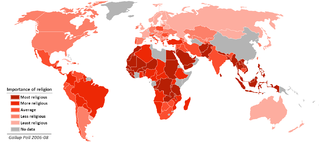
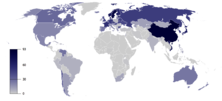

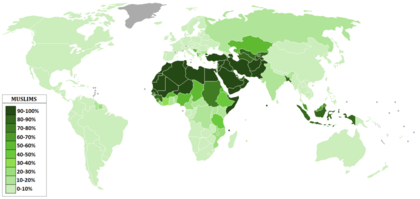
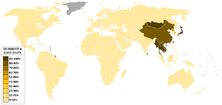
 The table above is compiled from the relevant Wikipedia pages listing Religions by Country. Please note that although figures are an approximation there are many sources. Please see individual pages (Linked in Table) for details.
The numbers of adherents to organised religions in the world is difficult to accurately ascertain. Therefore figures and estimates are included from multiple sources to show the reader the problem in compiling such statistics.
Notes
To verify data within this chart, please check the above reference
from Christianity by country
:
from Islam by country
:
Remarks: Although Islam is the state religion of most Middle Eastern countries,this list excludes Saudi Arabia
where 100% of national citizens are Muslims, because there is a substantial number of non-Muslim residents there (mostly Hindu
and Christian
; as well as Buddhist, Sikh
and Jewish minorities). So the total Muslim population in Saudi Arabia is around 25 million (20 million native Saudi citizens with 1.5 million Bangladesh
is, 1 million Pakistan
is, 1 million Egyptians
, 600,000 Indonesia
ns, 250,000 Palestinians, and significant Muslim numbers among 1.6 million India
ns, 150,000 Lebanese
, as well as 100,000 Eritrea
ns) or only about 90% of the total population. Some other Persian Gulf countries such as Kuwait
, Qatar
and United Arab Emirates
are also excluded due to their large number of non-Muslim foreign immigrants.
(included other folk religions) from Buddhism by country
:
Remarks: "Triple religion" (or "Chinese-Mahayana Buddhism" or "Far East Asian Buddhism") is the mixture of Mahayana Buddhism, with Taoism
and Confucianism
. Because officially Communist governments that often forcibly suppressed religious expressions still rule a number of traditionally Buddhist countries, and because Buddhists often practice other traditional East Asian religions, the figures could be much higher in these regions. Mahayana Buddhism in Far East Asian countries has a very wide meaning. That is why in such countries as China, Japan, Vietnam, North and South Korea, Taiwan, Hong Kong, and Singapore, the three religions of Buddhism, Taoism and Confucianism are often all considered at once. This is referred to as a "Triple religion", with Gautama Buddha
in the center, Laozi
in the left, and Confucius
in the right. In some regions, such as Japan, belief systems vary with differing emphasis on Shintoism, as well as Ancestor Worship. As such, the Buddhist population is difficult to gauge exactly, but is often nominal. The lesser percentage given is a number of Buddhists who have taken the formal step of going for refuge
. And the wider percentage given are informal/nominal adherents of combined Buddhism with its related religions. See Buddhism by country
and Irreligion
.
from Hinduism by country
:
:
^: As of 2010, no longer exists as a country.
:
Sources: Year 2000 Estimated Baha'i statistics from: David Barrett, World Christian Encyclopedia, 2000; Total population statistics, mid-2000 from Population Reference Bureau http://www.prb.org and The World Almanac and Book of Facts 2004.
:
Remarks: Ranked by mean estimate which is in brackets. High irreligious estimates for China and North Korea are very likely highly exaggerated.
:
The Sikh homeland is the Punjab state, in India, where today Sikhs make up approximately 59% of the population. This is the only place where Sikhs are in the majority. Sikhs have emigrated to countries all over the world - especially to English-speaking and East Asian nations. In doing so they have retained, to an unusually high degree, their distinctive cultural and religious identity.
Sikhs are not ubiquitous worldwide in the way that adherents of larger world religions are, and they remain primarily an ethnic religion. But they can be found in many international cities and have become an especially strong religious presence in the United Kingdom and Canada.
The Chinese traditional religion has 184,000 believers in Latin America, 250,000 believers in Europe, and 839,000 believers in North America .
Contents
1 Growth and demographic history
2 LDS Church membership numbers
3 Table for recent growth
4 Table for LDS Church membership numbers
5 See also
6 References
Source: http://www.thearda.com/QuickLists/QuickList_50.asp
Note that all these estimates come from a a single source. However, that one source could at least point us out to the countries that have a decent community of Spiritists
Religions by country
This article gives an overview about religion by country. Note that the Abrahamic religions, Judaism, Christianity, and Islam, will show dual figures; those are the percentage of people who believe in God and the percentage of nominal adherents who celebrate traditional religious holidays although...
.
| Four largest religions | Adherents | Percentage of world population | Further information |
|---|---|---|---|
| World population | 6.8 billion http://www.un.org/esa/population/publications/wpp2008/wpp2008_text_tables.pdfhttps://www.cia.gov/library/publications/the-world-factbook/geos/xx.html | Figure used by individual articles | |
| Christianity Christianity Christianity is a monotheistic religion based on the life and teachings of Jesus as presented in canonical gospels and other New Testament writings... |
1.9 billion - 2.1 billion http://www.adherents.com/Religions_By_Adherents.html#Christianity | 29% - 32% | Christianity by country Christianity by country As of the early 21st century, Christianity has around 2.1 billion adherents. The faith represents nearly one-third of the world's population and is the largest religion in the world, with approximately 38,000 Christian denominations. Christians have composed about 33 percent of the world's... |
| Islam Islam Islam . The most common are and . : Arabic pronunciation varies regionally. The first vowel ranges from ~~. The second vowel ranges from ~~~... |
1.5 billion http://pewforum.org/docs/?DocID=450 | 19% - 23% | Islam by country Islam by country Islam is the world's second largest religion after Christianity. According to a 2009 demographic study, Islam has 1.57 billion adherents, making up 23% of the world population.... |
| Buddhism Buddhism Buddhism is a religion and philosophy encompassing a variety of traditions, beliefs and practices, largely based on teachings attributed to Siddhartha Gautama, commonly known as the Buddha . The Buddha lived and taught in the northeastern Indian subcontinent some time between the 6th and 4th... |
500 million - 1.5 billion http://www.religioustolerance.org/worldrel.htmhttp://www.thefirstpost.co.uk/60490,people,news,dalai-lama-joins-ashton-kutcher-and-stephen-fry-on-twitterhttp://www.bbc.co.uk/vietnamese/forum/story/2008/03/080323_tibet_analysis.shtmlhttp://www.nrn.org.np/speeches/rmshakya.html | 7% - 23% | Buddhism by country Buddhism by country Obtaining exact numbers of practicing Buddhists can be difficult and may be reliant on the definition used. Adherents of Eastern religions such as Buddhism with local Animism, Chinese folk religion, Confucianism, Shinto, and Taoism often have beliefs composed of a mix of religious ideas... |
| Hinduism Hinduism Hinduism is the predominant and indigenous religious tradition of the Indian Subcontinent. Hinduism is known to its followers as , amongst many other expressions... |
900 million - 1 billion https://www.cia.gov/library/publications/the-world-factbook/geos/in.htmlhttp://www.adherents.com/Religions_By_Adherents.html | 14% | Hinduism by country Hinduism by country The percentage of Hindu population of each country was taken from the US State Department's International Religious Freedom Report 2006. Other sources used were the CIA World Factbook and adherents.com... |
| Total | 4.65 billion - 6 billion | 68% - 90% | |
The numbers of adherents to organised religions in the world is difficult to accurately ascertain. Therefore figures and estimates are included from multiple sources to show the reader the problem in compiling such statistics.
Adherents.com estimates
Adherents.com says "Sizes shown are approximate estimates, and are here mainly for the purpose of ordering the groups, not providing a definitive number."| Religion | Adherents |
|---|---|
| Christianity Christianity Christianity is a monotheistic religion based on the life and teachings of Jesus as presented in canonical gospels and other New Testament writings... |
2.1 billion |
| Islam Islam Islam . The most common are and . : Arabic pronunciation varies regionally. The first vowel ranges from ~~. The second vowel ranges from ~~~... |
1.5 billion |
| Nonreligious/agnostic/atheism Atheism Atheism is, in a broad sense, the rejection of belief in the existence of deities. In a narrower sense, atheism is specifically the position that there are no deities... |
1.1 billion |
| Hinduism Hinduism Hinduism is the predominant and indigenous religious tradition of the Indian Subcontinent. Hinduism is known to its followers as , amongst many other expressions... |
900 million |
| Chinese traditional religion | 394 million |
| Buddhism Buddhism Buddhism is a religion and philosophy encompassing a variety of traditions, beliefs and practices, largely based on teachings attributed to Siddhartha Gautama, commonly known as the Buddha . The Buddha lived and taught in the northeastern Indian subcontinent some time between the 6th and 4th... |
376 million |
| Animist religions Animism Animism refers to the belief that non-human entities are spiritual beings, or at least embody some kind of life-principle.... |
300 million |
| African traditional African Traditional Religion The traditional religions indigenous to Africa have, for most of their existence, been orally rather than scripturally transmitted. They are generally associated with animism. Most have ethno-based creations stories... /diasporic Afro-American religion Afro-American religions are a number of related religions that developed in the Americas among African slaves and their descendants in various countries of Latin America, the Caribbean, and parts of the southern United States... religions |
100 million |
| Sikhism Sikhism Sikhism is a monotheistic religion founded during the 15th century in the Punjab region, by Guru Nanak Dev and continued to progress with ten successive Sikh Gurus . It is the fifth-largest organized religion in the world and one of the fastest-growing... |
23 million |
| Juche Juche Juche or Chuch'e is a Korean word usually translated as "self-reliance." In the Democratic People's Republic of Korea , "Juche" refers specifically to a political thesis of Kim Il-sung, the Juche Idea, that identifies the Korean masses as the masters of the country's development... |
19 million |
| Spiritism Spiritism Spiritism is a loose corpus of religious faiths having in common the general belief in the survival of a spirit after death. In a stricter sense, it is the religion, beliefs and practices of the people affiliated to the International Spiritist Union, based on the works of Allan Kardec and others... |
15 million |
| Judaism Judaism Judaism ) is the "religion, philosophy, and way of life" of the Jewish people... |
14 million |
| Baha'i Bahá'í Faith The Bahá'í Faith is a monotheistic religion founded by Bahá'u'lláh in 19th-century Persia, emphasizing the spiritual unity of all humankind. There are an estimated five to six million Bahá'ís around the world in more than 200 countries and territories.... |
7 million |
| Jainism Jainism Jainism is an Indian religion that prescribes a path of non-violence towards all living beings. Its philosophy and practice emphasize the necessity of self-effort to move the soul towards divine consciousness and liberation. Any soul that has conquered its own inner enemies and achieved the state... |
4.2 million |
| Shinto Shinto or Shintoism, also kami-no-michi, is the indigenous spirituality of Japan and the Japanese people. It is a set of practices, to be carried out diligently, to establish a connection between present day Japan and its ancient past. Shinto practices were first recorded and codified in the written... |
4 million |
| Cao Dai Cao Dai Cao Đài is a syncretistic, monotheistic religion, officially established in the city of Tay Ninh, southern Vietnam, in 1926. Đạo Cao Đài is the religion's shortened name, the full name is Đại Đạo Tam Kỳ Phổ Độ... |
4 million |
| Zoroastrianism Zoroastrianism Zoroastrianism is a religion and philosophy based on the teachings of prophet Zoroaster and was formerly among the world's largest religions. It was probably founded some time before the 6th century BCE in Greater Iran.In Zoroastrianism, the Creator Ahura Mazda is all good, and no evil... |
2.6 million |
| Tenrikyo Tenrikyo Tenrikyo is a monotheistic religion originating in revelations to a 19th-century Japanese woman named Nakayama Miki, known as Oyasama by followers... |
2 million |
| Neo-Paganism | 1 million |
| Unitarian Universalism Unitarian Universalism Unitarian Universalism is a religion characterized by support for a "free and responsible search for truth and meaning". Unitarian Universalists do not share a creed; rather, they are unified by their shared search for spiritual growth and by the understanding that an individual's theology is a... |
800,000 |
| Rastafari Movement Rastafari movement The Rastafari movement or Rasta is a new religious movement that arose in the 1930s in Jamaica, which at the time was a country with a predominantly Christian culture where 98% of the people were the black descendants of slaves. Its adherents worship Haile Selassie I, Emperor of Ethiopia , as God... |
600,000 |
Notes
- These figures may incorporate populations of secular/nominal adherents as well as syncretist worshipers, although the concept of syncretism is disputed by some.
- Nonreligious includes agnostic, atheist, secular humanist, and people answering 'none' or no religious preference. Half of this group is theistic but nonreligious.
- For Eastern religions such as Buddhism, Taoism, Confucianism, Shinto or animism etc., people often have religions which are a mix of belief systems. This leads to the unusually large uncertainty in the calculations for Buddhism. The lower number of approximately 400 million represents traditional Buddhists (have taken refugeRefuge (Buddhism)Buddhists "take refuge" in, or to "go for refuge" to, the Three Jewels . This can be done formally in lay and monastic ordination ceremonies.The Three Jewels general signification is: * the Buddha;* the Dharma, the teachings;...
in the Three Jewels, those following all of the precepts of Buddhisim laid down by the Buddha,) whereas the larger number of 1.5 billion includes "natural Buddhists" (as well as secular/nominal Buddhists), lacking specific ceremony, as long as they do not profess belief in another religion. Main article: Buddhism by countryBuddhism by countryObtaining exact numbers of practicing Buddhists can be difficult and may be reliant on the definition used. Adherents of Eastern religions such as Buddhism with local Animism, Chinese folk religion, Confucianism, Shinto, and Taoism often have beliefs composed of a mix of religious ideas...
.
- It is hard to accurately report the actual number of adherents of Judaism as there are Jews that do not practice the religion that may be under the secular/irreligious category even though they are fully Jewish.
- Chinese traditional religion is described as "the common religion of the majority Chinese culture: a combination of Confucianism, Buddhism, and Taoism, as well as the traditional non-scriptural/local practices and beliefs."
ReligionFacts estimates
Religions or worldviews with a million or more adherents.To verify data within this chart, please check the above reference
| Religion | Population | Religious text | Type | Holiest place | Founded | Afterlife |
|---|---|---|---|---|---|---|
| Christianity Christianity Christianity is a monotheistic religion based on the life and teachings of Jesus as presented in canonical gospels and other New Testament writings... |
2 billion | Bible Bible The Bible refers to any one of the collections of the primary religious texts of Judaism and Christianity. There is no common version of the Bible, as the individual books , their contents and their order vary among denominations... |
Abrahamic | Jerusalem/Rome Rome Rome is the capital of Italy and the country's largest and most populated city and comune, with over 2.7 million residents in . The city is located in the central-western portion of the Italian Peninsula, on the Tiber River within the Lazio region of Italy.Rome's history spans two and a half... (Catholicism only) |
Levant Levant The Levant or ) is the geographic region and culture zone of the "eastern Mediterranean littoral between Anatolia and Egypt" . The Levant includes most of modern Lebanon, Syria, Jordan, Israel, the Palestinian territories, and sometimes parts of Turkey and Iraq, and corresponds roughly to the... , 1st century AD |
Eternal hell Hell In many religious traditions, a hell is a place of suffering and punishment in the afterlife. Religions with a linear divine history often depict hells as endless. Religions with a cyclic history often depict a hell as an intermediary period between incarnations... , heaven Heaven Heaven, the Heavens or Seven Heavens, is a common religious cosmological or metaphysical term for the physical or transcendent place from which heavenly beings originate, are enthroned or inhabit... and temporal purgatory Purgatory Purgatory is the condition or process of purification or temporary punishment in which, it is believed, the souls of those who die in a state of grace are made ready for Heaven... (Catholicism only) |
| Islam Islam Islam . The most common are and . : Arabic pronunciation varies regionally. The first vowel ranges from ~~. The second vowel ranges from ~~~... |
1.5 billion | Quran | Abrahamic | Mecca Mecca Mecca is a city in the Hijaz and the capital of Makkah province in Saudi Arabia. The city is located inland from Jeddah in a narrow valley at a height of above sea level... |
Mecca Mecca Mecca is a city in the Hijaz and the capital of Makkah province in Saudi Arabia. The city is located inland from Jeddah in a narrow valley at a height of above sea level... around 610 |
Eternal heaven Heaven Heaven, the Heavens or Seven Heavens, is a common religious cosmological or metaphysical term for the physical or transcendent place from which heavenly beings originate, are enthroned or inhabit... , hell Hell In many religious traditions, a hell is a place of suffering and punishment in the afterlife. Religions with a linear divine history often depict hells as endless. Religions with a cyclic history often depict a hell as an intermediary period between incarnations... |
| Atheism Atheism Atheism is, in a broad sense, the rejection of belief in the existence of deities. In a narrower sense, atheism is specifically the position that there are no deities... |
1.1 billion | none | N/A | none | N/A | N/A |
| Hinduism Hinduism Hinduism is the predominant and indigenous religious tradition of the Indian Subcontinent. Hinduism is known to its followers as , amongst many other expressions... |
900 million | Vedas Vedas The Vedas are a large body of texts originating in ancient India. Composed in Vedic Sanskrit, the texts constitute the oldest layer of Sanskrit literature and the oldest scriptures of Hinduism.... |
Indian religions | Varanasi Varanasi -Etymology:The name Varanasi has its origin possibly from the names of the two rivers Varuna and Assi, for the old city lies in the north shores of the Ganga bounded by its two tributaries, the Varuna and the Asi, with the Ganges being to its south... , Mathura, Ayodhya |
Around 5000–3200 BCE, India India India , officially the Republic of India , is a country in South Asia. It is the seventh-largest country by geographical area, the second-most populous country with over 1.2 billion people, and the most populous democracy in the world... |
Reincarnation Reincarnation Reincarnation best describes the concept where the soul or spirit, after the death of the body, is believed to return to live in a new human body, or, in some traditions, either as a human being, animal or plant... until moksha Moksha Within Indian religions, moksha or mukti , literally "release" , is the liberation from samsara and the concomitant suffering involved in being subject to the cycle of repeated death and reincarnation or rebirth.-Origins:It is highly probable that the concept of moksha was first developed in... |
| Chinese folk religion Chinese folk religion Chinese folk religion or Shenism , which is a term of considerable debate, are labels used to describe the collection of ethnic religious traditions which have been a main belief system in China and among Han Chinese ethnic groups for most of the civilization's history until today... |
394 million | Taoic | ||||
| Buddhism Buddhism Buddhism is a religion and philosophy encompassing a variety of traditions, beliefs and practices, largely based on teachings attributed to Siddhartha Gautama, commonly known as the Buddha . The Buddha lived and taught in the northeastern Indian subcontinent some time between the 6th and 4th... |
360 million | Tripiṭaka Tripiṭaka ' is a traditional term used by various Buddhist sects to describe their various canons of scriptures. As the name suggests, a traditionally contains three "baskets" of teachings: a , a and an .-The three categories:Tripitaka is the three main categories of texts that make up the... |
Indian religions | Bodh Gaya, | 5th century BCE, India India India , officially the Republic of India , is a country in South Asia. It is the seventh-largest country by geographical area, the second-most populous country with over 1.2 billion people, and the most populous democracy in the world... |
Reincarnation Reincarnation Reincarnation best describes the concept where the soul or spirit, after the death of the body, is believed to return to live in a new human body, or, in some traditions, either as a human being, animal or plant... until nirvana Nirvana Nirvāṇa ; ) is a central concept in Indian religions. In sramanic thought, it is the state of being free from suffering. In Hindu philosophy, it is the union with the Supreme being through moksha... |
| Sikhism Sikhism Sikhism is a monotheistic religion founded during the 15th century in the Punjab region, by Guru Nanak Dev and continued to progress with ten successive Sikh Gurus . It is the fifth-largest organized religion in the world and one of the fastest-growing... |
23 million | Guru Granth Sahib Guru Granth Sahib Sri Guru Granth Sahib , or Adi Granth, is the religious text of Sikhism. It is the final and eternal guru of the Sikhs. It is a voluminous text of 1430 angs, compiled and composed during the period of Sikh gurus, from 1469 to 1708... |
Indian religions | Amritsar Amritsar Amritsar is a city in the northern part of India and is the administrative headquarters of Amritsar district in the state of Punjab, India. The 2001 Indian census reported the population of the city to be over 1,500,000, with that of the entire district numbering 3,695,077... , |
Around 1490, Punjab Punjab region The Punjab , also spelled Panjab |water]]s"), is a geographical region straddling the border between Pakistan and India which includes Punjab province in Pakistan and the states of the Punjab, Haryana, Himachal Pradesh, Chandigarh and some northern parts of the National Capital Territory of Delhi... , North India North India North India, known natively as Uttar Bhārat or Shumālī Hindustān , is a loosely defined region in the northern part of India. The exact meaning of the term varies by usage... |
Reincarnation Reincarnation Reincarnation best describes the concept where the soul or spirit, after the death of the body, is believed to return to live in a new human body, or, in some traditions, either as a human being, animal or plant... until union with Waheguru Waheguru Waheguru is a term most often used in Sikhism to refer to God, the Supreme Being or the creator of all. It means "The Good/Best Teacher" in the Punjabi language. Wahi means "good" and "Guru" is a term denoting "teacher".... or God. |
| Taoism Taoism Taoism refers to a philosophical or religious tradition in which the basic concept is to establish harmony with the Tao , which is the mechanism of everything that exists... |
20 million | Tao Te Ching Tao Te Ching The Tao Te Ching, Dao De Jing, or Daodejing , also simply referred to as the Laozi, whose authorship has been attributed to Laozi, is a Chinese classic text... |
Taoic | Around 500 BCE, China | ||
| Judaism Judaism Judaism ) is the "religion, philosophy, and way of life" of the Jewish people... |
14 million | Tanakh Tanakh The Tanakh is a name used in Judaism for the canon of the Hebrew Bible. The Tanakh is also known as the Masoretic Text or the Miqra. The name is an acronym formed from the initial Hebrew letters of the Masoretic Text's three traditional subdivisions: The Torah , Nevi'im and Ketuvim —hence... |
Abrahamic | Jerusalem | Around 1500 BCE | Symbolic Heaven Heaven Heaven, the Heavens or Seven Heavens, is a common religious cosmological or metaphysical term for the physical or transcendent place from which heavenly beings originate, are enthroned or inhabit... and Gehenna Gehenna Gehenna , Gehinnom and Yiddish Gehinnam, are terms derived from a place outside ancient Jerusalem known in the Hebrew Bible as the Valley of the Son of Hinnom ; one of the two principal valleys surrounding the Old City.In the Hebrew Bible, the site was initially where apostate Israelites and... |
| Spiritism Spiritism Spiritism is a loose corpus of religious faiths having in common the general belief in the survival of a spirit after death. In a stricter sense, it is the religion, beliefs and practices of the people affiliated to the International Spiritist Union, based on the works of Allan Kardec and others... |
11 million | none | New religious movement New religious movement A new religious movement is a religious community or ethical, spiritual, or philosophical group of modern origin, which has a peripheral place within the dominant religious culture. NRMs may be novel in origin or they may be part of a wider religion, such as Christianity, Hinduism or Buddhism, in... |
1850s | ||
| Falun Gong Falun Gong Falun Gong is a spiritual discipline first introduced in China in 1992 by its founder, Li Hongzhi, through public lectures. It combines the practice of meditation and slow-moving qigong exercises with the moral philosophy... |
10 million | Zhuan Falun, writings by Master Li | Taoic | 1992, China | Not addressed | |
| Bahá'í | 5-7 million | Aqdas | Abrahamic | Acre Acre, Israel Acre , is a city in the Western Galilee region of northern Israel at the northern extremity of Haifa Bay. Acre is one of the oldest continuously inhabited sites in the country.... |
Iran Iran Iran , officially the Islamic Republic of Iran , is a country in Southern and Western Asia. The name "Iran" has been in use natively since the Sassanian era and came into use internationally in 1935, before which the country was known to the Western world as Persia... , in 1844 |
Symbolic heaven Heaven Heaven, the Heavens or Seven Heavens, is a common religious cosmological or metaphysical term for the physical or transcendent place from which heavenly beings originate, are enthroned or inhabit... and hell Hell In many religious traditions, a hell is a place of suffering and punishment in the afterlife. Religions with a linear divine history often depict hells as endless. Religions with a cyclic history often depict a hell as an intermediary period between incarnations... |
| Cao Dai Cao Dai Cao Đài is a syncretistic, monotheistic religion, officially established in the city of Tay Ninh, southern Vietnam, in 1926. Đạo Cao Đài is the religion's shortened name, the full name is Đại Đạo Tam Kỳ Phổ Độ... |
4-6 million | Caodai canon | Taoic | Tay Ninh Tay Ninh Tây Ninh is a town in southwestern Vietnam. It is the capital of Tay Ninh province, which encompasses the town and much of the surrounding farmland.... |
Vietnam Vietnam Vietnam – sometimes spelled Viet Nam , officially the Socialist Republic of Vietnam – is the easternmost country on the Indochina Peninsula in Southeast Asia. It is bordered by China to the north, Laos to the northwest, Cambodia to the southwest, and the South China Sea –... |
|
| Confucianism Confucianism Confucianism is a Chinese ethical and philosophical system developed from the teachings of the Chinese philosopher Confucius . Confucianism originated as an "ethical-sociopolitical teaching" during the Spring and Autumn Period, but later developed metaphysical and cosmological elements in the Han... |
4-6 million | Analects | Taoic | Qufu Qufu Qufu is a city in southwestern Shandong province, People's Republic of China. It is located at 35° 36′ northern latitude and 117° 02′ east, about south of the provincial capital Jinan and northeast of the prefecture seat at Jining... |
China China Chinese civilization may refer to:* China for more general discussion of the country.* Chinese culture* Greater China, the transnational community of ethnic Chinese.* History of China* Sinosphere, the area historically affected by Chinese culture... 551–478 BC |
Not addressed |
| New Age New Age The New Age movement is a Western spiritual movement that developed in the second half of the 20th century. Its central precepts have been described as "drawing on both Eastern and Western spiritual and metaphysical traditions and then infusing them with influences from self-help and motivational... |
5 million | N/A | New religious movement New religious movement A new religious movement is a religious community or ethical, spiritual, or philosophical group of modern origin, which has a peripheral place within the dominant religious culture. NRMs may be novel in origin or they may be part of a wider religion, such as Christianity, Hinduism or Buddhism, in... |
none | 19th century | karma Karma Karma in Indian religions is the concept of "action" or "deed", understood as that which causes the entire cycle of cause and effect originating in ancient India and treated in Hindu, Jain, Buddhist and Sikh philosophies.... |
| Jainism Jainism Jainism is an Indian religion that prescribes a path of non-violence towards all living beings. Its philosophy and practice emphasize the necessity of self-effort to move the soul towards divine consciousness and liberation. Any soul that has conquered its own inner enemies and achieved the state... |
4.2 million | Puran Puran Puran Puran Tehsil is a sub-division and tehsil of Shangla District in Khyber-Pakhtunkhwa province of Pakistan.... |
Indian religions | Sammet Shikharji | Pre-historic to 5th century BCE, India India India , officially the Republic of India , is a country in South Asia. It is the seventh-largest country by geographical area, the second-most populous country with over 1.2 billion people, and the most populous democracy in the world... |
Reincarnation until liberation |
| Shinto Shinto or Shintoism, also kami-no-michi, is the indigenous spirituality of Japan and the Japanese people. It is a set of practices, to be carried out diligently, to establish a connection between present day Japan and its ancient past. Shinto practices were first recorded and codified in the written... |
3-4 million | Kojiki Kojiki is the oldest extant chronicle in Japan, dating from the early 8th century and composed by Ō no Yasumaro at the request of Empress Gemmei. The Kojiki is a collection of myths concerning the origin of the four home islands of Japan, and the Kami... etc. |
Taoic | Ise, Mie Ise, Mie , formerly called Ujiyamada , is a city located in eastern Mie Prefecture, on the island of Honshū, Japan.Ise is home to Ise Grand Shrine, the most sacred Shintō Shrine in Japan, and is thus a very popular destination for tourists. The city has a long-standing nickname—Shinto —that roughly means... |
N/A | varies |
| Wicca Wicca Wicca , is a modern Pagan religious movement. Developing in England in the first half of the 20th century, Wicca was popularised in the 1950s and early 1960s by a Wiccan High Priest named Gerald Gardner, who at the time called it the "witch cult" and "witchcraft," and its adherents "the Wica."... |
1-3 million | none | New religious movement New religious movement A new religious movement is a religious community or ethical, spiritual, or philosophical group of modern origin, which has a peripheral place within the dominant religious culture. NRMs may be novel in origin or they may be part of a wider religion, such as Christianity, Hinduism or Buddhism, in... |
none | 1920s | varies |
| Aladura Aladura Aladura is a religion founded c.1922–1930 in West Nigeria by various people, with around 1 million adherents worldwide."Aladura" means "Praying People" in Yoruba.... |
1 million | none | New religious movement New religious movement A new religious movement is a religious community or ethical, spiritual, or philosophical group of modern origin, which has a peripheral place within the dominant religious culture. NRMs may be novel in origin or they may be part of a wider religion, such as Christianity, Hinduism or Buddhism, in... |
Lagos | Nigeria Nigeria Nigeria , officially the Federal Republic of Nigeria, is a federal constitutional republic comprising 36 states and its Federal Capital Territory, Abuja. The country is located in West Africa and shares land borders with the Republic of Benin in the west, Chad and Cameroon in the east, and Niger in... in 1918 |
varies |
| Rastafari | 1 million | Kebra Nagast Kebra Nagast The Kebra Nagast , or the Book of the Glory of Kings, is an account written in Ge'ez of the origins of the Solomonic line of the Emperors of Ethiopia. The text, in its existing form, is at least seven hundred years old, and is considered by many Ethiopian Christians and Rastafarians to be an... |
New religious movement New religious movement A new religious movement is a religious community or ethical, spiritual, or philosophical group of modern origin, which has a peripheral place within the dominant religious culture. NRMs may be novel in origin or they may be part of a wider religion, such as Christianity, Hinduism or Buddhism, in... |
Ethiopia | Jamaica Jamaica Jamaica is an island nation of the Greater Antilles, in length, up to in width and 10,990 square kilometres in area. It is situated in the Caribbean Sea, about south of Cuba, and west of Hispaniola, the island harbouring the nation-states Haiti and the Dominican Republic... in 1920s |
immortality Immortality Immortality is the ability to live forever. It is unknown whether human physical immortality is an achievable condition. Biological forms have inherent limitations which may or may not be able to be overcome through medical interventions or engineering... |
| Unitarian Universalism Unitarian Universalism Unitarian Universalism is a religion characterized by support for a "free and responsible search for truth and meaning". Unitarian Universalists do not share a creed; rather, they are unified by their shared search for spiritual growth and by the understanding that an individual's theology is a... |
800,000 | varies | New religious movement New religious movement A new religious movement is a religious community or ethical, spiritual, or philosophical group of modern origin, which has a peripheral place within the dominant religious culture. NRMs may be novel in origin or they may be part of a wider religion, such as Christianity, Hinduism or Buddhism, in... |
none | United States United States The United States of America is a federal constitutional republic comprising fifty states and a federal district... in 1961 |
varies |
| Deism Deism Deism in religious philosophy is the belief that reason and observation of the natural world, without the need for organized religion, can determine that the universe is the product of an all-powerful creator. According to deists, the creator does not intervene in human affairs or suspend the... |
Unknown | none | N/A | none | Ancient history Ancient history Ancient history is the study of the written past from the beginning of recorded human history to the Early Middle Ages. The span of recorded history is roughly 5,000 years, with Cuneiform script, the oldest discovered form of coherent writing, from the protoliterate period around the 30th century BC... |
not addressed |
- Chinese Folk Religion consists of TaoismTaoismTaoism refers to a philosophical or religious tradition in which the basic concept is to establish harmony with the Tao , which is the mechanism of everything that exists...
and ConfucianismConfucianismConfucianism is a Chinese ethical and philosophical system developed from the teachings of the Chinese philosopher Confucius . Confucianism originated as an "ethical-sociopolitical teaching" during the Spring and Autumn Period, but later developed metaphysical and cosmological elements in the Han...
. - The atheist section includes the irreligiousIrreligionIrreligion is defined as an absence of religion or an indifference towards religion. Sometimes it may also be defined more narrowly as hostility towards religion. When characterized as hostility to religion, it includes antitheism, anticlericalism and antireligion. When characterized as...
, humanistsHumanismHumanism is an approach in study, philosophy, world view or practice that focuses on human values and concerns. In philosophy and social science, humanism is a perspective which affirms some notion of human nature, and is contrasted with anti-humanism....
, agnosticismAgnosticismAgnosticism is the view that the truth value of certain claims—especially claims about the existence or non-existence of any deity, but also other religious and metaphysical claims—is unknown or unknowable....
, freethinkers, brights, skepticismSkepticismSkepticism has many definitions, but generally refers to any questioning attitude towards knowledge, facts, or opinions/beliefs stated as facts, or doubt regarding claims that are taken for granted elsewhere...
(non-believer) and others who hold a naturalisticNaturalism (philosophy)Naturalism commonly refers to the philosophical viewpoint that the natural universe and its natural laws and forces operate in the universe, and that nothing exists beyond the natural universe or, if it does, it does not affect the natural universe that we know...
worldview. - Christianity includes Orthodox ChristianityOrthodox ChristianityThe term Orthodox Christianity may refer to:* the Eastern Orthodox Church and its various geographical subdivisions...
, Catholic Church and ProtestantismProtestantismProtestantism is one of the three major groupings within Christianity. It is a movement that began in Germany in the early 16th century as a reaction against medieval Roman Catholic doctrines and practices, especially in regards to salvation, justification, and ecclesiology.The doctrines of the... - Islam includes Shia Islam, SufismSufismSufism or ' is defined by its adherents as the inner, mystical dimension of Islam. A practitioner of this tradition is generally known as a '...
and Sunni IslamSunni IslamSunni Islam is the largest branch of Islam. Sunni Muslims are referred to in Arabic as ʾAhl ūs-Sunnah wa āl-Ǧamāʿah or ʾAhl ūs-Sunnah for short; in English, they are known as Sunni Muslims, Sunnis or Sunnites.... - Buddhism includes TheravadaTheravadaTheravada ; literally, "the Teaching of the Elders" or "the Ancient Teaching", is the oldest surviving Buddhist school. It was founded in India...
, MahayanaMahayanaMahāyāna is one of the two main existing branches of Buddhism and a term for classification of Buddhist philosophies and practice... - Hinduism includes Vaishnavites and Shaivites
- Traditional religion includes polytheismPolytheismPolytheism is the belief of multiple deities also usually assembled into a pantheon of gods and goddesses, along with their own mythologies and rituals....
, shamanismShamanismShamanism is an anthropological term referencing a range of beliefs and practices regarding communication with the spiritual world. To quote Eliade: "A first definition of this complex phenomenon, and perhaps the least hazardous, will be: shamanism = technique of ecstasy." Shamanism encompasses the...
, pantheismPantheismPantheism is the view that the Universe and God are identical. Pantheists thus do not believe in a personal, anthropomorphic or creator god. The word derives from the Greek meaning "all" and the Greek meaning "God". As such, Pantheism denotes the idea that "God" is best seen as a process of...
, and animismAnimismAnimism refers to the belief that non-human entities are spiritual beings, or at least embody some kind of life-principle....
Christians
Countries with the greatest proportion of ChristiansChristianity
Christianity is a monotheistic religion based on the life and teachings of Jesus as presented in canonical gospels and other New Testament writings...
from Christianity by country
Christianity by country
As of the early 21st century, Christianity has around 2.1 billion adherents. The faith represents nearly one-third of the world's population and is the largest religion in the world, with approximately 38,000 Christian denominations. Christians have composed about 33 percent of the world's...
:
-
 Vatican City 100% (100% Roman Catholic)
 -
 Federated States of Micronesia ~100%
 -
 Samoa ~100%
 -
 Panama ~ 100%
 -
 Kingdom of Romania 99%
 -
 East Timor 99% (90% Roman Catholic)
 -
 Bolivia 98.1% (95% Roman Catholic)
 -
 Venezuela 98% (mostly Roman Catholic)
 -
 Marshall Islands 97.2%
 -
 Peru 97.1%
 -
 Paraguay 96.9% (mostly Roman Catholic)
 -
 Papua New Guinea 96.4%
 -
 Kiribati 96%
 -
 Angola +95%
 -
 Barbados +95%
 -
 Cyprus 95%(mostly Greek Orthodox)
 -
 Mexico 95% (mostly Roman Catholic)
 -
 Malta 95%
 -
 Colombia 93.5% (mostly Roman Catholic)
 -
 Guatemala +90% (50-60% Roman Catholic and ~30% Protestant, 0-10% non-Christian)
 -
 Philippines +90% (Roman Catholic)
Muslims
Countries with the greatest proportion of MuslimsIslam
Islam . The most common are and . : Arabic pronunciation varies regionally. The first vowel ranges from ~~. The second vowel ranges from ~~~...
from Islam by country
Islam by country
Islam is the world's second largest religion after Christianity. According to a 2009 demographic study, Islam has 1.57 billion adherents, making up 23% of the world population....
:
-
 Saudi Arabia 100% (90% Sunni, 10% Shi'a)
 -
 Afghanistan 99.9% (85% Sunni, 14% Shi'a)
 -
 Yemen 99.9% (65-70% Sunni, 30-35% Shi'a)
 -
 Mauritania 99.9% (mostly Sunni)
 -
 Somalia 100% (mostly Sunni)
 -
 Maldives 99.33% (mostly Sunni)
 -
 Oman 99% (mostly Ibadhi)
 -
 Djibouti +99% (mostly Sunni)
 -
 Tunisia 99% (mostly Sunni)
 -
 Algeria 99% (mostly Sunni)
 -
 Turkey 99% (85% Sunni, 15% Shia)
 -
 Bahrain 98% (mostly Shia)
 -
 Comoros 98% (mostly Sunni)
 -
 Morocco 98.7% (mostly Sunni)
 -
 Niger +98% (95% Sunni and Sufi)
 -
 Iran 98% (mostly Shi'a)
 -
 Pakistan 97% (75-80% Sunni, 20-25% Shi'a)
 -
 Iraq 97% (55% Shi'a, 45% Sunni)
 -
 Libya 99% (Sunni)
 -
 Azerbaijan 96% (mostly Shia)
- 89.5% (Shia'a 35%, Sunni , Druze 5%)
Remarks: Although Islam is the state religion of most Middle Eastern countries,this list excludes Saudi Arabia
Saudi Arabia
The Kingdom of Saudi Arabia , commonly known in British English as Saudi Arabia and in Arabic as as-Sa‘ūdiyyah , is the largest state in Western Asia by land area, constituting the bulk of the Arabian Peninsula, and the second-largest in the Arab World...
where 100% of national citizens are Muslims, because there is a substantial number of non-Muslim residents there (mostly Hindu
Hinduism in Arab states
There are many Hindus in Arab states, many due to the migration of Indians to the oil-rich states around the Persian Gulf.Hindu temples have been built in Bahrain, the United Arab Emirates, Qatar, Kuwait, Yemen and Oman....
and Christian
Christianity in Saudi Arabia
Accurate religious demographics are difficult to obtain in Saudi Arabia but 85 to 90% of citizens of Saudi Arabia are Sunni Muslims, who predominantly subscribe to the Government-sanctioned interpretation of Islam, while 10 to 15% of citizens are Shi'a Muslims....
; as well as Buddhist, Sikh
Sikh
A Sikh is a follower of Sikhism. It primarily originated in the 15th century in the Punjab region of South Asia. The term "Sikh" has its origin in Sanskrit term शिष्य , meaning "disciple, student" or शिक्ष , meaning "instruction"...
and Jewish minorities). So the total Muslim population in Saudi Arabia is around 25 million (20 million native Saudi citizens with 1.5 million Bangladesh
Bangladesh
Bangladesh , officially the People's Republic of Bangladesh is a sovereign state located in South Asia. It is bordered by India on all sides except for a small border with Burma to the far southeast and by the Bay of Bengal to the south...
is, 1 million Pakistan
Pakistan
Pakistan , officially the Islamic Republic of Pakistan is a sovereign state in South Asia. It has a coastline along the Arabian Sea and the Gulf of Oman in the south and is bordered by Afghanistan and Iran in the west, India in the east and China in the far northeast. In the north, Tajikistan...
is, 1 million Egyptians
Egyptians
Egyptians are nation an ethnic group made up of Mediterranean North Africans, the indigenous people of Egypt.Egyptian identity is closely tied to geography. The population of Egypt is concentrated in the lower Nile Valley, the small strip of cultivable land stretching from the First Cataract to...
, 600,000 Indonesia
Indonesia
Indonesia , officially the Republic of Indonesia , is a country in Southeast Asia and Oceania. Indonesia is an archipelago comprising approximately 13,000 islands. It has 33 provinces with over 238 million people, and is the world's fourth most populous country. Indonesia is a republic, with an...
ns, 250,000 Palestinians, and significant Muslim numbers among 1.6 million India
India
India , officially the Republic of India , is a country in South Asia. It is the seventh-largest country by geographical area, the second-most populous country with over 1.2 billion people, and the most populous democracy in the world...
ns, 150,000 Lebanese
Lebanese people
The Lebanese people are a nation and ethnic group of Levantine people originating in what is today the country of Lebanon, including those who had inhabited Mount Lebanon prior to the creation of the modern Lebanese state....
, as well as 100,000 Eritrea
Eritrea
Eritrea , officially the State of Eritrea, is a country in the Horn of Africa. Eritrea derives it's name from the Greek word Erethria, meaning 'red land'. The capital is Asmara. It is bordered by Sudan in the west, Ethiopia in the south, and Djibouti in the southeast...
ns) or only about 90% of the total population. Some other Persian Gulf countries such as Kuwait
Kuwait
The State of Kuwait is a sovereign Arab state situated in the north-east of the Arabian Peninsula in Western Asia. It is bordered by Saudi Arabia to the south at Khafji, and Iraq to the north at Basra. It lies on the north-western shore of the Persian Gulf. The name Kuwait is derived from the...
, Qatar
Qatar
Qatar , also known as the State of Qatar or locally Dawlat Qaṭar, is a sovereign Arab state, located in the Middle East, occupying the small Qatar Peninsula on the northeasterly coast of the much larger Arabian Peninsula. Its sole land border is with Saudi Arabia to the south, with the rest of its...
and United Arab Emirates
United Arab Emirates
The United Arab Emirates, abbreviated as the UAE, or shortened to "the Emirates", is a state situated in the southeast of the Arabian Peninsula in Western Asia on the Persian Gulf, bordering Oman, and Saudi Arabia, and sharing sea borders with Iraq, Kuwait, Bahrain, Qatar, and Iran.The UAE is a...
are also excluded due to their large number of non-Muslim foreign immigrants.
Buddhists
Countries with the greatest proportion of BuddhistsBuddhism
Buddhism is a religion and philosophy encompassing a variety of traditions, beliefs and practices, largely based on teachings attributed to Siddhartha Gautama, commonly known as the Buddha . The Buddha lived and taught in the northeastern Indian subcontinent some time between the 6th and 4th...
(included other folk religions) from Buddhism by country
Buddhism by country
Obtaining exact numbers of practicing Buddhists can be difficult and may be reliant on the definition used. Adherents of Eastern religions such as Buddhism with local Animism, Chinese folk religion, Confucianism, Shinto, and Taoism often have beliefs composed of a mix of religious ideas...
:
-
 Cambodia 96% (Theravada, Muslim 3%, Christian and other 2%)
 -
 Thailand 94.6% (Theravada, Muslim 4%, Christian 0.7%, other 0.3%)
 -
 Mongolia 90% (Tibetan Buddhism, Muslim 5%, Christian and other 5%)
 -
 Hong Kong Triple religion 90% (10% practising) ("Triple religion"Religion in Hong KongReligion in Hong Kong is part of the culture of Hong Kong. Religious freedom is one of the fundamental rights enjoyed by Hong Kong residents. It is protected by the Basic Law and relevant legislation. There is a large variety of religious groups in Hong Kong, including Buddhism, Taoism,...
, Christian and others 7%) -
 Myanmar 89% (Theravada, Christian 4%, Muslim 4%, Animism or other 2%)
 -
 Vietnam 85% (15% practicing)("Triple religion"Religion in VietnamThe earliest established religions in Vietnam are Mahayana Buddhism, Confucianism, and Taoism . Significant minorities of adherents to Roman Catholicism, Cao Dai, and Hoa Hao and smaller minorities of adherents to Hinduism, Islam, Protestantism and Theravada Buddhism exist.The majority of...
, Christian 7%, Cao Dai 3%, other 3%) -
 Macau 85% ("Triple religion", Christian 6%, Atheist or other 3%)
 -
 Laos 67%-98% (67% Theravada with 31% traditional animistReligion in LaosLaos is an area of and contains a population of 6.4 million. Almost all ethnic or "lowland" Lao are followers of Theravada Buddhism; however, lowland Lao constitute only 40-50 percent of the population. The remainder of the population belongs to at least 48 distinct ethnic minority groups...
.) -
 People's Republic of China 50-+80% (8% practicing) (Triple religion, Atheist 10.5%, Christian 4%, Muslim 1.5%)
 -
 Bhutan +66-75% (Lamaistic, Hindu 25%)
 -
 Christmas Island 75% (Triple religion, Christian 12%, Muslim 10%, other 3%)
 -
 Sri Lanka 70% (Theraveda, Hindu 15%, Christian 7.5%, Muslim 7.5%)
 - 35.1-75% ("Triple religion"Religion in TaiwanA wide diversity of religions can be found on Taiwan, due to its multicultural history, and religious freedom written in the constitution of the Republic of China.-History:...
, Christian 4%, other 2%) -
 Singapore 33-44% ("Triple religion" 33% Buddhist, 11% Taoist)
 -
 Japan 20-45%(Shinto with MahayanaReligion in JapanMost Japanese people do not exclusively identify themselves as adherents of a single religion; rather, they incorporate elements of various religions in a syncretic fashion known as . Shinbutsu Shūgō officially ended with the Shinto and Buddhism Separation Order of 1886, but continues in practice...
) (20% to 45% believe in Buddha)  Malaysia 23% (Muslim 60.3%, "Triple religion", Christian 9%, Hindu 6%, other 1.7%)
-
 South Korea 22.8%(Mahayana with Confucianist, Christian 29%, other)
 -
 Brunei 15% (Muslim 67%, "Triple religion", Christian 10%, other 8%)
 -
 Nepal 11.4% (Hindu 80.6%, Tibetian Buddhist, Muslim 4%, other 4%)
Remarks: "Triple religion" (or "Chinese-Mahayana Buddhism" or "Far East Asian Buddhism") is the mixture of Mahayana Buddhism, with Taoism
Taoism
Taoism refers to a philosophical or religious tradition in which the basic concept is to establish harmony with the Tao , which is the mechanism of everything that exists...
and Confucianism
Confucianism
Confucianism is a Chinese ethical and philosophical system developed from the teachings of the Chinese philosopher Confucius . Confucianism originated as an "ethical-sociopolitical teaching" during the Spring and Autumn Period, but later developed metaphysical and cosmological elements in the Han...
. Because officially Communist governments that often forcibly suppressed religious expressions still rule a number of traditionally Buddhist countries, and because Buddhists often practice other traditional East Asian religions, the figures could be much higher in these regions. Mahayana Buddhism in Far East Asian countries has a very wide meaning. That is why in such countries as China, Japan, Vietnam, North and South Korea, Taiwan, Hong Kong, and Singapore, the three religions of Buddhism, Taoism and Confucianism are often all considered at once. This is referred to as a "Triple religion", with Gautama Buddha
Gautama Buddha
Siddhārtha Gautama was a spiritual teacher from the Indian subcontinent, on whose teachings Buddhism was founded. In most Buddhist traditions, he is regarded as the Supreme Buddha Siddhārtha Gautama (Sanskrit: सिद्धार्थ गौतम; Pali: Siddhattha Gotama) was a spiritual teacher from the Indian...
in the center, Laozi
Laozi
Laozi was a mystic philosopher of ancient China, best known as the author of the Tao Te Ching . His association with the Tao Te Ching has led him to be traditionally considered the founder of Taoism...
in the left, and Confucius
Confucius
Confucius , literally "Master Kong", was a Chinese thinker and social philosopher of the Spring and Autumn Period....
in the right. In some regions, such as Japan, belief systems vary with differing emphasis on Shintoism, as well as Ancestor Worship. As such, the Buddhist population is difficult to gauge exactly, but is often nominal. The lesser percentage given is a number of Buddhists who have taken the formal step of going for refuge
Refuge (Buddhism)
Buddhists "take refuge" in, or to "go for refuge" to, the Three Jewels . This can be done formally in lay and monastic ordination ceremonies.The Three Jewels general signification is: * the Buddha;* the Dharma, the teachings;...
. And the wider percentage given are informal/nominal adherents of combined Buddhism with its related religions. See Buddhism by country
Buddhism by country
Obtaining exact numbers of practicing Buddhists can be difficult and may be reliant on the definition used. Adherents of Eastern religions such as Buddhism with local Animism, Chinese folk religion, Confucianism, Shinto, and Taoism often have beliefs composed of a mix of religious ideas...
and Irreligion
Irreligion
Irreligion is defined as an absence of religion or an indifference towards religion. Sometimes it may also be defined more narrowly as hostility towards religion. When characterized as hostility to religion, it includes antitheism, anticlericalism and antireligion. When characterized as...
.
Hindus
Countries with the greatest proportion of HindusHinduism
Hinduism is the predominant and indigenous religious tradition of the Indian Subcontinent. Hinduism is known to its followers as , amongst many other expressions...
from Hinduism by country
Hinduism by country
The percentage of Hindu population of each country was taken from the US State Department's International Religious Freedom Report 2006. Other sources used were the CIA World Factbook and adherents.com...
:
- Nepal 86.5%
-
 India 80.5%
 -
 Mauritius 54%
 -
 Guyana 28%
 -
 Fiji 27.9%
 - Bhutan 25%
-
 Trinidad and Tobago 22.5%
 -
 Suriname 20%
 - Sri Lanka 15%
-
 Bangladesh 9.2%
 -
 Qatar 7.2%
 -
 Réunion 6.7%
 - Malaysia 6.3%
- Bahrain 6.25%
-
 Kuwait 6%
 -
 United Arab Emirates 5%
 - Singapore 4%
- Oman 3%
-
 Belize 2.3%
 -
 Seychelles 2.1%
Ethnic / Indigenous
All of the below come from the U.S Department of State 2009 International Religious Freedom Report, http://www.state.gov/g/drl/rls/irf/2009/index.htm based on the highest estimate of people identified as indigenous or followers of indigenous religions that have been well-defined. Due to the syncretic nature of these religions, the following numbers may not reflect the actual number of practitioners.-
 Cuba 100%
 - India 100%
- Bolivia 55%
- Laos 55%
-
 Haiti 50%
 -
 Guinea-Bissau 50%
 -
 Cameroon 40%
 -
 Togo 33%
 -
 Côte d'Ivoire 25%
 -
 Sudan 25%
 -
 Benin 23%
 -
 Burundi 20%
 - Philippines 16%
-
 Burkina Faso 15%
 -
 New Zealand 15%
 -
 South Africa 15%
 -
 Democratic Republic of the Congo 12%
 -
 Central African Republic 10%
 -
 Gabon 10%
 -
 Lesotho 10%
 -
 Nigeria 10%
 -
 Sierra Leone 10%
 -
 Indonesia 9%
 -
 Kenya 9%
 -
 Palau 9%
 -
 Ghana 8.5%
 -
 Guinea 5%
Jews
Countries with the greatest proportion of JewsJudaism
Judaism ) is the "religion, philosophy, and way of life" of the Jewish people...
:
-
 Israel 76.2%
 -
 Palestinian territories 11.09%
 -
 Monaco 3%
 -
 United States 2.5%
 -
 Gibraltar 2.1%
 -
 Cayman Islands
 -
 Netherlands Antilles^ 1.3%
 -
 Canada 1.1%
 -
 Early Modern France 1%
 -
 Belarus 1%
 -
 Argentina 0.8%
 -
 Hungary 0.8%
 -
 Uruguay 0.75%
 -
 Russia 0.5%
 -
 United Kingdom 0.5%
 -
 Australia 0.45%
 -
 Netherlands 0.3%
 -
 Germany 0.25%
 -
 Georgia (country) 0.22%
^: As of 2010, no longer exists as a country.
Bahá'ís
Countries with the greatest proportion of Bahá'ísBahá'í Faith
The Bahá'í Faith is a monotheistic religion founded by Bahá'u'lláh in 19th-century Persia, emphasizing the spiritual unity of all humankind. There are an estimated five to six million Bahá'ís around the world in more than 200 countries and territories....
:
-
 Nauru 9.22%
 -
 Tonga 6.09%
 -
 Tuvalu 5.86%
 - Kiribati 4.70%
-
 Tokelau 4.33%
 -
 Cocos (Keeling) Islands 3.72%
 - Bolivia 3.25%
-
 Falkland Islands 2.98%
 -
 Vanuatu 2.78%
 - Belize 2.73%
- Samoa 2.37%
- Guyana 2.09%
- United Arab Emirates 1.95%
-
 São Tomé and Príncipe 1.88%
 - Mauritius 1.84%
-
 Zambia 1.70%
 -
 Dominica 1.61%
 - Federated States of Micronesia 1.61%
-
 Niue 1.53%
 - Marshall Islands 1.50%
Sources: Year 2000 Estimated Baha'i statistics from: David Barrett, World Christian Encyclopedia, 2000; Total population statistics, mid-2000 from Population Reference Bureau http://www.prb.org and The World Almanac and Book of Facts 2004.
Irreligious & Atheist
Countries with the greatest proportion of people without religion (including Agnostics and Atheists) from Irreligion by countryIrreligion by country
Irreligion varies in the different countries around the world....
:
- Japan 64–88% (76%)
-
 Sweden 46-85% (65.5%)
 -
 Denmark 43-80% (61.5%)
 - Macau 60.9%
-
 Czech Republic 54–61% (57.5%)
 - Hong Kong 57%
- Early Modern France 43-64% (53.5%)
-
 Norway 31–72% (51.5%)
 -
 Estonia 49%
 - Netherlands 39-55% (47%)
-
 Finland 28–60% (44%)
 - United Kingdom 31–52% (41.5%)
- South Korea 30-52% (41%)
- Germany 25-55% (40%)
- Hungary 32-46% (39%)
-
 Belgium 42-43% (38.75%)
 - New Zealand 34.7%
-
 Kingdom of Bulgaria 34-40% (37%)
 -
 Slovenia 35-38% (36.5%)
 - Russia 13–48% (30.5%)
Remarks: Ranked by mean estimate which is in brackets. High irreligious estimates for China and North Korea are very likely highly exaggerated.
Sikhism
Countries with the greatest proportion of SikhsSikhism
Sikhism is a monotheistic religion founded during the 15th century in the Punjab region, by Guru Nanak Dev and continued to progress with ten successive Sikh Gurus . It is the fifth-largest organized religion in the world and one of the fastest-growing...
:
- India 2.3%
- United Kingdom 1.2%
- Canada 0.9%
- Malaysia 0.5%
- Fiji 0.3%
- Singapore 0.3%
- United States 0.2%
- New Zealand 0.2%
- Australia 0.1%
-
 Italy 0.1%
The Sikh homeland is the Punjab state, in India, where today Sikhs make up approximately 59% of the population. This is the only place where Sikhs are in the majority. Sikhs have emigrated to countries all over the world - especially to English-speaking and East Asian nations. In doing so they have retained, to an unusually high degree, their distinctive cultural and religious identity.
Sikhs are not ubiquitous worldwide in the way that adherents of larger world religions are, and they remain primarily an ethnic religion. But they can be found in many international cities and have become an especially strong religious presence in the United Kingdom and Canada.
Taoists/Confucianists/Chinese traditional religionists
As a spiritual practice, Taoism has made fewer inroads in the West than Buddhism and Hinduism. Despite the popularity of its great classics the I Ching and the Tao Te Ching, the specific practices of Taoism have not been promulgated in America with much success; these religions are not ubiquitous worldwide in the way that adherents of larger world religions are, and they remain primarily an ethnic religion. Nonetheless, Taoist ideas and symbols such as Taijitu have become popular throughout the world through Tai Chi Chuan, Qigong, and various martial arts.- 33-80%
- People's Republic of China 30%
- Hong Kong 28%
- Macau 13.9%
- Singapore 8.5%
- Malaysia 2.6%
- South Korea 0.2-1%
- Vietnam
- Mauritius
The Chinese traditional religion has 184,000 believers in Latin America, 250,000 believers in Europe, and 839,000 believers in North America .
Jainism
Mormonism
The Deseret Morning News LDS Church Almanac gives information on historical membership records of The Church of Jesus Christ of Latter-day Saints. The Church's reported membership was roughly 13,824,000 at the start of 2010. (go to Church of Jesus Christ of Latter-day Saints page)Contents
1 Growth and demographic history
2 LDS Church membership numbers
3 Table for recent growth
4 Table for LDS Church membership numbers
5 See also
6 References
Spiritism
- Cuba 10.30%
-
 Jamaica 10.2%
 -
 Brazil 4.8%
 - Suriname 3.6%
- Haiti 2.7%
-
 Dominican Republic 2.2%
 -
 The Bahamas 1.9%
 -
 Nicaragua 1.5%
 - Trinidad and Tobago 1.4%
- Guyana 1.3%
- Venezuela 1.1%
- Colombia 1.0%
- Belize 1.0%
-
 Honduras 0.9%
 -
 Puerto Rico 0.7%
 - Panama 0.5%
-
 Iceland 0.5%
 -
 Guadeloupe 0.4%
 - Argentina 0.2%
- Guatemala 0.2%
Source: http://www.thearda.com/QuickLists/QuickList_50.asp
Note that all these estimates come from a a single source. However, that one source could at least point us out to the countries that have a decent community of Spiritists
Christians
Largest Christian populations :- United States 234,889,159
- Brazil 176,356,100
- Mexico 105,265,846
- Russia 102,600,000
- Philippines 91,121,400
- Nigeria 72,068,098
- Democratic Republic of the Congo 59,176,360
- Germany 56,957,500
- Italy 51,852,284
-
 Ethiopia 47,131,322
 - United Kingdom 43,515,786
-
 Ukraine 42,572,167
 - Colombia 41,938,720
-
 Spain 36,697,000
 - Argentina 37,883,811
-
 Poland 36,977,511
 - South Africa 35,066,269
- Kenya 28,792,702
- Early Modern France 19,089,090-32,496,275
- People's Republic of China 21,000,000-30,000,000
Muslims
Largest Muslim populations (as of 2007):- Indonesia 202,867,000
- Pakistan 174,082,000
- India 169,745,000
- Bangladesh 145,312,000
-
 Egypt 78,513,000
 - Nigeria 78,056,000
- Iran 73,777,000
- Turkey 73,619,000
- Algeria 34,199,000
- Afghanistan 32,172,000
- Morocco 31,993,000
- Iraq 30,428,000
- Sudan 30,121,000
- Ethiopia 28,063,000
-
 Uzbekistan 26,469,000
 - Saudi Arabia 24,949,000
- Yemen 23,363,000
- People's Republic of China 21,667,000
-
 Syria 20,196,000
 - Malaysia 16,581,000
Buddhists
Largest Buddhist populations :- Sri Lanka 14,648,421
- Thailand 61,814,742
- Vietnam 48,473,003
- Myanmar 42,636,562
- Japan 25,486,699
- 8,000,605 - 21,258,751
- India 16,947,992
-
 North Korea 466,035 - 15,029,613
 -
 Republic of China 14,644,997
 - Cambodia 13,296,109
- South Korea 10,427,436
- United States 2,107,980 - 10,000,000
- Laos 4,369,739 - 6,391,558
- Malaysia 5,460,683
- Nepal 3,179,197
- Singapore 1,935,029 - 2,781,888
- Indonesia 2,346,940
- Mongolia 2,774,679
- Hong Kong 705,022 - 1,960,000
- Philippines 176,932
Hindus
Largest Hindu populations (as of 2007):- India 800,546,679
- Nepal 25,010,450
- Bangladesh 15,797,076
- Indonesia 4,693,880
- Pakistan 3,153,787
- Sri Lanka 3,138,947
- Malaysia 1,563,741
- United States 1,204,560
- United Arab Emirates 944,352
- Mauritius 625,441
- United Kingdom 607,762
- South Africa 549,973
- Kenya 369,137
-
 Tanzania 354,458
 - Canada 333,901
- Fiji 303,163
- Kuwait 300,667
- Guyana 253,801
- Trinidad and Tobago 237,737
- Singapore 262,120
Jews
Largest Jewish populations :- United States 6,214,247
- Israel 5,278,274
- Early Modern France 641,000
- Canada 360,283
- United Kingdom 306,876
- Russia 250,000
- Germany 200,977
- Argentina 184,538
- Ukraine 149,602
- Italy 125,000
- Australia 94,978
- Brazil 93,290
- South Africa 88,994
- Belarus 67,823
- Hungary 60,180
- Mexico 54,350
- Spain 54,073
- Belgium 52,285
- Netherlands 32,780
- Uruguay 30,060
Bahá'ís
Largest Bahá'í populations :- India 1,823,631
- United States 456,767
- Kenya 368,095
- Democratic Republic of the Congo 252,159
- Philippines 247,499
- Zambia 224,763
- South Africa 213,651
- Iran 212,272
- Bolivia 206,029
- Tanzania 163,772
- Venezuela 155,907
-
 Chad 84,276
 - Pakistan 79,461
- Myanmar 78,967
-
 Uganda 78,541
 - Malaysia 71,203
- Colombia 68,441
- Thailand 58,208
- United Arab Emirates 51,744
Jainism
- India 5,146,696
- United States 79,459
- Kenya 68,848
- United Kingdom 16,869
- Canada 12,101
- Tanzania 9,002
- Nepal 6,800
- Uganda 2,663
-
 Myanmar 2,398
 - Malaysia 2,052
- South Africa 1,918
- Fiji 1,573
- Japan 1,535
- Australia 1,449
- Suriname 1,217
- Réunion 981
- Belgium 815
- Yemen 229
Lists by country
- Religions by countryReligions by countryThis article gives an overview about religion by country. Note that the Abrahamic religions, Judaism, Christianity, and Islam, will show dual figures; those are the percentage of people who believe in God and the percentage of nominal adherents who celebrate traditional religious holidays although...
- Bahá'í Faith by countryBahá'í Faith by countryThe Bahá'í Faith is a diverse and widespread religion founded by Bahá'u'lláh in the 19th century in Iran. Bahá'í sources usually estimate the worldwide Bahá'í population to be above 5 million. Most encyclopedias and similar sources estimate between 5 and 6 million Bahá'ís in the world in the early...
- Buddhism by countryBuddhism by countryObtaining exact numbers of practicing Buddhists can be difficult and may be reliant on the definition used. Adherents of Eastern religions such as Buddhism with local Animism, Chinese folk religion, Confucianism, Shinto, and Taoism often have beliefs composed of a mix of religious ideas...
- Sikhism by countrySikhism by countrySikhism can be found predominantly in the Punjab region of India but Sikh communities exist on every inhabited continent, with the largest emigrant population being Indian Britons in the United Kingdom...
- Christianity by countryChristianity by countryAs of the early 21st century, Christianity has around 2.1 billion adherents. The faith represents nearly one-third of the world's population and is the largest religion in the world, with approximately 38,000 Christian denominations. Christians have composed about 33 percent of the world's...
- Roman Catholicism by countryRoman Catholicism by countryThe tables below represent statistics with regards to the Catholic Church by country.-Sources used in the table:Most of the figures are taken from the CIA Factbook....
- Protestantism by countryProtestantism by countryFor the purposes of this list, "Protestant" includes the following denominations: Assemblies of God, Anglican/Episcopalian , Baptist, Church of God, Church of the Nazarene, Churches of Christ, Congregationalist, Calvinist, Holiness, Lutheran, Mennonite, Methodist, Pentecostal, Presbyterian,...
- Orthodoxy by countryOrthodoxy by countryThere exist two distinct Christian communions known by the appellation "Orthodox," namely the Eastern Orthodox Church and the Oriental Orthodox Church....
- Roman Catholicism by country
- Hinduism by countryHinduism by countryThe percentage of Hindu population of each country was taken from the US State Department's International Religious Freedom Report 2006. Other sources used were the CIA World Factbook and adherents.com...
- Islam by countryIslam by countryIslam is the world's second largest religion after Christianity. According to a 2009 demographic study, Islam has 1.57 billion adherents, making up 23% of the world population....
- Judaism by country
See also
- World populationWorld populationThe world population is the total number of living humans on the planet Earth. As of today, it is estimated to be billion by the United States Census Bureau...
- ReligionReligionReligion is a collection of cultural systems, belief systems, and worldviews that establishes symbols that relate humanity to spirituality and, sometimes, to moral values. Many religions have narratives, symbols, traditions and sacred histories that are intended to give meaning to life or to...
- IrreligionIrreligionIrreligion is defined as an absence of religion or an indifference towards religion. Sometimes it may also be defined more narrowly as hostility towards religion. When characterized as hostility to religion, it includes antitheism, anticlericalism and antireligion. When characterized as...
- Jewish populationJewish populationJewish population refers to the number of Jews in the world. Precise figures are difficult to calculate because the definition of "Who is a Jew" is a source of controversy.-Total population:...
- List of founders of religious traditions
- Bahá'í statisticsBahá'í statisticsStatistical estimates of the worldwide Bahá'í population are difficult to judge. The religion is almost entirely contained in a single, organized, hierarchical community, but the Bahá'í population is spread out into almost every country and ethnicity in the world, being recognized as the...
- Major religious groupsMajor religious groupsThe world's principal religions and spiritual traditions may be classified into a small number of major groups, although this is by no means a uniform practice...
External links
- adherents.com
- Asian-Nation: Religious Affiliation among Asian Americans
- International Religious Freedom Report 2007 of U.S. Department of State
- Background Notes of U.S. Department of State
- The World Factbook of CIA
- Adherents.com
- Religious Freedom page
- Religious Intelligence
- World Statesmen
- BBC News - Muslims in Europe: Country guide
- Vipassana Foundation - Buddhists around the world
- Hierarchy - Statistics of Catholic population by country