
Home      Discussion      Topics      Dictionary      Almanac
Signup       Login
Agnosticism

Agnosticism

Overview
Agnosticism is the view that the truth value of certain claims—especially claims about the existence or non-existence of any deity
Deity
A deity is a recognized preternatural or supernatural immortal being, who may be thought of as holy, divine, or sacred, held in high regard, and respected by believers....

, but also other religious and metaphysical
Metaphysics
Metaphysics is a branch of philosophy concerned with explaining the fundamental nature of being and the world, although the term is not easily defined. Traditionally, metaphysics attempts to answer two basic questions in the broadest possible terms:...

 claims—is unknown or unknowable.
Discussion
Ask a question about 'Agnosticism'
Start a new discussion about 'Agnosticism'
Answer questions from other users
Full Discussion Forum
 
Unanswered Questions
Recent Discussions
Quotations

I say that I am an agnostic. People think that's pusillanimous and covering your bets. But it's not based on any belief or yearning for an afterlife but on the fact that we actually know so little about the cosmos. It is a tribute to the complexity and, at our present stage of development, the unknowability of the universe.

Martin Amis, in "The New Amis" in The Telegraph (13 May 2000)

Belief is otiose; reality is sufficiently awesome as it stands.

Martin Amis, "The voice of the lonely crowd", The Guardian, 1 June 2002

One should not have the arrogance to declare that God does not exist.

Umberto Eco, quoted in "Belief or Nonbelief? : A Confrontation By Umberto Eco and Cardinal Carlo Maria Martini|Carlo Maria Martini" in The Los Angeles Times (18 March 2000)

I took thought, and invented what I conceived to be the appropriate title of "agnostic." It came into my head as suggestively antithetic to the "gnostic" of Church history, who professed to know so much about the very things of which I was ignorant. To my great satisfaction the term took.

Thomas Huxley, in 'Christianity and Agnosticism: A Controversy (1889)

Agnosticism simply means that a man shall not say he knows or believes that for which he has no grounds for professing to believe.

Thomas Henry Huxley, quoted in The Great Quotations‎ (1960) by George Seldes, p. 345
Encyclopedia
Agnosticism is the view that the truth value of certain claims—especially claims about the existence or non-existence of any deity
Deity
A deity is a recognized preternatural or supernatural immortal being, who may be thought of as holy, divine, or sacred, held in high regard, and respected by believers....

, but also other religious and metaphysical
Metaphysics
Metaphysics is a branch of philosophy concerned with explaining the fundamental nature of being and the world, although the term is not easily defined. Traditionally, metaphysics attempts to answer two basic questions in the broadest possible terms:...

 claims—is unknown or unknowable.
Agnosticism can be defined in various ways, and is sometimes used to indicate doubt
Doubt
Doubt, a status between belief and disbelief, involves uncertainty or distrust or lack of sureness of an alleged fact, an action, a motive, or a decision. Doubt brings into question some notion of a perceived "reality", and may involve delaying or rejecting relevant action out of concerns for...

 or a skeptical
Skepticism
Skepticism has many definitions, but generally refers to any questioning attitude towards knowledge, facts, or opinions/beliefs stated as facts, or doubt regarding claims that are taken for granted elsewhere...

 approach to questions. In some senses, agnosticism is a stance about the difference between belief
Belief
Belief is the psychological state in which an individual holds a proposition or premise to be true.-Belief, knowledge and epistemology:The terms belief and knowledge are used differently in philosophy....

 and knowledge
Knowledge
Knowledge is a familiarity with someone or something unknown, which can include information, facts, descriptions, or skills acquired through experience or education. It can refer to the theoretical or practical understanding of a subject...

, rather than about any specific claim or belief. In the popular sense, an agnostic is someone who neither believes nor disbelieves there is a God, whereas an atheist disbelieves there is a God. In the strict sense, however, agnosticism is the view that human reason is incapable of providing sufficient rational grounds to justify knowledge of whether God exists or does not. Within agnosticism there are agnostic atheists
Agnostic atheism
Agnostic atheism, also called atheistic agnosticism, is a philosophical position that encompasses both atheism and agnosticism. Agnostic atheists are atheistic because they do not hold a belief in the existence of any deity and agnostic because they claim that the existence of a deity is either...

 (who do not believe any deity exists, but do not deny it as a possibility) and agnostic theists
Agnostic theism
Agnostic theism is the philosophical view that encompasses both theism and agnosticism. An agnostic theist believes the proposition at least one deity exists is true, but regards the truth or falsehood of this proposition as unknown or inherently unknowable...

 (who believe a God exists but do not claim to know that).

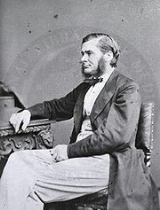
Thomas Henry Huxley, an English biologist, coined the word agnostic in 1869. However, earlier thinkers and written works have promoted agnostic points of view. They include Protagoras
Protagoras
Protagoras was a pre-Socratic Greek philosopher and is numbered as one of the sophists by Plato. In his dialogue Protagoras, Plato credits him with having invented the role of the professional sophist or teacher of virtue...

, a 5th-century BCE Greek philosopher, and the Nasadiya Sukta
Nasadiya Sukta
The Nasadiya Sukta is the 129th hymn of the 10th Mandala of the Rigveda. It is concerned with cosmology and the origin of the universe. It is known for its skepticism...

 creation myth in the Rig Veda, an ancient Sanskrit
Sanskrit
Sanskrit , is a historical Indo-Aryan language and the primary liturgical language of Hinduism, Jainism and Buddhism.Buddhism: besides Pali, see Buddhist Hybrid Sanskrit Today, it is listed as one of the 22 scheduled languages of India and is an official language of the state of Uttarakhand...

 text. Since Huxley coined the term, many other thinkers have written extensively about agnosticism.

Defining agnosticism


Demographic research services normally do not differentiate between various types of non-religious respondents so agnostics end up in the same category as atheists
Atheism
Atheism is, in a broad sense, the rejection of belief in the existence of deities. In a narrower sense, atheism is specifically the position that there are no deities...

 and/or other non-religious
Irreligion
Irreligion is defined as an absence of religion or an indifference towards religion. Sometimes it may also be defined more narrowly as hostility towards religion. When characterized as hostility to religion, it includes antitheism, anticlericalism and antireligion. When characterized as...

 people. Some sources use agnostic in the sense of noncommittal. Agnosticism often overlaps with other belief systems. Agnostic theists
Agnostic theism
Agnostic theism is the philosophical view that encompasses both theism and agnosticism. An agnostic theist believes the proposition at least one deity exists is true, but regards the truth or falsehood of this proposition as unknown or inherently unknowable...

 identify themselves both as agnostics and as followers of particular religions, viewing agnosticism as a framework for thinking about the nature of belief and their relation to revealed truths. Some nonreligious people, such as author Philip Pullman
Philip Pullman
Philip Pullman CBE, FRSL is an English writer from Norwich. He is the best-selling author of several books, most notably his trilogy of fantasy novels, His Dark Materials, and his fictionalised biography of Jesus, The Good Man Jesus and the Scoundrel Christ...

, identify as both agnostic and atheist.

Thomas Henry Huxley defined the term:

Etymology


Agnostic was used by Thomas Henry Huxley in a speech at a meeting of the Metaphysical Society in 1876 to describe his philosophy which rejects all claims of spiritual or mystical knowledge. Early Christian
Christian
A Christian is a person who adheres to Christianity, an Abrahamic, monotheistic religion based on the life and teachings of Jesus of Nazareth as recorded in the Canonical gospels and the letters of the New Testament...

 church leaders used the Greek
Greek language
Greek is an independent branch of the Indo-European family of languages. Native to the southern Balkans, it has the longest documented history of any Indo-European language, spanning 34 centuries of written records. Its writing system has been the Greek alphabet for the majority of its history;...

 word gnosis
Gnosis
Gnosis is the common Greek noun for knowledge . In the context of the English language gnosis generally refers to the word's meaning within the spheres of Christian mysticism, Mystery religions and Gnosticism where it signifies 'spiritual knowledge' in the sense of mystical enlightenment.-Related...

(knowledge) to describe "spiritual knowledge." Agnosticism is not to be confused with religious views opposing the ancient religious movement of Gnosticism
Gnosticism
Gnosticism is a scholarly term for a set of religious beliefs and spiritual practices common to early Christianity, Hellenistic Judaism, Greco-Roman mystery religions, Zoroastrianism , and Neoplatonism.A common characteristic of some of these groups was the teaching that the realisation of Gnosis...

 in particular; Huxley used the term in a broader, more abstract sense. Huxley identified agnosticism not as a creed but rather as a method of skeptical
Skepticism
Skepticism has many definitions, but generally refers to any questioning attitude towards knowledge, facts, or opinions/beliefs stated as facts, or doubt regarding claims that are taken for granted elsewhere...

, evidence-based inquiry.

In recent years, scientific literature dealing with neuroscience and psychology has used the word to mean "not knowable". In technical and marketing literature, agnostic often has a meaning close to "independent"—for example, "platform agnostic" or "hardware agnostic."

Qualifying agnosticism


Scottish Enlightenment
The Scottish Enlightenment was the period in 18th century Scotland characterised by an outpouring of intellectual and scientific accomplishments. By 1750, Scots were among the most literate citizens of Europe, with an estimated 75% level of literacy...

 philosopher David Hume
David Hume
David Hume was a Scottish philosopher, historian, economist, and essayist, known especially for his philosophical empiricism and skepticism. He was one of the most important figures in the history of Western philosophy and the Scottish Enlightenment...

 contended that meaningful statements about the universe are always qualified by some degree of doubt. He asserted that the fallibility of human beings means that they cannot obtain absolute certainty except in trivial cases where a statement is true by definition (i.e. tautologies
Tautology (logic)
In logic, a tautology is a formula which is true in every possible interpretation. Philosopher Ludwig Wittgenstein first applied the term to redundancies of propositional logic in 1921; it had been used earlier to refer to rhetorical tautologies, and continues to be used in that alternate sense...

 such as "all bachelors are unmarried" or "all triangles have three corners"). All rational statements that assert a factual claim about the universe that begin "I believe that ...." are simply shorthand for, "Based on my knowledge, understanding, and interpretation of the prevailing evidence, I tentatively believe that...." For instance, when one says, "I believe that Lee Harvey Oswald
Lee Harvey Oswald
Lee Harvey Oswald was, according to four government investigations,These were investigations by: the Federal Bureau of Investigation , the Warren Commission , the House Select Committee on Assassinations , and the Dallas Police Department. the sniper who assassinated John F...

 shot John F. Kennedy
John F. Kennedy
John Fitzgerald "Jack" Kennedy , often referred to by his initials JFK, was the 35th President of the United States, serving from 1961 until his assassination in 1963....

," one is not asserting an absolute truth but a tentative belief based on interpretation of the assembled evidence. Even though one may set an alarm clock prior to the following day, believing that waking up will be possible, that belief is tentative, tempered by a small but finite degree of doubt (the alarm might break, or one might die before the alarm goes off).

The Catholic Church sees merit in examining what it calls Partial Agnosticism, specifically those systems that "do not aim at constructing a complete philosophy of the Unknowable, but at excluding special kinds of truth, notably religious, from the domain of knowledge." However, the Church is historically opposed to a full denial of the ability of human reason to know God. The Council of the Vatican, relying on biblical scripture, declares that "God, the beginning and end of all, can, by the natural light of human reason, be known with certainty from the works of creation" (Const. De Fide, II, De Rev.)

Types of agnosticism


Agnosticism can be subdivided into several categories. Recently suggested variations include:
Agnostic atheism
Agnostic atheism
Agnostic atheism, also called atheistic agnosticism, is a philosophical position that encompasses both atheism and agnosticism. Agnostic atheists are atheistic because they do not hold a belief in the existence of any deity and agnostic because they claim that the existence of a deity is either...

: Agnostic atheists are atheistic because they do not have belief in the existence of any deity, and agnostic because they do not claim to know that a deity does not exist.
Agnostic theism
Agnostic theism
Agnostic theism is the philosophical view that encompasses both theism and agnosticism. An agnostic theist believes the proposition at least one deity exists is true, but regards the truth or falsehood of this proposition as unknown or inherently unknowable...

: The view of those who do not claim to know of the existence of any deity, but still believe in such an existence.
Apathetic or pragmatic agnosticism
Apatheism
Apatheism , also known as pragmatic atheism or as practical atheism, is acting with apathy, disregard, or lack of interest towards belief or lack of belief in a deity. Apatheism describes the manner of acting towards a belief or lack of a belief in a deity; so applies to both theism and atheism...

: The view that there is no proof of either the existence or nonexistence of any deity, but since any deity that may exist appears unconcerned for the universe or the welfare of its inhabitants, the question is largely academic.
Ignosticism
Ignosticism
Ignosticism or igtheism is the theological position that every other theological position assumes too much about the concept of God and many other theological concepts...

: The view that a coherent definition of a deity must be put forward before the question of the existence of a deity can be meaningfully discussed. If the chosen definition is not coherent, the ignostic holds the noncognitivist
Theological noncognitivism
Theological noncognitivism is the argument that religious language, and specifically words like "god", are not cognitively meaningful. It is sometimes considered to be synonymous with Ignosticism.-Overview:...

 view that the existence of a deity is meaningless or empirically untestable. A.J. Ayer
Alfred Ayer
Sir Alfred Jules "Freddie" Ayer was a British philosopher known for his promotion of logical positivism, particularly in his books Language, Truth, and Logic and The Problem of Knowledge ....

, Theodore Drange
Theodore Drange
Theodore "Ted" Michael Drange is a philosopher of religion and Professor Emeritus at West Virginia University, where he taught philosophy from 1966 to 2001. He received a B.A. from Brooklyn College in 1955 and a Ph.D. from Cornell University in 1963...

, and other philosophers see both atheism and agnosticism as incompatible with ignosticism on the grounds that atheism and agnosticism accept "a deity exists" as a meaningful proposition which can be argued for or against.
Strong agnosticism
Strong agnosticism
Strong agnosticism or positive agnosticism is the belief that it is impossible for humans to know whether or not any deities exist. It is a narrower view than weak agnosticism, which states that the existence or nonexistence of any deities is unknown but not necessarily unknowable.Strong...

 (also called "hard," "closed," "strict," or "permanent agnosticism"): The view that the question of the existence or nonexistence of a deity or deities, and the nature of ultimate reality is unknowable by reason of our natural inability to verify any experience with anything but another subjective experience. A strong agnostic would say, "I cannot know whether a deity exists or not, and neither can you."
Weak agnosticism
Weak agnosticism
Weak agnosticism is the assertion that, at present, there is not enough information to know whether any deities exist, but that such might become knowable. It is in contrast to strong agnosticism, which is the belief that the existence of any gods is completely unknowable to humanity...

 (also called "soft," "open," "empirical," or "temporal agnosticism"): The view that the existence or nonexistence of any deities is currently unknown but is not necessarily unknowable; therefore, one will withhold judgment until/if any evidence is available. A weak agnostic would say, "I don't know whether any deities exist or not, but maybe one day, when there is evidence, we can find something out."

History


Since Huxley first used the term, several writers have defended agnosticism as a philosophical viewpoint. A number of earlier thinkers and writings have explored agnostic thought.

In Hindu philosophy


The Rig Veda takes an agnostic view on the fundamental question of how the universe and God was created. Nasadiya Sukta (Creation Hymn) in the tenth chapter of the Rig Veda says:
Throughout the history of Hinduism
Hinduism
Hinduism is the predominant and indigenous religious tradition of the Indian Subcontinent. Hinduism is known to its followers as , amongst many other expressions...

 there has been a strong tradition of philosophic speculation and skepticism.

In Greek philosophy


Agnostic thought, in the form of skepticism
Philosophical skepticism
Philosophical skepticism is both a philosophical school of thought and a method that crosses disciplines and cultures. Many skeptics critically examine the meaning systems of their times, and this examination often results in a position of ambiguity or doubt...

, emerged as a formal philosophical position in ancient Greece
Ancient Greece
Ancient Greece is a civilization belonging to a period of Greek history that lasted from the Archaic period of the 8th to 6th centuries BC to the end of antiquity. Immediately following this period was the beginning of the Early Middle Ages and the Byzantine era. Included in Ancient Greece is the...

. Its proponents included Protagoras
Protagoras
Protagoras was a pre-Socratic Greek philosopher and is numbered as one of the sophists by Plato. In his dialogue Protagoras, Plato credits him with having invented the role of the professional sophist or teacher of virtue...

, Pyrrho
Pyrrho
Pyrrho , a Greek philosopher of classical antiquity, is credited as being the first Skeptic philosopher and the inspiration for the school known as Pyrrhonism, founded by Aenesidemus in the 1st century BC.- Life :Pyrrho was from Elis, on the Ionian Sea...

, and Carneades
Carneades
Carneades was an Academic skeptic born in Cyrene. By the year 159 BC, he had started to refute all previous dogmatic doctrines, especially Stoicism, and even the Epicureans whom previous skeptics had spared. As head of the Academy, he was one of three philosophers sent to Rome in 155 BC where his...

. Such thinkers rejected the idea that certainty was possible.

Hume, Kant, and Kierkegaard


Many philosophers (following the examples of Aristotle
Aristotle
Aristotle was a Greek philosopher and polymath, a student of Plato and teacher of Alexander the Great. His writings cover many subjects, including physics, metaphysics, poetry, theater, music, logic, rhetoric, linguistics, politics, government, ethics, biology, and zoology...

, Anselm
Anselm of Canterbury
Anselm of Canterbury , also called of Aosta for his birthplace, and of Bec for his home monastery, was a Benedictine monk, a philosopher, and a prelate of the church who held the office of Archbishop of Canterbury from 1093 to 1109...

, Aquinas, and Descartes) presented arguments attempting to rationally prove the existence of God. The skeptical empiricism of David Hume
David Hume
David Hume was a Scottish philosopher, historian, economist, and essayist, known especially for his philosophical empiricism and skepticism. He was one of the most important figures in the history of Western philosophy and the Scottish Enlightenment...

, the antinomies
Antinomy
Antinomy literally means the mutual incompatibility, real or apparent, of two laws. It is a term used in logic and epistemology....

 of Immanuel Kant
Immanuel Kant
Immanuel Kant was a German philosopher from Königsberg , researching, lecturing and writing on philosophy and anthropology at the end of the 18th Century Enlightenment....

, and the existential philosophy of Søren Kierkegaard
Søren Kierkegaard
Søren Aabye Kierkegaard was a Danish Christian philosopher, theologian and religious author. He was a critic of idealist intellectuals and philosophers of his time, such as Georg Wilhelm Friedrich Hegel, Friedrich Wilhelm Joseph Schelling and Karl Wilhelm Friedrich Schlegel...

 convinced many later philosophers to abandon these attempts, regarding it impossible to construct any unassailable proof for the existence or non-existence of God. In his 1844 book, Philosophical Fragments
Philosophical Fragments
Philosophical Fragments was a Christian philosophic work written by Danish philosopher Søren Kierkegaard in 1844. It was the first of three works written under the pseudonym Johannes Climacus, the other two were Johannes Climacus, 1841 and Concluding Unscientific Postscript to Philosophical...

, Kierkegaard writes:

Thomas Henry Huxley


Agnostic views are as old as philosophical skepticism
Philosophical skepticism
Philosophical skepticism is both a philosophical school of thought and a method that crosses disciplines and cultures. Many skeptics critically examine the meaning systems of their times, and this examination often results in a position of ambiguity or doubt...

, but the terms agnostic and agnosticism were created by Huxley to sum up his thoughts on contemporary developments of metaphysics about the "unconditioned" (Hamilton) and the "unknowable" (Herbert Spencer
Herbert Spencer
Herbert Spencer was an English philosopher, biologist, sociologist, and prominent classical liberal political theorist of the Victorian era....

). It is important, therefore, to discover Huxley's own views on the matter. Though Huxley began to use the term "agnostic" in 1869, his opinions had taken shape some time before that date. In a letter of September 23, 1860, to Charles Kingsley, Huxley discussed his views extensively:
And again, to the same correspondent, May 6, 1863:
Of the origin of the name agnostic to describe this attitude, Huxley gave the following account:
Huxley's agnosticism is believed to be a natural consequence of the intellectual and philosophical conditions of the 1860s, when clerical intolerance was trying to suppress scientific discoveries which appeared to clash with a literal reading of the Book of Genesis and other established Jewish and Christian
Christian theology
- Divisions of Christian theology :There are many methods of categorizing different approaches to Christian theology. For a historical analysis, see the main article on the History of Christian theology.- Sub-disciplines :...

 doctrines. Agnosticism should not, however, be confused with natural theology
Natural theology
Natural theology is a branch of theology based on reason and ordinary experience. Thus it is distinguished from revealed theology which is based on scripture and religious experiences of various kinds; and also from transcendental theology, theology from a priori reasoning.Marcus Terentius Varro ...

, deism
Deism
Deism in religious philosophy is the belief that reason and observation of the natural world, without the need for organized religion, can determine that the universe is the product of an all-powerful creator. According to deists, the creator does not intervene in human affairs or suspend the...

, pantheism
Pantheism
Pantheism is the view that the Universe and God are identical. Pantheists thus do not believe in a personal, anthropomorphic or creator god. The word derives from the Greek meaning "all" and the Greek meaning "God". As such, Pantheism denotes the idea that "God" is best seen as a process of...

, or other forms of theism
Theism
Theism, in the broadest sense, is the belief that at least one deity exists.In a more specific sense, theism refers to a doctrine concerning the nature of a monotheistic God and God's relationship to the universe....

.

By way of clarification, Huxley states, "In matters of the intellect, follow your reason as far as it will take you, without regard to any other consideration. And negatively: In matters of the intellect, do not pretend that conclusions are certain which are not demonstrated or demonstrable" (Huxley, Agnosticism, 1889). Although A. W. Momerie has noted that this is nothing but a definition of honesty
Honesty
Honesty refers to a facet of moral character and denotes positive, virtuous attributes such as integrity, truthfulness, and straightforwardness along with the absence of lying, cheating, or theft....

, Huxley's usual definition goes beyond mere honesty to insist that these metaphysical issues are fundamentally unknowable.

Robert G. Ingersoll


Robert G. Ingersoll, an Illinois
Illinois
Illinois is the fifth-most populous state of the United States of America, and is often noted for being a microcosm of the entire country. With Chicago in the northeast, small industrial cities and great agricultural productivity in central and northern Illinois, and natural resources like coal,...

 lawyer and politician who evolved into a well-known and sought-after orator in 19th century America, has been referred to as the "Great Agnostic."

In an 1896 lecture titled Why I Am An Agnostic, Ingersoll related why he was an agnostic:
In the conclusion of the speech he simply sums up the agnostic position as:

Bertrand Russell


Bertrand Russell
Bertrand Russell
Bertrand Arthur William Russell, 3rd Earl Russell, OM, FRS was a British philosopher, logician, mathematician, historian, and social critic. At various points in his life he considered himself a liberal, a socialist, and a pacifist, but he also admitted that he had never been any of these things...

's pamphlet
Pamphlet
A pamphlet is an unbound booklet . It may consist of a single sheet of paper that is printed on both sides and folded in half, in thirds, or in fourths , or it may consist of a few pages that are folded in half and saddle stapled at the crease to make a simple book...

, Why I Am Not a Christian
Why I Am Not a Christian
Why I Am Not a Christian is a 1927 essay by the British philosopher Bertrand Russell hailed by The Independent as "devastating in its use of cold logic", and listed in the New York Public Library's list of the most influential books of the 20th century....

, based on a speech delivered in 1927 and later included in a book of the same title, is considered a classic statement of agnosticism. The essay briefly lays out Russell’s objections to some of the arguments for the existence of God before discussing his moral objections to Christian teachings. He then calls upon his readers to "stand on their own two feet and look fair and square at the world," with a "fearless attitude and a free intelligence."

In 1939, Russell gave a lecture on The existence and nature of God, in which he characterized himself as an atheist. He said:
However, later in the same lecture, discussing modern non-anthropomorphic concepts of God, Russell states:
In Russell's 1947 pamphlet, Am I An Atheist Or An Agnostic? (subtitled A Plea For Tolerance In The Face Of New Dogmas), he ruminates on the problem of what to call himself:
In his 1953 essay, What Is An Agnostic? Russell states:
However, later in the essay, Russell says:

Leslie Weatherhead


In 1965 Christian theologian Leslie Weatherhead
Leslie Weatherhead
Leslie Dixon Weatherhead was an English Christian theologian in the liberal Protestant tradition. One of Britain's finest preachers in his day, Weatherhead was noted for his preaching ministry at City Temple in London and for his books, including The Will of God, The Christian Agnostic, and...

 published The Christian Agnostic, in which he argues:
Although radical and unpalatable to conventional theologians, Weatherhead's agnosticism falls far short of Huxley's, and short even of weak agnosticism:

Criticism


Agnosticism is criticized from a variety of standpoints. Some religious thinkers see agnosticism as a limitation of the mind's capacity to know reality other than materialism
Materialism
In philosophy, the theory of materialism holds that the only thing that exists is matter; that all things are composed of material and all phenomena are the result of material interactions. In other words, matter is the only substance...

. Some atheists criticize the use of the term agnosticism as functionally indistinguishable from atheism.

Religious


Many theistic thinkers repudiate the validity of agnosticism, or certain forms of agnosticism. Religious scholars in the three Abrahamic religions
Abrahamic religions
Abrahamic religions are the monotheistic faiths emphasizing and tracing their common origin to Abraham or recognizing a spiritual tradition identified with him...

 affirm the possibility of knowledge, even of metaphysical realities such as God and the soul, because human intelligence, they assert, has a non-material, spiritual
Spirituality
Spirituality can refer to an ultimate or an alleged immaterial reality; an inner path enabling a person to discover the essence of his/her being; or the “deepest values and meanings by which people live.” Spiritual practices, including meditation, prayer and contemplation, are intended to develop...

 element. They affirm that “not being able to see or hold some specific thing does not necessarily negate its existence,” as in the case of gravity, entropy
Entropy
Entropy is a thermodynamic property that can be used to determine the energy available for useful work in a thermodynamic process, such as in energy conversion devices, engines, or machines. Such devices can only be driven by convertible energy, and have a theoretical maximum efficiency when...

, or reason
Reason
Reason is a term that refers to the capacity human beings have to make sense of things, to establish and verify facts, and to change or justify practices, institutions, and beliefs. It is closely associated with such characteristically human activities as philosophy, science, language, ...

 and thought
Thought
"Thought" generally refers to any mental or intellectual activity involving an individual's subjective consciousness. It can refer either to the act of thinking or the resulting ideas or arrangements of ideas. Similar concepts include cognition, sentience, consciousness, and imagination...

.

Religious scholars, such as Brown, Tacelli, and Kreeft, argue that agnosticism does not take into account the numerous evidence of his existence that God has placed in his creation. And for this, Peter Kreeft
Peter Kreeft
Peter John Kreeft, Ph.D., is a professor of philosophy at Boston College and The King's College, and author of numerous books as well as a popular writer on philosophy, Christian theology, and specifically Catholic apologetics. He also formulated together with Ronald K. Tacelli, SJ, "Twenty...

 and Ronald Tacelli cite 20 arguments for God’s existence. They assert that agnosticism's demand for scientific evidence through laboratory testing is in effect asking God, the supreme being, to become man’s servant. They argue that the question of God should be treated differently from other knowable objects in that "this question regards not that which is below us, but that which is above us." Christian Philosopher Blaise Pascal
Blaise Pascal
Blaise Pascal , was a French mathematician, physicist, inventor, writer and Catholic philosopher. He was a child prodigy who was educated by his father, a tax collector in Rouen...

 argued that, even if there were truly no evidence for God, agnostics should consider what is now known as Pascal’s Wager: the infinite expected value of acknowledging God is always greater than the finite expected value of not acknowledging his existence, and thus it is a safer “bet” to choose God.

According to Joseph Ratzinger, later Pope Benedict XVI
Pope Benedict XVI
Benedict XVI is the 265th and current Pope, by virtue of his office of Bishop of Rome, the Sovereign of the Vatican City State and the leader of the Catholic Church as well as the other 22 sui iuris Eastern Catholic Churches in full communion with the Holy See...

, agnosticism, more specifically strong agnosticism, is reasoning that limits and contradicts itself in claiming the power of reason to know scientific truth
Truth
Truth has a variety of meanings, such as the state of being in accord with fact or reality. It can also mean having fidelity to an original or to a standard or ideal. In a common usage, it also means constancy or sincerity in action or character...

, but not religious or philosophical truths. He blames the exclusion of reasoning from religion and ethics for the dangerous pathologies of religion and science such as human and ecological disasters. “Agnosticism,” said Ratzinger, “is always the fruit of a refusal of that knowledge which is in fact offered to man [...] The knowledge of God has always existed.” He asserted that agnosticism is a choice of comfort, pride, dominion, and utility over truth, and is opposed by the following attitudes: the keenest self-criticism, humble listening to the whole of existence, the persistent patience and self-correction of the scientific method
Scientific method
Scientific method refers to a body of techniques for investigating phenomena, acquiring new knowledge, or correcting and integrating previous knowledge. To be termed scientific, a method of inquiry must be based on gathering empirical and measurable evidence subject to specific principles of...

, a readiness to be purified by the truth.

According to some theistic scholars, agnosticism is impossible in actual practice, since a person can live only either as if God did not exist (etsi Deus non daretur), or as if God did exist (etsi Deus daretur). These scholars believe that each day in a person’s life is an unavoidable step towards death, and thus not to decide for or against God, whom they view as the all-encompassing foundation, purpose, and meaning of life
Meaning of life
The meaning of life constitutes a philosophical question concerning the purpose and significance of life or existence in general. This concept can be expressed through a variety of related questions, such as "Why are we here?", "What is life all about?", and "What is the meaning of it all?" It has...

, is to decide in favor of atheism
Atheism
Atheism is, in a broad sense, the rejection of belief in the existence of deities. In a narrower sense, atheism is specifically the position that there are no deities...

.

Atheist


According to Richard Dawkins
Richard Dawkins
Clinton Richard Dawkins, FRS, FRSL , known as Richard Dawkins, is a British ethologist, evolutionary biologist and author...

, a distinction between agnosticism and atheism is unwieldy and depends on how close to zero we are willing to rate the probability of existence for any given god-like entity. Since in practice it is not worth contrasting a zero probability with one that is nearly indistinguishable from zero, he prefers to categorize himself as a "de facto atheist". He specifies his position by means of a scale of 1 to 7. On this scale, 1 indicates "100 per cent probability of God." A person ranking at 7 on the scale would be a person who says "I know there is no God..." Dawkins places himself at 6 on the scale, which he characterizes as "I cannot know for certain but I think God is very improbable, and I live my life on the assumption that he is not there", but leaning toward 7. About himself, Dawkins continues that "I am agnostic only to the extent that I am agnostic about fairies at the bottom of the garden." Dawkins also identifies two categories of agnostics; Temporary Agnostics in Practice (TAPs), and Permanent Agnostics in Principle (PAPs). Dawkins considers temporary agnosticism an entirely reasonable position, but views permanent agnosticism as "fence-sitting, intellectual cowardice."

External links