
All Topics  
Tao Te Ching


   Email Print
   Bookmark   Link


Tao Te Ching


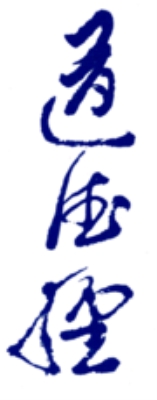
The Tao Te Ching or Dao De Jing , originally known as Laozi or Lao tzu , is a Chinese classic text. Its name comes from the opening words of its two sections: ? dào "way," Chapter 1, and ? "virtue," Chapter 38, plus ? jing "classic." According to tradition, it was written around the 6th century BC by the sage Laozi
Laozi

Laozi was a Chinese philosophy of Ancient history China and is a central figure in Taoism . Laozi literally means "Old Master" and is generally considered an honorific....
 (or Lao Tzu, "Old Master"), a record-keeper at the Zhou Dynasty
Zhou Dynasty

The Zhou Dynasty was preceded by the Shang Dynasty and followed by the Qin Dynasty in China. The Zhou dynasty lasted longer than any other dynasty in China history?though the actual political and military control of China by the dynasty only lasted during the Western Zhou....
 court, by whose name the text is known in China.


Discussion
Ask a question about 'Tao Te Ching'
Start a new discussion about 'Tao Te Ching'
Answer questions from other users
Full Discussion Forum


Encyclopedia


The Tao Te Ching or Dao De Jing , originally known as Laozi or Lao tzu , is a Chinese classic text. Its name comes from the opening words of its two sections: ? dào "way," Chapter 1, and ? "virtue," Chapter 38, plus ? jing "classic." According to tradition, it was written around the 6th century BC by the sage Laozi
Laozi

Laozi was a Chinese philosophy of Ancient history China and is a central figure in Taoism . Laozi literally means "Old Master" and is generally considered an honorific....
 (or Lao Tzu, "Old Master"), a record-keeper at the Zhou Dynasty
Zhou Dynasty

The Zhou Dynasty was preceded by the Shang Dynasty and followed by the Qin Dynasty in China. The Zhou dynasty lasted longer than any other dynasty in China history?though the actual political and military control of China by the dynasty only lasted during the Western Zhou....
 court, by whose name the text is known in China. The text's true authorship and date of composition or compilation are still debated.

The Tao Te Ching is fundamental to the Taoist
Taoism

Taoism refers to a variety of related philosophical and religious traditions and concepts. These traditions have influenced East Asia for over two thousand years and some have spread to the West....
 school (Dàojia ) of Chinese philosophy
Chinese philosophy

Chinese philosophy is philosophy written in the China Chinese culture of thought. Chinese philosophy has a history of several thousand years; its origins are often traced back to the I Ching , an ancient compendium of divination, which uses a system of 64 hexagrams to guide action....
 and strongly influenced other schools, such as Legalism
Legalism (Chinese philosophy)

In History of China, Legalism was one of the four main philosophic schools during the Spring and Autumn Period and the Warring States Period ....
 and Neo-Confucianism
Neo-Confucianism

Neo-Confucianism / is a form of Confucianism that was primarily developed during the Song Dynasty, but which can be traced back to Han Yu and Li Ao in the Tang Dynasty....
. This ancient book is also central in Chinese religion
Chinese religion

Chinese religion may refer to:*Religion in China*Chinese folk religion*East Asian religionsSee also* Malaysian Chinese religion...
, not only for Taoism (Dàojiao ) but Chinese Buddhism, which when first introduced into China was largely interpreted through the use of Taoist words and concepts. Many Chinese artists, including poets
Chinese poetry

Chinese poetry is the most highly regarded Chinese literature. Traditionally, it is divided into shi , ci and qu . There is also a kind of Prose poetry called Fu ....
, painters
Chinese painting

Chinese painting is one of the oldest continuous artistic traditions in the world. The earliest paintings were not representational but ornamental; they consisted of patterns or designs rather than pictures....
, calligraphers
Calligraphy

Calligraphy is the art of writing . A contemporary definition of calligraphic practice is "the art of giving form to signs in an expressive, harmonious and skillful manner" ....
, and even gardeners
Chinese garden

The Chinese Garden is a place for solitary or social contemplation of nature. To be considered authentic, a garden must be built and planned around seventeen essential elements: 1) proximity to the home; 2) small; 3) walled; 4) small individual sections; 5) asymmetrical; 6) various types of spatial connections; 7) architecture; 8) rocks; 9...
 have used the Tao Te Ching as a source of inspiration. Its influence has also spread widely outside East Asia, aided by hundreds of translations into Western languages.

The Wade-Giles
Wade-Giles

Wade-Giles , sometimes abbreviated Wade, is a Romanization system for the Mandarin Chinese language used in Beijing. It developed from a system produced by Thomas Francis Wade in the mid-19th century, and reached settled form with Herbert Giles' Chinese language-English language dictionary of 1892....
 romanization
Romanization

In linguistics, romanization is the representation of a written word or spoken speech with the Latin alphabet, or a system for doing so, where the original word or language uses a different writing system ....
, Tao Te Ching, dates back to early English transliterations in the late 19th century, and many people continue using it, especially for words and phrases that have become well-established in English. The pinyin
Pinyin

Pinyin, more formally Hanyu pinyin, is the most commonly used Romanization system for Standard Mandarin. Hanyu is the Chinese Language, and pinyin means "phonetics", or more literally, "spelling sound" or "spelled sound"....
 romanization Daodejing originated in the late 20th century, and this romanization is becoming increasingly popular, having been adopted as the official system by the Chinese government. See discussion at Daoism-Taoism romanization issue
Daoism-Taoism Romanization issue

In English, the words Daoism and Taoism are the subject of an ongoing controversy over the preferred romanization for naming this native Chinese philosophy and Chinese religion....
.


The text

The Tao Te Ching has a long and complex textual history. On one hand, there are transmitted versions and commentaries that date back two millennia; on the other, there are ancient bamboo, silk, and paper manuscripts that archeologists discovered in the last century.

Title

Tao Te Ching
There are many possible translations of the book's title:

  • Dào/Tao
    Tao

    Tao is a concept found in Taoism, Confucianism, and more generally in ancient Chinese philosophy. While the character itself translates as 'way', 'path', or 'route', or sometimes more loosely as 'doctrine' or 'principle', it is used philosophically to signify the fundamental or true nature of the world....
     ? literally means "way", or one of its synonyms, but was extended to mean "the Way". This term, which was variously used by other Chinese philosophers (including Confucius
    Confucius

    This articles talks about a Chinese thinker and social philosopher. For a food company in China with its brand name "Master Kong", please refer to Tingyi Holding Corporation....
    , Mencius
    Mencius

    Mencius , most accepted dates: 372 ? 289 BCE; other possible dates: 385 ? 303/302 BCE) was a Chinese philosophy who was arguably the most famous Confucian after Confucius himself....
    , Mozi
    Mozi

    Mozi , was a philosopher who lived in China during the Hundred Schools of Thought period . He founded the school of Mohism and argued strongly against Confucianism and Daoism....
    , and Hanfeizi), has special meaning within the context of Taoism, where it implies the essential, unnamable process of the universe.
  • Dé/Te
    De (Chinese)

    De is a key concept in Chinese philosophy, usually translated "inherent character; inner power; integrity" in Taoism, "moral character; virtue; morality" in Confucianism and other contexts, and "quality; virtue" or "merit; virtuous deeds" in Chinese Buddhism....
     ? basically means "virtue" in the sense of "personal character", "inner strength", or "integrity." The semantics of this Chinese word resemble English virtue, which developed from a (now archaic) sense of "inner potency" or "divine power" (as in "healing virtue of a drug") to the modern meaning of "moral excellence" or "goodness". Compare the compound word dàodé (?? "ethics", "ethical principles", "morals," or "morality").
  • Jing/Ching ? as it is used here means "canon", "great book", or "classic".
Thus, Tao Te Ching can be translated as "The Classic/Canon of the Way/Path and the Power/Virtue", etc.

The title Tao Te Ching is an honorific given by posterity, other titles include the amalgam Laozi Dàodé Jing, the honorific Daode Zhen Jing (???? "True Classic of the Way and the Power"), and the Wuqian wen ( "Five thousand character [classic]"; see next).

Internal structure

The received Tao Te Ching is a short text of around 5,000 Chinese characters in 81 brief chapters or sections . There is some evidence that the chapter divisions were later additions - for commentary, or as aids to rote memorization - and that the original text was more fluidly organized. It has two parts, the Tao Ching (??; chaps. 1–37) and the Te Ching (??; chaps. 38–81), which may have been edited together into the received text, possibly reversed from an original "Te Tao Ching" (see Mawangdui texts below). The written style is laconic, has few grammatical particle
Grammatical particle

A particle, in grammar, is a function word that is not assignable to any of the traditional grammatical word classes . The term is a catch-all term for a heterogeneous set of elements and lacks a precise universal definition....
s, and encourages varied, even contradictory interpretations. The ideas are complex; the style poetic.

The Chinese characters in the original versions were probably written in zhuànshu ( seal script
Seal script

Seal script is an ancient style of Chinese calligraphy. It evolved organically out of the Zhou dynasty script , arising in the Warring States of Qin ....
), while later versions were written in lìshu ( clerical script
Clerical script

The clerical script , formerly also Chancery hand script, is an archaic style of Chinese calligraphy which evolved in the Warring States period to Qin dynasty, was dominant in the Han dynasty, and remained in use through the Cao Wei-Jin Dynasty periods....
) and kaishu ( regular script
Regular script

Kaiti redirects here. For the suburb of Gisborne, New Zealand, see Kaiti, New Zealand.The regular script or standard script, or in Chinese language kaishu and Japanese language kaisho, also commonly known as standard regular , is the newest of the Chinese calligraphy styles , hence most common in modern wr...
) styles. contains a good summary of these different calligraphies.

Historical authenticity

The Tao Te Ching is ascribed to Laozi
Laozi

Laozi was a Chinese philosophy of Ancient history China and is a central figure in Taoism . Laozi literally means "Old Master" and is generally considered an honorific....
, whose historical existence has been a matter of scholastic debate. His name, which means "Old Master", or "old masters" has only fueled controversy on this issue. (Kaltenmark 1969:10).
Laozi
The first reliable reference to Laozi is his "biography" in Shiji (63, tr. Chan 1963:35-37), by Chinese historian Sima Qian
Sima Qian

Sima Qian was a Prefect of the Grand Scribes of the Han Dynasty. He is regarded as the father of Chinese historiography because of his highly praised work, Records of the Grand Historian , an overview of the history of China covering more than two thousand years from the Yellow Emperor to Emperor Wu of Han China ....
 (ca. 145–86 BC), which combines three stories. First, Laozi was a contemporary of Confucius
Confucius

This articles talks about a Chinese thinker and social philosopher. For a food company in China with its brand name "Master Kong", please refer to Tingyi Holding Corporation....
 (551-479 BC). His surname was Li ( "plum"), and his personal name was Er ( "ear") or Dan ( "long ear"). He was an official in the imperial archives, and wrote a book in two parts before departing to the West. Second, Laozi was Lao Laizi ( "Old Come Master"), also a contemporary of Confucius, who wrote a book in 15 parts. Third, Laozi was the Grand Historian and astrologer Lao Dan ( "Old Long-ears"), who lived during the reign (384-362 BC) of Duke Xian of Qin)
Qin (state)

Q?n or Ch'in , was a state during the Spring and Autumn Period and Warring States Periods of China. It eventually grew to dominate the country and unite it in 221 BC, after which it is referred to as the Qin Dynasty....
.

Generations of scholars have debated the historicity of Laozi and the dating of the Tao Te Ching. Linguistic studies of the text's vocabulary and rhyme
Rhyme

A rhyme is a repetition of similar sounds in two or more different words and is most often used in poetry and songs. The word "rhyme" may also refer to a short poem, such as a rhyming couplet or other brief rhyming poem such as nursery rhymes....
 scheme point to a date of composition after the Shi Jing
Shi Jing

Shi Jing , translated variously as the Classic of Poetry, the Book of Songs or the Book of Odes, is the earliest existing collection of Chinese poetry....
 yet before the Zhuangzi
Zhuangzi

Zhuangzi was an influential Chinese philosophy who lived around the 4th century BCE during the Warring States Period, corresponding to the Hundred Schools of Thought philosophical summit of Culture of China thought....
 — around the late 4th or early 3rd centuries BC. Legends claim variously that Laozi was "born old"; that he lived for 996 years, with twelve previous incarnations starting around the time of the Three Sovereigns before the thirteen as Laozi. Some Western scholars have expressed doubts over Laozi's historical existence, claiming that the Tao Te Ching is actually a collection of the work of various authors. By contrast, Chinese scholars hold that it would be inconceivable within the context of ancient Chinese culture for Sima Qian the historian to have engaged in confabulation. Chinese scholars by and large accept Laozi as a historical figure, while dismissing exaggerated folkloric claims as superstitious legend.

Taoists venerate Laozi as Daotsu the founder of the school of Dao, the Daode Tianjun in the Three Pure Ones
Three Pure Ones

The Three Pure Ones also translated asthe Three Pure Pellucid Ones, the Three Pristine Ones, the Three Clarities, or the Three Purities, are the three highest Taoist deities....
, one of the eight elders transformed from Taiji
Taiji

Taiji in Chinese philosophy is a description of a Cosmology. The term is used to represent a state of undifferentiated absolute, and of infinite potentiality....
 in the Chinese creation myth.

Principal versions

Among the many transmitted editions of the Tao Te Ching text, the three primary ones are named after early commentaries. The "Yan Zun Version," which is only extant for the Te Ching, derives from a commentary attributed to Han Dynasty
Han Dynasty

The Han Dynasty followed the Qin Dynasty and preceded the Three Kingdoms in China. The Han Dynasty was ruled by the family known as the Liu clan who had peasant origins....
 scholar Yan Zun (??, fl. 80 BC-10 AD). The "Heshang Gong Version" is named after the legendary Heshang Gong ( "Riverside Sage") who supposedly lived during the reign (202-157 BC) of Emperor Wen of Han
Emperor Wen of Han

Emperor Wen of Han was an emperor of China of the Han Dynasty in China. His given name is Heng.Liu Heng was a son of Liu Bang and Empress Dowager Bo, later empress dowager....
. This commentary (tr. Erkes 1950) has a preface written by Ge Xuan
Ge Xuan

Ge Xuan was a Chinese Taoist. He was the ancestor of Ge Hong and a resident of Danyang in the state of Eastern Wu during the period of the Three Kingdoms; namely 220-280 CE....
 (164-244 AD), grand-uncle of Ge Hong
Ge Hong

Ge Hong , courtesy name Zhichuan , was a minor southern official during the J?n Dynasty , best known for his interest in Daoism, alchemy, and techniques of longevity....
, and scholarship dates this version to around the 3rd century AD. The "Wang Bi Version" has more verifiable origins than either of the above. Wang Bi
Wang Bi

Wang Bi , courtesy name Fu Si , was a China xuanxue philosopher.His most important works are commentaries on Laozi's Dao De Jing and the I Ching....
 (226 – 249 AD) was a famous Three Kingdoms
Three Kingdoms

The Three Kingdoms period is a period in the history of China, part of an era of disunity called the Six Dynasties following immediately the loss of de facto power of the Han Dynasty emperors....
 period philosopher and commentator on the Tao Te Ching (tr. Lin 1977, Rump and Chan 1979) and the I Ching
I Ching

The I Ching , or ?Y? Jing? ; also called Classic of Changes or Book of Changes is one of the oldest of the Chinese classic texts....
.

Tao Te Ching scholarship has lately advanced from archeological discoveries of manuscripts, some of which are older than any of the received texts. Beginning in the 1920s and 1930s, Marc Aurel Stein
Marc Aurel Stein

Sir Marc Aurel Stein was a Hungarian archaeologist. He was also a professor at various Indian universities. Stein was inspired by Sven Hedin's 1898 work, Through Asia....
 and others found thousands of scrolls in the Mogao Caves
Mogao Caves

The Mogao Caves, or Mogao Grottoes form a system of 492 temples 25 km southeast of the center of Dunhuang, an oasis strategically located at a religious and cultural crossroads on the Silk Road, in Gansu province, China....
 near Dunhuang
Dunhuang

Dunhuang is a city in Jiuquan, Gansu province of China, China. It is sited in an oasis....
. They included more than 50 partial and complete Tao Te Ching manuscripts. One written by the scribe So/Su Dan is dated 270 AD and corresponds closely with the Heshang Gong version. Another partial manuscript has the Xiang'er commentary, which had previously been lost.

Mawangdui and Guodian texts

In 1973, archeologists discovered copies of early Chinese books, known as the Mawangdui Silk Texts
Mawangdui Silk Texts

The Mawangdui Silk Texts are texts of Chinese literature philosophical and medical works written on silk and found at Mawangdui in China in 1973....
, in a tomb dating from 168 BC. They included two nearly complete copies of the Laozi, referred to as Text A and Text B , both of which reverse the traditional ordering and put the Te Ching section before the Tao Ching. Based on calligraphic styles and imperial naming taboo
Naming taboo

Naming taboo is a cultural taboo against speaking or writing the given names of exalted persons in China and neighboring nations in the ancient Chinese cultural sphere....
 avoidances, scholars believe that A and B can be dated, respectively, to about the first and third decades of the 2nd century BC (Boltz 1993:284).

In 1993, the oldest known version of the text, written on bamboo tablets, was found in a tomb near the town of Guodian in Jingmen
Jingmen

Jingmen is a prefecture-level city in Hubei province of the People's Republic of China. Jingmen is within an area where cotton and oil crops are planted....
, Hubei
Hubei

is a central province of China of the People's Republic of China. Its abbreviation is ? , an ancient name associated with the eastern part of the province since the Qin Dynasty....
, and dated prior to 300 BC. The Guodian Chu Slips
Guodian Chu Slips

The Guodian Chu Slips were unearthed in 1993 in Tomb no. 1 of the Guodian tombs in Jingmen. The archeological team suggested the tomb should be dated to the latter half of the Warring States period ....
 comprise about 800 slips of bamboo with a total of over 13,000 characters, about 2,000 of which correspond with the Tao Te Ching, including 14 previously unknown verses.

Both the Mawangdui and Guodian versions are generally consistent with the received texts, excepting differences in chapter sequence and graphic variants. Several recent Tao Te Ching translations (e.g., Lau 1989, Henricks 1989, Mair 1990, Henricks 2000, Allan and Williams 2000, and Roberts 2004) utilize these two versions, sometimes with the verses reordered to synthesize the new finds.

Tao Te Ching in Chinese

The Tao Te Ching was originally written in ZhuanShu calligraphy style. It is difficult to obtain modern replicas of these styles except through specialty stores via stores offering . Most modern versions use the newspaper print style KaiShu.

Interpretation and themes

The passages are ambiguous, and topics range from political advice for rulers to practical wisdom for people. Because the variety of interpretation is virtually limitless, not only for different people but for the same person over time, readers do well to avoid making claims of objectivity or superiority. Also, since the book is 81 short poems, there is little need for an abridgement.

Ineffability or Genesis

The Way that can be told of is not an unvarying way;
The names that can be named are not unvarying names.
It was from the Nameless that Heaven and Earth sprang;
The named is but the mother that rears the ten thousand creatures, each after its kind. (chap. 1, tr. Waley)


These famous first lines of the Tao Te Ching state that the Tao is ineffable i.e. Tao is nameless, goes beyond distinctions, and transcends language. In Laozi's Qingjing Jing
Qingjing Jing

The Qingjing Jing is an anonymous 9th century Current Era Daoist classic that combines philosophical themes from the Daode jing with Chinese Buddhist meditative practices from the Heart Sutra....
 (verse 1-8) he clarified the term Tao was nominated as he was trying to describe a state of existence before it happened and before time or space. Way or path happened to be the side meaning of Tao, ineffability would be just poetic. This is the Chinese creation myth from the primordial Tao. In the first twenty-four words in Chapter one, the author articulated an abstract cosmogony
Cosmogony

Cosmogony, or cosmogeny, is any theory concerning the coming into existence or origin of the universe, or about how reality came to be. The word comes from the Greek ??s??????a , from ??s??? "cosmos, the world", and the root of ?????a? / ?????a "to be born, come about"....
, in what would be the world outside of the cave before it took shape by Plato
Plato

Plato , was a Classical Greece Greeks philosopher, mathematician, writer of philosophical dialogues, and founder of the Platonic Academy in Ancient Athens, the first institution of higher learning in the western world....
 in his allegory of the cave
Allegory of the cave

The Allegory of the Cave, also commonly known as Myth of the Cave, Metaphor of the Cave or the Parable of the Cave, is an allegory used by the Ancient Greece philosopher Plato in his work The Republic to illustrate "our nature in its education and want of education"....
.

The Mysterious Female

The Valley Spirit never dies
It is named the Mysterious Female.
And the doorway of the Mysterious Female
Is the base from which Heaven and Earth sprang.
It is there within us all the while;
Draw upon it as you will, it never runs dry. (chap. 6, tr. Waley)


Like the above description of the ineffable Tao as "the mother that rears the ten thousand creatures", the Tao Te Ching advocates "female" (or Yin) values, emphasizing the passive, solid, and quiescent qualities of nature (which is opposed to the active and energetic), and "having without possessing". Waley's translation can also be understood as the Esoteric Feminine in that it can be known intuitively, that must be complemented by the masculine, "male" (or Yang), again amplified in Qingjing Jing
Qingjing Jing

The Qingjing Jing is an anonymous 9th century Current Era Daoist classic that combines philosophical themes from the Daode jing with Chinese Buddhist meditative practices from the Heart Sutra....
 (verse 9-13). Yin and Yang should be balanced, "Know masculinity, Maintain femininity, and be a ravine for all under heaven." (chap. 28, tr. Mair)

Returning (Union with the Primordial)

In Tao the only motion is returning;
The only useful quality, weakness.
For though all creatures under heaven are the products of Being,
Being itself is the product of Not-being. " (chap. 40, tr. Waley)
Another theme is the eternal return
Eternal return

Eternal return is a concept which posits that the universe has been recurring, and will continue to recur in a self-similar form an infinity number of times....
, or what Mair (1990:139) calls "the continual return of the myriad creatures to the cosmic principle from which they arose."

There is a contrast between the rigidity of death and the weakness of life: "When he is born, man is soft and weak; in death he becomes stiff and hard. The ten thousand creatures and all plants and trees while they are alive are supple and soft, but when dead they become brittle and dry." (chap. 76, tr. Waley). This is returning to the beginning of things, or to one's own childhood.

The Tao Te Ching focuses upon the beginnings of society, and describes a golden age in the past, comparable with the ideas of Jean-Jacques Rousseau
Jean-Jacques Rousseau

Jean Jacques Rousseau was a major philosopher, writer, and composer of the eighteenth century The Age of Enlightenment, whose political philosophy influenced the French Revolution and the development of modern political and educational thought....
. Human problems arose from the "invention" of culture and civilization. In this idealized past, “the people should have no use for any form of writing save knotted ropes, should be contented with their food, pleased with their clothing, satisfied with their homes, should take pleasure in their rustic tasks." (chap. 80, tr. Waley)

If the same chapter is understood in the Taoist cosmogony, the last two verses re-state the creation of beings from you as in youji or Taiji
Taiji

Taiji in Chinese philosophy is a description of a Cosmology. The term is used to represent a state of undifferentiated absolute, and of infinite potentiality....
 which came from wu as in Wuji
Wuji (philosophy)

Wuji, , in Taoist philosophy, is the Wiktionary:primordial state of non-being, a state of Nothingness and boundlessness or that which is without Bounds or Limits....
, a state of union with the primordial. This concept is also outlined in two other texts Xishen Jing and Qingjing Jing
Qingjing Jing

The Qingjing Jing is an anonymous 9th century Current Era Daoist classic that combines philosophical themes from the Daode jing with Chinese Buddhist meditative practices from the Heart Sutra....
 attributable to Laozi.

Emptiness

We put thirty spokes together and call it a wheel;
But it is on the space where there is nothing that the usefulness of the wheel depends.
We turn clay to make a vessel;
But it is on the space where there is nothing that the usefulness of the vessel depends.
We pierce doors and windows to make a house;
And it is on these spaces where there is nothing that the usefulness of the house depends.
Therefore just as we take advantage of what is, we should recognize the usefulness of what is not. (chap. 11, tr. Waley)


Philosophical vacuity is a common theme among Asian wisdom traditions including Taoism (especially Wu wei
Wu wei

Wu wei is an important concept of Taoism , that involves knowing when to act and when not to act. Another perspective to this is that "Wu Wei" means...
 "effortless action"), Buddhism, and some aspects of Confucianism. One could interpret the Tao Te Ching as a suite of variations on the "Powers of Nothingness". This resonates with the Buddhist Shunyata
Shunyata

Sunyata, ??????? , Su??ata , stong pa nyid , K?ng/Ku, ? , Gong-seong, ?? , qo?usun meaning "Emptiness" or "Voidness", is a characteristic of phenomena arising from the fact that the impermanent nature of form means that nothing possesses essential, enduring identity ....
 philosophy of "form is emptiness, emptiness is form."

Looking at a traditional Chinese landscape
Landscape

Landscape comprises the visible features of an area of land, including physical elements such as landforms, living elements of flora and fauna, abstract elements such as lighting and weather conditions, and human elements, for instance human activity or the built environment....
, one can understand how emptiness (the unpainted) has the power of animating the trees, mountains, and rivers it surrounds. Emptiness can mean having no fixed preconceptions, preferences, intentions, or agenda. Since "The Sage has no heart of his own; He uses the heart of the people as his heart." (chap. 49, tr. Waley). From a ruler's point of view, it is a laissez-faire
Laissez-faire

Laissez-faire is a term used to describe a policy of allowing events to take their own course. The term is a French language phrase literally meaning "let do"....
 approach:
So a wise leader may say:
"I practice inaction, and the people look after themselves."
But from the Sage it is so hard at any price to get a single word
That when his task is accomplished, his work done,
Throughout the country every one says: “It happened of its own accord”. (chap. 17, tr. Waley)


Knowledge and Humility

Knowing others is wisdom;
Knowing the self is enlightenment.
Mastering others requires force;
Mastering the self requires strength;
He who knows he has enough is rich.
Perseverance is a sign of will power.
He who stays where he is endures.
To die but not to perish is to be eternally present. (chap. 33, tr. Feng and English)
The Tao Te Ching praises self knowledge with emphasis on that knowledge coming with humility, to the extent of dis-acknowledging this knowledge. An interpretation on this knowledge being irrational in connection with Chapter 19 of Waley's translation on "Banish wisdom, discard knowledge, And the people will be benefited a hundredfold." seem to be inaccurate stemming from Feisheng qizi which is a reverse phrase meaning the truly exalted (sheng) and intellectual (zi) never claimed they are, which might as well be abolishing the notions of exaltation and intellectuality, meaning humbleness and humility of one's enlightenment is crucial. Knowledge, like desire, should be diminished. "It was when intelligence and knowledge appeared that the Great Artifice began." (chap. 18, tr. Waley), similarly another examplar on lost in translation by a sinologist, the third and fourth stanzas reads Zihui zu You Dawei, which should be read in reverse as the first and second stanzas, that when the world is full deceit and falsehoods (Dawei), wisdom and intellectuality shall arise.

Other themes

Here are some other themes inferred from the "Tao Te Ching" (with examples of instances):
  • Force begets force.
  • One whose needs are simple can fulfill them easily.
  • Material wealth does not enrich the spirit.
  • Self-absorption and self-importance are vain and self-destructive. (22, 24)
  • Victory in war is not glorious and not to be celebrated, but stems from devastation, and is to be mourned.
  • The harder one tries, the more resistance one creates for oneself.
  • The more one acts in harmony with the universe (the Mother of the ten thousand things), the more one will achieve, with less effort.
  • The truly wise make little of their own wisdom for the more they know, the more they realize how little they know.
  • When we lose the fundamentals, we supplant them with increasingly inferior values which we pretend are the true values. (18)
  • Glorification of wealth, power and beauty beget crime, envy and shame. (vanity)
  • The qualities of flexibility and suppleness, especially as exemplified by water, are superior to rigidity and strength. (8, 40, 55, 78)
  • Everything is in its own time and place.
  • Duality of nature that complements each other instead of competing with each other — the two faces of the same coin — one cannot exist without the other.
  • The differences of opposite polarities — e.g., the differences between male and female, light and dark, strong and weak, etc. — help us to understand and appreciate the universe.
  • Humility is the highest virtue.
  • Knowing oneself is a virtue. (33)
  • Envy is our calamity; overindulgence is our plight.
  • The more you go in search of an answer, the less you will understand.
  • Know when it's time to stop. If you don't know then stop when you are done. (9)


Interpretations in relation to religious traditions

The relation between Taoism and Buddhism
Buddhism

Buddhism is a family of beliefs and practices considered by most to be a religionand is based on the teachings attributed to Siddhartha Gautama, commonly known as "The Buddha" , who was born in what is today Nepal....
 and Chan Buddhism is complex and fertile. Similarly, the relationship between Taoism and Confucianism
Confucianism

Confucianism is a China Ethics and Philosophy developed from the teachings of the Chinese philosopher Confucius . It focuses on human morality and right action....
 is richly interwoven, historically.

To illustrate the paradoxical, puzzling and/or mysterious nature of the Tao Te Ching, some readers think venerating a person or following a religion are clear contradictions of major themes. To these readers, establishing a religion based on this book and venerating its human source is a tragicomic response.

Since Christian missionaries were among the first Westerners to study the Tao Te Ching, it is not surprising that they connected Taoism with Christianity. Assimilation of local religions often helped missionary efforts to convert the populace to Christianity. They drew many parallels between the New Testament
New Testament

The New Testament is the name given to the second major division of the Christianity Bible, the first such division being the much longer Old Testament....
 and the Tao Te Ching, for instance, "Do good to those who hate you" (Luke 6:27, tr. NASB) and "Requite injuries with good deeds" (chap. 63, tr. Waley). Note that the Chinese Bible translates logos
Logos

is an important term in philosophy, analytical psychology, rhetoric and religion.Heraclitus established the term in Western philosophy as meaning both the source and fundamental order of the cosmos....
 ("the Word") as Tao ("the Way").

Two particular Tao Te Ching chapters are perceived as exemplifying Christian themes. Chapter 42 bears a resemblance to the Trinity
Trinity

In Christianity doctrine, the Trinity is the unity of God the Father, God the Son, and Holy Spirit as three persons in monotheism. The doctrine states that God is the Triune God, existing as three persons, or in the Greek hypostasis , but one being....
 doctrine: "The Way gave birth to unity, Unity gave birth to duality, Duality gave birth to trinity, Trinity gave birth to the myriad creatures." (tr. Mair 1990:9).

Zhuangzi
Zhuangzi

Zhuangzi was an influential Chinese philosophy who lived around the 4th century BCE during the Warring States Period, corresponding to the Hundred Schools of Thought philosophical summit of Culture of China thought....
 once stated in a passage from his famous work Inner Chapters, that a great sage would come who would bring knowledge and peace to all men; though he didn't know if it would be in a thousand years or in a day. This was interpreted by missionaries as a prediction or foreshadowing of Christ.

Going even further, in 1823 the French sinologist Jean-Pierre-Abel Rémusat
Jean-Pierre-Abel Rémusat

Jean-Pierre Abel-R?musat was a France sinologist.He was born in Paris and educated for the medical profession, but a Chinese language herbal in the collection of the Abb? Tersan attracted his attention, and he taught himself to read it by great perseverance and with imperfect help....
 suggested that Yahweh
Yahweh

Image:Tetragrammaton scripts.svg[Aramaic alphabet|Aramaic]] and Hebrew alphabet Yahweh is the English rendering of , a vocalization of the Tetragrammaton that was proposed by the Hebrew scholar Gesenius in the 19th century....
 was signified by three words in Chapter 14; yi (? "calm; level; barbarian"), xi (? "rare; indiscernible; hope"), and wei (? "tiny, small; obscure").
We look for it but do not see it; we name it "subtle." We listen for it but do not hear it; we name it "rare." We grope for it but do not grasp it; we name it "serene." These three cannot be fully fathomed, Therefore, They are bound together to make unity." (chap. 14, tr. Mair 1990:74)
James Legge (1891:57-58) dismissed this hypothetical yi-xi-wei and Yahweh connection as "a mere fancy or dream". According to Holmes Welch:
It is not hard to understand the readiness of early scholars to assert that the doctrine of the Trinity was revealed in the Tao Te Ching and that its fourteenth chapter contains the syllables of "Yahveh." Even today, though these errors have been recognized for more than a century, the general notion that Lao Tzu was Christ's forerunner has lost none of its romantic appeal. (1965:7)
Present day researchers, such as Damascene et al. (1999), continue to explore the similarities between Taoist and Christian teachings. A newer book that explores the relationship is "A Tao te Ching for Christians" by Paul Brennan.

Critics point out that these "similarities" consist of taking select passages out of context of the text as a whole, and out of the history of Chinese textual interpretation and religious practice. Passages that are incompatible with Christian doctrines, such as Chapter 5 "Heaven and Earth are not Humane (ren)"(Wing-tsit Chan
Wing-tsit Chan

Professor Wing-tsit Chan was one of the world's leading scholars of China philosophy and religion, active in the United States.Chan was born to a peasant family in rural K'ai p'ing , in the Toisan area of southern China....
 trans.) are ignored. This approach was started by Christian missionaries, who were actively working to supplant Chinese religions.

Translations

The Tao Te Ching has been translated into over 250 Western languages, mostly to English, German, and French. According to Holmes Welch, "It is a famous puzzle which everyone would like to feel he had solved."

Most translations are written by people with a foundation in Chinese language and philosophy who are trying to render the original meaning of the text as faithfully as possible into English. Some of the more popular translations are written from a less scholarly perspective, giving an individual author's interpretation. Critics of these versions, such as Taoism scholar Eugene Eoyang, claim that translators like Stephen Mitchell
Stephen Mitchell

Stephen Mitchell is a poet, translator, scholar, and anthologist. He is married to author Byron Katie....
 produce readings of the Tao Te Ching that deviate from the text and are incompatible with the history of Chinese thought. Russell Kirkland goes further to argue that these versions are based on Western Orientalist
Orientalism

Orientalism refers to the imitation or depiction of aspects of Eastern cultures in the West by writers, designers and artists, and can also refer to a sympathetic stance towards the region by a writer or other person....
 fantasies, and represent the colonial appropriation of Chinese culture. Other Taoism scholars, such as Michael LaFargue and Johnathan Herman, argue that while they are poor scholarship they meet a real spiritual need in the West. Others say that Laozi communicated colloquially and simply, and a true translation will do the same in its place and time. If Laozi attempted to communicate eternal truths, it is the translators work to do so as well.

Translational difficulties

The Tao Te Ching is written in classical Chinese
Classical Chinese

Classical Chinese or Literary Chinese is a traditional style of written Chinese based on the grammar and vocabulary of ancient Chinese, making it different from any Chinese spoken language....
, which can be difficult to understand completely even for well-educated native speakers of modern Chinese. Classical Chinese relies heavily on allusion
Allusion

An allusion is a figure of speech that makes a reference to, or representation of, a place, event, literary work, mythology, or work of art, either directly or by implication....
 to a corpus
Corpus

Corpus is Latin for body. It can refer to:* Corpus Christi * Corpus linguistics** Text corpus, in linguistics, a large and structured set of texts...
 of standard literary works to convey semantic meaning, nuance, and subtext
Subtext

Subtext is content of a book, play, musical work, film, video game or television series which is not announced explicitly by the characters but is implicit or becomes something understood by the observer of the work as the production unfolds....
. This corpus was memorized by highly-educated people in Laozi's time, and the allusions were reinforced through common use in writing, but few people today have this type of deep acquaintance with ancient Chinese literature. Thus, many levels of subtext are potentially lost on modern translators. Furthermore, many of the words that the Tao Te Ching uses are deliberately vague and ambiguous.

Since there are no punctuation marks in classical Chinese, it can be difficult to conclusively determine where one sentence ends and the next begins. Moving a period a few words forward or back or inserting a comma can profoundly alter the meaning of many passages, and such divisions and meanings must be determined by the translator. Some editors and translators argue that the received text is so corrupted (from originally being written on one-line bamboo tablets linked with silk threads) that it is impossible to understand some chapters without moving sequences of characters from one place to another.

See also

  • Daoism-Taoism romanization issue
    Daoism-Taoism Romanization issue

    In English, the words Daoism and Taoism are the subject of an ongoing controversy over the preferred romanization for naming this native Chinese philosophy and Chinese religion....
  • Eastern philosophy
    Eastern philosophy

    Eastern philosophy includes the various philosophy of Asia, including Indian philosophy, Chinese philosophy, Iranian philosophy, Japanese philosophy, and Korean philosophy....
  • Huahujing
    Huahujing

    The Huahujing is a Taoist book. Although traditionally attributed to Laozi, most scholars believe it is a forgery because there are no historical references to the text until the early 4th century CE....
  • Huainanzi
    Huainanzi

    The Huainanzi is a 2nd century BCE Chinese philosophical classic from the Han dynasty that blends Daoist, Confucianist, and Legalism concepts, including theories such as Yin-Yang and the Five elements ....
  • Liezi
    Liezi

    The Liezi is a Daoist text attributed to Lie Yukou, a circa 5th century BCE Hundred Schools of Thought philosopher, but Chinese and Western scholars believe it was compiled around the 4th century CE....
  • Tai Ji
    Tai Ji

    Tai Ji can refer to:* Korean Musician*T'ai Chi Ch'?an, a martial art often referred to as Tai Chi;*The taiji, a Chinese philosophical concept for which the martial art is named....
  • Zhuangzi
    Zhuangzi

    Zhuangzi was an influential Chinese philosophy who lived around the 4th century BCE during the Warring States Period, corresponding to the Hundred Schools of Thought philosophical summit of Culture of China thought....
  • Heraclitus
    Heraclitus

    Heraclitus of Ephesus was a Pre-Socratic philosophy Greeks philosopher, a native of Ephesus, Ionia, on the coast of Asia Minor.Heraclitus is known for his doctrine of change being central to the universe, and that the Logos is the fundamental order of all....
  • Xiuzhen
    Xiuzhen

    'Xiuzhen' is a Daoist technique in the quest to become a Xian "transcendent; immortal". Xiuzhen was sometimes synonymous with xiushen ?? "cultivate oneself" and xiudao ?? "cultivate the Dao....
  • Qingjing Jing
    Qingjing Jing

    The Qingjing Jing is an anonymous 9th century Current Era Daoist classic that combines philosophical themes from the Daode jing with Chinese Buddhist meditative practices from the Heart Sutra....
  • Xishengjing
    Xishengjing

    The Xishengjing is a late 5th century CE Daoist text with provenance at the Louguan ?? "Tiered Abbey" of the The Northern Celestial Masters. According to Daoist tradition, Louguan was near where the legendary Laozi ?? transmitted the Daodejing to the Guardian of the Pass Yin Xi ??....


Related concepts

  • Dialectical monism
    Dialectical monism

    Dialectical monism is an ontology position which holds that reality is ultimately a unified whole, distinguishing itself from monism by asserting that this whole necessarily expresses itself in dualism terms....
  • Dialectics
  • Dualism
    Dualism

    Dualism denotes a state of two parts. The word's origin is the Latin duo, "two" . The term 'dualism' was originally coined to denote co-eternal binary opposition, a meaning that is preserved in metaphysical and philosophical duality discourse but has been diluted in general usage....


External links

  • , John J. Emerson

Online English translations

  • , James Legge
  • , Frederic H. Balfour
  • , Stephen Mitchell
    Stephen Mitchell

    Stephen Mitchell is a poet, translator, scholar, and anthologist. He is married to author Byron Katie....
  • , Aleister Crowley
    Aleister Crowley

    Aleister Crowley, born Edward Alexander Crowley , , was a United Kingdom occultist, writer, mountaineering, poet, and yogi. He was an influential member of several occult organizations, including the Hermetic Order of the Golden Dawn, the A?A?, and Ordo Templi Orientis , and is best known today for his Works of Aleister Crowley, especi...
  • , 3 translations: James Legge, D.T. Suzuki, and Dwight Goddard