
All Topics  
Shinto

 
Shinto

   Email Print
   Bookmark   Link


Shinto


is the former state religion
State religion

A state religion is a religion body or creed officially endorsed by the state. Practically, a state without a state religion is called a secular state....
 of Japan
Japan

Japan is an island country in East Asia. Located in the Pacific Ocean, it lies to the east of the Sea of Japan, People's Republic of China, North Korea, South Korea and Russia, stretching from the Sea of Okhotsk in the north to the East China Sea and Taiwan in the south....
 and remains the most common name for the nation's non-Buddhist ethnic religious
Ethnic religion

Ethnic religion may include officially sanctioned and organized civil religions with an organized clergy, but they are characterized in that adherents generally are defined by their ethnicity, and conversion essentially equates to cultural assimilation to the people in question....
 practices. It was formed from disparate local mythologies, beginning with the Kojiki
Kojiki

, is the oldest surviving book in Japan. The body of the Kojiki is written in Chinese language, but it includes numerous Japanese names and some phrases....
 of 712, into an imperial cult called State Shinto
State Shinto

has been called the state religion of the Empire of Japan. The term was not used until after World War II and in a broad sense is used to classify those Shinto ideals, rituals and institutions created by the government to promote the emperor worship and the uniqueness of Japan ....
 that solidified in the Meiji period.


Discussion
Ask a question about 'Shinto'
Start a new discussion about 'Shinto'
Answer questions from other users
Full Discussion Forum


Recent Posts


Encyclopedia


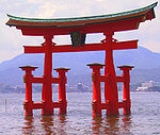
Itsukushima Torii Angle
is the former state religion
State religion

A state religion is a religion body or creed officially endorsed by the state. Practically, a state without a state religion is called a secular state....
 of Japan
Japan

Japan is an island country in East Asia. Located in the Pacific Ocean, it lies to the east of the Sea of Japan, People's Republic of China, North Korea, South Korea and Russia, stretching from the Sea of Okhotsk in the north to the East China Sea and Taiwan in the south....
 and remains the most common name for the nation's non-Buddhist ethnic religious
Ethnic religion

Ethnic religion may include officially sanctioned and organized civil religions with an organized clergy, but they are characterized in that adherents generally are defined by their ethnicity, and conversion essentially equates to cultural assimilation to the people in question....
 practices. It was formed from disparate local mythologies, beginning with the Kojiki
Kojiki

, is the oldest surviving book in Japan. The body of the Kojiki is written in Chinese language, but it includes numerous Japanese names and some phrases....
 of 712, into an imperial cult called State Shinto
State Shinto

has been called the state religion of the Empire of Japan. The term was not used until after World War II and in a broad sense is used to classify those Shinto ideals, rituals and institutions created by the government to promote the emperor worship and the uniqueness of Japan ....
 that solidified in the Meiji period. Shinto is characterized by polytheism
Polytheism

Polytheism is the belief in or worship of multiple deities, such as gods and goddesses. These are usually assembled into a Pantheon , along with their own mythology and rituals....
 and animism
Animism

Animism is a philosophical, religious or spiritual idea that souls or spirits exist not only in humans and animals but also in plants, rock s, natural phenomena such as thunder, geographic features such as mountains or rivers, or other entities of the natural environment, a proposition also known as hylozoism in philosophy....
, and involves the worship of , or spirits. Most kami are local and can be regarded as the spiritual being/spirit or genius
Genius (mythology)

In Roman mythology, every man had a genius and every woman a juno .Originally, the genii and junones were ancestors who guarded over their descendants....
 of a particular place, but some hold a more universal roles. For example; Amaterasu
Amaterasu

, or is in Japanese mythology a Solar deity and perhaps the most important Shinto . Her name, Amaterasu, means literally " illuminates Heaven"....
 is officially worshiped at the Ise Shrine
Ise Shrine

Ise Shrine is a Jinja dedicated to goddess Amaterasu, located in the city of Ise, Mie in Mie prefecture, Japan....
 but is also the focus of many sectors throughout the country.

The earliest Japanese thoughts do not refer to a unified religion. The word Shinto was borrowed from the Chinese, combining two kanji
Kanji

are the Chinese characters that are used in the modern Japanese language logogram along with hiragana , katakana , Arabic numerals, and the occasional use of the Latin alphabet....
: , meaning gods or spirits; and , meaning a philosophical path or study (originally from the Chinese
Chinese language

Chinese or the Sinitic language is a language family consisting of language mutually unintelligible to varying degrees. Originally the indigenous languages spoken by the Han Chinese in China, it forms one of the two branches of Sino-Tibetan languages of languages....
 word dao
Tao

Tao is a concept found in Taoism, Confucianism, and more generally in ancient Chinese philosophy. While the character itself translates as 'way', 'path', or 'route', or sometimes more loosely as 'doctrine' or 'principle', it is used philosophically to signify the fundamental or true nature of the world....
). As such, Shinto is commonly translated as "The Way of the Gods." Modern Shinto is the result of a centuries-old syncretism with Buddhism, the legacy of which continues on despite a forced separation by the Meiji government.

While some Shinto practices and teachings were given a great deal of confidence during World War II
World War II

World War II, or the Second World War , was a global military conflict which involved a Participants in World War II, including all of the great powers, organised into two opposing military alliances: the Allies of World War II and the Axis powers....
, they are no longer taught or practiced today. There are others, though, that still exist as commonplace activities, such as omikuji
Omikuji

Omikuji are random fortunes written on strips of paper at Shinto shrines and Buddhist temples in Japan. Literally "sacred lottery", these are usually received by making a small offering and randomly choosing one from a box, hoping for the resulting fortune to be good....
 (a form of fortune-telling) and the Japanese New Year
Japanese New Year

The Japanese people celebrate New Year's Day on January 1 each year on the Gregorian Calendar. Before 1873, the date of the was based on the Chinese calendar and celebrated at the beginning of spring, just as the contemporary Chinese New Year, Korean New Year and T?ts are celebrated to this day....
 to which few people give religious connotations. Important national ceremonies such as coronations and imperial marriages are conducted at the Three Palace Sanctuaries
Three Palace Sanctuaries

The precincts of the Japanese Imperial Palace in Tokyo include structures known as the Three Palace Sanctuaries or Kyuchusanden :* Kashikodokoro enshrining Amaterasu....
 in Tokyo
Tokyo

, officially , is one of the 47 prefectures of Japan of Japan and located on the eastern side of the main island Honshu. The twenty-three special wards of Tokyo, each governed as a city, cover the area that was once the Tokyo City in the eastern part of the prefecture, and total over 8 million people....


Definition

Shinto can be seen as a form of animism
Animism

Animism is a philosophical, religious or spiritual idea that souls or spirits exist not only in humans and animals but also in plants, rock s, natural phenomena such as thunder, geographic features such as mountains or rivers, or other entities of the natural environment, a proposition also known as hylozoism in philosophy....
 and may be regarded as a variant of shamanist religion
Shamanism

Shamanism is a range of traditional beliefs and practices concerned with communication with the spirit world. A practitioner of shamanism is known as a shaman, , noun ....
. The afterlife
Afterlife

The afterlife is the concept of a continued existence for the soul, spirit or mind of a being after biological death. The major views on the afterlife derive from religion, esotericism and metaphysics....
 is not a primary concern in Shinto; much more emphasis is placed on fitting into this world, instead of preparing for the next.

Shinto has no binding set of dogma
Dogma

Dogma is the established belief or doctrine held by a religion, ideology or any kind of organization: it is authority and not to be disputed, doubted or heresy....
, no holiest place for worshipers, no person or kami deemed holiest, and no defined set of prayer
Prayer

Prayer is the act of communicating with a deity or spirit in worship. Specific forms of this may include praise, requesting divine providence, confessing sins, as an act of reparation or an expression of one's emotional expression....
s. Instead, Shinto is a collection of rituals and methods meant to mediate the relations of living humans and kami. Conversely, Shinto had and continues to have an impact on the practice of other religions within Japan. In particular, one could even make a case for discussing it under the heading of Japanese Buddhism
Buddhism in Japan

The history of Buddhism in Japan can be roughly divided into three periods, namely the Nara period , the Heian Period and the post-Heian period ....
, since these two religions have exercised a profound influence on each other throughout Japanese history
History of Japan

The written history of Japan begins with brief references of Twenty-Four Histories, a collection of Chinese historical texts, in the 1st century AD....
. Further, the Japanese "New Religions" that have emerged since the end of the Second World War have also shown a clear Shinto influence.

Shinto was used as a state ideology during the militaristic beginning of the Showa period
Showa period

The , or Showa era, is the period of Japanese history corresponding to the reign of Emperor Showa , from December 25, 1926 to January 7, 1989. In his coronation message which was read to the people and to the army, the newly enthroned emperor referenced this Japanese era name or nengo: "I have visited the battlefields of the Great War in...
, following the Meiji Restoration. Whether this was because its lack of absolute authority allowed it to be hijacked by radical nationalists
Nationalism

Nationalism refers to an ideology, a feeling, a form of culture, or a social movement that focuses on the nation. While there is significant debate over the historical origins of nations, nearly all Expert accept that nationalism, at least as an ideology and social movement, is a Modernity phenomenon originating in Europe....
, who desired to unify the Japanese people against the "inferior" people in other nations, or was an inevitable outcome of the emphasis Shinto places on Japanese exceptionalism
Exceptionalism

Exceptionalism is the perception that a country, society, institution, movement, or time period is "wiktionary:exceptional" in some way and thus does not conform to normal rules, general principles or the like....
 has been much debated. Even today, some far right
Far right

Far right, extreme right, hard right, ultra-right or radical right are terms used to discuss the Qualitative research or Quantitative research position a group or person occupies within a political spectrum....
 factions within Japanese society want to see a greater emphasis placed on Shinto and increased reverence shown to the Emperor as part of a project to restore Japan to its "rightful place" as the leading nation of the world.

Kasugataisha2

Characteristics

The most immediately striking theme in the Shinto religion is a great love and reverence for nature. Thus, a waterfall, the moon
Moon

The Moon is Earth's only natural satellite and the List of natural satellites by diameter satellite in the Solar System. The average centre-to-centre distance from the Earth to the Moon is km, about thirty times the diameter of the Earth....
, or just an oddly shaped rock might come to be regarded as a kami; so might charismatic persons or more abstract entities like growth and fertility. As time went by, the original nature-worshipping roots of the religion, while never lost entirely, became attenuated and the kami took on more reified and anthropomorphic
Anthropomorphism

Anthropomorphism is the attribution of uniquely human characteristics to non-human creatures and beings, natural and supernatural phenomena, material states and objects or abstract concepts....
 forms, with a formidable body of myth
Mythology

The word mythology refers to a body of folklore/myths/legends that a particular culture believes to be true and that often use the supernatural to interpret natural events and to explain the nature of the universe and humanity....
 attached to them. (See also: Japanese mythology
Japanese mythology

Japanese mythology is a system of beliefs that embraces Shinto and Buddhist traditions as well as agriculture-based folk religion. The Shinto pantheon alone consists of an uncountable number of kami ....
.
) The kami, however, are not transcendent deities in the usual Western and Indian sense of the word. Although divine, they are close to humanity; they inhabit the same world as we do, make the same mistakes as we do, and feel and think the same way as we do. The deceased will usually become kami, with their power and main characteristics given by their doings in life. Those believing other religions may be also venerated as kami after death, if there are Shinto believers who wish them to be.

Beliefs


Four affirmations

Though Shinto has no absolute commandments for its adherents outside of living "a simple and harmonious life with nature and people", there are said to be "Four Affirmations" of the Shinto spirit:
  • Tradition
    Tradition

    The word tradition comes from the Latin traditionem, acc. of traditio which means "handing over, passing on", and is used in a number of ways in the English language:...
     and the family
    Family

    Family denotes a group of people affiliated by a common ancestry, affinity or co-residence. Although the concept of consanguinity originally referred to relations by "blood," some cultural anthropology have argued that one must understand the idea of "blood" metaphorically, and that many societies understand 'family' through other concepts r...
    : The family is seen as the main mechanism by which traditions are preserved. The main Shinto celebrations relate to birth and marriage, which maintain the family unit.
  • Respect of nature
    Nature

    File:Jungle in Punjab.JPGNature, in the broadest sense, is equivalent to the natural world, physical universe, material world or material universe....
    : Nature is considered sacred as it is imbued with spirits known as kami
    Kami

    is the Japanese language word for the spirits within objects in the Shinto faith. The oldest surviving record of their creation is in the Kojiki of 712....
    ; to be in contact with nature is to be close to the kami. Natural objects are worshipped as containing these kami.
  • Physical cleanliness: Followers of Shinto take baths, wash their hands, and rinse out their mouths often.
  • "Matsuri
    Japanese festivals

    Japanese festivals are traditional festive occasions. Some festivals have their roots in Traditional Chinese holidayss but have undergone dramatic changes as they mixed with local customs.These Japanese festival has deep root in Nepal.Concept of these festivals transported to China from Nepal then from China to Japan....
    ": Any festival dedicated to the Kami, of which there are many each year.


Kami

Shinto shows that everything has a . Every rock, every squirrel, every living and nonliving thing contains a kami. There is also a main kami for groups of things: for example, there is a kami within a rhinoceros, and there is also a main kami residing over all the rhinos of the world.

Shinto's spirits are collectively called , an expression literally meaning "eight million kami", but interpreted as meaning "myriad", although it can be translated as "many kami".

The most worshipped of all kami is the sun-goddess
Solar deity

A Solar Deity , is a deity who represents the sun, or an aspect of it. People have worshiped these for all of recorded history. Hence, many beliefs have formed around this worship, such as the "missing sun" found in many cultures ....
 Amaterasu
Amaterasu

, or is in Japanese mythology a Solar deity and perhaps the most important Shinto . Her name, Amaterasu, means literally " illuminates Heaven"....
. However, Japanese do not exactly praise her or say her name to ask for help. Her main shrine is the Ise Shrine
Ise Shrine

Ise Shrine is a Jinja dedicated to goddess Amaterasu, located in the city of Ise, Mie in Mie prefecture, Japan....
, but many lesser shrines are dedicated to her. Within the shrine, she is often symbolized by a mirror. Alternatively, the inner sanctum may be empty. This emptiness does not mean non-existence; rather, it symbolizes that everything that one sees through the mirror is the embodiment of Amaterasu and every other kami. Shinto shrines were once thought to be used as a gate way to other worlds.

Until the end of World War II, the Tenno
Emperor of Japan

The of Japan is the symbol of the state and of the unity of the Japanese people. He is the head of the Imperial House of Japan. Under Japan's present constitution, the Emperor is the "symbol of the state and the unity of the people," and is a ceremonial figurehead in a constitutional monarchy ....
 (Emperor) was believed to have been descended from Amaterasu and father of all Japanese, and was therefore a kami on earth (an ikigami or "living kami"); this divine status was popularized during the Meiji Restoration
Meiji Restoration

The , also known as the Meiji Ishin, Revolution, or Renewal, was a chain of events that led to enormous changes in Japan's political and social structure....
. This did not prevent military governors (Shogun
Shogun

is a military rank and historical title for Hereditary Commanders in Chief of the Armed Forces of Japan. The Japanese word for "general", it is made up of two kanji characters: sho, meaning "commander", "general", or "admiral", and gun meaning military troops or warriors....
) from usurping power, but the emperor was always seen as the true ruler of Japan, even when his rule was only nominal. Although Emperor Hirohito
Hirohito

, also known as , was the 124th Emperor of Japan of Japan according to the traditional order, reigning from 25 December 1926 until his death in 1989....
 renounced his divine status in 1946 under American pressure (Ningen-sengen
Ningen-sengen

On January 1, 1946, the Hirohito issued the and the , commonly known collectively as the ....
), the imperial family remains deeply involved in the Shinto ritual that unifies the Japanese nation symbolically. Because Shinto does not require a declaration or an enforcement to be worshiped (considered "unharmonious"), this declaration, while serving political reasons, is religiously meaningless and merely means that the state enforcement has ended.

Emameijishrine1197

Impurity

Shinto teaches that certain deeds create a kind of ritual impurity
Ritual purification

Ritual purification is a feature of many religions. The aim of these rituals is to remove specifically defined uncleanliness prior to a particular type of activity, and especially prior to the worship of a deity....
 that one should want cleansed for one's own peace of mind and good fortune, not because impurity is wrong in and of itself. Wrong deeds are called , opposed to . Normal days are called "day" (ke), and festive days are called "sunny" or simply "good" (hare). Killing living beings should be done with reverence for taking a life to continue one's own and should be kept to a minimum.

Modern Japanese continue to place great emphasis on the importance of . Before eating, many (though not all) Japanese say, , to show proper thankfulness to the preparer of the meal in particular and more generally to all those living things that lost their lives to make the meal. Failure to show proper respect can be seen as a lack of concern for others, looked down on because it is believed to create problems for all. Those who fail to take into account the feelings of other people and kami will only bring ruin on themselves.

The worst expression of such an attitude is the taking of another's life for personal advancement or enjoyment. Those killed without being shown gratitude for their sacrifice will hold a and become a powerful and evil kami that seeks revenge (aragami). This same emphasis on the need for cooperation and collaboration can be seen throughout Japanese culture today. Additionally, if anyone is injured on the grounds of a shrine, the area affected must be ritually purified.

Purification

Purification
Ritual purification

Ritual purification is a feature of many religions. The aim of these rituals is to remove specifically defined uncleanliness prior to a particular type of activity, and especially prior to the worship of a deity....
 rites are a vital part of Shinto. These may serve to placate any restive kami, for instance when their shrine had to be relocated. Such ceremonies have also been adapted to modern life. For example, a ceremony was held in 1969 to hallow the Apollo 11
Apollo 11

The Apollo 11 mission was the first manned mission to land on the Moon. It was the fifth human spaceflight of Apollo program and the third human voyage to the Moon....
 mission to the moon, new buildings made in Japan are frequently blessed
Blessing

A blessing, is the infusion of something with Sacred, divine will, or one's hopes....
 by a Shinto priest during the groundbreaking ceremony, and many cars made in Japan have been blessed as part of the assembly process. Moreover, every Japanese car factory built in the United States or away from Japan has had a groundbreaking ceremony performed by a Shinto priest, with occasionally an annual visitation by the priest to re-purify.

A more personal purification rite is the purification by water. This may involve standing beneath a waterfall or performing ritual ablution
Ablution

The specific practices of Ablution in Christianity are generally concerned with either ritual purification, or symbolism of humility. Christian ablution may therefore refer to the practice of removing sins, diseases or earthly defilements through the use of ritual washing, or the practice of using ritual washing as one part of a ceremony to...
s in a river-mouth or in the sea (misogi
Misogi

is a Shinto practice of ritual purification. This may be undertaken through exhaustive activities such as extended periods without sleep, breath training , standing under waterfalls, or other methods....
). This practice comes from Shinto history, when the kami Izanagi-no-Mikoto first performed misogi after returning from the land of Yomi, where he was made impure by Izanami-no-Mikoto after her death. These two forms of purification are often referred to as harae
Harae

Harae is the general term for rituals of purification in Shinto. The kanji can also be read 'harai'. The purpose is to remove sins and impurities , concepts which include bad luck and disease as well as guilt in the English sense....
 .

A third form of purification is avoidance, that is, the taboo
Taboo

A taboo is a strong social prohibition against words, objects, actions, or discussions that are considered undesirable or offensive by a group, culture, society, or community....
 placed on certain persons or acts. To illustrate, women were not allowed to climb Mount Fuji
Mount Fuji

is the highest mountain in Japan at . Along with Mount Tate and Mount Haku, it is one of Japan's "Three Holy Mountains" . An active volcano that last erupted in 1707?08, Mount Fuji straddles the boundary of Shizuoka Prefecture and Yamanashi Prefecture Prefectures of Japan just west of Tokyo, from which it can be seen on a clear day....
 until 1868, in the era of the Meiji Restoration
Meiji Restoration

The , also known as the Meiji Ishin, Revolution, or Renewal, was a chain of events that led to enormous changes in Japan's political and social structure....
. Although this aspect has decreased in recent years, religious Japanese will not use an inauspicious word like "cut" at a wedding, nor will they attend a wedding if they have recently been bereaved.

Shinto Shrine

Afterlife

Unlike many religions, one does not need to publicly profess belief in Shinto to be a Shintoist. Whenever a child is born in Japan, a local Shinto shrine adds the child's name to a list kept at the shrine and declares him or her a . After death an ujiko becomes a . One may choose to have one's name added to another list when moving and then be listed at both places. Names can be added to the list without consent and regardless of the beliefs of the person added to the list. However, this is not considered an imposition of belief, but a sign of being welcomed by the local kami, with the promise of addition to the pantheon of kami after death. Those children who die before addition to the list are called , and are believed to cause troubles and plagues. Mizuko are often worshipped in a Shinto shrine dedicated to stilling their anger and sadness, called mizuko kuyo
Mizuko kuyo

is a Japanese ceremony for those who have had a miscarriage, stillbirth, or abortion. This practice has become particularly visible since the 1970s with the creation of shrines devoted solely to this ritual....
.

Because Shinto has co-existed with Buddhism for well over a millennium, it is very difficult to untangle Shinto and Buddhist beliefs about the world. Though Buddhism and Shinto have very different perspectives on the world, most Japanese do not see any challenge in reconciling these two very different religions, and practice both. Thus it is common for people to practice Shinto in life yet have a Buddhist funeral. Their different perspectives on the afterlife are seen as complementing each other, and frequently the ritual practice of one will have an origin in the other.

Shinto texts

There is no core sacred text in Shinto, as the Bible
Bible

The Bible is the central religious text of Judaism and Christianity. The exact Books of the Bible is dependent on the religious traditions of specific denominations....
 is in Christianity
Christianity

Christianity is a Monotheistic religion #Christian view religion centered on the life and teachings of Jesus as New Testament view on Jesus' life....
 or Qur'an
Qur'an

The Qur?an is the central religious text of Islam. Muslims believe the Qur?an to be the book of divine guidance and direction for mankind, and consider the original Arabic text to be the final revelation of God....
 is in Islam
Islam

Islam is a Monotheism, Abrahamic religion originating with the teachings of the Prophets of Islam Muhammad, a 7th century Arab religious and political figure....
. Instead there are books of mythology
Mythology

The word mythology refers to a body of folklore/myths/legends that a particular culture believes to be true and that often use the supernatural to interpret natural events and to explain the nature of the universe and humanity....
 and history
HIStory

HIStory: Past, Present and Future, Book I is a double album by Michael Jackson, released on June 20, 1995, and is Jackson's ninth. The first disc, named "HIStory Begins" consists of a selection of Jackson's greatest hits from the singer's past fifteen years, while the second, named "HIStory Continues" features new songs, with the...
 which provide stories and background to many of the most well-known kami.
  • The Kojiki
    Kojiki

    , is the oldest surviving book in Japan. The body of the Kojiki is written in Chinese language, but it includes numerous Japanese names and some phrases....
     (Record of Ancient Matters)
  • The Rikkokushi
    Rikkokushi

    The are Japan's six national histories chronicling the seventh and eighth centuries.The collection consists of the following texts:*Nihon Shoki ? 30 volumes covering the mythological period through 697....
     (Six National Histories)
  • The Shoku Nihongi
    Shoku Nihongi

    The is an imperially commissioned History of Japan text. Completed in 797, it is the second of the Rikkokushi, coming directly after the Nihon Shoki and followed by Nihon Koki....
     and its Nihon Shoki
    Nihon Shoki

    The , sometimes translated as The Chronicles of Japan, is the second oldest book of classical Japanese history of Japan. It is more elaborate and detailed than the Kojiki, the oldest, and has proven to be an important tool for historians and archaeologists as it includes the most complete extant historical record of ancient Japan....
     (Continuing Chronicles of Japan)
  • The Jinno Shotoki
    Jinno Shotoki

    is a Japanese historical book written by Kitabatake Chikafusa , a court noble in the Nanboku-cho period period. The work sought both to clarify the genesis and consequences of a complicated period and to ameliorate or dispel the prevailing disorder....
     (a study of Shinto and Japanese politics and history) written in the 14th century


Practices


Shrines

The principal worship of kami is done at public shrines (jinja
Jinja

Jinja may be:* Jinja, Uganda, a city in Uganda close to the source of the Nile River* Jinja District, the district in Uganda named after the above city...
), although home worship at small private shrines (kamidana
Kamidana

Kamidana , literally meaning "kami shelf", is a type of miniature Jinja placed or hung high on a wall in some Japanese homes. The kamidana contains a wide variety of items related to the Shinto style ceremony....
) (sometimes only a high shelf with a few ritual objects) is also common. It is possible to worship objects or people while they are still living.

While a few of the public shrines are elaborate structures, most are small buildings in the characteristic Japanese architectural style. Shrines are commonly fronted by a distinctive Japanese gate (torii
Torii

A is a traditional Japanese gate commonly found at the entry to a Jinja , although it can be found at Buddhism in Japan temples as well.The basic structure of a torii is two columns called that are topped with a horizontal rail called the kasagi....
) made of two uprights and two crossbars. These gates are there as a part of the barrier to separate our living world and the world the kami live in. There are often statues of guardian lions may further protect the kami from evil intrusions, as do ropes with pendants hanging down.

In temple compounds, there is a public hall of worship, and behind it is an offering hall where priests conduct rites. Even further is the sacred sanctuary, which is entered only by the high priests. In the sacred sanctuary, the spirit of the kami is invited to dwell within a special natural object or a mirror which reflects light of brightness and purity.

There are well over 100,000 shrines in operation today, each with its retinue of priests. Shinto priests often wear a ceremonial robe called a jo-e
Jo-e

In Japan culture, the Jo-e ?? is a garment worn by Shinto priests in religious ceremonies. It is also sometimes worn by laymen visiting shrines to worship or attend religious ceremonies....
. Kami are invoked at such important ceremonies as wedding
Wedding

File:Pimenov SvadbaOnTomorrowStreet.jpgA wedding is the ceremony in which two people are united in marriage. Wedding traditions and customs vary greatly between cultures, ethnic groups, religions, country, and social classes....
s and entry into university
University

A university is an institution of higher education and research, which grants academic degrees in a variety of subjects. A university provides both undergraduate education and postgraduate education....
. The kami are commonly petitioned for earthly benefits: a child, a promotion, a happier life. While one may wish for ill fortune on others, this is believed to be possible only if the target has committed wrongs first or if one is willing to offer one's life. Though Shinto is popular for these occasions, when it comes to funeral
Funeral

A funeral is a ceremony marking a person's death. Funerary customs comprise the complex of beliefs and practices used by a culture to remember the dead, from the funeral itself, to various monuments, prayers, and rituals undertaken in their honour....
s most Japanese turn to Buddhist ceremonies, since the emphasis in Shinto is on this life and not the next. Almost all festivals in Japan are hosted by local Shinto shrines, and these festivals are open to all those who wish to attend. While these could be said to be religious events, Japanese do not regard these events as religious since everyone can attend, regardless of personal beliefs.

Well-known shrines
Of the many and diverse Shinto shrines in existence, some are well known:
  • Atsuta Shrine
    Atsuta Shrine

    is a Shinto Shinto shrine located in Atsuta-ku, Nagoya, Nagoya, Aichi Prefecture in Japan. The shrine is familiarly known as Atsuta-Sama or simply as Miya ....
    , Nagoya, shrine to the Imperial sword Kusanagi
    Kusanagi

    is a legendary Japanese sword as important to Japan's history as Excalibur is to Great Britain, and is one of three Imperial Regalia of Japan. It was originally called Ama-no-Murakumo-no-Tsurugi but its name was later changed to the more popular Kusanagi-no-Tsurugi ....
  • Chichibu Shrine
    Chichibu Shrine

    The is an ancient Shinto shrine in the city of Chichibu, Saitama, Saitama Prefecture, Japan. The shrine is devoted to Yagokoro-omoikane-no-mikoto, Chichibuhiko-no-mikoto, and Ame-no-minaka-nushi-no-kami, and also enshrines Prince Chichibu....
    , Saitama
    Saitama

    is an indigenous Japanese place and family name which may often refer to:* Saitama Prefecture is a prefecture of Japan in the Kanto region.* Saitama, Saitama is the capital and the most populous city of Saitama Prefecture incorporating former cities of Urawa, Omiya, Yono and Iwatsuki....
    , dedicated to Omoikane
    Omoikane

    Omoikane can refer to:*Omoikane is the god of knowledge in Shinto.*Omoikane is the main computer of the Nadesico starship from the series Martian Successor Nadesico...
     and Amenominakanushi
    Amenominakanushi

    In Japanese mythology and Shintoism, Amenominakanushi was the first kami to come into being in the Plain of Heaven as a "solitary kami" . He was acknowledged as one of the zoka sanshin and one of the five kotoamatsukami ,...
  • Heian Jingu
    Heian Jingu

    The is a Jinja located in Kyoto, Kyoto, Japan. The torii before the main gate is one of the largest in Japan, and the main building, or shaden , is designed to imitate the Kyoto Imperial Palace on a three-fourth scale....
    , Kyoto
    Kyoto

    Sorry, no overview for this topic
    , dedicated to Emperor Kammu
    Emperor Kammu

    was the 50th Emperor of Japan of Japan, according to the traditional order of succession. His reign spanned the years from 781 through 806....
     and Emperor Komei
    Emperor Komei

    was the 121st Emperor of Japan of Japan, according to the traditional order of succession. He reigned from March 10, 1846 to January 30, 1867....
  • Hikawa Shrine
    Hikawa Shrine

    in the Omiya-ku, Saitama district of Saitama, Saitama is a major Shinto jinja . Surrounding the shrine is a large park in which there are many cherry blossom trees, a zoo and a museum....
    , Omiya district
    Omiya-ku, Saitama

    is a wards of Japan of Saitama, Saitama city, Saitama Prefecture, Japan. It is in the Greater Tokyo Area and about 25 km north of central Tokyo. Omiya-ku is surrounded by Nishi-ku, Saitama , Kita-ku, Saitama , Minuma-ku, Saitama , Urawa-ku, Saitama , Chuo-ku, Saitama , and Sakura-ku, Saitama of Saitama city....
  • The Grand Shrine of Ise
    Ise Shrine

    Ise Shrine is a Jinja dedicated to goddess Amaterasu, located in the city of Ise, Mie in Mie prefecture, Japan....
    , Ise, Mie
    Ise, Mie

    , formerly called Ujiyamada , is a cities of Japan located in eastern Mie Prefecture, on the island of Honshu, Japan.Ise is home to Ise Grand Shrine, the most sacred Shinto shrine in Japan, and is thus a very popular destination for tourists....
    , dedicated to Amaterasu
    Amaterasu

    , or is in Japanese mythology a Solar deity and perhaps the most important Shinto . Her name, Amaterasu, means literally " illuminates Heaven"....
  • The Gassan Hongu,Yamagata
    Yamagata

    Yamagata refers...
    ,dedicated to Tsukuyomi
  • Itsukushima Shrine
    Itsukushima Shrine

    Itsukushima Shrine is a Shinto jinja on the island of Itsukushima in the city of Hatsukaichi, Hiroshima in Hiroshima Prefecture in Japan. It is a United Nations Educational, Scientific and Cultural Organization World Heritage Site....
    , Hiroshima Prefecture
    Hiroshima Prefecture

    is a Prefectures of Japan of Japan located in the Chugoku region on Honshu island. The capital is the city of Hiroshima....
  • Iwashimizu Shrine
    Iwashimizu Shrine

    The is a Shinto shrine in the city of Yawata, Kyoto in Kyoto Prefecture, Japan. ...
    , Yawata, Kyoto
    Yawata, Kyoto

    is a cities of Japan located in Kyoto Prefecture, Japan.As of 2008, the city has an estimated population of 73,651 and the population density of 3,047.70 persons per square kilometer....
  • Izumo Shrine
    Izumo Taisha

    is one of the most ancient and important of the Jinja in Japan. Its name means "The Grand Shrine of Izumo Province." No record gives the date of establishment....
    , Izumo
    Izumo, Shimane

    is a cities of Japan located in Shimane Prefecture, Japan. Izumo is known for Izumo soba noodles and the Izumo Taisha Shinto shrine....
  • Kasuga Shrine
    Kasuga Shrine

    File:Kasuga Shrine 01.jpgThe is a Jinja in the Municipality of Japan of Nara, Nara, in Nara prefecture, Japan. Established in 768 A.D. and rebuilt several times over the centuries, it is the shrine of the Fujiwara family....
    , Nara
    Nara, Nara

    is the capital cities of Japan of Nara Prefecture in the Kansai region of Japan. The city occupies the northern part of Nara Prefecture, directly bordering Kyoto Prefecture....
  • Katori Shrine
    Katori Shrine

    The is a Shinto shrine located in the city of Katori, Chiba, Chiba Prefecture, Japan. It stands as the head of a nationwide network of 400 Katori Shrines....
    , Chiba Prefecture
    Chiba Prefecture

    is a Prefectures of Japan of Japan located in the Greater Tokyo Area. Its capital is Chiba, Chiba....
    , dedicated to Futsunushi
    Futsunushi

    In Japanese mythology, Futsunushi was a kami of swords and lightning. He is a general of Amaterasu.See also Katori Shrine...
  • Kumano Shrines, Wakayama Prefecture
    Wakayama Prefecture

    File:WakayamaMapCurrent.png is a Prefectures of Japan of Japan located on the Kii Peninsula in the Kansai region on Honshu island. The capital is the city of Wakayama, Wakayama....
  • Meiji Shrine
    Meiji Shrine

    , located in Shibuya, Tokyo, is the Shinto Jinja that is dedicated to the deified spirits of Emperor Meiji and his wife, Empress Shoken. When Emperor Meiji died in 1912 and Empress Shoken in 1914, the Japanese people wished to pay their respects to the two influential Japanese figures....
    , Tokyo
    Tokyo

    , officially , is one of the 47 prefectures of Japan of Japan and located on the eastern side of the main island Honshu. The twenty-three special wards of Tokyo, each governed as a city, cover the area that was once the Tokyo City in the eastern part of the prefecture, and total over 8 million people....
    , the shrine of Emperor Meiji
    Emperor Meiji

    The or Meiji the Great was the 122nd Emperor of Japan of Japan according to the traditional order of succession, reigning from 3 February 1867 until his death....
  • Nikko Tosho-gu
    Nikko Tosho-gu

    is a Shinto shrine located in Nikko, Tochigi, Tochigi Prefecture, Japan. It is part of the "Shrines and Temples of Nikko", a UNESCO World Heritage Site....
    , Nikko
    Nikko, Tochigi

    is a cities of Japan located in the mountains of Tochigi Prefecture, Japan. Located approximately 140 km north of Tokyo and approximately 35 km west of Utsunomiya, Tochigi, the capital of Tochigi, it is a popular destination for Japanese and international tourists, housing the mausoleum of shogun Tokugawa Ieyasu and that of his grandson...
    , Tochigi Prefecture
    Tochigi Prefecture

    is a Prefectures of Japan located in the Kanto region on the island of Honshu, Japan. The capital is the city of Utsunomiya, Tochigi. Utsunomiya is famous for its many Jiaozi specialist shops....
  • Osaki Hachiman Shrine, Miyagi Prefecture
    Miyagi Prefecture

    is a Prefectures of Japan of Japan located in the Tohoku Region on Honshu island. The capital is Sendai, Miyagi....
  • Sendai Tosho-gu, Sendai, Miyagi Prefecture
    Miyagi Prefecture

    is a Prefectures of Japan of Japan located in the Tohoku Region on Honshu island. The capital is Sendai, Miyagi....
  • Shiogama Shrine, Miyagi Prefecture
    Miyagi Prefecture

    is a Prefectures of Japan of Japan located in the Tohoku Region on Honshu island. The capital is Sendai, Miyagi....
  • Three Palace Sanctuaries
    Three Palace Sanctuaries

    The precincts of the Japanese Imperial Palace in Tokyo include structures known as the Three Palace Sanctuaries or Kyuchusanden :* Kashikodokoro enshrining Amaterasu....
    , Kokyo
    Kokyo

    is the imperial main residence of the Emperor of Japan. It is a large park-like area located in Chiyoda, Tokyo close to Tokyo Station and contains various buildings such as the main palace and the private residences of the imperial family....
     Imperial Palace, Tokyo
    Tokyo

    , officially , is one of the 47 prefectures of Japan of Japan and located on the eastern side of the main island Honshu. The twenty-three special wards of Tokyo, each governed as a city, cover the area that was once the Tokyo City in the eastern part of the prefecture, and total over 8 million people....
  • Tsurugaoka Hachiman Shrine
    Tsurugaoka Hachiman Shrine

    is the most important Jinja in the city of Kamakura, Kanagawa, Kanagawa Prefecture, Japan....
    , Kamakura, Kanagawa
    Kamakura, Kanagawa

    is a cities of Japan located in Kanagawa Prefecture, Japan, about south-south-west of Tokyo. It used to be also called . Although Kamakura proper is today rather small, it is sometimes considered a former de facto capital of Japan as the seat of the Shogunate and of the Shikken during the Kamakura Period....
  • Usa Hachiman Shrine, Oita Prefecture
    Oita Prefecture

    is a Prefectures of Japan of Japan located on Kyushu Island. The prefectural capital is the city of Oita, Oita....
    , dedicated to Hachiman
    Hachiman

    is the Shinto god of war, and divine protector of Japan and the Japanese people. The name means God of Eight Banners, referring to the eight heavenly banners that signaled the birth of the divine Emperor Ojin....
  • Yasukuni Shrine
    Yasukuni Shrine

    is a Shinto Shinto shrine located in Chiyoda, Tokyo, Tokyo, Japan. It is dedicated to the kami of soldiers and others who died fighting on behalf of the Emperor of Japan....
     (Tokyo), a shrine dedicated to Japan's war dead. The center of several controversies.


Ema

In medieval times
History of Japan

The written history of Japan begins with brief references of Twenty-Four Histories, a collection of Chinese historical texts, in the 1st century AD....
, wealthy people would donate horses to shrines, especially when making a request of the god of the shrine (for example, when praying for victory in battle). For smaller favors, giving a picture of a horse became a custom, and these are popular today. The visitor to a shrine purchases a wooden tablet with a likeness of a horse, or nowadays, something else (kanji
Kanji

are the Chinese characters that are used in the modern Japanese language logogram along with hiragana , katakana , Arabic numerals, and the occasional use of the Latin alphabet....
, an arrow, a snake, or a number of other animals), writes a wish or prayer on the tablet, and hangs it at the shrine. In some cases, if the wish comes true, the person hangs another ema at the shrine in gratitude.

Kagura

Kagura
Kagura

Kagura can refer to several things:...
 is the ancient Shinto ritual dance of Shamanic origin. The word "Kagura" is thought to be a contracted form of kami no kura or seat of the kami or the site where the kami is received There is a mythological tale of how Kagura dance came into existence. The sun goddess Amaterasu
Amaterasu

, or is in Japanese mythology a Solar deity and perhaps the most important Shinto . Her name, Amaterasu, means literally " illuminates Heaven"....
 became very upset at her brother so she hid in a cave. All of the other gods and goddesses were concerned and wanted her to come outside. Ame-no-uzeme began to dance and create a noisy commotion in order to entice Amaterasu to come out. The kami (gods) tricked Amaterasu by telling her there was a better sun goddess in the heavens. Amaterasu came out and light returned to the universe.

Music plays a very important role in the kagura performance. Everything from the setup of the instruments to the most subtle sounds and the arrangement of the music is crucial to encouraging the kami to come down and dance. The songs are used as magical devices to summon the gods and as prayers for blessings. Rhythm patterns of five and seven are common, possibly relating to the Shinto belief of the twelve generations of heavenly and earthly deities. There is also vocal accompaniment called kami uta in which the drummer sings sacred songs to the gods. Often the vocal accompaniment is overshadowed by the drumming and instruments, reinforcing that the vocal aspect of the music is more for incantation
Incantation

An incantation or incantations are the words spoken during a ritual, either a hymn or prayer invoking or praising a deity, or in magic , occultism, witchcraft with the intention of casting a Spell or an object or a person....
 rather than aesthetics
Aesthetics

Aesthetics or esthetics is commonly known as the study of senses or sensori-emotional values, sometimes called judgments of sentiment and taste ....
.

In both ancient Japanese collections, the Nihongi and Kojiki
Kojiki

, is the oldest surviving book in Japan. The body of the Kojiki is written in Chinese language, but it includes numerous Japanese names and some phrases....
, Ame-no-uzeme’s dance is described as asobi, which in old Japanese language means a ceremony that is designed to appease the spirits of the departed, and which was conducted at funeral ceremonies. Therefore, kagura is a rite of tama shizume, of pacifying the spirits of the departed. In the Heian period (8th-12th centuries) this was one of the important rites at the Imperial Court and had found its fixed place in the tama shizume festival on the eleventh month. At this festival people sing as accompaniment to the dance: “Depart! Depart! Be cleansed and go! Be purified and leave!” This rite of purification is also known as chinkon. It was used for securing and strengthening the soul of a dying person. It was closely related to the ritual of tama furi (shaking the spirit), to call back the departed soul of the dead or to energize a weakened spirit. Spirit pacification and rejuvenation were usually achieved by songs and dances, also called asobi. The ritual of chinkon continued to be performed on the emperors of Japan, thought to be descendents of Amaterasu. It is possible that this ritual is connected with the ritual to revive the sun goddess during the low point of the winter solstice.

There is a division between the kagura that is performed at the Imperial palace and the shrines related to it, and the kagura that is performed in the countryside. Folk kagura, or kagura from the countryside is divided according to region. The following descriptions relate to sato kagura, kagura that is from the countryside. The main types are: miko kagura, Ise kagura, Izumo kagura, and shishi kagura.

Miko kagura is the oldest type of kagura and is danced by women in Shinto shrines and during folk festivals. The ancient miko
Miko

is a Japanese language term that anciently meant "female shaman, shamaness; medium; prophet, priestess" who conveyed divine oracles, and currently means "shrine maiden; virgin consecrated to a deity" who serves at Shinto Jinja ....
 were shamanesses, but are now considered priestesses in the service of the Shinto Shrines. Miko kagura originally was a shamanic trance dance, but later, it became an art and was interpreted as a prayer dance. It is performed in many of the larger Shinto shrines and is characterized by slow, elegant, circular movements, by emphasis on the four directions and by the central use of torimono (objects dancers carry in their hands), especially the fan and bells.

Ise kagura is a collective name for rituals that are based upon the yudate (boiling water rites of Shugendo
Shugendo

is an ancient Japanese religion in which enlightenment or oneness with kami is obtained through the study of the relationship between Man and Nature....
 origin) ritual. It includes miko dances as well as dancing of the torimono type. The kami are believed to be present in the pot of boiling water, so the dancers dip their torimono in the water and sprinkle it in the four directions and on the observers for purification and blessing.

Izumo kagura is centered in the Sada shrine of Izumo, Shimane prefecture. It has two types: torimono ma, unmasked dances that include held objects, and shinno (sacred No), dramatic masked dances based on myths. Izumo kagura appears to be the most popular type of kagura.

Shishi kagura also known as the Shugen-No tradition, uses the dance of a shishi (lion or mountain animal) mask as the image and presence of the deity. It includes the Ise daikagura group and the yamabushi kagura and bangaku groups of the Tohoku area (Northeastern Japan). Ise daikagura employs a large red Chinese type of lion head which can move its ears. The lion head of the yamabushi kagura schools is black and can click its teeth. Unlike other kagura types in which the kami appear only temporarily, during the shishi kagura the kami is constantly present in the shishi head mask. During the Edo period, the lion dances became showy and acrobatic losing its touch with spirituality. However, the yamabushi kagura tradition has retained its ritualistic and religious nature.

Originally, the practice of kagura involved authentic possession by the kami invoked. In modern day Japan it appears to be difficult to find authentic ritual possession, called kamigakari, in kagura dance. However, it is common to see choreographed possession in the dances. Actual possession is not taking place but elements of possession such as losing control and high jumps are applied in the dance.

History


Shinto and Buddhism

The introductions of writing in the 5th century from China and Buddhism
Buddhism

Buddhism is a family of beliefs and practices considered by most to be a religionand is based on the teachings attributed to Siddhartha Gautama, commonly known as "The Buddha" , who was born in what is today Nepal....
 in the 6th century via Korea
Korea

Korea is a geographic area composed of two sovereign countries, a civilization, and a former state situated on the Korean Peninsula in East Asia....
 had a profound impact on the development of a unified system of Shinto beliefs. In the early Nara period
Nara period

The of the history of Japan covers the years from AD 710 to 794. Empress Gemmei established the capital of Heijo-kyo . Except for 5 years , when the capital was briefly moved again, it remained the capital of Japanese civilization until Emperor Kammu established a new capital, Nagaoka-kyo, in 784 before moving to Heian-kyo , or Kyoto, a decade lat...
 the Kojiki and the Nihon Shoki were written by compiling existing myths and legends into a unified account of Japanese mythology
Japanese mythology

Japanese mythology is a system of beliefs that embraces Shinto and Buddhist traditions as well as agriculture-based folk religion. The Shinto pantheon alone consists of an uncountable number of kami ....
. These accounts were written with two purposes in mind: the introduction of Taoist, Confucian, and Buddhist themes into Japanese religion; and garnering support for the legitimacy of the Imperial house, based on its lineage from the sun goddess, Amaterasu. Much of modern Japan was under only fragmentary control by the Imperial family, and rival ethnic groups (including, perhaps, the ancestors of the Ainu people
Ainu people

are an ethnic group indigenous peoples to Hokkaido, the Kuril Islands, and much of Sakhalin. There are most likely over 150,000 Ainu today; however the exact figure is not known as many Ainu hide their origin due to Ethnic issues in Japan....
) continued to war against the encroachment of the Japanese. The mythological anthologies, along with other poetry anthologies like the Collection of Ten Thousand Leaves (Man'yoshu) and others, were intended to impress others with the worthiness of the Imperial family and their divine mandate to rule. Buddhism dealt with the experiences of life Shintoism did not agree with, such as death.

With the introduction of Buddhism and its rapid adoption by the court, it was necessary to explain the apparent differences between native Japanese beliefs and Buddhist teachings. Indeed, Shinto did not have a name until it became necessary to distinguish it from Buddhism. One explanation saw the kami as supernatural beings still caught in the cycle of birth and rebirth (reincarnation). The kami are born, live, die, and are reborn like all other beings in the karmic cycle. However, the kami played a special role in protecting Buddhism and allowing its teachings of compassion to flourish. This explanation was later challenged by Kukai
Kukai

Kukai , also known posthumously as , 774–835, was a Japanese people bhikshu, scholar, poet, and artist, founder of the Shingon or "True Word" school of Buddhism....
 (??, 774–835), who saw the kami as different embodiments of the Buddhas themselves (honji suijaku
Honji suijaku

The term in Japanese Buddhism terminology refers to a theory common in Japan until the Meiji period according to which Buddhist deities choose to appear to the Japanese as native kami deities in order to save them....
 theory). For example, he famously linked Amaterasu (the sun goddess and ancestor of the Imperial family) with Dainichi Nyorai
Vairocana

Vairocana is a Buddhahood who is the embodiment of Dharmakaya, and which therefore can be seen as the universal aspect of the historical Gautama Buddha....
, a central manifestation of the Buddhists, whose name means literally "Great Sun Buddha." In his view, the kami were just Buddhas by another name.

Buddhism and Shinto coexisted and were amalgamated in the shinbutsu shugo
Shinbutsu Shugo

literally "fusion of kami and buddhas" is the Japanese syncretism of Buddhism and local religious beliefs. When Buddhism was introduced through China in the late Asuka period , rather than discard the old belief system the Japanese tried to reconcile it with the new, assuming both were true....
 and Kukai's syncretic
Syncretism

Syncretism consists of the attempt to reconcile disparate or contrary beliefs, often while melding practices of various schools of thought. The term may refer to attempts to merge and analogy several originally discrete traditions, especially in the theology and mythology of religion, and thus assert an underlying unity allowing for an inclu...
 view held wide sway up until the end of the Edo period
Edo period

The , or , is a division of History of Japan running from 1603 to 1868. The period marks the governance of the Edo or Tokugawa shogunate, which was officially established in 1603 by the first Edo shogun Tokugawa Ieyasu....
. At that time, there was a renewed interest in "Japanese studies" (kokugaku
Kokugaku

Kokugaku was a National revival, or, school of Japan philology and philosophy originating during the Tokugawa period. Kokugaku scholars worked to refocus Japanese scholarship away from the then-dominant study of Chinese, Confucian, and Buddhist texts in favor of research into the early Japanese classics....
), perhaps as a result of the closed country policy. In the 18th century, various Japanese scholars, in particular Motoori Norinaga
Motoori Norinaga

Motoori Norinaga was a Japanese scholar of Kokugaku during the Edo period. He is probably the best known and most prominent of all scholars in this tradition....
 (?? ??, 1730–1801), tried to tease apart the "real" Shinto from various foreign influences. The attempt was largely unsuccessful, since as early as the Nihon Shoki parts of the mythology were explicitly borrowed from Chinese doctrines. For example, the co-creator deities Izanami
Izanami

In Japanese mythology, is a goddess of both creation and death, as well as the former wife of the god Izanagi. She is also referred to as Izana-mi, Izanami-no-mikoto or Izanami-no-kami....
 and Izanagi
Izanagi

is a deity born of the seven divine generations in Japanese mythology and Shintoism, and is also referred to in the roughly translated Kojiki as "male-who-invites" or Izanagi-no-mikoto....
 are explicitly compared to the Chinese concepts of yin and yang
Yin and yang

In Chinese philosophy, the concept of yin yang is used to describe how seemingly disjunct or opposing forces are interconnected and interdependent in the natural world, giving rise to each other in turn....
. However, the attempt did set the stage for the arrival of state Shinto, following the Meiji Restoration
Meiji Restoration

The , also known as the Meiji Ishin, Revolution, or Renewal, was a chain of events that led to enormous changes in Japan's political and social structure....
 (c.1868), when Shinto and Buddhism were separated (shinbutsu bunri
Shinbutsu Bunri

File:Turu daitoz.jpgThe tendency to oppose Buddhism can be seen already during the early modern era as a nationalistic reaction to its spreading but the term usually indicates the anti-Buddhist movement that, from the middle of the Edo period onwards, accompanied Confucianism, the study of ancient Japanese literature and culture , and Shinto nat...
).

State Shinto

Following the Meiji Restoration
Meiji Restoration

The , also known as the Meiji Ishin, Revolution, or Renewal, was a chain of events that led to enormous changes in Japan's political and social structure....
, Shinto was made the state religion
State religion

A state religion is a religion body or creed officially endorsed by the state. Practically, a state without a state religion is called a secular state....
 of the Empire of Japan
Empire of Japan

The Empire of Japan was a Japanese political entity that existed during the period from the Meiji Restoration in 1868 until its defeat in World War II in 1945....
, and in 1868 its combination with Buddhism was outlawed, in an attempt to purify Shinto by abolishing many Buddhist and Confucian ideals. During this period, numerous scholars of kokugaku
Kokugaku

Kokugaku was a National revival, or, school of Japan philology and philosophy originating during the Tokugawa period. Kokugaku scholars worked to refocus Japanese scholarship away from the then-dominant study of Chinese, Confucian, and Buddhist texts in favor of research into the early Japanese classics....
 believed that State Shinto could be the unifying agent of the country around the Emperor while the process of modernization was undertaken with all possible speed. The psychological shock of the Western "Black Ships
Black Ships

The Black Ships was the name given to Western vessels arriving in Japan between the 15th and 19th centuries. In particular, it refers to USS Mississippi , USS Plymouth , USS Saratoga , and USS Susquehanna , that arrived on July 14,1853 at Uraga Harbor in Kanagawa Prefecture, Japan under the command of United States Matthew Calbraith Perr...
" and the subsequent collapse of the shogun
Shogun

is a military rank and historical title for Hereditary Commanders in Chief of the Armed Forces of Japan. The Japanese word for "general", it is made up of two kanji characters: sho, meaning "commander", "general", or "admiral", and gun meaning military troops or warriors....
ate convinced many that the nation needed to unify in order to resist being colonized by outside forces.

In 1871, a Ministry of Divinities
Jingi-kan

The Jingi-kan was the Department of Worship, one of the two main governing departments instigated by the Ritsuryo legal system in 8th century Japan....
 was formed and Shinto shrines were divided into twelve levels with the Ise Shrine
Ise Shrine

Ise Shrine is a Jinja dedicated to goddess Amaterasu, located in the city of Ise, Mie in Mie prefecture, Japan....
 (dedicated to Amaterasu, and thus symbolic of the legitimacy of the Imperial family) at the peak and small sanctuaries of humble towns at the base. The following year, the ministry was replaced with a new Ministry of Religion, charged with leading instruction in "shushin" (moral courses). This was a major reversal from the Edo period
Edo period

The , or , is a division of History of Japan running from 1603 to 1868. The period marks the governance of the Edo or Tokugawa shogunate, which was officially established in 1603 by the first Edo shogun Tokugawa Ieyasu....
, in which families were registered with Buddhist temples, rather than Shinto shrines. Priests
Kannushi

A kannushi is responsible for the maintenance of a Shinto shinto shrine as well as leading worship. He generally does not proselytize. Traditionally, most jinja did not have a kannushi and were maintained by a committee of the local populace who are called ujiko ....
 were officially nominated and organized by the state, and they instructed the youth in a form of Shinto theology based on the official dogma
Dogma

Dogma is the established belief or doctrine held by a religion, ideology or any kind of organization: it is authority and not to be disputed, doubted or heresy....
 of the divinity of Japan's national origins and its Emperor.

As time went on, Shinto was increasingly used in the advertising of nationalist
Japanese nationalism

encompasses a broad range of ideas and sentiments harbored by the Japanese people over the last two centuries regarding their native country, its cultural nature, political form and historical destiny....
 popular sentiments. In 1890, the Imperial Rescript on Education
Imperial Rescript on Education

The was signed by Emperor Meiji of Japan on 30 October 1890 to articulate government policy on the guiding principals of education on the Empire of Japan....
 was issued, and students were required to ritually recite its oath to "offer yourselves courageously to the State" as well as to protect the Imperial family. The practice of Emperor worship was further spread by distributing imperial portraits for esoteric veneration. All of these practices were used to fortify national solidarity through patriotic observance at shrines. This use of Shinto gave Japanese patriotism a special tint of mysticism
Mysticism

Mysticism is the pursuit of communion with, Unio Mystica with, or conscious awareness of an ultimate reality, divinity, Spirituality, or God through direct experience, intuition, or insight....
 and cultural introversion, which became more pronounced as time went on.

Such processes continued to deepen throughout the early Showa period
Showa period

The , or Showa era, is the period of Japanese history corresponding to the reign of Emperor Showa , from December 25, 1926 to January 7, 1989. In his coronation message which was read to the people and to the army, the newly enthroned emperor referenced this Japanese era name or nengo: "I have visited the battlefields of the Great War in...
, when State Shinto became a main force of militarism
Militarism-Socialism in Showa Japan

Japanese Militarism-Socialism, sometimes also referred to as Right socialism, "Showa Nationalism" or Japanese fascism, refers to a Syncretic politics of Japanese right-wing political ideology, developed over a period of time from the Meiji Restoration, and dominating Japanese politics during the first part of the Showa period ....
, finally coming to an abrupt end in August 1945 when Japan lost the war in the Pacific
World War II

World War II, or the Second World War , was a global military conflict which involved a Participants in World War II, including all of the great powers, organised into two opposing military alliances: the Allies of World War II and the Axis powers....
. On 1 January 1946, Emperor Showa
Hirohito

, also known as , was the 124th Emperor of Japan of Japan according to the traditional order, reigning from 25 December 1926 until his death in 1989....
 issued the Ningen-sengen
Ningen-sengen

On January 1, 1946, the Hirohito issued the and the , commonly known collectively as the ....
, in which he quoted the Five Charter Oath of Emperor Meiji
Emperor Meiji

The or Meiji the Great was the 122nd Emperor of Japan of Japan according to the traditional order of succession, reigning from 3 February 1867 until his death....
 and declared that he was not an akitsumikami
Ningen-sengen

On January 1, 1946, the Hirohito issued the and the , commonly known collectively as the ....
.

Types of Shinto

To distinguish between these different focuses of emphasis within Shinto, many feel it is important to separate Shinto into different types of Shinto expression.
  • is the oldest line of Shinto branches, a tradition that values the systematic methods of exercise and training.
  • is the most prevalent of the Shinto types. It has always been a part of Japan's history and constitutes the main current of Shinto tradition. The Association of Shinto Shrines
    Association of Shinto Shrines

    The is a religious administrative organization that oversees about 80,000 Shinto shrines in Japan. These shrines take the Ise Shrine as the foundation of their belief....
     oversees about 80,000 shrines nationwide.
  • comprises 13 groups formed during the 19th century. They do not have shrines, but conduct religious activities in meeting halls. Shinto sects include the mountain-worship sects, who focus on worshipping mountains like Mount Fuji
    Mount Fuji

    is the highest mountain in Japan at . Along with Mount Tate and Mount Haku, it is one of Japan's "Three Holy Mountains" . An active volcano that last erupted in 1707?08, Mount Fuji straddles the boundary of Shizuoka Prefecture and Yamanashi Prefecture Prefectures of Japan just west of Tokyo, from which it can be seen on a clear day....
    , faith-healing
    Faith healing

    Faith healing is the attempt to use religious or spirituality means such as prayer, mental practices, spiritual insights, or other techniques to prevent illness, cure disease, or improve health....
     sects, purification
    Purification

    Purification is the process of rendering something pure, i.e. clean of foreign elements and/or pollution, and may refer to:* List of purification methods in chemistry...
     sects, Confucian sects, and Revival Shinto sects.
  • includes the numerous but fragmented folk beliefs in deities and spirits. Practices include divination
    Divination

    Divination is the attempt to gain insight into a question or situation by way of a standardized process or ritual. Diviners ascertain their interpretations of how a querent should proceed by reading signs, events, or omens, or through alleged contact with a supernatural agency....
    , spirit possession, and shamanic healing. Some of their practices come from Taoism
    Taoism

    Taoism refers to a variety of related philosophical and religious traditions and concepts. These traditions have influenced East Asia for over two thousand years and some have spread to the West....
    , Buddhism, or Confucianism, but most come from ancient local traditions.


All these main types of Shinto and some subtypes have given birth to many and diverse schools and sects since medieval times to the present days. A list of the most relevant can be found at the article Shinto sects and schools
Shinto sects and schools

, the folk religion of Japan, developed a diversity of School and sects, outbranching from the original Ko-shinto since Buddhism was introduced into Japan in the sixth century....
.

Post-war

As the era of State Shinto came to a close with the end of World War II
World War II

World War II, or the Second World War , was a global military conflict which involved a Participants in World War II, including all of the great powers, organised into two opposing military alliances: the Allies of World War II and the Axis powers....
, most Japanese came to believe that the hubris
Hubris

Hubris or hybris , mythology is a term used in modern English to indicate overweening pride, superciliousness, or arrogance, often resulting in fatal retribution....
 of Empire had led to their downfall. Lust for foreign territory blinded their leaders to the importance of their homeland. In the post-war period, numerous "New Religions
Shinshukyo

' is a term used in Japan to describe new religious movements. They are also known as ' in Japanese, and are most often called simply Japanese new religions in English....
" cropped up, many of them ostensibly based on Shinto, but on the whole, Japanese religiosity
Religiosity

File:Religion in the world.PNGReligiosity, in its broadest sense, is a comprehensive sociological term used to refer to the numerous aspects of religious activity, dedication, and belief ....
 may have decreased. However, the concept of religion
Religion

A religion is an organized approach to human spirituality which usually encompasses a set of myth, symbols, beliefs and practices, often with a supernatural or transcendence quality, that give meaning to the practitioner's experiences of life through reference to a higher power or truth....
 in Japan is a complex one. A survey conducted in the mid 1970s indicated that of those participants who claimed not to believe in religion, one-third had a Buddhist
Buddhism in Japan

The history of Buddhism in Japan can be roughly divided into three periods, namely the Nara period , the Heian Period and the post-Heian period ....
 or Shinto altar in their home, and about one quarter carried an omamori
Omamori

Omamori are Japanese amulets dedicated to particular Shinto deities as well as Buddhist figures. The word mamori means protection, with omamori meaning honorable protector....
 (an amulet
Amulet

An amulet , a close cousin of the talisman consists of any object intended to bring good luck and/or protection to its owner.Potential amulets include: Gemstone or simple Gemstone, statues, coins, drawings, pendants, jewelry ring, plants, animals, etc.; even words said in certain occasions?for example: vade retro satana?, to repe...
 to gain protection by kami) on their person. Following the war, Shinto has, for the most part, persisted with less importance placed on mythology or the divine mandate of the Imperial family. Instead, shrines tend to focus on helping ordinary people gain better fortunes for themselves through maintaining good relations with their ancestors and other kami. Shinto has largely reverted to its pre-imperial family state. Post-war, the number of Japanese citizens identifying their religious beliefs as Shinto has declined a great deal, yet the general practice of Shinto rituals has not decreased accordingly, and many practices have persisted as general cultural beliefs (such as ancestor worship, which is still very popular), superstitions, and community festivals (matsuri
Japanese festivals

Japanese festivals are traditional festive occasions. Some festivals have their roots in Traditional Chinese holidayss but have undergone dramatic changes as they mixed with local customs.These Japanese festival has deep root in Nepal.Concept of these festivals transported to China from Nepal then from China to Japan....
) — focusing more on religious practices and items than principles. The explanation generally given for this anomaly is that, following the demise of State Shinto, modern Shinto has reverted to its more traditional position as a folk religion which is culturally ingrained, rather than enforced. In any case, Shinto and its values continue to be an important component of the Japanese cultural mindset.

Shinto has also spread abroad to a limited extent, and a few non-Japanese Shinto priests have been ordained. A relatively small number of people practice Shinto in America. There are, however, several Shinto shrines in Hawaii
List of Shinto shrines in the United States

Colorado* Daitozan Jinja...
, which has a large number of people of Japanese descent. Outside the US, there are also Shinto shrines in Brazil
List of Shinto shrines in Brazil

* Sansso Jinja* Dois Galhos Jinja* Hakkoku Sekioi Jinja* Kami-no-ie Yaomankyo Iwato Jinja* Inarikai* Shintoo Ikyo Daijin Myogu* Nambei Daijingu...
, Canada
List of Shinto shrines in Canada

British Columbia* Kinomori JinjaSee also*Shinto*Shinto shrine*List of Shinto shrines...
 and the Netherlands
List of Shinto shrines in the Netherlands

* Yamakage ShrineSee also*Shinto*Shinto shrine*List of Shinto shrines...
. Shrines were also established in Taiwan
List of Shinto shrines in Taiwan

On June 17, 1895 , Taiwan came under the rule of the Empire of Japan. In the following year on December 3, 1896 , the first Shinto shrine was created in Taiwan....
 and Korea during the Japanese occupation
Korea under Japanese rule

Korea was under Japanese rule as part of the Imperial Japan during the first half of the 20th century, until the surrender of Japan in 1945. Korea was occupied and declared a Japanese protectorate in 1905 , and officially annexation in 1910 through an Japan-Korea Annexation Treaty....
 of those areas, but following the war, they were either repurposed or destroyed.

Cultural effects

Shinto has been called "the religion of Japan", and the customs and values of Shinto are inseparable from those of Japanese culture. Many famously Japanese practices have origins either directly or indirectly rooted in Shinto. For example, it is clear that the Shinto ideal of harmony with nature underlies such typically Japanese arts as flower-arranging (???ikebana
Ikebana

is the Japanese art of flower arrangement, also known as .More than simply putting flowers in a container, ikebana is a disciplined art form in which nature and humanity are brought together....
), traditional Japanese architecture
Japanese architecture

has a long history as any other aspect of Culture of Japan. Originally heavily influenced by Chinese architecture from the Tang Dynasty , it has also developed many differences and aspects which are indigenous to Japan....
, and garden design
Japanese garden

, that is, gardens in traditional Japanese style, can be found at private homes, in neighborhood or city parks, and at historical landmarks such as Buddhism temples and old Japanese castles....
. A more explicit link to Shinto is seen in sumo
Sumo

is a competitive contact sport where a wrestler attempts to force another wrestler out of a circular ring or to touch the ground with anything other than the soles of the feet....
 wrestling, where, even in the modern version of the sport, many Shinto-inspired ceremonies must be performed before a bout, such as purifying the wrestling arena by sprinkling it with salt. The Japanese emphasis on proper greetings and respectful phrasings can be seen as a continuation of the ancient Shinto belief in kotodama
Kotodama

Japanese language refers to the belief that mystical powers dwell in words and names. English translations include "soul of language", "spirit of language", "power of language", "power word", "magic word", and "sacred sound"....
 (words with a magical effect on the world). Many Japanese cultural customs, like using wooden chopsticks
Chopsticks

Chopsticks are a pair of small, equal-length, tapered sticks. They are used as the traditional eating utensils of China, Japan, Korea, Republic of China, and Vietnam....
 and removing shoes before entering a building, have their origin in Shinto beliefs and practices. A number of other Japanese religions have originated from or been influenced by Shinto. Also, much Japanese pop culture, especially anime
Anime

is animation in Japan and considered to be "Japanese animation" in the rest of the world. Anime dates from about 1917.Anime, in addition to manga , is extremely popular in Japan and well known throughout the world....
, draw from Shinto for inspiration and stories (e.g. Spirited Away
Spirited Away

is a 2001 in film Japanese anime written and directed by famed animator Hayao Miyazaki and produced by Studio Ghibli. The film sees a sullen ten-year-old girl in the middle of her family's move to the suburbs wander into a world ruled by gods, witches, and monsters; where humans are changed into animals; and a bathhouse for these creatures....
, Amatsuki
Amatsuki

is an ongoing manga series by Shinobu Takayama, Serial in Monthly Comic Zero Sum. A 13 episode anime adaption produced by Studio Deen premiered on April 4, 2008....
, InuYasha
InuYasha

, full title , is a Japanese manga series written and illustrated by Rumiko Takahashi. It premiered in Weekly Shonen Sunday on November 13, 1996 and concluded on June 18, 2008....
, Higurashi no naku koro ni
Higurashi no Naku Koro ni

is a Japanese murder mystery dojin soft sound novel series based on the NScripter engine, produced by 07th Expansion. The series is focused on a group of young friends and the strange events that occur in the village that they live in....
, Jigoku Shoujo, Kamichu!, Kannagi:Crazy Shrine Maidens.).

See also

  • Bushido
    Bushido

    , meaning "Way of the Warrior", is a Japanese code of conduct and a way of the samurai life, loosely analogous to the concept of chivalry. It originates from the samurai moral code and stresses frugality, loyalty, martial arts mastery, and honour until death....
  • Culture of Japan
    Culture of Japan

    The culture of Japan has evolved greatly over millennia, from the country's prehistoric Jomon culture to its contemporary hybrid culture, which combines influences from Asia, Europe and North America....
  • History of Japan
    History of Japan

    The written history of Japan begins with brief references of Twenty-Four Histories, a collection of Chinese historical texts, in the 1st century AD....
  • Japanese mythology
    Japanese mythology

    Japanese mythology is a system of beliefs that embraces Shinto and Buddhist traditions as well as agriculture-based folk religion. The Shinto pantheon alone consists of an uncountable number of kami ....
  • Japanese nationalism
    Japanese nationalism

    encompasses a broad range of ideas and sentiments harbored by the Japanese people over the last two centuries regarding their native country, its cultural nature, political form and historical destiny....
  • Korean-Shinto
    Korean-Shinto

    Korean-shinto is the Korean interpretation of the native religion of Japan, Shinto. Though it retains the name of its namesake, it has little in common with Japanese Shinto....
  • Libation
    Libation

    A libation is a ritual pouring of a drink as an offering to a deity. It was common in the religions of Ancient history, including Judaism:Isaiah uses libation as a metaphor when describing the end of the Suffering Servant figure who: "poured out his life unto death"....
  • Offering
    Offering (Buddhism)

    In Buddhism, symbolic offerings are made to the Triple Gem, giving rise to contemplative gratitude and inspiration. Typical material offerings involve simple objects such as a lit candle or oil lamp, burning incense, flowers, food, fruit, water or drinks....
     - Offer the sake
    Sake

    Sake is a Japanese alcoholic beverage made from rice.This beverage is called sake in English, but in Japanese language, sake or Honorific speech in Japanese refers to alcoholic drinks in general....
    , rice
    Rice

    Rice is a staple food for a large part of the world's human population, especially in tropical Latin America, and East Asia, South Asia and Southeast Asia, making it the second-most consumed cereal grain, after maize....
    , cereal
    Cereal

    Cereals, or cereal grains, are mostly Poaceae cultivated for their edible brans or fruit seeds . Cereal grains are grown in greater quantities and provide more energy worldwide than any other type of crop; they are therefore staple foods....
    , food, fruit or others in Shinto also.
  • Oomoto
    Oomoto

    Oomoto , also known as Oomoto-kyo , is a Religion in Japan, often categorised as a Shinshukyo originated from Shinto. Deguchi Nao was its kaiso in 1892....
  • Religion in Japan
    Religion in Japan

    There are many religions in Japan but most Japanese follow Shinto and Buddhism. Most Japanese people do not identify as exclusively belonging to just one religion, but incorporate features of both religions into their daily lives in a process known as syncretism....
  • Shinto music
    Shinto music

    Shinto music is ceremonial music for Shinto which is the native religion of Japan. It is a subcategory of music under gagaku called Ancient Song and Dance or old festival music....
  • Shinto sects and schools
    Shinto sects and schools

    , the folk religion of Japan, developed a diversity of School and sects, outbranching from the original Ko-shinto since Buddhism was introduced into Japan in the sixth century....
  • Touch pieces
    Touch pieces

    Touch pieces are coins and medals that have attracted Superstition, such as those with 'holes' in them or those with particular designs. Such pieces were believed to cure disease, bring good luck, influence people's behaviour, carry out a specific practical action, et cetera....


Further reading


External links

  • and its Japanese
  • by
  • - a basic introduction to Shinto by Eric Talmadge for the Japan Times
  • : Japan's Unresolved Questions of Historical Consciousness (ZMag)
  • (Big5 Chinese) Many online Japanese shinto texts, e.g. the Shintou Goubusho(?????,the 5 books of Shinto) and more.
  • Dr. Carmen Blacker, University of Cambridge
  • (Japanese)
  • Authentic shinto practiced in Europe by first non-Japanese Guji licensed since 1981.
  • Japan-Plaza