


Kurdistan

Encyclopedia
.jpg) Kurdish-inhabited areas. |
|
| Language Language Language may refer either to the specifically human capacity for acquiring and using complex systems of communication, or to a specific instance of such a system of complex communication... |
Kurdish Kurdish language Kurdish is a dialect continuum spoken by the Kurds in western Asia. It is part of the Iranian branch of the Indo-Iranian group of Indo-European languages.... |
|---|---|
| Location Location (geography) The terms location and place in geography are used to identify a point or an area on the Earth's surface or elsewhere. The term 'location' generally implies a higher degree of can certainty than "place" which often has an ambiguous boundary relying more on human/social attributes of place identity... |
Western and Northwestern Iranian Plateau Iranian plateau The Iranian plateau, or Iranic plateau, is a geological formation in Southwest Asia. It is the part of the Eurasian Plate wedged between the Arabian and Indian plates, situated between the Zagros mountains to the west, the Caspian Sea and the Kopet Dag to the north, the Hormuz Strait and Persian... : Upper Mesopotamia, Zagros, Southeastern Anatolia, including parts of northwestern Iran Iran Iran , officially the Islamic Republic of Iran , is a country in Southern and Western Asia. The name "Iran" has been in use natively since the Sassanian era and came into use internationally in 1935, before which the country was known to the Western world as Persia... , northern Iraq, northeastern Syria Syria Syria , officially the Syrian Arab Republic , is a country in Western Asia, bordering Lebanon and the Mediterranean Sea to the West, Turkey to the north, Iraq to the east, Jordan to the south, and Israel to the southwest.... and southeastern Turkey Turkey Turkey , known officially as the Republic of Turkey , is a Eurasian country located in Western Asia and in East Thrace in Southeastern Europe... |
| Area Area Area is a quantity that expresses the extent of a two-dimensional surface or shape in the plane. Area can be understood as the amount of material with a given thickness that would be necessary to fashion a model of the shape, or the amount of paint necessary to cover the surface with a single coat... (Est. Estimation Estimation is the calculated approximation of a result which is usable even if input data may be incomplete or uncertain.In statistics,*estimation theory and estimator, for topics involving inferences about probability distributions... ) |
190,000 km²–390,000 km² 74,000 sq.mi–151,000 sq.mi |
| Population Population A population is all the organisms that both belong to the same group or species and live in the same geographical area. The area that is used to define a sexual population is such that inter-breeding is possible between any pair within the area and more probable than cross-breeding with individuals... |
25 to 30 Million (Kurdish Population) (Est. Estimation Estimation is the calculated approximation of a result which is usable even if input data may be incomplete or uncertain.In statistics,*estimation theory and estimator, for topics involving inferences about probability distributions... ) |
Kurdistan ( "Land of the Kurds"; also formerly spelled Curdistan; ancient name: Corduene
Corduene
Corduene was an ancient region located in northern Mesopotamia and modern day Kurdish inhabited south east Turkey. It was a province of the Greater Armenia. It was referred to by the Greeks as Karduchia and by both the Greeks and Romans as Corduene...
) is a roughly defined geo-cultural region wherein the Kurds form a prominent majority population, and Kurdish culture
Kurdish culture
Kurdish culture is a group of distinctive cultural traits practiced by Kurdish people...
, language, and national identity
Nation
A nation may refer to a community of people who share a common language, culture, ethnicity, descent, and/or history. In this definition, a nation has no physical borders. However, it can also refer to people who share a common territory and government irrespective of their ethnic make-up...
have historically been based.
Contemporary use of Kurdistan refers to parts of eastern Turkey
Turkey
Turkey , known officially as the Republic of Turkey , is a Eurasian country located in Western Asia and in East Thrace in Southeastern Europe...
(Turkish Kurdistan
Turkish Kurdistan
Turkish Kurdistan is an unofficial name for the southeastern part of Turkey, which is inhabited predominantly by ethnic Kurds. The area covers between 190,000 to 230,000 km² , or nearly a third of Turkey...
), northern Iraq
Iraq
Iraq ; officially the Republic of Iraq is a country in Western Asia spanning most of the northwestern end of the Zagros mountain range, the eastern part of the Syrian Desert and the northern part of the Arabian Desert....
(Iraqi Kurdistan
Iraqi Kurdistan
Iraqi Kurdistan or Kurdistan Region is an autonomous region of Iraq. It borders Iran to the east, Turkey to the north, Syria to the west and the rest of Iraq to the south. The regional capital is Arbil, known in Kurdish as Hewlêr...
), northwestern Iran (Iranian Kurdistan
Iranian Kurdistan
Iranian Kurdistan is an unofficial name for the parts of Iran inhabited by Kurds and has borders with Iraq and Turkey. It includes Kurdistan Province, Kermanshah Province, Ilam Province and parts of West Azerbaijan province....
) and northern Syria
Syria
Syria , officially the Syrian Arab Republic , is a country in Western Asia, bordering Lebanon and the Mediterranean Sea to the West, Turkey to the north, Iraq to the east, Jordan to the south, and Israel to the southwest....
inhabited mainly by Kurds.
Kurdistan roughly encompasses the northwestern Zagros and the eastern Taurus
Taurus Mountains
Taurus Mountains are a mountain complex in southern Turkey, dividing the Mediterranean coastal region of southern Turkey from the central Anatolian Plateau. The system extends along a curve from Lake Eğirdir in the west to the upper reaches of the Euphrates and Tigris rivers in the east...
mountain ranges, and covers small portions of Armenia
Armenia
Armenia , officially the Republic of Armenia , is a landlocked mountainous country in the Caucasus region of Eurasia...
.
Iraqi Kurdistan first gained autonomous status in 1970 agreement with the Iraqi government and its status was re-confirmed as an autonomous entity within the federal Iraqi republic in 2005. There is also a province by the name Kurdistan
Kurdistan Province
Kurdistan Province or Kordestan Province or Kurdestan Province is one of the 31 provinces of Iran, not to be confused with the greater geographical area of Iranian Kurdistan. The province of Kurdistan is 28,817 km² in area which encompasses just one-fourth of the Kurdish inhabited areas of Iran or...
in Iran, although it does not enjoy self-rule.
Some Kurdish nationalist
Kurdish nationalism
Kurdish nationalism is the political movement that holds that the Kurdish people are a nation deserving of a sovereign homeland, Kurdistan out of the territories where Kurdish people form a majority...
organizations seek to create an independent nation state of Kurdistan, consisting of some or all of the areas with Kurdish majority, while others campaign for greater Kurdish autonomy within the existing national boundaries.
Ancient period
Various groups, among them the GutiGuti
Guti may refer to:*Jose María Gutiérrez Hernández, usually known as Guti, Spanish footballer.*The Gutian people, founders of the Gutian dynasty of Sumer*A people of Scandia mentioned by Ptolemy ; in later Latin known as Gutones and Gothi....
, Hurrian , Mannai (Mannaeans
Mannaeans
The Mannaeans were an ancient people who lived in the territory of present-day Iran and Azerbaijan, around the 10th to 7th centuries BC...
), and Armenians
Armenians
Armenian people or Armenians are a nation and ethnic group native to the Armenian Highland.The largest concentration is in Armenia having a nearly-homogeneous population with 97.9% or 3,145,354 being ethnic Armenian....
had lived in this region in antiquity The original Mannaean homeland was situated east and south of the Lake Urmia
Lake Urmia
Lake Urmia , ancient name: Lake Matiene) is a salt lake in northwestern Iran, near Iran's border with Turkey. The lake is between the Iranian provinces of East Azerbaijan and West Azerbaijan, west of the southern portion of the similarly shaped Caspian Sea...
, roughly centered around modern-day Mahabad
Mahabad
-Culture:Muhammad Qazi translated more than 70 important literary works into Persian. Other writers and poets have hailed from Mahabad in the 19th and 20th century including Wafaei , Hejar , Hêmin , Abdorrahamn Zabihi and Giw Mukriyani...
. The Medes came under Persian rule during the reign of Cyrus the Great
Cyrus the Great
Cyrus II of Persia , commonly known as Cyrus the Great, also known as Cyrus the Elder, was the founder of the Achaemenid Empire. Under his rule, the empire embraced all the previous civilized states of the ancient Near East, expanded vastly and eventually conquered most of Southwest Asia and much...
and Darius.
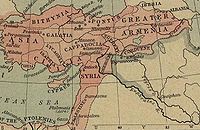
The Kingdom of Corduene
Corduene
Corduene was an ancient region located in northern Mesopotamia and modern day Kurdish inhabited south east Turkey. It was a province of the Greater Armenia. It was referred to by the Greeks as Karduchia and by both the Greeks and Romans as Corduene...
, which emerged from the declining Seleucid Empire
Seleucid Empire
The Seleucid Empire was a Greek-Macedonian state that was created out of the eastern conquests of Alexander the Great. At the height of its power, it included central Anatolia, the Levant, Mesopotamia, Persia, today's Turkmenistan, Pamir and parts of Pakistan.The Seleucid Empire was a major centre...
, was located to the south and south-east of Lake Van
Lake Van
Lake Van is the largest lake in Turkey, located in the far east of the country in Van district. It is a saline and soda lake, receiving water from numerous small streams that descend from the surrounding mountains. Lake Van is one of the world's largest endorheic lakes . The original outlet from...
between Persia and Mesopotamia and ruled northern Mesopotamia and southeastern Anatolia
Anatolia
Anatolia is a geographic and historical term denoting the westernmost protrusion of Asia, comprising the majority of the Republic of Turkey...
from 189 BC to AD 384. At its zenith, the Roman Empire ruled large Kurdish-inhabited areas, particularly the western and northern Kurdish areas in the Middle East. Corduene became a vassal
Vassal
A vassal or feudatory is a person who has entered into a mutual obligation to a lord or monarch in the context of the feudal system in medieval Europe. The obligations often included military support and mutual protection, in exchange for certain privileges, usually including the grant of land held...
state of the Roman Republic
Roman Republic
The Roman Republic was the period of the ancient Roman civilization where the government operated as a republic. It began with the overthrow of the Roman monarchy, traditionally dated around 508 BC, and its replacement by a government headed by two consuls, elected annually by the citizens and...
in 66 BC and remained allied with the Romans until AD 384. Corduene was situated to the east of Tigranocerta, that is, to the east and south of present-day Diyarbakır
Diyarbakır
Diyarbakır is one of the largest cities in southeastern Turkey...
in south-eastern Turkey.
Some historians have correlated a connection between Corduene with the modern names of Kurds and Kurdistan;
T. A. Sinclair dismissed this identification as false, while a common association is asserted in the Columbia Encyclopedia
Columbia Encyclopedia
The Columbia Encyclopedia is a one-volume encyclopedia produced by Columbia University Press and sold by the Gale Group. First published in 1935, and continuing its important relationship with Columbia University, the encyclopedia underwent major revisions in 1950 and 1963; the current edition is...
.
Some of the ancient districts of Kurdistan and their corresponding modern names:
- Corduene or Gordyene (SiirtSiirt- External links :* * * *...
, BitlisBitlisBitlis is a town in eastern Turkey and the capital of Bitlis Province. The town is located at an elevation of 1,400 metres, 15 km from Lake Van, in the steep-sided valley of the Bitlis River, a tributary of the Tigris. The local economy is mainly based on agricultural products which include...
and ŞırnakSirnakŞırnak is a town in southeastern Turkey. It is the capital of Şırnak Province, a new province that split from the Hakkari province...
) - SopheneSopheneSophene , or ) was a province of the Armenian Kingdom and of the Roman Empire, located in the south-west of the kingdom. It currently lies in modern-day southeastern Turkey....
(Diyarbakır) - Zabdicene or Bezabde (Gozarto d'Qardu or Jazirat Ibn or CizreCizreCizre is a town and district of Şırnak Province in the Southeastern Anatolia Region of Turkey, located at the border to Syria, just to the north-west of the Turkish-Syrian-Iraqi tripoint....
) - Basenia (Bayazid)
- Moxoene (MuşMus-Computing:* Mus, a file extension used by Finale * MUS, the internal music format used in Doom -Three-letter acronyms:* Mitsubishi UFJ Securities * MUS, the NATO country code for Mauritius...
) - Nephercerta (Miyafarkin)
- Artemita (VanVan ProvinceVan Province is a province in eastern Turkey, between Lake Van and the Iranian border. It is 19,069 km2 in area and had a population of 1,035,418 at the end of 2010....
)
Late Antiquity
Late Antiquity is a periodization used by historians to describe the time of transition from Classical Antiquity to the Middle Ages, in both mainland Europe and the Mediterranean world. Precise boundaries for the period are a matter of debate, but noted historian of the period Peter Brown proposed...
, describing the stories of Christian saints of the Middle East, such as the Abdisho
Abdisho
Abdisho , a member of the Church of the East, was a deacon and martyr of the Christian church.He was imprisoned with Bishop Heliodorus of Bet Zabdai in Mesopotamia by order of Shapur II. Following the deaths of bishop Dausa and 275 companions at Masabadan, Abdisho, who survived, continued to preach...
. When the Sassanid Marzban
Marzban
Marzban were a class of margraves or military commanders in charge of border provinces of the Sassanid Empire of Persia between the 3rd and 7th centuries CE....
asked Mar Abdisho about his place of origin, he replied that according to his parents, they were originally from Hazza, a village in Assyria
Assyria
Assyria was a Semitic Akkadian kingdom, extant as a nation state from the mid–23rd century BC to 608 BC centred on the Upper Tigris river, in northern Mesopotamia , that came to rule regional empires a number of times through history. It was named for its original capital, the ancient city of Assur...
. However they were later driven out of Hazza by pagans
Paganism
Paganism is a blanket term, typically used to refer to non-Abrahamic, indigenous polytheistic religious traditions....
, and settled in Tamanon, which according to Abdisho was in the land of the Kurds. Tamanon lies just north of the modern Iraq-Turkey border, while Hazza is 12 km southwest of modern Irbil. In another passage in the same document, the region of the Khabur River
Khabur River
The Khabur River , , , ) is the largest perennial tributary to the Euphrates in Syrian territory. Although the Khabur originates in Turkey, the karstic springs around Ra's al-'Ayn are the river's main source of water. Several important wadis join the Khabur north of Al-Hasakah, together creating...
is also identified as land of the Kurds.
Medieval period
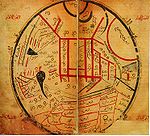
Shaddadid
The Shaddadids were a Kurdish dynasty who ruled in various parts of Armenia and Arran from 951-1174 AD. They were established in Dvin. Through their long tenure in Armenia, they often intermarried with the Bagratuni royal family of Armenia....
(951–1174) (in east Transcaucasia between the Kur
Kura River
Kura is a river, also known from the Greek as the Cyrus in the Caucasus Mountains. Starting in north-eastern Turkey, it flows through Turkey to Georgia, then to Azerbaijan, where it receives the Aras River as a right tributary, and enters the Caspian Sea...
and Araxes rivers) and the Rawadid
Rawadid
Rawadid , , was a Kurdish principality ruling Azerbaijan from the 10th to the early 11th centuries, centered around Tabriz and Maragheh. The Rawadid tribe was one of the Arab tribes who became Kurdish by culture through assimilation...
(955–1221) (centered in Tabriz
Tabriz
Tabriz is the fourth largest city and one of the historical capitals of Iran and the capital of East Azerbaijan Province. Situated at an altitude of 1,350 meters at the junction of the Quri River and Aji River, it was the second largest city in Iran until the late 1960s, one of its former...
and ruled all of Azarbaijan), in the East the Hasanwayhid
Hasanwayhid
Hasanawayhid or Hasanuyid was a Kurdish principality from 959 to 1015, centered at Dinawar . The principality ruled western Iran and upper Mesopotamia. The founder of the dynasty was Hasanwayh bin Husayn from the Kurdish tribe of Barzikani...
(959–1015) (in Zagros between Shahrizor and Khuzistan) and the Annazid
Annazid
The Annazid or Banu Annaz or Al-Anazis , were a Kurdish dynasty that ruled a territory on the present-day Iran-Iraq frontier that included Kermanshah, Ilam, Hulwan, Dinawar , Sharazour, Daquq, Daskara, Bandanijin, and No'maniya ...
(990–1116) (centered in Hulwan
Hulwan
Helwan , also spelled Hilwan or Hulwan or Holwan, is a city in Egypt on the bank of the Nile river, opposite the ruins of Memphis. Originally a southern suburb of Cairo, it served as the capital of the now defunct Helwan Governorate from April 2008 to April 2011, after which it was re-incorporated...
) and in the West the Marwanid
Marwanid
Marwanid, , was a Kurdish dynasty in Northern Mesopotamia and Armenia, centered around the city of Amed . Other cities under rule were Arzan, Mayyāfāriqīn , Hisn Kayfa , Khilāṭ, Manzikart, Arjish. The founder of the dynasty was a Kurdish shepherd, Abu Shujā Bādh bin Dustak...
(990–1096) in south of Diyarbakır
Diyarbakır
Diyarbakır is one of the largest cities in southeastern Turkey...
and north of Jazira
Al-Jazira, Mesopotamia
Upper Mesopotamia is the name used for the uplands and great outwash plain of northwestern Iraq and northeastern Syria and southeastern Turkey which is known by the traditional Arabic name of Al-Jazira , variously transliterated into Roman script as Djazirah, Djezirah and Jazirah...
.
Kurdistan in the Middle Ages
Middle Ages
The Middle Ages is a periodization of European history from the 5th century to the 15th century. The Middle Ages follows the fall of the Western Roman Empire in 476 and precedes the Early Modern Era. It is the middle period of a three-period division of Western history: Classic, Medieval and Modern...
was a collection of semi-independent and independent states called "emirate
Emirate
An emirate is a political territory that is ruled by a dynastic Muslim monarch styled emir.-Etymology:Etymologically emirate or amirate is the quality, dignity, office or territorial competence of any emir ....
s". It was nominally under indirect political or religious influence of Khalifs or Shahs. A comprehensive history of these states and their relationship with their neighbors is given in the text of "Sharafnama", written by Prince Sharaf al-Din Bitlisi in 1597. The emirates included Baban
Baban
Baban were a Kurdish principality and ruling family originating from Darishmana in the region of Pijder. The founder of the dynasty and its first ruler was Fakih Ahmed a descendent of the ancient house of Soran. He also had a brother named Khidder Ahmed who lived with him...
, Soran
Soran
m²Soran may refer to:Places*Soran Emirate, a Kurdish principality*Soran District, a region within the Kurdish Autonomous Region in northern Iraq*Soran, Iraq, the seat of the district government, adjacent to DiyanaPeople*Soran clan, Kurdish clan...
, Badinan
Badinan Emirate
Bahdinan or Badinan was one of the more powerful and enduring Kurdish principalities. It was founded by Baha-al-Din originally from Şemzînan area in Hakkari in sometime between 13th or 14th century CE. The capital of this emirate was Amadiya for a long time.It was centered in the town of Amadiya...
and Garmiyan in present-day Iraq; Bakran, Bohtan (or Botan) and Badlis
Badlis
Principality of Bitlis , was a Kurdish principality originated from the Rojaki tribal confederation. The Rojaki defeated the Georgian King David the Curopalate and conquered Bitlis and Sasun in the 10th century. The principality occasionally came under the rule of outsiders, such as Akkoyunlu and...
in Turkey, and Mukriyan
Mukriyan
Mukriyan, was a Kurdish emirate centered at Mahabad, ruling areas to the south and west of lake Urmia, since the end of 15th century until the middle of 19th century....
and Ardalan
Ardalan
Ardalan or was the name of a vassaldom in north-western Persia during Qajar period.Ardalan vassaldom was established in an area encompassing present day Iranian province of Kurdistan from medieval period up to mid 19th century. Ardalan is also the name of the ruling family of that vassaldom...
in Iran.
The earliest medieval attestation of the toponym Kurdistan is found in a 12th century Armenian
Armenian language
The Armenian language is an Indo-European language spoken by the Armenian people. It is the official language of the Republic of Armenia as well as in the region of Nagorno-Karabakh. The language is also widely spoken by Armenian communities in the Armenian diaspora...
historical text by Matteos Urhayeci
Matthew of Edessa
Matthew of Edessa was an Armenian historian in the 12th century from the city of Edessa . Matthew was the superior abbot of Karmir Vank' , near the town of Kessoun, east of Marash , the former seat of Baldwin of Boulogne...
. He described a battle near Amid
Diyarbakir
Diyarbakır is one of the largest cities in southeastern Turkey...
and Siverek
Siverek
Siverek is a town and district in the south-east of Turkey, in Şanlıurfa Province. Population 107,634 ; 247,000 .Siverek is in Şanlıurfa province but closer geographically to the large city of Diyarbakır...
in 1062 as to have taken place in Kurdistan. The second record occurs in the prayer from the colophon
Colophon
Colophon was a city in the region of Lydia in antiquity dating from about the turn of the first millennium-BC. It was likely one the oldest of the twelve Ionian League cities, between Lebedos and Ephesus and its ruins are in the eponymously named modern region of Ionia.The city's name comes from...
of an Armenian manuscript of the Gospels, written in 1200.
A later use of the term Kurdistan is found in Nuzhat-al-Qulub, written by Hamdollah Mostowfi
Hamdollah Mostowfi
Hamdollah Mostowfi was a Persian historian, geographer and epic poet.Mostowfi is the author of Nozhat ol-Gholub , Zafar-Nameh , and the Tarikh e Gozideh . His tomb is a structure with a blue turquoise conical dome, at Qazvin.-References and notes:...
in 1340.
Modern period
In the 16th century, after prolonged wars, Kurdish-inhabited areas were split between the Safavid and OttomanOttoman Empire
The Ottoman EmpireIt was usually referred to as the "Ottoman Empire", the "Turkish Empire", the "Ottoman Caliphate" or more commonly "Turkey" by its contemporaries...
empires. A major division of Kurdistan occurred in the aftermath of the Battle of Chaldiran
Battle of Chaldiran
The Battle of Chaldiran or Chaldoran occurred on 23 August 1514 and ended with a victory for the Ottoman Empire over the Safavid Empire of Persia . As a result, the Ottomans gained immediate control over eastern Anatolia and northern Iraq...
in 1514, and was formalized in the 1639 Treaty of Zuhab
Treaty of Zuhab
The Treaty of Zuhab was an accord signed between Safavid Empire and the Ottoman Empire on May 17, 1639. The accord ended the war that had begun in 1623 and was the last conflict in almost 150 years of intermittent wars between the two states over territorial disputes...
. Prior to World War I
World War I
World War I , which was predominantly called the World War or the Great War from its occurrence until 1939, and the First World War or World War I thereafter, was a major war centred in Europe that began on 28 July 1914 and lasted until 11 November 1918...
, most Kurds lived within the boundaries of the Ottoman Empire
Ottoman Empire
The Ottoman EmpireIt was usually referred to as the "Ottoman Empire", the "Turkish Empire", the "Ottoman Caliphate" or more commonly "Turkey" by its contemporaries...
in the province of Kurdistan
Kurdistan Province, Ottoman Empire
The Vilayet of Diyâr-ı Bekr was one of the Ottoman vilayets. The vilayet extended south from Palu on the Euphrates to Mardin and Nisibin on the edge of the Mesopotamian plain...
.. After the collapse of the Ottoman Empire, the Allies contrived to create several countries within its former boundaries – according to the never-ratified Treaty of Sèvres
Treaty of Sèvres
The Treaty of Sèvres was the peace treaty between the Ottoman Empire and Allies at the end of World War I. The Treaty of Versailles was signed with Germany before this treaty to annul the German concessions including the economic rights and enterprises. Also, France, Great Britain and Italy...
, Kurdistan, along with Armenia
Armenia
Armenia , officially the Republic of Armenia , is a landlocked mountainous country in the Caucasus region of Eurasia...
, were to be among them. However, the reconquest of these areas by the forces of Kemal Atatürk (and other pressing issues) caused the Allies to accept the renegotiated Treaty of Lausanne
Treaty of Lausanne
The Treaty of Lausanne was a peace treaty signed in Lausanne, Switzerland on 24 July 1923, that settled the Anatolian and East Thracian parts of the partitioning of the Ottoman Empire. The treaty of Lausanne was ratified by the Greek government on 11 February 1924, by the Turkish government on 31...
and the borders of the modern Republic of Turkey – leaving the Kurds without a self-ruled region. Other Kurdish areas were assigned to the new British and French mandated
League of Nations mandate
A League of Nations mandate was a legal status for certain territories transferred from the control of one country to another following World War I, or the legal instruments that contained the internationally agreed-upon terms for administering the territory on behalf of the League...
states of Iraq and Syria
French Mandate of Syria
Officially the French Mandate for Syria and the Lebanon was a League of Nations mandate founded after the First World War and the partitioning of the Ottoman Empire...
.
At the San Francisco Peace Conference of 1945, the Kurdish delegation proposed consideration of territory claimed by the Kurds, which encompassed an area extending from the Mediterranean shores near Adana
Adana
Adana is a city in southern Turkey and a major agricultural and commercial center. The city is situated on the Seyhan River, 30 kilometres inland from the Mediterranean, in south-central Anatolia...
to the shores of the Persian Gulf
Persian Gulf
The Persian Gulf, in Southwest Asia, is an extension of the Indian Ocean located between Iran and the Arabian Peninsula.The Persian Gulf was the focus of the 1980–1988 Iran-Iraq War, in which each side attacked the other's oil tankers...
near Bushehr
Bushehr
Bushehr Bushehr lies in a vast plain running along the coastal region on the Persian Gulf coast of southwestern Iran. It is the chief seaport of the country and the administrative centre of its province. Its location is about south of Tehran. The local climate is hot and humid.The city...
, and included the Lur
Lur
A lur is a long natural blowing horn without finger holes that is played by embouchure. Lurs can be straight or curved in various shapes. The purpose of the curves was to make long instruments easier to carry A lur is a long natural blowing horn without finger holes that is played by embouchure....
inhabited areas of southern Zagros.
At the end of the First Gulf War, the Allies established a safe haven in northern Iraq. Amid the withdrawal of Iraqi forces from three northern provinces, Iraqi Kurdistan
Iraqi Kurdistan
Iraqi Kurdistan or Kurdistan Region is an autonomous region of Iraq. It borders Iran to the east, Turkey to the north, Syria to the west and the rest of Iraq to the south. The regional capital is Arbil, known in Kurdish as Hewlêr...
emerged in 1992 as an autonomous entity inside Iraq with its own local government and parliament.
People
The Kurds are a people of Indo-European origin. They speak an Iranic language known as KurdishKurdish language
Kurdish is a dialect continuum spoken by the Kurds in western Asia. It is part of the Iranian branch of the Indo-Iranian group of Indo-European languages....
, and comprise the majority of the population of the region – however, included therein are Arab
Arab
Arab people, also known as Arabs , are a panethnicity primarily living in the Arab world, which is located in Western Asia and North Africa. They are identified as such on one or more of genealogical, linguistic, or cultural grounds, with tribal affiliations, and intra-tribal relationships playing...
, Armenian
Armenians
Armenian people or Armenians are a nation and ethnic group native to the Armenian Highland.The largest concentration is in Armenia having a nearly-homogeneous population with 97.9% or 3,145,354 being ethnic Armenian....
, Assyrian
Assyrian people
The Assyrian people are a distinct ethnic group whose origins lie in ancient Mesopotamia...
, Azeri, Jewish
Jews
The Jews , also known as the Jewish people, are a nation and ethnoreligious group originating in the Israelites or Hebrews of the Ancient Near East. The Jewish ethnicity, nationality, and religion are strongly interrelated, as Judaism is the traditional faith of the Jewish nation...
, Ossetian
Ossetians
The Ossetians are an Iranic ethnic group of the Caucasus Mountains, eponymous of the region known as Ossetia.They speak Ossetic, an Iranian language of the Eastern branch, with most also fluent in Russian as a second language....
, Persian
Persian people
The Persian people are part of the Iranian peoples who speak the modern Persian language and closely akin Iranian dialects and languages. The origin of the ethnic Iranian/Persian peoples are traced to the Ancient Iranian peoples, who were part of the ancient Indo-Iranians and themselves part of...
, and Turkic communities. Most inhabitants are Muslim, but adherents to other religions are present as well- including Yazidi
Yazidi
The Yazidi are members of a Kurdish religion with ancient Indo-Iranian roots. They are primarily a Kurdish-speaking people living in the Mosul region of northern Iraq, with additional communities in Transcaucasia, Armenia, Turkey, and Syria in decline since the 1990s – their members emigrating to...
s, the Yarsan, Alevi
Alevi
The Alevi are a religious and cultural community, primarily in Turkey, constituting probably more than 15 million people....
s, Christian
Christian
A Christian is a person who adheres to Christianity, an Abrahamic, monotheistic religion based on the life and teachings of Jesus of Nazareth as recorded in the Canonical gospels and the letters of the New Testament...
s, and Jews.
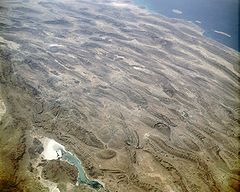
Geography
According to the Encyclopædia BritannicaEncyclopædia Britannica
The Encyclopædia Britannica , published by Encyclopædia Britannica, Inc., is a general knowledge English-language encyclopaedia that is available in print, as a DVD, and on the Internet. It is written and continuously updated by about 100 full-time editors and more than 4,000 expert...
, Kurdistan covers about 190,000 km², and its chief towns are Diyarbakır
Diyarbakır
Diyarbakır is one of the largest cities in southeastern Turkey...
(Amed), Bitlis
Bitlis
Bitlis is a town in eastern Turkey and the capital of Bitlis Province. The town is located at an elevation of 1,400 metres, 15 km from Lake Van, in the steep-sided valley of the Bitlis River, a tributary of the Tigris. The local economy is mainly based on agricultural products which include...
(Bedlîs) and Van
Van, Turkey
Van is a city in southeastern Turkey and the seat of the Kurdish-majority Van Province, and is located on the eastern shore of Lake Van. The city's official population in 2010 was 367,419, but many estimates put this as much higher with a 1996 estimate stating 500,000 and former Mayor Burhan...
(Wan) in Turkey, Arbil
Arbil
Arbil / Hewlêr is the fourth largest city in Iraq after Baghdad, Basra and Mosul...
(Hewlêr) and Slemani in Iraq, and Kermanshah
Kermanshah
Kermanshah is a city in and the capital of Kermanshah Province, Iran. At the 2006 census, its population was 784,602, in 198,117 families.The overwhelming majority of Kermanshahi people are Shi'a Muslims...
(Kirmanşan), Sanandaj
Sanandaj
Sanandaj , also Romanized as Senneh and Sinneh) is a city in and the capital of Kurdistan Province, Iran. At the 2006 census, its population was 311,446, in 81,380 families....
(Sine) and Mahabad
Mahabad
-Culture:Muhammad Qazi translated more than 70 important literary works into Persian. Other writers and poets have hailed from Mahabad in the 19th and 20th century including Wafaei , Hejar , Hêmin , Abdorrahamn Zabihi and Giw Mukriyani...
(Mehabad) in Iran. According to the Encyclopaedia of Islam
Encyclopaedia of Islam
The Encyclopaedia of Islam is an encyclopaedia of the academic discipline of Islamic studies. It embraces articles on distinguished Muslims of every age and land, on tribes and dynasties, on the crafts and sciences, on political and religious institutions, on the geography, ethnography, flora and...
, Kurdistan covers around 190,000 km² in Turkey, 125,000 km² in Iran, 65,000 km² in Iraq, and 12,000 km² in Syria, with a total area of approximately 392,000 km².
Iraqi Kurdistan
Iraqi Kurdistan
Iraqi Kurdistan or Kurdistan Region is an autonomous region of Iraq. It borders Iran to the east, Turkey to the north, Syria to the west and the rest of Iraq to the south. The regional capital is Arbil, known in Kurdish as Hewlêr...
is divided into six governorate
Governorate
A governorate is an administrative division of a country. It is headed by a governor. As English-speaking nations tend to call regions administered by governors either states, provinces, or colonies, the term governorate is often used in translation from non-English-speaking administrations.The...
s, three of which (and parts of others) are under the control of the Kurdistan Regional Government
Kurdistan Regional Government
The Kurdistan Regional Government , , is the official ruling body of the predominantly Kurds-populated Kurdistan Region in Northern Iraq...
. Iranian Kurdistan
Iranian Kurdistan
Iranian Kurdistan is an unofficial name for the parts of Iran inhabited by Kurds and has borders with Iraq and Turkey. It includes Kurdistan Province, Kermanshah Province, Ilam Province and parts of West Azerbaijan province....
encompasses Kurdistan Province
Kurdistan Province (Iran)
Kurdistan Province or Kordestan Province or Kurdestan Province is one of the 31 provinces of Iran, not to be confused with the greater geographical area of Iranian Kurdistan. The province of Kurdistan is 28,817 km² in area which encompasses just one-fourth of the Kurdish inhabited areas of Iran or...
and the greater parts of West Azerbaijan, Kermanshah
Kermanshah Province
Kermanshah Province is one of the 31 provinces of Iran. The province was known from 1969 to 1986 as Kermanshahan and from 1986 to 1995 as Bakhtaran.-Counties:...
, and Īlām
Ilam Province
Ilam Province is one of the 31 provinces of Iran. It is in the south-west of the country, bordering Iraq. Its provincial center is the city of Ilam. Covering an area of 19,086 square kilometers, the cities of the province are Ilam, Mehran, Dehloran, Dareh Shahr, Sarable, Eyvan, Abdanan and Arkwaz...
provinces. Syrian Kurdistan
Kurds in Syria
Kurds are the largest ethnic minority in Syria making up 10% of the country's population. Most of them are Sunni Muslims; there are also Yazidi and Yarsan Kurds in Syria and small numbers of Christians and Alawis. They face routine discrimination and harassment by the Syrian...
(Kurdish: Kurdistana Binxetê) is located primarily in northeastern Syria, and covers the greater part of the province of Al Hasakah. The major cities in this region are Al-Qamishli
Qamishli
Qamishli is a city in north eastern Syria on the border with Turkey, adjoining the Turkish city of Nusaybin, and close to Iraq. It is part of the Al-Hasakah Governorate, and is the administrative capital of the Al Qamishli District within the governorate....
(Kurdish: Qamişlû) and Al Hasakah
Al Hasakah
Al Hasakah is a governorate in the far north-east corner of Syria that has the Euphrates river running through it. It is distinguished by its fertile lands, plentiful water, picturesque nature, and more than one hundred archaeological sites.- Districts :...
(Kurdish: Hesaka).
Turkish Kurdistan
Turkish Kurdistan
Turkish Kurdistan is an unofficial name for the southeastern part of Turkey, which is inhabited predominantly by ethnic Kurds. The area covers between 190,000 to 230,000 km² , or nearly a third of Turkey...
encompasses a large area of south eastern Turkey and it is home to an estimated 15 to 20 million Kurds.
Subdivisions (Upper and Lower Kurdistan)
In A Dictionary of Scripture Geography (published 1846), John Miles describes Upper and Lower Kurdistan as following:The northern, northwestern and northeastern parts of Kurdistan are referred to as upper Kurdistan, and includes the areas from west of Amed to lake Urmia.
The lowlands of southern Kurdistan are called lower Kurdistan. The main cities in this area are Kirkuk and Arbil.
Climate
Much of the region is typified by an extreme continental climateContinental climate
Continental climate is a climate characterized by important annual variation in temperature due to the lack of significant bodies of water nearby...
– hot in the summer, bitterly cold in the winter. Despite this, much of the region is fertile and has historically exported grain and livestock. Precipitation varies between 200 and 400 mm a year in the plains, and between 700 and 3,000 mm a year on the high plateaux between mountain chains.
Forests
Kurdistan is a mountainous region with a cold climate receiving annual precipitationPrecipitation (meteorology)
In meteorology, precipitation In meteorology, precipitation In meteorology, precipitation (also known as one of the classes of hydrometeors, which are atmospheric water phenomena is any product of the condensation of atmospheric water vapor that falls under gravity. The main forms of precipitation...
adequate to sustain temperate forests and shrubs. Mountain chains harbor pastures and forested valleys, totaling approximately 16 million hectares (160,000 km²), including fir
Fir
Firs are a genus of 48–55 species of evergreen conifers in the family Pinaceae. They are found through much of North and Central America, Europe, Asia, and North Africa, occurring in mountains over most of the range...
s and other conifers, oak
Oak
An oak is a tree or shrub in the genus Quercus , of which about 600 species exist. "Oak" may also appear in the names of species in related genera, notably Lithocarpus...
s, platanus
Platanus
Platanus is a small genus of trees native to the Northern Hemisphere. They are the sole living members of the family Platanaceae....
, willow
Willow
Willows, sallows, and osiers form the genus Salix, around 400 species of deciduous trees and shrubs, found primarily on moist soils in cold and temperate regions of the Northern Hemisphere...
, and poplar
Poplar
Populus is a genus of 25–35 species of deciduous flowering plants in the family Salicaceae, native to most of the Northern Hemisphere. English names variously applied to different species include poplar , aspen, and cottonwood....
.
Mountains
Mountains are important geographical and symbolic features of Kurdish life, as evidenced by the saying "Kurds have no friends but the mountains". Included in the region are Mount JudiMount Judi
Mount Judi , according to very Early Christian and Islamic tradition , is the Noah's apobaterion or "Place of Descent", the location where the Ark came to rest after the Great Flood....
and Ararat
Mount Ararat
Mount Ararat is a snow-capped, dormant volcanic cone in Turkey. It has two peaks: Greater Ararat and Lesser Ararat .The Ararat massif is about in diameter...
(both prominent in Kurdish folklore), Zagros, Shingar, Qendil, Shaho, Gabar, Hamrin
Hamrin Mountains
The Hamrin Mountains are a small mountain ridge in northeast Iraq. The westernmost ripple of the greater Zagros mountains; the Hamrin mountains extend from the Diyala Province bordering Iran, northwest to the Tigris river; crossing northern Salah ad Din Province and southern Kirkuk Province.In...
, and Nisir.
Rivers
The plateaus and mountains of Kurdistan, which are characterized by heavy rain and snow fall, act as a water reservoir for the Near and Middle East, forming the source of the TigrisTigris
The Tigris River is the eastern member of the two great rivers that define Mesopotamia, the other being the Euphrates. The river flows south from the mountains of southeastern Turkey through Iraq.-Geography:...
and Euphrates
Euphrates
The Euphrates is the longest and one of the most historically important rivers of Western Asia. Together with the Tigris, it is one of the two defining rivers of Mesopotamia...
rivers, as well as other numerous smaller rivers, such as the Khabur
Khabur River
The Khabur River , , , ) is the largest perennial tributary to the Euphrates in Syrian territory. Although the Khabur originates in Turkey, the karstic springs around Ra's al-'Ayn are the river's main source of water. Several important wadis join the Khabur north of Al-Hasakah, together creating...
, Tharthar, Ceyhan, Araxes, Kura, Sefidrud, Karkha, and Hezil. Among rivers of historical importance to Kurds are the Murat
Murat River
The Murat River or Eastern Euphrates is the major source of the Euphrates. It was also called Arsanias in antiquity. The river originates near Mount Ararat north of Lake Van, in eastern Turkey, and flows westward for through mountainous area...
(Arasān) and Buhtān rivers in in Turkey; the Peshkhābur, the Little Zab
Little Zab
The Little Zab , , ) originates in Iran and joins the Tigris in Iraq. The river is approximately long and drains an area of c. . The river is fed by rainfall and snowmelt, resulting in a peak discharge in spring and low water in summer and early fall...
, the Great Zab
Great Zab
The Great Zab , , , ) is an approximately long river flowing through Turkey and Iraq. It rises in Turkey near Lake Van and joins the Tigris in Iraq south of Mosul. The drainage basin of the Great Zab covers approximately , and during its course, the rivers collects the water from a large number...
, and the Diyala
Diyala River
The Diyala River after Darban-e Khan Dam:Kurdish: Sirwan, سيروان, , Persian: سیروان دیاله, is a river and tributary of the Tigris that runs mainly through Eastern Iraq but also Western Iran. It covers a total distance of ....
in Iraq; and the Jaghatu (Zarrinarud), the Tātā'u (Siminarud), the Zohāb (Zahāb), and the Gāmāsiyāb in Iran.
These rivers, which flow from heights of three to four thousand meters above sea level, are significant both as water sources and for the production of energy. Iraq and Syria dammed many of these rivers and their tributaries, and Turkey has an extensive dam system under construction as part of the GAP (Southeast Anatolia Project)
Southeastern Anatolia Project
The Southeastern Anatolia Project is a multi-sector integrated regional development project based on the concept of sustainable development for the 9 million people living in the Southeastern Anatolia region of Turkey...
; though incomplete, the GAP already supplies a significant proportion of Turkey's electrical energy needs. Due to the extraordinary archaeological richness of the region, almost any dam impacts historic sites.
Lakes
Kurdistan extends to Lake UrmiaLake Urmia
Lake Urmia , ancient name: Lake Matiene) is a salt lake in northwestern Iran, near Iran's border with Turkey. The lake is between the Iranian provinces of East Azerbaijan and West Azerbaijan, west of the southern portion of the similarly shaped Caspian Sea...
in Iran on the east and to semi-contiguous Kurdish-inhabited regions to the west on the Mediterranean. The region includes Lake Van, the largest body of water in Turkey; the only lake in the Middle East with a larger surface is Lake Urmia – though not nearly as deep as Lake Van, which has a much larger volume. Urmia, Van, as well as Zarivar Lake west of Marivan
Marivan
Marivan also known as Qal‘eh-ye Marīvān - "Fort Marivan"; formerly, Dez Shahpur , also Romanized as Dezh Shāhpūr and Dezh Shapoor) is a city in and capital of Marivan County, Kurdistan Province, Iran. At the 2006 census, its population was 91,664, in 22,440 families...
, and Lake Dukan
Lake Dukan
Lake Dukan is the largest lake in Iraqi Kurdistan. It is located close to the city of Ranya, and is a reservoir on the Little Zab created by the construction of the Dukan Dam. The Dukan Dam was built between 1954 and 1959 as a multi-purpose dam to provide water storage, irrigation and...
near the city of Sulaymaniyah
Sulaymaniyah
Sulaymaniyah is a city in Iraqi Kurdistan, Iraq. It is the capital of Sulaymaniyah Governorate. Sulaymaniyah is surrounded by the Azmar Range, Goizja Range and the Qaiwan Range in the north east, Baranan Mountain in the south and the Tasluje Hills in the west. The city has a semi-arid climate with...
, are frequented by tourists.
Petroleum and mineral resources
KRGKurdistan Regional Government
The Kurdistan Regional Government , , is the official ruling body of the predominantly Kurds-populated Kurdistan Region in Northern Iraq...
-controlled parts of Iraqi Kurdistan are estimated to contain around 45 Goilbbl of oil, making it the sixth largest reserve in the world. Extraction of these reserves began in 2007. Iraq's former Baath regime controls the resources of Kirkuk and Mosul, cities claimed by the KRG to be included in its territory.
As of July 2007, the Kurdish government solicited foreign companies to invest in 40 new oil sites, with the hope of increasing regional oil production over the following 5 years by a factor of five, to about 1 Moilbbl/d. Gas and associated gas reserves are in excess of 100 cu ft (2.8316847E-08 km³).
Other mineral resources that exist in significant quantities in the region include coal
Coal
Coal is a combustible black or brownish-black sedimentary rock usually occurring in rock strata in layers or veins called coal beds or coal seams. The harder forms, such as anthracite coal, can be regarded as metamorphic rock because of later exposure to elevated temperature and pressure...
, copper
Copper
Copper is a chemical element with the symbol Cu and atomic number 29. It is a ductile metal with very high thermal and electrical conductivity. Pure copper is soft and malleable; an exposed surface has a reddish-orange tarnish...
, gold
Gold
Gold is a chemical element with the symbol Au and an atomic number of 79. Gold is a dense, soft, shiny, malleable and ductile metal. Pure gold has a bright yellow color and luster traditionally considered attractive, which it maintains without oxidizing in air or water. Chemically, gold is a...
, iron
Iron
Iron is a chemical element with the symbol Fe and atomic number 26. It is a metal in the first transition series. It is the most common element forming the planet Earth as a whole, forming much of Earth's outer and inner core. It is the fourth most common element in the Earth's crust...
, limestone
Limestone
Limestone is a sedimentary rock composed largely of the minerals calcite and aragonite, which are different crystal forms of calcium carbonate . Many limestones are composed from skeletal fragments of marine organisms such as coral or foraminifera....
(which is used to produce cement
Cement
In the most general sense of the word, a cement is a binder, a substance that sets and hardens independently, and can bind other materials together. The word "cement" traces to the Romans, who used the term opus caementicium to describe masonry resembling modern concrete that was made from crushed...
), marble
Marble
Marble is a metamorphic rock composed of recrystallized carbonate minerals, most commonly calcite or dolomite.Geologists use the term "marble" to refer to metamorphosed limestone; however stonemasons use the term more broadly to encompass unmetamorphosed limestone.Marble is commonly used for...
, and zinc
Zinc
Zinc , or spelter , is a metallic chemical element; it has the symbol Zn and atomic number 30. It is the first element in group 12 of the periodic table. Zinc is, in some respects, chemically similar to magnesium, because its ion is of similar size and its only common oxidation state is +2...
. The world's largest deposit of rock sulfur is located just southwest of Arbil
Arbil
Arbil / Hewlêr is the fourth largest city in Iraq after Baghdad, Basra and Mosul...
(Hewlêr).
Conflict and controversy
The incorporation into Turkey of the Kurdish-inhabited regions of eastern Anatolia was opposed by many Kurds, and has resulted in a long-running separatist conflict in which thousands of lives have been lost. The region saw several major Kurdish rebellions, including the Koçkiri RebellionKoçkiri Rebellion
The Koçgiri Rebellion or Koçkiri Rebellion was a Alevi uprising in 1920 during the Turkish War of Independence, in the overwhelmingly militant Dersim region...
of 1920 under the Ottomans, then successive insurrection under the Turkish state – including the 1924 Sheikh Said Rebellion
Sheikh Said rebellion
Sheikh Said Rebellion was a rebellion of a Kurdish clergy Sheikh Said and a group of former Kurdish Hamidieh soldiers in 1925.-Background:The Azadî was dominated by officers from the former Hamidiye, a Kurdish tribal militia established...
, the Republic of Ararat
Republic of Ararat
The Republic of Ararat or Kurdish Republic of Ararat was a self-proclaimed Kurdish state. It was located in the northeasten part of modern Turkey, being centered on Karaköse Province...
in 1927, and the 1937 Dersim Rebellion
Dersim Rebellion
The Dersim rebellion was an uprising against the Turkish government in the Dersim region of eastern Turkey, which includes Tunceli Province, Elazığ Province, and Bingöl Province...
. All were forcefully put down by the authorities. The region was declared a closed military area from which foreigners were banned between 1925 and 1965.
In 1983, the Kurdish provinces were placed under martial law
Martial law
Martial law is the imposition of military rule by military authorities over designated regions on an emergency basis— only temporary—when the civilian government or civilian authorities fail to function effectively , when there are extensive riots and protests, or when the disobedience of the law...
in response to the activities of the militant separatist and terrorist organization, Kurdistan Workers Party
Kurdistan Workers Party
The Kurdistan Workers' Party , commonly known as PKK, also known as KGK and formerly known as KADEK or KONGRA-GEL , is a Kurdish organization which has since 1984 been fighting an armed struggle against the Turkish state for an autonomous Kurdistan and greater cultural and political rights...
(PKK). A guerrilla war took place through the 1980s and 1990s in which much of the countryside was evacuated, thousands of Kurdish-populated villages were destroyed, and numerous extrajudicial summary executions were carried out by both sides. More than 37,000 people were killed in the violence and hundreds of thousands more were forced to leave their homes. Volatility in the region eased following the capture of PKK leader Abdullah Öcalan
Abdullah Öcalan
Abdullah Öcalan , Kurdish founder of the terrorist organization called Kurdistan Workers' Party in 1978.Öcalan was captured in Nairobi and extradited to the Turkish security force, and sentenced to death under Article 125 of the Turkish Penal Code, which concerns the formation of armed gangs...
in 1999, and, with the encouragement of European Union
European Union
The European Union is an economic and political union of 27 independent member states which are located primarily in Europe. The EU traces its origins from the European Coal and Steel Community and the European Economic Community , formed by six countries in 1958...
, the adoption of tolerance policies toward Kurdish cultural activities by the Turkish state. After 2004, political violence increased, and the Turkish-Iraqi border region remains tense.
See also
- Kurdistan Okrug
- Kurdistan Regional GovernmentKurdistan Regional GovernmentThe Kurdistan Regional Government , , is the official ruling body of the predominantly Kurds-populated Kurdistan Region in Northern Iraq...
- Turkish KurdistanTurkish KurdistanTurkish Kurdistan is an unofficial name for the southeastern part of Turkey, which is inhabited predominantly by ethnic Kurds. The area covers between 190,000 to 230,000 km² , or nearly a third of Turkey...
- Iranian KurdistanIranian KurdistanIranian Kurdistan is an unofficial name for the parts of Iran inhabited by Kurds and has borders with Iraq and Turkey. It includes Kurdistan Province, Kermanshah Province, Ilam Province and parts of West Azerbaijan province....
- Iraqi KurdistanIraqi KurdistanIraqi Kurdistan or Kurdistan Region is an autonomous region of Iraq. It borders Iran to the east, Turkey to the north, Syria to the west and the rest of Iraq to the south. The regional capital is Arbil, known in Kurdish as Hewlêr...
- Kurds in SyriaKurds in SyriaKurds are the largest ethnic minority in Syria making up 10% of the country's population. Most of them are Sunni Muslims; there are also Yazidi and Yarsan Kurds in Syria and small numbers of Christians and Alawis. They face routine discrimination and harassment by the Syrian...
- List of Kurdish dynasties and countries
External links
- Kurdistan Regional Government (KRG), Northern Iraq.
- The Kurdish Institute of Paris Provides news, bulletins, articles and conference information on the situation in Kurdistan.
- Official Investment Website of Kurdistan
- Troubled Times—A Brief History Of Kurdistan
- A dozen maps of Kurdistan by GlobalSecurity.org
- Calls for freedom make the jigsaw of Europe more complicated than ever (Kurdistan in 2010s)http://www.timesonline.co.uk/article/0,,3-2207383,00.htmlhttp://www.timesonline.co.uk/article/0,,3-2207484,00.html
-->