

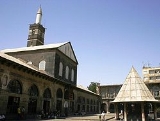
Diyarbakir

Encyclopedia
Diyarbakır is one of the largest cities
in southeastern Turkey
. Situated on the banks of the River Tigris
, it is the administrative capital of the Diyarbakır Province
and with a population of about 843,460 it is the second largest city in Turkey's South-eastern Anatolia region, after Gaziantep
. Within Turkey
, Diyarbakır is famed for its culture, folklore, and watermelons. The population of Diyarbakır is made up predominantly of Kurdish people.
period, and the same name was used in other contemporary Assyriac and Arabic works. The Romans and Byzantines called the city Amida
. Among the Artukid and Akkoyunlu it was known as "Black Amid" (Kara Amid) for the dark color of its walls, while in the Zafername, or eulogies in praise of military victories, it is called "Black Fortress" (Kara Kale). In the Book of Dede Korkut
and some other Turkish works it appears as Kara Hamid.
occupied this region, which became known as became known as the Diyar-ı Bekir (landholding
s of the Bekr tribe). In 1937, Atatürk had the city renamed Diyarbakır, which remains its current name.
Patriarch and thus an original Assyrian/Syriac
stronghold that produced many famous Assyrian theologians and Patriarchs. Some of them found their final resting place in St. Mary Church
. There are many relics in the Church, such as the bones of the apostle Thomas and St. Jacob of Sarug (d. 521).
The city was called Amida when the region was under the rule of the Roman
(from 66 BC) and the succeeding Byzantine Empire
s.
From 189 BC to 384 AD, the area to the east and south of present-day Diyarbakır, was ruled by a kingdom known as Corduene
.
In 359, Shapur II of Persia captured Amida
after a siege of 73 days. The Roman soldiers and a large part of the population of the town were massacred by the Persians. The siege is vividly described by the Roman historian Ammianus Marcellinus
who was an eyewitness of the event and survived the massacre by escaping from the town.
Armenian historians at one time hypothesized that Diyarbakır was the site of the ancient Armenian city of Tigranakert
, and by the 19th century the Armenian inhabitants were referring to the city as Dikranagerd. Scholarly research has shown that while the ancient Armenian city
was close by, it was not in the same place. The real location of Dikranagerd remains the subject of debate, but Armenians who trace their ancestry to Diyarbakır continue to refer to themselves as "Dikranagerdtsi" (native of Dikranagerd.) The "Dikranagerdtsis" or Armenians of Diyarbakır were noted for having one of the most unusual dialects of Armenian
, one difficult for a speaker of standard Armenian to understand.
the city was captured by the Arab
armies of Islam
and it remained in Arab hands until the Kurdish dynasty of Marwanid
ruled the area during the 10th and 11th centuries. After the Battle of Manzikert
in 1071, the city came under the rule of the Mardin
branch of Oghuz Turks
and then the Anatolian beylik of Artuqids (circa 1100–1250 in effective terms, although almost a century longer nominally). The whole area was then disputed between the Ilkhanate
and Ayyubid dynasties for a century, after which it was taken over by the rising Turkmen
states of Kara Koyunlu
(the Black Sheep) first and Ak Koyunlu
(the White Sheep). It was also ruled by Sultanate of Rûm
between 1241-1259.
 The city became part of the Ottoman Empire
during Sultan Süleyman I's campaign of Irakeyn (the two Iraqs, e.g. Arabian and Persian) in 1534. The Ottoman eyalet
of Diyarbakır corresponded to Turkey's southeastern provinces today, a rectangular area between the Lake Urmia
to Palu and from the southern shores of Lake Van
to Cizre
and the beginnings of the Syrian desert
, although its borders saw some changes over time. The city was an important military base for controlling this region and at the same time a thriving city noted for its craftsmen, producing glass and metalwork. For example the doors of Mevlana's tomb in Konya
were made in Diyarbakır, as were the gold and silver decorated doors of the tomb of Imam-i Azam in Baghdad
.
In the 19th century, Diyarbakır prison gained infamy throughout the Ottoman Empire as a site where political prisoners from the enslaved Balkan ethnic groups were sent to serve harsh sentences for speaking or fighting for national freedom.
and Assyrian population, who comprised almost a third of the city's population. However, almost all were killed. Few Assyrians
and Armenians
remain today. The holder of the Chaldean Catholic Archeparchy of Diyarbakir
is currently living in Istanbul.
In the three decades following the establishment of the Turkish Republic in 1923, Diyarbakır became the object of Turkish-nationalist policies against Kurds, as a result of which Kurdish elites were destroyed and many Kurds deported to western Turkey.
The 41-year-old American-Turkish Pirinçlik Air Force Base near Diyarbakır, known as NATO's frontier post for monitoring the former Soviet Union and the Middle East, closed on 30 September 1997. This closure was the result of the general drawdown of US bases in Europe and the improvement in space surveillance technology. The base housed sensitive electronic intelligence-gathering systems that monitored the Middle East, the Caucasus and Russia.
and Iraq
to the south. The highest recorded temperature was 44.8°C (112.64°F) on 28 August 1998. Winters are cold and wet and with frosty nights. Snowfall is quite common between the months of December and March, snowing for a week or two. The lowest recorded temperature was -23.4°C (-10.12°F) on 30 December 2006.
slums to the west.
After the cessation of hostilities between the Kurdistan Workers' Party
(PKK) and the Turkish army, a large degree of normality returned to the city, with the Turkish government declaring an end to the 15-year period of emergency rule on 30 November 2002. In August 2005, the Kurdish mayor Osman Baydemir
presented the Turkish Prime Minister Tayyip Erdoğan with the following complaints:
According to a November 2006 survey by the Sur Municipality, one of Diyarbakır's metropolitan municipalities, 72% of the inhabitants of the municipality use Kurdish
most often in their daily speech, followed by Turkish
, and 69% are illiterate in their most widely used vernacular.
(pipe) are a part of weddings and celebrations in the area.
, sumac
and coriander
; rice, bulgur
and butter.
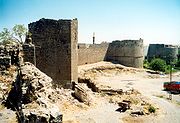 Diyarbakır is surrounded by an almost intact, dramatic set of high walls of black basalt forming a 5.5 km (3.4 mi) circle around the old city. There are four gates into the old city and 82 watch-towers on the walls, which were built in antiquity, restored and extended by the Roman emperor Constantius in 349. In addition, the walls of Diyarbakir in the world after the Great Wall of China is the second largest city walls.
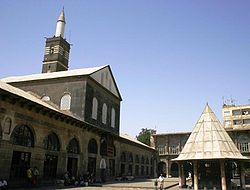
Diyarbakır boasts numerous medieval mosques and madrassahs including:
Famous churches include:
Museums include:
City
A city is a relatively large and permanent settlement. Although there is no agreement on how a city is distinguished from a town within general English language meanings, many cities have a particular administrative, legal, or historical status based on local law.For example, in the U.S...
in southeastern Turkey
Turkey
Turkey , known officially as the Republic of Turkey , is a Eurasian country located in Western Asia and in East Thrace in Southeastern Europe...
. Situated on the banks of the River Tigris
Tigris
The Tigris River is the eastern member of the two great rivers that define Mesopotamia, the other being the Euphrates. The river flows south from the mountains of southeastern Turkey through Iraq.-Geography:...
, it is the administrative capital of the Diyarbakır Province
Diyarbakir Province
Diyarbakır Province is a province in eastern Turkey. The province covers an area of 15,355 km² and the population is 1,528,958. The provincial capital is Diyarbakir...
and with a population of about 843,460 it is the second largest city in Turkey's South-eastern Anatolia region, after Gaziantep
Gaziantep
Gaziantep , Ottoman Turkish: Ayintab) previously and still informally called Antep; ʻayn tāb is a city in southeast Turkey and amongst the oldest continually inhabited cities in the world. The city is located 185 kilometres northeast of Adana and 127 kilometres by road north of Aleppo, Syria...
. Within Turkey
Turkey
Turkey , known officially as the Republic of Turkey , is a Eurasian country located in Western Asia and in East Thrace in Southeastern Europe...
, Diyarbakır is famed for its culture, folklore, and watermelons. The population of Diyarbakır is made up predominantly of Kurdish people.
Etymology
The name of the city is inscribed as Amid on the sheath of a sword from the AssyrianAssyrian
-In antiquity:*ancient Assyria**the Old Assyrian period **the Middle Assyrian period **the Neo-Assyrian period *Either of two provinces of the Persian Empire:**Achaemenid Assyria...
period, and the same name was used in other contemporary Assyriac and Arabic works. The Romans and Byzantines called the city Amida
Amida (Roman city)
Amida was an ancient city located where modern Diyarbakır, Turkey. The Roman writers Ammianus Marcellinus and Procopius consider it a city of Mesopotamia, but it may be more properly viewed as belonging to Armenia Major....
. Among the Artukid and Akkoyunlu it was known as "Black Amid" (Kara Amid) for the dark color of its walls, while in the Zafername, or eulogies in praise of military victories, it is called "Black Fortress" (Kara Kale). In the Book of Dede Korkut
Book of Dede Korkut
The Book of Dede Korkut, also spelled as Dada Gorgud, Dede Qorqut or Korkut-ata , is the most famous epic stories of the Oghuz Turks The stories carry morals and values significant to the social lifestyle of the nomadic Turks and their pre-Islamic beliefs...
and some other Turkish works it appears as Kara Hamid.
Origin of the current name
Following the Arab conquests in the 7th century, the Arab Bekr tribeBanu Bakr
Banu Bakr ibn Wa'il or Banu Bakr, son of Wa'il were an Arabian tribe belonging to the large Rabi'ah branch of Adnanite tribes, which also included 'Anizzah, Taghlib, and Bani Hanifa. The tribe is reputed to have engaged in a 40-year war before Islam with its cousins from Taghlib, known as the War...
occupied this region, which became known as became known as the Diyar-ı Bekir (landholding
Real estate
In general use, esp. North American, 'real estate' is taken to mean "Property consisting of land and the buildings on it, along with its natural resources such as crops, minerals, or water; immovable property of this nature; an interest vested in this; an item of real property; buildings or...
s of the Bekr tribe). In 1937, Atatürk had the city renamed Diyarbakır, which remains its current name.
Antiquity
Amid(a) was the capital of the Aramean kingdom Bet-Zamani from the 13th century B.C. onwards, and later part of the Neo Assyrian Empire. Amid is the name used in the Syriac sources, which also testifies to the fact that it once was the seat of the Church of the EastChurch of the East
The Church of the East tāʾ d-Maḏnḥāʾ), also known as the Nestorian Church, is a Christian church, part of the Syriac tradition of Eastern Christianity. Originally the church of the Persian Sassanid Empire, it quickly spread widely through Asia...
Patriarch and thus an original Assyrian/Syriac
Assyrian people
The Assyrian people are a distinct ethnic group whose origins lie in ancient Mesopotamia...
stronghold that produced many famous Assyrian theologians and Patriarchs. Some of them found their final resting place in St. Mary Church
St. Mary Church, Diyarbakir
St. Mary Church , is a Syriac Orthodox church in Diyarbakir.When Diyarbakir was known by its Syriac name Amid, it was the seat of the Church of the East Patriarch and thus an original Assyrian/Syriac stronghold that produced many famous Assyrian theologians and Patriarchs. Some of them found their...
. There are many relics in the Church, such as the bones of the apostle Thomas and St. Jacob of Sarug (d. 521).
The city was called Amida when the region was under the rule of the Roman
Roman Empire
The Roman Empire was the post-Republican period of the ancient Roman civilization, characterised by an autocratic form of government and large territorial holdings in Europe and around the Mediterranean....
(from 66 BC) and the succeeding Byzantine Empire
Byzantine Empire
The Byzantine Empire was the Eastern Roman Empire during the periods of Late Antiquity and the Middle Ages, centred on the capital of Constantinople. Known simply as the Roman Empire or Romania to its inhabitants and neighbours, the Empire was the direct continuation of the Ancient Roman State...
s.
From 189 BC to 384 AD, the area to the east and south of present-day Diyarbakır, was ruled by a kingdom known as Corduene
Corduene
Corduene was an ancient region located in northern Mesopotamia and modern day Kurdish inhabited south east Turkey. It was a province of the Greater Armenia. It was referred to by the Greeks as Karduchia and by both the Greeks and Romans as Corduene...
.
In 359, Shapur II of Persia captured Amida
Siege of Amida
The Siege of Amida took place when the Sassanids under King Shapur II besieged the Roman city of Amida in 359.In this battle Ammianus Marcellinus, a historian of Greek origin from Antioch, was a Roman army officer; he described the siege in his work .- Background :When Shapur II took control of the...
after a siege of 73 days. The Roman soldiers and a large part of the population of the town were massacred by the Persians. The siege is vividly described by the Roman historian Ammianus Marcellinus
Ammianus Marcellinus
Ammianus Marcellinus was a fourth-century Roman historian. He wrote the penultimate major historical account surviving from Antiquity...
who was an eyewitness of the event and survived the massacre by escaping from the town.
Armenian historians at one time hypothesized that Diyarbakır was the site of the ancient Armenian city of Tigranakert
Tigranakert
Tigranakert was a city possibly located near present-day Silvan, Turkey, east of Diyarbakır. It was founded by the Armenian Emperor Tigranes the Great in the 1st century BC. Tigranakert was founded as the new capital of the Armenian Empire in order to be in a more central position within the...
, and by the 19th century the Armenian inhabitants were referring to the city as Dikranagerd. Scholarly research has shown that while the ancient Armenian city
City
A city is a relatively large and permanent settlement. Although there is no agreement on how a city is distinguished from a town within general English language meanings, many cities have a particular administrative, legal, or historical status based on local law.For example, in the U.S...
was close by, it was not in the same place. The real location of Dikranagerd remains the subject of debate, but Armenians who trace their ancestry to Diyarbakır continue to refer to themselves as "Dikranagerdtsi" (native of Dikranagerd.) The "Dikranagerdtsis" or Armenians of Diyarbakır were noted for having one of the most unusual dialects of Armenian
Armenian language
The Armenian language is an Indo-European language spoken by the Armenian people. It is the official language of the Republic of Armenia as well as in the region of Nagorno-Karabakh. The language is also widely spoken by Armenian communities in the Armenian diaspora...
, one difficult for a speaker of standard Armenian to understand.
The Middle Ages
In 639639
Year 639 was a common year starting on Friday of the Julian calendar. The denomination 639 for this year has been used since the early medieval period, when the Anno Domini calendar era became the prevalent method in Europe for naming years.- Europe :* Clovis II succeeds Dagobert I as king of the...
the city was captured by the Arab
Arab
Arab people, also known as Arabs , are a panethnicity primarily living in the Arab world, which is located in Western Asia and North Africa. They are identified as such on one or more of genealogical, linguistic, or cultural grounds, with tribal affiliations, and intra-tribal relationships playing...
armies of Islam
Islam
Islam . The most common are and . : Arabic pronunciation varies regionally. The first vowel ranges from ~~. The second vowel ranges from ~~~...
and it remained in Arab hands until the Kurdish dynasty of Marwanid
Marwanid
Marwanid, , was a Kurdish dynasty in Northern Mesopotamia and Armenia, centered around the city of Amed . Other cities under rule were Arzan, Mayyāfāriqīn , Hisn Kayfa , Khilāṭ, Manzikart, Arjish. The founder of the dynasty was a Kurdish shepherd, Abu Shujā Bādh bin Dustak...
ruled the area during the 10th and 11th centuries. After the Battle of Manzikert
Battle of Manzikert
The Battle of Manzikert , was fought between the Byzantine Empire and Seljuq Turks led by Alp Arslan on August 26, 1071 near Manzikert...
in 1071, the city came under the rule of the Mardin
Mardin
Mardin is a city in southeastern Turkey. The capital of Mardin Province, it is known for its Arabic-like architecture, and for its strategic location on a rocky mountain overlooking the plains of northern Syria.-History:...
branch of Oghuz Turks
Oghuz Turks
The Turkomen also known as Oghuz Turks were a historical Turkic tribal confederation in Central Asia during the early medieval Turkic expansion....
and then the Anatolian beylik of Artuqids (circa 1100–1250 in effective terms, although almost a century longer nominally). The whole area was then disputed between the Ilkhanate
Ilkhanate
The Ilkhanate, also spelled Il-khanate , was a Mongol khanate established in Azerbaijan and Persia in the 13th century, considered a part of the Mongol Empire...
and Ayyubid dynasties for a century, after which it was taken over by the rising Turkmen
Turkmen people
The Turkmen are a Turkic people located primarily in the Central Asian states of Turkmenistan, Afghanistan, and northeastern Iran. They speak the Turkmen language, which is classified as a part of the Western Oghuz branch of the Turkic languages family together with Turkish, Azerbaijani, Qashqai,...
states of Kara Koyunlu
Kara Koyunlu
The Kara Koyunlu or Qara Qoyunlu, also called the Black Sheep Turkomans , were a Shi'ite Oghuz Turkic tribal federation that ruled over the territory comprising the present-day Armenia, Azerbaijan, north-western Iran, eastern Turkey and Iraq from about 1375 to 1468.The Kara Koyunlu Turkomans at one...
(the Black Sheep) first and Ak Koyunlu
Ak Koyunlu
The Aq Qoyunlu or Ak Koyunlu, also called the White Sheep Turkomans , was an Sunni Oghuz Turkic tribal federation that ruled parts of present-day Eastern Turkey, Armenia, Azerbaijan, northern Iraq, and Iran from 1378 to 1508.-History:According to chronicles from the Byzantine Empire, the Aq Qoyunlu...
(the White Sheep). It was also ruled by Sultanate of Rûm
Sultanate of Rûm
The Sultanate of Rum , also known as the Anatolian Seljuk State , was a Turkic state centered in in Anatolia, with capitals first at İznik and then at Konya. Since the court of the sultanate was highly mobile, cities like Kayseri and Sivas also functioned at times as capitals...
between 1241-1259.
The Ottoman Empire
Ottoman Empire
The Ottoman EmpireIt was usually referred to as the "Ottoman Empire", the "Turkish Empire", the "Ottoman Caliphate" or more commonly "Turkey" by its contemporaries...
during Sultan Süleyman I's campaign of Irakeyn (the two Iraqs, e.g. Arabian and Persian) in 1534. The Ottoman eyalet
Eyalet
Eyalets were a former primary administrative division of the Ottoman Empire. The term is sometimes translated province or government. Depending on the rank of their commander, they are also sometimes known as pashaliks, beylerbeyliks, and kapudanliks.From 1453 to the beginning of the nineteenth...
of Diyarbakır corresponded to Turkey's southeastern provinces today, a rectangular area between the Lake Urmia
Lake Urmia
Lake Urmia , ancient name: Lake Matiene) is a salt lake in northwestern Iran, near Iran's border with Turkey. The lake is between the Iranian provinces of East Azerbaijan and West Azerbaijan, west of the southern portion of the similarly shaped Caspian Sea...
to Palu and from the southern shores of Lake Van
Lake Van
Lake Van is the largest lake in Turkey, located in the far east of the country in Van district. It is a saline and soda lake, receiving water from numerous small streams that descend from the surrounding mountains. Lake Van is one of the world's largest endorheic lakes . The original outlet from...
to Cizre
Cizre
Cizre is a town and district of Şırnak Province in the Southeastern Anatolia Region of Turkey, located at the border to Syria, just to the north-west of the Turkish-Syrian-Iraqi tripoint....
and the beginnings of the Syrian desert
Syrian Desert
The Syrian Desert , also known as the Syro-Arabian desert is a combination of steppe and true desert that is located in the northern Arabian Peninsula covering 200,000 square miles . also the desert is very rocky and flat...
, although its borders saw some changes over time. The city was an important military base for controlling this region and at the same time a thriving city noted for its craftsmen, producing glass and metalwork. For example the doors of Mevlana's tomb in Konya
Konya
Konya is a city in the Central Anatolia Region of Turkey. The metropolitan area in the entire Konya Province had a population of 1,036,027 as of 2010, making the city seventh most populous in Turkey.-Etymology:...
were made in Diyarbakır, as were the gold and silver decorated doors of the tomb of Imam-i Azam in Baghdad
Baghdad
Baghdad is the capital of Iraq, as well as the coterminous Baghdad Governorate. The population of Baghdad in 2011 is approximately 7,216,040...
.
In the 19th century, Diyarbakır prison gained infamy throughout the Ottoman Empire as a site where political prisoners from the enslaved Balkan ethnic groups were sent to serve harsh sentences for speaking or fighting for national freedom.
The 20th century
The 20th century was turbulent for Diyarbakir. Armenians killed there exceeded the city's Armenian population because it was a centre of deportation for all parts of the province. The massacre of Armenians in Diyarbakir was witnessed by Rafael De Nogales, who served as an officer in the Ottoman Army. At one time, Diyarbakır had a substantial ArmenianArmenians
Armenian people or Armenians are a nation and ethnic group native to the Armenian Highland.The largest concentration is in Armenia having a nearly-homogeneous population with 97.9% or 3,145,354 being ethnic Armenian....
and Assyrian population, who comprised almost a third of the city's population. However, almost all were killed. Few Assyrians
Assyrian people
The Assyrian people are a distinct ethnic group whose origins lie in ancient Mesopotamia...
and Armenians
Armenians
Armenian people or Armenians are a nation and ethnic group native to the Armenian Highland.The largest concentration is in Armenia having a nearly-homogeneous population with 97.9% or 3,145,354 being ethnic Armenian....
remain today. The holder of the Chaldean Catholic Archeparchy of Diyarbakir
Archeparchy of Diyarbakir
The Archeparchy of Diyarbakir is the only Chaldaean rite diocese in Turkey. It's a 1966 revival of the Chaldean Diocese of Amid, and the bishop lives in Beyoğlu, Istanbul.The bishop is a suffragan to the Patriarch of Babylon.-External links:...
is currently living in Istanbul.
In the three decades following the establishment of the Turkish Republic in 1923, Diyarbakır became the object of Turkish-nationalist policies against Kurds, as a result of which Kurdish elites were destroyed and many Kurds deported to western Turkey.
The 41-year-old American-Turkish Pirinçlik Air Force Base near Diyarbakır, known as NATO's frontier post for monitoring the former Soviet Union and the Middle East, closed on 30 September 1997. This closure was the result of the general drawdown of US bases in Europe and the improvement in space surveillance technology. The base housed sensitive electronic intelligence-gathering systems that monitored the Middle East, the Caucasus and Russia.
Climate
Diyarbakır has a semi-arid climate. Summer are very hot and very dry, due to its location on the Mesopotamian plain which is subject to hot winds from the deserts of SyriaSyria
Syria , officially the Syrian Arab Republic , is a country in Western Asia, bordering Lebanon and the Mediterranean Sea to the West, Turkey to the north, Iraq to the east, Jordan to the south, and Israel to the southwest....
and Iraq
Iraq
Iraq ; officially the Republic of Iraq is a country in Western Asia spanning most of the northwestern end of the Zagros mountain range, the eastern part of the Syrian Desert and the northern part of the Arabian Desert....
to the south. The highest recorded temperature was 44.8°C (112.64°F) on 28 August 1998. Winters are cold and wet and with frosty nights. Snowfall is quite common between the months of December and March, snowing for a week or two. The lowest recorded temperature was -23.4°C (-10.12°F) on 30 December 2006.
Diyarbakır today
During the recent conflict, the population of the city grew dramatically as villagers from remote areas where fighting was serious left or were forced to leave for the relative security of the city. Rural to urban movement has often been the first step in a migratory pattern that has taken large numbers of Kurds from the east to the west. Diyarbakır grew from 30,000 in the 1930s to 65,000 by 1956, to 140,000 by 1970, to 400,000 by 1990, and eventually swelled to about 1.5 million by 1997. Today the intricate warren of alleyways and old-fashioned tenement blocks that makes up the old city within and around the walls contrasts dramatically with the sprawling suburbs of modern apartment blocks and cheaply-built gecekonduGecekondu
Gecekondu is a Turkish word meaning a house put up quickly without proper permissions, a squatter's house, and by extension, a shanty or shack...
slums to the west.
After the cessation of hostilities between the Kurdistan Workers' Party
Kurdistan Workers' Party
The Kurdistan Workers' Party , commonly known as PKK, also known as KGK and formerly known as KADEK or KONGRA-GEL , is a Kurdish organization which has since 1984 been fighting an armed struggle against the Turkish state for an autonomous Kurdistan and greater cultural and political rights...
(PKK) and the Turkish army, a large degree of normality returned to the city, with the Turkish government declaring an end to the 15-year period of emergency rule on 30 November 2002. In August 2005, the Kurdish mayor Osman Baydemir
Osman Baydemir
Osman Baydemir is a Kurdish politician, lawyer and human rights activist in east Turkey. He is the current mayor of his home town of Diyarbakır and member of the Peace and Democracy Party .-Life and career:...
presented the Turkish Prime Minister Tayyip Erdoğan with the following complaints:
- A grant of 500,000 euros from the German Development Fund KFWKFWKFW may refer to:*Keith Fullerton Whitman , an American musician*KfW or Kreditanstalt für Wiederaufbau, a German public-sector financial institution...
to redesign the city's waste disposal system was refused by the State Planning Authority (DPT) of the Turkish government in Ankara, and then a 22 million project to renew the system was also prevented. - A grant of 350,000 euros for the rehabilitation of the Tigris valley, from the Turco-Spanish Economic and Financial Union, was declared unnecessary by the DPT in 2005.
- A dentistry project jointly agreed with and funded by South Korea and EAID (the Eurasian Institute of Dentistry) had to abandoned after the dentists were refused work permits.
- A five million euro project to build a tram system in the city was abandoned after the Turkish government refused to guarantee a 15-year loan from Deutsche BankDeutsche BankDeutsche Bank AG is a global financial service company with its headquarters in Frankfurt, Germany. It employs more than 100,000 people in over 70 countries, and has a large presence in Europe, the Americas, Asia Pacific and the emerging markets...
that the city had negotiated. - In the urban renewal project for 2005 presented to the EU commission 10 million euros were granted to Diyarbakır. However the State Planning Authority (DPT) of the Turkish government reallocated 4 million of this to other cities (GaziantepGaziantepGaziantep , Ottoman Turkish: Ayintab) previously and still informally called Antep; ʻayn tāb is a city in southeast Turkey and amongst the oldest continually inhabited cities in the world. The city is located 185 kilometres northeast of Adana and 127 kilometres by road north of Aleppo, Syria...
, ŞanlıurfaSanliurfaŞanlıurfa, , often simply known as Urfa in daily language , in ancient times Edessa, is a city with 482,323 inhabitants Şanlıurfa, , often simply known as Urfa in daily language (Syriac ܐܘܪܗܝ Urhoy,Armenian Ուռհա Owr'ha, Arabic الرها ar-Ruhā), in ancient times Edessa, is a city with 482,323...
and ErzurumErzurumErzurum is a city in Turkey. It is the largest city, the capital of Erzurum Province. The city is situated 1757 meters above sea level. Erzurum had a population of 361,235 in the 2000 census. .Erzurum, known as "The Rock" in NATO code, served as NATO's southeastern-most air force post during the...
), which failing to present projects lost this money. - In another instance a 30 million euro loan from the EU was prevented by the DPT.
According to a November 2006 survey by the Sur Municipality, one of Diyarbakır's metropolitan municipalities, 72% of the inhabitants of the municipality use Kurdish
Kurdish language
Kurdish is a dialect continuum spoken by the Kurds in western Asia. It is part of the Iranian branch of the Indo-Iranian group of Indo-European languages....
most often in their daily speech, followed by Turkish
Turkish language
Turkish is a language spoken as a native language by over 83 million people worldwide, making it the most commonly spoken of the Turkic languages. Its speakers are located predominantly in Turkey and Northern Cyprus with smaller groups in Iraq, Greece, Bulgaria, the Republic of Macedonia, Kosovo,...
, and 69% are illiterate in their most widely used vernacular.
Arts and culture
Some jewelry making and other craftwork continues today although the fame of the Diyarbakır's craftsmen has long passed. Folk dancing to the drum and zurnaZurna
The zurna , is a multinational outdoor wind instrument, usually accompanied by a davul in Anatolian folk music. The name is from Turkish zurna, itself derived from Persian سرنای surnāy, composed of sūr “banquet, feast” and nāy “reed, pipe”...
(pipe) are a part of weddings and celebrations in the area.
Cuisine
Diyarbakır is known for rich dishes of lamb (and lamb's liver, kidneys etc.); spices such as black pepperBlack pepper
Black pepper is a flowering vine in the family Piperaceae, cultivated for its fruit, which is usually dried and used as a spice and seasoning. The fruit, known as a peppercorn when dried, is approximately in diameter, dark red when fully mature, and, like all drupes, contains a single seed...
, sumac
Sumac
Sumac is any one of approximately 250 species of flowering plants in the genus Rhus and related genera, in the family Anacardiaceae. Sumacs grow in subtropical and temperate regions throughout the world, especially in Africa and North America....
and coriander
Coriander
Coriander is an annual herb in the family Apiaceae. Coriander is native to southern Europe and North Africa to southwestern Asia. It is a soft, hairless plant growing to tall. The leaves are variable in shape, broadly lobed at the base of the plant, and slender and feathery higher on the...
; rice, bulgur
Bulgur
Bulgur is a cereal food made from several different wheat species, most often from durum wheat. In the United States it is most often made from white wheat. Its use is most common in Middle Eastern cuisine, Iran, Turkey, Greece, Armenia and Bulgaria...
and butter.
Main sights
Diyarbakır boasts numerous medieval mosques and madrassahs including:
- Great Mosque of DiyarbakirGreat Mosque of DiyarbakırThe Great Mosque of Diyarbakır, alias the Ulu Mosque, located in Diyarbakır, Turkey, is the oldest and one of the most significant mosques in Anatolia...
built by the Seljuk Turkish Sultan Malik ShahMalik Shah IJalāl al-Dawlah Malik-shāh was born in 1055, succeeded Alp Arslan as the Seljuq Sultan in 1072, and reigned until his death in 1092....
in the 11th century. The mosque, one of the oldest in Turkey, is constructed in alternating bands of black basalt and white limestone (The same patterning is used in the 16th century Deliler Han Madrassah, which is now a hotel). The adjoining Mesudiye Medresesi was built at the same time as was another prayer-school in the city, Zinciriye Medresesi. - Beharampaşa Camii - an OttomanOttoman EmpireThe Ottoman EmpireIt was usually referred to as the "Ottoman Empire", the "Turkish Empire", the "Ottoman Caliphate" or more commonly "Turkey" by its contemporaries...
mosque built in 1572 by the governor of Diyarbakır, Behram PashaPashaPasha or pascha, formerly bashaw, was a high rank in the Ottoman Empire political system, typically granted to governors, generals and dignitaries. As an honorary title, Pasha, in one of its various ranks, is equivalent to the British title of Lord, and was also one of the highest titles in...
, noted for the well-constructed arches at the entrance. - Dört Ayaklı Minare (the four-footed minaret) - built by Kasim Khan of the Ak KoyunluAk KoyunluThe Aq Qoyunlu or Ak Koyunlu, also called the White Sheep Turkomans , was an Sunni Oghuz Turkic tribal federation that ruled parts of present-day Eastern Turkey, Armenia, Azerbaijan, northern Iraq, and Iran from 1378 to 1508.-History:According to chronicles from the Byzantine Empire, the Aq Qoyunlu...
. It is said that one who passes seven times between the four columns will have his wishes granted. - Fatihpaşa Camii - built in 1520 by Diyarbakır's first OttomanOttoman EmpireThe Ottoman EmpireIt was usually referred to as the "Ottoman Empire", the "Turkish Empire", the "Ottoman Caliphate" or more commonly "Turkey" by its contemporaries...
governor, Bıyıklı Mehmet Paşa ("the moustachioed Mehmet pasha"). The city's earliest Ottoman building, it is decorated with fine tilework. - Hazreti Süleyman Camii - 1155-1169 - Süleyman son of Halid Bin VelidKhalid ibn al-WalidKhālid ibn al-Walīd also known as Sayf Allāh al-Maslūl , was a companion of the Islamic prophet Muhammad. He is noted for his military tactics and prowess, commanding the forces of Medina and those of his immediate successors of the Rashidun Caliphate; Abu Bakr and Umar...
, who died capturing the city from the Arabs, is buried here along with his companions. - Hüsrevpaşa Camii - the mosque of the second Ottoman governor, 1512–1528. Originally the building was intended to be a school (medrese)
- İskender Paşa Camii - a mosque of an Ottoman governor, an attractive building in black and white stone, built in 1551.
- Melek Ahmet Camii a 16th century mosque noted for its tiled prayer-niche and for the double stairway up the minaret.
- Nebii Camii - an Ak KoyunluAk KoyunluThe Aq Qoyunlu or Ak Koyunlu, also called the White Sheep Turkomans , was an Sunni Oghuz Turkic tribal federation that ruled parts of present-day Eastern Turkey, Armenia, Azerbaijan, northern Iraq, and Iran from 1378 to 1508.-History:According to chronicles from the Byzantine Empire, the Aq Qoyunlu...
mosque, a single-domed stone construction from the 16th century. Nebi Camii means "the mosque of the prophet" and is so-named because of the number of inscriptions in honour of the prophet on its minaretMinaretA minaret مناره , sometimes مئذنه) is a distinctive architectural feature of Islamic mosques, generally a tall spire with an onion-shaped or conical crown, usually either free standing or taller than any associated support structure. The basic form of a minaret includes a base, shaft, and gallery....
. - Safa Camii - built in 1532 by the Ak KoyunluAk KoyunluThe Aq Qoyunlu or Ak Koyunlu, also called the White Sheep Turkomans , was an Sunni Oghuz Turkic tribal federation that ruled parts of present-day Eastern Turkey, Armenia, Azerbaijan, northern Iraq, and Iran from 1378 to 1508.-History:According to chronicles from the Byzantine Empire, the Aq Qoyunlu...
Turkmen tribe.
Famous churches include:
- St. Giragos Armenian ChurchSt. Giragos Armenian Church (Diyarbakir)St. Giragos is an Armenian Orthodox Church in Diyarbakir, which although out of use has recently been renovated in part as a sign of reconciliation with the Christian community. It will be reopened on 23rd October 2011....
- A disused and restored Armenian Orthodox church. - The Syriac Orthodox Church of Our LadySt. Mary Church, DiyarbakirSt. Mary Church , is a Syriac Orthodox church in Diyarbakir.When Diyarbakir was known by its Syriac name Amid, it was the seat of the Church of the East Patriarch and thus an original Assyrian/Syriac stronghold that produced many famous Assyrian theologians and Patriarchs. Some of them found their...
( `Idto d-Yoldat Aloho), was first constructed as a pagan temple in the 1st century BCE. The current construction dates back to the 3rd century, has been restored many times, and is still in use as a place of worship today. There are a number of other churches in the city.
Museums include:
- The Archaeological Museum contains artifacts from the neolithicNeolithicThe Neolithic Age, Era, or Period, or New Stone Age, was a period in the development of human technology, beginning about 9500 BC in some parts of the Middle East, and later in other parts of the world. It is traditionally considered as the last part of the Stone Age...
period, through the Early Bronze Age, AssyriaAssyriaAssyria was a Semitic Akkadian kingdom, extant as a nation state from the mid–23rd century BC to 608 BC centred on the Upper Tigris river, in northern Mesopotamia , that came to rule regional empires a number of times through history. It was named for its original capital, the ancient city of Assur...
n, UrartuUrartuUrartu , corresponding to Ararat or Kingdom of Van was an Iron Age kingdom centered around Lake Van in the Armenian Highland....
, RomanAncient RomeAncient Rome was a thriving civilization that grew on the Italian Peninsula as early as the 8th century BC. Located along the Mediterranean Sea and centered on the city of Rome, it expanded to one of the largest empires in the ancient world....
, ByzantineByzantineByzantine usually refers to the Roman Empire during the Middle Ages.Byzantine may also refer to:* A citizen of the Byzantine Empire, or native Greek during the Middle Ages...
, Artuqids, Seljuk Turk, Aq Qoyunlu, and Ottoman EmpireOttoman EmpireThe Ottoman EmpireIt was usually referred to as the "Ottoman Empire", the "Turkish Empire", the "Ottoman Caliphate" or more commonly "Turkey" by its contemporaries...
periods. - Cahit Sıtkı TarancıCahit Sitki TaranciCahit Sıtkı Tarancı Turkish poet and author.-Biography:Tarancı belonged to a well known clan family of Diyarbekir like his father Pirinççizâde Bekir Sıdkı and his uncle Pirinççizâde Aziz Feyzi. Tarancı finished his secondary education in St...
Museum - the home of the late poet and a classic example of a traditional Diyarbakır home. - The birthplace of poet Ziya GökalpZiya GökalpZiya Gökalp was a Turkish sociologist, writer, poet, and political activist. In 1908, after the Young Turk revolution, he adopted the pen name Gökalp , which he retained for the rest of his life...
- preserved as a museum to his life and works.
Notable residents
- Abdülkadir AksuAbdülkadir AksuAbdülkadir Aksu , is a Turkish politician from Diyarbakır. He is married and has 2 children.-Ethnic Origin:According to some sources, he is Kurdish ; according to Üzeyir Tekin, he is of partial Albanian and Kurdish origin; and according to Hasan Celal Güzel, a friend of Aksu family, he is of...
: Former Turkish minister of interior affairs - Ahmed ArifAhmed ArifAhmed Arif was a Kurdish poet of Turkey.Ahmed Arif has studied philosophy at Ankara University. He has been arrested on political grounds in 1950 and spent time in prison till 1952. Published in various literary journals, his poems were widely read due to their original lyricism and imagery...
: Poet - Aziz YıldırımAziz YildirimAziz Yıldırım is currently the 52nd chairman of the Turkish multi sport club Fenerbahçe. He is currently serving his fifth two-year term since coming to helm. He has a degree in civil engineering....
: President of Fenerbahçe S.K. sports club - Cahit Sıtkı TarancıCahit Sitki TaranciCahit Sıtkı Tarancı Turkish poet and author.-Biography:Tarancı belonged to a well known clan family of Diyarbekir like his father Pirinççizâde Bekir Sıdkı and his uncle Pirinççizâde Aziz Feyzi. Tarancı finished his secondary education in St...
: Poet - Cihan HaspolatlıCihan HaspolatliCihan Haspolatlı, born on January 4, 1980 in Diyarbakır, Turkey is a Turkish football player in midfield and right back positions. He is currently playing for Büyükşehir Belediyespor.-Club career:Formerly, he played for Kocaelispor and Galatasaray...
: Galatasaray SKGalatasaray S.K. (football team)Galatasaray Anonim Şirketi is a Turkish football club, part of the Galatasaray S.K. multi-sport club of Istanbul. Galatasaray is a major sports club in Turkey, holding 17 Turkish Super League titles and the highest number of Turkish Cups....
footballer - Gazi YaşargilGazi YasargilMahmut Gazi Yaşargil is a Turkish medical scientist and neurosurgeon . He is the founder of microneurosurgery. Yaşargil treated epilepsy and brain tumors with instruments of his own design...
: medical scientist and neurosurgeon - Hesenê MetêHesenê MetêHesenê Metê, , is a prominent Kurdish writer, novelist and translator. He was born in Erxanî near Diyarbakır in south-eastern Turkey. He has been living in Sweden since 1980's. He has translated works by Pushkin and Dostoyevski into Kurdish....
: writer - Hikmet ÇetinHikmet ÇetinHikmet Çetin is a Turkish politician former minister of foreign affairs and was leader of the Republican People's Party for a short time. He served also as the Speaker of the Turkish Grand National Assembly....
: Former TurkishTurkeyTurkey , known officially as the Republic of Turkey , is a Eurasian country located in Western Asia and in East Thrace in Southeastern Europe...
foreign minister, former NATO Senior Civilian Representative in AfghanistanAfghanistanAfghanistan , officially the Islamic Republic of Afghanistan, is a landlocked country located in the centre of Asia, forming South Asia, Central Asia and the Middle East. With a population of about 29 million, it has an area of , making it the 42nd most populous and 41st largest nation in the world... - Leyla ZanaLeyla ZanaLeyla Zana , is a Kurdish politician, who was imprisoned for 10 years for her political actions which were claimed to be against the unity of Turkey. When she was a member of pro-Kurdish Democratic Society Party, she was banned from joining any political party for five years with the Constitutional...
: politician - Lokman PolatLokman PolatLokman Polat is a Turkish-Swedish writer of Kurdish origin. Before 1980, he was involved in publishing political commentaries and news. He has been arrested several times due to his activities in the field of Kurdish literature, and was sentenced to 10 years in prison in absentia...
: writer - Mehmed Emin BozarslanMehmed Emin BozarslanMehmed Emîn Bozarslan, , is a Kurdish writer. He was born in Diyarbakır in south-eastern Turkey. He moved to Sweden as political asylum seeker in 1978, and he has been living in Uppsala Sweden since then. The most famous of his early works was Alfabê which was the first ABC-Book for Kurdish...
: writer - Mehmet PolatMehmet PolatMehmet Polat is a Turkish footballer who currently plays for Mersin İdmanyurdu. He is a versatile central defender who can also play as rightback or defensive midfielder. He was capped four times for Turkey. He spent 2002-03 season on loan at Galatasaray. Once considered among one of the best...
: actor - Naum FaiqNaum FaiqNaum Elias Yaqub Palakh , better known as Naum Faiq was one of the founding fathers of modern Assyrian nationalism during the early 20th century. He was a teacher and writer throughout his life...
: writer - Osman BaydemirOsman BaydemirOsman Baydemir is a Kurdish politician, lawyer and human rights activist in east Turkey. He is the current mayor of his home town of Diyarbakır and member of the Peace and Democracy Party .-Life and career:...
: politician - Rojen BarnasRojen BarnasRojen Barnas is a contemporary Kurdish poet and writer. He was born in the Diyarbakır region in south-eastern Turkey. He became active in Kurdish politics in the 1970s. He has made his home in Sweden since 1981. He started publishing a Kurdish magazine called Tîrêj in the 70's. He has also...
: writer - Songül ÖdenSongül ÖdenSongül Öden , is a Turkish actress.-Early life:Born in Diyarbakır, Songül's father moved to Ankara where she spent her childhood. She graduated from the Turkish Academy of Theatrical Arts.-Career:...
: actress - Süleyman NazifSüleyman NazifSüleyman Nazif was an eminent Ottoman Turkish poet. He mastered Arabic, Persian, and French languages and worked as a civil servant during the reign of Sultan Abdulhamid II...
: Prominent Young Turk - Ziya GökalpZiya GökalpZiya Gökalp was a Turkish sociologist, writer, poet, and political activist. In 1908, after the Young Turk revolution, he adopted the pen name Gökalp , which he retained for the rest of his life...
: Prominent ideologue of Pan-TurkismPan-TurkismPan-Turkism is a nationalist movement that emerged in 1880s among the Turkic intellectuals of the Russian Empire, with the aim of cultural and political unification of all Turkic peoples.-Name:...
and TuranismTuranismTuranism, or Pan-Turanism, is a political movement for the union of all Turanian peoples. It implies not merely the unity of all Turkic peoples , but also the unification of a wider Turanid "race", also known as the controversial Uralo-Altaic "race," believed to include all peoples speaking... - Mıgırdiç MargosyanMigirdiç MargosyanMıgırdiç Margosyan is a Turkish author of Armenian descent.-Background:Margosyan was born on December 23, 1938 in the Hançepek district of Diyarbakır, Turkey...
: writer, some of his books: Gavur Mahallesi, Söyle Margos Nerelisen?, Biletimiz İstanbul'a Kesildi - Coşkun SabahCoskun SabahCoşkun Sabah is a Turkish musician. An ethnic Assyrian/Syriac, originally from Diyarbakir, he has composed more than one hundred Turkish songs and from the late 1980s to the early 1990s he attracted a large following, and became known as "the Frank Sinatra of Turkey".Some of his notable songs...
: musician - Sayf al-Din al-AmidiSayf al-Din al-AmidiSayf al-Din al-Amidi was an influential jurist of the Shafi`i school who worked to combine kalam with existing methods of jurisprudence. Al-Amidi was first instructed in fiqh and Hanbali law in his home of Amid in eastern Anatolia. At a young age al-Amidi traveled to Baghdad to join the learning...
: (d. 631/1233 in Damascus), Islamic theologian and legal scholar of the Shafi'i school.