

Snakebite

Encyclopedia
A snakebite is an injury caused by a bite from a snake
, often resulting in puncture wounds inflicted by the animal's fang
s and sometimes resulting in envenomation
. Although the majority of snake species are non-venomous and typically kill their prey with constriction
rather than venom
, venomous snakes can be found on every continent except Antarctica. Snakes often bite their prey as a method of hunting, but also for defensive purposes against predators. Since the physical appearance of snakes may differ, there is often no practical way to identify a species and professional medical attention should be sought.
The outcome of snake bites depends on numerous factors, including the species of snake, the area of the body bitten, the amount of venom injected, and the health conditions of the victim. Feelings of terror and panic are common after a snakebite and can produce a characteristic set of symptoms mediated by the autonomic nervous system
, such as a racing heart
and nausea
. Bites from non-venomous snakes can also cause injury, often due to lacerations caused by the snake's teeth, or from a resulting infection. A bite may also trigger an anaphylactic reaction, which is potentially fatal. First aid recommendations for bites depend on the snakes inhabiting the region, as effective treatments for bites inflicted by some species can be ineffective for others.
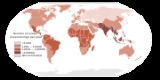
The number of fatalities attributed to snake bites varies greatly by geographical area. Although deaths are relatively rare in Australia
, Europe
and North America
, the morbidity and mortality associated with snake bites is a serious public health problem in many regions of the world, particularly in rural areas lacking medical facilities. Further, while South Asia
, Southeast Asia
, and sub-Saharan Africa
report the highest number of bites, there is also a high incidence in the Neotropics and other equatorial and subtropical regions. Each year tens of thousands of people die from snake bites, yet the risk of being bitten can be lowered with preventive measures, such as wearing protective footwear and avoiding areas known to be inhabited by dangerous snakes.
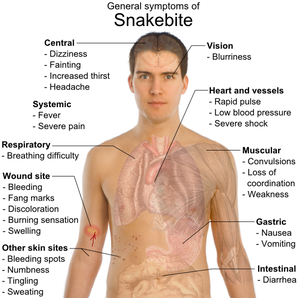
 The most common symptoms of all snakebites are overwhelming fear, panic, and emotional instability, which may cause symptoms such as nausea
and vomiting
, diarrhea
, vertigo
, fainting, tachycardia
, and cold, clammy skin. Television, literature, and folklore are in part responsible for the hype surrounding snakebites, and a victim may have unwarranted thoughts of imminent death.
Dry snakebites
, and those inflicted by a non-venomous species, can still cause severe injury to the victim. There are several reasons for this: a snakebite which is not treated properly may become infected (as is often reported by the victims of viper bites whose fangs are capable of inflicting deep puncture wounds), the bite may cause anaphylaxis
in certain people, and the snake's saliva and fangs may harbor many dangerous microbial contaminants, including Clostridium tetani
. If neglected, an infection may spread and potentially kill the victim.
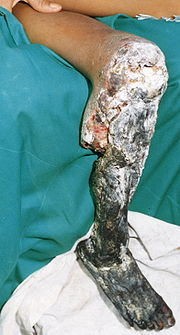
Most snakebites, whether by a venomous snake or not, will have some type of local effect. There is minor pain and redness
in over 90% of cases, although this varies depending on the site. Bites by vipers and some cobra
s may be extremely painful, with the local tissue sometimes becoming tender and severely swollen
within 5 minutes. This area may also bleed and blister and can eventually lead to tissue necrosis. Other common initial symptoms of pitviper and viper bites include lethargy, bleeding, weakness, nausea, and vomiting. Symptoms may become more life-threatening over time, developing into hypotension
, tachypnea
, severe tachycardia, severe internal bleeding, altered sensorium
, kidney failure and respiratory failure
.
Interestingly, bites caused by the Mojave rattlesnake, kraits, coral snake
, and the speckled rattlesnake
reportedly cause little or no pain despite being serious injuries. Victims may also describe a "rubbery," "minty," or "metallic" taste if bitten by certain species of rattlesnake. Spitting cobra
s and rinkhals
es can spit venom in their victims' eyes. This results in immediate pain, ophthalmoparesis
, and sometimes blindness
.
Some Australian elapids and most viper envenomations will cause coagulopathy
, sometimes so severe that a person may bleed spontaneously from the mouth, nose, and even old, seemingly-healed wounds. Internal organs may bleed, including the brain and intestines and will cause ecchymosis
(bruising) of the victim's skin.
Venom emitted from elapids, including sea snakes
, kraits
, cobras
, king cobra, mambas, and many Australian species, contain toxins which attack the nervous system, causing neurotoxicity
. The victim may present with strange disturbances to their vision, including blurriness. Paresthesia
throughout the body, as well as difficulty speaking and breathing, may be reported. Nervous system problems will cause a huge array of symptoms, and those provided here are not exhaustive. If the victim is not treated immediately they may die from respiratory failure
.
Venom emitted from some types of cobras, almost all vipers, some Australian elapids and some sea snakes causes necrosis
of muscle tissue. Muscle tissue will begin to die throughout the body, a condition known as rhabdomyolysis
. Rhabdomyolysis can result in damage to the kidneys as a result of myoglobin accumulation in the renal tubules. This, coupled with hypotension
, can lead to acute renal failure
, and, if left untreated, eventually death.
is completely voluntary, all venomous snakes are capable of biting without injecting venom into their victim. Snakes may deliver such a "dry bite
" rather than waste their venom on a creature too large for them to eat. However, the percentage of dry bites varies between species: 50% of bites from the normally timid coral snake
do not result in envenomation, whereas only 25% of pitviper
bites are dry. Furthermore, some snake genera
, such as rattlesnake
s, significantly increase the amount of venom injected in defensive bites compared to predatory strikes.
Some dry bites may also be the result of imprecise timing on the snake's part, as venom may be prematurely released before the fangs have penetrated the victim's flesh. Even without venom, some snakes, particularly large constrictors such as those belonging to the Boidae and Pythonidae families, can deliver damaging bites; large specimens often cause severe lacerations as the victim or the snake itself pull away, causing the flesh to be torn by the needle-sharp recurved teeth embedded in the victim. While not as life-threatening as a bite from a venomous species, the bite can be at least temporarily debilitating and could lead to dangerous infections if improperly dealt with.
While most snakes must open their mouths before biting, African and Middle Eastern snakes belonging to the family Atractaspididae
are able to fold their fangs to the side of their head without opening their mouth and jab at victims.
epoch. During the mid-Tertiary
, most snakes were large ambush predator
s belonging to the superfamily Henophidia
, which use constriction to kill their prey. As open grasslands replaced forested areas in parts of the world, some snake families evolved to become smaller and thus more agile. However, subduing and killing prey became more difficult for the smaller snakes, leading to the evolution of snake venom. Other research on Toxicofera
, a hypothetical clade
thought to be ancestral to most living reptiles, suggests an earlier time frame for the evolution of snake venom, possibly to the order of tens of millions of years, during the Late Cretaceous
.
Snake venom is produced in modified parotid gland
s normally responsible for secreting saliva. It is stored in structures called alveoli behind the animal's eyes, and ejected voluntarily through its hollow tubular fangs. Venom is composed of hundreds to thousands of different protein
s and enzymes, all serving a variety of purposes, such as interfering with a prey's cardiac system or increasing tissue permeability so that venom is absorbed faster.
Venom in many snakes, such as pitvipers, affects virtually every organ system in the human body and can be a combination of many toxins, including cytotoxins, hemotoxins, neurotoxins, and myotoxin
s, allowing for an enormous variety of symptoms. Earlier, the venom of a particular snake was considered to be one kind only i.e. either hemotoxic or neurotoxic, and this erroneous belief may still persist wherever the updated literature is hard to access. Although there is much known about the protein compositions of venoms from Asian and American snakes, comparatively little is known of Australian snakes.
The strength of venom differs markedly between species and even more so between families, as measured by in mice. Subcutaneous varies by over 140-fold within elapids and by more than 100-fold in vipers. The amount of venom produced also differs among species, with the Gaboon viper able to potentially deliver from 450–600mg
of venom in a single bite, the most of any snake. Opisthoglyphous colubrids have venom ranging from life-threatening (in the case of the boomslang) to barely noticeable (as in Tantilla
).
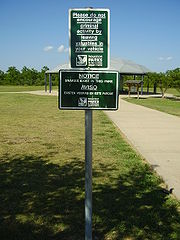 Snakes are most likely to bite when they feel threatened, are startled, are provoked, or have no means of escape when cornered. Encountering a snake is always considered dangerous and it is recommended to leave the vicinity. There is no practical way to safely identify any snake species as appearances may vary dramatically.
Snakes are likely to approach residential areas when attracted by prey, such as rodents. Practising regular pest control
can reduce the threat of snakes considerably. It is beneficial to know the species of snake that are common in local areas, or while travelling or hiking. Areas of the world such as Africa
, Australia
, the Neotropics, and southern Asia are inhabited by many highly dangerous species. Being wary of snake presence and ultimately avoiding it when known is strongly recommended.
When in the wilderness, treading heavily creates ground vibrations and noise, which will often cause snakes to flee from the area. However, this generally only applies to North America
as some larger and more aggressive snakes in other parts of the world, such as king cobra
s and black mamba
s, will protect their territories. When dealing with direct encounters it is best to remain silent and motionless. If the snake has not yet fled it is important to step away slowly and cautiously.
The use of a flashlight when engaged in camping activities, such as gathering firewood at night, can be helpful. Snakes may also be unusually active during especially warm nights when ambient temperatures exceed 21 °C (69.8 °F). It is advised not to reach blindly into hollow logs, flip over large rocks, and enter old cabins
or other potential snake hiding-places. When rock climbing
, it is not safe to grab ledges or crevices without examining them first, as snakes are cold-blooded
and often sunbathe atop rock ledges.
Pet owners of domestic animals or snakes should be aware that a snake is capable of causing injury and that it is necessary to always act with caution. When handling snakes it is never wise to consume alcoholic beverage
s. In the United States more than 40% of snakebite victims intentionally put themselves in harm's way by attempting to capture wild snakes or by carelessly handling their dangerous pets—40% of that number had a blood alcohol level of 0.1 percent or more.
It is also important to avoid snakes that appear to be dead, as some species will actually roll over on their backs and stick out their tongue to fool potential threats. A snake's detached head can immediately act by reflex
and potentially bite. The induced bite can be just as severe as that of a live snake.
Dead snakes are also incapable of regulating the venom they inject, so a bite from a dead snake can often contain large amounts of venom.
on the ankle is usually a moderate injury to a healthy adult, but a bite to a child's abdomen or face by the same snake may be fatal. The outcome of all snakebites depends on a multitude of factors: the size, physical condition, and temperature of the snake, the age and physical condition of the victim, the area and tissue bitten (e.g., foot, torso, vein or muscle), the amount of venom injected, the time it takes for the person to find treatment, and finally the quality of that treatment.
The three types of venomous snakes that cause the majority of major clinical problems are vipers, kraits
, and cobras
. Knowledge of what species are present locally can be crucial, as is knowledge of typical signs and symptoms of envenomation by each type of snake. A scoring systems can be used to try and determine the biting snake based on clinical features, but these scoring systems are extremely specific to particular geographical areas.
recommendations vary, in part because different snakes have different types of venom. Some have little local effect, but life-threatening systemic effects, in which case containing the venom in the region of the bite by pressure immobilization is desirable. Other venoms instigate localized tissue damage around the bitten area, and immobilization may increase the severity of the damage in this area, but also reduce the total area affected; whether this trade-off is desirable remains a point of controversy. Because snakes vary from one country to another, first aid methods also vary.
However, most first aid guidelines agree on the following:
Many organizations, including the American Medical Association
and American Red Cross
, recommend washing the bite with soap and water. Australian recommendations for snake bite treatment recommend against cleaning the wound. Traces of venom left on the skin/bandages from the strike can be used in combination with a snake bite identification kit to identify the species of snake. This speeds determination of which antivenom to administer in the emergency room.
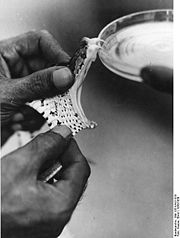 In 1979, Australia's National Health and Medical Research Council
formally adopted pressure immobilization as the preferred method of first aid treatment for snakebites in Australia. As of 2009, clinical evidence for pressure immobilization remains limited, with current evidence based almost entirely on anecdotal case reports. This has led most international authorities to question its efficacy. Despite this, all reputable first aid organizations in Australia recommend pressure immobilization treatment; however, it is not widely adhered to, with one study showing that only a third of snakebite people attempt pressure immobilization.
Pressure immobilization is not appropriate for cytotoxic bites such as those inflicted by most vipers, but may be effective against neurotoxic venoms such as those of most elapids. Developed by medical researcher Struan Sutherland
in 1978, the object of pressure immobilization is to contain venom within a bitten limb and prevent it from moving through the lymphatic system to the vital organs. This therapy has two components: pressure to prevent lymphatic drainage, and immobilization of the bitten limb to prevent the pumping action of the skeletal muscle
s.
Pressure is preferably applied with an elastic bandage, but any cloth will do in an emergency. Bandaging begins two to four inches above the bite (i.e. between the bite and the heart), winding around in overlapping turns and moving up towards the heart, then back down over the bite and past it towards the hand or foot. Then the limb must be held immobile: not used, and if possible held with a splint or sling. The bandage should be about as tight as when strapping a sprained ankle. It must not cut off blood flow, or even be uncomfortable; if it is uncomfortable, the person will unconsciously flex the limb, defeating the immobilization portion of the therapy. The location of the bite should be clearly marked on the outside of the bandages. Some peripheral edema
is an expected consequence of this process.
Apply pressure immobilization as quickly as possible; if you wait until symptoms become noticeable you will have missed the best time for treatment. Once a pressure bandage has been applied, it should not be removed until the person has reached a medical professional. The combination of pressure and immobilization may contain venom so effectively that no symptoms are visible for more than 24 hours, giving the illusion of a dry bite. But this is only a delay; removing the bandage releases that venom into the person's system with rapid and possibly fatal consequences.
for the treatment of Indian cobra
bites. Antivenom is made by injecting a small amount of venom into an animal (usually a horse or sheep) to initiate an immune system response. The resulting antibodies are then harvested from the animal's blood.
Antivenom is injected into the person intravenously
, and works by binding to and neutralizing venom enzymes. It cannot undo damage already caused by venom, so antivenom treatment should be sought as soon as possible. Modern antivenoms are usually polyvalent, making them effective against the venom of numerous snake species. Pharmaceutical companies which produce antivenom target their products against the species native to a particular area. Although some people may develop serious adverse reactions to antivenom, such as anaphylaxis
, in emergency situations this is usually treatable and hence the benefit outweighs the potential consequences of not using antivenom.
 The following treatments have all been recommended at one time or another, but are now considered to be ineffective or outright dangerous. Many cases in which such treatments appear to work are in fact the result of dry bite
s.
In extreme cases, where the victims were in remote areas, all of these misguided attempts at treatment have resulted in injuries far worse than an otherwise mild to moderate snakebite. In worst case scenarios, thoroughly constricting tourniquets have been applied to bitten limbs, completely shutting off blood flow to the area. By the time the victims finally reached appropriate medical facilities their limbs had to be amputated.
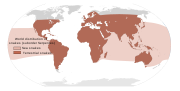
 Most snakebites are caused by non-venomous snakes. Of the roughly 3,000 known species of snake found worldwide, only 15 percent are considered dangerous to humans. Snakes are found on every continent except Antarctica. The most diverse and widely distributed snake family, the colubrid
s, has approximately 700 venomous species, but only five genera
—boomslangs, twig snakes, keelback snake
s, green snake
s, and slender snake
s—have caused human fatalities.
Since reporting is not mandatory in many regions of the world, snakebites often go unreported. Consequently, no accurate study has ever been conducted to determine the frequency of snakebites on the international level. However, some estimates put the number at 5.4 million snakebites, 2.5 million envenomings, resulting in perhaps 125,000 deaths. Others estimate 1.2 to 5.5 million snakebites, 421,000 to 1.8 million envenomings, and 20,000 to 94,000 deaths. Many people who survive bites nevertheless suffer from permanent tissue damage caused by venom, leading to disability.
Most snake envenomings and fatalities occur in South Asia
, Southeast Asia
, and sub-Saharan Africa
, with India
reporting the most snakebite deaths of any country. In India
almost all of these deaths are caused by the Big Four
, consisting of the Russell's viper, Indian cobra
, saw-scaled viper, and the common krait
. In Burma 80 percent of the approximately 1000 deaths each year from snake bite are caused by the Russell's Viper. Tea plantations sometimes are associated with some elapids such as the common cobra
s and the king cobra
.
In the Neotropics, the lance-headed vipers
inflict the majority of fatal bites, although of the many known species, only two, the common lancehead
and terciopelo
, are responsible for most cases. The tropical rattlesnake is another important species.
In Africa, the puff adder
is responsible for most fatalities, although there are regional differences, with the saw-scaled viper inflicting more bites in Northern Africa, where the puff adder is not normally found. Most bites occur in industrial plantations, which attract many types of snake prey. Banana plantations are associated with vipers such as night adder
s, while rubber and palm tree plantations attract elapids, including cobras and black mamba
s. There are also highly venomous colubrids in Africa, such as the boomslang.
In the Middle East, the snakes responsible for most bites tend to be more venomous than European species, but deaths are rare, with some estimating perhaps 100 fatal bites annually. The Palestine viper and Lebetine viper are the species involved in most bites. Larger and more venomous elapids, such as the Egyptian cobra
, can also be found throughout the Middle East.
In Europe, nearly all of the snakes responsible for venomous bites belong to the viper family, and of these, the coastal viper
, nose-horned viper
, asp viper
, and Lataste's viper inflict the majority of bites. Although Europe has a population of some 731 million people, snake bites only kill about 30 people each year, largely due to wide access to health care services and antivenom, as well as the relatively mild potency of many native species' venom.
In Australia, the only continent where venomous snakes constitute the majority of species, the Taipan
, tiger snake and Eastern brown snake inflict virtually all reported venomous bites, with the latter responsible for perhaps 60% of deaths caused by snakebite. Although Australian snakes are highly venomous, wide access to antivenom has made deaths exceedingly rare, with only a few fatalities each year.
Most of the Pacific Islands
are free of terrestrial snakes; however, sea snakes
are common in the Indian Ocean
and tropical Pacific Ocean
, but are not found in the Atlantic Ocean
or the Caribbean
, Mediterranean
or Red Sea
s. While the majority of species live close to shorelines or coral reef
s, the yellow-bellied sea snake can be found in the open ocean. Over 50% of bites inflicted by sea snakes, which are generally not aggressive, occur when fishermen attempt to remove snakes which have become tangled in fishing nets. Symptoms may appear in as little as 5 minutes or take 8 hours to develop, depending on the species and region of the body bitten. Although sea snakes are highly venomous, about 80% of reported bites end up being dry. The advent of antivenom and advances in emergency medicine have reduced fatalities to about 3% of snakebite cases.
Of the 120 known indigenous snake species in North America, only 20 are venomous to human beings, all belonging to the families Viperidae
and Elapidae
. However, in the United States
, every state except Maine
, Alaska
, and Hawaii
is home to at least one of 20 venomous snake species. Most snakebite related deaths in the United States are attributed to Eastern
and Western diamondback
rattlesnake bites. Further, the majority of bites in the United States occur in the southwestern part of the country, in part because rattlesnake
populations in the eastern states are much lower. The state of North Carolina
has the highest frequency of reported snakebites, averaging approximately 19 bites per 100,000 persons. The national average is roughly 4 bites per 100,000 persons.
Worldwide, snakebites occur most frequently in the summer season when snakes are active and humans are outdoors. Agricultural and tropical regions report more snakebites than anywhere else. Victims are typically male and between 17 and 27 years of age. Children and the elderly are the most likely to die.
 Snakes were both revered and worshipped
and feared
by early civilizations. The ancient Egyptians recorded prescribed treatments for snakebites as early as the Thirteenth dynasty
in the Brooklyn Papyrus
, which includes at least seven venomous species common to the region today, such as the horned viper
s. In Judaism
, the Nehushtan
was a pole with a snake made of copper wrapped around it, similar in appearance to the Rod of Asclepius
. The object was considered sacred with the power to heal bites caused by the snakes which had infested the desert, with victims merely having to touch it in order to save themselves from imminent death.
Historically, snakebites were seen as a means of execution in some cultures. In medieval Europe
, a form of capital punishment was to throw people into snake pit
s, leaving victims to die from multiple venomous bites. A similar form of punishment was common in Southern Han
during China
's Five Dynasties and Ten Kingdoms Period
and in India
. Snakebites were also used as a form of suicide, most notably by Egyptian queen Cleopatra VII, who reportedly died from the bite of an asp
—likely an Egyptian cobra
—after hearing of Mark Antony
's death.
Snakebite as a surreptitious form of murder has been featured in stories such as Sir Arthur Conan Doyle
's The Adventure of the Speckled Band
, but actual occurrences are virtually unheard of, with only a few documented cases. It has been suggested that Boris III of Bulgaria
, who was allied to Nazi Germany
during World War II
, may have been killed with snake venom, although there is no definitive evidence. At least one attempted suicide by snakebite has been documented in medical literature involving a puff adder
bite to the hand.
Snake
Snakes are elongate, legless, carnivorous reptiles of the suborder Serpentes that can be distinguished from legless lizards by their lack of eyelids and external ears. Like all squamates, snakes are ectothermic, amniote vertebrates covered in overlapping scales...
, often resulting in puncture wounds inflicted by the animal's fang
Fang
Fang is a mammal's canine tooth.Fang may also refer to:* A snake's poison-injecting tooth: see snake venom* Fang people, in Central Africa* Fang language, spoken by Fang people...
s and sometimes resulting in envenomation
Envenomation
Envenomation is the process by which venom is injected into some animal by the bite of a venomous animal. Many kinds of animals, including mammals , reptiles , spiders , insects , employ venom for hunting and for self defense...
. Although the majority of snake species are non-venomous and typically kill their prey with constriction
Constriction
Constriction is a method used by various snake species to kill their prey. Although some species of venomous and mildly-venomous snakes do use constriction to subdue their prey, most snakes which use constriction lack venom. The snake initially strikes at its prey and holds on, pulling the prey...
rather than venom
Snake venom
Snake venom is highly modified saliva that is produced by special glands of certain species of snakes. The glands which secrete the zootoxin are a modification of the parotid salivary gland of other vertebrates, and are usually situated on each side of the head below and behind the eye,...
, venomous snakes can be found on every continent except Antarctica. Snakes often bite their prey as a method of hunting, but also for defensive purposes against predators. Since the physical appearance of snakes may differ, there is often no practical way to identify a species and professional medical attention should be sought.
The outcome of snake bites depends on numerous factors, including the species of snake, the area of the body bitten, the amount of venom injected, and the health conditions of the victim. Feelings of terror and panic are common after a snakebite and can produce a characteristic set of symptoms mediated by the autonomic nervous system
Autonomic nervous system
The autonomic nervous system is the part of the peripheral nervous system that acts as a control system functioning largely below the level of consciousness, and controls visceral functions. The ANS affects heart rate, digestion, respiration rate, salivation, perspiration, diameter of the pupils,...
, such as a racing heart
Tachycardia
Tachycardia comes from the Greek words tachys and kardia . Tachycardia typically refers to a heart rate that exceeds the normal range for a resting heart rate...
and nausea
Nausea
Nausea , is a sensation of unease and discomfort in the upper stomach with an involuntary urge to vomit. It often, but not always, precedes vomiting...
. Bites from non-venomous snakes can also cause injury, often due to lacerations caused by the snake's teeth, or from a resulting infection. A bite may also trigger an anaphylactic reaction, which is potentially fatal. First aid recommendations for bites depend on the snakes inhabiting the region, as effective treatments for bites inflicted by some species can be ineffective for others.
The number of fatalities attributed to snake bites varies greatly by geographical area. Although deaths are relatively rare in Australia
Australia
Australia , officially the Commonwealth of Australia, is a country in the Southern Hemisphere comprising the mainland of the Australian continent, the island of Tasmania, and numerous smaller islands in the Indian and Pacific Oceans. It is the world's sixth-largest country by total area...
, Europe
Europe
Europe is, by convention, one of the world's seven continents. Comprising the westernmost peninsula of Eurasia, Europe is generally 'divided' from Asia to its east by the watershed divides of the Ural and Caucasus Mountains, the Ural River, the Caspian and Black Seas, and the waterways connecting...
and North America
North America
North America is a continent wholly within the Northern Hemisphere and almost wholly within the Western Hemisphere. It is also considered a northern subcontinent of the Americas...
, the morbidity and mortality associated with snake bites is a serious public health problem in many regions of the world, particularly in rural areas lacking medical facilities. Further, while South Asia
South Asia
South Asia, also known as Southern Asia, is the southern region of the Asian continent, which comprises the sub-Himalayan countries and, for some authorities , also includes the adjoining countries to the west and the east...
, Southeast Asia
Southeast Asia
Southeast Asia, South-East Asia, South East Asia or Southeastern Asia is a subregion of Asia, consisting of the countries that are geographically south of China, east of India, west of New Guinea and north of Australia. The region lies on the intersection of geological plates, with heavy seismic...
, and sub-Saharan Africa
Sub-Saharan Africa
Sub-Saharan Africa as a geographical term refers to the area of the African continent which lies south of the Sahara. A political definition of Sub-Saharan Africa, instead, covers all African countries which are fully or partially located south of the Sahara...
report the highest number of bites, there is also a high incidence in the Neotropics and other equatorial and subtropical regions. Each year tens of thousands of people die from snake bites, yet the risk of being bitten can be lowered with preventive measures, such as wearing protective footwear and avoiding areas known to be inhabited by dangerous snakes.
Signs and symptoms
Nausea
Nausea , is a sensation of unease and discomfort in the upper stomach with an involuntary urge to vomit. It often, but not always, precedes vomiting...
and vomiting
Vomiting
Vomiting is the forceful expulsion of the contents of one's stomach through the mouth and sometimes the nose...
, diarrhea
Diarrhea
Diarrhea , also spelled diarrhoea, is the condition of having three or more loose or liquid bowel movements per day. It is a common cause of death in developing countries and the second most common cause of infant deaths worldwide. The loss of fluids through diarrhea can cause dehydration and...
, vertigo
Vertigo (medical)
Vertigo is a type of dizziness, where there is a feeling of motion when one is stationary. The symptoms are due to a dysfunction of the vestibular system in the inner ear...
, fainting, tachycardia
Tachycardia
Tachycardia comes from the Greek words tachys and kardia . Tachycardia typically refers to a heart rate that exceeds the normal range for a resting heart rate...
, and cold, clammy skin. Television, literature, and folklore are in part responsible for the hype surrounding snakebites, and a victim may have unwarranted thoughts of imminent death.
Dry snakebites
Dry bite
A dry bite is a bite by a venomous animal in which no venom is released. Dry snake bites are called "Venomous snake bite without envenoming". Dry bites can occur from all snakes, but their frequency varies from species to species. For example, brown snakes can inflict dry bites 80% of the time...
, and those inflicted by a non-venomous species, can still cause severe injury to the victim. There are several reasons for this: a snakebite which is not treated properly may become infected (as is often reported by the victims of viper bites whose fangs are capable of inflicting deep puncture wounds), the bite may cause anaphylaxis
Anaphylaxis
Anaphylaxis is defined as "a serious allergic reaction that is rapid in onset and may cause death". It typically results in a number of symptoms including throat swelling, an itchy rash, and low blood pressure...
in certain people, and the snake's saliva and fangs may harbor many dangerous microbial contaminants, including Clostridium tetani
Clostridium tetani
Clostridium tetani is a rod-shaped, anaerobic bacterium of the genus Clostridium. Like other Clostridium species, it is Gram-positive, and its appearance on a gram stain resembles tennis rackets or drumsticks. C. tetani is found as spores in soil or in the gastrointestinal tract of animals. C...
. If neglected, an infection may spread and potentially kill the victim.
Most snakebites, whether by a venomous snake or not, will have some type of local effect. There is minor pain and redness
Erythema
Erythema is redness of the skin, caused by hyperemia of the capillaries in the lower layers of the skin. It occurs with any skin injury, infection, or inflammation...
in over 90% of cases, although this varies depending on the site. Bites by vipers and some cobra
Cobra
Cobra is a venomous snake belonging to the family Elapidae. However, not all snakes commonly referred to as cobras are of the same genus, or even of the same family. The name is short for cobra capo or capa Snake, which is Portuguese for "snake with hood", or "hood-snake"...
s may be extremely painful, with the local tissue sometimes becoming tender and severely swollen
Edema
Edema or oedema ; both words from the Greek , oídēma "swelling"), formerly known as dropsy or hydropsy, is an abnormal accumulation of fluid beneath the skin or in one or more cavities of the body that produces swelling...
within 5 minutes. This area may also bleed and blister and can eventually lead to tissue necrosis. Other common initial symptoms of pitviper and viper bites include lethargy, bleeding, weakness, nausea, and vomiting. Symptoms may become more life-threatening over time, developing into hypotension
Hypotension
In physiology and medicine, hypotension is abnormally low blood pressure, especially in the arteries of the systemic circulation. It is best understood as a physiologic state, rather than a disease. It is often associated with shock, though not necessarily indicative of it. Hypotension is the...
, tachypnea
Tachypnea
Tachypnea means rapid breathing. Any rate between 12-20 breaths per minute is normal. Tachypnea is a respiration rate greater than 20 breaths per minute. - Distinction from other breathing terms :...
, severe tachycardia, severe internal bleeding, altered sensorium
Sensorium
The term sensorium refers to the sum of an organism's perception, the "seat of sensation" where it experiences and interprets the environments within which it lives. The term originally enters English from the Late Latin in the mid-17th century, from the stem sens-...
, kidney failure and respiratory failure
Respiratory failure
The term respiratory failure, in medicine, is used to describe inadequate gas exchange by the respiratory system, with the result that arterial oxygen and/or carbon dioxide levels cannot be maintained within their normal ranges. A drop in blood oxygenation is known as hypoxemia; a rise in arterial...
.
Interestingly, bites caused by the Mojave rattlesnake, kraits, coral snake
Coral snake
The coral snakes are a large group of elapid snakes that can be subdivided into two distinct groups, Old World coral snakes and New World coral snakes...
, and the speckled rattlesnake
Crotalus mitchellii
Crotalus mitchellii is a venomous pitviper species found in the Southwestern United States, and in northern Mexico. It was named in honor of Silas Weir Mitchell , a medical doctor who also studied rattlesnake venoms...
reportedly cause little or no pain despite being serious injuries. Victims may also describe a "rubbery," "minty," or "metallic" taste if bitten by certain species of rattlesnake. Spitting cobra
Spitting cobra
A spitting cobra is one of several species of cobras that have the ability to eject venom from their fangs when defending themselves against predators. The sprayed venom is harmless to intact skin...
s and rinkhals
Rinkhals
The Rinkhals also called the Ringhals or Ring-necked Spitting Cobra is a venomous elapid species found in parts of southern Africa...
es can spit venom in their victims' eyes. This results in immediate pain, ophthalmoparesis
Ophthalmoparesis
Ophthalmoparesis or ophthalmoplegia refers to paralysis of one or more extraocular muscles which are responsible for eye movements. It is a physical finding in certain neurologic illnesses.-Classification:...
, and sometimes blindness
Blindness
Blindness is the condition of lacking visual perception due to physiological or neurological factors.Various scales have been developed to describe the extent of vision loss and define blindness...
.
Some Australian elapids and most viper envenomations will cause coagulopathy
Coagulopathy
Coagulopathy is a condition in which the blood’s ability to clot is impaired. This condition can cause prolonged or excessive bleeding, which may occur spontaneously or following an injury or medical and dental procedures.The normal clotting process depends on the interplay of various proteins in...
, sometimes so severe that a person may bleed spontaneously from the mouth, nose, and even old, seemingly-healed wounds. Internal organs may bleed, including the brain and intestines and will cause ecchymosis
Ecchymosis
An ecchymosis is the medical term for a subcutaneous purpura larger than 1 centimeter or a hematoma, commonly called a bruise. It can be located in the skin or in a mucous membrane.-Presentation:...
(bruising) of the victim's skin.
Venom emitted from elapids, including sea snakes
Sea Snakes
Sea Snakes were a Canadian indie rock band, formed in 2002 and disbanded in 2005. The band consisted of vocalist and guitarist Jimmy McIntyre, guitarist Kristian Galberg, bassist and saxophonist Jeremy Strachan, keyboardist Shaw-Han Liem and drummer Nathan Lawr.Strachan played in the defunct band...
, kraits
Bungarus
Bungarus, commonly referred to as kraits , is a genus of venomous elapid snakes found in South and South-East Asia. There are 12 species and 5 subspecies recognized.- Distribution :...
, cobras
Naja
Naja is a genus of venomous elapid snakes. Although there are several other genera that share the common name, Naja are the most recognized and most widespread group of snakes commonly known as cobras. The genus Naja consists of 20 to 22 species, but has undergone several taxonomic revisions in...
, king cobra, mambas, and many Australian species, contain toxins which attack the nervous system, causing neurotoxicity
Neurotoxicity
Neurotoxicity occurs when the exposure to natural or artificial toxic substances, which are called neurotoxins, alters the normal activity of the nervous system in such a way as to cause damage to nervous tissue. This can eventually disrupt or even kill neurons, key cells that transmit and process...
. The victim may present with strange disturbances to their vision, including blurriness. Paresthesia
Paresthesia
Paresthesia , spelled "paraesthesia" in British English, is a sensation of tingling, burning, pricking, or numbness of a person's skin with no apparent long-term physical effect. It is more generally known as the feeling of "pins and needles" or of a limb "falling asleep"...
throughout the body, as well as difficulty speaking and breathing, may be reported. Nervous system problems will cause a huge array of symptoms, and those provided here are not exhaustive. If the victim is not treated immediately they may die from respiratory failure
Respiratory failure
The term respiratory failure, in medicine, is used to describe inadequate gas exchange by the respiratory system, with the result that arterial oxygen and/or carbon dioxide levels cannot be maintained within their normal ranges. A drop in blood oxygenation is known as hypoxemia; a rise in arterial...
.
Venom emitted from some types of cobras, almost all vipers, some Australian elapids and some sea snakes causes necrosis
Necrosis
Necrosis is the premature death of cells in living tissue. Necrosis is caused by factors external to the cell or tissue, such as infection, toxins, or trauma. This is in contrast to apoptosis, which is a naturally occurring cause of cellular death...
of muscle tissue. Muscle tissue will begin to die throughout the body, a condition known as rhabdomyolysis
Rhabdomyolysis
Rhabdomyolysis is a condition in which damaged skeletal muscle tissue breaks down rapidly. Breakdown products of damaged muscle cells are released into the bloodstream; some of these, such as the protein myoglobin, are harmful to the kidneys and may lead to kidney failure...
. Rhabdomyolysis can result in damage to the kidneys as a result of myoglobin accumulation in the renal tubules. This, coupled with hypotension
Hypotension
In physiology and medicine, hypotension is abnormally low blood pressure, especially in the arteries of the systemic circulation. It is best understood as a physiologic state, rather than a disease. It is often associated with shock, though not necessarily indicative of it. Hypotension is the...
, can lead to acute renal failure
Acute renal failure
Acute kidney injury , previously called acute renal failure , is a rapid loss of kidney function. Its causes are numerous and include low blood volume from any cause, exposure to substances harmful to the kidney, and obstruction of the urinary tract...
, and, if left untreated, eventually death.
Pathophysiology
Since envenomationEnvenomation
Envenomation is the process by which venom is injected into some animal by the bite of a venomous animal. Many kinds of animals, including mammals , reptiles , spiders , insects , employ venom for hunting and for self defense...
is completely voluntary, all venomous snakes are capable of biting without injecting venom into their victim. Snakes may deliver such a "dry bite
Dry bite
A dry bite is a bite by a venomous animal in which no venom is released. Dry snake bites are called "Venomous snake bite without envenoming". Dry bites can occur from all snakes, but their frequency varies from species to species. For example, brown snakes can inflict dry bites 80% of the time...
" rather than waste their venom on a creature too large for them to eat. However, the percentage of dry bites varies between species: 50% of bites from the normally timid coral snake
Coral snake
The coral snakes are a large group of elapid snakes that can be subdivided into two distinct groups, Old World coral snakes and New World coral snakes...
do not result in envenomation, whereas only 25% of pitviper
Crotalinae
The Crotalinae, commonly known as "pit vipers" or crotaline snakes, are a subfamily of venomous vipers found in Asia and the Americas. They are distinguished by the presence of a heat-sensing pit organ located between the eye and the nostril on either side of the head...
bites are dry. Furthermore, some snake genera
Genera
Genera is a commercial operating system and development environment for Lisp machines developed by Symbolics. It is essentially a fork of an earlier operating system originating on the MIT AI Lab's Lisp machines which Symbolics had used in common with LMI and Texas Instruments...
, such as rattlesnake
Rattlesnake
Rattlesnakes are a group of venomous snakes of the genera Crotalus and Sistrurus of the subfamily Crotalinae . There are 32 known species of rattlesnake, with between 65-70 subspecies, all native to the Americas, ranging from southern Alberta and southern British Columbia in Canada to Central...
s, significantly increase the amount of venom injected in defensive bites compared to predatory strikes.
Some dry bites may also be the result of imprecise timing on the snake's part, as venom may be prematurely released before the fangs have penetrated the victim's flesh. Even without venom, some snakes, particularly large constrictors such as those belonging to the Boidae and Pythonidae families, can deliver damaging bites; large specimens often cause severe lacerations as the victim or the snake itself pull away, causing the flesh to be torn by the needle-sharp recurved teeth embedded in the victim. While not as life-threatening as a bite from a venomous species, the bite can be at least temporarily debilitating and could lead to dangerous infections if improperly dealt with.
While most snakes must open their mouths before biting, African and Middle Eastern snakes belonging to the family Atractaspididae
Atractaspididae
The Atractaspididae are a family of snakes found in Africa and the Middle East. Currently, 12 genera are recognized.-Description:This family includes many genera formerly classed in other families, on the basis of fang type. It includes fangless , rear-fanged , fixed-fanged , and viper-like species...
are able to fold their fangs to the side of their head without opening their mouth and jab at victims.
Snake venom
It has been suggested that snakes evolved the mechanisms necessary for venom formation and delivery sometime during the MioceneMiocene
The Miocene is a geological epoch of the Neogene Period and extends from about . The Miocene was named by Sir Charles Lyell. Its name comes from the Greek words and and means "less recent" because it has 18% fewer modern sea invertebrates than the Pliocene. The Miocene follows the Oligocene...
epoch. During the mid-Tertiary
Tertiary
The Tertiary is a deprecated term for a geologic period 65 million to 2.6 million years ago. The Tertiary covered the time span between the superseded Secondary period and the Quaternary...
, most snakes were large ambush predator
Ambush predator
Ambush predators or sit-and-wait predators are carnivorous animals that capture prey by stealth or cunning, not by speed or necessarily by strength. These organisms usually hide motionless and wait for prey to come within striking distance. They are often camouflaged, and may be solitary...
s belonging to the superfamily Henophidia
Henophidia
Henophidia is a superfamily of the suborder Serpentes that contains boas, pythons and other snakes. Snakes belonging to superfamily Henophidia are considered to be more primitive than those belonging to the other superfamilies - namely, Typhlopoidea and Xenophidia.-Etymology:Henophidia comes from...
, which use constriction to kill their prey. As open grasslands replaced forested areas in parts of the world, some snake families evolved to become smaller and thus more agile. However, subduing and killing prey became more difficult for the smaller snakes, leading to the evolution of snake venom. Other research on Toxicofera
Toxicofera
Toxicofera , is a hypothetical clade which represents about 4600 species of extant squamates It encompasses all venomous reptile species, as well as numerous related non-venomous species....
, a hypothetical clade
Clade
A clade is a group consisting of a species and all its descendants. In the terms of biological systematics, a clade is a single "branch" on the "tree of life". The idea that such a "natural group" of organisms should be grouped together and given a taxonomic name is central to biological...
thought to be ancestral to most living reptiles, suggests an earlier time frame for the evolution of snake venom, possibly to the order of tens of millions of years, during the Late Cretaceous
Late Cretaceous
The Late Cretaceous is the younger of two epochs into which the Cretaceous period is divided in the geologic timescale. Rock strata from this epoch form the Upper Cretaceous series...
.
Snake venom is produced in modified parotid gland
Parotid gland
The paired parotid glands are the largest of the salivary glands. They are each found wrapped around the mandibular ramus, and secrete saliva through Stensen's ducts into the oral cavity, to facilitate mastication and swallowing and to begin the digestion of starches.-Location:The parotid glands...
s normally responsible for secreting saliva. It is stored in structures called alveoli behind the animal's eyes, and ejected voluntarily through its hollow tubular fangs. Venom is composed of hundreds to thousands of different protein
Protein
Proteins are biochemical compounds consisting of one or more polypeptides typically folded into a globular or fibrous form, facilitating a biological function. A polypeptide is a single linear polymer chain of amino acids bonded together by peptide bonds between the carboxyl and amino groups of...
s and enzymes, all serving a variety of purposes, such as interfering with a prey's cardiac system or increasing tissue permeability so that venom is absorbed faster.
Venom in many snakes, such as pitvipers, affects virtually every organ system in the human body and can be a combination of many toxins, including cytotoxins, hemotoxins, neurotoxins, and myotoxin
Myotoxin
Myotoxins are small, basic peptides found in snake venoms, such as in that of certain rattlesnakes. This involves a non-enzymatic mechanism that leads to severe muscle necrosis...
s, allowing for an enormous variety of symptoms. Earlier, the venom of a particular snake was considered to be one kind only i.e. either hemotoxic or neurotoxic, and this erroneous belief may still persist wherever the updated literature is hard to access. Although there is much known about the protein compositions of venoms from Asian and American snakes, comparatively little is known of Australian snakes.
The strength of venom differs markedly between species and even more so between families, as measured by in mice. Subcutaneous varies by over 140-fold within elapids and by more than 100-fold in vipers. The amount of venom produced also differs among species, with the Gaboon viper able to potentially deliver from 450–600mg
Mg
MG, M.G., M-G and variants may refer to:Business* MG Cars , a British automobile manufacturer, now part of SAIC* Champion Air , an American charter airline with IATA code MGEducation...
of venom in a single bite, the most of any snake. Opisthoglyphous colubrids have venom ranging from life-threatening (in the case of the boomslang) to barely noticeable (as in Tantilla
Tantilla
Tantilla is a large genus of harmless colubrid snakes which includes 64 species commonly known as centipede snakes, blackhead snakes, and flathead snakes.- Description :...
).
Prevention
Snakes are likely to approach residential areas when attracted by prey, such as rodents. Practising regular pest control
Pest control
Pest control refers to the regulation or management of a species defined as a pest, usually because it is perceived to be detrimental to a person's health, the ecology or the economy.-History:...
can reduce the threat of snakes considerably. It is beneficial to know the species of snake that are common in local areas, or while travelling or hiking. Areas of the world such as Africa
Africa
Africa is the world's second largest and second most populous continent, after Asia. At about 30.2 million km² including adjacent islands, it covers 6% of the Earth's total surface area and 20.4% of the total land area...
, Australia
Australia
Australia , officially the Commonwealth of Australia, is a country in the Southern Hemisphere comprising the mainland of the Australian continent, the island of Tasmania, and numerous smaller islands in the Indian and Pacific Oceans. It is the world's sixth-largest country by total area...
, the Neotropics, and southern Asia are inhabited by many highly dangerous species. Being wary of snake presence and ultimately avoiding it when known is strongly recommended.
When in the wilderness, treading heavily creates ground vibrations and noise, which will often cause snakes to flee from the area. However, this generally only applies to North America
North America
North America is a continent wholly within the Northern Hemisphere and almost wholly within the Western Hemisphere. It is also considered a northern subcontinent of the Americas...
as some larger and more aggressive snakes in other parts of the world, such as king cobra
King Cobra
The king cobra is the world's longest venomous snake, with a length up to 5.6 m . This species, which preys chiefly on other snakes, is found predominantly in forests from India through Southeast Asia to the Philippines and Indonesia...
s and black mamba
Black mamba
The black mamba , also called the common black mamba or black-mouthed mamba, is the longest venomous snake in Africa, averaging around in length, and sometimes growing to lengths of...
s, will protect their territories. When dealing with direct encounters it is best to remain silent and motionless. If the snake has not yet fled it is important to step away slowly and cautiously.
The use of a flashlight when engaged in camping activities, such as gathering firewood at night, can be helpful. Snakes may also be unusually active during especially warm nights when ambient temperatures exceed 21 °C (69.8 °F). It is advised not to reach blindly into hollow logs, flip over large rocks, and enter old cabins
Log cabin
A log cabin is a house built from logs. It is a fairly simple type of log house. A distinction should be drawn between the traditional meanings of "log cabin" and "log house." Historically most "Log cabins" were a simple one- or 1½-story structures, somewhat impermanent, and less finished or less...
or other potential snake hiding-places. When rock climbing
Climbing
Climbing is the activity of using one's hands and feet to ascend a steep object. It is done both for recreation and professionally, as part of activities such as maintenance of a structure, or military operations.Climbing activities include:* Bouldering: Ascending boulders or small...
, it is not safe to grab ledges or crevices without examining them first, as snakes are cold-blooded
Ectotherm
An ectotherm, from the Greek εκτός "outside" and θερμός "hot", refers to organisms that control body temperature through external means. As a result, organisms are dependent on environmental heat sources and have relatively low metabolic rates. For example, many reptiles regulate their body...
and often sunbathe atop rock ledges.
Pet owners of domestic animals or snakes should be aware that a snake is capable of causing injury and that it is necessary to always act with caution. When handling snakes it is never wise to consume alcoholic beverage
Alcoholic beverage
An alcoholic beverage is a drink containing ethanol, commonly known as alcohol. Alcoholic beverages are divided into three general classes: beers, wines, and spirits. They are legally consumed in most countries, and over 100 countries have laws regulating their production, sale, and consumption...
s. In the United States more than 40% of snakebite victims intentionally put themselves in harm's way by attempting to capture wild snakes or by carelessly handling their dangerous pets—40% of that number had a blood alcohol level of 0.1 percent or more.
It is also important to avoid snakes that appear to be dead, as some species will actually roll over on their backs and stick out their tongue to fool potential threats. A snake's detached head can immediately act by reflex
Reflex action
A reflex action, also known as a reflex, is an involuntary and nearly instantaneous movement in response to a stimulus. A true reflex is a behavior which is mediated via the reflex arc; this does not apply to casual uses of the term 'reflex'.-See also:...
and potentially bite. The induced bite can be just as severe as that of a live snake.
Dead snakes are also incapable of regulating the venom they inject, so a bite from a dead snake can often contain large amounts of venom.
Treatment
It is not an easy task determining whether or not a bite by any species of snake is life-threatening. A bite by a North American copperheadAgkistrodon contortrix
Agkistrodon contortrix is a species of venomous snake found in North America, a member of the Crotalinae subfamily. The more common name for the species is "copperhead". The behavior of Agkistrodon contortrix may lead to accidental encounters with humans...
on the ankle is usually a moderate injury to a healthy adult, but a bite to a child's abdomen or face by the same snake may be fatal. The outcome of all snakebites depends on a multitude of factors: the size, physical condition, and temperature of the snake, the age and physical condition of the victim, the area and tissue bitten (e.g., foot, torso, vein or muscle), the amount of venom injected, the time it takes for the person to find treatment, and finally the quality of that treatment.
Snake identification
Identification of the snake is important in planning treatment in certain areas of the world, but is not always possible. Ideally the dead snake would be brought in with the person, but in areas where snake bite is more common, local knowledge may be sufficient to recognize the snake. However, in regions where polyvalent antivenoms are available, such as North America, identification of snake is not a high priority item. Attempting to catch or kill the offending snake also puts one at risk for re-envenomation or creating a second victim, and generally is not recommended.The three types of venomous snakes that cause the majority of major clinical problems are vipers, kraits
Bungarus
Bungarus, commonly referred to as kraits , is a genus of venomous elapid snakes found in South and South-East Asia. There are 12 species and 5 subspecies recognized.- Distribution :...
, and cobras
Naja
Naja is a genus of venomous elapid snakes. Although there are several other genera that share the common name, Naja are the most recognized and most widespread group of snakes commonly known as cobras. The genus Naja consists of 20 to 22 species, but has undergone several taxonomic revisions in...
. Knowledge of what species are present locally can be crucial, as is knowledge of typical signs and symptoms of envenomation by each type of snake. A scoring systems can be used to try and determine the biting snake based on clinical features, but these scoring systems are extremely specific to particular geographical areas.
First aid
Snakebite first aidFirst aid
First aid is the provision of initial care for an illness or injury. It is usually performed by non-expert, but trained personnel to a sick or injured person until definitive medical treatment can be accessed. Certain self-limiting illnesses or minor injuries may not require further medical care...
recommendations vary, in part because different snakes have different types of venom. Some have little local effect, but life-threatening systemic effects, in which case containing the venom in the region of the bite by pressure immobilization is desirable. Other venoms instigate localized tissue damage around the bitten area, and immobilization may increase the severity of the damage in this area, but also reduce the total area affected; whether this trade-off is desirable remains a point of controversy. Because snakes vary from one country to another, first aid methods also vary.
However, most first aid guidelines agree on the following:
- Protect the person and others from further bites. While identifying the species is desirable in certain regions, risking further bites or delaying proper medical treatment by attempting to capture or kill the snake is not recommended.
- Keep the person calm. Acute stress reactionAcute stress reactionAcute stress reaction is a psychological condition arising in response to a terrifying or traumatic event...
increases blood flow and endangers the person. PanicPanicPanic is a sudden sensation of fear which is so strong as to dominate or prevent reason and logical thinking, replacing it with overwhelming feelings of anxiety and frantic agitation consistent with an animalistic fight-or-flight reaction...
is infectious and compromises judgment. - Call for helpCall for HelpCall for Help, also known as CFH, was a computer-themed television program that first aired exclusively on TechTV , a cable and satellite television network focused on technology, and then aired on G4techTV Canada and the HOW TO Channel in Australia...
to arrange for transport to the nearest hospital emergency room, where antivenom for snakes common to the area will often be available. - Make sure to keep the bitten limb in a functional position and below the victim's heart level so as to minimize blood returning to the heart and other organs of the body.
- Do not give the person anything to eat or drink. This is especially important with consumable alcohol, a known vasodilator which will speed up the absorption of venom. Do not administer stimulantStimulantStimulants are psychoactive drugs which induce temporary improvements in either mental or physical function or both. Examples of these kinds of effects may include enhanced alertness, wakefulness, and locomotion, among others...
s or pain medications to the victim, unless specifically directed to do so by a physician. - Remove any items or clothing which may constrict the bitten limb if it swells (rings, bracelets, watches, footwear, etc.)
- Keep the person as still as possible.
- Do not incise the bitten site.
Many organizations, including the American Medical Association
American Medical Association
The American Medical Association , founded in 1847 and incorporated in 1897, is the largest association of medical doctors and medical students in the United States.-Scope and operations:...
and American Red Cross
American Red Cross
The American Red Cross , also known as the American National Red Cross, is a volunteer-led, humanitarian organization that provides emergency assistance, disaster relief and education inside the United States. It is the designated U.S...
, recommend washing the bite with soap and water. Australian recommendations for snake bite treatment recommend against cleaning the wound. Traces of venom left on the skin/bandages from the strike can be used in combination with a snake bite identification kit to identify the species of snake. This speeds determination of which antivenom to administer in the emergency room.
Pressure immobilization
National Health and Medical Research Council
The National Health and Medical Research Council is Australia's peak funding body for medical research, with a budget of roughly 700 million dollars a year...
formally adopted pressure immobilization as the preferred method of first aid treatment for snakebites in Australia. As of 2009, clinical evidence for pressure immobilization remains limited, with current evidence based almost entirely on anecdotal case reports. This has led most international authorities to question its efficacy. Despite this, all reputable first aid organizations in Australia recommend pressure immobilization treatment; however, it is not widely adhered to, with one study showing that only a third of snakebite people attempt pressure immobilization.
Pressure immobilization is not appropriate for cytotoxic bites such as those inflicted by most vipers, but may be effective against neurotoxic venoms such as those of most elapids. Developed by medical researcher Struan Sutherland
Struan Sutherland
Struan Keith Sutherland AO was an Australian medical researcher who developed effective antivenoms and other treatments for people bitten or stung by venomous Australian wildlife.-Early life:...
in 1978, the object of pressure immobilization is to contain venom within a bitten limb and prevent it from moving through the lymphatic system to the vital organs. This therapy has two components: pressure to prevent lymphatic drainage, and immobilization of the bitten limb to prevent the pumping action of the skeletal muscle
Skeletal muscle
Skeletal muscle is a form of striated muscle tissue existing under control of the somatic nervous system- i.e. it is voluntarily controlled. It is one of three major muscle types, the others being cardiac and smooth muscle...
s.
Pressure is preferably applied with an elastic bandage, but any cloth will do in an emergency. Bandaging begins two to four inches above the bite (i.e. between the bite and the heart), winding around in overlapping turns and moving up towards the heart, then back down over the bite and past it towards the hand or foot. Then the limb must be held immobile: not used, and if possible held with a splint or sling. The bandage should be about as tight as when strapping a sprained ankle. It must not cut off blood flow, or even be uncomfortable; if it is uncomfortable, the person will unconsciously flex the limb, defeating the immobilization portion of the therapy. The location of the bite should be clearly marked on the outside of the bandages. Some peripheral edema
Edema
Edema or oedema ; both words from the Greek , oídēma "swelling"), formerly known as dropsy or hydropsy, is an abnormal accumulation of fluid beneath the skin or in one or more cavities of the body that produces swelling...
is an expected consequence of this process.
Apply pressure immobilization as quickly as possible; if you wait until symptoms become noticeable you will have missed the best time for treatment. Once a pressure bandage has been applied, it should not be removed until the person has reached a medical professional. The combination of pressure and immobilization may contain venom so effectively that no symptoms are visible for more than 24 hours, giving the illusion of a dry bite. But this is only a delay; removing the bandage releases that venom into the person's system with rapid and possibly fatal consequences.
Antivenom
Until the advent of antivenom, bites from some species of snake were almost universally fatal. Despite huge advances in emergency therapy, antivenom is often still the only effective treatment for envenomation. The first antivenom was developed in 1895 by French physician Albert CalmetteAlbert Calmette
Léon Charles Albert Calmette ForMemRS was a French physician, bacteriologist and immunologist, and an important officer of the Pasteur Institute. He discovered the Bacillus Calmette-Guérin, an attenuated form of Mycobacterium used in the BCG vaccine against tuberculosis...
for the treatment of Indian cobra
Indian Cobra
Indian Cobra or Spectacled Cobra is a species of the genus Naja found in the Indian subcontinent and a member of the "big four", the four species which inflict the most snakebites in India. This snake is revered in Indian mythology and culture, and is often seen with snake charmers...
bites. Antivenom is made by injecting a small amount of venom into an animal (usually a horse or sheep) to initiate an immune system response. The resulting antibodies are then harvested from the animal's blood.
Antivenom is injected into the person intravenously
Intravenous therapy
Intravenous therapy or IV therapy is the infusion of liquid substances directly into a vein. The word intravenous simply means "within a vein". Therapies administered intravenously are often called specialty pharmaceuticals...
, and works by binding to and neutralizing venom enzymes. It cannot undo damage already caused by venom, so antivenom treatment should be sought as soon as possible. Modern antivenoms are usually polyvalent, making them effective against the venom of numerous snake species. Pharmaceutical companies which produce antivenom target their products against the species native to a particular area. Although some people may develop serious adverse reactions to antivenom, such as anaphylaxis
Anaphylaxis
Anaphylaxis is defined as "a serious allergic reaction that is rapid in onset and may cause death". It typically results in a number of symptoms including throat swelling, an itchy rash, and low blood pressure...
, in emergency situations this is usually treatable and hence the benefit outweighs the potential consequences of not using antivenom.
Outmoded treatments
Dry bite
A dry bite is a bite by a venomous animal in which no venom is released. Dry snake bites are called "Venomous snake bite without envenoming". Dry bites can occur from all snakes, but their frequency varies from species to species. For example, brown snakes can inflict dry bites 80% of the time...
s.
- Application of a tourniquetTourniquetAn emergency tourniquet is a tightly tied band applied around a body part sometimes used in an attempt to stop severe traumatic bleeding. Tourniquets are also used during venipuncture and other medical procedures. Severe bleeding means the loss of more than 1,000 ml of blood. This flow of blood...
to the bitten limb is generally not recommended. There is no convincing evidence that it is an effective first aid tool as ordinarily applied. Tourniquets have been found to be completely ineffective in the treatment of Crotalus durissusCrotalus durissusCrotalus durissus is a venomous pitviper species found in South America. The most widely distributed member of its genus, this species poses a serious medical problem in many parts of its range...
bites, but some positive results have been seen with properly applied tourniquets for cobra venom in the PhilippinesPhilippinesThe Philippines , officially known as the Republic of the Philippines , is a country in Southeast Asia in the western Pacific Ocean. To its north across the Luzon Strait lies Taiwan. West across the South China Sea sits Vietnam...
. Uninformed tourniquet use is dangerous, since reducing or cutting off circulation can lead to gangreneGangreneGangrene is a serious and potentially life-threatening condition that arises when a considerable mass of body tissue dies . This may occur after an injury or infection, or in people suffering from any chronic health problem affecting blood circulation. The primary cause of gangrene is reduced blood...
, which can be fatal. The use of a compression bandage is generally as effective, and much safer. - Cutting open the bitten area, an action often taken prior to suction, is not recommended since it causes further damage and increases the risk of infection.
- Sucking out venom, either by mouth or with a pump, does not work and may harm the affected area directly. Suction started after 3 minutes removes a clinically insignificant quantity—less than one thousandth of the venom injected—as shown in a human study. In a study with pigs, suction not only caused no improvement but led to necrosisNecrosisNecrosis is the premature death of cells in living tissue. Necrosis is caused by factors external to the cell or tissue, such as infection, toxins, or trauma. This is in contrast to apoptosis, which is a naturally occurring cause of cellular death...
in the suctioned area. Suctioning by mouth presents a risk of further poisoning through the mouth's mucous tissuesOral mucosaThe oral mucosa is the mucous membrane epithelium of the mouth. It can be divided into three categories.*Masticatory mucosa, para-keratinized stratified squamous epithelium, found on the dorsum of the tongue, hard palate and attached gingiva....
. The well-meaning family member or friend may also release bacteria into the victim's wound, leading to infection. - Immersion in warm water or sour milk, followed by the application of snake-stonesSnake-StonesSnake-stones also known as viper's stone, black stone, schwarze Stein, pierre noire, and piedrita negra or serpent-stone are animal bones, which are widely used and promoted as a treatment for snake bite in Africa, South America and Asia...
(also known as la Pierre Noire), which are believed to draw off the poison in much the way a sponge soaks up water. - Application of potassium permanganatePotassium permanganatePotassium permanganate is an inorganic chemical compound with the formula KMnO4. It is a salt consisting of K+ and MnO4− ions. Formerly known as permanganate of potash or Condy's crystals, it is a strong oxidizing agent. It dissolves in water to give intensely purple solutions, the...
. - Use of electroshock therapy. Although still advocated by some, animal testing has shown this treatment to be useless and potentially dangerous.
In extreme cases, where the victims were in remote areas, all of these misguided attempts at treatment have resulted in injuries far worse than an otherwise mild to moderate snakebite. In worst case scenarios, thoroughly constricting tourniquets have been applied to bitten limbs, completely shutting off blood flow to the area. By the time the victims finally reached appropriate medical facilities their limbs had to be amputated.
Epidemiology
Colubrid
A colubrid is a member of the snake family Colubridae. This broad classification of snakes includes about two-thirds of all snake species on earth. The earliest species of the snake family date back to the Oligocene epoch. With 304 genera and 1,938 species, Colubridae is the largest snake family...
s, has approximately 700 venomous species, but only five genera
Genera
Genera is a commercial operating system and development environment for Lisp machines developed by Symbolics. It is essentially a fork of an earlier operating system originating on the MIT AI Lab's Lisp machines which Symbolics had used in common with LMI and Texas Instruments...
—boomslangs, twig snakes, keelback snake
Rhabdophis
Rhabdophis is a genus of snakes, generally called keelback snakes, found primarily in southeast Asia.- Species of Rhabdophis :* Rhabdophis adleri* Rhabdophis angeli* Rhabdophis auriculata...
s, green snake
Philodryas
Philodryas is a genus of New World colubrid snakes, usually named green snakes. Although colubrid snakes are usually harmless to humans, Philodryas are opisthoglyphous snakes and can give a venomous bite. They are, however, rear-fanged with a mild venom, so a bite is unlikely to cause lasting...
s, and slender snake
Tachymenis
Tachymenis is a genus of venomous snakes belonging to the family Colubridae. They are commonly known as slender snakes or short-tailed snakes and are primarily found in southern South America. Tachymenis are capable of producing a medically significant bite, with at least one species, T...
s—have caused human fatalities.
Since reporting is not mandatory in many regions of the world, snakebites often go unreported. Consequently, no accurate study has ever been conducted to determine the frequency of snakebites on the international level. However, some estimates put the number at 5.4 million snakebites, 2.5 million envenomings, resulting in perhaps 125,000 deaths. Others estimate 1.2 to 5.5 million snakebites, 421,000 to 1.8 million envenomings, and 20,000 to 94,000 deaths. Many people who survive bites nevertheless suffer from permanent tissue damage caused by venom, leading to disability.
Most snake envenomings and fatalities occur in South Asia
South Asia
South Asia, also known as Southern Asia, is the southern region of the Asian continent, which comprises the sub-Himalayan countries and, for some authorities , also includes the adjoining countries to the west and the east...
, Southeast Asia
Southeast Asia
Southeast Asia, South-East Asia, South East Asia or Southeastern Asia is a subregion of Asia, consisting of the countries that are geographically south of China, east of India, west of New Guinea and north of Australia. The region lies on the intersection of geological plates, with heavy seismic...
, and sub-Saharan Africa
Sub-Saharan Africa
Sub-Saharan Africa as a geographical term refers to the area of the African continent which lies south of the Sahara. A political definition of Sub-Saharan Africa, instead, covers all African countries which are fully or partially located south of the Sahara...
, with India
India
India , officially the Republic of India , is a country in South Asia. It is the seventh-largest country by geographical area, the second-most populous country with over 1.2 billion people, and the most populous democracy in the world...
reporting the most snakebite deaths of any country. In India
India
India , officially the Republic of India , is a country in South Asia. It is the seventh-largest country by geographical area, the second-most populous country with over 1.2 billion people, and the most populous democracy in the world...
almost all of these deaths are caused by the Big Four
Big Four (Indian snakes)
The Big Four are the four venomous snake species responsible for causing the most snake bite cases in South Asia .The Big Four:* Indian cobra, Naja naja, probably the most famous of all Indian snakes....
, consisting of the Russell's viper, Indian cobra
Indian Cobra
Indian Cobra or Spectacled Cobra is a species of the genus Naja found in the Indian subcontinent and a member of the "big four", the four species which inflict the most snakebites in India. This snake is revered in Indian mythology and culture, and is often seen with snake charmers...
, saw-scaled viper, and the common krait
Common Krait
The common krait is a species of genus Bungarus found in the jungles of the Indian subcontinent. It is a member of the "big four", species inflicting the most snakebites in India....
. In Burma 80 percent of the approximately 1000 deaths each year from snake bite are caused by the Russell's Viper. Tea plantations sometimes are associated with some elapids such as the common cobra
Naja
Naja is a genus of venomous elapid snakes. Although there are several other genera that share the common name, Naja are the most recognized and most widespread group of snakes commonly known as cobras. The genus Naja consists of 20 to 22 species, but has undergone several taxonomic revisions in...
s and the king cobra
King Cobra
The king cobra is the world's longest venomous snake, with a length up to 5.6 m . This species, which preys chiefly on other snakes, is found predominantly in forests from India through Southeast Asia to the Philippines and Indonesia...
.
In the Neotropics, the lance-headed vipers
Bothrops
Bothrops is a genus of venomous pitvipers found in Central and South America. The generic name is derived from the Greek words bothros and ops that mean "pit" and "eye" or "face"; an allusion to the heat-sensitive loreal pit organs. Members of this genus are responsible for more human deaths in the...
inflict the majority of fatal bites, although of the many known species, only two, the common lancehead
Bothrops atrox
Bothrops atrox is a venomous pitviper species found in the tropical lowlands of northern South America east of the Andes. No subspecies are currently recognized.-Description:...
and terciopelo
Bothrops asper
Bothrops asper is a venomous pit viper species ranging from southern Mexico to northern South America. Sometimes referred to as the "ultimate pit viper," these snakes are found in a wide range of lowland habitats, often near human habitations. This species is the main cause of snakebite incidents...
, are responsible for most cases. The tropical rattlesnake is another important species.
In Africa, the puff adder
Bitis arietans
Bitis arietans is a venomous viper species found in savannah and grasslands from Morocco and western Arabia throughout Africa except for the Sahara and rain forest regions. It is responsible for causing the most fatalities in Africa owing to various factors, such as its wide distribution and...
is responsible for most fatalities, although there are regional differences, with the saw-scaled viper inflicting more bites in Northern Africa, where the puff adder is not normally found. Most bites occur in industrial plantations, which attract many types of snake prey. Banana plantations are associated with vipers such as night adder
Causinae
The Causinae are a monotypic subfamily of venomous vipers found only in subsaharan Africa. It was created for the genus Causus; a group considered to be among the most primitive members of the family Viperidae based on head scalation, oviparity, venom apparatus and the fact that they have round...
s, while rubber and palm tree plantations attract elapids, including cobras and black mamba
Black mamba
The black mamba , also called the common black mamba or black-mouthed mamba, is the longest venomous snake in Africa, averaging around in length, and sometimes growing to lengths of...
s. There are also highly venomous colubrids in Africa, such as the boomslang.
In the Middle East, the snakes responsible for most bites tend to be more venomous than European species, but deaths are rare, with some estimating perhaps 100 fatal bites annually. The Palestine viper and Lebetine viper are the species involved in most bites. Larger and more venomous elapids, such as the Egyptian cobra
Egyptian cobra
The Egyptian cobra is a species in the genus Naja found in Africa and the Arabian Peninsula. It is one of the largest Naja species in Africa.- Description :...
, can also be found throughout the Middle East.
In Europe, nearly all of the snakes responsible for venomous bites belong to the viper family, and of these, the coastal viper
Vipera xanthina
Vipera xanthina is a venomous viper species found in northeastern Greece and Turkey, as well as certain islands in the Aegean Sea. No subspecies are currently recognized.-Description:...
, nose-horned viper
Vipera ammodytes
Vipera ammodytes is a venomous viper species found in southern Europe through to the Balkans and parts of the Middle East. It is reputed to be the most dangerous of the European vipers due to its large size, long fangs and high venom toxicity...
, asp viper
Vipera aspis
Vipera aspis is a venomous viper species found in southwestern Europe. Bites from this species can be more severe than from the European adder, V. berus; not only can they be very painful, but about 4% of all untreated bites are fatal...
, and Lataste's viper inflict the majority of bites. Although Europe has a population of some 731 million people, snake bites only kill about 30 people each year, largely due to wide access to health care services and antivenom, as well as the relatively mild potency of many native species' venom.
In Australia, the only continent where venomous snakes constitute the majority of species, the Taipan
Taipan
The taipans are a genus of large, fast, highly venomous Australasian snakes of the elapid family.-Overview:The taipan was named by Donald Thomson after the word used by the Wik-Mungkan Aboriginal people of central Cape York Peninsula, Queensland, Australia.There are three known species: the coastal...
, tiger snake and Eastern brown snake inflict virtually all reported venomous bites, with the latter responsible for perhaps 60% of deaths caused by snakebite. Although Australian snakes are highly venomous, wide access to antivenom has made deaths exceedingly rare, with only a few fatalities each year.
Most of the Pacific Islands
Pacific Islands
The Pacific Islands comprise 20,000 to 30,000 islands in the Pacific Ocean. The islands are also sometimes collectively called Oceania, although Oceania is sometimes defined as also including Australasia and the Malay Archipelago....
are free of terrestrial snakes; however, sea snakes
Sea Snakes
Sea Snakes were a Canadian indie rock band, formed in 2002 and disbanded in 2005. The band consisted of vocalist and guitarist Jimmy McIntyre, guitarist Kristian Galberg, bassist and saxophonist Jeremy Strachan, keyboardist Shaw-Han Liem and drummer Nathan Lawr.Strachan played in the defunct band...
are common in the Indian Ocean
Indian Ocean
The Indian Ocean is the third largest of the world's oceanic divisions, covering approximately 20% of the water on the Earth's surface. It is bounded on the north by the Indian Subcontinent and Arabian Peninsula ; on the west by eastern Africa; on the east by Indochina, the Sunda Islands, and...
and tropical Pacific Ocean
Pacific Ocean
The Pacific Ocean is the largest of the Earth's oceanic divisions. It extends from the Arctic in the north to the Southern Ocean in the south, bounded by Asia and Australia in the west, and the Americas in the east.At 165.2 million square kilometres in area, this largest division of the World...
, but are not found in the Atlantic Ocean
Atlantic Ocean
The Atlantic Ocean is the second-largest of the world's oceanic divisions. With a total area of about , it covers approximately 20% of the Earth's surface and about 26% of its water surface area...
or the Caribbean
Caribbean Sea
The Caribbean Sea is a sea of the Atlantic Ocean located in the tropics of the Western hemisphere. It is bounded by Mexico and Central America to the west and southwest, to the north by the Greater Antilles, and to the east by the Lesser Antilles....
, Mediterranean
Mediterranean Sea
The Mediterranean Sea is a sea connected to the Atlantic Ocean surrounded by the Mediterranean region and almost completely enclosed by land: on the north by Anatolia and Europe, on the south by North Africa, and on the east by the Levant...
or Red Sea
Red Sea
The Red Sea is a seawater inlet of the Indian Ocean, lying between Africa and Asia. The connection to the ocean is in the south through the Bab el Mandeb strait and the Gulf of Aden. In the north, there is the Sinai Peninsula, the Gulf of Aqaba, and the Gulf of Suez...
s. While the majority of species live close to shorelines or coral reef
Coral reef
Coral reefs are underwater structures made from calcium carbonate secreted by corals. Coral reefs are colonies of tiny living animals found in marine waters that contain few nutrients. Most coral reefs are built from stony corals, which in turn consist of polyps that cluster in groups. The polyps...
s, the yellow-bellied sea snake can be found in the open ocean. Over 50% of bites inflicted by sea snakes, which are generally not aggressive, occur when fishermen attempt to remove snakes which have become tangled in fishing nets. Symptoms may appear in as little as 5 minutes or take 8 hours to develop, depending on the species and region of the body bitten. Although sea snakes are highly venomous, about 80% of reported bites end up being dry. The advent of antivenom and advances in emergency medicine have reduced fatalities to about 3% of snakebite cases.
Of the 120 known indigenous snake species in North America, only 20 are venomous to human beings, all belonging to the families Viperidae
Viperidae
The Viperidae are a family of venomous snakes found all over the world, except in Antarctica, Australia, Ireland, Madagascar, Hawaii, various other isolated islands, and above the Arctic Circle. All have relatively long, hinged fangs that permit deep penetration and injection of venom. Four...
and Elapidae
Elapidae
Elapidae is a family of venomous snakes found in tropical and subtropical regions around the world, terrestrially in Asia, Australia, Africa, North America and South America and aquatically in the Pacific and Indian Oceans...
. However, in the United States
United States
The United States of America is a federal constitutional republic comprising fifty states and a federal district...
, every state except Maine
Maine
Maine is a state in the New England region of the northeastern United States, bordered by the Atlantic Ocean to the east and south, New Hampshire to the west, and the Canadian provinces of Quebec to the northwest and New Brunswick to the northeast. Maine is both the northernmost and easternmost...
, Alaska
Alaska
Alaska is the largest state in the United States by area. It is situated in the northwest extremity of the North American continent, with Canada to the east, the Arctic Ocean to the north, and the Pacific Ocean to the west and south, with Russia further west across the Bering Strait...
, and Hawaii
Hawaii
Hawaii is the newest of the 50 U.S. states , and is the only U.S. state made up entirely of islands. It is the northernmost island group in Polynesia, occupying most of an archipelago in the central Pacific Ocean, southwest of the continental United States, southeast of Japan, and northeast of...
is home to at least one of 20 venomous snake species. Most snakebite related deaths in the United States are attributed to Eastern
Crotalus adamanteus
Crotalus adamanteus is a venomous pit viper species found in the southeastern United States. It is the heaviest venomous snake in the Americas and the largest rattlesnake. It featured prominently in the American Revolution, specifically as the symbol of what many consider to be the first flag of...
and Western diamondback
Crotalus atrox
Crotalus atrox, the "western diamondback rattlesnake", is a venomous rattlesnake species found in the United States and Mexico. It is likely responsible for the majority of snakebite fatalities in northern Mexico and the second greatest number in the USA after C. adamanteus. No subspecies are...
rattlesnake bites. Further, the majority of bites in the United States occur in the southwestern part of the country, in part because rattlesnake
Rattlesnake
Rattlesnakes are a group of venomous snakes of the genera Crotalus and Sistrurus of the subfamily Crotalinae . There are 32 known species of rattlesnake, with between 65-70 subspecies, all native to the Americas, ranging from southern Alberta and southern British Columbia in Canada to Central...
populations in the eastern states are much lower. The state of North Carolina
North Carolina
North Carolina is a state located in the southeastern United States. The state borders South Carolina and Georgia to the south, Tennessee to the west and Virginia to the north. North Carolina contains 100 counties. Its capital is Raleigh, and its largest city is Charlotte...
has the highest frequency of reported snakebites, averaging approximately 19 bites per 100,000 persons. The national average is roughly 4 bites per 100,000 persons.
Worldwide, snakebites occur most frequently in the summer season when snakes are active and humans are outdoors. Agricultural and tropical regions report more snakebites than anywhere else. Victims are typically male and between 17 and 27 years of age. Children and the elderly are the most likely to die.
Society and culture
Snake worship
The worship of serpent deities is present in several old cultures, particularly in religion and mythology, where snakes were seen as entities of strength and renewal.-Hindu mythology:...
and feared
Ophidiophobia
Ophidiophobia or ophiophobia is a particular type of specific phobia, the abnormal fear of snakes. Fear of snakes is sometimes called by a more general term, herpetophobia, fear of reptiles and/or amphibians...
by early civilizations. The ancient Egyptians recorded prescribed treatments for snakebites as early as the Thirteenth dynasty
Thirteenth dynasty of Egypt
The thirteenth dynasty of ancient Egypt is often combined with Dynasties XI, XII and XIV under the group title Middle Kingdom. Other writers separate it from these dynasties and join it to Dynasties XIV through XVII as part of the Second Intermediate Period...
in the Brooklyn Papyrus
Brooklyn Papyrus
The Brooklyn Papyrus, otherwise known as the Brooklyn Medical Papyrus, is an ancient Egyptian medical papyrus believed to have been created during the thirtieth dynasty of Egypt. The papyrus describes ailments for poisons derived from snakes, scorpions and tarantulas. Currently residing in the...
, which includes at least seven venomous species common to the region today, such as the horned viper
Cerastes (genus)
Cerastes is a genus of small, venomous vipers found in the deserts and semi-deserts of northern North Africa eastward through Arabia and Iran. Three species are currently recognized.-Description:...
s. In Judaism
Judaism
Judaism ) is the "religion, philosophy, and way of life" of the Jewish people...
, the Nehushtan
Nehushtan
The Nehushtan , in the Hebrew Bible, was a sacred object in the form of a snake of brass upon a pole.The priestly source of the Torah says that Moses used a 'fiery serpent' to cure the Israelites from snakebites...
was a pole with a snake made of copper wrapped around it, similar in appearance to the Rod of Asclepius
Rod of Asclepius
The rod of Asclepius , also known as the asklepian, is an ancient symbol associated with astrology, the Greek god Asclepius, and with medicine and healing. It consists of a serpent entwined around a staff. The name of the symbol derives from its early and widespread association with Asclepius, the...
. The object was considered sacred with the power to heal bites caused by the snakes which had infested the desert, with victims merely having to touch it in order to save themselves from imminent death.
Historically, snakebites were seen as a means of execution in some cultures. In medieval Europe
Middle Ages
The Middle Ages is a periodization of European history from the 5th century to the 15th century. The Middle Ages follows the fall of the Western Roman Empire in 476 and precedes the Early Modern Era. It is the middle period of a three-period division of Western history: Classic, Medieval and Modern...
, a form of capital punishment was to throw people into snake pit
Snake pit
Snake pits are places of horror, torture and even death in European legends and fairy tales. The Viking warlord Ragnar Lodbrok is said to have been thrown into a snake pit and died there, after his army had been defeated in battle by King Aelle II of Northumbria...
s, leaving victims to die from multiple venomous bites. A similar form of punishment was common in Southern Han
Southern Han
Southern Han was a kingdom that existed during the Five Dynasties and Ten Kingdoms Period along China’s southern coast from 917 to 971. The Kingdom greatly expanded her capital city Hing Wong Fu , namely present-day Guangzhou...
during China
China
Chinese civilization may refer to:* China for more general discussion of the country.* Chinese culture* Greater China, the transnational community of ethnic Chinese.* History of China* Sinosphere, the area historically affected by Chinese culture...
's Five Dynasties and Ten Kingdoms Period
Five Dynasties and Ten Kingdoms Period
Five Dynasties and Ten Kingdoms was between 907–960/979 AD and an era of political upheaval in China, between the fall of the Tang Dynasty and the founding of the Song Dynasty. During this period, five dynasties quickly succeeded one another in the north, and more than 12 independent states were...
and in India
India
India , officially the Republic of India , is a country in South Asia. It is the seventh-largest country by geographical area, the second-most populous country with over 1.2 billion people, and the most populous democracy in the world...
. Snakebites were also used as a form of suicide, most notably by Egyptian queen Cleopatra VII, who reportedly died from the bite of an asp
Asp (reptile)
Asp is the modern Anglicisation of the word aspis, which in antiquity referred to any one of several venomous snake species found in the Nile region. It is believed that the aspis referred to in Egyptian mythology is the modern Egyptian cobra....
—likely an Egyptian cobra
Egyptian cobra
The Egyptian cobra is a species in the genus Naja found in Africa and the Arabian Peninsula. It is one of the largest Naja species in Africa.- Description :...
—after hearing of Mark Antony
Mark Antony
Marcus Antonius , known in English as Mark Antony, was a Roman politician and general. As a military commander and administrator, he was an important supporter and loyal friend of his mother's cousin Julius Caesar...
's death.
Snakebite as a surreptitious form of murder has been featured in stories such as Sir Arthur Conan Doyle
Arthur Conan Doyle
Sir Arthur Ignatius Conan Doyle DL was a Scottish physician and writer, most noted for his stories about the detective Sherlock Holmes, generally considered a milestone in the field of crime fiction, and for the adventures of Professor Challenger...
's The Adventure of the Speckled Band
The Adventure of the Speckled Band
"The Adventure of the Speckled Band" is one of the 56 short Sherlock Holmes stories written by Scottish author Sir Arthur Conan Doyle. It is the eighth of the twelve stories collected in The Adventures of Sherlock Holmes. It is one of four Sherlock Holmes stories that can be classified as a locked...
, but actual occurrences are virtually unheard of, with only a few documented cases. It has been suggested that Boris III of Bulgaria
Boris III of Bulgaria
Boris III the Unifier, Tsar of Bulgaria , originally Boris Klemens Robert Maria Pius Ludwig Stanislaus Xaver , son of Ferdinand I, came to the throne in 1918 upon the abdication of his father, following the defeat of the Kingdom of Bulgaria during World War I...
, who was allied to Nazi Germany
Nazi Germany
Nazi Germany , also known as the Third Reich , but officially called German Reich from 1933 to 1943 and Greater German Reich from 26 June 1943 onward, is the name commonly used to refer to the state of Germany from 1933 to 1945, when it was a totalitarian dictatorship ruled by...
during World War II
World War II
World War II, or the Second World War , was a global conflict lasting from 1939 to 1945, involving most of the world's nations—including all of the great powers—eventually forming two opposing military alliances: the Allies and the Axis...
, may have been killed with snake venom, although there is no definitive evidence. At least one attempted suicide by snakebite has been documented in medical literature involving a puff adder
Bitis arietans
Bitis arietans is a venomous viper species found in savannah and grasslands from Morocco and western Arabia throughout Africa except for the Sahara and rain forest regions. It is responsible for causing the most fatalities in Africa owing to various factors, such as its wide distribution and...
bite to the hand.