
|
|
|
|
Egyptian cobra
|
| |
|
| |
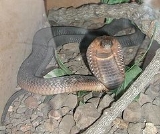
The Egyptian cobra (Naja haje), commonly confused with the snouted cobra (Naja annulifera), is a type of venomous snake native to North Africa and the Middle East. The Egyptian cobra is the most common cobra in Africa and is responsible for many deaths there. Its range extends from the Sahara Desert to the Syrian Desert. The Egyptian cobra, like all other cobras, raises its hood when in danger.
most recognizable characteristics of an Egyptian cobra are its head and hood.

Discussion
Ask a question about 'Egyptian cobra'
Start a new discussion about 'Egyptian cobra'
Answer questions from other users
|
Recent Posts

Encyclopedia
The Egyptian cobra (Naja haje), commonly confused with the snouted cobra (Naja annulifera), is a type of venomous snake native to North Africa and the Middle East. The Egyptian cobra is the most common cobra in Africa and is responsible for many deaths there. Its range extends from the Sahara Desert to the Syrian Desert. The Egyptian cobra, like all other cobras, raises its hood when in danger.
Description
The most recognizable characteristics of an Egyptian cobra are its head and hood. The head is large and depressed with a broad snout. The cobra's eyes are large with a round pupil. Its neck may range from 15-18 cm wide.
The Egyptian cobra is nocturnal, but it can be seen basking in the sun at times in the early morning. Females lay 8-33 eggs in termite mounds, and the eggs hatch after an incubation time of 60 days.
The Egyptian cobra may grow to 5'-6'8" (1.5-2m) in length and specimens as long as 8' have been seen in some areas. This snake preys on small mammals, lizards, toads, and other snakes, including the puff adder and the Cape Cobra.
Habitat
The Egyptian cobra typically makes its home in dry to moist savanna and semi-desert regions with at least some water and vegetation (never in desert regions). The cobra may also be found in oases, agricultural grounds, hills with sparse vegetation, and grasslands. These cobras do also occur in the presence of humans and often enter houses. They are attracted to the human villages by chickens and rats that are attracted by garbage. There are also reports of Egyptian cobras swimming in the Mediterranean sea.
Behavior
The Egyptian cobra is terrestrial and nocturnal in the wild, though in captivity they seem to tend towards diurnality. It can, however, be seen basking in the sun at times in the early morning. It shows a preference for a permanent home in abandoned animal burrows, termite mounds or rock outcrops and the like, sometimes entering human habitations to hunt domestic fowl. It will generally attempt to escape when approached, at least for a few meters, but if threatened it assumes the typical upright posture with the hood expanded.
Venom
The average venom quantity typically reaches 175 to 200 mg in a single bite. It has the third most toxic venom of any cobra, after the Philippine Cobra (Naja philippinensis) and the Cape Cobra. However, the Egyptian cobra is considered to be much deadlier than the Northern Philippine Cobra or Cape cobra because it is much larger, more aggressive, and can inject more venom in a single bite. It has neurotoxic venom which affects the nervous system, stopping the nerve signals from being transmitted to the muscles and at later stages stopping those transmitted to the heart and lungs as well, causing death due to complete respiratory failure. Envenomation causes local pain, severe swelling, bruising, blistering, necrosis and variable non-specific effects which may include headache, nausea, vomiting, abdominal pain, diarrhea, dizziness, collapse or convulsions along with possible moderate to severe flaccid paralysis.
Geographical Range
The Egyptian Cobra ranges across most of North Africa, south to Congo, and throughout most of the Arabian Peninsula.
Myths
Most ancient sources say that Cleopatra committed suicide by being bitten by an aspis, which translates into English as "asp." Plutarch tells us that she did experiments on condemned prisoners and found aspis venom to be the most painless of all fatal poisons. Today it is generally believed that this "aspis" is the Naja haje.
A stylised Egyptian Cobra, representing the goddess Wadjet, was the symbol of sovereignty of the pharaohs, and therefore it is also called Uraeus serpent.
As a pet
The Egyptian cobra garnered increased attention in Canada in the fall of 2006 when a pet cobra became loose and forced the evacuation of a house in Toronto for more than six months when it was believed to have sought refuge in the home's walls.
External links
|
| |
|
|