


Recusancy

Encyclopedia
In the history of England and Wales
, the recusancy was the state of those who refused to attend Anglican services. The individuals were known as "recusants". The term, which derives ultimately from the Latin recusare (to refuse or make an objection), was first used to refer to those who remained within the Catholic Church and did not attend services of the Church of England
, with a 1593 statute determining the penalties against "Popish recusants".
The "Recusancy Acts", which began during the reign of Elizabeth I
and which were repealed in 1650, imposed a number of punishments on those who did not participate in Anglican religious activity, including fines, property confiscation, and imprisonment. Despite their repeal, restrictions against Catholics were still in place until full Catholic Emancipation
in the 19th century. In some cases those adhering to Catholicism
faced capital punishment
, and a number of English and Welsh Catholics executed in the 16th and 17th centuries have been canonised
by the Catholic Church as Christian martyrs
(see List of Catholic martyrs of the English Reformation).
and establishment of the Church of England, from the 16th to the 19th century those guilty of such Nonconformity
, termed "recusants", were subject to civil penalties and sometimes, especially in the earlier part of that period, to criminal penalties. Catholic
s formed a large proportion of recusants, and were those to whom the term initially was applied. Non-Catholic groups composed of Reformed Christians or Protestants who dissented
from the Church of England
were, later, also labeled "recusants". The recusancy laws were in force from the reign of Elizabeth I
to that of George III
, though they were not always enforced with equal intensity.
The first statute to address sectarian dissent from England's official religion was issued in 1593 under Elizabeth I and specifically targeted Catholics, under the title "An Act for restraining Popish recusants". It defined "Popish recusants" as those "convicted for not repairing to some Church, Chapel, or usual place of Common Prayer to hear Divine Service there, but forbearing the same contrary to the tenor of the laws and statutes heretofore made and provided in that behalf." Other acts also targeted Catholic recusants, including statutes passed under James I
and Charles I
, as well as laws defining other offences deemed to be acts of recusancy.
Recusants were subject to various civil disabilities and penalties under English penal laws, most of which were repealed during the Regency
and reign of George IV
(1811–30). The Nuttall Encyclopædia notes that Dissenter
s were largely forgiven by the Act of Toleration
under William III, while Catholics "were not entirely emancipated till 1829".
Early recusants included Protestant dissenters
, whose confession
s derived from the Calvinistic Reformers or Radical Reformers
. With the growth of these latter groups after the Restoration
of Charles II
, they were distinguished from Catholic recusants by the use of the terms "nonconformist" or "dissenter".
Despite being a time of great attrition for the religion in England before Catholic Emancipation
in the 19th century, the recusant period reaped an extensive
harvest of saints and martyrs
. Among the recusants were some high profile aristocratic supporters, such as the Howards and for a time the Plantagenet descended Beauforts, amongst others. This patronage ensured that an organic and rooted English base continued to inform the country's Catholicism, despite later immigration by Irish
and Poles.
In the English speaking world, the Douay-Rheims Bible, translated from the Latin Vulgate by recusants in 1582, and revised by Bishop Richard Challoner
in the mid-1700s, was, until the Second Vatican Council
, the translation used by most Catholics. It is the translation still reportedly preferred by present-day more traditional or traditionalist Catholics.
and peerage
families.
Catholicism remained the majority religion in various pockets, notably in parts of Lancashire
and Cumbria
, and, in Scotland, in parts of the Highlands
and the southern Hebrides
(i.e. South Uist, Benbecula, Eriskay, Barra and Vatersay).
The recusant Howard family
, also known as Fitzalan-Howard, the Dukes of Norfolk
, is the most prominent Catholic family in England. Recusancy has been historically focused in Northern England
. The Acton (also known as Dalberg-Acton and Lyon-Dalberg-Acton) family is a well-known recusant family.
Other recusant families, or branches thereof, include Ainscough
, Almond, Arden (of Longcroft), Arundell, Bedingfeld, Berkeley (of Spetchley), Blount/Blunt, Clifford (of Chudleigh; since 1673), Coates
, Constable, Constable-Maxwell, De Lisle (or de Lisle), Eyre, Eyston, Fermor (of Tusmore
), Fitzherbert
(of Swynnerton), Fitzherbert-Brockholes, Fortescue-Turville, Gillibrand, Goss, Hesketh, Holman, Hornyold, Huddleston, Jerningham, Kerr (Scotland), Mattingly, Payne, Petre
, Riddell, Scarisbrick
, Scrope
(of Bolton), Smythe, Stonor
, Stourton, Talbot, Throckmorton
, Towneley
, De Trafford (or de Trafford), Tichbourne, Trappes-Lomax (Trappes of Nidd), Tresham (of Northamptonshire), Vavasour
, Ward, Weld
, and Weld-Blundell (or Weld Blundell)
.
The will of a William Latewise who died in 1603 in Goosnargh
– part of the parish of Kirkham – which states he was "of Culcheth in the parish of Winwick". One of those preparing his inventory in 1608 was John Sterrope, possibly his son-in-law. Around this time the area around Goosnargh was home to several Catholic families – Keighley, Beesley, Hesketh, Marsden, and Threlfall. Records show that various members of the Latewysse (of Goosnargh) family were fined for recusancy.
In Wales, the few recusant families include the Mostyns (of Mostyn
), the Herberts (of Treowen), the Morgans (of Llantarnam
) and, most notably, the Vaughan family (of Courtfield, near Ross-on-Wye
; the family of Cardinal Vaughan).
Since the 18th century, particularly during the late 19th and early 20th centuries, some wealthy or ennobled families embraced Catholicism, including branches of the Asquith, Bellingham (Ireland), Bowyer (England), Calvert (Maryland), Cary-Elwes/Elwes (since 1872), Feilding (England), Forbes (Ireland), Leslie (Ireland), Fraser (Scotland), Lane-Fox, Meynell, Noel (Gainsborough
), Ashton Case (or Ashton-Case; England), Radcliffe (England), Monckton, Pakenham (Ireland), Pontifex (England), Crichton-Stuart
(Scotland) and Strickland (Counts of Catena, Malta) families. They provided a resurgent English Catholic Church with much-needed financial support. Conversely, some old recusant families, such as the earls of Shrewsbury
, the viscounts Gage
, and the Giffards of Chillington, embraced Anglicanism
.
The principal growth in the numbers of Catholics in modern Britain has been through immigration. In the past Catholic immigrants were Europeans, most notably Irish
, and, later in the 20th century, from Poland
and Lithuania
. There was a steady flow of Anglican lay people and clergy into the Roman Catholic Church over the last decade of the 20th century and, to a lesser degree, since then. Clerical converts include Monsignor Graham Leonard
(former Anglican Bishop of London
); Alan Hopes
(a present-day Auxiliary Bishop of Westminster) and several hundred priests who were received into the Church, mostly from the Church of England
.
Katharine, Duchess of Kent; her son and grandson, Lord Nicholas Windsor
and Edward Windsor, Lord Downpatrick, respectively, both of whose wives are Catholic, and her granddaughter, Lady Marina-Charlotte Windsor
, as well as politicians such as Baroness Masham of Ilton and Ann Widdecombe
, and, most recently, former Prime Minister Tony Blair
, whose wife and children are Catholic, are prominent among laypeople who have converted.
Several prominent newspaper publishers and editors have become Catholics as well – Charles Moore
(The Daily Telegraph
), John Wilkins and Clifford Longley (The Tablet
) and Dr William Oddie (The Catholic Herald
).
The term "recusant" is also used in a more general context to refer to non-compliance with a perceived innovation of questionable orthodoxy, which had become the status quo. Some traditional Catholics have used the term following Vatican II, particularly in defence of the Latin mass
and sacred tradition
.
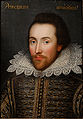 William Shakespeare
was born to a Catholic recusant family. His parents were raised in a time when Catholicism was the faith of England. Shakespeare's mother, Mary Arden, descended from a staunch Catholic family, and his father, John Shakespeare, was listed as a Catholic recusant.
A notable English Catholic, possibly a convert, was composer William Byrd
. Some of Byrd's most popular motet
s were actually written as a type of correspondence to a friend and fellow composer, Philippe de Monte
. De Monte wrote his own motets in response, such as the "Super Flumina Babylonis". These correspondence motets often featured themes of oppression or the hope of deliverance.
The Jacobean poet John Donne
was another notable Englishman who was born into a recusant Catholic family. He later, however, wrote two anti-Catholic polemics and, at the behest of King James I of England
, was ordained into the Church of England.
Guy Fawkes
, an English soldier, along with other recusants or converts, including, among others, Sir Robert Catesby
, Christopher Wright, John Wright
and Thomas Percy
, was arrested and charged with attempting to blow up Parliament
on 5 November 1605. The plot was uncovered and most of the plotters were tried and executed.
Saint Thomas More
is another famous English recusant and martyr from the 16th century.
Other recusants include a large proportion of Jacobites
, such as the Earl of Derwentwater
, and particularly those ennobled in the Jacobite Peerage
.
The native Irish
, for example, while subject to the English crown, were overwhelmingly
opposed to the Anglican and dissenting churches, and almost all remained Catholic, which had tragic implications for the later history of Ireland
(such as the Irish Penal Laws
). The Catholics of Ireland suffered the same penalties as recusants in England, which were exacerbated by impatience with the rebellious nature of the Irish, contempt for a subject race and desire for Irish land and property.
The Recusancy in Scandinavia
, however, was much shorter-lived and less extensive, and did not survive until freedom of religion was re-established there in the 1800s, with almost all Roman Catholics, throughout the 20th century, being converts or immigrants from other countries.
England and Wales
England and Wales is a jurisdiction within the United Kingdom. It consists of England and Wales, two of the four countries of the United Kingdom...
, the recusancy was the state of those who refused to attend Anglican services. The individuals were known as "recusants". The term, which derives ultimately from the Latin recusare (to refuse or make an objection), was first used to refer to those who remained within the Catholic Church and did not attend services of the Church of England
Church of England
The Church of England is the officially established Christian church in England and the Mother Church of the worldwide Anglican Communion. The church considers itself within the tradition of Western Christianity and dates its formal establishment principally to the mission to England by St...
, with a 1593 statute determining the penalties against "Popish recusants".
The "Recusancy Acts", which began during the reign of Elizabeth I
Elizabeth I of England
Elizabeth I was queen regnant of England and Ireland from 17 November 1558 until her death. Sometimes called The Virgin Queen, Gloriana, or Good Queen Bess, Elizabeth was the fifth and last monarch of the Tudor dynasty...
and which were repealed in 1650, imposed a number of punishments on those who did not participate in Anglican religious activity, including fines, property confiscation, and imprisonment. Despite their repeal, restrictions against Catholics were still in place until full Catholic Emancipation
Catholic Emancipation
Catholic emancipation or Catholic relief was a process in Great Britain and Ireland in the late 18th century and early 19th century which involved reducing and removing many of the restrictions on Roman Catholics which had been introduced by the Act of Uniformity, the Test Acts and the penal laws...
in the 19th century. In some cases those adhering to Catholicism
Catholicism
Catholicism is a broad term for the body of the Catholic faith, its theologies and doctrines, its liturgical, ethical, spiritual, and behavioral characteristics, as well as a religious people as a whole....
faced capital punishment
Capital punishment
Capital punishment, the death penalty, or execution is the sentence of death upon a person by the state as a punishment for an offence. Crimes that can result in a death penalty are known as capital crimes or capital offences. The term capital originates from the Latin capitalis, literally...
, and a number of English and Welsh Catholics executed in the 16th and 17th centuries have been canonised
Canonization
Canonization is the act by which a Christian church declares a deceased person to be a saint, upon which declaration the person is included in the canon, or list, of recognized saints. Originally, individuals were recognized as saints without any formal process...
by the Catholic Church as Christian martyrs
Christian martyrs
A Christian martyr is one who is killed for following Christianity, through stoning, crucifixion, burning at the stake or other forms of torture and capital punishment. The word "martyr" comes from the Greek word μάρτυς, mártys, which means "witness."...
(see List of Catholic martyrs of the English Reformation).
History
After the English ReformationEnglish Reformation
The English Reformation was the series of events in 16th-century England by which the Church of England broke away from the authority of the Pope and the Roman Catholic Church....
and establishment of the Church of England, from the 16th to the 19th century those guilty of such Nonconformity
Nonconformism
Nonconformity is the refusal to "conform" to, or follow, the governance and usages of the Church of England by the Protestant Christians of England and Wales.- Origins and use:...
, termed "recusants", were subject to civil penalties and sometimes, especially in the earlier part of that period, to criminal penalties. Catholic
Catholic
The word catholic comes from the Greek phrase , meaning "on the whole," "according to the whole" or "in general", and is a combination of the Greek words meaning "about" and meaning "whole"...
s formed a large proportion of recusants, and were those to whom the term initially was applied. Non-Catholic groups composed of Reformed Christians or Protestants who dissented
Dissenter
The term dissenter , labels one who disagrees in matters of opinion, belief, etc. In the social and religious history of England and Wales, however, it refers particularly to a member of a religious body who has, for one reason or another, separated from the Established Church.Originally, the term...
from the Church of England
Church of England
The Church of England is the officially established Christian church in England and the Mother Church of the worldwide Anglican Communion. The church considers itself within the tradition of Western Christianity and dates its formal establishment principally to the mission to England by St...
were, later, also labeled "recusants". The recusancy laws were in force from the reign of Elizabeth I
Elizabeth I of England
Elizabeth I was queen regnant of England and Ireland from 17 November 1558 until her death. Sometimes called The Virgin Queen, Gloriana, or Good Queen Bess, Elizabeth was the fifth and last monarch of the Tudor dynasty...
to that of George III
George III of the United Kingdom
George III was King of Great Britain and King of Ireland from 25 October 1760 until the union of these two countries on 1 January 1801, after which he was King of the United Kingdom of Great Britain and Ireland until his death...
, though they were not always enforced with equal intensity.
The first statute to address sectarian dissent from England's official religion was issued in 1593 under Elizabeth I and specifically targeted Catholics, under the title "An Act for restraining Popish recusants". It defined "Popish recusants" as those "convicted for not repairing to some Church, Chapel, or usual place of Common Prayer to hear Divine Service there, but forbearing the same contrary to the tenor of the laws and statutes heretofore made and provided in that behalf." Other acts also targeted Catholic recusants, including statutes passed under James I
James I of England
James VI and I was King of Scots as James VI from 24 July 1567 and King of England and Ireland as James I from the union of the English and Scottish crowns on 24 March 1603...
and Charles I
Charles I of England
Charles I was King of England, King of Scotland, and King of Ireland from 27 March 1625 until his execution in 1649. Charles engaged in a struggle for power with the Parliament of England, attempting to obtain royal revenue whilst Parliament sought to curb his Royal prerogative which Charles...
, as well as laws defining other offences deemed to be acts of recusancy.
Recusants were subject to various civil disabilities and penalties under English penal laws, most of which were repealed during the Regency
English Regency
The Regency era in the United Kingdom is the period between 1811—when King George III was deemed unfit to rule and his son, the Prince of Wales, ruled as his proxy as Prince Regent—and 1820, when the Prince Regent became George IV on the death of his father....
and reign of George IV
George IV of the United Kingdom
George IV was the King of the United Kingdom of Great Britain and Ireland and also of Hanover from the death of his father, George III, on 29 January 1820 until his own death ten years later...
(1811–30). The Nuttall Encyclopædia notes that Dissenter
Dissenter
The term dissenter , labels one who disagrees in matters of opinion, belief, etc. In the social and religious history of England and Wales, however, it refers particularly to a member of a religious body who has, for one reason or another, separated from the Established Church.Originally, the term...
s were largely forgiven by the Act of Toleration
Act of Toleration 1689
The Act of Toleration was an act of the English Parliament , the long title of which is "An Act for Exempting their Majestyes Protestant Subjects dissenting from the Church of England from the Penalties of certaine Lawes".The Act allowed freedom of worship to Nonconformists who had pledged to the...
under William III, while Catholics "were not entirely emancipated till 1829".
Early recusants included Protestant dissenters
English Dissenters
English Dissenters were Christians who separated from the Church of England in the 16th, 17th and 18th centuries.They originally agitated for a wide reaching Protestant Reformation of the Established Church, and triumphed briefly under Oliver Cromwell....
, whose confession
Confession of Faith
A Confession of Faith is a statement of doctrine very similar to a creed, but usually longer and polemical, as well as didactic.Confessions of Faith are in the main, though not exclusively, associated with Protestantism...
s derived from the Calvinistic Reformers or Radical Reformers
Radical Reformation
The Radical Reformation was a 16th century response to what was believed to be both the corruption in the Roman Catholic Church and the expanding Magisterial Protestant movement led by Martin Luther and many others. Beginning in Germany and Switzerland, the Radical Reformation birthed many radical...
. With the growth of these latter groups after the Restoration
English Restoration
The Restoration of the English monarchy began in 1660 when the English, Scottish and Irish monarchies were all restored under Charles II after the Interregnum that followed the Wars of the Three Kingdoms...
of Charles II
Charles II of England
Charles II was monarch of the three kingdoms of England, Scotland, and Ireland.Charles II's father, King Charles I, was executed at Whitehall on 30 January 1649, at the climax of the English Civil War...
, they were distinguished from Catholic recusants by the use of the terms "nonconformist" or "dissenter".
Despite being a time of great attrition for the religion in England before Catholic Emancipation
Catholic Emancipation
Catholic emancipation or Catholic relief was a process in Great Britain and Ireland in the late 18th century and early 19th century which involved reducing and removing many of the restrictions on Roman Catholics which had been introduced by the Act of Uniformity, the Test Acts and the penal laws...
in the 19th century, the recusant period reaped an extensive
Eighty-five martyrs of England and Wales
The Eighty-five Martyrs of England and Wales are a group of men who were executed on charges of treason and related offences in the Kingdom of England between 1584 and 1679...
harvest of saints and martyrs
Forty Martyrs of England and Wales
The Forty Martyrs of England and Wales are a group of men and women who were executed for treason and related offences in the Kingdom of England between 1535 and 1679...
. Among the recusants were some high profile aristocratic supporters, such as the Howards and for a time the Plantagenet descended Beauforts, amongst others. This patronage ensured that an organic and rooted English base continued to inform the country's Catholicism, despite later immigration by Irish
Irish people
The Irish people are an ethnic group who originate in Ireland, an island in northwestern Europe. Ireland has been populated for around 9,000 years , with the Irish people's earliest ancestors recorded having legends of being descended from groups such as the Nemedians, Fomorians, Fir Bolg, Tuatha...
and Poles.
In the English speaking world, the Douay-Rheims Bible, translated from the Latin Vulgate by recusants in 1582, and revised by Bishop Richard Challoner
Richard Challoner
Richard Challoner was an English Roman Catholic bishop, a leading figure of English Catholicism during the greater part of the 18th century. He is perhaps most famous for his revision of the Douay Rheims translation of the Bible.-Early life:Challoner was born in the Protestant town of Lewes,...
in the mid-1700s, was, until the Second Vatican Council
Second Vatican Council
The Second Vatican Council addressed relations between the Roman Catholic Church and the modern world. It was the twenty-first Ecumenical Council of the Catholic Church and the second to be held at St. Peter's Basilica in the Vatican. It opened under Pope John XXIII on 11 October 1962 and closed...
, the translation used by most Catholics. It is the translation still reportedly preferred by present-day more traditional or traditionalist Catholics.
Modern usage
As far as the term is used in the present day, "recusant" applies to the descendants of continuously Catholic British gentryGentry
Gentry denotes "well-born and well-bred people" of high social class, especially in the past....
and peerage
Peerage
The Peerage is a legal system of largely hereditary titles in the United Kingdom, which constitute the ranks of British nobility and is part of the British honours system...
families.
Catholicism remained the majority religion in various pockets, notably in parts of Lancashire
Lancashire
Lancashire is a non-metropolitan county of historic origin in the North West of England. It takes its name from the city of Lancaster, and is sometimes known as the County of Lancaster. Although Lancaster is still considered to be the county town, Lancashire County Council is based in Preston...
and Cumbria
Cumbria
Cumbria , is a non-metropolitan county in North West England. The county and Cumbria County Council, its local authority, came into existence in 1974 after the passage of the Local Government Act 1972. Cumbria's largest settlement and county town is Carlisle. It consists of six districts, and in...
, and, in Scotland, in parts of the Highlands
Scottish Highlands
The Highlands is an historic region of Scotland. The area is sometimes referred to as the "Scottish Highlands". It was culturally distinguishable from the Lowlands from the later Middle Ages into the modern period, when Lowland Scots replaced Scottish Gaelic throughout most of the Lowlands...
and the southern Hebrides
Hebrides
The Hebrides comprise a widespread and diverse archipelago off the west coast of Scotland. There are two main groups: the Inner and Outer Hebrides. These islands have a long history of occupation dating back to the Mesolithic and the culture of the residents has been affected by the successive...
(i.e. South Uist, Benbecula, Eriskay, Barra and Vatersay).
The recusant Howard family
Howard family
The Howard family is an English aristocratic family founded by John Howard who was created Duke of Norfolk by Plantagenet monarch Richard III of England in 1483. However, John was also the eldest grandson of the 1st Duke of 1st creation...
, also known as Fitzalan-Howard, the Dukes of Norfolk
Duke of Norfolk
The Duke of Norfolk is the premier duke in the peerage of England, and also, as Earl of Arundel, the premier earl. The Duke of Norfolk is, moreover, the Earl Marshal and hereditary Marshal of England. The seat of the Duke of Norfolk is Arundel Castle in Sussex, although the title refers to the...
, is the most prominent Catholic family in England. Recusancy has been historically focused in Northern England
Northern England
Northern England, also known as the North of England, the North or the North Country, is a cultural region of England. It is not an official government region, but rather an informal amalgamation of counties. The southern extent of the region is roughly the River Trent, while the North is bordered...
. The Acton (also known as Dalberg-Acton and Lyon-Dalberg-Acton) family is a well-known recusant family.
Other recusant families, or branches thereof, include Ainscough
Ainscough
Ainscough is an old Lancashire family name, also spelled Ayscough, Aiskew, Askew, and Ascough.-Origins:It is thought that the name is derived from the Norse words "ask skog". Although other sources suggest that Aiskew is a corruption of the words "Eiki Skogr" translating to Oak Wood...
, Almond, Arden (of Longcroft), Arundell, Bedingfeld, Berkeley (of Spetchley), Blount/Blunt, Clifford (of Chudleigh; since 1673), Coates
Coates
-People:Coates is also a prominent family of English and Scottish origin and could refer to the following people:-Families:*Coates Baronets, of Haypark, Belfast...
, Constable, Constable-Maxwell, De Lisle (or de Lisle), Eyre, Eyston, Fermor (of Tusmore
Tusmore, Oxfordshire
Tusmore is a settlement about north of Bicester in Oxfordshire. It is the location of the Tusmore Park country house and estate.-Manor:Tusmore was settled in Saxon times...
), Fitzherbert
Fitzherbert
Fitzherbert is a constituent ward of Palmerston North, Manawatu-Wanganui, New Zealand.The ward is made up of the suburbs of Turitea, Massey University, Linton and Aokautere.Fitzherbert is the largest ward in area in the city of Palmerston North.-Features:...
(of Swynnerton), Fitzherbert-Brockholes, Fortescue-Turville, Gillibrand, Goss, Hesketh, Holman, Hornyold, Huddleston, Jerningham, Kerr (Scotland), Mattingly, Payne, Petre
Baron Petre
Baron Petre , of Writtle, in the County of Essex, is a title in the Peerage of England. It was created in 1603 for Sir John Petre. He represented Essex in parliament and served as Lord Lieutenant of Essex...
, Riddell, Scarisbrick
Scarisbrick
Scarisbrick is a village and civil parish in West Lancashire, England. It is spread out along the A570 so there is no real village centre, though the junction with the A5147 is close to the geographic centre...
, Scrope
Scrope
-Origin of name:The name may be derived from the old Anglo-Norman word for "crab" and that it began as a nickname for a club-footed illegitimate son of an English princess by a Norman knight. A crab moves sideways and so the name could fit a child with club feet...
(of Bolton), Smythe, Stonor
Stonor
Stonor Park is a private park and historic country house at Stonor, about north of Henley-on-Thames in Oxfordshire, England, close to the county boundary with Buckinghamshire.-Setting:...
, Stourton, Talbot, Throckmorton
Francis Throckmorton
Sir Francis Throckmorton was a conspirator against Queen Elizabeth I of England.He was the son of Sir John Throckmorton and a nephew of Sir Nicholas Throckmorton, one of Elizabeth's diplomats. Sir John had held the post of Chief Justice of Chester but was removed in 1579, a year before his death...
, Towneley
Towneley (family)
The Towneley or Townley family are an English recusant family whose ancestry can be traced back to Norman England. They take their name from Towneley Hall in Burnley, Lancashire, which was the family seat until its sale in 1901.-The Towneleys of Towneley Hall:...
, De Trafford (or de Trafford), Tichbourne, Trappes-Lomax (Trappes of Nidd), Tresham (of Northamptonshire), Vavasour
Vavasour (family)
The Vavasour family are an English Catholic family whose history dates back to Norman times. They are featured on the Battle Abbey Roll and lived at Hazlewood Castle from the time of the Domesday Book until 1908....
, Ward, Weld
Weld-Blundell family
The Weld family, which became in its main branch the Weld-Blundell family, is an old English family that claims descent from Eadric the Wild and has branches in several parts of England and America. The main branch are descended from Humphrey Weld, Lord Mayor of London, whose grandson of the same...
, and Weld-Blundell (or Weld Blundell)
Weld-Blundell family
The Weld family, which became in its main branch the Weld-Blundell family, is an old English family that claims descent from Eadric the Wild and has branches in several parts of England and America. The main branch are descended from Humphrey Weld, Lord Mayor of London, whose grandson of the same...
.
The will of a William Latewise who died in 1603 in Goosnargh
Goosnargh
Goosnargh is a village and civil parish on the north side of Preston, Lancashire, England. The village lies between Broughton and Longridge, and mostly lies in the civil parish of Whittingham, although the ancient centre lies in the civil parish of Goosnargh...
– part of the parish of Kirkham – which states he was "of Culcheth in the parish of Winwick". One of those preparing his inventory in 1608 was John Sterrope, possibly his son-in-law. Around this time the area around Goosnargh was home to several Catholic families – Keighley, Beesley, Hesketh, Marsden, and Threlfall. Records show that various members of the Latewysse (of Goosnargh) family were fined for recusancy.
In Wales, the few recusant families include the Mostyns (of Mostyn
Mostyn
Mostyn is a small village in Flintshire, North Wales, lying on the estuary of the River Dee, and located near the town of Holywell.Mostyn once served as a port from which ferries used to sail to Dublin on the Liverpool-Dublin route...
), the Herberts (of Treowen), the Morgans (of Llantarnam
Llantarnam
Llantarnam is a community and suburb of Cwmbran in the county borough of Torfaen in southeast Wales.Llantarnam Abbey is a Cistercian abbey founded in 1179 as a daughter house of Strata Florida Abbey...
) and, most notably, the Vaughan family (of Courtfield, near Ross-on-Wye
Ross-on-Wye
Ross-on-Wye is a small market town with a population of 10,089 in southeastern Herefordshire, England, located on the River Wye, and on the northern edge of the Forest of Dean.-History:...
; the family of Cardinal Vaughan).
Since the 18th century, particularly during the late 19th and early 20th centuries, some wealthy or ennobled families embraced Catholicism, including branches of the Asquith, Bellingham (Ireland), Bowyer (England), Calvert (Maryland), Cary-Elwes/Elwes (since 1872), Feilding (England), Forbes (Ireland), Leslie (Ireland), Fraser (Scotland), Lane-Fox, Meynell, Noel (Gainsborough
Earl of Gainsborough
Earl of Gainsborough is a title that has been created twice, once in the Peerage of England and once in the Peerage of the United Kingdom. The first creation ended in extinction when the sixth Earl died without heirs...
), Ashton Case (or Ashton-Case; England), Radcliffe (England), Monckton, Pakenham (Ireland), Pontifex (England), Crichton-Stuart
Marquess of Bute
Marquess of the County of Bute, shortened in general usage to Marquess of Bute, is a title in the Peerage of Great Britain. It was created in 1796 for John Stuart, 4th Earl of Bute.-Family history:...
(Scotland) and Strickland (Counts of Catena, Malta) families. They provided a resurgent English Catholic Church with much-needed financial support. Conversely, some old recusant families, such as the earls of Shrewsbury
Earl of Shrewsbury
Earl of Shrewsbury is a hereditary title of nobility created twice in the peerage of England.-First creation, 1074:The first creation occurred in 1074 for Roger de Montgomerie, one of William the Conqueror's principal counselors...
, the viscounts Gage
Viscount Gage
Viscount Gage, of Castle Island in the County of Kerry of the Kingdom of Ireland, is a title in the Peerage of Ireland. It was created in 1720 for Thomas Gage, along with the subsidiary title of Baron Gage, of Castlebar in the County of Mayo, also in the Peerage of Ireland. In 1744 he also...
, and the Giffards of Chillington, embraced Anglicanism
Church of England
The Church of England is the officially established Christian church in England and the Mother Church of the worldwide Anglican Communion. The church considers itself within the tradition of Western Christianity and dates its formal establishment principally to the mission to England by St...
.
The principal growth in the numbers of Catholics in modern Britain has been through immigration. In the past Catholic immigrants were Europeans, most notably Irish
Irish people
The Irish people are an ethnic group who originate in Ireland, an island in northwestern Europe. Ireland has been populated for around 9,000 years , with the Irish people's earliest ancestors recorded having legends of being descended from groups such as the Nemedians, Fomorians, Fir Bolg, Tuatha...
, and, later in the 20th century, from Poland
Poland
Poland , officially the Republic of Poland , is a country in Central Europe bordered by Germany to the west; the Czech Republic and Slovakia to the south; Ukraine, Belarus and Lithuania to the east; and the Baltic Sea and Kaliningrad Oblast, a Russian exclave, to the north...
and Lithuania
Lithuania
Lithuania , officially the Republic of Lithuania is a country in Northern Europe, the biggest of the three Baltic states. It is situated along the southeastern shore of the Baltic Sea, whereby to the west lie Sweden and Denmark...
. There was a steady flow of Anglican lay people and clergy into the Roman Catholic Church over the last decade of the 20th century and, to a lesser degree, since then. Clerical converts include Monsignor Graham Leonard
Graham Leonard
Graham Douglas Leonard KCVO was a British priest. His principal ministry was as a bishop of the Church of England but, after his retirement as the Bishop of London, he became a Roman Catholic, becoming the most senior Anglican cleric to do so since the English Reformation...
(former Anglican Bishop of London
Bishop of London
The Bishop of London is the ordinary of the Church of England Diocese of London in the Province of Canterbury.The diocese covers 458 km² of 17 boroughs of Greater London north of the River Thames and a small part of the County of Surrey...
); Alan Hopes
Alan Hopes
Alan Stephen Hopes, is a Roman Catholic Bishop in Great Britain. He currently serves as Auxiliary Bishop of the Westminster and titular Bishop of Cuncacestre. He was born in Oxford, England on 17 March 1944....
(a present-day Auxiliary Bishop of Westminster) and several hundred priests who were received into the Church, mostly from the Church of England
Church of England
The Church of England is the officially established Christian church in England and the Mother Church of the worldwide Anglican Communion. The church considers itself within the tradition of Western Christianity and dates its formal establishment principally to the mission to England by St...
.
Katharine, Duchess of Kent; her son and grandson, Lord Nicholas Windsor
Lord Nicholas Windsor
The Lord Nicholas Windsor is the youngest child of the Duke and Duchess of Kent, a great-grandson of King George V of the United Kingdom, and a first cousin once removed of Queen Elizabeth II....
and Edward Windsor, Lord Downpatrick, respectively, both of whose wives are Catholic, and her granddaughter, Lady Marina-Charlotte Windsor
Lady Marina-Charlotte Windsor
The Lady Marina Charlotte Windsor is the elder daughter of George Windsor, Earl of St Andrews and Sylvana Windsor, Countess of St Andrews. She was born at the Rosie Hospital in Cambridge and named for her great-grandmother, Princess Marina, Duchess of Kent...
, as well as politicians such as Baroness Masham of Ilton and Ann Widdecombe
Ann Widdecombe
Ann Noreen Widdecombe is a former British Conservative Party politician and has been a novelist since 2000. She is a Privy Councillor and was the Member of Parliament for Maidstone from 1987 to 1997 and for Maidstone and The Weald from 1997 to 2010. She was a social conservative and a member of...
, and, most recently, former Prime Minister Tony Blair
Tony Blair
Anthony Charles Lynton Blair is a former British Labour Party politician who served as the Prime Minister of the United Kingdom from 2 May 1997 to 27 June 2007. He was the Member of Parliament for Sedgefield from 1983 to 2007 and Leader of the Labour Party from 1994 to 2007...
, whose wife and children are Catholic, are prominent among laypeople who have converted.
Several prominent newspaper publishers and editors have become Catholics as well – Charles Moore
Charles Moore (journalist)
Charles Hilary Moore is a British journalist and former editor of The Daily Telegraph.-Early life:He was educated at Eton and Trinity College, Cambridge where he was awarded a BA in History and was a friend of Oliver Letwin.-Career:A former editor of The Spectator , the Sunday Telegraph and The...
(The Daily Telegraph
The Daily Telegraph
The Daily Telegraph is a daily morning broadsheet newspaper distributed throughout the United Kingdom and internationally. The newspaper was founded by Arthur B...
), John Wilkins and Clifford Longley (The Tablet
The Tablet
The Tablet is a Catholic international weekly review published in London. Contributors to its pages have included Evelyn Waugh, Graham Greene, Pope Benedict XVI and Pope Paul VI ....
) and Dr William Oddie (The Catholic Herald
The Catholic Herald
The Catholic Herald is a London-based Roman Catholic newspaper, published in broadsheet format and retailing at £1.50 ....
).
The term "recusant" is also used in a more general context to refer to non-compliance with a perceived innovation of questionable orthodoxy, which had become the status quo. Some traditional Catholics have used the term following Vatican II, particularly in defence of the Latin mass
Latin Mass
The term Latin Mass refers to the liturgy of the Roman Catholic Mass celebrated in Latin.The term is frequently used to denote the Tridentine Mass: that is, the Roman-Rite liturgy of the Mass celebrated in accordance with the successive editions of the Roman Missal published between 1570 and 1962...
and sacred tradition
Sacred Tradition
Sacred Tradition or Holy Tradition is a theological term used in some Christian traditions, primarily in the Roman Catholic, Anglican, Eastern Orthodox and Oriental Orthodox traditions, to refer to the fundamental basis of church authority....
.
Individuals
William Shakespeare
William Shakespeare was an English poet and playwright, widely regarded as the greatest writer in the English language and the world's pre-eminent dramatist. He is often called England's national poet and the "Bard of Avon"...
was born to a Catholic recusant family. His parents were raised in a time when Catholicism was the faith of England. Shakespeare's mother, Mary Arden, descended from a staunch Catholic family, and his father, John Shakespeare, was listed as a Catholic recusant.
A notable English Catholic, possibly a convert, was composer William Byrd
William Byrd
William Byrd was an English composer of the Renaissance. He wrote in many of the forms current in England at the time, including various types of sacred and secular polyphony, keyboard and consort music.-Provenance:Knowledge of Byrd's biography expanded in the late 20th century, thanks largely...
. Some of Byrd's most popular motet
Motet
In classical music, motet is a word that is applied to a number of highly varied choral musical compositions.-Etymology:The name comes either from the Latin movere, or a Latinized version of Old French mot, "word" or "verbal utterance." The Medieval Latin for "motet" is motectum, and the Italian...
s were actually written as a type of correspondence to a friend and fellow composer, Philippe de Monte
Philippe de Monte
Philippe de Monte , sometimes known as Philippus de Monte, was a Flemish composer of the late Renaissance. He was a member of the 3rd generation madrigalists and wrote more madrigals than any other composer of the time...
. De Monte wrote his own motets in response, such as the "Super Flumina Babylonis". These correspondence motets often featured themes of oppression or the hope of deliverance.
The Jacobean poet John Donne
John Donne
John Donne 31 March 1631), English poet, satirist, lawyer, and priest, is now considered the preeminent representative of the metaphysical poets. His works are notable for their strong and sensual style and include sonnets, love poetry, religious poems, Latin translations, epigrams, elegies, songs,...
was another notable Englishman who was born into a recusant Catholic family. He later, however, wrote two anti-Catholic polemics and, at the behest of King James I of England
James I of England
James VI and I was King of Scots as James VI from 24 July 1567 and King of England and Ireland as James I from the union of the English and Scottish crowns on 24 March 1603...
, was ordained into the Church of England.
Guy Fawkes
Guy Fawkes
Guy Fawkes , also known as Guido Fawkes, the name he adopted while fighting for the Spanish in the Low Countries, belonged to a group of provincial English Catholics who planned the failed Gunpowder Plot of 1605.Fawkes was born and educated in York...
, an English soldier, along with other recusants or converts, including, among others, Sir Robert Catesby
Robert Catesby
Robert Catesby , was the leader of a group of provincial English Catholics who planned the failed Gunpowder Plot of 1605....
, Christopher Wright, John Wright
John Wright (Gunpowder Plot)
John Wright , and Christopher Wright , were members of the group of provincial English Catholics who planned the failed Gunpowder Plot of 1605, a conspiracy to assassinate King James I by blowing up the House of Lords. Their sister married another plotter, Thomas Percy...
and Thomas Percy
Thomas Percy (plotter)
Thomas Percy was a member of the group of provincial English Catholics who planned the failed Gunpowder Plot of 1605. A tall, physically impressive man, little is known of his early life beyond his matriculation in 1579 to Peterhouse College in Cambridge, and his marriage in 1591 to Martha Wright...
, was arrested and charged with attempting to blow up Parliament
Gunpowder Plot
The Gunpowder Plot of 1605, in earlier centuries often called the Gunpowder Treason Plot or the Jesuit Treason, was a failed assassination attempt against King James I of England and VI of Scotland by a group of provincial English Catholics led by Robert Catesby.The plan was to blow up the House of...
on 5 November 1605. The plot was uncovered and most of the plotters were tried and executed.
Saint Thomas More
Thomas More
Sir Thomas More , also known by Catholics as Saint Thomas More, was an English lawyer, social philosopher, author, statesman and noted Renaissance humanist. He was an important councillor to Henry VIII of England and, for three years toward the end of his life, Lord Chancellor...
is another famous English recusant and martyr from the 16th century.
Other recusants include a large proportion of Jacobites
Jacobitism
Jacobitism was the political movement in Britain dedicated to the restoration of the Stuart kings to the thrones of England, Scotland, later the Kingdom of Great Britain, and the Kingdom of Ireland...
, such as the Earl of Derwentwater
Earl of Derwentwater
Earl of Derwentwater was a title in the Peerage of England. It was created in 1688 for Sir Francis Radclyffe, 3rd Baronet. He was made Baron Tyndale, of Tyndale in the County of Northumberland, and Viscount Radclyffe and Langley at the same time, also in the Peerage of England. He was succeeded by...
, and particularly those ennobled in the Jacobite Peerage
Jacobite peerage
After the deposition by the English parliament in February 1689 of King James II and VII from the thrones of England and Ireland , he and his successors continued to create peers and baronets, which they believed was their right...
.
Other countries
The phenomenon of recusancy is primarily applied to English, Scottish and Welsh Roman Catholics, but there were other instances in Europe.The native Irish
Irish people
The Irish people are an ethnic group who originate in Ireland, an island in northwestern Europe. Ireland has been populated for around 9,000 years , with the Irish people's earliest ancestors recorded having legends of being descended from groups such as the Nemedians, Fomorians, Fir Bolg, Tuatha...
, for example, while subject to the English crown, were overwhelmingly
opposed to the Anglican and dissenting churches, and almost all remained Catholic, which had tragic implications for the later history of Ireland
Ireland
Ireland is an island to the northwest of continental Europe. It is the third-largest island in Europe and the twentieth-largest island on Earth...
(such as the Irish Penal Laws
Penal Laws (Ireland)
The term Penal Laws in Ireland were a series of laws imposed under English and later British rule that sought to discriminate against Roman Catholics and Protestant dissenters in favour of members of the established Church of Ireland....
). The Catholics of Ireland suffered the same penalties as recusants in England, which were exacerbated by impatience with the rebellious nature of the Irish, contempt for a subject race and desire for Irish land and property.
The Recusancy in Scandinavia
Scandinavia
Scandinavia is a cultural, historical and ethno-linguistic region in northern Europe that includes the three kingdoms of Denmark, Norway and Sweden, characterized by their common ethno-cultural heritage and language. Modern Norway and Sweden proper are situated on the Scandinavian Peninsula,...
, however, was much shorter-lived and less extensive, and did not survive until freedom of religion was re-established there in the 1800s, with almost all Roman Catholics, throughout the 20th century, being converts or immigrants from other countries.
See also
- NonconformismNonconformismNonconformity is the refusal to "conform" to, or follow, the governance and usages of the Church of England by the Protestant Christians of England and Wales.- Origins and use:...
- PapistPapistPapist is a term or an anti-Catholic slur, referring to the Roman Catholic Church, its teachings, practices, or adherents. The term was coined during the English Reformation to denote a person whose loyalties were to the Pope, rather than to the Church of England...
- Priest holePriest hole"Priest hole" is the term given to hiding places for priests built into many of the principal Catholic houses of England during the period when Catholics were persecuted by law in England, from the beginning of the reign of Queen Elizabeth I in 1558....
- Recusancy in IrelandRecusancy in IrelandThe Recusancy referred to those who refused to attend services of the established Church of Ireland. The individuals were known as "recusants". The term, which derives ultimately from the Latin recusare , was first used in England to refer to those who remained within the Catholic Church and did...
- Roman Catholicism in England and Wales
- Roman Catholicism in IrelandRoman Catholicism in IrelandThe Catholic Church in Ireland is part of the worldwide Catholic Church, the Christian Church with full communion with the Pope, currently Benedict XVI...
- Roman Catholicism in ScotlandRoman Catholicism in ScotlandRoman Catholicism in Scotland , overseen by the Scottish Bishops' Conference, is part of the worldwide Catholic Church, the Christian Church in full communion with the Pope, currently Pope Benedict XVI. After being firmly established in Scotland for a millennium, Catholicism was outlawed following...
External links
- "Thames Valley Papists" from Tony Hadland, Reformation to Emancipation, 1534 – 1829,(published 1992 in hard copy as ISBN 0950743143; electronic version of 2001 added illustrations).
- "Lyford Grange Agnus Dei", Global Net, banned Papal medallion, hidden in roof timbers for 400 years, found in 1959.
