
All Topics  
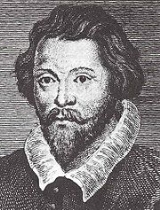
William Byrd

 
William Byrd

   Email Print
   Bookmark   Link


William Byrd


William Byrd (c. 1540 – 4 July 1623) was an English composer
Composer

A composer is a person who creates music, usually in the medium of musical notation, for interpretation and performance. The level of distinction between composers and other musicians varies, which affects issues such as copyright and the deference given to individual interpretations of a particular piece of music....
 of the Renaissance
Renaissance music

Renaissance music is European music written during the Renaissance, approximately 1400 - 1600. Dates of classical music eras, given the lack of abrupt shifts in musical thinking during the 15th century....
. He cultivated many of the forms current in England at the time, including various types of sacred and secular polyphony
Polyphony

In music, polyphony is a texture consisting of two or more independent melodic voice , as opposed to music with just one voice or music with one dominant melodic voice accompanied by chord s ....
, keyboard
Keyboard instrument

A keyboard instrument is any musical instrument played using a musical keyboard. The most common of these is the piano. Other widely used keyboard instruments include various types of organ s as well as other mechanical, electromechanical and electronic musical instrument....
 and consort
Consort

A consort is a marriage or companion, often of royalty or a deity, sometimes slightly inferior in function/status.* Queen consort, wife of a reigning king...
 music

knowledge of Byrd's biography has expanded in recent years, thanks largely to the research of John Harley (Harley, 1997).


Discussion
Ask a question about 'William Byrd'
Start a new discussion about 'William Byrd'
Answer questions from other users
Full Discussion Forum


Recent Posts


Encyclopedia


William Byrd
William Byrd (c. 1540 – 4 July 1623) was an English composer
Composer

A composer is a person who creates music, usually in the medium of musical notation, for interpretation and performance. The level of distinction between composers and other musicians varies, which affects issues such as copyright and the deference given to individual interpretations of a particular piece of music....
 of the Renaissance
Renaissance music

Renaissance music is European music written during the Renaissance, approximately 1400 - 1600. Dates of classical music eras, given the lack of abrupt shifts in musical thinking during the 15th century....
. He cultivated many of the forms current in England at the time, including various types of sacred and secular polyphony
Polyphony

In music, polyphony is a texture consisting of two or more independent melodic voice , as opposed to music with just one voice or music with one dominant melodic voice accompanied by chord s ....
, keyboard
Keyboard instrument

A keyboard instrument is any musical instrument played using a musical keyboard. The most common of these is the piano. Other widely used keyboard instruments include various types of organ s as well as other mechanical, electromechanical and electronic musical instrument....
 and consort
Consort

A consort is a marriage or companion, often of royalty or a deity, sometimes slightly inferior in function/status.* Queen consort, wife of a reigning king...
 music

Provenance

Our knowledge of Byrd's biography has expanded in recent years, thanks largely to the research of John Harley (Harley, 1997). Following the discovery of a document dated 2 October 1598 in which Byrd's age is given as ‘58 years or ther abouts’ it now appears that he was born in 1540 or late 1539. The older dating 1542-3 is derived from Byrd's will (endorsed on 22 November 1622) which describes him as ‘in the 80th year of my age’. It now becomes clear that it must have been drafted about three years earlier than the date of endorsement. Byrd was born in London (not Lincolnshire
Lincolnshire

Lincolnshire is a Counties of England in the east of England. It borders Norfolk, Cambridgeshire, Rutland, Leicestershire, Nottinghamshire, South Yorkshire, and the East Riding of Yorkshire....
 as previously supposed), the son of a Thomas Byrd (not Thomas Byrd of the Chapel Royal) about whom little is known. Byrd had two brothers, Symond and John, and four sisters. It is clear from a reference in the prefatory material in the Tallis/Byrd Cantiones of 1575 that Byrd was a pupil of Thomas Tallis
Thomas Tallis

Thomas Tallis was an English composer. Tallis flourished as a church musician in Tudor period. He occupies a primary place in anthologies of English church music, and is considered among the best of its earliest composers....
, then the leading composing member of the Chapel Royal
Chapel Royal

A Chapel Royal is a department of the Ecclesiastical Household of the Monarchy in right of each of the Commonwealth realms, formally known as the royal Free Chapel of the Household....
 Choir. Byrd also worked in collaboration with two other Chapel Royal singingmen, John Sheppard and William Mundy, on one of his earliest compositions, a contribution to a joint setting of the alternatim
Alternatim

Alternatim refers to a technique of liturgical musical performance. A specific part of the Ordinary of the Mass would be divided into versets. Each verset would be performed by one of two groups of singers in alternation with the other....
 psalm In exitu Israel composed for the procession to the font at the Paschal Vigil. As an item for the Sarum
Sarum

Sarum may refer to...
 liturgy this was presumably composed near the end of the reign of Mary Tudor
Mary Tudor

Mary Tudor may refer to:*Mary I of England, daughter of Henry VIII and Katherine of Aragon, d.1558*Mary Tudor, Queen of France, daughter of Henry VII of England, wife of Louis XII of France and then of Charles Brandon, 1st duke of Suffolk...
 (1553-1558), whose Catholic
Roman Catholic Church

The Roman Catholic Church, officially known as the Catholic Church is the world's largest Christianity Ecclesia , representing over half of all Christians and one-sixth of the world population....
 beliefs impelled her to revive Sarum liturgical practices during her brief reign. In view of these contacts it is reasonable to speculate that Byrd was a Chapel Royal choirboy, though unfortunately the surviving records do not name the choristers individually.

Early years

A few other compositions by Byrd should probably be assigned to his teenage years. Apart from his contribution to In exitu Israel (Similes illis fiant a4), these include his setting of the Easter
Easter

Easter is the most important religious feast in the Christianity liturgical year.Christians believe that Jesus was Resurrection of Jesus from the dead three days after his Crucifixion of Jesus, and celebrate this resurrection on Easter Day or Easter Sunday , two days after Good Friday....
 responsory
Responsory

A responsory or respond is a type of chant in western Christian liturgies....
 Christus resurgens (a4) which was not published until 1605, but which as another Sarum liturgical unit could also have been composed during Mary's reign. Some of the hymns and antiphons for keyboard and for consort
Consort

A consort is a marriage or companion, often of royalty or a deity, sometimes slightly inferior in function/status.* Queen consort, wife of a reigning king...
 may also date from this period, though it is also possible that the consort pieces may have been composed in Lincoln
Lincoln, Lincolnshire

Lincoln is a cathedral city and county town of Lincolnshire, England.The non-metropolitan district of Lincoln has a population of around 101,000 - the 2001 census gave the entire urban area of Lincoln a population of 120,779....
 for the musical training of choirboys.

Byrd's first known professional employment was an organist and choirmaster of Lincoln Cathedral
Lincoln Cathedral

Lincoln Cathedral is a historic Anglican cathedral in Lincoln, Lincolnshire in England and seat of the Diocese of Lincoln in the Church of England....
, a post which he held from 25 March 1563. Residing at 6 Minster Yard Lincoln, he remained in post until 1572. His period at Lincoln was not entirely trouble-free, for on 19 November 1569 the Dean and Chapter cited him for ‘certain matters alleged against him’ as the result of which his salary was suspended. Since Puritanism was influential at Lincoln, it is possible that the allegations were connected with over-elaborate choral polyphony
Polyphony

In music, polyphony is a texture consisting of two or more independent melodic voice , as opposed to music with just one voice or music with one dominant melodic voice accompanied by chord s ....
 or organ playing. A second directive dated 29 November issued detailed instructions regarding Byrd's use of the organ in the liturgy. On 14 September 1568 Byrd married Julian Birley, a long-lasting and fruitful union which produced at least seven children.

The 1560s were also important formative years for Byrd the composer. The Short Service, an unpretentious setting of items for the Anglican Matins
Matins

Matins is the early morning or night prayer service in the Roman Catholic Church, Anglicanism, Lutheran and Eastern Orthodoxy liturgy of the canonical hours....
, Communion
Communion

Communion is a polyvalent term. Though not Christian-specific, the term "communion" has several denotations within the Christian traditions. It may refer to:...
 and Evensong
Evensong

The term evensong can refer to the following:*Evening Prayer , the Anglicanism liturgy of Evening Prayer , especially so called when it is sung....
 services, which seems to designed to comply with the Protestant reformers’ demand for clear words and simple musical textures, may well have been composed during the Lincoln years. It is at any rate clear that Byrd was composing Anglican church music, for when he left Lincoln the Dean and Chapter continued to pay him at a reduced rate on condition that he would send the cathedral his compositions. Byrd had also taken serious strides with instrumental music. The seven In Nomine settings for consort (two a4 and five (a5), at least one of the consort fantasia
Fantasia (music)

The fantasia is a musical composition with its roots in the art of improvisation. Because of this, it seldom approximates the textbook rules of any strict musical form ....
s (Neighbour F1 a6) and a number of important keyboard works have been assigned to the Lincoln years. The latter include the Ground in Gamut (described as ‘Mr Byrd's old ground’) by Thomas Tomkins
Thomas Tomkins

Thomas Tomkins was a Wales-born composer of Cornish origins of the late Tudor dynasty and early Stuart dynasty period. In addition to being one of the prominent members of the English Madrigal School, he was a skilled composer of keyboard and consort of instruments music....
, the A minor fantasia and probably the first of Byrd's great series of keyboard pavans and galliards, a composition which was transcribed by Byrd from an original for five-part consort. All these show Byrd gradually emerging as a major figure on the Elizabethan musical landscape.

Some sets of keyboard variations, such as The Hunt's Up and the imperfectly preserved set on Gipsies’ Round also seem to be early works. As we have seen, Byrd had begun setting Latin liturgical texts as a teenager, and he seems to have continued to do so at Lincoln. Two exceptional large-scale psalm motets, Ad Dominum cum tribularer (a8) and Domine quis habitabit (a9) are Byrd's contribution to a genre cultivated by Robert White
Robert White

Robert White may refer to:* Robert White , Motown session guitarist* Robert J. White, American surgeon, pioneering brain/head transplant surgeon...
 and Robert Parsons
Robert Parsons

Robert Parsons may refer to:* Robert Parsons , English composer* Robert Parsons , English priest* Bob Parsons , New Zealand football player...
. De lamentatione, another early work, is a contribution to the Elizabethan practice of setting groups of verses from the Lamentations of Jeremiah following the format of the Tenebrae
Tenebrae

Tenebrae may refer to:* Tenebrae, a Christian worship service held during Holy Week * Tenebrae , a horror film by Dario Argento* Tenebrae , soundtrack album for the Dario Argento film...
 lessons sung in the Catholic rite during the last three days of Holy Week
Holy Week

Holy Week in Christianity is the last week of Lent and the week before Easter. It includes the religious holidays of Palm Sunday, Maundy Thursday and Good Friday, and lasts from Palm Sunday until but not including Easter Sunday, as Easter Sunday is the first day of the new season of Pentecostarion....
, other contributors including Tallis, White, Parsley and the elder Ferrabosco. It is likely that this practice was an expression of Elizabethan Catholic nostalgia, as a number of the texts suggest.

The Chapel Royal

Byrd obtained the prestigious post of Gentleman of the Chapel Royal in 1572 following the death of Robert Parsons, a gifted composer who drowned in the Trent
Trent

Trent may refer to:...
 near Newark
Newark-on-Trent

Newark-on-Trent is a market town in Nottinghamshire in the East Midlands region of England....
 on 25 January of that year. Almost from the outset Byrd is named as ‘organist’, which however was not a designated post but an occupation for any Chapel Royal member capable of filling it. This career move vastly increased Byrd's opportunities to widen his scope as a composer and also to make contacts at Court. Queen Elizabeth (1558-1603) was a moderate Protestant who eschewed the more extreme forms of Puritanism and retained a fondness for elaborate ritual, besides being a music lover and keyboard player herself. Byrd's output of Anglican church music (defined in the strictest sense as sacred music designed for performance in church) is surprisingly small, but it stretches the limits of elaboration then regarded as acceptable by some reforming Protestants who regarded highly wrought music as a distraction from the Word of God.

Cantiones quae ab argumento sacrae vocantur (1575)

In 1575 Byrd and Tallis were jointly granted a patent for the printing of music and ruled music paper for 21 years, one of a number of patents issued by the Crown for the printing of books on various subjects. The two musicians used the services of the French Huguenot
Huguenot

The Huguenots were members of the Protestantism Reformed Church of France of France from the sixteenth to the eighteenth centuries....
 printer Thomas Vautrollier, who had settled in England and previously produced an edition of a collection of Lassus chansons in London (Receuil du mellange, 1570). The two monopolists took advantage of the patent to produce a grandiose joint publication under the title Cantiones que ab argumento sacrae vocantur consisting of 34 Latin motets dedicated to the Queen herself and accompanied by elaborate prefatory matter including poems in Latin elegiac
Elegiac

Elegiac refers either to those compositions that are like elegy or to a specific poetic meter used in Classical elegies. The Classical elegiac meter has two lines, making it a couplet: a line of dactylic hexameter, followed by a line of dactylic pentameter....
s by the schoolmaster Richard Mulcaster
Richard Mulcaster

Richard Mulcaster , is known best for his headmasterships and pedagogy writings. He is often regarded as the founder of English Language lexicography....
 and the young courtier Ferdinand Heybourne (aka Richardson). There are 17 motets each by Tallis and Byrd, one for each year of the Queen's reign.

Byrd's contribution to the Cantiones is highly variegated in character. The inclusion of Laudate pueri (a6) which proves to be an instrumental fantasia with words added after composition, is one sign that Byrd had some difficulty in assembling enough material for the collection. Diliges Dominum (a8), which may also originally have been untexted, is an eight-in-four retrograde canon
Canon (music)

In music, a canon is a counterpoint composition that employs a melody with one or more imitations of the melody played after a given duration . The initial melody is called the leader , while the imitative melody is called the follower which is played in a different voice....
 of little musical interest. Also belonging to the more archaic stratum of motets is Libera me Domine (a5), a cantus firmus
Cantus firmus

In music, a cantus firmus is a pre-existing melody forming the basis of a polyphony composition .The plural of this Latin term is , though one occasionally sees the corrupt form canti firmi....
 setting of the ninth responsory at Matins for the Office for the Dead, which takes its point of departure from the setting by Robert Parsons, while Miserere mihi (a6), a setting of a Compline
Compline

Compline is the final church service of the day in the Christian tradition of canonical hours. The English word Compline is derived from the Latin completorium, as Compline is the completion of the working day....
 antiphon often used by Tudor composers for didactic cantus firmus exercises, incorporates a four-in-two canon. Tribue Domine (a6) is a large-scale sectional composition setting a from a medieval collection of Meditationes which was commonly attributed to St Augustine, composed in a style which owes much to earlier Tudor
Tudor

Tudor may refer to:...
 settings of votive antiphons as a mosaic of full and semichoir passages. Byrd sets it in three sections, each beginning with a semichoir passage in archaic style.

Byrd's contribution to the Cantiones also includes compositions in a more forward-looking manner which point the way forwards to his motets of the 1580s. Some of them show the influence of the motets of Alfonso Ferrabosco I (1543-1588), a Bolognese musician who worked in the Tudor court at intervals between 1562 and 1578. Ferrabosco's motets provided direct models for Byrd's Emendemus in melius (a5), O lux beata Trinitas (a6), Domine secundum actum meum (a6) and Siderum rector (a5) as well as a more generalized paradigm for what Joseph Kerman
Joseph Kerman

Joseph Kerman is a well-known writer on music and musicologist. He is a professor emeritus at University of California, Berkeley.In 1997-1998 Kerman was the Norton professor at Harvard University....
 has called Byrd's ‘affective-imitative’ style, a method of setting pathetic texts in extended paragraphs based on subjects employing curving lines in fluid rhythm and contrapuntal techniques which Byrd learnt from his study of Ferrabosco.

The Cantiones were a financial failure. In 1577 Byrd and Tallis were forced to petition Queen Elizabeth for financial help pleading that the publication had ‘fallen oute to oure greate losse’ and that Tallis was now ‘verie aged’. They were subsequently granted the leasehold on various lands in East Anglia
East Anglia

East Anglia is a region of eastern England. It was named after one of the ancient Heptarchy, the Kingdom of the East Angles, which was in turn named after the homeland of the Angles, Angeln, in northern Germany....
 and the West Country
West Country

The West Country is an informal term for the area of south western England roughly corresponding to the modern South West England government region....
 for a period of 21 years.

Roman Catholicism

From the early 1570s onwards Byrd became increasingly involved with Roman Catholicism, which, as the scholarship of the last half-century has demonstrated, became a major factor in his personal and creative life. As John Harley has shown, it is probable that Byrd's parental family were Protestants, though whether by deeply-felt conviction or nominal conformism is not clear. Byrd himself may have held Protestant beliefs in his youth, for a recently discovered fragment of a setting of an English translation of Luther
Martin Luther

Martin Luther was a Germans monk, theology, university professor, priest, father of Protestantism, and Protestant Reformers whose ideas started the Protestant Reformation and changed the course of Western culture....
's hymn Erhalt uns, Herr, bei Deinem Wort, which bears an attribution to ‘Birde’ includes the line ‘From Turk and Pope
Pope

The Pope is the Bishop of Rome, the leader of the Roman Catholic Church and head of state of Vatican City. The current pope is Pope Benedict XVI, who was elected April 19, 2005 in Papal conclave, 2005....
 defend us Lord’. However, from the 1570s onwards he is found associating with known Catholics, including Lord Thomas Paget, to whom he wrote a petitionary letter on behalf of an unnamed friend in 1573. Byrd's wife Julian was first cited for recusancy
Recusancy

In the history of England, recusancy was a term used to describe the statutory offence of not complying with and conforming to the Established church or State religion, the Church of England....
 (refusing to attend Anglican services) at Harlington
Harlington

Harlington may refer to:In England:*Harlington, Bedfordshire*Harlington, London*Harlington, South YorkshireSee also*Arlington...
 in Middlesex
Middlesex

Middlesex , from the Old English Middelseaxe , is one of the 39 Historic counties of England of England and the List of counties of England by area in 1831....
, where the family now lived, in 1577. Byrd himself appears in the recusancy lists from 1584.

His involvement with Catholicism took on a new dimension in the 1580s.. Following Pius V's Papal Bull
Papal bull

A Papal bull is a particular type of letters patent or charter issued by a pope. It is named after the bulla that was appended to the end to authenticate it....
 of 1570, which absolved Elizabeth's subjects from allegiance to her and effectively made her an outlaw in the eyes of the Roman Catholic Church
Roman Catholic Church

The Roman Catholic Church, officially known as the Catholic Church is the world's largest Christianity Ecclesia , representing over half of all Christians and one-sixth of the world population....
, Catholicism became increasingly identified with sedition in the eyes of the Tudor
Tudor dynasty

The House of Tudor was a prominent European royal house that ruled the Kingdom of England and its realms from 1485 until 1603. Founded by Henry VII of England, who, though his paternal family was Welsh people ?his grandfather was Owen Tudor? was himself also a legitimized descendent of the royal House of Lancaster....
 authorities. With the influx of missionary priests trained in the English Colleges in Douai
Douai

Douai is a Communes of France in the Nord Departments of France in northern France.It is a Subprefectures in France of the department. Located on the river Scarpe some 40 km from Lille and 25 km from Arras, Douai is home to one of the region's most impressive belfry ....
 and Rome from the 1570s onwards relations between the authorities and the Catholic community took a further turn for the worse. Byrd himself is found in the company of prominent Catholics. In 1583 he got into serious trouble because of his association with Lord Thomas Paget, who was suspected of involvement in the Throckmorton Plot
Throckmorton Plot

The Throckmorton Plot was an attempt by Catholics in 1582 to murder Elizabeth I and replace her with Mary I of Scotland. The plot is named after the key conspirator, Sir Francis Throckmorton, who confessed to the plot under torture....
, and for sending money to Catholics abroad. As a result of this Byrd's membership of the Chapel Royal was suspended for a time, restrictions were placed on his movements and his house was placed on the search list. In 1586 he attended a gathering at a country house which also included Father Henry Garnett (later executed for complicity in the Gunpowder Plot
Gunpowder Plot

The Gunpowder Conspiracy of 1605, or the Powder Treason or Gunpowder Plot, as it was then known, was a failed assassination attempt by a group of provincial English Roman Catholic Church against King James I of England....
) and the Catholic poet Robert Southwell
Robert Southwell

Saint Sir Robert Southwell was an England Jesuit priest and poet who worked as a missionary in post-Reformation England. He was hanged, drawn and quartered at Tyburn, London, and became a Catholic martyr....
.

Byrd's commitment to the Roman Catholic cause found expression in his motets, of which he composed about 50 between 1575 and 1591. While the texts of the motets included by Byrd and Tallis in the 1575 Cantiones have a High Anglican doctrinal tone, scholars such as Joseph Kerman have detected a profound change of direction in the texts which Byrd set in the motets of the 1580s. In particular there is a persistent emphasis on themes such as the persecution of the chosen people (Domine praestolamur a5) the Babylonian or Egyptian
Egyptian

Egyptian may refer to:* Of or pertaining to Egypt, a country in northeastern Africa** A citizen of Egypt. See Demographics of Egypt.** Egyptians, an ethnic group in North Africa...
 captivity (Domine tu iurasti) and the long-awaited coming of deliverance (Laetentur caeli, Circumspice Jerusalem) which has led scholars from Kerman onwards to believe that Byrd was reinterpreting biblical and liturgical texts in a contemporary context and writing laments and petitions on behalf of the persecuted Catholic community, which seems to have adopted Byrd as a kind of ‘house’ composer. Some texts should probably be interpreted as warnings against spies (Vigilate, nescitis enim) or lying tongues (Quis est homo) or celebration of the memory of martyred priests (O quam gloriosum). Byrd's setting of the first four verses of Psalm 78 (Deus venerunt gentes) is widely believed to refer to the cruel execution of Fr Edmund Campion (Catholic martyr)
Edmund Campion

Saint Edmund Campion, S.J. was an England Jesuit priest and martyr....
 in 1581, an event which caused widespread revulsion on the Continent as well as in England. Finally, and perhaps most remarkably, Byrd's Quomodo cantabimus is the result of a motet exchange between Byrd and Philippe de Monte
Philippe de Monte

Philippe de Monte , sometimes known as Philippus de Monte, was a Flanders composer of the late Renaissance music. He was a member of the 3rd generation madrigalists and wrote more madrigal s than any other composer of the time....
, who was director of music to the Holy Roman Emperor
Holy Roman Emperor

Image:HRR 14Jh.jpgThe Roman of the Emperor's title was a reflection of the translatio imperii principle that regarded the Holy Roman Emperors as the inheritors of the title of Emperor of the Western Roman Empire, a title left unclaimed in the West after the death of Julius Nepos in 480....
, Rudolf II, in Prague
Prague

Prague is the Capital and World's largest cities of the Czech Republic. Its official name is Hlavn? mesto Praha, meaning Prague, the Capital City....
. In 1583 De Monte sent Byrd his setting of verses 1-4 of Psalm 136 (Super flumina Babylonis), ending with the pointed question ’How shall we sing the Lord's song in a strange land?’ Byrd replied the following year with a setting of the defiant continuation, set, like de Monte's piece, in eight parts and incorporating a three-part canon by inversion.

Cantiones sacrae (1589 and 1591)

Thirty-seven of Byrd's motets were published in two sets of Cantiones sacrae, which appeared in 1589 and 1591. Together with two sets of English songs, discussed below, these collections, dedicated to powerful Elizabethan lords (Edward Somerset, 4th Earl of Worcester
Edward Somerset, 4th Earl of Worcester

Edward Somerset, 4th Earl of Worcester Knight of the Garter was an English aristocrat. He was an important advisor to King James I of England, serving as Lord Privy Seal....
 and John Lumley, 1st Baron Lumley
John Lumley, 1st Baron Lumley

John Lumley, 1st Baron Lumley was an English aristocrat....
), probably formed part of Byrd's campaign to re-establish himself in Court circles after the reverses of the 1580s. They may also reflect the fact that Byrd's fellow monopolist Tallis and his printer Thomas Vautrollier had died, thus creating a more propitious climate for publishing ventures. Since many of the motet texts of the 1589 and 1591 sets are pathetic in tone, it is not surprising that many of them continue and develop the ‘affective-imitative’ vein found in some motets from the 1570s, though in a more concise and concentrated form. Domine praestolamur (1589) is a good example of this style, laid out in imitative paragraphs based on subjects which characteristically emphasize the expressive minor second and minor sixth, with continuations which subsequently break off and are heard separately (another technique which Byrd had learnt from his study of Ferrabosco). Byrd evolved a special ‘cell’ technique for setting the petitionary clauses such as ‘miserere mei’ or ‘libera nos Domine’ which form the focal point for a number of the texts. Particularly striking examples of these are the final section of Tribulatio proxima est (1589) and the multi-sectional Infelix ego (1591), a large-scale motet which takes its point of departure from Tribue Domine of 1575.

There are also a number of compositions which fail to conform to this stylistic pattern. They include three motets which employ the old-fashioned cantus firmus technique as well as the most famous item in the 1589 collection, Ne irascaris Domine the second part of which is closely modelled on Philip van Wilder
Philip van Wilder

Philip van Wilder, was a Netherlands lutenist and composer, active in England.Like Peter van Wilder, who also worked in the Tudor dynasty court and was presumably related to him, Philip was probably born in Millam, near Wormhout, or in the nearby village of Wylder ....
's popular Aspice Domine. A few motets, especially in the 1591 set, abandon traditional motet style and resort to vivid word-painting which reflects the growing popularity of the madrigal (Haec dies, 1591). A famous passage from Thomas Morley
Thomas Morley

Thomas Morley was an England composer, music theory, editor and organ of the Renaissance music, and the foremost member of the English Madrigal School....
's A Plaine and Easie Introduction to Practicall Musicke (1597) supports the view that the madrigal
Madrigal

Madrigal usually refers to Madrigal , a European musical form of the sixteenth and seventeenth centuriesMadrigal may also refer to:...
 had superseded the motet in the favour of Catholic patrons, a fact which may explain why Byrd largely abandoned the composition of non-liturgical motets after 1591.

The English song-books of 1588 and 1589


In 1588 and 1589 Byrd also published two collections of English songs. The first, Psalms, Sonnets and Songs of Sadness and Pietie (1588) consists mainly of adapted consort songs, which Byrd, probably guided by commercial instincts, had turned into vocal part-songs by adding words to the accompanying instrumental parts and labelling the original solo voice as ‘the first singing part’. The consort song, which was the most popular form of vernacular polyphony in England in the third quarter of the sixteenth century, was a solo song for a high voice (often sung by a boy) accompanied by a consort of four consort instruments (normally viols). As the title of Byrd's collection implies, consort songs varied widely in character. Many were settings of metrical psalms, in which the solo voice sings a melody in the manner of the numerous metrical psalm collections of the day (e.g. Sternhold and Hopkins Psalter, 1562) with each line prefigured by imitation in the accompanying instruments. Others are dramatic elegies, intended to be performed in the boy-plays which were popular in Tudor London.

Byrd's 1588 collection, which complicates the form as he inherited it from Robert Parsons, Richard Farrant
Richard Farrant

Richard Farrant was a composer of Anglican church music, also a choirmaster, playwright and theatrical producer noted for creating the Blackfriars Theatre that hosted children's companies....
 and others, reflects this tradition. The ‘psalms’ section sets texts drawn from Sternhold's psalter of 1549 in the traditional manner, while the ‘sonnets and pastorals’ section employs lighter, more rapid motion with crotchet (quarter-note) pulse, and sometimes triple metre (Though Amaryllis dance in green). Poetically, the set (together with other evidence) reflects Byrd's involvement with the literary circle surrounding Sir Philip Sidney, whose influence at Court was at its height in the early 1580s. Byrd set three of the songs from Sidney's sonnet
Sonnet

The sonnet is one of the Poetry that can be found in lyric poetry from Europe.The term "sonnet" derives from the Occitan word sonet and the Italian language word sonetto, both meaning "little song"....
 sequence Astrophel and Stella
Astrophel and Stella

Likely composed in the 1580s by Philip Sidney, Astrophel and Stella is the first of the famous English sonnet sequences, and contains 108 sonnets and 11 songs....
, as well as poems by other members of the Sidney circle, and also included two elegies on Sidney's death in the Battle of Zutphen
Battle of Zutphen

The Battle of Zutphen was a confrontation of the Eighty Years' War on September 22, 1586, in Zutphen, the Netherlands. It was fought between Dutch rebels of protestant faith, aided by England, against the country's Spain government soldiers....
 in 1586. But the most popular item in the set was the Lullaby
Lullaby

A lullaby is a soothing song, usually sung to children before they go to sleep, with the intention of speeding that process. As a result they are often simple and repetative....
 (Lullay lullaby) which blends the tradition of the dramatic lament with the cradle-songs found in some early boy-plays and medieval mystery plays. It long retained its popularity. In 1602 Byrd's patron Edward Somerset, 4th Earl of Worcester, discussing Court fashions in music, predicted that ‘in winter lullaby, an owld song of Mr Birde, wylbee more in request as I thinke’.

The Songs of Sundrie Natures (1589) contain sections in three, four, five and six parts, a format which follows the plan of many Tudor manuscript collections of household music and was probably intended to emulate the madrigal collection Musica transalpina, which had appeared in print the previous year. Byrd's set contains compositions in a wide variety of musical styles, reflecting the variegated character of the texts which he was setting. The three-part section includes settings of metrical versions of the seven penitential psalms
Penitential Psalms

The Penitential Psalms or Psalms of Confession is a name designation dating from the sixth century A.D. given to Psalms 6, 32, 38, Psalm 51, 102, Psalm 130, and 143 ,...
, in an archaic style which reflects the influence of the psalm collections. Other items from the three-part and four-part section are in a lighter vein, employing a line-by-line imitative technique and a predominant crotchet pulse. The five-part section includes vocal part-songs which show the influence of the ‘adapted consort song’ style of the 1588 set but which seem to have been conceived as all-vocal part-songs. Byrd also bowed to tradition by setting two carols in the traditional form with alternating verses and burdens, and even included an anthem, a setting of the Easter prose Christ rising again which also circulated in church choir manuscripts with organ accompaniment.

My Ladye Nevells Booke


The 1580s were also a productive decade for Byrd as a composer of instrumental music. On 11 September 1591 John Baldwin, a tenor lay-clerk at St George's Chapel, Windsor and later a colleague of Byrd in the Chapel Royal, completed the copying of My Ladye Nevells Booke
My Ladye Nevells Booke

My Ladye Nevells Booke is a compilation of keyboard pieces by the English composer William Byrd, and, together with the Fitzwilliam Virginal Book, one of the most important collections of Keyboard instrument music of the renaissance....
, a collection of 42 of Byrd's keyboard pieces which was probably produced under Byrd's supervision and includes corrections which are thought to be in the composer's hand. Byrd would almost certainly have published it if the technical means had been available to do so. The dedicatee long remained unidentified, but John Harley's researches into the heraldic design on the fly-leaf have shown that she was Lady Elizabeth Neville, the third wife of Sir Henry Neville (Gentleman of the Privy Chamber)
Henry Neville (Gentleman of the Privy Chamber)

Sir Henry Neville was Gentleman of the Privy chamber to King Edward VI...
 of Billingbear
Billingbear

Billingbear is a village in Berkshire, England, within the civil parish of Binfield. Billingbear House was in the adjoining parish of Waltham St Lawrence....
 in Berkshire
Berkshire

Berkshire is a Home Counties in the South East England of England. It is also often referred to as the Royal County of Berkshire because of the presence of the royal residence of Windsor Castle in the county; this usage, which dates to the 19th century at least, was recognised by the Queen in 1958, and Letters patent issued confirming...
, who was a Justice of the Peace
Justice of the Peace

A Justice of the Peace is a puisne judicial officer appointed by means of a letters patent to keep the peace. Depending on the jurisdiction, they might dispense summary justice and deal with local administrative applications in common law jurisdictions....
 and a warden of Windsor Great Park
Windsor Great Park

Windsor Great Park is a large deer park of 5,000 acres, to the south of the town of Windsor, Berkshire on the border of Berkshire and Surrey in England....
. Under her third married name, Lady Periam, she also received the dedication of Thomas Morley's two-part canzonets of 1595. The contents show Byrd's mastery of a wide variety of keyboard forms, though liturgical compositions based on plainsong are not represented. The collection includes a series of ten pavans and galliards in the usual three-strain form with embellished repeats of each strain. (The only exception is the Ninth Pavan, which is a set of variations on the passamezzo antico
Passamezzo antico

The passamezzo antico, a favorite ground bass or chord progression during the Italian Renaissance and for all of Europe in the 1500s , consists of two phrase as follows:...
 bass)

There are indications that the sequence may be a chronological one, for the first pavan is labelled ‘the first that ever hee made’ in the Fitzwilliam Virginal Book and the Tenth Pavan, which is separated from the others, evidently became available at a late stage before the completion date. It is dedicated to William Petre (the son of Byrd's patron John Petre, 1st Baron Petre
John Petre, 1st Baron Petre

John Petre, 1st Baron Petre , was an England Peerage.Petre was the only surviving son of the statesman William Petre by his second wife Anne, daughter of William Browne....
) who was only 15 years old in 1591 and could hardly have played it if it had been composed much earlier. The collection also includes two famous pieces of programme music. The Battle, which was apparently inspired by an unidentified skirmish in Elizabeth's Irish wars
Irish wars

Irish Wars or War in Ireland may refer to a number of battles, rebellions, armed uprisings and civil disturbances including, in chronological order:...
, is a sequence of movements bearing titles such as ‘The marche to fight’, ‘The battells be joyned’ and ‘The Galliarde for the victorie’. Although not representing Byrd at his most profound, it achieved great popularity and is of incidental interest for the information which it gives on sixteenth-century English military calls. It is followed by The Barley Break (a mock-battle follows a real one), a light-hearted piece which follows the progress of a game of barley-break, a version of the game now known as ‘piggy in the middle’ played by three couples with a ball. My Ladye Nevells Booke also contains two monumental Grounds, and sets of keyboard variations of variegated character, notably the huge set on Walsingham and the popular variations on Sellinger's Round, Carman's Whistle and Lord Willoughby's Welcome Home. The fantasias and voluntaries in Nevell also cover a wide stylistic range, some being austerely contrapuntal (A voluntarie, no. 42)) and others lighter and more Italianate in tone. Like the five-and six-part consort fantasias, they sometimes feature a gradual increase in momentum after an imitative opening paragraph.

Consort music

The period up to 1591 also saw important additions to Byrd's output of consort
Consort

A consort is a marriage or companion, often of royalty or a deity, sometimes slightly inferior in function/status.* Queen consort, wife of a reigning king...
 music, some of which has probably been lost. Two magnificent large-sale compositions are the Browning, a set of 20 variations on a popular melody (also known as The leaves be green) which evidently originated as a celebration of the ripening of nuts in autumn, and in an elaborate ground on the formula known as the Goodnight Ground. The smaller-scale fantasias (those a3 and a4) use a light-textured imitative style which owes something to Continental models, while the five and six-part fantasias employ large-scale cumulative construction and allusions to snatches of popular songs. A good example of the last type is the Fantasia a6 (No 2) which begins with a sober imitative paragraph before progressively more fragmented textures (working in a quotation from Greensleeves at one point). It even includes a complete three-strain galliard, followed by an expansive coda.

Stondon Massey

In about 1594 Byrd's career entered a new phase. He was now in his early fifties, and as a far as the Chapel Royal is concerned he seems to have gone into semi-retirement. He moved with his family from Harlington to Stondon Massey
Stondon Massey

Stondon Massey is a village in south Essex. It is situated to the north of Brentwood, Essex, between Blackmore and Doddinghurst. The village possesses a rural feel to it, and in its first entry to the 'Best kept village in Essex' competition, won 'Best New Entry'....
, a small village near Chipping Ongar
Chipping Ongar

Chipping Ongar is a town in the Epping Forest of Essex, England....
 in Essex
Essex

Essex is a counties of England in the East of England England. The county town is Chelmsford, and the highest point of the county is Chrishall Common near the village of Langley, Essex, close to the Hertfordshire border, which reaches ....
. His ownership of Stondon Place, where he lived for the rest of his life, was bitterly contested by Joanna Shelley, with whom he engaged in a protracted and unedifying legal dispute lasting about a decade and a half. The main reason for the move was apparently the proximity of Byrd's patron Sir John Petre (the son of the former Secretary of State
Secretary of State

Secretary of State is a commonly used title for a member of government. The role varies between countries, and in some cases there are multiple Secretaries of State in the government....
 Sir William Petre
William Petre

Sir William Petre was born in Devon in 1505 and educated as a lawyer at Exeter College, Oxford. He became a public servant, probably through the influence of the Boleyns, one of whom, George, he had tutored at University of Oxford and another of whom, Anne, was married to the Henry VIII of England....
). A wealthy local landowner, Petre was a discreet Catholic who maintained two local manor houses,Ingatestone Hall
Ingatestone Hall

Ingatestone Hall is a sixteenth century manor house in Essex, England. It was built by Sir William Petre, and his descendants live in the house to this day....
 and Thorndon Hall
Thorndon Hall

Thorndon Hall is a Georgian architecture Palladian architecture country house within Thorndon Park, Ingrave, Essex approximately two miles south of Brentwood, Essex and from central London....
, the first of which still survives in a much-altered state. Petre held clandestine Mass
Mass

In physical science, mass refers to the degree of acceleration a body acquires when subject to a force: bodies with greater mass are accelerated less by the same force....
 celebrations, with music provided by his servants, which were subject to the unwelcome attention of spies and paid informers working for the Crown.

Byrd's acquaintance with the Petre family extended back at least to 1581 (as his surviving autograph letter of that year shows) and he spent two weeks at the Petre household over Christmas in 1589. He was ideally equipped to provide elaborate polyphony to adorn the music making at the Catholic country houses of the time. The continued adherence of Byrd and his family to Catholicism continued to cause him difficulties, though one surviving petition suggests that he was granted permission to practise his religion under licence during the reign of Elizabeth. Nevertheless, he regularly appeared in the quarterly local assizes to pay heavy fines for recusancy. No doubt his wide circle of friends and patrons among the nobility and gentry were able to ensure that he escaped more severe penalties.

Masses

It was evidently at the behest of this circle of friends that Byrd now embarked on a grandiose programme to provide a cycle of liturgical music covering all the principal feasts of the Catholic church calendar. The first stage in this undertaking comprised the three Ordinary of the Mass
Ordinary of the Mass

The Ordinary of the Mass is the set of texts of the Roman Rite Mass that are generally invariable. This contrasts with the proper , which are items of the Mass that change with the feast or following the Liturgical Year....
 cycles (in four, three and five parts), which were published by Thomas East between 1592 and 1595. The editions are undated (dates can be established only by close bibliographic analysis) do not name the printer and consist of only one bifolium per partbook to aid concealment, all signs of secrecy which should remind us that the possession of heterodox books was still highly dangerous. All three works contain retrospective features harking back to the earlier Tudor tradition of Mass settings which had lapsed after 1558, along with others which reflect Continental influence and the liturgical practices of the foreign-trained incoming missionary priests. The Four-Part Mass, which according to Joseph Kerman, was probably the first to be composed, is partly modelled on John Taverner
John Taverner

John Taverner was an England composer and organist, regarded as the most important English composer of his era....
's Mean Mass, a highly regarded early Tudor setting which Byrd would probably have sung as a choirboy. Taverner's influence is particularly clear in the scale figures rising successively through a fifth, a sixth and a seventh in Byrd's setting of the Sanctus
Sanctus

Sanctus is the Latin word for holy or saint, and is the name of an important hymn of Christianity liturgy.In Western Christianity, the Sanctus is sung as the final words of the Preface_ of the Eucharistic Prayer, the prayer of consecration of the bread and wine....
.

All three Mass cycles employ other early Tudor features, notably the mosaic of semichoir sections alternating with full sections in the four-part and five-part Masses, the use of a semichoir section to open the Gloria
Gloria

Gloria may refer to:...
, Credo
Credo

The credo is a statement of religious belief, such as the Apostles' Creed . It especially refers to the use of the creed in the Catholic Mass, either as text, Gregorian chant, or other Mass ....
 and Agnus Dei
Agnus Dei

Agnus Dei is a Latin language term meaning Lamb of God, and was originally used to refer to Jesus Christ in his role of the perfect sacrificial lamb that atonement for the sins of humanity in Christian theology, harkening back to ancient Jewish Temple sacrifices....
, and the head-motif
Head-motif

Head-motif refers to an opening musical idea of a set of movements which serves to unite those movements. It may also be called a motto , and is a frequent device in cyclic masses....
 which links the openings of all the movements of a cycle. However, all three cycles also include Kyrie
Kyrie

K?rie is from the Greek language word ????e , the vocative case of ?????? , meaning O Lord. It is the common name of an important prayer of Christian liturgy, also called K?rie, el?ison which is Greek language for Lord, have mercy....
s, a rare feature in Sarum Rite
Sarum Rite

The Sarum Rite was a variant of the Roman Rite widely used for the ordering of Christian public worship, including the Mass or Eucharist, in the British Isles before the English Reformation....
 mass settings which usually omitted it because of the use of tropes on festal occasions in the Sarum Rite. The Kyrie of the three-part Mass is set in a simple litany
Litany

A litany, in Christian worship, is a form of prayer used in church services and processions, and consisting of a number of petitions. The word comes from the Latin litania, from the Greek language ??t? , meaning "prayer" or "supplication"....
-like style, but the other Kyrie settings employ dense imitative polyphony. A special feature of the four-part and five-part Masses is Byrd's treatment of the Agnus Dei, which employ the technique which Byrd had previously applied to the petitionary clauses from the motets of the 1589 and 1591 Cantiones sacrae. The final words dona nobis pacem ('grant us peace'), which are set to chains of anguished suspensions in the Four-Part Mass and expressive block homophony
Homophony

In music, homophony Homophony as a term first appeared in English with Charles Burney in 1776, emphasizing the concord of harmonized melody....
 in the five-part setting almost certainly reflect the aspirations of the troubled Catholic community of the 1590s.

Gradualia

The second stage in Byrd's programme of liturgical polyphony is formed by the Gradualia, two cycles of motets containing 109 items and published in 1605 and 1607. They are dedicated to two members of the Catholic nobility, Henry Howard, 1st Earl of Northampton
Henry Howard, 1st Earl of Northampton

Henry Howard, 1st Earl of Northampton was a significant English aristocrat and courtier.Northampton, who was one of the most unscrupulous and treacherous characters of the age, was nevertheless distinguished for his learning, artistic culture and his public charities....
 and Byrd's own patron Sir John Petre, who had been elevated to the peerage in 1603 under the title Lord Petre of Writtle. The appearance of these two monumental collections of Catholic polyphony reflects the hopes which the recusant community must have harboured for an easier life under the new king James I
James I of England

James VI and I was List of monarchs of Scotland as James VI, and List of English monarchs and King of Ireland as James I. He ruled in Kingdom of Scotland as James VI from 24 July 1567, when he was only one year old, succeeding his mother Mary I of Scotland....
, who came from a Catholic background himself. Addressing Petre (who is known to have lent him money to advance the printing of the collection), Byrd describes the contents of the 1607 set as ‘blooms collected in your own garden and rightfully due to you as tithes’, thus making explicit the fact that they had formed part of Catholic religious observances in the Petre household.

The greater part of the two collections consists of settings of the Proprium Missae
Proper (liturgy)

The Proper is a part of the Christian liturgy that varies according to the date, either representing an observance within the Liturgical Year, or of a particular saint or significant event....
 for the major feasts of the church calendar
Liturgical year

The liturgical year, also known as the Christian year, consists of the cycle of liturgy seasons in Christianity churches which determines when Calendar of saints, Memorial s, Commemoration s, and Solemnity are to be observed and which portions of Scripture are to be read....
, thus supplementing the Mass Ordinary cycles which Byrd had published in the 1590s. Normally, Byrd includes the Introit
Introit

The Introit is part of the opening of the celebration of the Roman Catholic Mass and the Lutheranism Divine Service. Specifically, it refers to the antiphon that is spoken or sung at the beginning of the celebration....
, the Gradual
Gradual

The Gradual is a chant in the Roman Catholic Mass . In the Tridentine Mass#Present status of the Mass it is sung after the reading or singing of the Epistle and before the Alleluia, or, during penitential seasons, before the Tract ....
, the Alleluia
Alleluia

The Alleluia is chanted before the Gospel lesson in the Eucharistic liturgies of the various Christian Christian liturgy. Alleluia will be solemnly chanted at other times also, usually in conjunction with Psalm verses....
 (or Tract
Tract

Tract may refer to:* Tract , a section of land* Tract , a short written work, usually of a political or religious nature* Tract , a component of Roman Catholic liturgy...
 in Lent if needed), the Offertory
Offertory

Offertory , the alms of a congregation collected in Church service, or at any Religion service.Offertory has also a special sense in the services of both the Anglicanism and Roman Catholic Church churches....
 and Communion
Communion

Communion is a polyvalent term. Though not Christian-specific, the term "communion" has several denotations within the Christian traditions. It may refer to:...
. The feasts covered include the major feasts of the Virgin Mary (including the votive mass
Votive Mass

In the liturgy of the Roman Catholic Church, a votive Mass is a Mass offered for a votum, a special intention.The Mass does not correspond to the Divine Office for the day on which it is celebrated....
es for the Virgin for the four seasons of the church year), All Saints
All Saints

All Saints' Day , often shortened to All Saints, is a feast celebrated on November 1 in Western Christianity, and on the first Sunday after Pentecost in Eastern Christianity in honour of all the saints, known and unknown....
 and Corpus Christi
Corpus Christi

Corpus Christi may refer to:Religious:* Corpus Christi , a Christian feast day, or solemnity, commemorating the supreme gift of the institution by Jesus Christ of the Holy Eucharist on the Thursday following Trinity Sunday, or on the Sunday following that Thursday....
 (1605) followed by the feasts of the Temporale (Christmas
Christmas

Christmas , also referred to as Christmas Day, is an annual holiday celebrated on December 25 that commemorates the birth of Jesus. The day marks the beginning of the larger season of Christmastide, which lasts Twelve Days of Christmas....
, Epiphany
Epiphany

Epiphany may refer to:* Epiphany , a Christian holiday on January 6 celebrating the visit of the Magi to the infant Jesus* Epiphany , the sudden realization or comprehension of the essence or meaning of something...
, Easter
Easter

Easter is the most important religious feast in the Christianity liturgical year.Christians believe that Jesus was Resurrection of Jesus from the dead three days after his Crucifixion of Jesus, and celebrate this resurrection on Easter Day or Easter Sunday , two days after Good Friday....
, Ascension
Ascension

The Christian doctrine of the Ascension holds that Jesus' body ascended to heaven in the presence of his Twelve Apostles following his resurrection of Jesus, and that in heaven he sits at the God the Father right hand....
, Whitsun
Whitsun

Whitsun is the 49th day after Easter Sunday. In the Christianity calendar, it is also known as Pentecost, commemorating the descent of the Holy Spirit upon the disciples....
 and Feast of Saints Peter and Paul
Feast of Saints Peter and Paul

The Feast of Saints Peter and Paul, or properly the Solemnity of Saints Peter and Paul, is a feast commemorating the martyrdom at Rome of the apostles St....
 (with additional items for St Peter's Chains and the Votive Mass of the Blessed Sacrament) in 1607. The verse of the introit is normally set as a semichoir section, returning to full choir scoring for the Gloria Patri. Similar treatment applies to the Gradual verse, which is normally attached to the opening Alleluia to form a single item. The liturgy requires repeated settings of the word ‘Alleluia’, and Byrd provides a wide variety of different settings forming brilliantly conceived miniature fantasias which are one of the most striking features of the two sets. The Alleluia verse, together with the closing Alleluia, normally form an item in themselves, while the Offertory and the Communion are set as they stand.

In the Roman liturgy there are many texts which appear repeatedly in different liturgical contexts. To avoid having to set the same text twice, Byrd often resorted to a cross-reference or ‘transfer’ system which allowed a single setting to be slotted into a different place in the liturgy. Unfortunately, this practice sometimes causes confusion, partly because normally no rubrics are printed to make the required transfer clear and partly because there are some errors which complicate matters still further. A good example of the transfer system in operation is provided by the first motet from the 1605 set (Suscepimus Deus a5) in which the text used for the Introit has to be reused in a shortened form for the Gradual. Byrd provides a cadential break at the cut-off point.

The 1605 set also contains a number of miscellaneous items which fall outside the liturgical scheme of the main body of the set. As Philip Brett has pointed out, most of the items from the four- and three-part sections were taken from the Primer
Primer

Primer can refer to:*Primer , a 2004 feature film written and directed by Shane Carruth*Primer , a device on some gasoline engines used to prime the engine with gasoline before starting it...
 (the English name for the Book of Hours
Book of Hours

File:Boucicaut-Meister.jpgFile:Meester van Catharina van Kleef - Getijdenboek van de Meester van Catharina van Kleef4.jpgThe book of hours is the most common type of surviving medieval illuminated manuscript....
) thus falling within the sphere of private devotions rather than public worship. These include, inter alia, settings of the four Marian antiphons
Marian antiphons

The Marian Anthems are sung primarily by Catholic Church particularly in religious communities after Compline. Traditionally, they were also said after Lauds, and after each Hour when sung in choir, if the choir was then to disperse....
 from the Roman Rite
Roman Rite

The liturgy of the Catholic Church of Rome is called the Roman Rite. The quite distinct term Latin Rite usually refers not to a liturgical rite but to the particular Church within the Roman Catholic Church that was sometimes referred to also as the Patriarchate of the West....
, four Marian Vesper
Vesper

Vesper can refer to:*Hesperus, Latinized form of Hesperos, a Greek mythological figure *Vesper Lynd, a fictional character of Ian Fleming's James Bond novel Casino Royale...
 hymns set a3, a version of the Litany
Litany

A litany, in Christian worship, is a form of prayer used in church services and processions, and consisting of a number of petitions. The word comes from the Latin litania, from the Greek language ??t? , meaning "prayer" or "supplication"....
, the gem-like setting of the Eucharistic hymn Ave verum Corpus, and the Turbarum voces from the St John Passion, as well as a series of miscellaneous items.

In stylistic terms the motets of the Gradualia form a sharp contrast to those of the Cantiones sacrae publications. The vast majority are shorter, with the discursive imitative paragraphs of the earlier motets giving place to double phrases in which the counterpoint, though intricate and concentrated, assumes a secondary level of importance. Long imitative paragraphs are the exception, often kept for final climactic sections in the minority of extended motets. The melodic writing often breaks into quaver (eighth-note) motion, tending to undermine the minim (half-note) pulse with surface detail. Some of the more festive items, especially in the 1607 set, feature vivid madrigalesque word-painting. The Marian hymns from the 1605 Gradualia are set in a light line-by-line imitative counterpoint with crotchet pulse which recalls the three-part English songs from Songs of sundrie natures (1589). For obvious reasons, the Gradualia never achieved the popularity of Byrd's earlier works. The 1607 set omits several texts, which were evidently too sensitive for publication in the light of the renewed anti-Catholic persecution which followed the failure of the Gunpowder Plot in 1605. An interesting contemporary account which sheds light on the circulation of the music between Catholic country houses, refers to the arrest of a French Jesuit named De Noiriche, who was followed from an unidentified country house by spies, apprehended, searched and found to be carrying a copy of the 1605 set. Nevertheless, Byrd felt safe enough to reissue both sets with new title pages in 1610.

Anglican church music

Byrd's staunch adherence to Catholicism did not prevent him from contributing memorably to the repertory of Anglican church music. Byrd's small output of church anthems ranges in style from relatively sober early examples (O Lord, make thy servant Elizabeth our queen (a6) and How long shall mine enemies (a5) ) to other, evidently late works such as Sing joyfully (a6) which is close in style to the English motets of Byrd's 1611 set, discussed below. Byrd also played a role in the emergence of the new verse anthem
Verse anthem

The verse anthem is a species of religious choral music distinct from the motet or 'full' anthem .In the 'verse' anthem the music alternates between sections for a solo voice or voices and the full choir....
, which seems to have evolved in part from the practice of adding vocal refrains to consort songs. Byrd's four Anglican service settings range in style from the unpretentious Short Service, already discussed, to the magnificent so-called Great Service, a grandiose work which continues a tradition of opulent settings by Richard Farrant, William Mundy and Robert Parsons. Byrd's setting is on a massive scale, requiring five-part Decani
Decani

The side of a church choir occupied by the Dean. In English churches this is typically the choir stalls on the south side of the chancel, although there are some notable exceptions, such as Durham Cathedral....
 and Cantoris
Cantoris

Cantoris is the side of a church choir occupied by the Cantor . In English churches this is typically the choir stalls on the north side of the chancel, although there are some notable exceptions, such as Durham Cathedral....
 groupings in antiphony, block homophony
Homophony

In music, homophony Homophony as a term first appeared in English with Charles Burney in 1776, emphasizing the concord of harmonized melody....
 and five, six and eight-part counterpoint with verse (solo) sections for added variety. This service setting, which includes an organ part, must have been sung by the Chapel Royal Choir on major liturgical occasions in the early seventeenth century, though its limited circulation suggests that many other cathedral choirs must have found it beyond them. Nevertheless, the source material shows that it was sung in York Minster
York Minster

York Minster is a Gothic architecture cathedral in York, England and is one of the largest of its kind in Northern Europe alongside Cologne Cathedral....
 from c. 1618. The Great Service was in existence by 1606 (the last copying date entered in the earliest surviving manuscript source) and may date back as far as the 1590s.

Psalms, songs and sonnets (1611)

Byrd's last collection of English songs was Psalms, Songs and Sonnets, published in 1611 (when Byrd was over 70) and dedicated to Francis Clifford, 4th Earl of Cumberland
Francis Clifford, 4th Earl of Cumberland

Francis Clifford, 4th Earl of Cumberland was a member of The Cliffords which held the seat of Skipton from 1310 to 1676.|-|-|-...
, who later also received the dedication of Thomas Campion
Thomas Campion

Thomas Campion, was an English composer, poet and physician....
's First Book of Songs in 1615. The layout of the set broadly follows the pattern of Byrd's 1589 set, being laid out in sections for three, four, five and six parts like its predecessor and embracing an even wider miscellany of styles (perhaps reflecting the influence of another Jacobean
Jacobean era

The Jacobean era refers to the period in England and Scotland history that coincides with the reign of King James I of England of England, who was also James VI of Scotland....
 publication, Michael East
Michael East

Michael John East is a retired Middle distance track event Athletics . His best result came in winning the 1500 metres gold medal at the 2002 Commonwealth Games in Manchester, England....
's Third Set of Books (1610). Byrd's set includes two consort fantasias (a4 and a6) as well as eleven English motets, most of them setting prose texts from the Bible. These include some of his most famous compositions, notably Praise our Lord, all ye Gentiles (a6) This day Christ was born (a6) and Have mercy upon me (a6) which employs alternating phrases with verse and full scoring and also circulated as a church anthem. There are more carols set in verse and burden form as in the 1589 set as well as lighter three and four-part songs in Byrd's ‘sonnets and pastorals’ style. Some items are, however, more tinged with madrigalian influence than their counterparts in the earlier set, making clear that the short-lived madrigal vogue of the 1590s had not completely passed Byrd by.

Last works

Byrd also contributed eight keyboard pieces to Parthenia (winter 1612-13), a collection of 21 keyboard pieces engraved by William Hole and containing music by Byrd, John Bull
John Bull

John Bull is a national personification of the United Kingdom in general and England in particular, originating in the creation of Dr. John Arbuthnot in 1712, and popularised first by British print makers and then overseas by illustrators and writers such as American cartoonist Thomas Nast and Irish writer George Bernard Shaw, author of '...
 and Orlando Gibbons
Orlando Gibbons

Orlando Gibbons was an England composer and organist of the late Tudor period and early Jacobean era. He was a leading composer in the England of his day....
. It was issued in celebration of the forthcoming marriage of James I's daughter Princess Elizabeth
Elizabeth of Bohemia

Elisabeth, Electress Palatine and Queen of Bohemia was the eldest daughter of James I of England, King of England, Scotland and Ireland, and Anne of Denmark....
 to Frederick V, Elector Palatine
Frederick V, Elector Palatine

Frederick V was Electoral Palatinate , and, as Frederick I , King of Bohemia . He was the son and heir of Frederick IV, Elector Palatine and of Louise Juliana of Nassau, the daughter of William I of Orange and Charlotte of Bourbon....
, which took place on 14 February 1613. The three composers are nicely differentiated by seniority, with Byrd, Bull and Gibbons represented respectively by eight, seven and six items. Byrd's contribution includes the famous Earl of Salisbury Pavan, composed in memory of Robert Cecil, 1st Earl of Salisbury
Robert Cecil, 1st Earl of Salisbury

Sir Robert Cecil, 1st Earl of Salisbury, Order of the Garter, Privy Council of the United Kingdom , son of William Cecil, 1st Baron Burghley, and half-brother of Thomas Cecil, 1st Earl...
, who had died on 24 May 1612, and its two accompanying galliards. Byrd's last published compositions are four English anthems printed in William Leighton's ' Teares or Lamentacions of a Sorrowfull Soule (1614).

Byrd remained in Stondon Massey
Stondon Massey

Stondon Massey is a village in south Essex. It is situated to the north of Brentwood, Essex, between Blackmore and Doddinghurst. The village possesses a rural feel to it, and in its first entry to the 'Best kept village in Essex' competition, won 'Best New Entry'....
 until his death on 4 July 1623, which was noted in the Chapel Royal Check Book in a unique entry describing him as ‘a Father of Musick’. Despite repeated citations for recusancy and swingeing fines, he died a rich man, having rooms at the time of his death at the London home of the Earl of Worcester.

Reputation and reception

Byrd's output of about 470 compositions amply justifies his reputation as one of the great masters of European Renaissance music. Perhaps his most impressive achievement as a composer was his ability to transform so many of the main musical forms of his day and stamp them with his own identity. Having grown up in an age in which Latin polyphony was largely confined to liturgical items for the Sarum rite, he assimilated and mastered the Continental motet form of his day, employing a highly personal synthesis of English and continental models. He virtually created the Tudor consort and keyboard fantasia, having only the most primitive models to follow. He also raised the consort song, the church anthem and the Anglican service setting to new heights. Finally, despite a general aversion to the madrigal, he succeeded in cultivating secular vocal music in an impressive variety of forms in his three sets of 1588, 1589 and 1611.

Byrd enjoyed a high reputation among English musicians, especially in the earlier stages of his career. Despite the failure of the Cantiones of 1575 some of his other collections sold well, while Elizabethan scribes such as the Oxford
Oxford

Oxford is a City status in the United Kingdom, and the county town of Oxfordshire, in South East England. It has a population of 151,000. The rivers River Cherwell and River Thames run through Oxford and meet south of the city centre....
 academic Robert Dow, the Windsor
Windsor

Windsor may refer to:*Windsor , defunct American automobile maker*Windsor , serif typeface used in the credits of Woody Allen films*Windsor cap, soft men's cap...
 lay clerk John Baldwin
John Baldwin

John Baldwin may refer to:*John Baldwin , Member of Parliament 1660?1661*Sir John Baldwin Chief Justice of the Common Pleas 1535 to 1545*John Baldwin , U.S....
 and a school of scribes working for the Norfolk country gentleman Sir Edward Paston copied his music extensively. Dow included Latin distichs and quotations in praise of Byrd in his manuscript collection of music (GB Och 984-8) while Baldwin included a long doggerel poem in his commonplace book (GB Lbm Roy App 24 d 2) ranking Byrd at the head of the musicians of his day:

Yet let not straingers bragg, nor they these soe commende,
For they may now geve place and sett themselves behynde,
An Englishman, by name, William BIRDE for his skill
Which I shoulde heve sett first, for soe it was my will,
Whose greater skill and knowledge dothe excelle all at this time
And far to strange countries abrode his skill dothe shyne...


In 1597 Byrd's pupil Thomas Morley dedicated his treatise
A Plaine and Easie Introduction to Practicall Musicke to Byrd in flattering terms, though he may have intended to counterbalance this in the main text by some sharply satirical references to a mysterious ‘Master Bold’. In The Compleat Gentleman (1622) Henry Peacham
Henry Peacham

File:The Compleat Gentleman by Henry Peacham 1622.jpgHenry Peacham is the name shared by two English Renaissance writers who were father and son....
 (1576 - 1643) praised Byrd in lavish terms as a composer of sacred music:

‘For Motets and musick of piety and devotion, as well as for the honour of our Nation, as the merit of the man, I prefer above all our Phoenix M[aster] William Byrd, whom in that kind, I know not whether any may equall, I am sure none excel, even by the judgement of France and Italy, who are very sparing in the commendation of strangers, in regard of that conceipt they hold of themselves. His Cantiones Sacrae, as also his Gradualia, are mere Angelicall and Divine; and being of himself naturally disposed to Gravity and Piety, his vein is not so much for leight Madrigals or Canzonets, yet his Virginella and some others in his first Set, cannot be mended by the best Italian of them all.’


Finally, and most intriguingly, it has been argued that a reference to ‘the bird of loudest lay’ in Shakespeare's mysterious allegorical poem The Phoenix and the Turtle
The Phoenix and the Turtle

The Phoenix and the Turtle is an allegorical poem about the death of ideal love by William Shakespeare. It is widely considered to be one of his most obscure works and has led to many conflicting interpretations....
 may be to the composer. The poem as a whole has been interpreted as an elegy for the Catholic martyr Saint Anne Line
Anne Line

Saint Anne Line was an English people martyr who was executed during the reign of Elizabeth I of England for harbouring a Clergy. Her date of birth is unknown, but she was the second daughter of Heigham, Esq., of Essex, a strict Calvinism, and was, together with her brother William, disinherited for Religious conversion to Roman Catholic Chu...
, who was executed on 27 February 1601 for harbouring priests.

Although Byrd had a major reputation in England during his lifetime, his music was in many respects curiously uninfluential. Although his pupils included Peter Philips
Peter Philips

Peter Philips was an eminent English composer, organist, and Roman Catholic Church priest exiled to Flanders after the start of the Protestant Reformation....
 and Thomas Tomkins
Thomas Tomkins

Thomas Tomkins was a Wales-born composer of Cornish origins of the late Tudor dynasty and early Stuart dynasty period. In addition to being one of the prominent members of the English Madrigal School, he was a skilled composer of keyboard and consort of instruments music....
, both of whom were active as keyboard composers, the native virginal school to which he had contributed so much went into sharp decline with a number of deaths in the 1620s and never recovered. Thomas Morley, Byrd's other major composing pupil, devoted himself to the cultivation of the madrigal, a form in which Byrd himself took little interest. The native tradition of Latin music which Byrd had done so much to keep alive more or less died with him, while consort music underwent a huge change of character at the hands of a new generation of professional musicians at the Jacobean and Caroline
Caroline

Caroline or Carolyne is a given name for women.Notable Carolines include:*Caroline of Ansbach , queen consort of George II of Great Britain...
 courts. Ironically in view of Byrd's own religious beliefs, it was his Anglican church music which came closest to establishing a continuous tradition, at least in the sense that some of it continued to be performed in choral foundations after the Restoration and into the eighteenth century. Byrd's exceptionally long lifespan meant that he lived into an age in which many of the forms of vocal and instrumental music which he had made his own had lost their appeal to most musicians. Despite the efforts of eighteenth and nineteenth-century antiquarians, the reversal of this judgement had to wait for the pioneering work of twentieth-century scholars from E. H. Fellowes onwards. In more recent times Joseph Kerman, Oliver Neighbour, Philip Brett, John Harley, Richard Turbet, Alan Brown and others have made major contributions to increasing our understanding of Byrd's life and music.

See also

  • List of compositions by William Byrd
    List of compositions by William Byrd

    This is a list of the musical compositions by William Byrd,one of the most celebrated England composers of the Renaissance....
  • Orlando Gibbons
    Orlando Gibbons

    Orlando Gibbons was an England composer and organist of the late Tudor period and early Jacobean era. He was a leading composer in the England of his day....
  • John Bull (composer)
    John Bull (composer)

    John Bull was an English people composer, musician, and organ builder. He was a renowned Keyboard instrument performer and most of his compositions were written for this medium....


Editions of Byrd's works

  • The Byrd Edition (gen. ed. P. Brett), Vols 1-17 (London, 1977-2004)
  • A. Brown (ed.) William Byrd, Keyboard Music (Musica Britannica 27-28, London, 1971)


External links


  • from stainer.co.uk (PDF)
  • at Find-A-Grave


Scores and recordings

    • Free recordings of ,
  • Free recordings of
  • Motet as interactive hypermedia at the
  • Kunst der Fuge:
  • William Byrd and Thomas Tallis, In Chains of Gold. Dunedin Consort, DCD34008