


Defense Intelligence Agency

Encyclopedia
The Defense Intelligence Agency (DIA) is a member of the Intelligence Community
of the United States
, and is the central producer and manager of military intelligence
for the United States Department of Defense
, employing over 16,500 U.S. military and civilian employees worldwide. The Defense Intelligence Community is headed by the DIA, through its Director (who chairs the Military Intelligence Board), and it coordinates the activities of the Army
, Navy
, Marine Corps
, and Air Force
intelligence components. The DIA and Defense Intelligence Community provide military intelligence to warfighters, defense policymakers and force planners within the Department of Defense and the United States Intelligence Community
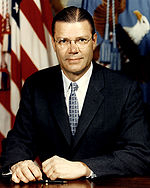
, in support of U.S. military planning and operations and weapon systems acquisition. The DIA, designated in 1986 as a Defense Department combat support agency, was established in 1961 as a result of a decision by Secretary of Defense Robert S. McNamara, under President John F. Kennedy
. The Department of Defense created the DIA with the publication of Directive 5105.21, "Defense Intelligence Agency" on 1 August, effective 1 October 1961.
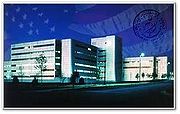 DIA's Director is a three-star military officer who serves as principal adviser to the Secretary of Defense and to the Chairman of the Joint Chiefs of Staff on matters of military intelligence. The Director also chairs the Military Intelligence Board, which coordinates activities of the defense intelligence community. The exact numbers and specific budget information are not publicly released due to security considerations. DIA has major operational activities at the Pentagon
, Macdill Air Force Base in Tampa Florida, the Defense Intelligence Analysis Center
(DIAC) at Bolling Air Force Base
in Washington, D.C.
38.848°N 77.012°W, the National Center for Medical Intelligence (NCMI) in Fort Detrick, Maryland, and the Missile and Space Intelligence Center
(MSIC) in Huntsville, Alabama
and is in the process of building the new Defense Intelligence Support Center (DISC) in Reston, Virginia
. DIA is a member of the United States Intelligence Community, reporting to the Director of National Intelligence.
DIA possesses a diverse workforce skilled in the areas of military history and doctrine, economics, physics, chemistry, world history, political science, bio-sciences, computer sciences, and many other fields of expertise.
The Agency responds to the needs of a variety of customers, from the President of the United States to the soldier in the field. Its work encompasses all aspects of military intelligence requirements – from highly complex missile trajectory data to biographical information on foreign military leaders.
In August 2008, the agency announced that it would subject each of its 5,700 prospective and current employees to a polygraph interrogation at least once annually.
The DIA is considered to be a member of the Intelligence Community. The director of the DIA is the main adviser to the United States Secretary of Defense
and the Chairman of the Joint Chiefs of Staff
on matters related to military intelligence. Under the support of the Military Intelligence Board, the DIA unifies the Defense Intelligence Community on major issues such as the number of deployed forces, assessments, policy, and resources. To help weapon system
s planners and the domestic weapons industry, the DIA plays a major role in providing intelligence on foreign weapon systems.
 After World War II
until the creation of DIA, the three Military Departments collected, produced and distributed their intelligence for individual use. This turned out to be duplicative, costly, and ineffective as each department provided their estimates to the Secretary of Defense or to other governmental agencies.
The Defense Reorganization Act of 1958
wanted to correct these deficiencies by assigning responsibility for Unified and Specified Command
intelligence support. However, the intelligence responsibilities remained unclear, the coordination was poor and the first results were short of national reliability and focus. As a result of this poor organization, President Dwight D. Eisenhower
appointed the Joint Study Group in 1960 to find better ways for organizing the nation's military intelligence activities.
Acting on the recommendations of the Joint Study Group, Secretary of Defense Robert S. McNamara advised the Joint Chiefs of Staff
(JCS) of his decision to establish the Defense Intelligence Agency in February 1961. He ordered them to develop a concept plan that would integrate all the military intelligence of the DoD. During the spring and summer of 1961, as Cold War
tensions flared over the Berlin Wall
, Air Force
Lieutenant General Joseph Carroll
(soon to become DIA's first director) took the lead in planning and organizing this new agency. The JCS published DoD Directive 5105.21, "Defense Intelligence Agency" on 1 August, and DIA began operations with a handful of employees in borrowed office space on 1 October 1961.
DIA reported to the Secretary of Defense through the JCS. The new Agency's mission was the continuous task of collecting, processing, evaluating, analyzing, integrating, producing, and disseminating military intelligence for the DoD. Other objectives included more efficiently allocating scarce intelligence resources, more effectively managing all DoD intelligence activities, and eliminating redundancies in facilities, organizations, and tasks.
Following DIA's establishment, the Services transferred intelligence functions and resources to it on a time-phased basis to avoid rapidly degrading the overall effectiveness of defense intelligence. A year after its formation, in October 1962, the Agency faced its first major intelligence test during the superpower confrontation
that developed after Soviet
missiles were discovered at bases in Cuba
by U.S. Air Force spy planes.
In late 1962, DIA established the Defense Intelligence School (now the National Defense Intelligence College), and on 1 January 1963, it activated a new Production Center. Several Service elements were merged to form this production facility, which occupied the "A" and "B" Buildings at Arlington Hall Station, Virginia
.
The Agency also added an Automated Data Processing (ADP) Center on 19 February, a Dissemination Center on 31 March, and a Scientific and Technical Intelligence Directorate on 30 April 1963. DIA assumed the staff support functions of the J-2, Joint Staff, on 1 July 1963. Two years later, on 1 July 1965, DIA accepted responsibility for the Defense Attaché System
- the last function the Services transferred to DIA.
During these early years of DIA's existence, Agency attempts to establish itself as DoD's central military intelligence organization met with continuing Service opposition. At the same time, the Vietnam War
severely tested the fledgling Agency's ability to produce accurate, timely intelligence. In particular, the war increased defense intelligence's involvement in efforts to account for American service members missing or captured in Southeast Asia
.
During the 1960s, DIA analysts focused on: China's detonation of an atomic bomb and the launching of its Cultural Revolution
; increasing unrest among African nations; fighting in Cyprus
and Kashmir
; and the missile gap
between the US and the Soviets. In the late 1960s, crises that tested intelligence responsiveness included: the Tet Offensive in Vietnam
; the Six-Day War
between Egypt
and Israel
; continuing troubles in Africa, particularly Nigeria
; North Korea
's seizure of the ; and the Warsaw Pact invasion of Czechoslovakia
.
The early 1970s were transitional years as the Agency shifted its focus from consolidating its functions and establishing itself as a credible producer of national intelligence. This proved difficult at first since sweeping manpower decrements between 1968 and 1975 had reduced Agency manpower by 31 percent and precipitated mission reductions and a broad organizational restructuring. Challenges facing DIA at this time included: the rise of Ostpolitik in Germany; the emergence of the Palestine Liberation Organization in the Mideast; and the U.S. incursion into Cambodia from South Vietnam.
The Agency's reputation grew considerably by the mid-1970s, as decision makers increasingly recognized the value of its products. Agency analysts in 1972 concentrated on Lebanon
, President Richard Nixon
's visit to China, the formation of Sri Lanka
, Salvador Allende
's regime in Chile, and the prisoners of war being held in Southeast Asia. Subsequent challenges involved: détente
; the development of arms control agreements; the Paris peace talks
(Vietnam); the Yom Kippur War
; and global energy concerns.
Intense Congressional review during 1975-76 created turbulence within the national Intelligence Community. The Murphy and Rockefeller Commission
investigations of charges of intelligence abuse ultimately led to an Executive Order that modified many Intelligence Community functions. At the same time, with American involvement in Vietnam ending, defense intelligence faced a significant decline in resources. During this period, DIA conducted numerous studies on ways of improving its intelligence products. Ultimately, the Agency strengthened its support to the Office of the Secretary of Defense (OSD), the Joint Chiefs of Staff (JCS), and the Unified & Specified Commands, and also modernized the National Military Intelligence Center (NMIC). Faced with similar resource challenges, DoD also sought to centralize its activities. Despite these and other Community-wide efforts to improve intelligence support, the loss of resources during the 1970s limited the Community's ability to collect and produce timely intelligence and ultimately contributed to intelligence shortcomings in Iran, Afghanistan, and other strategic areas.
As resources declined, intelligence requirements expanded. By the late 1970s, Agency analysts were focused on Lebanon, China, South Africa, terrorism, and Southeast Asia POW issues. In 1977, a charter revision further clarified DIA's relationship with the JCS and the Secretary of Defense. Specifically, the Secretary assigned staff supervisory responsibility over DIA in the resource area to the Assistant Secretary of Defense for Command, Control, Communications, and Intelligence, while giving the Assistant Secretary of Defense for International Security Affairs supervisory responsibility regarding policy matters. Analytical efforts within the Agency at the time centered on the death of Mao Tse-Tung, aircraft hijacking, the Israeli raid on Entebbe Airport
, unrest in South Africa
, and continuing Middle East
tensions.
Special DIA task forces were set up to monitor crises such as the Soviet invasion of Afghanistan
, the overthrow of Iran
ian monarchy, and the taking of U.S. hostages in the American embassy in Teheran in 1979. Also, of serious concern were the Vietnamese takeover in Phnom Penh
, the China-Vietnam border war, the overthrow of Idi Amin
in Uganda
, the North-South Yemen
dispute, troubles in Pakistan
, border clashes between Libya
and Egypt
, the Sandinista takeover in Nicaragua
, and the Soviet movement of combat troops to Cuba during the signing of the Strategic Arms Limitation Treaty II.
Following the promulgation in 1979 of Executive Order 12036
, which restructured the Intelligence Community and better outlined DIA's national and departmental responsibilities, the Agency was reorganized around five major directorates: production, operations, resources, external affairs, and J-2 support.
DIA came of age in the 1980s by focusing heavily on the intelligence needs of both field commanders and national-level decision makers. DIA's publication in 1981 of the first in a series of whitepapers on the strengths and capabilities of Soviet military forces titled Soviet Military Power
met with wide acclaim. Ten such booklets were published subsequently over roughly the next decade. World crises continued to flare and included the downing of two Libyan Su-22s by American F-14s over the Gulf of Sidra
, an Israeli F-16 raid to destroy an Iraqi nuclear reactor, two Iranian hijackings, Iranian air raids on Kuwait
, and the release of American hostages in Iran.
Other analysis at this time was focused on the war over the Falkland Islands
, Israel's invasion of Lebanon
, and Operation URGENT FURY
in Grenada
. Other DIA analytical efforts during the mid-1980s centered on the attack on the Marine barracks in Lebanon, the Iran–Iraq War, the conflict in Afghanistan, the Soviet downing of Korean Air Lines Flight 007, the civil war in Chad
, and unrest in the Philippines
. Secretary of Defense Caspar Weinberger
presented DIA with the Agency's first Joint Meritorious Unit Award
in 1986 for outstanding intelligence support over the previous year during a series of crises—the hijacking of TWA Flight 847
and the cruise ship Achille Lauro
, unrest in the Philippines, and counter-terrorist operations against Libya.
Also at this time, the Agency concentrated on the rapidly shifting national security environment, characterized by key issues such as changes within the Soviet Union, counter-narcotics, war fighting capabilities and sustainability, and low-intensity conflict. DoD moved decisively to improve its automated data bases and apply additional resources to the monitoring of terrorist groups, illegal arms shipments, and narcotics trafficking. Arms control monitoring also increased the demand for intelligence support from DIA.
In 1983, in order to research the flow of technology to the Soviet Union, the Reagan Administration
created Project Socrates
within the Defense Intelligence Agency. Over the following years Project Socrates's scope broadened to include monitoring of foreign advanced technology as a whole. Project Socrates ended in 1990 with Michael Sekora, the project's director, leaving in protest when the Bush Administration reduced funding.
Designated a combat support agency under the Goldwater-Nicholas Defense Reorganization Act, DIA moved quickly to increase cooperation with the Unified & Specified Commands and to begin developing a body of joint intelligence doctrine. Intelligence support to U.S. allies in the Middle East intensified as the Iran–Iraq War spilled into the Persian Gulf
. DIA provided significant intelligence support to Operation Earnest Will
while closely monitoring incidents such as the Iraqi rocket attack on the , the destruction of Iranian oil platforms, and Iranian attacks on Kuwaiti oil tankers. The "Toyota War" between Libya and Chad and the turmoil in Haiti
added to DIA's heavy production workload, as did unrest in other parts of Latin America
, Somalia
, Ethiopia
, Burma, Pakistan, and the Philippines.
Subsequently, the Agency provided threat data on "hot spots" throughout the Middle East, Africa, and Asia, while assessing the impact of changes in the USSR, Eastern Europe
, and, to a lesser degree, Asia. In addition, DIA supported decision makers with intelligence concerning the Soviet withdrawal from Afghanistan, events surrounding the downing of several Libyan jets, the civil war in Liberia, and the investigation of the downing of Pan Am Flight 103
over Lockerbie, Scotland
. Weapons acquisition issues, counter-narcotics, and counter-terrorism, likewise, remained high priority issues.
With the end of the Cold War, defense intelligence began a period of reevaluation following the fall of Communism
in many of the East European countries, the reunification of Germany, and ongoing economic reforms in the region. During this phase, DIA emphasized improved management of intelligence production, DoD-wide, as resource reductions once again threatened to negatively impact Agency objectives and manpower. Organizationally, DIA adopted the concept of functional management to better address unified & specified command intelligence issues.
In response to Iraq's invasion of Kuwait in August 1990, DIA set up an extensive, 24-hour, crisis management cell designed to tailor national-level intelligence support to the coalition forces assembled to expel Iraq from Kuwait. By the time Operation Desert Storm began, some 2,000 Agency personnel were involved in the intelligence support effort. Most of them associated in some way with the national-level Joint Intelligence Center
(JIC), which DIA established in The Pentagon
to integrate the intelligence being produced throughout the Community. DIA sent more than 100 employees into the Kuwaiti Theater of Operations to provide intelligence support. This DIA-led effort remains one of the greatest examples of intelligence support to operational forces in modern times.
The Armed Forces Medical Intelligence Center (AFMIC), and the Missile and Space Intelligence Center (MSIC), associated with the Army for over 20 and 50 years respectively, became part of DIA in January 1992. This was part of the continuing effort to consolidate intelligence production and make it more efficient.
Since the September 11, 2001 terrorist attacks, DIA has been active in nuclear proliferation
intelligence collection and analysis with particular interests in North Korea
and Iran
as well as counter-terrorism
. DIA was also involved with the intelligence build-up to the invasion of Iraq in 2003 and was a subject in the Senate Report of Pre-war Intelligence on Iraq
. The Defense Intelligence Agency has conflicted with the Central Intelligence Agency
(CIA) in collection and analysis on the existence of weapons of mass destruction in Iraq and has often represented the Pentagon in the CIA-DoD intelligence rivalry due to DIA's alleged clandestine HUMINT
collection and often overlapping analysis products. Operational military intelligence has also been a focus, particularly in Iraq
with insurgency threats and asymmetric warfare
. The DIA is responsible for assessing the current and projected national security threats to the United States as well as presenting these assessments to the Senate Armed Services Committee. The DIA still actively maintains its responsibility for conventional strategic and operational military intelligence.
, typically a three-star
military officer. The current director is Lieutenant General Ronald Burgess, USA, who assumed command in March 2009.
David Shedd was appointed deputy director in September 2010, and Sharon Houy has served as chief of staff since June 2010.
DIA is organized into these primary operational directorate
s and centers:
Defense Counterintelligence and HUMINT Center (DX): This center manages DIA's and the DoD's human source intelligence collection, including the Defense Attache System
, and is the primary interface between the Department of Defense and the National Clandestine Service
. DX conducts worldwide strategic HUMINT collection operations in support of DoD, national intelligence requirements, and military operations. It deploys teams of linguists, field analysts, case officers, interrogation experts, technical specialists, and special forces. DX also absorbed the personnel and capabilities of the Counterintelligence Field Activity
in 2008.
Directorate for Information Management and Chief Information Officer (DS): This directorate provides a secure, standardized and integrated global Information Technology enterprise that is continuously improved and maintained in response to intelligence customer needs and enables collaborative discovery, synthesis, and delivery of critical intelligence to warfighters, defense planners, national-security policy makers, and international partners.
Directorate for MASINT and Technical Collection (DT): Collects Measurement and Signature Intelligence
which is technical intelligence that – when collected, processed, and analyzed by dedicated MASINT systems – results in intelligence that detects, tracks, identifies, or describes the signatures (distinctive characteristics) of fixed or dynamic target sources. This often includes radar intelligence, acoustic intelligence, nuclear intelligence, and chemical and biological intelligence. DIA is the central agency for MASINT collection within the US Intelligence Community
.
Directorate for Analysis (DI): Analyzes and disseminates finalized intelligence products for the DIA from all sources as well as from partner Intelligence Community
agencies. Analysts focus on the military issues that may arise from political or economic events in foreign countries and also analyze foreign military capabilities, transportation systems, weapons of mass destruction
(WMDs), terrorism, and missile systems and contribute to National Intelligence Estimates and to the President's Daily Brief
. The Directorate of Analysis also manages the National Center for Medical Intelligence, the Missile and Space Intelligence Center
, and the Joint Intelligence Task Force for Combating Terrorism. Analysts serve DIA in all of the agency's facilities as well as in the field.
Directorate for Intelligence, Joint Staff (J2): Advises and supports the Joint Chiefs of Staff
with foreign military intelligence for defense policy and war planning.
DIA also runs the National Intelligence University and houses the John T. Hughes Library in the DIAC.
Intelligence community
Intelligence community may refer to* Bangladeshi intelligence community* Croatian intelligence community * Israeli intelligence community* Italian intelligence community, see SISMI...
of the United States
United States
The United States of America is a federal constitutional republic comprising fifty states and a federal district...
, and is the central producer and manager of military intelligence
Military intelligence
Military intelligence is a military discipline that exploits a number of information collection and analysis approaches to provide guidance and direction to commanders in support of their decisions....
for the United States Department of Defense
United States Department of Defense
The United States Department of Defense is the U.S...
, employing over 16,500 U.S. military and civilian employees worldwide. The Defense Intelligence Community is headed by the DIA, through its Director (who chairs the Military Intelligence Board), and it coordinates the activities of the Army
United States Army
The United States Army is the main branch of the United States Armed Forces responsible for land-based military operations. It is the largest and oldest established branch of the U.S. military, and is one of seven U.S. uniformed services...
, Navy
United States Navy
The United States Navy is the naval warfare service branch of the United States Armed Forces and one of the seven uniformed services of the United States. The U.S. Navy is the largest in the world; its battle fleet tonnage is greater than that of the next 13 largest navies combined. The U.S...
, Marine Corps
United States Marine Corps
The United States Marine Corps is a branch of the United States Armed Forces responsible for providing power projection from the sea, using the mobility of the United States Navy to deliver combined-arms task forces rapidly. It is one of seven uniformed services of the United States...
, and Air Force
United States Air Force
The United States Air Force is the aerial warfare service branch of the United States Armed Forces and one of the American uniformed services. Initially part of the United States Army, the USAF was formed as a separate branch of the military on September 18, 1947 under the National Security Act of...
intelligence components. The DIA and Defense Intelligence Community provide military intelligence to warfighters, defense policymakers and force planners within the Department of Defense and the United States Intelligence Community
United States Intelligence Community
The United States Intelligence Community is a cooperative federation of 16 separate United States government agencies that work separately and together to conduct intelligence activities considered necessary for the conduct of foreign relations and the protection of the national security of the...
, in support of U.S. military planning and operations and weapon systems acquisition. The DIA, designated in 1986 as a Defense Department combat support agency, was established in 1961 as a result of a decision by Secretary of Defense Robert S. McNamara, under President John F. Kennedy
John F. Kennedy
John Fitzgerald "Jack" Kennedy , often referred to by his initials JFK, was the 35th President of the United States, serving from 1961 until his assassination in 1963....
. The Department of Defense created the DIA with the publication of Directive 5105.21, "Defense Intelligence Agency" on 1 August, effective 1 October 1961.
Overview
The Pentagon
The Pentagon is the headquarters of the United States Department of Defense, located in Arlington County, Virginia. As a symbol of the U.S. military, "the Pentagon" is often used metonymically to refer to the Department of Defense rather than the building itself.Designed by the American architect...
, Macdill Air Force Base in Tampa Florida, the Defense Intelligence Analysis Center
Defense Intelligence Analysis Center
The Defense Intelligence Analysis Center is the largest of the Defense Intelligence Agency's facilities. It is located on Bolling Air Force Base in Washington, DC. The DIAC was built in 1987 and designed by Smith, Hinchman and Grylls Associates to consolidate DIA activities in the Washington,...
(DIAC) at Bolling Air Force Base
Bolling Air Force Base
Joint Base Anacostia-Bolling is a military installation, located in Southeast Washington, D.C., established on 1 October 2010 in accordance with congressional legislation implementing the recommendations of the 2005 Base Realignment and Closure Commission...
in Washington, D.C.
Washington, D.C.
Washington, D.C., formally the District of Columbia and commonly referred to as Washington, "the District", or simply D.C., is the capital of the United States. On July 16, 1790, the United States Congress approved the creation of a permanent national capital as permitted by the U.S. Constitution....
38.848°N 77.012°W, the National Center for Medical Intelligence (NCMI) in Fort Detrick, Maryland, and the Missile and Space Intelligence Center
Missile and Space Intelligence Center
The Missile and Space Intelligence Center is an intelligence organization that is part of the Defense Intelligence Agency of the United States. MSIC is located at Redstone Arsenal in Huntsville, Alabama.-History:...
(MSIC) in Huntsville, Alabama
Huntsville, Alabama
Huntsville is a city located primarily in Madison County in the central part of the far northern region of the U.S. state of Alabama. Huntsville is the county seat of Madison County. The city extends west into neighboring Limestone County. Huntsville's population was 180,105 as of the 2010 Census....
and is in the process of building the new Defense Intelligence Support Center (DISC) in Reston, Virginia
Reston, Virginia
Reston is a census-designated place in Fairfax County, Virginia, United States, within the Washington, D.C. metropolitan area. The population was 58,404, at the 2010 Census and 56,407 at the 2000 census...
. DIA is a member of the United States Intelligence Community, reporting to the Director of National Intelligence.
DIA possesses a diverse workforce skilled in the areas of military history and doctrine, economics, physics, chemistry, world history, political science, bio-sciences, computer sciences, and many other fields of expertise.
The Agency responds to the needs of a variety of customers, from the President of the United States to the soldier in the field. Its work encompasses all aspects of military intelligence requirements – from highly complex missile trajectory data to biographical information on foreign military leaders.
In August 2008, the agency announced that it would subject each of its 5,700 prospective and current employees to a polygraph interrogation at least once annually.
Mission
The DIA's mission is to provide timely, objective, and cogent military intelligence to warfighters, defense planners, and defense and national security policymakers.The DIA is considered to be a member of the Intelligence Community. The director of the DIA is the main adviser to the United States Secretary of Defense
United States Secretary of Defense
The Secretary of Defense is the head and chief executive officer of the Department of Defense of the United States of America. This position corresponds to what is generally known as a Defense Minister in other countries...
and the Chairman of the Joint Chiefs of Staff
Chairman of the Joint Chiefs of Staff
The Chairman of the Joint Chiefs of Staff is by law the highest ranking military officer in the United States Armed Forces, and is the principal military adviser to the President of the United States, the National Security Council, the Homeland Security Council and the Secretary of Defense...
on matters related to military intelligence. Under the support of the Military Intelligence Board, the DIA unifies the Defense Intelligence Community on major issues such as the number of deployed forces, assessments, policy, and resources. To help weapon system
Weapon system
Weapon System is a United States military term that designated, along with a weapon system number , military experimental systems prior to official naming Weapon System is a United States military term that designated, along with a weapon system number (e.g., WS-110), military experimental (MX)...
s planners and the domestic weapons industry, the DIA plays a major role in providing intelligence on foreign weapon systems.
DIA seal
The gold flaming torch represents knowledge. The earth represents DIA's global intelligence mission. The red atomic ellipses symbolize the scientific and technical aspects of intelligence today and of the future. The 13 stars and the wreath identify DIA as a Department of Defense organization.History
World War II
World War II, or the Second World War , was a global conflict lasting from 1939 to 1945, involving most of the world's nations—including all of the great powers—eventually forming two opposing military alliances: the Allies and the Axis...
until the creation of DIA, the three Military Departments collected, produced and distributed their intelligence for individual use. This turned out to be duplicative, costly, and ineffective as each department provided their estimates to the Secretary of Defense or to other governmental agencies.
The Defense Reorganization Act of 1958
Defense Reorganization Act of 1958
The Department of Defense Reorganization Act of 1958 is a United States federal law which was created to provide for more effective administration for the Department of Defense . Written and promoted by the Eisenhower administration, it was signed into law August 6, 1958...
wanted to correct these deficiencies by assigning responsibility for Unified and Specified Command
Unified Combatant Command
A Unified Combatant Command is a United States Department of Defense command that is composed of forces from at least two Military Departments and has a broad and continuing mission. These commands are established to provide effective command and control of U.S. military forces, regardless of...
intelligence support. However, the intelligence responsibilities remained unclear, the coordination was poor and the first results were short of national reliability and focus. As a result of this poor organization, President Dwight D. Eisenhower
Dwight D. Eisenhower
Dwight David "Ike" Eisenhower was the 34th President of the United States, from 1953 until 1961. He was a five-star general in the United States Army...
appointed the Joint Study Group in 1960 to find better ways for organizing the nation's military intelligence activities.
Acting on the recommendations of the Joint Study Group, Secretary of Defense Robert S. McNamara advised the Joint Chiefs of Staff
Joint Chiefs of Staff
The Joint Chiefs of Staff is a body of senior uniformed leaders in the United States Department of Defense who advise the Secretary of Defense, the Homeland Security Council, the National Security Council and the President on military matters...
(JCS) of his decision to establish the Defense Intelligence Agency in February 1961. He ordered them to develop a concept plan that would integrate all the military intelligence of the DoD. During the spring and summer of 1961, as Cold War
Cold War
The Cold War was the continuing state from roughly 1946 to 1991 of political conflict, military tension, proxy wars, and economic competition between the Communist World—primarily the Soviet Union and its satellite states and allies—and the powers of the Western world, primarily the United States...
tensions flared over the Berlin Wall
Berlin Wall
The Berlin Wall was a barrier constructed by the German Democratic Republic starting on 13 August 1961, that completely cut off West Berlin from surrounding East Germany and from East Berlin...
, Air Force
United States Air Force
The United States Air Force is the aerial warfare service branch of the United States Armed Forces and one of the American uniformed services. Initially part of the United States Army, the USAF was formed as a separate branch of the military on September 18, 1947 under the National Security Act of...
Lieutenant General Joseph Carroll
Joseph Carroll
Lieutenant General Joseph Francis Carroll was the founding director of the Defense Intelligence Agency , and founding director of the Air Force Office of Special Investigations .-Youth & Education:...
(soon to become DIA's first director) took the lead in planning and organizing this new agency. The JCS published DoD Directive 5105.21, "Defense Intelligence Agency" on 1 August, and DIA began operations with a handful of employees in borrowed office space on 1 October 1961.
DIA reported to the Secretary of Defense through the JCS. The new Agency's mission was the continuous task of collecting, processing, evaluating, analyzing, integrating, producing, and disseminating military intelligence for the DoD. Other objectives included more efficiently allocating scarce intelligence resources, more effectively managing all DoD intelligence activities, and eliminating redundancies in facilities, organizations, and tasks.
Following DIA's establishment, the Services transferred intelligence functions and resources to it on a time-phased basis to avoid rapidly degrading the overall effectiveness of defense intelligence. A year after its formation, in October 1962, the Agency faced its first major intelligence test during the superpower confrontation
Cuban Missile Crisis
The Cuban Missile Crisis was a confrontation among the Soviet Union, Cuba and the United States in October 1962, during the Cold War...
that developed after Soviet
Soviet Union
The Soviet Union , officially the Union of Soviet Socialist Republics , was a constitutionally socialist state that existed in Eurasia between 1922 and 1991....
missiles were discovered at bases in Cuba
Cuba
The Republic of Cuba is an island nation in the Caribbean. The nation of Cuba consists of the main island of Cuba, the Isla de la Juventud, and several archipelagos. Havana is the largest city in Cuba and the country's capital. Santiago de Cuba is the second largest city...
by U.S. Air Force spy planes.
In late 1962, DIA established the Defense Intelligence School (now the National Defense Intelligence College), and on 1 January 1963, it activated a new Production Center. Several Service elements were merged to form this production facility, which occupied the "A" and "B" Buildings at Arlington Hall Station, Virginia
Virginia
The Commonwealth of Virginia , is a U.S. state on the Atlantic Coast of the Southern United States. Virginia is nicknamed the "Old Dominion" and sometimes the "Mother of Presidents" after the eight U.S. presidents born there...
.
The Agency also added an Automated Data Processing (ADP) Center on 19 February, a Dissemination Center on 31 March, and a Scientific and Technical Intelligence Directorate on 30 April 1963. DIA assumed the staff support functions of the J-2, Joint Staff, on 1 July 1963. Two years later, on 1 July 1965, DIA accepted responsibility for the Defense Attaché System
Defense Attaché System
The Defense Attaché System is a part of the Defense Intelligence Agency in the United States that provides military and civilian attachés to foreign governments.- History :...
- the last function the Services transferred to DIA.
During these early years of DIA's existence, Agency attempts to establish itself as DoD's central military intelligence organization met with continuing Service opposition. At the same time, the Vietnam War
Vietnam War
The Vietnam War was a Cold War-era military conflict that occurred in Vietnam, Laos, and Cambodia from 1 November 1955 to the fall of Saigon on 30 April 1975. This war followed the First Indochina War and was fought between North Vietnam, supported by its communist allies, and the government of...
severely tested the fledgling Agency's ability to produce accurate, timely intelligence. In particular, the war increased defense intelligence's involvement in efforts to account for American service members missing or captured in Southeast Asia
Southeast Asia
Southeast Asia, South-East Asia, South East Asia or Southeastern Asia is a subregion of Asia, consisting of the countries that are geographically south of China, east of India, west of New Guinea and north of Australia. The region lies on the intersection of geological plates, with heavy seismic...
.
During the 1960s, DIA analysts focused on: China's detonation of an atomic bomb and the launching of its Cultural Revolution
Cultural Revolution
The Great Proletarian Cultural Revolution, commonly known as the Cultural Revolution , was a socio-political movement that took place in the People's Republic of China from 1966 through 1976...
; increasing unrest among African nations; fighting in Cyprus
Cyprus
Cyprus , officially the Republic of Cyprus , is a Eurasian island country, member of the European Union, in the Eastern Mediterranean, east of Greece, south of Turkey, west of Syria and north of Egypt. It is the third largest island in the Mediterranean Sea.The earliest known human activity on the...
and Kashmir
Kashmir
Kashmir is the northwestern region of the Indian subcontinent. Until the mid-19th century, the term Kashmir geographically denoted only the valley between the Great Himalayas and the Pir Panjal mountain range...
; and the missile gap
Missile gap
The missile gap was the term used in the United States for the perceived disparity between the number and power of the weapons in the U.S.S.R. and U.S. ballistic missile arsenals during the Cold War. The gap only existed in exaggerated estimates made by the Gaither Committee in 1957 and United...
between the US and the Soviets. In the late 1960s, crises that tested intelligence responsiveness included: the Tet Offensive in Vietnam
Vietnam
Vietnam – sometimes spelled Viet Nam , officially the Socialist Republic of Vietnam – is the easternmost country on the Indochina Peninsula in Southeast Asia. It is bordered by China to the north, Laos to the northwest, Cambodia to the southwest, and the South China Sea –...
; the Six-Day War
Six-Day War
The Six-Day War , also known as the June War, 1967 Arab-Israeli War, or Third Arab-Israeli War, was fought between June 5 and 10, 1967, by Israel and the neighboring states of Egypt , Jordan, and Syria...
between Egypt
Egypt
Egypt , officially the Arab Republic of Egypt, Arabic: , is a country mainly in North Africa, with the Sinai Peninsula forming a land bridge in Southwest Asia. Egypt is thus a transcontinental country, and a major power in Africa, the Mediterranean Basin, the Middle East and the Muslim world...
and Israel
Israel
The State of Israel is a parliamentary republic located in the Middle East, along the eastern shore of the Mediterranean Sea...
; continuing troubles in Africa, particularly Nigeria
Nigeria
Nigeria , officially the Federal Republic of Nigeria, is a federal constitutional republic comprising 36 states and its Federal Capital Territory, Abuja. The country is located in West Africa and shares land borders with the Republic of Benin in the west, Chad and Cameroon in the east, and Niger in...
; North Korea
North Korea
The Democratic People’s Republic of Korea , , is a country in East Asia, occupying the northern half of the Korean Peninsula. Its capital and largest city is Pyongyang. The Korean Demilitarized Zone serves as the buffer zone between North Korea and South Korea...
's seizure of the ; and the Warsaw Pact invasion of Czechoslovakia
Warsaw Pact invasion of Czechoslovakia
On the night of 20–21 August 1968, the Soviet Union and her main satellite states in the Warsaw Pact – Bulgaria, the German Democratic Republic , Hungary and Poland – invaded the Czechoslovak Socialist Republic in order to halt Alexander Dubček's Prague Spring political liberalization...
.
The early 1970s were transitional years as the Agency shifted its focus from consolidating its functions and establishing itself as a credible producer of national intelligence. This proved difficult at first since sweeping manpower decrements between 1968 and 1975 had reduced Agency manpower by 31 percent and precipitated mission reductions and a broad organizational restructuring. Challenges facing DIA at this time included: the rise of Ostpolitik in Germany; the emergence of the Palestine Liberation Organization in the Mideast; and the U.S. incursion into Cambodia from South Vietnam.
The Agency's reputation grew considerably by the mid-1970s, as decision makers increasingly recognized the value of its products. Agency analysts in 1972 concentrated on Lebanon
Lebanon
Lebanon , officially the Republic of LebanonRepublic of Lebanon is the most common term used by Lebanese government agencies. The term Lebanese Republic, a literal translation of the official Arabic and French names that is not used in today's world. Arabic is the most common language spoken among...
, President Richard Nixon
Richard Nixon
Richard Milhous Nixon was the 37th President of the United States, serving from 1969 to 1974. The only president to resign the office, Nixon had previously served as a US representative and senator from California and as the 36th Vice President of the United States from 1953 to 1961 under...
's visit to China, the formation of Sri Lanka
Sri Lanka
Sri Lanka, officially the Democratic Socialist Republic of Sri Lanka is a country off the southern coast of the Indian subcontinent. Known until 1972 as Ceylon , Sri Lanka is an island surrounded by the Indian Ocean, the Gulf of Mannar and the Palk Strait, and lies in the vicinity of India and the...
, Salvador Allende
Salvador Allende
Salvador Allende Gossens was a Chilean physician and politician who is generally considered the first democratically elected Marxist to become president of a country in Latin America....
's regime in Chile, and the prisoners of war being held in Southeast Asia. Subsequent challenges involved: détente
Détente
Détente is the easing of strained relations, especially in a political situation. The term is often used in reference to the general easing of relations between the Soviet Union and the United States in the 1970s, a thawing at a period roughly in the middle of the Cold War...
; the development of arms control agreements; the Paris peace talks
Paris Peace Accords
The Paris Peace Accords of 1973 intended to establish peace in Vietnam and an end to the Vietnam War, ended direct U.S. military involvement, and temporarily stopped the fighting between North and South Vietnam...
(Vietnam); the Yom Kippur War
Yom Kippur War
The Yom Kippur War, Ramadan War or October War , also known as the 1973 Arab-Israeli War and the Fourth Arab-Israeli War, was fought from October 6 to 25, 1973, between Israel and a coalition of Arab states led by Egypt and Syria...
; and global energy concerns.
Intense Congressional review during 1975-76 created turbulence within the national Intelligence Community. The Murphy and Rockefeller Commission
United States President's Commission on CIA activities within the United States
The U.S. President's Commission on CIA activities within the United States was set up under President Gerald Ford in 1975 to investigate the activities of the Central Intelligence Agency and other intelligence agencies within the United States...
investigations of charges of intelligence abuse ultimately led to an Executive Order that modified many Intelligence Community functions. At the same time, with American involvement in Vietnam ending, defense intelligence faced a significant decline in resources. During this period, DIA conducted numerous studies on ways of improving its intelligence products. Ultimately, the Agency strengthened its support to the Office of the Secretary of Defense (OSD), the Joint Chiefs of Staff (JCS), and the Unified & Specified Commands, and also modernized the National Military Intelligence Center (NMIC). Faced with similar resource challenges, DoD also sought to centralize its activities. Despite these and other Community-wide efforts to improve intelligence support, the loss of resources during the 1970s limited the Community's ability to collect and produce timely intelligence and ultimately contributed to intelligence shortcomings in Iran, Afghanistan, and other strategic areas.
As resources declined, intelligence requirements expanded. By the late 1970s, Agency analysts were focused on Lebanon, China, South Africa, terrorism, and Southeast Asia POW issues. In 1977, a charter revision further clarified DIA's relationship with the JCS and the Secretary of Defense. Specifically, the Secretary assigned staff supervisory responsibility over DIA in the resource area to the Assistant Secretary of Defense for Command, Control, Communications, and Intelligence, while giving the Assistant Secretary of Defense for International Security Affairs supervisory responsibility regarding policy matters. Analytical efforts within the Agency at the time centered on the death of Mao Tse-Tung, aircraft hijacking, the Israeli raid on Entebbe Airport
Operation Entebbe
Operation Entebbe was a counter-terrorist hostage-rescue mission carried out by the Special Forces of the Israel Defense Forces at Entebbe Airport in Uganda on 4 July 1976. A week earlier, on 27 June, an Air France plane with 248 passengers was hijacked by Palestinian and German terrorists and...
, unrest in South Africa
South Africa
The Republic of South Africa is a country in southern Africa. Located at the southern tip of Africa, it is divided into nine provinces, with of coastline on the Atlantic and Indian oceans...
, and continuing Middle East
Middle East
The Middle East is a region that encompasses Western Asia and Northern Africa. It is often used as a synonym for Near East, in opposition to Far East...
tensions.
Special DIA task forces were set up to monitor crises such as the Soviet invasion of Afghanistan
Afghanistan
Afghanistan , officially the Islamic Republic of Afghanistan, is a landlocked country located in the centre of Asia, forming South Asia, Central Asia and the Middle East. With a population of about 29 million, it has an area of , making it the 42nd most populous and 41st largest nation in the world...
, the overthrow of Iran
Iran
Iran , officially the Islamic Republic of Iran , is a country in Southern and Western Asia. The name "Iran" has been in use natively since the Sassanian era and came into use internationally in 1935, before which the country was known to the Western world as Persia...
ian monarchy, and the taking of U.S. hostages in the American embassy in Teheran in 1979. Also, of serious concern were the Vietnamese takeover in Phnom Penh
Cambodian-Vietnamese War
The Cambodian–Vietnamese War was an armed conflict between the Socialist Republic of Vietnam and Democratic Kampuchea. The war began with isolated clashes along the land and maritime boundaries of Vietnam and Kampuchea between 1975 and 1977, occasionally involving division-sized military formations...
, the China-Vietnam border war, the overthrow of Idi Amin
Idi Amin
Idi Amin Dada was a military leader and President of Uganda from 1971 to 1979. Amin joined the British colonial regiment, the King's African Rifles in 1946. Eventually he held the rank of Major General in the post-colonial Ugandan Army and became its Commander before seizing power in the military...
in Uganda
Uganda
Uganda , officially the Republic of Uganda, is a landlocked country in East Africa. Uganda is also known as the "Pearl of Africa". It is bordered on the east by Kenya, on the north by South Sudan, on the west by the Democratic Republic of the Congo, on the southwest by Rwanda, and on the south by...
, the North-South Yemen
Yemen
The Republic of Yemen , commonly known as Yemen , is a country located in the Middle East, occupying the southwestern to southern end of the Arabian Peninsula. It is bordered by Saudi Arabia to the north, the Red Sea to the west, and Oman to the east....
dispute, troubles in Pakistan
Pakistan
Pakistan , officially the Islamic Republic of Pakistan is a sovereign state in South Asia. It has a coastline along the Arabian Sea and the Gulf of Oman in the south and is bordered by Afghanistan and Iran in the west, India in the east and China in the far northeast. In the north, Tajikistan...
, border clashes between Libya
Libya
Libya is an African country in the Maghreb region of North Africa bordered by the Mediterranean Sea to the north, Egypt to the east, Sudan to the southeast, Chad and Niger to the south, and Algeria and Tunisia to the west....
and Egypt
Egypt
Egypt , officially the Arab Republic of Egypt, Arabic: , is a country mainly in North Africa, with the Sinai Peninsula forming a land bridge in Southwest Asia. Egypt is thus a transcontinental country, and a major power in Africa, the Mediterranean Basin, the Middle East and the Muslim world...
, the Sandinista takeover in Nicaragua
Nicaragua
Nicaragua is the largest country in the Central American American isthmus, bordered by Honduras to the north and Costa Rica to the south. The country is situated between 11 and 14 degrees north of the Equator in the Northern Hemisphere, which places it entirely within the tropics. The Pacific Ocean...
, and the Soviet movement of combat troops to Cuba during the signing of the Strategic Arms Limitation Treaty II.
Following the promulgation in 1979 of Executive Order 12036
Executive Order 12036
Executive Order 12036 is a United States Presidential Executive Order signed on January 24, 1978, by President Jimmy Carter that imposed restrictions on and reformed the U.S. Intelligence Community along with further banning indirect U.S. involvement in assassinations. The EO was designed to...
, which restructured the Intelligence Community and better outlined DIA's national and departmental responsibilities, the Agency was reorganized around five major directorates: production, operations, resources, external affairs, and J-2 support.
DIA came of age in the 1980s by focusing heavily on the intelligence needs of both field commanders and national-level decision makers. DIA's publication in 1981 of the first in a series of whitepapers on the strengths and capabilities of Soviet military forces titled Soviet Military Power
Soviet Military Power
Soviet Military Power was a Public Diplomacy publication of the United States Department of Defense, which provided an estimate of the military strategy and capabilities of the Soviet Union during the final years of the Cold War, ostensibly to alert the U.S. public to the significant military...
met with wide acclaim. Ten such booklets were published subsequently over roughly the next decade. World crises continued to flare and included the downing of two Libyan Su-22s by American F-14s over the Gulf of Sidra
Gulf of Sidra
Gulf of Sidra is a body of water in the Mediterranean Sea on the northern coast of Libya; it is also known as Gulf of Sirte or the Great Sirte or Greater Syrtis .- Geography :The Gulf of Sidra has been a major centre for tuna fishing in the Mediterranean for centuries...
, an Israeli F-16 raid to destroy an Iraqi nuclear reactor, two Iranian hijackings, Iranian air raids on Kuwait
Kuwait
The State of Kuwait is a sovereign Arab state situated in the north-east of the Arabian Peninsula in Western Asia. It is bordered by Saudi Arabia to the south at Khafji, and Iraq to the north at Basra. It lies on the north-western shore of the Persian Gulf. The name Kuwait is derived from the...
, and the release of American hostages in Iran.
Other analysis at this time was focused on the war over the Falkland Islands
Falkland Islands
The Falkland Islands are an archipelago in the South Atlantic Ocean, located about from the coast of mainland South America. The archipelago consists of East Falkland, West Falkland and 776 lesser islands. The capital, Stanley, is on East Falkland...
, Israel's invasion of Lebanon
Lebanon
Lebanon , officially the Republic of LebanonRepublic of Lebanon is the most common term used by Lebanese government agencies. The term Lebanese Republic, a literal translation of the official Arabic and French names that is not used in today's world. Arabic is the most common language spoken among...
, and Operation URGENT FURY
Invasion of Grenada
The Invasion of Grenada, codenamed Operation Urgent Fury, was a 1983 United States-led invasion of Grenada, a Caribbean island nation with a population of about 100,000 located north of Venezuela. Triggered by a military coup which had ousted a four-year revolutionary government, the invasion...
in Grenada
Grenada
Grenada is an island country and Commonwealth Realm consisting of the island of Grenada and six smaller islands at the southern end of the Grenadines in the southeastern Caribbean Sea...
. Other DIA analytical efforts during the mid-1980s centered on the attack on the Marine barracks in Lebanon, the Iran–Iraq War, the conflict in Afghanistan, the Soviet downing of Korean Air Lines Flight 007, the civil war in Chad
Chad
Chad , officially known as the Republic of Chad, is a landlocked country in Central Africa. It is bordered by Libya to the north, Sudan to the east, the Central African Republic to the south, Cameroon and Nigeria to the southwest, and Niger to the west...
, and unrest in the Philippines
Philippines
The Philippines , officially known as the Republic of the Philippines , is a country in Southeast Asia in the western Pacific Ocean. To its north across the Luzon Strait lies Taiwan. West across the South China Sea sits Vietnam...
. Secretary of Defense Caspar Weinberger
Caspar Weinberger
Caspar Willard "Cap" Weinberger , was an American politician, vice president and general counsel of Bechtel Corporation, and Secretary of Defense under President Ronald Reagan from January 21, 1981, until November 23, 1987, making him the third longest-serving defense secretary to date, after...
presented DIA with the Agency's first Joint Meritorious Unit Award
Joint Meritorious Unit Award
The Joint Meritorious Unit Award is a military award that was established on June 4, 1981 by Secretary of Defense Caspar Weinberger and was implemented by Department of Defense Directive 1348.27 dated July 22, 1982...
in 1986 for outstanding intelligence support over the previous year during a series of crises—the hijacking of TWA Flight 847
TWA Flight 847
TWA Flight 847 was an international Trans World Airlines flight which was hijacked by Lebanese Shia extremists, later identified as members of Hezbollah and Islamic Jihad, on Friday morning, June 14, 1985, after originally taking off from Cairo. The flight was en route from Athens to Rome and then...
and the cruise ship Achille Lauro
MS Achille Lauro
MS Achille Lauro was a cruise ship based in Naples, Italy. Built between 1939 and 1947 as MS Willem Ruys, a passenger liner for the Rotterdamsche Lloyd. It is most remembered for its 1985 hijacking...
, unrest in the Philippines, and counter-terrorist operations against Libya.
Also at this time, the Agency concentrated on the rapidly shifting national security environment, characterized by key issues such as changes within the Soviet Union, counter-narcotics, war fighting capabilities and sustainability, and low-intensity conflict. DoD moved decisively to improve its automated data bases and apply additional resources to the monitoring of terrorist groups, illegal arms shipments, and narcotics trafficking. Arms control monitoring also increased the demand for intelligence support from DIA.
In 1983, in order to research the flow of technology to the Soviet Union, the Reagan Administration
Reagan Administration
The United States presidency of Ronald Reagan, also known as the Reagan administration, was a Republican administration headed by Ronald Reagan from January 20, 1981, to January 20, 1989....
created Project Socrates
Project Socrates
Project Socrates was a US Defense Intelligence Agency program established in 1983 within the Reagan administration. This classified program, founded and directed by physicist Michael Sekora, was designed for the purpose of identifying the root cause of the United States' declining ability to...
within the Defense Intelligence Agency. Over the following years Project Socrates's scope broadened to include monitoring of foreign advanced technology as a whole. Project Socrates ended in 1990 with Michael Sekora, the project's director, leaving in protest when the Bush Administration reduced funding.
Designated a combat support agency under the Goldwater-Nicholas Defense Reorganization Act, DIA moved quickly to increase cooperation with the Unified & Specified Commands and to begin developing a body of joint intelligence doctrine. Intelligence support to U.S. allies in the Middle East intensified as the Iran–Iraq War spilled into the Persian Gulf
Persian Gulf
The Persian Gulf, in Southwest Asia, is an extension of the Indian Ocean located between Iran and the Arabian Peninsula.The Persian Gulf was the focus of the 1980–1988 Iran-Iraq War, in which each side attacked the other's oil tankers...
. DIA provided significant intelligence support to Operation Earnest Will
Operation Earnest Will
Operation Earnest Will was the U.S. military protection of Kuwaiti owned tankers from Iranian attacks in 1987 and 1988, three years into the Tanker War phase of the Iran–Iraq War. It was the largest naval convoy operation since World War II.The U.S. Navy warships that escorted the tankers, part of...
while closely monitoring incidents such as the Iraqi rocket attack on the , the destruction of Iranian oil platforms, and Iranian attacks on Kuwaiti oil tankers. The "Toyota War" between Libya and Chad and the turmoil in Haiti
Haiti
Haiti , officially the Republic of Haiti , is a Caribbean country. It occupies the western, smaller portion of the island of Hispaniola, in the Greater Antillean archipelago, which it shares with the Dominican Republic. Ayiti was the indigenous Taíno or Amerindian name for the island...
added to DIA's heavy production workload, as did unrest in other parts of Latin America
Latin America
Latin America is a region of the Americas where Romance languages – particularly Spanish and Portuguese, and variably French – are primarily spoken. Latin America has an area of approximately 21,069,500 km² , almost 3.9% of the Earth's surface or 14.1% of its land surface area...
, Somalia
Somalia
Somalia , officially the Somali Republic and formerly known as the Somali Democratic Republic under Socialist rule, is a country located in the Horn of Africa. Since the outbreak of the Somali Civil War in 1991 there has been no central government control over most of the country's territory...
, Ethiopia
Ethiopia
Ethiopia , officially known as the Federal Democratic Republic of Ethiopia, is a country located in the Horn of Africa. It is the second-most populous nation in Africa, with over 82 million inhabitants, and the tenth-largest by area, occupying 1,100,000 km2...
, Burma, Pakistan, and the Philippines.
Subsequently, the Agency provided threat data on "hot spots" throughout the Middle East, Africa, and Asia, while assessing the impact of changes in the USSR, Eastern Europe
Eastern Europe
Eastern Europe is the eastern part of Europe. The term has widely disparate geopolitical, geographical, cultural and socioeconomic readings, which makes it highly context-dependent and even volatile, and there are "almost as many definitions of Eastern Europe as there are scholars of the region"...
, and, to a lesser degree, Asia. In addition, DIA supported decision makers with intelligence concerning the Soviet withdrawal from Afghanistan, events surrounding the downing of several Libyan jets, the civil war in Liberia, and the investigation of the downing of Pan Am Flight 103
Pan Am Flight 103
Pan Am Flight 103 was Pan American World Airways' third daily scheduled transatlantic flight from London Heathrow Airport to New York's John F. Kennedy International Airport...
over Lockerbie, Scotland
Scotland
Scotland is a country that is part of the United Kingdom. Occupying the northern third of the island of Great Britain, it shares a border with England to the south and is bounded by the North Sea to the east, the Atlantic Ocean to the north and west, and the North Channel and Irish Sea to the...
. Weapons acquisition issues, counter-narcotics, and counter-terrorism, likewise, remained high priority issues.
With the end of the Cold War, defense intelligence began a period of reevaluation following the fall of Communism
Communism
Communism is a social, political and economic ideology that aims at the establishment of a classless, moneyless, revolutionary and stateless socialist society structured upon common ownership of the means of production...
in many of the East European countries, the reunification of Germany, and ongoing economic reforms in the region. During this phase, DIA emphasized improved management of intelligence production, DoD-wide, as resource reductions once again threatened to negatively impact Agency objectives and manpower. Organizationally, DIA adopted the concept of functional management to better address unified & specified command intelligence issues.
In response to Iraq's invasion of Kuwait in August 1990, DIA set up an extensive, 24-hour, crisis management cell designed to tailor national-level intelligence support to the coalition forces assembled to expel Iraq from Kuwait. By the time Operation Desert Storm began, some 2,000 Agency personnel were involved in the intelligence support effort. Most of them associated in some way with the national-level Joint Intelligence Center
Joint Intelligence Center
A Joint Intelligence Center is a focal point for military intelligence gathered by different intelligence agencies and administered by the Defense Intelligence Agency. The intelligence center of the joint force headquarters...
(JIC), which DIA established in The Pentagon
The Pentagon
The Pentagon is the headquarters of the United States Department of Defense, located in Arlington County, Virginia. As a symbol of the U.S. military, "the Pentagon" is often used metonymically to refer to the Department of Defense rather than the building itself.Designed by the American architect...
to integrate the intelligence being produced throughout the Community. DIA sent more than 100 employees into the Kuwaiti Theater of Operations to provide intelligence support. This DIA-led effort remains one of the greatest examples of intelligence support to operational forces in modern times.
The Armed Forces Medical Intelligence Center (AFMIC), and the Missile and Space Intelligence Center (MSIC), associated with the Army for over 20 and 50 years respectively, became part of DIA in January 1992. This was part of the continuing effort to consolidate intelligence production and make it more efficient.
Since the September 11, 2001 terrorist attacks, DIA has been active in nuclear proliferation
Nuclear proliferation
Nuclear proliferation is a term now used to describe the spread of nuclear weapons, fissile material, and weapons-applicable nuclear technology and information, to nations which are not recognized as "Nuclear Weapon States" by the Treaty on the Nonproliferation of Nuclear Weapons, also known as the...
intelligence collection and analysis with particular interests in North Korea
North Korea
The Democratic People’s Republic of Korea , , is a country in East Asia, occupying the northern half of the Korean Peninsula. Its capital and largest city is Pyongyang. The Korean Demilitarized Zone serves as the buffer zone between North Korea and South Korea...
and Iran
Iran
Iran , officially the Islamic Republic of Iran , is a country in Southern and Western Asia. The name "Iran" has been in use natively since the Sassanian era and came into use internationally in 1935, before which the country was known to the Western world as Persia...
as well as counter-terrorism
Counter-terrorism
Counter-terrorism is the practices, tactics, techniques, and strategies that governments, militaries, police departments and corporations adopt to prevent or in response to terrorist threats and/or acts, both real and imputed.The tactic of terrorism is available to insurgents and governments...
. DIA was also involved with the intelligence build-up to the invasion of Iraq in 2003 and was a subject in the Senate Report of Pre-war Intelligence on Iraq
Senate Report of Pre-war Intelligence on Iraq
The Senate Report on Iraqi WMD Intelligence was the report by the United States Senate Select Committee on Intelligence concerning the U.S. intelligence community's assessments of Iraq during the time leading up to the 2003 U.S. invasion...
. The Defense Intelligence Agency has conflicted with the Central Intelligence Agency
Central Intelligence Agency
The Central Intelligence Agency is a civilian intelligence agency of the United States government. It is an executive agency and reports directly to the Director of National Intelligence, responsible for providing national security intelligence assessment to senior United States policymakers...
(CIA) in collection and analysis on the existence of weapons of mass destruction in Iraq and has often represented the Pentagon in the CIA-DoD intelligence rivalry due to DIA's alleged clandestine HUMINT
Clandestine HUMINT
Clandestine HUMINT includes a wide range of espionage sources. This includes the classic spy who collects intelligence, but also couriers and other personnel, who handle their secure communications...
collection and often overlapping analysis products. Operational military intelligence has also been a focus, particularly in Iraq
Iraq
Iraq ; officially the Republic of Iraq is a country in Western Asia spanning most of the northwestern end of the Zagros mountain range, the eastern part of the Syrian Desert and the northern part of the Arabian Desert....
with insurgency threats and asymmetric warfare
Asymmetric warfare
Asymmetric warfare is war between belligerents whose relative military power differs significantly, or whose strategy or tactics differ significantly....
. The DIA is responsible for assessing the current and projected national security threats to the United States as well as presenting these assessments to the Senate Armed Services Committee. The DIA still actively maintains its responsibility for conventional strategic and operational military intelligence.
Organization
DIA is led by a DirectorDirector of the Defense Intelligence Agency
The Director of the U.S. Defense Intelligence Agency is a three-star military officer and is the highest ranking intelligence officer in the Department of Defense. He is the primary military intelligence advisor to the Secretary of Defense and the Chairman of the Joint Chiefs of Staff and also...
, typically a three-star
Lieutenant General (United States)
In the United States Army, the United States Air Force and the United States Marine Corps, lieutenant general is a three-star general officer rank, with the pay grade of O-9. Lieutenant general ranks above major general and below general...
military officer. The current director is Lieutenant General Ronald Burgess, USA, who assumed command in March 2009.
David Shedd was appointed deputy director in September 2010, and Sharon Houy has served as chief of staff since June 2010.
DIA is organized into these primary operational directorate
Directorate
A directorate is an agency usually headed by a director, often a subdivision of a major government department.* Immigration and Nationality Directorate* Dairat al-Mukhabarat al-Ammah * Veterinary Medicines Directorate...
s and centers:
Defense Counterintelligence and HUMINT Center (DX): This center manages DIA's and the DoD's human source intelligence collection, including the Defense Attache System
Defense Attaché System
The Defense Attaché System is a part of the Defense Intelligence Agency in the United States that provides military and civilian attachés to foreign governments.- History :...
, and is the primary interface between the Department of Defense and the National Clandestine Service
National Clandestine Service
The National Clandestine Service is one of the four main components of the Central Intelligence Agency...
. DX conducts worldwide strategic HUMINT collection operations in support of DoD, national intelligence requirements, and military operations. It deploys teams of linguists, field analysts, case officers, interrogation experts, technical specialists, and special forces. DX also absorbed the personnel and capabilities of the Counterintelligence Field Activity
Counterintelligence Field Activity
Counterintelligence Field Activity was a United States Department of Defense agency whose size and budget were classified. The CIFA was created by a directive from the Secretary of Defense on February 19, 2002...
in 2008.
Directorate for Information Management and Chief Information Officer (DS): This directorate provides a secure, standardized and integrated global Information Technology enterprise that is continuously improved and maintained in response to intelligence customer needs and enables collaborative discovery, synthesis, and delivery of critical intelligence to warfighters, defense planners, national-security policy makers, and international partners.
Directorate for MASINT and Technical Collection (DT): Collects Measurement and Signature Intelligence
Measurement and Signature Intelligence
Measurement and signature intelligence is a branch of intelligence gathering activities.MASINT, may have aspects of intelligence analysis management, since certain aspects of MASINT, such as the analysis of electromagnetic radiation received by signals intelligence are more of an analysis...
which is technical intelligence that – when collected, processed, and analyzed by dedicated MASINT systems – results in intelligence that detects, tracks, identifies, or describes the signatures (distinctive characteristics) of fixed or dynamic target sources. This often includes radar intelligence, acoustic intelligence, nuclear intelligence, and chemical and biological intelligence. DIA is the central agency for MASINT collection within the US Intelligence Community
Intelligence community
Intelligence community may refer to* Bangladeshi intelligence community* Croatian intelligence community * Israeli intelligence community* Italian intelligence community, see SISMI...
.
Directorate for Analysis (DI): Analyzes and disseminates finalized intelligence products for the DIA from all sources as well as from partner Intelligence Community
Intelligence community
Intelligence community may refer to* Bangladeshi intelligence community* Croatian intelligence community * Israeli intelligence community* Italian intelligence community, see SISMI...
agencies. Analysts focus on the military issues that may arise from political or economic events in foreign countries and also analyze foreign military capabilities, transportation systems, weapons of mass destruction
Weapons of mass destruction
A weapon of mass destruction is a weapon that can kill and bring significant harm to a large number of humans and/or cause great damage to man-made structures , natural structures , or the biosphere in general...
(WMDs), terrorism, and missile systems and contribute to National Intelligence Estimates and to the President's Daily Brief
President's Daily Brief
The President's Daily Brief , sometimes incorrectly referred to as the President's Daily Briefing or the President's Daily Bulletin, is a top-secret document produced each morning for the President of the United States...
. The Directorate of Analysis also manages the National Center for Medical Intelligence, the Missile and Space Intelligence Center
Missile and Space Intelligence Center
The Missile and Space Intelligence Center is an intelligence organization that is part of the Defense Intelligence Agency of the United States. MSIC is located at Redstone Arsenal in Huntsville, Alabama.-History:...
, and the Joint Intelligence Task Force for Combating Terrorism. Analysts serve DIA in all of the agency's facilities as well as in the field.
Directorate for Intelligence, Joint Staff (J2): Advises and supports the Joint Chiefs of Staff
Joint Chiefs of Staff
The Joint Chiefs of Staff is a body of senior uniformed leaders in the United States Department of Defense who advise the Secretary of Defense, the Homeland Security Council, the National Security Council and the President on military matters...
with foreign military intelligence for defense policy and war planning.
DIA also runs the National Intelligence University and houses the John T. Hughes Library in the DIAC.
See also
- Armed Forces Medical Intelligence CenterArmed Forces Medical Intelligence CenterThe National Center for Medical Intelligence at Fort Detrick, Maryland, USA — formerly the Armed Forces Medical Intelligence Center — is an agency within the Defense Intelligence Agency of the United States Department of Defense ; its mission is to track and assess the full range of global...
- Coast Guard Intelligence CenterCoast Guard IntelligenceCoast Guard Intelligence is the military intelligence branch of the United States Coast Guard.The United States Coast Guard is a military, multi-mission, maritime service within the United States Department of Homeland Security and one of the United States's five armed services. Its core roles are...
- Defense Attaché SystemDefense Attaché SystemThe Defense Attaché System is a part of the Defense Intelligence Agency in the United States that provides military and civilian attachés to foreign governments.- History :...
- Defense Intelligence Analysis CenterDefense Intelligence Analysis CenterThe Defense Intelligence Analysis Center is the largest of the Defense Intelligence Agency's facilities. It is located on Bolling Air Force Base in Washington, DC. The DIAC was built in 1987 and designed by Smith, Hinchman and Grylls Associates to consolidate DIA activities in the Washington,...
- Defense Intelligence Operations Coordination CenterDefense Intelligence Operations Coordination CenterThe Defense Intelligence Operations Coordination Center is a United States Department of Defense organization under the Defense Intelligence Agency that is responsible for integrated intelligence operations and collection...
- Director of the Defense Intelligence AgencyDirector of the Defense Intelligence AgencyThe Director of the U.S. Defense Intelligence Agency is a three-star military officer and is the highest ranking intelligence officer in the Department of Defense. He is the primary military intelligence advisor to the Secretary of Defense and the Chairman of the Joint Chiefs of Staff and also...
- Joint Functional Component Command for Intelligence, Surveillance and ReconnaissanceJoint Functional Component Command for Intelligence, Surveillance and ReconnaissanceThe Joint Functional Component Command for Intelligence, Surveillance and Reconnaissance is a subordinate command of the United States Strategic Command, one of the ten Unified Combatant Commands under the United States Department of Defense and co-located with the Defense Intelligence Agency...
(US Strategic Command) - Marine Corps Intelligence ActivityMarine Corps Intelligence ActivityThe Marine Corps Intelligence Activity , is a field activity of Headquarters, U.S. Marine Corps and a member of both the Defense Intelligence Enterprise and the United States Intelligence Community...
- Missile and Space Intelligence CenterMissile and Space Intelligence CenterThe Missile and Space Intelligence Center is an intelligence organization that is part of the Defense Intelligence Agency of the United States. MSIC is located at Redstone Arsenal in Huntsville, Alabama.-History:...
- National Geospatial-Intelligence AgencyNational Geospatial-Intelligence AgencyThe National Geospatial-Intelligence Agency is an agency of the federal government of the United States with the primary mission of collecting, analyzing and distributing geospatial intelligence in support of national security. NGA was formerly known as the National Imagery and Mapping Agency ...
- National Defense Intelligence College
- National Security AgencyNational Security AgencyThe National Security Agency/Central Security Service is a cryptologic intelligence agency of the United States Department of Defense responsible for the collection and analysis of foreign communications and foreign signals intelligence, as well as protecting U.S...
- Non-commissioned officerNon-commissioned officerA non-commissioned officer , called a sub-officer in some countries, is a military officer who has not been given a commission...
- Office of Naval IntelligenceOffice of Naval IntelligenceThe Office of Naval Intelligence was established in the United States Navy in 1882. ONI was established to "seek out and report" on the advancements in other nations' navies. Its headquarters are at the National Maritime Intelligence Center in Suitland, Maryland...
- Strategic Support BranchStrategic Support BranchThe Strategic Support Branch is a United States intelligence agency created by the Department of Defense with support from the Defense Intelligence Agency and the Central Intelligence Agency . The SSB's mission is to provide an intelligence capability for field operation units, and U.S...
- United States Director of National IntelligenceUnited States Director of National IntelligenceThe Director of National Intelligence , is the United States government official subject to the authority, direction and control of the President, who is responsible under the Intelligence Reform and Terrorism Prevention Act of 2004 for:...
- US Intelligence CommunityIntelligence communityIntelligence community may refer to* Bangladeshi intelligence community* Croatian intelligence community * Israeli intelligence community* Italian intelligence community, see SISMI...
- US Intelligence Community A-SpaceUS intelligence community A-SpaceThe United States Intelligence Community A-Space, or Analytic Space, is a project from the Office of the Director of National Intelligence's Office of Analytic Transformation and Technology to develop a common collaborative workspace for all analysts from the USIC...